
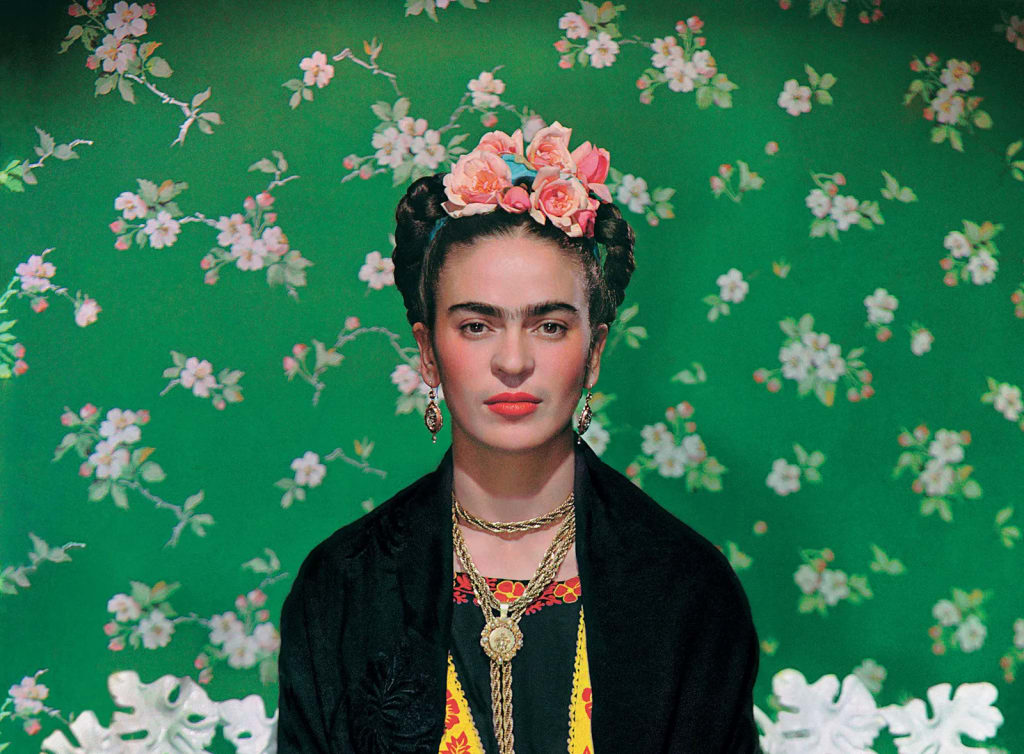
If you search for “Frida Kahlo” today, you’ll likely encounter a tote bag, a coffee mug, a Funko Pop figurine, or an Instagram filter before you find her actual paintings. The Mexican artist who once declared she painted her own reality has become a global pop culture phenomenon, her distinctive unibrow and flower crown reproduced on everything from notebooks to nail art. Frida Kahlo paintings and meaning hang in major museums worldwide, yet this commodification has created a peculiar paradox: whilst Frida Kahlo’s image is everywhere, the true depths of her art, politics, and radical life remain largely unknown to the millions who wear her face on their chests.
This article offers an uncomfortable invitation. Rather than repeating the romanticised biography of the “strong woman who overcame pain,” we’re going to examine Frida Kahlo’s paintings and meaning as what they truly are: a radical project of self-analysis, a searing political commentary on Mexico, body, and gender, and today, ironically, luxury commodities circulating in auction houses amid scandals of disappearing works. The question that haunts every discussion is this: what do we actually do with these canvases, beyond hanging them in museums, tattooing them on our skin, or printing them on pencil cases?
Beyond Fridamania: reclaiming the artist from the merchandise

The phenomenon known as “Fridamania” has transformed a disabled, communist Mexican artist who created small, intimate works into a depoliticised icon suitable for mass consumption. This sanitisation hides the most radical aspects of her identity: her lifelong commitment to communist politics, her chronic physical suffering, and her unflinching confrontation with taboo subjects like miscarriage, abortion, and female sexuality.
Born in 1907 in Coyoacán, Mexico (though she claimed 1910, aligning her birth with the Mexican Revolution), Frida Kahlo’s life was fractured in two when a catastrophic bus accident at age 18 left her with multiple spinal fractures, a shattered pelvis, and lifelong chronic pain. The iron handrail that impaled her pelvis, as she later described, pierced her “the way a sword pierces a bull”. This wasn’t merely a tragic origin story; it became the foundation of an artistic practice built on survival, self-examination, and the refusal to look away from suffering.
Confined to bed during her lengthy recovery, Kahlo began painting using a specially-made lap easel and an overhead mirror. This detail matters profoundly: her self-portraits weren’t narcissistic “selfies” avant la lettre, but rather a strategic response to confinement and isolation. When you cannot move, when your body has become a prison, the mirror becomes both window and laboratory for studying identity within ruins. Understanding Frida Kahlo self-portraits requires recognising this context: they emerged not from vanity but from necessity, transforming her bedroom into a studio where the only available subject was herself.
Frida Kahlo most famous paintings: a visual catalogue
Before diving into detailed analysis, here are the Mexican artist’s most celebrated works that define her legacy:
- Self-portrait in a velvet dress (1926): Her first major self-portrait, establishing the direct gaze that would become her signature
- Henry Ford Hospital (1932): Raw depiction of miscarriage and reproductive trauma in Detroit
- My dress hangs there (1933): Critique of American capitalism and industrial society
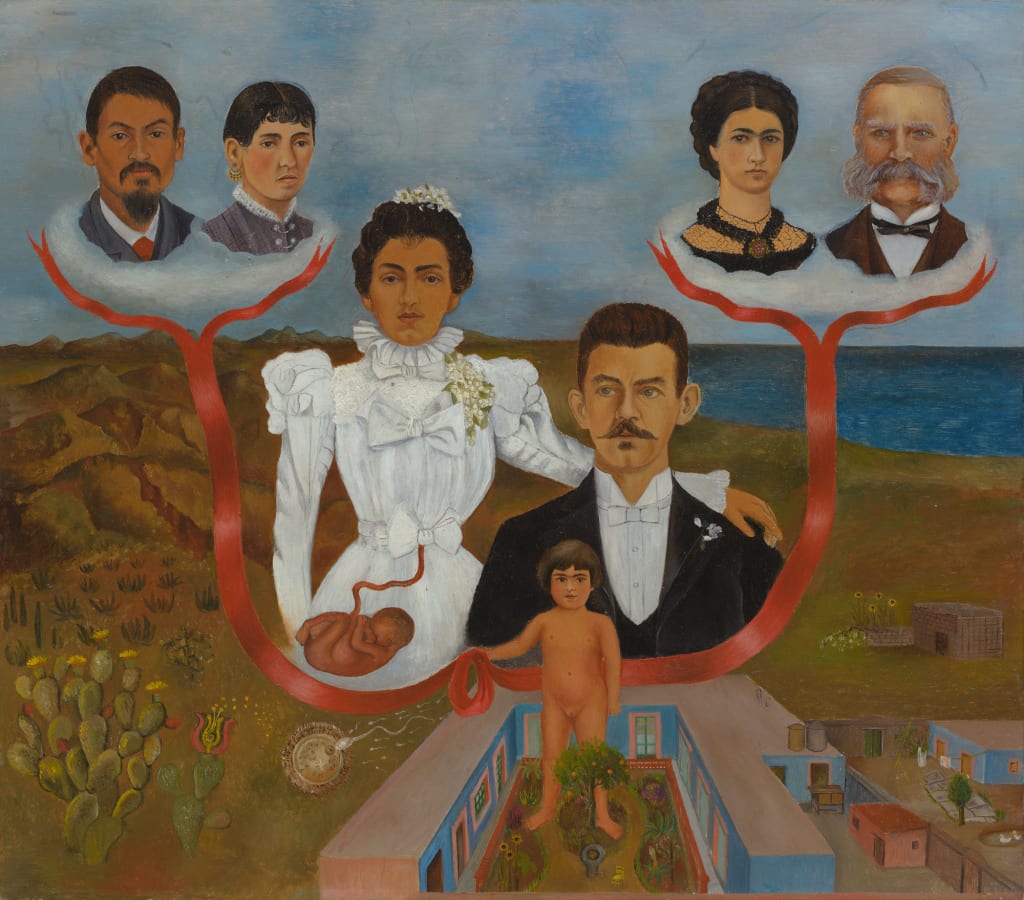
- My grandparents, my parents and me (1936): Visual genealogy exploring mestizo identity
- The Two Fridas (1939): Dual self-portrait painted during her divorce from Diego Rivera
- Self-portrait with thorn necklace and hummingbird (1940): Symbolic meditation on lost love and hope
- The broken column (1944): Her torso split open, revealing a crumbling spine held together by will
- The wounded deer (1946): Self-portrait as an arrow-pierced animal in a dark forest
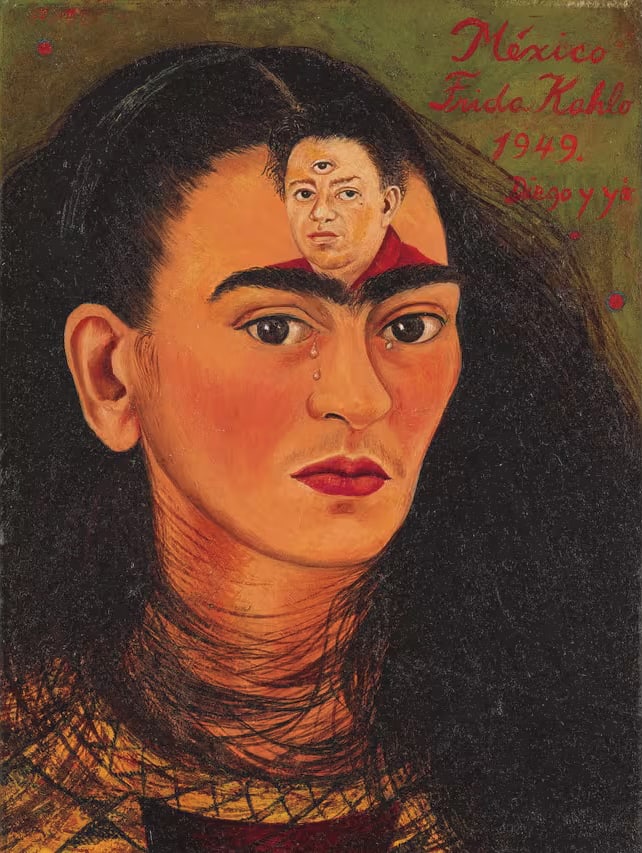
- Diego and I (1949): Close-up showing Diego’s face literally occupying her mind
- El sueño (La cama) (1940): Sleeping figure beneath a skeleton adorned with dynamite, which became the most expensive female artist painting at auction in 2025
These famous Frida Kahlo paintings span two decades of artistic production, each revealing different facets of her complex relationship with pain, identity, politics, and love.

The paintings that changed everything: analysing Frida Kahlo’s masterpieces
The 1930s: industrial America and reproductive trauma
When Frida accompanied Diego Rivera to the United States in the early 1930s for his mural commissions, she experienced profound dislocation: cultural, political, and bodily. This period produced some of her most harrowing and politically charged works.
Henry Ford Hospital (1932) remains one of the most brutal depictions of miscarriage ever committed to canvas. Kahlo painted herself naked, bleeding on a hospital bed that floats incongruously against Detroit’s industrial skyline. Six objects connected to her body by red ribbon-umbilical cords float around her: a male foetus (based on medical illustrations), an orchid resembling female anatomy, a snail representing the agonising slowness of her ordeal, a medical apparatus symbolising cold mechanised medicine, a pelvis bone, and her own fractured torso.
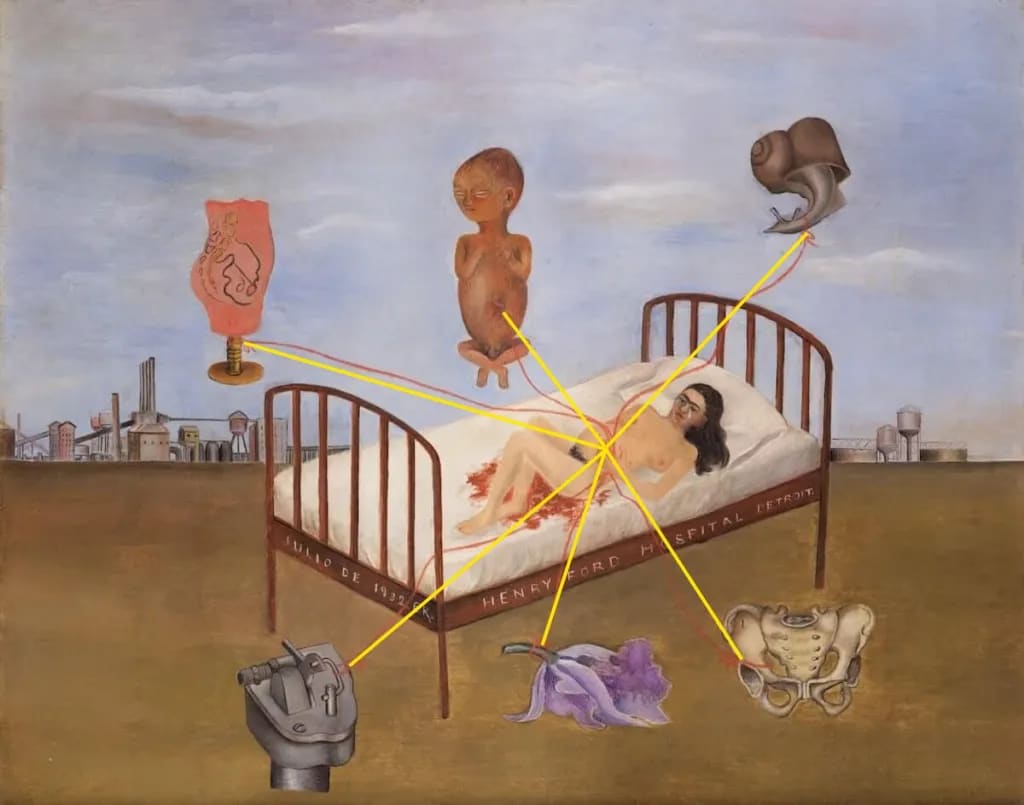
The painting doesn’t sublimate trauma; it exposes it with forensic precision. Whilst contemporary culture has co-opted Kahlo as an “empowerment” symbol, selling notebooks adorned with this very painting, the irony is stark: the same society that censors discussions of abortion and miscarriage commodifies a woman’s most intimate reproductive grief into stationery. Understanding Frida Kahlo art symbolism means recognising how she used medical imagery not decoratively but as political statement, forcing viewers to confront realities usually hidden behind closed doors.
My dress hangs there (1933) offered her searing critique of American capitalism. Rather than painting herself, Kahlo suspended her traditional Tehuana dress in the centre of a collage-like cityscape crammed with factories, skyscrapers, a church, Wall Street, and pointedly, a toilet. The message couldn’t be clearer: her body, her Mexican, indigenous, female body, did not belong to this mechanised, commodified world. Only her clothing, empty and symbolic, could occupy that space.

Identity, heritage, and the politics of self-representation
Kahlo’s exploration of Mexican identity versus European colonialism permeated her self-portraits throughout the 1930s and 1940s. The Two Fridas (1939), painted during her divorce from Diego Rivera, shows two versions of herself seated side by side, hands clasped, connected by a single vein. The Frida in European Victorian dress holds surgical forceps, attempting to stop blood flowing from her exposed, wounded heart. The Frida in traditional Tehuana attire holds a miniature portrait of Diego Rivera, her intact heart visible.
Art historians have interpreted this duality in multiple ways: as representing her mixed German-Mexican heritage, as the conflict between the Frida Rivera loved versus the one he rejected, or as Kahlo’s own childhood memory of an imaginary friend. Yet the painting’s power lies in its refusal of simple resolution. There is no “before and after,” no linear narrative of healing, only simultaneous, dilacerating existence.
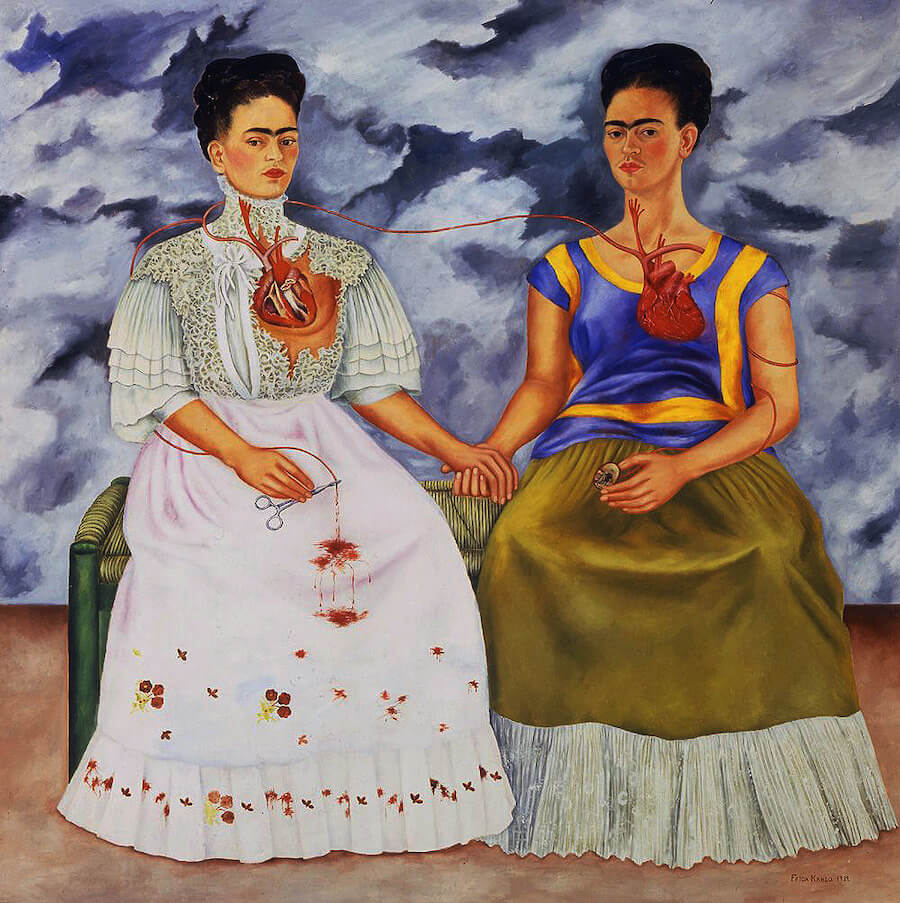
The exposed hearts aren’t metaphorical flourishes. They’re anatomically rendered organs, vulnerable and beating, connected by veins that wind around the figures like medical diagrams come to life. The stormy sky behind them mirrors internal turmoil, whilst the blood staining the white lace dress contrasts viscerally with the vibrant colours of Mexican traditional clothing. This painting exemplifies what makes Frida Kahlo self-portraits so compelling: they refuse to provide emotional closure or neat psychological explanations.
Pain as subject: the body in ruins
The broken column (1944), painted after yet another spinal surgery, shows Kahlo’s torso split open to reveal a crumbling Ionic column in place of her spine. Her body is pierced by dozens of nails, a direct reference to Christian martyrdom and Saint Sebastian, whilst a steel orthopaedic corset holds her together. Tears stream down her face, yet she faces the viewer unflinchingly, standing upright in a barren, fissured landscape that mirrors her fractured body.

The column, penetrating from loins to chin, carries phallic connotations that some scholars interpret as linking sex with pain in Kahlo’s consciousness. The painting represents not just physical agony but the psychological burden of literally holding oneself together through sheer force of will. When examining Frida Kahlo symbolism explained through this work, we see how she transformed personal suffering into universal imagery of human endurance.
The wounded deer (1946) transformed Kahlo into a deer pierced by nine arrows, her human face grafted onto the animal body. This use of animal avatars allowed her to externalise pain whilst simultaneously claiming it, a strategy of displacement without denial. The deer bleeds in a dark forest, isolated and dying, yet the eyes that meet ours remain distinctly, recognisably Frida’s.

Understanding Frida Kahlo paintings through symbolism and cultural resistance
Kahlo’s symbolic vocabulary drew from multiple traditions: Catholic iconography, Aztec mythology, Mexican folk art, and her own invented visual language. Animals recur throughout her work with specific meanings: monkeys as protectors and fertility symbols (gifts from Rivera that became stand-ins for the children she couldn’t have), hummingbirds as messengers between life and death, black cats as omens, and deer representing vulnerability and sacrifice.
In Self-portrait with thorn necklace and hummingbird (1940), painted after her divorce from Rivera, a necklace of thorns pierces her neck whilst a dead hummingbird hangs from it like a pendant. In Mexican folklore, hummingbirds are good luck charms associated with falling in love; the dead bird thus becomes a devastating symbol of romantic hopes extinguished. A black cat lurks behind one shoulder, a monkey (Rivera’s gift) tugs at the painful necklace behind the other, whilst butterflies and dragonflies hover above as potential symbols of resurrection and hope.

The thorn necklace directly references Christ’s crown of thorns, positioning Kahlo as a secular martyr whose suffering has meaning. Yet unlike traditional martyrdom narratives, there’s no transcendence here, no redemptive arc, only the stark presentation of ongoing pain alongside stubborn, inexplicable hope.
The political Frida: communist, revolutionary, anti-capitalist
Perhaps the most egregiously erased aspect of Kahlo’s identity is her radical politics. She joined the Mexican Communist Party in 1927 and remained committed to leftist causes throughout her life. This wasn’t performative radicalism; it was fundamental to her worldview and artistic practice. Understanding the Mexican communist artist beneath the pop culture icon reveals how thoroughly her political convictions shaped every brushstroke.
When Diego Rivera painted The Arsenal mural in 1928, he depicted Frida wearing a red star shirt, distributing weapons to workers beneath a communist hammer-and-sickle flag. Her famous adoption of Tehuana dress, often misinterpreted as mere aesthetic choice or an attempt to please Rivera, was in fact a deliberate political statement of anti-colonialism and solidarity with indigenous Mexico.
The Tehuana dress originated among indigenous Zapotec women and became a symbol of Mexican national identity during the Revolution. For Kahlo, wearing it wasn’t costume; it was resistance to European cultural domination and an assertion of mestizo identity. Recent discoveries, including a photograph of Kahlo’s mother in Tehuana dress, have debunked the myth that Rivera encouraged her to adopt the style. Kahlo’s connection to this clothing predated her marriage and reflected her own matrilineal heritage.
Her political commitments extended to hosting Leon Trotsky when he received asylum in Mexico in 1937. She and Rivera, then Trotskyites after breaking with Stalin, housed the exiled revolutionary at the Casa Azul. Kahlo even had a brief affair with Trotsky, one of many extramarital relationships that matched Rivera’s own infidelities.
By 1939, however, both Kahlo and Rivera had switched allegiances back to Stalinism. When Trotsky was assassinated in 1940, Kahlo was briefly arrested as a suspect. Far from being deterred, her communist imagery intensified in her final works.
Marxism will give health to the sick (1954), one of her last paintings, shows Kahlo discarding her crutches whilst clutching a red book, supported by giant hands (communist symbolism) as the bearded head of Karl Marx hovers like a sun and an Uncle Sam vulture is strangled. The original title was even more explicit: “Peace on Earth so the Marxist Science may Save the Sick and Those Oppressed by Criminal Yankee Capitalism”.

When Kahlo died on 13 July 1954, a communist hammer and sickle was draped over her casket at the Palace of Fine Arts. This was not accidental or symbolic; it was the deliberate choice of a woman who believed her suffering was connected to broader systems of exploitation and who envisioned socialism as the cure for society’s ills.
The elephant and the dove: Frida and Diego’s toxic love
The relationship between Frida Kahlo and Diego Rivera has been romanticised beyond recognition. In reality, it was marked by mutual infidelity, emotional cruelty, profound artistic influence, and an obsessive love that survived divorce and remarriage. Understanding Frida Kahlo Diego Rivera dynamics is essential to interpreting many of her most powerful works.
When they married in 1929 (she was 22, he was 42), Kahlo’s parents called them “the elephant and the dove,” referring to the stark differences in their size and temperament. Rivera was already a renowned muralist with a reputation as a womaniser. Kahlo was an emerging artist still finding her voice.
Rivera’s affairs were numerous and flagrant, but the one that shattered Kahlo most profoundly was his relationship with her younger sister Cristina in 1934-35. Kahlo moved out, considered divorce, and embarked on her own affairs, including with American sculptor Isamu Noguchi and later with women.
They divorced in 1939 but remarried in 1940 in San Francisco, unable to break their connection despite the toxicity. The second marriage came with new terms: separate social circles, more autonomy, but patterns of infidelity continued.
Diego and I (1949) captures Kahlo’s tormented obsession with devastating honesty. Diego’s face appears on her forehead, literally occupying her mind, whilst her hair wraps around her neck like a strangling vine. Tears stream down her cheeks. A third eye on Diego’s forehead suggests his visual acuity, his ability to see everything, including, presumably, her pain. This painting, which sold for $34.9 million in 2021, was created when Rivera was having an affair with Mexican film star María Félix, Kahlo’s close friend.
Kahlo’s diary entries from this period are raw declarations of devotion and despair: “Diego. I am alone.” And later: “My Diego. I am no longer alone. You accompany me”. She drew two face-vases with the dialogue: “Don’t cry at me.” “Yes. I’ll cry at you”.
The market and the missing: Frida Kahlo in 2024-2025
Frida Kahlo auction record 2025: most expensive female artist
Kahlo’s market dominance has reached astonishing heights. In November 2025, her 1940 self-portrait The Dream (The Bed) – El sueño (La cama) sold for $54.7 million at Sotheby’s New York, shattering the auction record for works by female artists. The painting, which depicts Kahlo sleeping beneath a skeleton adorned with dynamite, had previously sold for just $51,000 in 1980, a more than 1,000-fold increase that demonstrates the explosive growth of interest in Frida Kahlo art over recent decades.

This sale eclipsed Georgia O’Keeffe’s previous record of $44.4 million and surpassed Kahlo’s own 2021 record when Diego y yo sold for $34.9 million. The painting became the most expensive work by any Latin American artist ever sold at auction, cementing Kahlo’s position as the highest-valued female artist in history.
Yet beneath this glamorous veneer lurks a deeply troubling scandal. In April 2025, Hilda Trujillo Soto, former director of the Museo Frida Kahlo (Casa Azul) for 18 years, published explosive allegations that numerous works have disappeared from the museum’s collection. According to Trujillo Soto, at least two oil paintings, eight drawings, and six pages from Kahlo’s intimate diary have gone missing, with evidence suggesting some were sold through US auction houses and galleries despite Mexican laws prohibiting such sales.
The diary pages, dating from March 1953, disappeared sometime after 2003 when the diary was removed from public display and placed in a safe. When Trujillo Soto compared the original to the 1994 facsimile publication, she discovered the missing folios. Art historian Helga Prignitz-Poda, a leading Kahlo scholar, confirmed awareness of missing works and called the situation “a scandal”.
Some allegedly missing works reportedly appeared at Mary-Anne Martin Fine Art gallery in New York, though the gallery’s website removed its Kahlo inventory listings after the allegations surfaced. The trust that manages both Casa Azul and the Diego Rivera Anahuacalli Museum, administered by the Bank of Mexico, has disputed the claims as “unfounded,” stating that Trujillo Soto never filed formal complaints during her tenure.
The irony is profound: an anti-capitalist artist whose work critiqued American greed and exploitation now has her paintings sold for tens of millions to ultra-wealthy collectors, whilst works belonging to the Mexican people may have been stolen and trafficked across borders. Rivera’s original bequest specifically donated the Casa Azul and its contents to the nation of Mexico; both Kahlo and Rivera’s works are legally classified as “artistic monuments of the nation,” with export banned without special consent.
Casa Azul: the Blue House and its contested legacy
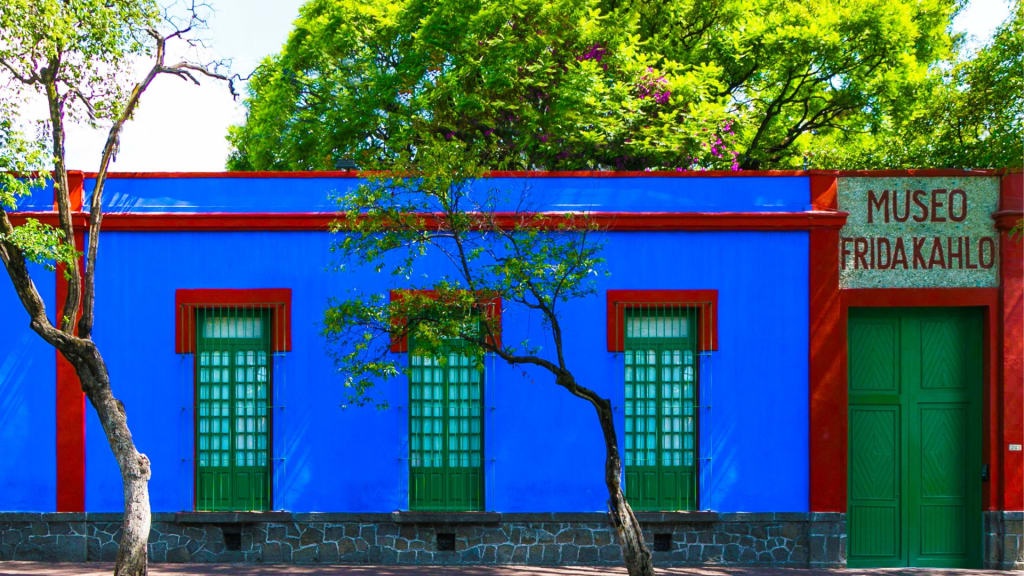
The Museo Frida Kahlo, known as Casa Azul for its cobalt-blue walls, stands in Coyoacán as one of Mexico City’s most visited museums, attracting approximately 25,000 visitors monthly. This was Kahlo’s birthplace, childhood home, the house she shared with Rivera after their remarriage, and the room where she died in 1954.
Rivera donated the house and its contents to Mexico in 1957, establishing a trust for its preservation. The first director, poet Carlos Pellicer, deliberately maintained the interior virtually intact, preserving the intimate atmosphere of Kahlo’s life. Today, visitors can see her studio, her bed with the overhead mirror, her collection of Mexican folk art, pre-Hispanic artefacts, traditional clothing (including the famous Tehuana dresses), medical corsets, paintings, letters, and personal effects.
A separate museum, opened in September 2025 and known as Casa Roja (Red House) or Museo Casa Kahlo, has sparked its own controversies. Located two blocks from Casa Azul, it houses belongings from Kahlo’s extended family and displays previously unseen letters and photographs, including a cellar workshop where Kahlo retreated to work. However, questions have been raised about the authenticity of some materials and the museum’s relationship to the official Casa Azul legacy.
Disclosure: This post contains affiliate links that help support and maintain this website. If you click through and make a purchase, I may earn a small commission at no extra cost to you.
How to look at Frida today: beyond the icon
Understanding Frida Kahlo paintings meaning in contemporary context
Approaching Kahlo’s work in 2025 requires deliberate unlearning. Here are strategies for seeing past the sanitised pop culture version:
Remember scale and intimacy. Most of Kahlo’s paintings are small, roughly the size of a laptop screen or smaller. When we see them blown up as giant projections or posters, we lose the intended experience of intimate encounter, almost like examining a diary or ex-voto. These were painted for close viewing, in enclosed spaces, demanding that we lean in and look carefully.
Resist narratives of overcoming. Many of Kahlo’s paintings offer no resolution, no lesson, no triumph over adversity. They present contradiction, simultaneity, and ongoing suffering without redemption. The pressure to read every disabled artist’s work as “inspirational” flattens the complexity of living with chronic pain.
Study the uncomfortable details. Blood, cicatrices, ambiguous animals, acts of violence, communist symbols, exposed organs…these aren’t decorative choices. They’re deliberate provocations meant to disturb our gaze and challenge our expectations of how women, disabled people, and Mexican subjects should represent themselves.
Interrogate your own consumption. Why do you like a particular Kahlo image? Is it the colour palette? The way it seems to speak to your experience? What do you not want to see when you look at it? When you buy Kahlo merchandise, whose labour produced it? Who profits? Would Kahlo (who painted critiques of capitalism) approve?
Contextualise the politics. Kahlo wasn’t a generic “strong woman” or “feminist icon” in the contemporary liberal sense. She was a Mexican communist who painted symbols of revolution, critiqued American imperialism, and envisioned collective liberation through Marxism. Divorcing her art from these commitments is a form of erasure.
The provocation at the heart of Kahlo’s legacy
The final uncomfortable truth about Frida Kahlo is this: her work was designed to be difficult, to resist easy consumption, to force viewers into confrontation with realities society prefers to hide. Pain without purpose. Bodies that don’t heal. Love that destroys. Political rage without compromise. Female sexuality and reproductive experience rendered without euphemism.
Instead of using Kahlo to illustrate ready-made slogans about resilience or empowerment, we might let her paintings do what they were made to do: destabilise certainties, dismantle comfortable narratives, and remind us that identity, love, body, nation, and politics are things that bleed.
The rest (the tote bags, the makeup collaborations, the sanitised biographies) is just commerce built atop a woman who spent her entire life resisting reduction to easy labels. She painted the brutal truth of her existence. The least we can do is look at it honestly, thorns and all.
What we choose to remember about Frida Kahlo reveals what we’re willing to see about pain, power, politics, and what it means to make art from the wreckage of a body and a world that tried to break you. Perhaps that’s the real provocation: not the image of Frida on our T-shirts, but the question of whether we’re brave enough to sit with the discomfort her actual paintings demand.


