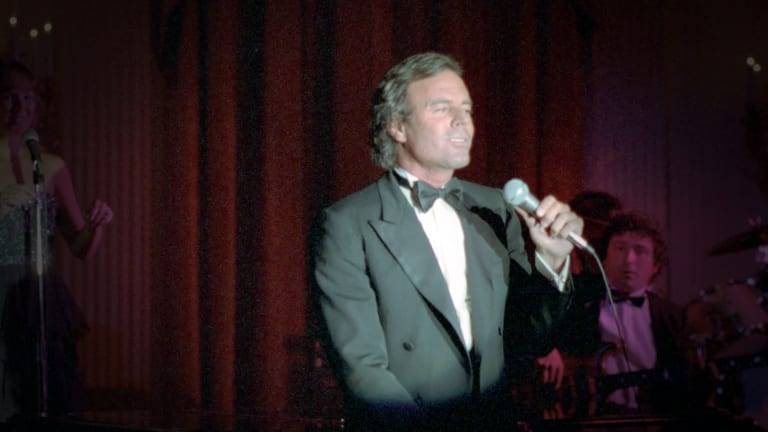
When Bad Bunny takes the Super Bowl LX stage later this year, he’ll make history as the first primarily Spanish-speaking solo artist to headline the halftime show. This isn’t just a milestone for the Puerto Rican reggaeton superstar, it’s a defining moment that underscores Bad Bunny’s cultural impact on the global music scene. It represents the culmination of a fundamental shift in global pop culture, where Latin music has evolved from a niche market into the driving force of contemporary mainstream entertainment. The appointment signals that Spanish has transformed from an “emerging market” language to the lingua franca of mass appeal.
The axis of global pop culture has shifted, and it no longer runs through London or Los Angeles. It pulses from San Juan to the world. This isn’t simply about one artist achieving individual success. It’s about the fundamental reprogramming of the global cultural infrastructure, where streaming platforms, demographic changes, and authentic cultural expression have converged to create new pathways for influence.
Super Bowl 2026: From guest appearance to cultural headliner
Corporate validation and strategic investment
The appointment of Bad Bunny as the 2026 Super Bowl LX halftime performer represents far more than entertainment programming. It’s a strategic corporate statement about the future of American culture. When Apple Music, Roc Nation, and the NFL converge to showcase a primarily Spanish-speaking artist, they’re not making a diversity gesture. They’re acknowledging demographic and economic reality.
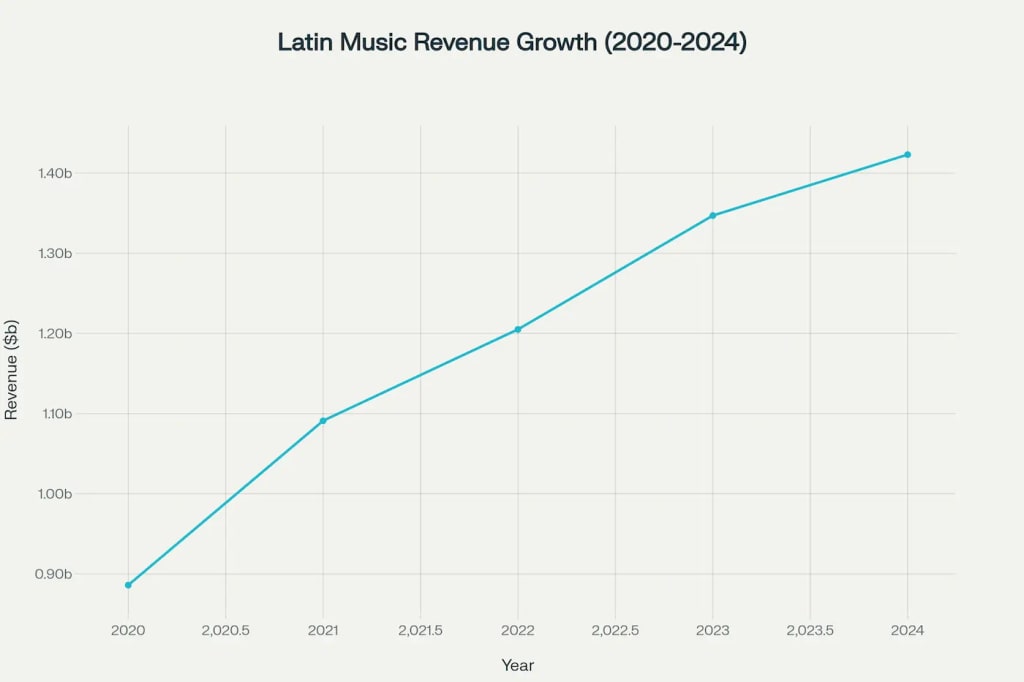
Latin music generated a record-breaking $1.5 billion in US revenue in 2025, representing 8.4% of the total recorded music market. This figure has grown dramatically from just 5.6% in 2020 and 8.1% in 2024. The exponential growth reflects what industry analysts describe as the “infrastructure, not exoticism” phenomenon.
Bad Bunny’s Super Bowl performance follows his 2020 appearance alongside Jennifer Lopez and Shakira, but the context has fundamentally changed. Where his previous appearance positioned him as a cultural ambassador, his 2026 headlining role establishes him as the center of gravity around which mainstream entertainment now orbits. The performance will reach an estimated 100 million viewers globally, providing an unprecedented platform for Spanish-language culture within America’s most culturally significant annual event.
The streaming revolution driving Latin music growth
The transformation of Bad Bunny from regional sensation to global powerhouse demonstrates how digital platforms have democratized cultural influence. His dominance across streaming services speaks volumes about this shift. He’s been Spotify’s most-streamed artist for four of the past six years, illustrating how algorithmic distribution has bypassed traditional gatekeeping mechanisms.
Streaming platforms have proven particularly receptive to Latin music, with over 97% of Latin music revenue in 2025 derived from digital streaming services. This digital-first approach has allowed artists like Bad Bunny to circumvent traditional industry barriers whilst maintaining cultural authenticity and linguistic integrity. The trilingual conversation of the 21st century operates in Spanish, English, and algorithm, creating new pathways for cultural transmission that function independently of geographic or linguistic boundaries.
Recent data shows Latin music accounts for 17% of YouTube’s charted content while ad-supported streaming generates 25% of Latin music revenue. This significantly exceeds the 10% average across all genres. The disparity suggests that Latin music audiences engage differently with digital platforms, often preferring free, accessible content over premium subscriptions.
Bad Bunny’s economic impact on Puerto Rico
The residency that transformed an island’s economy
Bad Bunny’s 2024 Puerto Rican residency “No Me Quiero Ir De Aquí” generated an estimated $200 million direct economic impact for the island. The 30-concert series created approximately 21 jobs per $1 million invested whilst generating over $27 million in direct attendee spending. This economic model represents a new form of cultural sovereignty where artistic production drives regional development independently of traditional colonial economic structures.
His decision to prioritize Puerto Rican audiences marked a significant statement. The first nine shows were exclusively for island residents, illustrating how cultural nationalism can coexist with global commercial success. This approach demonstrated that Bad Bunny sees his role extending beyond entertainment into economic development and cultural preservation.
The residency’s success has inspired other artists to consider similar approaches. Karol G and Peso Pluma have both completed extended performances in their home regions, recognizing that authentic connection with local audiences can generate both cultural capital and significant economic returns.
Political activism: The Ricky Renuncia movement and beyond
Music as a catalyst for political change
Bad Bunny’s influence extends beyond entertainment into the realm of political mobilization and social activism. During Puerto Rico’s 2019 “Ricky Renuncia” protests, which successfully forced Governor Ricardo Rosselló’s resignation, Bad Bunny emerged as a cultural catalyst who transformed his artistic platform into political power.

His participation wasn’t performative. He paused his European tour to physically join the demonstrations, contributing to the protest anthem “Afilando los Cuchillos” alongside Residente and iLe. The movement demonstrated how contemporary pop culture and political resistance have become inseparable. His ability to mobilize over a million protesters whilst maintaining his commercial appeal illustrates a new model of celebrity activism where entertainment platforms become vehicles for civic engagement.
This form of activism has continued throughout his career. He’s spoken out against gentrification in Puerto Rico, climate change impacts on the island, and various forms of systemic oppression. His album “Debí Tirar Más Fotos” directly addresses these issues, combining commercial success with pointed social commentary.
Challenging reggaeton’s traditional masculinity
Gender fluidity and LGBTQ+ advocacy in Latin music
Perhaps nowhere is Bad Bunny’s cultural impact more revolutionary than in his systematic deconstruction of reggaeton’s hypermasculine traditions. His 2020 music video for “Yo Perreo Sola” featured him performing in drag across three distinct personas, directly challenging the genre’s machismo whilst advocating for women’s autonomy and consensual interaction.
This wasn’t mere performance art. It represented a fundamental ideological shift within a genre historically characterized by misogynistic lyrics and heteronormative messaging. The video’s closing message became a feminist anthem: “If she doesn’t want to dance with you, respect that. She twerks alone.” This redefined reggaeton’s relationship with female agency.
Bad Bunny’s gender fluidity and LGBTQ+ advocacy have opened space for queer and trans artists within the reggaeton mainstream. His statement that “I don’t know what I’ll be in the future. One never knows in life” exemplifies how he’s normalized sexual and gender ambiguity within a traditionally conservative musical landscape.
The impact extends beyond Bad Bunny himself. Younger reggaeton and Latin trap artists now feel empowered to explore themes of gender identity and sexual fluidity without fear of commercial backlash. This represents a fundamental evolution in a genre that once seemed impervious to progressive change.
Latin music market share and industry transformation
The new cultural economics
Latin music’s consistent outperformance of overall market growth tells a compelling story about shifting demographics and cultural preferences. The genre achieved 5.4% annual growth in 2025 compared to 3.1% for the broader music industry. For ten consecutive years, Latin music has grown faster than the overall American music market, indicating sustained demographic and cultural momentum.
The meteoric rise of Latin music revenues from $886 million in 2020 to $1.5 billion in 2025 reflects a broader demographic and cultural transformation of the American market. With Latino populations now exceeding 67 million in the United States, Latin music’s growth represents both demographic destiny and cultural preference.
The genre’s revenue concentration in streaming platforms demonstrates how digital distribution has enabled cultural decentralization. Artists can now achieve global reach without geographic proximity to traditional industry centers, fundamentally democratizing cultural influence. This has allowed Spanish-language artists to maintain linguistic integrity while achieving unprecedented commercial success.
Competition and collaboration in the Latin music space
Bad Bunny’s success has created space for other Latin artists to achieve mainstream recognition. Karol G became the first woman to headline Coachella singing primarily in Spanish, while Peso Pluma has brought regional Mexican music to unprecedented global audiences. These artists aren’t competing in a zero-sum game. Each success expands the infrastructure for Latin music, creating more opportunities for diverse expressions within the genre.
The collaborative nature of Latin music has also contributed to its growth. Bad Bunny’s willingness to work with artists across genres and languages has helped normalize Spanish-language collaborations in mainstream pop. His features on tracks by Cardi B, Drake, and Rosalía demonstrate how Latin artists can maintain cultural authenticity while participating in global pop conversations.
From cultural export to cultural center: The Latinofuturism blueprint
Spanish language music achieving global dominance
The traditional model of cultural crossover has been fundamentally reversed. Latin artists once adapted their sound for English-speaking markets. Bad Bunny’s success demonstrates how Spanish-language content can achieve global dominance without linguistic compromise or cultural assimilation.
His albums consistently reach number one positions on the Billboard 200. “Debí Tirar Más Fotos” and Fuerza Regida’s “111XPANTIA” became the first Spanish-language albums to simultaneously occupy the top two chart positions. This achievement represents what cultural theorists describe as “Latinofuturism,” a firmware update to the Western imagination where Caribbean rhythms dictate global cultural tempo.
This shift has implications beyond music. Spanish is increasingly becoming a prestige language in global pop culture, with artists from non-Latin backgrounds incorporating Spanish phrases and collaborating with Latin producers. The cultural conversation is increasingly conducted in Spanish with English subtitles rather than the reverse.
The algorithm as cultural accelerator
Digital platforms have played a crucial role in Latin music’s ascendance. Streaming algorithms don’t prioritize English over other languages. They respond to engagement, replay rates, and listener behavior. Bad Bunny’s music performs exceptionally well on these metrics, resulting in algorithmic promotion that transcends linguistic boundaries.
This has created a virtuous cycle where increased visibility leads to more streams, which leads to more algorithmic promotion. The result is that Spanish-language music now competes on equal footing with English-language content in global markets. Artists no longer need to choose between cultural authenticity and commercial success.
Key milestones in Bad Bunny’s career trajectory
Understanding Bad Bunny’s rise requires examining specific moments that defined his journey. In 2018, his collaboration with Cardi B on “I Like It” introduced him to mainstream American audiences. The following year, his album “X 100PRE” debuted at number 11 on the Billboard 200, the highest-charting all-Spanish album at the time.

The 2020 Super Bowl appearance with Shakira and Jennifer Lopez represented his first major American television moment. Later that year, “YHLQMDLG” became the highest-charting all-Spanish album in Billboard 200 history. His 2022 album “Un Verano Sin Ti” spent 13 non-consecutive weeks at number one, making it the first Spanish-language album to achieve this distinction.
By 2024, his Puerto Rican residency demonstrated his ability to generate massive economic impact while maintaining cultural authenticity. In February 2026, Bad Bunny received multiple Grammy Awards, further cementing his status as a mainstream music force. His wins at the 68th Annual Grammy Awards marked a pivotal moment for Spanish-language music at the industry’s most prestigious ceremony, demonstrating that Latin artists no longer occupy separate categories but compete at the highest levels of global music recognition. The 2026 Super Bowl halftime show announcement represents the culmination of this trajectory, positioning him as not just a successful artist but a cultural architect reshaping mainstream entertainment.
The infrastructure supporting Latin music’s global reach
Corporate investment and strategic partnerships
Major corporations have recognized Latin music’s commercial potential and cultural significance. Apple Music, Spotify, and YouTube have all launched Latin music initiatives, creating dedicated playlists, investing in Latin artists, and developing Spanish-language content. These aren’t peripheral efforts. They represent core strategic priorities driven by user data and market analysis.
Record labels have similarly restructured to prioritize Latin music. Universal Music Group, Sony Music, and Warner Music Group have all expanded their Latin divisions, signing emerging artists and investing in regional talent development. This infrastructure ensures that Latin music’s growth will continue beyond any single artist’s success.
Brand partnerships have also evolved. Companies once approached Latin markets as separate entities requiring translated campaigns. Now they develop integrated strategies where Spanish-language content takes center stage. Bad Bunny’s partnerships with Adidas, Cheetos, and Corona demonstrate how Latin artists command premium endorsement deals without code-switching or cultural compromise.
Social media and fan engagement strategies
Bad Bunny’s relationship with social media differs from many contemporary pop stars. He’s selective about his online presence, often disappearing from platforms for extended periods. This scarcity creates anticipation and allows him to maintain mystery in an era of constant celebrity oversharing.
When he does engage, it’s typically to address political issues or promote new projects rather than sharing personal details. This approach has strengthened his brand rather than diminishing it. Fans respect his boundaries while remaining intensely loyal, demonstrating that constant social media presence isn’t necessary for sustained cultural relevance.
His fan community has become self-sustaining, creating content, organizing listening parties, and defending him against criticism without prompting. This organic enthusiasm exceeds what paid marketing could achieve, creating a foundation for long-term success.
Reggaeton evolution and genre innovation
From underground movement to global phenomenon
Reggaeton’s journey from Puerto Rican underground scene to global mainstream genre spans decades. The genre emerged in the 1990s, blending Jamaican dancehall with Latin American and Caribbean rhythms. Early practitioners faced censorship and criticism for explicit lyrics and association with urban poverty.
Bad Bunny represents a new generation that has refined reggaeton’s sound while expanding its thematic range. While maintaining the genre’s rhythmic foundation, he’s incorporated elements from rock, jazz, and electronic music. His willingness to experiment has prevented reggaeton from becoming formulaic.
Other artists like J Balvin, Daddy Yankee, and Ozuna helped establish reggaeton’s commercial viability. Bad Bunny built on this foundation, adding artistic ambition and social consciousness that elevated the genre beyond party music. His approach demonstrates that commercial success and artistic integrity aren’t mutually exclusive.
The future of Spanish language music in global markets
Demographic trends supporting continued growth
Latino populations in the United States continue growing, both through immigration and natural increase. By 2060, Latinos are projected to constitute nearly 30% of the US population. This demographic shift ensures sustained demand for Spanish-language content across all media, not just music.
Younger generations of Latinos maintain stronger connections to Spanish language and Latin American culture than previous generations. This contradicts earlier assimilation models that predicted declining Spanish usage. Instead, bilingualism is becoming the norm, with young Latinos switching fluidly between languages depending on context.
Non-Latino audiences are also increasingly consuming Spanish-language content. Streaming platforms report that significant percentages of Bad Bunny’s listeners don’t speak Spanish as their primary language. This suggests that linguistic barriers are diminishing in digital spaces where subtitles and translations are readily available.
Infrastructure for sustained success
The infrastructure now exists to sustain Spanish-language cultural dominance independently of traditional English-language gatekeeping mechanisms. Streaming platforms, demographic support, and corporate investment have created multiple pathways for Latin artists to achieve success without linguistic compromise.
Music festivals have adapted to this reality, with Coachella, Lollapalooza, and other major events featuring Latin headliners. Radio stations in major markets have shifted to Latin formats. Awards shows have expanded Latin music categories and integrated Spanish-language performances into main programming.
This infrastructure means that Bad Bunny’s success isn’t an anomaly. It’s the first major example of a sustainable model that will support multiple generations of Spanish-language artists achieving global mainstream success.
Why Bad Bunny’s success matters beyond music
Cultural diplomacy and soft power
Bad Bunny’s global influence represents a form of cultural diplomacy that governments struggle to achieve through official channels. His music introduces global audiences to Puerto Rican culture, Spanish language, and Latin American perspectives. This soft power has measurable impacts on how people perceive Latin American communities.
His political activism has drawn international attention to issues affecting Puerto Rico and Latin American communities. When he speaks about colonialism, climate change, or economic inequality, millions listen. This amplifies voices that traditional media often marginalizes.
The economic implications extend beyond music industry revenues. Tourism to Puerto Rico has continued to increase following his residency, with visitors seeking to experience the culture he celebrates. Local businesses benefit from this attention, creating economic opportunities that government initiatives couldn’t match.
Comparing Bad Bunny to other global music phenomena
Learning from previous crossover successes
Bad Bunny’s trajectory invites comparisons to other artists who achieved global success while maintaining cultural specificity. K-pop groups like BTS achieved worldwide recognition while performing primarily in Korean. Afrobeats artists like Burna Boy have brought Nigerian music to global audiences.
These successes share common elements. Digital platforms enabled direct connections with global audiences without traditional industry mediation. Strong local fan bases provided launching pads for international expansion. Cultural authenticity attracted audiences seeking alternatives to homogenized pop music.
Bad Bunny’s success differs in scale and sustainability. While K-pop achieved remarkable breakthroughs, it remained somewhat niche outside core fan communities. Bad Bunny has achieved true mainstream penetration, with his music played on pop radio alongside English-language artists.
The role of authenticity in commercial success
Maintaining cultural integrity while achieving global reach
Bad Bunny’s refusal to compromise his cultural identity or linguistic expression has paradoxically enhanced his commercial appeal. Audiences increasingly value authenticity, seeking artists who represent genuine perspectives rather than focus-grouped personas designed for maximum market appeal.
His music addresses specifically Puerto Rican experiences, from political corruption to climate impacts on the island. Rather than limiting his appeal, this specificity creates emotional resonance that generic content cannot match. Listeners worldwide connect with his sincerity even when they don’t share his specific experiences.
This suggests that the future of global pop culture favors artists who embrace their cultural specificity rather than diluting it for mass appeal. The streaming era allows niche content to find global audiences, rewarding authenticity over broad appeal.
Lessons for brands and cultural institutions
Adapting to the new cultural reality
For brands, policymakers, and cultural institutions, Bad Bunny’s success provides clear evidence that the 21st-century cultural conversation is trilingual by default: Spanish, English, and algorithm. Those who continue treating “the Latin market” as a secondary demographic cluster are playing with an outdated scorecard in a game where Puerto Rico has become the center of the cultural universe.
Marketing strategies must evolve beyond translated campaigns toward integrated approaches where Spanish-language content takes equal or primary importance. This requires hiring native Spanish speakers in creative roles and developing genuine understanding of Latin American cultures rather than treating them as monolithic markets.
Educational institutions should expand Spanish-language offerings, recognizing that bilingualism provides competitive advantages in increasingly multicultural markets. Cultural organizations should program Latin artists in prime slots rather than relegating them to heritage month celebrations or specialty events.
The permanent cultural shift
Bad Bunny’s trajectory from Puerto Rican reggaeton artist to global cultural architect represents more than individual success. It exemplifies a permanent recalibration of mainstream cultural priorities. His Super Bowl appointment, political activism, gender norm challenges, and economic impact demonstrate how Latin culture has evolved from peripheral influence to central authority in contemporary global entertainment.
This transformation reflects demographic inevitability, technological democratization, and cultural authenticity converging to create new models of global influence. The conversation about Latin music crossing over into the mainstream has become obsolete. Latin music is the mainstream, with other genres now positioning themselves relative to its dominance.
As he might say himself, if you didn’t understand what just happened, you have time to catch up. But the cultural shift is complete, irreversible, and accelerating.