

The most shocking statistic of our time might just be this: for the first time in human history, more children worldwide are living with obesity than are underweight. This isn’t merely a health trend, it’s the culmination of a systematic transformation of children’s food environments orchestrated by a childhood obesity industry that has turned young bodies into profit centres whilst externalising the devastating costs to families, healthcare systems, and society at large.
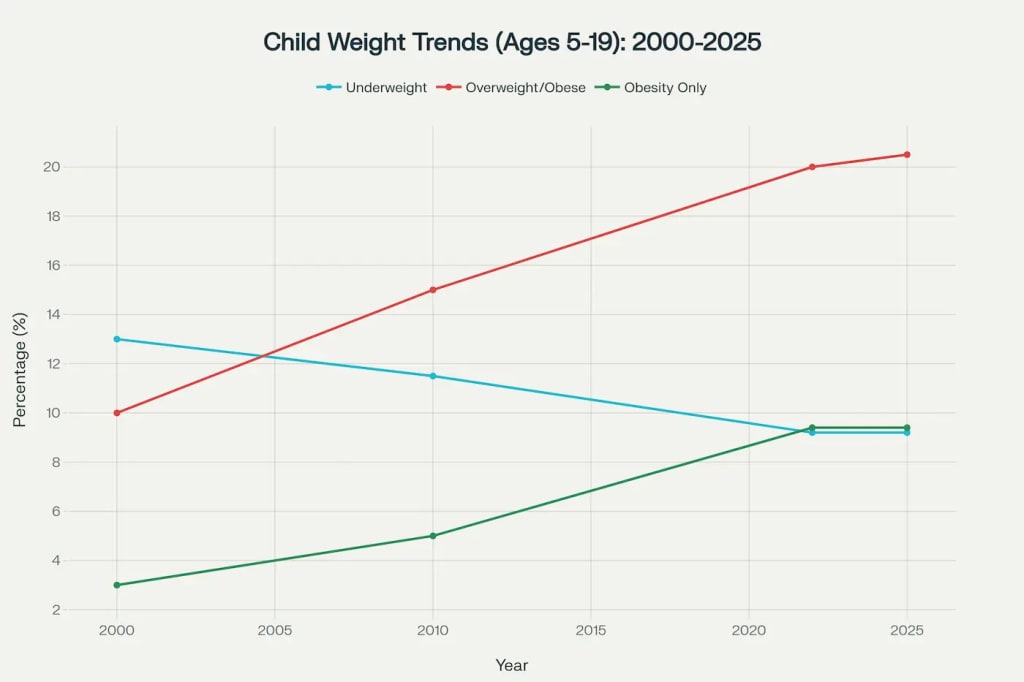
The numbers paint a stark picture that demands urgent attention. An estimated 188 million children and adolescents aged 5-19 now live with obesity globally, representing 9.4% of this age group, surpassing the 184 million (9.2%) who are underweight. Meanwhile, one in five young people worldwide is now overweight, totalling 391 million children. Behind these statistics lies a carefully constructed web of marketing manipulation, policy interference, and systemic profit extraction that transforms childhood nutrition from a public health priority into a commercial opportunity.
The staggering scale: Childhood obesity statistics that demand action
To grasp the magnitude of this crisis, we must first confront the childhood obesity statistics that reveal just how dramatically our food landscape has shifted. The global prevalence of obesity among children aged 5-19 has more than quadrupled since 1975, rising from just 0.7% of girls and 0.9% of boys to 6.9% and 9.3% respectively by 2022. This represents approximately 65 million girls and 94 million boys living with obesity in 2022, compared to just 5 million girls and 6 million boys in 1975.
The regional variations tell an equally concerning story. Some Pacific Island nations now see more than 30% of their children living with obesity, whilst countries like Chile report childhood obesity rates of 27%, the United States 21%, and the United Arab Emirates 21%. Even traditionally lower-income regions are experiencing rapid increases, with the number of overweight children in low-income countries quadrupling between 2000 and 2022.
What makes these childhood obesity statistics particularly alarming is their trajectory. Current projections suggest that without coordinated intervention, around 60% of adults and 31% of children and adolescents worldwide will be living with overweight or obesity by 2050. The World Obesity Federation estimates that more than one billion people globally are now living with obesity, including nearly 880 million adults and 159 million children aged 5-19.
Post-pandemic childhood obesity trends: A crisis accelerated
The COVID-19 pandemic has dramatically accelerated these troubling childhood obesity statistics, creating what health experts now recognise as a secondary health crisis. The WHO European Region’s latest surveillance from November 2024 reveals that the pandemic has fundamentally altered children’s relationship with food, physical activity, and screen time in ways that persist long after lockdowns ended.
Current data shows that 25% of children aged 7-9 are living with overweight, with 11% affected by obesity, and boys disproportionately impacted across multiple countries. Several European nations recorded statistically significant rises in obesity prevalence following the pandemic, whilst only one country observed a decline. This pattern reflects global trends where school closures, reduced physical activity opportunities, and increased reliance on ultra-processed foods during lockdowns created perfect conditions for rapid weight gain.
The post-pandemic landscape reveals how vulnerable children’s food environments have become. During 2020-2022, many families increased their consumption of packaged, processed foods due to concerns about fresh food safety, supply chain disruptions, and the convenience of shelf-stable options during uncertain times. This shift coincided with reduced access to school meal programs that often provided children’s most nutritious meals of the day.
Research conducted across multiple countries shows that children gained weight at accelerated rates during pandemic periods, with some studies indicating weight gain occurring 2-3 times faster than pre-pandemic rates. The psychological stress of the pandemic also contributed to emotional eating patterns and disrupted sleep schedules that further promoted weight gain among young people.
Perhaps most concerning, the pandemic revealed how quickly childhood obesity statistics can deteriorate when environmental factors align against children’s health. Countries with the most comprehensive pandemic responses, including robust school meal continuity programs and structured physical activity opportunities, showed smaller increases in childhood obesity rates, demonstrating the critical role of systematic interventions.
The industrial architecture of childhood obesity
Ultra-processed foods children: The foundation of the crisis
At the heart of the childhood obesity crisis lies the systematic replacement of traditional, nutritious diets with ultra-processed foods children consume in unprecedented quantities. Current data reveals these products now account for 62-70% of total daily calories among children in high-income countries, with some regions showing even higher consumption rates.
Ultra-processed foods children consume are fundamentally different from traditional food products. They contain multiple ingredients, additives, preservatives, and industrial compounds designed not just for convenience but for what industry executives internally call “bliss point” engineering. This involves the precise combination of sugar, salt, and fat that creates maximum craving and overconsumption. Recent neurological research shows these products can cross the blood-brain barrier, accumulating in brain tissue and affecting memory, learning, and behaviour in developing minds.
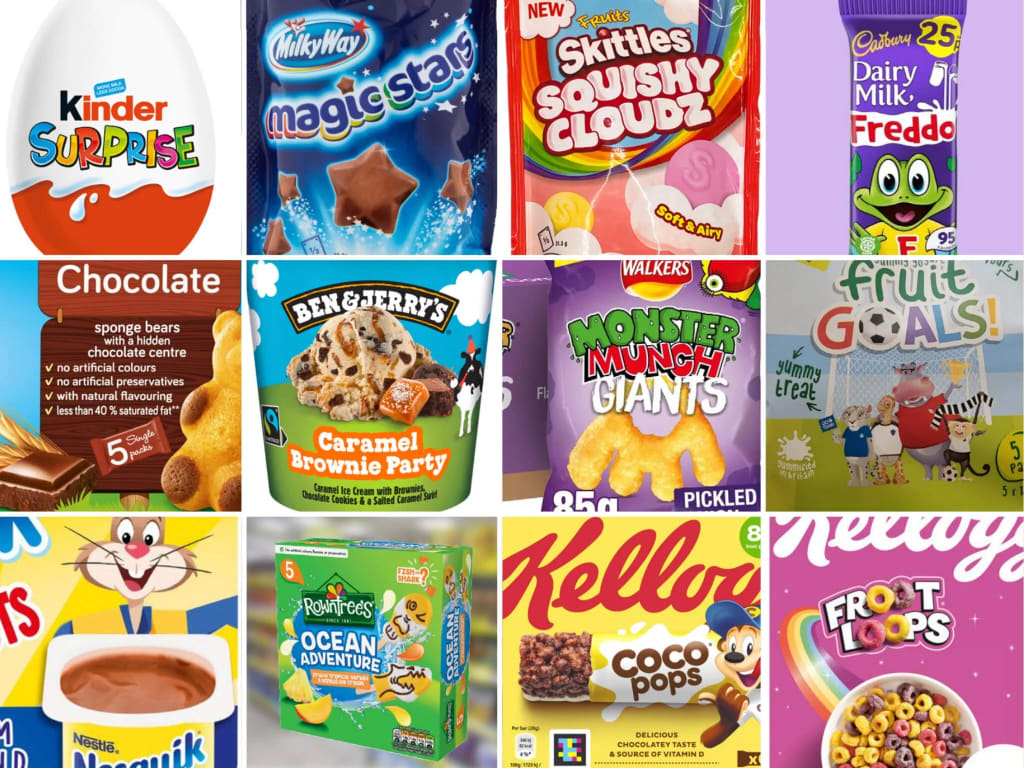
The scale of ultra-processed food consumption among children has reached alarming levels across developed nations. In Australia, packaged snacks, sugary drinks, and processed meals comprise nearly 60% of children’s daily energy intake. Canadian children now derive 47% of their calories from ultra-processed sources by age three, with consumption rates increasing as children age. The United States shows similar patterns, with some demographic groups of children consuming over 70% of their daily calories from industrial food products.
A groundbreaking Canadian study found that children getting nearly half their daily energy intake from ultra-processed foods at age three showed an almost 20% increased risk of living with overweight or obesity by age five. The associations were particularly strong among boys, whose diets included these industrial food products at higher rates. The study’s lead researcher noted that “long-term eating habits are often set in early childhood,” making this early exposure particularly concerning for lifelong health outcomes.
The health implications extend far beyond weight gain. Ultra-processed foods children consume regularly are linked to increased risks of type 2 diabetes, cardiovascular disease, certain cancers, and mental health disorders including depression and anxiety. These products also contribute to micronutrient deficiencies precisely when proper nutrition is most critical for brain development and cognitive function.
Recent research has identified specific mechanisms by which ultra-processed foods affect developing brains. These products can trigger inflammatory responses in neural tissue, disrupt normal neurotransmitter production, and interfere with the brain’s natural reward systems. Such changes during critical developmental periods can establish lasting patterns affecting mood regulation, attention span, and learning capacity.
Food industry marketing to kids: The manipulation machine
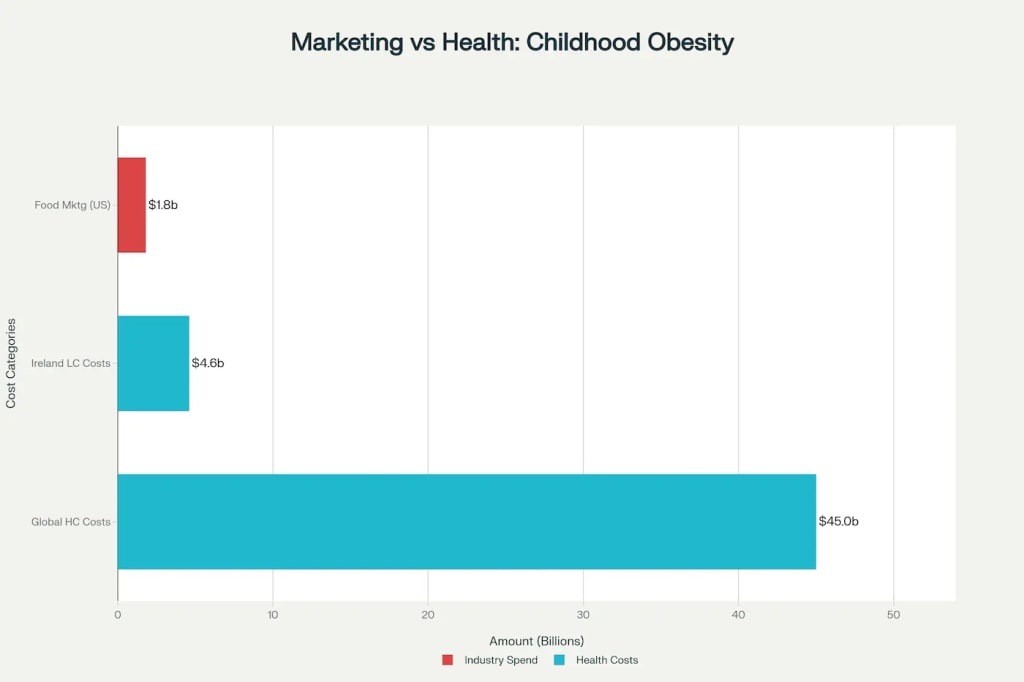
The scale and sophistication of food industry marketing to kids represents one of the most comprehensive influence campaigns targeting any demographic in human history. In the United States alone, food, beverage, and restaurant companies now spend over $2 billion annually on advertising specifically targeting children and adolescents, with global spending estimated to exceed $5 billion annually.
The reach of this marketing apparatus continues expanding through digital channels that operate largely outside regulatory oversight. Children now see 13-16 television advertisements daily for products generally high in saturated fat, sugar, or sodium, whilst only one in ten food advertisements promotes fruits and vegetables. However, television represents just the beginning of contemporary marketing strategies.
Food industry marketing to kids now encompasses sophisticated online ecosystems designed to capture children’s attention for extended periods whilst building brand loyalty from early ages. Major food brands maintain child-targeted websites featuring advergames, which are branded computer games designed to create positive emotional associations with specific products. Approximately 1.2 million children aged 6-11 visit food company-sponsored advergame sites monthly, spending up to 63 minutes per month on individual brand sites.
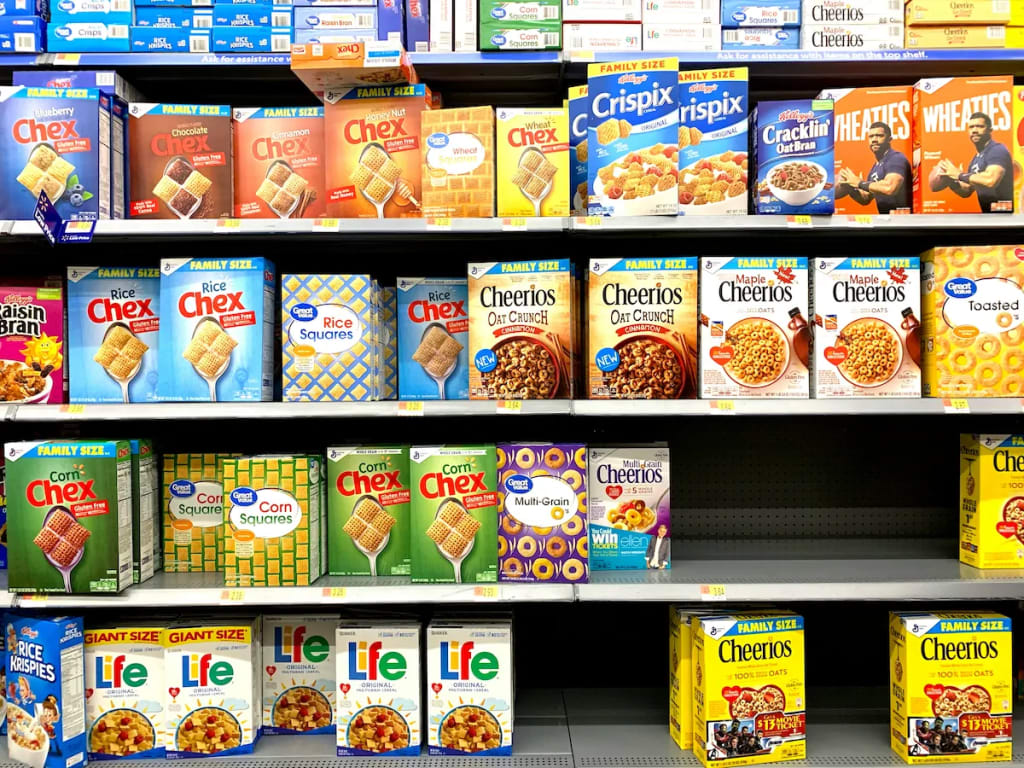
Social media platforms have become particularly powerful vectors for food industry marketing to kids, despite age restrictions that prove largely ineffective in practice. Current data shows that 37% of children aged 10-12 maintain social media accounts across various platforms. The top 20 global brands on major social platforms include nine food and beverage companies, with some brands accumulating tens of millions of followers, many of whom are underage users.
These digital marketing strategies enable companies to bypass traditional advertising restrictions by encouraging children to become brand ambassadors themselves, sharing marketing messages directly with peers through posts, stories, and comments. This peer-to-peer marketing approach proves particularly effective because children perceive recommendations from friends as more trustworthy than traditional advertising.
The industry’s targeting strategies reveal calculated precision in reaching vulnerable young audiences. A recent UNICEF poll of 64,000 young people across 170 countries found that 75% recalled seeing advertisements for sugary drinks, snacks, or fast food in the previous week, with 60% reporting these advertisements increased their desire to consume such products. Even in conflict-affected regions, 68% of young people reported exposure to these marketing messages.
Companies deploy specific tactics designed to overcome children’s natural skepticism and parental oversight. These include celebrity endorsements featuring popular musicians and athletes, character licensing agreements with beloved cartoon figures, promotional tie-ins with blockbuster movies and popular video games, and increasingly sophisticated influencer marketing campaigns that deliberately blur the lines between entertainment and advertising.
The psychological sophistication of contemporary food marketing campaigns extends beyond simple product promotion. Companies now employ teams of behavioural psychologists, neuroscientists, and child development experts to design messages that exploit specific developmental vulnerabilities in young minds. These approaches include using bright colours and animated characters that appeal to younger children, incorporating popular music and celebrity endorsements for adolescent audiences, and creating storylines and narratives that position unhealthy products as symbols of friendship, adventure, and success.
Food industry lobby government: The policy interference network
Perhaps the most insidious aspect of the childhood obesity industry lies in how food companies systematically undermine public health policies through sophisticated lobbying operations. The scope of food industry lobby government interference has become a critical factor preventing effective obesity prevention measures worldwide, with companies spending millions annually to influence policy decisions that affect children’s health.

Recent revelations from Freedom of Information requests in the United Kingdom expose the extent of this influence network. Government emails obtained by the Soil Association reveal how the Food and Drink Federation, representing companies including Coca-Cola, Nestle, Unilever, Mars, Cadbury, and PepsiCo, successfully pressured officials to abandon plans encouraging retailers to promote minimally processed foods. The industry argued that promoting fresh fruits, vegetables, and whole grains over ultra-processed alternatives was “a real bone of contention” for their members.
This lobbying success came despite overwhelming scientific evidence supporting minimally processed foods for optimal child health. Industry representatives went so far as to question whether fresh foods are more nutritious than ultra-processed products, telling officials that “the science does not support” such conclusions. The result was that official guidance was rewritten to promote undefined “healthier options” that include energy drinks, crisps, fizzy drinks, ice creams, and confectionery as acceptable choices for children.
Similar patterns of food industry lobby government interference emerge across multiple countries and policy areas. In New Zealand, the government made a rare departure from joint food standards with Australia after transnational dairy and baby food corporations lobbied successfully against updated infant formula standards. Companies cited risks to exports and jobs, demonstrating what researchers described as “a remarkable level of access and influence” through direct appeals to the Prime Minister and key ministers.
The European Union faces comparable challenges, with Corporate Europe Observatory documenting how food and drink lobby groups spend an estimated €21.3 million annually to influence regulation across member states. Their strategies include pushing free trade agreements that undermine existing child protection laws, exercising undue influence over regulatory bodies through industry-funded research, championing weak voluntary schemes instead of mandatory regulations, and systematically outmaneuvering consumer advocacy groups through aggressive lobbying campaigns.
The transparency problem compounds these challenges significantly. Current lobbying disclosure rules contain massive loopholes that hide most influence activities from public scrutiny. Meetings held outside government buildings, phone calls, emails, and informal communications often go unrecorded. Only meetings with ministers and permanent secretaries typically become public, leaving extensive influence activities with other senior officials completely hidden from public oversight.
Recent analysis of lobbying records reveals that food companies gain access to government officials at rates far exceeding public health organisations. In some jurisdictions, industry representatives meet with policy makers 10-15 times more frequently than child health advocates, creating systematic imbalances in the information reaching decision makers. This disparity helps explain why policies consistently favour industry interests over child health outcomes.
The sophistication of modern lobbying operations extends beyond traditional government relations. Food companies now employ former government officials, fund academic research that supports industry positions, create front groups that appear to represent consumer interests, sponsor conferences and events where policy makers interact with industry representatives, and coordinate international campaigns to harmonise regulations in ways that benefit corporate interests.
The mental and physical toll: Obesity mental health children
The childhood obesity crisis extends far beyond physical health complications, creating profound impacts on obesity mental health children that often persist throughout life. Research consistently demonstrates that children living with obesity face significantly elevated risks of depression, anxiety, and other psychological challenges that can prove more devastating than the physical health consequences.
A comprehensive meta-analysis covering over 100,000 children found that those with obesity are 32% more likely to experience depression compared to children at healthy weights. This elevated risk is not merely correlational but appears bidirectional, with obesity contributing to mental health challenges through multiple pathways including social stigma, discrimination, and physiological changes in brain chemistry that affect mood regulation and emotional processing.
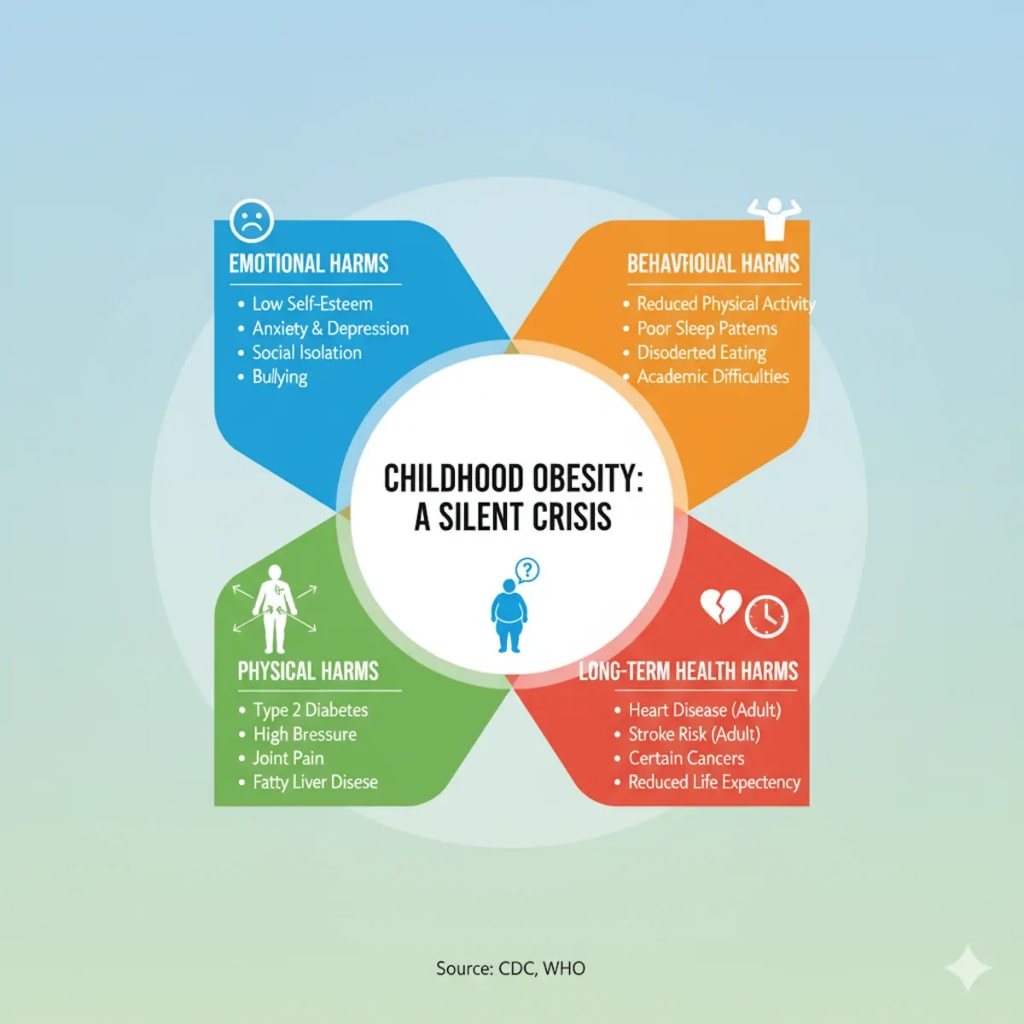
The social consequences of childhood obesity prove particularly harsh and can fundamentally alter children’s development during critical formative years. Children with obesity frequently experience bullying, social isolation, and discrimination that can establish lasting patterns of low self-esteem and social anxiety. Studies suggest that children with obesity may experience quality of life measures “even poorer than kids with cancer,” highlighting the profound impact on mental wellbeing that extends far beyond physical health concerns.
This social stigma is particularly concerning given that the environments promoting obesity are largely beyond individual children’s control. Children cannot determine their neighbourhood food environments, school meal policies, family economic circumstances, or the marketing messages they encounter daily. Yet they often internalise blame for their weight status, leading to shame, guilt, and negative self-perception that can persist into adulthood.
Gender differences emerge clearly in obesity mental health children research, with girls showing particularly elevated risks for depression and anxiety. Girls with obesity show 44% higher likelihood of depression compared to normal-weight girls, whilst the association appears less pronounced among boys. The systematic review evidence suggests this may relate to different social pressures and body image expectations, with girls facing particular scrutiny regarding appearance and weight from earlier ages.
The long-term implications of childhood obesity on mental health prove equally concerning. Research indicates that children with a history of obesity face elevated risks of anxiety and depression extending well into adulthood, even when they achieve healthier weights later in life. Swedish research found girls with obesity had 43% higher risk of anxiety and depression compared to the general population, with similar patterns among boys showing persistent effects over decades.
The neurobiological mechanisms linking childhood obesity to mental health challenges are becoming increasingly clear through advanced brain imaging studies. Ultra-processed foods children consume can directly affect brain development through multiple pathways including neuroinflammation, disruption of neurotransmitter systems, and interference with reward circuit function. These changes during critical developmental periods can establish lasting patterns affecting mood regulation, executive function, and stress response throughout life.
Recent research has identified specific brain regions affected by childhood obesity, including areas responsible for memory formation, emotional regulation, and decision-making. Children with obesity show different patterns of brain activity in regions associated with impulse control and reward processing, which can create cycles where poor food choices become increasingly difficult to resist over time.
The psychological impact extends to academic performance and social functioning in school environments. Children experiencing obesity-related mental health challenges often show decreased concentration, reduced participation in physical activities, and withdrawal from social situations that might involve food or body image concerns. These effects can compound over time, affecting educational outcomes and peer relationships that influence long-term life trajectories.
The economic burden: Profits vs children’s health
The financial calculus of the childhood obesity crisis reveals a profound market failure where private profits systematically extracted from children translate into massive public costs. This profits vs children’s health equation demonstrates how industry gains concentrate among shareholders whilst healthcare expenses, lost productivity, and social costs distribute across entire populations, creating one of the most significant examples of corporate cost externalisation in modern history.
The numbers reveal the stark imbalance in this economic equation. Companies invest approximately $2 billion annually in marketing specifically targeting children and adolescents in the United States alone, with global child-targeted marketing investments estimated to exceed $5 billion annually. This investment generates substantial returns through what industry analysts call the “lifetime value” of childhood brand loyalty, as food preferences established in early years often persist throughout life.

The global child-oriented food and beverages market is projected to reach $146.7 billion by 2025, growing at 5% annually despite increasing awareness of health consequences. Companies achieve particularly high profit margins on ultra-processed foods children consume, as these products cost significantly less to produce than fresh, whole foods but command premium prices due to convenience factors and intensive marketing efforts.
Meanwhile, the increased annual medical costs attributable to childhood overweight and obesity total $237.55 per capita globally, with childhood obesity specifically costing $307.72 per affected child annually. Extrapolating globally, the 189 million children who were overweight or obese in 2020 generate approximately $45 billion annually in increased medical costs that fall primarily on public healthcare systems and families.
In the United States, where childhood obesity prevalence reaches 22%, these increased medical costs total about $5 billion yearly, representing over 1% of total healthcare spending. By 2050, projections suggest American adolescent overweight will cause $13.62 billion in annual direct medical costs and $49.02 billion in annual indirect costs including lost productivity and premature mortality.
The lifetime economic burden proves even more staggering when comprehensive analysis includes all social costs. Ireland provides a detailed case study where current annual direct healthcare costs attributable to childhood overweight and obesity total €1.7 million, whilst lifetime costs reach €4.6 billion. Direct healthcare costs represent just one-fifth of total costs, with 79% stemming from absenteeism, premature mortality, and lifetime income losses that ripple throughout the economy.
The COVID-19 pandemic dramatically amplified these economic costs through accelerated weight gain during lockdown periods. Research suggests the pandemic-related spike in childhood obesity could cost the United Kingdom over £8 billion, with an additional 56,000 children living with obesity incurring £800 million in additional lifelong healthcare costs and £8.7 billion in broader societal costs including reduced economic productivity and increased disability payments.
Individual lifetime costs prove equally sobering when examined at the personal level. German research found that individuals with overweight or obesity during childhood face lifetime costs 3.7 times higher for men and five times higher for women compared to those maintaining healthy weights during childhood. Expected lifetime excess costs reach €10,666 for males and €15,963 for females, representing substantial financial burdens that often fall disproportionately on families least able to afford them.
The profits vs children’s health equation becomes even more stark when considering that much of the industry profit derives from products specifically designed to promote overconsumption. Food companies invest heavily in “bliss point” engineering and other techniques that make their products difficult to consume in moderation, effectively profiting from addictive qualities that drive repeat purchases whilst creating health problems that generate massive external costs.
Recent economic analysis suggests that every dollar spent on child-targeted marketing for ultra-processed foods generates approximately $15-20 in future healthcare costs, creating a massive transfer of wealth from public health systems and families to corporate shareholders. This represents one of the most significant examples of market failure in modern developed economies, where private profits systematically undermine public wellbeing without appropriate accountability mechanisms.
Solving childhood obesity: Evidence-based pathways forward
Despite the scale of the challenge, extensive research has identified proven strategies for solving childhood obesity that can break the cycle of industry profit at children’s expense. The World Health Organization’s updated “Best Buys” recommendations for 2024-2025 provide a comprehensive roadmap for cost-effective interventions that deliver maximum health impact per dollar invested whilst addressing the systematic nature of the childhood obesity industry.
Population-level policy interventions
The most effective approaches for solving childhood obesity operate at population levels, creating environments where healthy choices become easier choices for all families regardless of income, education, or individual circumstances. WHO recommends comprehensive policy packages addressing multiple determinants simultaneously rather than isolated interventions that companies can easily circumvent through marketing strategies.
Marketing restrictions emerge as particularly cost-effective interventions with proven track records across multiple countries. Evidence from nations implementing comprehensive marketing bans shows significant reductions in children’s exposure to unhealthy food advertising and corresponding improvements in dietary quality and childhood obesity statistics. Chile’s implementation of octagonal warning labels combined with marketing restrictions and school food policies has become the global gold standard, demonstrating measurable impacts on knowledge, awareness, and consumption patterns within just five years of implementation.
Recent analysis from Chile shows that comprehensive marketing restrictions led to a 37% reduction in purchases of high-sugar breakfast cereals and a 58% decrease in high-sodium packaged snacks among households with children. These changes occurred across all socioeconomic groups, suggesting that policy interventions can address health inequities more effectively than individual behaviour change approaches.
Fiscal policies, particularly taxes on sugar-sweetened beverages and subsidies for fresh fruits and vegetables, represent another proven intervention for solving childhood obesity. A recent Australian analysis found that a 20% levy on sugar-sweetened beverages ranked as the top “best buy” for child and adolescent obesity prevention, delivering the greatest reduction in childhood obesity at low cost whilst generating revenue for further health investments.
Mexico’s experience with sugar-sweetened beverage taxes provides compelling real-world evidence of effectiveness. Following implementation of a 1 peso per litre tax in 2014, purchases of taxed beverages decreased by 12% overall and 17% among low-income households where childhood obesity rates were highest. The tax generated over $3 billion in revenue during its first four years, funding health programs that further amplified benefits.
School-based interventions offer unique opportunities for solving childhood obesity through comprehensive approaches addressing both nutrition and physical activity environments where children spend significant portions of their days. Successful programmes combine improved meal standards, elimination of competitive food sales, enhanced physical education, and comprehensive health education curricula that teach children to critically evaluate food marketing messages.
Uruguay’s prohibition of any marketing in schools for foods not meeting Ministry of Health nutrition recommendations exemplifies effective school food policy that directly counters industry influence. Following implementation, vending machine sales of unhealthy snacks decreased by 78%, whilst purchases of healthier alternatives increased by 156%, demonstrating that policy changes can rapidly shift consumption patterns in school environments.
Early childhood interventions
Research consistently demonstrates that solving childhood obesity requires intervention during the earliest years when eating habits and preferences form through neurological processes that establish lifelong patterns. The most effective programmes target the prenatal period through age five, when developmental plasticity enables lasting behaviour change that becomes increasingly difficult to achieve as children age.
Home-based interventions focusing on parenting skills and early feeding practices show particular promise for preventing childhood obesity before it develops. The “Healthy Beginnings” programme, providing eight home visits from trained nurses around growth milestones, resulted in significantly lower BMI in intervention groups compared to control groups at 24-month follow-up assessments.
Similar success emerged from programmes teaching parents responsive feeding techniques, appropriate portion sizes, and strategies for establishing healthy meal routines without creating negative associations with food. These interventions prove particularly important given that many parents lack accurate information about healthy feeding practices and may inadvertently promote overconsumption through well-intentioned feeding behaviours.
Breastfeeding promotion represents one of the most cost-effective interventions for solving childhood obesity with benefits extending throughout life. WHO recommends comprehensive approaches including Baby-Friendly Hospital initiatives, workplace support for breastfeeding mothers, and strong implementation of the International Code of Marketing of Breast-milk Substitutes that prevents formula companies from undermining breastfeeding through aggressive marketing campaigns.
Singapore’s integrated approach, combining clinical practice guidelines with comprehensive maternal support and restrictions on formula marketing, exemplifies effective implementation that achieved breastfeeding rates significantly above regional averages whilst reducing childhood obesity prevalence in subsequent years.
Community-based solutions
Multi-component community interventions addressing multiple settings simultaneously show sustained effectiveness for solving childhood obesity through coordinated approaches that create supportive environments across all areas where children live, learn, and play. The most successful programmes integrate school-based components with family education, community environment changes, and policy advocacy that challenges industry influence at local levels.
Australia’s “Romp & Chomp” intervention, targeting 12,000 children from birth to five years through community-wide changes, demonstrated significant reductions in BMI z-scores and decreased consumption of packaged snacks and fruit juices. The programme’s success stemmed from its comprehensive approach addressing childcare centres, families, community organisations, and local policy environments simultaneously rather than focusing on individual behaviour change alone.
The intervention included training for childcare staff on nutrition and physical activity, resources for parents on healthy family meals and active play, community gardens and farmers markets that increased access to fresh foods, and advocacy for local policies supporting childhood obesity prevention. Five-year follow-up data showed sustained improvements in children’s dietary quality and physical activity levels.
Community approaches prove particularly important for addressing health inequities that result from systematic differences in food environments and marketing exposure. Children from disadvantaged backgrounds face disproportionately high obesity risks due to factors largely beyond family control, including limited access to fresh foods, higher exposure to fast food marketing, and reduced opportunities for safe physical activity.
Effective interventions must address these structural determinants through coordinated action across multiple sectors including healthcare, education, urban planning, and economic development. Communities that successfully reduce childhood obesity rates typically implement comprehensive approaches that improve food environments whilst providing families with resources and support needed to make healthy choices within those improved environments.
The latest WHO recommendations for 2024-2025
The World Health Organization’s updated “Best Buys” recommendations for 2024-2025 reflect growing recognition that solving childhood obesity requires addressing the childhood obesity industry directly through regulatory approaches that limit harmful marketing practices and improve food environments. These recommendations emphasise population-level interventions with proven effectiveness and cost-efficiency.
The updated recommendations prioritise comprehensive restrictions on marketing of foods high in fat, sugar, and salt to children across all media platforms including digital environments where traditional regulations often prove inadequate. The WHO specifically recommends that countries implement marketing restrictions that apply to food marketing both directly targeted at children and indirectly appealing to children through characters, celebrities, and promotional techniques that attract young audiences.
Fiscal measures receive increased emphasis in the 2024-2025 recommendations, with WHO advocating for tax policies that make unhealthy foods more expensive whilst subsidising healthy options to make nutritious choices more affordable for all families. The recommendations specifically highlight sugar-sweetened beverage taxes as among the most effective interventions for reducing childhood obesity whilst generating revenue for health programs.
School food environment improvements feature prominently in the updated recommendations, with WHO calling for comprehensive approaches that eliminate sales of foods high in fat, sugar, and salt in schools whilst ensuring that all foods available meet nutritional standards that support healthy development. The recommendations emphasise that voluntary industry initiatives have proven inadequate and that mandatory policies are necessary to create meaningful change.
The 2024-2025 recommendations also address digital marketing environments that have become central to food industry strategies targeting children. WHO calls for updated regulations that address social media marketing, influencer partnerships, advergames, and other digital strategies that bypass traditional advertising restrictions whilst reaching children through platforms where they spend increasing amounts of time.
The urgent call for systemic change
The evidence is overwhelming: the childhood obesity industry has created a system where corporate profits systematically undermine child health through sophisticated marketing manipulation, policy interference, and environmental degradation. The costs, measured in compromised child development, lifelong health burdens, family suffering, and massive public expenses, demand immediate, comprehensive action that matches the scale and sophistication of industry influence.

The path forward requires acknowledging that solving childhood obesity cannot rely solely on individual behaviour change within toxic food environments designed to promote overconsumption. As UNICEF’s Catherine Russell notes, “Ultra-processed food is increasingly replacing fruits, vegetables and protein at a time when nutrition plays a critical role in children’s growth, cognitive development and mental health”. The solutions must match the scale and sophistication of industry influence with equally comprehensive policy responses.
The most promising approaches combine multiple interventions simultaneously: comprehensive marketing restrictions that address digital and traditional advertising, fiscal policies supporting healthy foods whilst discouraging harmful products, school food environment improvements that eliminate industry influence in educational settings, early childhood interventions that establish healthy patterns before problematic behaviours develop, and systematic efforts to reduce industry policy interference through transparency requirements and lobbying restrictions.
Countries implementing such comprehensive approaches demonstrate that effective action is possible when political will matches public health evidence. Chile’s comprehensive approach combining warning labels, marketing restrictions, and school food policies shows measurable improvements in children’s dietary quality within five years. France’s restrictions on marketing during children’s programming and Portugal’s sugar-sweetened beverage taxes provide additional examples of successful policy implementation that prioritises child health over industry profits.
The stakes could not be higher for this generation of children and future generations. Current projections suggest that without coordinated intervention, the childhood obesity crisis will continue expanding, imposing ever-greater costs on children, families, and societies whilst generating ever-larger profits for companies whose business models depend on child health deterioration. The choice is clear: continue allowing industry profits to drive child obesity, or implement the evidence-based solutions that can protect children’s health, development, and futures.
The time for half-measures has passed. The childhood obesity industry has demonstrated its willingness to prioritise profits over children’s wellbeing through decades of systematic manipulation that has created the first generation of children more likely to live shorter, less healthy lives than their parents. Now, governments, communities, and civil society must demonstrate equal determination in implementing the comprehensive solutions that can reclaim children’s food environments and restore their right to health. The children’s future and society’s wellbeing depends on the choices we make today.
To deepen the topic: reading, documentary, and podcast suggestions
For those who wish to continue investigating and delve deeper into the nuances of this topic, here are some high-quality, internationally acclaimed material suggestions:
Reading (Books)
- Salt Sugar Fat: How the Food Giants Hooked Us by Michael Moss: An award-winning journalistic investigation that reveals the industry’s strategies for creating addictive ultra-processed foods.
- Ultra-Processed People: The Science Behind Food That Isn’t Food by Dr. Chris van Tulleken: A recent and impactful book that explains the science behind ultra-processed foods and their effect on the human body, written by a doctor and scientist.
- In Defense of Food: An Eater’s Manifesto by Michael Pollan: A classic that argues in favor of eating based on “real food,” offering a simple and powerful philosophy for escaping the traps of the Western diet.
Documentaries
- Fed Up (2014): Available on various streaming platforms, this documentary exposes the role of the food industry and government lobbying in the childhood obesity epidemic in the USA, with special focus on sugar.
- In Defense of Food (2015): Based on Michael Pollan’s book, this PBS documentary explores how we can reconnect with real food in a world dominated by industrialized products.
Podcasts
- The Urban Herald: Contemporary insights, health, lifestyle, entertainment, business, technology, and more, all with a fresh and modern perspective.
- The Doctor’s Farmacy with Dr. Mark Hyman: In various episodes, Dr. Hyman (USA) interviews specialists and discusses the impact of ultra-processed foods on health and the policies needed to combat the chronic disease epidemic.
- Feel Better, Live More with Dr. Rangan Chatterjee: This popular podcast by a British doctor frequently addresses the topic of nutrition and the power of lifestyle, with specific episodes featuring guests like Dr. Chris van Tulleken and other specialists in the field.
- ZOE Science & Nutrition: A podcast focused on cutting-edge scientific data, with many episodes dedicated to explaining the effects of ultra-processed foods on our body and, especially, on our gut health.
