

The gambling addiction global impact has reached unprecedented levels, with an estimated 80 million adults worldwide suffering from gambling disorders and millions more at risk. This behavioural addiction transcends geographical boundaries, devastating individuals, families, and communities whilst generating enormous societal costs. As digital transformation accelerates access to gambling through smartphones and online platforms, the urgency to understand and address this crisis has never been greater. The gambling addiction global impact extends far beyond individual suffering, creating ripple effects that challenge healthcare systems, destabilise families, and burden economies with costs exceeding $270 billion annually.
Understanding gambling addiction: A complex behavioural disorder
Definition and characteristics
Gambling disorder, clinically recognised in the DSM-5 as a behavioural addiction, represents the uncontrollable urge to continue gambling despite harmful consequences. Unlike substance addictions, this condition involves compulsive engagement with activities of chance, where individuals risk something of value in hopes of gaining something of greater worth. The World Health Organization officially classifies gambling disorder as a mental and behavioural disorder, acknowledging its serious impact on global public health.
The disorder manifests through persistent and recurrent problematic gambling behaviour leading to clinically significant impairment or distress. Research indicates that gambling activates the brain’s reward system similarly to drugs and alcohol, triggering dopamine release that reinforces the behaviour. This neurobiological similarity explains why treatment approaches often mirror those used for substance use disorders.
Symptoms of compulsive gambling
The symptoms of compulsive gambling encompass behavioural, emotional, and financial indicators that progressively worsen over time. Individuals often find themselves preoccupation with gambling activities, needing to gamble with increasing amounts of money to achieve the same excitement, and making unsuccessful attempts to control or stop gambling. Many also experience restlessness or irritability when trying to reduce their gambling, a phenomenon known as withdrawal.
Emotional symptoms frequently involve using gambling as an escape from feelings of helplessness, guilt, anxiety, or depression. The destructive pattern of “chasing losses”—attempting to recover money lost through further gambling—becomes a central feature of the disorder. This behaviour often leads to lying to family members or therapists to conceal the true extent of their gambling involvement.
Financial symptoms represent some of the most devastating aspects of the disorder. These include jeopardising or losing significant relationships, jobs, or educational opportunities because of gambling, and relying on others to provide money to relieve desperate financial situations caused by gambling.

Causes of gambling disorder
The development of gambling disorder involves complex interactions between psychological, social, biological, and environmental factors. Psychological factors include pre-existing mental health conditions such as depression, anxiety, and attention deficit hyperactivity disorder, which significantly increase vulnerability to gambling problems. Research shows that over 90% of individuals with gambling disorder have at least one diagnosable mental disorder, with more than 60% having three or more co-occurring psychiatric conditions.
Social and environmental factors play crucial roles in addiction development. Easy access to gambling opportunities, particularly through online platforms and mobile applications, has dramatically increased exposure and participation rates. Aggressive marketing campaigns that normalise gambling behaviour and target vulnerable populations further contribute to the problem.
Biological factors include genetic predisposition, with family history of gambling or substance use disorders significantly increasing risk. Additionally, certain personality traits such as impulsivity, sensation-seeking behaviour, and poor decision-making capabilities contribute to increased vulnerability.
The global rise of gambling addiction: A growing crisis
Problem gambling statistics worldwide
The gambling addiction global impact has intensified dramatically over recent decades, with prevalence rates varying significantly across regions and countries. Current research indicates that worldwide prevalence rates range from 0.1% to 6.0% of adult populations, with an estimated 448.7 million adults globally experiencing some level of gambling-related harm.
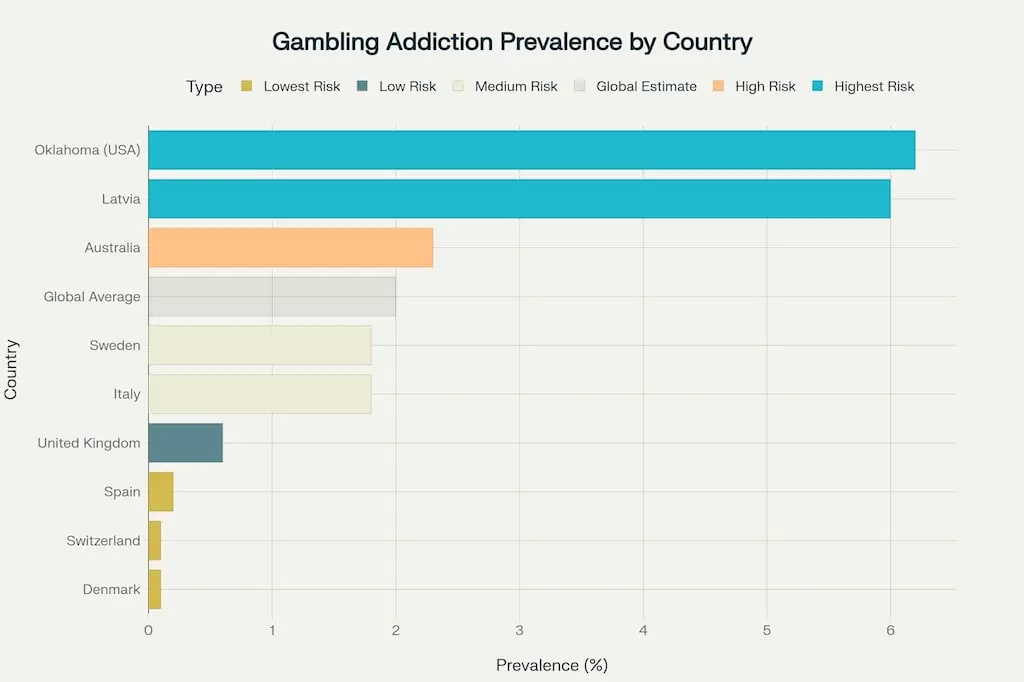
Recent studies reveal alarming trends in specific regions. Latvia exhibits the highest reported gambling addiction rates globally at 6.0% of its adult population, whilst Oklahoma leads United States statistics with 6.2% prevalence. Australia follows with 2.3% prevalence, representing approximately 580,000 affected individuals who spend an average of AUD $1,555 per adult annually on gambling activities.
The scope of the problem extends beyond clinical diagnoses. Research suggests that for every person with severe gambling problems, an additional two to three individuals experience subclinical gambling-related difficulties. This means the total number of people affected by gambling-related harm could exceed 200 million globally.
Online gambling addiction rise
The digital revolution has fundamentally transformed gambling accessibility and participation patterns. Online gambling markets are projected to reach $700 billion by 2028, driven primarily by smartphone adoption in low- and middle-income countries. The sheer convenience of mobile gambling applications has created what experts term “pocket casinos,” available 24 hours daily without traditional social or physical barriers.

Research indicates that 81% of problem gamblers participate in online gambling globally, whilst in the United States, 59% of problem gamblers report engaging in online activities. The COVID-19 pandemic significantly accelerated these trends, with online gambling activity increasing substantially during lockdown periods. Studies show that 18% of past-year gamblers reported increased gambling since the pandemic began, compared to 13% in pre-pandemic periods.
The most concerning aspect of the rise in online gambling addiction involves the targeting of younger demographics. Data reveals that 48% of millennials and 36% of Generation Z report exclusively wagering online. This shift represents a fundamental change in gambling behaviour patterns, moving from occasional social activities to continuous, solitary engagement.
Impact of technology and mobile applications
Mobile gambling applications have revolutionised accessibility through sophisticated design features that promote continuous engagement. These applications employ persuasive design methods and data-driven algorithms to target appealing content to specific users. Features such as push notifications, limited-time offers, and social sharing capabilities create psychological pressure to maintain engagement.
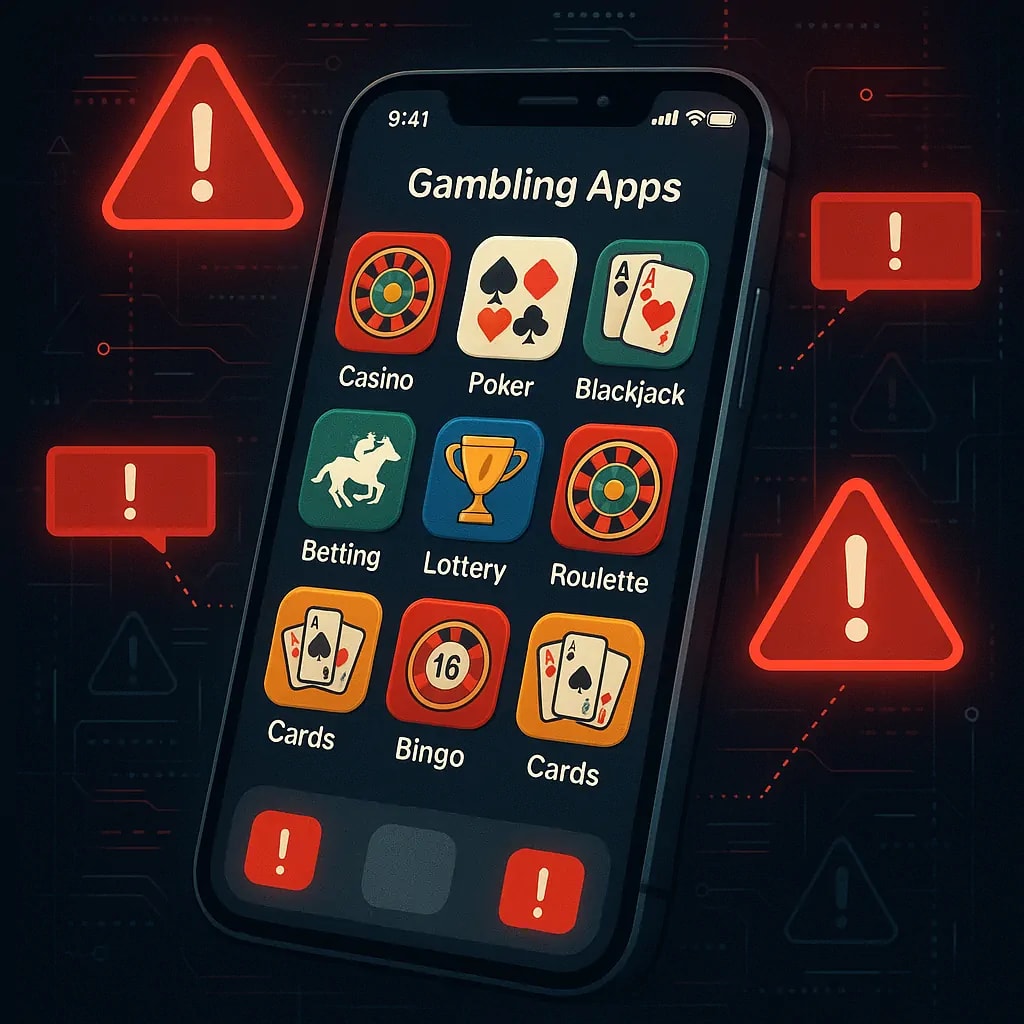
The integration of gambling elements into video games through loot boxes and microtransactions has blurred the boundaries between gaming and gambling. Research consistently demonstrates links between loot box spending and problem gambling severity, with studies showing that paying for loot boxes is associated with problem gambling regardless of specific features.
Smartphone gambling presents unique risks due to the removal of traditional gambling barriers. Unlike physical venues with operating hours and social oversight, mobile applications provide unlimited access in private settings. This constant availability, combined with cashless payment systems, creates psychological disconnects between spending actions and financial consequences.
Impact on individuals and families
Financial consequences of gambling
The financial consequences of gambling represent the most immediately visible harm, often serving as the first indicator of developing problems. Problem gamblers typically experience a progression of financial difficulties, beginning with using savings and escalating to borrowing money from multiple sources. Research indicates that 90% of problem gamblers withdraw cash advances from credit cards to fund gambling activities.
The average debt accumulated by problem gamblers varies significantly by region and gambling type. In the United States, the average caller to gambling helplines reports spending approximately $46,000 annually on gambling activities. More alarming, 3% of American problem gamblers accumulate debts exceeding $300,000. Studies in the United Kingdom suggest that problem gambling costs affected families an average of £1,270 per year in direct financial losses.
Financial consequences extend beyond direct gambling losses. Problem gamblers frequently experience job loss due to decreased performance, absenteeism, and theft or fraud committed to fund gambling activities. Home foreclosure affects a significant percentage of severe problem gamblers, whilst bankruptcy rates among this population exceed general population rates by substantial margins.
Impact of gambling on mental health
The relationship between gambling and mental health is complex and bidirectional. Problem gambling significantly increases risks of depression, anxiety, and stress-related disorders. Research consistently demonstrates that individuals with gambling problems experience depression rates of 77% and anxiety-related disorders in similar proportions.
Sleep disorders affect 95% of family members living with problem gamblers, representing the most common harm experienced. The stress and worry associated with gambling problems create chronic sleep disruption, leading to deteriorating physical and mental health over time.
The most severe mental health consequence involves elevated suicide risk. Studies indicate that individuals with gambling disorders experience suicide rates 15 times higher than the general population. In the United Kingdom, problem gamblers are 19 times more likely to attempt suicide compared to non-gamblers. Research suggests that gambling-related suicides account for 4-11% of all suicides in the UK, representing an estimated 250-650 completed gambling-related suicides annually.
Family impact of gambling addiction
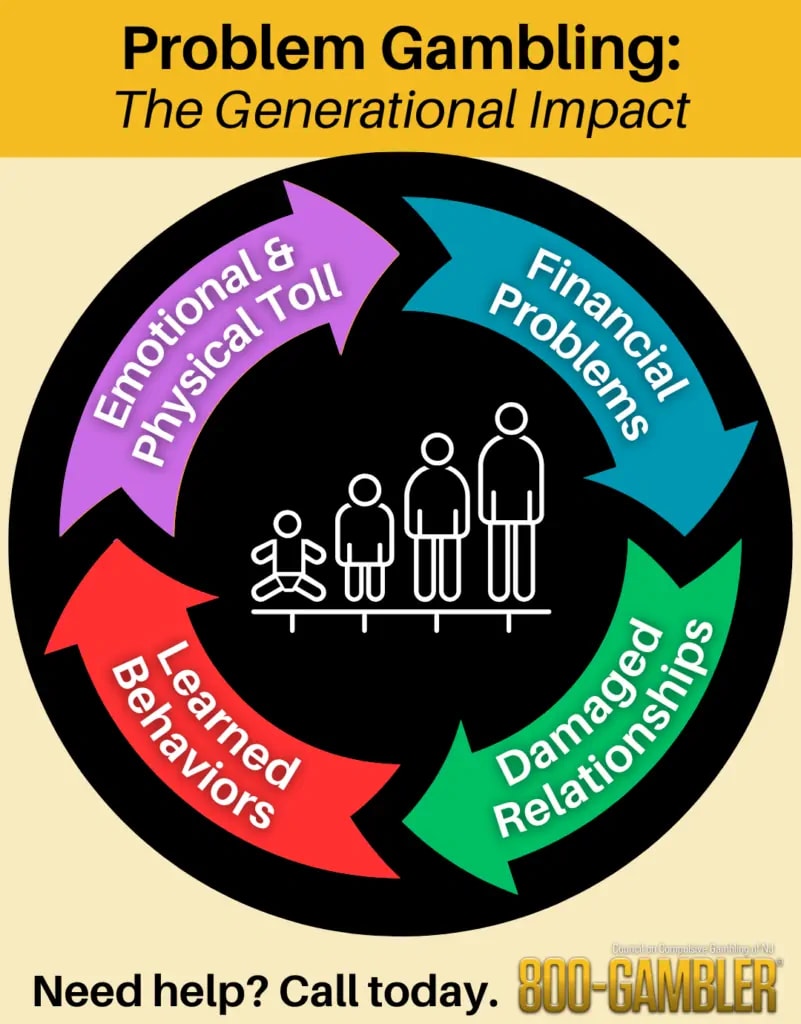
The family impact of gambling addiction extends far beyond the individual gambler, creating widespread harm affecting spouses, children, parents, and extended family members. Research indicates that 96% of family members experience relationship harms, with 67% reporting significant impact on family dynamics.
Children of problem gamblers face particularly severe consequences, including parental neglect, inadequate role modelling, financial deprivation, family conflict, and physical isolation. Studies show that children in gambling-affected households experience higher rates of behavioural problems, academic difficulties, and mental health issues compared to children in non-affected families.
Financial strain on families often results in inability to meet basic needs for food, clothing, and shelter. Family members frequently report using work time and resources to manage crises arising from gambling problems, with 37% experiencing significant impact on their own work or educational performance. Additionally, 29% of family members report lack of career progression due to the demands of managing gambling-related crises.
The emotional toll on families includes widespread feelings of distress (99%), anger (96%), shame (85%), hopelessness (96%), and insecurity (83%). These emotional consequences often persist long after gambling problems are addressed, requiring specialised family support services for recovery.
Societal and economic impact
Healthcare burden and economic costs
The gambling addiction global impact creates substantial healthcare burdens requiring increased mental health services and addiction treatment capacity. Healthcare costs associated with gambling disorders exceed $1.9 billion annually globally, affecting approximately 35 million individuals who require medical intervention. These costs include emergency department visits, mental health hospitalisations, suicide prevention services, and long-term addiction treatment programmes.
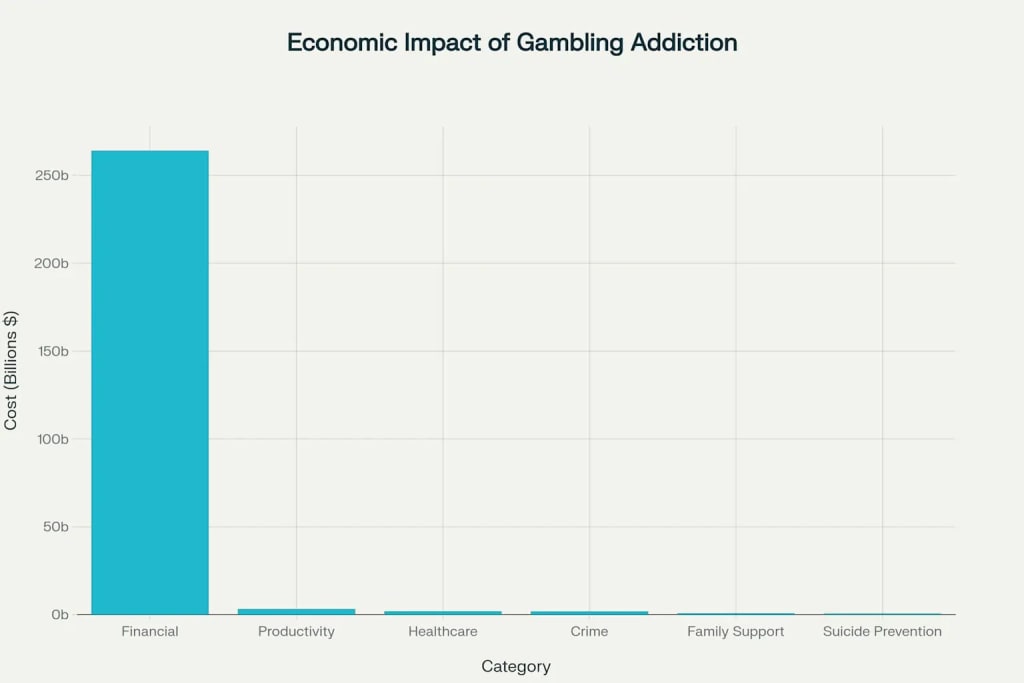
The broader economic impact encompasses multiple sectors beyond healthcare. Lost productivity accounts for $3.2 billion in annual costs, affecting 22 million individuals whose work performance deteriorates due to gambling problems. Crime-related costs add another $1.8 billion annually, reflecting increased theft, fraud, and embezzlement committed to fund gambling activities.
Social welfare costs include increased demand for housing assistance, family support services, and emergency financial aid. Family support services require $800 million annually to address the needs of 45 million family members affected by gambling problems. These services include counselling, financial planning assistance, legal aid, and child protection services.
Governmental responses and regulations
Governmental responses to gambling addiction vary significantly across jurisdictions, reflecting different approaches to balancing economic benefits with public health protection. The United Kingdom has implemented comprehensive reforms including a mandatory levy on gambling operators, raising an estimated £100 million annually for research, prevention, and treatment. This represents a crucial shift from voluntary industry contributions to mandated funding for harm reduction.
Australia has introduced independently-developed safer gambling messages after criticism of industry-created slogans like “Gamble responsibly”. These new messages focus on specific actions such as setting deposit limits and have shown significantly better performance in encouraging gambling behaviour modification.
Several European countries have implemented strict advertising restrictions and self-exclusion programmes. Norway and Sweden have developed comprehensive national databases for self-exclusion, whilst Germany has introduced advertising bans during certain hours and restrictions on sports betting promotions.
Recent regulatory actions and news
In a significant move, the UK government is introducing a mandatory levy on gambling companies to fund treatment and research, replacing the previous voluntary system. This is expected to generate approximately £100 million annually for problem gambling initiatives. In Australia, new national regulations are being rolled out to strengthen consumer protections, including the introduction of a national self-exclusion register and stricter rules around advertising. The United States has seen ongoing discussions about responsible gambling measures as more states legalize sports betting, with some advocating for stricter advertising controls and increased funding for treatment programs. For example, a recent study from the University of California San Diego revealed a surge in gambling addiction following the legalization of sports betting in many US states.
A personal perspective
“Gambling addiction doesn’t just empty your pockets; it empties your soul and shatters the trust of everyone around you,” shared John Smith, a recovering gambling addict and advocate for awareness, in a recent interview. “The constant chase, the lies, the despair—it’s a dark spiral. But recovery is possible, and with the right support, life can be rebuilt.” This sentiment underscores the profound personal toll of the addiction and the hope that effective interventions can offer.
Prevention, treatment, and support
Treatment for problem gambling
Effective treatment for problem gambling encompasses multiple approaches, with cognitive behavioural therapy (CBT) demonstrating the highest success rates at 65% effectiveness. CBT focuses on identifying and challenging cognitive distortions that perpetuate gambling behaviour, such as illusions of control and the gambler’s fallacy. Research consistently shows that CBT reduces both the amount of money lost and the severity of gambling problems.

Medication options include naltrexone, an opioid antagonist that has shown effectiveness in reducing gambling urges and behaviour in double-blind, placebo-controlled studies. The medication works by blocking the euphoric effects associated with gambling, though effectiveness rates of 55% are lower than psychological interventions.
Support groups such as Gamblers Anonymous provide peer support using 12-step programmes adapted from alcoholism treatment. While effectiveness rates of 40% are modest, their high accessibility scores of 9 out of 10 make these programmes valuable for individuals who cannot access professional treatment.
Online therapy platforms have emerged as increasingly important treatment options, offering 58% effectiveness rates with high accessibility scores of 9 out of 10. These platforms provide particular value for individuals in remote areas or those preferring anonymous treatment options.

Responsible gambling initiatives
Responsible gambling initiatives encompass industry-led and regulatory measures designed to prevent gambling-related harm. Self-exclusion programmes allow individuals to voluntarily ban themselves from gambling venues or online platforms, though effectiveness varies significantly across jurisdictions. Research indicates that current self-exclusion regulations are often insufficient in most participating jurisdictions, with high breach rates undermining programme effectiveness.
Education and awareness programmes target both gamblers and the general public. The most effective programmes focus on specific gambling mechanics rather than generic warnings about responsible gambling. Youth-targeted programmes show particular promise, with interventions like the Ludens programme demonstrating significant reductions in gambling frequency and addiction risk among adolescents.
Technological solutions include spending limits, time restrictions, and reality checks that interrupt gambling sessions. However, research suggests these tools are most effective when combined with human support rather than implemented as standalone measures.
Help for gambling addiction: Resources and support services
Comprehensive support services for gambling addiction include national helplines, counselling services, financial advice, and family support programmes. In English-speaking countries, several organisations provide specialised assistance:
United Kingdom:
- GamCare national gambling helpline: 0808 8020 133 (free, confidential support 24/7).
- Gambling therapy: Online support and counselling services.
- BeGambleAware: Comprehensive resources and treatment finder services.
United States:
- National problem gambling helpline: 1-800-GAMBLER (available in all 50 states).
- National council on problem gambling: Provides state-by-state resources and support.
- Gamblers anonymous: Local meetings and support groups nationwide.
Australia:
- Gambling help online: 1800 858 858 (24/7 counselling and support).
- Problem gambling support service: State-based services and resources.
Canada:
- Responsible gambling council: National resources and referral services.
- Problem gambling institute of Ontario: Specialised treatment and research.
Ireland:
- Gamblers anonymous Ireland: 01 872 1133 (support groups and counselling).
- Problem gambling Ireland: Provides support and information for individuals and families.
- Helplink mental health: Offers a gambling problem counselling service.
- GamblingCare: Offers free, confidential support for individuals and families impacted by gambling issues
These services provide immediate crisis intervention, ongoing counselling, financial planning assistance, and family support. Many offer online chat services, email support, and mobile applications for continuous accessibility.
Gaming addiction vs gambling addiction: Understanding the differences
The relationship between gaming addiction and gambling addiction represents an emerging area of concern as digital entertainment increasingly incorporates gambling-like mechanics. While both represent behavioural addictions with similar neurobiological pathways, important distinctions exist in their manifestation and treatment approaches.
Gaming addiction, officially recognised as Gaming Disorder by the World Health Organization, involves persistent and recurrent gaming behaviour that takes priority over other activities despite negative consequences. Unlike gambling addiction, gaming addiction doesn’t inherently involve financial risk, though this distinction has blurred with the introduction of loot boxes and microtransactions.
Research indicates that problematic gaming can serve as a gateway to gambling problems, particularly through exposure to gambling-like mechanics in video games. Longitudinal studies demonstrate that gaming problems at baseline predict gambling problems two years later, though the reverse relationship doesn’t hold. This suggests that early intervention in gaming problems could prevent progression to gambling addiction.
The convergence between gaming and gambling through loot boxes creates particular risks for young people. Studies show that 40% of children who play video games open loot boxes, with 5% of gamers generating half of all loot box revenue. This concentration among heavy users mirrors patterns seen in problem gambling populations.
The future of gambling addiction
Emerging technologies and new risks
The future landscape of gambling addiction will be shaped by emerging technologies that create new risk factors and intervention opportunities. Virtual reality gambling represents a significant emerging threat, potentially creating more immersive and addictive gambling experiences. These technologies could intensify the psychological impact of gambling by creating more realistic environments and social interactions.
Cryptocurrency gambling introduces additional risks through increased anonymity and reduced regulatory oversight. The volatility of cryptocurrency markets adds another layer of financial risk for individuals already vulnerable to gambling problems. Additionally, the technical complexity of cryptocurrency transactions may obscure the true value of gambling losses.
Artificial intelligence and machine learning technologies present both risks and opportunities. While these technologies enable more sophisticated targeting of vulnerable individuals through personalised marketing, they also offer potential for improved early intervention and treatment customisation.
Research and policy development needs
Future research priorities include developing better understanding of gambling-related harm across different populations and gambling types. Longitudinal studies are particularly needed to understand causal relationships between gambling exposure and harm development. Additionally, research into gender-specific risk factors and treatment approaches could improve intervention effectiveness.
Policy development needs focus on creating comprehensive regulatory frameworks that address technological convergence between gaming and gambling. International cooperation is essential given the global nature of online gambling platforms and the ability of operators to jurisdiction-shop for favourable regulatory environments.
Prevention research requires development of effective population-level interventions that can reduce gambling-related harm before clinical problems develop. This includes investigating optimal approaches to gambling education, advertising restrictions, and environmental modifications that support responsible gambling behaviour.
Conclusion
The gambling addiction global impact represents one of the most significant public health challenges of the digital age, affecting an estimated 80 million individuals worldwide whilst generating enormous societal costs exceeding $270 billion annually. As technology continues to expand gambling accessibility through mobile applications and online platforms, the urgency for comprehensive intervention strategies has never been greater.
Understanding gambling addiction as a complex behavioural disorder requiring multifaceted treatment approaches is essential for addressing this crisis effectively. The evidence clearly demonstrates that successful intervention requires combination of individual treatment, family support, community prevention programmes, and regulatory measures that limit harmful gambling practices.
The future of gambling addiction prevention and treatment lies in developing evidence-based approaches that leverage technology for positive intervention whilst maintaining strong regulatory frameworks to protect vulnerable populations. Only through coordinated global action involving healthcare systems, governments, industry stakeholders, and affected communities can we hope to reduce the devastating impact of gambling addiction on individuals, families, and society as a whole.
For those affected by gambling problems, help is available through numerous professional services, support groups, and online resources. Early intervention significantly improves treatment outcomes, making it crucial for individuals experiencing gambling-related difficulties to seek assistance promptly through established helplines and treatment services.
FAQ: Understanding gambling addiction
Q: What exactly is gambling addiction?
A: Gambling addiction, or gambling disorder, is a behavioral addiction characterized by an uncontrollable urge to gamble despite harmful consequences. It’s recognized clinically as a mental and behavioral disorder by the WHO and DSM-5.
Q: How does online gambling contribute to the problem?
A: Online gambling significantly increases accessibility, creating “pocket casinos” available 24/7 without traditional barriers. This constant availability, coupled with persuasive design and aggressive marketing, makes it easier for individuals to develop and escalate gambling problems.
Q: Can video games lead to gambling addiction?
A: While distinct, problematic gaming can serve as a gateway to gambling problems, especially through features like loot boxes and microtransactions that blur the line between gaming and gambling. Studies show a link between loot box spending and problem gambling severity.
Q: What are the main financial consequences of gambling addiction?
A: Financial consequences can be severe, ranging from depleted savings and significant debt to job loss, home foreclosure, and bankruptcy. Many problem gamblers resort to borrowing heavily or engaging in illicit activities to fund their addiction.
Q: Is there effective treatment for gambling addiction?
A: Yes, effective treatments exist. Cognitive behavioural therapy (CBT) shows high success rates (65%), focusing on changing problematic thought patterns. Medications like naltrexone can help reduce urges, and support groups like Gamblers Anonymous provide crucial peer support. Online therapy platforms are also increasingly valuable.
Q: How can families support someone with a gambling addiction?
A: Families play a vital role, but the impact on them can be immense. Seeking family support services, counselling, and financial planning assistance can help manage the crisis and support recovery. Open communication and setting boundaries are also crucial.
Q: What is “responsible gambling”?
A: Responsible gambling initiatives are measures designed to prevent harm, including self-exclusion programs, education campaigns, and technological tools like spending limits. These aim to promote safer gambling behaviours and provide support for those at risk.
