

In the sun-scorched savannas of northern Tanzania, where baobab trees stand like ancient sentinels and the morning air carries the whispered promises of another day’s hunt, lives one of humanity’s most extraordinary cultural treasures. The Hadza tribe click language represents far more than mere communication—it’s a living testament to our species’ incredible linguistic diversity and a window into a way of life that has persisted for tens of thousands of years. Among the scattered camps near Lake Eyasi, the Hadza people, often referred to as Tanzania hunter-gatherers, continue their ancestral dance with nature, speaking in clicks, whistles, and sounds that would be utterly foreign to most of the modern world, yet somehow feel achingly familiar to something deep within our collective human memory. This unique language, Hadzane, is a prime example of endangered African languages that hold immense cultural and linguistic value.
This isn’t just another story about an indigenous community struggling against modernity’s relentless march. The Hadza hunter-gatherers represent something far more profound: they are quite possibly the closest living link we have to understanding how our ancestors lived, communicated, and thrived for 99% of human history. Their click language, known as Hadzane, stands as one of the world’s most remarkable linguistic isolates—a language so unique that it shares no demonstrable relationship with any other tongue on Earth.
The enigmatic Hadza: Africa’s last true hunter-gatherers
Who are the Hadza people?
The Hadza, or Hadzabe as they call themselves, are Tanzania’s indigenous hunter-gatherers who have somehow managed to preserve their traditional way of life in an increasingly connected world. With a population estimated between 1,200 and 1,300 individuals, they represent one of the last remaining communities on Earth to live entirely—or almost entirely—off the land as their ancestors did millennia ago.
What makes the Hadza truly exceptional isn’t just their lifestyle, but their genetic heritage. These remarkable people are descended from Tanzania’s aboriginal, pre-Bantu expansion hunter-gatherer population, and genetic studies suggest they represent one of the oldest lineages of modern humans. Their ancestors have likely occupied the same territory around Lake Eyasi for tens of thousands of years, making them living repositories of ancient human knowledge and adaptation.

The Yaeda Valley: Homeland of ancient wisdom
The Hadza homeland centres around the Lake Eyasi basin in northern Tanzania’s central Rift Valley, particularly in the Yaeda Valley and surrounding areas. This landscape, characterised by dry woodland savanna punctuated by seasonal wetlands and rocky outcrops, has provided everything the Hadza have needed for survival across countless generations. The region lies tantalizingly close to some of the world’s most significant paleoanthropological sites, including Olduvai Gorge—often called the “Cradle of Mankind”—just 50 kilometres away.
The territory encompasses four traditional areas of Hadza habitation: Dunduhina (west of Lake Eyasi’s southern end), Tlhiika (between the lake and Yaeda Valley), Siponga (east of the valley in the Mbulu Highlands), and Mangola (north of the valley). During wet seasons, they range more widely; during dry periods, they concentrate around reliable water sources—a pattern of mobility that has sustained them for millennia.
Hadzane: The symphony of clicks that echoes through time
Understanding click languages in Africa
To appreciate the Hadza tribe click language, one must first understand what makes click consonants so extraordinary. Click sounds are produced by creating a vacuum in the mouth and releasing it—imagine the “tsk-tsk” sound of disapproval, or the “clip-clop” noise children make to imitate horses. However, whilst these paralinguistic sounds exist in many cultures, only a handful of languages on Earth use clicks as full consonants that combine with vowels to form meaningful words.
Click languages are predominantly found in southern Africa among the Khoisan language families, with notable examples including Xhosa and Zulu. Yet fascinatingly, three languages in East Africa also employ clicks: Sandawe, Dahalo, and Hadzane. What makes Hadzane particularly remarkable is that unlike the others, it appears to be a true linguistic isolate with no demonstrable relationship to any other language family worldwide.
The linguistic marvel of Hadzane
Hadzane possesses an almost overwhelming phonetic complexity that puts most world languages to shame. Where the average language employs around 30 distinct sounds (phonemes), Hadzane utilises approximately 130, with 65 different consonants alone—including a dozen distinct click types. This represents nearly half of all the sounds that human vocal anatomy can physically produce.
The click consonants in Hadzane fall into several categories, each produced at different points in the mouth and with varying airflow mechanisms. Dental clicks (represented by ǀ) are made by placing the tongue against the front teeth, lateral clicks (ǁ) involve the sides of the tongue, whilst alveolar clicks (!) and palatoalveolar clicks (≠) are produced further back. Each type can be modified with additional sounds, creating an intricate symphony of percussion that carries meaning, emotion, and cultural knowledge.
What’s particularly striking about Hadzane is how seamlessly these clicks integrate with the language’s melodic and rhythmic structure. Unlike some click languages where the sounds feel almost mechanical, Hadzane flows with a musical quality that reflects the Hadza’s deep connection to their natural environment—the clicks mimicking everything from bird calls to the sound of honey dripping from baobab trees.
Cultural significance and transmission of the Hadza language
The click languages Africa tradition that Hadzane represents carries profound cultural significance beyond mere communication. These sounds encode traditional ecological knowledge, with specific clicks often associated with particular animals, plants, or environmental phenomena. The language serves as a living repository of information about seasonal patterns, animal behaviour, plant locations, and traditional medicine that has been accumulated over countless generations.
Perhaps most remarkably, despite UNESCO’s classification of Hadzane as “vulnerable,” the language remains vigorously transmitted to children. In a world where indigenous languages disappear at an alarming rate, the Hadza’s continued use of their click language in daily life represents a small miracle of cultural persistence. Most Hadza children still learn Hadzane as their first language, though increasing numbers also acquire Kiswahili as they encounter the outside world.
Daily life: Foraging, hunting, and community in ancient rhythms
The Hadza diet: A blueprint for human health
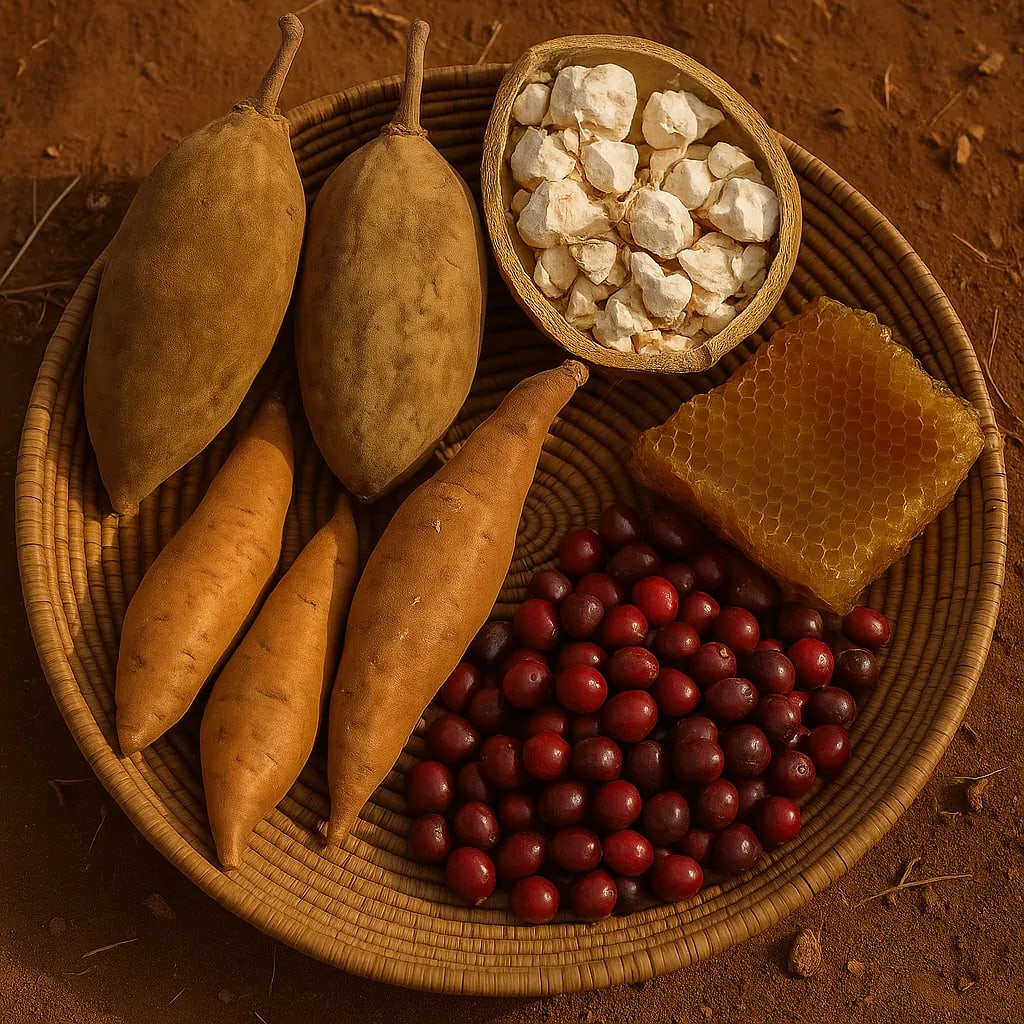
The traditional Hadza diet represents one of the most diverse and nutritionally rich eating patterns documented by anthropologists. Unlike modern diets focused on a handful of staple crops, the Hadza consume over 100 different wild foods throughout the year, creating a natural buffet that would make any nutritionist envious.
Honey stands as the crown jewel of Hadza nutrition, comprising 15-20% of their caloric intake and serving as their most beloved food. The relationship between the Hadza and honey extends far beyond mere consumption—it represents a sophisticated ecological partnership. The Hadza have developed an extraordinary symbiotic relationship with the greater honeyguide bird (indicator), which leads hunters to wild bee colonies in exchange for leftover beeswax. This ancient collaboration involves specific whistling patterns passed down through generations, creating a cross-species communication system that borders on the miraculous.

Tubers provide the dietary foundation, particularly during the dry season when other resources become scarce. Hadza women possess encyclopaedic knowledge of root vegetables, knowing exactly where to find nutrient-rich tubers even in the harshest conditions. The baobab fruit, with its extraordinary fibre content and vitamin C levels six times that of oranges, serves as both nutrition and medicine. Meat, whilst highly prized and culturally significant, typically comprises only 20-25% of calories, with the remainder coming from berries, fruits, and other plant foods.

Gender roles and social structure among the Hadza
The Hadza culture exemplifies one of the world’s most egalitarian societies, where traditional gender roles exist alongside remarkable flexibility and mutual respect. Men typically specialise in hunting large game, harvesting honey from tall baobab trees, and crafting tools, whilst women focus on gathering tubers, berries, and small animals. However, these divisions remain fluid—women occasionally hunt small game or collect honey, whilst men may gather plant foods when opportunities arise.
What’s particularly striking about Hadza social organisation is the absence of formal leadership structures. Decisions emerge through consensus-building discussions, with neither chiefs nor formal hierarchies governing community life. This egalitarian approach extends to gender relations, where women enjoy considerably more autonomy and decision-making power than in many traditional societies. Divorce rates remain relatively high at 49 per 1,000 years of marriage, largely because both men and women can independently sustain themselves, reducing economic dependence that might trap individuals in unsuitable relationships.
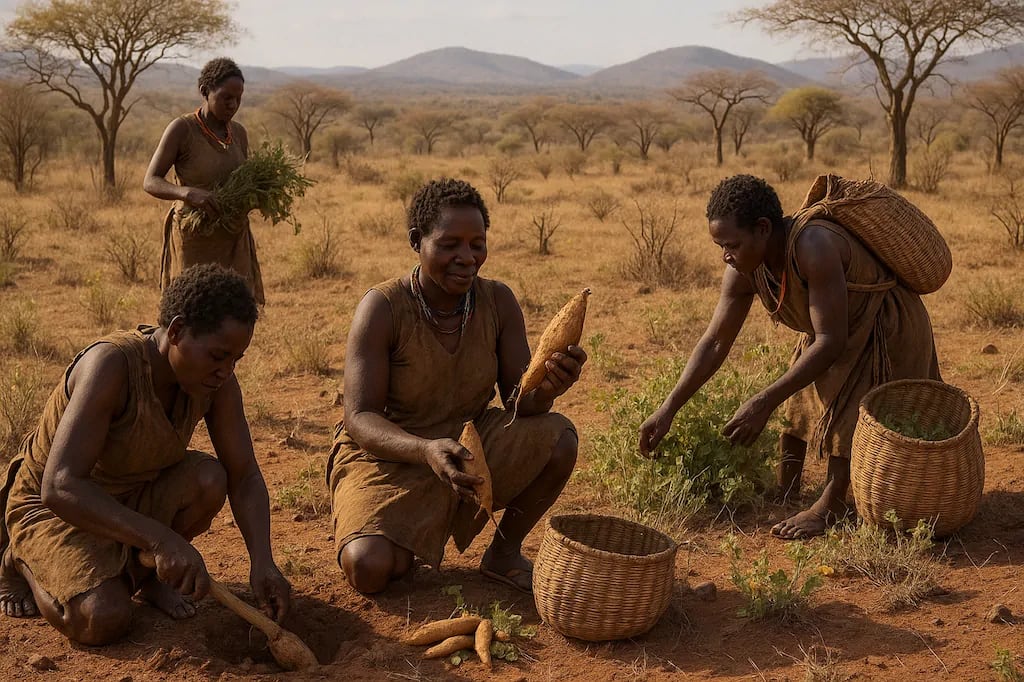
Children play a unique role in Hadza society, beginning to forage independently from an early age—a practice that would horrify modern helicopter parents but makes perfect sense in the Hadza’s safe, resource-rich environment. This early independence contributes to the relatively high fertility rates among Hadza women, as the economic “cost” of children remains manageable when they can contribute to their own sustenance.
Hunting techniques and traditional knowledge
The Hadza hunter-gatherers have perfected hunting techniques that represent thousands of years of accumulated wisdom about animal behaviour, seasonal patterns, and ecological relationships. Using handcrafted bows and arrows tipped with poison derived from the Adenium coetaneum shrub, Hadza hunters display remarkable patience and skill. During dry seasons, they often spend entire nights lying motionless beside waterholes, waiting for the perfect moment to strike.

Their hunting strategy focuses primarily on large game—animals weighing over 40 kilograms—despite the high risk of failure. This preference reflects both cultural values and practical considerations: large kills provide substantial meat that can be shared throughout the community, whilst the act of hunting itself serves important social functions beyond mere nutrition. Interestingly, research suggests that successful hunters don’t necessarily enjoy better nutrition than their peers, highlighting the strongly communalistic nature of Hadza society.
Threats to Hadza survival: The modern world encroaches
Land rights and agricultural expansion
The greatest threat facing the Tanzanian hunter-gatherers comes from the relentless expansion of agriculture and pastoralism into their traditional territories. Over the past 50 years, the Hadza have lost approximately 90% of their ancestral lands to farmers, cattle herders, and government conservation initiatives. This represents one of the most dramatic examples of indigenous land loss in modern Africa.
The encroachment follows predictable patterns: Sukuma farmers clear woodland for bean and maize cultivation from the south, whilst Datoga pastoralists drive cattle into Hadza territories from other directions. Climate change exacerbates these pressures, forcing herders to seek new grazing areas as their traditional lands become increasingly unreliable. The non-confrontational nature of Hadza culture means they often simply retreat rather than fight for territorial access, leading to a steady compression of their available resources.
In 2011, the Tanzanian government took the historic step of granting formal land titles to some Hadza communities—the first time the country had ever recognised minority tribal land rights. This achievement, supported by organisations like the Ujamaa Community Resource Team, established legal protection for about 84,000 acres of Hadza territory. However, enforcement remains challenging, and much of the Hadza homeland continues to face pressure from outside groups. Recent reports continue to highlight the ongoing struggles for land rights among indigenous communities in Tanzania, underscoring the need for continued advocacy and enforcement of land tenure laws.
Tourism: Blessing or curse?
Tourism presents a particularly complex challenge for Hadza conservation efforts. On one hand, cultural tourism provides much-needed income and creates economic incentives for preserving traditional ways of life. Carbon offset projects and ecotourism can generate revenue whilst supporting forest conservation. On the other hand, tourism often transforms authentic cultural practices into performative displays, potentially undermining the very traditions it claims to protect.
The influx of visitors to Hadza communities has brought both opportunities and serious problems. Tourism income allows communities to purchase supplementary foods and medical care, but it has also contributed to alcohol dependency and social disruption. Some researchers describe witnessing tourists arriving as early as 6 AM to watch staged hunts and dances, with Hadza receiving payment that is often immediately spent on alcohol. The resulting drinking problems have led to domestic violence, child neglect, and even deaths from alcohol poisoning.
Cultural preservation in a changing world: Threats to Hadza language survival
Perhaps the most insidious threat to the Hadza comes from well-intentioned but culturally destructive assimilation efforts. Government boarding schools remove Hadza children from their communities for months or years, immersing them in mainstream Tanzanian culture whilst providing little support for maintaining their linguistic and cultural heritage. Many children who attend these schools struggle to readjust to traditional life, creating generational tensions and accelerating cultural erosion. The Hadza click language, in particular, faces significant pressure as younger generations are exposed to Kiswahili and other dominant languages.
The challenge lies in balancing the legitimate desire for education and modern opportunities with the preservation of irreplaceable cultural knowledge. Some Hadza individuals have successfully navigated both worlds—completing university education whilst maintaining their cultural identity—but such success stories remain rare. The pressure to assimilate often forces young Hadza to choose between their heritage and economic opportunities, a choice that no indigenous community should have to make.
Conservation efforts and sustainable solutions
Community-based conservation models
The most promising Hadza conservation efforts focus on community-controlled initiatives that respect Hadza autonomy whilst providing sustainable income streams. The Yaeda Valley carbon offset project, managed by Carbon Tanzania in partnership with local communities, demonstrates how environmental conservation can support traditional livelihoods. By employing Hadza scouts to monitor forest health and prevent illegal logging, the project creates jobs whilst protecting the ecosystem that sustains traditional hunting and gathering.
These community scouts report steady increases in wildlife populations, including elephants, giraffes, and other species that had been declining due to poaching and habitat destruction. The project generates income through carbon credit sales, with communities meeting twice yearly to decide how funds should be allocated—typically prioritising school fees, medical care, and community infrastructure.
Supporting indigenous land rights
Legal recognition of indigenous land rights remains crucial for long-term Hadza land rights protection. The 2011 land title victory provided a template for expanding legal protections, though much work remains to be done. Supporting organisations like the Ujamaa Community Resource Team (UCRT) and international advocacy groups helps ensure that Hadza voices are heard in policy discussions affecting their future.
International pressure has proven effective in protecting Hadza interests, as demonstrated when protests forced the Tanzanian government to cancel a controversial UAE royal family hunting concession that would have displaced both Hadza and Datoga communities. Such advocacy highlights the importance of global awareness and support for indigenous rights.
Why the Hadza matter: Why Hadzane matters for linguistic diversity
Insights into human evolution and health
The Hadza offer invaluable insights into human evolution, health, and optimal living patterns that extend far beyond academic interest. Research on Hadza gut microbiomes reveals extraordinary bacterial diversity that correlates with robust health and freedom from many “diseases of civilisation”. Their traditional diet, rich in fibre and diverse plant compounds, supports gut bacteria populations that most Westerners have lost entirely.
Studies of Hadza energy expenditure challenge common assumptions about physical activity and metabolism, revealing that their high levels of daily movement don’t necessarily translate to higher caloric consumption than sedentary Westerners—a finding with profound implications for understanding human metabolism and obesity. This research contributes to growing recognition that modern lifestyle diseases may result not just from overeating, but from fundamental mismatches between our evolutionary heritage and contemporary environments.
Environmental wisdom and sustainability
The modern hunter-gatherer societies like the Hadza demonstrate sustainable resource management practices developed over millennia. Their mobility patterns, seasonal adaptations, and resource-sharing systems provide models for sustainable living that could inform contemporary environmental challenges. The Hadza’s intimate knowledge of ecological relationships—from understanding animal migration patterns to predicting seasonal fruiting cycles—represents a form of environmental science that Western researchers are only beginning to appreciate.
Their traditional burning practices, seasonal harvesting protocols, and wildlife management techniques have maintained ecosystem health for thousands of years without external inputs or technological interventions. This indigenous knowledge could prove invaluable as the world grapples with climate change and biodiversity loss.
Cultural diversity and human potential
Perhaps most importantly, the Hadza remind us of the extraordinary diversity of human cultural expression and the multiple ways our species can organize society, communicate meaning, and create fulfilling lives. Their egalitarian social structures, conflict resolution methods, and emphasis on sharing offer alternative models to increasingly hierarchical and competitive modern societies.
The click languages Africa tradition that Hadzane represents demonstrates the remarkable plasticity of human communication and the cognitive capabilities our species possesses. Preserving such linguistic diversity isn’t merely an academic exercise—it maintains access to different ways of thinking about and categorizing human experience that could prove invaluable for future generations. Hadzane, as one of the few remaining click languages and a linguistic isolate, is particularly crucial for understanding the full spectrum of human linguistic evolution.
The Hadza challenge romantic notions about “primitive” peoples whilst simultaneously demonstrating that technological complexity doesn’t necessarily correlate with human happiness, social cohesion, or environmental sustainability. Their children grow up with remarkable independence and confidence, their elderly receive respect and care, and their communities function with minimal conflict despite lacking formal governance structures.
Conclusion: Preserving a living heritage
The story of the Hadza tribe click language and the people who speak it represents far more than anthropological curiosity—it’s a crucial chapter in humanity’s larger story about who we are, where we’ve come from, and what we might yet become. In their camps scattered across the Tanzanian savanna, the Hadza, as the last Tanzania hunter-gatherers, continue to embody possibilities for human existence that the modern world desperately needs to understand and protect.
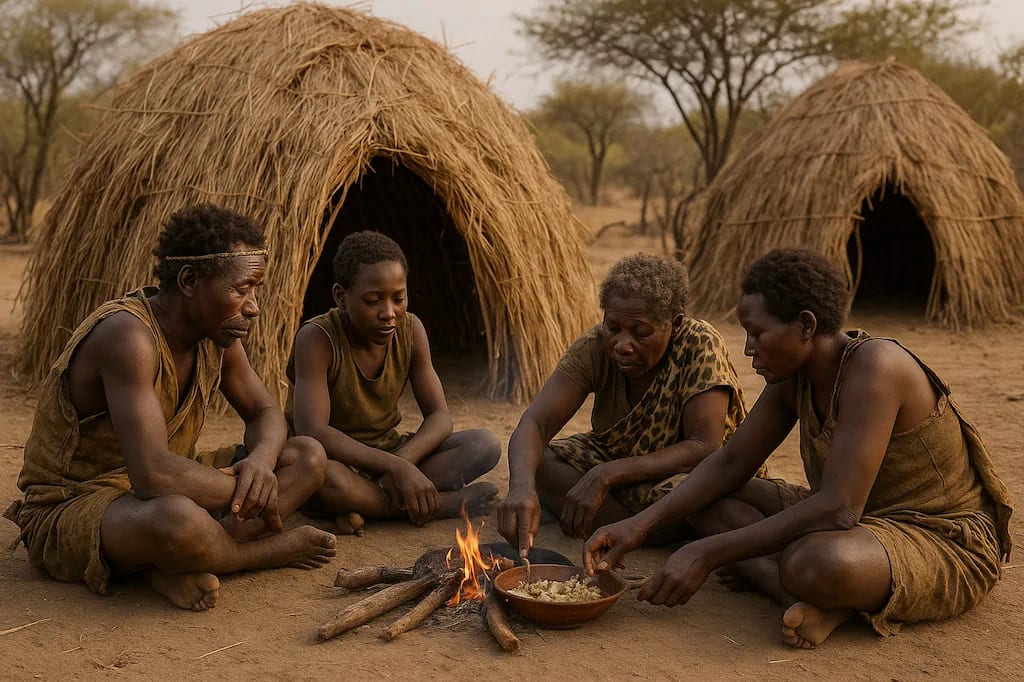
Their click language carries within its complex phonetic structure not just words and meanings, but entire ways of perceiving and interacting with the natural world. When a Hadza hunter clicks to communicate with honeyguide birds, or when children learn to identify dozens of edible plants through oral tradition passed down across countless generations, they’re participating in knowledge systems that connect us to our deepest human heritage.
The challenges facing the Hadza—land loss, cultural erosion, and pressure to assimilate—mirror those confronting indigenous peoples worldwide. Yet their resilience, adaptability, and determination to maintain their essential cultural identity offer hope that diversity can survive even in our increasingly homogenised world. Supporting Hadza land rights, cultural preservation, and self-determination isn’t just about protecting one remarkable group—it’s about maintaining access to alternative ways of being human that could prove invaluable for our species’ future.
As we face unprecedented global challenges from climate change to social inequality, the Hadza’s emphasis on sharing, sustainability, and community cooperation provides a powerful counternarrative to individualistic, consumption-based approaches to human organisation. Their success in maintaining cultural continuity across tens of thousands of years suggests that resilience comes not from technological complexity, but from deep knowledge of place, strong social bonds, and adaptive flexibility.
The clicks, whistles, and songs of Hadzane carry within them the voices of our ancestors and perhaps whispers of wisdom our descendants will need. Ensuring that these remarkable sounds continue to echo across the African savanna isn’t just about preserving the past—it’s about keeping alive possibilities for human futures we haven’t yet imagined.
FAQ: Frequently Asked Questions
Q: What is the Hadza click language?
A: The Hadza click language, known as Hadzane, is a unique linguistic isolate spoken by the Hadza people, hunter-gatherers in Tanzania. It is characterized by its use of click consonants as integral parts of words, distinguishing it from most other languages worldwide.
Q: How is Hadzane different from other African click languages?
A: While other click languages, like Xhosa and Zulu, are predominantly found in southern Africa and belong to specific language families (e.g., Khoisan), Hadzane is considered a linguistic isolate. This means it has no demonstrable genetic relationship with any other known language family, making it exceptionally unique among endangered African languages.
Q: Where do the Hadza people live?
A: The Hadza people reside in northern Tanzania, primarily around the Lake Eyasi basin in the central Rift Valley, particularly in the Yaeda Valley and surrounding areas.
Q: What are the main threats to the Hadza people and their language?
A: The Hadza face significant threats including the loss of their traditional lands due to agricultural expansion and pastoralism, the negative impacts of unmanaged tourism, and cultural assimilation efforts through formal schooling that can erode their language and traditions.
Q: What efforts are being made to conserve Hadza culture and land?
A: Conservation efforts include granting formal land titles to Hadza communities, supporting community-based conservation models like the Yaeda Valley carbon offset project, and ongoing advocacy by organizations to protect their land rights and cultural heritage.
