Is the 27 Club real? Why do so many famous musicians die at 27? The list reads like a devastating roll call of musical genius: Jimi Hendrix, Janis Joplin, Jim Morrison, Kurt Cobain, Amy Winehouse. These iconic figures share more than just extraordinary talent and cultural impact; they all died at precisely 27 years old. This eerie coincidence has given rise to one of popular culture’s most enduring legends: the 27 Club, a supposed celebrity death curse that claims the lives of the world’s most brilliant musicians at the peak of their creative powers. But is there any truth to this phenomenon, or is it simply a powerful example of confirmation bias and how our minds search for patterns in randomness? The answer, as recent scientific research reveals, is both simpler and more fascinating than the myth suggests.
27 Club quick facts
- Number of widely recognized 27 Club members: Over 50 documented cases, with 6 most famous members
- Most famous members: Jimi Hendrix, Janis Joplin, Jim Morrison, Kurt Cobain, Amy Winehouse, Brian Jones
- Statistical reality: No elevated risk at age 27 specifically
- Real risk: Musicians are 2 to 3 times more likely to die young at any age compared to the general population
- First documented member: Robert Johnson (1938)
- Peak cluster: 1969 to 1971 (four major deaths)
- Modern recognition: Term became widespread after Kurt Cobain’s death in 1994
The 27 Club origins: Four deaths that started the legend
The 27 Club phenomenon didn’t emerge from a single event but rather from a statistically improbable cluster of tragedies that unfolded between 1969 and 1971. Within a span of just two years, four superstar musicians, all at the absolute zenith of their careers, died at exactly 27 years old, sending shockwaves through the music world and planting the seeds of a myth that would endure for generations. This concentration of rock star deaths would transform how we perceive musician mortality rate and create one of the most persistent cultural mythology music narratives of all time.
The first to fall was Brian Jones, the founding member and multi-instrumentalist of The Rolling Stones, who drowned in his swimming pool on 3 July 1969. Jones had been dismissed from the band less than a month earlier, his substance abuse issues having rendered his contributions increasingly unreliable. The coroner recorded “death by misadventure,” though questions about the circumstances have persisted for decades. Jones represented the darker side of rock stardom, where creative brilliance collided with the music industry dangers of the 1960s counterculture.
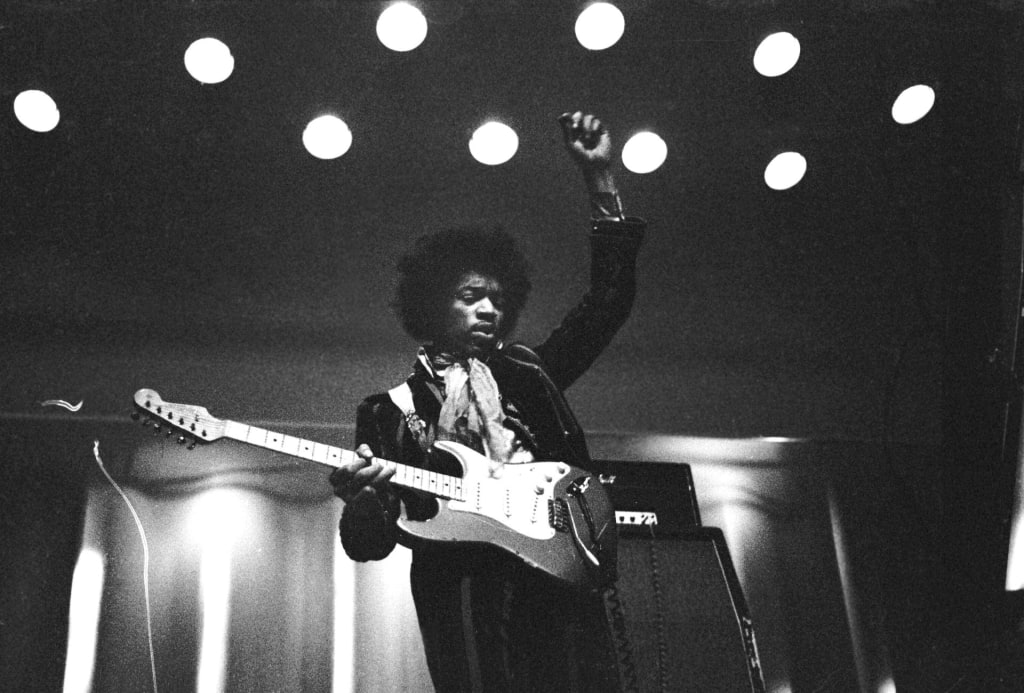
Just over a year later, on 18 September 1970, the revolutionary guitarist Jimi Hendrix was found dead in a London hotel room. Widely regarded as the greatest electric guitarist in rock history, the Jimi Hendrix death transformed what we understood about musical genius cut short. Hendrix had redefined what was possible with the instrument through his innovative techniques and legendary performances at venues like Woodstock. He died after asphyxiating on his own vomit following a barbiturate overdose, a tragic end for a musician who had achieved near-mythical status in just three short years of recording. His death became the template for how we would remember famous musicians who died young.
Barely two weeks later, on 4 October 1970, the incomparable Janis Joplin was discovered dead in her Hollywood hotel room. The powerful blues-rock vocalist, known for her raw, emotional performances and hits like “Piece of My Heart,” had failed to show up for a recording session for her album Pearl. Janis Joplin died lying on her bed next to a syringe, cigarettes, and cash, the victim of a heroin overdose. Her death highlighted the particular vulnerabilities female artists faced in the male-dominated rock scene, where substance abuse was often normalized as part of the creative process.

The fourth and final death in this cluster occurred on 3 July 1971, exactly two years after Brian Jones’s death, when Jim Morrison, the enigmatic frontman of The Doors, was found dead in a Paris bathtub. The Jim Morrison death remains shrouded in mystery to this day. No autopsy was performed, and the official cause of death was listed as heart failure, but the circumstances remain murky. Morrison had moved to Paris seeking peace and escape from his mounting legal troubles and substance abuse issues, hoping to reinvent himself as a poet rather than a rock star.
This remarkable concentration of high-profile deaths at age 27 captured the public imagination in a way that has never quite let go. The mystique was further strengthened by uncanny parallels: all four were part of the counterculture music scene, all died from drug-related causes (or under suspicious circumstances involving substances), and the deaths bookended precisely two years apart. These elements combined to create a narrative so compelling that it would shape how we perceive celebrity deaths for decades to come. The pattern recognition brain naturally latched onto these coincidences, transforming random tragedy into what seemed like evidence of a curse.
The progenitor: Robert Johnson and the devil at the crossroads
Whilst the 27 Club concept emerged in the 1970s, its spiritual origins trace back much further, to a dusty Mississippi crossroads in the 1930s. Robert Johnson, the legendary Delta blues musician, died on 16 August 1938 at the age of 27, three decades before the term “27 Club” was ever coined. Yet Johnson’s death and the mythology surrounding his life would become inextricably linked with the club’s lore, positioning him as its spiritual godfather and creating one of music’s most enduring celebrity death myths.
Johnson’s story is shrouded in as much mystery as his death. According to legend, he had been a mediocre guitarist who disappeared for a few weeks to Clarksdale, Mississippi. When he returned, he possessed an extraordinary technique that seemed almost supernatural. The prevailing myth claims that Johnson took his guitar to the crossroads of Highways 49 and 61, where he made a Faustian bargain with the devil: his soul in exchange for mastery of the blues guitar. This story became intertwined with his early death, creating a template for the 27 Club curse narrative that would follow.
Whether one believes in such supernatural tales or not, what’s undeniable is Johnson’s profound impact on popular music. His 29 recorded songs, captured during just two recording sessions in 1936 and 1937, would go on to influence generations of musicians, from Muddy Waters and Elmore James to the Rolling Stones and Eric Clapton. His recordings include classics like “Sweet Home Chicago,” “Crossroads Blues,” and “Me and the Devil Blues,” songs that would become foundational texts for rock and roll.
Johnson’s death was as enigmatic as his life. The most widely accepted account suggests he was poisoned with strychnine-laced whiskey at a juke joint called Three Forks, allegedly by the jealous husband of a woman with whom Johnson was having an affair. He became violently ill but continued playing until he collapsed, dying four days later, though conflicting accounts suggest he may have survived the poisoning only to die later of pneumonia. There are at least two Mississippi gravesites bearing his name, adding yet another layer of mystery to his story and cementing his place in cultural mythology music.
Johnson’s posthumous fame came largely through a 1961 reissue of his recordings, which introduced his music to the rock and roll generation. The tragic romance of his story, the deal with the devil, the brief burst of genius, the untimely death at 27, perfectly encapsulated the “live fast, die young” ethos that would come to define rock culture. In many ways, Robert Johnson established the template that later 27 Club members would unwittingly follow, creating a narrative arc that future generations would recognize and remember.
Kurt Cobain’s death: How the 27 Club myth returned
By the 1990s, the 27 Club had become part of rock lore, but it took the death of one troubled genius to thrust the phenomenon back into the spotlight with devastating force. On 8 April 1994, an electrician arrived at a Seattle home to install a security system and discovered the body of Kurt Cobain, the frontman of Nirvana. He had been dead for approximately three days, having died by self-inflicted gunshot wound on 5 April, less than two months after his 27th birthday. Kurt Cobain 27 Club became the phrase that revitalized this dark legend for a new generation.
Kurt Cobain’s death marked a watershed moment for the 27 Club mythology. His mother’s now-famous response to the news, “Now he’s gone and joined that stupid club,” gave the phenomenon its most memorable epithet. According to Cobain’s biography Heavier Than Heaven, he had even spoken as a child about wanting to join the club, suggesting a troubling awareness of the curse. This self-awareness added a particularly dark dimension to his death, raising questions about whether the myth itself might exert a psychological pull on vulnerable artists, an unsettling example of how cognitive bias psychology can manifest in real-world tragedy.

Cobain represented a new archetype for the 27 Club: the self-loathing anti-hero of the grunge era. Unlike the hedonistic excess that characterized earlier members, Cobain’s demons were rooted in chronic pain, depression, and an inability to reconcile his artistic integrity with commercial success. His lyrics often referenced guns and self-harm, and in retrospect, the warning signs were there in plain sight. Yet, as journalist Michael Azerrad reflected, “sometimes there’s such thing as hiding in plain sight.” The music industry’s failure to intervene illustrated systemic problems with how we support artists struggling with mental health.
The impact of Cobain’s death extended far beyond music. It marked the symbolic end of both Nirvana and the grunge era, whilst simultaneously raising national awareness about suicide and mental health. His death enhanced the dark notoriety of the 27 Club and cemented its place in popular consciousness. Media coverage of his passing explicitly connected him to Hendrix, Joplin, and Morrison, reinforcing the narrative and ensuring that the 27 Club myth would persist into the digital age.
The 2011 revival: Amy Winehouse and modern mythology
If Kurt Cobain’s death resurrected the 27 Club for the 1990s, Amy Winehouse 27 revitalized and cemented it in the modern consciousness. On 23 July 2011, Winehouse’s bodyguard found the British soul singer dead in her Camden, London flat. The coroner’s report revealed a blood alcohol level of 0.416%, more than five times the legal UK driving limit, ruling her death an accidental alcohol poisoning. Within hours, the hashtag #27Club began trending worldwide, demonstrating how thoroughly the myth had penetrated digital culture.

Winehouse’s trajectory seemed almost scripted by the 27 Club mythology itself. Her 2006 masterpiece Back to Black, featuring the iconic and eerily prophetic song “Rehab,” had catapulted her to international superstardom. Yet her extraordinary talent was matched only by her very public struggles with addiction, eating disorders, and a tumultuous relationship with Blake Fielder-Civil, who introduced her to hard drugs. The media’s obsessive coverage of her decline transformed her into both a cautionary tale and a celebrity death curse narrative playing out in real time.
In the weeks before her death, Winehouse had actually been clean of drugs and attempting to address her alcoholism. Her final public appearance, a shambolic, booed performance in Belgrade, Serbia, showed a woman clearly in distress. The tragedy of Winehouse’s death lay partly in its preventability: she had been trying, however imperfectly, to overcome her demons. Her death sparked renewed debate about media responsibility, addiction treatment, and the music industry’s role in either supporting or exploiting vulnerable artists.
+ Read more: Amy Winehouse biography: The complete story of Britain’s most iconic soul singer
The Amy Winehouse death occurred in an era of social media, which amplified the 27 Club narrative in unprecedented ways. News spread through Twitter before traditional media could confirm details, with thousands of users immediately making the age 27 connection. This digital amplification demonstrated how cultural myths evolve and persist in the internet age, where information and misinformation spread at equal speed. The 27 Club had become more than a myth; it had become a meme, a shorthand for understanding celebrity tragedy.
Beyond the famous six: Other notable 27 Club members
While Hendrix, Joplin, Morrison, Cobain, Winehouse, and Jones dominate the 27 Club narrative, dozens of other talented musicians have died at this age, though they receive far less attention. This selective memory is itself a perfect example of confirmation bias examples in action, where we remember the deaths that fit our narrative whilst forgetting those that don’t.
Alexander Levy “Al” Wilson of Canned Heat died on 3 September 1970, during the same cluster that created the myth. An exceptional blues guitarist and vocalist, Wilson’s death by barbiturate overdose occurred between Hendrix and Joplin’s deaths, yet he’s rarely mentioned in 27 Club discussions. His exclusion from the primary narrative demonstrates how fame, not just age at death, determines membership in our collective memory.
Decades later, the list would continue to grow. In 1994, just months after Cobain’s death, Richey Edwards of the Manic Street Preachers disappeared and was later presumed dead. His car was found near a bridge known for suicides, though his body was never recovered. Edwards struggled with depression, self-harm, and eating disorders, his disappearance adding another layer to the 27 Club mythology.
More recently, Anton Yelchin, better known as an actor but also a musician, died in 2016 at 27 in a freak car accident. His death, while not from substance abuse or suicide, was still immediately connected to the 27 Club in media coverage, showing how the myth now encompasses any celebrity death at this age, regardless of circumstances.
The scientific evidence: Debunking the 27 Club curse
For decades, the 27 Club existed as accepted cultural truth, rarely questioned beyond casual skepticism. However, in 2011, the same year Amy Winehouse died, researchers from the University of Queensland in Australia conducted a rigorous statistical analysis 27 Club to determine whether musicians truly face elevated mortality risk at age 27.
The study, published in the prestigious British Medical Journal, analyzed the death ages of over 1,000 famous musicians who died between 1950 and 2010. The researchers examined whether there was a statistically significant “spike” in deaths at age 27 compared to other ages. Their findings were unambiguous: there is no increased risk of death for musicians at age 27 specifically.
The statistical analysis revealed that whilst the cluster of deaths in 1969 to 1971 was indeed remarkable, it was simply that: remarkable but not indicative of any underlying pattern. The researchers calculated that the probability of such a cluster occurring by pure chance, while low, was far from impossible. In a dataset of thousands of musician deaths across decades, some clustering is mathematically expected.
However, the study did reveal something genuinely concerning about musician mortality rate: musicians face significantly elevated risk of death throughout their 20s and 30s compared to the general population. The risk is approximately 2 to 3 times higher than demographically matched non-musicians. This finding suggests that the problem isn’t a cursed age but rather the entire period of young adulthood for those in the music industry, driven by factors like substance abuse, mental health issues, erratic income, and lifestyle instability.
The 2023 follow-up study published in Death Studies took a different approach, examining not whether the 27 Club was statistically valid but whether it had become a self-perpetuating cultural phenomenon through “memetic reification.” This research demonstrated that musicians who die at 27 receive dramatically more media coverage, Wikipedia article length, and posthumous fame than those who die at surrounding ages. The myth, even if statistically false, has real consequences: dying at 27 makes you more famous.
Understanding confirmation bias examples in the 27 Club
The persistence of the 27 Club myth, despite scientific debunking, offers a masterclass in cognitive bias psychology and how humans perceive patterns. Several interconnected psychological phenomena explain why this myth feels so compelling, even when evidence contradicts it.
Confirmation bias stands at the forefront. Once we’re aware of the 27 Club concept, our brains selectively notice and remember musician deaths that occur at this age whilst filtering out the far more numerous deaths at other ages. When Amy Winehouse died, millions immediately thought “another 27 Club member,” reinforcing the pattern. When musicians die at 28, 29, or 26, we don’t construct similar narratives, these deaths fade from collective memory more quickly despite being equally tragic.
Pattern recognition brain tendencies evolved to help us identify genuine threats and opportunities in our environment, a survival mechanism that served our ancestors well. However, this same tendency makes us prone to seeing patterns that don’t exist, especially when those patterns carry emotional weight. The 27 Club satisfies our deep psychological need to find order in chaos, to believe that these devastating losses happened for a reason, even if that reason is a curse.
The availability heuristic compounds the problem. Because the deaths of Hendrix, Cobain, and Winehouse are so culturally prominent and frequently referenced in media, they’re easily recalled from memory. This ease of recall makes us overestimate how common such deaths actually are. We can instantly name six famous musicians who died at 27, but struggle to name even three who died at 28, creating the illusion that 27 is uniquely dangerous.
Memetic reification describes how beliefs can become real through their consequences, even if the original belief was false. The 27 Club myth has become real in the sense that dying at 27 now carries specific cultural meaning and media attention that dying at other ages doesn’t. Musicians are more likely to be remembered and celebrated if they die at 27 because of the pre-existing narrative, creating a feedback loop that reinforces the myth.
The role of celebrity death myths in culture
The 27 Club isn’t unique in how we mythologize celebrity deaths; rather, it’s part of a broader pattern of how humans construct narratives around famous people’s demises. Similar myths exist around other celebrity death patterns, from the supposed Kennedy family curse to theories about celebrity deaths occurring in threes.
These narratives serve psychological and cultural functions. They help us make sense of losses that feel particularly unfair or tragic. When beloved artists die young, the cognitive dissonance between their immense talent and their premature death creates discomfort. Myths like the 27 Club resolve this discomfort by providing an explanation, even a supernatural one, that feels more satisfying than acknowledging that life can be random and cruel.
Celebrity death myths also reflect our complicated relationship with fame itself. The 27 Club narrative contains elements of both cautionary tale and romantic tragedy. It warns about the dangers of the rock and roll lifestyle whilst simultaneously glamorizing it, suggesting that genius burns too bright to last. This duality allows us to simultaneously condemn and celebrate the self-destructive behaviors associated with artistic greatness.
The digital age has transformed how these myths propagate. Social media accelerates the spread of 27 Club narratives, with users immediately making the age connection when a celebrity dies. This collective pattern recognition reinforces the myth through sheer repetition. Each retelling strengthens the neural pathways that make us notice age 27, creating a self-reinforcing cycle that transcends any individual’s skepticism.
The real dangers: What actually kills musicians young
Whilst age 27 itself holds no special danger, the research revealing elevated mortality risk for musicians throughout young adulthood points to genuine, addressable causes of premature death in the music industry. Understanding these factors is crucial for moving beyond mythmaking to meaningful prevention.
Substance abuse remains the most significant risk factor. The music industry has historically normalized drug and alcohol use as part of creative culture, from the psychedelic experimentation of the 1960s to the heroin chic of grunge. Touring lifestyles, characterised by late nights, constant travel, and lack of routine, create environments where substance use escalates. Many artists begin using drugs or alcohol to cope with performance anxiety, only to develop dependencies that spiral out of control.
The relationship between substance abuse and mental health creates a vicious cycle. Many musicians struggle with depression, anxiety, or bipolar disorder, conditions that are both risk factors for substance abuse and exacerbated by it. The creative temperament that produces great art may also carry vulnerability to mental illness, though disentangling causation remains challenging. What’s clear is that the music industry has historically provided inadequate mental health support, treating artists as content generators rather than people requiring care.
Financial instability affects musicians differently than the general population. Despite public perceptions of rock star wealth, most professional musicians face unpredictable income, lack of health insurance, and pressure to continue performing even when physically or mentally unwell. The shift to streaming has intensified these pressures, with artists earning fractions of pennies per play, forcing them to tour constantly to make ends meet. This financial precarity increases stress, limits access to healthcare, and creates conditions where substance abuse becomes a coping mechanism.
The lifestyle itself carries inherent risks. Constant touring disrupts sleep patterns, healthy eating, and social support networks. Musicians spend extended periods away from stabilizing influences like family and long-term relationships, surrounded instead by environments where excess is normalized and encouraged. The combination of irregular sleep, poor nutrition, substance availability, and lack of routine creates a perfect storm for physical and mental health deterioration.
Industry exploitation compounds these problems. Record labels and management companies often prioritise short-term profits over artist wellbeing, pushing musicians to tour when exhausted, to promote albums when struggling, to maintain public personas that conflict with their authentic selves. Young artists, eager for success and lacking negotiating power, accept deals that leave them vulnerable and unsupported.
Contemporary awareness and self-fulfilling prophecy
A disturbing dimension of the modern 27 Club is the extent to which artists themselves have become aware of the myth. Kurt Cobain’s childhood conversations about wanting to join the club and his mother’s warning “Don’t join that stupid club” suggest a troubling awareness that may have exerted psychological influence on his deteriorating mental health.
Amy Winehouse’s death in 2011 occurred in an era when the 27 Club was extensively documented online, leading some to wonder if she was aware of the phenomenon. The hashtag #27Club trending worldwide before traditional media reported her death demonstrated how thoroughly the myth had penetrated popular consciousness. Whether Winehouse thought about the curse as she approached and passed her 27th birthday remains unknown, but the cultural saturation of this narrative means most contemporary musicians are at least aware of it.
This raises profound questions: Does awareness of the myth create additional psychological burden for 27-year-old artists? Does it normalize self-destructive behaviour by providing a narrative framework that makes early death seem almost inevitable? Whilst impossible to prove causation, the phenomenon illustrates how cultural narratives can shape individual psychology in subtle yet potentially powerful ways.
Some psychologists theorize that the 27 Club myth might function as a self-fulfilling prophecy for vulnerable individuals. If an artist already struggling with suicidal ideation or substance abuse becomes fixated on the idea of joining this “club,” it could provide a narrative structure that makes death feel meaningful rather than merely tragic. The romanticization of the 27 Club in music journalism and fan culture might inadvertently create a template that some troubled artists follow.
The phenomenon also affects how fans and media interact with 27-year-old musicians. When an artist of this age displays erratic behavior or struggles publicly, observers immediately reference the 27 Club, sometimes treating early death as almost inevitable rather than something to be prevented. This fatalistic framing can undermine intervention efforts and create an atmosphere where warning signs are noted but not acted upon.
Lessons and legacy: Moving beyond the myth
The scientific debunking of the 27 Club hasn’t diminished its cultural power; if anything, recent research has revealed how myths can become “real” through their consequences. Yet this understanding offers crucial lessons for how we think about musicians’ wellbeing and the narratives we construct around celebrity deaths.
Reframing the narrative
Rather than romanticizing the 27 Club as a curse or inevitable fate, we must recognize it as evidence of systematic failures in how the music industry treats its artists. The genuine statistical finding, that musicians face elevated mortality risk throughout their 20s and 30s, demands urgent attention and action from everyone involved in the industry, from record labels to fans.
As the BMJ study’s authors concluded, “This finding should be of international concern, as musicians contribute greatly to populations’ quality of life, so there is immense value in keeping them alive (and working) as long as possible.” This pragmatic framing shifts focus from mystical curses to practical interventions, from passive mythologizing to active prevention.
Industry reforms and support systems
There’s a growing movement within the music industry to address mental health and substance abuse more proactively. Progressive labels, management companies, and artist advocacy groups are implementing new approaches designed to support rather than exploit their talent.
Sober touring options are emerging, creating tour environments that don’t normalize substance use. Some artists now rider alcohol and drug-free backstage areas, whilst tour managers receive training in recognizing signs of substance abuse and mental health crises. These initiatives acknowledge that the traditional rock and roll lifestyle is not compatible with long, healthy careers.
Mental health support is becoming more mainstream, with forward-thinking labels providing access to counsellors and therapists who understand the unique pressures of the music industry. Some organizations offer therapy specifically designed for touring musicians, including teletherapy options that accommodate constant travel. These services help artists develop coping strategies for performance anxiety, public scrutiny, and the emotional challenges of creative work.
Financial stability measures include advocacy for fairer streaming revenue distribution and sustainable income models for artists. Organizations like the Musicians’ Union push for better contracts, healthcare access, and financial planning support. Recognizing that financial stress exacerbates mental health issues and substance abuse, these efforts aim to create more stable foundations for artists’ lives.
Performance schedule limits are being discussed more openly. Some artists now contractually limit the number of consecutive tour dates, ensuring adequate rest between performances. This acknowledges that relentless touring schedules contribute to burnout and mental health crises, prioritising long-term sustainability over short-term profit maximization.
Early intervention programs are developing better screening tools to identify at-risk artists before crises occur. These programs train managers, tour staff, and label representatives to recognize warning signs and connect artists with appropriate resources. The goal is shifting from crisis response to proactive support.
The value of myth in understanding cultural memory
Despite its statistical invalidity, the 27 Club serves an important function in helping us understand how cultural memory works. The persistence of this myth reveals fundamental truths about human psychology and how we construct shared narratives around historical events.
As researcher Patrick Kaminski notes, “With our study, we were able to show that the cultural impact of Club 27 has endured for generations and continues to fascinate people to this day.” This endurance isn’t despite the myth’s falsity but because of deeper psychological needs it fulfills. Myths help us develop cultural patterns to categorize events for which there’s no plausible explanation, events ultimately based on coincidences.
The 27 Club illustrates how cultural perception functions and what meaning we attribute to historical events. It demonstrates path dependence in cultural evolution, showing how effectively random events can evolve into narratives that shape otherwise unrelated events and thus the way we make and interpret history. The cluster of 1969 to 1971 created a path that subsequent deaths would follow, at least in our collective memory.
Understanding this process helps us think more critically about other cultural narratives we accept without scrutiny. If the 27 Club, with its seemingly compelling evidence, turns out to be a cognitive bias rather than reality, what other accepted truths might warrant reexamination? The myth becomes a case study in critical thinking, teaching us to question patterns and demand evidence before accepting explanations, no matter how emotionally satisfying they might be.
Key takeaways: What the 27 Club really tells us
The 27 Club is not real as a statistical phenomenon or curse, but its cultural impact reveals important truths about human psychology, the music industry, and how we construct meaning from tragedy.
Age 27 carries no special risk for musicians; comprehensive statistical analysis confirms no elevated mortality at this specific age compared to surrounding years.
Musicians do face genuine elevated risk of premature death throughout their 20s and 30s, approximately 2 to 3 times higher than the general population, driven by substance abuse, mental health issues, and industry pressures.
Confirmation bias causes us to notice and remember deaths that fit the 27 Club pattern whilst forgetting the far more numerous deaths at other ages, creating an illusion of a curse where none exists.
The myth became real through cultural consequences, with musicians who die at 27 receiving more posthumous fame and media attention than those dying at other ages, creating a self-reinforcing cycle.
Industry reforms are needed, including better mental health support, substance abuse prevention, financial stability for artists, and touring schedule limits to reduce the genuine risks musicians face.
The 27 Club teaches us about pattern recognition, cultural memory, and the human need to find meaning in randomness, serving as a cautionary tale about how cognitive biases shape our understanding of the world.
Conclusion: Between myth and meaning
The deaths of Jimi Hendrix, Amy Winehouse, Kurt Cobain, and their fellow 27 Club members are tragic coincidences, not evidence of a supernatural curse. Statistical analysis has definitively demonstrated that age 27 holds no special danger for musicians. Yet coincidences possess profound power over our imagination, and the 27 Club myth reveals as much about human psychology and cultural memory as it does about the perils of fame.
Confirmation bias leads us to notice and remember the deaths that fit the pattern whilst overlooking countless musicians who died at other ages. Path dependence explains how the statistically improbable cluster of 1969 to 1971 established a narrative that persists decades later. Social amplification describes how digital platforms reinforce this narrative, creating feedback loops that strengthen the myth with each retelling. Memetic reification captures how beliefs shape reality: dying at 27 doesn’t make death more likely, but it does make the deceased more famous, celebrated, and remembered.
Behind the myth lies a genuine crisis: musicians face significantly elevated mortality risk throughout young adulthood, driven by substance abuse, mental health issues, industry pressures, and financial instability. These deaths aren’t mystical but preventable, the result of systematic failures in how we treat artists. The real curse isn’t age 27; it’s an industry that historically prioritized profit over people, that glamorized self-destruction, and that provided inadequate support for the humans creating the music we love.
The 27 Club endures not because it’s true but because it speaks to something deeper in our collective psyche: our fascination with genius cut short, our romanticization of the tortured artist, our need to find meaning in randomness. As we continue to lose talented musicians to substance abuse and mental health crises, whether at 27 or any other age, perhaps the myth’s greatest value lies in directing our attention to these preventable tragedies.
The musicians we’ve lost gave us extraordinary gifts. The best way to honour their legacies isn’t to perpetuate myths about cursed ages but to build an industry that protects rather than exploits, that supports rather than enables, and that values artists’ wellbeing as highly as their creative output. That would be a club worth joining, one dedicated not to commemorating early deaths but to celebrating long, healthy, creative lives.
In the end, the 27 Club teaches us that whilst the curse itself is fiction, the forces that killed these artists, addiction, mental illness, industry exploitation, are devastatingly real. By understanding both the myth and the truth behind it, we can work towards a future where genius no longer requires an early grave as its price. The pattern we should be noticing isn’t deaths at age 27 but deaths of talented young musicians at every age, and the systemic changes needed to prevent them.
Frequently asked questions about the 27 Club
Q: Who are the 27 Club members?
A: The most famous 27 Club members include Jimi Hendrix, Janis Joplin, Jim Morrison, Kurt Cobain, Amy Winehouse, and Brian Jones. However, over 50 musicians have died at age 27, though only the most culturally prominent tend to be remembered as part of the mythology. Other members include Robert Johnson, Al Wilson of Canned Heat, Richey Edwards of Manic Street Preachers, and dozens of less famous but equally talented artists.
Q: Is the 27 Club scientifically proven?
A: No, the 27 Club is not scientifically proven. Research published in the British Medical Journal in 2011 found no statistical evidence that musicians face elevated mortality risk specifically at age 27. The cluster of deaths in 1969 to 1971 that created the myth was remarkable but statistically possible by pure chance. However, the research did find that musicians face 2 to 3 times higher mortality risk throughout their 20s and 30s compared to the general population.
Q: Why do so many musicians die at 27?
Musicians don’t actually die at 27 at higher rates than other ages, this is a cognitive bias. The myth persists because of confirmation bias (we notice deaths at 27 whilst forgetting deaths at other ages), the availability heuristic (famous 27 Club deaths are easily recalled), and pattern recognition tendencies in the human brain. The real issue is that musicians face elevated mortality risk throughout young adulthood due to substance abuse, mental health issues, and industry pressures.
Q: What causes musician deaths at young ages?
A: Musicians face elevated mortality risk throughout their 20s and 30s primarily due to substance abuse (drugs and alcohol), mental health issues (depression, anxiety, bipolar disorder), financial instability, lifestyle factors (touring stress, irregular schedules, lack of healthcare), and industry exploitation. These factors interact to create high-risk environments where preventable deaths occur at rates significantly higher than the general population.
Q: Did Kurt Cobain know about the 27 Club?
A: Yes, Kurt Cobain was aware of the 27 Club myth. According to his biography, he spoke as a child about wanting to join the club, and his mother famously said after his death, “Now he’s gone and joined that stupid club.” This awareness raises questions about whether knowledge of the myth might create psychological burden for vulnerable 27-year-old artists, though causation is impossible to prove.
Q: How many people are in the 27 Club?
A: Over 50 musicians are documented as having died at age 27 and been associated with the 27 Club in various lists and articles. However, only a handful, typically six (Hendrix, Joplin, Morrison, Cobain, Winehouse, and Jones), are consistently remembered and referenced. The selective memory of only the most famous members is itself evidence of confirmation bias at work.
Q: Is there a curse on the 27 Club?
A: No, there is no curse on the 27 Club. The myth emerged from a statistically improbable but possible cluster of deaths in 1969 to 1971. Scientific analysis has found no evidence of supernatural causes or elevated risk specifically at age 27. However, the cultural belief in the curse has become real in the sense that dying at 27 now carries specific meaning and media attention, creating what researchers call “memetic reification.”
Q: What happened to Amy Winehouse at 27?
A: Amy Winehouse died on 23 July 2011 at age 27 from alcohol poisoning. Her blood alcohol level was 0.416%, more than five times the legal UK driving limit. She had been attempting to address her alcoholism in the weeks before her death, having been clean from drugs. Her death occurred during a period when she was trying to recover, making it particularly tragic and highlighting the challenges of addiction treatment.
Q: Can the 27 Club be prevented?
A: Whilst age 27 itself carries no special risk, the genuine elevated mortality risk musicians face throughout young adulthood can be addressed through better industry practices. This includes mental health support systems, substance abuse prevention programs, financial stability initiatives, reasonable touring schedules, and early intervention for at-risk artists. Preventing these deaths requires systemic change in how the music industry treats and supports its artists.