In an era where facial recognition privacy has become a pressing concern for millions worldwide, ordinary citizens are turning to extraordinary measures to protect their anonymity. From artistic makeup patterns that confuse algorithms to sophisticated infrared glasses that blind surveillance cameras, anti-facial recognition masks and privacy protection technology are emerging as the new frontier in the battle for digital autonomy. As governments and corporations deploy increasingly sophisticated biometric surveillance systems, the question isn’t whether we’re being watched—it’s whether we can still choose not to be.
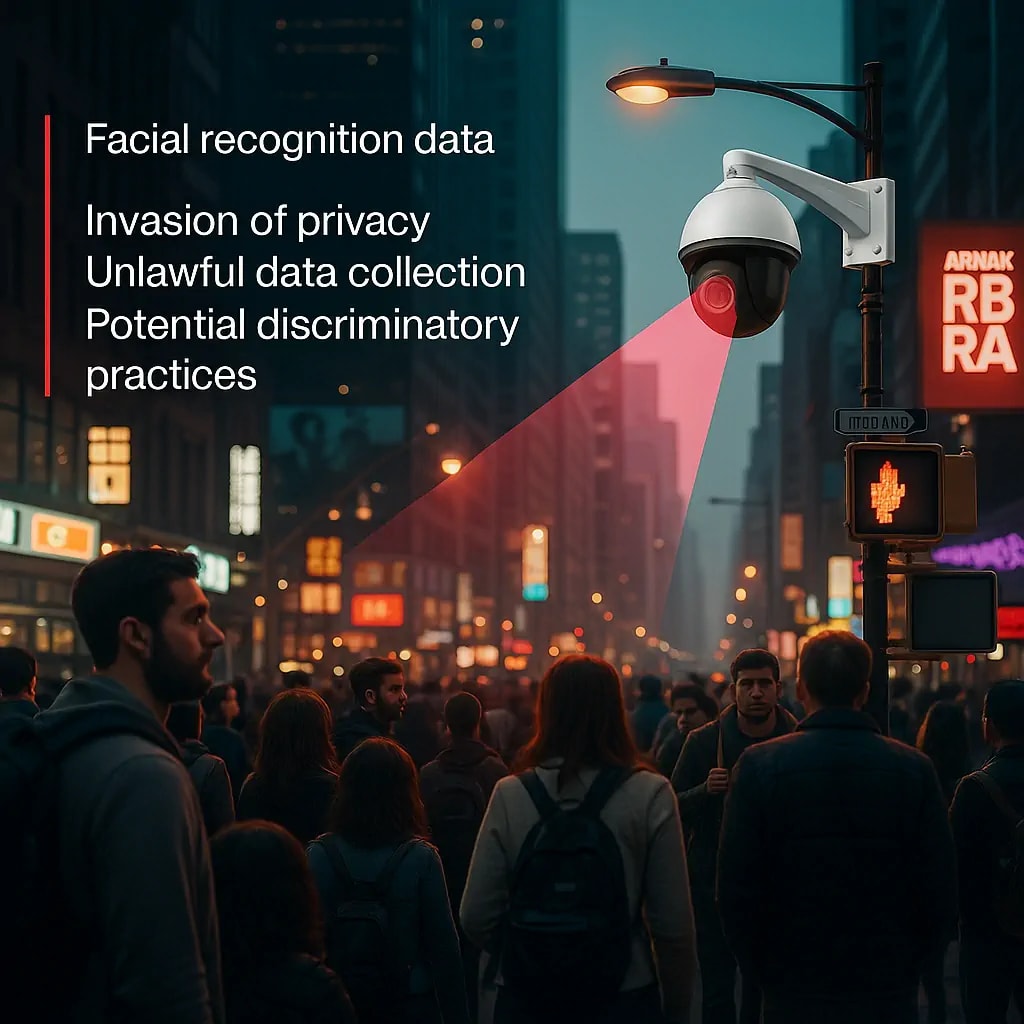
The proliferation of facial recognition technology represents one of the most significant shifts in surveillance capabilities since the invention of the camera itself. What began as a tool for unlocking smartphones has evolved into a comprehensive system of state surveillance privacy that can track individuals across cities, through airports, and even within shopping centres. This technological leap has sparked a corresponding innovation in countermeasures, leading to the development of various anti-facial recognition masks and techniques that challenge the very foundations of mass surveillance. For many, the idea of being constantly observed in daily life feels not only invasive but fundamentally unfair. As someone who values freedom in public spaces, it’s both unsettling and motivating to see how creative the privacy community has become in devising tools for digital anonymity protection.
The rise of facial recognition technology: Understanding the surveillance apparatus
What is facial recognition technology?
Facial recognition technology operates through a sophisticated process of biometric data collection and algorithmic analysis. The system begins by capturing an image of a face, either through a photograph or video feed, then converts the unique characteristics of that face into a mathematical representation called a “faceprint.” This digital signature encompasses measurements between key facial landmarks—the distance between eyes, the shape of the nose bridge, the contours of the jawline, and dozens of other biometric identifiers.

The technology relies on deep learning algorithms that have been trained on millions of facial images to recognize patterns and distinguish between individuals. Modern systems can process thousands of faces per second, comparing them against vast databases of known individuals with remarkable accuracy. However, this accuracy comes at a cost: the complete erosion of anonymity in public spaces and a significant challenge to our biometric data rights. The facial recognition market, projected at $8.5 billion in 2025, clearly demonstrates the rapid expansion and pervasive reach of this technology.
The global expansion of surveillance infrastructure
The widespread adoption of facial recognition technology has transformed public spaces into vast surveillance networks. In China, the technology is integral to the Social Credit System, where citizens are continuously monitored and scored based on their behaviour and associations. The system combines facial recognition with artificial intelligence to create what researchers describe as “surveillance state capitalism”, where every public appearance is logged and analysed.

The United Kingdom has embraced live facial recognition technology with remarkable enthusiasm. The Metropolitan Police announced that facial recognition cameras helped make over 1,000 arrests in 2024 alone, including 93 registered sex offenders. The UK government has allocated £20 million for a national framework to provide live facial recognition technology to police forces across the country, marking a significant escalation in the deployment of this technology.
In the United States, the situation is more complex but equally concerning. The Department of Homeland Security uses facial recognition technology for border control and immigration enforcement, while the Civil Rights Commission has noted that there are currently no federal laws expressly regulating the use of facial recognition technology by government agencies. This regulatory vacuum has allowed the technology to proliferate without adequate oversight or public debate, intensifying biometric privacy concerns.
The privacy dilemma: How surveillance society privacy is under threat
The erosion of anonymity
The fundamental issue with pervasive facial recognition technology is its impact on what privacy scholars call “privacy in public”—the right to move through public spaces without being identified or tracked. This concept, once taken for granted, is rapidly disappearing as cameras equipped with facial recognition capabilities become ubiquitous in urban environments.
The implications extend far beyond simple identification. Modern surveillance systems can track individuals across multiple locations, building detailed profiles of their daily routines, social associations, and behavioural patterns. This comprehensive tracking capability gives governments and corporations unprecedented insight into citizens’ lives, creating what researchers describe as “surveillance capitalism”—a system where human behaviour becomes a commodity to be extracted, analysed, and monetised. This certainly raises significant biometric data rights issues.
The chilling effect on democratic values
The presence of facial recognition technology in public spaces has what researchers term a “chilling effect” on democratic participation. When citizens know they’re being watched and potentially identified, they’re less likely to engage in activities that might be perceived as dissent or protest. This phenomenon undermines fundamental democratic principles including freedom of assembly, freedom of expression, and the right to political participation.
Research has shown that people alter their behaviour when they know they’re under surveillance, even when they’re not engaged in any illegal activity. This behavioural modification represents a subtle but profound shift in the relationship between citizens and their government, transforming public spaces from areas of freedom into zones of control. It’s a silent erosion of liberty that, frankly, keeps me up at night.
Understanding anti-facial recognition masks and technologies
The emergence of privacy protection technology
As facial recognition technology has become more prevalent, a corresponding ecosystem of countermeasures has emerged. These anti-facial recognition masks and privacy protection technologies represent a grassroots response to mass surveillance, developed by artists, technologists, and privacy advocates who refuse to accept a world without anonymity.

The development of these technologies reflects a broader cultural shift in how people think about privacy and surveillance. No longer content to simply accept technological intrusion, individuals are actively seeking ways to maintain their anonymity and protect their biometric privacy concerns.
CV Dazzle: The art of algorithmic confusion
One of the most visually striking forms of facial recognition evasion is CV Dazzle, a technique developed by artist and researcher Adam Harvey. Named after the “dazzle camouflage” used on warships during World War I, CV Dazzle uses bold, asymmetric patterns to confuse facial recognition algorithms.
The technique works by disrupting the key facial features that algorithms use for identification. By applying contrasting makeup that obscures the nose bridge, creates asymmetry around the eyes, or fundamentally alters the perceived shape of the face, CV Dazzle makes it difficult for algorithms to detect and recognise faces.

However, CV Dazzle faces significant limitations in the modern surveillance environment. The original techniques were designed to counter older facial recognition systems and may be less effective against contemporary deep learning algorithms. Additionally, the striking visual appearance of CV Dazzle makeup makes wearers highly conspicuous to human observers, potentially defeating the purpose of avoiding detection. It’s a bold artistic statement, certainly, but perhaps not the most practical anti-surveillance mask for everyday use.
Infrared technology: Invisible light, visible results
A more sophisticated approach to facial recognition evasion involves the use of infrared light technology. These systems work by emitting infrared light that is invisible to the human eye but can overwhelm or confuse infrared cameras used in many facial recognition systems.
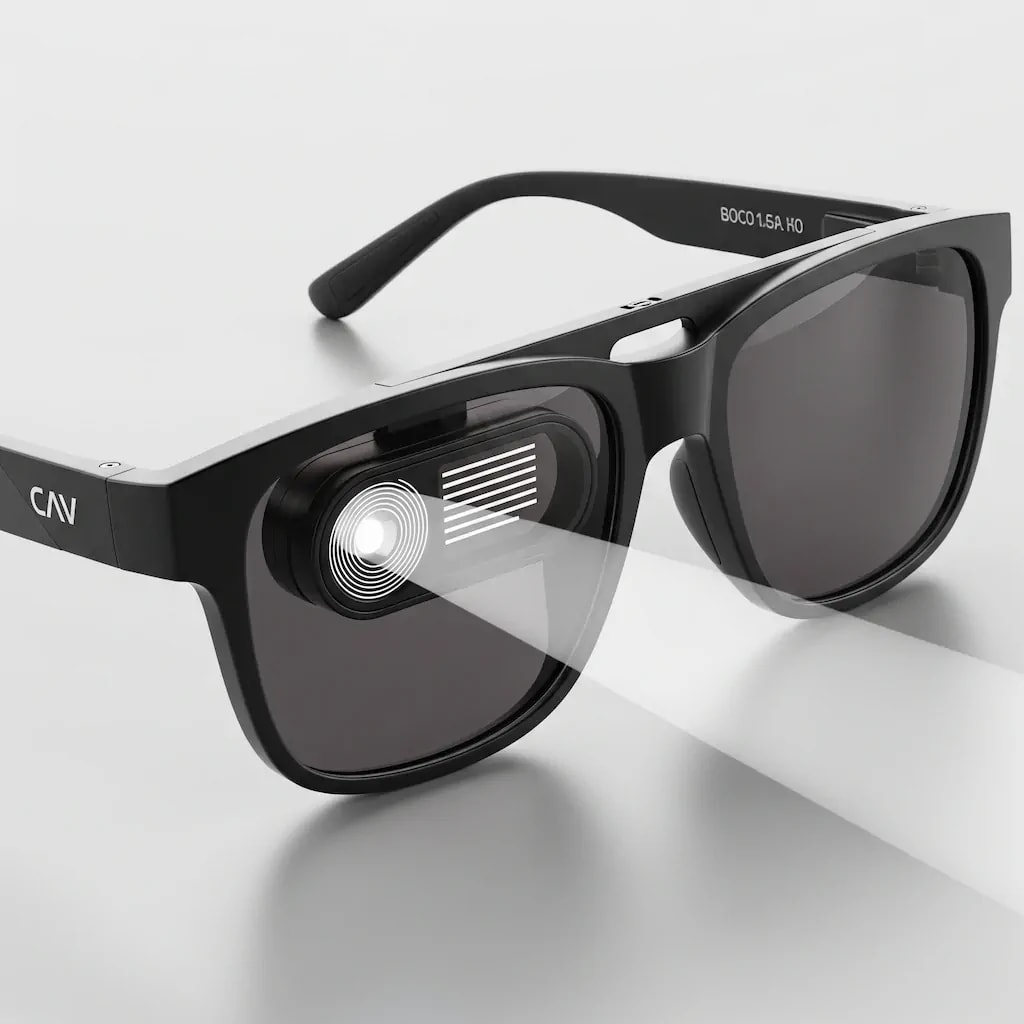
Infrared glasses and accessories can be particularly effective because they exploit a fundamental weakness in camera technology. Most security cameras use infrared illumination for night vision and image enhancement, and by flooding these sensors with infrared light, the devices can make faces appear overexposed or completely invisible to the camera system.
Companies like Reflectacles and Privacy Glasses have developed commercial products that incorporate infrared-blocking or infrared-emitting technology into stylish eyewear, making infrared privacy glasses a tangible option for everyday consumers. It’s fascinating to see how fashion can become a frontline in the battle for biometric privacy.
Digital masks: The chameleon project and beyond
The most sophisticated development in facial recognition evasion is the emergence of digital masks—AI-generated alterations that can protect online photos from facial recognition systems without visible changes to the human eye. The Chameleon project, developed by researchers at Georgia Tech, represents a significant advancement in this field.
Chameleon creates personalized privacy protection masks that can be applied to any photo of a user, making facial recognition systems identify the photos as belonging to someone else while maintaining visual quality for human observers. Unlike physical masks or makeup, digital masks are completely invisible and can be applied automatically to photos before they’re uploaded to social media or other online platforms. This is a game-changer for digital anonymity protection.
The technical landscape: How anti-facial recognition technologies work
Adversarial examples and algorithmic weaknesses
The effectiveness of anti-facial recognition technologies often relies on exploiting specific weaknesses in machine learning algorithms. Adversarial examples—carefully crafted inputs designed to fool AI systems—can cause facial recognition algorithms to misidentify individuals or fail to detect faces entirely.
These adversarial techniques work by adding subtle perturbations to images that are imperceptible to humans but cause significant errors in AI systems. The research in this area has shown that even small changes to facial features or the addition of specific patterns can dramatically reduce the accuracy of facial recognition systems.
Physical vs. digital approaches
The landscape of facial recognition evasion can be broadly divided into physical and digital approaches, each with distinct advantages and limitations:
Physical approaches include anti-surveillance masks, makeup, and wearable devices that physically alter appearance or emit signals that interfere with cameras. These methods work in real-world situations but are often highly visible and may attract unwanted attention.
Digital approaches focus on protecting online images and digital representations of faces. These methods can be completely invisible to human observers but only protect against online surveillance and data collection.
| Technique | Type | Effectiveness | Detectability | Cost | Description |
|---|---|---|---|---|---|
| CV Dazzle makeup | Cosmetic | Medium | High | Low | Asymmetric makeup patterns that disrupt facial recognition algorithms |
| Infrared glasses | Wearable | High | Low | Medium | Glasses that emit infrared light to interfere with IR cameras |
| Adversarial patches | Digital | High | Low | Low | Digitally generated patterns that fool AI recognition systems |
| Physical masks | Physical | High | Very High | Low | Physical coverings like masks or scarves that obscure facial features |
| Digital masks (Chameleon) | Digital | High | None | Low | AI-generated invisible digital masks for online photos |
| Asymmetric patterns | Cosmetic | Medium | Medium | Low | Artistic patterns painted on face to confuse recognition systems |
| Infrared LED accessories | Wearable | High | Low | High | LED devices that emit infrared light to blind facial recognition cameras |
| Facial jewellery/accessories | Physical | Low | Medium | Medium | Accessories like face jewellery designed to disrupt facial mapping |
The effectiveness and limitations of current technologies
Real-world performance challenges
While anti-facial recognition technologies show promise in controlled environments, their effectiveness in real-world scenarios is often more limited. Modern facial recognition systems are increasingly sophisticated and can often overcome simple countermeasures. Additionally, surveillance systems typically use multiple cameras from different angles, making it difficult to fool all cameras simultaneously.
Recent real-world experiments illustrate this mixed success: custom fabric anti-surveillance masks have been shown to drop facial recognition system success rates to as low as ~3%, offering a glimmer of hope for robust privacy protection. However, it’s crucial to note that top systems still worked for up to 96% of masked subjects in certain government tests, demonstrating the ongoing challenge. Research has shown that many anti-facial recognition techniques are sensitive to environmental factors such as lighting conditions, camera quality, and viewing angle. A technique that works effectively in one situation may fail completely in another, highlighting the need for more robust and adaptable solutions for digital anonymity protection.
The evolution of surveillance technology
As anti-facial recognition technologies improve, surveillance systems are also evolving to counter these measures. Modern facial recognition systems can often detect and compensate for common evasion techniques, and some systems are specifically designed to identify when someone is attempting to avoid detection.
This technological arms race means that the effectiveness of any particular anti-facial recognition technique may be temporary. As surveillance technology advances, new countermeasures must be developed, creating a continuous cycle of innovation and counter-innovation. It truly feels like a never-ending cat-and-mouse game.
The future of privacy: A constant cat-and-mouse game
Escalating surveillance capabilities
The global biometric technology market is experiencing explosive growth, with projections indicating the market will reach $150.58 billion by 2030. This massive investment in surveillance technology suggests that facial recognition and other biometric systems will become even more prevalent in the coming years.

Governments worldwide are increasingly investing in comprehensive surveillance infrastructure. The UK’s £20 million investment in live facial recognition technology and China’s continued expansion of its surveillance network represent just the beginning of what promises to be a significant escalation in state surveillance capabilities.
Innovation in counter-surveillance
As surveillance technology advances, so too does the innovation in counter-surveillance measures. Research into adversarial machine learning, privacy-preserving technologies, and digital rights protection is accelerating, driven by both academic institutions and privacy advocacy groups.
The development of technologies like Chameleon demonstrates that sophisticated privacy protection tools can be developed and deployed at scale. As these technologies mature, they may become integrated into everyday devices and applications, making privacy protection more accessible to ordinary users.
Legal and regulatory responses
The legal landscape surrounding facial recognition technology is evolving rapidly. The European Union’s AI Act, which is a major legislative effort to regulate artificial intelligence, includes provisions that ban most public uses of live facial recognition technology, a significant step forward in the AI Act facial recognition debate. While this is a welcome development, exceptions often remain for law enforcement, which means the fight for biometric data rights is far from over. Various US states and cities have also implemented their own restrictions.
A recent example of increasing regulatory scrutiny and the growing importance of biometric data rights is Ireland’s €550,000 fine in June 2025 for unlawful biometric use, highlighting that authorities are indeed cracking down on misuse of facial recognition databases.
The broader context of digital privacy
Beyond facial recognition: The surveillance ecosystem
Facial recognition technology is just one component of a broader surveillance ecosystem that includes location tracking, data mining, social media monitoring, and behavioural analysis. This comprehensive approach to data collection creates detailed profiles of individuals that extend far beyond simple identification.
The interconnected nature of modern surveillance systems means that protecting against facial recognition alone may not be sufficient to maintain comprehensive privacy protection. Individuals must consider their entire digital footprint, including online activities, mobile phone usage, and digital payment systems.
The digital footprint challenge
Every digital interaction leaves traces that can be collected, analysed, and used to build comprehensive profiles of individuals. From social media posts to search queries, from location data to purchase history, the modern digital footprint provides unprecedented insight into personal behaviour and preferences.
This comprehensive data collection capability means that even if facial recognition technology were completely neutralised, other forms of surveillance could still provide detailed tracking and profiling capabilities. The challenge for privacy advocates is to develop holistic approaches that address all aspects of digital surveillance and uphold biometric data rights.
Empowering individual action
While the development of anti-facial recognition technologies is important, individuals can also take steps to protect their privacy through other means. These include:
- Adjusting privacy settings on social media platforms and online services to enhance privacy protection.
- Using privacy-focused browsers and search engines.
- Employing VPN services to mask online activity and improve digital anonymity protection.
- Being mindful of digital sharing and the information revealed through online activities.
- Supporting privacy-focused legislation and advocacy efforts to bolster biometric data rights.
Societal implications and democratic values
The right to privacy in the digital age
The fundamental question surrounding facial recognition technology and anti-facial recognition masks is whether individuals have a right to privacy in the digital age. This right, while recognised in various international human rights instruments, is being challenged by the rapid deployment of surveillance technologies.
The development of anti-facial recognition technologies represents an assertion of this right—a technological manifestation of the belief that individuals should have control over their personal information and biometric data. However, the effectiveness of these technologies in protecting privacy rights depends not only on their technical capabilities but also on the legal and social frameworks that govern their use, particularly in light of developments like the AI Act facial recognition clauses.
The balance between security and privacy
Proponents of facial recognition technology argue that it provides important security benefits, including crime prevention, terrorism detection, and public safety enhancement. The challenge for democratic societies is to find an appropriate balance between these security benefits and the protection of individual privacy rights.
This balance is particularly difficult to achieve because the benefits of surveillance technology are often visible and immediate, while the costs to privacy and civil liberties may be more subtle and long-term. The development of anti-facial recognition technologies provides individuals with tools to tip this balance back toward privacy protection.
The future of civil liberties
The widespread deployment of facial recognition technology has significant implications for civil liberties and democratic participation. When citizens know they’re being watched and identified, they may be less likely to engage in activities that are essential to democratic society, such as attending protests, joining political organisations, or expressing dissenting views.
Anti-facial recognition technologies provide a potential solution to this problem by restoring some measure of anonymity to public spaces. However, their effectiveness in protecting civil liberties depends on their accessibility, ease of use, and legal protection. The global discussion around the AI Act facial recognition regulations is a crucial part of this larger conversation.
Conclusion: Navigating an increasingly monitored world
The rise of facial recognition technology and the corresponding development of anti-facial recognition masks represent a fundamental tension in modern society between technological capability and individual privacy. As governments and corporations deploy increasingly sophisticated surveillance systems, citizens are fighting back with equally sophisticated countermeasures.

The future of facial recognition privacy will likely be characterised by this ongoing technological arms race, with surveillance systems and evasion techniques evolving in response to each other. While anti-facial recognition technologies offer important tools for protecting privacy, they are ultimately symptomatic of a broader struggle for digital autonomy in an increasingly monitored world.
The question isn’t whether anti-facial recognition masks are the future of privacy—it’s whether we can create a society where such measures aren’t necessary in the first place. This requires not only technological innovation but also robust legal frameworks, ethical corporate practices, and a commitment to protecting fundamental human rights in the digital age, particularly when it comes to biometric data rights.
As we navigate this complex landscape, the development and deployment of privacy protection technology serves as both a practical tool for individual protection and a symbolic assertion of the right to privacy. Whether these technologies will ultimately succeed in protecting individual privacy depends not only on their technical capabilities but also on our collective commitment to maintaining democratic values in an era of unprecedented surveillance.
The fight for facial recognition privacy is ultimately a fight for the kind of society we want to live in—one where technology serves human flourishing rather than constraining it, where privacy is protected rather than exploited, and where individuals retain control over their personal information and biometric data. Anti-facial recognition masks and privacy protection technology, including products like Reflectacles infrared privacy glasses, represent important weapons in this fight, but they are only tools. The real work lies in building a world where such tools are unnecessary—a world where privacy is respected, protected, and preserved for future generations.