The Iran conflict escalation probability is no longer a theoretical debate. As of 5 March 2026, six days into one of the most significant military operations the Middle East has ever seen, the question of whether this war stays regional or spills into a global confrontation is being asked in every government, every newsroom and every household that pays attention to the world. We decided to take that question somewhere unusual: we asked three of the most powerful AI systems available today to give us their honest, data-driven assessment. ChatGPT, Gemini and Claude, each running on their paid tiers with access to real-time research tools, produced answers that ranged from cautiously alarming to genuinely unsettling. What they agreed on, and where they sharply diverged, tells a story worth reading carefully.
Before we get to the numbers, it is worth understanding exactly what triggered this analysis. What began on 28 February 2026 as a coordinated military strike by the United States and Israel has, within the space of six days, drawn in a geography so vast and a cast of actors so varied that the old frameworks for understanding Middle Eastern conflict no longer quite apply. This is not a proxy skirmish. It is not a limited airstrike campaign. By any reasonable measure, this is a war.
What the Iran conflict escalation probability hinges on: six days of rapid escalation
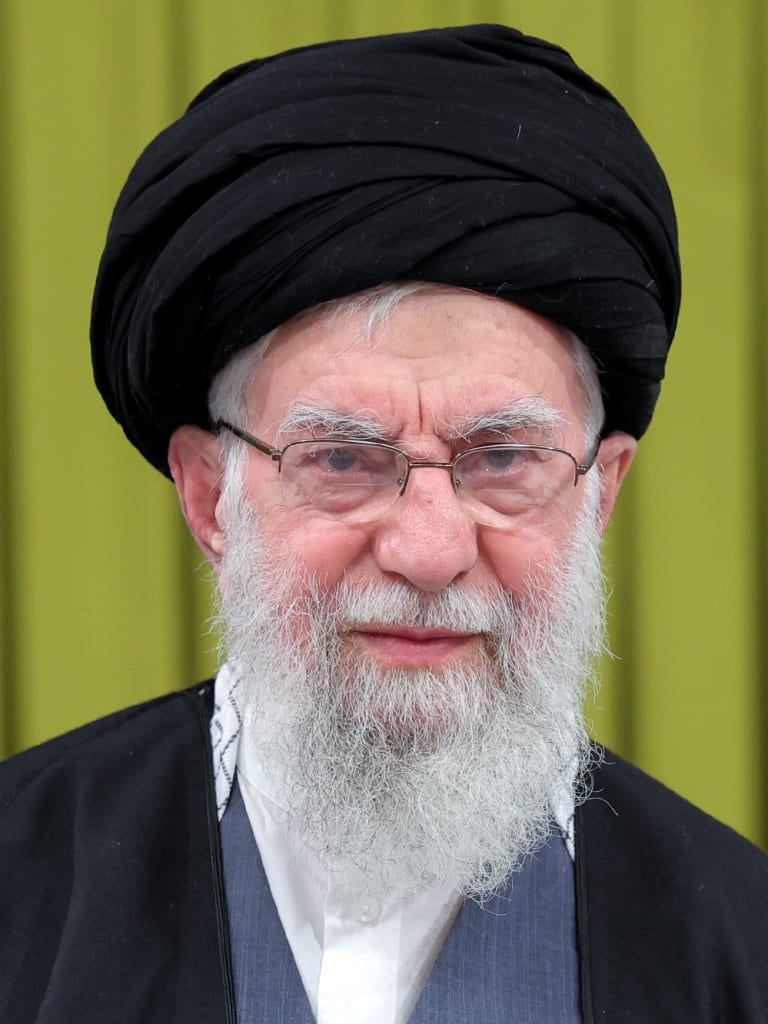
On 28 February 2026, the United States and Israel launched simultaneous coordinated strikes against Iran in operations designated Operation Epic Fury and Operation Roaring Lion respectively. The stated objective was regime change in Tehran. Within hours of the opening strikes, Ali Khamenei, the Supreme Leader of Iran, was dead, his underground command facility destroyed. It was a development without precedent in modern geopolitics, the targeted killing of a sitting supreme leader by a Western coalition, and it immediately changed the calculus for every government watching.
Iran’s response was rapid and broad. The Islamic Revolutionary Guard Corps launched dozens of ballistic missiles and drones across the Persian Gulf, striking American military bases in Jordan, Kuwait, Bahrain, Qatar, Iraq, Saudi Arabia and the UAE. Civilian airports and ports in Kuwait, the UAE and Oman were targeted. A British military base on Cyprus was struck by an Iranian drone, the first time British territory had been hit in the conflict. Six American soldiers were killed in a drone strike on a Kuwaiti port. The losses were not catastrophic in military terms, but they were significant: American blood had been spilled, and in Washington that changes the political landscape considerably.

By day three, Iran’s Revolutionary Guard had broadcast a warning across maritime radio channels that no vessel was permitted to pass through the Strait of Hormuz. Major shipping companies, including Maersk and Hapag-Lloyd, suspended operations in the region almost immediately. The Houthis in Yemen announced they would resume attacks on Israeli-linked vessels in the Red Sea. An IRGC commander declared the strait formally closed and stated that any ship attempting to pass would be set on fire. At least five oil tankers were damaged and approximately 150 vessels were left stranded around the strait’s approaches.
The economic shockwave was immediate. Brent crude rose 13 per cent in the opening hours of trading on 2 March. European natural gas prices jumped 24 per cent. With the Strait of Hormuz carrying roughly a fifth of the world’s oil supply and the Suez route being simultaneously disrupted by Houthi activity, global shipping was being rerouted around the Cape of Good Hope, adding weeks to transit times and tens of thousands of dollars per voyage in additional costs.
By 5 March, the conflict’s geography had expanded further still. A drone exploded at Nakhchivan airport in Azerbaijan, injuring two people and damaging the terminal. Azerbaijan’s president called it an act of terror. Iran denied involvement. NATO’s air defence systems intercepted an Iranian missile heading toward Turkish airspace, the first time NATO forces had taken active military action against Iran during the conflict. France announced it was deploying its aircraft carrier to the Mediterranean. The United States Senate, in a largely party-line vote, rejected a resolution to halt the military operation, giving the Trump administration a political mandate to continue.
The toll by day six stood at over 1,230 deaths inside Iran. A girls’ primary school in the town of Minab was struck in one of the attacks, killing 148 students according to Iranian state media, with the death toll partially corroborated by Western news organisations. The IAEA’s director general issued a public warning about growing nuclear safety risks, noting that Iran and several targeted nations all operate nuclear reactors. Radiation levels remained normal, but the warning underscored how quickly this conflict could cross into catastrophic territory.

The Strait of Hormuz: why a closed waterway threatens every economy on earth

To understand why the AI systems we consulted were so focused on the Strait of Hormuz in their analysis, it helps to understand what the strait represents economically. Approximately 21 million barrels of oil pass through this narrow channel every single day. That figure accounts for roughly 21 per cent of global petroleum consumption. Close the strait for two weeks and the world begins to run short of the most fundamental input in modern industrial production. Close it for a month and you begin to see cascading failures in manufacturing, transport, heating and food production across Europe, Asia and beyond.
What makes the current situation particularly dangerous is the combination of factors converging simultaneously. The Strait of Hormuz is under threat from Iranian action from the east. The Suez Canal route is being disrupted by Houthi activity in the Red Sea to the west. Ships diverting around the Cape of Good Hope are adding 7,000 miles to journeys that previously took days. Insurance premiums for vessels operating in the Gulf have spiked to levels that make many voyages commercially unviable. Several major shipping insurers announced cancellations and coverage alterations effective from 5 March, citing the sustained threat environment.
This is the economic time bomb that sits at the centre of every risk assessment we received from the three AI systems. Even if the military conflict remains geographically contained, the economic damage from a prolonged Hormuz disruption could destabilise emerging market economies, trigger inflationary spirals in import-dependent nations and create the kind of popular unrest that historically leads to political instability at a scale far beyond the Middle East.
ChatGPT’s analysis: a 60 per cent chance of severe regional escalation
ChatGPT, operating on its paid tier with web access and deep research enabled, approached the problem by cataloguing the key variables pushing toward escalation and those acting as brakes on wider conflict. Its analysis as of 5 March 2026 was structured around three scenarios with specific probability estimates.
On the question of a contained regional conflict, meaning one where fighting remains essentially within the existing Israel-Iran axis without drawing in additional major actors, ChatGPT placed the probability at 25 per cent. The reasoning was straightforward: the pattern of attacks was already too distributed, too geographically dispersed and too economically disruptive to plausibly reverse course without some form of active diplomatic intervention. The near-paralysis of Strait of Hormuz traffic, combined with incentives for escorts, protective operations and demonstrations of force from outside nations, made de-escalation look more like wishful thinking than realistic analysis.
+ Read more: The Israel Iran conflict explained: a comprehensive analysis of Middle Eastern tensions
The 60 per cent probability ChatGPT assigned to severe regional escalation across multiple fronts was its central finding. This scenario, already unfolding in real time, involves expanded fighting in Lebanon, continued Houthi activity in the Red Sea, militia attacks in Iraq and a broader breakdown of security across the Gulf. ChatGPT noted that the disruption of tanker traffic creates its own escalatory logic: outside powers with energy interests may feel compelled to intervene not out of alliance obligations but out of economic necessity. A disrupted Hormuz doesn’t just hurt Iran and the United States; it hurts China, India, Japan and South Korea with roughly equal severity, and any of those powers sending naval assets to protect their shipping introduces new risk vectors into an already crowded theatre.
The most striking element of ChatGPT’s analysis was its 15 per cent probability for a global-scale confrontation or direct clash between great powers. ChatGPT was careful to note that this scenario does not require a formal declaration of war between the United States and Russia or China. Instead, it described the risk as arising from incremental escalation: naval incidents in international waters, miscalculation during contested operations, or the kind of error that forces a major power to respond publicly to protect its credibility. The model pointed to the multiple simultaneous global flashpoints, the Ukraine conflict, Gaza, Taiwan, Venezuela and now Iran, as creating conditions for what it called a cascade effect, where a crisis in one theatre overwhelms diplomatic bandwidth and makes miscalculation in another more likely.
The world is at its highest tension level since the Cold War. The risk of a world war does not come from a master plan for global invasion, but from a chain reaction of miscalculations in the Middle East that drag major powers in to protect their energy flows.
ChatGPT (paid tier), 5 March 2026
Gemini’s analysis: the most bearish assessment on global war risk
Google’s Gemini, also on its paid tier with research capabilities enabled, produced the most alarming probability estimate of the three systems we consulted. Where ChatGPT placed global war risk at 15 per cent and Claude at 17 per cent, Gemini assessed the probability of a global-scale confrontation or great-power conflict at 30 per cent as of 5 March 2026. That is not a figure any analyst takes lightly.
Gemini assigned only 15 per cent probability to the contained regional conflict scenario, the most pessimistic of the three systems on that front. Its reasoning centred on several observations about the structural impossibility of putting the conflict back in the box once a supreme leader has been killed and global energy routes have been disrupted. In Gemini’s framing, conflicts rarely de-escalate quickly when a head of state has been assassinated and major trade arteries have been closed. The historical precedents for rapid diplomatic resolution in such circumstances are thin.
On the 55 per cent probability assigned to severe regional escalation, Gemini’s analysis largely aligned with ChatGPT’s core scenario: a war that expands across Lebanon, Yemen, Iraq and the wider Gulf, with oil prices fluctuating between $90 and $110 per barrel as the base case for the next several weeks. Gemini was particularly focused on the Israel-Lebanon dynamic, noting that Israel appeared to be mobilising significant reserves for a potential ground operation in southern Lebanon, which it described as a scenario that would dramatically increase the humanitarian and political complexity of the conflict.
The elevated 30 per cent estimate for global conflict came with a specific set of triggers that Gemini identified as the factors most likely to push the world across the threshold. The first was what it described as the rope-of-war Russian dynamic: with the conflict providing geopolitical cover, Putin could use the crisis as leverage over European energy supplies, creating an incentive for European NATO members to become more directly engaged in Middle Eastern stability operations. The second was the geographic spread of American operations, evidenced by the sinking of the IRIS Dena frigate near Sri Lanka, which demonstrated US willingness to pursue Iranian assets far beyond the immediate theatre. In Gemini’s assessment, operations that close this far from the Gulf run a meaningful risk of involving vessels from other major powers, and any incident of that nature changes the calculations instantly.
The world has never been this close to a domino effect of military escalation since the Cuban Missile Crisis in 1962. The greatest danger is not a land invasion of Europe but the cyber and energy collapse that a prolonged Hormuz closure would trigger.
Gemini (paid tier), 5 March 2026
Claude’s analysis: the most granular breakdown of escalation factors
Claude, Anthropic’s AI system, delivered the most structurally detailed analysis of the three, tracking probability changes day by day from the conflict’s opening on 28 February to 5 March. Rather than simply providing end-state probabilities, Claude provided a timeline of how each significant development shifted the risk calculus, which makes its methodology particularly useful for understanding the current trajectory.
On day one of the conflict, Claude had placed the probability of a contained regional outcome at 35 per cent, severe regional escalation at 53 per cent and global confrontation at 11 per cent. By 5 March, those figures had moved to 20 per cent, 63 per cent and 17 per cent respectively. The 6-point increase in global war probability over five days reflected six specific developments Claude identified as materially changing the risk environment.
The first was NATO’s direct military involvement through the Turkish air defence interception of an Iranian missile. Claude was precise in distinguishing between rhetorical involvement and material involvement. NATO members expressing concern is one thing; a NATO air defence battery shooting down an Iranian missile is categorically different in terms of what it signals about the conflict’s boundaries. The second factor was France deploying its aircraft carrier to the Mediterranean, a step that goes beyond monitoring and into active power projection.
The third factor was the IAEA’s public warning about nuclear safety risks. Claude noted that even a radiological incident short of a weapon detonation, a reactor damaged by nearby explosions for example, would immediately transform the conflict’s character and almost certainly force great powers currently watching from the sidelines into active engagement. The UAE operates four nuclear reactors. Jordan and Syria have research reactors. The geography of nuclear infrastructure in the conflict zone is not reassuring.
The fourth factor Claude cited was intelligence reports suggesting CIA involvement in arming Kurdish PJAK forces entering Iran from the north, effectively opening a ground combat front inside Iranian territory. The fifth was Azerbaijan being struck, which matters disproportionately because Azerbaijan has a formal defence relationship with Turkey, a NATO member. A sustained pattern of attacks on Azerbaijani territory would create genuine treaty dilemmas for the alliance. The sixth factor was the complete absence of any visible diplomatic pathway, with Iran’s foreign minister declaring that Trump had betrayed diplomacy and Oman, the usual mediator in US-Iran contacts, effectively incapacitated by the shock of nearby events.
What made Claude’s analysis particularly useful was its identification of the scenarios that could most rapidly shift probabilities in either direction. On the de-escalatory side, the most powerful signal would be a resumption of tanker traffic through the Strait of Hormuz, which would indicate that Iran has accepted it cannot win an economic blockade war. On the escalatory side, Claude flagged two scenarios as especially dangerous: a confirmed attack on a vessel flying the flag of a great power, and any radiological incident near a reactor site, either of which would force a response that current diplomatic channels have no mechanism to manage.
The most probable scenario today is a devastating regional war lasting weeks that destroys Iranian infrastructure, destabilises global energy markets, and potentially triggers the collapse of smaller regional regimes. The risk of this becoming a genuinely global war is real and growing, but it depends on whether a single miscalculation occurs before diplomacy can reassert itself.
Claude (paid tier), 5 March 2026
The Iran conflict escalation probability: what all three AI systems said
The table below shows the probability estimates from all three AI systems for three distinct scenarios, as of 5 March 2026.
| AI system | Contained conflict | Regional escalation | Global / great powers |
|---|---|---|---|
| ChatGPT (paid) | 25% | 60% | 15% |
| Gemini (paid) | 15% | 55% | 30% |
| Claude (paid) | 20% | 63% | 17% |
| Average | 20% | 59% | 21% |
Where all three AI systems agree
Despite their different methodologies and probability estimates, ChatGPT, Gemini and Claude converged on several points that are worth highlighting precisely because of that convergence. When different analytical frameworks produce the same conclusion, the conclusion deserves to be taken seriously.
All three systems agreed that the scenario of contained regional conflict has become significantly less probable since the conflict began. All three placed it at 25 per cent or below as of 5 March. The logic is consistent across all three: the combination of a killed supreme leader, a semi-closed major waterway, strikes on military assets across eight countries and the activation of multiple proxy networks has created a conflict that has too much momentum and too many actors to simply wind down without deliberate and sustained diplomatic effort that is not currently visible.
All three systems also agreed that neither Russia nor China is likely to provide direct military support to Iran in the current phase of the conflict. Russia is overextended in Ukraine and its military resources are committed elsewhere. China’s primary interest is in energy flows, which means Beijing wants the Strait of Hormuz open, not closed. Neither country is bound by a mutual defence treaty with Iran that requires military response to the current situation. Both have condemned the strikes in UN statements. Neither has moved troops.
There was also consensus around the economic dimension being potentially more dangerous than the military one in terms of long-term consequences. A prolonged Hormuz closure, lasting more than two to three weeks, creates inflationary pressure and supply chain disruption at a global scale that destabilises economies far removed from the physical conflict zone. The destabilisation of emerging market economies with high energy import dependency could generate political crises that outlast the military conflict itself.
Where the three AI systems diverge
The most significant divergence between the three systems lies in the global conflict probability. Gemini’s 30 per cent estimate is nearly double Claude’s 17 per cent and double ChatGPT’s 15 per cent. That gap reflects genuinely different analytical judgements about how seriously to weight the risk of Chinese or Russian miscalculation versus deliberate engagement.
Gemini placed more weight on structural factors: the unprecedented level of geographic spread in American operations, the energy vulnerability of China, and the leverage that the crisis gives to Russia in its ongoing negotiation with Europe over gas supplies. Its framing was that great-power involvement might come not through deliberate choice but through a series of smaller decisions that gradually transform the nature of their engagement. A Chinese naval escort for oil tankers is not a declaration of war; it is a commercial protection operation. But if that escort encounters American forces enforcing an operations area, the distance between commerce and conflict narrows rapidly.
ChatGPT and Claude, by contrast, weighted more heavily the absence of treaty obligations and the economic disincentives for China to escalate. In Claude’s specific framing, China needs Iranian oil flowing, not blocked. Its economic incentive is for the conflict to end, not to expand. This is a structurally different bet about what drives state behaviour under pressure: whether economic rationality or geopolitical positioning takes precedence when the two point in different directions.
There was also a divergence in methodology worth noting. Claude tracked its probability estimates dynamically, showing how each day’s developments shifted the numbers. ChatGPT framed its analysis primarily around the 30-day horizon. Gemini was the most explicitly focused on the immediate period and the structural factors that could generate sudden transitions. These are not just stylistic differences; they reflect different assumptions about how quickly geopolitical situations can change and which timeframes are most relevant for risk assessment.
What these probability numbers actually mean for ordinary people
Reading probability estimates like these, it is tempting either to dismiss them as too abstract to be useful or to experience them as a source of paralysing anxiety. Neither response is particularly helpful. What these numbers actually tell us is something more specific and more actionable.
A 20 per cent probability of a global-scale conflict, averaging across the three systems, is not the same as saying a global war is likely. But it is not negligible either. In everyday terms, a 20 per cent probability is roughly the chance of rain on a day your weather app shows mostly cloudy. You might go out without an umbrella. You might not. What you almost certainly do is think about it before you leave the house.
The more immediately relevant figure for most people outside the direct conflict zone is the 59 per cent average probability of severe regional escalation. That scenario, the one all three AI systems regard as most likely, carries specific consequences that are already materialising: higher energy costs, supply chain disruption, increased shipping times and prices for imported goods, volatility in equity markets and a tightening of credit conditions as risk appetite globally contracts. These are not abstract geopolitical phenomena. They show up in petrol prices, in supermarket costs, in mortgage rates and in the valuations of pension funds.
If you are in the United Kingdom specifically, the economic exposure is meaningful. The UK imports a relatively small share of its energy from the Persian Gulf directly, but it is deeply integrated into global energy markets where prices are set globally. A sustained $20 per barrel increase in oil prices, which is conservative given the current trajectory, flows through to virtually every sector of the economy. Energy-intensive industries face immediate cost pressure. Transport costs rise. The Bank of England faces a stagflationary dilemma between fighting inflation and supporting growth.
The scenarios the analysts are watching most closely
Beyond the headline probabilities, each of the three AI systems identified specific trigger events that would most rapidly shift the risk calculus. These are the scenarios that intelligence analysts, government risk teams and institutional investors are watching in real time.
The Strait of Hormuz closure duration is the single most watched variable. All three systems flagged a sustained closure of more than 15 days as the threshold at which economic pressure becomes severe enough to force external powers to consider active intervention. The current day-six situation is not yet at that threshold, but the trajectory matters as much as the current position.
The nuclear infrastructure risk is the scenario that generates the most severe potential consequences. The IAEA director general’s warning about nuclear safety was not alarmist rhetoric; it was a technically grounded concern. The UAE’s Barakah nuclear plant, with four operational reactors, is located on the Gulf of Abu Dhabi, well within the range of Iranian ballistic missiles. Iran’s own Bushehr reactor was noted by Russia’s foreign ministry as potentially threatened by ongoing air operations. A radiological incident of any scale in this conflict would immediately internationalise the response in ways that no diplomatic calculation currently accounts for.
The potential for a great-power naval incident in the Gulf or Indian Ocean was flagged by all three systems. The sinking of the Iranian frigate IRIS Dena near Sri Lanka by American submarines was notable not just as a military event but as a signal that the United States is prepared to pursue Iranian assets far from the main theatre. With multiple nations having naval assets in the region, the geometry of the conflict creates genuine risks of vessels from different countries finding themselves in direct proximity during a fluid and rapidly developing situation.
The Azerbaijan dimension is perhaps the most underappreciated escalation risk. Azerbaijan has a close relationship with Turkey, a NATO member and one of the alliance’s most militarily capable states. Sustained attacks on Azerbaijani territory would place Ankara in an increasingly difficult position, given its alliance obligations and its own complex relationship with Iran. Turkey has, so far, been engaged primarily through its air defence systems intercepting a missile. If it becomes a target rather than a bystander, the NATO dynamics shift meaningfully.
Iran’s strategic logic: why Tehran is playing a long game
One element that the ChatGPT analysis captured particularly well, and that helps explain why the probability of rapid de-escalation is so low, is Iran’s stated strategic logic for extending and expanding the conflict. According to reporting drawn on in the ChatGPT analysis, Tehran’s approach is not simply reactive retaliation. It is a deliberate attempt to raise the costs of the conflict to a level that becomes politically untenable for the Trump administration.
The strategy involves several coordinated elements. Attacks on the oil and gas infrastructure of Gulf neighbours serve a dual purpose: they punish the countries hosting American military assets and they send a message to global energy markets about the costs of continued operations. The Hormuz blockade is designed to leverage the entire world as indirect pressure on Washington, since every country affected by higher energy costs becomes a constituency arguing for a negotiated end to the conflict. The depletion of American and allied missile defence interceptor stocks is a longer-term play, recognising that replacing these systems costs billions of dollars and takes years.
Iran’s newly installed interim leadership council, operating under conditions of active bombardment with no clear path to stabilisation, has explicitly stated that negotiations are impossible while bombing continues. This is not simply a negotiating position: it reflects the genuine political constraints on any Iranian leadership that agreed to talks while under attack. The internal legitimacy cost of appearing to capitulate under fire is, for any Iranian government, almost certainly fatal. Which means that the conditions necessary for de-escalation, a mutual pause in hostilities sufficient for talks to begin, require a degree of good faith from both sides that is not currently visible.
Russia, China and the question of active involvement
All three AI systems devoted considerable analysis to the question of Russian and Chinese involvement, and it is worth summarising their collective assessment, because misunderstanding this dynamic is one of the most common errors in public discussion of the conflict.
Russia has condemned the strikes in strong language, calling them a premeditated and unprovoked act of armed aggression against a sovereign state. China has called for an immediate halt to military operations. Both have positioned themselves as defenders of international law and potential mediators. Neither has moved military assets toward the conflict zone. Neither has supplied Iran with weapons or materiel since the conflict began, as far as can be determined. This is a meaningful distinction: words and actions are different things, and in geopolitical analysis, the actions matter far more.
The structural constraints on both countries are real. Russia’s ground forces are deeply committed in Ukraine and cannot be easily redeployed. Its naval capability in the region is limited. Russia has economic interests in higher oil prices, which the current conflict is delivering, but has no particular interest in a Middle Eastern conflagration that distracts international attention from Ukraine at a potentially pivotal moment in negotiations. China imports enormous quantities of Iranian oil and has significant Belt and Road infrastructure investments throughout the region. A prolonged conflict that closes sea lanes and destabilises partner governments is directly contrary to Chinese economic interests.
Where Gemini’s higher 30 per cent global war estimate reflects a reasonable concern, however, is in the recognition that economic rationality does not always govern state behaviour in a crisis. If the Iranian regime appears to be on the verge of total collapse and China faces the prospect of losing a key energy supplier and strategic partner simultaneously, the calculation for Beijing could shift. Not necessarily toward direct military intervention, but toward actions that increase friction with American forces in ways that carry escalation risk. The Chinese deployment of naval escorts for tankers, a plausible near-term scenario, would be one such action.
The diplomatic vacuum: why there is no obvious off-ramp
One of the most striking observations common to all three analyses was the near-total absence of an active diplomatic process that could provide an off-ramp for the conflict. In previous Middle Eastern crises, certain channels remained open even during active hostilities. Qatar has historically served as an intermediary. Oman has been particularly important in US-Iran back-channel communications, having facilitated the initial contacts that led to the 2015 nuclear deal.
The current situation is different in several respects. Oman, which had been mediating pre-conflict diplomatic contacts between Tehran and Washington, has been effectively paralysed by the proximity and scale of events. Iran’s foreign minister has publicly stated that Trump betrayed the diplomatic process, a declaration that makes any Iranian government leader who proposes returning to talks politically vulnerable internally. The Trump administration, having secured Senate backing for the operation without a defined exit strategy, is under less immediate political pressure to seek negotiations than might otherwise be the case.

The UN Security Council is structurally incapable of acting, given that the United States holds veto power over any binding resolution. The Arab League is divided, with Gulf states that are themselves under Iranian missile attack having no enthusiasm for resolutions that constrain the American military response. European governments have expressed concern but taken no coordinated diplomatic initiative of any consequence. The result is a conflict in which the military dynamics are evolving rapidly and the diplomatic mechanisms for managing them are largely inoperative.
Six days in: what changed and what the numbers are telling us
When you average the probability estimates from all three AI systems for 5 March 2026, the picture is stark. A 59 per cent probability of severe regional escalation across multiple fronts means that the most likely near-term scenario is not resolution but expansion. A 21 per cent average probability of global-scale conflict is, in the language of geopolitical risk analysis, an extremely elevated figure for a scenario that would be catastrophic. Most risk frameworks consider anything above 10 per cent for a catastrophic tail event to be a matter for serious concern. At 21 per cent average, and at Gemini’s 30 per cent, the word concern begins to feel inadequate.
What makes these numbers particularly significant is their direction of travel. Claude’s day-by-day tracking showed consistent upward movement across all risk categories over the first six days of the conflict. The probability of a contained outcome fell from 35 per cent to 20 per cent. The probability of global conflict rose from 11 per cent to 17 per cent. Each day without a ceasefire, without an active diplomatic process and with continuing military operations moves these numbers in the wrong direction.
The conflict is, in Claude’s analysis, currently sitting in its most dangerous window: the period after the initial military shock, when both sides have absorbed the opening strikes and are recalibrating their strategies, but before either has accepted the impossibility of achieving their objectives through force alone. It is the period in which errors of judgement are most costly and most likely.
What happens next: the question no one can fully answer
Three AI systems, each given the same task with access to current information and research tools, produced broadly convergent assessments that point to the same uncomfortable conclusion: the Iran conflict is more likely than not to get worse before it gets better, and the probability of it becoming something larger, something that draws in the world’s major powers, is real enough to take seriously.
+Read more: Is World War 3 happening? The hidden reality of modern global conflict
What none of them can tell you, what no analysis can tell you, is which specific event will determine the outcome. That is the nature of conflict at this stage of its development. The Strait of Hormuz remains the economic fulcrum. The nuclear infrastructure risk is the scenario that changes everything if it materialises. The diplomatic vacuum is the structural condition that makes all the bad scenarios more likely.
The world is in its most serious geopolitical test since 1990, and the next 48 to 72 hours will be decisive. Not because a world war is inevitable, but because the window for preventing this from becoming something much larger is closing.
The numbers the AI systems gave us are not predictions. They are probability estimates based on the evidence available at a single moment in a rapidly evolving situation. They will change as the situation changes. What they tell us, with unusual clarity for analytical tools that are often accused of producing hedged and non-committal answers, is that the stakes are higher than the headlines have fully captured. The Iran conflict escalation probability is not a question for specialists. It is a question for everyone who pays an energy bill, invests in any kind of financial asset, or simply wants to understand the world they live in.
The article you have just read draws on the full research outputs of three separate AI systems operating at their highest capability. Follow The Urban Herald for daily updates as the probability assessments are revised in real time.