

What if your favourite childhood cartoon wasn’t as innocent as it seemed? As renewed interest in classic animated series and their potential for ‘hidden adult themes’ sweeps pop culture in 2025, one fan theory has resurfaced with captivating force. For over two decades, SpongeBob SquarePants has entertained millions with its whimsical underwater adventures, but beneath the surface of Bikini Bottom lies a darker interpretation that has captivated fans worldwide. The SpongeBob seven deadly sins theory suggests that each main character represents one of Christianity’s cardinal sins—a provocative fan theory that transforms our yellow, absorbent protagonist and his friends into complex allegories of human vice. This comprehensive analysis explores how Mr. Krabs embodies greed, Plankton represents envy, Patrick Star epitomises sloth, and the rest of the gang each correspond to humanity’s most destructive impulses, revealing hidden depths in what many consider a simple children’s programme.
Understanding the seven deadly sins: A foundation for analysis
Before diving into the murky waters of Bikini Bottom’s moral landscape, it’s essential to understand what constitutes the seven deadly sins. These cardinal vices, formally catalogued by Pope Gregory I in the 6th century and later expanded upon by St. Thomas Aquinas, represent the fundamental moral failings that Christian theology considers most destructive to the human soul. Unlike ordinary transgressions, these sins are deemed particularly severe because they give rise to other moral offences, creating a cascading effect of spiritual corruption.
The seven deadly sins encompass a comprehensive spectrum of human weakness. Pride, often considered the root of all other sins, manifests as excessive self-regard and arrogance. Greed represents an insatiable desire for material wealth and possessions, whilst lust traditionally refers to excessive sexual desire, though it can be interpreted more broadly as intense passion or craving. Envy embodies resentment towards others’ success or possessions, and gluttony extends beyond mere overeating to encompass all forms of overindulgence. Wrath characterises uncontrolled anger and hatred, whilst sloth represents not just laziness but a fundamental avoidance of spiritual and moral obligations.
These theological concepts have permeated Western culture for centuries, appearing in literature from Dante’s Inferno to modern cinema. The enduring fascination with these sins stems from their universal recognition—every person can identify with at least one of these failings, making them powerful tools for moral instruction and, as we shall see, character analysis in popular culture.
SpongeBob character analysis: The seven deadly sins explained
Mr. Krabs: The personification of greed

Eugene Harold Krabs stands as perhaps the most obvious connection in the SpongeBob seven deadly sins theory, representing greed with such clarity that even casual viewers recognise his obsessive relationship with money. The red-clawed crustacean’s entire existence revolves around financial accumulation, often at the expense of basic human decency and employee welfare.
Mr. Krabs’ greed manifests in countless ways throughout the series. He famously charges his employees for breathing air whilst working, bills them for standing in his restaurant, and once sold SpongeBob’s soul to the Flying Dutchman for a mere 62 cents. His establishment operates on such stringent cost-cutting measures that he serves rotten Krabby Patties to avoid waste, even when it hospitalises customers and himself. The character’s Mr. Krabs greed extends beyond mere penny-pinching to genuine exploitation, exemplified when he forces SpongeBob and Squidward to work 24-hour shifts for weeks without additional compensation, leading to severe sleep deprivation and hallucinations.

Perhaps most tellingly, Mr. Krabs’ relationship with money transcends normal business practices and enters the realm of genuine psychological obsession. He experiences nightmares about issuing refunds, becomes physically aroused by the sound of cash registers, and maintains his first dime as a cherished possession despite its negligible monetary value. This pathological attachment to wealth often puts him at odds with basic moral principles, as demonstrated when he prioritises financial gain over his daughter Pearl’s happiness or his employees’ well-being.
The character’s background provides additional context for this overwhelming greed. Several episodes hint that Mr. Krabs grew up in poverty, potentially explaining his desperate desire to accumulate wealth as protection against future hardship. However, rather than creating sympathy, this backstory merely illustrates how unchecked greed can transform reasonable financial caution into destructive obsession.
Plankton: The embodiment of envy
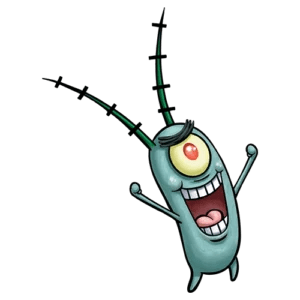
Sheldon J. Plankton represents envy with remarkable consistency throughout the series, his entire existence defined by resentment towards Mr. Krabs’ success and desperate attempts to achieve what his rival possesses. The microscopic villain’s Plankton envy drives every scheme, every plot, and every moment of his miserable existence in the shadow of the Krusty Krab’s prosperity.
Plankton’s envy manifests most obviously in his relentless pursuit of the Krabby Patty secret formula, a quest that has consumed decades of his life without success. The Chum Bucket, his failing restaurant, serves as a constant reminder of his inadequacy compared to Mr. Krabs’ thriving establishment. Rather than focusing on improving his own business through innovation or better service, Plankton remains fixated on stealing what makes his competitor successful.

This envious nature extends beyond business rivalry to encompass every aspect of Plankton’s relationship with success. He becomes visibly distressed when others achieve what he cannot, celebrates their failures with glee, and consistently attributes his own shortcomings to external factors rather than personal responsibility. His marriage to Karen, a computer wife he created, even reflects his envy—she represents his attempt to construct a relationship that mirrors the success he observes in others.
The character’s envious disposition creates a self-perpetuating cycle of failure and resentment. Rather than learning from his countless defeats or adapting his approach, Plankton remains trapped by his envy, unable to move beyond his fixation with Mr. Krabs’ achievements to develop his own path to success.
Patrick Star: The champion of sloth

Patrick Star embodies sloth so completely that he once received an award for “doing absolutely nothing for the longest time,” a recognition that perfectly encapsulates his relationship with productivity and responsibility. The pink starfish’s Patrick Star sloth extends far beyond simple laziness to encompass a fundamental rejection of effort, ambition, and personal development.
Patrick’s living situation exemplifies his slothful nature—he resides under a rock with virtually no furniture, conveniences, or signs of personal advancement. His daily routine consists primarily of sleeping, eating, and engaging in mindless activities that require minimal intellectual or physical effort. When employment opportunities arise, Patrick consistently demonstrates an inability to maintain focus, effort, or basic competence, often abandoning jobs within episodes or performing so poorly that dismissal becomes inevitable.

The character’s sloth manifests not only in physical laziness but also in intellectual and moral dimensions. Patrick frequently avoids taking responsibility for his actions, preferring to blame others or simply ignore consequences entirely. His speech patterns—slow, often slurred, and punctuated by long pauses—reinforce his fundamental aversion to exertion of any kind.
Interestingly, Patrick occasionally displays hidden talents and abilities, such as remarkable physical strength or unexpected moments of insight. However, these glimpses of potential only emphasise his slothful nature more strongly, as they reveal capabilities that remain permanently undeveloped due to his unwillingness to apply sustained effort or dedication.
Squidward Tentacles: The avatar of wrath

Squidward Tentacles channels wrath through his perpetual anger, frustration, and barely contained hostility towards nearly everyone in Bikini Bottom, particularly his eternally optimistic neighbours SpongeBob and Patrick. His Squidward wrath permeates every interaction, transforming routine encounters into exercises in barely suppressed rage and contempt.
The blue-grey cephalopod’s anger stems from multiple sources: his dead-end job as a cashier, his unfulfilled artistic aspirations, and his constant exposure to SpongeBob’s relentless cheerfulness and Patrick’s mindless antics. However, rather than addressing these frustrations constructively, Squidward allows wrath to consume his perspective, viewing every situation through a lens of irritation and resentment.

Squidward’s wrathful nature manifests in verbal outbursts, passive-aggressive behaviour, and occasional explosive episodes of genuine fury. He consistently responds to kindness with suspicion, interprets innocent behaviour as deliberate provocation, and maintains a perpetual state of readiness for conflict. His clarinet playing, ostensibly a creative outlet, often becomes another source of frustration as his limited talent fails to match his inflated self-perception.
The character’s wrath creates a self-fulfilling prophecy of misery—his hostile attitude generates negative responses from others, which then validates his cynical worldview and fuels further anger. This cycle prevents him from forming meaningful relationships or finding genuine satisfaction in his circumstances, trapping him in a prison of perpetual rage and disappointment.
SpongeBob SquarePants: The paradox of lust
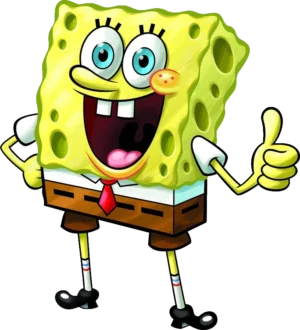
SpongeBob’s representation of lust presents the most complex interpretation within the SpongeBob seven deadly sins theory, requiring a broader understanding of lust as intense passion or desire rather than purely sexual craving. The titular character’s SpongeBob lust manifests as an overwhelming, sometimes unhealthy desire for approval, companionship, and engagement with the world around him.
SpongeBob’s lustful nature appears in his desperate need to please everyone, even those who consistently reject or abuse him. His relationship with Squidward exemplifies this tendency—despite years of insults, rejection, and explicit requests to be left alone, SpongeBob continues pursuing friendship with increasingly intense efforts. This behaviour suggests an addictive quality to his desire for connection, where normal social boundaries dissolve in the face of his overwhelming need for acceptance.
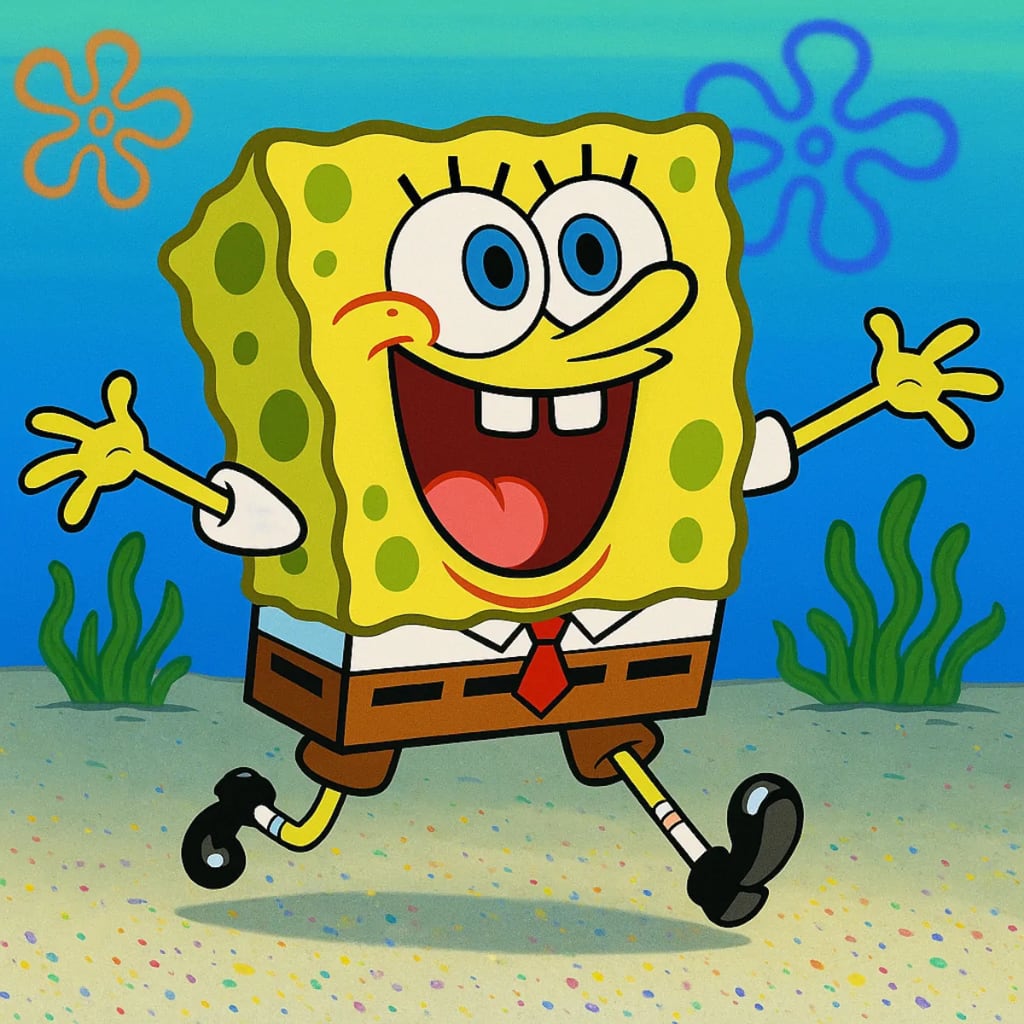
The character’s approach to work demonstrates another dimension of his lustful nature. SpongeBob’s passion for fry cooking extends far beyond professional dedication to become an obsessive fixation. He dreams about Krabby Patties, creates elaborate fantasies around his mundane job, and treats routine work tasks as profound expressions of personal identity.
Voice actor Tom Kenny’s observation that SpongeBob simply wants to work more at the Krusty Krab supports this interpretation of lust as excessive desire rather than sexual appetite. The character’s relentless optimism and enthusiasm can be understood as manifestations of an insatiable hunger for experience and connection that mirrors the consuming nature of traditional lust.
Sandy Cheeks: The pride of Texas

Sandy Cheeks embodies pride through her constant boasting about her Texan heritage, her intellectual superiority, and her status as a land creature living underwater. The squirrel scientist’s pride manifests in both positive and destructive ways, driving her achievements whilst simultaneously creating barriers between herself and the Bikini Bottom community.
Sandy’s pride in her home state reaches almost comical levels, with frequent declarations about Texas superiority and dismissive comments about underwater life. She wrote songs celebrating her heritage, constantly references her homeland’s supposed supremacy, and often treats sea creatures as inherently inferior to land mammals. This regional pride occasionally escalates into genuine arrogance, particularly when she challenges the entire underwater community to prove their worth against land creatures.

Her intellectual pride proves equally prominent, with Sandy frequently emphasising her scientific credentials and superior intelligence. She builds complex inventions, conducts elaborate experiments, and rarely misses opportunities to demonstrate her knowledge advantage over other characters. However, this pride in her intellect sometimes blinds her to practical considerations or emotional intelligence, creating situations where her superior knowledge fails to produce superior outcomes.
Sandy’s pride also extends to her physical capabilities, particularly her karate skills and athletic prowess. She consistently positions herself as more capable than her aquatic neighbours, often volunteering to solve problems through physical strength or martial arts expertise. Whilst her confidence often proves justified, the underlying pride can create unnecessary conflicts and distance her from potential allies.
Gary the Snail: The glutton in a shell

Gary’s representation of gluttony within the SpongeBob seven deadly sins theory focuses on his consistently voracious appetite and his role as SpongeBob’s perpetually hungry pet. The pink-shelled mollusc’s association with gluttony extends beyond simple overeating to encompass a broader pattern of consumption without consideration for consequences or moderation.
Throughout the series, Gary’s feeding becomes a running joke, with his distinctive meow serving primarily to demand food from SpongeBob. The character’s appetite appears insatiable—no amount of food seems sufficient to satisfy him permanently, and his demands for sustenance often interrupt important moments or create comedic tension. This endless hunger creates situations where Gary’s basic needs override other considerations, reflecting gluttony’s tendency to prioritise immediate gratification over long-term planning or consideration for others.
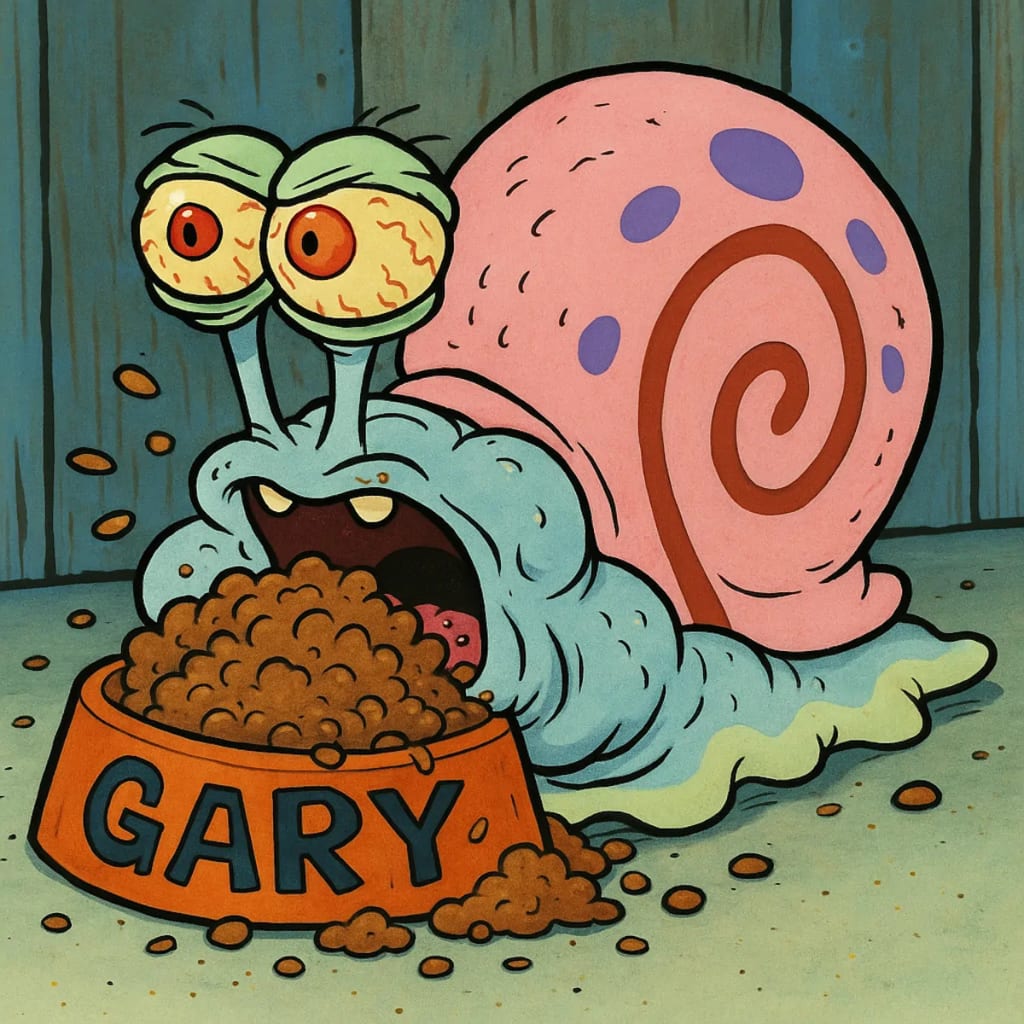
Gary’s gluttonous nature occasionally drives plot development, such as episodes where he runs away due to inadequate feeding schedules or becomes the centre of conflicts over food provision. His eating habits often exceed normal pet requirements, suggesting an excessive relationship with consumption that aligns with traditional definitions of gluttony as overindulgence beyond necessity.
However, Gary’s character complexity extends beyond simple gluttony—he demonstrates high intelligence, loyalty, and emotional depth that complicate his role as a pure embodiment of this sin. This complexity reflects the broader challenge of mapping complex characters onto singular moral categories, suggesting that the seven deadly sins framework may be more metaphorical than literal in its application to SpongeBob characters.
The theory’s origins and cultural impact
The SpongeBob fan theory connecting Bikini Bottom’s residents to the seven deadly sins emerged from internet discussions and fan communities rather than official creator statements or academic analysis. Various online platforms, including Reddit, fan websites, and YouTube channels, have propagated this interpretation over the years, with each iteration adding new evidence or refining existing connections.
Mr. Lawrence, a writer and voice actor for the series who portrays Plankton, addressed the theory during a reunion video for Esquire, acknowledging that whilst characters possess individual distinctions, the connections may not be “as concrete as pairing them with one of the Seven Deadly Sins”. This response suggests that whilst the theory resonates with observable character traits, it represents fan interpretation rather than intentional creative design.
The theory’s popularity stems partly from its ability to add depth to characters designed primarily for children’s entertainment. By applying theological concepts to animated personalities, fans create interpretive frameworks that allow adult viewers to engage with the material on multiple levels. This approach reflects broader cultural trends where audiences seek hidden meanings or alternative readings in popular media, particularly content that spans multiple age demographics.
Stephen Hillenburg, the series creator, consistently maintained that SpongeBob SquarePants was designed as straightforward entertainment rather than allegorical commentary. His background in marine biology and education suggests that character development focused on creating engaging personalities rather than theological representations. However, the theory’s persistence indicates that authorial intention and audience interpretation can diverge significantly in popular culture analysis.
“As a lifelong SpongeBob fan, I never expected to see my childhood favourite dissected with such psychological depth on social media. The debate around this cartoon hidden meaning has been fascinating, watching a simple kids’ show become a canvas for deep theological and psychological discussions.”
Critical analysis: Strengths and weaknesses of the 2025 SpongeBob seven deadly sins theory
Whilst the SpongeBob characters seven deadly sins theory offers compelling parallels, careful analysis reveals both strengths and limitations that affect its overall validity. The theory’s strongest connections involve characters whose primary traits align closely with specific sins, particularly Mr. Krabs and greed, where evidence appears overwhelming and consistent across numerous episodes.
However, the theory faces several significant challenges that complicate its comprehensive application. Many characters display traits associated with multiple sins, making exclusive categorisation problematic. Squidward, for example, exhibits both wrath and envy, whilst Sandy demonstrates pride alongside other characteristics that might align with different sins. This overlap suggests that complex characters resist reduction to singular moral categories.
The theory also struggles with character development and growth throughout the series. SpongeBob characters occasionally demonstrate virtues that directly contradict their supposed sinful nature—Mr. Krabs showing genuine care for Pearl that transcends his greed, or Patrick displaying unexpected wisdom that challenges his slothful reputation. These instances of character complexity argue against viewing the characters as static representations of specific vices.
Cultural and contextual factors further complicate the theory’s application. The seven deadly sins framework emerges from Christian theological tradition, whilst SpongeBob SquarePants operates within contemporary secular entertainment culture. This disconnect raises questions about whether forcing theological interpretations onto modern animated characters provides meaningful insight or merely imposes external frameworks onto unsuitable material.
Additionally, the theory’s focus on negative traits potentially overlooks the characters’ positive qualities and the show’s overall messages about friendship, perseverance, and community. SpongeBob’s optimism, Sandy’s intelligence, and even Squidward’s artistic aspirations represent admirable qualities that the deadly sins framework cannot adequately address.
Alternative interpretations and counterarguments: Uncovering the psychology of cartoons
Several alternative theories compete with the seven deadly sins interpretation, suggesting different frameworks for understanding SpongeBob characters. Some analyses propose that the characters represent various forms of mental illness, with SpongeBob embodying ADHD, Squidward representing depression, and Patrick displaying cognitive disabilities. Others suggest drug-related interpretations, though these theories lack substantial evidence and often reflect adult projections rather than textual analysis.
The commedia dell’arte interpretation offers a more academically grounded alternative, suggesting that SpongeBob characters function as stock theatrical types rather than moral allegories. This framework emphasises character archetypes and comedic functions over theological symbolism, potentially providing better explanatory power for the show’s structure and humour.
Psychological interpretation focusing on workplace dynamics and social relationships presents another compelling alternative. From this perspective, the characters represent different responses to employment dissatisfaction, social pressure, and community life rather than embodying abstract moral concepts. This reading acknowledges the show’s frequent focus on work-life balance, friendship dynamics, and community relationships without requiring theological overlay.
The nuclear testing theory, whilst darker and more speculative, suggests that Bikini Bottom’s characters represent mutations caused by atomic testing at Bikini Atoll. This interpretation attempts to explain the characters’ anthropomorphic nature and exaggerated personalities through environmental rather than moral causation, though it lacks substantial textual support.
Critics of the seven deadly sins theory argue that its popularity reflects adult audiences’ desire to find sophisticated meaning in children’s entertainment rather than genuine textual evidence. This perspective suggests that the theory’s appeal stems from nostalgia and intellectual exercise rather than authorial intention or inherent textual support. This cartoon theory debate remains a hot topic in online forums.
Contemporary relevance and cultural significance: The enduring allure of SpongeBob hidden meaning
The enduring fascination with the SpongeBob seven deadly sins theory reflects broader cultural phenomena beyond simple cartoon analysis. In an era where childhood entertainment increasingly targets multiple age demographics, adult audiences seek interpretive frameworks that justify their continued engagement with supposedly juvenile material.
The theory’s popularity on social media platforms demonstrates how internet culture transforms individual interpretations into collective knowledge. Memes, videos, and discussion threads have elevated a speculative fan theory to the status of widely accepted interpretation, illustrating how digital communities shape cultural understanding of media texts. The search for Nickelodeon dark secrets and other SpongeBob fan theories continues to trend in 2025.
Educational applications of the theory highlight its potential pedagogical value, with some instructors using SpongeBob characters to teach students about moral philosophy and theological concepts. This application suggests that popular culture interpretations can serve legitimate educational purposes regardless of authorial intention or textual accuracy.
The theory also reflects contemporary anxieties about moral education and character development in secular society. By applying religious frameworks to popular entertainment, audiences attempt to recover moral instruction from unlikely sources, perhaps compensating for perceived deficits in traditional ethical education.
However, the theory’s emphasis on negative characteristics rather than positive virtues raises questions about what messages audiences derive from this interpretation. Focusing primarily on deadly sins rather than corresponding virtues may reinforce cynical worldviews or encourage audiences to identify primarily with negative aspects of human nature.
Conclusion: Navigating the depths of interpretation
The SpongeBob seven deadly sins theory represents a fascinating example of how audiences engage creatively with popular culture, transforming simple entertainment into complex moral allegory. Whilst the evidence for systematic theological symbolism remains inconclusive, the theory’s persistence demonstrates the power of interpretive frameworks to generate new meanings and sustain audience engagement across decades.
Mr. Krabs’ overwhelming greed, Plankton’s consuming envy, Patrick’s comprehensive sloth, Squidward’s perpetual wrath, SpongeBob’s intense passion for connection, Sandy’s prideful superiority, and Gary’s gluttonous appetite all provide compelling evidence for their respective sinful associations. However, the characters’ complexity and occasional contradictions suggest that the seven deadly sins framework may be more metaphorical tool than literal interpretation.
The theory’s greatest value may lie not in its accuracy but in its ability to provoke deeper engagement with familiar characters and moral concepts. By encouraging audiences to consider the psychological and ethical dimensions of animated personalities, the theory transforms passive entertainment consumption into active intellectual exercise.
Perhaps the most intriguing aspect of this interpretation is what it reveals about contemporary culture’s relationship with moral education and popular media. In an increasingly secular society, audiences may be unconsciously seeking ethical instruction from entertainment sources, using theological frameworks to extract meaning from unlikely texts.
Whether you view the theory as compelling analysis or creative overinterpretation, its impact on SpongeBob SquarePants discourse remains undeniable. The Bikini Bottom residents have transcended their roles as simple cartoon characters to become symbols of humanity’s greatest moral struggles—and perhaps that transformation itself represents the most fascinating aspect of this enduring cultural phenomenon. What do you think: does this theory illuminate hidden depths in beloved characters, or does it impose inappropriate complexity onto innocent entertainment designed simply to make children laugh?


