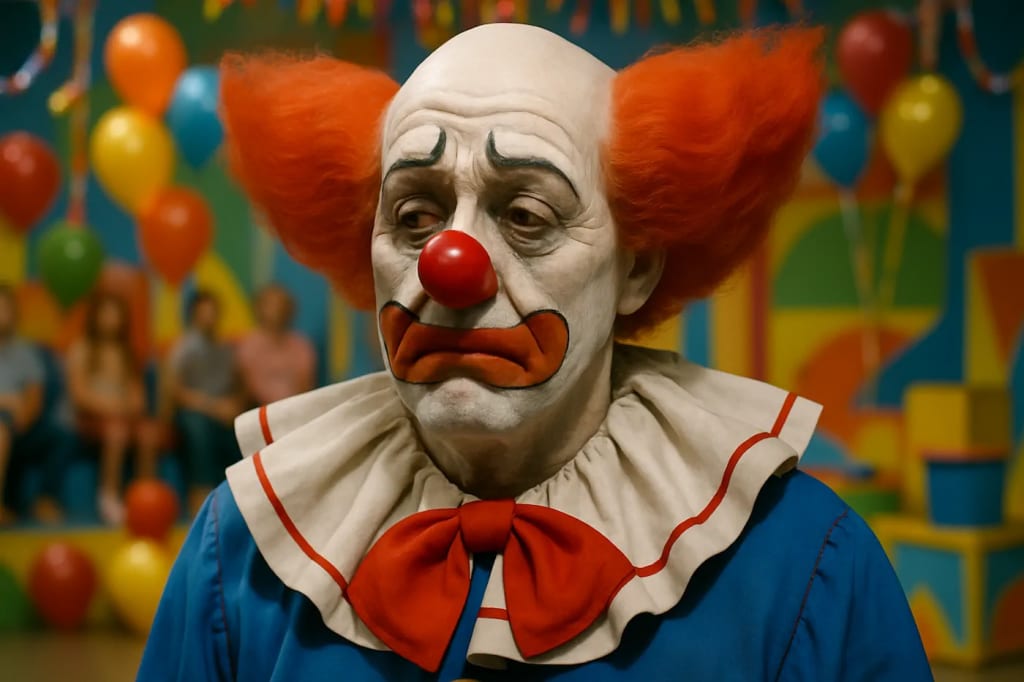
For generations of children across America and beyond, Bozo the Clown represented pure, unadulterated joy. With his distinctive red hair, painted smile, and infectious laugh, he was the epitome of innocent entertainment—a beacon of childhood wonder in an increasingly complex world. Yet behind the greasepaint and oversized shoes lay a far more troubling reality that the public never saw. The dark side of Bozo the Clown reveals a franchise built on exploitation, anonymity, and the profound personal struggles of performers who sacrificed their identities for the sake of maintaining a beloved illusion. This is the untold story of the men behind the red nose, a narrative woven with threads of relentless performance, strict secrecy, and the quiet despair that can accompany immense public adoration.
The genesis of an entertainment empire: From record album to global franchise exploitation
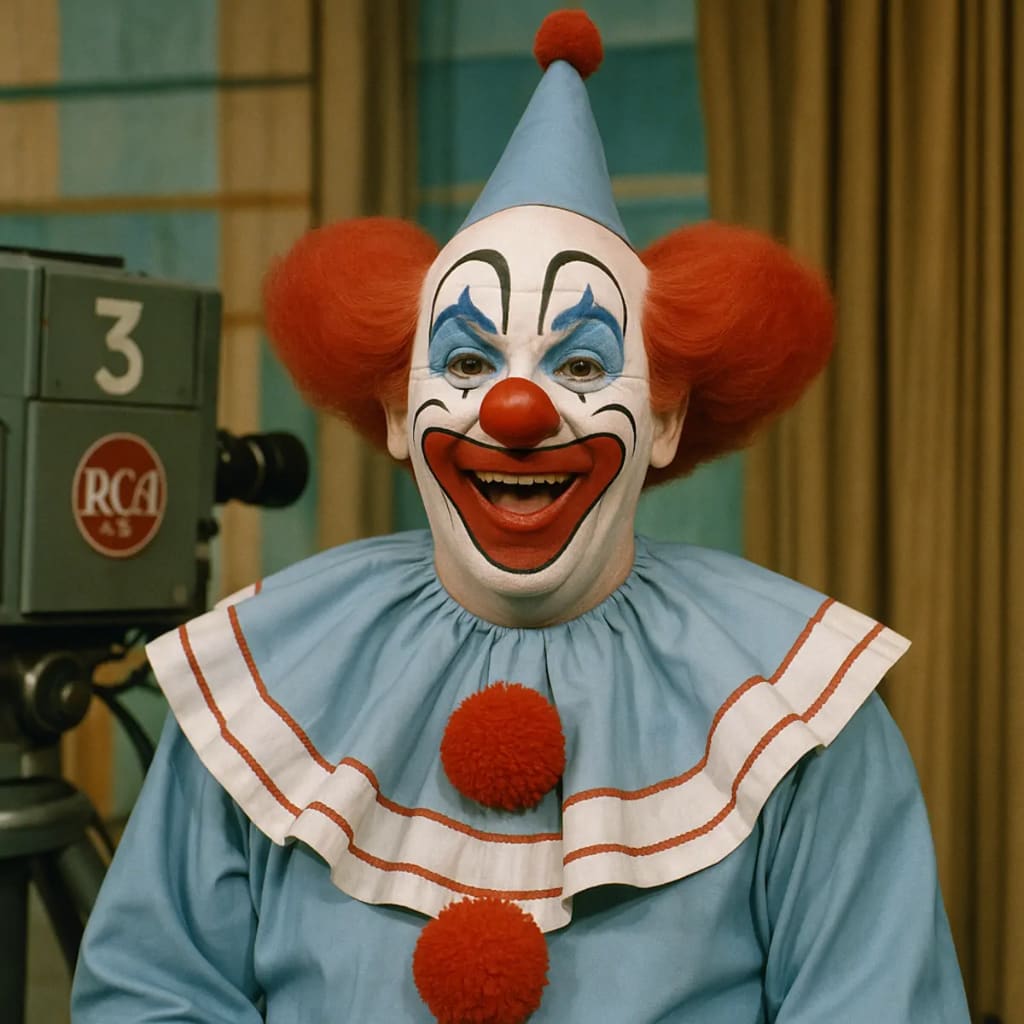
The journey of Bozo the Clown, a figure who would become a central pillar of children’s television history, didn’t begin under the glare of studio lights but in the innovative, burgeoning world of post-war children’s media. In 1946, a forward-thinking record executive named Alan W. Livingston at Capitol Records had the genius idea to create a children’s storytelling record album, complete with illustrated read-along books. This was the birth of Bozo, and the initial voice behind the clown was none other than Pinto Colvig, a veteran vaudeville performer whose illustrious resume already included voicing Disney giants like Goofy and Pluto. Colvig’s warm, affable portrayal immediately resonated with young audiences, setting the stage for a phenomenon far grander than anyone could have initially imagined.

But the real architect of the Bozo franchise’s astonishing, yet ethically complex, expansion was Larry Harmon. A shrewd businessman and aspiring entertainer, Harmon acquired the creative rights to Bozo from Capitol Records in 1957. His vision was not merely to produce a single show, but to engineer an entertainment business model that was as brilliant in its widespread success as it was devastating in its implications for the performers. Harmon recognized that instead of a single, national show, the true power lay in localizing the experience. He would franchise Bozo, allowing individual television stations to license the character, the costumes, the makeup techniques, and the performance guidelines, enabling them to produce their own local versions of “The Bozo Show.” This strategy was wildly successful, leading to a point where, at its peak, an astounding 183 different Bozo shows were airing simultaneously across the United States alone.
This franchise model was revolutionary, a testament to Harmon’s entrepreneurial spirit. However, for many of the men who stepped into those oversized shoes, it was a one-way ticket to a psychological prison. The Bozo brand became a household name, synonymous with childhood joy and laughter, but the men behind it were often reduced to mere components in a remarkably well-oiled, profit-driven machine. This crucial element of the Bozo the Clown untold story speaks to a system where the illusion was paramount, and the individual identities of the performers were systematically erased for the sake of brand consistency and financial gain.
Global expansion: Bozo’s reach beyond American shores
Larry Harmon’s ambition for Bozo extended far beyond the borders of the United States. He envisioned Bozo as a universal figure of fun, capable of captivating children across different cultures and languages. His franchising model proved equally effective internationally, leading to Bozo shows appearing in numerous countries and languages.
In Canada, for instance, Bozo found a significant audience, particularly in the 1960s and 70s. Local stations like CHCH-TV in Hamilton, Ontario, produced their own versions, featuring Canadian actors who adopted the Bozo persona. These shows often integrated local cultural nuances while adhering to the core tenets of the Bozo character, creating a familiar yet distinctly Canadian experience.

Across the Atlantic, the United Kingdom also saw its iteration of Bozo, albeit with less ubiquity than in North America. While specific long-running local versions were rarer, the character’s merchandise and occasional special appearances cemented Bozo’s recognition among British children. Harmon’s global distribution of animated Bozo cartoons also played a significant role in introducing the character to non-English speaking audiences, bridging linguistic barriers.
In Australia, Bozo made appearances, particularly through syndicated American animated content and sporadic local efforts. The character’s universal appeal, rooted in slapstick comedy and childlike wonder, transcended geographical boundaries. These international ventures, while expanding Bozo’s financial footprint, also multiplied the number of individuals subjected to the same rigid contractual obligations and identity suppression that characterized the American experience. Each new territory meant more actors donning the iconic costume, further cementing the paradox of a globally recognized character portrayed by locally anonymous performers.
The sad clown paradox and the psychological prison of the red nose
This brings us to a concept that feels eerily suited to the Bozo narrative: the “sad clown paradox.” This idea explores the often-seen correlation between a public-facing career of making others laugh and a private life riddled with depression, anxiety, or profound personal turmoil. For the Bozo performers, this paradox was not an abstract concept; it was a daily, lived reality, amplified by the unique constraints of their profession.
The contracts governing the Bozo franchise were particularly insidious. They strictly forbade performers from revealing their true identities, creating a bizarre and isolating existence. They were simultaneously local celebrities, adored by millions, and complete unknowns, unable to acknowledge their iconic role outside of the studio.

Think of Bob Bell, who embodied the Chicago Bozo for WGN for 24 years, from 1960 to 1984. For an entire generation of Chicagoans, he was the face of pure, wholesome entertainment, a fixture in their daily lives. Yet, outside of his work, Bell was contractually obligated to maintain his anonymity. He couldn’t speak publicly about his role, sign autographs as himself, or even be recognized as the man behind the makeup. This enforced invisibility bred a profound sense of isolation and identity confusion. The persona was famous, beloved, and celebrated, while the man behind it was effectively erased. This strange dichotomy, a life of live TV stress coupled with the enforced solitude of a hidden identity, is a core theme in the dark history of Bozo the Clown. Bell himself, a talented voice actor and comedian, reportedly struggled with the weight of this anonymity, a common thread among many Bozos.
The psychological toll of this constant performance went far beyond the simple discomfort of heavy makeup and restrictive costumes. Performers like Frank Avruch, the Boston Bozo whose version was syndicated nationally and became the most widely seen iteration of the character in America during the 1960s and 70s, found the role to be a highlight and a burden simultaneously. Avruch, despite his widespread visibility, remained virtually unknown as the man behind the clown. The franchise was so successful at maintaining the illusion of a single, omnipresent Bozo that when Avruch passed away in 2018, many people were genuinely surprised to learn that multiple actors had played the character. This highlights the effectiveness of Harmon’s strategy, but also the deep personal cost to those who inhabited the role. The lack of public recognition for their immense talent and dedication was a constant source of quiet frustration for many of these actors.
Behind the scenes of a children’s show: The pressure cooker of live TV
The demanding schedules and intense scrutiny inherent in live television further exacerbated the psychological pressures on Bozo performers. “Bozo’s Circus” in Chicago, in particular, became a masterclass in this high-pressure environment. The show was broadcast live for a staggering 14 hours every weekday during its heyday, comprising multiple live broadcasts and often additional tapings. This wasn’t a matter of taping a few segments and calling it a day; this was sustained, high-energy performance, day in and day out, requiring immense stamina and constant “on-ness.” The repetition of gags, the need for consistent enthusiasm, and the ever-present possibility of unforeseen live mishaps created an environment where performers felt they could never truly relax or be themselves.
The show’s popularity was so immense that waiting lists for audience tickets reportedly extended up to ten years. Can you imagine the pressure? Knowing that any mistake, any sign of fatigue, or any lapse in character was visible to thousands in the studio and millions more watching at home? It was an extraordinary mental and physical strain. The expectation of perfection, coupled with the relentless pace, forged an environment ripe for burnout.
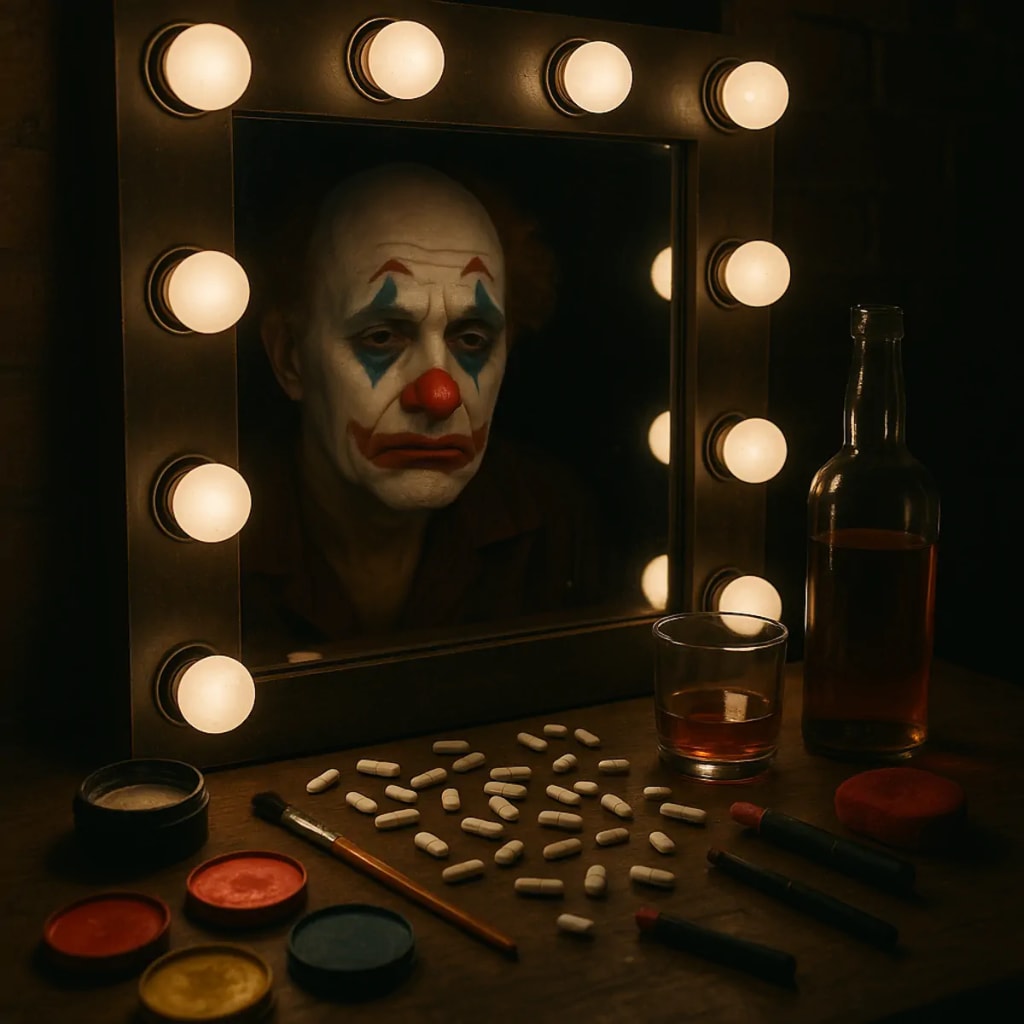
The demanding nature of the job, combined with the profound isolation imposed by anonymity, led some performers to seek unhealthy coping mechanisms. While specific, documented cases involving Bozo performers and substance abuse are difficult to come by due to the rigorous secrecy around the franchise and the societal stigma surrounding addiction, anecdotal evidence and widespread industry knowledge paint a concerning picture. Reddit discussions among older viewers and behind-the-scenes accounts from the era frequently recall instances where certain performers, across various children’s shows, appeared to be under the influence during live broadcasts. There are persistent rumors and unverified accounts, particularly concerning some high-pressure live children’s shows, of performers using stimulants like cocaine to maintain energy and alertness for grueling, extended live segments. While direct confirmation for Bozo actors remains elusive, the culture of relentless demand and the lack of support for performer well-being in that era made such coping strategies unfortunately common among entertainers. This sheds light on the broader issue of children’s entertainer substance abuse, a deeply troubling, dark undercurrent in the seemingly innocent world of classic television.
The isolation imposed by their contractual anonymity only made matters worse. Unlike other television personalities who could find support in their fan communities or with industry peers, Bozo performers were largely cut off. They were famous to an entire city, yet they couldn’t be themselves, couldn’t talk about their work publicly, and couldn’t share the immense burdens of their profession with anyone outside a tight-knit, trusted circle. This is a key part of the Bozo the Clown dark side, a chilling echo of the sad clown paradox in real life, where the public face of joy masked profound private struggles.

The business machine behind the smile: A legacy of performer anonymity and financial disparity
Larry Harmon’s Bozo franchise was an undeniable financial success, an entertainment juggernaut that generated significant revenue for his company, Larry Harmon Pictures Corporation. However, this success often came at a significant cost to the men who brought the character to life. Harmon reportedly trained over 200 men to be Bozo across various markets, with each performer generating licensing fees and merchandise royalties for his company. The compensation for these performers was often modest, especially compared to the immense profitability of the franchise. This created a stark contrast between the brand’s financial might and the economic reality of its actors. Many felt exploited, sensing they were easily replaceable cogs in a larger, immensely profitable machine. This is the essence of the franchise exploitation at the heart of the Bozo story.
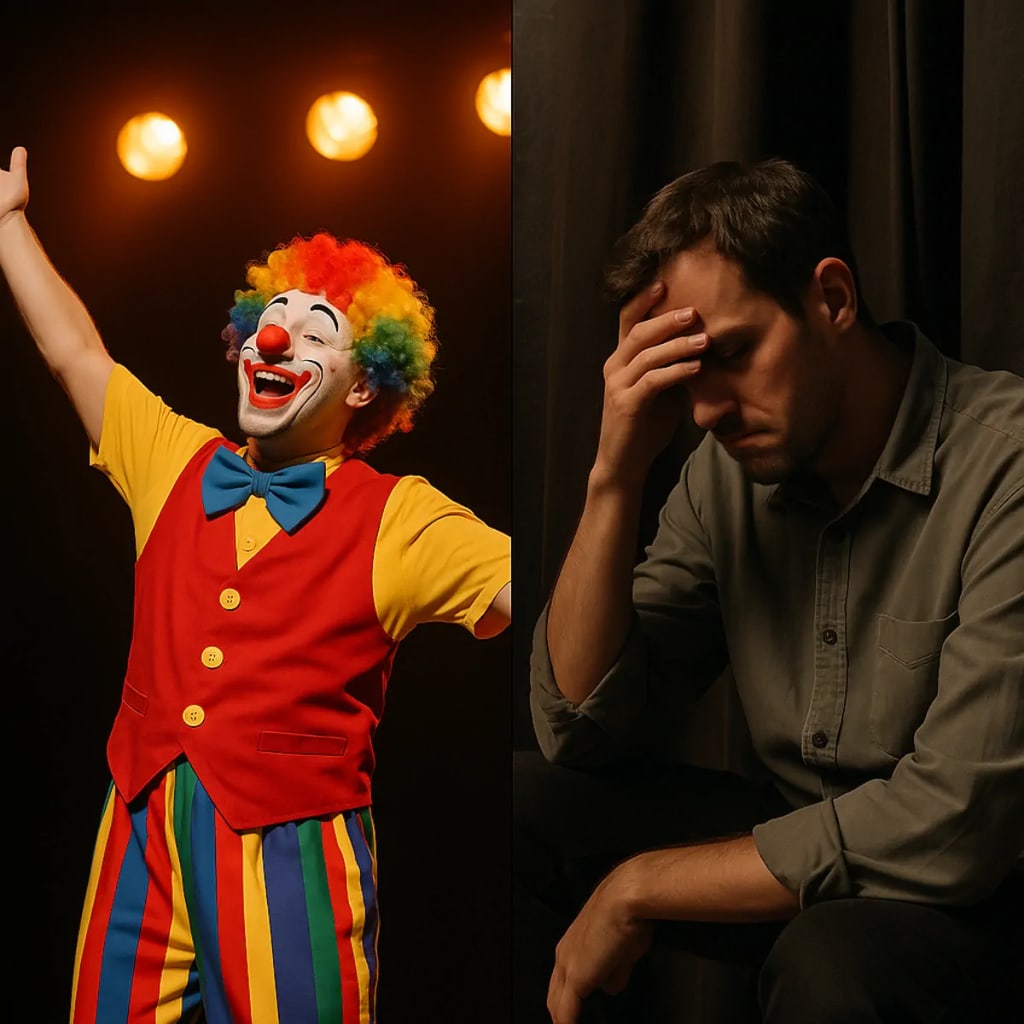
The enduring legacy of the Bozo franchise, and the central reason for its continued relevance, is the strange duality it represents. On one hand, it provided genuine, unscripted happiness to millions of children for decades, fostering a sense of community and wonder. On the other, it built a system that demanded immense personal sacrifices from its performers, asking them to literally give up their public identities for the sake of the brand’s uniform image and profitability. The illusion of a single, consistent Bozo was meticulously maintained, a testament to Harmon’s marketing genius but also a shroud that hid the human cost.
In recent years, with David Arquette acquiring the rights to the Bozo character in 2021, there’s been a new wave of interest and a chance for a more nuanced look back at this cultural phenomenon. This modern perspective allows us to honor the cultural impact of the character while also critically examining the cost borne by the performers. We can now have a conversation about performer mental health, identity, and ethical labor practices in a way that wasn’t possible fifty or sixty years ago, shedding light on issues that were once swept under the rug.
Conclusion: The unspoken cost of painted happiness
The story of Bozo the Clown is a poignant and complex reminder that behind every cherished pop culture icon and every beloved character lies a human story, often far more intricate and sometimes heartbreaking than the public perceives. The men who wore the oversized shoes, the iconic red nose, and the vibrant wig were more than just clowns; they were live television performers navigating an industry that, for decades, prioritized brand integrity and financial gain over individual well-being. They faced the unique, unrelenting pressures of enforced anonymity, grueling live schedules, and the profound isolation that comes from living a double life – revered in one persona, unrecognized in their own.
The legacy of the Bozo franchise offers a powerful, albeit sobering, lesson to the modern entertainment industry about the critical importance of supporting performer mental health, acknowledging the unique psychological burdens of performance, and ensuring fair and transparent labor practices. In celebrating Bozo’s indelible place in American and global television history, let’s also make sure to remember and honor the real people who brought him to life. Their untold story of struggle and sacrifice is as much a part of the character’s rich history as the laughter and joy he brought to millions. It is a story of the dark side of American TV icons, a testament to the heavy burden of being America’s favorite clown, and a call to never again let a painted smile obscure the very real human behind it.
What other beloved characters might have similar untold stories hidden behind their public personas?