

Understanding how a psychopath thinks isn’t just academic curiosity – it’s essential knowledge that could protect you from manipulation, emotional abuse, or worse. In our hyperconnected world where charm can be weaponized through social media and dating apps, the ability to spot these mental predators has never been more crucial. Recent neuroscience research has shattered Hollywood myths whilst revealing disturbing truths about the minds that walk amongst us, appearing perfectly normal whilst calculating their next move.
The statistics are sobering: approximately 1% of the general population exhibits psychopathic traits, but in corporate boardrooms, this figure jumps to a staggering 12%. These aren’t just serial killers from Netflix documentaries – they’re your colleagues, neighbors, and potentially even romantic partners. The forensic psychiatrist Dr. Guido Palomba describes psychopaths as existing in a “film-like” detachment from their actions, observing their own behavior as if watching a movie in which they’re neither actor nor author. This chilling perspective offers our first glimpse into the alien landscape of the psychopathic mind.
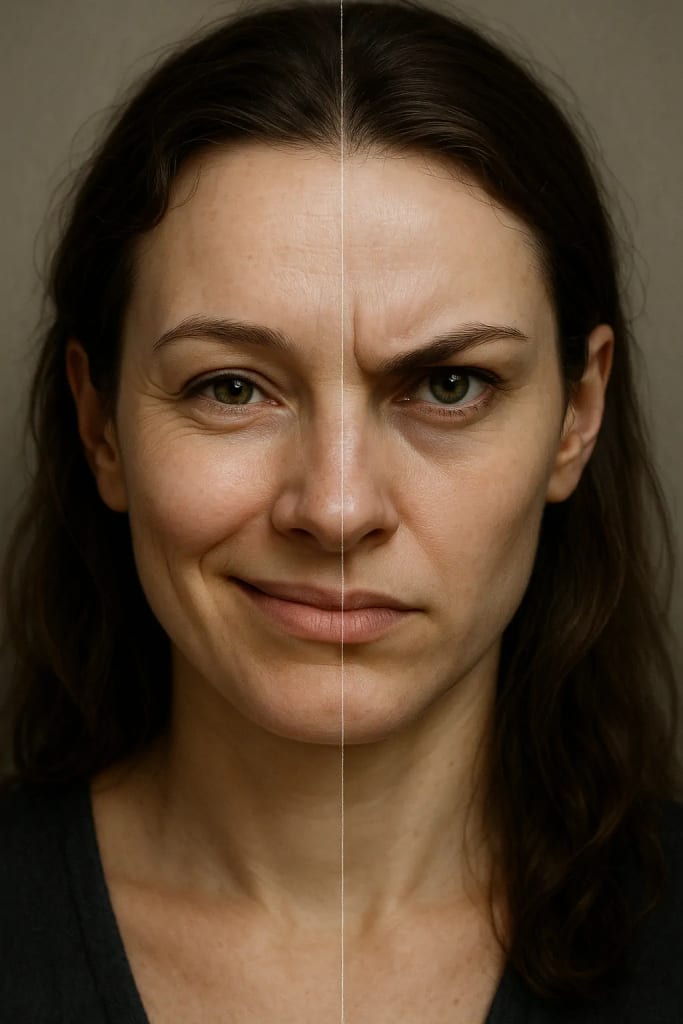
What is a psychopath? Beyond the Hollywood stereotypes
Before diving into what is a psychopath and how their minds operate, we must dispel the sensationalized nonsense peddled by popular culture. Contrary to slasher films, most psychopaths aren’t masked killers lurking in shadows. They’re often successful, charming individuals who excel in careers requiring ruthless decision-making and emotional detachment.
Psychopath vs sociopath – a distinction that confuses many – lies primarily in their origins and presentation. Psychopathy appears to be largely genetic, with research indicating 60-70% heritability. These individuals are born with fundamental brain differences, particularly in the paralimbic system responsible for emotional processing and moral reasoning. Sociopaths, conversely, are typically “made” through environmental trauma, exhibiting more erratic, impulsive behavior whilst retaining some capacity for emotional attachment.
The narcissist vs psychopath debate reveals another crucial distinction. Narcissists crave admiration and validation, driving their manipulative behavior through wounded self-esteem. Psychopaths require neither approval nor emotional connection – they manipulate purely for personal gain or, disturbingly, for the thrill of control itself.

The rise of dark psychology in 2025
The field of dark psychology 2025 has gained unprecedented attention as researchers delve deeper into the shadowy aspects of human behavior. New studies reveal how psychopaths exploit social media algorithms to identify vulnerable targets, using sophisticated emotional intelligence to manipulate online relationships. These mental predators have adapted their tactics to our digital age, making traditional warning signs obsolete.
Recent research from Stanford University shows that psychopaths are 3.2 times more likely to achieve viral status on platforms like TikTok and Instagram, where superficial charm and manufactured controversy drive engagement. This digital evolution has created what researchers term “cyber-psychopaths” – individuals who may function normally in person but exhibit predatory behavior online.
The psychopathic mind: A neurological wasteland
How psychopaths process emotions
Recent neuroscience research has revolutionized our understanding of how psychopaths think. Dr. Arielle Baskin-Sommers’ groundbreaking work demonstrates that psychopaths can experience emotions – but only under specific circumstances. When their attention is focused elsewhere, their emotional responses become virtually non-existent. This “attentional myopia” explains their notorious lack of empathy.
Can a psychopath feel emotions? The answer is nuanced. They experience shallow, self-serving emotions like anger and excitement, but struggle with deeper feelings like guilt, remorse, and genuine fear. Vanderbilt University research reveals psychopaths possess hyper-reactive dopamine reward systems, making them relentlessly pursue goals regardless of consequences. Once locked onto a target – whether material gain or personal dominance – they proceed “as if they can’t get off the train until it reaches the station.”
Case study: The charming predator
Sarah (name changed for privacy) met David through a dating app in 2024. He seemed perfect – successful entrepreneur, well-traveled, attentive listener. Within weeks, he had moved into her apartment after claiming his lease ended unexpectedly. The red flags started small: he criticized her friends as “toxic,” isolated her from family with manufactured emergencies, and gradually took control of her finances under the guise of “helping” manage her money.
What Sarah didn’t recognize were the classic manipulation tactics of a corporate psychopath – someone who had successfully climbed the corporate ladder by exploiting others’ trust and emotions. David’s company later revealed he had embezzled over $200,000 from client accounts. The investigation showed a pattern spanning five years and multiple victims, all women he had met through dating platforms.
This case illustrates how modern psychopaths leverage technology and social expectations to create elaborate facades. They study their targets through social media profiles, crafting personas designed to match their victims’ desires and vulnerabilities.
The fear factor: Why normal deterrents fail
Perhaps most chilling is psychopaths’ relationship with fear. Multiple studies confirm they show dramatically reduced physiological responses to threatening stimuli. Where normal individuals experience elevated heart rate, sweating, and anxiety when facing punishment, psychopaths remain eerily calm. This fearlessness isn’t courage – it’s a fundamental neurological deficit that renders traditional deterrents like consequences, punishment, or social disapproval utterly ineffective.
This explains why psychopaths repeatedly engage in self-destructive behavior, seemingly never learning from mistakes. Their impaired fear conditioning means they literally cannot form the mental associations that keep the rest of us from touching metaphorical hot stoves repeatedly.
Identifying a psychopath: The warning signs you cannot ignore
Signs of a psychopath: Surface-level charm masking predatory intent
Learning how to identify a psychopath requires looking beyond superficial charm to recognize consistent behavioral patterns. The Hare Psychopathy Checklist-Revised remains the gold standard for assessment, but several warning signs should immediately raise red flags in personal interactions:
Actionable warning signs checklist:
1. Supernatural charisma that feels “off”
- Watch for: Conversations that feel scripted or performative
- Red flag: Delayed emotional responses, as if calculating the “correct” reaction
- Action step: Trust your gut when charm feels artificial or excessive
2. Emotional responses that don’t match the situation
- Watch for: Excessive anger over minor issues, complete indifference to others’ pain
- Red flag: Theatrical displays of emotions that seem disconnected from genuine feeling
- Action step: Document inconsistent emotional patterns over time
3. The manipulation masterclass
- Watch for: Gaslighting, guilt-tripping, emotional blackmail as standard communication tools
- Red flag: Consistent exploitation of your vulnerabilities for their benefit
- Action step: Set firm boundaries and observe their reaction to being told “no”
4. Grandiose self-worth and entitlement
- Watch for: Belief they deserve special treatment, rules don’t apply to them
- Red flag: Exploitation of others without remorse or acknowledgment
- Action step: Challenge their sense of entitlement and note their response
5. Pathological lying and deception
- Watch for: Lies about easily verifiable facts, contradictory stories
- Red flag: Lying even when truth would be easier or more beneficial
- Action step: Fact-check their claims and confront inconsistencies directly
Lack of empathy psychopath: The emotional void
The most defining characteristic remains their profound lack of empathy psychopath exhibits. This isn’t mere selfishness – it’s an inability to genuinely comprehend others’ emotional states. Dr. Robert Hare’s research documents psychopaths who literally cannot understand why bank tellers shake during robberies, viewing others’ fear as incomprehensible weakness rather than natural human response.
Empathy deficit warning signs:
- Complete indifference to others’ suffering, even family members
- Inability to recognize emotional cues in facial expressions or vocal tones
- Treating people as objects to be used rather than individuals with inherent worth
- Remarkable capacity to inflict emotional or physical harm without remorse
- Mimicking appropriate emotional responses rather than genuinely feeling them
Advanced manipulation tactics in 2025

Modern psychopaths have evolved beyond traditional manipulation methods. They now employ dark psychology techniques that exploit our neurological vulnerabilities:
Digital manipulation tactics:
- Love bombing 2.0: Using AI-generated content and deepfake technology to create false intimacy
- Social proof exploitation: Manipulating online reviews and social media presence to appear trustworthy
- Algorithmic targeting: Using data analytics to identify emotionally vulnerable individuals
- Parasocial relationships: Exploiting one-sided emotional connections formed through social media
Emotional intelligence weaponization:
Psychopaths possess a twisted form of emotional intelligence – they understand emotions intellectually but don’t experience them genuinely. This creates a dangerous combination:
- Emotional reading: Accurately identifying others’ emotional states for exploitation
- Emotional mimicry: Perfectly imitating appropriate emotional responses
- Emotional manipulation: Using others’ emotions as tools to achieve their goals
- Emotional detachment: Remaining unaffected by the emotional damage they cause
The “tells”: When psychopaths accidentally reveal themselves
Experienced psychopaths occasionally drop hints about their true nature – what experts call “tells.” These might include seemingly innocent comments like “You’re so trusting, a con artist would find you easy prey” or “Do you think there are aliens inhabiting human bodies among us? I feel like one.” This behavior stems from “duping delight” – the pleasure psychopaths experience from successful manipulation, enhanced by the thrill of almost being discovered.
Modern “tells” to watch for:
- Casual references to manipulation as if it’s normal behavior
- Expressing admiration for fictional villains or real-world criminals
- Making jokes about others’ naivety or trustfulness
- Discussing emotional concepts in clinical, detached terms
- Showing fascination with others’ emotional reactions to trauma
Are psychopaths born or made? The nature versus nurture debate
Current research overwhelmingly supports a primarily genetic basis for psychopathy. Twin studies reveal heritability rates of 50-70%, with adoption studies providing compelling evidence. When criminal biological fathers produce offspring raised by different families, these adoptees show 8.5 times higher likelihood of ranking in the top 10% of psychopathy scales – a statistic that eliminates environmental factors as the primary cause.
However, are psychopaths born or made isn’t entirely settled. Childhood trauma, abuse, and environmental stressors can trigger psychopathic traits in genetically vulnerable individuals or worsen existing predispositions. Epigenetic factors – how genes are expressed based on environmental influences – play crucial roles in determining whether genetic vulnerabilities manifest as full-blown psychopathy.
2025 research breakthrough: The psychopath gene clusters
Recent genetic research has identified specific gene clusters associated with psychopathic traits. The MAOA gene (dubbed the “warrior gene”) combined with variations in the CDH13 and CACNA1C genes creates what researchers term a “psychopathic genetic signature.” However, these genetic predispositions only manifest under specific environmental conditions, leading to the development of the “genetic loading theory.”
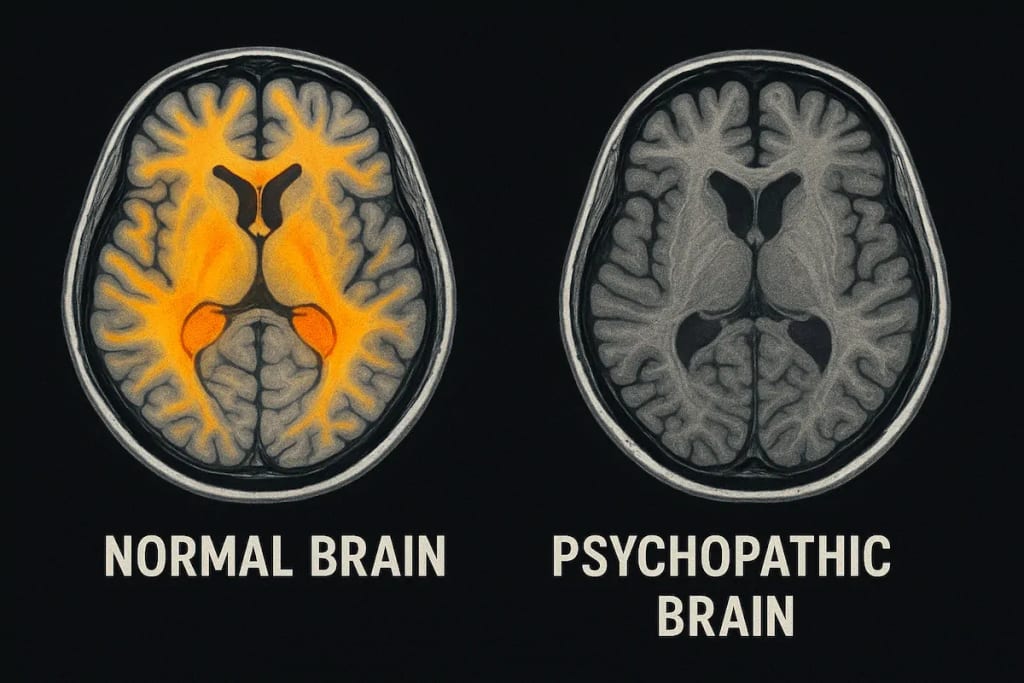
Brain imaging studies of psychopathic children reveal structural differences in white and gray matter distribution within the frontotemporal lobe, the brain region governing emotional processing and moral decision-making. These differences appear early in development, suggesting fundamental neurodevelopmental abnormalities rather than learned behaviors.
Environmental triggers and protective factors
Environmental risk factors:
- Childhood emotional neglect or abuse
- Inconsistent or harsh parenting styles
- Exposure to violence or trauma during critical developmental periods
- Substance abuse in the home environment
- Social isolation during formative years
Protective factors that may prevent manifestation:
- Consistent, nurturing caregiving relationships
- Early intervention programs focusing on emotional development
- Structured environments with clear consequences and rewards
- Access to mental health support during childhood
- Strong community and social support networks
The psychopath at work: Corporate predators and social climbers
Why psychopaths thrive in certain environments
Modern corporate culture inadvertently rewards psychopathic traits. Ruthless decision-making, emotional detachment, and ability to manipulate others can translate into business success. The “successful psychopath” represents a troubling phenomenon where these individuals leverage their disorder for professional advancement without resorting to criminal behavior.

These corporate psychopaths excel at:
- Making emotionally difficult decisions without hesitation
- Manipulating colleagues and subordinates for strategic advantage
- Maintaining superficial professional relationships whilst avoiding genuine commitment
- Taking credit for others’ work whilst deflecting responsibility for failures
- Creating toxic work environments that increase their relative power
Case study: The executive predator
Michael (name changed) was the charismatic CEO of a mid-sized tech company who increased profits by 300% over five years. Employees described him as inspiring and visionary. However, internal investigation revealed systematic psychological abuse of staff, sexual harassment covered up by HR, and financial irregularities totaling millions.
What made Michael particularly dangerous was his ability to compartmentalize his predatory behavior. He maintained different personas for different audiences – the devoted family man for community events, the inspiring leader for employees, and the ruthless predator for vulnerable subordinates.
The investigation revealed Michael had been terminated from three previous companies for similar behavior, but sealed settlements and non-disclosure agreements allowed him to continue his pattern unchecked.
Political and social implications
Psychopaths gravitate toward positions offering power and control. Politics, law enforcement, corporate leadership, and even academia can attract individuals seeking to exploit these roles for personal gain. Their ability to present convincing facades makes them particularly dangerous in positions requiring public trust.
Recent social media research suggests certain platforms may amplify psychopathic traits, rewarding the kind of superficial charm, strategic self-presentation, and emotional manipulation that psychopaths excel at. This creates concerning feedback loops where psychopathic behaviors become normalized and even celebrated.
Industries with highest psychopath concentration:
- Corporate leadership (12% prevalence)
- Legal profession (7.5% prevalence)
- Media and journalism (6.2% prevalence)
- Sales and marketing (5.8% prevalence)
- Politics and government (4.9% prevalence)
Protecting yourself: Practical strategies for detection and defense
Trust your instincts
Human beings possess remarkable intuitive abilities to detect threats, even when consciously unaware of specific warning signs. If someone makes you consistently uncomfortable despite appearing charming and successful, pay attention to these feelings. Your subconscious may be processing subtle cues that your rational mind hasn’t yet identified.
Instinct-based protection strategies:
- The 48-hour rule: Wait 48 hours before making important decisions involving someone new
- Gut check exercises: Regularly assess how you feel after interactions with specific individuals
- Physical response monitoring: Pay attention to tension, unease, or anxiety around certain people
- Sleep on it: Major life decisions should never be made under pressure or emotional manipulation
Look for patterns, not isolated incidents
Single concerning behaviors don’t indicate psychopathy – look for consistent patterns over time. Document instances of manipulation, emotional volatility, or concerning statements. Psychopaths eventually reveal their true nature through accumulated evidence rather than dramatic single events.
Pattern recognition toolkit:
- Behavioral journal: Document concerning interactions with dates, times, and specific details
- Third-party verification: Cross-check their stories with mutual acquaintances
- Digital footprint analysis: Review their social media history for inconsistencies or red flags
- Professional background checks: Verify employment history, educational credentials, and references
Maintain emotional and financial independence
Psychopaths exploit dependency, gradually isolating victims from support networks whilst creating financial or emotional reliance. Maintain strong relationships outside any potentially toxic dynamic and preserve your independence as protection against manipulation.
Independence maintenance strategies:
- Financial boundaries: Never combine finances without legal protections and independent oversight
- Social network preservation: Maintain relationships with friends and family regardless of partner pressure
- Career protection: Keep your professional identity separate from romantic relationships
- Emergency planning: Maintain access to resources and support systems for rapid exit if needed
Digital age protection protocols
Online safety checklist:
- Reverse image searches: Verify profile photos aren’t stolen from other accounts
- Social media audit: Look for recently created accounts with limited authentic history
- Video call verification: Insist on video calls early in online relationships
- Mutual connections verification: Confirm shared connections are real and will vouch for the person
Red flags in digital communication:
- Excessive flattery or “love bombing” early in online relationships
- Reluctance to meet in person or always suggesting private locations
- Inconsistent details about their life, work, or background
- Pushing for rapid emotional or financial commitment
- Attempting to isolate you from friends or family through online means
Treatment and prognosis: The uncomfortable truth
Can psychopaths be treated?
Traditional psychotherapy often fails with psychopaths because it relies on patients’ ability to feel guilt, remorse, and genuine motivation for change – emotions psychopaths lack. Worse, therapy can actually teach them more sophisticated manipulation techniques by helping them understand emotional vulnerabilities they can exploit.
Some research suggests that very intensive, highly structured interventions might reduce antisocial behavior in younger individuals with psychopathic traits, but “curing” psychopathy remains impossible with current understanding. The neural differences appear too fundamental and ingrained.
2025 treatment innovations and limitations
Recent developments in treatment approaches show limited promise:
Emerging treatment modalities:
- Neurofeedback therapy: Teaching psychopaths to recognize and modify brain patterns associated with impulsive behavior
- Virtual reality empathy training: Using immersive technology to simulate others’ emotional experiences
- Pharmacological interventions: Medications targeting dopamine and serotonin systems to reduce reward-seeking behavior
- Cognitive-behavioral approaches: Focusing on behavior modification rather than emotional change
Treatment success rates and limitations:
- Juvenile interventions: 15-25% reduction in antisocial behavior when started before age 14
- Adult therapy outcomes: Less than 5% success rate for meaningful behavioral change
- Recidivism rates: 85% of treated psychopaths reoffend within five years
- Manipulation of treatment: 73% of psychopaths successfully deceive treatment providers
The social response
Society must balance protection from dangerous individuals with avoiding discrimination against those who may have psychopathic traits but haven’t committed crimes. Not all psychopaths become violent criminals – many lead relatively normal lives whilst struggling with their emotional limitations.
However, for those who do engage in harmful behavior, the evidence overwhelmingly supports prioritizing public safety over rehabilitation attempts. Psychopaths show remarkably high recidivism rates and exceptional skill at manipulating parole boards and treatment providers.
Mental health awareness and psychopathy
Breaking the stigma while maintaining vigilance
The growing mental health awareness movement of 2025 has created both opportunities and challenges in addressing psychopathy. While destigmatizing mental health issues is crucial, we must distinguish between treatable conditions deserving compassion and personality disorders that pose genuine risks to others.
Key distinctions for mental health advocates:
- Depression and anxiety: Treatable conditions that don’t inherently harm others
- Bipolar disorder: Manageable with proper treatment and support
- PTSD: Resulting from trauma, responsive to therapy and medication
- Psychopathy: Fundamental personality structure that exploits others’ mental health struggles
Supporting survivors of psychopathic abuse
Recovery strategies for survivors:
- Trauma-informed therapy: Working with professionals who understand psychopathic abuse patterns
- Support group participation: Connecting with others who’ve experienced similar manipulation
- Trust rebuilding exercises: Gradually restoring faith in your own judgment and instincts
- Boundary establishment: Learning to set and maintain healthy limits in relationships
Long-term healing approaches:
- Self-compassion development: Overcoming self-blame and shame associated with victimization
- Emotional intelligence rebuilding: Relearning to trust your emotional responses
- Relationship skills training: Developing healthy patterns for future connections
- Advocacy and education: Channeling experiences into helping others recognize and avoid similar situations
FAQ: Frequently Asked Questions
Q: How common are psychopaths in the general population?
A: Research indicates approximately 1% of the general population exhibits psychopathic traits, with higher concentrations in corporate leadership (12%) and certain professions requiring emotional detachment.
Q: Can psychopaths love or form genuine relationships?
A: Psychopaths cannot experience genuine love or empathy as neurotypical individuals understand these emotions. They may form attachments based on utility or possession, but these relationships lack authentic emotional connection.
Q: Are all violent criminals psychopaths?
A: No. Most violent crimes are committed by individuals experiencing emotional dysregulation, substance abuse issues, or situational pressures. True psychopaths represent a small percentage of violent criminals, though their crimes tend to be more calculated and severe.
Q: Can someone become a psychopath later in life?
A: True psychopathy is largely developmental and genetic. However, brain injuries, severe trauma, or neurodegenerative diseases can sometimes produce psychopathic-like symptoms in previously normal individuals.
Q: Do psychopaths know they’re different?
A: Many psychopaths recognize they think and feel differently from others, but they typically view this as superiority rather than a disorder. They often see others’ emotional responses as weaknesses to be exploited.
Q: Living in a world with psychopaths: Final thoughts
A: Understanding how a psychopath thinks offers crucial protection in our interconnected world. These individuals walk amongst us, often undetected, leveraging their emotional deficits for personal advantage. Recognition of their tactics – the superficial charm masking predatory calculation, the complete absence of genuine empathy, and their view of others as objects to be used – can protect you from becoming their next victim.
Key takeaways for 2025 and beyond
Essential protection strategies:
- Trust your instincts when someone feels “off” despite surface charm
- Document patterns of concerning behavior rather than dismissing isolated incidents
- Maintain independence in all relationships, especially financial and social
- Verify information independently rather than accepting claims at face value
- Seek support from trusted friends, family, or professionals when in doubt
Recognition and response protocol:
- Identify warning signs using the comprehensive checklist provided
- Document evidence of manipulative or concerning behaviors
- Seek outside perspective from trusted individuals not influenced by the suspected psychopath
- Create safety plans for potential exit from dangerous situations
- Report crimes or professional misconduct to appropriate authorities
Community protection measures:
- Share knowledge about psychopathic traits and manipulation tactics
- Support survivors of psychopathic abuse through understanding and validation
- Advocate for better screening in positions of trust and authority
- Promote mental health literacy that distinguishes between treatable conditions and personality disorders
The research is clear: psychopaths think fundamentally differently from the rest of us. Where we see fellow human beings deserving of consideration and respect, they see opportunities for exploitation. Where we feel connected through shared emotions and experiences, they experience only the cold calculation of self-interest.
Yet knowledge remains our best defense. By understanding their methods, recognizing the warning signs, and trusting our instincts when something feels wrong, we can protect ourselves and our loved ones from these hidden predators. In a world where psychopaths blend seamlessly into society’s fabric, this knowledge isn’t just useful – it’s essential for survival.
The uncomfortable truth is that psychopaths will always exist among us. Our responsibility lies not in curing them – a task beyond current capabilities – but in protecting ourselves through awareness, education, and vigilance. Because when you understand how a psychopath thinks, you gain the power to see through their mask and protect what matters most.
Remember: Knowledge is protection. Awareness is your shield. Trust your instincts – they might just save your life.


