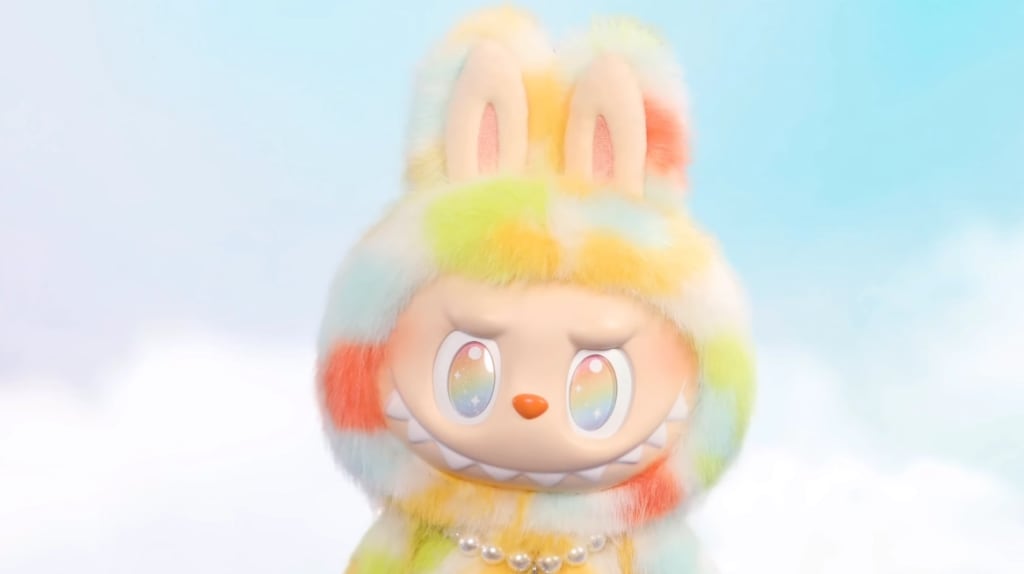
When a wide-eyed, sharp-toothed plush creature started appearing on the arms of Rihanna, Dua Lipa, and Kim Kardashian, the world took notice. What began as an artist’s quirky Nordic folklore-inspired creation has transformed into a global phenomenon that’s reshaping the designer toy market and demonstrating the extraordinary power of modern cultural crossover. The Labubu effect represents far more than a simple toy craze – it’s a masterclass in designer toy investment 2025, celebrity toy endorsements impact, intellectual property monetisation, and the blind box addiction psychology that’s propelled Chinese toy companies like Pop Mart to unprecedented financial heights.
The numbers alone tell a staggering story of collectible toy market trends. Pop Mart’s revenue doubled in 2024 to nearly $2 billion, with the company’s net profit soaring an astronomical 397% in the first half of 2025 to $659 million. The Labubu franchise now accounts for approximately 23% of Pop Mart’s total revenue, generating over $670 million in sales during the first six months of 2025 alone – a figure that surpasses iconic American toy lines like Barbie and Hot Wheels. This isn’t merely about toys; it’s about the emergence of a new cultural economy where cute chaos meets luxury status symbols and viral toy trends 2025 redefine what constitutes a premium collectible.
From Nordic mythology to global phenomenon: The artistic origins
The tale of Labubu begins not in the boardrooms of Beijing, but in the imagination of Kasing Lung, a Hong Kong-born artist whose childhood in the Netherlands would profoundly shape one of the world’s most recognisable characters. Born in 1972, Lung emigrated to the Netherlands at age seven, where his parents ran a restaurant and young Kasing found solace in drawing, spending quiet hours in his room above the family business.
“When I was a child, I liked to read storybooks and was influenced by ancient European elf legends,” Lung explained in interviews. “At that time, there were no game consoles or computers, so I had to draw dolls with a pen, so I had the idea of painting fairy tales since I was a child”. This childhood immersion in Nordic folklore and European fairy tales would prove prophetic, as Labubu draws directly from Celtic and Nordic mythological traditions, reimagined through a distinctly Asian aesthetic sensibility that would later capture the ugly cute aesthetic trend dominating pop culture collectibles.

Lung’s artistic journey took him through Belgium, where he became the first Chinese artist to receive the national Illustration Award. His 2014 children’s illustration book “Lizzy Wil Danssen” was translated into multiple languages and sold across Europe and Asia, establishing his reputation as a cross-cultural storyteller. However, it was his 2015 creation of “The Monsters” series that would change everything, laying the foundation for what would become a defining moment in Chinese cultural exports.
Labubu first appeared as part of this series of picture books, described as “a devilish but cute monster with pointed ears, a charmingly mischievous smile, and very sharp teeth”. The character’s name has no specific meaning – it’s simply the sound of a fictional elf character that embodies both kindness and mischief. Initially produced as figurines by Hong Kong company How2Work in 2015, Labubu remained a niche collectible until a fateful partnership would transform it into a global cultural force and pioneer of designer toy market expansion.
Pop Mart’s revolutionary business model: The blind box economy and collecting addiction behavior
The transformation of Labubu from artistic creation to commercial juggernaut occurred in 2019 when Kasing Lung partnered with Pop Mart, a Beijing-based company that had pioneered the “blind box” retail model. Founded in 2010 by Wang Ning, Pop Mart had spent nearly a decade perfecting a business approach that would prove devastatingly effective: combining the psychology of gambling with the appeal of collecting, creating what experts now recognize as a sophisticated FOMO marketing strategy.
The blind box concept is deceptively simple yet psychologically sophisticated, tapping into what researchers identify as core elements of blind box addiction psychology. Customers purchase sealed boxes without knowing which specific figure they’ll receive, creating what academics describe as “variable rewards conditioning”. Dr. Jeff Towson’s analysis of Pop Mart’s model reveals this creates powerful dopamine hits, habit formation, and increased frequency of purchase. The system transforms shopping from a transactional activity into what one researcher termed a “mild to moderate form of gambling behaviour”.

Pop Mart’s implementation goes beyond simple mystery packaging, incorporating sophisticated elements of social media toy trends and collectibles resale value psychology. Each Labubu series includes “secret editions” with odds as rare as 1 in 72 or 1 in 144, creating artificial scarcity that drives both initial purchases and secondary market trading. The company’s “Roboshop” vending machines – bright yellow automated dispensers that dot shopping centres globally – make the experience accessible 24/7, further gamifying the acquisition process and establishing a new model for international toy market penetration.
The psychological appeal runs deeper than mere chance, reflecting broader collecting addiction behavior patterns. Research into blind box consumer behaviour reveals that buyers are driven by comparison psychology, conspicuous consumption, and what scholars term “keeping up with the Joneses” mentality. When friends possess rare variants, others increase their purchase frequency to maintain social standing. The uncertainty principle creates excitement that traditional retail cannot match, with consumers experiencing the thrill of potential discovery with every purchase, establishing the foundation for what would become a defining trend in global collectibles.
The celebrity catalyst: How Lisa sparked a global craze and celebrity toy endorsements revolution
While Pop Mart had successfully built Labubu into a popular Asian collectible, the character’s transformation into a global cultural phenomenon can be traced to a single social media moment in April 2024 that would redefine celebrity toy endorsements impact. Lisa from BLACKPINK, one of the world’s most followed K-pop stars with over 100 million Instagram followers, posted a casual photograph of herself with a Labubu keychain dangling from her Louis Vuitton rainbow Nano Speedy bag.
The impact was immediate and extraordinary, demonstrating the power of celebrity endorsed toys in the digital age. Within minutes of Lisa’s post, Pop Mart stores across Asia began selling out. “Immediately, the internet lost its mind,” as one social media analyst described it. The viral moment created a cascade effect across celebrity culture, with Rihanna, Dua Lipa, Kim Kardashian, and David Beckham soon spotted with their own Labubu accessories, creating an unprecedented wave of organic celebrity endorsement that no traditional marketing campaign could have achieved.
The celebrity effect extended beyond mere endorsement into active cultural participation, exemplifying how viral toy trends 2025 blur the lines between product placement and authentic cultural expression. Lisa later wore a custom fuzzy pink Labubu outfit during her Deadline World Tour stop in London, complete with a matching mask and boots created by designer Brett Alan Nelson. This wasn’t product placement – it was cultural integration, with Labubu becoming part of Lisa’s artistic expression and personal brand, establishing a new paradigm for how Asian toy brands global can achieve mainstream cultural acceptance.
The ripple effects were measurable across social media toy trends platforms. TikTok exploded with over 1.7 million posts featuring #Labubu, creating a self-sustaining cycle of user-generated content. “Over 1 million videos feature #Labubu on TikTok, with more than 32,000 new clips added each week just in the U.S. alone,” reported one social media analytics firm. This organic spread created what marketing experts call a “parasocial relationship” between fans and the character, mediated through their favourite celebrities, demonstrating how celebrity toy endorsements can transcend traditional advertising to become genuine cultural movements.
Cultural impact and collectible toy market trends: From toy to fashion statement
The Labubu effect transcends traditional toy collecting, representing a broader shift in how luxury and fashion intersect with pop culture collectibles and establishing new benchmarks for designer toy investment opportunities. Alessandro Michele took time during busy Valentino fittings to create custom outfits for Labubu dolls, while fashion insiders began treating the characters as legitimate fashion toy accessories worthy of designer attention.
This cultural elevation gained institutional recognition when Labubu became the first designer toy brand showcased at the Louvre in Paris in July 2024. The museum collaboration represented a crucial moment of legitimacy, positioning Labubu not merely as a commercial product but as a cultural artifact worthy of high-art presentation, marking a watershed moment in how pop culture collectibles achieve mainstream artistic recognition.
The fashion world’s embrace has been comprehensive, reflecting broader collectible toy market trends toward luxury integration. Marc Jacobs was photographed carrying a Labubu as if it were a Birkin bag, while collaborations with Balmain, Sacai, and Vans have created limited editions that sell for thousands on secondary markets. A Sacai-designed Labubu sold for $31,250 at auction, while the Vans collaboration figures regularly fetch over $10,000 on eBay, establishing new benchmarks for collectibles resale value in the designer toy market.

“That’s fashion legitimacy,” observed Professor Donika Serafimova at GBSB Global Business School. “Labubu has blurred the line between toy and statement piece, character brand and wearable IP. Streetwear exclusivity met fine art collectibility – and the market responded”. This transformation reflects broader shifts in luxury consumption patterns, where designer toy investment 2025 strategies increasingly recognize the cultural capital embedded in collectible objects.
The cultural impact extends to luxury retail environments, demonstrating how viral toy trends reshape traditional shopping experiences. Milan’s Rinascente department store hosted a Labubu pop-up that drew lines around the block, while Harrods in London saw collectors queue for hours for limited-edition releases. These scenes mirror the hype traditionally reserved for luxury fashion drops or limited sneaker releases, indicating Labubu’s successful transition from toy to luxury lifestyle accessory and establishing new models for how Chinese cultural exports can penetrate premium Western retail spaces.
Financial success and toy industry growth: The numbers behind the phenomenon
The financial transformation of Pop Mart through the Labubu effect represents one of the most dramatic corporate success stories in recent memory, exemplifying how designer toy market expansion can create unprecedented value. The company’s market capitalisation has exploded from under $2 billion in 2020 to over $40 billion in 2025, making it more valuable than traditional toy industry giants like Mattel and Sanrio, and establishing new benchmarks for collectible toy investment returns.
The revenue growth tells an extraordinary story of how Pop Mart stock performance reflects broader collectible toy market trends. Pop Mart’s overall revenue increased 204% year-on-year to 13.88 billion yuan ($1.93 billion) in the first half of 2025, compared to 62% growth in the same period of 2024. The Monsters series, anchored by Labubu, generated 4.81 billion yuan ($677 million) in revenue during this period, representing a staggering 668% increase from the previous year, demonstrating how viral toy trends can translate into sustained business growth.
CEO Wang Ning, who founded Pop Mart in 2010, has seen his personal fortune explode alongside the company’s success, reflecting the broader wealth creation potential of designer toy market opportunities. His net worth surged from $1.8 billion in 2024 to $22 billion in 2025, making him China’s youngest member of the top ten billionaire list at just 37-38 years old. “I think for overseas markets we’re still very positive, and we also believe there’s still very broad space for growth,” Wang told analysts, indicating confidence in continued international toy market expansion.
The international expansion has been particularly lucrative, demonstrating how Chinese toy companies global expansion strategies can capture worldwide market share. Pop Mart’s Americas revenue increased by 1,142%, while European sales grew by 729%. The company expects international sales to exceed domestic Chinese sales in 2025, with North American and Asia-Pacific regions projected to match China’s entire 2024 revenue, establishing Pop Mart as a truly global player in the designer toy investment landscape.
Global expansion and Pop Mart overseas expansion: Building a toy empire
Pop Mart’s international expansion strategy represents a carefully orchestrated global rollout designed to capitalise on Labubu’s viral success while building sustainable long-term presence in the international toy market. The company currently operates 140 overseas stores and expects this number to exceed 200 by the end of 2025. The expansion includes both traditional retail locations and the company’s signature Roboshop vending machines, which provide 24/7 access to blind box purchases and represent a novel approach to global collectibles distribution.
The United States has emerged as a priority market for Chinese toy companies global expansion, with Pop Mart planning “relatively rapid store openings” over the next two years. The company currently operates approximately 40 stores across America and expects to add 10 more by year-end. Cities from Seattle to Miami now host Pop Mart locations, with flagship stores in major shopping destinations drawing crowds comparable to Apple Store openings, demonstrating the mainstream appeal of Asian toy brands in Western markets.
“We opened the world’s largest Pop Mart store in Bangkok in August 2025, where fans camped out for limited-edition Labubus,” reported one industry analyst. The MEGA BANGNA location in Thailand represents Pop Mart’s commitment to creating destination retail experiences that transcend traditional toy shopping, establishing new models for how pop culture collectibles can drive retail foot traffic and cultural engagement.
The expansion extends beyond established markets into emerging regions, reflecting broader trends in global collectibles market penetration. Pop Mart plans to open its first Middle Eastern store in Doha, Qatar in the second half of 2025, while exploring opportunities in Central Europe, Latin America, and Russia. The company’s “Go Higher, Go Further” mission statement reflects ambitions to become “The World’s POP MART”, establishing global infrastructure for designer toy distribution.
Roboshop vending machines have proven particularly effective for market penetration and testing social media toy trends in new regions. These bright yellow automated dispensers, featuring touchscreen interfaces and real-time inventory tracking, provide Pop Mart with low-overhead market testing capabilities while making collectible toy investment opportunities accessible to broader consumer segments.
The machines use AI technologies to analyse sales data in real time, providing feedback that adjusts production plans and inventory distribution, representing innovative approaches to understanding collectible toy market trends and consumer behavior across different cultural contexts.
The psychology of collecting and blind box addiction psychology: Understanding the Labubu obsession
The Labubu effect succeeds because it taps into fundamental psychological drivers that transcend cultural boundaries, revealing sophisticated insights into collecting addiction behavior and the mechanics of modern consumer psychology. Academic research into Pop Mart’s business model reveals a sophisticated understanding of consumer behaviour psychology that explains why adults willingly spend thousands on small plush toys, establishing new frameworks for understanding designer toy investment motivations.
The foundation lies in what researchers term “variable rewards conditioning,” borrowed from gambling psychology and central to understanding blind box addiction psychology. Each blind box purchase creates anticipation, followed by either satisfaction (desired figure) or disappointment (common figure), triggering what Dr. Jeff Towson describes as “the most powerful form of gambling and rewards behaviour”. The “near miss” effect – almost getting a rare figure – proves particularly compelling, encouraging immediate repeat purchases and establishing cyclical consumption patterns that drive sustained revenue growth.
Scarcity psychology amplifies this effect through sophisticated FOMO marketing strategy implementation. Pop Mart deliberately limits production runs and creates “secret editions” with extreme rarity. When combined with celebrity endorsement and social media amplification, artificial scarcity creates FOMO (Fear of Missing Out) that drives impulsive purchasing behaviour. “Online restocks sold out in seconds, and the busyness of physical stores turned shopping into an event,” observed one retail analyst, highlighting how scarcity transforms routine shopping into culturally significant experiences.
The emotional connection extends beyond mere acquisition, reflecting deeper aspects of the ugly cute aesthetic appeal. Labubu’s design – described as “ugly-cute” – appeals to what psychologists call “kinderschema” or baby schema, triggering nurturing instincts. The character’s mischievous expression allows collectors to project personality traits, creating what researchers term “symbolic consumption” where the toy represents identity rather than utility, establishing emotional investments that transcend traditional consumer relationships.
“Some things I wanted to do but didn’t dare to do, I let Labubu do,” explained creator Kasing Lung. This projection mechanism transforms Labubu from product to emotional outlet, explaining why collectors develop intense attachments to their figures and justifying the premium pricing that supports designer toy investment strategies.
The secondary market and collectibles resale value: Investment or speculation?
The Labubu effect has created a robust secondary market where certain figures trade like financial instruments, demonstrating the potential returns available through strategic collectible toy investment. Limited edition Labubu figures regularly sell for 5-10 times their retail price, with the most exclusive variants reaching extraordinary valuations that rival traditional luxury goods. A rare Vans collaboration Labubu recently sold for $10,585 on eBay, while a life-sized version fetched over $150,000 at a Beijing auction, establishing new benchmarks for designer toy market value.
“Their distinctive appearance and widespread appeal will ensure they remain valuable collectibles for years,” predicted Lori Verderame, a collectibles expert who hosts programs on the History Channel. Alex Fung from Goldin Auctions believes early editions are likely to retain the most value over time, suggesting that designer toy investment 2025 strategies should focus on first-generation releases and celebrity-endorsed variants.
The investment thesis rests on several factors that distinguish Labubu from typical toy collectibles market speculation. Pop Mart’s controlled supply model creates genuine scarcity rather than artificial limitation, while the company’s Pop Mart overseas expansion suggests Labubu’s cultural relevance will persist beyond initial viral success. Celebrity endorsement provides ongoing marketing value without requiring Pop Mart’s direct investment, creating sustained demand that supports collectibles resale value appreciation.

However, market analysts warn of speculative risks inherent in viral toy trends investment. The collectibles market historically experiences boom-and-bust cycles, with items losing value once cultural attention shifts. “The ‘blind box bubble’ is cooling – resale prices for non-rare figures dropped ~30% in China in 2023,” reported one market analysis. New character lines like Skullpanda could divert collector interest away from Labubu, challenging assumptions about sustained collectible toy market growth.
eBay data shows Labubu being searched “hundreds of times every hour,” while StockX reports average premiums of 23% for authenticated figures. However, the platform StockX notes significant price volatility, suggesting speculative rather than stable investment behaviour, indicating that designer toy investment strategies require careful market timing and risk assessment.
Industry impact and designer toy market evolution: Reshaping the collectibles landscape
The Labubu effect has fundamentally altered the designer toy industry, demonstrating how intellectual property can generate scalable cultural brand equity that challenges traditional luxury branding models and establishes new paradigms for collectible toy market trends. The global art toy market was valued at $3.12 billion in 2024 and is projected to reach $6.45 billion by 2033, with Labubu’s success driving much of this growth and validating designer toy investment as a legitimate asset class.
Pop Mart’s achievement has inspired numerous competitors and collaborators, reflecting broader shifts in toy industry growth patterns. The broader toy collectibles market reached $26.4 billion in 2024 and is projected to grow to $48.9 billion by 2034. Designer toys represent the fastest-growing segment, driven by adult collectors seeking “unique, one-of-a-kind pieces that resonate on a personal level”, indicating sustained demand for premium collectible experiences.
The impact extends beyond toys into broader cultural industries, demonstrating how viral toy trends can generate media value comparable to major entertainment properties. “Labubu generated an estimated $6.2 billion in media impact value, surpassing the Met Gala, global Fashion Weeks, and even Cannes,” according to Launchmetrics. This media value demonstrates how successful character IP can achieve cultural influence typically reserved for major entertainment properties, validating the cultural capital embedded in designer toy investment opportunities.
Traditional toy companies have taken notice of these collectible toy market trends, with established players studying Pop Mart’s innovation in blind box psychology and celebrity endorsement strategies. Mattel and Hasbro, despite their larger overall revenues, now study Pop Mart’s model for insights into modern collecting psychology and celebrity-driven viral marketing. The success has validated blind box retail as a legitimate business model beyond Asian markets, influencing international toy market expansion strategies across the industry.
Future outlook: Sustainability and evolution in the global collectibles trend
The long-term sustainability of the Labubu effect depends on Pop Mart’s ability to evolve the character beyond initial viral success while maintaining scarcity and cultural relevance, key factors that will determine whether current designer toy investment returns can be sustained. CEO Wang Ning has hinted at ambitious plans, stating that Labubu’s value “has only just begun” and emphasising long-term IP development over short-term profit maximisation, suggesting confidence in the character’s potential for sustained cultural impact.
Content expansion represents a key strategy for maintaining relevance in evolving social media toy trends. Pop Mart has quietly launched a film studio and registered scripts for Season 1 of an animated series titled “Labubu and Friends”. This cross-platform approach mirrors successful IP development by LEGO, Disney, and Sanrio, suggesting Pop Mart understands the importance of storytelling in sustaining character relevance beyond initial collectible toy market enthusiasm.
International expansion continues accelerating as part of broader Chinese cultural exports strategy. The company expects overseas revenue to exceed domestic Chinese sales in 2025, with particularly strong growth in North America and emerging markets. Plans for theme parks and entertainment venues suggest Pop Mart envisions Labubu as the foundation for a broader entertainment ecosystem, potentially establishing new models for how Asian toy brands global can build lasting cultural institutions.
However, significant challenges remain that could impact long-term collectible toy investment prospects. Regulatory scrutiny of blind box sales has intensified in China and Japan, with authorities drawing parallels to gambling and potentially restricting the blind box addiction psychology mechanisms that drive Pop Mart’s success. Counterfeit products pose ongoing risks to brand integrity, requiring constant intellectual property enforcement that could impact profit margins.
Sustainability concerns also loom as consumers become increasingly environmentally conscious. Pop Mart faces pressure to adopt sustainable production practices and address the environmental impact of disposable packaging associated with blind box collecting. The company’s ability to balance growth with environmental responsibility may determine long-term viability in markets where sustainability increasingly influences designer toy market participation.
Frequently asked questions about the Labubu phenomenon
What is Labubu and why are Labubu dolls so popular? Labubu is a designer toy character created by Hong Kong artist Kasing Lung, inspired by Nordic folklore and featuring an “ugly-cute” aesthetic with pointed ears and sharp teeth. The character gained global popularity through celebrity endorsements, particularly after BLACKPINK’s Lisa was photographed with a Labubu keychain, sparking viral social media trends and establishing Labubu as a premium collectible toy.
Why are Labubu toys so expensive and valuable? Labubu toys command premium prices due to artificial scarcity created by Pop Mart’s blind box model, celebrity endorsements that drive demand, and limited production runs with rare “secret editions.” The psychological appeal of the collecting experience, combined with fashion industry collaborations and strong resale markets, has established Labubu as both a cultural symbol and investment opportunity.
Are celebrity endorsed toys like Labubu good investments? While some rare Labubu figures have appreciated significantly in value, with limited editions selling for thousands of dollars, collectible toy investment carries risks typical of speculative markets. Early editions and celebrity-associated variants may retain value better, but market analysts warn of volatility and the potential for trend-driven bubbles in the designer toy market.
Conclusion: The lasting legacy of a global phenomenon
The Labubu effect represents far more than a successful toy marketing campaign or temporary viral trend. It demonstrates how contemporary culture emerges through the intersection of artistic creativity, celebrity influence, social media amplification, and sophisticated consumer psychology, while establishing new benchmarks for designer toy investment potential and collectible toy market evolution. Labubu’s journey from Kasing Lung’s childhood drawings to $4 billion in annual revenue illustrates the extraordinary potential of intellectual property in the digital age and the growing importance of Chinese cultural exports in global markets.
The phenomenon has reshaped understanding of luxury consumption, proving that “cute chaos” can command the same cultural attention as traditional high-end brands through strategic celebrity toy endorsements and viral toy trends cultivation. Labubu’s appearance in Louvre exhibitions and Valentino collaborations signals a democratisation of luxury culture where accessibility and exclusivity coexist, challenging traditional fashion industry hierarchies and establishing new pathways for pop culture collectibles to achieve cultural legitimacy.
For the broader business world, Pop Mart’s success offers lessons in scarcity marketing, celebrity partnership strategies, and global expansion planning that extend beyond the toy industry. The company’s transformation from small Beijing toy shop to $40 billion market capitalisation in fifteen years provides a blueprint for modern brand building in interconnected global markets, demonstrating how understanding blind box addiction psychology and social media toy trends can create sustained competitive advantages.
The Labubu effect also demonstrates how cultural products can transcend geographic and demographic boundaries when they tap into universal psychological drivers and leverage international toy market opportunities effectively. Labubu’s appeal spans from Thai royalty to American teenagers, from Milanese fashion editors to Hong Kong collectors. This cross-cultural resonance suggests that Labubu has achieved something rare: genuine global cultural relevance that supports sustained designer toy market growth.
As Wang Ning pursues his vision of creating “The World’s POP MART,” the ultimate test will be whether Labubu can evolve from viral sensation to enduring cultural institution. The character’s ability to maintain relevance across changing social media trends, celebrity cycles, and consumer preferences will determine whether the Labubu effect represents a transformative moment in global pop culture or simply another chapter in the endless cycle of viral phenomena.
Whatever the outcome, Labubu has already achieved something extraordinary: transforming a Hong Kong artist’s childhood imagination into a global cultural force that challenges traditional notions of luxury, collectibility, and cross-cultural appeal. In an era of rapid cultural change and shortened attention spans, Labubu’s sustained success offers hope that creativity, authenticity, and genuine artistic vision can still capture the world’s imagination while creating substantial collectible toy investment opportunities – one blind box at a time.