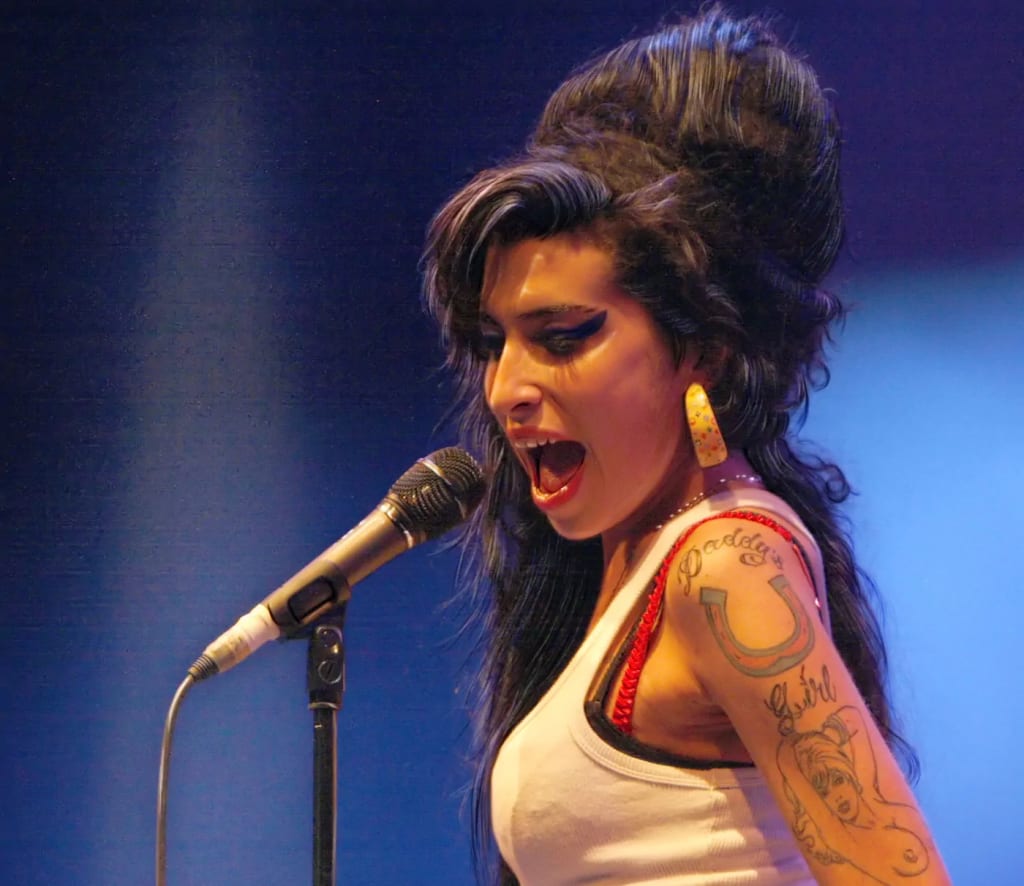
More than a decade after her tragic death, Amy Winehouse remains one of the most influential figures in contemporary music. With over 19 million monthly Spotify listeners and renewed interest sparked by the 2024 biopic “Back to Black,” her legacy continues to shape the current UK soul revival defining 2025’s music landscape. The tragic yet triumphant story of Amy Winehouse represents one of the most compelling narratives in modern British music history. Born with an extraordinary voice that channelled the soul of jazz legends whilst addressing contemporary themes with unflinching honesty, Winehouse created a musical legacy that continues to influence artists worldwide. From her breakthrough debut Frank to the Grammy-sweeping masterpiece Back to Black, her journey encompassed artistic brilliance, personal turmoil, and cultural transformation. This Amy Winehouse biography reveals how a young woman from North London became a global icon, revolutionised British soul music, and left an indelible mark on fashion and popular culture before her untimely death at 27.
Key facts about Amy Winehouse
Full Name: Amy Jade Winehouse
Born: 14 September 1983, Enfield, London
Died: 23 July 2011 (aged 27), Camden, London
Genres: Soul, jazz, R&B, reggae
Major Albums: Frank (2003), Back to Black (2006)
Grammy Awards: 5 wins in a single night (2008)
Notable Songs: “Rehab,” “Back to Black,” “You Know I’m No Good”
Cultural Impact: Sparked the British soul revival, influenced fashion trends worldwide
Legacy: Amy Winehouse Foundation continues her mission to help young people with addiction

Early life and musical foundations
Amy Jade Winehouse was born on 14 September 1983 at Chase Farm Hospital in Enfield, London, to Jewish parents who would profoundly shape her artistic sensibilities. Her father, Mitchell “Mitch” Winehouse, worked as a window panel installer and taxi driver whilst nurturing dreams of musical stardom himself. Her mother, Janis Winehouse (née Seaton), was a pharmacist whose Brooklyn, New York origins added an American influence to Amy’s cultural foundation. The family’s deep connection to music proved instrumental in Amy’s development, with many of her maternal uncles working as professional jazz musicians.
The musical household that shaped a star
Music permeated the Winehouse household from Amy’s earliest years. Her paternal grandmother, Cynthia, had been a singer herself and had famously dated English jazz saxophonist Ronnie Scott. This jazz heritage created an environment where Amy was constantly exposed to the works of Frank Sinatra, Sarah Vaughan, Dinah Washington, and Ella Fitzgerald – artists who would later become her greatest influences.
The rich musical environment of her childhood cannot be overstated in its importance to Amy’s artistic development. Family gatherings often turned into impromptu musical sessions, with relatives sharing stories of professional jazz careers and performing together. This early immersion in jazz culture provided Amy with an authentic understanding of the genre’s emotional depth and technical complexity that would later distinguish her work from that of her contemporaries.
Early challenges and family changes
The family dynamics shifted when Amy’s parents separated during her ninth year, leading her to live primarily with her mother in Whetstone whilst spending weekends with her father and his girlfriend in Essex. This early experience of family fracture would later influence songs like “What Is It About Men” from her debut album, where she explored themes of paternal relationships and abandonment with the raw honesty that became her trademark.
Amy’s musical education began formally when she was twelve, attending the prestigious Sylvia Young Theatre School in Marylebone. However, her rebellious spirit soon clashed with institutional expectations. At fourteen, she was allegedly expelled for “not applying herself” and piercing her nose, though school founder Sylvia Young consistently denied these claims, stating Amy simply “changed schools at 15”. An English teacher at the school remembered her as a gifted writer, predicting she would become a novelist or journalist – a prophecy that proved partially correct as Amy later worked as an entertainment journalist for the World Entertainment News Network.
The first steps towards stardom

Her musical journey took a decisive turn when she received her first guitar at thirteen. By sixteen, she was performing with jazz groups and had caught her first major break when school friend Tyler James, a soul singer himself, passed her demo tape to manager Nick Shymansky. In July 2000, she became the featured female vocalist with the National Youth Jazz Orchestra, marking her first professional recognition and establishing her credentials within London’s competitive jazz scene.
This period was crucial in developing Amy’s stage presence and professional confidence. Her performances with established jazz musicians taught her the importance of musical integrity and authentic expression – values that would guide her throughout her career. The National Youth Jazz Orchestra experience also connected her with industry professionals who recognised her exceptional talent and potential for mainstream success.
Musical influences and artistic development
Amy Winehouse’s distinctive sound emerged from a carefully curated palette of musical influences that spanned decades and genres. Her deep appreciation for jazz legends formed the cornerstone of her artistic identity, with Dinah Washington serving as perhaps her most significant inspiration. Known as the “Queen of the Blues,” Washington’s powerful yet heartbreakingly beautiful voice provided a template that Amy would adapt for contemporary audiences.
The jazz foundation
The influence of Sarah Vaughan proved equally profound, teaching Amy that true artistry emanated from emotional authenticity rather than mere technical ability. Ella Fitzgerald‘s improvisational skills and scatting ability directly influenced tracks like “Know You Now” from Frank, where Amy displayed her own considerable improvisational talents. These jazz foundations were complemented by her admiration for 1960s girl groups, particularly The Supremes and The Ronettes, whose influence extended beyond music into her fashion sensibilities.
Amy’s understanding of jazz wasn’t merely superficial; she studied the emotional nuances and technical aspects that made these artists legendary. Her ability to channel the pain and joy of classic blues and jazz whilst addressing contemporary themes created a bridge between musical eras that resonated with both older jazz enthusiasts and younger pop audiences.
Contemporary influences and fusion
Contemporary artists also shaped her development, with Lauryn Hill representing a bridge between classic soul and modern hip-hop that Amy would navigate throughout her career. She formed a short-lived rap group called Sweet ‘n’ Sour with childhood friend Juliette Ashby, demonstrating her early interest in diverse musical forms. This eclectic foundation allowed Amy to create music that was simultaneously nostalgic and contemporary, drawing from American musical traditions whilst maintaining a distinctly British perspective.
Her musical palette also included influences from reggae, ska, and British indie music, creating a unique sonic signature that defied easy categorisation. This musical diversity would prove crucial in establishing her as an artist capable of appealing to multiple demographics whilst maintaining artistic integrity.
Frank: The debut that announced a star
Released on 20 October 2003, Frank introduced the world to Amy Winehouse’s extraordinary talent whilst establishing her as an artist of uncommon honesty and sophistication. The album’s title referenced both her beloved dog and the frank nature of her lyrical content, setting a precedent for the unflinching self-examination that would characterise her entire catalogue.
Creating a debut masterpiece
Working primarily with producer Salaam Remi, Amy crafted an album that showcased her jazz influences whilst exploring contemporary themes of love, sexuality, and relationships with remarkable maturity for a twenty-year-old artist. The recording process was notably collaborative, with Amy insisting on maintaining creative control over her lyrics and vocal arrangements – a decision that ensured the album’s authentic emotional impact.
The album’s lead single, “Stronger Than Me,” earned her an Ivor Novello Award in 2004, recognising her exceptional songwriting abilities. This early success validated her artistic vision and established her credibility within the music industry. The song’s exploration of relationship dynamics and gender roles demonstrated Amy’s willingness to address complex emotional territory that many artists avoided.
Critical reception and personal ambivalence
Despite achieving critical acclaim and earning nominations for two BRIT Awards and shortlisting for the Mercury Prize, Amy herself remained ambivalent about Frank. In a 2004 interview, she expressed dissatisfaction with the album, stating she had “never heard the album from start to finish” and didn’t keep a copy in her house. This perfectionist streak and desire for artistic growth would drive her towards the even greater heights achieved with her sophomore effort.
The album’s commercial performance proved respectable, eventually achieving double platinum status in the UK and demonstrating that audiences were hungry for Amy’s unique blend of vintage soul and contemporary songwriting. Songs like “Take the Box” and “In My Bed” showcased her ability to transform personal experiences into universally relatable musical narratives, establishing a template she would perfect on Back to Black.
Back to Black: The masterpiece that defined an era
The release of Back to Black on 27 October 2006 transformed Amy Winehouse from a promising British talent into a global phenomenon. This sophomore effort represented a quantum leap in artistic maturity, commercial appeal, and cultural impact that would define not only Amy’s career but also the broader landscape of British popular music for years to come.
The Blake Fielder-Civil inspiration
The album’s creation was intrinsically linked to Amy’s tumultuous relationship with Blake Fielder-Civil, whom she had met at The Good Mixer pub in Camden during 2005. Their on-and-off romance provided the emotional fuel for an album that explored themes of love, heartbreak, betrayal, and redemption with unprecedented honesty. When Blake temporarily left her to pursue an ex-girlfriend, Amy channelled her pain into songs that would become timeless classics.
The intensity of their relationship cannot be understated in understanding the album’s emotional impact. Friends and collaborators described Amy during this period as completely consumed by her feelings for Blake, channelling both the ecstasy and agony of their connection into her most powerful songwriting. This emotional rawness became the album’s defining characteristic and a key factor in its universal appeal.
Revolutionary production and sound
Working with producers Mark Ronson and Salaam Remi, along with Sharon Jones’s backing band The Dap-Kings, Amy crafted a sound that perfectly balanced retro authenticity with contemporary production values. The collaboration with Ronson proved particularly fruitful, as his production aesthetic complemented Amy’s vintage-inspired songwriting whilst adding modern polish that made the album accessible to mainstream audiences.
The production process involved extensive experimentation with vintage recording techniques and equipment, creating an authentic 1960s soul sound that never felt like pastiche. This attention to sonic detail helped establish the album as both a commercial success and a critical masterpiece that influenced countless producers and artists in the years that followed.
“Rehab”: The song that changed everything
“Rehab,” the album’s lead single, became Amy’s signature song and cultural phenomenon. The track’s origins lay in a casual conversation with Mark Ronson while shopping in New York, where Amy recounted her refusal to enter rehabilitation despite pressure from her management and father. Ronson later recalled how the song practically wrote itself during their walk, with Amy transforming a personal anecdote into a universal anthem of defiance.
The song’s success demonstrated Amy’s ability to address serious subjects with both gravity and accessibility. “Rehab” became more than just a hit single; it became a cultural touchstone that sparked conversations about addiction, mental health, and personal autonomy whilst maintaining its appeal as an irresistibly catchy pop song.

Commercial triumph and cultural impact
The album’s commercial success exceeded all expectations, reaching number one in the UK and number two on the US Billboard 200. More importantly, it established Amy as a cultural force whose influence extended far beyond music into fashion, lifestyle, and social commentary. Songs like “You Know I’m No Good,” “Back to Black,” and “Love Is a Losing Game” showcased her ability to transform personal pain into artistic gold, creating music that resonated with millions whilst maintaining absolute authenticity.
Back to Black became a defining album of the 2000s, influencing the direction of popular music and establishing Amy as the leading figure in what would become known as the British soul revival. The album’s success opened doors for numerous UK artists and demonstrated that authentic, emotionally honest music could achieve massive commercial success without compromising artistic integrity.
Personal relationships and the Blake Fielder-Civil marriage
The relationship between Amy Winehouse and Blake Fielder-Civil represents one of modern music’s most documented and destructive love stories. Their initial meeting at Camden’s Good Mixer pub in 2005 sparked an immediate connection that would inspire Amy’s greatest artistic achievements whilst simultaneously contributing to her personal downfall.
The beginning: Love at first sight
Blake, working in video production for artists including Lily Allen and Kasabian, was initially sceptical of Amy’s claims to be a musician. However, he was won over by her impromptu performance of “Round Midnight” at the pub, a moment that marked the beginning of their intense and ultimately tragic relationship. Their connection was immediate and all-consuming, with both parties later describing it as unlike anything they had experienced before.
The early stages of their relationship were marked by passionate romance and creative inspiration. Blake became not just Amy’s lover but also her muse, providing the emotional intensity that fueled her most powerful songwriting. Friends described Amy during this period as happier and more creatively focused than they had ever seen her.
The destructive spiral
Their relationship quickly intensified, marked by infidelity, separations, and reconciliations that provided the emotional foundation for Back to Black. Amy later acknowledged that “all the songs are about the state of my relationship at the time with Blake,” describing feelings she had “never felt about anyone in my life”.
Their spontaneous Miami wedding in May 2007 seemed to promise stability, but instead marked the beginning of their most destructive period. Blake’s introduction of heroin into their relationship proved catastrophic, with both partners acknowledging his role in Amy’s drug initiation. Blake later admitted to using heroin “three or four times” before Amy asked to try it, describing his resistance as “weak”. Amy herself provided a bleaker assessment, telling the News of the World in 2009 that “our whole marriage was based on doing drugs”.
Legal troubles and public scrutiny
The relationship’s toxic nature became increasingly public as both partners faced legal troubles. Blake’s arrest in connection with a 2006 bar fight led to a 27-month prison sentence for assault and obstructing justice, during which Amy publicly supported him whilst privately struggling with addiction. Her dedication of her Grammy Record of the Year award to “my Blake, incarcerated” demonstrated the complex loyalty that characterised their relationship even as it destroyed them both.
The constant media attention surrounding their relationship added another layer of pressure to an already volatile situation. Paparazzi followed their every move, documenting their struggles with addiction and creating a public narrative that often overshadowed Amy’s musical achievements.
The end of a destructive union
The marriage officially ended in July 2009 when the High Court granted their divorce, with Amy admitting to an affair that Blake found “intolerable”. However, their connection persisted, with reports of rekindled romance in 2010 and discussions of remarriage before Blake’s final imprisonment for burglary in June 2011. His incarceration meant he could only attend a small prison chapel ceremony following Amy’s death the following month.
The Blake Fielder-Civil relationship remains one of the most discussed aspects of Amy’s life, representing both the source of her greatest creative inspiration and the catalyst for her ultimate destruction. Their love story continues to fascinate fans and music historians as an example of how artistic genius and personal tragedy can become inextricably linked.
Grammy triumph and international recognition
The 50th Grammy Awards ceremony on 10 February 2008 represented the pinnacle of Amy Winehouse’s career and a historic moment in British music history. Her unprecedented sweep of five awards in a single evening – Record of the Year, Song of the Year, Best New Artist, Best Pop Vocal Album, and Best Female Pop Vocal Performance – tied her with five other artists as the second-most awarded female performer in Grammy history.
The drama of victory
The ceremony itself was fraught with drama, as Amy’s visa application had initially been denied due to her substance abuse issues. When approval came just two days before the event, it was too late for her to travel to Los Angeles. Instead, she performed live via satellite from a London studio, creating an intimate performance that contrasted sharply with the glamour of the Los Angeles ceremony.
Her satellite performance became one of the most memorable moments in Grammy history, demonstrating her extraordinary vocal abilities whilst highlighting the personal struggles that prevented her from attending in person. The juxtaposition of her artistic triumph with her personal difficulties created a poignant moment that encapsulated the tragedy of her situation.
The hollow victory
Her acceptance speeches revealed both gratitude and vulnerability, thanking her parents and dedicating her Record of the Year award to “my Blake, incarcerated”. However, behind the scenes, the triumph felt hollow. A friend later recounted Amy’s devastating admission backstage: “This is so boring without drugs”. This moment encapsulated the tragedy of her success – achieving everything she had dreamed of whilst feeling too numbed by addiction to fully experience the joy.
The Grammy success transformed Amy from a British sensation into a global superstar, but also intensified the pressures that were already overwhelming her. The international media attention, combined with her personal struggles, created a perfect storm that would ultimately contribute to her downfall. Nevertheless, the recognition validated her artistic vision and established her as one of the most significant musical voices of her generation.
Global impact and recognition
The Grammy triumph opened doors throughout the international music industry and established Amy as a legitimate global star. Her success paved the way for other British soul artists and demonstrated that authentic, emotionally honest music could achieve worldwide recognition without compromising artistic integrity. The awards also elevated the profile of British soul music generally, contributing to what became known as the British soul revival of the late 2000s.
Fashion icon and cultural impact
Amy Winehouse’s influence extended far beyond music into fashion and popular culture, where her distinctive style became as iconic as her voice. Her signature beehive hairstyle, created by hairdresser Alex Foden, began as a joke when he “backcombed her hair massively and put an extra packet of hair in”. The dramatic look, achieved using synthetic hair extensions and hair nets sewn together into what they playfully called “fur balls,” became her trademark and influenced fashion trends worldwide.
The creation of an iconic look
The beehive hairstyle wasn’t just a fashion choice; it was a carefully constructed artistic statement that reflected Amy’s personality and musical influences. The style required extensive preparation and maintenance, with Amy and her hairdresser developing specific techniques to achieve the height and volume that became her signature. The process often took hours, demonstrating Amy’s commitment to her visual presentation as an integral part of her artistic identity.
Her retro-inspired aesthetic drew heavily from 1950s and 1960s pin-up culture, combining vintage silhouettes with contemporary edge. The beehive was typically adorned with colourful scarves and flowers, whilst her makeup featured dramatic winged eyeliner that became widely copied. This look wasn’t simply nostalgic pastiche but a sophisticated reinterpretation of classic styles that felt fresh and contemporary.
High fashion recognition
Fashion houses took notice of Amy’s distinctive style, with Jean Paul Gaultier dedicating his Spring 2012 collection to her memory, featuring models with beehive hairstyles and 1950s-inspired silhouettes. This high fashion recognition validated Amy’s status as a genuine style icon whose influence extended into the most exclusive circles of the fashion world.
Her influence reached the highest echelons of fashion, with Karl Lagerfeld styling Chanel models with Amy’s signature thick eyeliner and beehive hairstyles. Despite claiming to be “clueless about fashion,” her impact on the industry was undeniable. Her favourite Fred Perry polo shirts, cardigans, and jumpers inspired a collaborative collection between the brand and the Amy Winehouse Foundation, featuring designs by her tattoo artist Henry Hate.
Authenticity over artifice
Amy’s style represented authenticity in an era of manufactured pop stars. Her high-low approach – pairing expensive designer pieces with £20 ballet slippers from Freed London – demonstrated that true style transcends price points. Her numerous tattoos, each carrying personal significance, added to her edgy persona and challenged conventional beauty standards. This authentic approach to self-expression inspired a generation of artists and fans to embrace individuality over conformity.
The enduring appeal of Amy’s style lies in its genuine nature. Unlike many celebrity fashion moments that feel calculated or committee-designed, Amy’s look evolved organically from her personality, interests, and cultural influences. This authenticity made her fashion choices more influential and longer-lasting than more conventional celebrity styles.
Musical legacy and influence on British music
The impact of Amy Winehouse on British popular music cannot be overstated. Her success paved the way for a renaissance in UK soul and R&B that continues to influence contemporary artists and shape the musical landscape of 2025. The current UK soul revival, featuring artists like Celeste, Joy Crookes, and Mahalia, can be directly traced to the doors Amy opened with her groundbreaking success.
Direct artistic influence
Adele, one of the most successful recording artists of the 21st century, has repeatedly acknowledged Amy’s influence, stating, “Because of her, I picked up a guitar, and because of her, I write my own songs”. This direct lineage from Amy to Adele demonstrates the tangible impact of her artistic approach on the next generation of British singers.
Her fusion of jazz, soul, R&B, and contemporary production created a template that numerous British artists have followed. Sam Smith, Jessie J, and Florence Welch from Florence + the Machine all benefited from what became known as the “Winehouse effect,” as record labels began signing British performers with big, bold voices – particularly female artists.
The contemporary UK soul revival
Today’s thriving UK soul scene owes much to Amy’s pioneering work in proving that British artists could successfully reinterpret American musical traditions whilst maintaining their own cultural identity. Artists like Jorja Smith, Ella Mai, and NAO continue to build upon the foundation Amy established, combining classic soul influences with contemporary production and distinctly British perspectives.
The 2025 music landscape shows Amy’s continued influence in the growing popularity of authentic, emotionally honest songwriting amongst British artists. The current generation of UK soul singers consistently cite Amy as a crucial influence in their decision to pursue careers in soul and R&B music.

International recognition and respect
Lady Gaga captured Amy’s transformative impact on popular music, stating, “Amy changed pop music forever. I remember knowing there was hope and feeling not alone because of her. She lived Jazz, she lived the blues”. This sentiment reflects how Amy’s authentic approach to music-making inspired artists to prioritise emotional honesty over commercial calculation.
Her influence extended beyond vocal style to songwriting approach. The confessional nature of her lyrics, combined with her ability to transform personal pain into universal themes, established a new standard for authenticity in popular music. Contemporary artists from Lana Del Rey to Billie Eilish show traces of Amy’s influence in their willingness to address mental health, addiction, and relationship struggles with unflinching honesty.
The British Soul revival of the late 2000s and 2010s can be directly traced to Amy’s success. Her achievement proved that British artists could successfully reinterpret American musical traditions whilst maintaining their own cultural identity, inspiring a generation of musicians to explore their own relationships with soul, R&B, and jazz.
Struggles with addiction and public scrutiny
Amy Winehouse’s battle with substance abuse became increasingly public as her fame grew, transforming from personal struggle into tabloid spectacle. Her relationship with Blake Fielder-Civil marked a turning point, as both partners descended into drug dependency that overshadowed her musical achievements and created a devastating cycle that proved impossible to break.
The beginning of destruction
The introduction of heroin into their relationship proved particularly devastating, with Blake acknowledging his role in Amy’s initial experimentation. The progression from occasional drug use to full addiction happened rapidly, with friends and family watching helplessly as Amy’s health and career prospects deteriorated. The couple’s shared addiction created a toxic dynamic where each partner’s drug use enabled and encouraged the other’s destructive behaviour.
Amy’s struggles with bulimia, which began in her teens, were compounded by her drug use, creating a complex web of self-destructive behaviours that proved resistant to treatment. The eating disorder received less public attention than her drug addiction but was equally serious and contributed significantly to her declining physical health.
Media treatment and public mockery
The media’s treatment of Amy’s addiction reflected society’s complex relationship with celebrity mental health during the mid-2000s. Stand-up comedians and television presenters routinely mocked her bulimia and drug abuse, treating her suffering as entertainment rather than recognising it as a serious medical condition. This public ridicule compounded her struggles, creating additional pressure that made recovery more difficult and contributed to her increasing isolation.
The constant paparazzi attention created a vicious cycle where Amy’s most vulnerable moments were captured and broadcast globally. Images of her looking dishevelled or confused became tabloid staples, generating revenue for photographers and publications whilst further damaging her mental health and making recovery more challenging.
Professional consequences
Her performances during this period became increasingly erratic, reflecting the progression of her addiction and its impact on her professional capabilities. The disastrous Belgrade concert in June 2011, where she appeared confused and unable to remember lyrics, proved to be her final public appearance. Audiences and critics who had once celebrated her talent now booed her off stages worldwide, unable to separate the artist from her addiction.
The professional consequences of her addiction created additional stress and financial pressure, as cancelled tours and recording delays threatened her career. The irony that her greatest artistic success had been inspired by the same destructive relationship that was now preventing her from performing was not lost on those close to her.
Hope and recovery attempts
Despite multiple attempts at rehabilitation, including the highly publicised stint that inspired “Rehab,” Amy struggled to maintain sobriety for extended periods. Her father Mitch Winehouse later revealed that she had been sober for several weeks before her death, suggesting that recovery remained possible even in her final days. This tragic irony – dying just as sobriety seemed within reach – adds another layer of heartbreak to her story and highlights the unpredictable nature of addiction recovery.
The pressures of fame exacerbated her underlying mental health issues, creating a cycle where success bred the very conditions that made it impossible to enjoy. Her admission that Grammy night was “boring without drugs” encapsulated how addiction had robbed her of life’s pleasures, leaving her unable to experience joy even during her greatest triumphs.
Death and joining the 27 Club
On 23 July 2011, Amy Winehouse was found dead in her London home by her security guard, becoming the most high-profile member of the infamous 27 Club – musicians who died at that age. The coroner’s report revealed she had died of alcohol poisoning, with a blood alcohol level of 0.416% – more than five times the UK legal driving limit. This devastating statistic highlighted the severity of her final relapse and the tragic end to her struggles with addiction.
The final days
The circumstances leading to Amy’s death painted a picture of someone struggling to maintain sobriety whilst dealing with the pressures of fame and personal relationships. She had been relatively clean from drugs in her final weeks, focusing on completing work with Tony Bennett and attempting to rebuild her career and personal life. However, alcohol remained her persistent weakness, and a final binge proved fatal.
Her membership in the 27 Club alongside Kurt Cobain, Janis Joplin, and Jim Morrison seemed to confirm the mythical dangers associated with that age. However, scientific analysis suggests the “27 Club” phenomenon is largely coincidental, with fame itself – rather than the specific age – increasing mortality risk among musicians throughout their twenties and thirties.
Professional achievements in final period
The circumstances of her death were particularly tragic given signs of recent progress. She had completed a collaboration with Tony Bennett just months before, recording “Body and Soul” for his Duets II album – a performance that would posthumously earn her another Grammy Award. Bennett remembered her as “an extraordinary musician with a rare intuition as a vocalist,” reflecting the respect she commanded among established jazz artists even during her darkest period.
The Tony Bennett collaboration represented what many hoped would be a turning point in Amy’s career, showing that she retained her extraordinary vocal abilities and could still produce work of the highest quality when focused and supported by experienced professionals.
The impact of loss
Blake Fielder-Civil’s imprisonment meant he could only attend a small ceremony in a prison chapel following her death. His absence during her final months, combined with public blame for her addiction, created a complex narrative of responsibility and guilt that continues to generate discussion. Many fans and family members held him partially responsible for her death, though the reality of addiction suggests such simple causation overlooks the disease’s complexity.
The global outpouring of grief following her death demonstrated her profound cultural impact. Tributes poured in from fellow musicians, politicians, and millions of fans who recognised that the world had lost not just a talented artist but a unique voice that could never be replaced. The intensity of public mourning reflected how deeply her music had connected with people worldwide.
Posthumous legacy and continuing influence
Following Amy’s death, managing the preservation and presentation of her legacy became a delicate balance between honouring her memory and avoiding exploitation. Island Records boss David Joseph made the controversial decision to destroy most of her unreleased demos, stating it was “a moral thing” to prevent others from finishing her incomplete work. While critics applauded his desire to protect Amy’s artistic integrity, her father Mitch Winehouse disagreed, calling Joseph “an idiot” and expressing his desire for fans to hear all of Amy’s music.
The search for lost material
The family has since discovered some corrupted recordings that technical experts believe might be salvageable. Janis Winehouse-Collins suggested these could form an album called “The Progression of Amy,” offering fans insight into her artistic development. This ongoing effort to recover lost material demonstrates the continued hunger for any additional glimpse into Amy’s creative process and highlights the challenges of managing a posthumous artistic legacy.
The question of unreleased material remains contentious, with legitimate arguments on both sides. While fans understandably want to hear everything Amy recorded, the decision to protect incomplete work from commercial exploitation reflects a respect for artistic intention that Amy herself valued deeply throughout her career.
The Amy Winehouse Foundation: Transforming tragedy into hope
The Amy Winehouse Foundation, established by her parents in September 2011, represents the most constructive aspect of her legacy and demonstrates how personal tragedy can be transformed into lasting social benefit. The foundation focuses on helping young people struggling with substance abuse, opening Amy’s Place, a recovery house for women in East London. The facility offers counselling, exercise courses, and relapse prevention groups, directly addressing the issues that claimed Amy’s life whilst helping others avoid similar fates.
The foundation’s work extends beyond direct addiction support to include prevention education programmes for schools and community groups. By sharing Amy’s story and the realities of addiction, the foundation helps young people understand the risks whilst encouraging them to seek help early when problems arise. This educational approach addresses addiction as a public health issue rather than a moral failing, reflecting a more enlightened understanding of substance abuse disorders.
Educational initiatives form another crucial component of her posthumous impact. The foundation funds projects including addiction education for children and arts programmes for disadvantaged youth. These initiatives ensure that Amy’s struggles serve a constructive purpose, transforming personal tragedy into social benefit whilst providing opportunities for creative expression that might help vulnerable young people find healthier outlets for their emotions.
Documentaries and biopics: Preserving her story for new generations
Two major film productions have attempted to capture Amy’s life and legacy, each offering different perspectives on her story and contributing to ongoing conversations about celebrity, addiction, and artistic legacy. These films have played crucial roles in introducing Amy’s story to audiences who may have been too young to experience her career firsthand.
Asif Kapadia’s “Amy” (2015): The documentary
Asif Kapadia’s 2015 documentary “Amy” used archival footage and interviews to create an intimate portrait that earned widespread critical acclaim. The film won the Academy Award for Best Documentary Feature and provided audiences with unprecedented access to Amy’s private moments, revealing the vulnerable person behind the public persona. Kapadia’s approach of letting Amy tell her own story through her own words and images created a powerful and authentic narrative.
The documentary’s unflinching examination of media exploitation and industry pressure created controversy, particularly regarding the portrayal of Amy’s father Mitch Winehouse. Many viewers found the film’s depiction of his role in her career and personal struggles to be overly critical, leading to ongoing disputes about the accuracy of its narrative and highlighting the complexities involved in documenting the life of someone who died tragically young.
The film’s success demonstrated the continued public fascination with Amy’s story and helped introduce her music to a new generation of listeners. Its critical acclaim also validated the importance of her artistic legacy and ensured that her story would be preserved for future audiences.
Sam Taylor-Johnson’s “Back to Black” (2024): The biographical drama
Sam Taylor-Johnson’s 2024 biopic “Back to Black,” starring Marisa Abela, took a different approach by focusing on Amy’s joy and creativity rather than dwelling solely on her struggles. The film, written by Matt Greenhalgh, sought to show the happiness Amy found in London’s music venues and her relationships with family and friends, presenting a more balanced view of her life that included her considerable achievements and moments of genuine pleasure.
Jack O’Connell‘s portrayal of Blake Fielder-Civil attempted to present a more nuanced view of their relationship, though many fans remained sceptical of any sympathetic treatment of his role in Amy’s life. The film’s release coincided with renewed interest in Amy’s music and demonstrated the continued relevance of her story to contemporary audiences.
Both films have contributed to ongoing conversations about celebrity, addiction, and media responsibility. They serve as cultural artefacts that help new generations understand Amy’s impact whilst raising important questions about how society treats vulnerable public figures and the responsibilities of those who profit from documenting their struggles.
Amy Winehouse’s influence on fashion and contemporary style
The continuing influence of Amy’s distinctive style can be seen throughout contemporary fashion, from high-end designer collections to street style trends. Her approach to combining vintage elements with personal touches has inspired countless fashion enthusiasts and designers who appreciate her authentic approach to self-expression.
The beehive legacy in modern fashion
The beehive hairstyle that became Amy’s signature has experienced periodic revivals and reinterpretations in the years since her death. Fashion photographers and stylists continue to reference her look in editorial shoots, and the style has been adapted and modernised by contemporary artists seeking to capture some of Amy’s rebellious spirit and authentic aesthetic.
Hair artists and stylists have studied Amy’s look extensively, developing techniques and products specifically designed to achieve similar volume and texture. The enduring appeal of her hairstyle lies not just in its dramatic visual impact but in what it represented – a rejection of conventional beauty standards in favour of something more individual and expressive.
Tattoo culture and body art
Amy’s numerous tattoos helped popularise body art among mainstream audiences and contributed to changing attitudes towards tattooed women in the entertainment industry. Her tattoos were deeply personal, each carrying specific meaning related to her relationships, beliefs, or experiences. This approach to body art as personal storytelling rather than mere decoration influenced a generation of tattoo enthusiasts.
The visibility of Amy’s tattoos in her professional life helped normalise body art in contexts where it had previously been considered unprofessional or inappropriate. Her success demonstrated that artistic expression through body modification need not limit career opportunities in the entertainment industry.
The global Amy Winehouse phenomenon
Amy’s influence extends far beyond the UK and US markets where she achieved her greatest commercial success. Her music has found audiences worldwide, with particular resonance in countries with strong jazz and soul traditions. This global appeal demonstrates the universal nature of her artistic expression and emotional honesty.
International artists citing Amy’s influence
Musicians from diverse cultural backgrounds continue to cite Amy as an influence, from French chanteuses to Brazilian MPB artists. Her approach to blending traditional musical forms with contemporary sensibilities has proven applicable across different cultural contexts, inspiring artists to explore their own relationships with historical musical traditions.
The international respect for Amy’s artistry is evidenced by the numerous tribute concerts and festivals held worldwide in her honour. These events often feature local artists performing her songs whilst incorporating elements of their own musical traditions, demonstrating the adaptability and universal appeal of her compositions.
Educational and cultural programmes
Universities and music schools worldwide now include Amy’s work in their curricula as an example of successful cross-cultural musical fusion and authentic artistic expression. Her songs are studied not just for their musical qualities but also as examples of confessional songwriting and emotional honesty in popular music.
Cultural institutions have recognised Amy’s significance through exhibitions, academic conferences, and preservation efforts that ensure her legacy will be available for future scholars and music enthusiasts. These initiatives help maintain the serious artistic discourse around her work whilst making her story accessible to new audiences.
The Amy Winehouse business legacy
Beyond her artistic influence, Amy’s career demonstrated important lessons about artist management, creative control, and the music industry’s treatment of vulnerable performers. Her insistence on maintaining creative control over her music, despite considerable industry pressure, established important precedents for artist autonomy.
Industry changes inspired by her experience
Amy’s struggles with addiction and media harassment contributed to evolving industry practices around artist welfare and support. Many management companies and record labels have implemented policies designed to better protect artists’ mental health and provide support for those struggling with substance abuse issues.
The intense media scrutiny that Amy faced also contributed to changing attitudes towards celebrity privacy and the ethics of paparazzi photography. Her experience highlighted the need for better boundaries between public interest and personal privacy, leading to industry discussions about responsible celebrity coverage.
The economics of posthumous legacy management
The careful management of Amy’s posthumous catalogue and image has become a case study in ethical legacy management. The decisions made by her estate regarding unreleased material, licensing agreements, and commercial partnerships have demonstrated approaches to posthumous career management that prioritise artistic integrity over short-term profit maximisation.
Amy Winehouse and mental health awareness
Amy’s story has contributed significantly to public conversations about mental health, particularly regarding eating disorders, addiction, and the pressures of fame. Her openness about her struggles helped reduce stigma around these issues and encouraged others to seek help.
Changing conversations about celebrity mental health
The public discussion of Amy’s mental health struggles marked a shift towards more compassionate understanding of celebrity difficulties. Her story helped demonstrate that fame and success do not protect against mental health issues and may actually exacerbate existing vulnerabilities.
Mental health professionals have used Amy’s case to illustrate the complex interactions between trauma, addiction, and eating disorders. Her story serves as an educational tool for understanding how multiple mental health issues can compound each other and become increasingly difficult to treat without comprehensive, sustained intervention.
The role of media in mental health stigma
Amy’s experience with media harassment has become a touchstone for discussions about responsible journalism and the impact of constant scrutiny on mental health. Her story illustrates how media coverage can either support recovery efforts or undermine them, depending on the approach taken by journalists and publications.
Conclusion: The enduring power of authenticity
This Amy Winehouse biography represents far more than the story of a talented musician who died too young. Her journey from North London jazz enthusiast to global superstar embodies the transformative power of authenticity in an industry often criticised for manufactured personas and commercial calculation. Through her unflinching honesty, extraordinary vocal ability, and distinctive artistic vision, she created music that continues to resonate with new audiences whilst inspiring contemporary artists to prioritise emotional truth over commercial appeal.
Her influence on British music alone justifies her position among the UK’s most significant cultural figures. The wave of British soul artists who followed in her wake – from Adele to Sam Smith to the current generation leading the 2025 UK soul revival – demonstrates how her success opened doors that had previously remained closed to UK performers attempting to reinterpret American musical traditions. Her five Grammy Awards in a single evening remain a testament to her artistic excellence and international recognition of British musical talent.
Beyond music, Amy’s impact on fashion and popular culture established her as a true icon whose influence transcended genre boundaries. Her beehive hairstyle, retro aesthetic, and unapologetic individuality continue to inspire fashion designers and style enthusiasts worldwide. The fact that major fashion houses like Chanel and Jean Paul Gaultier drew inspiration from her look confirms her status as a cultural force whose influence extended well beyond recording studios and concert venues.
Perhaps most importantly, Amy’s story serves as a catalyst for ongoing conversations about mental health, addiction, and the responsibilities of media and entertainment industries toward vulnerable performers. The Amy Winehouse Foundation’s continued work helping young people struggling with substance abuse transforms her personal tragedy into a force for positive change, ensuring that her legacy includes tangible benefits for future generations.
Her music – from the jazz-influenced honesty of Frank to the soul-stirring universality of Back to Black – remains as powerful today as when first released. Songs like “Rehab,” “Back to Black,” and “You Know I’m No Good” continue to find new audiences through streaming platforms and cover versions by contemporary artists. The fact that she maintains over 19 million monthly Spotify listeners more than a decade after her death confirms that great art transcends the circumstances of its creation, speaking to universal human experiences that remain relevant regardless of changing musical trends.
The 2024 biographical film “Back to Black” and ongoing documentary projects demonstrate that public fascination with Amy’s story continues to grow rather than diminish. Each new generation discovers her music and finds relevance in her approach to authentic artistic expression. This sustained interest ensures that her influence will continue shaping popular culture and inspiring artists for decades to come.
Amy Winehouse’s biography ultimately tells the story of an artist who refused to compromise her vision despite enormous pressures to conform. Her commitment to authenticity – in both music and personal expression – created a body of work that stands as a permanent reminder of what becomes possible when talent meets courage. Though her life ended tragically at 27, her artistic legacy ensures that Amy Winehouse’s influence on music, fashion, and culture will continue inspiring future generations long after those who knew her personally have passed from the scene.
In an era increasingly defined by social media personas and carefully crafted public images, Amy’s raw honesty feels more valuable than ever. Her willingness to transform personal pain into universal art provides a template for authentic creative expression that remains as relevant today as it was during her lifetime. The current UK soul revival owes much to the foundation she established, proving that authentic artistry creates lasting impact that extends far beyond commercial success.
For these reasons, Amy Winehouse’s biography represents not just the story of one exceptional artist, but a blueprint for how authentic creativity can change the world. Her legacy serves as both inspiration and warning – demonstrating the heights that can be achieved through uncompromising artistic vision whilst highlighting the importance of supporting vulnerable artists in their personal struggles. As we move forward into an increasingly complex media landscape, Amy’s story remains more relevant than ever, reminding us of our collective responsibility to nurture and protect genuine artistic expression whilst ensuring that the pressures of fame never again claim such extraordinary talent.
The Amy Winehouse biography continues to unfold through the artists she influenced, the lives changed by her foundation’s work, and the ongoing conversations about mental health, addiction, and artistic authenticity that her legacy has inspired. In this way, her impact extends far beyond the music she recorded during her brief but brilliant career, ensuring that Amy Winehouse’s influence on culture and society will endure for generations to come. Amy Winehouse and Blake Fielder-Civil together, highlighting their well-documented turbulent relationship.