Michael Jackson stands as one of the most transformative figures in entertainment history, a man whose influence transcended the boundaries of music to reshape fashion, dance, visual culture, and the very definition of global stardom. Born in Gary, Indiana, on August 29, 1958, Michael Joseph Jackson rose from modest beginnings to become the undisputed King of Pop, selling over 400 million records worldwide and achieving a level of cultural penetration that few artists have ever matched. His journey from a precocious five-year-old performing in strip clubs on the chitlin’ circuit to commanding stadiums holding tens of thousands of devoted fans represents one of the most remarkable trajectories in popular culture.
In 2025, Michael Jackson’s legacy experiences renewed global attention as his 1982 hit “Thriller” makes Billboard history, becoming the first song to chart in the Top 10 across six different decades. This unprecedented achievement, combined with the highly anticipated biopic starring his nephew Jaafar Jackson set for release in April 2026, demonstrates that the King of Pop’s influence remains as powerful today as during his lifetime. The biopic’s trailer has already become the most-watched preview for any biographical film in history, garnering 116 million views and reigniting worldwide interest in Jackson’s extraordinary story.

This definitive guide explores every facet of his extraordinary life: his groundbreaking music and unparalleled artistry, his revolutionary approach to dance and performance, the controversies that marked his later years, and the enduring legacy that continues to influence musicians, dancers, and performers across the globe. Whether examining the mechanics of the moonwalk, the astronomical success of the Thriller album, or his humanitarian contributions that raised over $500 million for charitable causes, Michael Jackson’s story remains essential to understanding modern entertainment and contemporary culture.
Early life, family, and the Jackson 5 phenomenon
Genesis in Gary, Indiana

Michael Jackson’s story begins in the industrial heartland of America, where the rhythms of Motown would eventually find their most perfect expression. Born into a large, musically inclined family in Gary, Indiana, Michael was the eighth of nine children born to Joe Jackson, a mill worker and former musician, and Katherine Scruse Jackson, a devout Jehovah’s Witness from Alabama. Gary in the late 1950s was a working-class city, shaped by steel mills and the sort of economic struggle that characterised post-war industrial America. The Jackson household, though cramped and economically modest, was awash with music. Joe Jackson had played in a rhythm and blues group called the Falcons, and the family home became an informal music conservatory where the sounds of Chuck Berry, Little Richard, and Otis Redding filled the air.
Michael’s mother Katherine proved to be perhaps the most formative influence on his early life. Rather than forcing him into performance, she recognised her son’s natural gifts and nurtured them with gentle encouragement. It was Katherine who first noted Michael’s singing ability and suggested to his father that the boy had potential. She taught him about God and spirituality through the Jehovah’s Witnesses, instilling in him a moral framework that would guide, however imperfectly, his entire life. Meanwhile, his father Joe Jackson, though emotionally distant and prone to severity, possessed an almost obsessive drive to see his children succeed. He understood, perhaps intuitively, that music could be a path out of poverty. When he discovered his son Tito secretly teaching himself guitar, rather than punish him, Joe saw an opportunity. He purchased a guitar for Tito and began methodically training his sons as if they were athletes preparing for Olympic competition.
The Jackson family home on Jackson Street became a rigorous training ground where perfection was the only acceptable standard. Joe Jackson’s methods were controversial and often harsh. He demanded countless hours of rehearsal, tolerated no excuses, and reportedly used physical discipline to enforce his standards. For young Michael, this meant childhood became compressed and redefined. Hours that other children spent playing freely were instead consumed by rehearsals, talent shows, and increasingly demanding performances in nightclubs that exposed the young Michael to adult realities far too early. Yet within this demanding environment, Michael discovered something that would define his entire existence: he genuinely loved to perform. Unlike many child prodigies forced into performance by stage-hungry parents, Michael found joy in music and dance, even as the circumstances surrounding his development remained complex and sometimes troubling.
Formation and Motown success (1964-1975)
The story of the Jackson 5 begins not with Michael but with his older brothers. In 1964, Joe Jackson gathered his eldest sons, Jackie, Tito, Jermaine, and Marlon, and began rehearsing them relentlessly in their cramped home on Jackson Street in Gary. By 1965, when Michael was six years old, his father determined that the boy’s precocious voice could provide the missing ingredient for his family act. Michael was incorporated into the group, initially playing congas and singing alongside his brothers. His natural talent was immediately apparent. Where his brothers were skilled performers, Michael possessed something more, an indefinable star quality that drew audiences to him instinctively.
The family’s relentless commitment to perfection paid dividends. By 1968, the Jackson 5 had become a formidable force on the local talent show circuit, winning competitions throughout the Midwest and building a reputation that extended beyond Gary. Their reputation reached the ears of Bobby Taylor of Bobby Taylor & the Vancouvers, who encountered them at Chicago’s Regal Theater. Impressed by the group’s professionalism and Michael’s extraordinary stage presence, a boy no more than nine years old with the poise and command of a seasoned performer, Taylor brought them to the attention of Berry Gordy, the legendary founder of Motown Records.
On July 23, 1968, the Jackson 5 auditioned at Motown’s headquarters in Detroit, where Gordy himself observed them perform. The moment was transformative. Gordy, who had previously resisted signing “kid acts,” was so impressed by their energy, precision, and particularly by Michael’s charisma that he personally committed to making them superstars. Motown’s publicity machine, recognising the value of a compelling origin story, falsely claimed that Diana Ross had discovered the group, though in reality it was Bobby Taylor who deserved credit. Nevertheless, the association with Diana Ross, who would become a lifelong friend and maternal figure to Michael, provided valuable publicity and helped launch their career.

After signing with Motown in 1969, the Jackson 5’s rise was meteoric and virtually unprecedented in popular music history. They became the only group in history to have their first four singles reach number one on the Billboard Hot 100 chart: “I Want You Back” in 1969, followed by “ABC,” “The Love You Save,” and “I’ll Be There,” all in 1970. These songs, crafted by Motown’s songwriting collective known as “The Corporation,” perfectly showcased Michael’s crystalline voice, his ability to navigate complex rhythms with ease, and his natural star quality that transcended mere technical proficiency. The songs balanced sophisticated musical arrangements with accessible hooks, creating a sound that appealed to both pop and soul audiences.
The Jackson 5’s success represented more than commercial achievement. Berry Gordy’s prediction proved accurate: the group had broken through a major barrier for African American performers, and their success paved the way not only for themselves but for countless artists of colour to achieve mainstream stardom. Their appeal crossed racial boundaries in ways that few Black artists had managed previously, appearing on television variety shows, gracing magazine covers, and becoming genuine pop culture phenomena. Young Michael, with his infectious smile and preternatural talent, became particularly beloved, spawning a merchandising empire and inspiring a level of fan devotion that prefigured the intensity of celebrity culture that would define later decades.
The Jackson 5’s Motown years produced a remarkable body of work beyond their initial hits. Songs like “Never Can Say Goodbye,” “Dancing Machine,” and “I Want You Back” showcased the group’s versatility and Michael’s developing vocal maturity. They starred in their own animated television series, appeared in countless magazines, and toured extensively, performing for integrated audiences throughout America and internationally. For Michael personally, these years provided invaluable experience in stagecraft, recording techniques, and the business of entertainment, even as they deprived him of conventional childhood experiences and exposed him to adult pressures at an impossibly young age.
The Motown transition and the move to Epic Records (1975-1978)
By the mid-1970s, the Jackson 5’s extraordinary success had created a complex situation that would ultimately lead to their departure from Motown. The brothers, particularly Michael, had grown creatively restless. Motown’s system, while remarkably efficient at producing hits, left little room for artistic autonomy. Michael and his brothers wanted to write their own songs, produce their own music, and exercise creative control over their artistic direction, freedoms that Motown was reluctant to grant. The label operated according to a highly structured assembly line model where professional songwriters, producers, and arrangers handled the creative work while artists focused primarily on performance. This system had served the Jackson 5 well during their early years, but as they matured, they increasingly chafed against its limitations.
Moreover, the brothers discovered that despite their phenomenal sales, they were earning only 2.8 percent of royalties from their Motown recordings, a disparity that seemed unconscionable to Joe Jackson and increasingly to his sons. The financial arrangements that had seemed reasonable when the group was starting out now appeared exploitative given their massive commercial success. The relationship between the Jackson family and Motown, initially marked by mutual admiration and gratitude, began to deteriorate as the brothers matured and yearned for independence. Berry Gordy, who had invested heavily in their career and felt proprietary about their success, resisted their demands for greater creative and financial freedom.

The transition from Motown to Epic Records in 1976 represented a pivotal moment in Michael Jackson’s career trajectory. The move symbolised not merely a change of label but a fundamental shift in power dynamics. For the first time, the Jacksons, as they would now be called (they lost the right to use “Jackson 5” as Motown retained that trademark), would have meaningful creative input into their music. They could write their own material, select their producers, and shape their artistic direction. However, this newfound freedom came with significant challenges. Motown retained Jermaine Jackson, who had married Berry Gordy’s daughter Hazel, creating a painful family division. Randy Jackson, the youngest brother, joined the group to replace Jermaine, but the loss created both practical and emotional complications.
The Jacksons’ initial albums for Epic Records, “The Jacksons” in 1976 and “Goin’ Places” in 1977, represented transitional works. The brothers were learning to navigate their new creative freedom, experimenting with different sounds and production techniques while attempting to recapture the commercial magic of their Motown years. The albums achieved moderate success but failed to replicate the phenomenon of their earlier work. Critics noted that while the brothers demonstrated genuine musical talent and songwriting ability, they were still finding their footing as independent artists. Michael in particular was developing his songwriting skills, contributing tracks to these albums that hinted at his future solo brilliance.
This period also marked the beginning of Michael’s emergence as a distinct artistic voice within the group. While the Jackson 5 had always featured Michael prominently, the group dynamic had been more balanced. Now, Michael’s unique talents and star quality were becoming increasingly apparent, and it was clear that his trajectory might ultimately diverge from his brothers’. He was developing a more sophisticated understanding of music production, studying the work of other artists intensively, and beginning to conceive of musical possibilities that extended beyond the group’s collective vision.
The Wiz and meeting Quincy Jones
Before fully committing to his evolution as an independent artist, Michael experienced a transformative encounter that would alter the course of his life and reshape popular music. In 1978, Michael was cast as the Scarecrow in The Wiz, an African American reimagining of The Wizard of Oz directed by Sidney Lumet and featuring an all-star cast including Diana Ross as Dorothy, Nipsey Russell as the Tinman, and Richard Pryor as the Wiz. The film, though not a commercial success, granted Michael his first significant acting experience and introduced him to the technical and artistic demands of filmmaking. More importantly, The Wiz brought Michael into the orbit of Quincy Jones, the legendary producer, arranger, and composer who would become his most important collaborator.
Quincy Jones was already a titan of the music industry when he met Michael Jackson. He had worked with jazz legends like Frank Sinatra and Count Basie, orchestrated some of the finest recordings in popular music, composed film scores, and possessed an almost supernatural ability to discern and nurture talent. Jones was brought on to arrange the music for The Wiz, and during production, he observed Michael’s work ethic, musical intelligence, and raw talent. Michael, equally impressed by Jones’s mastery and professionalism, approached him about producing his next solo album. Jones, who had initially been reluctant to work with pop artists, recognised in Michael not just a talented vocalist but a musician of profound potential who could transcend genre, merge artistic vision with commercial appeal, and achieve something genuinely revolutionary.

Their collaboration began with extensive discussions about Michael’s artistic vision. Michael harboured ambitions that extended far beyond simply recording hit songs. He wanted to create music that would endure, that would push boundaries, and that would establish him as an artist of genuine substance rather than merely a former child star. Jones brought not only technical expertise but also a vast network of world-class musicians, arrangers, and engineers. More importantly, he brought a philosophy of excellence that matched Michael’s own obsessive perfectionism. The partnership that formed during this period would prove to be one of the most consequential creative relationships in popular music history, yielding three albums that would fundamentally alter the landscape of contemporary music.
The relationship between Jones and Jackson was complex and multifaceted. Jones served as mentor, collaborator, and sometimes as a paternal figure, providing guidance and structure to Michael’s explosive creativity. He helped Michael understand studio technology, taught him about arrangement and orchestration, and pushed him to develop his already considerable talents. Michael, in turn, brought youthful energy, innovative ideas, and a willingness to experiment that kept Jones’s work fresh and relevant. Their mutual respect and complementary skills created an environment where artistic magic could occur, where commercial considerations and artistic integrity could coexist, and where the boundaries of popular music could be genuinely expanded.
Solo ascension: Off the Wall, Thriller, and global icon status (1979-1987)
Off the Wall: The adult solo debut

Michael Jackson’s first solo album for Epic Records, Off the Wall, arrived in August 1979 as a declaration of artistic independence and maturity. Working alongside Quincy Jones, Michael crafted a sophisticated blend of disco, funk, rhythm and blues, and pop that showcased his evolution from child star to serious adult artist. The album’s production was meticulous, featuring some of the finest session musicians in Los Angeles, including members of Toto, and arrangements that were both commercially accessible and musically complex. Every element was carefully calibrated to present Michael as a multifaceted artist capable of sophisticated musical expression.
The album featured several self-penned compositions, demonstrating Michael’s growing confidence as a songwriter. “Don’t Stop ‘Til You Get Enough,” which Michael wrote entirely himself, became his first number one hit as a solo artist and demonstrated his capabilities as both a songwriter and a conceptual artist. The song’s innovative structure, its falsetto vocals, its infectious groove, and its celebration of dance and sensuality announced a new phase in Michael’s career. Other tracks like “Rock with You,” written by Rod Temperton and featuring Michael’s smooth vocals over a shimmering disco-funk backdrop, and “Off the Wall,” which gave the album its title and showcased Michael’s exuberant energy, established his credibility as an adult artist capable of appealing to sophisticated audiences across multiple genres.
Off the Wall was more than commercially successful, though its commercial performance was indeed impressive. The album eventually sold over 20 million copies worldwide, spawned four top ten singles, and established Michael Jackson as a viable solo artist independent of his brothers. More significantly, the album was artistically essential. It announced to the world that Michael Jackson possessed creative ambitions that far exceeded mere performance. He could conceive of musical arrangements, understand studio technology, and shape the sonic landscape of his work. The album demonstrated his refusal to be confined by categorical boundaries. He could rock, funk, disco, and croon with equal facility, a versatility that would become his defining characteristic.
Critics embraced Off the Wall enthusiastically. Rolling Stone praised the album’s sophistication and Michael’s vocal performances. The album earned Michael his first Grammy Award for Best Male R&B Vocal Performance for “Don’t Stop ‘Til You Get Enough.” Yet despite its critical and commercial success, Michael felt disappointed that the album didn’t receive the Album of the Year Grammy, a slight that would fuel his determination to create something even more commercially dominant and artistically significant. This disappointment, this sense that he had not yet achieved his full potential, would drive him toward his next project with even greater intensity and ambition.
By 1979, Michael Jackson had evolved from child star to adult artist, and the music world took notice. Off the Wall proved that his talent was not merely a product of youthful charm but represented genuine artistic ability that would mature and deepen over time. The album’s success also established the Jackson-Jones partnership as one of the most formidable creative collaborations in popular music, setting the stage for even greater achievements to come.
Thriller: The biggest-selling album of all time
If Off the Wall announced Michael’s artistic potential, Thriller delivered it on a scale that transcended all previous commercial benchmarks and fundamentally altered the landscape of popular music. Released on November 29, 1982, and produced once again by Quincy Jones, Thriller became not merely the best-selling album in history but a cultural phenomenon of staggering proportions that redefined what was commercially possible for a recording artist. Michael harboured an explicit ambition that he discussed openly with Jones and others: to create the largest-selling album in music history. This was not mere fantasy but a concrete goal that shaped every decision during the album’s conception and production.
With unprecedented creative freedom and a budget of $750,000, a fortune in 1982 that reflected Epic Records’ confidence in Michael’s commercial potential, Jackson and Jones set about constructing what would become the definitive pop album. The recording sessions stretched over eight months and involved some of the finest musicians, engineers, and technicians in the industry. Michael worked with an intensity that bordered on obsession, recording vocals countless times to achieve the precise emotional tone he envisioned, experimenting with different instrumental arrangements, and refusing to compromise on any element of the production. His perfectionism, which some collaborators found challenging, ultimately served the project brilliantly.

Thriller’s success was multifaceted and unprecedented. The album spawned seven singles, with six reaching the top ten on the Billboard Hot 100 chart, an achievement that had never been accomplished before and has not been replicated since. “The Girl Is Mine,” a duet with Paul McCartney that opened the album’s commercial campaign, reached number two and demonstrated Michael’s ability to collaborate with rock legends. “Billie Jean,” a paranoid yet undeniably catchy meditation on false paternity claims and the dangers of fame, reached number one and became one of the best-selling singles ever released. The song’s distinctive bassline, its hypnotic rhythm, and Michael’s vocals created a track that was simultaneously dark and danceable, a combination that became a Jackson signature.
“Beat It,” an innovative rock-inflected track featuring legendary guitar work by Eddie Van Halen, also topped the charts and demonstrated Michael’s ambition to transcend genre boundaries. By incorporating one of rock music’s most recognizable guitarists, Michael effectively bridged the divide between pop and rock audiences, creating a track that appealed to diverse musical constituencies. The title track “Thriller,” featuring a spoken introduction by horror legend Vincent Price and a groundbreaking music video that became a cultural phenomenon, solidified the album’s dominance. Other standouts like “Human Nature,” a sophisticated ballad written by Steve Porcaro and John Bettis that showcased Michael’s more introspective side, “Wanna Be Startin’ Somethin’,” an Afrobeat-influenced dance track with an infectious hook, and “P.Y.T. (Pretty Young Thing),” a joyful celebration of romantic attraction, ensured that virtually every song on the album possessed genuine merit and commercial appeal.
The album’s impact was amplified immeasurably by its music videos and, particularly, by Michael’s performance at the Motown 25 television special on March 25, 1983, where he unveiled his signature moonwalk. Performing “Billie Jean” in a black sequined jacket, a single white glove, and black loafers with white socks, Michael executed the moonwalk for the first time on a major television platform, creating one of the most iconic moments in entertainment history. When the television special aired nationally, the scene of Michael Jackson gliding backwards across the stage whilst seemingly walking forwards sent shockwaves through popular culture. Within months, the sales of Thriller accelerated dramatically as the performance reached an estimated 47 million viewers.

By 1984, Thriller had sold 32 million copies worldwide, a figure that seemed almost inconceivable. The album has since sold an estimated 70 million copies globally, making it not merely the best-selling album of all time but one of the most significant cultural artifacts of the late twentieth century. The album’s success fundamentally altered the landscape of popular music in multiple ways. It broke racial barriers on MTV, a network that had previously marginalised Black artists, forcing the channel to play Michael’s videos and opening doors for other African American artists. It led to a historic meeting between Jackson and President Ronald Reagan at the White House in May 1984, where Jackson was honored for his support of charities helping people overcome alcohol and drug abuse. It generated what observers termed “Michaelmania,” a level of celebrity and fan devotion that had not been seen since The Beatles and that would set the template for modern celebrity culture.
Thriller’s dominance at the 1984 Grammy Awards further cemented its status. The album won eight Grammy Awards, including Album of the Year and Record of the Year for “Beat It,” breaking records and validating Michael’s artistic vision. The album’s success also had profound commercial implications for the music industry, demonstrating that proper promotion, innovative music videos, and strategic single releases could extend an album’s commercial life far beyond traditional cycles. Thriller remained on the Billboard 200 chart for an unprecedented 37 weeks at number one and stayed on the chart for 463 weeks total, records that stood for decades.

The signature dance and visuals
The moonwalk, that illusion of gliding backwards whilst appearing to walk forwards, was not invented by Michael Jackson, and he was always careful to acknowledge this fact. The move had been performed by tap dancer Bill Bailey in 1955 and had been a staple of French mime artist Marcel Marceau’s repertoire since the 1940s. Street dancers had developed variations of the move throughout the 1970s. However, Michael Jackson did something far more significant than invent the move. He transformed it into a cultural icon, a piece of movement vocabulary that became instantly recognisable worldwide and synonymous with his artistic identity.
Jackson first learned the moonwalk in June 1981 from dance teacher Casper Caszper, but he perfected it through obsessive practice that was characteristic of his approach to performance. He spent countless hours in his home dance studio, refining the technique until the movement appeared effortless and magical. His 1983 performance on Motown 25 crystallised the move in the collective imagination. The context was perfect: performing “Billie Jean,” one of his most popular songs, before an audience that included music industry legends and millions of television viewers, Michael suddenly shifted from his choreographed routine and executed the moonwalk with such precision and style that the audience erupted in spontaneous applause and the move became instantly legendary.
The moonwalk was only the most famous of Michael’s numerous innovative dance moves and techniques. His choreography synthesised diverse influences: the athleticism and stage presence of Jackie Wilson, whom Michael studied intensively; the camel walk and explosive energy of James Brown, who had mentored young Michael during the Jackson 5 years; elements of street dance that Michael observed and incorporated into his vocabulary; mime techniques that he learned from studying performers like Marceau; and classical performance technique that added grace and precision to his movements. The result was a coherent and revolutionary vocabulary that was distinctly his own.
His toe stand, a movement requiring extraordinary balance wherein he would shift his weight entirely onto the toes of one foot whilst extending his other leg, showcased both technical mastery and theatrical presence. The move appeared to defy gravity, creating a visual impact that audiences found mesmerising. His spins, executed at dizzying speeds whilst maintaining perfect body control and often punctuated with a sudden freeze, became signature moments in performances. The “anti-gravity lean,” famously performed during “Smooth Criminal” and achieved through specially designed shoes with slanted heels that locked into a corresponding groove in the stage floor, created the illusion of defying the laws of physics as Michael and his dancers leaned forward at a 45-degree angle, an impossible feat under normal circumstances.
His robot movement, executed with mechanical precision that made him appear to be a machine rather than a human being, and his isolations, movements wherein individual body parts moved independently of one another, demonstrated a level of bodily control that seemed almost superhuman. Michael’s ability to pop and lock, to move from fluid grace to sharp, angular movements instantaneously, created a dynamic range that kept audiences captivated. His use of the hat as a prop, spinning it, tossing it, catching it, and incorporating it seamlessly into his choreography, added another layer of showmanship. Every gesture, from his signature crotch grab to his arm extends to his sudden stops, was calculated for maximum visual impact.
What distinguished Michael’s approach to dance was its integration with his music videos, which elevated both forms simultaneously. In an era before music videos had achieved artistic legitimacy, Michael and his collaborators, particularly directors John Landis, Martin Scorsese, and later John Singleton, elevated the form into genuine cinema. The video for “Billie Jean,” featuring Jackson performing on a perfectly lit stage where each square lit up beneath his feet, wearing his signature black sequined jacket, white glove, and black fedora, executing his choreography with mathematical precision, became a template for music video excellence. The performance was simple in concept but perfect in execution, demonstrating that sometimes restraint and focus could be more powerful than spectacle.
The “Thriller” video, however, represented Michael’s most ambitious effort to merge music, dance, and cinema. The 14-minute short film, directed by John Landis and featuring Jackson transforming into a zombie and executing complex choreography in a graveyard alongside a cast of dancing undead, aired on MTV and was watched by over 65 million viewers, unprecedented for a music video at that time. The video cost $500,000 to produce, an astronomical sum that Epic Records initially refused to fund, forcing Michael to secure outside financing. The gamble paid off spectacularly. “Thriller” became a cultural phenomenon, with the video’s zombie dance becoming one of the most imitated choreographic sequences in history. The video’s narrative structure, its cinematic quality, its special effects, and its ambitious scope fundamentally altered what audiences expected from music videos.
Subsequent videos continued to push boundaries. “Beat It,” featuring elaborate choreography in a warehouse setting with rival gangs coming together through dance, and “Bad,” directed by Martin Scorsese and featuring theatrical gang confrontation, demonstrated Michael’s commitment to storytelling through visual media. “Smooth Criminal,” with its famous anti-gravity lean and 1930s gangster aesthetic, showcased his ability to blend period style with contemporary dance. “Black or White,” featuring groundbreaking morphing technology that seamlessly transformed faces of different races, addressed racial unity whilst showcasing innovative visual effects. These videos were not mere accompaniments to songs. They were integral artistic statements that pushed the boundaries of what could be achieved in the visual medium, and they established music video as a serious art form deserving of critical attention and substantial investment.
Bad, the Victory Tour, and commercial zenith
After the astronomical success of Thriller, Michael Jackson faced an almost impossible artistic challenge: how to follow an album that had become a cultural touchstone and the best-selling album of all time. The answer came in the form of Bad, released in September 1987 and produced once again by Quincy Jones, with Michael assuming a greater co-production role than ever before. The album represented a deliberate artistic shift, both sonically and visually. Gone was the disco-influenced optimism and relative innocence of his previous work. In its place came a harder, more aggressive sonic palette and a new visual aesthetic that projected confidence, edge, and a more mature artistic sensibility.
Jackson adopted a more streetwise image for the Bad era, with a black leather jacket adorned with buckles and chains, a more intricate jheri curl hairstyle, and a persona that seemed to radiate controlled menace. The title track “Bad,” co-written with producer Quincy Jones, featured Michael adopting a tougher vocal delivery and persona, essentially responding to critics who suggested he was too soft or too nice. The song’s music video, directed by Martin Scorsese and filmed in a New York City subway station, featured Michael as a student who returns to his rough neighborhood and must prove his street credentials, a narrative that reflected anxieties about authenticity and toughness that Michael felt acutely.
Bad spawned an extraordinary nine commercial singles, with five reaching number one consecutively on the Billboard Hot 100: “I Just Can’t Stop Loving You,” “Bad,” “The Way You Make Me Feel,” “Man in the Mirror,” and “Dirty Diana.” This achievement set a record that remains unbroken, demonstrating that Michael’s commercial appeal had not diminished despite the impossibly high bar set by Thriller. “Smooth Criminal,” with its innovative anti-gravity lean and immaculate musicianship, became another staple of 1980s pop culture and demonstrated Michael’s continued commitment to pushing the boundaries of performance. “Man in the Mirror,” written by Glen Ballard and Siedah Garrett, became one of Michael’s most emotionally resonant songs, a socially conscious anthem about personal responsibility and introspection that showcased his lyrical maturity and his willingness to engage with substantive themes.

Other notable tracks included “Dirty Diana,” a rock-influenced composition about a sexually aggressive groupie that featured guitar work by Steve Stevens and demonstrated Michael’s continued interest in blending rock and pop; “The Way You Make Me Feel,” a romantic ballad performed with characteristic elegance and featuring a memorable music video shot in Los Angeles; “Another Part of Me,” an energetic dance track that had been featured in Michael’s 3D film Captain EO at Disneyland; and “Liberian Girl,” a tender ballad that showcased Michael’s softer vocal approach. The album, though not matching Thriller’s unprecedented commercial performance, still sold over 35 million copies worldwide, an extraordinary achievement that would represent the pinnacle of most artists’ careers.
Bad’s commercial dominance was cemented by the Bad World Tour, which ran from September 1987 to January 1989 and became the highest-grossing concert tour of its time, generating $125 million in revenue and attracting over 4.4 million fans across 123 shows in 15 countries. Jackson performed to millions of fans across multiple continents, establishing himself not merely as a recording artist but as a world-class live performer capable of sustaining his artistry night after night before audiences of unprecedented size. The tour showcased his commitment to perfection and his understanding of spectacle as an essential element of modern performance.
Every aspect of the Bad World Tour was meticulously planned and executed. The stage design featured elaborate set pieces, including bridges and platforms that created multiple levels for performance. The lighting design utilised cutting-edge technology to create dramatic effects synchronized with the music. Michael’s wardrobe, designed by Michael Bush and Dennis Tompkins, featured military-inspired jackets covered in elaborate embellishments, creating a visual signature that became synonymous with his image. The choreography, developed by Michael in collaboration with dancers and choreographers, was rehearsed relentlessly until every movement was perfectly synchronized.
The setlist drew heavily from Bad and Thriller whilst including classic Jackson 5 hits and tracks from Off the Wall, creating a comprehensive retrospective of Michael’s career. Each song was accompanied by elaborate staging, costume changes, and visual effects that transformed the concert into a multimedia experience. Michael’s vocal performances, despite the physical demands of the choreography, remained strong and emotionally resonant. His interactions with the audience, though somewhat scripted, conveyed genuine warmth and appreciation. The tour demonstrated that Michael Jackson had mastered not just music and dance but the entire apparatus of modern entertainment, creating experiences that justified ticket prices that seemed extortionate by the standards of earlier eras but which audiences worldwide were willing to pay to witness something genuinely extraordinary.
Personal life, controversies, and public scrutiny
Appearance and health
Among the most persistent and distressing aspects of Michael Jackson’s public life was the relentless scrutiny directed toward his physical appearance. Beginning in the early 1980s and intensifying throughout the decade, observers and tabloid publications noted that Jackson’s facial features appeared to be changing. His nose seemed narrower and more refined; his skin appeared lighter; his chin seemed more pronounced; his cheekbones appeared more prominent. These observations spawned endless speculation, accusation, and misrepresentation that became a defining element of his public narrative and a source of profound personal pain.
The reality, as Michael discussed candidly in various interviews, was far more complex than tabloid narratives suggested. Jackson acknowledged undergoing cosmetic surgery, specifically rhinoplasty to refine his nose and a procedure to create a cleft in his chin, procedures that were not uncommon among performers seeking to refine their appearance for the stage and camera. Michael explained that he had broken his nose during a dance rehearsal and that subsequent surgeries were partly corrective. He also acknowledged that he was never entirely satisfied with the results and underwent additional procedures, a pattern that suggested possible body dysmorphia and genuine psychological distress regarding his appearance.
More significantly, Jackson suffered from vitiligo, a depigmentation disorder that causes patches of skin to lose their colour due to the destruction of melanocytes, the cells responsible for producing melanin. This autoimmune condition, which affects approximately 1% of the world’s population and is more visible on darker skin, can be psychologically distressing and socially stigmatizing. Michael’s dermatologist, Arnold Klein, confirmed after Michael’s death that he had indeed been diagnosed with vitiligo and lupus, and that treatments for these conditions included depigmentation therapy to even out his skin tone. Rather than attempting to “become white,” as many critics suggested, Michael was addressing a genuine medical condition that caused uneven patches of light and dark skin, a condition that could not be concealed with makeup under stage lighting.
Yet mainstream media either ignored or obscured this medical reality in favour of more sensational narratives about vanity, racial self-hatred, and self-mutilation. Michael’s difficulty in discussing his changing appearance, his evident pain at being the subject of constant scrutiny and mockery, and the racist undertones of much of the commentary on his skin colour reveal a troubling dimension of his public life: the way in which a Black man’s body became a site of obsessive public commentary and judgment. The fascination with Michael’s appearance often overshadowed his artistic achievements and contributed to a perception of him as bizarre or freakish, a characterisation that caused him genuine anguish.
The tabloid culture of the 1980s and 1990s found in Michael Jackson a perfect target. His fame, his eccentricities, his relative defenselessness against media narratives, and the visual evidence of his changing appearance created an irresistible subject for sensational journalism. Publications routinely published unflattering photographs, speculated wildly about surgical procedures, and created narratives that portrayed Michael as mentally unstable or dangerously obsessed with altering his appearance. The impact on Michael’s psychological wellbeing was profound. He became increasingly reclusive, avoided public appearances, and when he did appear publicly, often wore surgical masks ostensibly to protect against illness but perhaps also to shield himself from public scrutiny.
The Neverland era and personal relationships
In 1988, Michael Jackson purchased Neverland Ranch, a sprawling 2,700-acre estate in Santa Ynez, California, for $19.5 million. The property became the physical manifestation of Jackson’s psychological need to create a space where the normal rules of adult society could be suspended and where the childhood he felt he had been denied could be recovered and shared. Jackson named the property after the fictional island in J.M. Barrie’s Peter Pan, the story of a boy who never grows up, a narrative that clearly resonated deeply with Michael’s own sense of interrupted development and lost innocence.
Neverland featured theme park rides including a Ferris wheel, carousel, and bumper cars, a zoo housing exotic animals including elephants, giraffes, and orangutans, a private cinema with a capacity of 50 people, an amusement arcade, and countless other attractions designed to preserve and celebrate childhood innocence. Jackson populated the estate with a full-time staff to maintain the attractions, hired animal handlers to care for the zoo, and invited children, particularly those from disadvantaged backgrounds or suffering from serious illnesses, to enjoy the facilities free of charge. For Jackson, who had spent his childhood in constant rehearsal and performance, who had been exposed to adult realities far too early, who had witnessed his father’s severity and the music industry’s ruthlessness, Neverland represented a utopian space where the lost joy of youth could be recovered.

The estate also reflected Michael’s enormous wealth and his willingness to spend lavishly on his vision. The main house, a 12,000 square foot Tudor-style mansion, featured elegant furnishings, priceless art, and accommodations for guests. The grounds were meticulously maintained, with manicured lawns, beautiful gardens, and carefully designed landscapes that created an atmosphere of magic and wonder. Michael spent an estimated $35 million on improvements and maintenance over the years, treating Neverland not merely as a residence but as a creative and philanthropic project.
Jackson’s personal relationships throughout his adult life were complex, often intense, and frequently complicated by his fame, his emotional vulnerabilities, and his difficulty navigating the boundaries between friendship, mentorship, and romantic involvement. He maintained a lifelong reverence for Diana Ross, who had essentially mothered him during his early years at Motown, introducing him to art, culture, and sophisticated society during his teenage years in California. Ross provided emotional support during difficult periods and served as a model of grace and professionalism that Michael sought to emulate.
He developed deep friendships with numerous celebrities, including Elizabeth Taylor, with whom he shared a profound emotional bond based on mutual understanding of the pressures and loneliness that accompanied extraordinary fame. Taylor, who had herself been a child star and understood the peculiar challenges of growing up in the public eye, stood by Michael during some of his most difficult periods, particularly during the child abuse allegations. She publicly defended him, attended his court appearances, and provided emotional support that Michael valued immensely. Other close relationships included Macaulay Culkin, the child actor who became one of the godsons to Michael’s children, and various other entertainment industry figures who appreciated Michael’s artistic genius and saw beyond the tabloid narratives.
Michael’s romantic relationships were more complicated and, in many cases, shrouded in secrecy that reflected both his desire for privacy and his difficulty with conventional adult intimacy. He was romantically involved with multiple women throughout his life, including Brooke Shields, Tatum O’Neal, and various others, though he remained largely secretive about the details of these relationships. In May 1994, he married Lisa Marie Presley, the daughter of Elvis Presley, in a private ceremony in the Dominican Republic. The marriage appeared to many observers as a cynical publicity stunt, particularly given its timing shortly after the first child abuse allegations, but those close to the couple insisted that genuine affection existed between them. Lisa Marie later acknowledged that their relationship was complicated, that Michael’s emotional needs were intense, and that the pressures surrounding him made conventional marriage difficult. The marriage lasted only two years, ending in divorce in 1996.
In November 1996, Michael married Debbie Rowe, a dermatology nurse who had worked for Michael’s dermatologist Arnold Klein and who had become friendly with Michael during his treatments for vitiligo. Rowe gave birth to Michael’s first two children, Prince Michael Joseph Jackson Jr. in February 1997 and Paris Michael Katherine Jackson in April 1998. The marriage appeared to be more of a friendship and an arrangement to provide Michael with children than a conventional romantic relationship. Rowe later stated that she had agreed to bear Michael’s children as a gift because she knew how much he wanted to be a father. The couple divorced in 1999, with Rowe signing over full custody rights to Michael, though she would later challenge this arrangement in court.
Jackson’s third child, Prince Michael Jackson II, known as Blanket and later as Bigi, was born in February 2002 via surrogate mother whose identity has never been publicly confirmed. Michael’s approach to fathering these three children seemed motivated by genuine love and a desire to provide them with a different childhood than he had experienced. He remained deeply involved in their lives, attempted to provide them with as normal an upbringing as possible given his celebrity status, and spoke frequently in interviews about the importance of protecting childhood innocence and allowing children to experience wonder and joy.
Yet his personal vulnerabilities, his emotional neediness, his difficulty relating to adults on equal terms, his preference for the company of children who made no demands and who seemed to accept him without judgment, created a complex dynamic that would later become central to the most serious accusations of his life. The question of whether Michael’s relationships with children were entirely innocent or whether they crossed boundaries remains contested and has become one of the most difficult aspects of his legacy to assess.
Controversies and legal battles: The allegations
1993 and the Chandler allegations
In August 1993, Michael Jackson’s life was shattered by allegations of child sexual abuse that would fundamentally alter his public image and cast a shadow over all his subsequent achievements. A thirteen-year-old boy named Jordan Chandler accused Jackson of molesting him during visits to Neverland Ranch and other locations over a period of several months in early 1993. The boy’s father, Evan Chandler, a dentist and part-time screenwriter who had become increasingly concerned about, or perhaps obsessed with, his son’s relationship with Jackson, initiated the accusations and subsequently sued Jackson for emotional distress and damages.
The circumstances surrounding the allegations were complex, troubling, and remain contested to this day. Michael had befriended the Chandler family in spring 1992, initially meeting them through June Chandler, Jordan’s mother, who worked in the luxury car rental business. Michael developed a close relationship with the family, particularly with Jordan, inviting them to Neverland, taking Jordan on trips, and spending considerable time with the boy. Jordan’s parents were separated, and Evan Chandler had limited custody rights. As Michael’s involvement with Jordan intensified, Evan Chandler became increasingly suspicious and eventually confrontational.
In recorded telephone conversations that would later become crucial evidence, Evan Chandler, speaking with David Schwartz (June Chandler’s then-husband and Jordan’s stepfather), explicitly threatened to “destroy” Michael Jackson if his demands were not met. These demands initially appeared to be financial, with Chandler seeking money and potentially a screenwriting deal for a script he had written. When these demands were not satisfied, Chandler hired attorney Barry Rothman, known for aggressive tactics, and eventually took Jordan to a dentist appointment where the boy, under the influence of Sodium Amytal (a drug sometimes called “truth serum” though its reliability for this purpose is highly disputed), reportedly made accusations against Michael for the first time.
The case generated enormous publicity and threatened to destroy Jackson’s career and reputation. Michael vehemently denied all allegations, describing them as “disgusting” and “totally false.” His legal team argued that the accusations were motivated by financial extortion rather than genuine concern for the child’s welfare. They pointed to Evan Chandler’s threats, his financial demands, and the suspicious timing of the allegations. However, the specificity of Jordan Chandler’s descriptions, which reportedly included details about Michael’s anatomy including vitiligo patterns on his genitals, troubled investigators and gave the allegations apparent credibility.
After extensive negotiations and immense pressure from multiple directions, including his record label, his advisors, and his insurers who feared prolonged litigation, Jackson settled the civil lawsuit for $23 million in January 1994, an amount that represented an enormous sum but which Jackson’s advisors considered necessary to protect his career and allow him to move forward. The settlement, while not legally an admission of guilt, was widely interpreted by the public as evidence that Jackson had something to hide. Michael later expressed profound regret about the settlement, stating in subsequent interviews that he should have fought the allegations rather than capitulating to them, that settling only made him appear guilty, and that he had been poorly advised during this crisis.
The 1993 allegations resulted in a criminal investigation conducted by both the Los Angeles Police Department and the Santa Barbara County District Attorney’s office. Prosecutors presented evidence to two separate grand juries, neither of which voted to indict Jackson, suggesting that law enforcement believed the evidence was insufficient to proceed with criminal charges. The Los Angeles investigation was formally closed in September 1994, and Santa Barbara’s investigation was suspended, though District Attorney Tom Sneddon, who appeared to have developed a personal animosity toward Jackson, vowed to pursue the case if new evidence emerged.
However, the damage to Jackson’s reputation was substantial and lasting. The narrative of Jackson as a potential child predator, whether factually grounded or not, entered the popular consciousness and would resurface repeatedly throughout the remainder of his life. The allegations effectively divided public opinion: some believed Jackson was an innocent man targeted by greedy opportunists; others believed he was a serial abuser who had used his wealth and power to silence his victims. The truth remains contested and perhaps ultimately unknowable, but the impact on Jackson’s life and career was undeniable.
2005 trial and acquittal
In February 2003, the documentary Living with Michael Jackson, directed by British broadcaster Martin Bashir, aired on both sides of the Atlantic and reignited public concerns about Jackson’s relationships with children. The film, which had been presented to Jackson as a sympathetic portrait that would allow him to tell his story in his own words, instead featured editing and commentary that portrayed Jackson as bizarre, potentially dangerous, and emotionally unstable. The documentary showed Jackson holding hands with Gavin Arvizo, a young cancer survivor, and discussing his practice of allowing children to sleep in his bed, a practice that Jackson characterised as innocent and motivated by love and care, though which alarmed many viewers and provided ammunition for critics.
Jackson felt betrayed by Bashir’s portrayal and released his own rebuttal documentary featuring unedited footage that presented the interactions in a different context. However, the damage was done. Following the broadcast, the Santa Barbara County District Attorney’s office, still led by Tom Sneddon, opened a new investigation. In November 2003, Jackson’s Neverland Ranch was raided by dozens of police officers who seized computer equipment, photographs, videos, and other materials. Jackson, who was filming a music video in Las Vegas at the time, surrendered to authorities and was booked, fingerprinted, and briefly held before posting $3 million bail.
In December 2003, Jackson was formally charged with seven counts of child molestation and two counts of administering an intoxicating agent to facilitate child abuse. The charges related specifically to Gavin Arvizo, who alleged that Jackson had molested him multiple times in February and March 2003, had shown him pornographic material, and had provided him with alcohol. If convicted on all counts, Jackson faced up to 20 years in prison, an outcome that would effectively end his life as a free man.
The trial, officially titled The People of the State of California v. Michael Joe Jackson, began in January 2005 and lasted until June 2005, becoming a media sensation that dominated international news coverage for months. The prosecution, led by Tom Sneddon and Ron Zonen, presented a case that portrayed Jackson as a serial child abuser who used Neverland Ranch as a lure to attract vulnerable boys, that he used his fame and wealth to manipulate their families, and that he employed sophisticated grooming techniques to normalise inappropriate behaviour. They called multiple witnesses, including Gavin Arvizo and his younger brother Star, who both testified that Jackson had molested Gavin and had shown them pornographic magazines and videos.
However, the prosecution’s case was significantly weakened by credibility problems with the Arvizo family. Jackson’s defence team, led by Thomas Mesereau Jr., effectively challenged the integrity of the prosecution’s witnesses, particularly Janet Arvizo, the mother of the alleged victim. The defence presented evidence that Janet Arvizo had a history of welfare fraud, had previously sued JCPenney claiming false imprisonment and battery in a case where she was suspected of shoplifting, had committed perjury during that lawsuit, and had attempted to extract money from multiple celebrities by fabricating claims. The defence argued that the entire Jackson case was another attempt at financial extortion.
The defence also highlighted timeline problems with the allegations. The alleged abuse occurred after the Bashir documentary aired, at a time when Jackson was already under intense public scrutiny. This seemed illogical if Jackson were truly a predator attempting to avoid detection. Several high-profile celebrities, including Macaulay Culkin, Chris Tucker, and Wade Robson, testified on Jackson’s behalf, stating that they had spent extensive time at Neverland, had slept in Jackson’s bedroom on occasion, and had never witnessed or experienced any inappropriate conduct. These testimonies were particularly powerful given the witnesses’ lack of obvious incentive to lie and their own credibility as successful individuals with reputations to protect.
The jury, composed of eight women and four men, deliberated for approximately seven days before returning their verdict on June 13, 2005. They acquitted Jackson on all charges, voting unanimously that the prosecution had not proven its case beyond a reasonable doubt. Several jurors later explained their reasoning in interviews, stating that while they found Jackson’s behaviour with children questionable and inappropriate by normal standards, they did not believe the prosecution had proven criminal sexual abuse occurred. They cited the lack of credible witnesses, the Arvizo family’s questionable motives, and the absence of physical evidence as key factors in their decision.
Jackson’s acquittal was greeted with relief by his supporters and with disappointment by those who believed him guilty. For Jackson personally, the trial was devastating. He had watched his reputation destroyed, his home invaded, his private life exposed, and his life’s work overshadowed by salacious allegations. The financial costs were enormous, with legal fees estimated at $15 million and lost income from cancelled projects totalling tens of millions more. The emotional costs were incalculable. Jackson never fully recovered from the trial, and many observers believe it accelerated his physical and psychological decline.
Unresolved allegations and later lawsuits
Despite Jackson’s acquittal in 2005, the question of his behaviour toward children remained contested and continued to generate controversy even after his death. In May 2013, Wade Robson, a choreographer and dancer who had worked extensively with Jackson and had been one of his most vigorous defenders during the 2005 trial, filed a creditor’s claim and lawsuit against the Michael Jackson Estate alleging that Jackson had sexually abused him over a seven-year period beginning when Robson was seven years old in 1990. Robson claimed that he had not previously understood his experiences as abuse, that Jackson had groomed him to believe their sexual contact was expressions of love, and that he had only come to recognise the abuse after suffering a nervous breakdown in 2012.
Similarly, in late 2013, James Safechuck, who had appeared in a Pepsi commercial with Jackson as a child and had maintained a friendship with him throughout the late 1980s and early 1990s, filed a lawsuit alleging abuse over a four-year period beginning when he was ten years old. Both men claimed that they had not understood the nature of their experiences until adulthood, that Jackson had groomed them through gifts, special treatment, and emotional manipulation, and that the trauma had only become apparent to them years later after they began therapy and after Jackson’s death had removed the psychological hold he supposedly had over them.
The lawsuits faced significant legal obstacles. California law includes statutes of limitation for civil suits related to childhood sexual abuse, though these laws have been amended multiple times to extend the periods during which claims can be filed. Initially, both Robson’s and Safechuck’s claims were dismissed on procedural grounds related to these statutes of limitation. However, California’s Child Victims Act, which temporarily opened a three-year window allowing survivors of childhood sexual abuse to file civil claims regardless of when the abuse occurred, provided a new avenue for legal action. Both men refiled their claims under this statute, leading to continued litigation that has yet to be fully resolved as of 2025.
These later allegations form the basis of the 2019 HBO documentary Leaving Neverland, directed by Dan Reed, which presents detailed and graphic accounts from Robson and Safechuck describing alleged sexual abuse. The four-hour documentary features extensive interviews with both men and their families, who describe in explicit detail the alleged abuse, the grooming process, and the long-term psychological impact. The film reignited public debate about Jackson’s legacy and created profound divisions in public opinion and within the entertainment industry.
Some observers, particularly those who had themselves been victims of childhood sexual abuse or who worked with abuse survivors, found the testimonies credible and compelling. They noted that delayed disclosure of abuse, difficulty recognising abuse during childhood, and contradictory statements over time are all consistent with the experiences of many abuse survivors. They argued that the specificity of the accounts, the emotional authenticity of the interviews, and the lack of obvious financial motive given the procedural obstacles to successful litigation made the accusations worthy of serious consideration.
Others, including many Jackson supporters, family members, and some media commentators, criticised the documentary as a one-sided narrative that presented allegations as established fact without permitting Jackson to defend himself, which was technically impossible given his 2009 death, and without adhering to rigorous journalistic standards of verification and balance. They noted that both Robson and Safechuck had previously denied abuse under oath, that both men had financial motives given their lawsuits against the Estate, and that various factual errors in their accounts raised questions about credibility. The Jackson Estate filed a lawsuit against HBO alleging that the documentary violated a non-disparagement clause from a 1992 contract for a Michael Jackson concert special, though this lawsuit was ultimately dismissed.
The question of Michael Jackson’s behaviour toward children remains genuinely contested and perhaps ultimately unresolvable given Jackson’s death and the nature of the evidence available. The criminal justice system acquitted him of the charges brought during his lifetime; civil courts dismissed certain lawsuits on procedural grounds rather than on the merits of the allegations; yet credible individuals have presented detailed and disturbing allegations that cannot simply be dismissed. What remains undeniable is that the allegations, whether ultimately true or false, have fundamentally altered Jackson’s legacy and cast a shadow over his considerable artistic achievements. This uncomfortable reality cannot be erased or ignored. Any definitive biography must grapple honestly with these complexities and contradictions that characterised the final decades of his life, while acknowledging that certainty about what actually occurred may be impossible to achieve.
Later career, artistry, and enduring legacy
The importance of craft and perfectionism
Throughout his career, from his earliest performances with the Jackson 5 through his final rehearsals for the This Is It concerts, Michael Jackson remained fundamentally committed to craft and excellence. This was not merely perfectionism in the pathological sense, though his obsessive attention to detail could certainly be exhausting for collaborators. Rather, it represented a deep philosophical conviction that art existed to serve humanity, to elevate consciousness, to create beauty and meaning in a world often marked by suffering and injustice. Jackson believed that performers owed audiences their absolute best effort, that mediocrity was a form of disrespect, and that true artistry required sacrifice and relentless commitment.
Jackson’s notebooks and personal writings, some of which have been published posthumously, were filled with ideas for songs, concepts for dance movements, sketches for visual concepts, and philosophical reflections on art and performance. He recorded himself endlessly, listening back with intensely critical ears, constantly seeking improvement in vocal technique, phrasing, and emotional delivery. When recording the Thriller album, he was known to sing certain phrases hundreds of times, searching for the precise inflection that would convey the emotional truth of the lyric. This wasn’t vanity or neurosis; it was devotion to artistic truth and a recognition that the difference between good and extraordinary often lies in tiny details that most people might never consciously notice but which register subconsciously and create impact.
This commitment to excellence extended to his professional relationships and his treatment of collaborators. He surrounded himself with genuinely gifted artists, producers like Quincy Jones and later Teddy Riley, choreographers like Michael Peters and Vincent Paterson, costume designers like Michael Bush and Dennis Tompkins, and visual directors like John Landis and Martin Scorsese, and engaged with their work respectfully whilst maintaining his own clear artistic vision. He demanded excellence from his dancers and musicians, holding extensive rehearsals that could be physically and mentally exhausting, but this demand emerged from a genuine desire for all involved to achieve something transcendent rather than from ego or cruelty.
Jackson’s philosophy of craft would influence generations of artists who recognised that artistic seriousness and commercial success were not mutually exclusive categories, that popular music could be both commercially viable and artistically ambitious, and that performers could be both entertainers and genuine artists. Contemporary performers from Usher to Justin Timberlake to Bruno Mars to The Weeknd have explicitly cited Jackson’s approach as foundational to their own artistic development, not merely his dance moves or vocal techniques but his underlying philosophy of what performance should be and what it should accomplish.
Humanitarian efforts and “We Are the World”
Michael Jackson’s humanitarian conscience emerged early in his career and deepened as he matured and gained greater awareness of global suffering. As a child performer during the Jackson 5 years, he had been moved by witnessing poverty and suffering during tours, and he began to understand his position of privilege and the moral obligations that accompanied such fortune. As his wealth and fame increased exponentially during the Thriller era, he began to direct substantial portions of his resources toward charitable work, both publicly through organised foundations and privately through anonymous donations that only became known after his death.
In January 1985, Jackson participated in one of his generation’s most significant humanitarian efforts: the creation of “We Are the World,” a charity single co-written with Lionel Richie and produced by Quincy Jones to raise funds for famine relief efforts in Ethiopia, where drought and civil war had created a humanitarian catastrophe. The idea had been inspired by the success of Band Aid’s “Do They Know It’s Christmas?” in the United Kingdom, and American artists wanted to create a similar project that could mobilise the music industry’s resources for humanitarian purposes.

The recording session, which took place on the evening of January 28, 1985, following the American Music Awards ceremony, brought together an unprecedented assemblage of musical talent. Bob Dylan, Bruce Springsteen, Stevie Wonder, Diana Ross, Ray Charles, Cyndi Lauper, Billy Joel, Paul Simon, Tina Turner, Willie Nelson, and dozens of other luminaries gathered at A&M Recording Studios in Los Angeles, united by a common humanitarian purpose. A now-famous sign hung in the studio reading “Check your egos at the door,” a reminder that the evening’s purpose transcended individual celebrity and focused on collective good.
Jackson and Richie had written the song specifically to accommodate the diverse vocal styles of the participating artists whilst creating a melody and lyric that were universally accessible and emotionally resonant. The chorus, with its simple but powerful declaration that “we are the world, we are the children,” captured both the universality of human suffering and the collective responsibility to address it. Jackson’s solo vocal moments, particularly the bridge section where he sings with characteristic passion and technical brilliance, provided emotional peaks that elevated the song beyond mere charitable gesture into genuine artistic statement.
“We Are the World” became a global phenomenon, selling over 20 million copies worldwide and raising more than $60 million for humanitarian aid, equivalent to approximately $160 million in 2025 currency. The song topped charts in virtually every country where it was released, received Grammy Awards including Record of the Year and Song of the Year, and created a template for celebrity-driven charitable efforts that continues to be replicated. More significantly, the song’s success demonstrated that popular musicians could leverage their platforms for substantive social good, that artistic achievement and humanitarian concern were complementary rather than contradictory, and that the music industry could occasionally unite around purposes larger than commercial profit.
For Michael Jackson personally, “We Are the World” represented a profound personal accomplishment that he valued above many of his commercial successes. In interviews throughout his life, he repeatedly cited the song as his greatest achievement, a sentiment that reveals the importance he placed on humanitarian work relative to his artistic accomplishments and commercial dominance. The song’s message of collective responsibility, its emphasis on children’s wellbeing, and its vision of global unity through compassionate action aligned perfectly with Jackson’s personal values and his understanding of his role as an artist.
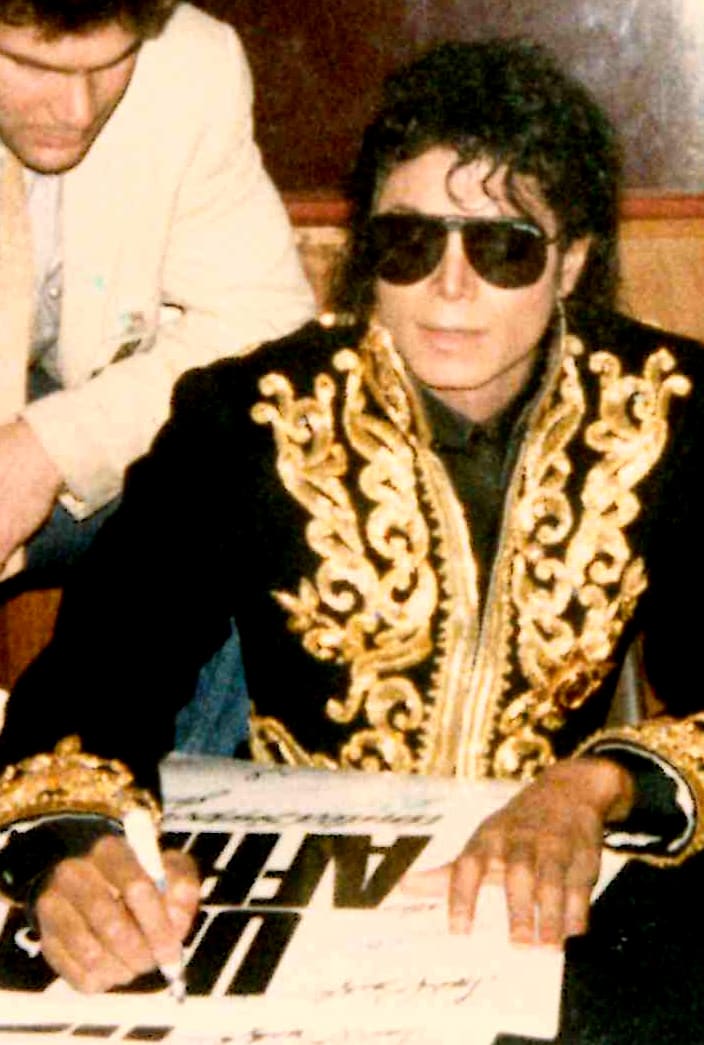
In 1992, Jackson formalised his charitable commitments by establishing the Heal the World Foundation, a nonprofit charitable organisation dedicated to addressing global poverty, disease, child exploitation, and other humanitarian crises. The foundation’s mission reflected Jackson’s belief that children deserved protection, nurturing, and opportunities to experience joy regardless of their circumstances. Through the foundation, Jackson brought underprivileged children to Neverland Ranch, where they could enjoy the amusement rides and amenities free of charge; airlifted relief supplies to conflict zones including war-torn Sarajevo; funded medical procedures for children from impoverished backgrounds; and worked to address some of the world’s most pressing humanitarian crises.
Through the Dangerous World Tour in 1992 and 1993, which grossed approximately $100 million and attracted over 3.5 million fans across 69 concerts, Jackson donated all profits to the Heal the World Foundation and other charities, raising tens of millions of dollars for humanitarian work. This represented an extraordinary commitment given that most artists view touring as their primary income source and that Jackson could easily have justified keeping the profits given his expenses and lifestyle. His willingness to donate such substantial sums demonstrated genuine commitment to humanitarian principles rather than mere public relations gesturing.

By conservative estimates, Jackson donated over $500 million to various charitable causes during his lifetime, making him one of the most generous philanthropists in entertainment history. His contributions supported children’s hospitals including the cancer ward at Memorial Sloan Kettering in New York; AIDS research and treatment programs; education initiatives in underprivileged communities; and disaster relief efforts following earthquakes, hurricanes, and other natural disasters. Much of this giving was anonymous, conducted quietly without press releases or publicity campaigns, reflecting Jackson’s discomfort with using charity for self-promotion and his genuine desire to help without seeking recognition or praise.
Final years, death, and the “This Is It” concerts
As Michael Jackson entered his fifties, his life was marked by increasing financial pressures, ongoing legal battles, and physical and psychological challenges resulting from decades of intense performance, multiple surgeries, and the accumulated trauma of public scrutiny and personal controversies. Despite these difficulties, he maintained his ambition to perform at an unprecedented scale one final time. In March 2009, at London’s O2 Arena, Jackson announced plans for the This Is It residency, a series of 50 concerts scheduled to take place beginning in July 2009 and concluding in March 2010. The concerts were billed as Jackson’s final major performances, a “curtain call” that would allow him to perform before audiences worldwide one last time.
The demand for tickets was extraordinary and demonstrated that Jackson’s commercial appeal remained powerful despite the controversies that had marked his later years. When tickets went on sale, the O2 Arena’s website crashed due to overwhelming traffic. The initial 10 shows sold out within hours, leading promoter AEG Live to add additional dates until the total reached 50 performances. Projections suggested that had the tour expanded globally as planned, it could have generated over $300 million in revenue, making it one of the most lucrative concert series in history. For Jackson, the residency represented both a creative opportunity and a financial necessity, as he faced mounting debts estimated at $400 million and was struggling to maintain his lavish lifestyle.
Rehearsals for This Is It began in earnest in spring 2009 and took place at various Los Angeles venues including the Staples Center. Jackson assembled a team of dancers, musicians, choreographers, and creative directors to develop a show that would meet his exacting standards and provide audiences with a spectacle worthy of his legacy. Footage from these rehearsals, later compiled into the documentary film Michael Jackson’s This Is It, shows Jackson working intensely on choreography, providing direction to his band and dancers, and demonstrating that despite being 50 years old and facing significant health challenges, he retained his artistic vision and considerable performance abilities.
However, those close to Jackson during this period noted concerning signs. He appeared thin and frail at times; his energy levels seemed inconsistent; and there were rumours that he was relying increasingly on prescription medications to manage pain, anxiety, and insomnia. Dr. Conrad Murray, a cardiologist whom Jackson had hired as his personal physician at a salary of $150,000 per month, was administering various medications to help Jackson sleep and function. Murray’s treatment regimen included propofol, a powerful anesthetic typically used only in hospital settings for surgery, which Murray was administering nightly to help Jackson achieve sleep.
On June 25, 2009, at approximately 12:30 pm, paramedics received a 911 call from Jackson’s rented mansion in the Holmby Hills neighbourhood of Los Angeles. Michael Jackson had suffered cardiac arrest. Despite efforts to resuscitate him, Jackson was pronounced dead at Ronald Reagan UCLA Medical Center at 2:26 pm. He was 50 years old. The Los Angeles County Coroner subsequently determined that Jackson’s death resulted from acute propofol and benzodiazepine intoxication, ruling the death a homicide. Dr. Conrad Murray was charged with involuntary manslaughter for his role in Jackson’s death, specifically for his administration of propofol in a home setting without proper monitoring equipment and for his failure to provide adequate care when Jackson stopped breathing.
Murray’s trial in 2011 revealed disturbing details about Jackson’s final months. Testimony established that Murray had been administering propofol regularly to help Jackson sleep, that the drug had been delivered to Jackson’s home in large quantities, and that Murray had failed to properly monitor Jackson on the morning of his death, leaving him alone after administering propofol whilst Murray attended to personal phone calls and emails. The jury convicted Murray of involuntary manslaughter, and he served approximately two years of a four-year sentence before being released.
Jackson’s death sent shockwaves around the world, generating an outpouring of grief that was both spontaneous and profound. For millions of fans spanning multiple generations and diverse cultures, Michael Jackson represented not merely a musician but a global figure who had accompanied them through their lives, whose music had provided soundtrack to their experiences, and whose artistry had transcended language and cultural boundaries. His death was mourned internationally with a depth of emotion that rivalled responses to historical figures of far greater political significance, demonstrating the extent to which popular culture and celebrity had become central to contemporary social experience.
The memorial service, held at the Staples Center on July 7, 2009, was attended by Jackson’s family, close friends, and entertainment industry luminaries, and was broadcast globally to an estimated audience of 2.5 billion people. Performances and tributes by Mariah Carey, Stevie Wonder, Lionel Richie, John Mayer, Jennifer Hudson, and others celebrated Jackson’s artistry, whilst speeches by civil rights leader Al Sharpton, Magic Johnson, and others addressed his humanitarian legacy and cultural significance. Perhaps the most poignant moment came when Jackson’s young daughter Paris, speaking publicly for the first time, tearfully told the audience that her father had been “the best father you could ever imagine,” a statement that humanised Jackson and reminded viewers that beyond the celebrity and controversy was a man loved by his children.

The tragedy of Jackson’s death at such a relatively young age, combined with the circumstances surrounding it, his apparent dependence on prescription medications and the questionable judgment of his medical team, added another layer of complexity to his legacy. He died without resolving many of the controversies that had marked his later years, without completing the This Is It concerts that might have provided artistic and financial redemption, and without the opportunity to shape his own legacy through memoir or reflective interviews. Yet his artistic contributions remained undeniable, and in the years following his death, a reassessment of his work and influence has occurred, with many cultural observers and historians emphasising his revolutionary innovations and extraordinary achievements rather than focusing exclusively on the allegations and controversies.
Michael Jackson’s undisputed cultural impact
Michael Jackson’s influence on music, dance, fashion, visual culture, and the entertainment industry fundamentally altered the landscape of popular culture in ways that continue to reverberate today. His title, “King of Pop,” though sometimes dismissed as mere marketing or hyperbole, reflects a genuine reality: no other artist has achieved Jackson’s unique combination of commercial success, critical acclaim, artistic innovation, and sustained cultural influence across multiple decades and diverse global audiences. His impact can be measured not only in sales figures and awards but in the countless artists who cite him as inspiration, the dance vocabulary he created that has become standard, and the approaches to music video, live performance, and celebrity culture that he pioneered.
His music videos revolutionised the medium, transforming it from a promotional afterthought or simple performance documentation into a serious art form deserving of substantial budgets, production values, and creative ambition comparable to short films. Before Jackson, music videos were relatively simple affairs, often consisting of performance footage or rudimentary narratives. Jackson’s videos for “Billie Jean,” “Beat It,” “Thriller,” “Bad,” “Smooth Criminal,” “Black or White,” and others demonstrated that music videos could be genuine artistic statements, could advance narratives, could employ sophisticated cinematography and special effects, and could achieve cultural impact independent of the songs themselves. His approach influenced an entire generation of directors and artists and effectively created the modern music video as an art form.
His approach to dance synthesised multiple traditions and created an entirely new vocabulary of movement that has influenced generations of dancers and choreographers. By combining elements of street dance, jazz, tap, modern dance, mime, and his own innovations, Jackson created a style that was instantly recognisable yet constantly evolving. His movements became part of global popular culture, imitated by professional dancers and amateurs alike. The moonwalk, the spin, the toe stand, the anti-gravity lean, and countless other signature moves became cultural touchstones that transcended dance to become symbols recognisable worldwide. Contemporary choreographers from Travis Payne to Fatima Robinson to Parris Goebel cite Jackson’s influence as foundational to their work, and virtually every pop performer who emphasises dance as part of their artistry, from Janet Jackson to Usher to Chris Brown to Bruno Mars, owes an obvious debt to Michael’s innovations.
Jackson’s influence on fashion extended beyond his iconic looks to fundamentally reshape the relationship between fashion and performance. His signature white glove, initially worn to draw attention to his hands during dance movements; his military-style jackets adorned with complex embellishments, zippers, and insignia; his cropped trousers paired with white socks and black loafers that made his footwork more visible; his fedora hat that became an extension of his choreography; each became iconic symbols that transcended fashion to become cultural shorthand for Jackson himself. Designers from Gianni Versace to Jean Paul Gaultier to contemporary designers have referenced and reinterpreted Jackson’s aesthetic vocabulary, recognising that he understood how clothing could serve performance, how visual elements could enhance choreography, and how personal style could communicate artistic intention.
Beyond specific aesthetic innovations, Jackson’s broader impact on the entertainment industry involved the creation of the modern global superstar as a category. He demonstrated that an African American artist could achieve unprecedented crossover success without diluting artistic integrity or compromising cultural authenticity. He showed that music videos could be central to an artist’s commercial strategy and artistic expression rather than mere promotional tools. He proved that humanitarian work and artistic excellence were complementary rather than contradictory pursuits. He established that innovative approaches to performance, elaborate staging, and technical sophistication could justify ticket prices that seemed extortionate by earlier standards but which audiences worldwide were willing to pay to witness something genuinely extraordinary.
Jackson’s blueprint for combining musical innovation, visual spectacle, physical performance mastery, and strategic image management has been adopted and adapted by countless artists since, from Prince to Madonna to Beyoncé to Lady Gaga to contemporary performers like The Weeknd and Dua Lipa. His understanding that artists must control their image, their narrative, and their artistic output, that they must think strategically about every aspect of their public presentation, has become standard practice in the contemporary entertainment industry. His insistence on excellence, his willingness to invest enormous resources in production values, and his recognition that audiences deserved spectacle and substance has raised expectations for what popular artists should deliver and has fundamentally altered the economics and aesthetics of popular entertainment.
In 2025, Michael Jackson’s legacy experiences renewed vigour and relevance. His 1982 hit “Thriller” making Billboard history as the first song to chart in the Top 10 across six different decades demonstrates the enduring appeal of his music and the timeless quality of his artistry. No other artist has achieved this extraordinary feat, which speaks to Jackson’s ability to create music that transcends generational boundaries and remains culturally relevant decades after its initial release. The highly anticipated biopic starring his nephew Jaafar Jackson, set for release in April 2026, has generated massive interest, with the trailer becoming the most-watched biopic preview in history, garnering 116 million views and demonstrating that global fascination with Jackson’s story remains intense and widespread.
Michael Jackson remains the second most searched male musician globally on Google, with search interest spanning diverse countries including the United States, Romania, Dominican Republic, France, India, Russia, Brazil, Mexico, and numerous others. This global reach reflects Jackson’s unique status as a truly international superstar whose appeal transcends linguistic, cultural, and geographic boundaries. His music continues to be discovered by new generations through streaming platforms, where songs like “Billie Jean,” “Beat It,” “Thriller,” “Smooth Criminal,” and “Man in the Mirror” consistently generate hundreds of millions of streams annually, demonstrating that his artistic output remains commercially viable and culturally significant decades after its initial release.
Michael Jackson’s career timeline: From Jackson 5 phenomenon to King of Pop (1964-2009)

1964-1969: Formation and early years Joe Jackson forms the Jackson Brothers with Jackie, Tito, and Jermaine; Michael and Marlon join by 1965. The group wins talent shows throughout Indiana and Illinois, building regional reputation. Bobby Taylor discovers them at Chicago’s Regal Theater in 1968. Motown audition on July 23, 1968 leads to recording contract.
1969-1975: Jackson 5 Motown dominance “I Want You Back” reaches number one in January 1970, followed by three consecutive number one hits: “ABC,” “The Love You Save,” and “I’ll Be There.” Group becomes international phenomenon with animated series, merchandise empire, and extensive touring. Michael releases solo albums including “Got to Be There” (1972) and “Ben” (1972) whilst continuing with group. Creative tensions with Motown emerge as brothers seek artistic control.
1975-1979: Transition to Epic and solo emergence Jackson 5 signs with Epic Records, becomes “The Jacksons,” releases albums with increasing creative input. Michael stars in The Wiz (1978), meets Quincy Jones. Off the Wall releases in August 1979, sells over 20 million copies, spawns four top ten singles including “Don’t Stop ‘Til You Get Enough” and “Rock with You.” Establishes Michael as serious adult artist and viable solo performer.
1982-1984: Thriller era and global dominance Thriller releases November 29, 1982. Motown 25 performance on March 25, 1983 debuts moonwalk to 47 million viewers. Album spawns seven singles with six reaching top ten including “Billie Jean,” “Beat It,” and “Thriller.” Music videos revolutionise MTV and popular culture. By 1984, album sells 32 million copies worldwide. Wins eight Grammy Awards in 1984. Meeting with President Reagan at White House validates cultural impact. “Michaelmania” reaches unprecedented heights.
1985-1987: Humanitarian work and Bad preparation Participates in “We Are the World” recording January 1985, raises $60 million for famine relief. Purchases Beatles song catalogue for $47.5 million in August 1985, creating tension with Paul McCartney. Begins work on Bad album with Quincy Jones, adopting edgier image and sound. Purchases Neverland Ranch in 1988 for $19.5 million.
1987-1989: Bad era and world tour Bad releases September 1987, spawns nine singles with five consecutive number ones: “I Just Can’t Stop Loving You,” “Bad,” “The Way You Make Me Feel,” “Man in the Mirror,” and “Dirty Diana.” Bad World Tour runs from September 1987 to January 1989, generates $125 million revenue, attracts 4.4 million fans across 123 shows. Establishes Michael as dominant live performer capable of sustaining artistry at unprecedented scale.
1991-1993: Dangerous album and Super Bowl performance Dangerous releases November 1991, debuts at number one, eventually sells 32 million copies. Dangerous World Tour begins in June 1992, attracts 3.5 million fans. Super Bowl XXVII halftime performance in January 1993 draws 133.4 million viewers, revolutionises halftime shows. Establishes Heal the World Foundation, donates all Dangerous Tour profits to charity.
1993-1994: First abuse allegations and crisis Jordan Chandler allegations surface in August 1993, initiate LAPD and Santa Barbara investigations. Michael cancels tour dates, enters treatment for painkiller dependency. Settles civil lawsuit for $23 million in January 1994. Criminal investigations produce no indictment. Marries Lisa Marie Presley in May 1994.
1995-1997: HIStory album and continued success HIStory: Past, Present and Future, Book I releases June 1995, sells 20 million copies. HIStory World Tour runs from September 1996 to October 1997, attracts 4.5 million fans. Divorces Lisa Marie Presley in January 1996. Marries Debbie Rowe in November 1996. Son Prince Michael born February 1997. Daughter Paris born April 1998.
2001-2003: Invincible and declining commercial performance Invincible releases October 2001, debuts at number one but sells below expectations. Public dispute with Sony Music label head Tommy Mottola. Living with Michael Jackson documentary airs February 2003, reignites concerns about relationships with children. Neverland Ranch raided in November 2003.
2003-2005: Criminal trial and acquittal Charged with seven counts of child molestation and two counts of administering intoxicating agent in December 2003. Trial begins January 2005, lasts five months, becomes international media sensation. Acquitted on all charges June 13, 2005. Financial and emotional costs devastate Michael. Leaves United States for Bahrain, becomes increasingly reclusive.
2009: This Is It rehearsals and death Announces This Is It residency at O2 Arena in March 2009, 50 shows sell out immediately. Intensive rehearsals begin in Los Angeles. Dies June 25, 2009 from cardiac arrest caused by propofol overdose administered by Dr. Conrad Murray. Memorial service at Staples Center draws 2.5 billion viewers globally. Dr. Murray convicted of involuntary manslaughter in 2011, serves two years.
2025: Continued relevance and legacy “Thriller” becomes first song to chart in Billboard Top 10 across six decades. Michael Jackson biopic starring Jaafar Jackson set for April 2026 release generates record-breaking 116 million trailer views. Remains second most searched male musician globally on Google with interest spanning worldwide. Legacy continues influencing contemporary artists whilst controversies remain unresolved, creating complex cultural memory balancing extraordinary artistic achievement with troubling allegations.
Conclusion: The enduring legacy of the King of Pop
Michael Jackson’s journey from a precocious five-year-old performing in Gary, Indiana, to the most successful recording artist in history represents one of popular culture’s most extraordinary narratives. His contributions to music and dance are beyond dispute. His commercial success, with over 400 million records sold worldwide and Thriller remaining the best-selling album of all time, remains unmatched by any artist in any genre. His influence on visual culture, entertainment industry practices, and contemporary performance continues to shape how artists approach their craft and how audiences experience popular music.
Yet his legacy is undeniably complicated by the serious allegations of child sexual abuse that emerged during his lifetime and have resurfaced since his death. These allegations, whether ultimately proven or disproven, cannot be simply ignored or dismissed, nor can they entirely overshadow his artistic achievements. Any honest assessment of Michael Jackson must grapple with both his undeniable artistic genius and the deeply troubling accusations regarding his behaviour toward children. These elements exist in uncomfortable tension, resisting easy reconciliation or simplistic judgment.
What remains clear, however, is that Michael Jackson fundamentally transformed what it means to be a global entertainer. He demonstrated that artistic innovation and commercial viability could coexist, that an African American artist could achieve unprecedented cultural dominance and cross racial boundaries that had seemed insurmountable, that music videos could be a serious artistic medium worthy of substantial investment and creative ambition, that dance could be equally important as vocals in defining a musical artist’s identity, and that popular artists could meaningfully engage with humanitarian concerns and leverage their platforms for social good. The King of Pop title, perhaps imperfect as all titles inevitably are, captures something essential about Jackson’s achievement: he was the dominant popular musician of his generation, perhaps of any generation, and his influence extends far beyond the boundaries of music into dance, fashion, visual culture, and the very conception of celebrity in the modern world.
For contemporary artists, Jackson remains an unavoidable reference point, both as inspiration and as cautionary tale. His work continues to be studied by musicologists, performed by tribute artists, and reinterpreted by new generations of musicians. His music continues to attract new audiences decades after its initial release, with streaming platforms introducing his artistry to listeners born long after his death. His innovations in music video production, choreography, and live performance remain standard references in entertainment industry training and education. Yet his life also reminds us of the complexities that often accompany extraordinary talent, the genuine tragedy of genius constrained or corrupted by personal vulnerabilities and institutional failures, and the difficulties inherent in navigating extraordinary fame whilst maintaining psychological wellbeing and personal integrity.
Michael Jackson was not a simple figure admitting of simple judgments. He was a man of profound contradictions, capable of extraordinary artistic vision and genuine humanitarian compassion but also capable of behaviour that many find deeply troubling. Understanding his legacy requires holding these truths simultaneously rather than retreating into simplistic hagiography that ignores legitimate concerns or equally simplistic denunciation that dismisses his artistic achievements. The King of Pop’s reign transformed popular culture fundamentally and irrevocably, leaving behind a body of work that will endure long after contemporary controversies have faded, a testament to the enduring power of genuine artistic innovation, the complex nature of cultural memory itself, and the eternal human fascination with figures who push the boundaries of what seems possible in art and performance.