The landscape of content creation has undergone a revolutionary transformation with the emergence of advanced ChatGPT prompts and sophisticated AI tools for content creation. What once required hours of manual research, writing, and editing can now be accomplished with precision-crafted prompts that unlock the full potential of Large Language Models (LLMs) for content. This comprehensive guide explores how advanced prompt engineering techniques, AI-powered writing tools, and strategic human-AI collaboration can transform your content marketing strategy whilst maintaining quality, authenticity, and search engine optimisation.
What makes a prompt advanced?
The distinction between basic and advanced prompts lies in their sophistication, specificity, and strategic implementation. Basic prompts typically consist of simple instructions like “Write a blog post about artificial intelligence,” whilst advanced prompts incorporate multiple layers of context, constraints, and structured frameworks that guide AI models towards producing highly targeted, professional-quality content.
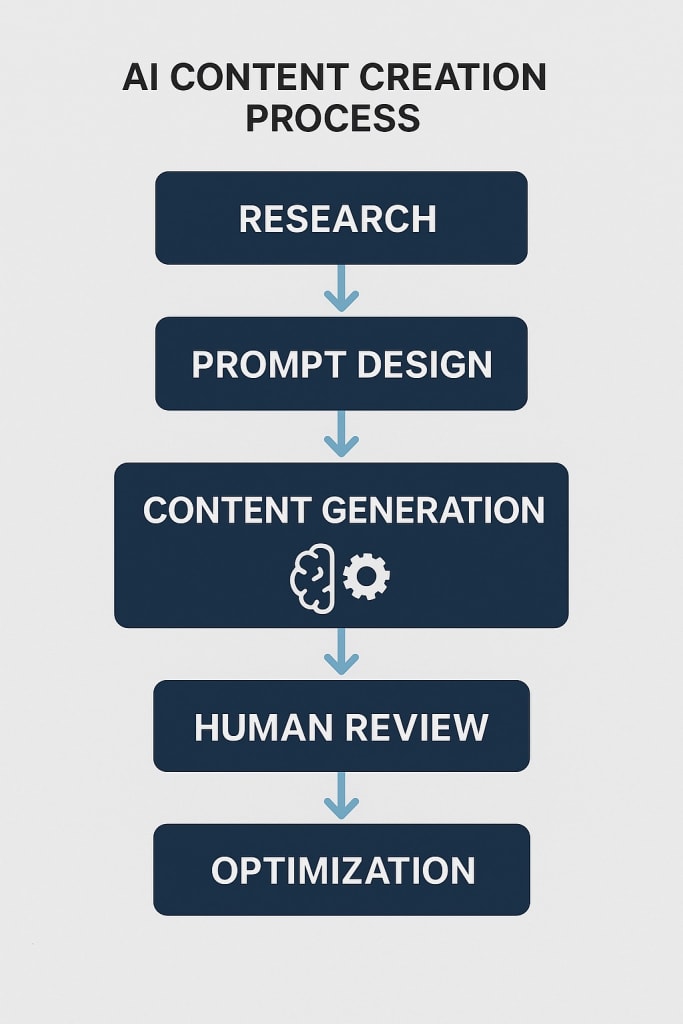
Advanced ChatGPT prompts leverage prompt engineering techniques that include role-playing, iterative chaining, and contextual frameworks. These sophisticated approaches enable content creators to generate bespoke AI prompts that consistently deliver results aligned with specific brand voices, audience needs, and content objectives.
The evolving landscape of AI in content creation continues to accelerate, with new capabilities emerging regularly that enhance the precision and effectiveness of AI content workflow systems. Understanding these advancements is crucial for content creators who want to stay competitive in an increasingly AI-driven marketplace.
Understanding advanced prompt engineering
Effective prompt engineering forms the foundation of successful AI content creation, requiring mastery of several core principles that distinguish amateur from professional implementation. The most successful practitioners understand that prompt engineering techniques extend far beyond simple question-and-answer interactions to encompass complex, multi-layered communication strategies.
Read more: AI prompt engineering: write better prompts for superior results
Principles of effective prompting
Clarity and specificity represent the cornerstone of advanced prompt construction. Rather than relying on vague instructions, effective prompts provide unambiguous guidance that eliminates confusion and reduces the likelihood of irrelevant output. For instance, instead of asking “Write about SEO,” an advanced prompt might specify: “Acting as an SEO specialist, create a 1,500-word technical guide explaining on-page optimisation techniques for e-commerce websites, targeting intermediate-level digital marketers”.
Context and constraints enable AI models to understand the broader framework within which they’re operating. This includes providing background information, defining parameters such as word count, tone, and format requirements, and establishing clear boundaries for the content’s scope and purpose. These constraints don’t limit creativity; rather, they channel AI capabilities towards producing more focused, relevant results.
Persona and role-playing techniques involve instructing AI tools for content creation to assume specific expert identities or professional perspectives. By defining roles such as “Act as an experienced content marketing strategist” or “Respond as a technical writer specialising in cybersecurity,” users can tap into the AI’s training data related to those specific domains, resulting in more authoritative and contextually appropriate content.
Iterative prompting and chaining represents an advanced technique where complex tasks are broken down into sequential steps, with each prompt building upon previous outputs. This approach proves particularly valuable for comprehensive content projects that require multiple phases of development, research, and refinement.
Prompt structures and frameworks
Several established frameworks provide structured approaches to prompt construction, each offering unique advantages for different content creation scenarios. Understanding these frameworks enables content creators to select the most appropriate methodology for their specific requirements.
| Framework | Components | Best use cases | Complexity level | Example prompt |
|---|---|---|---|---|
| RTF (Role-Task-Format) | Role, Task, Format | General content creation | Beginner | Role: SEO expert. Task: Write meta description. Format: 155 characters max |
| RATF (Role-Audience-Task-Format) | Role, Audience, Task, Format | Targeted content marketing | Intermediate | Role: Marketing expert. Audience: Small business owners. Task: Create email subject lines. Format: 5 options under 50 chars |
| Chain-of-Thought | Step-by-step reasoning | Complex problem solving | Advanced | Solve this step by step: How to optimize content for featured snippets? |
| Few-Shot Prompting | Examples + Task | Specific output formats | Intermediate | Here are 3 examples of good headlines… Now write 5 similar headlines for… |
| Zero-Shot Prompting | Direct instruction only | Quick simple tasks | Beginner | Write a product description for wireless headphones |
The Role-Audience-Task-Format (RATF) framework extends basic prompt structures by incorporating audience consideration into the prompt design. This four-component approach ensures that generated content not only fulfills the technical requirements but also resonates with the intended readership.
Chain-of-thought prompting excels in situations requiring complex reasoning or problem-solving. By explicitly requesting step-by-step analysis, this technique helps AI models work through intricate concepts systematically, producing more thorough and logically coherent content.
Few-shot prompting provides AI models with examples of desired outputs before requesting new content creation. This technique proves particularly effective when establishing specific formatting requirements or stylistic preferences.
Techniques for generating higher-quality output
Advanced practitioners employ several sophisticated techniques to enhance the quality and relevance of AI-generated content. Requesting multiple variations allows content creators to compare different approaches and select the most suitable option for their needs. This technique also provides valuable insights into the AI model’s interpretation of the prompt, enabling further refinement.
Asking for reasoning or explanations helps users understand the AI’s decision-making process whilst simultaneously improving the transparency and credibility of the generated content. This approach proves particularly valuable for complex topics where logical progression and evidence-based arguments are essential.
Using negative constraints involves explicitly stating what should NOT be included in the output. For example, “Do not include promotional language” or “Avoid technical jargon unsuitable for beginners” helps guide AI models away from unwanted elements whilst maintaining focus on desired outcomes.
Advanced ChatGPT prompts for specific content creation tasks
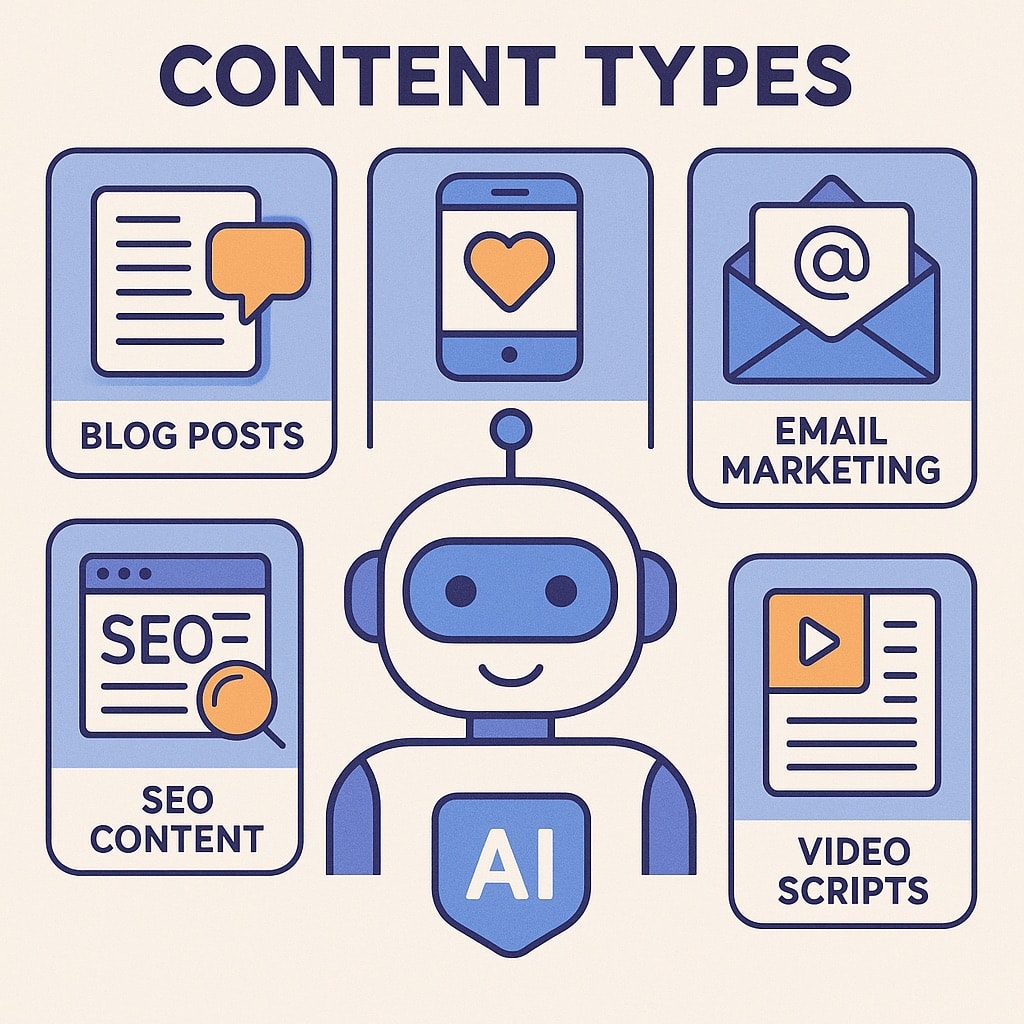
The practical application of advanced ChatGPT prompts varies significantly across different content types and marketing objectives. Professional content creators leverage specialised prompting strategies tailored to specific use cases, from SEO content optimisation to creative storytelling.
SEO content and ChatGPT for SEO
Search engine optimisation represents one of the most valuable applications of AI tools for content creation, offering unprecedented efficiency in keyword research, content structuring, and technical optimisation. Advanced prompts for SEO content focus on generating keyword-rich, strategically structured content that satisfies both search algorithms and user intent.
Keyword research and clustering can be significantly enhanced through carefully constructed prompts that instruct AI models to analyse semantic relationships and search intent patterns. For example: “Acting as an SEO specialist, generate a comprehensive list of 50 long-tail keywords related to ‘sustainable fashion’ for an e-commerce website targeting environmentally conscious consumers aged 25-40. Group these keywords by search intent (informational, commercial, transactional) and estimated difficulty level”.
Content outlines and structures benefit from prompts that incorporate SEO best practices whilst maintaining readability and user engagement. Advanced prompts might request: “Create a detailed content outline for a 2,000-word pillar page about ‘digital marketing automation,’ including H2 and H3 headings optimised for featured snippets, internal linking opportunities, and sections addressing common user questions”.
Meta descriptions and title tags require precise prompting that balances keyword inclusion with compelling copy that encourages click-through rates. Effective prompts specify character limits, target keywords, and emotional triggers whilst requesting multiple variations for testing purposes.

Long-form content generation
Blog posts and articles represent the most common application of content generation AI, requiring prompts that can guide comprehensive research, logical structure, and engaging narrative flow. Advanced prompts for long-form content typically include detailed briefs covering target audience, key messages, supporting evidence requirements, and stylistic preferences.
E-books and whitepapers demand more sophisticated prompting approaches that can maintain consistency across multiple chapters whilst incorporating authoritative research and professional formatting. These projects often benefit from iterative prompting strategies that develop content progressively, building complexity and depth through multiple rounds of refinement.
Case studies require prompts that can extract key information from complex scenarios and structure narratives that demonstrate clear problem-solution relationships. Effective case study prompts guide AI models through systematic analysis of challenges, implementation strategies, and measurable outcomes.
Short-form content creation
Social media posts and campaigns benefit from prompts that capture platform-specific requirements, audience preferences, and engagement optimisation strategies. Advanced social media prompts typically specify character limits, hashtag requirements, visual content suggestions, and call-to-action elements.
Ad copy and headlines require prompts that balance persuasive language with compliance requirements whilst optimising for specific advertising platforms. A/B testing variations can be generated through prompts that request multiple approaches to the same core message.
Email marketing sequences leverage prompts that maintain consistent messaging across multiple touchpoints whilst personalising content for different audience segments. Advanced email prompts incorporate psychological triggers, personalisation elements, and clear conversion pathways.
Creative content and storytelling
Brainstorming and idea generation represent fundamental applications where AI tools for content creation excel at overcoming creative blocks and exploring new angles. Prompts for ideation typically request diverse perspectives, unconventional approaches, and connections between seemingly unrelated concepts.
Storytelling and narrative development require prompts that can guide character development, plot progression, and emotional engagement whilst maintaining consistency with brand values and marketing objectives. These prompts often incorporate specific narrative structures, target emotional responses, and call-to-action integration.
Content repurposing and optimisation
Content repurposing with AI represents a highly efficient strategy for maximising the value of existing content assets. Advanced prompts for repurposing focus on transforming content between different formats whilst maintaining core messages and adapting to new audience preferences.
Summarising long content requires prompts that can identify key points, maintain logical flow, and preserve essential information whilst significantly reducing word count. Rewriting for different tones or audiences involves prompts that specify new demographic targets, preferred communication styles, and platform-specific requirements.
Translation and localisation can be enhanced through prompts that consider cultural nuances, regional preferences, and local market conditions beyond simple language conversion. However, human verification remains essential for accuracy and cultural appropriateness.
Integrating AI tools beyond ChatGPT
While ChatGPT represents the most widely recognised AI-powered writing tool, the ecosystem of AI tools for content creation encompasses numerous specialised platforms, each offering unique capabilities and advantages. Understanding the strengths and applications of different tools enables content creators to build comprehensive AI content workflow systems that maximise efficiency and quality.
| Tool | Primary use case | Key strengths | Pricing start | Best for | AI features |
|---|---|---|---|---|---|
| ChatGPT | General content creation | Versatility, natural language | Free | Beginners to advanced users | GPT-4 integration |
| Copy.ai | Social media copywriting | Brand voice customization | $49/month | Social media managers | AI brand voice |
| Jasper AI | Marketing content | Marketing templates | $49/month | Marketing teams | Content templates |
| Writesonic | SEO-optimized content | Real-time web insights | $16/month | SEO specialists | Competitor analysis |
| Claude | Complex reasoning & analysis | Long-form reasoning | $15/month | Technical writers | Constitutional AI |
| Canva | Visual content design | Easy visual design | Free | Non-designers | Magic Media AI |
| InVideo | Video content creation | Stock media library | Free | Video marketers | AI video generation |
| Synthesia | AI avatar videos | Multi-language avatars | $16/month | Course creators | AI avatar creation |
| Murf | Text-to-speech | 200+ voice options | $19/month | Podcasters | Voice cloning |
| Grammarly | Grammar & style checking | Advanced grammar checks | Free | All content creators | AI writing assistant |
Specialised AI writing platforms
Jasper AI excels in marketing content creation, offering extensive template libraries and brand voice customisation features that maintain consistency across campaigns. The platform’s strength lies in its ability to generate conversion-focused copy for various marketing channels whilst integrating seamlessly with existing marketing automation tools.
Copy.ai specialises in social media copywriting and brand voice development, providing tools that learn and replicate specific tone and style preferences. Its collaborative features enable team-based content creation with consistent messaging across multiple contributors.
Writesonic distinguishes itself through real-time web insights and competitor analysis capabilities, making it particularly valuable for SEO-optimised content creation. The platform’s ability to incorporate current trends and market data into content generation provides significant advantages for time-sensitive marketing campaigns.
Claude offers superior performance in complex reasoning and long-form analysis, making it ideal for technical writing and in-depth research projects. Its constitutional AI approach ensures more reliable and ethical content generation, particularly valuable for sensitive or regulated industries.
AI-powered research and analysis tools
AI-powered research tools transform the information gathering process, enabling content creators to quickly identify trends, analyse competitor strategies, and synthesise complex data into actionable insights. These tools excel at processing vast amounts of information and identifying patterns that might escape human analysis.
Content analysis platforms can evaluate existing content performance, identify gaps in coverage, and suggest optimisation opportunities based on search data and user engagement metrics. Trend identification tools monitor social media conversations, search queries, and industry publications to highlight emerging topics and shifting consumer interests.
Content editing and proofreading solutions
Grammarly’s AI features extend beyond basic grammar checking to provide style suggestions, tone analysis, and readability optimisation. The platform’s advanced algorithms can detect inconsistencies in brand voice and suggest improvements for audience engagement.
Plagiarism detection tools have evolved to include AI content detection capabilities, helping maintain content originality and comply with platform policies. These tools are essential for ensuring that AI-generated content meets authenticity requirements and avoids potential penalties.
Visual content creation tools
Canva’s Magic Media AI enables non-designers to create professional-quality visual content through text-based prompts. The platform’s integration of AI image generation with design templates streamlines the creation of cohesive visual campaigns.
Midjourney and DALL-E represent cutting-edge AI image generation tools that can create custom visuals aligned with specific content themes and brand aesthetics. However, these tools require careful prompting and human oversight to ensure brand compliance and message consistency.
Best practices for human-AI collaboration and quality control
The most successful implementations of AI tools for content creation embrace a human-in-the-loop AI content approach that combines AI efficiency with human creativity, judgement, and oversight. This collaborative model ensures that content maintains authenticity, accuracy, and alignment with brand values whilst leveraging AI capabilities for enhanced productivity.

The human-in-the-loop approach
Effective human-in-the-loop AI content strategies recognise that AI serves as a powerful augmentation tool rather than a replacement for human expertise. Human oversight proves essential at multiple stages of the content creation process, from initial prompt design through final quality assurance.
Strategic planning and creative direction remain fundamentally human responsibilities that guide AI implementation towards meaningful business objectives. Content review and refinement ensure that AI-generated material meets quality standards and aligns with brand guidelines.
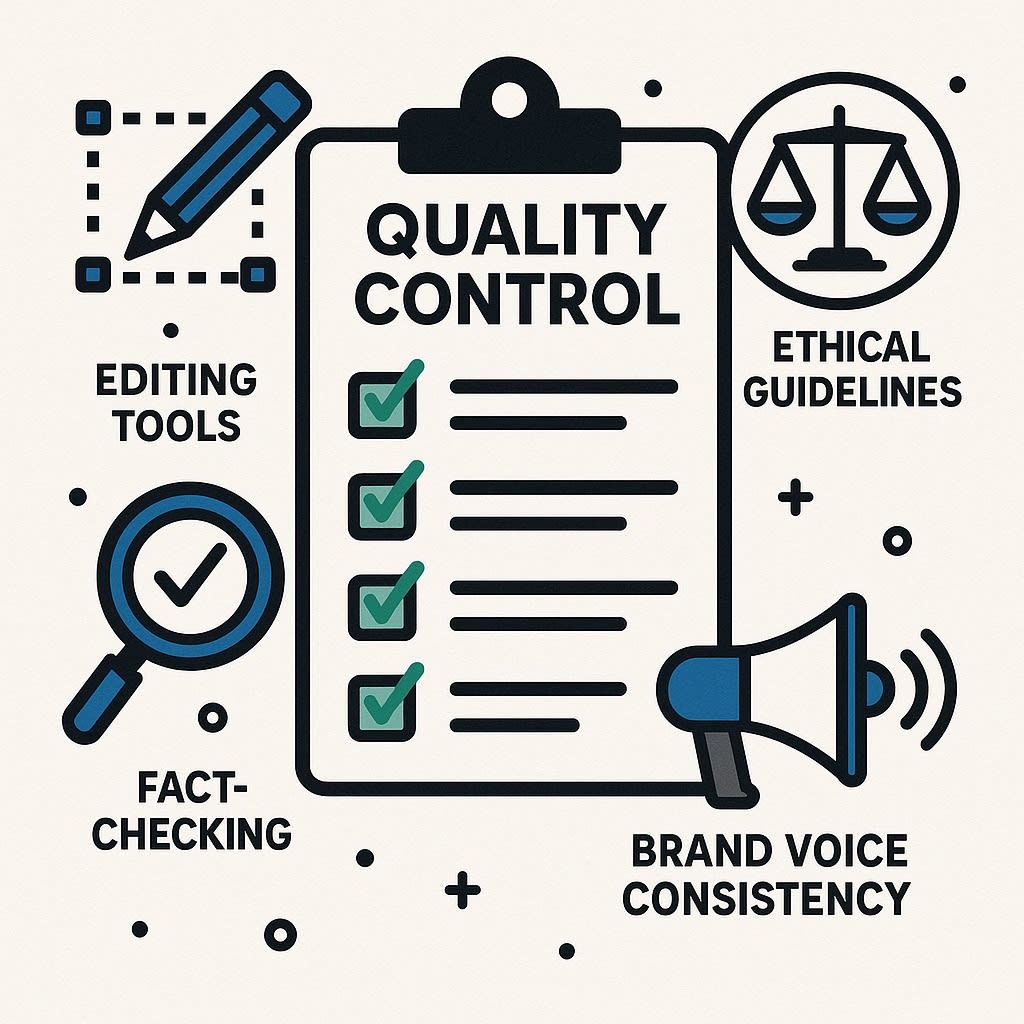
Fact-checking and accuracy verification represent critical human responsibilities, as AI models can generate plausible-sounding but factually incorrect information. This phenomenon, known as “hallucination,” requires systematic verification processes and reliable source checking.
Maintaining brand voice and authenticity
Brand voice consistency requires careful prompt engineering and systematic review processes that ensure AI-generated content reflects established tone, style, and messaging preferences. Many organisations develop detailed brand voice guidelines specifically for AI content creation, including approved language patterns, prohibited terms, and preferred communication styles.
Authenticity preservation involves balancing AI efficiency with genuine human insights and experiences that resonate with audiences. The most effective content combines AI-generated structure and research with human personal anecdotes, industry expertise, and unique perspectives.
Ethical AI content creation
Ethical considerations of AI content creation encompass transparency, bias awareness, and responsible disclosure practices. Many industries and platforms now require clear identification of AI-generated content, making transparency protocols essential for compliance and trust-building.
Bias detection and mitigation require ongoing vigilance and systematic review processes that identify potential prejudices or unfair representations in AI-generated content. Responsible use guidelines help organisations establish clear policies for AI content creation that balance efficiency gains with ethical obligations.
Optimising for user experience
AI-generated content must prioritise user experience through clear structure, engaging presentation, and direct response to search intent. Readability optimisation involves reviewing AI output for clarity, flow, and accessibility across different audience segments.
Visual integration and formatting ensure that AI-generated text works effectively with supporting images, charts, and interactive elements. Mobile optimisation considerations become increasingly important as search engines prioritise mobile-first indexing.
Measuring success and staying updated
Tracking the performance of AI-generated content requires sophisticated measurement strategies that go beyond traditional metrics to evaluate the specific impact of AI content workflow implementation. Successful measurement programs combine quantitative analytics with qualitative assessment to provide comprehensive insights into content effectiveness.
Performance tracking and analytics
SEO metrics remain fundamental for evaluating AI-generated content performance, including organic traffic growth, keyword rankings, and featured snippet captures. Advanced tracking involves correlating content performance with specific prompt engineering techniques to identify the most effective approaches.
Engagement metrics such as time on page, social shares, and conversion rates provide insights into content quality and audience resonance. Content velocity measurements track the efficiency gains achieved through AI implementation, comparing production timelines and resource allocation before and after AI adoption.

Continuous learning and adaptation
The rapidly evolving nature of AI technology requires ongoing education and adaptation strategies that keep content creators current with new capabilities and best practices. Regular training programs ensure team members understand emerging prompt engineering techniques and new tool capabilities.
Experimentation and testing protocols enable systematic evaluation of new approaches whilst maintaining content quality standards. Industry monitoring helps identify trends and changes in AI content creation that may impact strategy and implementation.
Future trends in AI content creation
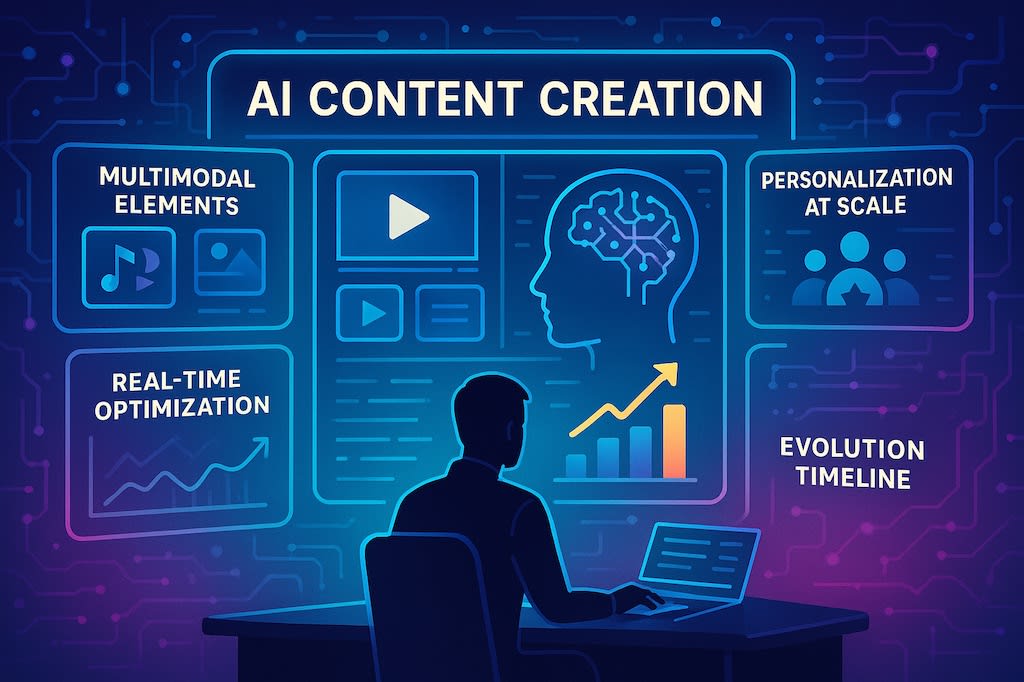
The future of AI in content creation points toward increasingly sophisticated integration between human creativity and artificial intelligence capabilities. Personalisation at scale will enable content that adapts dynamically to individual user preferences and behaviours.
Multimodal content generation combining text, images, audio, and video will create more immersive and engaging content experiences. Real-time content optimisation will enable continuous improvement based on immediate user feedback and performance data.
Advanced reasoning capabilities will expand AI applications into more complex content types requiring nuanced analysis and strategic thinking. However, the fundamental importance of human oversight, creativity, and ethical guidance will remain constant.
Conclusion
Advanced ChatGPT prompts and AI tools for content creation represent transformative capabilities that can significantly enhance productivity, quality, and strategic effectiveness for content marketers and creators. Success requires mastering prompt engineering techniques, understanding the strengths of different AI platforms, and implementing robust human-in-the-loop processes that maintain quality and authenticity.
The key to effective implementation lies in viewing AI as a powerful collaborative partner rather than a replacement for human expertise. By combining advanced prompting strategies with careful quality control and continuous learning, content creators can harness AI capabilities whilst preserving the creativity, insight, and ethical considerations that define exceptional content.
As the landscape continues to evolve, those who invest in understanding and implementing these advanced techniques will maintain competitive advantages in an increasingly AI-driven content marketing environment. The future belongs to creators who can effectively orchestrate human-AI collaboration to produce content that is both efficient and authentically engaging.