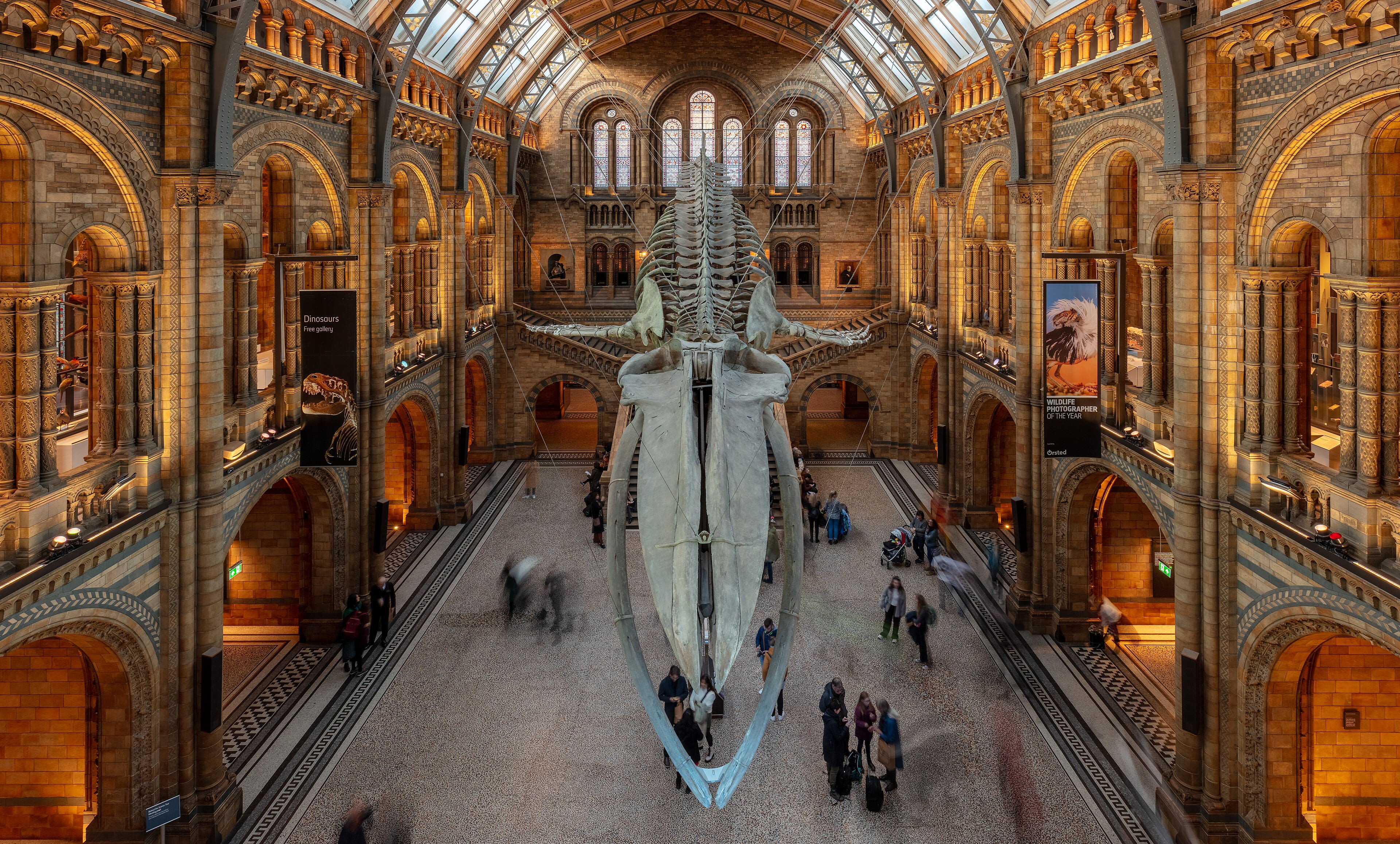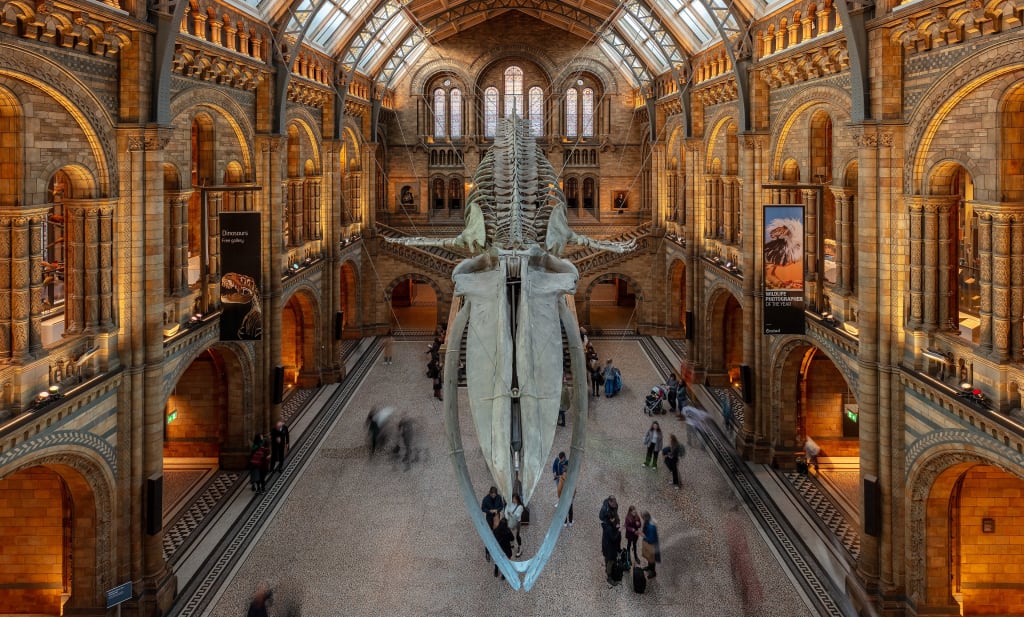
Hope, the 25.2-metre blue whale skeleton suspended from the ceiling of London’s Natural History Museum’s Central Hall, has captivated visitors since its installation in July 2017. As the largest creature to have ever existed on Earth, blue whales embody both the magnificence of nature and the devastating impact of human activity. The skeleton’s graceful suspension creates a powerful visual metaphor, hovering between past destruction and future possibility, reminding millions of annual visitors about the fragility of marine ecosystems.
+ Read more: Charles Darwin and the theory that changed the world: the revolutionary science of evolution by natural selection
During the 1800s, an estimated 250,000 blue whales roamed the world’s oceans, their populations thriving across multiple marine ecosystems. However, decades of intensive commercial hunting brought these giants to the brink of extinction, with only approximately 400 individuals remaining by 1966. This catastrophic decline represented one of the most dramatic population collapses in recorded natural history, threatening to erase the largest animal ever to exist from the planet entirely.
The turning point came that same year when the international community convened in London and established legal protections for blue whales, effectively ending commercial hunting of the species. This decisive action marked one of the earliest and most significant global conservation efforts, demonstrating that coordinated international policy can reverse even the most dire ecological trajectories. Since then, blue whale populations have gradually recovered to around 20,000 individuals today. While still far from their historical numbers, this recovery represents a powerful testament to the effectiveness of conservation measures and the resilience of nature when given the opportunity to heal.