

On a pleasant summer’s day in 1837, a young English scientist sat in his study, contemplating the mysteries of life itself. With profound questions swirling through his mind about the astonishing diversity of species and their origins, he penned two simple words in his notebook: “I think.” Beside these words, he sketched what would become one of the most revolutionary diagrams in scientific history – a branching tree showing how species give rise to new species, creating the magnificent tapestry of life we see around us. This moment marked the birth of the theory of evolution by natural selection, conceived by Charles Darwin, and it would fundamentally transform humanity’s understanding of our place in the natural world.
What makes Darwin’s theory particularly remarkable is its continued relevance in our modern world. Today’s scientists still use Darwin’s framework to understand everything from antibiotic resistance in bacteria to cultural evolution in human societies. His insights into how traits spread through populations help us comprehend how technology, languages, and social behaviours evolve in ways remarkably similar to biological evolution. In our digital age, where information spreads and mutates across social networks, Darwin’s principles of variation, selection, and inheritance remain as applicable as ever.
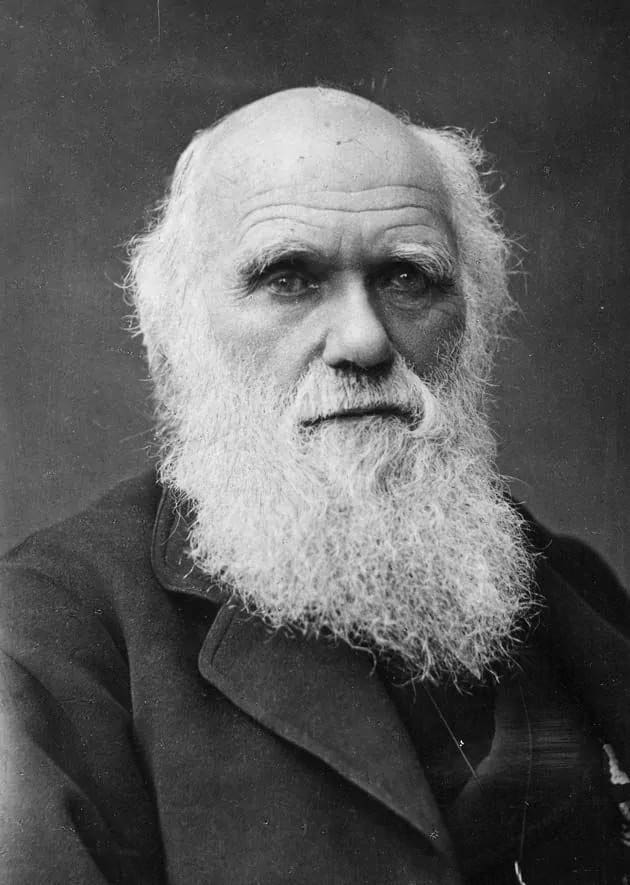
Darwin’s theory of evolution by natural selection stands as one of the most significant intellectual achievements in human history, comparable to the work of Newton in physics or Einstein in modern science. Yet the path to this groundbreaking theory was neither straight nor simple. For over two decades, Darwin lived a double life – publicly respected as an accomplished geologist and naturalist, whilst privately developing ideas that he knew would be considered radical and potentially dangerous by the scientific establishment of his time. The story of how this remarkable theory came to light is one of scientific courage, meticulous observation, and the triumph of evidence over dogma.
Evolution continues in real time
Modern research has shown that Darwin was right about evolution being an ongoing process. Human evolution continues today through cultural evolution, epigenetic changes, and even genetic adaptations to modern environments. Scientists have documented how populations in high-altitude regions develop enhanced oxygen-carrying capacity within generations, how certain genetic variants that protect against malaria persist in specific populations, and how our gut bacteria evolve in response to modern diets. This contemporary evidence validates Darwin’s vision that evolution never stops – it simply changes its mechanisms and timescales.
The formative years: from collecting beetles to revolutionary thinking
Early life and influences
Charles Robert Darwin was born on 12 February 1809 in Shrewsbury, England, the fifth of six children born to Dr Robert Darwin and Susannah Wedgwood. From his earliest years, Charles displayed the insatiable curiosity that would define his career. As a child, he preferred solitary exploration to social activities, spending countless hours examining his father’s extensive library of scientific works and roaming the gardens of the family estate, where he developed his lifelong passion for collecting specimens – beetles, shells, stones, anything that caught his naturalist’s eye.
The death of his mother when Charles was just eight years old profoundly affected the family dynamics, though curiously, Darwin later claimed to have few memories of her. This early loss may have contributed to his introspective nature and his deep appreciation for the natural world as a source of wonder and solace.
Darwin’s formal education initially proved frustrating. At Shrewsbury School, where Greek and Latin dominated the curriculum, he found himself daydreaming about adventures in tropical islands and distant forests whilst reading “The Wonders of the World and the Three Kingdoms of Nature”. His poor academic performance concerned his father, who decided the boy should join him as an apprentice in his medical practice before being sent to study medicine at Edinburgh University.
Edinburgh and the first glimpse of evolution
At Edinburgh University in 1825, Darwin encountered ideas that would plant the first seeds of his evolutionary thinking. His most significant mentor was Professor Robert Grant, a marine biologist who studied the relationships between different species. Grant was one of the few academics brave enough to discuss evolutionary concepts, albeit quietly, in an academic environment where such ideas were considered heretical.
During this period, the scientific world was dominated by fixism – the belief that species were unchanging and had been created exactly as they appeared in modern times. This doctrine, strongly supported by the Church of England, held that all living beings were created by God in their current forms, with humans representing the pinnacle of divine creation. Any suggestion that species could change over time was met with fierce resistance from both religious authorities and the scientific establishment.
However, some brave scientists had begun to challenge these ideas. The French naturalist Jean-Baptiste Lamarck had developed a theory of evolution that proposed species could transform over generations through an inner drive toward perfection, combined with the law of use and disuse – the idea that characteristics used frequently would develop while unused traits would disappear. Though Lamarck’s mechanism was ultimately incorrect, his willingness to consider evolutionary change made a lasting impression on Darwin.
Cambridge and the path to the Beagle
When Darwin abandoned his medical studies in 1827, his exasperated father decided that only a career in the Church could provide suitable direction for his wayward son. Thus began Darwin’s time at Cambridge University, where he was supposed to prepare for ordination as an Anglican priest. Ironically, this religious education would lead him to the experiences that would ultimately challenge the very foundations of religious doctrine.
At Cambridge, Darwin formed a crucial friendship with John Stevens Henslow, a brilliant botanist and theologian who recognised the young man’s extraordinary potential as a naturalist. Henslow’s extensive knowledge of botany, entomology, chemistry, mineralogy, and geology impressed Darwin enormously, and their regular walks and conversations helped shape Darwin’s approach to scientific observation and thinking.
It was Henslow who would change the course of scientific history by recommending Darwin for a position that would initially be declined by Henslow himself and then by Leonard Jenyns. In 1831, Captain Robert FitzRoy of HMS Beagle required a naturalist to accompany his survey expedition around South America. The position called for someone who could take advantage of the scientific opportunities presented by the voyage and serve as a suitable companion for the captain during the long journey. Darwin’s combination of scientific enthusiasm and social skills made him the perfect candidate.
The voyage that changed everything: HMS Beagle (1831-1836)
Setting sail into scientific history
On 27 December 1831, HMS Beagle departed Plymouth Sound under Captain FitzRoy’s command, beginning what was planned as a two-year survey expedition that would ultimately last nearly five years. The 22-year-old Darwin carried with him Charles Lyell’s newly published “Principles of Geology,” a book that would profoundly influence his thinking about the gradual changes that shape our planet over vast periods of time.
The voyage’s primary mission was to complete detailed hydrographic surveys of South American coastlines, particularly Patagonia and Tierra del Fuego, whilst also carrying out chronometrical measurements around the world. For Darwin, it represented an unprecedented opportunity to observe nature on a global scale and collect specimens from regions barely explored by European science.
This systematic approach to data collection during the Beagle voyage established methodologies still used by modern field researchers. Contemporary expeditions studying climate change impacts on remote ecosystems follow similar protocols of careful observation, specimen collection, and detailed documentation that Darwin pioneered during his five-year journey.

Brazil and the wonder of tropical diversity
The Beagle’s first significant stop was Cape Verde, where Darwin experienced his first glimpse of tropical forests. The journey then continued to South America, with brief stops at Fernando de Noronha and Salvador, Brazil. Darwin was immediately captivated by the lush Atlantic Forest region around Salvador and later Rio de Janeiro, marvelling at the incredible diversity of species packed into these ecosystems.
However, his wonder at Brazil’s natural beauty was tempered by his deep revulsion at the institution of slavery, which he witnessed firsthand throughout the country. His strong opposition to slavery reflected the liberal values instilled by his family and would later influence his views on human equality and dignity.
Darwin spent three months in a cottage in Botafogo while the Beagle mapped the Brazilian coastline, using this time to explore the region extensively and begin his first significant collections. His early letters to Henslow from this period show his growing confidence as a naturalist and his ability to identify scientifically significant specimens.
Modern conservation efforts in Brazil’s Atlantic Forest draw directly upon Darwin’s observations about biodiversity hotspots. His documentation of species relationships in these ecosystems provided foundational knowledge that today’s conservationists use to understand how habitat fragmentation affects evolutionary processes and species survival.
Patagonia: giants from the past
In Patagonia, Darwin made what would prove to be one of his most significant discoveries: fossils of giant extinct mammals. These enormous creatures – giant ground sloths the size of elephants and armadillos as large as small cars – bore striking resemblances to much smaller species still living in the same region. This observation planted one of the first seeds of his evolutionary thinking: why would extinct and living species from the same geographical area share so many similarities?
The implications were profound. Under the prevailing theory of special creation, there was no reason why extinct species should resemble living ones from the same region. However, if species could change over time and shared common ancestors, such similarities would make perfect sense.
Tierra del Fuego and human diversity
The expedition’s encounter with the Yamana people of Tierra del Fuego provided Darwin with his first sustained observations of human cultural diversity. Captain FitzRoy had taken three Yamana individuals to England on a previous voyage, where they had been educated and converted to Christianity before being returned to their homeland as missionaries.
Darwin was struck by the contrast between the educated Yamana individuals aboard the Beagle and the indigenous communities they encountered, whose traditional lifestyle seemed to him remarkably different from European civilisation. These observations would later influence his thinking about human evolution and cultural development, though unfortunately also his problematic views about racial differences that reflected the prejudices of his era.
The Galápagos Islands: Darwin’s laboratory of evolution
In September 1835, the Beagle reached what would become the most famous stop of the entire voyage: the Galápagos Islands. This volcanic archipelago, located roughly 600 miles off the coast of Ecuador, would provide Darwin with some of his most crucial evidence for evolution by natural selection.

The giant tortoises of the Galápagos immediately captured Darwin’s attention. Local residents informed him that the shell shapes of these massive reptiles varied systematically from island to island – some had high-domed shells, others had saddle-shaped shells, and these differences were so consistent that experienced locals could identify which island a tortoise came from simply by examining its shell. This observation was revolutionary: if God had created each species in its perfect form, why would tortoises on neighbouring islands differ so systematically?
Even more significant were the mockingbirds (initially called “tordos imitadores” by locals for their ability to mimic various sounds) that Darwin collected from different islands. Upon careful examination, he realised that each island harboured its own distinct species of mockingbird, all clearly related but with subtle differences. The implications were staggering: these birds seemed to represent variations on a common theme, suggesting they had somehow changed and diverged from a common ancestor after reaching the different islands.
The famous Darwin’s finches, whilst important, were actually not immediately recognised by Darwin as significant. It was only later, upon returning to England and working with ornithologist John Gould, that the full implications of the finches’ beak variations became clear. The 13 species of finches showed remarkable diversity in beak size and shape, each adapted to different food sources: some had large, powerful beaks for cracking seeds, others had thin, pointed beaks for extracting insects, and still others had specialised beaks for different feeding strategies.
Contemporary research on Darwin’s finches continues to provide insights into rapid evolutionary change. Scientists have documented how finch populations adapt their beak sizes and shapes within just a few generations in response to climate variations that affect available food sources. This ongoing evolution in real time validates Darwin’s predictions about how natural selection operates continuously in wild populations.
Coral reefs and Darwin’s first major scientific theory
During the voyage’s final stages, Darwin made observations that led to his first significant scientific theory – his explanation of coral reef formation. While examining coral atolls in the Indian Ocean, particularly at the Cocos Islands, Darwin developed a revolutionary understanding of how these circular coral formations develop.
Previous theories suggested that corals grew on the rims of underwater volcanic craters, but Darwin recognised a fundamental flaw in this explanation: corals require sunlight to survive (through their symbiotic relationship with algae), so they could not grow in the deep waters of crater rims. Instead, Darwin proposed that atolls formed as coral reefs continued to grow upward whilst the volcanic islands they surrounded slowly sank into the ocean. Over time, the island would disappear completely, leaving behind a circular reef marking where the island once stood.
This theory demonstrated Darwin’s remarkable ability to identify patterns and connections across seemingly unrelated phenomena – a skill that would prove crucial in developing his theory of evolution. Importantly, twentieth-century research has confirmed Darwin’s coral reef theory as essentially correct.
The secret years: developing the theory in hiding (1836-1858)
Return to England and growing fame
When the Beagle returned to England on 2 October 1836, Darwin had already achieved considerable scientific fame. During the voyage, Henslow had shared excerpts from Darwin’s letters with prominent scientists and had displayed some of his specimen collections, generating significant interest in the young naturalist’s work. Darwin found himself welcomed into the highest circles of British science, with leading figures such as geologist Charles Lyell and anatomist Richard Owen eager to meet him.
However, the very observations that were making Darwin famous were also beginning to undermine his faith in the fixity of species. The patterns he had observed – the geographical distribution of similar species, the relationship between extinct and living forms, the variations among island populations – all pointed toward a shocking conclusion that species could change over time.
The dangerous idea takes shape
In July 1837, just months after sketching his famous “I think” tree diagram, Darwin began his first notebook on the “transmutation of species”. He later wrote: “In July, I opened my first note-book on the question how & in what way do species & varieties differ from each other… I had been deeply impressed by discovering in the Pampean formation great fossil animals covered with armour like that on the existing armadillos”.

Darwin’s approach was methodical and comprehensive. He established an elaborate filing system with folders dedicated to different aspects of the species question, and he began corresponding with experts around the world. Every observation, every piece of evidence, every theoretical insight was carefully recorded and organised. This systematic approach would eventually produce a theory supported by an overwhelming weight of evidence from multiple disciplines.
The secret life of a revolutionary scientist
Despite his growing certainty that species were not fixed, Darwin kept his revolutionary ideas carefully hidden. The scientific and religious establishment of Victorian England was not ready for such radical concepts, and Darwin was acutely aware that premature publication could destroy his reputation and effectiveness as a scientist. As he later wrote, he lived with constant fear that his “great secret” might be discovered.
This period of secrecy was crucial for the development of Darwin’s theory. It allowed him time to gather evidence, refine his arguments, and anticipate objections. He shared his ideas only with a small circle of trusted friends, including botanist Joseph Hooker, who became one of his earliest and most important supporters.
Marriage and family life
In 1838, Darwin made one of the most important personal decisions of his life, though he approached it with characteristic analytical precision. He famously created a list of the advantages and disadvantages of marriage, weighing factors such as companionship, domestic comfort, and the restrictions marriage might place on his scientific work. His rather unromantic conclusion was that a wife would be “better than a dog, anyhow”.
Darwin’s choice of bride was his first cousin, Emma Wedgwood, whom he married on 29 January 1839. Marriages between cousins were common in wealthy Victorian families, though Darwin later became concerned about the potential genetic consequences of such unions. Emma was an intelligent, devoutly religious woman who provided crucial support throughout Darwin’s career whilst also serving as a thoughtful critic of his more controversial ideas.
The marriage proved to be extraordinarily happy and productive. Emma served as Darwin’s secretary, translator, and editor, helping him manage his vast correspondence and prepare his manuscripts. More importantly, she provided emotional support during his frequent illnesses and the family tragedies they would face together.
Down House: the sanctuary of science
In 1842, the growing Darwin family moved to Down House in the Kent countryside, about 16 miles from London. This move was partly motivated by Charles’s desire to escape the distractions and pollution of London, but it also reflected his need for privacy to pursue his controversial research.
Down House became the centre of Darwin’s scientific universe. He converted rooms into laboratories, established extensive gardens for his botanical experiments, and created the famous “thinking path” where he would walk daily whilst contemplating scientific problems. The house and its grounds provided the perfect environment for the careful, long-term observations that characterised Darwin’s approach to science.
The Darwin family at Down House was notably relaxed and informal for Victorian standards. Charles and Emma allowed their children considerable freedom to explore and play, even permitting dangerous games like throwing lead darts at each other (with wooden shields for protection) and swinging from ropes in the hallways. This permissive atmosphere reflected Darwin’s belief in the importance of natural behaviour and observation, principles that applied as much to child-rearing as to scientific research.
The mystery of Darwin’s illness
Throughout his adult life, Darwin suffered from a mysterious and debilitating illness that has puzzled historians and medical experts for generations. His symptoms included chronic fatigue, severe nausea and vomiting, heart palpitations, trembling, skin problems, and periods of depression. These symptoms often confined him to bed for weeks or months at a time, significantly affecting his productivity and social life.
Darwin consulted more than twenty doctors during his lifetime, but none could provide an accurate diagnosis. He tried numerous treatments, including the fashionable “water cure” therapy at establishments like Dr. Gully’s clinic in Malvern, where patients underwent regimens of cold baths, special diets, and exercise. While these treatments sometimes provided temporary relief, the underlying condition persisted.
Modern medical historians have proposed various explanations for Darwin’s illness, including Chagas disease (possibly contracted during his South American travels), Ménière’s syndrome, lactose intolerance, anxiety disorders, and psychosomatic illness related to the stress of his revolutionary research. The most recent comprehensive analysis suggests that lactose intolerance may have been the primary cause, with psychological stress exacerbating the symptoms.
Ironically, Darwin’s illness may have aided his scientific work by forcing him into a more contemplative, sedentary lifestyle that allowed for careful observation and analysis. As he noted in his autobiography: “Even ill-health, though it has annihilated several years of my life, has saved me from the distractions of society and amusement”.
Finding the mechanism: Malthus and the struggle for existence
The crucial breakthrough in Darwin’s thinking came in October 1838 when he read Thomas Malthus’s “Essay on the Principle of Population”. Malthus argued that human populations tend to grow exponentially whilst food supplies increase only arithmetically, leading to inevitable struggles for limited resources. This insight provided Darwin with the mechanism he had been seeking to explain evolutionary change.
Darwin realised that the same principle of struggle for limited resources applied throughout nature. In any population of organisms, more individuals are born than can possibly survive to reproduce. Those individuals with characteristics that provide even slight advantages in this struggle – better camouflage, stronger constitution, more efficient metabolism – would be more likely to survive and pass these advantageous traits to their offspring. Over many generations, these beneficial characteristics would become more common in the population, eventually leading to significant changes and potentially the emergence of new species.
This process, which Darwin called “natural selection,” provided a purely naturalistic explanation for the adaptation and diversity of life. Unlike Lamarck’s theory, which required an inner drive toward perfection, Darwin’s mechanism required only variation among individuals, inheritance of traits, and differential survival and reproduction.
Contemporary research on antibiotic resistance provides a perfect modern example of Darwin’s mechanism in action. Bacteria with genetic variants that allow them to survive antibiotic treatment reproduce more successfully than those without such variants. Over many generations, the resistance traits become more common in the population, eventually leading to antibiotic-resistant bacterial strains that pose significant challenges to modern medicine.
The industrial analogy
Darwin found another important inspiration in the industrial factories of England. Rather than having crowds of workers competing for space to perform the same tasks, successful factories divided their workforce into specialised groups, each performing different functions in their own dedicated areas. This specialisation allowed factories to operate at maximum efficiency whilst reducing internal competition.
Darwin recognised that nature operated on similar principles. When many species compete in the same ecological niche, some evolve to exploit new niches where competition is reduced. This ecological specialisation allows multiple related species to coexist by reducing direct competition, much like workers in different departments of a factory. This insight helped explain how the branching pattern of evolution could generate ever-increasing diversity rather than simply replacing one species with another.
This concept of ecological specialisation remains central to modern conservation biology and ecosystem management. Scientists studying biodiversity loss recognise that species extinction often results from the elimination of specialised ecological niches, whilst successful conservation efforts focus on preserving the full range of environmental conditions that support diverse specialisations.
Artificial selection: the breeder’s art
To understand how natural selection might work, Darwin turned to the practices of animal and plant breeders. He became particularly interested in pigeon breeding, eventually becoming an expert in the field and joining pigeon fanciers’ clubs to learn their techniques. Through careful breeding experiments, he demonstrated how dramatic changes could be achieved through the selective breeding of organisms with desired characteristics.
Darwin observed that even though the variation between individual pigeons might be barely perceptible to the untrained eye – slightly longer wings, marginally different coloration, fractionally larger body size – skilled breeders could accumulate these tiny differences over generations to create dramatically different varieties. If human selection could achieve such results in relatively few generations, what might natural selection accomplish over the vast timescales suggested by geological evidence?
This analogy between artificial and natural selection became one of the central arguments in “On the Origin of Species,” providing readers with a familiar process that could help them understand the more abstract concept of natural selection.
The moment of truth: Wallace and the rush to publication (1858-1859)
The dreaded letter
In June 1858, Darwin received a letter that would change the course of scientific history whilst simultaneously threatening to undermine his life’s work. The letter came from Alfred Russel Wallace, a fellow naturalist exploring the Malay Archipelago, and it contained a manuscript outlining a theory of evolution by natural selection that was startlingly similar to Darwin’s own.
Darwin was devastated. As he wrote to Charles Lyell: “Your words have come true with a vengeance that I should be forestalled… I never saw a more striking coincidence. If Wallace had my M.S. sketch written out in 1842 he could not have made a better short abstract! Even his terms now stand as Heads of my Chapters”.
Wallace had conceived his theory during a bout of malarial fever on the island of Ternate in February 1858. Like Darwin, he had been influenced by Malthus’s essay on population, and he had independently arrived at the same conclusion about the role of struggle for existence in driving evolutionary change. The key difference was that Wallace had written his ideas down quickly and was ready to publish, whilst Darwin had been working in secret for over twenty years without producing a complete manuscript.
The gentlemanly solution
Faced with this crisis, Darwin turned to his friends Charles Lyell and Joseph Hooker for advice. These two respected scientists devised an elegant solution that would preserve Darwin’s priority whilst giving Wallace due credit for his independent discovery. They arranged for a joint presentation to the Linnean Society of London on 1 July 1858.
The presentation included Wallace’s essay alongside excerpts from Darwin’s 1844 essay and a letter Darwin had written to American botanist Asa Gray in 1857, establishing that Darwin had developed his theory earlier but acknowledging Wallace’s independent discovery. Neither Darwin nor Wallace was present at the meeting – Darwin was grieving the recent death of his infant son Charles Waring, whilst Wallace was still in the Malay Archipelago.
Surprisingly, the joint presentation attracted little immediate attention. The scientific community seemed unprepared for the implications of what they had heard, and the meeting was later described by the society’s president as not being marked by any “striking discoveries”. However, the presentation served its intended purpose of establishing priority and spurring Darwin to finally complete and publish his long-delayed work.
Writing “On the Origin of Species”
The Wallace episode forced Darwin to abandon his planned comprehensive treatise on evolution and instead produce what he called an “abstract” of his theory. Working under intense pressure and suffering from his usual health problems, Darwin spent the next year writing what would become one of the most influential books in human history.
“On the Origin of Species by Means of Natural Selection, or the Preservation of Favoured Races in the Struggle for Life” was published on 24 November 1859. Despite its modest title and Darwin’s description of it as merely an abstract, the book presented a comprehensive and compelling case for evolution by natural selection.
The structure of a scientific revolution
Darwin organised his argument strategically, beginning with familiar examples of artificial selection before moving to natural selection and then presenting evidence from multiple disciplines that supported evolutionary theory. He addressed potential objections systematically, acknowledging weaknesses in his theory whilst demonstrating that evolution by natural selection provided better explanations than special creation for a vast range of biological phenomena.
The book’s most innovative feature was its synthesis of evidence from geology, paleontology, biogeography, embryology, and morphology into a single, coherent theory. Darwin showed that patterns that seemed unrelated or mysterious under the theory of special creation all made perfect sense if species had evolved from common ancestors through natural selection.
One of Darwin’s most compelling arguments involved the geographical distribution of species. He conducted ingenious experiments, such as testing whether seeds could survive weeks in seawater or in bird droppings, to demonstrate how organisms could disperse to new regions. These experiments explained why islands often harboured unique species related to, but distinct from, those on nearby continents.
The public reception and scientific revolution (1859-1882)
Immediate impact and controversy
“On the Origin of Species” was an immediate sensation. All 1,250 copies of the first edition sold out on the day of publication, and the book sparked intense debates across Britain and Europe. The public reaction was sharply divided between those who embraced Darwin’s revolutionary ideas and those who rejected them as dangerous and blasphemous.
Thomas Huxley, who became known as “Darwin’s Bulldog” for his fierce defence of evolutionary theory, immediately recognised the book’s significance. In a letter to Darwin, he wrote: “I am prepared to go to the Stake if requisite… I am sharpening up my claws and beak in readiness”. Huxley’s combative advocacy proved crucial in establishing evolution as a legitimate scientific theory.
On the other side, Richard Owen, the prominent anatomist who had initially helped Darwin identify his fossil specimens, became one of evolution’s most vocal critics. Owen’s opposition was complex, involving both scientific disagreements and personal jealousy over Darwin’s success. He even resorted to writing anonymous negative reviews of Darwin’s work whilst praising his own contributions.
The great debate: Huxley vs. Wilberforce
The most famous confrontation over Darwin’s theory occurred at the 1860 meeting of the British Association for the Advancement of Science at Oxford University. In this legendary debate, Thomas Huxley faced off against Bishop Samuel Wilberforce, who had been coached by Richard Owen to attack evolutionary theory.
The debate attracted hundreds of spectators and became a symbolic confrontation between science and religious orthodoxy. According to eyewitness accounts, Wilberforce sarcastically asked Huxley whether he claimed descent from apes through his grandfather or grandmother. Huxley reportedly replied that he would rather be descended from an ape than from someone who used his gifts to obscure the truth.
While the exact words spoken at the debate remain disputed, its symbolic importance is clear. The confrontation represented the broader cultural battle between scientific rationalism and religious authority that Darwin’s theory had unleashed.
Ongoing scientific work
Despite the public controversies surrounding evolution, Darwin continued his research with characteristic thoroughness. He published detailed studies on orchid pollination (1862), climbing plants (1865), and the variation of animals and plants under domestication (1868). Each of these works provided additional evidence for evolutionary theory whilst demonstrating Darwin’s mastery of careful experimental science.
His work on orchids was particularly significant, showing how these complex flowers had evolved intricate relationships with their insect pollinators. Darwin demonstrated that even the most elaborate biological structures could be explained through natural selection, countering critics who argued that complex organs were too sophisticated to have evolved gradually.
Modern research on plant-pollinator relationships continues to build upon Darwin’s insights. Scientists studying the impacts of climate change on ecosystems pay particular attention to how shifts in flowering times or pollinator behaviour might disrupt co-evolved relationships that took millions of years to develop.
The human question: “The Descent of Man”
In 1871, Darwin finally addressed the question he had deliberately avoided in “On the Origin of Species”: human evolution. “The Descent of Man, and Selection in Relation to Sex” applied evolutionary theory directly to humanity, arguing that humans shared common ancestors with other primates and that all human races belonged to a single species.
The book introduced Darwin’s theory of sexual selection to explain characteristics that seemed unrelated to survival, such as the elaborate plumage of male birds or the antlers of deer. Darwin argued that these features evolved through competition for mates rather than survival advantages.
Unfortunately, “The Descent of Man” also contained ideas that reflected the prejudices of Darwin’s era. Darwin suggested that European civilisation represented a higher stage of human development than that of indigenous peoples, and he argued that men were naturally superior to women in intelligence and creativity. These views, whilst typical of Victorian thinking, represented serious flaws in Darwin’s reasoning that modern science has thoroughly rejected.
Contemporary research on human evolution shows that Darwin was correct about humans sharing common ancestors with other primates, but his ideas about racial and gender differences have been completely discredited. Modern genetics demonstrates that there is more genetic variation within any supposed racial group than between different groups, and neuroscience research finds no significant differences in cognitive capabilities between sexes.
The Social Darwinism controversy
One of the most troubling misapplications of Darwin’s ideas was the development of Social Darwinism – the attempt to apply principles of natural selection to human society. Social Darwinists argued that social inequality was natural and beneficial, claiming that the wealthy and powerful had succeeded because they were more “fit” in an evolutionary sense.
Crucially, Darwin himself opposed these interpretations of his work. He argued that while natural selection operated in nature, civilised societies should provide care for the weak and disadvantaged. For Darwin, helping others was a sign of moral progress, not evolutionary weakness. He wrote: “The aid which we feel impelled to give to the helpless is mainly an incidental result of the instinct of sympathy, which was originally acquired as part of the social instincts”.
The misuse of evolutionary ideas to justify racism, imperialism, and social inequality represents one of the darkest chapters in the history of science. These applications were not only morally reprehensible but also scientifically invalid, misunderstanding both the nature of evolution and the complexity of human societies.
Darwin’s final years and enduring legacy
Continued research and family tragedies
Despite his declining health, Darwin remained scientifically productive throughout his final decades. He investigated carnivorous plants, studied the movements of climbing plants, and conducted extensive research on earthworms and their role in soil formation. His final book, “The Formation of Vegetable Mould Through the Action of Worms” (1881), demonstrated that even these humble creatures played important roles in natural processes.
The Darwin family faced significant personal tragedies during these years. Their daughter Anne died of scarlatina in 1851 at the age of ten, devastating both parents. Darwin later wrote: “We have lost the joy of the household, and the solace of our old age… she was my greatest joy; more than my other children”. The loss of Anne contributed to Darwin’s eventual rejection of religious belief, as he could not reconcile a benevolent God with such senseless suffering.
Death and recognition
Charles Darwin died at Down House on 19 April 1882, at the age of 73. His final words to Emma were: “I am not afraid of death. Remember what a good wife you have been to me. Tell all my children how good they have been to me”. Despite Emma’s preference for a quiet family burial, public pressure led to Darwin being interred in Westminster Abbey, near the tomb of Sir Isaac Newton.
The funeral attracted thousands of mourners, including leading scientists, politicians, and members of the public. The ceremony represented not just the passing of a great scientist, but the recognition that evolutionary theory had fundamentally changed humanity’s understanding of itself and its place in nature.
The scientific legacy
Darwin’s impact on science cannot be overstated. He founded the modern discipline of evolutionary biology and provided the theoretical framework that unifies all biological sciences. As the evolutionary biologist Theodosius Dobzhansky famously observed: “Nothing in biology makes sense except in the light of evolution”.
Modern genetics has vindicated Darwin’s core insights whilst revealing mechanisms of inheritance and variation that he could never have imagined. The discovery of DNA, the development of molecular biology, and advances in genomics have all confirmed the fundamental correctness of evolutionary theory whilst extending it in directions Darwin never anticipated.
Contemporary evolutionary biology addresses questions that fascinated Darwin, such as the evolution of cooperation, the mechanisms of speciation, and the relationship between development and evolution. New technologies allow scientists to observe evolution in real-time and trace the evolutionary history of life with unprecedented precision.
Darwin’s theory in the digital age
Modern applications of evolutionary principles extend far beyond biology. Computer scientists use evolutionary algorithms to solve complex problems, allowing programs to “evolve” better solutions through processes of variation, selection, and inheritance. These digital evolution systems demonstrate the power of Darwin’s insights across entirely different domains.
Social media platforms and online communities exhibit patterns of cultural evolution that follow Darwinian principles. Ideas, memes, and behaviours spread through digital networks, with some variants becoming more successful at replication than others. Understanding these processes requires the same evolutionary thinking that Darwin pioneered in studying biological systems.
Climate change research increasingly relies on evolutionary frameworks to predict how species will respond to rapidly changing environments. Scientists study how populations might adapt through genetic changes, behavioural modifications, or migration patterns, all guided by evolutionary principles that Darwin first articulated.
Transforming human self-understanding
Perhaps Darwin’s greatest legacy lies not in any particular scientific discovery, but in his fundamental transformation of how humans understand themselves and their relationship to the natural world. Before Darwin, humans could see themselves as separate from and superior to the rest of nature, created by divine command to rule over the earth. After Darwin, this comfortable certainty was forever shattered.
Darwin showed that humans are part of nature, not separate from it. We share common ancestors with all other life on Earth, and we are subject to the same evolutionary processes that shape all living things. This insight has profound implications for how we think about our responsibilities to other species and to the planet itself.
The continuing relevance
Today, evolutionary principles are applied far beyond biology. They inform our understanding of medicine (why do we get sick?), psychology (how did human behaviour evolve?), ecology (how do ecosystems function?), and even computer science (how can we design better algorithms using evolutionary principles?).
Climate change, biodiversity loss, and emerging diseases all require evolutionary thinking to understand and address. As human activities transform the planet at unprecedented rates, Darwin’s insights into how organisms adapt to changing environments become increasingly relevant for predicting and managing the consequences of our actions.
Modern evolutionary medicine
Darwin’s insights have revolutionised medical understanding in ways he could never have imagined. Modern evolutionary medicine applies Darwinian principles to understand why we get sick, why certain diseases persist, and how pathogens evolve resistance to treatments. The COVID-19 pandemic provided a stark reminder of evolution in action, as new variants of the virus emerged through mutation and natural selection, each potentially better adapted to spread in human populations or evade immune responses.
Cancer research increasingly relies on evolutionary frameworks to understand how tumours develop and spread. Cancer cells undergo their own evolutionary process within the body, with mutations creating variation, and the cellular environment selecting for variants that can survive, grow, and metastasise. This evolutionary perspective has led to new treatment strategies that account for how cancer populations adapt to therapeutic interventions.
Conclusion: the enduring revolution
More than 160 years after the publication of “On the Origin of Species,” Charles Darwin’s theory of evolution by natural selection remains one of humanity’s greatest intellectual achievements. From a shy young man collecting beetles in the English countryside to the scientist who would fundamentally transform our understanding of life itself, Darwin’s journey represents the power of careful observation, rigorous thinking, and intellectual courage.
Darwin’s revolution was not merely scientific but philosophical and cultural. He showed that the complexity and diversity of life could be explained through natural processes, without recourse to supernatural intervention. He demonstrated that humans are part of the natural world, sharing common ancestry with all other forms of life. These insights challenged not only specific religious doctrines but the entire worldview of his era.
Yet Darwin’s legacy extends far beyond the controversy his ideas generated. His methodical approach to science – gathering evidence from multiple disciplines, anticipating objections, and building comprehensive theoretical frameworks – established standards that continue to guide scientific research. His recognition that small, gradual changes could accumulate over time to produce dramatic transformations provided a new way of understanding change in complex systems.
Darwin’s relevance in addressing global challenges
Today’s most pressing challenges require evolutionary thinking. Climate change adaptation strategies must account for how species evolve in response to changing temperatures, precipitation patterns, and ecosystem disruptions. Conservation biologists use evolutionary principles to design protected areas that maintain genetic diversity and allow for continued evolutionary adaptation.
The emergence of antibiotic-resistant bacteria represents evolution in action, with bacterial populations adapting to survive medical interventions. Understanding this evolutionary arms race is crucial for developing new treatments and preventing the spread of resistant strains. Similarly, pest management in agriculture increasingly relies on evolutionary approaches that account for how insect and weed populations adapt to control measures.
Artificial intelligence and machine learning systems now use evolutionary algorithms inspired directly by Darwin’s insights. These systems create populations of potential solutions, apply selective pressure to favour better performers, and allow successful variants to reproduce and mutate. This approach has proven remarkably effective for solving complex problems across diverse fields.
The ongoing human evolution story
Perhaps most fascinating is the growing evidence that human evolution continues today, though in forms Darwin could hardly have envisioned. While our genetic evolution occurs over many generations, our cultural evolution operates on much faster timescales. Technologies, languages, social institutions, and knowledge systems all evolve through processes of variation, selection, and inheritance that parallel biological evolution.
Digital technologies have created entirely new environments for human cultural evolution. Social media platforms act as selective environments where certain ideas, behaviours, and communication styles become more successful at spreading than others. Understanding these cultural evolutionary processes helps explain phenomena ranging from viral marketing campaigns to the spread of misinformation.
Human genetic evolution also continues, though often in subtle ways. High-altitude populations continue to develop enhanced oxygen-carrying capacity. Certain genetic variants that confer resistance to infectious diseases become more common in affected populations. Some groups have evolved continued lactose tolerance into adulthood, while others maintain ancestral patterns of lactose intolerance.
Lessons for scientific inquiry
Darwin’s approach to scientific discovery offers timeless lessons for researchers across all disciplines. His willingness to spend decades gathering evidence before publication demonstrates the value of thorough preparation and careful argumentation. His integration of observations from multiple fields shows the power of interdisciplinary thinking.
Most importantly, Darwin’s intellectual courage in pursuing ideas that challenged prevailing orthodoxies reminds us that scientific progress often requires questioning fundamental assumptions. In an era of rapid technological change and global challenges, we need scientists willing to think beyond conventional boundaries and follow evidence wherever it leads.
The wonder of evolutionary thinking
Darwin’s greatest gift to humanity may be the sense of wonder and connection that evolutionary thinking provides. Understanding that we share ancestry with all life on Earth can inspire both humility about our place in nature and responsibility for our fellow species. Recognising the deep time scales over which evolution operates can provide perspective on both the challenges we face and the remarkable journey that brought us to this moment.
The tree of life that Darwin first sketched in 1837 has grown into a vast canopy of knowledge that continues to expand with each new discovery. From the fossil record to genomic data, from laboratory experiments to field observations, every branch of biological science bears witness to the fundamental truth of Darwin’s insight: that all life is connected through the grand process of evolution.
A living legacy
In this continuing growth of understanding, we see the ultimate vindication of Darwin’s revolutionary vision and the enduring power of his scientific legacy. His theory provides not just an explanation of how life develops and diversifies, but a framework for understanding change, adaptation, and connection across all scales and systems.
As we face the uncertainties of the future – from climate change to technological disruption to the challenges of living sustainably on our planet – Darwin’s example reminds us that careful observation, rigorous thinking, and intellectual honesty can unlock secrets that have puzzled humanity for millennia. His legacy lives on not just in textbooks and laboratories, but in every moment when we choose curiosity over certainty, evidence over dogma, and wonder over indifference.
The revolution that began with a simple sketch in a notebook continues to unfold, revealing new connections between past and present, between human and non-human life, between the grand patterns of nature and the intimate details of our daily existence. In this ongoing discovery, Charles Darwin’s greatest gift to humanity endures: the profound realisation that we are part of something larger, older, and more magnificent than we ever imagined – the grand, ever-changing, ever-connected web of life on Earth.
Darwin’s theory of evolution by natural selection stands not as a completed edifice but as a living, growing framework that continues to illuminate new aspects of existence. As long as there are questions to ask about the natural world, as long as there are mysteries to solve about life and its infinite variations, Darwin’s revolutionary insights will remain our guide, pointing us toward ever-deeper understanding of our place in the magnificent, evolving story of life on Earth.

