Introduction: muscle longevity is more than aesthetics, it’s your survival account
When you picture “building muscle,” what comes to mind? If you’re like most, it’s a montage of gym mirrors, flexed arms, and, dare we say, a dash of vanity. For decades, muscle has been typecast as the domain of the summer body, of ego, of fleeting aesthetics. Today, let’s challenge that narrow lens.
We’re here to argue, with all the charisma of a personal trainer crossed with a metabolic biochemist, that muscle longevity is the real story. This concept of maintaining muscle throughout life is increasingly called “musclespan” by leading longevity researchers like Dr. Gabrielle Lyon, and it represents the new frontier in longevity science. Not only is skeletal muscle central to your metabolism, independence, and disease prevention, it is the most underrated organ of health and the linchpin to healthy aging. Your musclespan, alongside your strengthspan (the maintenance of functional strength over time), determines whether you’ll thrive or merely survive in your later decades. Ready to reframe your relationship with your biceps? Read on, the science gets delightfully weird.
The sarcopenia threat: understanding muscle loss as an ‘independence savings account’
Muscle isn’t just strength; it’s your personal independence account, to be drawn from (not overdrafted) as you age. Enter sarcopenia, the progressive, almost invisible muscle heist that begins as early as your thirties. If you don’t actively work to build and maintain muscle, you’re making silent, compounding withdrawals.
The latest 2025 data reveals a sobering timeline: muscle loss begins at approximately 3-8% per decade starting at age 30, then accelerates dramatically to 15% per decade after age 60. This isn’t just about losing size. Sarcopenia means:
Gradual, then accelerating, loss of muscle mass and function
Risk of frailty, impaired mobility, falls, and eventually, dependence on others for even basic tasks
Imagine your muscle like a retirement fund: the more you invest early, the more resilient you are to life’s “crashes” in later years. Ignore your muscle bank balance, and by your 70s or 80s, you may find the cupboard bare, autonomy spent. This is not inevitable. Much like compounding interest, a little effort invested consistently pays off with decades of freedom: getting up unaided, carrying groceries, or defending yourself from rogue grandchildren.

Assessing your musclespan: simple baseline tests you can do today
Before you embark on building your muscle longevity, it helps to know where you stand. Recent research emphasizes the importance of establishing a baseline for your current muscle health and functional capacity. Here are three simple, science-backed tests you can perform at home to assess your musclespan:
The 30-second sit-to-stand test: From a standard chair (no arms), stand up and sit down as many times as possible in 30 seconds without using your hands. Healthy adults under 60 should aim for 15-20 repetitions; those over 60 should target 12-17 repetitions. Fewer than 8 repetitions at any age is a red flag for sarcopenia risk.
Grip strength assessment: Using a hand dynamometer (or even estimating with a firm handshake), measure your grip strength. Men under 60 should maintain above 40kg of force; women should aim for above 25kg. After 60, healthy ranges are 35kg+ for men and 20kg+ for women. Grip strength is a powerful predictor of overall muscle health, hospitalization risk, and even mortality.
The single-leg balance test: Stand on one leg with your eyes open, hands on hips. Healthy adults under 50 should hold for 30+ seconds; those 50-60 should aim for 20+ seconds; and those over 60 should target 10+ seconds. Poor balance often indicates declining neuromuscular function and sarcopenia progression.
These tests provide a snapshot of your current musclespan and strengthspan. Track them quarterly to monitor your progress and catch any concerning declines early.
The muscle-metabolism connection: glucose sponges and insulin sensitivity
Think of muscle as your body’s greatest metabolic “glucose sponge.” After you eat, around 80% of your blood sugar should be hoovered up by your muscles, either as glycogen or energy. A bigger muscle “sponge” means lower blood sugar levels, less stress on your pancreas, and a radically reduced risk of insulin resistance and type 2 diabetes.
Unfortunately, most of us have been shrinking our sponges:
Low muscle mass means less glucose disposal
Blood sugar lingers, insulin rises, pancreas works overtime, setting the stage for insulin resistance and eventually, diabetes
What does the literature say? Both aerobic and resistance exercise dramatically improve muscle insulin sensitivity, and this benefit is especially robust in the over-40 crowd. Build more muscle, keep glucose in check, and reduce your risk of chronic metabolic disease. No complicated supplements required.
The endocrine powerhouse: unlocking myokines (muscle hormones)
It’s time to drop a bombshell: muscle is not just for locomotion, it’s a dynamic endocrine organ. In other words, it secretes its own powerful hormones called myokines.
What are myokines? They are tiny, message-carrying molecules released from active muscle into your bloodstream when you exercise, acting locally and systemically to signal health-boosting effects:
Anti-inflammatory effects: Combat chronic, age-promoting inflammation in every tissue. Recent 2025 research highlights how muscle-derived anti-inflammatory signals directly combat “inflammaging,” the chronic low-grade inflammation that accelerates biological aging and contributes significantly to sarcopenia progression. Your working muscles essentially produce their own anti-aging pharmacy with every contraction.
Brain boosts: Raise BDNF (Brain Derived Neurotrophic Factor) to support cognitive resilience and mood, even helping stave off neurodegeneration
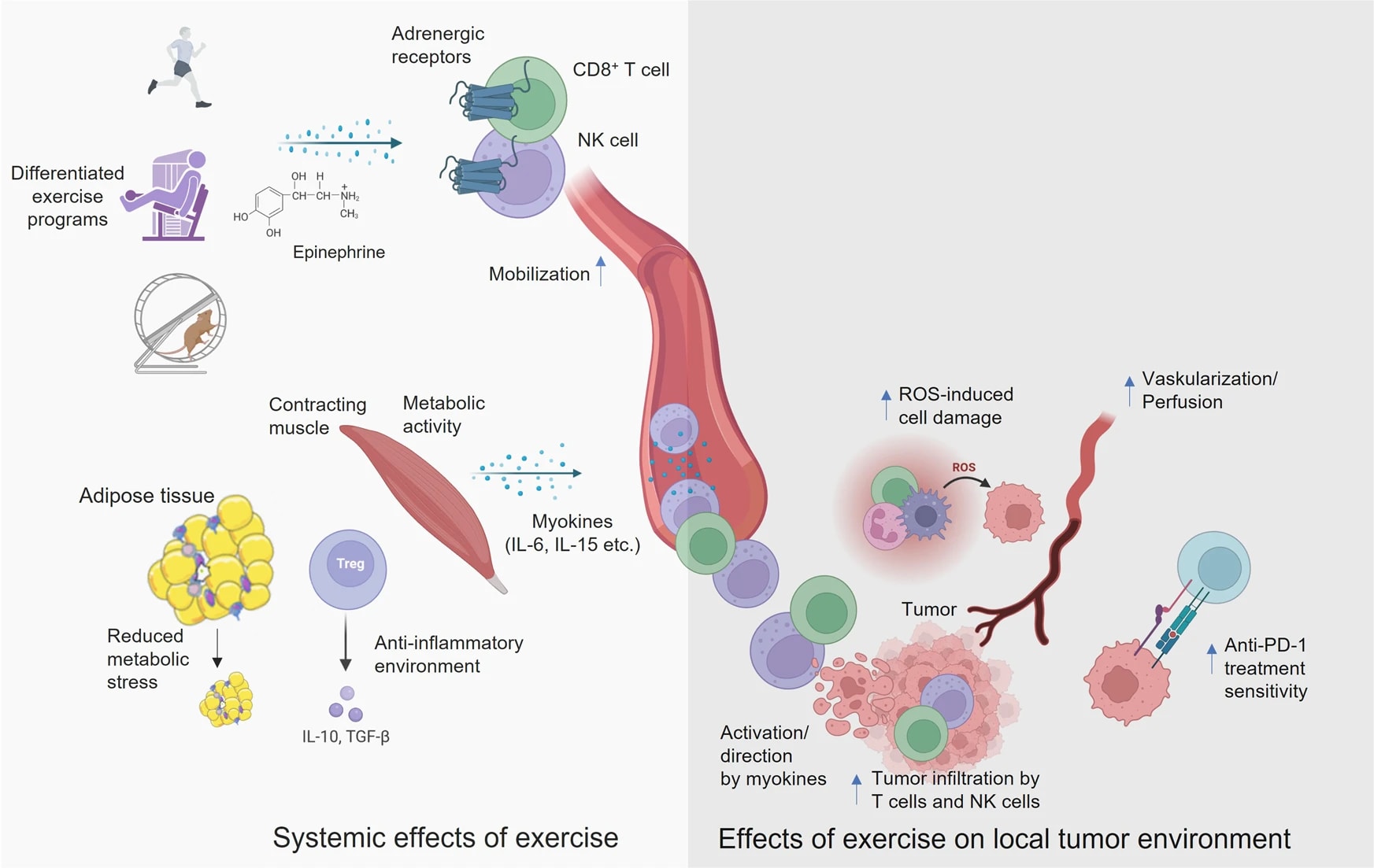
Fat control: Tell fat stores to release and burn energy
Metabolic orchestration: Coordinate liver glucose production, immune cell functions, and more
Skeletal muscle, then, is an “internal pharmacy” for your entire system. If fat tissue is a passive warehouse, muscle is the CEO of the metabolic boardroom, issuing orders and checks on inflammation, immunity, metabolism, and brain health.
Muscle mass and basal metabolic rate (BMR): the engine of energy balance
Tired of hearing that “muscle burns more calories than fat”? Well, it’s true, just perhaps a bit less sensationally than some gym brochures promise. Here’s the nuance:
Muscle is “metabolically expensive”: It takes significant energy to maintain, even at rest
Higher muscle mass supports higher BMR: This metabolic buffer means you can eat more without gaining fat, and maintain or lose weight with less effort and deprivation
Let’s put that into real-life perspective:
Sedentary individuals with low muscle mass see their BMR (and therefore their “wiggle room” for enjoying food) fall with age
Those maintaining high muscle mass through resistance training and diet enjoy a sturdier metabolic “engine,” burning more calories daily
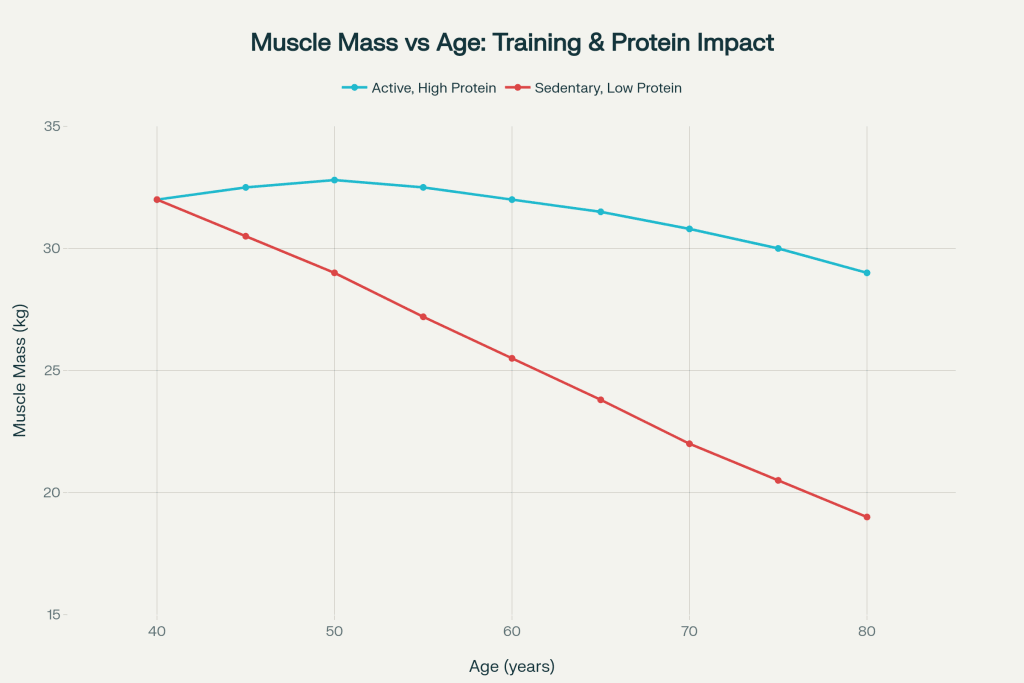
Muscle mass trajectories: active, high protein vs. sedentary, low protein (ages 40-80)
Actionable strategy: how to build and protect your muscle
If you’ve read this far, you’re probably wondering: what actually works for muscle longevity? We have good news: it’s not just for extreme athletes, nor does it require all-day gym dwellings.
The two pillars of muscle longevity
1. Resistance and strength training: the science-backed pathway
Progressive overload: Gradually increase the weight, resistance, or complexity of movements to continue growing muscle. Without this, adaptation stalls
Compound movements: Favor exercises that work multiple muscle groups at once (squats, lunges, rows, presses, deadlifts). These not only build more muscle efficiently but also mirror “real world” functional movement
How much is enough? Research shows even two to three full-body resistance sessions weekly produce massive longevity benefits, including halting, or even reversing, age-related muscle loss, mood improvement, and all-cause mortality reduction.
Multimodal training approach: The latest 2025 research emphasizes that combining resistance training with aerobic exercise and balance work produces optimal results for longevity. While resistance training builds musclespan, aerobic activity supports cardiovascular health and mitochondrial function, and balance training prevents falls and maintains neuromuscular coordination. Think of it as a three-legged stool: all three modalities working in concert create the most stable foundation for healthy aging.
Starting at home: accessible resistance training for everyone
You don’t need a gym membership or expensive equipment to begin building your musclespan. Home-based resistance training has emerged as one of the most effective and accessible sarcopenia prevention strategies in 2025. Here’s how to start:
Bodyweight exercises: Push-ups, squats, lunges, planks, and step-ups require zero equipment and can be modified for any fitness level. Start with wall push-ups or chair-assisted squats if you’re a beginner.
Elastic resistance bands: These affordable tools (typically under $20 for a set) provide progressive resistance and can replicate virtually any gym exercise. They’re also joint-friendly and perfect for travelers.
Household items: Filled water bottles, backpacks loaded with books, or sturdy chairs can serve as weights and support equipment. Creativity counts.
Minimal equipment approach: A single set of adjustable dumbbells or kettlebells can provide years of progressive overload potential in a small footprint.
The key is consistency over perfection. Even 20 minutes of home-based resistance work three times per week can dramatically improve your muscle health trajectory and strengthen your metabolic resilience.
2. Protein intake: your nutritional building blocks
Optimal intake: Aim for 1.6 to 2.2g of high-quality protein per kg of body weight per day (talk to your doctor if you have pre-existing kidney conditions)
Timing matters: Spread protein evenly throughout the day, and aim for 30 to 35g of protein within two hours post-workout to maximize anabolic response
Source diversity: Lean meats, dairy, legumes, fish, eggs, and plant-based sources are all welcome at this muscular buffet
Bonus tips
- Stay physically active. Walking, biking, daily movement all help, but resistance training is the foundation
- Combine protein intake with resistance exercise for the greatest preservation and growth effect
- Consistency trumps intensity; incremental progress compounds into lifelong benefit
FAQ: Frequently Asked Questions about muscle longevity
Q: Can I really build muscle after 50, 60, or even 70?
A: Absolutely. While the rate of muscle protein synthesis slows with age, your muscles remain responsive to resistance training and adequate protein intake at any age. Studies show adults in their 70s and 80s can still gain significant strength and muscle mass with proper training.
Q: How quickly will I see results?
A: Neuromuscular adaptations (feeling stronger) occur within 2 to 4 weeks. Visible muscle growth typically becomes noticeable after 8 to 12 weeks of consistent training and nutrition. Remember, muscle longevity is a marathon, not a sprint.
Q: Do I need supplements to build muscle?
A: No. Whole food sources of protein, combined with resistance training, are sufficient for most people. Some may benefit from protein powder for convenience, and vitamin D optimization supports muscle function, but expensive supplement stacks aren’t necessary.
Q: Won’t lifting weights make me bulky?
A: Building substantial muscle mass requires years of dedicated training, progressive overload, and strategic nutrition. For most people, especially women and older adults, resistance training creates a toned, functional physique rather than “bulky” musculature.
Q: What if I have joint pain or mobility limitations?
A: Start with low-impact resistance training like swimming, water aerobics, resistance bands, or chair exercises. Work with a physical therapist or qualified trainer to develop a safe, progressive program. Many joint issues actually improve with appropriate strength training.
Conclusion: muscle longevity means freedom, and it’s never too late to start
Let’s close the vanity case for good: Muscle longevity isn’t about flexing in front of the mirror. It’s about preserving your autonomy, metabolic harmony, and cognitive spark well into advanced age. Whether you’re 18, 38, or 78, investing in your musclespan and strengthspan is the most effective, overlooked, and democratic anti-aging intervention at your disposal.
And, yes, it’s absolutely possible to stem or reverse muscle loss after 50 (or 70). Your muscle is always listening, ready to respond, and will reward even latecomers to the dance floor. The emerging science of musclespan in 2025 confirms what forward-thinking researchers have known for years: your skeletal muscle health is the single best predictor of your healthspan and the quality of your final decades.
So, will you keep treating your muscle as a superficial accessory, or start banking deposits in your biological savings account? In the muscle longevity game, vanity is out; wisdom, strength, and independence are in.
Further reading, documentaries, and podcasts
Outlive: The science and art of longevity by Dr. Peter Attia: A must-read on muscle as the preeminent longevity tool
Forever Strong by Dr. Gabrielle Lyon: Illuminates the “muscle-centric” approach to health and introduces the concept of musclespan
Limitless with Chris Hemsworth (Disney+/NatGeo): Top tier visual primer on age, strength, and longevity
Live to 100: Secrets of the Blue Zones (Netflix): Global perspectives on “natural” muscle preservation through lifelong movement
The Urban Herald Podcast: Fresh, eclectic perspectives on health, culture, and the intersection of food, lifestyle, and social trends
The Drive with Dr. Peter Attia: Essential listening for deep dives on muscle biochemistry and strategy
Huberman Lab with Dr. Andrew Huberman: Accessible and science-rich episodes on muscle growth, metabolism, and training
Is this the year you invest in your muscle bank? Or are you still flirting with the idea that muscle is “just for looks”? The data have spoken: your future self will thank you for every squat, every egg, every resisted temptation to doubt your own strength.