2025 has been a transformative year marked by extraordinary shifts across culture, technology, politics, and society. From the reawakening of pop culture moments that captivated global audiences to unprecedented breakthroughs in artificial intelligence and quantum computing, to profound geopolitical upheavals and shocking acts of political violence that reshaped international relations, the year has delivered defining moments that will reverberate far beyond 2025. This comprehensive 2025 year in review examines the pivotal trends, unexpected triumphs, and seismic changes that characterised the year, offering both an immediate snapshot and a lasting reference point for understanding how 2025 altered our world. Whether you’re seeking to understand the major events that shaped this year’s cultural zeitgeist, the technological innovations that disrupted industries, or the global movements that transformed communities, this guide provides the complete picture of a year unlike any other, one that witnessed the collision of nostalgia and futurism, tradition and revolution, and hope with uncertainty.
Table of contents
The cultural zeitgeist: entertainment, arts and pop culture defining 2025
The entertainment landscape in 2025 proved to be a study in contrasts, a year when streaming dominance collided with cinema’s resurgence, when legacy artists commanded attention alongside breakthrough talent, and when theatrical productions captured hearts in ways reminiscent of earlier decades. The year’s cultural moments transcended mere entertainment. They became communal experiences that united audiences and sparked meaningful conversations about artistry, identity, and human connection.
Cinema’s triumphant return and the blockbuster moment

2025 represented a watershed moment for cinema, marking a decisive shift away from the assumption that streaming had conquered theatrical exhibition. Major releases captured audiences in unprecedented numbers, suggesting that the big screen experience retained irreplaceable cultural currency. Sinners, an audacious original period-horror-adventure film directed by Ryan Coogler and starring Michael B. Jordan as twin brothers facing vampiric evil, exemplified this resurgence. The film’s critical acclaim and box office performance demonstrated that audiences hungered for original, ambitious storytelling with significant production values. This wasn’t merely a return to form. It was a declaration that cinema could still surprise and challenge audiences in ways that streamed content, for all its convenience, could not replicate.
Alongside commercial successes, the year celebrated films that pushed artistic boundaries. Warfare, a military procedural chronicling a Navy SEAL mission in Ramadi with extraordinary performances from an ensemble cast, commanded significant critical attention. The critical rankings throughout 2025 revealed that audiences and critics alike valued narrative substance, films that didn’t merely entertain but examined the human cost of conflict, the moral ambiguities of heroism, and the brotherhood forged in extreme circumstances.

The Wicked saga continued its cultural dominance with the release of Wicked: For Good, the long-anticipated sequel that found Cynthia Erivo and Ariana Grande reprising their iconic roles as Elphaba and Glinda. The chemistry between the leads and the film’s emotional depth transformed what could have been a mere franchise entry into a cultural event. From June to September, Evita took over London’s Palladium Theatre with Rachel Zegler’s spine-tingling performance, which became one of the theatrical triumphs of the year and reportedly generated interest in a Broadway transfer. These theatrical and cinematic moments reminded audiences that the star power of globally recognised performers, combined with exceptional storytelling, could still command the cultural conversation.
The sound of 2025: music’s unexpected turns
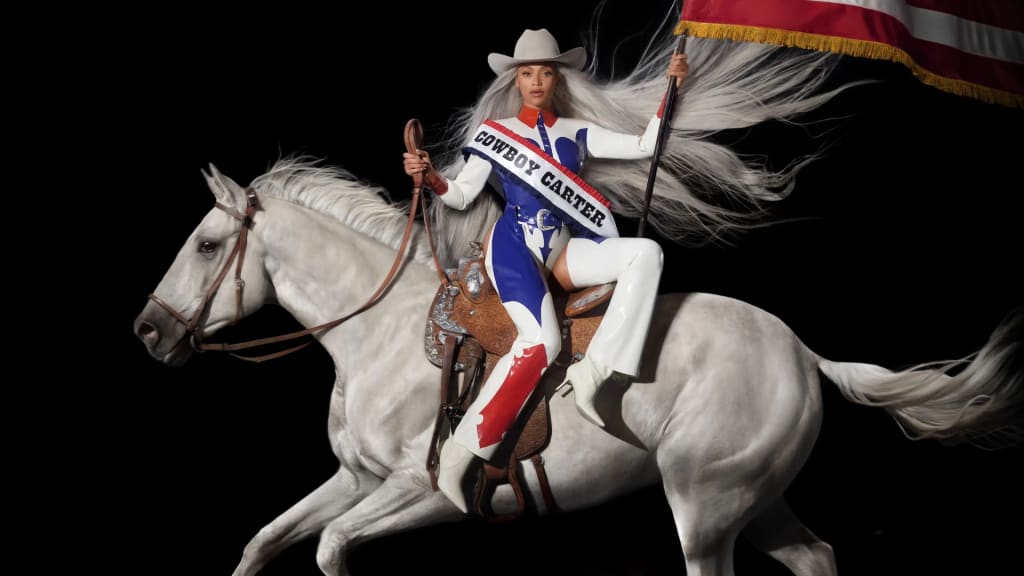
The Grammy Awards on February 2nd crystallised the year’s musical landscape, crowned by Beyoncé’s triumph with Cowboy Carter capturing Album of the Year. Her dominance with eleven nominations underscored the year’s undeniable fact: Beyoncé’s influence transcended commercial success. She had become a cultural touchstone whose artistic decisions shaped industry conversation. Kendrick Lamar’s dual victories in Record and Song of the Year, alongside his electrifying Super Bowl halftime performance in February at Super Bowl LIX in New Orleans, cemented his status as hip-hop’s most vital force.
Super Bowl LIX itself became a defining sports and entertainment moment of 2025. On February 9th, the Philadelphia Eagles defeated the Kansas City Chiefs 40-22 at the Caesars Superdome in New Orleans, with Eagles quarterback Jalen Hurts named Super Bowl MVP after scoring three total touchdowns and setting the Super Bowl record for rushing yards by a quarterback with 72. Kendrick Lamar’s halftime show, joined by special guest SZA, drew 133.5 million viewers, making it the most-watched Super Bowl half-time show in history. The game itself attracted an average of 126 million viewers across all platforms, making it the most-watched Super Bowl ever. President Donald Trump became the first sitting president to attend a Super Bowl, adding another layer of significance to an already historic night.
Lamar’s bootcut jeans, a seemingly minor sartorial choice that had emerged earlier in the year, ignited a fashion resurgence that demonstrated music’s power to shape consumer behaviour and aesthetic preferences, illustrating how entertainment and fashion intertwine in contemporary culture.
Chappell Roan’s recognition as Best New Artist marked a significant moment for LGBTQ+ representation in mainstream music. The award validated an artist whose bold visibility and unapologetic queerness resonated with Gen Z audiences seeking authentic representation. This award, alongside broader industry recognition of diverse artists, signalled that the music industry’s centre of gravity continued shifting toward inclusivity and authenticity.
Podcasting and audio culture’s maturation
The podcast landscape matured considerably in 2025, with platforms consolidating around premium audio experiences and creators discovering sustainable business models. Rather than the exponential growth of the previous years, 2025 saw a stabilisation around quality over quantity, with audiences gravitating toward deeply researched, expertly produced content that justified subscription fees. The best learning podcasts of 2025 demonstrated how audio had become a legitimate educational medium, rivalling traditional learning platforms in engagement and effectiveness.
+ Read more: The best podcasts for learning in 2025: top audio shows to transform your mind
Literature’s reflection of contemporary anxiety
The literary landscape reflected 2025’s underlying tensions and preoccupations. Award-winning novels of 2025 tackled contemporary social issues with the urgency of our moment. Flesh: A Novel by David Szalay and The Safekeep by Yael van der Wouden topped critical lists, each wrestling with fundamental questions about identity, belonging, and power. The prevalence of literary fiction addressing societal fractures demonstrated that writers across the English-speaking world shared similar concerns: What does solidarity mean in fractured times? How do we narrate identity when categories feel increasingly contested? These questions animated the best fiction of 2025.
Visual arts and the museum experience
The visual arts world continued to recover and thrive post-pandemic, with major museums reporting record attendance. Exhibitions at institutions like the Louvre remained cultural pilgrimage sites, with visitor guides and deep dives into masterworks (particularly Leonardo da Vinci’s Mona Lisa) demonstrating enduring fascination with Renaissance achievement. Street art’s evolution into galleries and mainstream recognition solidified the democratisation of visual culture that had been building for years.
Streaming and television’s evolving landscape
Netflix’s Million Dollar Secret premiered on March 26th, 2025, quickly becoming one of the platform’s most discussed reality competition shows. Hosted by British comedian Peter Serafinowicz, the eight-episode series filmed at the Château Okanagan estate in Kelowna, British Columbia, featured twelve contestants attempting to identify a secret millionaire among them through daily challenges and strategic gameplay. The show’s success demonstrated that audiences still craved cleverly constructed social deduction games that rewarded psychological insight over physical prowess.
Innovation and the future: technology, AI and the scientific frontier
2025 will be remembered as the year when artificial intelligence transitioned from experimental technology to infrastructural necessity. The impact permeated every sector including healthcare, finance, creative industries, and scientific research, fundamentally altering how institutions function and what humans create. Simultaneously, quantum computing moved from theoretical promise to practical demonstration, space exploration reached new thresholds, and medical breakthroughs suggested humanity was cracking some of biology’s most vexing problems.
Artificial intelligence’s escalating influence
The AI story of 2025 defies simple categorisation. It wasn’t merely about new models or increased processing power. It was about integration, about AI becoming the substrate upon which other innovations depended. Microsoft’s investments in frontier models, alongside OpenAI’s continued innovations, created an infrastructure where enterprises could deploy AI solutions at scale. The corporate emphasis shifted from “Can AI do this task?” to “How do we optimise our deployment for maximum return on investment?”
OpenAI’s model releases throughout 2025 illustrated the field’s rapid evolution. Following the o1 model in September 2024, which emphasized chain-of-thought reasoning, GPT-4.5 launched in February 2025 with reduced hallucinations and enhanced pattern recognition. By August 2025, GPT-5 arrived with multiple reasoning modes (Instant, Thinking, Pro, and Auto), allowing users to balance speed and depth based on task complexity. GPT-5.1, introduced in November 2025, added personality customisation, allowing users to select from eight different interaction styles, fundamentally changing how humans interacted with AI systems.
+ Read more: The ultimate AI model comparison for 2025: Strengths, weaknesses, and how to choose the right LLM for you
A watershed moment arrived when AI demonstrated capacity in drug discovery and molecular design. Researchers utilised artificial intelligence to design novel molecules that significantly enhanced chemotherapy effectiveness in treating pancreatic cancer. The AI-generated compound targeted specific resistance mechanisms in tumour cells, achieving results that human researchers might have overlooked through conventional methodologies. This breakthrough transcended technical achievement. It suggested that AI’s greatest utility might lie in revealing solutions that existed within possibility space but lay outside human intuition.
The psychological implications manifested in complex ways. AI increasingly served as surrogate counsellor and confidant for individuals navigating mental health challenges. The practice raised profound philosophical questions: If an algorithm provided relief, did the source of relief matter? If human connection became increasingly precarious, was algorithmic companionship ethically equivalent?
The reasoning frontier models pursued by major technology companies represented 2025’s most significant AI frontier. Unlike previous generations of AI that matched patterns in training data, reasoning models attempted to simulate human-like deliberation, breaking problems into constituent parts, testing hypotheses, revising approaches. This development suggested that AI systems capable of approximating human reasoning stood at humanity’s doorstep.
AI and unemployment: the labour market impact
The arrival of generative AI in everyday life, heralded most conspicuously by ChatGPT in November 2022, reignited an age-old debate about technology and jobs. Examining the AI and unemployment landscape through August 2025 revealed a complex picture. From January 2024 to August 2025, the unemployment rate for twenty to thirty-year-old US tech workers rose nearly three percentage points, four times the increase seen across the wider economy. Entry-level job adverts fell by roughly one-third in the United Kingdom between November 2022 and May 2025, with graduate schemes in professional services particularly hard hit.
+ Read more: AI and unemployment: Charting the labour-market fallout of the ChatGPT era
AI-related layoffs accounted for nearly 78,000 tech jobs in the first half of 2025 alone, highlighting the speed with which large corporations could redeploy labour when automation became viable. Yet these figures also showed that displacement did not automatically translate into higher national unemployment because offsetting forces (new job creation, labour-force exits, demographic change and sectoral shifts) operated simultaneously. The tech sector offered the clearest paradox in the AI and unemployment narrative. Companies such as Microsoft and Amazon announced thousands of cuts as they “refocused on AI”, even while they recruited aggressively for prompt engineers, machine-learning scientists and data-infrastructure architects.
Quantum computing moves from laboratory to industry

The quantum computing field achieved its inflection point in 2025. Google’s Willow chip, announced in December, featured 105 qubits and completed computational tasks in minutes that classical supercomputers would require millennia to accomplish. More significantly, Willow demonstrated that increasing qubit numbers actually reduced error rates, solving the critical scaling problem that had confounded the field. This validation opened pathways toward large-scale, fault-tolerant systems capable of addressing real-world challenges in chemistry, materials science, and artificial intelligence.
+ Read more: Quantum computing explained: The 2025 guide to the next tech revolution
Atom Computing’s collaboration with Microsoft produced remarkable practical results: a commercial quantum system featuring 24 logical qubits, integrated into Microsoft’s Azure Quantum platform, achieved error rates substantially lower than physical qubits. The system’s tailoring for advanced use cases in chemistry and materials science suggested that quantum computing would first prove its value in specialised domains before broader application. BosonQ Psi’s breakthrough in computational fluid dynamics simulation (simulating jet engine performance with 30 logical qubits when classical simulation would require 19.2 million compute cores) demonstrated quantum computing’s transformative potential in engineering.
Nvidia’s historic achievement and Jensen Huang’s vision
In October 2025, Nvidia became the first publicly traded company ever to achieve a $5 trillion market capitalisation, cementing CEO Jensen Huang’s position as one of the most visionary technology leaders of the modern era. The company announced “visibility into half a trillion dollars in revenue,” with its next-generation Blackwell chips securing orders extending through 2026. According to Harvard economist Jason Furman, data centre investments powered by Nvidia chips accounted for approximately 92 per cent of United States GDP growth in the first half of 2025, an extraordinary statistic reflecting Nvidia’s positioning not as a mere component supplier but as the enabling technology for the entire artificial intelligence economic transformation.
+ Read more: Jensen Huang Nvidia story: How an immigrant dishwasher created the first $5 trillion company
Jensen Huang’s journey from Taiwanese immigrant working as a dishwasher at Denny’s to architect of a $5 trillion technology empire embodied the possibilities of the American dream. His leadership style, characterised by an extremely flat organisational structure with approximately 60 people reporting directly to him, enforced accountability and enabled rapid decision-making that proved essential for Nvidia’s success. The company’s evolution from near-bankruptcy in the 1990s to absolute market dominance illustrated the power of unwavering commitment to technological vision.
Space exploration and scientific breakthroughs
The year delivered extraordinary moments in space exploration. China’s Jinan-1 microsatellite established a 12,900 kilometre quantum connection between China and South Africa, demonstrating practical progress toward global quantum networks. More dramatically, Katy Perry’s April journey to space aboard Blue Origin captured global imagination, a brief 11-minute flight that reminded the world that space tourism, once a distant fantasy, was becoming reality. Whilst the symbolism of celebrity space travel invited critique about inequality and resource allocation, it underscored how accessible space had become.
+ Read more: War vs. Space exploration: Which fuels more technological innovation?
Medical science achieved breakthroughs that suggested longevity science might finally be moving from speculation to reality. Wearable health technology detected anomalies with increasing precision, artificial intelligence identified molecular structures for pharmaceutical intervention, and personalised medicine advanced from concept toward clinical practice.
Lifestyle evolution: wellness, fashion and sustainable travel reshaping how we live
2025 witnessed a fundamental recalibration of lifestyle priorities. The wellness industry abandoned the anti-ageing narrative that had dominated for decades, embracing instead “longevity science” and “bio-hacking”, approaches that positioned health as active optimisation rather than defensive staving-off of decline. Fashion fractured into competing aesthetics rather than unified trends, offering unprecedented freedom for personal expression. Travel pivoted decisively toward sustainability and eco-consciousness, with destinations embracing regenerative practices that preserved rather than extracted.
Wellness’s personalisation revolution and muscle longevity
The wellness industry’s transformation centred on personalisation enabled by technology. Artificial intelligence analysed individual genetic profiles, microbiome composition, and real-time health data to generate bespoke nutrition plans impossible to create at scale previously. Apps like Runna and Coopah delivered AI-powered coaching that adapted workout intensity and modality based on individual recovery status, injury history, and performance trajectory. The global AI fitness market was projected to exceed $35.6 billion by 2030, with approximately 850 million fitness app users worldwide, a staggering transformation of how humans approached physical training.
A critical shift in wellness conversation focused on muscle longevity. The latest 2025 data revealed a sobering timeline: muscle loss begins at approximately 3-8% per decade starting at age 30, then accelerates dramatically to 15% per decade after age 60. Research increasingly positioned skeletal muscle not as a superficial concern but as an endocrine organ and metabolic engine fundamental to healthspan. Muscle tissue produces myokines (hormone-like substances) that combat chronic inflammation, support cognitive function through increased BDNF (Brain Derived Neurotrophic Factor), and even demonstrate anti-cancer properties through immune system activation.
+ Read more: Muscle longevity is not vanity: why your muscle tissue is the true organ of longevity
The multimodal training approach emphasised by 2025 research combined resistance training with aerobic exercise and balance work for optimal longevity results. Home-based resistance training emerged as one of the most effective and accessible sarcopenia prevention strategies. The emerging science of musclespan confirmed what forward-thinking researchers had known for years: skeletal muscle health is the single best predictor of healthspan and the quality of one’s final decades.
Beyond fitness, the wellness movement embraced scientific mechanisms previously considered fringe. Cycle syncing, which tailored exercise and nutrition to menstrual phases, moved from internet discussions to mainstream fitness programming. Vagus nerve activation, recognised increasingly by neuroscience as fundamental to nervous system regulation, became central to stress-management protocols. Mental health technologies advanced significantly, with apps specifically designed around psychological principles and AI-assisted therapeutic protocols extending professional mental health services to populations lacking access.
Sustainable wellness emerged as a genuine priority rather than marketing positioning. Eco-friendly fitness centres utilised energy-efficient equipment, constructed facilities from sustainable materials, and implemented comprehensive recycling programmes. Some pioneering facilities even captured energy generated during workouts, transforming human exertion into electricity. Virtual fitness platforms reduced commuting emissions whilst providing flexible access, a technological solution addressing environmental and accessibility concerns simultaneously.
Fashion’s aesthetic plurality
The fashion industry in 2025 fragmented into competing, coexisting aesthetics rather than hierarchical trends. The previous years’ “quiet luxury” movement faded, replaced by what industry observers described as a “return to unrestrained expression”. This wasn’t a unified direction but rather a permission structure: designers and consumers alike abandoned the pretence that fashion followed singular lines. Instead, maximalism, bohemian flourishes, contemporary academia, and nomadic inspiration coexisted, each appealing to different sensibilities.
Key aesthetic components of 2025 fashion included faux fur and leopard print, which surged as antidotes to minimalism’s austerity. Colour palettes shifted dramatically toward rich, warm tones. Chocolate brown, teal blue, and deep burgundy dominated autumn/winter collections, flattering and wearable in ways that neutral palettes had not achieved. Lace, despite predictions of obsolescence, returned as romantic, modern detailing on blouses and dresses, providing elegant contrast to heavier winter fabrics. Pencil skirts, draped wool coats, and ladylike silhouettes suggested that femininity was being reclaimed as a choice rather than an imposition.
Most provocatively, 2025 witnessed a dramatic return to “naked dressing”, not primarily through haute couture provocations, but through accessible, office-appropriate interpretations of revealing fashion. This wasn’t gratuitous but rather an assertion that bodies need not be hidden, that sexuality could be acknowledged without dominating professional contexts. The shift suggested a mature relationship with embodiment, neither prudish nor exhibitionist.
Prep aesthetics experienced a remarkable revival, reimagined through contemporary lenses. Corduroy, collared shirts, blazers, and polos reappeared in fresh combinations, heavy layering, and unexpected colour combinations, scholarly inspiration derived from Miu Miu runways and heritage brands like Polo Ralph Lauren. The movement suggested that classic structure, when executed thoughtfully, could feel utterly current.
Sustainable travel and eco-conscious tourism
The travel industry’s transformation toward sustainability marked one of 2025’s most substantial shifts. Destinations embraced regenerative tourism practices, approaches that didn’t merely minimise damage but actively improved local environments and communities. Costa Rica continued pioneering sustainable tourism with extensive national parks and eco-lodges, but the movement had globalised significantly. Iceland, with its geothermal energy infrastructure, provided template solutions for clean energy tourism. Bhutan combined cultural preservation with environmental stewardship, attracting visitors seeking authentic cultural immersion rather than extraction.
Portugal emerged as the rising star for eco-minded travellers, with regenerative hikes in the Algarve and Azores islands attracting those seeking active engagement with natural environments. The Balkans attracted travellers seeking off-the-beaten-path experiences and village stays that benefited local communities directly. Slovenia’s approach to eco-tourism emphasised preserving traditional crafts, local cuisine, and folk customs alongside environmental protection. Visitors participated in beekeeping workshops and learned traditional pottery techniques.
However, tourism also faced serious challenges. Pickpocketing incidents surged in major European cities throughout 2025. Rome saw a 12% increase in reported pickpocketing from 2024 to 2025, with Termini station being a particular hotspot. Paris experienced an 8% rise in pickpocketing cases, particularly near the Eiffel Tower and on metro lines. These trends highlighted the need for travellers to remain vigilant even as they explored sustainable tourism options.
+ Read more: Pickpocket hotspots: top cities tourists should watch out for in 2025
Renewable energy tourism transformed how destinations operated. Solar panels powered remote lodges, geothermal energy heated accommodations, and wind turbines generated electricity for visitor facilities. Comprehensive waste reduction programmes (composting organic materials, eliminating single-use plastics, establishing robust recycling systems) became standard infrastructure rather than luxurious extras. The shift suggested that sustainability was ceasing to be a niche preference and becoming the expected standard.
The psychology of travel shifted as well. Tourists increasingly sought slow travel, extended periods in singular locations rather than rushed circuit tourism. This shift benefited local economies whilst providing travellers with genuine cultural immersion impossible during whirlwind visits. Eco-certified accommodations proliferated, from farm stays to boutique hotels, each offering different price points and experiences within sustainability frameworks.
Global consciousness: politics, social movements and historical reckoning
2025 presented a year of profound geopolitical volatility, shocking political violence, and historical reckoning. Donald Trump’s return to the American presidency reverberated globally, introducing unpredictability into international relations and generating new imperatives for global coordination. Multiple democracies held transformative elections whilst autocratisation continued advancing in concerning directions. Simultaneously, communities engaged in honest reckoning with historical injustices, whether through Holocaust remembrance, examination of colonial legacies, or pursuit of accountability for contemporary atrocities.
Political violence and the assassination of Charlie Kirk

The year was tragically defined by an unprecedented wave of political violence in the United States. The most shocking incident occurred on September 10th, 2025, when conservative political activist Charlie Kirk, the 31-year-old founder of Turning Point USA, was assassinated while speaking at an outdoor event at Utah Valley University in Orem, Utah. Kirk was fatally shot in the neck with a single bullet by a gunman positioned on a building roof approximately 142 yards away. Around 3,000 people attended the event, which marked the first stop of Kirk’s “The American Comeback Tour.”
The following day, 22-year-old Tyler James Robinson from Washington, Utah, surrendered to authorities. Prosecutors charged Robinson with aggravated murder and announced they would seek the death penalty, alleging a politically motivated attack. Evidence included DNA on the suspected murder weapon, a bolt-action rifle discovered in a wooded area near the crime scene. Investigators found cartridges engraved with phrases from internet memes and video games. According to charging documents, Robinson sent his romantic partner a confession stating, “I had enough of his hatred. Some hate can’t be negotiated out.”
Kirk’s assassination occurred during a period of deepening division and increasingly frequent violence in American politics. It followed a series of violent political incidents, including the June 2025 shootings of two Democratic Minnesota legislators (House Speaker Emerita Melissa Hortman and her spouse), the May 2025 killing of two Israeli embassy staffers in Washington, D.C., the April 2025 arson attack on Pennsylvania governor Josh Shapiro’s residence, and the December 2024 killing of UnitedHealthcare CEO Brian Thompson. Additionally, an August 27, 2025 church shooting in Minneapolis by a transgender individual killed 2 children and wounded 21 others, just two weeks before Kirk’s assassination.
Kirk’s death sparked intense debate about free speech, political rhetoric, and the consequences of polarisation. Some individuals made offensive comments or praised his killing online, prompting government pressure and corporate responses. Jimmy Kimmel faced suspension from ABC after criticising how MAGA figures were spinning Kirk’s murder for political gain. Vice President JD Vance urged listeners of Kirk’s podcast to “call their employer” if they saw anyone celebrating Kirk’s assassination. Attorney General Pam Bondi initially suggested the government would “absolutely target you, go after you, if you are targeting anyone with hate speech,” though she later clarified that only threats of violence were unprotected.
Kirk’s widow, Erika Kirk, assumed leadership of Turning Point USA. At a memorial service, she memorably forgave her husband’s alleged killer, stating, “Charlie and I were united in purpose. His passion was my passion, and now his mission is my mission.” The organisation held its AmericaFest 2025 conference in Phoenix in mid-December, transforming it into an extended tribute to Kirk’s legacy. The event featured speakers including Vice President JD Vance, Donald Trump Jr., and House Speaker Mike Johnson, attempting to maintain organisational unity while navigating ideological divisions within the conservative movement.
Conspiracy theories emerged about Kirk’s death, including allegations of deep-state involvement, U.S. military ties, and even multinational conspiracies. Conservative commentator Candace Owens intensified claims about potential Egyptian government involvement, citing anonymous sources and flight-tracking data, though these theories were widely disputed. The official investigation continued pointing to Robinson as the lone gunman.
Trump’s second term and November 2025 electoral backlash

Trump’s inauguration on January 20th established the year’s geopolitical tone: unpredictable, transactional, oriented toward American exceptionalism. His “America First” approach prioritised bilateral negotiations over multilateral institutions, deployed tariffs as primary negotiating tools, and signalled withdrawal from long-standing international commitments. This stance generated both enthusiasm from nationalistic constituencies and deep anxiety amongst traditional allies and those committed to liberal international order.
The tariff strategy became the year’s defining economic policy. Initial announcements of sweeping duties on Chinese goods and allies alike created market volatility and tested Trump’s resolve against business pressure. The strategy achieved mixed results: whilst Chinese markets felt genuine pressure, American consumers encountered inflationary impacts from tariff-driven price increases. The European Union, Canada, and Mexico navigated complex negotiations attempting to secure exemptions whilst preparing retaliatory measures. The global economy adapted to conditions of permanent uncertainty, a psychologically significant shift from the post-Cold War assumption of eventual integration.
A government shutdown lasting through October and November 2025 significantly impacted federal workers and public services. Trump’s sweeping layoffs of the federal workforce, particularly affecting agencies in Virginia and other regions with concentrated federal employment, created widespread economic anxiety and resentment. By late November, polls showed approximately 60% of North Carolina voters disapproved of Trump’s handling of inflation, while 52% disapproved of his tariff policies, suggesting growing discontent with his economic approach.
The November 2025 elections provided the first major electoral test of Trump’s second administration and delivered stunning results. Democrats swept major races across Virginia, New Jersey, and New York City, whilst voters in California approved a new congressional map designed to help Democrats win five additional House seats in the 2026 midterms. The victories represented a significant rebuke to Trump and the Republican agenda.
In Virginia, Democrat Abigail Spanberger won the governor’s race, becoming the state’s first female governor. Exit polls showed 56% of Virginia voters disapproved of Trump. Spanberger had raised more than $27 million and secured the endorsement of the Virginia Police Benevolent Association. Her campaign focused heavily on affordability and positioned Trump’s policies as responsible for economic hardship. Her running mate, Ghazala Hashmi, became the first Muslim woman elected to statewide office in Virginia as lieutenant governor. Democrat Jay Jones won the attorney general race despite controversy over violent text messages that surfaced late in the campaign.
In New Jersey, Democratic U.S. Representative Mikie Sherrill won the gubernatorial race against Republican Jack Ciattarelli, whom Trump had endorsed and held several tele-rallies for on his behalf. New Jersey voters (55% disapproving of Trump according to exit polls) rejected the Republican candidate in a state that hasn’t elected the same party three straight terms since 1961. Affordability and taxes were central campaign issues.
Perhaps most dramatically, Democratic socialist Zohran Mamdani won New York City’s mayoral race in a major feat for progressives, defeating independent candidate Andrew Cuomo (the former Democratic governor running after his defeat by Mamdani in the Democratic primary) and Republican Curtis Sliwa. At 34 years old, Mamdani became the city’s first Muslim mayor, first person of South Asian descent elected mayor, and first person born in Africa to lead the city. He won with more than one million votes compared to Cuomo’s 850,000. Exit polls showed 69% of New York City voters disapproved of Trump.
In his victory speech at the Brooklyn Paramount Theater, Mamdani opened with a quote from socialist presidential candidate Eugene Debs and declared, “Tonight, against all odds, we have grasped it. The future is in our hands. My friends, we have toppled a political dynasty.” He vowed to deliver on campaign promises including rent freezes, free buses, and universal childcare. Mamdani directly addressed Trump, stating, “If there is any way to terrify a despot, is by dismantling the very conditions that allowed him to accumulate power. Donald Trump, since I know you’re watching, I have four words for you: Turn the volume up.”
California voters approved Proposition 50 with 63.8% support, allowing the state to redraw congressional district maps to make five GOP-held districts more favourable to Democrats in the 2026 midterms. The measure was explicitly framed as a response to Texas’s mid-cycle redistricting, which Republicans enacted in August 2025 after Trump floated the idea with Texas Republicans in June. Governor Gavin Newsom rallied supporters of the measure, declaring after the vote, “We stood tall and we stood firm in response to Donald Trump’s recklessness, and tonight, after poking the bear, this bear roared.”
Trump responded defensively to the election results, posting on Truth Social that “TRUMP WASN’T ON THE BALLOT” and the federal government shutdown “WERE THE TWO REASONS THAT REPUBLICANS LOST ELECTIONS TONIGHT.” He cryptically added, “…AND SO IT BEGINS!” Senate Minority Leader Chuck Schumer declared, “Tonight’s results are a repudiation of the Trump agenda. The cruelty, chaos and greed that define MAGA radicalism and are skyrocketing costs were firmly rejected by the American people.”
The day after the elections, Trump flew to Miami to address a financial conference, attempting to refocus Republican messaging on economic achievements. He told attendees, “I tell Republicans, you want to win elections, you got to talk about these facts,” echoing sentiments from previous presidents who believed better communication of their accomplishments would improve political fortunes. His aides signalled that economic issues would be central for the president ahead of critical 2026 midterm elections.
Political analysts noted that Democrats who won represented vastly different wings of the party, from progressive Mamdani to moderate Spanberger, suggesting multiple pathways forward. The victories gave Democrats renewed momentum, though observers cautioned against premature conclusions about 2026 midterm implications. The Coface political risk index reached a record high of 41.1% in 2025, exceeding even the peak during the COVID-19 pandemic, reflecting unprecedented global political volatility.
International conflicts and diplomatic efforts

The Israel-Hamas ceasefire announced following years of devastating conflict represented a partial diplomatic victory, though “truce” rather than “peace” characterised the arrangement. The fall of Syria’s Bashar al-Assad regime, executed by disparate rebel groups in a remarkably swift collapse, created new Middle Eastern instability. Trump’s promise to end the Ukraine-Russia conflict “in 24 hours” generated international speculation but achieved slower progress than campaign rhetoric suggested. Russia insisted any negotiations proceed through Moscow, effectively giving Russia veto authority over diplomatic processes.
Democratic decline amidst electoral volatility
The year began with extraordinary electoral activity globally. Germany’s election tested whether Olaf Scholz could retain the chancellorship against far-right surges. Canada faced electoral uncertainty with Justin Trudeau calling an election after near-decade tenure, facing strong headwinds from exhausted constituencies. Australia’s Anthony Albanese sought re-election amid economic headwinds. These bellwether elections revealed exhaustion with incumbent governments across the developed world, suggesting that voters everywhere felt economic insecurity despite headline statistics indicating recovery.
Concerning trends accompanied the elections. Political violence emerged as a significant risk factor beyond the United States. Multiple African countries experienced coups, and Gen Z-led protests in Nepal resulted in the ouster of Prime Minister K.P. Sharma Oli following his government’s sweeping social media ban, demonstrating youth power whilst revealing authoritarians’ desperation to silence dissent.
Historical reckoning and memorialisation
Against this backdrop of contemporary turmoil, communities engaged in profound historical memorialisation and reckoning. The eightieth anniversary of the Holocaust’s liberation prompted global reflection on how quickly civilisation’s veneer could dissolve and how essential vigilance remained. Pope Francis’s death and the election of Pope Leo XIV, the first North American pontiff, marked historic transitions in religious leadership.
+ Read more: Holocaust 80th anniversary: Remembering Auschwitz and its lessons
Indigenous communities continued asserting historical and contemporary sovereignty. The Hadza tribe of Tanzania remained one of Earth’s last click-speaking hunter-gatherer societies, embodying alternatives to industrial civilisation that Western audiences increasingly recognised as valuable, not merely historical curiosities but living reminders that human possibility extended beyond industrial capitalism.
The year witnessed significant attention to previously concealed historical crimes. The Tuam mother and baby home mass grave in Ireland, which revealed the systematic abuse of women and children in Catholic institutional care, demanded confrontation with how ostensibly Christian societies perpetrated atrocities against vulnerable populations.
The Piauí family poisoning case in Brazil shocked the world when what was meant to be a joyous New Year’s Day lunch in 2025 became one of Brazil’s most horrifying true crime cases. In a modest home in Parnaíba, Piauí state, a traditional rice and bean dish was laced with deadly pesticide. Within hours, nine family members were fighting for their lives. By month’s end, six souls had perished, including four children aged between one and eighteen. The investigation revealed that the poisoning was connected to an earlier August 2024 incident where two boys died, and an innocent neighbour, Lucelia Maria da Conceição Silva, had spent five months in prison while the real perpetrators (family members Maria dos Aflitos and Francisco) remained free.
+ Read more: Piaui family poisoning: A New Year’s day massacre that shocked the world
The Amelia Earhart mystery experienced renewed attention in 2025. In October, Purdue University announced a significant expedition with the Archaeological Legacy Institute to investigate whether the Taraia Object on Nikumaroro Island represents remnants of Earhart’s Lockheed Electra. The initiative, announced on the eighty-eighth anniversary of Earhart’s disappearance, garnered international media attention. However, delays caused by permit requirements and cyclone season scheduling postponed the expedition from November 2025 until 2026. Additionally, declassified records released in 2025 following presidential order provided no evidence supporting the Japanese capture theory, containing no references to Earhart or Noonan being captured or detained by Japanese forces.
Inclusion and neurodiversity conversations
Workplace and social conversations surrounding inclusion and neurodiversity evolved substantially in 2025. Organisations increasingly recognised that neurodivergence (autism, ADHD, dyslexia, and other neurological variations) represented strengths when properly accommodated rather than deficits requiring correction. This paradigm shift, whilst incomplete, began altering hiring practices, workplace accommodations, and social attitudes.
LGBTQ+ inclusion advanced meaningfully in key regions. Thailand became the first Southeast Asian country to legalise same-sex marriage in January, signalling regional progress toward equality. However, global progress remained uneven. Conservative backlash continued in many contexts. The conversation shifted toward examining internalised homophobia, how LGBTQ+ communities sometimes internalised heteronormative prejudices, suggesting that liberation required internal psychological transformation alongside external legal protections.
Violence against women remained a critical global issue throughout 2025. According to the World Health Organisation, nearly one in three women globally have been subjected to physical or sexual violence in their lifetime, representing 736 million women. In England and Wales, 4.8% of people (2.3 million individuals) experienced domestic abuse in the year ending March 2024. The 16 Days of Action campaign and other initiatives gained prominence, with increased focus on digital abuse (technology-facilitated violence affecting 73% of women), coercive control, and financial abuse. The year saw growing recognition that abuse extends beyond physical violence to encompass systematic patterns of control that strip victims of autonomy and freedom.
Markets and money: cryptocurrency, finance and the entrepreneurial spirit
The financial landscape of 2025 proved volatile and unpredictable, characterised by cryptocurrency’s roller-coaster performance, geopolitical trade wars creating market uncertainty, and the continued emergence of alternative investment classes like luxury collectibles. The year commenced with extraordinary optimism regarding Bitcoin’s prospects, fuelled by regulatory progress and institutional adoption, but ended with significant corrections and questions about sustainability.
Cryptocurrency’s dramatic arc and market maturation

Bitcoin began 2025 with institutional enthusiasm. Spot Bitcoin exchange-traded funds had achieved regulatory approval, opening cryptocurrency to traditional investment vehicles. The election of pro-cryptocurrency President Trump generated bullish sentiment, with Bitcoin surging to unprecedented heights. By early October, Bitcoin had reached above $126,000, an all-time high that seemed to validate the most optimistic predictions.
However, the year’s final quarter revealed the cryptocurrency market’s vulnerability to macroeconomic conditions and sentiment shifts. Trump’s tariff announcements in April triggered sharp declines alongside equity markets, though cryptocurrencies recovered quickly. Hawkish signals from the Federal Reserve following September’s CPI data pressured Bitcoin downward. By December, Bitcoin was trading around $89,000, a decline of approximately 30% from peak levels. Analysts estimated a 15% probability that Bitcoin would close the year below $80,000, a significant markdown from October predictions of $150,000 or higher.
+ Read more: Bitcoin: The definitive guide to the world’s first cryptocurrency
The year revealed an uncomfortable truth: Bitcoin’s correlation with equity markets had strengthened substantially, contradicting the original thesis that cryptocurrency would serve as inflation hedge and alternative asset class uncorrelated with traditional markets. The maturation of Bitcoin as institutional asset carried hidden cost, increased exposure to macroeconomic conditions that made Bitcoin behave increasingly like risky assets rather than alternatives.
Smaller cryptocurrencies demonstrated greater volatility. Grass’s airdrop distributed $70 million to nearly 3 million users, representing significant wealth transfer and generating speculation about sustainable tokenomics. Chainlink’s continued relevance in cryptocurrency infrastructure raised questions about which projects possessed genuine utility versus which represented speculative enthusiasm.
The year suggested that cryptocurrency had matured from speculative frontier into increasingly regulated financial asset. Conversations shifted from “Will crypto replace traditional finance?” to “How will crypto integrate into regulated financial infrastructure?” This maturation carried trade-offs: reduced ideological purity but greater institutional acceptance and security.
Luxury collectibles as alternative investment
Luxury collectibles emerged as alternative investment vehicles capturing significant wealth. Hermès Birkin handbags and Rolex Daytona watches demonstrated appreciation exceeding traditional market returns, attracting serious investors who valued tangibility over digital abstraction. The phenomenon suggested psychological factors underlying investment behaviour, that humans valued objects they could possess and experience, even when financial returns were theoretically identical.
+ Read more: Luxury collectibles as investments: Hermès Birkin & Rolex Daytona beating traditional markets
Entrepreneurship and business innovation
The small business sector navigated challenging conditions in 2025. Rising interest rates, compressed consumer spending, and labour shortages created headwinds. However, entrepreneurial enthusiasm persisted. Five Guys, the burger chain that transformed from a family gamble into global phenomenon, demonstrated that relentless focus on quality and customer experience could overcome competitive disadvantages.
The subscription economy continued expanding, though facing critical examination regarding sustainability. Monthly subscription services proliferated across media, software, fitness, and goods categories, but consumers increasingly questioned whether perpetual payments represented genuine value or merely extracted increasing wealth. The reckoning suggested that business models relying on subscription lock-in might require transformation to remain viable.
Conclusion: 2025’s enduring significance and the year ahead
2025 will be remembered as a year of acceleration and bifurcation, in which existing trends moved into new phases whilst contradictory forces simultaneously operated. This 2025 year in review captures how artificial intelligence advanced from experimental technology toward infrastructural necessity, with Nvidia becoming the first company to reach $5 trillion market capitalisation. Yet people simultaneously craved authentic human connection and embodied experience evidenced by cinema’s resurgence, the record-breaking Super Bowl viewership, and wellness practices emphasising presence. Cryptocurrency promised financial alternatives yet demonstrated increasing correlation with traditional markets. Political volatility reached unprecedented levels with shocking acts of violence including Charlie Kirk’s assassination, while democratic resilience persisted through November’s decisive electoral victories for Democrats.
The year’s defining characteristic was this collision between nostalgia and futurism. We witnessed Eagles defeating Chiefs in the most-watched Super Bowl ever whilst simultaneously deploying quantum computers and using AI to design cancer-fighting molecules. We embraced naked dressing alongside return to structured tailoring. We travelled sustainably whilst questioning whether travel itself could ever be truly ecological. We watched artificial minds reason through problems whilst yearning for therapeutic connection with other humans. We mourned victims of political violence whilst celebrating electoral victories for democracy.
2025 suggested that the future would not resemble science fiction’s clean bifurcation between technology and nature, authentic and artificial, tradition and innovation. Instead, we would navigate increasingly complex, hybrid existence, one requiring wisdom about what to preserve, what to transform, and what to release entirely. The year’s greatest lessons may arrive in retrospect, when we perceive how 2025’s tremors generated consequences across subsequent years.
For readers seeking to understand how 2025 altered the trajectory of film, music, wellness, technology, and global affairs, this retrospective provides essential context. The moments detailed here (whether Beyoncé’s Grammy triumph, Kendrick Lamar’s historic Super Bowl performance, Google’s Willow quantum chip, Charlie Kirk’s tragic assassination and its aftermath, November’s electoral backlash against Trump, or the global political volatility that reshaped international relations) collectively chart the year’s contours. They remind us that the future arrives through accumulation of these seemingly discrete moments, each carrying significance that multiplies through cultural, technological, and social interaction.
As we advance from 2025, the year itself becomes historical reference point, shorthand for a moment when artificial intelligence crossed essential thresholds, when quantum computing proved commercially viable, when political norms fractured through violence and electoral upheaval, and when pop culture simultaneously celebrated nostalgia and innovation. The retrospective you’ve just read serves not merely as record but as resource, a guide toward understanding how these themes interconnect, how culture reflects deeper truths about our moment, and how the decisions made in 2025 will echo through the years to follow.