The journey of artificial intelligence represents one of humanity’s most ambitious technological pursuits: the quest to create machines that can think, learn, and reason. From the theoretical foundations laid in 1943 to today’s sophisticated generative AI systems, this comprehensive timeline traces the complete evolution of artificial intelligence through eight decades of breakthrough innovations, setbacks, and transformative achievements that have shaped the field we now call artificial intelligence.
Timeline of major milestones in artificial intelligence evolution (1943-2025)
The story of AI begins not with computers, but with a bold hypothesis about how human neurons might process information. In 1943, neurophysiologist Warren McCulloch and mathematician Walter Pitts published “A Logical Calculus of the Ideas Immanent in Nervous Activity,” creating the first computational model of neural networks. Their groundbreaking paper demonstrated that simple elements connected in a neural network could have immense computational power, showing that their model could perform all logical functions. This work, building on ideas from Alan Turing’s “On Computable Numbers,” provided a way to describe brain functions in abstract terms and laid the mathematical foundation for what would eventually become modern artificial intelligence. Though the paper received little immediate attention, it would later be recognized as the conceptual birthplace of artificial neural networks, inspiring generations of researchers including John von Neumann and Norbert Wiener.
The dawn of artificial intelligence: foundations and early pioneers (1950-1960)
The 1950s witnessed the formal birth of artificial intelligence as an independent field of study, driven by visionary thinkers who dared to ask whether machines could think. In 1950, Alan Turing published “Computing Machinery and Intelligence,” proposing what would become known as the Turing Test: a practical measure of machine intelligence that sidestepped philosophical debates by focusing on observable behavior. Turing’s test involved a human interrogator attempting to distinguish between a machine and a human through written conversation, arguing that if the machine could consistently fool the interrogator, it should be regarded as intelligent. This paper opened the doors to what would be known as AI and established a benchmark that continues to influence AI research and ethics today, with recent large language models reigniting discussions about whether components of the test have been met.
The term “artificial intelligence” itself was coined in 1956 by John McCarthy, a young assistant professor of mathematics at Dartmouth College, when he organized a summer workshop that would become a founding event in the AI field. The Dartmouth Conference brought together leading researchers including Marvin Minsky, Nathaniel Rochester, and Claude Shannon, who believed that “every aspect of learning or any other feature of intelligence can in principle be so precisely described that a machine can be made to simulate it”. This workshop not only established AI as a legitimate field of research but also sparked enormous enthusiasm and optimism about the possibilities of machine intelligence.

The practical foundations of AI continued to develop throughout the 1950s. In 1951, the first working AI programs were written to run on the Ferranti Mark 1 machine at the University of Manchester, including Christopher Strachey’s checkers-playing program and Dietrich Prinz’s chess-playing program. Between 1952 and 1962, Arthur Samuel at IBM wrote the first game-playing program for checkers that achieved sufficient skill to challenge a respectable amateur, creating a version in 1955 that could learn to play. Samuel also coined the term “machine learning” in 1959, explaining that computers could be programmed to outplay their programmers: a prescient observation about AI’s potential.
Another crucial development came in 1958 when John McCarthy invented the Lisp programming language, which quickly became the standard AI programming language and remained so for decades. That same year, Frank Rosenblatt developed the perceptron, an early artificial neural network that could learn from data and became the foundation for modern neural networks. The perceptron was first publicly demonstrated on July 7, 1958, at the United States Weather Bureau in Washington, D.C., using a 5-ton IBM 704 vacuum-tube mainframe. Rosenblatt’s work was inspired by the McCulloch-Pitts neuron concept from 1943, and he envisioned the perceptron as specialized computing hardware that could mimic the networks of neurons in a human brain.
Machine learning and early systems (1960-1970)
The 1960s represented a golden age of optimism and innovation in AI research, with government funding flowing freely and ambitious projects taking shape across universities and research laboratories. During this period, Defense Advanced Research Projects Agency (DARPA) provided millions of dollars for AI research with few strings attached, allowing AI’s leaders such as Marvin Minsky, John McCarthy, Herbert A. Simon, and Allen Newell to spend it almost any way they liked. This generous funding environment enabled researchers to pursue fundamental questions about machine intelligence without the pressure of immediate practical applications.
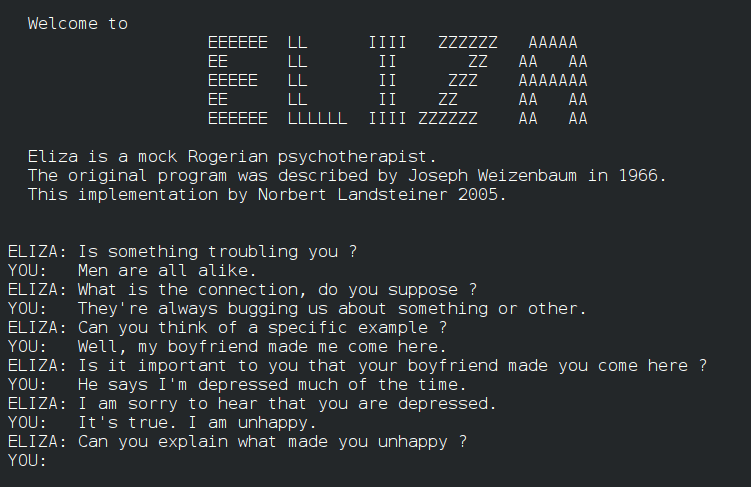
The decade saw the development of several landmark AI systems that demonstrated new capabilities. In 1964, Joseph Weizenbaum at MIT created ELIZA, a computer program capable of engaging in conversations with humans and making them believe the software had human-like emotions. ELIZA was the first chatbot and could parse and respond to text in a way that seemed remarkably human-like, though it operated on relatively simple pattern-matching rules. The same year, work began on DENDRAL, developed by Edward Feigenbaum, Bruce Buchanan, Joshua Lederberg, and Carl Djerassi, which became one of the earliest expert systems. DENDRAL assisted organic chemists in identifying unknown organic molecules by interpreting mass spectrometry data to hypothesize molecular structures, demonstrating that AI could be applied to specialized scientific domains.
The 1960s also witnessed important developments in robotics and perception. In 1966, the Stanford Research Institute developed Shakey, the world’s first mobile intelligent robot that combined AI, computer vision, navigation capabilities, and natural language processing. Shakey became known as the grandfather of self-driving cars and drones, representing a significant step toward embodied AI that could interact with the physical world. During this same period, foundational work on computer-based training programs laid the groundwork for what would eventually become sophisticated AI-driven learning management systems.

However, the perceptron faced significant limitations that would soon become apparent. In 1969, Marvin Minsky and Seymour Papert published “Perceptrons,” which mathematically described the limitations of simple neural networks. They proved that perceptrons with restrictions on neural inputs (such as a bounded number of connections or a relatively small receptive field diameter) could not solve certain problems, including the connectivity of input images or the XOR function. This book, while technically accurate about single-layer perceptrons, was interpreted by many as showing that neural networks in general were a dead end, contributing to a dramatic shift in funding away from neural network research toward symbolic AI approaches.
The first AI winter: disappointment and reduced funding (1974-1980)
The early 1970s marked a turning point in AI research as the initial optimism of the field collided with the harsh realities of technical limitations and unmet expectations. The period from 1974 to 1980, often referred to as the “first AI winter,” saw dramatic funding cuts and widespread skepticism about AI’s potential. This downturn was precipitated by several converging factors, including overpromising by researchers, the publication of critical reports, and changes in government funding policies.
In 1973, the British Science Research Council commissioned Sir James Lighthill to evaluate the state of AI research in the United Kingdom. The resulting “Lighthill Report” provided a devastating critique of AI research, concluding that none of the goals claimed by AI researchers had been achieved and that continued undirected investment in AI was not advisable. Lighthill argued that AI had failed to deliver on its promises and that the field’s ambitious claims were not supported by evidence. The impact was swift and severe: the Science Research Council drastically cut funding for AI research in British universities, many prominent AI laboratories shut down or pivoted away from core AI, and the chill quickly spread across the Atlantic to influence American funding decisions.
In the United States, DARPA’s funding philosophy underwent a dramatic transformation during the early 1970s. The Mansfield Amendment of 1969 mandated that DARPA fund only “mission-oriented direct research” rather than “basic undirected research,” fundamentally changing the agency’s approach to AI funding. Between 1973 and 1974, DARPA significantly reduced its funding for academic AI research in general, directing money instead toward specific projects with identifiable goals such as autonomous tanks and battle management systems. AI research proposals were suddenly held to a very high standard, and DARPA’s own internal reviews suggested that most AI research was unlikely to produce anything truly useful in the foreseeable future. By 1974, funding for AI projects was extremely hard to find.
This first AI winter was characterized by a fundamental disconnect between ambition and capability. Researchers had predicted human-level AI within years, but computational power and algorithms simply couldn’t deliver on these ambitious goals. The technology of the time (limited computing power, inadequate algorithms, and insufficient data) meant that even well-designed systems couldn’t scale to handle real-world complexity. The concentration of resources in single approaches, particularly symbolic AI, meant that when these focused bets failed to deliver, there were few funded alternatives to sustain progress. The field lost not just funding but also continuity and accumulated wisdom as researchers scattered to other fields.
Expert systems and the AI boom (1980-1987)
The 1980s witnessed a remarkable resurgence of interest and investment in artificial intelligence, driven primarily by the success of expert systems: computer programs designed to simulate the decision-making ability of human experts in specific domains. Unlike earlier AI systems that aimed for general intelligence, expert systems were engineered to excel in narrow, well-defined areas using domain-specific knowledge and rule-based reasoning. This practical approach proved commercially viable and sparked what became known as the “AI boom” of the 1980s.
The foundations of expert systems had been laid in the previous decade with DENDRAL, but the technology truly came into its own in 1980 when Edward Feigenbaum and his team at Stanford developed more sophisticated systems. An expert system typically consisted of two main components: a knowledge base containing facts and rules about a specific domain, and an inference engine that applied logical reasoning to the knowledge base to answer questions or solve problems. These systems used both forward chaining (reasoning from facts to conclusions) and backward chaining (working backwards from desired conclusions to supporting facts).
The turning point came with R1 (also known as XCON), an expert system completed at Carnegie Mellon University in 1980 for the Digital Equipment Corporation. R1 configured computer systems for customers, a complex task that previously required human experts. The system was an enormous success: by 1986, it was saving the company $40 million annually. This dramatic demonstration of practical value ignited widespread corporate interest in AI. Corporations around the world began to develop and deploy expert systems, and by 1985, they were spending over a billion dollars on AI, most of it in in-house AI departments. An entire industry grew up to support expert systems, including hardware companies like Symbolics and Lisp Machines, and software companies such as IntelliCorp and Aion.
Universities offered expert system courses, and it was estimated that two-thirds of the Fortune 500 companies applied the technology in daily business activities. Interest was international, with Japan’s Fifth Generation Computer Systems project and increased research funding in Europe contributing to the global AI boom. Expert systems found applications across diverse fields: MYCIN diagnosed bacterial infections and recommended antibiotics, DENDRAL continued to help chemists identify molecular structures, and various systems assisted in fields ranging from medical diagnosis to financial planning. Wall Street firms used expert systems to automate and simplify decision-making in electronic trading systems. The practical success of these systems validated AI as a commercially viable technology and brought the field out of its winter into a period of intense enthusiasm and investment.
The second AI winter and backpropagation renaissance (1987-1993)
Despite the commercial success of expert systems, the late 1980s brought another period of disillusionment and reduced funding: the second AI winter, as the limitations of the technology became apparent and expectations once again outpaced reality. The collapse began in 1987 with the dramatic failure of the Lisp machine market. These specialized computers, designed specifically to run AI software, had been selling well to AI laboratories and companies, but the rapid improvement of general-purpose computers made them obsolete. When the market for Lisp machines collapsed, it took much of the AI hardware industry with it.

The following year, 1988, saw the cancellation of new spending on AI by the Strategic Computing Initiative (SCI), marking a significant turning point. This decision by the U.S. government reflected broader skepticism about the short-term potential of AI technologies, particularly following high-profile disappointments and unmet expectations from earlier ambitious projects. The withdrawal of funding led to the abandonment of many ongoing AI projects and discouraged new initiatives, as the financial backing and institutional support necessary for AI research became scarce. Throughout the 1990s, many expert systems were abandoned as their limitations became clear: they were brittle, difficult to maintain, couldn’t learn from experience, and required constant manual updating as domains evolved.
However, even as the second AI winter set in, a crucial technical breakthrough was quietly revolutionizing the field. In 1986, David Rumelhart, Geoffrey Hinton, and Ronald Williams published a short but seminal paper in Nature titled “Learning representations by back-propagating errors”. This paper popularized the backpropagation algorithm, a mathematical technique that enabled efficient training of multilayer neural networks. While backpropagation had been independently discovered several times since the 1970s, the 1986 paper provided clear explanations and demonstrated practical applications that made the technique accessible to researchers.
The backpropagation algorithm solved a fundamental problem that had plagued neural networks: how to adjust the weights in hidden layers of a network to minimize errors in the output. By calculating gradients through the chain rule of calculus and propagating error information backwards through the network, backpropagation enabled networks to learn complex, non-linearly separable functions that single-layer perceptrons could not. This was a game-changer for neural network research. The 1986 Parallel Distributed Processing books by James McClelland, David Rumelhart, and the PDP Research Group provided a comprehensive framework and demonstrated how neural networks trained with backpropagation could address longstanding questions in cognitive science.
The backpropagation breakthrough set the stage for the renaissance of neural networks in the 1990s and beyond. While the second AI winter continued to affect funding for symbolic AI and expert systems, researchers working on neural networks quietly made progress. The algorithm enabled training of networks with multiple hidden layers, eventually making deep learning possible. Today, backpropagation remains the backbone of modern AI, powering the training of large language models with billions of parameters. As one researcher noted, training a neural network with backpropagation is “akin to adjusting the knob on a radio to catch the right signal. Except there are billions of knobs and each one needs millions of small adjustments”.
Convolutional networks and recurrent architectures (1989-1997)
While the AI community struggled through the second AI winter, pioneering work on specialized neural network architectures laid the groundwork for future breakthroughs in computer vision and sequence processing. These developments, though underappreciated at the time, would prove foundational to the deep learning revolution of the 2010s.
In 1989, Yann LeCun and his colleagues at AT&T Bell Labs made a crucial breakthrough by applying backpropagation to train convolutional neural networks (CNNs) for recognizing handwritten digits. This work evolved into LeNet-5, published in 1998, which became one of the most influential architectures in the history of deep learning. LeNet-5 consisted of convolutional layers followed by subsampling and fully connected layers, designed to automatically learn features from input images rather than relying on hand-engineered features. The architecture was groundbreaking because it introduced several key concepts that remain standard in modern CNNs: the use of multiple convolutional and pooling layers, local receptive fields, shared weights, and spatial hierarchies.
LeCun’s team successfully applied LeNet to read handwritten zip codes for the US Postal Service, and the technology was eventually adapted to recognize digits for processing deposits in ATM machines. To this day, some ATMs still run code that Yann LeCun and his colleague Leon Bottou wrote in the 1990s. LeNet achieved outstanding results, matching the performance of support vector machines (then a dominant approach in supervised learning) with an error rate of less than 1% per digit. The model represented the culmination of a decade of research demonstrating that CNNs could be successfully trained via backpropagation and could effectively process visual information.
Parallel to developments in computer vision, researchers were tackling the challenge of processing sequential data with recurrent neural networks (RNNs). Traditional RNNs suffered from a fundamental problem: the vanishing gradient problem made it extremely difficult to learn long-term dependencies in sequences. When training RNNs with backpropagation through time, gradients often became exponentially small (vanishing) or exponentially large (exploding) as they propagated backwards through many time steps, preventing the network from learning connections between events separated by significant time intervals.
In 1997, Sepp Hochreiter and Jürgen Schmidhuber published a solution to this problem: Long Short-Term Memory (LSTM) networks. LSTM introduced a revolutionary architecture with memory cells and gating mechanisms that could selectively preserve, update, or forget information over long sequences. The key innovation was the cell state: a kind of “highway” that information could flow along with minimal modification, controlled by three types of gates. Forget gates decided what information to discard, input gates decided what new information to store, and output gates decided what to output based on the cell state. This architecture enabled RNNs to maintain error flow through thousands of time steps, allowing them to learn dependencies over much longer sequences than previously possible.
The impact of LSTM would not be fully realized for more than a decade, but the architecture eventually became the most widely used RNN variant and powered breakthrough applications in speech recognition, machine translation, and language modeling. By 2017, LSTM was powering Facebook’s machine translation (over 30 billion translations per week), Apple’s QuickType on roughly 1 billion iPhones, and the voice of Amazon’s Alexa. Google’s on-device speech recognition still relies on LSTM architecture. The “vanilla LSTM” architecture with forget gates, published in 1999-2000, became the standard variant that researchers and practitioners use today, demonstrating the lasting influence of this elegant solution to the sequence learning problem.
Deep learning revolution begins (2006-2012)
The period from 2006 to 2012 marked a pivotal transformation in artificial intelligence as deep learning emerged from the shadows of neural network research to become the dominant paradigm in the field. This revolution was enabled by three crucial factors converging at the right moment: massive datasets, powerful GPU computing, and improved training methods for deep neural networks.
The deep learning movement gained momentum in 2006 when Geoffrey Hinton and his colleagues demonstrated that deep neural networks could be effectively pre-trained using unsupervised learning, followed by supervised fine-tuning. This layered approach to training helped overcome some of the difficulties in training very deep networks and sparked renewed interest in neural network research. However, it was the combination of this algorithmic progress with the availability of large-scale datasets and powerful computing that would truly catalyze the field.
The creation of ImageNet by Fei-Fei Li and her collaborators beginning in 2007 proved to be a watershed moment for computer vision and deep learning. Aiming to advance visual recognition through large-scale data, Li built a dataset far larger than earlier efforts, ultimately containing over 14 million labeled images across 22,000 categories. The images were labeled using Amazon Mechanical Turk and organized via the WordNet hierarchy. Initially met with skepticism, ImageNet became the foundation of the ImageNet Large Scale Visual Recognition Challenge (ILSVRC), which launched in 2010 and became the primary benchmark in computer vision. The scale of the dataset demonstrated that more data could be transformative for AI, providing the raw material needed to train increasingly complex models.
Crucially, the 2000s also saw the rise of general-purpose GPU computing through Nvidia’s CUDA platform, released in 2006-2007. GPUs provided highly parallel processing capabilities that proved ideal for training neural networks, which involve countless matrix operations that can be performed simultaneously. This hardware advancement made it practical to train networks with millions of parameters on large datasets: something that would have been impossibly time-consuming on traditional CPUs.
All these elements came together spectacularly on September 30, 2012, when Alex Krizhevsky, Ilya Sutskever, and Geoffrey Hinton submitted AlexNet to the ImageNet Large Scale Visual Recognition Challenge. AlexNet was a deep convolutional neural network with 8 layers (5 convolutional and 3 fully connected) containing 60 million parameters. The network achieved a top-5 error rate of 15.3%, winning the competition by a stunning margin: more than 10.8 percentage points better than the runner-up, which used traditional computer vision methods.
AlexNet’s victory was transformative for multiple reasons. First, it demonstrated that deep neural networks could dramatically outperform traditional machine learning approaches featuring handcrafted features for complex visual tasks. The network automatically learned hierarchical representations of data, with lower layers learning to detect edges and simple patterns, while higher layers learned to recognize complex objects and scenes. Second, AlexNet showed that deeper architectures could extract meaningful features from raw data, enabling more accurate and efficient image recognition. Third, it proved that deep learning could scale effectively, achieving remarkable generalization abilities despite the substantial increase in model complexity and parameters.
AlexNet incorporated several key innovations that would become standard in deep learning: it used ReLU (Rectified Linear Unit) activation functions for faster training, employed dropout regularization to prevent overfitting, leveraged data augmentation to effectively increase training set size, and pioneered the use of multiple GPUs to train large networks. The success inspired a surge of interest and research in deep learning and convolutional neural networks, with researchers and practitioners exploring and refining neural network architectures across computer vision, natural language processing, and other AI domains.
The practical applications of deep learning began expanding rapidly across industries after AlexNet’s breakthrough, revolutionizing fields like healthcare, autonomous vehicles, and finance. Most importantly, AlexNet marked the moment when deep learning transitioned from a promising research direction to the dominant approach in AI. Companies like Google recognized that deep learning wasn’t just a research topic anymore: it was the future of AI. This moment set off a chain reaction of innovation that continues to accelerate today.
The transformer revolution (2017-2020)
The introduction of the transformer architecture in 2017 marked another watershed moment in AI history, fundamentally changing how machines process and understand language. On June 12, 2017, a team of eight scientists at Google (Ashish Vaswani, Noam Shazeer, Niki Parmar, Jakob Uszkoreit, Llion Jones, Aidan N. Gomez, Łukasz Kaiser, and Illia Polosukhin) published “Attention Is All You Need,” a paper that would become one of the most cited works in machine learning history.
The transformer architecture introduced a revolutionary approach to sequence processing that dispensed entirely with recurrence and convolutions, relying instead on attention mechanisms to draw global dependencies between input and output. The key innovation was the self-attention mechanism, which allows the model to weigh the importance of different parts of the input sequence when processing each element. Unlike recurrent neural networks that process sequences step-by-step, transformers can process entire sequences in parallel, dramatically improving training efficiency and enabling the scaling to much larger models.
The transformer’s architecture consists of an encoder-decoder structure, with each component built from stacked layers containing multi-head self-attention mechanisms and feed-forward neural networks. Multi-head attention allows the model to jointly attend to information from different representation subspaces, capturing various types of relationships in the data. Each attention head can focus on different aspects of the input: for example, one head might capture short-range syntactic links while another tracks broader semantic context. The encoder processes the input sequence to create rich contextual representations, while the decoder generates the output sequence, with cross-attention mechanisms allowing it to focus on relevant parts of the encoder’s output.
The transformer’s impact on natural language processing was immediate and profound. In October 2018, Google researchers Jacob Devlin, Ming-Wei Chang, Kenton Lee, and Kristina Toutanova introduced BERT (Bidirectional Encoder Representations from Transformers), which applied transformer encoders to pre-train deep bidirectional representations from unlabeled text. BERT’s bidirectional approach (jointly conditioning on both left and right context in all layers) enabled it to learn richer contextual representations than previous models. The model was trained using two tasks: masked language modeling (predicting randomly masked words) and next sentence prediction (determining if two sentences appear consecutively in text).
BERT dramatically improved the state of the art across multiple NLP benchmarks, achieving unprecedented performance on tasks including question answering, sentiment analysis, and natural language inference. On October 25, 2019, Google announced that BERT models were being applied to English-language search queries on Google Search in the US, and by December 2019, BERT had been adopted for over 70 languages. By October 2020, almost every single English-based query on Google Search was processed by a BERT model. The model’s success spawned an entire field of “BERTology” studying what these models learn and how they represent language.
Meanwhile, OpenAI pursued a different approach with its Generative Pre-trained Transformer (GPT) series. While BERT used encoder-only transformers for understanding language, GPT employed decoder-only transformers for generating text. In June 2020, OpenAI released GPT-3, an autoregressive language model with 175 billion parameters: 10 times larger than any previous non-sparse language model. GPT-3 demonstrated remarkable few-shot learning capabilities, achieving strong performance on many NLP tasks through text interaction alone, without any gradient updates or fine-tuning. The model could perform translation, question-answering, reasoning tasks, and even write coherent articles and code, sometimes reaching competitiveness with prior state-of-the-art fine-tuning approaches.
The transformer architecture’s influence extended far beyond language. Transformers proved effective for diverse applications including computer vision (Vision Transformers), speech recognition, protein structure prediction, and multi-modal tasks combining text, images, and other data types. The architecture’s ability to handle long-range dependencies, parallelize computation, and scale effectively to billions of parameters made it the foundation for the most powerful AI systems of the 2020s. As one researcher noted, transformers represented “the first sequence transduction model based entirely on attention,” marking a fundamental shift in how machines process sequential information.
Breakthroughs in science and specialized domains (2020-2021)
While transformers were revolutionizing language processing, deep learning was achieving remarkable breakthroughs in scientific domains that had long resisted computational solutions. Perhaps the most stunning achievement came in 2020 when DeepMind’s AlphaFold2 effectively solved the protein folding problem: one of biology’s grand challenges for over 50 years.
Proteins are fundamental to all biological processes, made from long chains of amino acids that fold into unique, complex 3D structures. Understanding these structures is crucial for comprehending how proteins function and for developing new medicines, yet determining protein structures experimentally through techniques like X-ray crystallography or cryo-electron microscopy is extraordinarily time-consuming and expensive, often taking years and hundreds of thousands of dollars per structure. Before AlphaFold, only about 17% of the human proteome was covered by experimentally confirmed structures.
DeepMind’s AlphaFold project began in 2016 under the leadership of John Jumper, a chemist with a background in protein science. The team first entered the Critical Assessment of protein Structure Prediction (CASP) competition in 2018 with AlphaFold, achieving impressive but not revolutionary results. However, AlphaFold2, unveiled at CASP-14 in November 2020, represented a complete redesign purpose-built to solve the protein folding problem. The system used a novel neural network architecture called Evoformer, which leverages evolutionary information encoded in related proteins from different species by building multiple sequence alignments based on the input protein sequence.
The results were astounding. AlphaFold2 achieved accuracy scores close to 90 on the Global Distance Test (GDT), prompting CASP organizers to declare that “the problem has been largely solved for single proteins”. The model could predict protein structures in minutes with remarkable accuracy: a process that previously took months or years. AlphaFold2 made confident predictions of structural positions for 58% of amino acids in the human proteome, with 35.7% predicted with very high confidence (double the number confirmed by experiments).
In July 2021, DeepMind and the European Molecular Biology Laboratory released predictions for over 350,000 protein structures, including all 20,000 proteins in the human proteome and those of model organisms used in scientific research such as E. coli, yeast, fruit flies, and mice. This database was made freely available to the scientific community. By 2024, AlphaFold had predicted the structures of over 200 million proteins: essentially all the proteins scientists have sequenced to date. Researchers described this as “one of the most important datasets since the mapping of the human genome”.
The impact has been transformative across biology and medicine. Structural biologist John McGeehan noted that what used to take six months per structure now takes a couple of minutes, accelerating research by “multiple years”. McGeehan’s group used AlphaFold to help develop faster enzymes for degrading plastic, with the program providing predictions for proteins whose structures couldn’t be determined experimentally. AlphaFold3, released in 2024, further extended these capabilities by predicting interactions between multiple molecules, including proteins, DNA, RNA, and small molecules, making it easier for researchers to design drugs that precisely target specific proteins. DeepMind’s CEO Demis Hassabis and research scientist John Jumper were awarded the 2024 Breakthrough Prize in Life Sciences for this achievement, which has opened doors for applications ranging from understanding basic molecular biology to accelerating drug development.
The generative AI explosion (2022-2025)

The release of ChatGPT on November 30, 2022, marked a pivotal moment when artificial intelligence transitioned from a specialized technology understood primarily by researchers and technologists to a mainstream phenomenon capturing global attention. Developed by OpenAI and initially powered by GPT-3.5, ChatGPT was presented as a “research preview” but quickly became the fastest-growing consumer application in history, reaching 100 million monthly active users in just two months.
ChatGPT’s unprecedented success stemmed from its conversational interface, which allowed anyone to interact with a powerful AI system through natural language without requiring technical expertise. Unlike previous AI systems that required specialized knowledge or programming skills, ChatGPT could engage in human-like conversations, answer questions, write essays, debug code, compose poetry, explain complex concepts, and even negotiate bills: all through simple text prompts. This accessibility democratized AI in an unprecedented way, making powerful language technology available to hundreds of millions of people worldwide.
The technology behind ChatGPT built on years of transformer architecture development. The model was fine-tuned using Reinforcement Learning from Human Feedback (RLHF), where human trainers ranked different responses to improve the model’s quality, helpfulness, and safety. This training approach helped align the model’s behavior with human values and made it more useful for practical applications. In March 2023, OpenAI released GPT-4, a more capable version with improved reasoning, reduced hallucinations, and the ability to process images in addition to text. GPT-4 scored in the 89th percentile on competitive programming contests and 83% on an International Mathematics Olympiad qualifying exam, compared to 13% for GPT-3.5.
The impact of ChatGPT rippled across society, sparking intense debates about AI’s implications for education, work, creativity, and human knowledge. In education, ChatGPT raised questions about academic integrity as students began using it to complete assignments, prompting institutions to reconsider assessment methods. The model’s ability to generate coherent essays, solve math problems, and explain concepts challenged traditional educational practices. In professional contexts, ChatGPT found applications in code review, content creation, customer service, and research assistance, though concerns arose about accuracy, bias, and job displacement.
Beyond text, generative AI expanded rapidly into other domains. DALL-E, developed by OpenAI and integrated into ChatGPT, enabled users to generate high-quality images from text descriptions, demonstrating remarkable understanding of complex prompts and the ability to render specific artistic styles. DALL-E 3, released in 2023, featured enhanced natural language understanding and integration with ChatGPT for conversational image generation. Competing platforms like Midjourney offered alternative approaches to AI image generation, utilizing latent diffusion models to create visually striking art with particular strength in aesthetic quality and artistic interpretation.

The period from 2022 to 2025 saw explosive growth in AI capabilities and applications. OpenAI continued releasing more powerful models, including o1 in September 2024, which emphasized chain-of-thought reasoning, and GPT-4.5 in February 2025, described as a “giant, expensive model” with reduced hallucinations and enhanced pattern recognition. By August 2025, GPT-5 was launched with multiple reasoning modes (Instant, Thinking, Pro, and Auto), allowing users to balance speed and depth based on task complexity. GPT-5.1, introduced in November 2025, added personality customization, allowing users to select from eight different interaction styles.
The transformation extended beyond OpenAI. Companies worldwide developed their own large language models and generative AI systems, while debates intensified about AI safety, ethics, bias, and regulation. The rapid advancement raised questions about algorithmic fairness, data privacy, environmental impact from massive computing requirements, and the societal implications of increasingly capable AI systems. Researchers and policymakers began grappling with how to ensure AI systems benefit humanity while mitigating risks of misuse, bias, and unintended consequences.
AI governance and enterprise adoption in 2025
As artificial intelligence systems became more powerful and pervasive throughout 2025, organizations worldwide confronted the urgent need for robust AI governance frameworks. Regulatory bodies across different jurisdictions introduced new guidelines and requirements for AI deployment, with the European Union’s AI Act taking effect and establishing comprehensive rules for high-risk AI applications. Companies responded by creating dedicated AI ethics committees, implementing rigorous testing protocols, and developing transparency measures to ensure their systems operated responsibly.
The concept of responsible AI evolved from abstract principles into concrete practices. Organizations adopted frameworks for auditing AI systems, monitoring for bias and fairness issues, and ensuring human oversight in critical decisions. Financial services companies led in establishing governance structures, driven by both regulatory requirements and the high stakes of automated decision-making in lending, insurance, and investment management. Healthcare providers similarly implemented strict protocols for AI-assisted diagnosis and treatment planning, recognizing that patient safety depended on transparent, accountable systems.
Enterprise adoption of generative AI accelerated dramatically during 2025, moving beyond experimental pilots to core business operations. Manufacturing companies deployed AI systems for predictive maintenance, quality control, and supply chain optimization, achieving significant improvements in efficiency and cost reduction. Retailers used generative AI for personalized marketing, inventory management, and customer service automation, while professional services firms integrated AI assistants into daily workflows for document analysis, research, and client communications.
The pharmaceutical industry experienced particularly transformative impacts from AI adoption. Drug discovery timelines shortened substantially as AI systems analyzed molecular structures, predicted drug interactions, and identified promising therapeutic candidates. Several major pharmaceutical companies announced partnerships with AI firms to accelerate development pipelines, with early results suggesting AI could reduce the typical 10-15 year timeline for bringing new drugs to market by several years.
Agentic AI and multimodal systems emerge
The latter half of 2025 witnessed the maturation of agentic AI: systems capable of pursuing complex goals with minimal human supervision. Unlike earlier chatbots that simply responded to queries, agentic AI applications could plan multi-step processes, adapt to changing circumstances, and coordinate across different tools and platforms. These AI agents found applications in customer service (handling intricate issues requiring multiple system interactions), software development (autonomously debugging code and implementing features), and business process automation (managing workflows across departments).
The development of effective AI agents required solving several technical challenges beyond pure language understanding. Agents needed reliable memory systems to maintain context across extended interactions, robust planning capabilities to break complex goals into achievable steps, and sophisticated error handling to recover gracefully from mistakes. Research groups made significant progress on these fronts, with new architectures enabling agents to learn from experience and improve their performance over time.
Multimodal AI systems that seamlessly integrated text, images, audio, and video became increasingly sophisticated in 2025. These systems could analyze a photograph and generate detailed written descriptions, convert spoken presentations into organized written summaries with relevant images, or create videos from text scripts with appropriate visuals and narration. The convergence of modalities opened new creative possibilities: architects could describe building concepts verbally and receive detailed 3D visualizations, teachers could convert lecture notes into engaging multimedia presentations, and journalists could transform written articles into podcast episodes or video stories.
Healthcare providers leveraged multimodal AI for comprehensive patient assessment, combining medical imaging analysis with electronic health records, lab results, and physician notes to generate holistic diagnostic insights. Radiologists used AI systems that compared current scans with historical images, highlighted potentially concerning areas, and referenced relevant medical literature, all while maintaining physician oversight and final decision authority. These multimodal systems demonstrated that AI’s greatest value often emerged not from replacing human expertise but from augmenting it with comprehensive information synthesis.
Computer vision in autonomous systems
Parallel to advances in language models, computer vision technologies achieved remarkable sophistication in enabling machines to perceive and navigate the physical world. Self-driving cars emerged as one of the most challenging and impactful applications of AI, requiring the integration of multiple sensing modalities, real-time decision-making, and robust safety systems.
Autonomous vehicles rely heavily on computer vision to “see” and understand their surroundings, using cameras, LiDAR (Light Detection and Ranging), radar, and GPS in concert. Cameras provide high-resolution visual information for recognizing traffic signs, lane markings, pedestrians, and other vehicles, functioning similarly to human eyes. However, cameras alone have limitations: they depend on good lighting conditions and struggle with glare, darkness, or fog, and they don’t measure depth directly. LiDAR complements cameras by using laser pulses to create precise 3D maps of the environment, measuring distances accurately and working well in various lighting conditions, though it’s expensive and can struggle with certain weather conditions.
The process of sensor fusion (combining data from multiple sensors) creates a comprehensive understanding of the driving environment that exceeds the capabilities of any single sensor. Each sensor type has strengths and weaknesses: cameras excel at detail recognition, LiDAR provides accurate distance measurements, and radar can detect objects even in bad weather. By integrating information from all these sources, self-driving cars build detailed, real-time models of their surroundings, identifying and tracking objects, predicting movements of other vehicles and pedestrians, and making split-second decisions about steering, acceleration, and braking.
Advanced object detection and recognition algorithms, powered by deep convolutional neural networks, enable autonomous vehicles to identify and classify multiple objects simultaneously. These systems distinguish between different types of vehicles, recognize pedestrians in various poses and clothing, identify traffic signs and signals, and detect road markings and obstacles. The networks are trained on massive datasets of labeled driving scenarios, learning hierarchical representations that capture increasingly complex features: from edges and textures in early layers to complete objects and scenes in deeper layers.
Scene understanding goes beyond simple object detection to comprehend the spatial relationships between objects, predict how other road users might move, and assess potential hazards. Semantic segmentation algorithms classify every pixel in camera images into categories like road, sidewalk, vehicle, pedestrian, or vegetation, creating detailed maps of drivable space. Path planning systems use this understanding to navigate safely, determining optimal routes while avoiding obstacles and obeying traffic rules.
The future of computer vision in autonomous vehicles promises even greater capabilities. Advances in neural network architectures enable more accurate object detection and tracking under challenging conditions. Integration with vehicle-to-vehicle (V2V) and vehicle-to-infrastructure (V2I) communication systems allows cars to share real-time information about road conditions, traffic, and hazards. Continued improvements in sensor technology, particularly solid-state LiDAR and advanced radar systems, will enhance perception capabilities while reducing costs. However, significant challenges remain, including handling edge cases and rare scenarios, ensuring safety and reliability across all weather and lighting conditions, addressing ethical questions about decision-making in unavoidable accident scenarios, and navigating complex regulatory landscapes as the technology matures.
Conclusion: eight decades of innovation and the path ahead
The evolution of artificial intelligence from the McCulloch-Pitts neural network model in 1943 to today’s sophisticated generative AI systems represents one of humanity’s most remarkable technological journeys. This 82-year odyssey has been characterized by cycles of optimism and disappointment, breakthrough innovations and humbling setbacks, periods of abundant funding and devastating winters. Yet through it all, the field has progressed from theoretical models of neural computation to AI systems that can engage in human-like conversations, generate creative content, solve scientific grand challenges, and navigate complex real-world environments.
The field’s history reveals several enduring patterns. Progress in AI has consistently required the convergence of algorithmic innovations, computational resources, and large datasets. The backpropagation algorithm existed conceptually before computing power made it practical; AlexNet’s success depended on GPUs and ImageNet; transformer models needed massive compute and web-scale text corpora. Each major breakthrough built upon decades of foundational research, often conducted during periods when funding was scarce and skepticism was high. The researchers who developed LSTMs in 1997 or transformers in 2017 stood on the shoulders of earlier pioneers who tackled related problems.
The AI winters, while painful for researchers, taught crucial lessons about managing expectations and pursuing practical applications alongside fundamental research. The field learned to temper grandiose claims with realistic assessments of current capabilities, to focus on well-defined problems before tackling artificial general intelligence, and to demonstrate practical value through commercial applications and scientific breakthroughs. Today’s AI systems, for all their impressive capabilities, still fall short of human-level general intelligence, and the field has become more measured in its predictions about when (or whether) such intelligence might be achieved.
The remarkable progress of 2025 has brought both tremendous opportunities and significant challenges. Organizations across industries are discovering practical applications that deliver measurable value while grappling with questions about fairness, transparency, and accountability. The emergence of agentic AI and sophisticated multimodal systems opens new possibilities for automation and augmentation of human capabilities, yet also raises important questions about maintaining meaningful human control and ensuring these powerful tools serve human flourishing.
Looking forward, artificial intelligence continues to advance at an accelerating pace, with frontier research exploring even more capable multimodal models that seamlessly integrate diverse data types, continual learning systems that can adapt without catastrophic forgetting, more efficient architectures that reduce computational and energy requirements, improved reasoning and planning capabilities that approach human-like problem-solving, and better methods for ensuring AI safety, fairness, and alignment with human values. The challenges ahead are substantial: addressing algorithmic bias that can perpetuate societal inequities, ensuring transparency and interpretability so users understand how systems reach conclusions, managing environmental impacts from the enormous energy consumption of training large models, navigating evolving regulatory landscapes across different jurisdictions, and maintaining human agency and dignity as AI becomes more capable and pervasive.
Yet the history of AI inspires confidence that the field will continue to surprise us with unexpected breakthroughs and novel applications. From McCulloch and Pitts’s theoretical neurons to ChatGPT’s conversational fluency, from Rosenblatt’s perceptron to AlphaFold’s protein structures, from expert systems to agentic AI, the journey of artificial intelligence reflects human ingenuity, persistence, and the enduring belief that machines can augment and enhance human capabilities. As we stand at the threshold of an AI-transformed future, understanding this rich history provides essential context for navigating the opportunities and challenges that lie ahead. The evolution of AI is far from complete: indeed, the most transformative chapters may still be unwritten.