
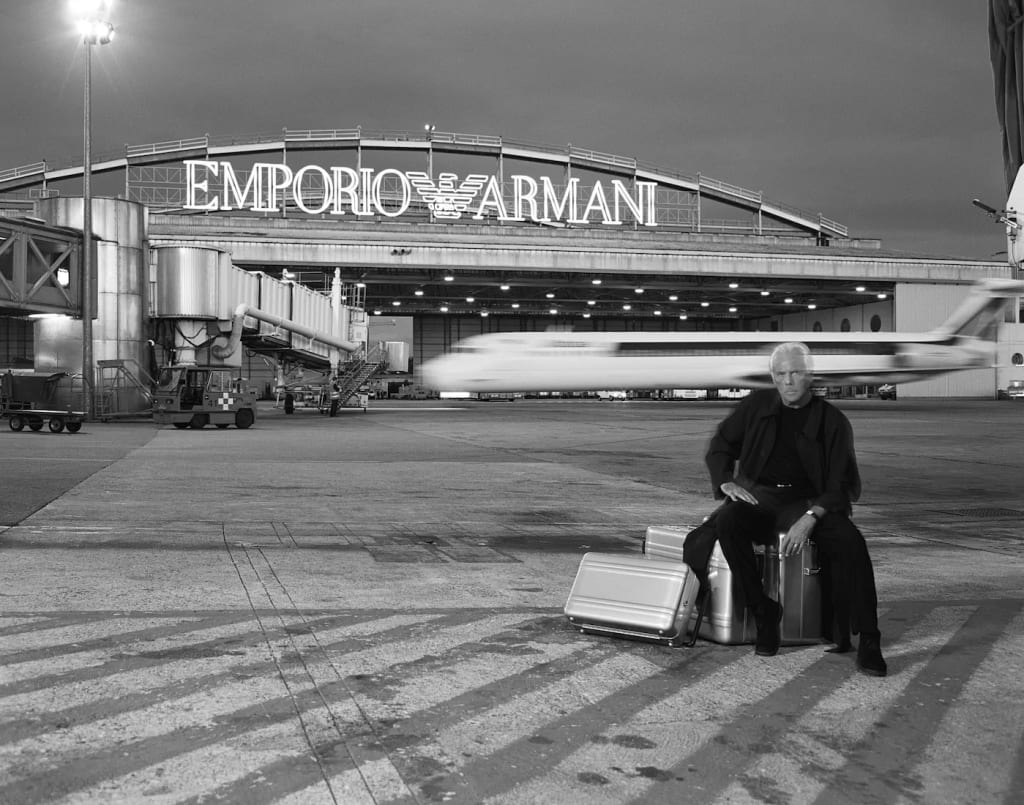
This Giorgio Armani biography chronicles how the world of fashion witnessed the passing of a titan when Giorgio Armani died peacefully at his Milan home, surrounded by loved ones, at the age of 91. Known affectionately as “Re Giorgio” (King Giorgio), Armani transformed from a small-town Italian boy with dreams of becoming a doctor into one of the most influential fashion designers in history. His death marks the end of an era that spanned over five decades, during which he revolutionised modern tailoring, pioneered power dressing for women, and built a fashion empire worth over £8 billion while maintaining complete independence in an industry increasingly dominated by luxury conglomerates.
Armani’s legacy extends far beyond clothing – he created a lifestyle brand that redefined elegance, influenced Hollywood glamour, and established Italian fashion as a global force, all while championing humanitarian causes and maintaining an unwavering commitment to craftsmanship and timeless style. His influence on contemporary fashion, from the boardroom to the red carpet, fundamentally changed how both men and women approach professional and formal dressing.
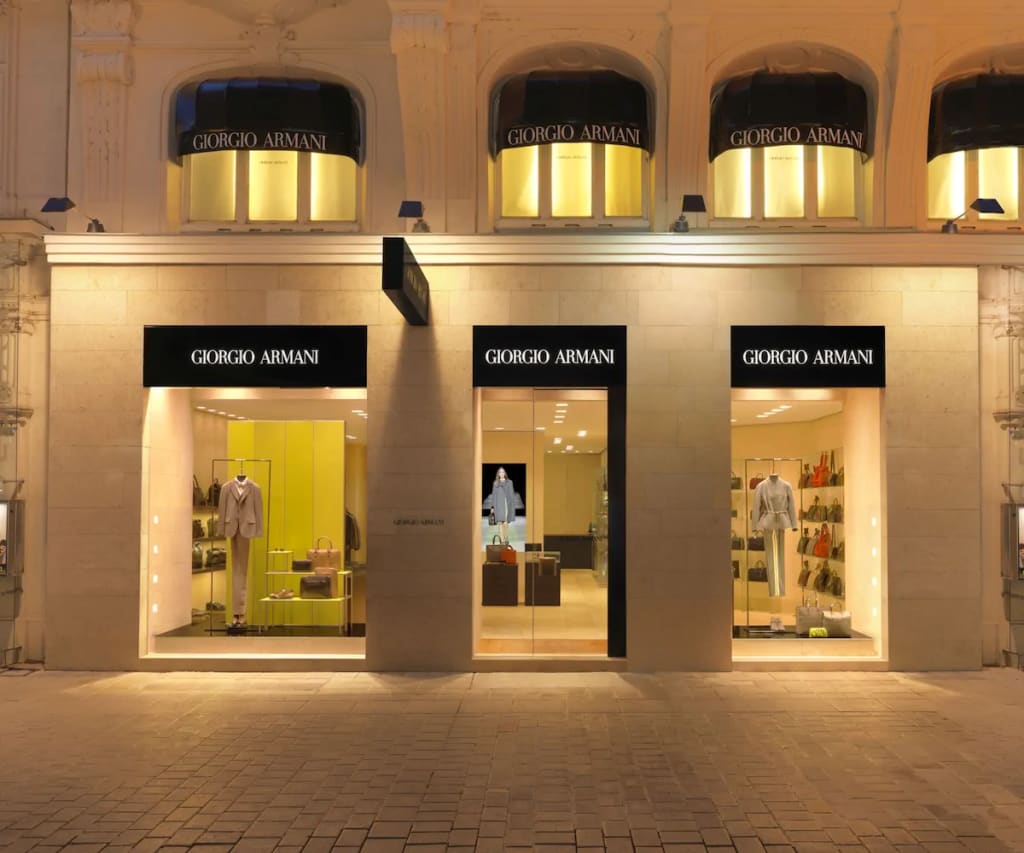
Early life and formative years in northern Italy
Giorgio Armani was born on July 11, 1934, in the small northern Italian town of Piacenza, to Ugo Armani, an accountant for a transport company, and Maria Raimondi, a homemaker. The eldest of three children, alongside his brother Sergio and sister Rosanna, Armani grew up during one of the most turbulent periods in European history. His childhood was marked by the hardships of World War II, experiences that would later influence his minimalist aesthetic and appreciation for understated elegance.
The war years profoundly shaped young Giorgio’s worldview and future design philosophy. During air raids, he would protect his younger siblings, experiences that instilled in him values of protection, comfort, and practicality that would later emerge in his revolutionary approach to tailoring. The scarcity of materials during wartime Italy also contributed to his later appreciation for quality over quantity and his ability to create maximum impact with minimal elements.
Despite their modest means, Armani’s parents possessed what he later described as “an inner elegance”. His mother Maria’s impeccable sense of style shone through in the clothes she made for her children, ensuring they were “the envy of all our classmates” despite the family’s limited resources. This early exposure to the transformative power of well-made clothing planted the seeds of his future career, though fashion was far from his initial ambitions. Maria’s skill with a sewing machine and her ability to create beautiful garments from simple materials would later inspire Armani’s philosophy of accessible luxury.
The Armani household valued education and cultural refinement. Despite their financial constraints, the family prioritised books, music, and intellectual pursuits. This cultivated environment helped develop Giorgio’s aesthetic sensibilities and his understanding that true elegance was not about ostentation but about refinement and appropriateness. These early lessons in understated sophistication would become hallmarks of his design philosophy.
After the war, the Armani family relocated to Milan, a move that proved pivotal to Giorgio’s future. Initially finding the city cold and imposing, he gradually came to appreciate its “discreet beauty” and industrious spirit. Milan in the post-war period was experiencing rapid economic growth, and the city’s blend of traditional Italian craftsmanship with modern business practices would profoundly influence Armani’s later approach to building his fashion empire.
During these formative years, Armani developed a passion for cinema, frequently attending shows at venues like the Arena in Verona during his military service. This early love affair with film would later prove instrumental in his career, leading to his groundbreaking work in Hollywood and his understanding of fashion as a form of storytelling and character development.
The accidental path to fashion
Armani’s journey into fashion was entirely serendipitous, beginning with a childhood dream that had nothing to do with clothing. Originally aspiring to become a doctor, particularly after reading A.J. Cronin’s “The Citadel,” he enrolled in the medical programme at the University of Milan in 1950. His fascination with medicine stemmed from a desire to help people and make a meaningful contribution to society – values that would later manifest in his approach to creating clothing that enhanced people’s confidence and well-being.
However, after three years of study in 1953, he made the life-altering decision to abandon his medical career and join the army. The decision was partly due to his discomfort with some aspects of medical study, particularly anatomy classes, but also reflected a growing uncertainty about his chosen path. His medical background proved useful during his military service, as he was assigned to the Military Hospital in Verona, where he could continue attending theatre performances and developing his cultural interests.
Following his military service in 1957, at the age of 23, Armani took what seemed like a temporary position as a window dresser at La Rinascente, Milan’s premier department store. This role, initially seen as a stopgap measure while he decided on his future, proved to be the foundation of his fashion empire. The position came about through a chance encounter – a friend mentioned the job opening, and Armani, needing employment, decided to apply despite having no experience in retail or fashion.
At La Rinascente, he was responsible for showcasing some of the earliest garments from innovative companies like the Finnish textiles firm Marimekko, known for their bold prints and modern aesthetic. This exposure to international fashion trends and avant-garde design opened his eyes to fashion’s potential as both art and commerce. The job required him to understand not just how clothes looked, but how they could be presented to tell a story and create desire.
The window dressing position provided Armani with invaluable experience in the marketing and visual aspects of the fashion industry. He learned to understand customer psychology, the importance of presentation, and how clothing could communicate status and aspiration. His natural eye for composition and his ability to create compelling visual narratives quickly caught the attention of his superiors. His displays became known for their sophisticated restraint – he favoured clean lines and minimal props, allowing the clothing itself to be the star.
His success in visual merchandising led to his promotion to the menswear department as a buyer, a role that would prove crucial to his fashion education. As a buyer, Armani travelled throughout Europe, visiting textile mills, meeting designers, and learning about manufacturing processes. This experience gave him comprehensive insight into the fashion business from multiple perspectives – he understood not just how clothes should look, but how they should feel, how they moved on the body, and what customers actually wanted versus what the industry thought they should want.
During this period, Armani also began to develop his critical eye for quality and construction. He learned to recognise superior fabrics, understand the importance of proper fit, and appreciate the craftsmanship that distinguished well-made garments from mass-produced items. This holistic understanding of fashion as both art and commerce would prove crucial in his later success.
The Cerruti years: Learning the craft
In the mid-1960s, Armani’s career took a decisive turn when he was recruited by Nino Cerruti to work for the renowned Italian menswear company. This opportunity represented a quantum leap from retail into design and manufacturing, providing Armani with hands-on experience in textile development and garment construction that would define his aesthetic philosophy. Cerruti, already established as a forward-thinking designer, recognised Armani’s potential and offered him the creative freedom to experiment and innovate.
At Cerruti, Armani was tasked with designing for the company’s Hitman menswear collection, where he began his revolutionary experiments with deconstructing traditional tailoring. Working directly with fabrics and understanding their properties, he started to question the rigid structure of conventional menswear. The heavy, stiff suits with bulky shoulders that dominated 1960s fashion seemed to Armani to stifle rather than enhance the wearer’s natural movement and personality.
The traditional men’s suit of the 1960s was constructed with heavy canvas interfacing, substantial shoulder padding, and rigid construction that created a somewhat armour-like silhouette. Armani found this approach fundamentally flawed – instead of enhancing masculinity, it seemed to constrain it. He began experimenting with what would become his signature approach: removing interfacing, reducing padding, and allowing fabrics to follow the natural lines of the body.
It was during this period that Armani developed his signature approach: “removing all rigidity from the garment and discovering an unexpected naturalness”. He began experimenting with eliminating heavy interfacings, reducing padding, and allowing fabrics to drape more naturally on the body. This wasn’t merely aesthetic innovation – it was a philosophical shift towards clothing that served the wearer rather than constraining them. His suits began to feel more like elegant sportswear than formal armour.
Cerruti himself recognised Armani’s exceptional talent and encouraged his experimentation. As Armani later recalled: “It was Cerruti himself – to whom I owe a great deal of foresight – who asked me for new solutions to make a suit less rigid, more comfortable, less industrial and more elaborate”. This mentorship relationship provided Armani with both the technical skills and the creative confidence to pursue his vision of reformed masculinity through fashion.
The Cerruti workshop became Armani’s laboratory for innovation. He studied how fabrics behaved when freed from rigid structure, experimented with different weights and weaves, and developed construction techniques that would become industry standards. His breakthrough came when he realised that by using softer canvas and minimal padding, he could create jackets that maintained their shape while allowing natural movement.
During his time at Cerruti, Armani also began freelancing for other fashion houses, including Allegri, Bagutta, Hilton, Sicons, Gibò, Montedoro, and Tendresse. This diverse experience across multiple brands gave him comprehensive understanding of different market segments and manufacturing approaches, knowledge that would prove invaluable when he later built his own multi-tiered brand empire. Each collaboration taught him different aspects of the business – from luxury craftsmanship to more accessible manufacturing techniques.
His work during this period gained attention from fashion journalists and buyers, who recognised that something revolutionary was happening in Italian menswear. Armani’s designs offered a new vision of masculine elegance – confident but not aggressive, refined but not stuffy, modern but not trendy. This aesthetic perfectly captured the changing social mood of the late 1960s and early 1970s.

The partnership that changed everything
The most significant relationship of Armani’s life began in the late 1960s when he met Sergio Galeotti, an architectural draftsman with a keen eye for business and design. Their meeting marked the beginning of both a personal and professional partnership that would last until Galeotti’s tragic death in 1985. Galeotti was not merely Armani’s romantic partner – he was the business visionary who recognised Armani’s talent and encouraged him to establish his own label.
Galeotti brought to the partnership everything that Armani lacked in business acumen. While Armani was the creative force, Galeotti understood finance, marketing, and strategic planning. He saw the commercial potential in Armani’s design philosophy and convinced him that the fashion world was ready for his revolutionary approach to tailoring. More importantly, Galeotti believed that Armani’s aesthetic could succeed beyond the confines of traditional luxury fashion.
In 1973, Galeotti persuaded Armani to open a design office at 37 Corso Venezia in Milan, a location that would become synonymous with the Armani brand. This period of extensive collaboration saw Armani working as a freelance designer for numerous fashion houses while developing his distinctive style. The international fashion press quickly recognised Armani’s importance following runway shows at the prestigious Sala Bianca in the Pitti Palace in Florence, where his innovative approach to menswear garnered critical acclaim.
The decision to launch their own label came after careful consideration and planning. Galeotti conducted thorough market research, studied the business models of successful fashion houses, and developed a comprehensive business plan that would allow them to maintain creative independence while achieving commercial success. He understood that timing was crucial – the fashion industry was evolving, and consumers were becoming more sophisticated and demanding.
On July 24, 1975, with Galeotti handling the business operations and Armani focusing on design, they founded Giorgio Armani S.p.A. The funding for their venture came from a modest source that would later become fashion legend – they sold Armani’s Volkswagen Beetle to raise the initial capital. This humble beginning would later symbolise their grassroots approach to building a luxury empire.
Galeotti’s architectural background proved invaluable in establishing the brand’s aesthetic identity. He understood space, proportion, and the importance of environment in presenting fashion. His influence extended beyond business operations to the very presentation of Armani’s designs – the clean, minimalist showrooms and boutiques that became an Armani signature reflected Galeotti’s architectural sensibilities.
In October 1975, Armani presented his first collection of men’s ready-to-wear for Spring/Summer 1976 under his own name. The collection represented everything he had learned about reimagining menswear: softer shoulders, natural draping, and an emphasis on comfort without sacrificing sophistication. The response was immediate and positive, with fashion editors praising the fresh approach to masculine elegance and recognising that they were witnessing the birth of a new aesthetic movement.
The partnership with Galeotti was crucial to Armani’s success not just in business terms, but in providing the emotional support and confidence necessary for creative risk-taking. Galeotti’s unwavering belief in Armani’s vision gave the designer the courage to challenge established conventions and pursue his revolutionary approach to fashion.
Revolutionary contributions to fashion
Giorgio Armani’s impact on fashion cannot be overstated – he fundamentally changed how both men and women dressed, creating a new vocabulary of modern elegance that resonated globally and influenced generations of designers and consumers. His revolutionary approach began with his reimagining of the suit jacket, which he described as “the starting point for everything that came after”.
By removing padding, adjusting proportions, and softening the traditional masculine silhouette, Armani created garments that were “supple as a cardigan, light as a shirt”. This deconstructionist approach was radical for its time – where traditional tailoring used structure to impose shape on the body, Armani allowed the body’s natural form to determine the garment’s silhouette. The result was clothing that moved with the wearer rather than against them.
This technical innovation had profound cultural implications. Armani’s suits represented a new form of masculinity – confident but not rigid, powerful but not aggressive. At a time when traditional gender roles were being questioned and redefined, his designs offered men permission to embrace comfort and elegance without sacrificing authority. The “Armani man” became a new archetype: successful, sophisticated, and secure enough in his masculinity to choose comfort over convention.
For women, Armani’s contribution was even more revolutionary. His entry into women’s fashion in 1975 came at a crucial moment when women were entering professional environments in unprecedented numbers. Traditional options were limited: overly feminine clothes that didn’t command respect, or masculine-inspired suits that seemed like poor copies of menswear. Armani offered a third option – clothing that was distinctly feminine but projected unmistakable authority.
His women’s suits became the uniform of the emerging generation of female executives, lawyers, and entrepreneurs. The soft shoulders, fluid lines, and impeccable tailoring created a new visual language for professional women. These weren’t adapted men’s clothes – they were garments designed specifically for women who needed to project competence and confidence in male-dominated environments.
The power dressing movement of the 1980s owes much to Armani’s innovations. While other designers created shoulder-heavy, aggressive silhouettes that seemed to armor women for corporate battle, Armani’s approach was more subtle and ultimately more effective. His suits suggested strength through elegance rather than confrontation, allowing women to command respect through sophistication rather than intimidation.
Armani’s colour palette was equally revolutionary and influential. Instead of the harsh blacks and sharp contrasts favoured by many designers, he developed a sophisticated range of neutral tones that would become his signature. His famous “greige” – a blend of grey and beige – epitomised his approach to colour: sophisticated, versatile, and timelessly elegant. These colours weren’t chosen for their dramatic impact but for their practicality and longevity.
The psychological impact of Armani’s colour choices was significant. The soft, muted palette created a sense of calm confidence rather than aggressive power. These colours worked across different skin tones, ages, and occasions, making Armani’s designs accessible to a broader range of customers than the more dramatic offerings of some luxury brands.
The technical innovation in Armani’s designs extended beyond construction to fabric selection and treatment. He worked closely with textile manufacturers to develop new fabrics that could maintain structure without stiffness, creating materials that were both luxurious and practical. His collaboration with mills like Ermenegildo Zegna resulted in fabrics that could be worn from morning meetings to evening dinners, adapting to the demands of increasingly fluid lifestyles.
Armani’s influence on fashion education and design philosophy continues today. His approach to garment construction – emphasising the relationship between body and fabric rather than imposing artificial structure – has been adopted by countless designers. Fashion schools worldwide teach his principles of deconstructed tailoring as fundamental elements of modern design.
Hollywood and the birth of red carpet fashion
Armani’s conquest of Hollywood began almost by accident but became one of his most significant achievements, fundamentally changing how the entertainment industry approached fashion and establishing the template for modern celebrity styling. The breakthrough came in 1980 with Paul Schrader’s film “American Gigolo,” starring Richard Gere as Julian Kay, a Beverly Hills escort with impeccable taste in clothing.
The path to “American Gigolo” was itself a study in serendipity and professionalism. Originally, John Travolta was set to star in the film, and it was his manager who suggested Armani for the costume design, seeking to move away from the disco aesthetic of “Saturday Night Fever” and “Grease”. The manager had seen Armani’s work in European fashion magazines and believed his sophisticated minimalism would be perfect for the character of an upscale escort who used clothing as both armor and seduction tool.
When Travolta dropped out for personal reasons and Richard Gere was cast, the entire wardrobe had to be redesigned to fit the new star. This fortuitous change created one of cinema’s most influential fashion moments. Gere’s physical type – lean, elegant, and naturally sophisticated – proved perfect for Armani’s aesthetic. The collaboration between designer, actor, and director created a visual language that redefined masculine elegance in popular culture.
Armani’s designs for “American Gigolo” were more than costumes – they were a manifesto for a new kind of masculine elegance. The film showcased over 30 different outfits, each carefully chosen to reflect the character’s psychology and the film’s themes. The famous scene where Gere’s character lays out his clothes on the bed became iconic not just for its visual beauty but for its demonstration of how clothing could be both practical and sensual.
The suits in “American Gigolo” projected wealth and sophistication without ostentation, perfectly embodying Armani’s philosophy of “natural sophistication”. Each garment seemed effortless yet clearly expensive, casual yet undeniably elegant. This balance between luxury and accessibility, formality and comfort, created a new template for how successful men might dress.
Director Paul Schrader later acknowledged that Armani’s contribution was crucial to making the film a classic, noting that “the clothes and the character were the same”. This symbiosis between fashion and character development became a hallmark of Armani’s approach to costume design and influenced how fashion would be used in cinema for decades to come.
The film’s success launched Armani into the American consciousness and established him as Hollywood’s designer of choice. The impact extended beyond the film industry – men across America began adopting elements of the “American Gigolo” look, from unstructured blazers to streamlined suits. The film essentially introduced Armani’s aesthetic to the American market and created demand that would support his expansion into the United States.
Following “American Gigolo,” Armani became synonymous with Hollywood sophistication, contributing to over 200 films including “The Untouchables,” “Goodfellas,” “The Wolf of Wall Street,” and “The Dark Knight” trilogy. Each collaboration demonstrated his ability to use clothing to enhance character development and narrative while maintaining his distinctive aesthetic signature. His work with directors like Martin Scorsese and Christopher Nolan showed how fashion could serve storytelling without overpowering it.
Perhaps even more significantly, Armani pioneered the concept of red carpet dressing as a marketing and artistic strategy. He was among the first designers to systematically dress celebrities for premieres and award ceremonies, recognising the promotional potential of these high-profile events. In 1988, he opened a sprawling boutique on Rodeo Drive in Beverly Hills and hired Wanda McDaniel, a well-connected former journalist, specifically to dress Hollywood stars.
McDaniel’s role was revolutionary – she essentially created the modern profession of celebrity styling. Working with Armani’s designs, she developed relationships with major stars and their representatives, ensuring that Armani garments appeared at the most important industry events. This systematic approach to celebrity dressing helped professionalise the red carpet and elevated fashion’s role in entertainment culture.
The red carpet strategy proved brilliantly successful. Images of celebrities wearing Armani at major events appeared in magazines and newspapers worldwide, providing publicity that no advertising budget could match. More importantly, these appearances associated the Armani brand with success, glamour, and sophistication in the public consciousness.
Armani understood that red carpet appearances were not just about individual looks but about creating a broader narrative of elegance and aspiration. His designs for award shows and premieres consistently emphasised timeless elegance over trendy flash, creating a visual consistency that reinforced the brand’s core values. This approach helped establish Armani as the choice of discerning celebrities who valued sophistication over spectacle.
The Hollywood connection also influenced Armani’s retail strategy. The success of the Rodeo Drive boutique led to similar flagship stores in other major cities, each designed to capture some of the glamour and sophistication of Hollywood while remaining accessible to everyday customers. These stores became destinations in themselves, offering customers the opportunity to feel like movie stars.
Building a global business empire
Giorgio Armani’s business acumen was as impressive as his creative talent, transforming a single fashion label into a diversified luxury empire while maintaining complete independence in an industry increasingly dominated by conglomerates. The Armani Group’s evolution from its 1975 founding into a multi-billion pound enterprise represents one of fashion’s most successful entrepreneurial stories and a masterclass in brand architecture.
The expansion began strategically with the 1982 launch of Emporio Armani, positioned as a younger, more accessible version of the main line. This “bridge” collection maintained Armani’s design principles while targeting a broader demographic of young professionals aged 20-30. The Emporio line’s success demonstrated Armani’s understanding that luxury brands could operate across multiple price points without diluting their core identity – a strategy that would later be adopted throughout the luxury industry.
The name “Emporio” (Italian for “emporium” or “department store”) was carefully chosen to suggest accessibility and variety while maintaining Italian sophistication. The line featured simplified versions of Armani’s signature designs, using different fabrics and construction methods to achieve lower price points while preserving the essential aesthetic. This democratisation of luxury was revolutionary – it allowed younger consumers to access the Armani world while building brand loyalty for the future.
In 1991, Armani launched A|X Armani Exchange, the most accessible line within the family, specifically targeting the American mass market. This bold move into fast fashion was controversial among luxury purists but proved commercially brilliant, allowing everyday consumers to access the Armani brand while generating significant revenue streams that could support the more exclusive lines.
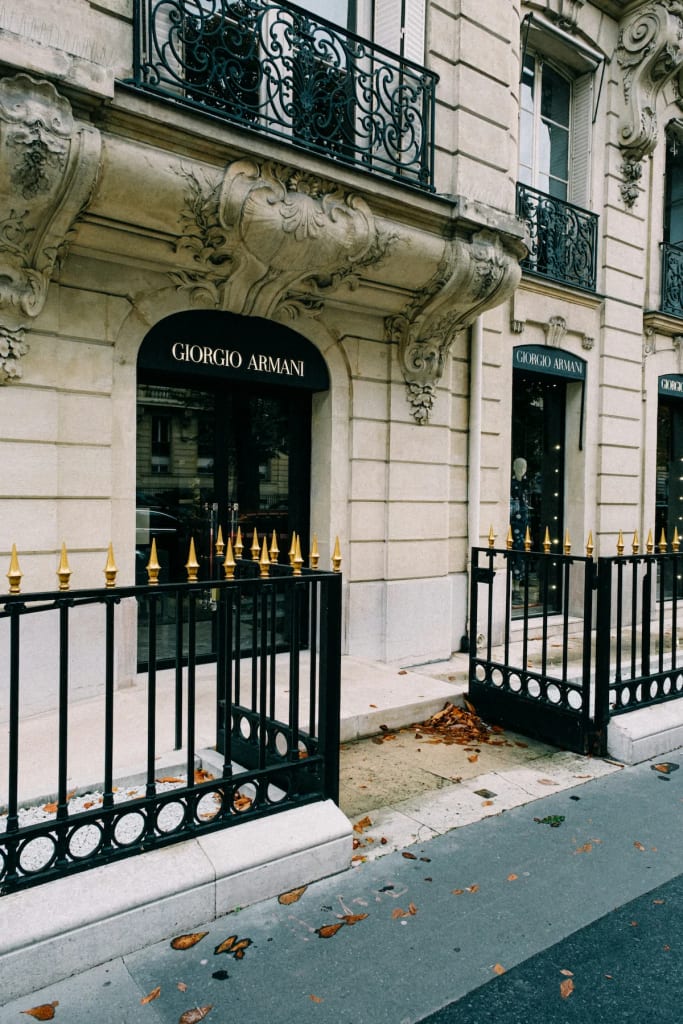
Armani Exchange stores featured a completely different aesthetic from the main line boutiques – they were designed to appeal to younger customers with limited budgets but unlimited aspirations. The clothing maintained Armani’s essential design DNA – clean lines, quality construction, sophisticated colours – but used more accessible materials and simplified construction methods. This approach proved that good design principles could work at any price point.
The brand architecture became increasingly sophisticated with the 2005 launch of Armani Privé, a haute couture line serving ultra-high-net-worth clients. This completed Armani’s pyramid strategy: from accessible everyday wear through Armani Exchange, to contemporary luxury via Emporio Armani, to ultimate exclusivity with Giorgio Armani and Armani Privé. Each level served different customers while reinforcing the overall brand narrative.
Armani Privé represented the pinnacle of luxury fashion – hand-made garments requiring hundreds of hours of craftsmanship and costing tens of thousands of pounds. These pieces were often one-of-a-kind or made in extremely limited quantities for the most discerning customers. The line served both as a revenue generator and as a showcase for Armani’s design virtuosity, reminding the fashion world of his technical capabilities.
Beyond fashion, Armani diversified into multiple lifestyle sectors with characteristic attention to detail. The fragrance division, launched in partnership with L’Oréal in 1982, became particularly successful with iconic scents like Acqua di Gio, which became one of the best-selling men’s fragrances worldwide. The success of Armani fragrances demonstrated how the brand’s aesthetic principles could be translated into completely different product categories.
The home furnishings division, Armani Casa, applied the designer’s minimalist aesthetic to furniture, lighting, and home accessories. These products maintained the same quality standards and design principles as the clothing lines, creating a complete lifestyle offering for customers who wanted to surround themselves with the Armani aesthetic. Armani Casa boutiques became showcases for sophisticated living, demonstrating how the brand’s values could extend far beyond clothing.
The hospitality venture, Armani Hotels & Resorts, took the lifestyle concept even further. Properties in Dubai and Milan offered guests the opportunity to experience the Armani lifestyle in its most complete form. Every detail, from the architecture to the amenities, reflected Armani’s design philosophy. These hotels served both as revenue generators and as marketing tools, allowing customers to experience the brand in its most immersive form.
Even food and beverage operations extended the brand into comprehensive lifestyle offerings. Armani restaurants and cafes, located within flagship stores and hotels, provided customers with a complete brand experience. The menu design, table settings, and even the uniforms of the staff reflected Armani’s aesthetic principles, creating a seamless brand experience that extended far beyond fashion.
By 2024, the Armani Group employed 8,700 people worldwide and operated over 2,000 stores in prime locations globally. The company generated €2.3 billion in revenue, with analysts estimating the overall enterprise value at between €8-11 billion. Remarkably, Armani achieved this scale while remaining entirely privately held and family-controlled, a rarity in contemporary luxury business that allowed for long-term strategic thinking rather than quarterly profit pressures.
This independence was crucial to Armani’s success. Without the pressure of external shareholders, the company could invest in long-term brand building, maintain quality standards, and make strategic decisions based on brand values rather than short-term profit maximisation. This approach allowed Armani to build one of the most valuable and respected luxury brands in the world while maintaining complete creative and strategic control.
Cultural impact and legacy
Giorgio Armani’s influence extended far beyond fashion into broader cultural transformation, reshaping concepts of elegance, professionalism, and lifestyle across multiple generations. His designs became shorthand for modern sophistication, influencing not just what people wore but how they perceived themselves and projected their identities in professional and social contexts.
The cultural significance of Armani’s work was perhaps most evident in his redefinition of power dressing for women. During the 1980s, as women entered executive positions in unprecedented numbers, traditional fashion offered few suitable options. Armani provided them with a visual language of authority that was distinctly feminine rather than merely adapted from menswear. His suits allowed women to project competence and confidence while maintaining their individual style, contributing to broader conversations about gender equality in professional environments.
The “Armani woman” became a cultural archetype – successful, sophisticated, and confident enough to choose elegance over ostentation. This image influenced not just fashion but broader attitudes about women’s roles in society. By creating clothes that made women feel powerful without seeming aggressive, Armani helped redefine feminine authority for the modern age.
Armani’s influence on masculinity was equally profound. At a time when traditional masculine roles were being questioned and redefined, his designs offered men permission to embrace elegance, comfort, and emotional expression through their clothing choices. The “Armani man” was sophisticated but not effeminate, powerful but not aggressive – a new archetype that resonated globally and influenced how modern masculinity could be expressed.
This redefinition of masculine elegance had implications beyond fashion. Armani’s aesthetic suggested that true power came from confidence and sophistication rather than aggression or ostentation. This message resonated particularly strongly with the emerging generation of business leaders, artists, and professionals who were redefining success in the 1980s and 1990s.
The designer’s commitment to humanitarian causes demonstrated his understanding of fashion’s social responsibilities. He became a Goodwill Ambassador for the UNHCR in 2002, recognising his contribution to helping Afghan refugees. His support for AIDS research through the Italian association ANLAIDS predated many corporate social responsibility initiatives and demonstrated his commitment to using his platform for positive change.
During the COVID-19 pandemic, Armani contributed approximately €2 million to hospitals and converted his factories to produce protective equipment for healthcare workers. This response demonstrated how luxury fashion brands could serve broader social needs during times of crisis, setting an example that other brands would follow.
Armani’s influence on Italian cultural identity was particularly significant. He helped establish Milan as a global fashion capital, competing with Paris and New York for cultural influence and economic importance. His success demonstrated that Italian fashion could compete with the established French luxury industry through innovation, quality, and distinctive aesthetic vision.
His designs for the Italian Olympic teams starting in 2012 literally clothed the nation’s representation on the world stage. These uniforms became symbols of Italian style and sophistication, demonstrating how fashion could serve as cultural diplomacy and national branding. The designs balanced national pride with international sophistication, creating garments that were distinctly Italian but globally appealing.
The preservation of his work through the Armani/Silos museum, established in 2015, ensured that future generations could study and appreciate his contributions to fashion history. This institution, designed by renowned architect Tadao Ando in collaboration with Armani, houses comprehensive archives of his designs and documents the evolution of his aesthetic philosophy. The museum serves both as a cultural institution and as a testament to Armani’s lasting impact on design and culture.
His involvement in cultural preservation extended beyond fashion to include restoration projects like the Abbey of San Fruttuoso in Camogli, demonstrating his commitment to Italy’s cultural heritage. These projects showed how successful businesses could contribute to preserving cultural treasures for future generations.
The Armani aesthetic became a global language of understated luxury, influencing architecture, interior design, and lifestyle concepts far beyond clothing. His principles of minimalism, quality materials, and timeless design were adopted across multiple industries, from automotive design to hospitality, demonstrating the universal appeal of his design philosophy.
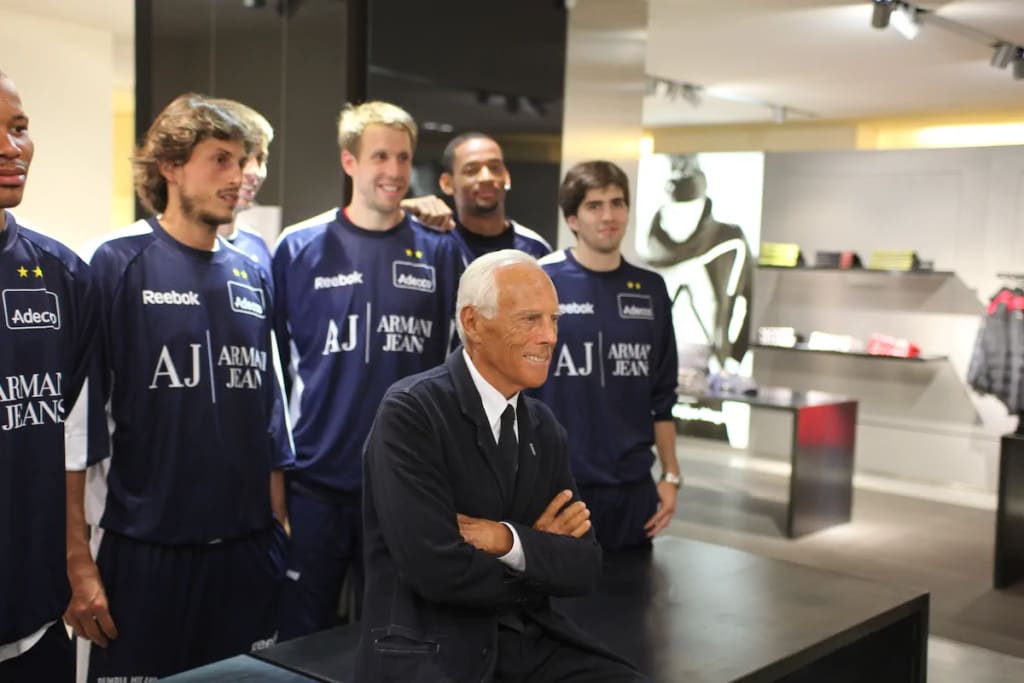
Succession planning and the future of the empire
Giorgio Armani’s approach to succession planning was as meticulous and strategic as his design philosophy, reflecting his determination to preserve his life’s work beyond his own lifetime. Having no children and understanding the challenges facing family businesses in the luxury sector, Armani spent years developing a comprehensive framework to ensure continuity while maintaining independence from external pressures and acquisitions.
The cornerstone of this strategy was the establishment of the Giorgio Armani Foundation in 2016. This entity, initially holding a symbolic 0.1% stake in the company, was designed to increase its influence posthumously and ensure the brand remained protected from external pressures such as acquisitions or shareholder-driven changes that might compromise the brand’s integrity. The foundation’s mission encompasses both preserving Armani’s creative vision and supporting philanthropic initiatives aligned with his values.
The foundation structure was carefully designed to serve multiple purposes: protecting the brand’s independence, ensuring continuity of design philosophy, supporting charitable causes, and providing a mechanism for long-term strategic planning that extended beyond immediate commercial considerations. This approach reflected Armani’s understanding that luxury brands require long-term thinking and protection from short-term market pressures.
Armani’s succession plan involves a carefully chosen circle of family members and long-term collaborators who understand both his aesthetic vision and business philosophy. His sister Rosanna, who had been involved with the company since its early days, brought invaluable institutional knowledge and family perspective. His nieces Silvana and Roberta, and nephew Andrea Camerana, all hold significant positions within the company and are positioned as key inheritors of both the business and the brand values.
Particularly significant is the role of Pantaleo (Leo) Dell’Orco, Armani’s trusted collaborator of over 40 years and current head of menswear. Dell’Orco represents institutional continuity – he understands Armani’s design philosophy intimately and has the technical expertise to maintain quality standards and aesthetic consistency. His long tenure with the company makes him invaluable during the transition period.
The company’s bylaws, updated as recently as 2023, establish a complex governance structure designed to prevent fragmentation of control that could weaken the brand or make it vulnerable to acquisition. Share capital is divided into different categories with varying voting rights, ensuring that key decision-makers maintain influence even as ownership is distributed among multiple heirs. This structure protects the brand’s independence while allowing for professional management.
Importantly, the bylaws prohibit any public offering or major acquisitions for five years following Armani’s death, providing stability during the transition period and protecting the company from opportunistic buyers or market pressures that might force premature strategic changes. This cooling-off period allows the new leadership to establish itself and make strategic decisions based on long-term brand interests rather than immediate market pressures.
In his final interviews, Armani emphasised his desire for “a gradual transition of the responsibilities I have always handled to those closest to me”. This organic approach reflects his understanding that abrupt changes could destabilise both the creative and commercial aspects of the business. The gradual transition began years before his death, with key personnel taking on increased responsibilities and decision-making authority while Armani remained available for guidance and major strategic decisions.
The succession challenge is particularly complex given Armani’s hands-on management style throughout his career. As both creative director and CEO, he maintained unprecedented control over every aspect of the business, from initial sketches to marketing campaigns and retail expansion strategies. His heirs must now balance preserving his distinctive vision while adapting to evolving market conditions, changing consumer preferences, and the challenges of running a global luxury business in an increasingly digital world.
The complexity of maintaining brand consistency across multiple product lines, price points, and global markets requires sophisticated management systems and deep understanding of the brand’s core values. The new leadership must navigate between preserving Armani’s aesthetic legacy and allowing for natural evolution that keeps the brand relevant for new generations of customers.
The end of an era and enduring influence
Giorgio Armani’s passing marked the end of one of fashion’s most remarkable careers, but his influence continues to shape contemporary style, business practices, and cultural attitudes toward luxury and elegance. His final months were characterised by the same dedication that had defined his entire career – working until his last days on collections and projects that would extend his legacy and ensure continuity for his brands.
The circumstances of his passing reflected the dignity and privacy he had maintained throughout his life. Surrounded by family and close collaborators in his Milan home, Armani’s death was as understated as his aesthetic philosophy. The Armani Group’s statement emphasised his “indefatigable” commitment to work and his “insatiable curiosity” about the present and future, characteristics that had driven five decades of innovation and creativity.
The immediate response to his death demonstrated the breadth of his cultural impact across industries, generations, and continents. Tributes poured in from fashion industry leaders, Hollywood celebrities, political figures, and business leaders worldwide, each acknowledging different aspects of his influence. Julia Roberts, whom Armani had dressed for numerous occasions including her iconic 1990 Golden Globe appearance, called him “a true friend” and “a legend who changed how women could dress for success”.
Donatella Versace, despite their professional rivalry and different aesthetic approaches, acknowledged that “the world lost a giant today” and praised Armani’s commitment to craftsmanship and Italian excellence. Anna Wintour described him as “the architect of modern elegance” and noted his unique ability to create clothes that made people feel confident and sophisticated.
Political leaders also recognised Armani’s cultural significance. The Italian Prime Minister issued a statement calling him “an ambassador of Italian excellence worldwide” and noting his contributions to establishing Italy’s position in global luxury markets. The mayor of Milan announced plans for a permanent memorial recognising his role in transforming the city into a fashion capital.
The timing of Armani’s death, just months before his company’s planned 50th anniversary celebrations during Milan Fashion Week, added poignancy to his passing. These events, originally conceived as celebrations of his achievements and the brand’s evolution, transformed into tributes to his enduring legacy and opportunities for the fashion world to reflect on his contributions to the industry.
The funeral arrangements reflected both his public stature and personal preferences for discretion and elegance. A public memorial at Milan’s Armani Teatro allowed admirers to pay respects, while a private funeral honoured his desire for privacy and intimate ceremony. These events provided closure for the fashion world while respecting the privacy and dignity he had always maintained.
The memorial service became a gathering of the global fashion elite, with designers, models, journalists, and business leaders traveling to Milan to pay their respects. The service featured tributes that highlighted different aspects of his legacy – his revolutionary designs, his business acumen, his humanitarian work, and his mentorship of young designers and business professionals.
Armani’s influence on fashion education and theory continues through institutions and scholars studying his contributions to modern dress and luxury business practices. Fashion schools worldwide incorporate his design principles and business strategies into their curricula, ensuring that future designers understand his contributions to the evolution of fashion as both art and commerce.
His approach to gender-neutral design principles, decades before such concepts became mainstream, demonstrated remarkable foresight and cultural sensitivity. His understanding that clothes should serve the wearer rather than constrain them influenced countless designers and contributed to broader conversations about gender expression and professional dress codes.
The preservation of his work through the Armani/Silos museum ensures that future generations can study and appreciate his contributions to fashion history. This institution, designed by Tadao Ando in collaboration with Armani, houses comprehensive archives of his designs and documents the evolution of his aesthetic philosophy over five decades. The museum serves both as a cultural institution and as a research center for fashion historians and students.
The museum’s permanent exhibitions trace the evolution of Armani’s aesthetic from his early experimental work at Cerruti through his revolutionary menswear collections, his expansion into women’s fashion, and his later diversification into lifestyle products. Interactive displays allow visitors to understand the technical innovations behind his designs and their cultural impact.
Lessons for the future of luxury fashion
Armani’s career provides valuable lessons for the contemporary fashion industry, particularly as it grapples with questions of sustainability, authenticity, cultural sensitivity, and the balance between tradition and innovation. His emphasis on timeless design over seasonal trends offers a sustainable alternative to fast fashion’s environmental and social costs.
His business model of maintaining independence while achieving global scale challenges the assumption that luxury brands must be acquired by conglomerates to compete internationally. The Armani Group’s success demonstrates that family-owned luxury businesses can thrive when they maintain clear vision, invest in quality, and build authentic relationships with customers.
His approach to celebrity partnerships and marketing, which emphasised long-term relationships over transactional arrangements, created more authentic brand associations than many contemporary influencer marketing strategies. His understanding that celebrity endorsement must align with brand values rather than simply generate publicity offers lessons for modern luxury marketing.
The multi-tiered brand strategy that Armani pioneered – from accessible diffusion lines to ultra-luxury offerings – has been adopted throughout the luxury industry. However, his success in maintaining brand integrity across all price points demonstrates the importance of consistent quality standards and design philosophy regardless of price positioning.
His commitment to craftsmanship and quality in an era of cost-cutting and offshore manufacturing showed how luxury brands could maintain their premium positioning by investing in superior materials, construction techniques, and attention to detail. This commitment to quality became a competitive advantage that justified premium pricing and built customer loyalty.
Conclusion: The master’s eternal legacy
This Giorgio Armani biography reveals how Giorgio Armani’s life story reads as a testament to the transformative power of vision, dedication, and unwavering commitment to excellence. From his humble beginnings in Piacenza to his position as one of the world’s most influential designers, Armani’s journey embodied the very best of Italian craftsmanship, entrepreneurial spirit, and cultural sophistication.
The designer’s greatest achievement was perhaps his democratisation of elegance without compromising quality or aesthetic integrity. Through his multi-tiered brand strategy, Armani made sophisticated design accessible to diverse audiences while never diluting his core aesthetic principles. From Armani Exchange’s street-influenced designs to Giorgio Armani’s rarefied luxury, he proved that great design principles could exist across all market segments when guided by consistent vision and uncompromising standards.
Armani’s influence on gender expression through fashion remains one of his most significant cultural contributions. He gave women the visual vocabulary to assert professional authority while maintaining femininity, and offered men permission to embrace comfort and elegance over rigid formality. These contributions to evolving gender roles extend far beyond fashion into broader social transformation and continue to influence how people express their identities through clothing.
The business empire he built stands as a monument to independent creativity in an era of corporate consolidation and homogenisation. By maintaining control of his company while achieving global scale, Armani demonstrated that artistic integrity and commercial success need not be mutually exclusive. His succession planning ensures that these principles will guide the company’s future development and protect his legacy from commercial pressures that might compromise brand integrity.
His technical innovations in garment construction, fabric development, and fit revolutionised both menswear and women’s fashion. The “Armani jacket” became a template copied throughout the industry, while his approach to colour, proportion, and silhouette influenced countless designers. His understanding that luxury should enhance rather than constrain the wearer created a new paradigm for high-end fashion.
As the fashion world continues to grapple with questions of sustainability, authenticity, and social responsibility, Armani’s example provides a blueprint for conscious luxury. His emphasis on timeless design over seasonal trends, quality craftsmanship over mass production, and cultural contribution over pure profit maximisation offers lessons for the industry’s future development and evolution.
The humanitarian aspects of his legacy – from his support for AIDS research to his contributions during the COVID-19 pandemic – demonstrate how luxury brands can serve broader social purposes. His understanding that success brings responsibility influenced how the fashion industry approaches philanthropy and social engagement.
Giorgio Armani’s legacy extends beyond any single garment or collection to encompass a philosophy of living elegantly in the modern world. His understanding that fashion serves not just aesthetic but emotional and practical needs created clothing that enhanced rather than constrained human potential. In an age of increasing complexity and rapid change, his commitment to simplicity, quality, and understated sophistication provides enduring guidance for how we might dress and live with greater intention and grace.
His influence on Italian culture and Milan’s development as a fashion capital cannot be understated. He helped establish Italy as a creative and commercial rival to France in luxury fashion, contributing to the country’s economic development and cultural prestige. His success paved the way for subsequent generations of Italian designers and entrepreneurs.
The master may have left the atelier, but his influence continues to shape how we understand the relationship between clothing, identity, and cultural expression. In Giorgio Armani’s vision of fashion, elegance was never about ostentation or exclusion, but about helping people become the best versions of themselves through thoughtful, well-made clothing that enhanced their confidence and capabilities.
This democratic approach to luxury, combined with uncompromising standards of quality and craftsmanship, ensures that his contributions will continue inspiring designers, entrepreneurs, and anyone who believes in the transformative power of beautiful, thoughtfully made things. His legacy reminds us that true luxury lies not in price or exclusivity, but in the marriage of exceptional design, superior craftsmanship, and genuine understanding of human needs and desires.
The Armani aesthetic – characterised by clean lines, impeccable fit, sophisticated colours, and timeless elegance – will continue to influence fashion, design, and lifestyle for generations to come. His vision of understated luxury, professional elegance, and accessible sophistication created a new vocabulary for modern living that transcends fashion to encompass broader questions of taste, quality, and cultural values.


