Princess Diana’s legacy continues to resonate powerfully across generations, more than 27 years after her tragic death. The woman who became known as the “People’s Princess” and “Queen of Hearts” fundamentally transformed not only the British Royal Family but also redefined what it meant to be a humanitarian icon in the modern era. Her Princess Diana legacy encompasses groundbreaking advocacy for marginalised communities, revolutionary changes to royal protocol, and an enduring influence on fashion, culture, and charitable work that extends far beyond the confines of traditional monarchy.
From her fairytale wedding watched by 750 million people worldwide to her untimely death in a Paris tunnel, Diana Spencer’s journey from a shy kindergarten assistant to global icon represents one of the most compelling narratives of the late twentieth century. Her ability to connect with people from all walks of life, combined with her willingness to challenge established norms, created a template for modern royal engagement that continues to influence how the monarchy operates today. It’s no wonder that, even now, the world can’t stop talking about her.
The making of a people’s princess: Early life and royal entry
Diana Frances Spencer was born on 1 July 1961 at Park House near Sandringham, where her childhood playmates included the Queen’s younger sons, Prince Andrew and Prince Edward. Born into British nobility as the daughter of Edward John Spencer, Viscount Althorp, and Frances Ruth Burke Roche, Diana’s early life was marked by privilege but also profound personal challenges that would later inform her empathetic approach to others’ suffering.
The Spencer family had been closely allied to the Royal Family for over 500 years, making Diana’s eventual entry into royal circles less surprising in retrospect. However, her childhood was far from idyllic. Her parents’ troubled marriage ended in divorce when Diana was just six years old, a trauma she never forgot, particularly the sound of her mother’s footsteps on gravel as she left the family home. This early experience of abandonment and family breakdown would later influence her determination to provide stability and warmth for her own children.
After her father inherited the Earl Spencer title in 1975, Diana became Lady Diana Spencer and the family moved to Althorp. Her education took her through various institutions, including Riddlesworth Hall and West Heath School, where she showed particular talent in swimming and demonstrated a natural inclination toward helping others, though she struggled academically and never passed her O-levels.
When Diana first met Prince Charles romantically in the summer of 1980 at a house party, she was just 19 years old to his 32. Their whirlwind courtship, consisting of only 13 dates before their engagement announcement in February 1981, captivated a public hungry for royal romance. The subsequent wedding on 29 July 1981 at St. Paul’s Cathedral was watched by an estimated 750 million people worldwide, instantly establishing Diana as a global figure.

Revolutionary empathy: Redefining royal engagement and the Princess Diana impact
What set Princess Diana apart from previous royals was her unprecedented ability to connect with people on a deeply human level. Her empathy and charisma weren’t merely performative—they represented a genuine transformation in how members of the monarchy could engage with the public. She possessed what royal expert Anna Harvey described as a “very thoughtful” approach to how her actions would be interpreted, yet her responses always came from an authentic place of compassion. Diana didn’t just change the monarchy—she set a new standard for what compassion in public life should look like.
Diana’s revolutionary approach manifested in numerous ways that broke centuries of royal protocol. She refused to wear gloves when meeting members of the public, believing they created a barrier between herself and the people she encountered. When interacting with children, she made a point of crouching down to their eye level, ensuring genuine engagement rather than the traditional royal wave from above. Her willingness to embrace, touch, and show physical affection in public was virtually unprecedented for a member of the Royal Family. This was a core part of the Princess Diana impact on how the royal family interacted with the world.
“I think the biggest disease the world suffers from in this day and age is the disease of people feeling unloved.”
Diana, Princess of Wales
The princess’s relatability was further enhanced by her openness about personal struggles. In her famous 1995 Panorama interview, she spoke candidly about her battles with bulimia and depression, issues that millions of women worldwide could identify with. This vulnerability, rather than diminishing her status, actually strengthened her connection with ordinary people who saw her as someone who understood their struggles.
Royal commentators noted that Diana’s approach represented a “passive power”—an ability to instinctively use her appeal to achieve meaningful goals. Unlike the traditional royal approach of maintaining distance and formality, Diana created what author Eugene Robinson called “vitality, activism and, above all, glamour” in her royal role.
Pioneering humanitarian work: Challenging stigma in the AIDS crisis through Diana humanitarian efforts
Perhaps no single act better exemplifies Princess Diana’s transformative impact than her work with HIV/AIDS patients during the height of public fear and misinformation in the 1980s. On April 1987, when Diana opened the UK’s first dedicated HIV/AIDS unit at London’s Middlesex Hospital, she performed what many consider one of the most significant public health advocacy acts of the decade. This was a pivotal moment in her Diana humanitarian efforts.
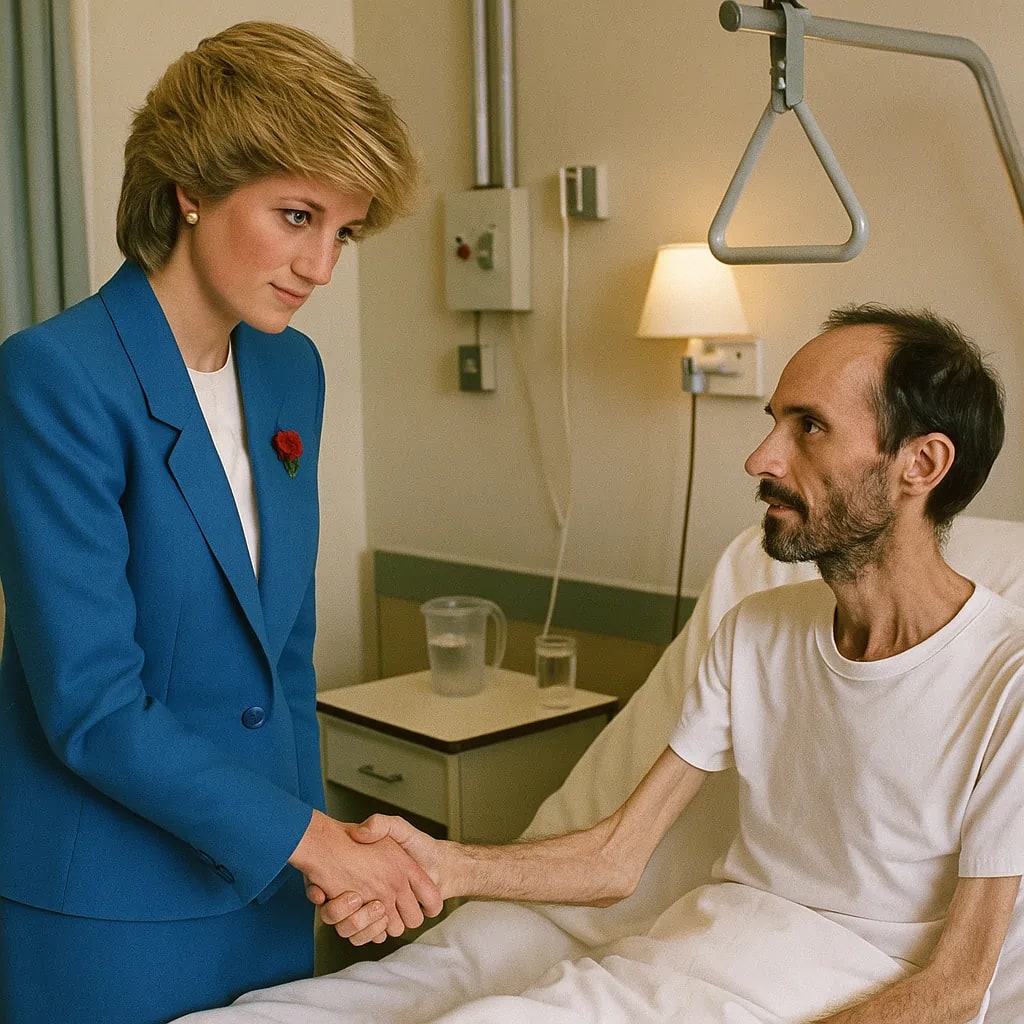
In front of the world’s media, Diana deliberately shook hands with an AIDS patient without wearing gloves—a gesture that challenged widespread public misconceptions about HIV transmission. At the time, much of the public believed the virus could be transmitted through casual contact, and many healthcare workers were reluctant to treat AIDS patients without extensive protective equipment. Diana’s simple handshake sent a powerful message worldwide:
“HIV does not make people dangerous to know, so you can shake their hands and give them a hug: Heaven knows they need it.”
Diana, Princess of Wales
This moment had immediate global impact. As John O’Reilly, a nurse present during Diana’s visit, later explained to the BBC, the princess “showed in a single gesture that this was a condition needing compassion and understanding, not fear and ignorance”. Her actions helped transform public perception of AIDS patients from pariahs to people deserving compassion and proper medical care.
Diana’s HIV/AIDS advocacy extended far beyond a single hospital visit. She became patron of the National AIDS Trust and made numerous visits to hospices and care facilities. The Mildmay Hospital, which she visited 17 times, credited her with helping to “change how the world viewed HIV and AIDS” by showing that people living with the virus “were not to be feared but to be treated with compassion and understanding”. This solidified her reputation for dedicated Diana charity work.
The princess’s humanitarian work wasn’t limited to AIDS advocacy. She championed causes affecting the most vulnerable members of society: the homeless, drug users, and children in need. Her approach was hands-on and personal—she would sit on patients’ hospital beds, hold hands with the dying, and spend time listening to individual stories. This direct engagement was revolutionary for a royal, who traditionally maintained ceremonial distance from such situations.
Watch: The day Princess Diana changed the world with a handshake
Breaking the royal mould: Protocol violations that connected hearts
Diana’s impact on the monarchy came partly through her systematic breaking of established royal protocols, actions that initially caused consternation within royal circles but ultimately endeared her to the public. These weren’t accidental transgressions but conscious choices that reflected her belief in authentic human connection over rigid formality, truly challenging royal traditions.
“I don’t go by the rule book. I lead from the heart, not the head.”
Diana, Princess of Wales
One of her most significant protocol breaks occurred at her own wedding, when she chose to omit the word “obey” from her marriage vows—a decision that both Kate Middleton and Meghan Markle later followed. This seemingly small change represented a broader shift toward more egalitarian relationships, even within the monarchy.
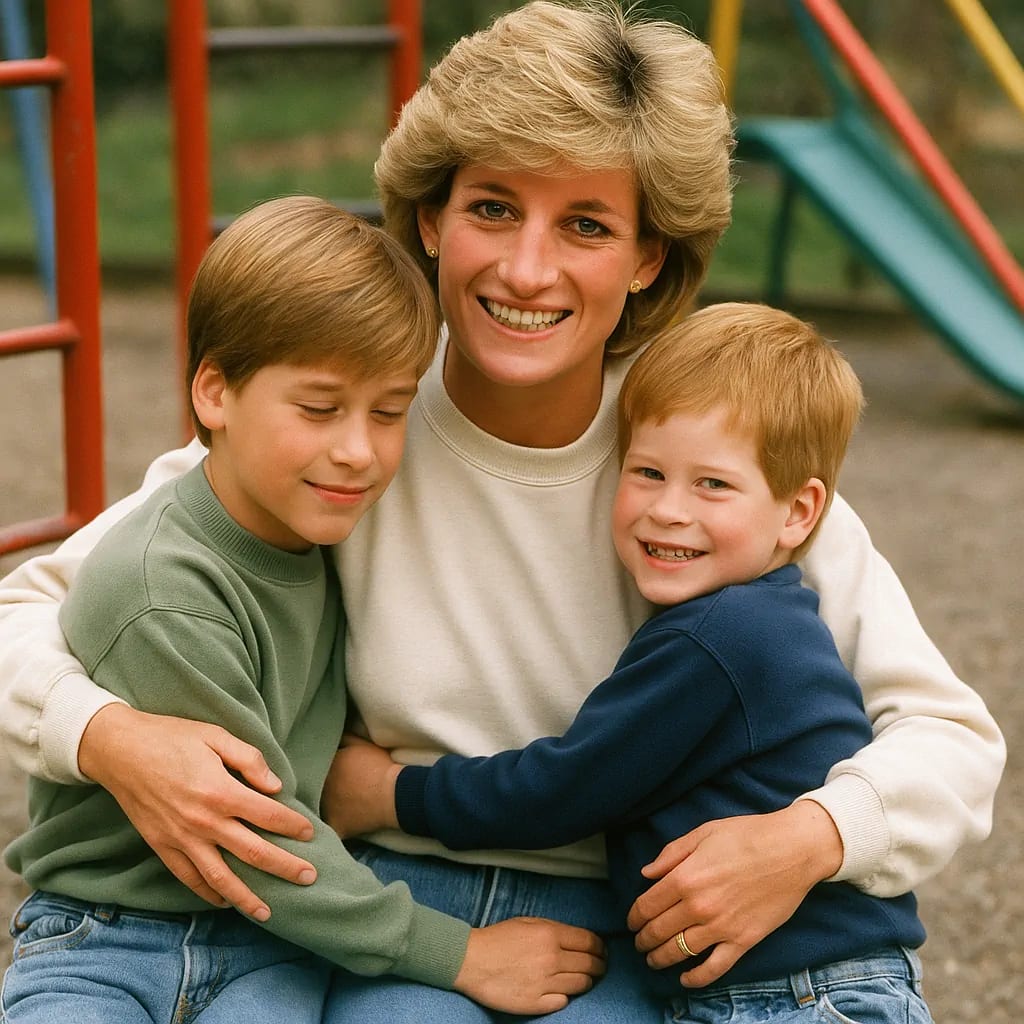
As a mother, Diana revolutionised royal parenting. She became the first royal to give birth in a hospital rather than at home, chose to breastfeed her children, and insisted on being a hands-on parent rather than delegating primary care to nannies. When she took nine-month-old Prince William on the 1983 tour of Australia, she established a precedent that royal children could accompany their parents on official duties.
Diana’s approach to public engagement was equally transformative. While previous royals maintained formal distance during public appearances, Diana actively sought out personal connections. She would stop to chat with individuals in crowds, listen to their concerns, and often follow up privately on issues brought to her attention. Her ability to make each person feel individually important earned her the devotion of millions.
The princess also broke down barriers between royals and staff. She encouraged her sons to spend time in the kitchens with palace workers, play with staff members’ children, and understand the lives of those who served the royal household. This approach helped William and Harry develop a more grounded understanding of life beyond palace walls.
Motherhood reimagined: Raising future kings with love and normalcy for Diana’s sons
Diana’s approach to motherhood represented perhaps her most personal rebellion against royal tradition. Determined that her sons would have the loving, stable childhood she had been denied, she prioritised emotional connection and “normal” experiences over strict adherence to royal protocol. This truly shaped the upbringing of Diana’s sons.
“I want to bring them up with security,” Diana once explained. “I hug my children to death and get into bed with them at night. I always feed them love and affection; it’s so important”. This hands-on approach was virtually unprecedented in royal circles, where children were traditionally raised primarily by nannies with parents maintaining more formal relationships.
“A mother’s arms are more comforting than anyone else’s.”
Diana, Princess of Wales
Diana made conscious decisions to expose William and Harry to life beyond the palace walls. She took them to homeless shelters, allowed them to experience public transportation, and ensured they understood the realities faced by ordinary people. Her famous trips to McDonald’s, Disney World, and go-kart tracks were not mere photo opportunities but deliberate attempts to give her sons experiences typical of their generation.
The princess also innovated in terms of royal education. Prince William became the first heir to the throne to attend public nursery school, breaking the tradition of exclusive private tutoring. Diana insisted that both boys attend mainstream schools where they could develop friendships with children from various backgrounds.
Her protective instincts were fierce. Diana made significant efforts to shield William and Harry from excessive media intrusion while still fulfilling her public duties. She negotiated with photographers for private family time and was known to physically position herself between her children and cameras when necessary.
This nurturing approach has had lasting impact on both sons. Prince William and Catherine’s parenting style clearly reflects Diana’s influence, with their emphasis on emotional availability and normal childhood experiences for their own children. Prince Harry has spoken extensively about how his mother’s approach to parenting informed his own values and his decision to prioritise his family’s wellbeing above royal duty.
Princess Diana timeline
| Year | Date | Event | Description |
|---|---|---|---|
| 1961 | July 1, 1961 | Birth | Diana Frances Spencer born at Park House, Sandringham |
| 1975 | June 1975 | Becomes Lady Diana | Father inherits Earl Spencer title, family moves to Althorp |
| 1980 | Summer 1980 | Meets Prince Charles | First romantic meeting at house party, she was 19 |
| 1981 | February 24, 1981 | Engagement Announced | Engagement to Prince Charles announced publicly |
| 1981 | July 29, 1981 | Royal Wedding | Marries Prince Charles at St. Paul’s Cathedral, 750 million viewers |
| 1982 | June 21, 1982 | Prince William Born | First son born, breaks royal tradition by giving birth in hospital |
| 1984 | September 15, 1984 | Prince Harry Born | Second son born, continues hands-on parenting approach |
| 1987 | April 1987 | AIDS Hospital Visit | Opens first HIV/AIDS ward, shakes hands without gloves – revolutionary moment |
| 1992 | December 1992 | Separation Announced | Prime Minister announces separation from Prince Charles |
| 1995 | November 1995 | Panorama Interview | Famous BBC interview: ‘There were three of us in this marriage’ |
| 1996 | August 28, 1996 | Divorce Finalized | Divorce from Prince Charles finalized, loses HRH title |
| 1997 | January 1997 | Angola Landmines Campaign | Famous minefield walk in Angola, advocates for landmine ban |
| 1997 | August 31, 1997 | Death in Paris | Dies in car crash in Pont de l’Alma tunnel, age 36 |
| 1997 | September 6, 1997 | Funeral | 2.5 billion people watch funeral, called ‘People’s Princess’ |
The marriage that captivated and devastated: Charles, Diana, and the third person
The fairytale narrative of Charles and Diana’s romance began to unravel almost as soon as their marriage vows were exchanged. What appeared to be a perfect royal match was, in reality, a union between two people fundamentally ill-suited to each other, complicated by the presence of what Diana would later famously describe as “a third person” in their marriage.
Charles, at 32, was marrying a woman 13 years his junior who, despite her aristocratic background, was largely unprepared for the intense scrutiny and rigid expectations of royal life. The prince had reportedly harboured doubts about the marriage from the beginning, with some sources suggesting he told biographer Robert Jobson: “I desperately wanted to get out of the wedding in 1981, when during the engagement I discovered just how awful the prospects were having had no chance whatsoever to get to know Diana beforehand”.
The presence of Camilla Parker Bowles cast a shadow over the marriage from its earliest days. Charles had maintained his relationship with Camilla before his marriage to Diana and, according to multiple sources, resumed the affair by 1986. Diana’s awareness of this relationship created profound emotional distress that manifested in eating disorders, depression, and what she described as cries for help.
The breakdown of their marriage played out increasingly in public view throughout the late 1980s and early 1990s. Both Charles and Diana eventually participated in tell-all interviews and cooperated with biographers to present their versions of events. Charles’s 1994 admission to Jonathan Dimbleby that he had been unfaithful “after the marriage had irretrievably broken down” was followed by Diana’s devastating 1995 Panorama interview, where she spoke openly about Charles’s affair and her own extramarital relationship.
The formal separation was announced in December 1992, with their divorce finalised in August 1996. Diana lost her HRH title but retained her Princess of Wales designation and received a significant financial settlement. More importantly for Diana, she secured an agreement that allowed her to maintain a central role in her sons’ lives and continue her humanitarian work.
Diana vs Camilla: Public perception and the battle for hearts
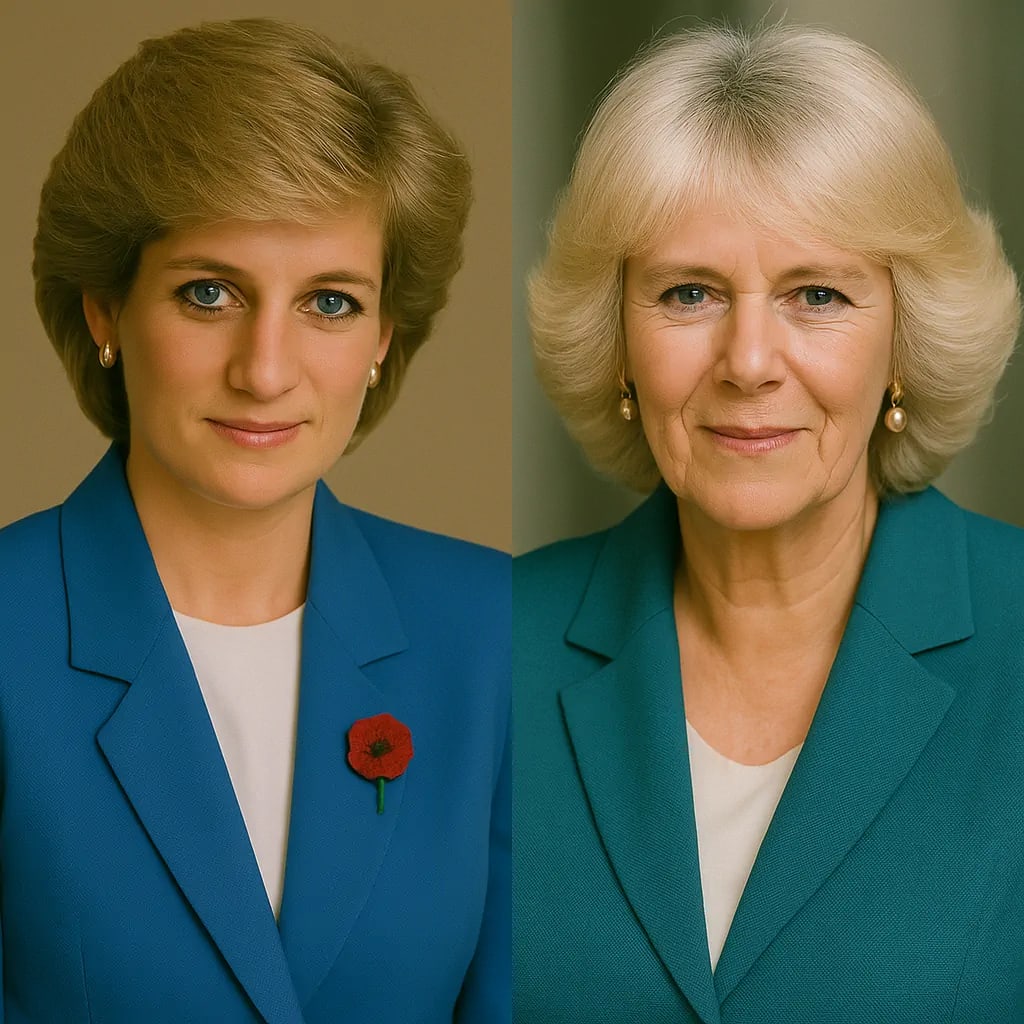
The public’s response to the Charles-Diana-Camilla triangle created one of the most enduring narratives in modern royal history. The contrast between Diana’s perceived warmth and openness and Camilla’s more reserved demeanour became a source of intense public fascination and, in many cases, anger directed toward the woman many blamed for destroying the “fairytale” marriage.
Diana’s public image was carefully cultivated but also genuinely authentic. She possessed natural charisma, photogenic qualities, and an ability to connect emotionally with both cameras and crowds. Her willingness to discuss personal struggles, her hands-on approach to charity work, and her obvious devotion to her children created a compelling public persona that resonated across social and economic boundaries.
Camilla, by contrast, was portrayed in media as the “other woman” who had destroyed Diana’s happiness. The phrase “there were three of us in this marriage, so it was a bit crowded” became one of the most quoted lines in royal history, crystallising public sentiment that positioned Diana as the innocent victim and Camilla as the villain.
Public polling consistently showed overwhelming support for Diana over both Charles and Camilla throughout the 1990s. A 2022 analysis revealed that even 25 years after Diana’s death, significant portions of the British public remained reluctant to accept Camilla, with Diana’s continuing popularity among younger generations making forgiveness unlikely. YouGov polling has shown that many Britons remain ambivalent toward Camilla, with Diana’s legacy of kindness and perception as a victim continuing to influence public opinion.
The media played a significant role in perpetuating this narrative. Tabloids regularly referred to Camilla with cruel nicknames and portrayed her as cold and calculating, while Diana continued to be presented as beautiful, compassionate, and wronged. This coverage undoubtedly influenced public perception and contributed to the lasting animosity many felt toward Camilla.
However, some observers have noted that this narrative, while emotionally satisfying, may have been overly simplistic. The marriage between Charles and Diana was complex, with fault on multiple sides, and the demonisation of Camilla may have reflected broader cultural discomfort with divorce and infidelity rather than fair assessment of individual culpability.
Fashion revolutionary: From shy Di to style icon of Princess Diana fashion
Diana’s evolution from the demure “Shy Di” of her engagement photos to one of the world’s most influential fashion icons represents one of the most dramatic style transformations in public memory. Her fashion choices became a form of communication, sending messages about her emotional state, her values, and her growing independence from royal convention. This era truly defined Princess Diana fashion.
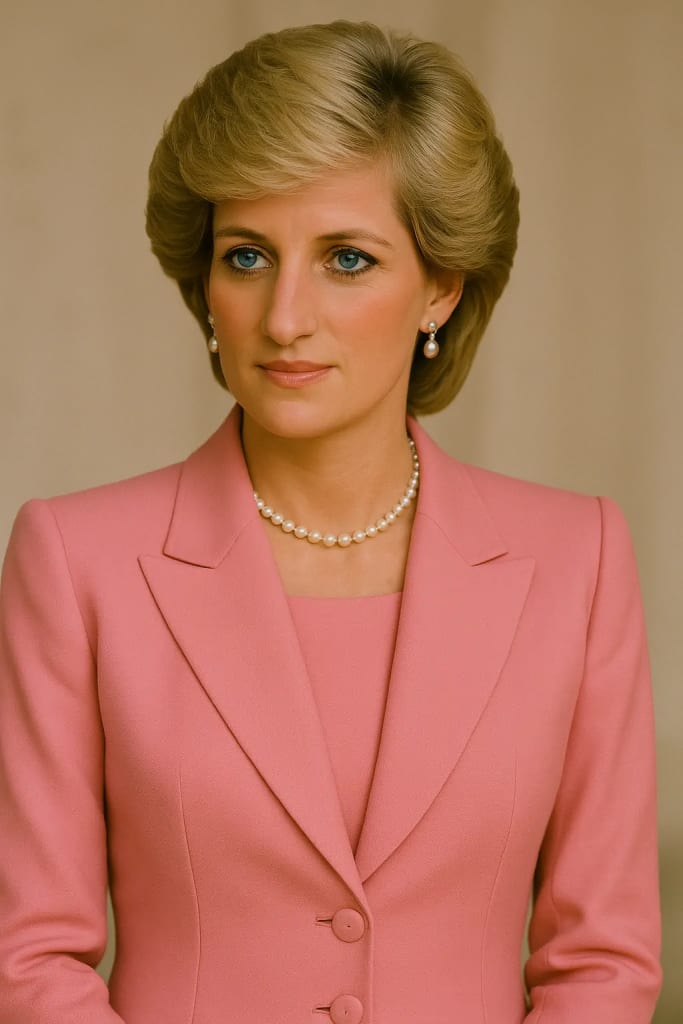
In her early royal years, Diana adhered to traditional expectations, wearing conservative suits and formal gowns that reflected royal protocol. However, as she grew in confidence and began to assert her independence, her fashion choices became bolder and more personal. She worked with trusted designers like Catherine Walker, Victor Edelstein, and Versace to create looks that were both appropriate for her royal role and reflective of contemporary fashion trends.
Diana’s most famous fashion moment came in June 1994, when she wore a figure-hugging black off-the-shoulder dress by Christina Stambolian to a Serpentine Gallery event—the same evening that Charles’s documentary admitting his affair was broadcast. The “revenge dress,” as it became known, was a masterclass in using fashion to convey strength and defiance. The image of Diana looking confident and radiant while her marriage publicly crumbled became one of the most iconic photographs of the decade.

The princess understood that fashion could amplify her humanitarian message. She wore bright, colourful clothing during hospital visits so that she could easily engage with children, avoided hats when visiting because they interfered with her ability to hug patients, and chose attire that reflected respect for the cultures she visited during international trips. Her 1986 visit to Japan, where she wore a red and white polka-dotted dress reflecting the Japanese flag, demonstrated her sophisticated understanding of diplomatic dressing.
Diana’s influence on fashion extends far beyond her lifetime. Contemporary designers like Virgil Abloh and Hedi Slimane have credited her as an inspiration. Her daughters-in-law, Catherine and Meghan, are both considered to channel Diana’s influence in their own style choices. Most remarkably, Diana has found a new generation of admirers among Gen Z and millennials who weren’t alive during her lifetime but have discovered her through social media platforms like TikTok and Instagram.
The hashtag #ladydiana has generated over 1.6 billion views on TikTok, with young people recreating her workout outfits, emulating her street style, and drawing inspiration from her off-duty looks. Her signature combination of cycling shorts, oversized sweatshirts, and chunky trainers has become a staple of contemporary casual fashion, proving the enduring relevance of her aesthetic choices. From TikTok trends to vintage fashion auctions, she still inspires—proof that genuine kindness never goes out of style.
Diana and the landmine campaign: Diplomacy through compassion
In the final months of her life, Diana’s humanitarian work reached its most impactful phase with her campaign against anti-personnel landmines. Her January 1997 visit to Angola, conducted in partnership with the International Red Cross and the HALO Trust, represented the culmination of her evolution from ceremonial royal to serious international advocate. This was a powerful display of Diana activism, especially with her focus on Diana and landmines.
Angola, ravaged by decades of civil war, contained an estimated 15 million landmines scattered across its territory. The country had the highest rate of amputees per capita in the world, with one in every 330 people having lost a limb to these hidden weapons. Diana’s decision to visit active minefields, wearing protective gear and walking through cleared paths, created some of the most powerful images of her career.
The famous photograph of Diana wearing a protective visor and flak jacket, walking through a minefield in Huambo, became an iconic image that transformed global awareness of the landmine crisis. Paul Heslop from the HALO Trust, who accompanied Diana during the visit, later admitted his nervousness: “My mind was in overdrive trying to make sure I wasn’t going to be the most famous person in the world the next day for blowing up the Princess of Wales”.

Diana’s involvement in the landmines campaign was politically controversial, with some British government officials criticising her for interfering in foreign policy. However, her advocacy proved highly effective. UK Government papers released years later showed that officials quickly recognised the success of her campaign and her plans to visit other heavily mined countries including Vietnam, Cambodia, and Kuwait.
The princess’s work contributed significantly to the passage of the Ottawa Mine Treaty, signed by 122 countries in December 1997, just months after her death. Paul Heslop later reflected: “I’m not saying that Diana made it happen, but I am saying that I think her involvement made it a lot harder for it not to happen”.
The timing of Diana’s death, so close to the treaty signing, added emotional weight to the landmines cause and helped ensure its passage. Prince Harry has continued his mother’s work, visiting Angola in 2019 and walking through the same minefield Diana had traversed 22 years earlier, which by then had been cleared and become a thriving community.
The tragic end: Death, conspiracy, and global mourning
A Diana death anniversary retrospective
The events of 31 August 1997 in Paris fundamentally altered not just the Royal Family but British society as a whole. Diana’s death in the Pont de l’Alma tunnel, alongside her companion Dodi Al Fayed and driver Henri Paul, sparked an unprecedented outpouring of public grief that caught both the media and the monarchy completely unprepared. This continues to be a poignant Diana death anniversary moment.
The circumstances of the crash immediately generated controversy. Henri Paul, head of security at the Ritz Hotel, had been drinking and was found to have been driving at 65 mph in a 30 mph zone when the Mercedes hit pillar 13 in the tunnel. The pursuing paparazzi, while not directly responsible for the crash, became symbols of the media intrusion that had plagued Diana throughout her public life.
Official investigations in both France and Britain concluded that Diana’s death was a tragic accident resulting from excessive speed, alcohol consumption, and the fact that none of the passengers were wearing seatbelts. However, conspiracy theories proliferated, fuelled by Mohamed Al Fayed’s allegations that the crash was orchestrated to prevent Diana’s marriage to his son Dodi.
The most persistent conspiracy theories suggested that Diana was pregnant with Dodi’s child and that the British establishment, uncomfortable with the prospect of the mother of future kings marrying a Muslim, orchestrated her death. Despite extensive investigations, including Operation Paget led by the Metropolitan Police, no credible evidence supporting these theories has ever been found.
A 2013 YouGov poll revealed the lasting impact of these conspiracy theories, showing that 38% of Britons believed Diana’s death was not an accident, while only 41% accepted the official account. The persistence of these beliefs reflects both the public’s deep emotional investment in Diana and broader scepticism about official narratives.
The week following Diana’s death witnessed scenes unprecedented in British history. An estimated 60 million flowers were left outside royal residences, creating a carpet of tributes that stretched for hundreds of metres. The public’s demand for the Royal Family to acknowledge their grief forced significant changes in royal protocol, culminating in the Queen’s televised address and her decision to bow to Diana’s coffin during the funeral procession.
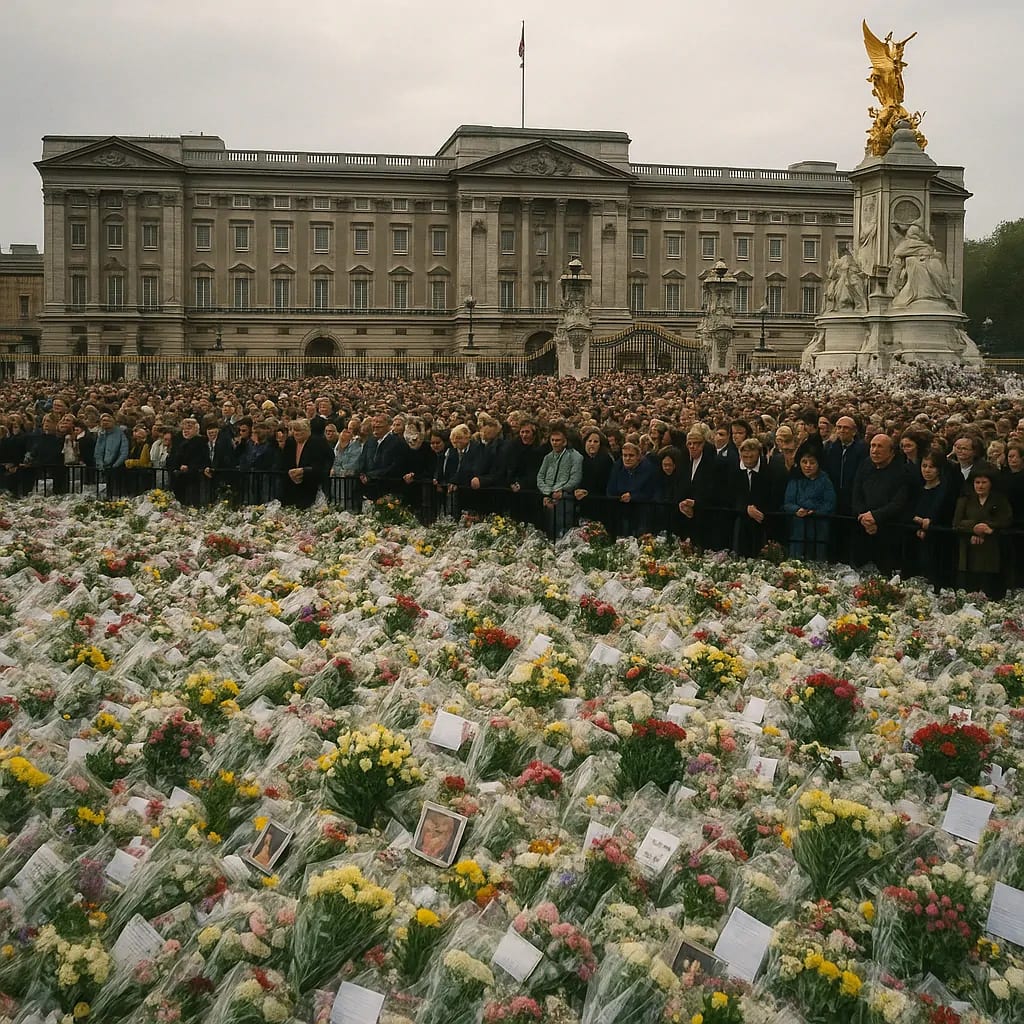
The funeral itself, watched by an estimated 2.5 billion people worldwide, became a defining moment in British cultural history. Tony Blair’s description of Diana as “the people’s princess” encapsulated the public mood and provided a phrase that has defined her legacy ever since.
The Diana effect: Transforming monarchy for the modern era
Diana’s impact on the British Royal Family extends far beyond her death, fundamentally altering how the monarchy operates and presents itself to the world. The “Diana Effect” represents a complete transformation in royal engagement, moving from formal, distant ceremonial roles to more accessible, emotionally available public service. This is the enduring Diana’s influence on the modern monarchy.
The most visible manifestation of Diana’s influence is seen in her sons’ approach to royal duties. Both William and Harry have embraced causes that reflect their mother’s values: mental health advocacy, support for vulnerable populations, and hands-on engagement with charitable work. Their joint initiative, Heads Together, focused on destigmatising mental health issues, directly echoing Diana’s openness about her own psychological struggles. William and Harry’s dedication to mental health and homelessness? That’s pure Diana spirit, living on.

The Duchess of Cambridge has clearly studied Diana’s approach to public engagement, frequently employing her mother-in-law’s technique of crouching to children’s eye level during visits and showing genuine emotional engagement with the people she meets. Similarly, Diana’s influence is evident in the more relaxed, accessible approach that younger royals have adopted toward media and public interaction.
King Charles III himself has acknowledged Diana’s influence on his approach to kingship. Royal experts note that his efforts to appear more relatable and emotionally available represent a clear departure from traditional royal reserve, influenced by lessons learned from Diana’s success in connecting with the public. As historian Robert Lacey observed, “One of the things that Diana introduced into modern royalty was the concept of conveying a sense of caring for people”.
The monarchy’s response to crises has also been transformed by Diana’s legacy. The institution now recognises the importance of immediate, emotionally appropriate responses to public tragedies, having learned from the criticism it faced for its initial coldness following Diana’s death. The Royal Family now embraces more open communication, social media engagement, and direct interaction with the public—all innovations that can be traced back to Diana’s influence.
Perhaps most significantly, Diana changed public expectations of what royalty should represent. No longer is it sufficient for royals to simply perform ceremonial duties; they are now expected to demonstrate genuine engagement with contemporary issues, show emotional intelligence, and use their platforms for meaningful social advocacy. This transformation has helped ensure the monarchy’s continued relevance in an increasingly democratic and socially conscious society.
The princess’s humanitarian legacy continues through the Diana Award, which recognises young people who demonstrate her values of compassion and service. The award’s chief executive, Tessy Ojo, explained Diana’s enduring appeal: “She made you feel like you mattered… for someone of colour, watching her hold this little girl… for me, I was that little girl and suddenly you were visible to her”.
Continuing influence: Diana’s legacy in contemporary culture
Twenty-seven years after her death, Princess Diana’s influence on contemporary culture remains remarkably strong, particularly among generations who never experienced her lifetime presence. Her story continues to captivate through films, television series, books, and social media, each new portrayal introducing her to fresh audiences while reinforcing her iconic status. This is the enduring nature of the Princess Diana influence Gen Z is discovering.
Recent productions like Netflix’s “The Crown,” Pablo Larraín’s film “Spencer,” and various documentaries have presented Diana’s story to millennials and Gen Z audiences, many of whom have become fascinated by her life and values. The fourth season of “The Crown,” featuring Emma Corrin’s portrayal of Diana, generated renewed global interest in her story and sparked conversations about mental health, royal family dynamics, and women’s experiences of public scrutiny.
“Nothing brings me more happiness than trying to help the most vulnerable people in society. It is a goal and an essential part of my life – a kind of destiny.”
Diana, Princess of Wales
Social media platforms have become unexpected venues for Diana appreciation, with TikTok users creating content inspired by her fashion choices, humanitarian work, and approach to life. The hashtag #princessdiana has generated billions of views, with young people drawn to her authenticity, style, and advocacy for marginalised communities—values that resonate strongly with contemporary social justice movements. This widespread reach highlights Diana TikTok as a powerful medium for her enduring appeal.
Diana’s influence on contemporary activism is particularly noteworthy. Her model of celebrity advocacy—using fame to draw attention to important causes rather than simply for personal benefit—has inspired countless public figures to engage in humanitarian work. Her approach of visiting affected communities, listening to individual stories, and using her platform to amplify marginalised voices has become the template for effective celebrity activism.
The fashion industry continues to reference Diana’s style, with designers regularly creating collections inspired by her looks and fashion magazines featuring “Diana-inspired” shoots. Her influence extends beyond high fashion to street style, with her casual combinations of athletic wear, blazers, and accessories continuing to inspire contemporary trends.
Educational initiatives now use Diana’s life as a case study in effective communication, humanitarian advocacy, and personal resilience. Her story offers lessons in overcoming adversity, using privilege responsibly, and maintaining authenticity under intense public pressure—themes that resonate with contemporary discussions about mental health, social responsibility, and personal empowerment.
Perhaps most significantly, Diana’s legacy continues to influence discussions about the role of public figures in society. Her demonstration that celebrities can use their platforms for meaningful social change has helped establish expectations that public figures should engage with important issues rather than simply entertaining audiences. This shift in public expectations has contributed to more socially conscious celebrity culture and greater awareness of humanitarian causes.
Princess Diana’s legacy represents far more than nostalgia for a beloved public figure; it embodies a fundamental transformation in how we understand the relationship between privilege and responsibility, celebrity and service, tradition and innovation. Her life demonstrated that authentic compassion, combined with strategic use of public platform, can create lasting positive change in society.
From her revolutionary approach to HIV/AIDS advocacy to her modernisation of royal parenting, from her fashion influence to her humanitarian campaigns, Diana established templates that continue to guide public figures today. Her ability to connect across social boundaries, challenge established norms while respecting institutional roles, and maintain humanity under intense scrutiny offers enduring lessons for leaders in any field.
The continuing fascination with Diana across generational lines suggests that her core message—that power should serve compassion, that privilege should serve purpose, and that genuine human connection transcends social barriers—remains as relevant today as it was during her lifetime. In an era of increasing social division and institutional scepticism, Diana’s legacy offers a model for authentic, effective public service that prioritises human dignity above personal advancement.
As new generations discover her story through contemporary media, Diana’s influence continues to evolve while maintaining its essential character: the belief that individual compassion, courageously expressed, can change the world. This enduring relevance ensures that Princess Diana’s legacy will continue to inspire and influence long into the future, cementing her place not just as the “People’s Princess” of her era, but as a timeless symbol of empathetic leadership and humanitarian service.