
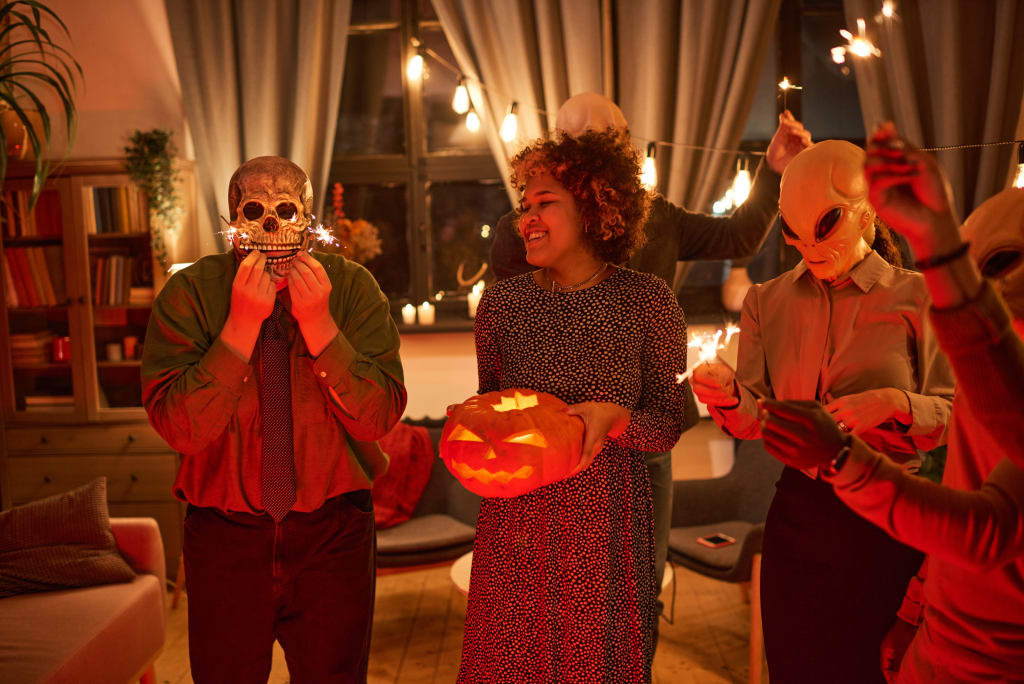
Every autumn, as the veil between worlds grows thin and shadows lengthen, millions of people across the globe participate in ancient rituals to honour their departed loved ones. From the Celtic bonfires of Samhain in Ireland to the marigold-adorned altars of Mexico’s Día de los Muertos, from the floating lanterns of Japan’s Obon to the contemporary trick-or-treating streets of America, humanity shares a profound connection through our relationship with death and remembrance. These global Halloween celebrations represent far more than costume parties and sweets. They embody thousands of years of cultural wisdom about grief, memory, family bonds, and the enduring human need to stay connected with those who came before us.
Understanding these diverse traditions reveals remarkable parallels across continents and centuries. Whether lighting a candle in a Polish cemetery, preparing pan de muerto for a Mexican ofrenda, or dancing in a Japanese Bon Odori circle, people worldwide are united in their desire to celebrate life by honouring death. This comprehensive exploration examines the historical origins, distinctive customs, symbolic foods, and modern evolution of the world’s most significant death-honouring festivals, demonstrating how these celebrations continue to shape our collective understanding of mortality, ancestry, and cultural identity in the 21st century.

The ancient Celtic roots: Samhain and the birth of Halloween
The story of Halloween begins over two thousand years ago with Samhain (pronounced “SOW-in” or “SAH-win”), the ancient Celtic festival that marked the transition between the year’s lighter and darker halves. Celebrated by Celtic communities across Ireland, Scotland, Wales, and other parts of Europe, Samhain represented far more than a simple harvest celebration. It was the Celtic New Year, falling on what we now know as October 31st and November 1st, signifying the end of summer and the beginning of winter.
+ Read more: The true history of Halloween: From Celtic Samhain to global celebration
The Celts believed that during Samhain, the boundary between the physical world and the spiritual realm became extraordinarily thin, allowing spirits, fairies, and otherworldly beings to traverse into the land of the living. This liminal time was simultaneously feared and revered, as it brought both the benevolent spirits of deceased ancestors and potentially malevolent entities seeking to cause mischief or harm.
Traditional Samhain customs and practices
Central to Samhain celebrations were communal bonfires, which served multiple sacred and practical purposes. These massive fires were lit by druids on sacred sites such as the Hill of Ward (Tlachtga) in County Meath, Ireland, which remains a focal point for modern Samhain revival celebrations. The Celts would extinguish their household fires and rekindle them from these ceremonial flames, symbolising communal unity and spiritual renewal.
The livestock slaughter season coincided with Samhain, as animals that couldn’t survive the winter were culled, and their bones were cast into the “bone fires” (a possible etymology for “bonfire”). This practical necessity became intertwined with spiritual significance, as the fires were believed to ward off harmful spirits and provide protection through the dark winter months.
Wearing disguises and masks was another crucial Samhain tradition, with Celtic people donning costumes to confuse and frighten away evil spirits that might otherwise recognize and harm them. This practice of “guising” directly influenced the modern Halloween custom of wearing costumes. Interestingly, today’s costume trends in 2025 have evolved far beyond simple disguises. Current popular costumes include K-Pop inspired characters, anime figures, and video game protagonists, yet they still serve the fundamental human desire for transformation and play that originated with ancient guising rituals. The core impulse to adopt different identities, whether to ward off spirits or simply celebrate creativity, remains unchanged across millennia.
Divination and fortune-telling
Samhain was considered an auspicious time for divination and fortune-telling, particularly regarding marriage prospects and the year ahead. Young people would perform rituals to glimpse their future spouses, using mirrors, apples, or hazelnuts in elaborate ceremonies passed down through generations. These supernatural beliefs reflected the Celtic understanding that during this liminal period, the future became as accessible as the past, and insights could be gained from the otherworld.
Food and hospitality for the dead
The tradition of leaving food and drink offerings for spirits originated with Samhain celebrations. Families would prepare extra places at their tables and leave portions of their meals outside their homes to appease wandering spirits, particularly those of deceased family members who might return to visit during this sacred time. This custom of providing hospitality to the dead evolved into various practices, including “souling,” where poor individuals would go door-to-door offering prayers for the deceased in exchange for soul cakes, a direct precursor to modern trick-or-treating.
The Christianisation: Allhallowtide and the transformation of tradition
As Christianity spread throughout Celtic lands during the first millennium AD, Church authorities faced the challenge of reconciling popular pagan festivals with Christian theology. Rather than attempting to eradicate these deeply ingrained cultural practices, the Church strategically incorporated them into the liturgical calendar, creating what became known as Allhallowtide, a three-day Christian observance dedicated to remembering the dead.
The origins of All Saints’ Day and All Souls’ Day
In 609 CE, Pope Boniface IV established a feast day commemorating Christian martyrs, originally celebrated on May 13th when he dedicated Rome’s ancient Pantheon as a church to St. Mary and all martyrs. By the 8th century, Pope Gregory III moved this celebration to November 1st and expanded it to honour all saints, not just martyrs. This date was likely chosen specifically to coincide with and supersede Samhain celebrations, facilitating the conversion of Celtic peoples by allowing them to maintain familiar autumnal observances within a Christian framework.
All Saints’ Day (November 1st), also known as All Hallows’ Day or Hallowmas, became a time to celebrate all canonised saints and unknown holy persons who had attained heaven. The evening before, All Hallows’ Eve, eventually contracted to “Hallowe’en” and finally “Halloween”.
The following day, All Souls’ Day (November 2nd), was popularised in the 11th century by Abbot Odilo of Cluny, who established it as a day for Cluniac monks to pray specifically for the souls of all faithful departed who might still be in purgatory. This created a comprehensive system: All Saints’ Day honoured those definitively in heaven, while All Souls’ Day provided intercession for those souls still awaiting final salvation.
European cemetery traditions
Across Catholic Europe, cemetery visits became central to Allhallowtide observances, with families gathering to clean graves, lay flowers, light candles, and pray for deceased relatives. These practices remain extraordinarily vibrant in contemporary Central Europe, particularly in Poland, Austria, Germany, Hungary, and the Czech Republic.
In Poland, the observance of Wszystkich Świętych (All Saints’ Day) transforms cemeteries into seas of glowing light as millions of candles illuminate graves throughout the night. This tradition, dating to pre-Christian times and later integrated with Catholic liturgy, became especially significant during Poland’s periods of occupation and partition in the 19th century, when cemeteries served as spaces for asserting Polish cultural identity. The custom has such visual impact that Central European cemeteries on All Saints’ Day are reputedly visible from space due to the concentration of candle flames.

Environmental concerns have emerged in recent years regarding the ecological impact of millions of candles burned simultaneously. Some Polish municipalities have introduced programs to collect and recycle candle remnants, while encouraging the use of LED alternatives. However, many families resist these changes, viewing the traditional flame as an irreplaceable symbol of eternal memory and spiritual presence. This tension between cultural preservation and environmental sustainability reflects broader challenges facing traditional practices in the modern era.
In Germany, families observe Allerheiligen and Allerseelen by decorating graves with autumn flowers, evergreen branches symbolising eternal life, and candles. A special braided bread called Allerheiligenstiezel is shared among family members and traditionally given to children by godparents, who then say prayers for the dead.
Traditional All Souls’ foods
Beyond cemetery rituals, specific foods became associated with remembering the dead. In Italy, Fave dei Morti (beans of the dead), small, bean-shaped cookies made with almond flour, are prepared as offerings to the deceased. In Austria and parts of Germany, soul pretzels (Seelenbrezen) are given to children who pray for the souls in purgatory. These culinary traditions exemplify how material offerings and communal eating serve as tangible expressions of spiritual connection across generations.
Día de los Muertos: Mexico’s joyful celebration of death
While European traditions often carry solemn undertones, Mexico’s Día de los Muertos (Day of the Dead) represents a fundamentally different philosophical approach to death. One that embraces mortality with colour, music, humour, and exuberant celebration rather than mourning. Observed primarily on November 1st and 2nd (though celebrations may extend from October 31st through November 6th depending on the region), this festival exemplifies the syncretism of Indigenous Mesoamerican death traditions with Spanish Catholic influences.

Pre-Hispanic and colonial foundations
The roots of Día de los Muertos stretch back over three thousand years to ancient Mesoamerican civilizations, particularly the Aztecs, who maintained complex beliefs about death and the afterlife. Unlike European Christian concepts of heaven and hell, Aztec theology taught that one’s destination after death depended not on moral conduct during life but on the manner of death. Those who died of natural causes embarked on a long, difficult journey to Mictlán, the underworld ruled by Lord Mictlantecuhtli and Lady Mictecacíhuatl (the “Lady of the Dead”), where their bones were guarded for potential future use in creating new humans.
The Aztecs conducted annual festivals honouring the dead, supervised by Mictecacíhuatl, and these celebrations occurred during the ninth month of the Aztec solar calendar, roughly corresponding to August. When Spanish conquistadors arrived in the 16th century and imposed Catholicism, missionaries strategically aligned these indigenous death observances with the Catholic Allhallowtide, creating the syncretic tradition that exists today.
The ofrenda: architecture of memory
The centrepiece of Día de los Muertos celebrations is the ofrenda (offering or altar), an elaborate, multi-tiered structure built in homes, public spaces, schools, cemeteries, and community centres to welcome the spirits of deceased loved ones back to the world of the living. These altars are carefully constructed following traditional symbolic principles, though regional variations exist throughout Mexico.
Traditional ofrendas consist of seven or nine levels, representing the stages of the afterlife or the levels of the underworld that spirits must traverse to visit their families. However, simpler two or three-tiered ofrendas are also common, particularly in modern urban settings.

Essential elements of the ofrenda
Each component of the ofrenda carries deep symbolic significance:
Photographs of the deceased occupy positions of honour, typically at the top tier, allowing the living to identify and directly address their departed loved ones.
Cempasúchil (marigolds, also called flor de muerto or flower of the dead) are absolutely essential, with their vibrant orange and yellow petals believed to guide spirits home through their intense colour and distinctive fragrance. The name derives from the Nahuatl cempōhualxōchitl, meaning “twenty flowers,” referring to their multiple petals. Families create elaborate arches, garlands, and pathways from marigold petals, leading from cemetery gates or front doors directly to the ofrenda, ensuring ancestral spirits can find their way.
Candles and incense (particularly copal, a tree resin used since pre-Hispanic times) purify the space and illuminate the path for returning souls. The number of candles may correspond to the number of deceased being honoured.
Food and beverages, especially the deceased’s favourite dishes, are lovingly prepared and displayed. Common offerings include freshly cooked meals, fruit (particularly oranges, guavas, and tejocotes), traditional Mexican chocolate, and alcoholic beverages like mezcal, tequila, or pulque for adult spirits.
Pan de muerto (bread of the dead) is the signature culinary creation of Día de los Muertos. This sweet, orange-scented bread often features decorative elements representing bones, and its round shape symbolises the cycle of life and death. Families begin preparing pan de muerto weeks before the celebration, with commercial bakeries producing thousands of loaves to meet demand.
Traditional pan de muerto bread with decorative bone patterns and orange-blossom flavor characteristic of Día de los Muertos
Calaveras (skulls) appear in multiple forms: intricate sugar skulls inscribed with names of the deceased, ceramic or papier-mâché skulls, and chocolate skulls. These cheerful, colourful skull representations derive from both pre-Columbian Mesoamerican iconography (where skulls symbolised death and rebirth) and from early 20th-century Mexican satirical art, particularly the works of printmaker José Guadalupe Posada, whose skeletal figure “La Catrina” became an enduring icon of the holiday.
Calaveras literarias (literary skulls) are humorous, satirical poems written as mock epitaphs for people who are actually still alive, often poking fun at politicians, celebrities, or friends. This tradition, popularised by Posada’s publications, reflects the Mexican cultural philosophy of laughing at death rather than fearing it.
Papel picado (perforated paper) with intricate designs cut into colourful tissue paper creates the visual backdrop for ofrendas, with patterns often depicting skulls, marigolds, and celebratory scenes.
Additional elements include salt (for purification and to prevent corruption), water (to quench the thirst of spirits after their long journey), personal belongings of the deceased, toys (for children’s spirits), and religious items such as crucifixes and images of saints.
Temporal structure: Día de los Angelitos and Día de los Difuntos
The celebration follows a specific temporal structure that distinguishes between different categories of the deceased. On November 1st, known as Día de los Angelitos (Day of the Little Angels), families honour deceased children and infants. Ofrendas prepared for children feature toys, sweets, bright colours, and white flowers, reflecting the innocence and purity associated with young souls.
At midnight transitioning into November 2nd, the focus shifts to Día de los Difuntos (Day of the Deceased Adults), when adult spirits are welcomed with more elaborate feasts, alcoholic beverages, cigarettes (if the deceased smoked), and favourite meals. The atmosphere becomes more festive, with families gathering to share stories, play music, and celebrate the lives of their departed relatives.
UNESCO recognition and global spread
In 2003 (later inscribed in 2008), UNESCO proclaimed Día de los Muertos an Intangible Cultural Heritage of Humanity, recognising its extraordinary cultural significance and the fusion of indigenous and European traditions it represents. This designation acknowledges how the celebration affirms individual and community identity, reinforces the political and social status of Mexico’s indigenous communities, and demonstrates humanity’s diverse approaches to understanding death and remembrance.
The tradition has spread significantly beyond Mexico, particularly to Mexican diaspora communities in the United States, where major cities host elaborate Día de los Muertos celebrations, parades, and community altars. In recent years, the celebration has gained global recognition through popular culture, including films like Pixar’s “Coco” (2017), though some Mexican cultural practitioners express concern about commercialisation and misappropriation of sacred traditions.
Día de los Muertos in diaspora communities
The celebration’s evolution in diaspora contexts reveals both cultural resilience and adaptation. In cities like Los Angeles, San Francisco, and Chicago, Mexican-American communities have created large-scale public celebrations that serve multiple functions. These events maintain connections to ancestral traditions while educating broader American audiences about Mexican culture. Second and third-generation Mexican-Americans often report that participating in Día de los Muertos celebrations helps them reconnect with cultural roots and family histories that might otherwise fade.
However, challenges exist. Some community leaders express concern that public celebrations increasingly emphasise aesthetic elements (colourful face paint, elaborate costumes) while overlooking the spiritual and familial significance at the tradition’s core. The commercialisation of La Catrina imagery, sugar skulls on merchandise, and “Day of the Dead parties” at bars have sparked debates about cultural appropriation versus appreciation.
Obon: Japan’s festival of returning spirits
In the heart of summer, when the heat of August blankets Japan, millions of people participate in Obon (お盆), the Buddhist-influenced festival honouring ancestral spirits. This multi-day celebration, typically observed from August 13th to 16th (though some regions celebrate in mid-July following the solar calendar), represents one of Japan’s most significant holidays and largest periods of domestic travel, comparable only to New Year and Golden Week.

Buddhist origins and the legend of Mokuren
The origins of Obon trace to a Buddhist parable dating back over 500 years, though the festival incorporates elements from pre-Buddhist Japanese ancestor veneration practices. According to legend, Mokuren (known in Sanskrit as Maha Maudgalyayana), one of the Buddha’s disciples renowned for his supernatural powers, used his abilities to search for his deceased mother’s spirit. To his horror, he discovered her suffering in the Realm of Hungry Ghosts, starving and in torment.
Desperate to relieve his mother’s anguish, Mokuren sought Buddha’s counsel. Buddha instructed him to make offerings of food to Buddhist monks who had just completed their summer meditation retreat on the fifteenth day of the seventh month. When Mokuren followed this guidance, his mother was released from suffering, and he was overcome with joy and gratitude, dancing in celebration of her liberation and in recognition of the sacrifices she had made for him during her life. This joyful dance became the foundation for Bon Odori, the folk dances central to modern Obon celebrations.
Historical records indicate that Obon was officially practiced in Japan as early as 606 CE during the reign of Empress Suiko (592-628), and by 733 CE, it had been established as a customary Buddhist holiday within the imperial court.
Obon traditions and rituals
Obon customs centre on welcoming ancestral spirits back to the family home and then respectfully sending them off again after several days of remembrance and celebration. The festival’s practices vary considerably across different regions of Japan, but core elements remain consistent.
Preparation and grave cleaning
In the days preceding Obon, families return to their ancestral hometowns, often travelling significant distances, to clean family graves, tidy household Buddhist altars (butsudan), and prepare offerings. This mass migration creates one of Japan’s busiest travel periods, with highways, railways, and airports operating at capacity.
Mukae-bi (Welcome fires)
On the first day of Obon, families light chochin (paper lanterns) and visit family graves to symbolically guide ancestral spirits back home in a ritual called mukae-bon. Some regions light large bonfires at house entrances to illuminate the path for returning souls. Families may also create shouryouma (spirit horses and cows) from cucumbers and eggplants with stick legs. Cucumbers represent swift horses to bring ancestors home quickly, while eggplants represent slower cows for a leisurely departure back to the spirit world.
Offerings and altar arrangements
During Obon, families prepare the butsudan with fresh flowers (particularly lotus blooms), seasonal fruits, vegetables, special foods, and photographs of deceased family members. These offerings include dishes the ancestors enjoyed in life, demonstrating continued care and respect.
Bon Odori (Bon dance)
The most visually spectacular and participatory aspect of Obon is Bon Odori, the traditional folk dance performed at festivals throughout Japan. These community dances take place in parks, temple grounds, and public squares, centred around a raised wooden platform called a yagura where musicians and singers perform.
Japanese Obon festival showing participants in yukata dancing around yagura platform with taiko drummers
Taiko drummers provide the rhythmic foundation, their powerful beats resonating through the night air and believed to revitalise both participants and ancestral spirits. Dancers, often wearing traditional summer kimonos called yukata, circle the yagura in choreographed movements that vary by region. The dances range from simple, repetitive patterns that anyone can join to complex regional styles like Awa Odori (Tokushima), Gujo Odori, and Nishimonai Odori (Akita).
The festival grounds buzz with food stalls (yatai) selling traditional Japanese festival fare: yakitori, takoyaki, kakigōri (shaved ice), yakisoba, and game booths where children can scoop goldfish or catch balloon yo-yos. The atmosphere blends solemn remembrance with joyful celebration, embodying the Buddhist concept of finding happiness in honouring those who came before.
Tōrō nagashi (Floating lanterns)
At Obon’s conclusion, many communities perform tōrō nagashi, floating paper lanterns down rivers toward the sea. These illuminated lanterns symbolically guide ancestral spirits back to the afterlife, their flickering lights carrying prayers and good wishes. The sight of hundreds or thousands of glowing lanterns drifting on dark water creates one of Japan’s most hauntingly beautiful traditions.

Okuri-bi (Sending-off fires)
The final ritual, okuri-bon, involves relighting lanterns and sometimes large bonfires to send the spirits safely back to the otherworld. In Kyoto, this takes the form of the spectacular Gozan no Okuribi (Five Mountain Sending Fire), where enormous bonfire patterns, including the famous dai (大, meaning “large”) character, are lit on five mountains surrounding the city.
Obon in modern Japan
Despite Japan’s increasing secularisation, Obon remains extraordinarily popular across religious, generational, and geographical boundaries. Even Japanese who don’t identify as Buddhist often return to their family homes, participate in Bon Odori, and honour their ancestors during this period. The festival serves crucial social functions, providing opportunities for extended family reunions, strengthening community bonds, and preserving regional cultural identities through distinctive local dance styles and foods.
Virtual Obon and diaspora adaptations
The COVID-19 pandemic and increasing globalisation have prompted innovative adaptations of Obon traditions. Japanese diaspora communities in North America, South America, and Europe have established their own Obon festivals, often held in Buddhist temples or community centres. These events serve as important cultural touchstones for second and third-generation Japanese immigrants seeking connection to their heritage.
In 2020 and 2021, many communities pioneered “virtual Obon” celebrations, streaming Bon Odori performances online and teaching dances via video tutorials. While some purists initially resisted these digital adaptations, many participants discovered unexpected benefits. Elderly relatives in Japan could “attend” celebrations with family members abroad, and people with mobility limitations could participate from home. These innovations have continued even as in-person celebrations resumed, creating hybrid models that expand accessibility while maintaining traditional elements.
The Hungry Ghost Festival: Buddhist and Taoist traditions in East Asia
While not as widely known in the West as Obon or Día de los Muertos, the Hungry Ghost Festival (中元節, Zhongyuan Jie in Chinese; Yulanpen or Ullambana in Buddhist contexts) represents another significant East Asian tradition for honouring the dead, celebrated primarily in China, Hong Kong, Taiwan, Singapore, Malaysia, and other regions with Chinese cultural influence.

Origins and religious syncretism
The Hungry Ghost Festival exemplifies the blending of Buddhist and Taoist (Daoist) beliefs in Chinese folk religion. The Buddhist tradition centres on the same Mokuren/Maudgalyayana story foundational to Japanese Obon: the disciple who saved his mother from the Realm of Hungry Ghosts through offerings to monks. This narrative emphasises filial piety (a core Confucian virtue) and demonstrates how Buddhist practices can aid deceased relatives.
The Taoist interpretation focuses more broadly on appeasing and pacifying hungry ghosts, spirits of individuals who died tragic, violent, or wrongful deaths, or who lack living descendants to perform memorial rites. These “hungry” or “wandering” ghosts are believed to be released from the underworld during the seventh lunar month, free to roam the earth seeking sustenance and potentially causing mischief or harm if not properly placated.
Ghost month and festival observances
The entire seventh month of the Chinese lunar calendar (falling roughly in August) is considered Ghost Month, with the 15th day designated as the peak of the Hungry Ghost Festival. During this inauspicious period, the gates of the underworld stand open, and both ancestral spirits and hungry ghosts walk among the living.
Offerings and rituals
Families prepare elaborate offerings of food and drink, which are placed on tables or altars set up outside homes, temples, or along roadsides. Foods with symbolic significance are favoured: Chinese lettuce for prosperity, pineapple for good fortune, and noodles for longevity. Importantly, these offerings are explicitly intended not just for one’s own ancestors but also for wandering hungry ghosts, demonstrating community-wide compassion and the desire to prevent these unhappy spirits from bringing misfortune to the living.
Burning joss paper
A distinctive practice involves burning joss paper (ghost money) and elaborate paper replicas of material goods: houses, cars, clothing, mobile phones, even servants, believed to transfer these items to the spirit world where the deceased can use them. Smoke from burning offerings carries these goods to the afterlife, improving conditions for departed souls. Observing these burning rituals requires respectful behaviour: one should not touch the offerings, step over the burning area, make disruptive noises, or interfere in any way.

Entertainment for spirits
Some regions stage street opera performances and theatrical shows specifically to entertain both the living and the dead, with the first rows of seats traditionally left empty or reserved for ghostly attendees. These performances, depicting Chinese folklore and mythology, serve both entertainment and spiritual appeasement functions.
Releasing water lanterns
Like Japanese Obon, the festival concludes with floating lotus-shaped lanterns down rivers, symbolically guiding lost souls back to the afterlife. When the lanterns’ flames extinguish, it signifies the ghosts’ successful return to the spirit realm.
Regional variations
The Hungry Ghost Festival manifests differently across regions. In Singapore and Malaysia, large-scale community celebrations include elaborate feasts, auctions of blessed items, and performances called getai (song stages). In Hong Kong, the Chaozhou Hungry Ghosts Festival commemorates deceased workers who died far from their ancestral homes, particularly those who experienced tragic deaths, emphasising the importance of proper memorial rites even for strangers.
Chuseok: Korea’s harvest thanksgiving and ancestral remembrance
In Korea, the autumn festival of Chuseok (추석, literally “autumn evening”) provides a fascinating counterpoint to explicitly death-focused celebrations, blending harvest thanksgiving with profound ancestral veneration. Celebrated on the 15th day of the eighth lunar month when the harvest moon is fullest (typically falling in September or early October), Chuseok ranks alongside Lunar New Year as Korea’s most important traditional holiday.
Origins and cultural significance
The exact origins of Chuseok remain debated, but the festival likely predates the Three Kingdoms Era (57 BCE to 668 CE), possibly originating in ancient shamanistic harvest moon celebrations. One legend attributes Chuseok to a month-long weaving contest between two teams during the Silla Kingdom, with the losing team providing a feast for the winners, establishing a tradition of thanksgiving and communal celebration nearly two thousand years ago.
Chuseok is often called Hangawi, meaning “the great middle (of autumn)” or “the 15th day of August” according to the lunar calendar. The festival celebrates the harvest season and honours ancestors for providing the blessings that led to abundant crops.
Charye: ancestral memorial rites
The centrepiece of Chuseok observance is charye (차례), an ancestral memorial ceremony performed early on Chuseok morning. Families gather at the eldest son’s house (following Confucian patrilineal traditions), where an elaborate offering table is meticulously prepared according to specific placement principles based on cardinal directions.
The traditional arrangement dictates: rice and soup on the north, fruits and vegetables on the south, meat dishes on the west, and rice cakes and alcoholic beverages on the east. However, regional and generational variations exist, with modern families adapting these rules while maintaining the ritual’s essential spirit.
The ceremony involves multiple rounds of deep bowing (jeol) from a kneeling position, offering wine and food to ancestors, and reciting prayers expressing gratitude and dedication. The eldest male descendant typically presides over the ceremony, though some contemporary families have modified this gender-specific role. Following charye, family members share the blessed food in a communal meal, strengthening family bonds while remembering ancestors’ sacrifices.
Seongmyo: visiting and tending ancestral graves
After the morning ceremony, families perform seongmyo (성묘), visiting and caring for ancestral graves. This involves travelling to burial sites (often in rural areas where ancestors originated), clearing weeds, cleaning the gravesites, and conducting a simplified memorial service. This practice embodies the Confucian virtue of filial piety (hyo), demonstrating respect that extends beyond death.
Songpyeon: the signature food of Chuseok
The most characteristic Chuseok food is songpyeon (송편), half-moon-shaped rice cakes made with newly harvested rice and filled with sweetened ingredients such as sesame seeds, chestnuts, red bean paste, or mung beans. The rice cakes are steamed on layers of fresh pine needles, infusing them with a distinctive fragrance that fills homes with the essence of autumn.
Making songpyeon is a multi-generational family activity, particularly for women, providing opportunities for grandmothers to pass down traditional knowledge to daughters and granddaughters. A popular saying claims “girls who make pretty songpyeon will have pretty daughters,” encouraging careful craftsmanship and connecting the activity to marriage prospects and family continuity.
Modern Chuseok celebrations
Contemporary Chuseok involves gift-giving between relatives, friends, and business associates, with popular presents including high-quality beef, fresh fruit (particularly Korean apples and pears), traditional Korean snacks, and practical items like cooking oil or even Spam gift sets (Spam being extraordinarily popular in Korea). Department stores and supermarkets display elaborate gift sets in the weeks preceding Chuseok.
Traditional folk activities include ssireum (Korean wrestling), ganggangsullae (women’s circle dance under the full moon), samulnori (percussion quartet), and talchum (mask dance). While fewer families maintain all traditional practices, especially as Korea urbanises and nuclear families replace extended household structures, Chuseok remains a time when millions travel to ancestral hometowns, creating one of the world’s largest annual human migrations.
Traditional foods: connecting the living and dead through cuisine
Across all cultures that honour the dead, food serves as a sacred medium bridging the material and spiritual worlds. The specific dishes prepared during these festivals carry profound symbolic meanings, represent seasonal abundance, demonstrate continued care for deceased relatives, and create tangible connections between past and present generations.
Irish Samhain and Halloween foods
In Ireland, traditional Samhain foods emphasised the autumn harvest and incorporated fortune-telling elements that made eating simultaneously nourishing and prophetic.
Barmbrack (bairín breac in Irish, meaning “speckled loaf”) is perhaps the most iconic Irish Halloween food, a sweet, dense fruit bread made with dried fruits soaked in tea and often leavened with barm (yeast from beer). What distinguished Halloween barmbrack was the inclusion of wrapped fortune-telling objects baked into the loaf. Finding a ring in your slice predicted marriage within the year; a coin meant wealth; a pea or rag signalled poverty; a stick foretold an unhappy marriage or a beating by one’s spouse; a thimble meant spinsterhood; and a religious medal suggested a religious vocation. Most commercial barmbracks today contain only a ring, though traditional families still bake the full range of charms.
Colcannon (from Irish cál ceannann, meaning “white-headed cabbage”) is a hearty dish of mashed potatoes, cabbage or kale, butter, milk, and scallions, perfect for cold October evenings. Like barmbrack, colcannon incorporated fortune-telling, with wrapped charms hidden in the mash. Additionally, a portion of colcannon was traditionally left outside for the púca (a mischievous fairy creature) to ensure good luck and prevent supernatural mischief such as souring milk or spoiling crops. Single women would place the first and last bites of colcannon into a stocking and hang it on their front door, believing the next unmarried man to enter would become her future husband.
Other traditional Samhain foods included boxty (potato cakes), Irish stew (made with lamb, potatoes, and root vegetables), soda bread, and apple-based dishes, as apples featured prominently in divination games like bobbing for apples.
Mexican pan de muerto and symbolic foods

Pan de muerto represents one of the most recognisable elements of Día de los Muertos celebrations. This sweet, orange-scented bread often features decorative strips of dough arranged to resemble bones, with a knob on top representing either a skull or a heart. The bread’s round shape symbolises the cyclical nature of life and death, while its ingredients (butter, eggs, sugar, orange) represent abundance and the sweetness of life.
Pre-colonial influences persist in the bread’s symbolism, as Aztec rituals involved human sacrifice, and some scholars believe the cross-shaped bone decoration replaced earlier representations of actual hearts and blood. After Spanish colonisation, these graphic symbols were Christianised into crosses and less explicit forms.
Beyond pan de muerto, ofrendas feature tamales, mole, seasonal fruits (particularly oranges, bananas, and guavas), sugar cane, Mexican hot chocolate, and atole (a warm corn-based beverage). Each of these foods serves dual purposes: nourishing living family members and providing spiritual sustenance for visiting souls.
Regional variations of pan de muerto exist throughout Mexico. In Oaxaca, the bread tends to be less sweet and sometimes topped with sesame seeds. In Michoacán, families prepare a butterfly-shaped version symbolising the monarch butterflies that migrate to the region each autumn, believed by some to carry the souls of the deceased. These regional differences reflect Mexico’s incredible cultural diversity and the localised nature of death traditions even within a single national celebration.
Japanese Obon foods and offerings
Japanese Obon food traditions vary by region but commonly include vegetarian dishes in accordance with Buddhist principles, particularly during memorial services. Families prepare elaborate meals featuring sushi, somen (thin wheat noodles), tempura (fried vegetables and seafood), seasonal vegetables, and fresh fruits.
The butsudan altar receives offerings of rice, tea, sake, seasonal fruits (particularly watermelon and Japanese pears), and ohagi or botamochi (sweet rice cakes covered in sweet bean paste). These offerings demonstrate continued care and provide spiritual nourishment for ancestral spirits.
Korean Chuseok foods
Beyond songpyeon, Chuseok tables overflow with jeon (Korean-style pancakes made with vegetables, seafood, or meat), japchae (glass noodle stir-fry), bulgogi (marinated beef), fresh seasonal fruit (particularly Korean pears, apples, jujubes, and persimmons), and various namul (seasoned vegetable side dishes). The abundance of food symbolises gratitude for a successful harvest and demonstrates prosperity to honour ancestors.
Modern Halloween: commercialisation and global spread
While ancient festivals maintained primarily spiritual and communal purposes, modern Halloween, particularly the American iteration, has transformed into a massively commercialised, entertainment-focused celebration that has spread globally in the late 20th and early 21st centuries.
The Americanisation of Halloween
When millions of Irish and Scottish immigrants fled to America during the 19th century (particularly during and after the Great Famine of 1845-1852), they brought Samhain traditions including guising, fortune-telling games, and the carving of protective lanterns. In America, these immigrants discovered pumpkins, native to North America and far easier to carve than the turnips and rutabagas used in Ireland, and the iconic Halloween jack-o’-lantern was born.
The jack-o’-lantern name derives from an Irish folktale about Stingy Jack, a clever drunkard who repeatedly tricked the Devil and was subsequently denied entry to both heaven and hell, condemned to wander Earth eternally with only a hollowed turnip containing a burning coal to light his way. Irish people carved frightening faces into turnips to ward off Jack’s wandering soul, and this tradition transferred seamlessly to pumpkins in America.
Trick-or-treating as a structured, child-centred activity emerged gradually. Medieval “souling” involved poor people going door-to-door offering prayers for the dead in exchange for soul cakes. Scottish “guising” had children performing songs, jokes, or “tricks” (small performances) in exchange for treats. These practices slowly merged in America, though the modern phrase “trick-or-treat” didn’t appear in print until the 1920s-1930s, and the practice didn’t become truly widespread until after World War II.
The post-WWII suburban boom and the end of sugar rationing in 1947 created ideal conditions for trick-or-treating’s explosion. Suburban neighbourhoods with houses in close proximity made door-to-door visiting efficient, and candy manufacturers recognised the commercial opportunity, marketing individually wrapped sweets specifically for Halloween. By the 1950s, Halloween imagery shifted from homemade costumes and treats to mass-produced costumes featuring television and movie characters, and pre-packaged candy replaced homemade goodies, apples, and nuts.
Halloween’s global expansion
Through American media dominance (films, television, music, and more recently social media), Halloween has spread internationally, though often in modified forms that blend with or displace local traditions.
United Kingdom
Despite Halloween’s Celtic origins, Britain experienced its own re-Americanisation of the holiday in recent decades. As of the 2020s, approximately 49% of Britons purchase Halloween-related items annually, and 19% of adults actively celebrate. Traditional British elements like Guy Fawkes Night (November 5th) compete with American Halloween customs.
Europe
Continental European countries have seen growing Halloween adoption, particularly among young people. In Germany, 37% of millennials plan Halloween activities including costume parties. Spain, Italy, and France increasingly feature Halloween decorations in shops and Halloween parties in nightclubs, though older generations often view this as unwelcome American cultural imperialism. Some European regions, like Galicia in Spain, maintain their traditional observances while incorporating American Halloween aesthetics.
Asia
Halloween’s penetration into Asian markets demonstrates globalisation’s cultural impact.
Japan has enthusiastically embraced Halloween, particularly in urban centres like Tokyo’s Shibuya district and Osaka’s Amerikamura (American Village). Japanese youth, already familiar with cosplay culture, have made Halloween costume parties extraordinarily popular, with tens of thousands gathering in Shibuya each October 31st. Importantly, Japan distinguishes Halloween (a secular costume festival) from Obon (the sacred ancestral observance), treating them as entirely separate celebrations.
South Korea follows similar patterns, with Halloween parties popular among university students and young professionals in Seoul, particularly in the Itaewon and Hongdae districts. Like Japan, Korea maintains clear separation between Halloween entertainment and Chuseok’s sacred traditions.
China sees Halloween primarily in expatriate communities and international schools in cities like Beijing, Shanghai, and Guangzhou. Mainland Chinese without Western connections typically don’t celebrate Halloween, though commercial establishments targeting international audiences host themed events.
The Philippines presents a unique case where Halloween blends with the deeply Catholic observance of Undas (All Saints’ and All Souls’ Days). Filipinos traditionally celebrated Pangangaluluwa (children going house-to-house singing carols for treats, representing souls in purgatory), but American-style trick-or-treating increasingly replaces this indigenous practice. Filipino Halloween observances include camping overnight in cemeteries with family members and preparing special desserts like binignit, cassava cake, and sapin-sapin.
Australia and Canada
Australia and Canada have imported American Halloween wholesale, with both countries now featuring extensive commercial Halloween industries including haunted houses, costume shops, and neighbourhood trick-or-treating. Canada adds unique regional elements, such as Quebec’s La Corriveau ghost stories and coastal pumpkin festivals in Nova Scotia.
Economic impact and commercialisation
Halloween has become a massive commercial enterprise. American consumers alone spent approximately $12.2 billion on Halloween in 2024, up from $11.6 billion in 2023. This makes Halloween the second-largest commercial holiday in the United States after Christmas. Expenditures include $3.6 billion on candy, billions more on costumes (for both humans and pets), decorations, greeting cards, and party supplies.
This commercialisation has sparked debate about whether Halloween’s spiritual and cultural meanings have been irrevocably diluted. Critics argue that consumer capitalism has transformed a sacred observance honouring the dead into a superficial costume party focused on candy and spending. Defenders counter that cultural evolution is natural, and that even commercial Halloween provides valuable opportunities for community building, creative expression, and fun in an increasingly atomised society.
Contemporary trends: social media and streaming influence on death traditions
The digital age has fundamentally altered how death traditions are shared, celebrated, and preserved. Social media platforms, streaming services, and online communities have created both opportunities and challenges for ancient practices attempting to remain relevant in the 21st century.
TikTok and Instagram: visual storytelling of death traditions
Platforms like TikTok and Instagram have become powerful vehicles for spreading awareness about cultural death celebrations, particularly among younger generations. Content creators from Mexican, Japanese, Korean, and other communities share elaborate videos documenting their family’s Día de los Muertos altar construction, Obon preparation rituals, or Chuseok cooking sessions. These posts frequently go viral, introducing global audiences to traditions they might never otherwise encounter.
Mexican-American creators have built substantial followings by documenting multi-generational ofrenda creation, explaining the symbolism behind each element, and sharing family stories about deceased loved ones. Many report that these videos spark conversations within their own families, encouraging elders to share knowledge that might otherwise remain unspoken. Some creators specifically focus on teaching younger diaspora members how to maintain traditions in contexts far removed from their ancestral homes.
However, tensions exist. Some cultural practitioners worry about “performative” celebrations where aesthetic concerns override spiritual significance. The pressure to create visually stunning, “Instagram-worthy” ofrendas or elaborate face paint designs can shift focus from genuine remembrance to social media validation. Questions arise about whether these digital representations preserve culture or merely commodify it for engagement metrics.
Streaming platforms and cultural education
Films and series have significantly impacted public awareness of death traditions. Pixar’s “Coco” (2017) introduced millions of viewers worldwide to Día de los Muertos, generating both appreciation and concern within Mexican communities. While the film educated global audiences and sparked interest in authentic celebrations, it also accelerated commercialisation. Merchandise featuring the film’s characters appears alongside traditional Día de los Muertos items, blurring lines between cultural celebration and corporate profit.
Netflix’s “Wednesday” (2022) featured Día de los Muertos celebrations prominently, further embedding these traditions in mainstream consciousness. Korean dramas regularly depict Chuseok celebrations, introducing international audiences to charye ceremonies and traditional foods. Japanese anime and films frequently incorporate Obon references, explaining ancestral veneration practices to global viewership.
These representations serve educational functions but also shape expectations. Younger generations increasingly reference film depictions when discussing traditions with their families, sometimes creating generational tension between “authentic” practices and popularised versions.
Virtual celebrations and digital memorials
The pandemic accelerated adoption of digital tools for maintaining death traditions. Families separated by distance Zoom-called during ofrenda construction or charye ceremonies. Virtual cemetery visits allowed diaspora members to participate remotely in grave-tending rituals. Some temples and communities livestreamed Bon Odori performances, enabling global participation.
Digital memorial spaces have emerged as contemporary equivalents of traditional offerings. Online obituaries, memorial websites, and social media memorial pages function as virtual ofrendas where loved ones share memories, photographs, and messages. Some families maintain Instagram accounts for deceased relatives, posting on birthdays and death anniversaries. While some view these practices as meaningful adaptations, others question whether digital remembrance carries the same spiritual weight as physical offerings and in-person gatherings.
The mental health benefits of death-honouring traditions
Contemporary psychology research increasingly validates what these ancient traditions have always understood: regular, structured engagement with death and grief promotes mental health and resilience. Unlike modern Western cultures that often segregate death from daily life and pathologise extended mourning, traditions like Día de los Muertos, Obon, and Chuseok normalise grief as ongoing and cyclical rather than linear.
Studies suggest that annual rituals for remembering the dead provide several psychological benefits. They create structured opportunities to process grief rather than suppressing it. They affirm continuing bonds with deceased loved ones, validating the reality that relationships don’t end with death but transform. They provide communal support, reducing the isolation often accompanying bereavement. They offer meaning-making frameworks that contextualise individual deaths within larger cultural and spiritual narratives.
Mental health professionals increasingly recommend that clients explore cultural death traditions, even those outside their heritage, as resources for navigating grief. Hospice programs incorporate elements from various traditions. Some therapists encourage clients to create personal versions of ofrendas or memorial altars as therapeutic interventions.
This growing recognition represents a significant shift. Rather than viewing these practices as “primitive” superstitions to be outgrown, contemporary Western culture increasingly acknowledges their psychological sophistication and therapeutic value.
Comparative analysis: universal themes across cultures
Despite arising from different religious traditions, geographical contexts, and historical circumstances, these global festivals share remarkable commonalities that illuminate universal human responses to death and remembrance.
The thinning veil: liminal time
All these traditions conceptualise the festival period as a liminal time when the boundary between the living and the dead becomes permeable. Celtic Samhain explicitly identified the transition from light to darkness as cosmically significant, when spirits could traverse between worlds. Mexican Día de los Muertos similarly believes souls return from Mictlán during this specific period. Japanese Obon and the Chinese Hungry Ghost Festival both involve the opening of gates that usually separate the living from the dead. Even the Christian All Souls’ Day reflects this belief that the dead are especially accessible to prayers and remembrance at this time.
Light as protection and guidance
Fire, candles, and lanterns serve crucial symbolic and practical functions across all traditions. Celtic Samhain bonfires provided protection from malevolent spirits. Catholic European traditions fill cemeteries with millions of candles to honour the dead and light their paths. Mexican ofrendas blaze with candles to guide souls home. Japanese Obon lights chochin lanterns and massive bonfires to welcome and send off ancestral spirits. Chinese Hungry Ghost Festival uses lanterns to guide lost souls to peace. This universal association between light and spiritual presence suggests deep-seated human psychology connecting illumination with life, consciousness, and protection from darkness both literal and metaphorical.
Celtic Samhain bonfire ritual with stone circle and participants in traditional costumes warding off spirits
Food as sacred offering
Every tradition uses food as a medium of connection between the living and dead. The dead are offered their favourite dishes, seasonal harvest foods, special ceremonial breads and sweets, and beverages, demonstrating that care and hospitality transcend death. This universal practice reflects both practical gratitude (for harvests ancestors made possible) and emotional continuity (maintaining relationships through continued “feeding” of those we’ve lost). Food offerings also serve apotropaic functions: feeding potentially dangerous hungry ghosts or wandering spirits to prevent them from causing harm to the living.
Colour and decoration as life affirmation
While Western mourning traditions often emphasise black and sombre aesthetics, festivals honouring the dead worldwide feature vibrant colours. Mexican Día de los Muertos explodes with orange marigolds, rainbow papel picado, and colourful calaveras. Japanese Obon features red and white lanterns and participants in bright yukata. Polish and Central European cemetery visits create seas of red candle flames. This chromatic vibrancy represents a philosophical stance: death is part of life’s cycle, not its negation, and celebrating the dead means affirming the vitality and beauty of existence itself.
Music, dance, and celebration
These festivals balance solemnity with joyful celebration, incorporating music, dance, and communal gathering. Japanese Bon Odori dancers circle yagura stages to taiko drum rhythms. Mexican families gather in cemeteries playing music and sharing stories with laughter rather than tears. Korean Chuseok features traditional folk performances including ganggangsullae circle dances and ssireum wrestling. This celebratory approach reflects cultural philosophies emphasising continuity between life and death, ancestors’ continued participation in family life, and the idea that mourning need not exclude joy.
Generational and community bonding
All these traditions serve crucial social functions beyond their spiritual purposes, strengthening family bonds, transmitting cultural knowledge, and affirming community identity. Multi-generational families gather, often travelling great distances, to participate together. Grandparents teach grandchildren traditional practices. Communities cooperate in large-scale celebrations that reinforce collective identity. In cases of colonisation, occupation, or cultural suppression, these festivals have provided means of resistance and cultural preservation.
Comparison of global death celebration traditions
| Festival | Primary dates | Geographic region | Key symbolic elements | Signature foods | Central rituals |
|---|---|---|---|---|---|
| Samhain | October 31-November 1 | Celtic regions (Ireland, Scotland, Wales) | Bonfires, costumes/masks, turnip lanterns | Barmbrack, colcannon, apple dishes | Bonfire lighting, guising, divination |
| All Saints’/All Souls’ Day | November 1-2 | Catholic Europe (Poland, Germany, Austria, Hungary) | Candles, flowers, cemetery visits | Soul cakes, Fave dei Morti, Allerheiligenstiezel | Cemetery candlelighting, prayers for the dead |
| Día de los Muertos | November 1-2 (extended October 31-November 6) | Mexico, Central America | Marigolds, ofrendas, calaveras, papel picado | Pan de muerto, tamales, mole, atole | Ofrenda construction, cemetery celebrations |
| Obon | August 13-16 (or mid-July) | Japan | Lanterns, cucumber/eggplant spirit animals, lotus flowers | Vegetarian dishes, sushi, ohagi, seasonal fruits | Bon Odori dancing, tōrō nagashi (floating lanterns) |
| Hungry Ghost Festival | 15th day of 7th lunar month (August) | China, Hong Kong, Taiwan, Singapore, Malaysia | Joss paper, ghost money, lotus lanterns | Symbolic foods (lettuce, pineapple, noodles) | Burning offerings, street opera, releasing lanterns |
| Chuseok | 15th day of 8th lunar month (September-October) | Korea | Harvest moon, ancestral graves | Songpyeon, jeon, japchae, seasonal fruits | Charye ceremony, seongmyo (grave tending), folk games |
FAQ: Frequently Asked Questions about global death celebrations
What is the difference between Halloween and Día de los Muertos?
While both occur around the same time and share some historical connections through Catholic Allhallowtide, these celebrations differ fundamentally in purpose and cultural context. Halloween, particularly in its modern American form, focuses primarily on entertainment through costumes, candy, and spooky themes. It has largely lost its spiritual connection to honouring the dead, becoming instead a secular celebration of imagination and play.
Día de los Muertos, by contrast, remains deeply rooted in spiritual practice and family remembrance. Mexican families construct elaborate ofrendas to welcome deceased relatives home, prepare their favourite foods, visit and decorate graves, and share stories celebrating their lives. The atmosphere blends joy with reverence, laughter with tears, treating death not as frightening but as a natural continuation of family relationships.
The visual aesthetics also differ significantly. Halloween emphasises darkness, horror, and fear (zombies, vampires, haunted houses), while Día de los Muertos bursts with vibrant colours, celebratory music, and life-affirming imagery. Sugar skulls and skeleton figures in Mexican tradition appear joyful and decorative rather than frightening, reflecting a cultural philosophy that death is not the end but a transformation.
How do different cultures celebrate death throughout the year?
While this article focuses on autumn celebrations, cultures worldwide maintain diverse death-honouring practices throughout the calendar year. Chinese Qingming Festival (Tomb-Sweeping Day) occurs in early April, when families visit ancestral graves, clear weeds, make offerings, and picnic near burial sites. Iranian Nowruz includes visiting graves of deceased family members. Jewish tradition observes Yahrzeit, the anniversary of a loved one’s death, by lighting memorial candles and reciting prayers. Many Christian denominations hold annual memorial services on specific saint days or All Souls’ Day variations.
Indigenous cultures globally maintain continuous rather than calendrical relationships with ancestors. Australian Aboriginal peoples conduct Sorry Business, extended mourning protocols that can last months or years. Many African traditions include regular libations and offerings to ancestors as part of daily life rather than annual celebrations. These diverse approaches reflect different cultural philosophies about the relationship between living and dead, ranging from scheduled reunion celebrations to ongoing daily interactions.
Why do people celebrate the dead in different cultures?
Across human societies, honouring the dead serves multiple essential functions. Psychologically, these practices provide structured ways to process grief, maintain emotional connections with lost loved ones, and find meaning in mortality. Rather than viewing death as an absolute ending that severs relationships, many cultures conceptualise it as a transformation that changes but doesn’t eliminate bonds of love and family.
Socially, death celebrations strengthen family cohesion, transmit cultural knowledge between generations, and affirm community identity. They create occasions for extended families to gather, often travelling great distances. Elders teach younger members traditional practices, recipes, songs, and stories, ensuring cultural continuity. In contexts of colonisation, oppression, or diaspora, these traditions become acts of resistance, preserving cultural identity against forces of assimilation.
Spiritually, these practices reflect diverse beliefs about the afterlife, the soul’s journey, and the ongoing relationship between the living and dead. Whether conceptualised through Catholic theology of purgatory, Buddhist notions of reincarnation, indigenous animistic worldviews, or secular humanistic values of memory and legacy, death celebrations provide frameworks for understanding humanity’s most fundamental mystery.
Conclusion: death, memory, and cultural identity in the 21st century
As we navigate the complexities of an increasingly globalised world, these festivals honouring the dead reveal both humanity’s remarkable diversity and our profound commonalities. The Celtic farmer lighting a Samhain bonfire two thousand years ago, the Mexican family arranging marigolds on an ofrenda, the Japanese grandmother teaching her grandchild to fold origami cranes for Obon, the Polish family lighting candles in autumn darkness, all participate in the same fundamental human project: maintaining connections across the ultimate boundary, affirming that love transcends death, and ensuring that those who came before us remain present in memory and practice.
These traditions face both threats and opportunities in our contemporary moment. Commercialisation, urbanisation, secularisation, and cultural homogenisation pose real risks to authentic practice. The rise of Halloween as a global commercial phenomenon sometimes displaces or dilutes indigenous death traditions. Younger generations increasingly adopt standardised, media-influenced versions of celebrations rather than localised family practices passed down through generations.
Yet simultaneously, UNESCO recognition of intangible cultural heritage, diaspora communities maintaining traditions far from ancestral homes, and growing global interest in diverse cultural expressions provide new avenues for preservation and evolution. Digital technologies enable innovative adaptations that might actually strengthen rather than weaken traditional practices. Virtual celebrations allow family members separated by geography to participate together. Online platforms educate global audiences about cultural traditions, potentially generating appreciation and respect rather than appropriation.
Perhaps most importantly, these festivals remind us that our modern secular societies may have lost something valuable in our clinical, sanitised approach to death. Contemporary Western culture often treats death as a medical failure rather than a natural process, segregates dying people in hospitals and nursing homes rather than at home surrounded by family, and pathologises extended grief as “complicated bereavement” requiring treatment. By contrast, cultures that integrate death acknowledgement into annual celebrations, that teach children to honour ancestors, that find beauty and even joy in mortality, these traditions offer psychological and spiritual resources for navigating grief, understanding impermanence, and maintaining intergenerational connections in ways our death-denying culture struggles to achieve.
Whether through the harvest abundance of Samhain foods, the vibrant colours of Día de los Muertos ofrendas, the communal dancing of Bon Odori, or the glowing cemeteries of All Saints’ Day, humanity continues to demonstrate that death need not be the end of relationship, that memory can be celebrated rather than suppressed, and that our ancestors (whether biological, cultural, or spiritual) remain living presences in our collective consciousness. These global Halloween celebrations, in all their magnificent diversity, testify to the resilience of cultural memory and the enduring power of love to transcend mortality itself.
As 2025 progresses and new generations inherit these ancient traditions, the challenge becomes balancing authenticity with evolution, preservation with innovation, and cultural specificity with global sharing. The festivals described here have survived millennia precisely because they adapt while maintaining core meanings. They prove that honouring the dead remains a fundamental human need, regardless of technological advancement or cultural change. In learning from these diverse traditions, we discover not only how other cultures approach mortality but also potentially healthier, more integrated ways of living with loss, grief, and the inevitable reality that we too will someday be among the ancestors our descendants remember.


