
More than just green beer
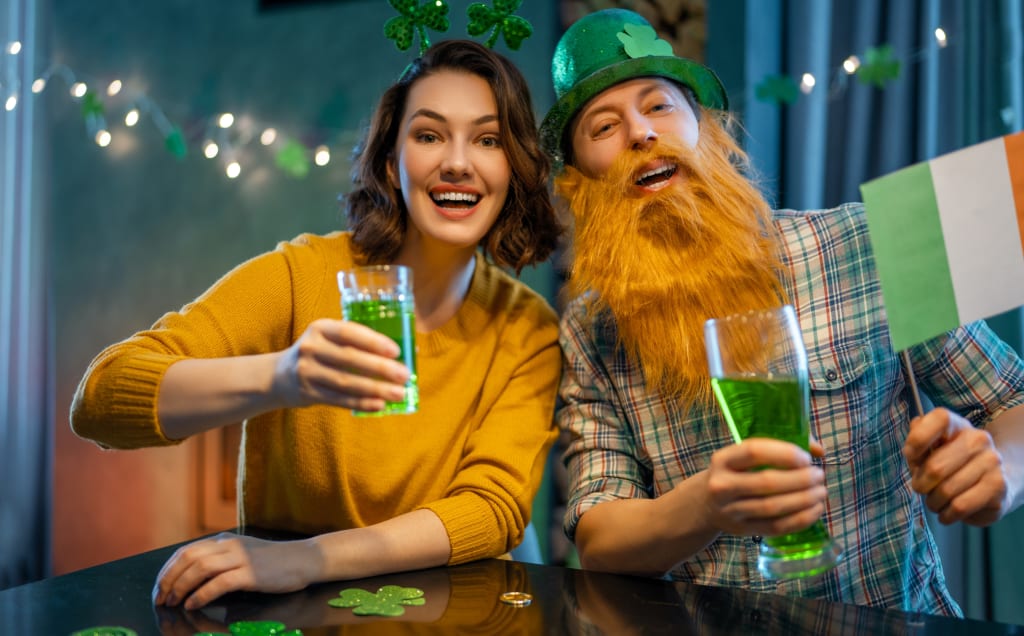
When most people think of St Patrick’s Day, they picture hordes of revellers draped in green, pints of Guinness raised to the heavens, and the occasional person who’s “just a little bit Irish” on March 17th. Fair enough. But here’s the thing: St Patrick’s Day is so much more than a licence to wear questionable green plastic accessories and pretend you’re Irish for the evening.
What began in the 5th century as a solemn religious commemoration has transformed into a genuinely global festival of belonging. Whether you’re standing on the banks of the Chicago River as it turns an impossibly vivid shade of emerald, watching Dublin’s four-day celebration unfold with 3,000 parade participants, or joining the 2 million spectators lining Fifth Avenue in New York City, you’re participating in something far deeper than a drinking holiday. You’re part of an international cultural phenomenon that celebrates resilience, faith, heritage, and the universal human desire to connect.
It’s fascinating, really. In 2026, more people celebrate St Patrick’s Day outside of Ireland than within it. The scale of the modern celebration is staggering: the National Retail Federation projects global St Patrick’s Day spending to hit a record $7.7 billion in 2026, with a growing proportion of that driven by people hosting at-home parties rather than heading to bars and restaurants. Montserrat, a Caribbean island with a substantial Irish diaspora, treats it as an official public holiday. Munich hosts Europe’s largest celebration on mainland Europe. Even Sydney and Tokyo have embraced the festivities with genuine enthusiasm. Yet despite its globalisation, the holiday remains profoundly Irish in its essence.
This guide will take you beyond the leprechaun clichés and into the real story: the history, the symbols, the traditions that actually mean something, and practical tips for celebrating authentically, whether you’re in Dublin or Denver. Because St Patrick’s Day deserves better than plastic beads and green beer. It deserves understanding.
Who was Saint Patrick? The history and origins of St Patrick’s Day
The man behind the myth

Saint Patrick was born in Roman Britain, most likely in what is now Wales, Scotland, or Northern England. He was not Irish.
This is one of history’s most charming ironies: the patron saint of Ireland, the man whose name is synonymous with one of the world’s most celebrated cultural holidays, was not Irish by birth. He is thought to have been born sometime between 373 and 400 AD into a relatively privileged family. His father, Calpurnius, was a Roman official and deacon of the Christian Church. By all accounts, young Patrick had a comfortable, if uneventful, life ahead of him, until, at around 16 years old, Irish pirates raided his coastal home and kidnapped him into slavery.
Imagine that. One moment you’re a teenager with a predictable future; the next you’re torn from your family, transported across the Irish Sea, and enslaved on an island of pagans and druids.
Patrick spent six years in captivity, likely in the regions now known as County Antrim or County Mayo, working as a shepherd on the desolate slopes of Slemish Mountain. These were formative years marked by hardship, loneliness, and, according to his own writings, a profound spiritual awakening. He wrote later that he “heard a voice” telling him to escape and make his way to the coast, where a ship would be waiting. Whether this was divine intervention or the desperate hope of a traumatised teenager finding its own voice, Patrick escaped and eventually made his way back to Britain and his family.
The calling: a return to Ireland

But here’s where it gets interesting. After years of healing and spiritual development, Patrick experienced a recurring dream in which an Irish man appeared before him, saying, “We entreat thee, holy youth, to come and walk amongst us once more.”
Whether you interpret this as a genuine vision or as Patrick’s own conscience wrestling with his traumatic past, the result was the same: he felt compelled to return to the land of his captivity. Not as a slave this time, but as a missionary.
After studying in monastic communities in France (then known as Gaul), Patrick was eventually ordained as a bishop and, in 432 AD, sent back to Ireland to convert the pagan population to Christianity. Most of Ireland at this time was deeply rooted in Druidic traditions and Celtic polytheism. The task was monumental.
The mission: converting an island
Patrick’s missionary work was extraordinary by any measure. He travelled the length and breadth of Ireland for decades, establishing monasteries, converting thousands, baptising entire communities, and creating a framework for the Irish Church that would eventually become remarkably independent of Rome. He famously wrote that he “baptised thousands” and “ordained clergy everywhere.”
One of his most significant contributions was his strategic adaptation of Christian practice to local culture. Rather than eradicating Celtic traditions outright, Patrick often incorporated them into Christian practice. The most famous example is the Celtic Cross, a blend of the Christian cross with the Celtic sun symbol, representing the fusion of old and new faiths. Similarly, the shamrock became a teaching tool, and certain sacred sites were rededicated to Christian purposes.
By the time of his death in 461 AD (though some scholars suggest he died as late as 490 AD), Patrick had fundamentally transformed Ireland from a pagan nation to a Christian one. He established the see of Armagh, which became the ecclesiastical centre of Ireland, and earned the title “Apostle of Ireland,” a distinction he shares today only with Saints Brigid and Columba.
Why March 17th? The date explained
Saint Patrick died on March 17th, or so tradition holds. This is why the feast day is celebrated on this date. In the early Christian calendar, martyrs and saints were commemorated on the anniversary of their death, believed to be their “birthday” into heaven.
For centuries, St Patrick’s Day remained primarily a religious observance in Ireland: a solemn church celebration rather than the raucous festival we know today. Irish Catholics attended Mass (St Patrick’s Day is still a holy day of obligation in Ireland), and the traditional meal was often minimal, with many families adhering to Lenten fasting restrictions. The image of riotous celebration is actually a relatively modern invention, heavily influenced by Irish immigration patterns, particularly to North America in the 19th and 20th centuries.
Separating fact from fiction: the legends of Saint Patrick

The snake myth: debunked
Let’s address the elephant in the room, or rather, the absence of snakes.
According to legend, Saint Patrick drove all the snakes out of Ireland, banishing them into the sea. It’s one of the most enduring stories about the saint, and it has become so embedded in popular culture that many people believe it’s literal fact. Travel guides even reference it. People invoke him against snake bites.
There’s just one small problem: Ireland never had snakes to begin with.
After the last Ice Age (approximately 10,000 years ago), when sea levels rose and Ireland became isolated from mainland Europe, the island was never naturally colonised by snakes. The island’s ecosystem, shaped by its cool climate and geographic isolation, simply never developed a native snake population. Ireland has no snakes, not because Saint Patrick drove them out, but because they never arrived in the first place.
So what does the legend actually mean? Scholars broadly agree that the snakes are a metaphor. In Judeo-Christian tradition, serpents symbolise evil, paganism, and sin. “Driving out the snakes” is therefore understood as a poetic way of describing Patrick’s conversion of Ireland from paganism to Christianity. He didn’t literally banish reptiles; he metaphorically vanquished the “serpents” of pagan practice.
It’s actually a rather elegant piece of religious symbolism when you think about it, far more sophisticated than a literal snake eviction.
The shamrock: more than a lucky charm
Another legend, this one far more grounded in truth, involves the shamrock.
Saint Patrick allegedly used the three-leafed shamrock (a species of clover) to teach the Irish people about the Holy Trinity: the concept that God exists in three forms as the Father, the Son, and the Holy Spirit. By pointing to the three leaves, each joined to a single stem, Patrick could visually explain a complex theological concept to people unfamiliar with Christian doctrine.
What’s particularly clever about this approach is that it wasn’t entirely foreign to Irish spirituality. The Celts already had deep respect for the number three, viewing it as sacred and mystical. By anchoring Christian teaching to Celtic spiritual understanding, Patrick was building a bridge between the old world and the new.
The shamrock predates Patrick considerably in Irish culture. It appears in Celtic artwork and mythology as a symbol of rebirth and renewal, fitting given that it emerges each spring. By the 17th century, when English rulers were attempting to suppress Irish Catholic practice and culture, wearing a shamrock became an act of defiance. It was a subtle way of declaring Irish identity whilst avoiding overt punishment. Wearing shamrocks and the colour green became symbols of resistance against colonial oppression.
In 1681, the English passed a law banning the wearing of shamrocks on St Patrick’s Day. Of course, this only increased its popularity. People have been wearing shamrocks on March 17th ever since, each generation finding new meaning in the gesture.
Iconic symbols and their meanings: understanding St Patrick’s Day imagery

The colour green: a journey from blue to emerald
Here’s a fact that confuses even seasoned St Patrick’s Day enthusiasts: the original colour associated with Saint Patrick was actually blue, not green.
“Saint Patrick’s Blue,” a distinctive sky blue hue, was the colour of his vestments and became the colour of his symbolic representation. The Order of Saint Patrick, established in 1783, used this blue as its official colour. Even the original Irish flag incorporated it.
So when did green take over? The shift occurred gradually over centuries, but accelerated significantly during the 18th and 19th centuries, driven by two interconnected forces: Irish nationalism and the visual reality of the Irish landscape.
As Irish nationalism grew, particularly as resistance to British colonial rule intensified, green became a symbol of Irish identity and independence. The phrase “the Emerald Isle” gained currency, evoking the lush, verdant countryside. By the 19th century, Irish immigrants to America had firmly established green as the primary colour of St Patrick’s Day celebration. American cities, looking to acknowledge their Irish populations, embraced the green imagery enthusiastically. By the early 20th century, the transition was complete. Green had become so synonymous with St Patrick’s Day that the original blue was largely forgotten.
Interestingly, there’s a minor revival movement among some cultural purists attempting to restore Saint Patrick’s Blue to prominence, but green remains the dominant colour. It’s practically the global shorthand for the entire holiday.
The leprechaun: from folklore to mascot
Ah, the leprechaun. The wee folk. The mischievous fairy shoemaker in green velvet. Ask most people about St Patrick’s Day symbols, and the leprechaun will feature prominently. Yet ironically, leprechauns have almost nothing to do with Saint Patrick himself.
The leprechaun originates in Irish folklore and Celtic mythology. The name likely derives from the Irish “leipracán,” referring to a small-bodied fairy or sprite, specifically a solitary fairy said to be a shoemaker by trade. In traditional Irish mythology, leprechauns are depicted as cranky, mischievous creatures who guard pots of gold. Encountering one in folklore could be dangerous; they were tricksters, known for leading travellers astray or playing pranks.
In earlier Irish tradition, leprechauns were actually described as wearing red, not green. They were also considerably less charming than modern depictions suggest, more likely to cause mischief than to offer a cheerful “top of the mornin’ to ye.”
The transformation of the leprechaun into a cute, green-clad symbol of luck and St Patrick’s Day whimsy is largely an American invention. During the Irish immigration waves of the 19th and early 20th centuries, particularly following the Great Famine, Irish-American communities began incorporating leprechaun imagery into St Patrick’s Day celebrations. American marketers and advertisers, recognising the appeal of a charming, diminutive figure, further softened and commercialised the image.
By the mid-20th century, the leprechaun had become the primary visual symbol of St Patrick’s Day, not through any connection to Saint Patrick himself, but through cultural evolution and commercial marketing. It’s a fascinating example of how holiday traditions are actually quite modern constructions, even when they feel ancient.
The Celtic Cross: where paganism met Christianity
The Celtic Cross, featuring a cross with a distinctive circle or ring at the intersection, is arguably the most sophisticated symbol of St Patrick’s Day, representing the actual fusion of cultures that took place during Patrick’s missionary work.
The circular element predates Christianity in Ireland. Celtic sun worship featured the sun disc as a sacred symbol. Rather than demanding that Irish people completely abandon their spiritual imagery, Patrick’s approach incorporated the familiar sun symbol into the Christian cross. This wasn’t a compromise of Christian purity; it was clever theology and effective missionary work.
The Celtic Cross thus became a visual representation of Christianity’s arrival in Ireland not as a violent conquest but as a synthesis: the new faith building on the spiritual foundation that already existed. Each Celtic Cross tells a story of cultural transition, faith, and the way humans integrate new ideas with existing traditions.
You’ll see Celtic Crosses throughout Ireland and increasingly around the world on St Patrick’s Day. They’re worn as jewellery, used as decorative elements, and featured prominently in Irish-themed artwork. They represent something deeper than mere aesthetics; they symbolise the particular Irish path to Christianity, marked by adaptation rather than erasure.
Other symbols of significance
Several other symbols have become associated with St Patrick’s Day and Irish culture more broadly.
The Claddagh Ring is a traditional Irish design featuring two hands holding a heart crowned with a crown. It represents love, loyalty, and friendship, values central to Irish culture. The way you wear it indicates your relationship status: crown pointing inward means you’re taken, and outward means available.
The Tree of Life represents interconnectedness, family, growth, and wisdom. This ancient Celtic symbol has roots in pre-Christian Irish spirituality and has been incorporated into St Patrick’s Day symbolism.
Celtic knots and bands are interlocking geometric patterns with no beginning or end. These represent infinity, interconnectedness, and the eternal nature of the soul, concepts central to Celtic spirituality and Christian theology alike.
Gold and coins: the image of pots of gold guarded by leprechauns has become a visual metaphor for Irish good fortune and prosperity, though the association is more commercial than cultural.
St Patrick’s Day traditions around the world: from Ireland to every continent
The food: beyond corned beef and cabbage
Here’s something that might surprise Irish people: corned beef and cabbage, perhaps the most iconic St Patrick’s Day meal internationally, isn’t actually a traditional Irish dish.
Corned beef is a Jewish-American deli staple that became associated with St Patrick’s Day primarily through Irish-American communities in cities like New York. Irish immigrants, arriving in poor urban neighbourhoods, often lived alongside Jewish communities. Corned beef became an affordable substitute for bacon or other meats that might have been used in Ireland. The tradition stuck, became commercialised, and is now globally recognised as quintessentially Irish, despite actually being Irish-American.
What actual Irish people eat
Irish soda bread: a dense, slightly sweet bread made with buttermilk and baking soda instead of yeast. It’s traditionally studded with raisins or caraway seeds and features a distinctive cross cut into the top. Served warm with butter, it’s properly comforting.
Colcannon: a rustic potato and cabbage dish, mashed together with milk, butter, and spring onions (scallions). It’s humble, warming, and genuinely beloved in Ireland. In traditional St Patrick’s Day celebrations, a ring or coin hidden in the colcannon supposedly predicts the eater’s future.
Irish stew: a hearty one-pot wonder of mutton or lamb, potatoes, onions, and pearl barley. There’s almost no Irish household that doesn’t have a family version of this recipe. It’s peasant food elevated to comfort food status: filling, flavourful, and deeply satisfying.
Boxty: an Irish potato pancake, crispy on the outside and tender within, often served with savoury fillings or alongside stews.
Smoked salmon and brown bread: a more refined option, particularly for lunch. Thinly sliced smoked salmon (Ireland produces some of the world’s finest) served with traditional brown bread and butter.
Coddle: a Dublin speciality, a stew of sausages, bacon, potatoes, and onions, absolutely revered by Dubliners as the ultimate St Patrick’s Day comfort food.
The drink: Guinness, tradition, and ritual
When it comes to St Patrick’s Day beverages, one beer dominates globally: Guinness.
The iconic black stout with its creamy head is so associated with the holiday that many people assume it’s been the St Patrick’s Day drink forever. Interestingly, this connection is partly marketing genius and partly genuine Irish culture interweaving.
+ Read more: The legendary legacy of Guinness: From Dublin brewery to global phenomenon
Guinness has been brewed in Dublin since 1759, making it one of the world’s oldest continuously produced beers. It’s deeply embedded in Irish culture, particularly Dublin culture. However, the specific link between Guinness and St Patrick’s Day was amplified significantly by post-WWII advertising campaigns that positioned Guinness as the quintessentially Irish drink: black as coal, smooth as silk, with a reputation for being somehow good for you (a rumour Guinness never discouraged).
The ‘drowning the shamrock’ tradition
One of the more curious St Patrick’s Day traditions involves literally drowning a shamrock. The practice goes like this: at the end of an evening of celebration, participants place a shamrock (or these days, sometimes just something green) into a glass of Irish whiskey, stout, or other spirits, then drink the lot, shamrock and all.
The origins are disputed. Some scholars suggest it’s a remnant of ancient Celtic rituals involving sacred plants and spirits. Others argue it’s a more recent invention that emerged during Irish-American celebrations in the 19th century. Regardless of its origins, it’s become a recognised ritual that gives a ceremonial quality to St Patrick’s Day drinking, transforming it from mere alcohol consumption into a symbolic act.
Of course, St Patrick’s Day drinking culture has also been criticised for overshadowing the holiday’s religious and cultural significance. Many Irish people, particularly those who maintain the holiday’s religious dimensions, view the contemporary focus on alcohol with some ambivalence. It’s a fascinating tension in the holiday’s modern celebration, between reverence and revelry.
The ‘greening’ of global landmarks
One of the most visually striking St Patrick’s Day traditions is the illumination and colouring of famous landmarks in green. What began as a local practice has become genuinely global.
The Empire State Building (New York, USA) has been illuminated in green since 1998 and is now one of the most recognisable St Patrick’s Day images worldwide.
The Colosseum (Rome, Italy) is lit in green, creating a surreal and stunning visual: ancient Rome painted in Irish green.
The Sydney Opera House (Sydney, Australia), one of the world’s most recognisable buildings, is transformed in green, symbolising how thoroughly St Patrick’s Day has become a global celebration.
Christ the Redeemer (Rio de Janeiro, Brazil), the iconic statue, is illuminated green, making a statement about the truly international reach of the holiday.
The Great Wall of China has segments illuminated in green for St Patrick’s Day celebrations.
Big Ben and the Houses of Parliament (London, UK): the UK’s most famous landmark goes green, particularly striking given the historical tension between Britain and Ireland.
This global greening serves a dual purpose. It visually marks the celebration for revellers on the ground, and it functions as a powerful symbol of Irish cultural export and global acceptance. The fact that the Colosseum, Christ the Redeemer, and the Great Wall of China all turn green for a day speaks volumes about the globalisation of Irish identity and the remarkable reach of St Patrick’s Day as a cultural phenomenon.
Where to celebrate: major global events and celebrations in 2026
Dublin, Ireland: the world’s most authentic celebration

When: Saturday, March 14 to Tuesday, March 17, 2026
Theme: “Roots” celebrating Irish historical lineage and diverse modern identities
Dublin is, unsurprisingly, where the St Patrick’s Day celebration reaches its apex. The city transforms completely. Streets are pedestrianised, pubs overflow onto pavements, and the entire metropolitan area becomes one massive, coherent party with cultural substance.
The Dublin St Patrick’s Festival has evolved into a sophisticated, multi-day event that far exceeds what most international celebrations offer. Founded in 1996, it’s become one of Europe’s largest festivals, attracting 600,000 or more visitors annually.
The centrepiece is the St Patrick’s Festival Parade on March 17th. In 2026, it features 12 large-scale floats created by independent parade companies, over 3,000 participants, marching bands, dancers, and theatrical performances. The parade winds through Dublin’s historic city centre, beginning at Granby Row and proceeding down O’Connell Street, across O’Connell Bridge, and concluding at the Luas tram stop.
But the festival isn’t just the parade. Throughout the four days, Dublin offers:
- Food markets featuring traditional Irish cuisine and international offerings
- Live music and performances ranging from traditional Irish sessions to contemporary artists
- Cultural exhibitions exploring Irish history, art, and contemporary culture
- Family-friendly events including theatrical performances and interactive experiences
- The St Patrick’s Long Table: a unique communal dining experience celebrating Irish hospitality and community
- After-dark events featuring live performances and cultural experiences
The atmosphere is distinctly Irish: lively without being aggressively drunk, cultural without being pretentious, and genuinely welcoming. Dubliners take pride in their St Patrick’s Day celebration, and the sophistication of the contemporary festival reflects that.
Where to stay: Temple Bar area (touristy but central), or the Southside (Rathmines, Ranelagh) for a more local feel
Where to eat: beyond the festival food stalls, seek out traditional Dublin pubs for coddle and a proper Guinness
Pro tip: book accommodation months in advance. Dublin fills up completely for St Patrick’s Week.
New York City, USA: the world’s largest parade

When: Tuesday, March 17, 2026
Parade route: 5th Avenue, from 44th to 79th Street
Start time: 11:00 AM
New York hosts the world’s oldest continuously celebrated St Patrick’s Day Parade, a distinction it’s held since 1762, making it older than American independence. The 2026 celebration marks its 265th anniversary.
The scale is staggering. Approximately 150,000 marchers participate, and nearly 2 million spectators line the streets. The parade is “marching only,” with no floats or motorised vehicles, which preserves an authentic character that modern parades often lack.
The parade has become a stage for Irish-American identity and political statement. Various Irish-American organisations, labour unions, religious groups, and political entities participate, making the parade a living history of Irish-American culture and priorities. In recent years, LGBTQ+ Irish-American groups have marched openly, reflecting evolving attitudes within Irish-American communities.
The atmosphere is distinctly American: louder, more exuberant, and more overtly celebratory than Dublin. There’s a genuine carnival atmosphere, with spectators often camping out overnight to secure viewing positions.
Where to watch: anywhere along 5th Avenue, though between 50th and 60th Street tends to be optimal
After the parade: head to Irish pubs in Hell’s Kitchen, the East Village, or Washington Heights
Pro tip: arrive early (dawn, ideally) to secure a good spot; bring entertainment and something warm to drink
Chicago, USA: the iconic river dyeing
When: Saturday, March 14, 2026
River dyeing: 10:00 AM
Main parade: Saturday afternoon (precise timing to be confirmed)
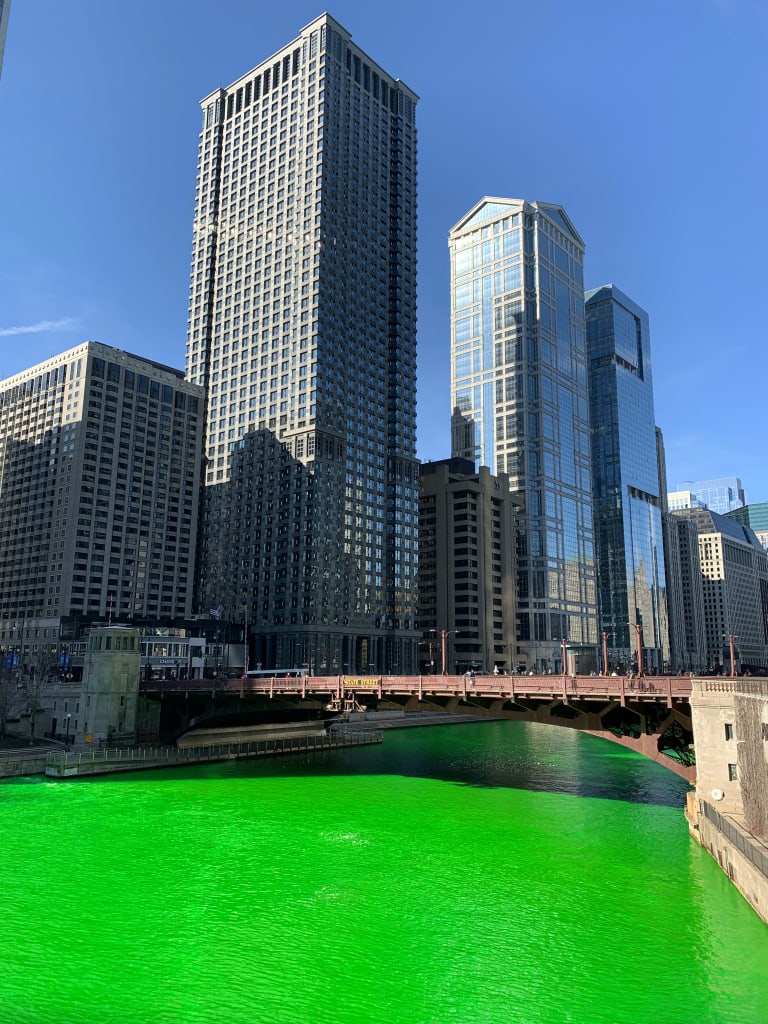
Chicago’s St Patrick’s Day celebration is distinctive for one reason: the dyeing of the Chicago River.
Since 1962, when the Plumbers Local Union experimented with 100 pounds of green dye to mark the occasion, the Chicago River has been transformed into a vivid emerald colour each St Patrick’s Day. The tradition has become iconic, instantly recognisable, and genuinely beloved.
The mechanics are intriguing. Originally, the dye was oil-based, lasting up to a week. Modern concerns about environmental impact led to a switch to an eco-friendly, vegetable-based powdered dye. The precise formula remains a closely guarded secret, though it’s understood to be derived from an orange powder base.
Approximately 400,000 spectators gather to witness the transformation. Boats and kayaks crowd the river, creating a festival atmosphere on the water. The dyeing itself lasts only a few hours, but the memory of a major urban river turned impossibly green is indelible.
The 2026 celebration marks the 70th anniversary of this tradition. The main parade follows, featuring Irish bands, dancers, and thousands of green-clad participants.
Best viewing locations: Upper Wacker Drive between State and Columbus, or along the bridges
Timing: arrive by 8:00 AM for prime viewing spots
Pro tip: the actual dyeing is quick; being positioned before 10:00 AM is crucial
London, United Kingdom: Europe’s largest urban celebration
When: Sunday, March 15, 2026
Mayor’s Parade: 12:00 PM from Hyde Park Corner
Festival: 12:00 PM to 6:00 PM, Trafalgar Square
London’s St Patrick’s Day celebration has evolved significantly. Once relatively subdued given historical tensions, it’s now a major event that rivals some continental celebrations.
The Mayor’s Parade processes from Hyde Park Corner through Piccadilly to Whitehall, featuring marching bands, dancers, and cultural performers. The procession itself is relatively modest compared to Dublin or New York, but the festival that follows in Trafalgar Square is genuinely substantial.
Trafalgar Square transforms into a celebration zone offering:
- Traditional Irish music and dance performances on multiple stages
- Irish food vendors offering authentic cuisine
- Irish film screenings in a temporary cinema
- Children’s entertainment zone with games and activities
- Market stalls selling Irish crafts, jewellery, and cultural items
The atmosphere is notably cosmopolitan. London’s Irish population is substantial, but the celebration also attracts visitors from across Europe and further afield. There’s less emphasis on drinking and more on cultural celebration than in some other cities.
Where to watch the parade: Piccadilly or along Whitehall
Festival: free entry to Trafalgar Square
Irish pubs: head to Leicester Square, Covent Garden, or South Kensington afterward
Pro tip: combine with a visit to the British Museum. You’ll need cultural context for that evening’s conversations.
Sydney, Australia: St Patrick’s Day goes southern hemisphere

When: Sunday, March 15, 2026 (parade), Thursday, March 12 to Tuesday, March 17 (festival)
Parade: 11:00 AM, starting on Pitt Street in the CBD
Festival hub: The Rocks neighbourhood
Sydney’s St Patrick’s Day celebration reflects the city’s substantial Irish population and its role as a major cultural centre in the Asia-Pacific region.
The festival spans six days and draws approximately 250,000 visitors. The parade itself features over 1,000 performers, including Irish dancers, pipe bands, cultural performers, and floats. The Rocks area, Sydney’s historic neighbourhood, becomes the festival hub with live music venues, food stalls, and cultural activities.
The celebration has an interesting character. It’s authentically Irish but distinctly Australian. You’ll find Guinness served alongside local wines, traditional Irish music alongside contemporary artists, and the famous Australian friendliness adding warmth to Irish hospitality.
Festival highlights:
- Outdoor cinema screenings of Irish films
- Live music performances in multiple venues
- Traditional Irish dancing competitions
- Contemporary Irish bands
- Irish food and beverage experiences
- Family-friendly cultural activities
Where to stay: The Rocks (immersive but touristy), Surry Hills (cool, local vibe), or Barangaroo (upmarket, modern)
Pro tip: the Southern Hemisphere sun will be warm; bring sunscreen and hydrate. Irish celebrations on a scorching summer day create a unique cultural experience.
Munich, Germany: Europe’s largest continental celebration
When: Saturday, March 14 to Sunday, March 15, 2026
Munich hosts the largest St Patrick’s Day celebration on mainland Europe, a fact that surprises many people who associate the holiday primarily with English-speaking nations.
The celebration reflects Munich’s substantial Irish population and its broader cultural embrace of international celebrations. The festivities span two days and feature a major parade, live music, food vendors, and the characteristically Bavarian blend of Irish and German celebrations.
Saturday’s pre-parade party (11:00 AM onwards):
- Feldherrnhalle location
- Live music performances
- International street food
- Irish and German beverages
Sunday’s main parade (12:00 PM):
- Begins at Münchner Freiheit
- Proceeds to Odeonsplatz
- Features marching bands, dancers, and floats
- Concludes with an open-air festival at Odeonsplatz
The atmosphere is distinctly Bavarian. The celebration incorporates German beer hall culture with Irish tradition. Irish people in Munich often remark on the surreality of experiencing St Patrick’s Day in German beer gardens.
Pro tip: if you speak any German, use it. Locals appreciate the effort, and the cultural bridge-building adds depth to the experience.
Montreal and Toronto, Canada: North American alternatives
Canada’s Irish communities host significant celebrations in Montreal and Toronto. Toronto’s St Patrick’s Day Parade is one of North America’s largest, drawing 800,000 or more spectators. Montreal offers a more francophone-influenced celebration, blending Irish and Québécois culture.
The unique exception: Montserrat’s St Patrick’s Day
There’s one place outside Ireland where St Patrick’s Day is an official public holiday: Montserrat, a small Caribbean island.
Montserrat’s celebration reflects the island’s unique history. In the 17th century, Irish indentured servants were transported to Montserrat by English colonisers. Over generations, the Irish population intermingled with African slaves and other communities, creating a uniquely Montserratian culture with significant Irish heritage.
St Patrick’s Day in Montserrat is celebrated as “Montserrat Heritage and History Day,” combining Irish traditions with African and Caribbean cultural elements. The celebration includes parades, festivals, and cultural events that reflect the island’s complex, multicultural identity.
The fact that Montserrat, a Caribbean island with a majority Creole population, recognises St Patrick’s Day as an official holiday is a powerful reminder that Irish heritage, diaspora, and cultural influence extend far beyond what most people imagine. It’s a living connection between Ireland, Britain’s colonial history, the African diaspora, and contemporary Caribbean identity, all embodied in a single holiday celebration.
How to celebrate in 2026: practical tips for an authentic experience

Wear green, but do it properly
The tradition of wearing green on St Patrick’s Day dates to the 18th century, when green became a symbol of Irish nationalism and resistance. By the 19th century, particularly among Irish-American communities, wearing green was a deliberate statement of Irish identity.
The “pinch rule”: there’s a traditional jest that if you don’t wear green on St Patrick’s Day, you’ll be pinched by leprechauns. It sounds childish (it is), yet it persists, particularly in schools and among the young. Some people genuinely get pinched on St Patrick’s Day for not wearing green.
Wearing green properly:
- Aim for something actually green: a shirt, jumper, jacket, or even just a green scarf or hat
- If you’re uncomfortable in full green, incorporate a small green element, such as a pin, a ribbon, or a green belt
- Green jewellery (Celtic knots, Claddagh rings, shamrock brooches) adds cultural authenticity
- Avoid the plastic, neon-green tat that pervades shops before March 17th; it detracts from the holiday’s actual meaning
- If you’re in Ireland, wearing excessive amounts of green can actually mark you as a tourist; Irish people often celebrate more subtly
Learn a few words: ‘cúpla focal’
One of the most authentic ways to celebrate St Patrick’s Day is to attempt a few words of Irish (Gaeilge), the language Saint Patrick and his successors spoke and taught.
The Irish phrase “cúpla focal” literally means “a couple of words,” but it’s also used as an invitation to speak Irish at all.
Essential St Patrick’s Day phrases:
“Lá Fhéile Pádraig Sona Dhuit” (pronounced “Lah Hay-la Pawdrig Sun-a Gwit”)
Meaning: “Happy St Patrick’s Day”
This is the proper Irish greeting for the day. Using it will genuinely delight Irish people.
“Sláinte” (pronounced “SLAWN-cha”)
Meaning: “Health” or “Cheers”
Traditionally, you toast with “sláinte” as a blessing of good health. The full traditional toast is “Sláinte, tainte, agus bás in Éirinn” (“Health, wealth, and may you die in Ireland”).
“Lá go fóill” (pronounced “Lah go FOLE”)
Meaning: “See you again” or “until next time”
“Beannachtaí na Féile Pádraig oraibh” (pronounced “Ban-ock-tee na Hay-la Pawdrig or-iv”)
Meaning: “Saint Patrick’s Day blessings upon you”
A more formal blessing.
“Ní neart go cur le chéile” (pronounced “Nee nart go cur le HEY-la”)
Meaning: “There is no strength without unity”
An Irish proverb often cited on St Patrick’s Day.
Even attempting these phrases, even butchering the pronunciation, will be appreciated. Irish people genuinely enjoy when foreigners make efforts to engage with the language, particularly on St Patrick’s Day.
Host a proper St Patrick’s Day party
With St Patrick’s Day 2026 set to see record numbers of people celebrating at home, according to the National Retail Federation’s annual consumer survey, there has never been a better time to master the art of a proper Irish-themed gathering. Global spending on at-home celebrations is projected to reach a record $7.7 billion in 2026, driven by everything from food and decorations to Irish whiskey, craft beer, and streaming subscriptions to Irish films. The key to an authentic experience is moving well beyond green beer and plastic decorations.
Music: create a playlist combining traditional Irish music with contemporary Irish artists. Include:
- Traditional artists: The Chieftains, Clannad, Planxty
- Traditional/contemporary fusion: Enya, Lisa Hannigan
- Contemporary Irish artists: Hozier, Sinéad O’Connor, The Script
- Irish pub classics: “The Fields of Athenry,” “Black Velvet Band,” “Whiskey in the Jar”
Decorations: move beyond the plastic. Instead, consider:
- Fresh shamrock plants (available at garden centres in the weeks before March 17th)
- Celtic knot artwork or reproductions
- Irish flags
- Candles (particularly green ones, but not exclusively)
- Photographs of Irish landscapes
Food and drink:
- Prepare one authentic Irish dish, such as colcannon, boxty, or traditional soda bread
- Guinness, Irish whiskey, or Irish coffee
- Irish soda bread with butter
- If you’re feeling ambitious, coddle or Irish stew
Activities:
- Share the history of Saint Patrick, not just the myths
- Play Irish traditional music and actually listen to it, rather than using it as background noise
- Tell stories of Irish heritage or family connections
- Engage in actual conversation rather than just drinking
- Screen an Irish film (suggestions: “Brooklyn,” “The Banshees of Inisherin,” “Sing Street,” or the classic “The Quiet Man”)
This approach transforms St Patrick’s Day from a drinking occasion into a cultural celebration, which is ultimately what the holiday is actually about.
Visit Ireland (if possible)
If you’ve never experienced St Patrick’s Day in Ireland, it’s genuinely worth the trip. Dublin specifically becomes something quite special during the festival week.
What to expect:
- The city is packed; expect queues at restaurants, full pubs, and crowded streets
- The atmosphere is genuinely celebratory but not aggressively drunken
- Cultural events run throughout the city
- Accommodation books up months in advance
Beyond Dublin:
- Smaller Irish cities (Galway, Cork, Limerick) offer more intimate celebrations
- The Irish countryside is quieter but offers authentic pubs and genuine community celebrations
- Consider visiting the week before or after if you want a less crowded experience
FAQ: Frequently Asked Questions about St Patrick’s Day
Is St Patrick’s Day a bank holiday in the UK?
St Patrick’s Day is not a bank holiday in the United Kingdom, with the exception of Northern Ireland, where it is a public holiday because most of the population is Irish or of Irish descent.
In England, Scotland, and Wales, St Patrick’s Day is treated like any other day. However, in Northern Ireland, it’s an official public holiday equivalent to Christmas or Easter.
This reflects the partition of Ireland (1922) and the subsequent political separation. Increasingly, though, London and other major UK cities host significant St Patrick’s Day celebrations, reflecting the substantial Irish diaspora within Britain.
Was Saint Patrick actually Irish?
No. Saint Patrick was born in Roman Britain (likely in what is now Wales, Scotland, or Northern England), captured as a teenager, enslaved in Ireland for six years, escaped, and returned later as a missionary.
He’s the patron saint of Ireland, but he wasn’t Irish by birth. This is one of history’s delightful ironies: one of the world’s most famous Irishmen was actually British.
Why do people drink green beer on St Patrick’s Day?
Green beer, which is beer with green food colouring added, is primarily an American invention, popularised throughout the 20th century as a visual marker of the holiday.
Traditional Irish people don’t typically drink green beer. The practice is more common in the US, Canada, and among international St Patrick’s Day celebrations.
Many Irish people find the concept mildly amusing and slightly ridiculous. Guinness is black, not green, and authentic Irish celebration doesn’t require colour-altered beverages.
What does ‘drowning the shamrock’ mean?
“Drowning the shamrock” is a traditional Irish ritual where a shamrock (or nowadays, sometimes just something green) is placed in a glass of whiskey or stout, then consumed along with the drink.
The origins are unclear. Some scholars suggest pre-Christian Celtic roots, while others argue it’s a more recent Irish-American creation. Regardless, it’s become a recognised St Patrick’s Day ritual, particularly in Ireland and Irish pubs worldwide.
The shamrock represents Irish identity, faith, and heritage. Drowning it is paradoxical: destroying the symbol whilst celebrating what it represents. It’s thus understood as a ritualised, ceremonial act that transforms drinking into something meaningful.
Is St Patrick’s Day only celebrated by Irish people?
Absolutely not. St Patrick’s Day has become genuinely globalised, celebrated by people from every conceivable background and nationality.
In 2026, more people celebrate St Patrick’s Day outside Ireland than within it. Cities from Tokyo to Rio de Janeiro, from Auckland to Cairo, host celebrations. People with no Irish heritage whatsoever participate, sometimes genuinely engaging with Irish culture, sometimes treating it as a general excuse to wear green and drink.
This globalisation is sometimes lamented by cultural purists who worry about commercialisation and dilution of Irish heritage. But it’s also a testament to the holiday’s remarkable capacity to transcend cultural boundaries and create moments of global connection.
What’s the connection between St Patrick’s Day and luck?
The connection between St Patrick’s Day and luck is multifaceted.
The shamrock: Celtic culture associated shamrocks with luck and prosperity. Saint Patrick’s use of shamrocks as a teaching tool merged Christian symbolism with Celtic fortune-bringing associations.
Leprechauns: folklore associated leprechauns (Irish fairies) with pots of gold and hidden treasure, which are inherent symbols of luck and fortune.
The colour green: green, associated with Irish nature and the “Emerald Isle,” became linked with fertility, growth, and prosperity.
The number three: Celtic spirituality revered the number three as sacred. The shamrock’s three leaves, the Trinity’s three aspects, and the Celtic triple goddess all connected luck to the number three.
Cultural narrative: modern St Patrick’s Day marketing has heavily emphasised luck and fortune, creating a feedback loop where the holiday has become synonymous with “the luck of the Irish,” a phrase with a complex and sometimes contentious cultural history.
In reality, “the luck of the Irish” is partly a historical myth created during Irish immigration waves in North America. Irish immigrants faced significant discrimination, yet many eventually prospered. Their success was attributed to “luck” rather than to agency, hard work, or the structural advantages that eventually emerged.
Interestingly, modern usage of “luck of the Irish” is generally positive, even amongst Irish people themselves, despite its problematic origins.
Do Irish people eat corned beef and cabbage on St Patrick’s Day?
Not really, at least not traditionally or frequently.
As mentioned earlier, corned beef and cabbage is primarily an Irish-American dish, popularised by Irish immigrants in 19th-century America as an affordable substitute for traditional Irish meats.
In Ireland, you’re far more likely to encounter Irish stew, coddle, colcannon, or boxty on St Patrick’s Day, dishes with deeper roots in Irish culinary tradition.
That said, corned beef and cabbage is so globally associated with the holiday that many Irish restaurants and pubs outside Ireland serve it during St Patrick’s season, recognising international customer expectations.
How old is the New York St Patrick’s Day parade?
The New York St Patrick’s Day Parade is the world’s oldest and largest continuous St Patrick’s Day parade, first held in 1762.
Remarkably, the parade predates American independence (1776) by 14 years. It has been held annually since 1762, meaning it’s been part of New York City’s identity for over 260 years.
The parade originally served as a way for Irish immigrants to celebrate their heritage and assert their place in American society at a time when Irish people faced significant discrimination. Over generations, it evolved into the massive, mainstream celebration it is today.
Can you actually buy shamrocks?
Yes. Actual shamrock plants can be purchased, particularly in the weeks leading up to St Patrick’s Day.
A shamrock is a small, three-leafed clover plant (typically Trifolium repens, the common white clover). Garden centres and plant shops sell shamrock plants specifically marketed for St Patrick’s Day.
Wearing an actual shamrock pinned to your clothing on St Patrick’s Day is a more environmentally responsible and culturally authentic choice than wearing plastic alternatives.
The plants don’t last long once harvested, but during St Patrick’s Week, you can often find fresh shamrocks available in Ireland and increasingly in Irish communities worldwide.
Conclusion: St Patrick’s Day in 2026 and beyond
As we approach March 17th, 2026, St Patrick’s Day stands as a genuinely unique global phenomenon: a holiday that originated in 5th-century Irish Christianity, transformed into a symbol of Irish-American identity in 19th-century America, and has evolved into a globally celebrated festival with significance that extends far beyond its religious and cultural origins.
What makes St Patrick’s Day remarkable isn’t that it’s become commercialised (most holidays have). It’s that despite massive commercialisation, the holiday has managed to retain genuine cultural substance. The history of Saint Patrick, the symbolism of shamrocks and Celtic crosses, the authentic Irish traditions of music, language, and community: these remain at the heart of the celebration, even amidst the green beer and plastic decorations.
The 2026 celebrations promise to be as vibrant as ever, and more widely embraced than any previous year. With global spending projected to reach a record $7.7 billion and millions of people hosting at-home parties for the first time, St Patrick’s Day is expanding its cultural footprint well beyond its traditional celebration hubs. Dublin’s “Roots” themed festival will explore Irish heritage and contemporary identity. Chicago will dye its river an impossible shade of green. New York will welcome 2 million spectators. London, Sydney, Munich, and cities across the globe will transform momentarily into celebrations of Irish culture.
But beyond the spectacle, St Patrick’s Day remains a genuine opportunity for cultural connection: to Irish history, to community, to heritage, and to the universal human desire to celebrate and belong.
Whether you’re planning a trip to Dublin, attending a parade in your hometown, hosting a gathering with friends, or simply wearing green and raising a pint in solidarity, you’re participating in something that connects you to nearly 1,500 years of history, to millions of people worldwide, and to a tradition of resilience, faith, and cultural pride.
So here’s a final blessing, in the tradition of Saint Patrick himself:
“May the road rise up to meet you,
May the wind be at your back,
May the sun shine warm upon your face,
And the rains fall soft upon your fields.
And until we meet again,
May God hold you in the palm of his hand.”
Happy St Patrick’s Day. Sláinte!


