
After more than seven decades of clinical use, a remarkable scientific breakthrough has illuminated an entirely unexpected therapeutic potential for hydralazine brain tumor treatment. Researchers at the University of Pennsylvania have unveiled the precise molecular mechanism by which this old blood pressure drug brain cancer therapy works, simultaneously solving a 70-year-old medical mystery and opening new pathways for treating glioblastoma, one of the most aggressive and lethal forms of brain cancer.
The hydralazine cancer research breakthrough demonstrates how drug repurposing can offer hope where few treatment options exist, revealing that this widely available medication may possess the remarkable ability to “silence” tumor growth through a mechanism only recently understood at the molecular level. This discovery arrives at a time when public interest in repurposed drug cancer treatments has surged, with Google Trends showing increased searches for glioblastoma breakthrough news following major research announcements and, occasionally, celebrity diagnoses that bring public attention to this devastating disease.

The unexpected connection: from blood pressure control to brain cancer treatment
Hydralazine, marketed under the brand name Apresoline, has occupied a distinguished position on the World Health Organization’s List of Essential Medicines since its introduction to clinical practice in the 1950s. Originally developed as an antimalarial compound, it found its enduring medical niche as a potent vasodilator, a medication that relaxes blood vessels to lower blood pressure, and remains particularly vital for treating hypertensive crisis and preeclampsia, a dangerous pregnancy complication characterized by dangerously elevated blood pressure.
Despite its widespread and successful use spanning multiple generations, the precise molecular target responsible for hydralazine’s therapeutic effects remained frustratingly elusive to researchers, representing one of medicine’s most enduring pharmacological mysteries. This gap in understanding persisted even as the medication continued saving lives, highlighting how medical science sometimes advances through practical application before full mechanistic comprehension.
The recent research conducted by a multidisciplinary team led by Professor Megan L. Matthews at the University of Pennsylvania’s Department of Chemistry represents a paradigm shift in understanding both the drug’s mechanism and its potential applications. Utilizing sophisticated chemical proteomics and advanced mass spectrometry techniques, the team identified 2-aminoethanethiol dioxygenase, commonly abbreviated as ADO enzyme hydralazine interactions, as the drug’s highly selective molecular target. This iron-dependent enzyme functions as a critical oxygen sensor within cells, orchestrating targeted protein degradation pathways that become particularly important in low-oxygen environments such as rapidly growing tumors.
What makes this discovery particularly remarkable is the unexpected connection between two seemingly unrelated medical conditions: pregnancy-induced hypertension and aggressive brain cancer. Both conditions, researchers discovered, share ADO as a critical molecular nexus. Elevated ADO expression and activity have been clinically associated with both the severity of preeclampsia and the malignancy grade of hydralazine glioblastoma tumors, suggesting that this enzyme plays fundamental roles in disease progression across vastly different physiological contexts. The research team expressed genuine excitement about these findings, noting how rarely such elegant biological connections emerge from pharmaceutical research.
Understanding glioblastoma: the challenge of aggressive brain cancer
Glioblastoma, formally designated as glioblastoma IDH-wildtype according to the World Health Organization’s 2021 classification system, represents the most common and devastating primary brain malignancy affecting adults. Classified as a grade IV tumor, the highest grade of malignancy, glioblastoma accounts for approximately 47.7% of all malignant brain and central nervous system tumors, with an incidence rate of 3.21 cases per 100,000 population. The disease demonstrates a predilection for middle-aged and older adults, with a median age at diagnosis of 64 years, and affects men more frequently than women.
The clinical prognosis for glioblastoma patients remains devastatingly poor despite decades of intensive research and therapeutic development. Following diagnosis, the median survival duration approximates merely 10 to 13 months with aggressive multimodal treatment, and fewer than 5-10% of patients survive beyond five years. Without any treatment intervention, survival typically extends only three months from diagnosis. Families facing this diagnosis often describe feeling helpless against such an aggressive disease, making any potential therapeutic advance particularly meaningful to patients and their loved ones.
This grim outlook persists despite the current standard of care, which involves maximally safe surgical resection followed by concurrent radiotherapy and temozolomide chemotherapy, a protocol established by the landmark Stupp trial that has remained largely unchanged since 2005. The lack of significant progress in standard treatment over nearly two decades underscores the urgent need for innovative approaches like targeted cancer therapy using repurposed medications.
Several intrinsic biological characteristics render glioblastoma exceptionally difficult to treat effectively. The tumors exhibit extraordinary cellular and genetic heterogeneity, with different regions of the same tumor harboring distinct molecular profiles and treatment sensitivities. Glioblastoma cells demonstrate highly invasive behavior, infiltrating extensively into surrounding healthy brain tissue along white matter tracts, blood vessels, and perivascular spaces, making complete surgical resection virtually impossible.
The tumor microenvironment is characteristically hypoxic, meaning low in oxygen, which paradoxically promotes tumor aggressiveness, maintenance of cancer stem cells, and resistance to both chemotherapy and radiation. This creates a vicious cycle where the very conditions that should limit tumor growth instead fuel its malignant properties. Additionally, the tumors commonly develop resistance to conventional therapies through multiple mechanisms, and the blood-brain barrier significantly restricts the delivery of many potentially therapeutic compounds to the tumor site.

The molecular mechanism: how hydralazine targets ADO to silence tumors
The University of Pennsylvania research team employed an innovative chemical biology approach to uncover hydralazine’s molecular target. They synthesized a specialized probe molecule called “HYZyne,” essentially hydralazine with an attached chemical handle that allows researchers to track and identify proteins that interact with the drug inside living cells. When cells were treated with HYZyne, the probe selectively labeled ADO with remarkable specificity, identifying it as essentially the only high-occupancy target among thousands of cellular proteins examined.
The ADO enzyme hydralazine interaction occurs through a sophisticated two-step mechanism. Initially, hydralazine binds to ADO’s active site by chelating, forming coordinate bonds with, the ferrous iron (Fe²⁺) cofactor essential for the enzyme’s catalytic activity. X-ray crystallographic structures revealed that hydralazine coordinates to the metal center in a bidentate fashion, displacing water molecules normally present and forming an additional stabilizing hydrogen bond with a tyrosine residue in the active site. This binding mode classifies hydralazine as a competitive inhibitor, as it occupies the same site where ADO’s natural substrates would normally bind.
The second, more permanent step of inhibition involves covalent modification. Through a radical mechanism initiated by the enzyme’s iron center, hydralazine undergoes activation and fragmentation, ultimately resulting in the covalent attachment of a hydralazine fragment to histidine-112, one of three histidine residues that serve as essential ligands coordinating the iron cofactor. This covalent modification converts hydralazine from a reversible competitive inhibitor into an irreversible mechanism-based inactivator, permanently disabling the enzyme.
Cellular experiments demonstrated that hydralazine exhibits an IC₅₀, the concentration producing 50% inhibition, of approximately 10-20 μM for ADO in living cells, with remarkable selectivity of more than 100-fold over related iron-dependent oxygen-sensing enzymes such as prolyl hydroxylases. This selectivity is crucial for minimizing off-target effects and represents a key advantage in developing targeted cancer therapy approaches.
ADO’s role in cancer biology and the silencing effect
Under normal physiological conditions, ADO functions as a frontline oxygen sensor, responding rapidly when oxygen levels drop, a condition called hypoxia that frequently occurs in solid tumors as they outgrow their blood supply. ADO catalyzes the oxidation of N-terminal cysteine residues on specific substrate proteins, converting the thiol group (-SH) to a sulfinic acid (-SO₂H). This oxidation serves as a molecular “tag” that marks these proteins for recognition by the cell’s protein degradation machinery, specifically the N-degron pathway of the ubiquitin-proteasome system, leading to their rapid destruction.
Among ADO’s most physiologically significant substrates are members of the RGS (Regulators of G-Protein Signaling) protein family, particularly RGS4 and RGS5. These regulatory proteins function as GTPase-activating proteins (GAPs) that accelerate the deactivation of heterotrimeric G-proteins downstream of G-protein-coupled receptors (GPCRs). In vascular smooth muscle cells, RGS proteins attenuate GPCR-mediated calcium signaling, thereby promoting vasodilation and reducing blood pressure. When ADO oxidizes and marks RGS proteins for degradation, their levels decrease, GPCR signaling becomes prolonged, intracellular calcium levels remain elevated, and vasoconstriction persists, contributing to hypertension.
In glioblastoma and other aggressive cancers, elevated ADO expression and activity serve multiple pro-tumorigenic functions. The hypoxic tumor microenvironment continuously activates ADO, which in turn degrades RGS proteins and other substrates, rewiring cellular signaling networks to favor tumor cell survival, proliferation, and invasion. Additionally, ADO’s metabolic activity produces hypotaurine, a metabolite that has been identified as a biomarker associated with glioblastoma malignancy and poor patient prognosis.
Blocking ADO activity therefore represents a rational therapeutic strategy to disrupt these cancer-promoting pathways, essentially interfering with the tumor’s adaptation to hostile environmental conditions. This tumor growth suppression mechanism offers a fundamentally different approach compared to conventional chemotherapy, which typically targets rapidly dividing cells indiscriminately.
Inducing senescence: a novel mechanism of tumor growth arrest
When glioblastoma cells are treated with hydralazine, they undergo a dramatic phenotypic transformation consistent with cellular senescence, a state of stable, irreversible growth arrest. Senescence represents a fundamentally different mechanism of cancer cell inactivation compared to conventional chemotherapy or radiation, which primarily induce cell death through apoptosis or necrosis. Instead of killing cancer cells outright, senescence forces them into a permanent state of retirement where they can no longer divide and contribute to tumor growth.
The Penn research demonstrated that a single treatment with hydralazine at concentrations of 10-100 μM effectively inhibited the growth of cultured glioblastoma cell lines (U-87 and LN229) over observation periods extending up to 12 days. Notably, this growth inhibition was cytostatic rather than cytotoxic, meaning the cells stopped dividing but did not immediately die, with no significant increase in cell death observed at either early (6 hours) or later (24 hours) time points.
The concentration producing 50% growth inhibition (IC₅₀) was approximately 10 μM, and glioblastoma cells demonstrated greater sensitivity to hydralazine compared to non-cancerous cells (HEK293T) or breast cancer cells (MDA-MB-231), suggesting potential tumor-type selectivity. This selectivity is particularly encouraging because it hints at the possibility of achieving therapeutic effects in brain tumors while minimizing damage to healthy tissue.
Hydralazine-treated glioblastoma cells exhibited multiple hallmark features of authentic cellular senescence. Morphologically, the cells enlarged significantly and lost their typical clustering behavior, adopting a flattened, spread-out appearance characteristic of senescent cells. At the molecular level, treated cells showed concentration-dependent upregulation of p21, a cyclin-dependent kinase inhibitor that enforces cell cycle arrest, along with increased expression of multiple senescence-associated secretory phenotype (SASP) markers including interleukin-6 (IL-6), interleukin-8 (IL-8), C-C motif chemokine ligand 20 (CCL20), and matrix metalloproteinase 3 (MMP3).
Critically, repeated dosing experiments demonstrated that a single hydralazine treatment was sufficient to induce this senescent state, with no additional growth inhibition observed when cells received multiple doses. This finding is consistent with senescence representing a terminal, irreversible cellular fate, once cells enter senescence, they remain permanently growth-arrested regardless of continued drug exposure. The permanence of this effect represents a significant advantage in treating a disease as aggressive and resistant as glioblastoma.
The vasodilation connection: explaining hydralazine’s blood pressure effects
The identification of ADO as hydralazine’s primary target simultaneously resolved the longstanding mystery of how this medication lowers blood pressure. The research demonstrated that hydralazine treatment rapidly stabilizes RGS4 and RGS5 proteins by preventing their ADO-mediated degradation. In cultured human neuroblastoma cells (SH-SY5Y), which endogenously express low or undetectable levels of these RGS proteins due to their rapid turnover, treatment with hydralazine at concentrations as low as 1-10 μM induced dramatic accumulation of RGS5 within less than one hour. This time course correlates remarkably well with the rapid onset of blood pressure reduction observed clinically in patients receiving hydralazine.
The stabilized RGS proteins exert their physiological effects by accelerating the GTPase activity of Gαq proteins, key signal transducers in GPCR pathways that control vascular smooth muscle contraction. Using sophisticated bioluminescence resonance energy transfer (BRET) assays, the Penn team demonstrated that overexpression of ADO reduced the GAP activity of RGS4 and RGS5, effectively prolonging Gαq signaling, and that hydralazine treatment reversed this effect in a dose-dependent manner.
The functional consequence of enhanced RGS activity is reduced GPCR-mediated mobilization of intracellular calcium. Using Fura-2, a ratiometric calcium-sensitive fluorescent indicator, researchers showed that hydralazine significantly decreased the calcium response to carbachol, a muscarinic receptor agonist, in a concentration-dependent manner matching the range that stabilizes RGS proteins. Since elevated intracellular calcium drives smooth muscle contraction and vasoconstriction, the reduction in calcium signaling directly explains hydralazine’s vasodilatory effect.
This mechanism also provides molecular explanations for clinical observations regarding hydralazine’s side effects and efficacy. The connection to preeclampsia becomes clearer given that RGS5 levels are diminished in placental tissue and maternal arteries of preeclamptic women, and mice with genetic disruption of the RGS5 gene exhibit key preeclampsia characteristics including hypertension, proteinuria, placental pathology, blood-brain barrier permeability, and increased stroke risk.
Additionally, hydralazine’s known propensity to induce lupus-like autoimmune symptoms in approximately 10% of patients may relate to its effects on immune cell signaling, as the research demonstrated that hydralazine treatment reduced ERK (extracellular signal-regulated kinase) phosphorylation in response to GPCR stimulation, a signaling alteration previously associated with lupus pathology in patient T cells. Understanding these connections helps researchers anticipate potential complications in cancer treatment applications.
The blood-brain barrier challenge: obstacles and opportunities
Despite hydralazine’s promising anti-glioblastoma activity in cultured cells, a significant obstacle to its therapeutic application in brain cancer is its poor penetration across the blood-brain barrier (BBB). The BBB represents one of the most selective and restrictive physiological barriers in the human body, consisting of specialized brain endothelial cells connected by tight junctions, surrounded by pericytes and astrocytic end-feet, which collectively exclude more than 98% of small-molecule drugs and essentially all macromolecular therapeutics from accessing the brain parenchyma.
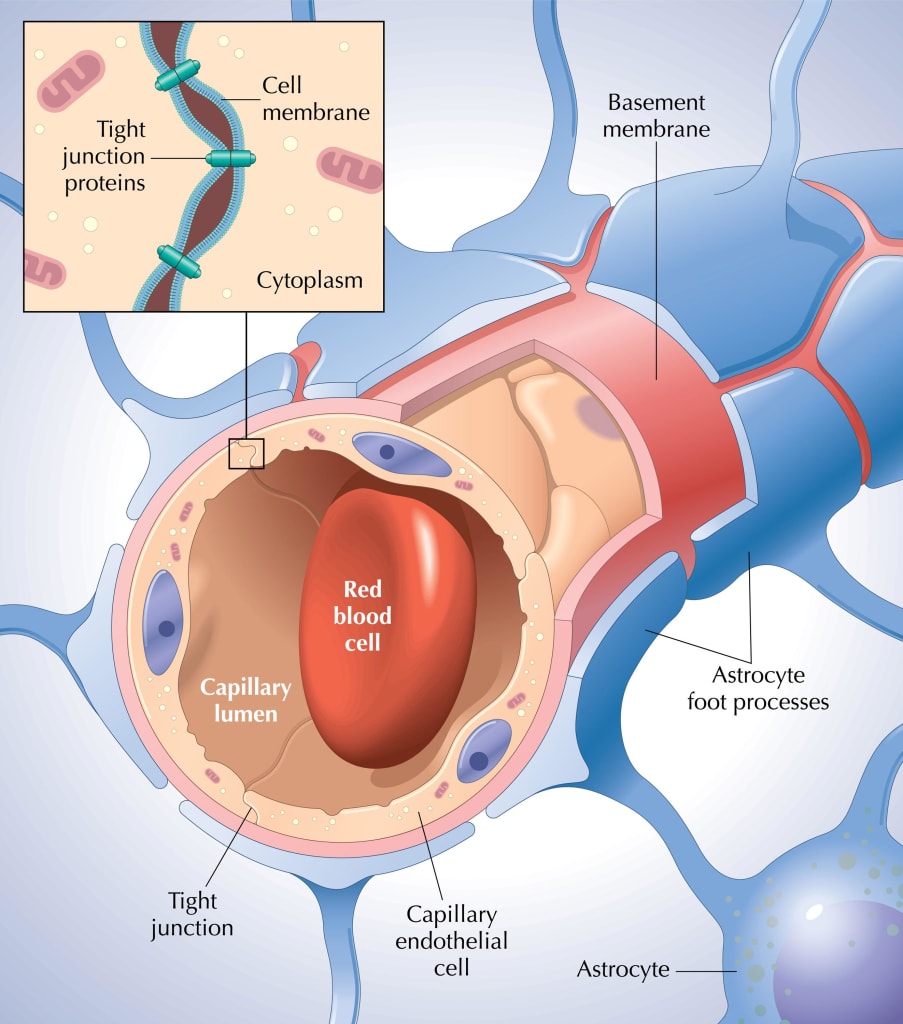
The BBB’s restrictive properties arise from multiple mechanisms. Tight junctions between endothelial cells eliminate paracellular diffusion pathways available in most other tissues. Efflux transporters, particularly P-glycoprotein (P-gp), multidrug resistance proteins (MRPs), and breast cancer resistance protein (BCRP), actively pump many drugs back into the bloodstream, further limiting brain accumulation. Additionally, the endothelial cells express high levels of metabolic enzymes that can degrade certain molecules before they cross the barrier. This biological fortress exists to protect the brain from potentially harmful substances but creates a formidable challenge for innovative drug delivery in neuro-oncology.
To experimentally confirm that hydralazine could engage its ADO target within brain tissue, the Penn researchers employed intracerebroventricular injection, direct delivery into the brain’s ventricular system, bypassing the BBB, in mice treated with the HYZyne probe. Proteomic analysis of harvested brain tissue confirmed ADO as the only detectable high-enrichment target, validating that the drug-target interaction occurs effectively within the brain microenvironment when delivery obstacles are circumvented.
This finding establishes proof-of-concept that ADO inhibition represents a viable therapeutic strategy for brain tumors, but also highlights the critical need for medicinal chemistry efforts to develop brain-penetrant hydralazine derivatives. Several strategies might enhance BBB penetration while retaining ADO inhibitory activity. Chemical modifications could optimize physicochemical properties such as lipophilicity, molecular weight, and hydrogen bonding capacity to favor passive transcellular diffusion.
Conjugation to ligands that engage receptor-mediated transcytosis pathways, such as transferrin or insulin receptors highly expressed on brain endothelium, could facilitate active transport. Alternatively, encapsulation in specialized nanoparticle formulations designed for BBB crossing represents another promising approach that has shown success with other cancer therapeutics. These innovative drug delivery methods represent active areas of research across multiple institutions.
Interestingly, while the intact BBB restricts hydralazine access to normal brain tissue, the situation may differ in glioblastoma. Many brain tumors partially disrupt BBB function, creating what researchers term the “blood-tumor barrier,” a structurally abnormal vasculature with irregular pericyte distribution, decreased expression of tight junction proteins, and increased permeability compared to normal BBB. This pathological permeability might permit greater hydralazine access to tumor tissue than to surrounding normal brain, potentially providing a degree of tumor selectivity.
However, the blood-tumor barrier paradoxically also exhibits enhanced expression and activity of efflux transporters, which could still limit drug accumulation. Navigating these complex and sometimes contradictory biological features remains a central challenge in developing effective brain cancer treatments.
Drug repurposing: the strategic advantage of established safety profiles
The concept of drug repurposing, identifying new therapeutic applications for medications already approved for other indications, has gained substantial traction in pharmaceutical development due to its potential to dramatically reduce both the time and cost required to bring new treatments to patients. This approach has become increasingly important in drug repurposing oncology, where the urgent need for effective therapies meets the reality of lengthy and expensive drug development timelines.
Developing a completely novel drug from initial discovery through regulatory approval typically requires 10-15 years and costs exceeding $2.6 billion, with a failure rate exceeding 90% for compounds entering clinical trials. In stark contrast, repurposed drugs leverage existing knowledge of safety, pharmacokinetics, manufacturing, and formulation, potentially reducing development timelines by 3-12 years and costs by more than 50%. This efficiency becomes particularly crucial when addressing diseases with poor prognoses like glioblastoma, where patients cannot afford to wait decades for new treatments.
Hydralazine exemplifies the ideal candidate for repurposing. The drug has accumulated more than seven decades of clinical experience across diverse patient populations, including pregnant women, one of the most vulnerable and carefully protected groups in medicine. Its safety profile is well characterized, with known side effects including headache, tachycardia, fluid retention, and in approximately 10% of patients, a reversible lupus-like syndrome that typically resolves upon discontinuation.
The drug’s pharmacokinetics, absorption, distribution, metabolism, and excretion patterns, are thoroughly documented, with well-established dosing regimens for various indications. Manufacturing processes are standardized, the active pharmaceutical ingredient is chemically stable, and multiple generic formulations ensure widespread availability and affordability. This comprehensive knowledge base provides a significant head start compared to developing entirely new compounds.
From a regulatory perspective, hydralazine’s existing approval status provides substantial advantages for potential cancer indications. While new cancer drugs typically require extensive Phase I dose-escalation studies to establish maximum tolerated doses and dose-limiting toxicities, hydralazine’s known safety profile in humans could potentially allow earlier phase trials to focus primarily on efficacy signals and target engagement biomarkers rather than basic safety parameters.
Regulatory agencies including the FDA, EMA, and UK MHRA have established pathways that can accelerate development of repurposed drugs, particularly for serious conditions with unmet medical needs such as glioblastoma. These accelerated pathways recognize that old drugs new uses can sometimes offer faster routes to helping patients than starting from scratch.
The FDA’s various expedited development and review programs, including Fast Track designation, Breakthrough Therapy designation, Accelerated Approval, and Priority Review, could potentially apply to a hydralazine cancer indication if early clinical data demonstrate meaningful therapeutic benefit. Fast Track designation, which can be requested at any time during development, facilitates more frequent interactions with FDA and allows for rolling submission of application components as they become available.
Breakthrough Therapy designation, granted when preliminary clinical evidence indicates substantial improvement over existing therapies for serious conditions, provides intensive FDA guidance and can reduce development timelines significantly. Priority Review shortens the FDA’s review period from the standard 10 months to 6 months. If hydralazine demonstrated effects on a surrogate endpoint reasonably likely to predict clinical benefit, such as progression-free survival or tumor senescence markers, it might qualify for Accelerated Approval, allowing conditional market access with requirements for confirmatory post-approval trials.
However, repurposing also presents unique challenges, particularly for off-patent generic drugs like hydralazine. The primary obstacle is economic: pharmaceutical companies have limited financial incentive to invest in expensive clinical trials for drugs that lack robust patent protection, as any resulting approval would immediately benefit all generic manufacturers, allowing competitors to free-ride on the innovator’s investment. This creates a “tragedy of the commons” scenario where the collective benefit is clear, but individual economic incentives are insufficient to drive the necessary research.
Several innovative mechanisms have been proposed to address this repurposing dilemma. “Use patents” can provide some exclusivity for specific new indications, though these are considered weaker protection than composition-of-matter patents. Regulatory exclusivity periods, such as the 3-year exclusivity granted in the US for new clinical studies required for approval, or the potential 1-year extension in the EU for new indications with significant clinical benefit, provide time-limited market advantages.
Public-private partnerships, non-profit drug development organizations, and academic-industry collaborations represent alternative models that can mobilize resources for repurposing projects where traditional commercial incentives fall short. Government funding agencies and disease-focused foundations increasingly recognize repurposing as a strategic priority deserving dedicated research support, viewing it as a way to maximize the return on previous pharmaceutical investments.
Clinical implications and future research directions
The translation of the University of Pennsylvania’s laboratory findings into clinical applications for glioblastoma patients will require a carefully orchestrated research program proceeding through several critical stages. The current evidence base consists entirely of preclinical studies using cultured glioblastoma cell lines and animal models. While these findings are scientifically compelling and mechanistically rigorous, substantial additional research is essential before hydralazine can be considered a viable therapeutic option for brain tumor patients.
The immediate next steps involve more sophisticated preclinical validation studies. Patient-derived xenograft (PDX) models, where tumor tissue from glioblastoma patients is implanted and grown in immunocompromised mice, would provide more clinically relevant tumor biology than established cell lines, allowing assessment of hydralazine’s efficacy against the heterogeneity characteristic of human glioblastoma.
Genetically engineered mouse models (GEMMs) that develop spontaneous brain tumors through oncogene activation or tumor suppressor loss would enable evaluation of ADO inhibition in preventing or slowing tumor initiation and progression. Orthotopic models, where tumor cells are implanted directly into mouse brains rather than subcutaneously, would better recapitulate the brain microenvironment and allow assessment of BBB penetration under pathological conditions.
A critical area requiring intensive research effort is medicinal chemistry optimization to develop hydralazine analogues with improved brain penetration while maintaining or enhancing ADO inhibitory potency. The crystal structure of hydralazine bound to ADO’s active site provides an invaluable molecular blueprint for structure-guided drug design. Specific chemical features identified as essential for ADO binding, including the phthalazine ring system’s nitrogen atoms that chelate the iron cofactor and form hydrogen bonds with active site residues, would be preserved, while other regions of the molecule could be modified to optimize BBB crossing properties.
Computational chemistry approaches including molecular docking, molecular dynamics simulations, and machine learning models could efficiently screen large virtual libraries of potential analogues before synthesis. This represents the cutting edge of brain cancer roadmap planning, where computational tools accelerate the traditionally slow process of drug optimization.
Parallel development of robust biomarkers to monitor target engagement and pharmacodynamic effects in patients will be crucial for clinical trial success. Since ADO inhibition stabilizes RGS proteins and induces senescence, quantitative assays measuring these effects could serve as early indicators of drug activity. Peripheral blood mononuclear cells (PBMCs) accessible from simple blood draws might serve as a surrogate tissue for measuring RGS4/RGS5 stabilization following hydralazine treatment.
Tumor tissue obtained during initial surgery or subsequent biopsies could be analyzed for senescence markers including p21, SA-β-galactosidase activity, and SASP factors. Advanced imaging techniques such as [18F]FET-PET (fluoroethyltyrosine positron emission tomography), increasingly used to distinguish tumor progression from treatment-related changes in glioblastoma patients, might detect metabolic alterations associated with senescence induction.
The design of early-phase clinical trials must carefully consider glioblastoma’s unique challenges. The disease’s poor prognosis and limited effective treatment options ethically justify testing promising new approaches, but trial designs must balance hope with rigorous scientific evaluation. Phase I dose-escalation studies would primarily focus on safety, tolerability, and pharmacokinetics, likely enrolling patients with recurrent glioblastoma who have exhausted standard treatment options.
Given hydralazine’s known cardiovascular effects, particular attention would be paid to monitoring blood pressure, heart rate, and cardiac function, with appropriate dose modifications or supportive medications to manage these effects. These glioblastoma clinical trials would need to be designed with input from both oncologists and cardiologists to ensure comprehensive patient safety.
Phase II efficacy trials would evaluate objective response rates, progression-free survival, and overall survival compared to historical controls or contemporary standard-of-care regimens. Adaptive trial designs, which allow modification of study parameters based on accumulating data, could improve efficiency and reduce the number of patients exposed to ineffective doses or regimens. Biomarker-enrichment strategies, selecting patients whose tumors exhibit particularly high ADO expression or other molecular characteristics suggesting greater likelihood of response, might increase the probability of detecting meaningful clinical benefit in early trials.
Importantly, hydralazine would likely be evaluated as part of combination regimens rather than monotherapy. Glioblastoma’s molecular heterogeneity and adaptive resistance mechanisms typically necessitate multi-targeted approaches. Hydralazine-induced senescence might synergize effectively with standard temozolomide chemotherapy, as senescent cancer cells may exhibit altered sensitivity to DNA-damaging agents.
The “one-two punch” strategy, where a pro-senescence therapy is followed by a senolytic agent that selectively eliminates senescent cells, has shown promise in preclinical cancer models and could potentially be applied to optimize hydralazine-based regimens. Additionally, combination with immune checkpoint inhibitors or other immunotherapies might leverage the SASP’s immune-stimulatory properties to enhance anti-tumor immune responses. This represents an exciting frontier in tumor-cell senescence research.
Beyond glioblastoma, the discovery of ADO as a cancer vulnerability may have implications for other malignancies. The Cancer Genome Atlas data indicates that high ADO expression correlates with poor prognosis in several cancer types including liver, cervical, and pancreatic cancers. Systematic evaluation of ADO expression patterns across tumor types, correlation with clinical outcomes, and assessment of hydralazine sensitivity in preclinical models representing diverse cancers would identify additional potential indications for ADO-targeted therapy. This broader exploration could expand the impact of this discovery far beyond brain cancer.
Important medical considerations and disclaimer
It is absolutely critical to emphasize that hydralazine for glioblastoma treatment remains entirely experimental and investigational at present. No clinical trials have yet been conducted evaluating hydralazine specifically for brain cancer treatment in human patients. All evidence supporting this potential application comes exclusively from laboratory studies using cultured cells and animal models. The research, while scientifically rigorous and mechanistically compelling, has not yet demonstrated safety or efficacy in glioblastoma patients.
Patients diagnosed with glioblastoma or any other brain tumor should absolutely not attempt self-medication with hydralazine or alter their prescribed treatment regimens without direct consultation with their neuro-oncology medical team. This warning cannot be overstated, as premature adoption of unproven therapies can have serious consequences. Several critical considerations make unsupervised use potentially dangerous: hydralazine’s known cardiovascular side effects could cause complications; drug interactions with other medications the patient may be taking could occur; the dose and schedule optimized for blood pressure control may differ substantially from what might be effective (and safe) for cancer treatment; and most importantly, using unproven treatments outside of clinical trials may delay or interfere with established beneficial therapies.
Hydralazine is a prescription medication that requires physician supervision. Its use for blood pressure control involves careful dose titration, monitoring of blood pressure and heart rate, and management of potential side effects including lupus-like syndrome, fluid retention, headaches, and tachycardia. The drug can interact with other antihypertensive medications, potentially causing excessive blood pressure lowering, and requires cautious use in patients with coronary artery disease due to reflex tachycardia.
The doses used in the preclinical glioblastoma studies (10-100 μM, corresponding to approximately 2-20 mg/L in blood) may differ from standard cardiovascular dosing, and the appropriate dose, schedule, and formulation for potential cancer treatment remain completely undefined. Patient safety must always remain the paramount concern in any therapeutic development.
For patients interested in potentially accessing experimental hydralazine-based treatments for brain cancer, the appropriate pathway is enrollment in properly designed clinical trials if and when such trials become available. Clinical trials provide structured monitoring, appropriate dose selection based on rigorous Phase I studies, comprehensive safety oversight, and contribute to the scientific evidence base needed for regulatory approval.
Patients can discuss with their oncologists the possibility of accessing information about relevant trials through resources such as ClinicalTrials.gov or through consultation at academic medical centers with active neuro-oncology research programs. These discussions represent the appropriate way for patients to explore emerging therapies while maintaining their safety.
Conclusion: a serendipitous discovery with profound implications
The identification of ADO as hydralazine’s primary molecular target represents far more than the solution to a pharmacological puzzle; it exemplifies how fundamental mechanistic research can unlock unexpected therapeutic opportunities hidden within our existing pharmaceutical arsenal. This discovery occurred through the convergence of innovative chemical biology tools, rigorous biochemical characterization, sophisticated cellular and animal models, and collaborative interdisciplinary science spanning chemistry, pharmacology, neuroscience, and oncology.
The broader implications extend beyond hydralazine itself. The research validates ADO as a druggable target with significant pathophysiological roles in both cardiovascular disease and cancer biology. The HYZyne probe developed by the Penn team now serves as a valuable research tool for investigating ADO biology across diverse contexts, potentially revealing additional diseases where this enzyme plays critical roles. The structural information obtained from co-crystallization of hydralazine with ADO provides a foundation for structure-based drug design efforts to create more potent, selective, and brain-penetrant ADO inhibitors optimized specifically for cancer treatment rather than vasodilation.
For patients living with glioblastoma and their families, this research offers cautious hope. While the path from laboratory discovery to clinical application is long and uncertain, likely requiring 5-10 years of additional research even with expedited development pathways, the work establishes scientific proof-of-concept that a well-established, affordable, widely available medication might be repurposed to address one of oncology’s most devastating challenges.
The fact that hydralazine has accumulated seven decades of human safety data substantially de-risks early clinical translation compared to completely novel compounds. Families who have watched loved ones struggle with this disease understand the profound need for new treatment options, making research advances like this particularly meaningful to the brain cancer community.
Perhaps most importantly, this discovery reminds us that innovation in medicine need not always involve cutting-edge biotechnology or billion-dollar investment in novel molecular entities. Sometimes the most impactful advances come from deeply understanding the mechanisms of therapies already in our hands, revealing hidden potential that has been waiting decades to be discovered.
The story of hydralazine’s journey from a 1950s-era blood pressure medication to a potential 21st-century brain cancer therapy exemplifies the enduring value of curiosity-driven research, mechanistic rigor, and the willingness to look at old problems with new tools and fresh perspectives. As oncology research headlines continue highlighting the urgent need for glioblastoma treatment breakthroughs, this work represents exactly the kind of innovative thinking that gives researchers and patients alike reason for optimism about the future of brain cancer treatment.


