

The September 11 attacks of 2001 fundamentally altered the trajectory of the 21st century, reshaping global politics, international security, and American society in ways that continue to reverberate today. While the official narrative has been extensively documented and investigated, significant questions remain about long-term consequences, ongoing health crises, and unresolved aspects of the response. This comprehensive examination explores both the established facts and the persistent uncertainties that define the 9/11 legacy more than two decades later.
More than 8,300 people have now died from 9/11-related illnesses – exceeding the original death toll of 2,977. This ongoing health crisis represents the attacks’ most devastating long-term consequence, with cancer cases among survivors and first responders skyrocketing by 143% in just five years.
The silent epidemic: How 9/11-related illnesses now exceed original death toll
The toxic legacy of ground zero
What began as a rescue and recovery mission has evolved into America’s deadliest occupational health disaster. The collapse of the World Trade Center created an unprecedented toxic environment in lower Manhattan, releasing a lethal mixture of asbestos, lead, glass fibers, pulverized concrete, jet fuel residue, and more than 400 other hazardous materials into the air.
More than 500,000 people were exposed to these toxins, including first responders, downtown workers, residents, students, and cleanup crews. The Environmental Protection Agency initially declared the air safe to breathe – a statement that would prove tragically premature.
A crisis that continues to escalate
As of 2025, the World Trade Center Health Program has enrolled over 135,000 individuals, with health impacts proving far more severe and long-lasting than initially anticipated. Cancer cases have reached 51,200 – a staggering 155% increase since 2019. The most common cancers include prostate, skin, breast, thyroid, kidney, lung, and bladder cancers, as well as melanoma, lymphoma, and leukemia.
Sarah Chen, a financial analyst who worked in the South Tower and evacuated that morning, developed thyroid cancer in 2019: “I thought I was lucky to survive that day. I never imagined the real danger would come years later. The doctors say my cancer is directly linked to the toxins I breathed in the weeks after returning to work downtown.”
The mortality statistics paint an even grimmer picture. More than 8,300 people enrolled in the WTC Health Program have died, including 6,100 responders. These deaths from 9/11-related illnesses now significantly exceed the 2,977 people killed on September 11 itself.
Firefighter Michael Rodriguez, who spent months at ground zero, lost his battle with lung disease in 2023: “Before he died, my dad told me, ‘We didn’t know we were trading our lives for that pile of rubble.’ He thought he was saving people, but the pile was killing him slowly,” said his daughter Maria Rodriguez-Walsh.
First responders bear the heaviest burden
The Fire Department of New York has lost over 370 members to 9/11-related illnesses, exceeding the 343 firefighters who died on the day of the attacks. The New York Police Department has confirmed over 320 deaths from 9/11-related diseases. These numbers continue rising monthly.
Retired FDNY Captain James Murphy, diagnosed with multiple cancers: “We went there to save lives, and we did. But nobody told us we were sacrificing our own. The brothers we lost that day died as heroes. The ones dying now are dying forgotten heroes.”
Despite the tragedy, first responders enrolled in the WTC Health Program have demonstrated significantly higher cancer survival rates than the general population. Research published in 2021 found that 9/11 responders were about 35% more likely to survive their cancers, attributed to enhanced medical monitoring and free treatment provided through the program.

The established timeline and official findings
The attack sequence and immediate response
On September 11, 2001, nineteen al-Qaeda operatives executed a meticulously planned assault on American soil. At 8:46 AM, American Airlines Flight 11 crashed into the North Tower of the World Trade Center, followed by United Airlines Flight 175 striking the South Tower at 9:03 AM. American Airlines Flight 77 hit the Pentagon at 9:37 AM, while United Airlines Flight 93 crashed in Shanksville, Pennsylvania, at 10:03 AM after passengers attempted to regain control from hijackers.
The attacks killed 2,977 people, including 412 first responders. The Twin Towers collapsed at 9:59 AM and 10:28 AM respectively, with 7 World Trade Center falling at 5:20 PM the same day. The immediate response included the unprecedented closure of U.S. airspace and the activation of emergency protocols that would reshape American security infrastructure.
Survivor testimony from Maria Santos, who escaped from the 78th floor of the South Tower: “I can still smell the smoke, hear the sirens. But what haunts me most is watching friends who made it out that day die slowly from the poison we all breathed. September 11th didn’t end in 2001 – it’s still happening.”
Engineering and scientific analysis
The National Institute of Standards and Technology (NIST) conducted the most comprehensive investigation into the building collapses, releasing final reports in 2005 for the Twin Towers and 2008 for WTC 7. NIST concluded that the collapses resulted from the combined effects of aircraft impact damage, widespread fireproofing dislodgement, and subsequent fires.
The investigation found that the crashes severed and damaged numerous support columns whilst dislodging spray-on fireproofing that protected steel from heat. Exacerbated by compromised fire protection, the jet fuel-fed fires rapidly heated and weakened steel floors connecting inner core columns to outer perimeter columns. As the floors sagged, they pulled on the perimeter columns, causing them to bend inward and ultimately buckle, initiating the progressive collapse.
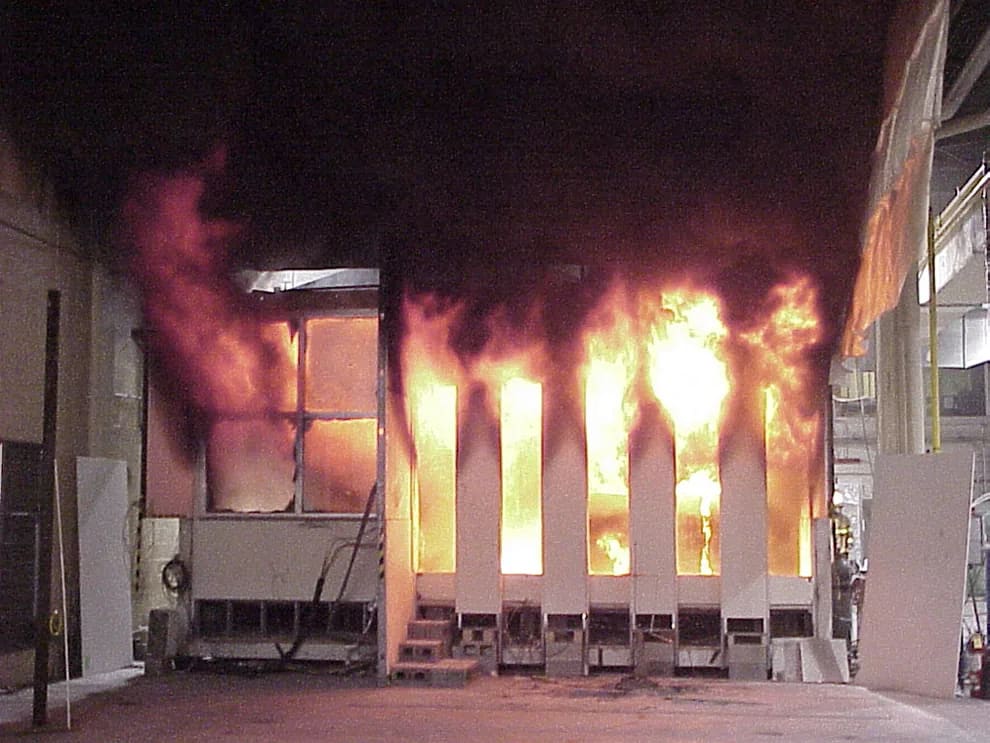
For WTC 7, NIST determined that fires ignited by debris from the North Tower’s collapse burned uncontrolled for over six hours due to disabled sprinkler systems. These fires caused thermal expansion of steel beams and girders, leading to the failure of a critical support column and subsequent progressive collapse.
The 9/11 Commission report and intelligence failures
The 9/11 Commission, established in 2002, produced a comprehensive 571-page report examining the attacks and intelligence failures. The investigation identified significant communication breakdowns between the CIA, FBI, and other agencies, describing bureaucratic inertia and legal restrictions that prevented effective information sharing.
The Commission characterized the failures as a “failure of imagination” by both the Clinton and Bush administrations, noting that whilst various intelligence agencies possessed pieces of information about potential threats, they failed to connect the dots or anticipate the scale and nature of the planned attacks.
The geopolitical transformation and war on terror
Immediate policy response and 2024 political implications
The attacks triggered an unprecedented expansion of federal power and surveillance capabilities. On September 14, 2001, Congress passed the Authorization for Use of Military Force (AUMF), granting the president broad authority to use force against those responsible for 9/11. This resolution became the legal foundation for military actions in at least fourteen countries over the following two decades.
The USA PATRIOT Act, signed into law on October 26, 2001, dramatically expanded government surveillance powers. The legislation increased monitoring of phone and email communications, expanded access to personal records, allowed secret searches, and reduced restrictions on information sharing between domestic law enforcement and intelligence agencies.
Recent political developments: The 2024 election cycle has renewed debates over counterterrorism funding and civil liberties. President-elect policies regarding the World Trade Center Health Program funding through 2090 remain a key concern for 9/11 survivors and their families, particularly as healthcare costs continue rising with the aging survivor population.

The Afghanistan invasion and beyond
Operation Enduring Freedom commenced on October 7, 2001, with U.S. and British forces beginning bombing campaigns against Taliban and al-Qaeda targets in Afghanistan. The invasion aimed to capture Osama bin Laden, remove the Taliban from power, defeat al-Qaeda, and establish a democratic government.
The subsequent “War on Terror” expanded far beyond Afghanistan, encompassing military interventions in Iraq, Pakistan, Syria, Libya, Somalia, and other nations. The financial costs have been staggering, with estimates ranging from $4 to $6 trillion for the Iraq and Afghanistan conflicts alone. More than 900,000 people have died from direct war violence, with several million more deaths attributable to the broader effects of these conflicts.
Current counterterrorism challenges: The 2021 withdrawal from Afghanistan marked the end of America’s longest war, but experts argue that the terrorist threat has become more complex and diffuse. The number of designated terrorist organizations has increased from approximately ten in 2001 to over seventy today, while domestic extremism has emerged as an equally pressing concern.
Medical monitoring and treatment advances
Breakthrough research and treatment protocols
The World Trade Center Health Program represents one of the most comprehensive occupational health monitoring systems ever established. The program provides medical monitoring and treatment for over 80 certified health conditions related to 9/11 exposure, funded through 2090 following the permanent reauthorization of the James Zadroga Act in 2019.
Dr. Rachel Zeig-Owens, director of the FDNY World Trade Center Health Program: “What we’ve learned from monitoring 9/11 responders has revolutionized our understanding of toxic exposure and occupational health. This population has become a living laboratory that’s helping us develop better treatments for cancer, respiratory disease, and PTSD.”
Recent medical advances include:
- Targeted cancer screening protocols that have improved early detection rates by 40%
- Innovative respiratory treatments specifically designed for World Trade Center lung disease
- Mental health integration programs addressing the complex trauma-cancer-respiratory disease interactions
- Genomic research initiatives identifying genetic markers that predict treatment response
Expanding health condition recognition
The program continues to expand its list of covered conditions as new research emerges. Recent additions include several rare cancers and autoimmune conditions previously not linked to 9/11 exposure. Scientists are investigating potential connections to neurological conditions, autoimmune diseases, and other illnesses that may emerge decades after initial exposure.
Persistent questions and ongoing investigations
Unanswered aspects of support networks
Recent document declassifications have renewed focus on potential support networks within the United States. Families of 9/11 victims continue pursuing civil litigation against Saudi Arabia, arguing that Saudi officials provided assistance to some of the hijackers. These cases seek to establish accountability beyond the 19 hijackers and Osama bin Laden’s direct network.
Terry Strada, chair of 9/11 Families & Survivors United for Justice Against Terrorism: “We’re not conspiracy theorists. We’re families who lost loved ones, and we deserve to know the truth about who helped these terrorists. The FBI’s own documents show there were people in this country who assisted the hijackers.”
The FBI’s investigation, known as PENTTBOM, remains officially open, and families continue to press for additional declassified documents that might shed light on any additional parties who may have assisted the plot.
Legal proceedings and justice delayed
The military tribunal proceedings at Guantanamo Bay have been plagued by delays and complications stemming from the use of torture during interrogations. Evidence obtained through enhanced interrogation techniques has been deemed inadmissible, significantly complicating prosecutions. More than two decades after the attacks, the legal proceedings against the alleged masterminds remain incomplete, raising questions about the effectiveness of the military tribunal system.
Scientific debates and the persistence of alternative theories
Engineering consensus vs. continuing questions
While the engineering community has reached consensus on the collapse mechanisms, some technical questions persist. A 2019 study by the University of Alaska Fairbanks, funded by Architects & Engineers for 9/11 Truth, concluded that fire did not cause the collapse of WTC 7, contradicting NIST’s findings. However, this study has not been peer-reviewed by mainstream engineering journals and remains outside the scientific consensus.
The broader engineering and scientific community continues to support NIST’s conclusions, which have been validated through extensive computer modeling and physical testing. Multiple independent investigations by organizations such as the American Society of Civil Engineers have corroborated the official findings.
Understanding conspiracy theory persistence
Dr. Karen Douglas, professor of social psychology at the University of Kent: “Conspiracy theories about 9/11 persist because they offer simple explanations for complex events, provide a sense of control, and fulfill psychological needs for understanding and meaning. The internet has amplified these beliefs, creating echo chambers where alternative narratives flourish.”
Research indicates that belief in 9/11 conspiracy theories correlates with broader psychological tendencies toward conspiratorial thinking, lower levels of political trust and education, and higher levels of authoritarianism. These beliefs have proven remarkably persistent despite extensive debunking efforts by scientific and governmental authorities.
Key conspiracy theory claims and scientific responses:
- Controlled demolition theory: Scientific analysis shows that the collapse patterns, debris distribution, and acoustic signatures are consistent with progressive failure due to fire and structural damage, not controlled demolition.
- “Inside job” allegations: The 9/11 Commission and subsequent investigations found no evidence of government complicity, and the logistical requirements for such a conspiracy would be impossibly complex.
- Pentagon missile theory: Physical evidence, witness testimony, and flight data confirm that American Airlines Flight 77 struck the Pentagon.
- WTC 7 questions: NIST’s investigation demonstrated that uncontrolled fires caused thermal expansion and structural failure, leading to progressive collapse.
Media, memory, and misinformation in the digital age
The evolution of conspiracy theories
The rise of social media and alternative information sources has fundamentally altered how 9/11 is remembered and discussed. Conspiracy theories began appearing online within hours of the attacks and have proliferated across digital platforms. The most persistent theories include claims of controlled demolition, government complicity, and alternative explanations for the Pentagon attack.
James Fetzer, a prominent conspiracy theorist, vs. Popular Mechanics editor David Dunbar in a 2006 debate: The exchange highlighted how conspiracy theorists often exploit gaps in public understanding of engineering and physics while mainstream experts struggle to communicate complex technical information effectively to general audiences.
Educational challenges in the digital age
Educators report increasing challenges in teaching accurate information about 9/11 to students who have no personal memory of the events. The proliferation of misinformation online has created what teachers describe as a “growing and serious problem” in combating conspiracy theories in classrooms.
Jennifer Williams, high school history teacher in Ohio: “Students come to class having watched YouTube videos claiming the government blew up the towers. They’ve seen slick documentaries that look professional and convincing. It’s heartbreaking to see young people believe such harmful nonsense about this tragedy.”
This challenge is compounded by the fact that many students encounter alternative narratives through social media before receiving formal education about the attacks. Educational initiatives now include media literacy components specifically designed to help students critically evaluate sources and understand the difference between legitimate questions and conspiracy theories.
The broader global impact and unintended consequences
International relations and soft power
The global response to 9/11 initially demonstrated unprecedented international solidarity, with NATO invoking Article 5 for the first time and numerous countries offering military and intelligence support. However, the subsequent Iraq invasion severely damaged American credibility and fractured these alliances.
Colin Powell’s former chief of staff, Lawrence Wilkerson: “9/11 gave us the world’s sympathy and support. The Iraq War squandered it. We went from being victims of terrorism to being seen as perpetrators of it by many around the world.”
The “War on Terror” has had profound implications for American soft power and international relations. While the intervention in Afghanistan initially enjoyed broad international support, the expansion into Iraq created lasting divisions with European allies, Russia, and China. The ultimate withdrawal from Afghanistan in 2021 marked the end of America’s longest war, with mixed results in terms of counterterrorism objectives.
Domestic transformation and civil liberties
The expansion of surveillance capabilities and security measures has fundamentally altered American society. The creation of the Department of Homeland Security, enhanced airport security protocols, and expanded intelligence gathering have become permanent features of American life.
These changes have disproportionately affected Muslim Americans and other minority communities through surveillance programs, watch lists, and enhanced screening procedures. The tension between security and civil liberties remains a defining challenge of the post-9/11 era.
Dalia Mogahed, director of research at the Institute for Social Policy and Understanding: “Twenty-three years later, American Muslims still live with the legacy of collective suspicion. Airport security, workplace discrimination, FBI surveillance – these became part of daily life for an entire community that had nothing to do with the attacks.”
Current challenges and future implications
The evolving terrorist threat landscape
Twenty-four years after 9/11, terrorism experts argue that the threat landscape has become more complex and diffuse. The rise of ISIS, the return of the Taliban to power in Afghanistan, and the growth of domestic extremism have created new security challenges.
The proliferation of social media has enhanced terrorist recruitment capabilities whilst also enabling domestic extremist movements. The intersection of foreign and domestic terrorism threats represents a significant challenge for contemporary counterterrorism efforts.
Former CIA director John Brennan: “The terrorism threat today is more diverse and in some ways more dangerous than it was on 9/11. We’re dealing with international terrorists, domestic extremists, lone wolves, and state-sponsored actors all at once. The simple narrative of fighting al-Qaeda in Afghanistan seems quaint by comparison.”
Ongoing health program sustainability and expansion
The World Trade Center Health Program faces long-term sustainability challenges as the affected population ages and develops additional health conditions. While funding is secured through 2090, the program must adapt to evolving medical needs and potentially expanded eligibility criteria.
Current expansion considerations include:
- Geographic coverage: Extending benefits to survivors who lived or worked outside the immediate impact zone
- New health conditions: Adding autoimmune diseases, neurological conditions, and rare cancers as research establishes connections
- Second-generation effects: Investigating potential health impacts on children of exposed individuals
- Mental health services: Expanding psychological support for complex trauma, survivor guilt, and chronic illness adaptation
Research continues into the long-term health effects of 9/11 exposure, with scientists investigating links to neurological conditions, autoimmune diseases, and other illnesses that may emerge decades after initial exposure. The program serves as a model for disaster response and occupational health monitoring.
Dr. Michael Crane, medical director of the World Trade Center Health Program: “We’re learning that 9/11 exposure may have lifelong health consequences we’re only beginning to understand. Every year brings new insights into how these toxins affected human health. The program must evolve with this knowledge.”
Memorial and historical preservation challenges
The National September 11 Memorial & Museum faces unique challenges in preserving artifacts and maintaining relevance for future generations. Conservation efforts must address the deterioration of materials never intended for long-term preservation whilst ensuring the memorial’s educational mission continues.

The museum’s approach to presenting the events of 9/11 must balance historical accuracy with sensitivity to survivors and families whilst countering misinformation and conspiracy theories. This responsibility becomes more complex as personal memories of the events fade and new generations seek to understand the attacks’ significance.
Alice Greenwald, president and CEO of the 9/11 Memorial & Museum: “We have a responsibility to ensure that accurate history survives. As we get further from 2001, we see more young people coming to us who’ve been exposed to conspiracy theories online. Our role as educators becomes even more critical.”
Looking forward: Lessons and unresolved questions
Intelligence and security improvements
The intelligence reforms implemented after 9/11, including the creation of the Director of National Intelligence and enhanced information sharing protocols, have prevented successful large-scale attacks on U.S. soil. However, the challenge has evolved to include “lone wolf” attacks, domestic extremism, and cyber threats that require different approaches.
The balance between proactive intelligence gathering and civil liberties protection remains contentious, particularly regarding surveillance programs revealed by Edward Snowden and others. Future counterterrorism efforts must navigate these competing priorities whilst adapting to emerging threats.
Recent policy developments: The Biden administration’s 2023 National Security Strategy emphasizes the need to balance counterterrorism with great power competition, signaling a shift away from the post-9/11 focus on the Middle East toward challenges from China and Russia.
International cooperation and diplomacy
The experience of the past two decades has highlighted both the potential and limitations of military responses to terrorism. Experts increasingly emphasize the importance of addressing root causes of extremism through diplomatic engagement, economic development, and counter-narrative programs.
The withdrawal from Afghanistan and changing global dynamics have prompted reassessment of America’s role in international counterterrorism efforts. Future strategies must balance direct action capabilities with multilateral cooperation and conflict prevention.
Scientific and technical understanding
Continued research into the engineering and health aspects of 9/11 provides valuable insights for disaster preparedness and response. The comprehensive documentation of the World Trade Center collapse has informed building codes, emergency response protocols, and structural engineering practices worldwide.
The ongoing health monitoring program generates critical data about long-term exposure effects that benefit broader occupational and environmental health research. These scientific contributions represent an important legacy of the systematic response to the attacks.
Voices of resilience: Survivor and first responder perspectives in 2025
Living with the long-term consequences
As we approach the 24th anniversary of the attacks, survivors and first responders continue to grapple with ongoing health challenges, financial burdens, and emotional trauma.
Detective Luis Alvarez (posthumous testimony from family): Before his death from 9/11-related cancer in 2019, Detective Alvarez testified before Congress: “I did not want to be anywhere else but Ground Zero when I was there. You made me come down here the day before I’m supposed to have surgery… I’m sure I’ll be fine, but if I’m not, you pulled me away from my family just so I could remind you that this should not be a political issue.”
John Feal, 9/11 first responder and advocate: “We’ve been fighting for our lives and our benefits for over two decades. The government told us the air was safe to breathe, and we believed them. Now we’re dying, and we have to fight for every dollar of medical care. But we keep fighting because that’s what we do.”
Survivor Monica Iken, whose husband Michael died in the South Tower: “Twenty-three years later, I’m still learning about friends who are getting sick from that toxic dust. The attacks didn’t end on September 11th – they’re still killing people every day. That’s the story that needs to be told.”

Conclusion: An unfinished story of health, memory, and justice
The September 11 attacks remain one of those pivotal events whose consequences continue to unfold across multiple dimensions of human experience. The established narrative, supported by extensive investigation and scientific analysis, provides a comprehensive understanding of what happened and why. Yet significant questions persist about long-term implications, unresolved legal issues, and emerging challenges that define the contemporary security environment.
The ongoing health crisis represents perhaps the most tragic unresolved consequence, with deaths from 9/11-related illnesses now exceeding the original toll by nearly 30%. This silent epidemic underscores how the attacks’ impact extends far beyond the immediate destruction, creating long-term obligations for medical care, compensation, and research that will continue for decades.
The current reality: More than 135,000 people remain enrolled in health monitoring programs, cancer cases continue rising exponentially, and new conditions are being linked to toxic exposure. The World Trade Center Health Program, funded through 2090, represents one of the largest occupational health initiatives in American history.
Twenty-four years later, the challenge is to maintain both vigilance and perspective, honoring the memory of those lost whilst learning from the response’s successes and failures. The questions that persist are not primarily about what happened on September 11, but about how society continues to grapple with its consequences and prepare for future challenges.
The story of 9/11 is far from over. It continues to be written in medical journals documenting rising cancer rates, courtrooms pursuing justice for victims’ families, classrooms educating new generations about accurate history, and policy debates about security and liberty. Understanding this ongoing evolution is essential for making informed decisions about the path forward whilst ensuring that the lessons learned serve to build a more secure and just world.
Looking ahead: As we face new challenges from domestic extremism, cyber terrorism, and great power competition, the 9/11 legacy reminds us that the true measure of resilience lies not just in preventing future attacks, but in caring for those who sacrificed their health and lives in response to tragedy. The ongoing health crisis, the persistence of conspiracy theories, and the evolving terrorist threat all demand continued attention, resources, and commitment to truth.
The attacks of September 11, 2001, transformed American society in ways both seen and unseen. Today, as more first responders die from 9/11-related illnesses than perished on the day itself, we are reminded that some tragedies continue unfolding long after the world moves on. The responsibility to remember extends beyond annual commemorations to the daily work of supporting survivors, pursuing scientific understanding, combating misinformation, and ensuring that the lessons of that terrible day inform a better future for all.


