Have you been influenced today? But by whom? Scroll long enough and a “home-made” recipe, a blurry unboxing or a one-liner on X nudges you towards a purchase – yet the hand guiding the decision is hidden. Welcome to the age of invisible marketing, a strategy in which brand persuasion is woven so seamlessly into everyday content that audiences perceive it as genuine discovery rather than advertising. At the centre of this silent machinery stand faceless influencers, micro- and nano-creators (often hired by ghost agencies) whose identities matter less than their perceived authenticity. Together, they raise a single unsettling question: how much of what we watch, like or buy is manufactured?
I recently scrolled past a viral TikTok recipe, seemingly filmed by a home cook with endearing imperfections. Only later, after seeing the same distinctive kitchen appliance pop up on several other similar “authentic” channels, did I realise it was a subtle ad for a specific kitchen brand. This growing trend illustrates perfectly the pervasive nature of invisible marketing.
Invisible marketing in context
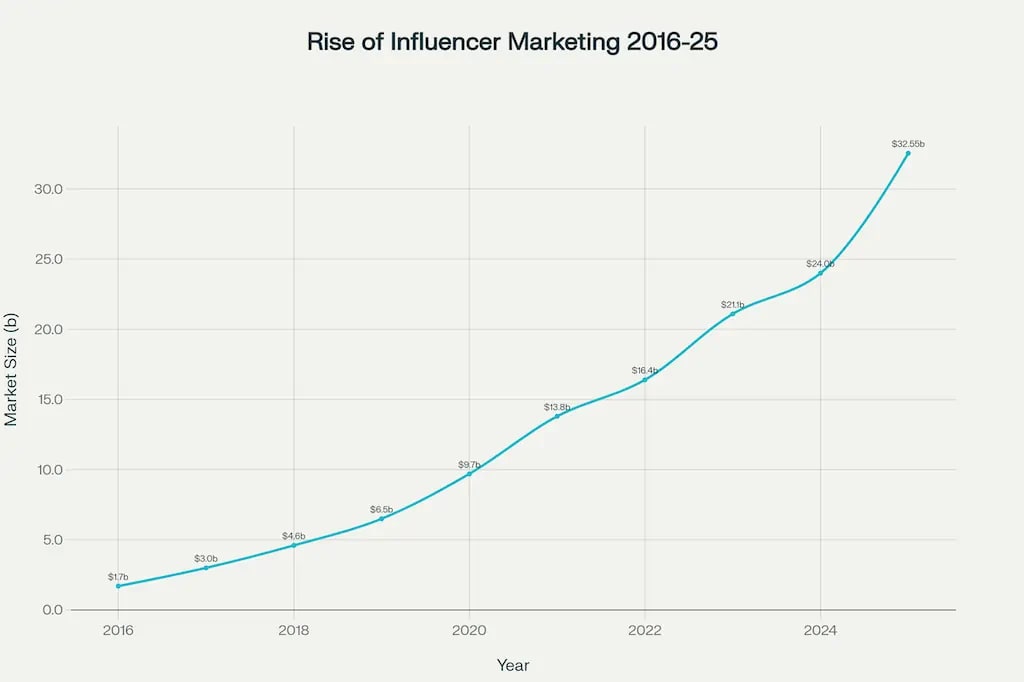
Growth figures explain why marketers have pivoted budgets towards covert tactics. The global influencer marketing market has rocketed from USD 1.7 billion in 2016 to more than USD 24 billion in 2024, with forecasts of USD 32.55 billion by 2025. At the same time, ad-blocking, privacy regulation and audience fatigue have eroded the efficiency of overt advertising. Brands therefore turn to subtler, subtle marketing formats such as product placement, scripted user-generated clips and AI-assisted storytelling, hoping to retain brand trust in an era plagued by scepticism.
The invisible marketing playbook
Ghost agencies and content creation marketing
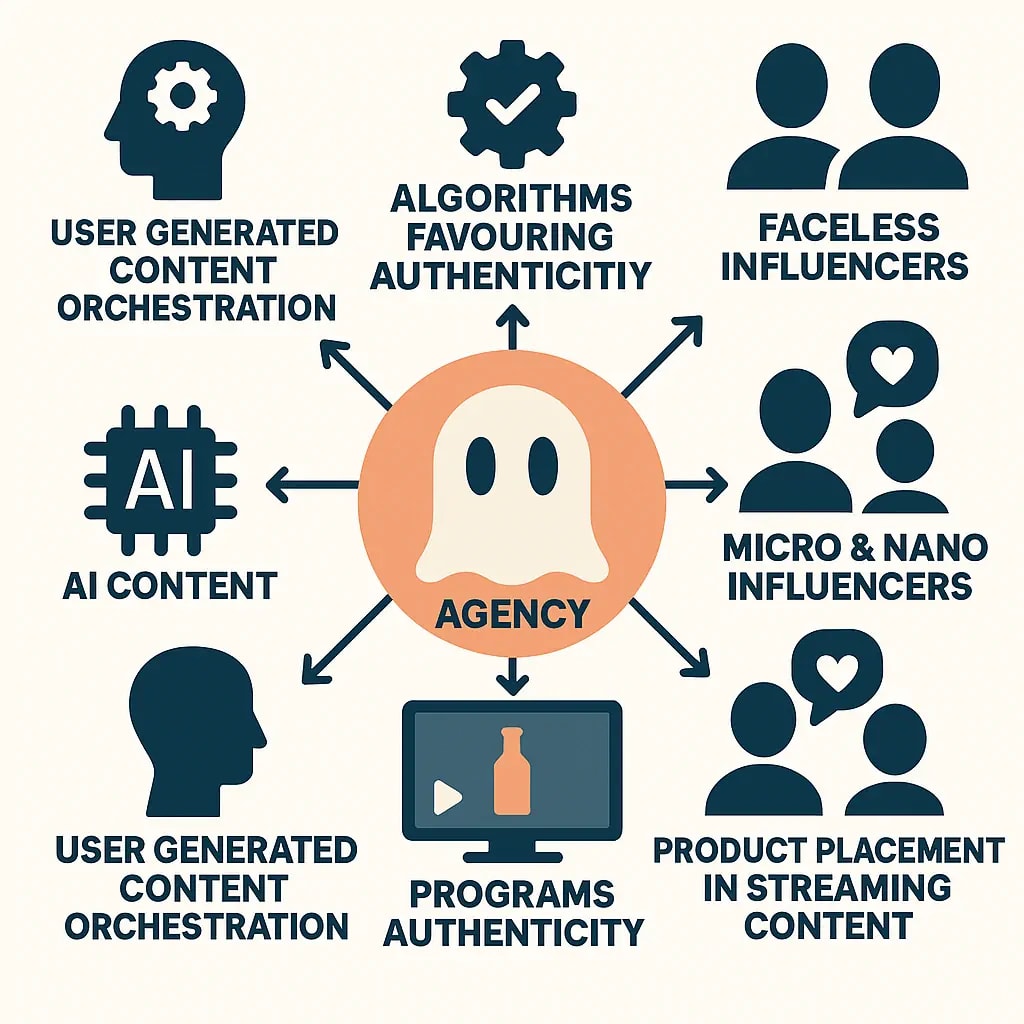
Specialist agencies – sometimes called ghost or undercover firms – recruit writers, editors and videographers to design campaigns that look organic but are strategically planned down to frame and caption. These firms provide brands with scalable creator networks, audience analytics and algorithm marketing tactics, often operating under strict non-disclosure clauses to keep the collaboration invisible.
Faceless influencers: micro and nano as covert stars
Unlike celebrity endorsers, faceless influencers speak from behind a camera, show only hands or use AI-generated avatars. Their followings are small (typically under 50 k) but highly engaged, giving brands cost-efficient access to niche communities. Nano influencers (sub-10 k followers) can deliver engagement rates above 3% – out-performing mega-influencers tenfold and commanding lower fees. The absence of a recognisable face makes the content feel like every day peer-to-peer advice rather than a commercial.
Three shades of invisible content
| Type of covert content | How it works | Typical KPI | Example |
| Subtle product placement | Brand object is naturally embedded in plot; high content strategy planning | Boost in brand recall up to 47% | Kopiko sweets on K-Drama tables |
| Orchestrated UGC | Ghost agency seeds briefs to micro-followers; incentivises posts that appear spontaneous | Up to 29% higher web conversions | #facelesshomeorganise TikToks showing sponsor’s storage jars |
| Scripted authenticity | Creator simulates imperfections (shaky camera, “oops” edits) to signal realism | Higher watch-time and comment rate relative to polished ads | Viral “messy kitchen” cooking reels featuring branded sauce |
Why it works: the psychology of trust and discovery
Consumers increasingly trust recommendations from peers and influencers (69%) more than brand ads. When the source is perceived as one of us, persuasion triggers social-proof heuristics, lowering resistance. Faceless influencers amplify this by removing identity cues that might alienate diverse audiences, letting viewers project themselves onto the narrator.
Algorithms on TikTok, Instagram Reels and YouTube Shorts reinforce the effect. Their ranking models privilege authentic-looking, high-engagement clips, rewarding lo-fi aesthetics and niche relevance. Consequently, covert marketing through micro-creators often secures stronger reach-per-dollar than traditional campaigns.
Who pulls the strings?
Ghost agencies/marketing firms
These companies build databases of vetted creators, negotiate contracts and measure covert campaign ROI. They use AI tools to predict emotional resonance and optimal placement timing, then iterate content in real time.
Freelance writers & ghost creators
Scriptwriters, voice-over artists and motion designers supply the raw material. Many sell packages on gig platforms; others work exclusively for agencies, forfeiting credit for higher retainers.
Brands and their objectives
Advertisers embrace invisible tactics to overcome banner blindness, sidestep ad-blockers and appear embedded in culture. Studies show an average 4 : 1 ROI on influencer campaigns across platforms.
The consumer’s role
Paradoxically, audiences collude in the illusion. Research shows 63% of shoppers are more likely to buy a product if a trusted influencer seems to discover it “organically”. The human desire for serendipity and belonging fuels this self-deception.
Implications: the promise and the peril
Erosion of authenticity and brand trust
When every “spontaneous” clip is strategic, genuine voices risk being drowned out, leading to what researchers call a media authenticity crisis. Once exposed, brands may face backlash and regulatory fines, especially where disclosure laws tighten.
Ethical marketing questions
Regulators worldwide now demand clearer labelling of paid partnerships. The UK’s competition and markets authority and the US FTC both require explicit #ad disclosures, challenging the stealth model. Ethically, exploiting social relationships without transparency can undermine consumer autonomy.
Future digital influence tactics
AI-generated avatars, voice cloning and synthetic product demos will push invisible marketing further into grey areas. Yet, the same AI can detect fraudulent metrics, helping brands audit influencer authenticity.
Consumer literacy
Media-savvy users employ reverse-image searches, follower-audit tools and critical comparison to identify manipulated content. Education programmes that teach algorithm awareness and sponsorship disclosure recognition are essential safeguards.
Navigating the new landscape
For brands
- Embed ethics: Require influencers to disclose partnerships clearly, even in faceless formats, to preserve brand trust.
- Balance visibility and subtlety: Pair micro placements with transparent macro messages; overreliance on covert tactics risks reputational damage.
- Audit authenticity metrics: Monitor engagement spikes, comment patterns and bot activity to avoid inflated follower counts.
- Diversify content strategy: Combine digital influence tactics (live streams, AI demos, podcasts) to hedge against algorithm shifts.
For consumers
- Spot the signals: Unusual product-centric framing, repeated hashtags or identical captions across creators can indicate undercover marketing.
- Check disclosure: Look for #ad or “paid partnership” tags; absence does not guarantee authenticity.
- Verify the messenger: Use follower-audit tools to review engagement ratios; ghost accounts often show uneven spikes.
- Cultivate media literacy: Question viral trends and compare independent reviews before purchasing.
Real-world case study: the ‘clean girl aesthetic’ and product seeding
A recent example of invisible marketing’s pervasive nature can be seen in the “clean girl aesthetic” trend that dominated social media in late 2023 and early 2024. What appeared to be organic content featuring minimalist make-up, sleek hairstyles and glowing skin routines, often subtly showcased specific brands. Beauty brands and ghost agencies reportedly engaged in extensive product seeding campaigns, sending free products to hundreds of faceless influencers and micro-creators. These creators then integrated the products into their “get ready with me” videos and daily vlogs, often without explicit “#ad” disclosures. The sheer volume and seemingly organic nature of the content created an illusion of widespread, authentic adoption, driving significant sales for the featured brands. This strategy leveraged the desire for aspirational yet achievable beauty, with consumers feeling they were discovering these products through trusted, relatable peers, rather than through direct advertising. While effective for brands, it also intensified discussions about the need for clearer transparency and ethical marketing guidelines from regulatory bodies to ensure consumers are fully aware when content is commercially motivated.
Conclusion: a call to awareness
Invisible marketing will not vanish; it will evolve, guided by algorithms, AI and our own craving for authentic connection. The challenge is to ensure that subtle persuasion remains transparent enough to respect consumer agency. Brands that master ethical invisibility will continue to thrive, while those who over-script authenticity risk eroding the very trust they seek to build. As audiences, staying curious about who benefits from every storyline we scroll past safeguards both our wallets and our autonomy.