Before diving into the remarkable saga of how Netflix transformed from a rebellious DVD-by-mail startup into the undisputed emperor of entertainment, let’s establish one crucial fact: this is the story of how two entrepreneurs didn’t just build a company they rewrote the rules of how billions of people consume entertainment. Reed Hastings and Marc Randolph didn’t merely create Netflix; they engineered a cultural phenomenon that obliterated video rental stores, challenged Hollywood’s century-old distribution model, and fundamentally altered our relationship with television and film. What began as a solution to avoid late fees has evolved into a $513 billion Netflix empire that produces award-winning content in dozens of languages, influences global pop culture, and continues to shape the future of entertainment consumption across 190+ countries.

The genesis of a revolution: From mathematical minds to media moguls
The entrepreneurial foundation
Netflix’s origin story reads like a Silicon Valley fairy tale, but the reality is far more nuanced than the popular Apollo 13 late fee legend. Reed Hastings, born in 1960, brought a unique combination of mathematical precision and educational passion to the entrepreneurial world. After graduating from Bowdoin College with a mathematics degree, he spent formative years teaching math in Swaziland through the Peace Corps an experience that would later influence Netflix’s emphasis on using data and analytics to understand and serve diverse global audiences.
The real entrepreneurial foundation was laid in 1991 when Hastings founded Pure Software, a debugging and troubleshooting company that would become his first major success. Pure Software’s acquisition in 1997 for $750 million provided not only the financial means for Netflix’s inception but also crucial business experience in scaling technology companies. This wasn’t just about having money; it was about understanding how to build systems that could handle massive scale.
Marc Randolph, Hastings’ co-founder, brought complementary expertise from his background in direct marketing and his previous role at MicroWarehouse. The partnership was forged during their time together at Pure Atria, where Randolph worked after Pure Software acquired his previous company, Integrity QA. Their daily commutes between Santa Cruz and Sunnyvale became brainstorming sessions that would ultimately reshape entertainment history.

The eureka moment: Decoding the real origin story
While the famous Apollo 13 late fee story has become Netflix folklore, co-founder Marc Randolph later revealed it was largely constructed for marketing purposes. The true genesis was more systematic and strategic. During their carpooling sessions, Hastings and Randolph were specifically looking for “the Amazon of something” a category of products that could be sold effectively online using Amazon’s emerging e-commerce model.
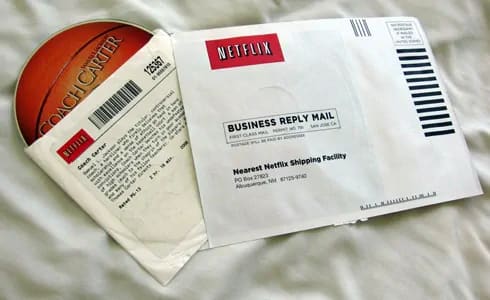
They methodically evaluated various product categories, from customized sportswear to shampoo, before landing on the revolutionary idea: DVDs by mail. The timing was perfect. DVDs had just been introduced to the United States in early 1997, offering several advantages over VHS cassettes. They were lighter, more durable for shipping, could hold more content, and didn’t require rewinding. To test their hypothesis, they mailed a compact disc to Hastings’ house in a simple envelope, and when it arrived intact, they knew they had found their product.
This methodical approach to identifying market opportunities would become a hallmark of Netflix’s strategic evolution throughout its history.
The DVD era: Building the foundation for global dominance
Launch and early challenges
Netflix officially launched on April 14, 1998, with a website featuring 925 available DVD titles and 30 employees. This was an audacious bet considering that only 2% of American households owned DVD players at the time. Hastings and Randolph calculated that if DVD adoption reached 20% of households, they would have a viable business ultimately, 95% of households would own DVD players.
The initial business model was straightforward: customers could rent DVDs online for $4 plus $2 for shipping, with no late fees. This was revolutionary in an industry dominated by Blockbuster’s brick-and-mortar stores and their infamous late fee penalties. The no-late-fee policy wasn’t just a customer-friendly gesture; it was a fundamental reimagining of the rental relationship.
The subscription revolution
In September 1999, Netflix introduced what would become its signature innovation: the monthly subscription model. For a flat fee, customers could rent unlimited DVDs with no due dates, late fees, or shipping charges. This represented a paradigm shift from the traditional pay-per-rental model to an all-you-can-consume approach that prioritized customer convenience and predictable revenue streams.
The subscription model was inspired by gym memberships customers pay a monthly fee and use the service as much or as little as they want. This analogy would prove prophetic, as Netflix’s model would eventually influence subscription services across virtually every industry, from software to food delivery.
By 2002, Netflix had reached 600,000 subscribers and was ready for its initial public offering. The company went public on May 29, 2002, selling 5.5 million shares at $15 per share, raising $82.5 million. This IPO provided the capital necessary for the next phase of growth and technological development.
David vs. Goliath: The Blockbuster confrontation
One of the most fascinating chapters in Netflix’s early history involves the legendary meeting with Blockbuster in 2000. Reed Hastings approached Blockbuster CEO John Antioco with a partnership proposal: Blockbuster would handle Netflix’s brand and marketing in physical stores, while Netflix would manage Blockbuster’s online presence. Antioco reportedly laughed at the proposal, dismissing Netflix as a niche player.
This rejection would prove to be one of the most costly mistakes in business history. Netflix continued to grow its subscriber base and refine its recommendation algorithms, while Blockbuster remained committed to its late-fee-driven brick-and-mortar model. By 2010, when Netflix launched its streaming service internationally, Blockbuster had filed for bankruptcy. The company that once dominated home entertainment with over 9,000 stores worldwide was reduced to a single location in Bend, Oregon.
This David-versus-Goliath narrative became central to Netflix’s brand identity and demonstrated the power of technological innovation to disrupt established industries.
The streaming revolution: Redefining entertainment consumption
The strategic pivot to digital
In 2007, Netflix launched its streaming service, initially called “Watch Now,” marking the beginning of the streaming revolution that would transform global entertainment consumption. The service launched with approximately 1,000 titles available for instant streaming, a modest beginning that would grow into a library of hundreds of thousands of hours of content.
The decision to enter streaming wasn’t just about following technological trends; it was a strategic response to several market forces. Internet speeds were improving, making video streaming feasible for mainstream consumers. Additionally, Netflix executives recognized that physical media distribution would eventually become obsolete. Reed Hastings famously stated his goal was for Netflix to become “HBO before HBO could become Netflix”.
The streaming launch was remarkably prescient. While competitors focused on protecting their existing business models, Netflix was willing to cannibalize its own DVD business to capture the future of entertainment distribution. This strategic boldness would become a defining characteristic of the company’s approach to innovation.
Technology as competitive advantage
Netflix’s success in streaming wasn’t just about being first to market; it was about leveraging technology to create superior user experiences. The company invested heavily in recommendation algorithms, using viewing data to suggest content that users were likely to enjoy. This personalization technology became a key differentiator, helping users navigate an expanding library of content and increasing engagement.
The recommendation system uses a complex combination of collaborative filtering, content-based filtering, and deep learning techniques. It analyzes not just what users watch, but how they watch it including when they pause, rewind, or stop watching content. This data-driven approach to content curation would later inform Netflix’s decisions about which original content to produce.
By 2010, Netflix’s streaming service had grown to over 20 million subscribers, with streaming beginning to overtake DVD rentals as the company’s primary revenue source. The convenience and immediacy of streaming, combined with the flat monthly fee, created a value proposition that traditional media companies struggled to match.

The global expansion strategy: From Silicon Valley to worldwide
Phase one: Testing adjacent markets
Netflix’s international expansion began in 2010 with its launch in Canada, a market that was geographically close and culturally similar to the United States. This provided valuable experience in dealing with different content licensing agreements, local regulations, and consumer preferences without venturing too far from familiar territory.
The Canadian launch was followed by expansion into Latin America and the Caribbean in 2011, then Europe in 2012. Each new market taught Netflix important lessons about localization, content preferences, and the complexities of international business. The company developed a three-phase expansion strategy that would guide its global rollout.
Phase two: Accelerated global rollout
In 2015, Netflix dramatically accelerated its international expansion, launching in Australia, New Zealand, Japan, and other key markets. The company announced ambitious plans to expand to 130 new countries, demonstrating its commitment to becoming a truly global entertainment platform.
This expansion strategy was driven by several factors. First, growth in the U.S. market was beginning to slow, making international expansion necessary for continued growth. Second, Netflix recognized that entertainment was becoming increasingly globalized, with audiences worldwide demanding access to diverse content. Third, expanding globally allowed Netflix to spread its fixed content costs across a larger subscriber base, improving its economic model.
Phase three: True global presence
By 2016, Netflix had achieved its goal of expanding to over 190 countries worldwide, making its service available virtually everywhere except China and a few countries with U.S. sanctions. This global presence would prove crucial for Netflix’s next strategic initiative: original content production.
The international expansion wasn’t just about distributing American content worldwide. Netflix invested heavily in local content production, creating shows and films in dozens of languages for local audiences. This strategy of “glocalization” allowed Netflix to compete effectively with local content providers while building a truly diverse content library.
Regional subscriber growth patterns
Netflix’s global expansion has shown fascinating patterns in different regions. Asia-Pacific markets, particularly South Korea and Japan, have become major growth drivers, with subscriber numbers in these regions growing by over 15% annually. The success of Korean content like “Squid Game” and “Kingdom” has created a feedback loop, attracting more Asian subscribers while simultaneously driving global interest in Asian content.
Latin American markets have proven particularly receptive to Netflix’s localized content strategy. Countries like Mexico, Brazil, and Argentina now represent some of Netflix’s highest engagement rates per subscriber, with original Spanish and Portuguese content performing exceptionally well both regionally and globally. The success of shows like “Money Heist” and “Elite” demonstrates how regional content can achieve worldwide appeal.
European markets have shown more complex patterns, with Northern European countries like Norway, Denmark, and the Netherlands showing high subscriber penetration but lower growth rates due to market saturation. However, Eastern European markets continue to show strong growth potential, with Netflix investing heavily in local language content to compete with established regional players.
The original content revolution: From distributor to creator
The $1 billion bet on House of Cards
In 2013, Netflix made a decision that would fundamentally transform both the company and the entertainment industry: it committed over $1 billion to original programming, starting with the political drama House of Cards. This wasn’t just another content acquisition; it was a strategic pivot from content distributor to content creator.
The House of Cards deal was unprecedented in several ways. Netflix committed to two seasons totaling 26 episodes without producing a pilot, spending approximately $100 million based entirely on data analysis of user preferences. The company’s algorithms had identified strong demand for political dramas, content featuring Kevin Spacey, and projects directed by David Fincher.

The show’s success was immediate and transformative. House of Cards premiered on February 1, 2013, and Netflix’s stock price jumped 70% in anticipation. The company added over 3 million subscribers in Q1 2013, and the show broke even within six months. More importantly, House of Cards proved that Netflix could produce content that competed with traditional Hollywood studios and premium cable networks.
The binge-watching innovation
Netflix introduced another innovation that would reshape television consumption: releasing entire seasons at once. This “binge-release” model allowed viewers to consume content at their own pace, creating new viewing habits and increasing subscriber engagement. The strategy also reduced the likelihood of subscriber churn, as viewers were less likely to cancel their subscriptions in the middle of a series.
This approach fundamentally changed how television series were structured and marketed. Traditional TV’s weekly episode releases, designed to maintain audience attention over months, gave way to Netflix’s model that prioritized immediate gratification and viewer control.
Building a content empire
Following the success of House of Cards, Netflix rapidly expanded its original programming. The company launched Orange Is the New Black and other original series, building a diverse portfolio of exclusive content. By 2025, Netflix plans to spend $18 billion on content, with the vast majority dedicated to original productions.
This massive investment in original content serves multiple strategic purposes. It reduces Netflix’s dependence on content licensing from other studios, which has become increasingly expensive as competitors launch their own streaming services. It also creates exclusive content that can only be found on Netflix, providing a competitive advantage and reducing subscriber churn.
Netflix’s original content strategy has proven remarkably successful. Series like Stranger Things, The Crown, Squid Game, and Wednesday have become global cultural phenomena, demonstrating Netflix’s ability to create content that resonates across different cultures and languages.
The anatomy of a global hit: Squid Game phenomenon
The 2021 release of “Squid Game” exemplifies Netflix’s mastery of creating global cultural phenomena. The Korean survival drama became Netflix’s most-watched series ever, with over 1.65 billion viewing hours in its first four weeks. The show’s success wasn’t accidental it was the result of Netflix’s sophisticated understanding of global audience preferences and its willingness to invest in high-quality international content.
Netflix had been building its Korean content library for years, recognizing early data signals showing strong global appetite for K-dramas. The company invested heavily in Korean production facilities, talent relationships, and marketing strategies tailored to promote Asian content worldwide. When “Squid Game” launched, Netflix had the infrastructure to support a global phenomenon.
The show’s success created ripple effects throughout the entertainment industry. It sparked renewed interest in Korean culture globally, influenced fashion trends, and demonstrated that non-English content could achieve unprecedented worldwide success. For Netflix, it validated their strategy of investing in diverse, international content that could travel across cultural boundaries.
The data-driven entertainment machine
Algorithmic personalization
Netflix’s recommendation algorithm represents one of the most sophisticated applications of machine learning in consumer entertainment. The system analyzes massive amounts of data, including viewing history, ratings, search queries, browsing behavior, and even the time of day content is watched.
The personalization goes far beyond simple recommendations. Netflix creates personalized thumbnail images for each user, showing different aspects of the same content to different viewers based on their preferences. A user who enjoys romantic comedies might see a thumbnail featuring the romantic leads, while an action movie fan might see an image highlighting explosive scenes from the same film.
This level of personalization creates a unique viewing experience for each of Netflix’s 301.6 million subscribers, making the service increasingly indispensable as it learns and adapts to individual preferences.
Content creation through data
Netflix uses viewing data not just to recommend existing content but to inform decisions about what new content to create. The company analyzes global viewing patterns to identify underserved genres, popular narrative themes, and emerging talent. This data-driven approach to content creation reduces risk and increases the likelihood of producing successful shows and films.
For example, Netflix identified strong global demand for Korean content before producing Squid Game, which became one of the platform’s most successful series ever. Similarly, the company’s investment in Spanish-language content like Narcos and Money Heist was informed by data showing growing demand for international programming.
Advanced analytics and viewer behavior prediction
Netflix’s data science capabilities extend far beyond basic recommendation engines. The company employs sophisticated predictive models to forecast subscriber churn, optimize content acquisition costs, and determine optimal release strategies for new content. These models analyze patterns in viewing behavior that human analysts might miss, such as the correlation between specific genre preferences and likelihood to continue subscriptions.
The company’s A/B testing infrastructure is remarkably sophisticated, allowing Netflix to test different user interface designs, recommendation strategies, and even promotional materials on different subscriber segments simultaneously. This continuous experimentation approach has allowed Netflix to optimize every aspect of the user experience, from the moment subscribers log in to the specific content they’re most likely to watch.
Netflix also uses advanced analytics to optimize its content production schedule. By analyzing viewing patterns across different time zones and regions, the company can predict when certain types of content will be most popular and schedule releases accordingly. This data-driven approach to content scheduling has become increasingly important as Netflix competes for viewer attention in an increasingly crowded streaming landscape.
The password-sharing crackdown: A strategic revenue milestone
The economics of shared accounts
One of Netflix’s most significant strategic moves in recent years has been addressing the widespread practice of password sharing. For over a decade, Netflix largely ignored the fact that many subscribers shared their account credentials with friends and family members outside their households. Industry estimates suggested that over 100 million households worldwide were accessing Netflix through shared passwords, representing billions in potential lost revenue.
The decision to crack down on password sharing wasn’t made lightly. Netflix executives understood that any move to restrict account access could potentially alienate existing subscribers and create negative publicity. However, as subscriber growth began to slow in mature markets like North America and Europe, the company needed new revenue sources to maintain its growth trajectory.
Implementation and subscriber response
Netflix began testing password-sharing restrictions in Latin American markets in early 2022, using these regions as laboratories to refine their approach before rolling out globally. The company introduced additional fees for sharing accounts outside the primary household, typically charging $4-8 per month for each additional household.
The initial subscriber response was mixed but ultimately positive for Netflix’s business metrics. While some subscribers initially canceled their accounts in protest, the majority either paid the additional fees or signed up for their own subscriptions. The net result was a significant increase in both subscriber numbers and revenue per user.
By late 2023, Netflix’s password-sharing crackdown had generated substantial results. The company added 5.9 million subscribers in the second quarter of 2023 alone, with many analysts attributing this growth directly to the password-sharing restrictions. More importantly, the average revenue per user increased as households that had previously shared accounts began paying for their own subscriptions.
Long-term strategic impact
The success of the password-sharing crackdown has validated Netflix’s data-driven approach to business decisions. The company’s sophisticated analytics allowed them to predict subscriber behavior and optimize their rollout strategy to minimize churn while maximizing new subscriptions.
This initiative also demonstrated Netflix’s maturity as a business. Rather than relying solely on content investments to drive growth, the company showed it could extract additional value from its existing subscriber base through strategic policy changes. This approach has influenced other streaming services to examine their own password-sharing policies and revenue optimization strategies.
Gaming expansion: Netflix’s next frontier

The strategic rationale for gaming
In 2021, Netflix announced its entry into gaming, marking another significant diversification beyond traditional video content. This move wasn’t a sudden pivot but rather a calculated expansion based on several strategic considerations. Gaming represents one of the largest and fastest-growing entertainment sectors, with global revenues exceeding $180 billion annually a market significantly larger than streaming video.
Netflix executives recognized that gaming could serve multiple strategic purposes. First, it provides additional value to subscribers, potentially reducing churn by offering more reasons to maintain their subscriptions. Second, gaming generates valuable user engagement data that can inform content creation decisions. Third, successful games can be adapted into series or films, creating synergies between Netflix’s gaming and video content strategies.
Mobile-first gaming strategy
Netflix’s approach to gaming has been deliberately focused on mobile platforms, recognizing that mobile gaming represents the largest and most accessible segment of the gaming market. The company began by acquiring several indie game studios, including Night School Studio (creators of “Oxenfree”) and Boss Fight Entertainment, bringing experienced game developers into the Netflix ecosystem.
The gaming library launched with simple, casual games that could appeal to Netflix’s broad subscriber base. Titles like “Stranger Things 3: The Game” and “Card Blast” were designed to be accessible to non-traditional gamers while providing engaging experiences that could keep users within the Netflix ecosystem for extended periods.
Netflix’s gaming strategy deliberately avoids the traditional mobile gaming monetization models of advertisements and in-app purchases. Instead, games are included with Netflix subscriptions at no additional cost, aligning with the company’s broader subscription-based business model.
Interactive content and future gaming ambitions
Netflix’s gaming expansion builds on their earlier experiments with interactive content, such as “Black Mirror: Bandersnatch” and “You vs. Wild.” These interactive experiences taught Netflix valuable lessons about user engagement with non-linear content and the technical challenges of delivering interactive media at scale.
The company’s gaming ambitions extend beyond simple mobile games. Netflix has invested in cloud gaming technology and is exploring more sophisticated gaming experiences that could eventually compete with traditional console and PC gaming platforms. However, the company’s approach remains methodical, focusing on building their gaming capabilities gradually rather than making massive upfront investments.
Early adoption of Netflix games has been modest but growing. While gaming doesn’t yet represent a significant portion of Netflix’s business, the company views it as a long-term strategic investment that could become increasingly important as competition in the streaming video market intensifies.
The advertising revolution: Rethinking the subscription model
The strategic shift to advertising-supported tiers
In November 2022, Netflix launched its advertising-supported tier, marking a fundamental shift in the company’s business model. For over a decade, Netflix had positioned itself as an ad-free alternative to traditional television, making the introduction of advertising a significant strategic pivot that required careful consideration of potential subscriber backlash.
The decision to introduce advertising was driven by several factors. Traditional subscription growth was slowing in mature markets, while the cost of content production continued to escalate. An advertising-supported tier offered the potential to reduce subscription costs for price-sensitive consumers while generating additional revenue from advertisers eager to reach Netflix’s engaged audience.
Netflix’s approach to advertising has been markedly different from traditional television. The company limits ad frequency to maintain a premium viewing experience, typically showing 4-5 minutes of advertising per hour compared to 15-20 minutes on traditional television. This restrained approach reflects Netflix’s commitment to preserving the user experience that made the platform popular.
Advertiser response and revenue impact
The launch of Netflix’s advertising tier generated significant interest from major brands and advertising agencies. The platform’s sophisticated targeting capabilities, based on viewing behavior and demographic data, offered advertisers unprecedented precision in reaching specific audience segments.
Initial advertiser response exceeded Netflix’s expectations, with major brands like McDonald’s, L’Oreal, and Microsoft purchasing advertising placements. The company’s ability to provide detailed viewership analytics gave advertisers confidence in their advertising investments and commanded premium pricing compared to traditional television advertising.
By 2024, Netflix’s advertising tier had grown to over 40 million monthly active users globally, representing approximately 13% of Netflix’s total subscriber base. While still a minority of overall users, the advertising tier’s rapid growth suggests strong market demand for more affordable streaming options.
The financial impact of advertising has been substantial. Netflix’s advertising revenue reached an estimated $1.8 billion in 2024, with projections suggesting it could grow to over $5 billion annually by 2027. This additional revenue stream has provided Netflix with more flexibility in content investments and pricing strategies.
Balancing user experience and advertising revenue
One of Netflix’s key challenges with advertising has been maintaining the user experience that subscribers expect while generating meaningful advertising revenue. The company has invested heavily in advertising technology to ensure ads are relevant and non-intrusive.
Netflix uses its sophisticated recommendation algorithms to match advertisements with viewer preferences, increasing ad effectiveness while improving the user experience. The company also offers interactive advertising formats that allow viewers to engage with brands without interrupting their viewing experience.
The success of Netflix’s advertising tier has influenced other streaming services to reconsider their own advertising strategies. Disney+, HBO Max, and other platforms have launched or announced advertising-supported tiers, following Netflix’s lead in balancing user experience with advertising revenue.
Financial milestones and market dominance
Revenue growth and market capitalization
Netflix’s financial performance reflects its transformation from a niche DVD rental service to a global entertainment powerhouse. The company’s revenue has grown from $5.5 billion in 2014 to $39 billion in 2024, with projections of $44 billion for 2025. This represents a compound annual growth rate that few companies in any industry can match.
The company’s market capitalization tells an even more dramatic story. As of August 2025, Netflix is valued at $513.42 billion, making it the 19th most valuable company in the world. The stock price has grown from approximately $50 in 2014 to over $1,200 in 2025, representing a return of more than 2,400% for long-term investors.
Profitability and cash flow
Netflix achieved a significant milestone in 2025 when it reported record quarterly net income of $3.125 billion in Q2. This profitability represents the culmination of years of heavy investment in content and technology infrastructure. The company’s operating margin has expanded to over 31%, demonstrating the scalability of its business model.
The achievement of sustained profitability is particularly significant given Netflix’s massive content spending. The company’s ability to generate positive cash flow while investing $18 billion annually in new content demonstrates the effectiveness of its subscriber growth and retention strategies.
Regional revenue patterns and subscription tiers
Netflix’s revenue distribution across different regions provides insight into the company’s global strategy. North America remains the largest revenue contributor, generating approximately 45% of total revenue despite representing only 35% of global subscribers. This disparity reflects the higher average revenue per user in developed markets.
The company has implemented sophisticated regional pricing strategies to maximize subscriber growth while optimizing revenue. In emerging markets like India and Brazil, Netflix offers mobile-only and basic plans at significantly reduced prices, while premium markets like the United States and Western Europe support higher-priced premium subscriptions with features like 4K streaming and multiple simultaneous streams.
The introduction of advertising-supported tiers has added complexity to Netflix’s revenue model but also provided opportunities for revenue optimization. The company can now serve price-sensitive markets with lower subscription fees while generating advertising revenue, potentially increasing overall lifetime customer value.
The NFL Christmas success: Netflix’s live event breakthrough

Breaking into live sports programming
Netflix’s streaming of NFL games on Christmas Day 2024 marked a watershed moment in the streaming wars and live sports programming. The two games, featuring marquee matchups between popular teams, each attracted over 30 million viewers, making them among the most-watched programs in Netflix’s history and demonstrating the platform’s capability to handle massive live audiences.
This venture into live sports represented a significant strategic shift for Netflix, which had previously focused primarily on on-demand content. The success of the Christmas NFL games validated Netflix’s ability to compete with traditional broadcasters for premium live content and opened new possibilities for future sports programming partnerships.
The technical execution of the live NFL broadcasts was flawless, with Netflix’s content delivery network handling the massive simultaneous viewership without the buffering issues that had plagued some competitors’ live programming attempts. This technical success was crucial for Netflix’s credibility as a live content provider and future sports programming ambitions.
Strategic implications for content strategy
The NFL Christmas success has significant implications for Netflix’s broader content strategy. Live sports programming commands premium advertising rates and can attract new subscriber demographics that might not be interested in Netflix’s traditional content offerings. The success also provides leverage in future negotiations with sports leagues and broadcasters.
Netflix’s approach to the NFL broadcasts incorporated many of the platform’s signature innovations, including multiple camera angles, interactive statistics, and personalized commentary options. These enhancements demonstrated how Netflix could differentiate its sports programming from traditional broadcast television by leveraging its technological capabilities.
The success has also influenced Netflix’s international sports strategy. The company is now exploring partnerships with soccer leagues, tennis tournaments, and other global sports properties that could replicate the NFL Christmas success in international markets.
The competitive landscape: Streaming wars intensify
The rise of competitors
Netflix’s success inevitably attracted competition from traditional media companies and technology giants. Disney+ launched in 2019 and quickly amassed over 153 million subscribers by leveraging Disney’s vast content library and beloved franchises. Amazon Prime Video, Apple TV+, HBO Max (now Max), and other services have created an increasingly crowded streaming landscape.
Despite this competition, Netflix has maintained its position as the leading global streaming service. The company holds 21% market share in the United States and maintains leading positions in most international markets. This market leadership reflects Netflix’s first-mover advantage, superior technology platform, and diverse content library.
The fragmentation challenge
The proliferation of streaming services has created a new challenge for consumers: subscription fatigue. As content becomes increasingly fragmented across multiple platforms, consumers are forced to subscribe to several services to access their preferred content. This fragmentation has created opportunities for aggregators and has influenced Netflix’s strategy of investing heavily in original content.
Netflix’s response to fragmentation has been to become indispensable by creating exclusive content that cannot be found elsewhere. The success of original series like “Stranger Things,” “The Crown,” and “Wednesday” has demonstrated that compelling exclusive content can justify subscription fees even in a crowded market.
The company has also invested in international content that provides unique value compared to competitors focused primarily on English-language programming. Netflix’s global content library includes acclaimed series from Korea, Spain, Germany, and dozens of other countries, creating a diverse offering that competitors struggle to match.
Platform differentiation strategies
As competition intensifies, Netflix has focused on several key differentiation strategies. The company’s global content library is unmatched in scope and diversity, featuring original productions from dozens of countries in multiple languages. This international content strategy allows Netflix to serve diverse global audiences while creating content that can travel across cultural boundaries.
Netflix has also maintained its technological edge through continuous innovation in recommendation algorithms, user interface design, and content delivery systems. The company’s data-driven approach to content creation and personalization provides advantages that pure content companies struggle to replicate.
The platform’s user experience remains superior to most competitors, with faster loading times, better search functionality, and more intuitive navigation. These technical advantages, while often overlooked by casual observers, significantly impact user satisfaction and retention rates.
Cultural impact and industry transformation
Changing consumer behavior
Netflix has fundamentally altered how people consume entertainment. The company popularized binge-watching, changed expectations about content availability, and shifted viewer preferences toward on-demand access over scheduled programming. These behavioral changes have rippled throughout the entertainment industry, forcing traditional broadcasters and cable companies to adapt their strategies.
The Netflix model has also influenced consumer expectations about pricing and value. The flat monthly subscription fee for unlimited access has become the standard for digital services across industries, from music streaming to software applications.
Netflix’s global success has also contributed to the internationalization of entertainment content. Series like “Money Heist,” “Dark,” and “Squid Game” have found massive global audiences, demonstrating that compelling content can transcend language and cultural barriers. This has encouraged other platforms to invest more heavily in international programming.
Transformation of Hollywood
Netflix’s entry into original content production has disrupted Hollywood’s traditional studio system. The company’s willingness to give creators more creative control and its global distribution platform have attracted top talent from traditional studios. This has forced established entertainment companies to reconsider their approaches to content creation, distribution, and talent relationships.
The success of Netflix originals has also challenged traditional notions about theatrical releases versus streaming debuts. Major films now premiere directly on streaming platforms, and the definition of “television” has evolved to include high-budget productions that rival major motion pictures.
Netflix’s data-driven approach to content creation has influenced the entire entertainment industry. Traditional studios now invest heavily in analytics and audience research, attempting to replicate Netflix’s success in identifying and creating content that audiences want to watch.
The binge-watching cultural phenomenon
Netflix’s decision to release entire seasons simultaneously created the binge-watching phenomenon that has become a defining characteristic of modern entertainment consumption. This viewing behavior has influenced how content creators structure narratives, design story arcs, and develop characters across multiple episodes.
Binge-watching has also affected social media and cultural conversations around television content. Shows can become global phenomena within days of release, as viewers consume entire seasons and immediately begin discussing them online. This rapid cultural penetration has made Netflix series particularly valuable for driving social media engagement and cultural relevance.
The psychological aspects of binge-watching have also become a subject of academic study, with researchers examining how Netflix’s content delivery model affects viewer engagement, satisfaction, and addiction-like behaviors. Understanding these patterns has become crucial for all streaming platforms as they compete for viewer attention and engagement.
Future challenges and opportunities
Market saturation and growth
As Netflix approaches market saturation in developed countries, the company faces challenges in maintaining its historical growth rates. The streaming market in North America and Europe is becoming increasingly competitive, with limited room for new subscriber acquisition. Netflix must focus on international expansion in emerging markets and on increasing revenue per user through pricing optimization and advertising.
The company’s success in markets like India, Brazil, and Southeast Asia demonstrates the potential for continued growth in emerging economies. However, these markets often require lower pricing strategies and different content approaches, potentially affecting overall profitability margins.
Netflix’s gaming expansion and live content experiments represent attempts to find new growth vectors beyond traditional streaming video. The success of these initiatives could provide additional revenue streams and subscriber retention benefits as the core streaming market matures.
Content costs and profitability
Netflix’s massive content spending presents both opportunities and risks. While original content provides competitive advantages, the escalating costs of content production threaten profitability margins. The company must balance investment in new content with the need to generate returns for shareholders.
The emergence of advertising-supported tiers offers new revenue opportunities but also adds complexity to Netflix’s business model. The company’s historically ad-free experience was a key differentiator, and introducing advertising requires careful implementation to avoid alienating existing subscribers.
The global nature of content production also presents cost management challenges. Netflix must navigate different production costs, talent markets, and regulatory requirements across dozens of countries while maintaining consistent quality standards. Currency fluctuations and local economic conditions can significantly impact production budgets and profitability in international markets.
Technological innovation and emerging platforms
Netflix’s future success depends on continued technological innovation in areas like artificial intelligence, virtual reality, and interactive content. The company’s investment in gaming represents an attempt to expand beyond traditional video content into new forms of entertainment.
The company’s leadership in recommendation technology and personalization provides a foundation for exploring new content formats and delivery methods as technology continues to evolve. Virtual reality and augmented reality technologies could create entirely new categories of entertainment experiences that leverage Netflix’s content creation capabilities and global distribution network.
Artificial intelligence technologies also present opportunities for more sophisticated content personalization, automated content creation, and enhanced user interfaces. Netflix’s massive user data repository provides unique advantages in training AI systems to understand and predict entertainment preferences.
Content localization and cultural adaptation
As Netflix expands into new markets, the challenge of content localization becomes increasingly complex. The company must balance creating content that appeals to local audiences while maintaining the quality and production values that define the Netflix brand globally.
This includes not only language translation and dubbing but also cultural adaptation of storylines, character development, and narrative structures. Netflix’s investment in local production capabilities and talent development in emerging markets represents a significant long-term strategic commitment.
The success of shows like “Squid Game” and “Money Heist” has demonstrated that well-produced local content can achieve global success, but replicating this success consistently across multiple markets and cultural contexts remains challenging.
Regulatory challenges and global expansion
Content regulation and censorship
Netflix’s global presence subjects the company to diverse regulatory environments and censorship requirements. Different countries have varying standards for content that can be distributed, creating complex compliance challenges for a platform with a unified global content library.
China remains Netflix’s most significant regulatory challenge, with the company still unable to offer its service directly in the world’s largest market. Netflix has explored partnerships with local companies and content licensing arrangements, but regulatory restrictions continue to limit the company’s access to Chinese consumers.
European markets have implemented increasingly stringent content quotas, requiring streaming services to feature minimum percentages of local content. These regulations influence Netflix’s content investment strategies and require sophisticated content management systems to ensure compliance across multiple jurisdictions.
Privacy and data protection
Netflix’s sophisticated data collection and analysis capabilities, while crucial for personalization and content recommendations, also create privacy and regulatory compliance challenges. The European Union’s General Data Protection Regulation (GDPR) and similar privacy laws in other regions require Netflix to carefully manage user data while maintaining the personalization features that drive user engagement.
The company has invested heavily in privacy-compliant data management systems and transparent user privacy controls. However, as data protection regulations continue to evolve globally, Netflix must continuously adapt its data practices to maintain compliance while preserving the analytical capabilities that drive its competitive advantages.
Competition law and market dominance
Netflix’s market-leading position in streaming has attracted attention from competition regulators in multiple countries. The company’s content acquisition practices, exclusive licensing agreements, and pricing strategies are subject to scrutiny as regulators examine whether Netflix’s dominance creates anticompetitive effects.
The company has generally navigated these challenges successfully by demonstrating that the streaming market remains competitive and that consumers benefit from Netflix’s innovations. However, continued regulatory attention requires ongoing compliance efforts and may influence future strategic decisions.
The cord-cutting revolution and traditional media disruption
Accelerating traditional TV decline
Netflix’s success has been a major catalyst in the cord-cutting revolution that has transformed traditional television consumption. The convenience and value proposition of streaming services have encouraged millions of consumers to cancel traditional cable and satellite TV subscriptions in favor of streaming alternatives.
This trend has accelerated significantly since 2020, with traditional pay-TV subscriber numbers declining by over 10% annually in many developed markets. Netflix’s role in this transformation extends beyond simply providing an alternative; the platform has fundamentally changed consumer expectations about how entertainment should be delivered and consumed.
The flexibility of watching content on-demand, across multiple devices, and without commercial interruptions has created new standards that traditional broadcasters struggle to match. Netflix’s global content library also provides value that regional cable providers cannot replicate, further accelerating the shift away from traditional television.
Impact on traditional media companies
Traditional media companies have been forced to fundamentally restructure their businesses in response to Netflix’s disruption. Disney, Warner Bros., NBCUniversal, and other major studios have launched their own streaming services, often withdrawing content from Netflix to support their own platforms.
This content fragmentation has created both challenges and opportunities. While Netflix has lost access to some popular licensed content, it has also been freed from dependence on traditional studios and motivated to invest more heavily in original programming.
The traditional advertising model that supported broadcast television has also been disrupted. Advertiser spending has shifted toward digital platforms, including streaming services like Netflix’s advertising tier, reducing the revenue available to support traditional television programming.
The future of linear television
Netflix’s success has raised questions about the long-term viability of linear television programming. Traditional broadcasters are experimenting with streaming options, hybrid models, and on-demand features to remain competitive with Netflix and other streaming platforms.
However, some content categories, particularly live sports and news, continue to perform well in traditional linear formats. Netflix’s successful NFL Christmas broadcasts suggest that streaming platforms can effectively deliver live content, but the economics and viewer behavior around live programming remain different from on-demand content.
The integration of streaming and traditional broadcasting technologies may create new hybrid entertainment models that combine the convenience of on-demand viewing with the shared cultural experience of scheduled programming.
Global cultural influence and content diversity
Promoting international content
Netflix’s global platform has become a powerful force for promoting international content and cultural exchange. The success of non-English language series like “Squid Game,” “Money Heist,” and “Dark” has demonstrated that compelling storytelling can transcend language and cultural barriers.
This has created opportunities for content creators worldwide to reach global audiences without requiring traditional Hollywood distribution partnerships. Netflix’s investment in local production capabilities has supported creative industries in dozens of countries, creating economic opportunities and cultural influence that extend far beyond entertainment.
The platform’s subtitle and dubbing capabilities have also made international content more accessible to global audiences, contributing to increased cultural awareness and appreciation for diverse storytelling traditions.
Influence on global entertainment trends
Netflix’s content has influenced global entertainment trends, fashion, and popular culture in unprecedented ways. Series like “Stranger Things” have revived 1980s nostalgia, while “Bridgerton” has influenced fashion and romance novel publishing. The platform’s ability to create global cultural phenomena within days of content release has made it a powerful force in shaping popular culture.
This cultural influence extends beyond entertainment into social and political discussions. Netflix’s documentary programming and socially conscious content have contributed to global conversations about important issues, demonstrating the platform’s potential as a force for social change and education.
The company’s global reach also allows for rapid dissemination of cultural trends, with successful content formats often inspiring local adaptations in multiple markets. This has created a new model for international entertainment format development and cultural exchange.
Conclusion: The Netflix legacy and continuing evolution
Netflix’s transformation from a DVD rental service to a global entertainment empire represents one of the most remarkable business success stories of the digital age. Reed Hastings and Marc Randolph’s vision of eliminating late fees has evolved into a company that fundamentally reshaped how billions of people consume entertainment worldwide.
The Netflix story demonstrates the power of strategic thinking, technological innovation, and willingness to disrupt existing business models including their own. From the prescient decision to enter streaming before it was profitable, to the bold bet on original content production, Netflix has consistently anticipated and shaped market trends rather than simply responding to them.
Today’s Netflix, with its 301.6 million subscribers, $39 billion in annual revenue, and $513 billion market capitalization, bears little resemblance to the scrappy startup that mailed DVDs to avoid late fees. Yet the company’s core mission remains unchanged: using technology and data to connect people with entertainment they love, delivered when and how they want it.
The company’s recent successes in live sports programming, gaming expansion, and advertising-supported tiers demonstrate that Netflix continues to innovate and adapt to changing market conditions. The password-sharing crackdown showed that the company could extract additional value from its existing user base while maintaining subscriber growth, indicating sophisticated understanding of its market position and customer behavior.
Netflix’s influence extends far beyond business metrics. The company has fundamentally altered global entertainment consumption patterns, promoted international content and cultural exchange, and demonstrated the power of data-driven content creation. The binge-watching phenomenon, the globalization of entertainment content, and the shift toward subscription-based media consumption all bear Netflix’s influence.
As the streaming wars continue to evolve and new technologies emerge, Netflix’s ability to maintain its position as the “default streamer” will depend on its continued commitment to innovation, international expansion, and creating compelling original content. The company that taught the world to binge-watch must now navigate an increasingly complex landscape of competition, regulation, and changing consumer preferences.
The competitive landscape has intensified significantly, with traditional media companies launching their own streaming services and technology giants investing billions in content. However, Netflix’s first-mover advantage, superior technology platform, and diverse global content library provide strong foundations for continued success.
Looking toward the future, Netflix faces both significant opportunities and challenges. Emerging markets continue to offer growth potential, while new technologies like virtual reality and artificial intelligence could create entirely new entertainment categories. The company’s expansion into gaming and live content suggests a willingness to explore new frontiers beyond traditional streaming video.
The regulatory environment will likely become more complex as Netflix’s global influence grows. Privacy regulations, content requirements, and competition laws will require careful navigation while maintaining the innovation and flexibility that have driven Netflix’s success.
The Netflix revolution is far from over. As the company expands into gaming, explores new content formats, and continues to push the boundaries of personalized entertainment, it remains at the forefront of defining what entertainment will look like in the decades to come. The late fee that started it all has grown into something Reed Hastings and Marc Randolph could never have imagined a global cultural force that continues to shape how we tell stories and consume entertainment in the digital age.
The story of Netflix serves as a masterclass in strategic business transformation, technological innovation, and market disruption. It demonstrates that even the most established industries can be fundamentally transformed by companies willing to challenge conventional wisdom and invest in long-term vision over short-term profits.
As Netflix continues to evolve, its impact on global entertainment, technology, and culture will undoubtedly continue to expand. The company that began with a simple desire to avoid late fees has become one of the most influential forces in modern entertainment, and its continuing evolution promises to shape the future of how we consume and experience entertainment for generations to come.