As Russian drones breached Polish airspace in September 2025, triggering NATO’s Article 4 for the first time in the alliance’s history, a chilling question emerged: are we already fighting World War 3 without realizing it? Here’s what most people don’t understand about modern warfare—the reality is far more unsettling than traditional war scenarios we’ve come to expect.
A fundamental shift in the nature of warfare may mean that World War III is already underway—not as the massive, territorially-defined conflict we might expect, but as a fragmented, technology-driven “drip by drip” war that systematically blurs the lines between peace and conflict across multiple domains.
The question “is World War 3 happening” has gained unprecedented urgency following recent global events, particularly the escalating drone crisis in Eastern Europe and mounting tensions between major powers. Yet this question requires us to fundamentally reconsider what constitutes a world war in the 21st century. Unlike the clearly defined battlefields and conventional armies of previous global conflicts, today’s warfare operates through a complex web of proxy conflicts, cyber operations, economic coercion, and hybrid tactics that may already constitute a new form of world war—one that unfolds gradually, across multiple domains, without the dramatic declarations or territorial conquests that characterised the conflicts of the 20th century.
Evolution of warfare: Traditional vs modern hybrid conflicts
| Warfare Aspect | Traditional (WWI/WWII) | Modern Hybrid |
|---|---|---|
| Geographic Scope | Territorially defined | Desterritorialized |
| Boundaries | Clear frontlines | Blurred boundaries |
| Actors | State vs state | Multiple state/non-state |
| Forces | Conventional military | Hybrid methods |
| Alliances | Defined allies vs enemies | Shifting proxy networks |
| Engagement | Direct military | Indirect through proxies |
| Declaration | Formal war declaration | Ambiguous conflicts |
| Battlefield | Geographic locations | Multi-domain space |
What are the signs we’re already in World War 3?
The evidence is mounting that we may already be experiencing World War III, albeit in a form fundamentally different from previous global conflicts. Instead of massive tank battles and naval invasions, this conflict unfolds through persistent hybrid operations, economic warfare, proxy conflicts, and technological competition that collectively achieve strategic effects comparable to traditional warfare.
Recent polling data reveals that 40.5% of global strategists predict a world war involving major nations like the United States, China, and Russia within the next decade. However, these predictions may actually underestimate the extent to which such a conflict is already underway through non-conventional means.
The transformation from traditional to hybrid warfare represents more than just tactical evolution—it’s a complete reimagining of how major powers compete for global dominance. Traditional warfare was characterized by clearly defined territorial boundaries, conventional military forces, and distinct alliances of nation-states engaging in direct military confrontation. Today’s conflicts operate according to fundamentally different principles that challenge our conventional understanding of what constitutes a world war.
The transformation from traditional to hybrid warfare
Beyond conventional battlefields
Modern hybrid warfare represents a strategic evolution that systematically erodes the traditional boundaries between war and peace. This approach combines conventional military operations with unconventional methods including cyber warfare, disinformation campaigns, economic pressure, and the extensive use of proxy forces. Rather than seeking decisive victories through territorial conquest, hybrid warfare aims to create enduring instability, maintain low-intensity conflicts, and gradually achieve political objectives through sustained pressure over extended periods.
The concept of “desterritorialised” warfare reflects this shift away from geographically-defined battlefields toward conflicts that span multiple domains simultaneously. In this new paradigm, the battlefield extends from physical territories to cyberspace, financial markets, information networks, and the electromagnetic spectrum. Nations can engage in warfare through economic sanctions, cyber attacks on critical infrastructure, influence operations targeting democratic processes, and support for proxy forces without ever formally declaring war or engaging in direct military confrontation.
The “drip by drip” methodology explained
The metaphor of “drip by drip” warfare draws from the psychological principle behind Chinese water torture, where the cumulative effect of small, repeated actions gradually erodes resistance and creates profound psychological impact. In the context of modern geopolitical conflict, this methodology manifests as persistent, low-level hostile actions that individually might not trigger major responses but collectively achieve strategic objectives over time.
This approach allows state actors to maintain plausible deniability whilst systematically undermining adversaries through sustained campaigns of disruption, coercion, and destabilisation. Rather than risking direct confrontation with nuclear-armed powers, nations can pursue their strategic objectives through carefully calibrated escalation that remains below the threshold of conventional warfare whilst achieving similar strategic effects through alternative means.
The brilliance of this strategy lies in its psychological impact. Just as each individual drop of water seems harmless, each hybrid warfare incident—a cyber attack here, a proxy conflict there, economic pressure elsewhere—appears manageable in isolation. However, the cumulative effect creates a constant state of tension and gradually shifts the global balance of power without triggering the decisive responses that conventional warfare might provoke.
Current global tensions and the multi-domain battlefield
Eastern Europe: The new flashpoint
The September 2025 drone incursions into Polish airspace represent a critical flashpoint in what may already constitute World War III’s opening phases. For those wondering whether we’re witnessing the beginning of something much larger, the answer becomes clearer when we examine Poland’s unique position on NATO’s eastern frontier.
Poland’s response to these incidents reflects the gravity of the situation. Prime Minister Donald Tusk’s declaration that Europe is “closer to open conflict than at any time since World War Two” underscores the precarious nature of current geopolitical stability. The invocation of NATO’s Article 4, which allows member states to bring security concerns to the North Atlantic Council, demonstrates how seemingly isolated incidents can rapidly escalate into alliance-wide security considerations.

Geography truly matters in this conflict, and Poland understands this reality better than most. As Polish officials recently emphasized, “we are the ones on the frontier.” This geographical vulnerability explains why Eastern European nations have been sounding alarm bells about Russian intentions long before Western allies fully grasped the scope of the threat.
The broader Eastern European context reveals a systematic pattern of Russian probing and testing of NATO’s resolve. From the Suwalki Gap—a strategic corridor between Poland and Lithuania that represents NATO’s most vulnerable point—to the militarisation of Kaliningrad and the deployment of tactical nuclear weapons to Belarus, Russia has systematically increased pressure on NATO’s eastern flank. These actions represent classic examples of hybrid warfare tactics designed to test adversary responses and gradually shift strategic balances without triggering Article 5’s collective defence provisions.
How is modern warfare different from previous world wars?
Unlike World War I and II, which featured massive military campaigns, clear battle lines, and formal declarations of war, today’s global conflict operates through a complex network of interconnected yet seemingly separate conflicts. Modern warfare doesn’t announce itself with tanks rolling across borders or fleets engaging in decisive naval battles. Instead, it manifests through:
Proxy conflicts: Major powers engage through surrogate forces rather than direct confrontation. The conflict in Ukraine serves as perhaps the clearest example, where Western nations provide extensive military and financial support to Ukrainian forces whilst avoiding direct military engagement with Russian forces.
Economic warfare: Nations weaponize trade relationships, supply chains, and financial systems to achieve strategic objectives. China’s systematic use of economic leverage to influence partner countries, including trade restrictions, investment dependencies, and supply chain manipulation, demonstrates how economic tools can serve strategic military objectives.
Cyber operations: The digital battlefield allows for persistent, low-level hostile activities that can achieve strategic effects whilst maintaining ambiguous attribution and avoiding conventional escalation thresholds. Chinese cyber operations, including the extensive Salt Typhoon campaign that compromised millions of Australian and allied citizens’ data, illustrate how cyber warfare functions as a tool for coercion and strategic competition.
Information warfare: Disinformation campaigns, influence operations, and psychological warfare target civilian populations and democratic institutions, eroding social cohesion and political stability from within.
The geographic scope of these operations extends from Eastern Europe through the Middle East to the Indo-Pacific, creating a global network of mutually reinforcing challenges to Western interests. Russian military pressure in Europe, Iranian proxy operations in the Middle East, Chinese economic coercion in the Indo-Pacific, and North Korean nuclear provocations collectively create multiple simultaneous crises that strain Western response capabilities.
The proxy war network
Contemporary conflicts demonstrate how major powers engage in warfare through proxy relationships rather than direct confrontation. This proxy warfare model extends far beyond Ukraine. In the Middle East, the recent Iran-Israel conflict of June 2025 illustrated how regional powers can engage in direct military confrontation whilst their global power patrons—Russia, China, and the United States—provide varying levels of support without direct involvement. The limitations of these relationships became apparent when neither Russia nor China intervened overtly on Iran’s behalf during the twelve-day conflict, highlighting the transactional nature of these strategic partnerships.

The proliferation of proxy relationships creates a complex web of indirect confrontations that span multiple continents. From the ongoing civil war in Yemen, where Iran supports Houthi forces against Saudi-backed government troops, to China’s strategic support for various actors across the Indo-Pacific, these conflicts collectively represent a global system of competitive proxy warfare that bears striking resemblance to the alliance systems that characterised previous world wars.
Economic warfare and technological competition
The new arsenal of coercion
Economic coercion has emerged as a primary weapon in contemporary great power competition, representing a form of warfare that can achieve strategic objectives without conventional military engagement. The concept of “weaponised interdependence” reflects how globalised economic systems have become battlefields in themselves. Nations can target critical infrastructure, disrupt supply chains, manipulate currency markets, and impose sanctions that achieve effects comparable to conventional military campaigns.
These economic warfare techniques are particularly effective because they can be implemented gradually, avoiding the dramatic escalations that might trigger military responses whilst achieving cumulative strategic effects over time. The beauty of economic warfare lies in its subtlety—a trade restriction here, an investment withdrawal there, supply chain pressure elsewhere—each action seemingly motivated by legitimate commercial concerns while collectively serving strategic military objectives.
Technology competition represents another critical domain of contemporary warfare. The race for dominance in artificial intelligence, quantum computing, semiconductor manufacturing, and space-based capabilities reflects a fundamental competition for strategic advantage that mirrors the naval arms races that preceded previous global conflicts. China’s investments in these critical technologies, combined with systematic efforts to access Western technological capabilities through both legitimate and illegitimate means, represent a form of technological warfare designed to shift global power balances.
Cyber domain operations
The cyber domain has emerged as perhaps the most significant new battlefield in contemporary conflict. Unlike traditional warfare domains, cyberspace enables persistent, low-level hostile activities that can achieve strategic effects whilst maintaining ambiguous attribution and avoiding conventional escalation thresholds.
The integration of cyber operations with conventional military activities represents a fundamental evolution in warfare. During Taiwan’s 2024 elections, coordinated cyber attacks on government systems and media outlets were synchronized with military exercises and air incursions, demonstrating how digital operations complement kinetic maneuvers in contemporary hybrid warfare. This integration of cyber and physical domains reflects the multi-domain operational environment that characterises modern conflict.
The NATO Article 5 dilemma and collective defence challenges
Which countries would be involved in World War 3?
NATO’s Article 5 collective defence provision faces unprecedented challenges in the hybrid warfare environment. The traditional formulation of Article 5, designed for conventional territorial attacks, struggles with the ambiguous nature of contemporary threats that blend cyber attacks, economic coercion, disinformation campaigns, and proxy operations.
The recent Polish drone incident illustrates these challenges perfectly. While NATO allies rallied to support Poland with additional air defence systems and personnel, the incident fell short of triggering Article 5’s full collective defence provisions. This reflects the careful calibration of hybrid warfare tactics designed to remain below conventional escalation thresholds whilst achieving strategic effects.
If a full-scale conflict were to erupt, the primary antagonists would likely be:
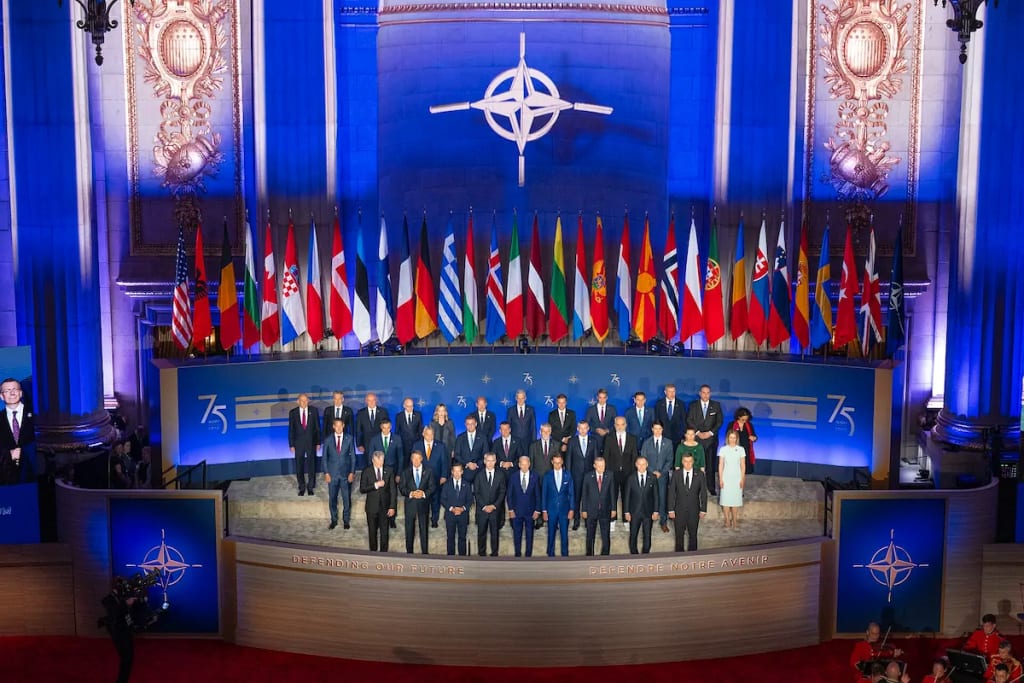
The Western Alliance: NATO’s 32 member nations, led by the United States, would form the core of one coalition. This would include major European powers like the United Kingdom, France, and Germany, alongside frontline states like Poland, the Baltic nations, and potentially Finland and Sweden.
The Axis of Upheaval: China, Russia, Iran, and North Korea have formed what analysts call the “axis of upheaval”—a loose coalition of authoritarian powers challenging the Western-led international order. Despite tactical disagreements, these nations coordinate support for each other’s strategic objectives.
Regional Powers: Countries like India, Brazil, Turkey, and South Africa would face intense pressure to choose sides, though many would likely attempt to maintain neutrality or hedge their bets between competing power blocs.
The ambiguity built into Article 5’s language—requiring each member to take “such action as it deems necessary”—was originally designed to preserve national sovereignty in defence decision-making. However, this flexibility also creates opportunities for adversaries to exploit disagreements among alliance members about appropriate responses to hybrid threats.
Deterrence in the grey zone
The concept of “grey zone” operations reflects activities that fall below the threshold of conventional warfare but above the level of normal international competition. These operations are specifically designed to achieve strategic objectives whilst avoiding responses that might escalate to conventional conflict.
Modern deterrence must therefore address threats that are persistent, ambiguous, and multi-domain in nature. This requires developing capabilities and doctrines that can respond proportionately to hybrid threats without escalating to conventional warfare. The challenge is particularly acute for democratic societies, which must balance security responses with maintaining open political and economic systems that are inherently vulnerable to hybrid warfare tactics.
The axis of upheaval: China, Russia, Iran, and North Korea
Strategic convergence despite tactical differences
Contrary to Western assessments suggesting fractures in the China-Russia-Iran axis following recent conflicts, evidence indicates these relationships are deepening rather than fragmenting. The “no limits” partnership between China and Russia has evolved beyond rhetoric to encompass systematic military, economic, and technological cooperation designed to challenge Western dominance across multiple domains.
This strategic convergence operates despite tactical disagreements and competing interests among these powers. China’s support for Russia’s war effort, Iran’s provision of military technology to Russian forces, and North Korea’s weapons supplies to Moscow demonstrate a coordinated effort to challenge Western military and economic supremacy. The fact that this cooperation continues despite the costs—including Western sanctions and diplomatic isolation—suggests a fundamental strategic alignment rather than temporary tactical convenience.
The geographic scope of this cooperation extends from Eastern Europe through the Middle East to the Indo-Pacific, creating a global network of mutually reinforcing challenges to Western interests. This coordination creates multiple simultaneous pressure points that strain Western response capabilities and force difficult resource allocation decisions.
The long-term competition model
Unlike the ideological competition of the Cold War, contemporary great power competition reflects a more fundamental struggle over the nature of the international system itself. China’s challenge to Western dominance operates across economic, technological, military, and governance dimensions simultaneously, representing a comprehensive alternative to the liberal international order established after World War II.
This competition unfolds over extended timelines measured in decades rather than years, requiring sustained strategic commitment that democratic societies often struggle to maintain. The Chinese approach of “strategic patience” reflects an understanding that systemic change can be achieved through persistent, coordinated pressure across multiple domains without requiring dramatic military confrontations that might trigger devastating responses.
FAQ: Frequently Asked Questions about World War 3
Q: What are the signs of World War 3?
A: The signs are already visible, but they don’t match our traditional expectations of global conflict:
- Persistent hybrid operations: Constant low-level hostile activities across multiple domains
- Economic weaponisation: Trade wars, sanctions, and supply chain disruptions used as strategic tools
- Proxy conflicts: Major powers fighting through surrogate forces rather than direct engagement
- Cyber warfare: Persistent attacks on critical infrastructure and information systems
- Information warfare: Systematic campaigns to undermine social cohesion and democratic institutions
- Alliance formation: Competing power blocs increasingly aligned against each other
- Military buildups: Massive defense spending increases and weapons modernization programs
- Space and technology competition: Races for dominance in critical future technologies
Q: How long could World War 3 last?
A: Unlike previous world wars that lasted years, the current hybrid conflict could continue for decades. The “drip by drip” methodology is designed to achieve strategic objectives through sustained pressure over extended periods rather than decisive military campaigns. This means the conflict could theoretically continue indefinitely, escalating and de-escalating without ever reaching a formal conclusion.
The economic and technological dimensions of the competition suggest a generational struggle, similar to the Cold War but more complex and involving more actors. Victory in this context isn’t measured by territorial conquest but by gradual shifts in global power balances, technological superiority, and economic influence.
Q: Could nuclear weapons be used in World War 3?
A: Nuclear weapons complicate any escalation scenario, but their existence doesn’t prevent conflict—it changes how conflict is conducted. The current hybrid warfare model is partially a response to nuclear deterrence, allowing major powers to compete strategically without crossing thresholds that might trigger nuclear escalation.
However, the risk of nuclear use increases with escalation, particularly in scenarios involving direct territorial threats to nuclear powers or their core interests. The deployment of tactical nuclear weapons to Belarus and ongoing nuclear modernization programs by all major powers suggest that nuclear considerations remain central to contemporary strategic competition.
Implications and future trajectories
Recognition of the new reality
The evidence strongly suggests we may already be experiencing World War III, albeit in a form fundamentally different from previous global conflicts. Rather than territorial conquests and massive military campaigns, this conflict unfolds through persistent hybrid operations, economic warfare, proxy conflicts, and technological competition that collectively achieve strategic effects comparable to traditional warfare.
The fragmented, multi-domain nature of contemporary conflict makes it difficult to recognise as a coherent global war. Unlike the clear beginning marked by Germany’s invasion of Poland in 1939, the current global conflict emerged gradually through escalating hybrid operations, proxy conflicts, and strategic competition that individually appeared manageable but collectively represent a fundamental challenge to international stability.
This gradual emergence explains why many people struggle to recognize the current situation as a world war. We’re conditioned to expect dramatic events—Pearl Harbor, D-Day, the fall of Berlin—that clearly delineate war from peace. The reality of hybrid warfare is more subtle but potentially more dangerous because it operates below the threshold of recognition until the cumulative effects become undeniable.
Strategic adaptation requirements
Addressing this new form of global conflict requires fundamental adaptations in how democratic societies conceptualise and respond to strategic threats. Traditional deterrence models based on territorial defence and nuclear escalation must evolve to address persistent, ambiguous threats that operate below conventional warfare thresholds.
This adaptation requires developing new concepts of collective security that can address hybrid threats whilst preserving democratic governance and open societies. The challenge lies in building resilience against economic coercion, cyber attacks, and influence operations without adopting the authoritarian methods that characterise adversary systems.
The economic dimensions of this competition require particular attention, as democratic societies must develop alternatives to authoritarian economic models that use state power to achieve strategic objectives through commercial means. This includes reducing vulnerabilities to economic coercion, developing secure supply chains, and maintaining technological superiority in critical areas.
Democratic societies also need to develop better mechanisms for sustained strategic competition. The short-term focus of democratic politics often struggles with the generational timelines required for effective competition with authoritarian systems that can plan decades ahead. This requires institutional innovations that can maintain strategic consistency across multiple election cycles.
What this means for ordinary people
The implications of recognising we’re already in World War III extend far beyond traditional security concerns to encompass daily life for ordinary citizens. Economic resilience becomes critical as supply chains face persistent disruption from strategic competition. Technological sovereignty affects everything from smartphones to power grids. Information integrity challenges our ability to distinguish fact from propaganda in an age of sophisticated influence operations.
For individuals, this means developing new forms of preparedness that go beyond traditional emergency planning. Financial resilience becomes more important as economic warfare creates market volatility. Digital security skills become essential as cyber attacks target civilian infrastructure. Media literacy becomes a civic responsibility as information warfare seeks to undermine social cohesion.
The psychological dimensions of hybrid warfare also require attention. The constant low-level tension of “drip by drip” conflict can create anxiety and social stress that adversaries hope to exploit. Building psychological resilience and maintaining social solidarity become forms of national defense.
Conclusion: The war we’re already fighting
The question “is World War 3 happening” demands a fundamental reconsideration of how we understand global conflict in the 21st century. The evidence strongly suggests that a new form of world war is already underway—not the massive, territorially-defined conflict we might expect based on historical precedent, but a fragmented, multi-domain struggle that unfolds gradually through hybrid warfare, proxy conflicts, economic coercion, and technological competition.
This “drip by drip” war represents a strategic adaptation to the realities of nuclear deterrence, global economic interdependence, and technological advancement that makes traditional world wars both impractical and unnecessary for achieving strategic objectives. Instead, major powers engage through carefully calibrated campaigns of disruption, coercion, and competition that individually may appear manageable but collectively represent a fundamental challenge to international stability.
For nations on the front lines of this conflict—particularly those like Poland that face direct hybrid pressure—the reality is already clear. Geography matters, and countries on the eastern frontier of the Western alliance bear the immediate costs of strategic competition between great powers. Their early warnings about the changing nature of global conflict deserve serious attention from allies and partners who may not yet fully recognise the scope of the challenge.
The implications extend far beyond traditional security concerns to encompass economic resilience, technological sovereignty, information integrity, and social cohesion. Democratic societies must develop new capabilities for competing in this environment whilst preserving the openness and freedom that define their character. This requires acknowledging that we are already engaged in a global conflict and adapting our strategies, institutions, and resources accordingly.
The stakes in this recognition could not be higher. The current conflict will likely determine the nature of the international system for decades to come. Whether democratic values and institutions can successfully compete with authoritarian alternatives in this new form of warfare remains an open question. The window for strategic adaptation may be narrower than we realise, and the consequences of continued misunderstanding about the nature of contemporary conflict could be profound.
The war may not look like what we expected, but that doesn’t make it any less real. The question is no longer whether World War III is happening, but whether we will recognise it in time to respond effectively to the challenges it presents to international stability and democratic governance. For the citizens of frontline nations like Poland, this recognition has already arrived. For the rest of us, the clock is ticking, and geography still matters—even in an age of hybrid warfare.
The future will be shaped by how well democratic societies adapt to this new reality. The “drip by drip” war is already underway, and its outcome will determine whether the next generation inherits a world governed by democratic values and international law, or one dominated by authoritarian powers willing to use any means necessary to achieve their strategic objectives. The choice, and the responsibility to act on that choice, remains ours—but not for much longer.