

These aren’t ordinary books; they’re portals to transformation. If you’re searching for life-changing books everyone must read in 2025, you’ve found the definitive guide. The transformative literature listed here doesn’t just inform; it fundamentally alters how you perceive yourself, others, and the world around you. Based on extensive research into essential reading for self-improvement and books for personal growth, this comprehensive guide explores five profound philosophy books that have shaped millions of lives across generations. From ancient Stoic wisdom to existential revelations about human suffering, these works represent the pinnacle of must-read philosophical classics that continue to resonate in our modern world.
Why these books transform lives: The science behind literary metamorphosis
Books that change your perspective work by challenging our fundamental assumptions about reality, morality, and purpose. Research from psychology and neuroscience reveals that engaging with transformative literature literally rewires our neural pathways, creating new connections that alter our emotional responses and decision-making processes. When you commit to reading personal development books with genuine depth, you’re not just consuming information but actively reshaping your cognitive architecture.
The five must-read books selected for this guide represent different pathways to personal transformation: Stoic philosophy for emotional resilience, existential psychology for finding meaning, political awareness through allegory, spiritual guidance for following purpose, and philosophical frameworks for self-overcoming. Each work addresses fundamental human challenges like suffering, power, purpose, and growth through distinct yet complementary approaches.
What makes these particular books so powerful is their ability to function as “philosophical medicine.” Unlike academic philosophy that remains abstract, these works combine profound insights with accessible wisdom that readers can immediately apply to their daily lives. They’ve earned their place among the best philosophy books not through complexity but through practical applicability. Whether you’re seeking motivational books to jumpstart change or deeper texts for sustained transformation, these five titles offer both immediate inspiration and lasting wisdom.
Marcus Aurelius’ Meditations: The emperor’s guide to inner peace

Publication details: Written 170-180 AD | Modern editions: 150-250 pages | Difficulty level: Moderate
Meditations by Marcus Aurelius stands as perhaps the most intimate and practical work of Stoic philosophy ever written. Composed as private reflections by a Roman Emperor between AD 169-179, these personal notes were never intended for publication, making them uniquely authentic insights into the mind of someone wielding ultimate power while striving for virtue.
The book’s transformative power lies in its practical wisdom for managing emotions and external chaos. Marcus Aurelius developed these reflections while leading military campaigns and dealing with personal tragedies, including the death of his beloved wife. His insights on controlling what we can control and accepting what we cannot provide a framework that remains startlingly relevant for modern anxiety and stress management. This is why Meditations Marcus Aurelius consistently appears on every list of books for emotional resilience.
Key Stoic principles for modern life
Living in harmony with nature forms the foundation of Aurelius’s philosophy, where things beyond human control are accepted as part of the natural order. He teaches readers to regard others’ actions and words as beyond our control, focusing instead on our own perceptions and responses. Practicing self-restraint emerges as the fundamental human skill. These concepts form what experts call “the therapy of philosophy,” offering practical exercises for building emotional resilience that rival modern cognitive behavioral therapy techniques.
The book’s unique structure as brief, unconnected reflections makes it particularly accessible for modern readers. Each passage can stand alone as a complete lesson, allowing readers to engage with the material in small, digestible portions while gradually absorbing its transformative insights. This format has made Meditations the most widely read work of ancient philosophy, influencing everyone from political leaders to modern psychologists. For those beginning their journey into philosophical classics, this accessibility makes it an ideal starting point.
Why Meditations remains relevant today
In our age of information overload and constant connectivity, Aurelius’s emphasis on inner peace and mental discipline speaks directly to contemporary struggles. His reflections on mortality remind us to focus on what truly matters, while his thoughts on human connection teach us compassion without dependence. The emperor’s ability to maintain equanimity while facing enormous external pressures offers a roadmap for anyone navigating today’s complex world.
Viktor Frankl’s Man’s Search for Meaning: Finding purpose in suffering

Publication details: First published 1946 | Length: 165 pages | Difficulty level: Accessible
Man’s Search for Meaning by Viktor Frankl emerged from the most extreme circumstances imaginable. Written by a Holocaust survivor based on his experiences in Nazi concentration camps, this extraordinary work demonstrates how finding meaning transforms suffering into a source of strength, offering hope to anyone facing seemingly insurmountable challenges. Among books that change perspective, Frankl’s work stands unparalleled in its combination of personal testimony and universal wisdom.
Frankl’s central insight that meaning, not pleasure or power, is humanity’s primary drive revolutionized psychology and spawned an entire therapeutic approach called Logotherapy. His famous quote from Nietzsche, “He who has a why to live for can bear with almost any how,” became the foundation for understanding human resilience. This principle has helped millions navigate everything from career setbacks to terminal illness, making it one of the most impactful self-improvement books ever written.
The three pathways to meaning
Frankl identifies three sources of meaning that provide practical guidance for anyone seeking purpose. The first involves creating something or doing meaningful work that contributes to the world beyond ourselves. The second encompasses experiencing something beautiful or encountering someone through love and genuine connection. The third, and perhaps most profound, involves choosing our attitude toward unavoidable suffering. These principles apply whether facing extreme adversity or everyday challenges like career uncertainty, relationship difficulties, or existential questioning.
What makes this book particularly powerful is Frankl’s demonstration that meaning can be found in any circumstance. Even in concentration camps, where prisoners were stripped of everything external, those who maintained a sense of purpose showed remarkable survival rates compared to those who gave up hope. This insight offers profound comfort and direction for modern readers grappling with depression, anxiety, or feelings of meaninglessness. The book has sold over 16 million copies worldwide, testament to its enduring relevance as essential reading for self-improvement.
Practical applications of Frankl’s wisdom
Readers can apply Logotherapy principles immediately by examining their own sources of meaning. Start by identifying what gives your life purpose beyond material success or pleasure. Consider how your daily activities connect to larger values and goals. When facing difficulties, consciously choose your response rather than defaulting to victimhood. This active engagement with meaning-making transforms Man’s Search for Meaning from inspiring memoir to practical handbook for living.
George Orwell’s Animal Farm: Understanding power and manipulation

Publication details: First published 1945 | Length: 112 pages | Difficulty level: Easy to moderate
Animal Farm by George Orwell functions as both a masterful political allegory and a timeless warning about power corruption. While originally written to critique the Russian Revolution and Stalinist Russia, this Animal Farm analysis reveals insights into how systems manipulate and oppress individuals that remain devastatingly relevant in our modern political landscape. Its placement among must-read books stems not just from literary merit but from its practical value in developing critical thinking skills.
The genius of Animal Farm lies in its accessibility combined with profound depth. Through the seemingly simple story of farm animals overthrowing their human oppressors, Orwell reveals complex truths about how revolutionary ideals become corrupted by power-hungry leaders. The transformation of the initial principle “All animals are equal” into “All animals are equal, but some are more equal than others” perfectly encapsulates how language itself becomes a tool of oppression.
Recognizing manipulation in modern contexts
Key lessons from Animal Farm for modern readers include recognizing propaganda techniques that appear daily in news media and social platforms. Understanding how fear and misinformation control populations helps readers navigate today’s polarized information environment. Seeing through appeals to false authority protects against both political manipulation and everyday scams. The character of Napoleon represents how charismatic leaders can gradually erode freedoms while claiming to protect them, while the manipulation of historical facts shows how those in power rewrite narratives to suit their agenda.
The book’s warning about blind allegiance resonates powerfully in our age of social media echo chambers and political polarization. Orwell demonstrates how populations can be manipulated when they stop thinking critically and start accepting information without question. The sheep in the story, who mindlessly chant slogans, represent the dangers of intellectual passivity in democratic societies. This makes Animal Farm essential among books for personal growth, as it develops the critical thinking muscles necessary for autonomous decision-making.
Why Animal Farm matters more than ever
In an era of “fake news,” algorithmic content curation, and sophisticated propaganda techniques, Orwell’s lessons feel prophetic. The book teaches readers to question narratives, examine motivations, and resist groupthink. Its brevity makes it accessible to busy modern readers, while its layered meanings reward repeated reading. Understanding Animal Farm’s broader message about power corruption helps readers develop critical thinking skills essential for navigating modern political discourse.
Paulo Coelho’s The Alchemist: Following your personal legend

Publication details: First published 1988 | Length: 197 pages | Difficulty level: Easy
The Alchemist Paulo Coelho presents a deceptively simple yet profoundly transformative message: the universe conspires to help those who have the courage to pursue their dreams. Through Santiago’s journey across the desert in search of treasure, Coelho explores the concept of Personal Legend, essentially your life’s true calling or purpose. This makes The Alchemist one of the most beloved motivational books worldwide, translated into 80 languages and selling over 150 million copies.
The book’s power lies in its practical philosophy of following intuition and reading life’s signs. Coelho demonstrates how omens and synchronicities guide us toward our destiny when we remain open and attentive to them. This isn’t mystical thinking but rather a call to trust our deeper wisdom and take calculated risks in pursuit of authentic fulfillment. Many readers report that The Alchemist inspired concrete life changes, from career shifts to geographical moves, making it genuinely transformative rather than merely inspirational.
Understanding your personal legend
Core principles from The Alchemist include listening to your heart despite fears and doubts. Coelho shows how our hearts speak in the language of enthusiasm and passion, guiding us toward our authentic path. Understanding that the journey of growth is as valuable as achieving the goal reframes failure as learning. Recognizing that what we seek externally often lies within us already prevents the endless chase for external validation. These insights provide guidance for anyone struggling with career decisions, relationship choices, or general life direction.
The concept of Personal Legend challenges readers to examine their authentic desires versus societal expectations. Coelho shows how many people abandon their dreams due to fear of failure, need for security, or pressure to conform. The book serves as both inspiration and practical guide for overcoming these obstacles. Santiago’s encounters with the crystal merchant (who gave up his dream) and the Englishman (who seeks knowledge over experience) illustrate common pitfalls in pursuing purpose.
Applying Coelho’s wisdom practically
The Alchemist’s enduring popularity stems from its universal applicability. Whether readers are contemplating major life changes, seeking creative inspiration, or simply feeling disconnected from their purpose, Santiago’s journey provides a roadmap for authentic living that transcends cultural and temporal boundaries. Practical application begins with identifying your own Personal Legend through reflection on childhood dreams, natural talents, and activities that create flow states. The book encourages small, consistent steps toward goals rather than reckless leaps, making its wisdom accessible to risk-averse readers.
Friedrich Nietzsche’s Thus Spoke Zarathustra: The philosophy of self-overcoming
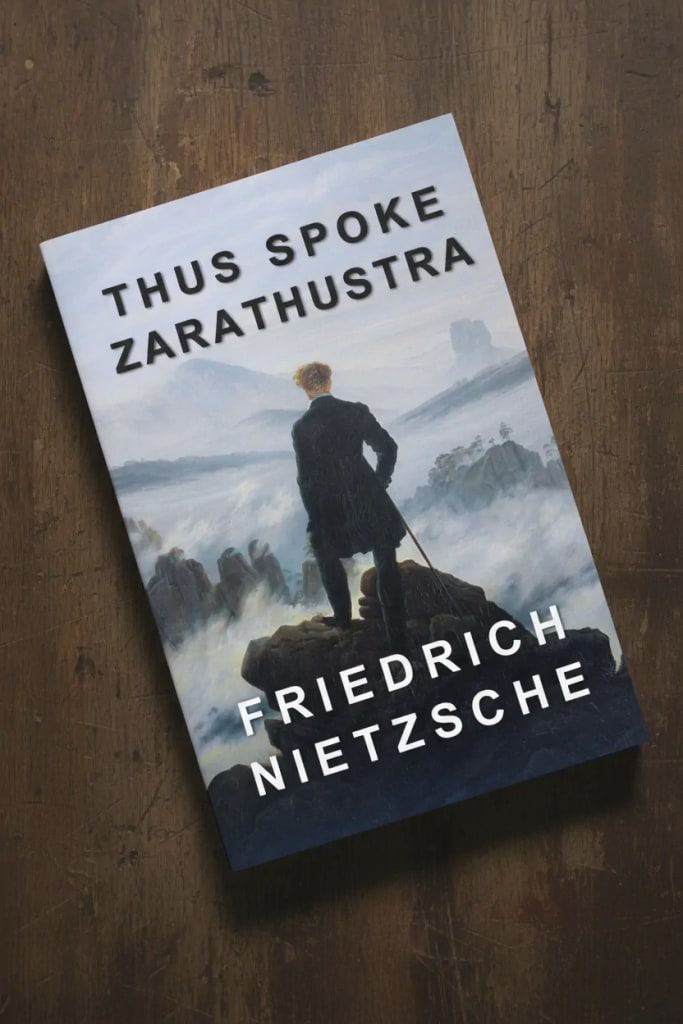
Publication details: Published 1883-1885 | Length: 300-400 pages depending on edition | Difficulty level: Challenging
Thus Spoke Zarathustra by Friedrich Nietzsche represents perhaps the most challenging yet potentially transformative work on this list. Through the character of Zarathustra, Nietzsche introduces revolutionary concepts including the death of God, the Übermensch (Overman), and eternal recurrence; ideas that fundamentally challenge traditional morality and meaning-making. This places it among the most profound philosophy books ever written, though its difficulty requires serious commitment from readers.
The book’s central message concerns self-overcoming and creating your own values rather than accepting inherited beliefs. Nietzsche argues that in a world where traditional religious and moral certainties have collapsed, individuals must become their own moral legislators and create meaning through their choices and actions. This radical autonomy frightens many readers but liberates those ready to take responsibility for their own existence.
The Übermensch and self-mastery
The concept of the Übermensch is often misunderstood as advocating for a superior race, but actually represents the potential for individual self-mastery and authentic living. The Übermensch is someone who transcends conventional morality not through nihilism but by creating higher values based on life-affirmation and personal excellence. This figure serves as an aspirational ideal rather than a fixed destination, representing continuous growth and self-overcoming.
Practical applications of Nietzschean philosophy include questioning inherited beliefs and social conditioning that limit your potential. Taking responsibility for creating your own meaning prevents the despair that comes from seeking purpose in external authorities or outdated traditions. Embracing life’s challenges as opportunities for growth transforms obstacles into stepping stones. These ideas particularly resonate with individuals feeling constrained by conventional expectations or seeking to break free from limiting belief systems.
Navigating Zarathustra’s difficulty
The book’s difficulty level requires serious commitment, but rewards persistent readers with profound insights into human potential and freedom. Nietzsche’s poetic, metaphorical style demands active engagement, making it ideal for readers ready to wrestle with fundamental questions about existence, morality, and self-creation. Modern editions often include helpful introductions and footnotes that clarify obscure references and unpack dense passages.
Consider approaching Zarathustra after reading more accessible philosophy books to build interpretive skills. Many readers find value in secondary sources and commentaries that illuminate Nietzsche’s thought without replacing direct engagement with the text. Discussion groups or online forums can provide crucial support when tackling particularly challenging sections. The effort invested pays dividends in expanded consciousness and liberated thinking that few other books provide.
The interconnected wisdom: How these books work together
These five life-changing books everyone must read form a comprehensive framework for human development that addresses different aspects of the human experience. Marcus Aurelius provides emotional regulation tools for daily stress management. Viktor Frankl offers purpose-finding strategies that work even in dire circumstances. George Orwell develops critical thinking skills essential for navigating manipulative systems. Paulo Coelho encourages intuitive guidance and courage to pursue authentic dreams. Friedrich Nietzsche challenges fundamental assumptions about values and meaning, pushing readers toward radical autonomy.
The progression from Stoic acceptance through existential purpose-finding to critical awareness, spiritual guidance, and finally radical self-creation represents a journey of increasing psychological sophistication. Readers often find that insights from one book illuminate and deepen understanding of the others, creating a synergistic effect that multiplies their transformative impact. For instance, Frankl’s emphasis on meaning-making builds naturally on Aurelius’s acceptance of external circumstances, while Nietzsche’s value-creation extends both thinkers’ emphasis on internal locus of control.
Creating your reading journey
Practical integration strategies include morning reflection with Aurelius to set your mental frame for the day. Apply meaning-making exercises from Frankl when facing difficulties or questioning your direction. Use critical media analysis inspired by Orwell when consuming news and social content. Follow intuition-following practices from Coelho in decision-making moments. Engage in value-examination work suggested by Nietzsche during quarterly life reviews. This multi-faceted approach addresses both emotional regulation and intellectual development, providing tools for both daily stress management and long-term life direction.
Consider reading these books in order of increasing difficulty: start with The Alchemist or Animal Farm for accessibility, build to Meditations and Man’s Search for Meaning for deeper philosophical engagement, then tackle Thus Spoke Zarathustra once you’ve developed stronger interpretive skills. Alternatively, choose books based on your current life challenges. Facing career uncertainty? Start with The Alchemist. Dealing with loss or suffering? Turn to Frankl. Feeling manipulated by political rhetoric? Dive into Orwell. Struggling with anxiety? Begin with Aurelius. Questioning inherited values? Explore Nietzsche.
How to read these transformative works: A practical guide
Reading life-changing books requires a different approach than consuming entertainment or even educational material. These profound philosophy books demand active engagement, reflection, and gradual integration of their insights into daily life. The difference between reading for information and reading for transformation lies in how you interact with the text.
Active reading strategies that work
Effective reading strategies include keeping a reflection journal to track insights and applications. Rather than passive highlighting, write out passages in your own words and note how they apply to your specific circumstances. Read slowly with frequent pauses for contemplation. Rushing through these books defeats their purpose; they’re meant to be savored and digested over time. Many readers find that reading just 10-15 pages per day with reflection time produces better results than marathon sessions.
Discussing concepts with others deepens understanding through different perspectives and interpretations. Book clubs, online forums, or even casual conversations with friends can illuminate aspects of the text you might have missed. Teaching concepts to others, even informally, forces you to clarify your own understanding and reveals gaps in comprehension. Re-reading key passages multiple times as your understanding evolves allows books to grow with you, revealing new layers of meaning at different life stages.
Implementing practical exercises suggested by each author moves insights from theoretical to embodied wisdom. For Meditations, practice Stoic exercises like negative visualization or voluntary discomfort. For Man’s Search for Meaning, write your own purpose statement and revisit it monthly. For Animal Farm, analyze current news stories for propaganda techniques. For The Alchemist, journal about your Personal Legend and steps toward it. For Zarathustra, question one inherited belief system per week and consciously choose whether to retain or discard it.
Choosing the right edition matters
Edition selection impacts your reading experience significantly. For Meditations, the Gregory Hays translation offers clarity and readability while maintaining philosophical rigor. The older Penguin Classics editions provide scholarly depth but denser prose. For Man’s Search for Meaning, ensure you get the complete edition including Frankl’s Logotherapy explanation, not just the memoir portion. Modern editions often include helpful introductions that contextualize the work.
Animal Farm works well in any complete edition, though annotated versions help readers unfamiliar with Soviet history understand specific references. The Alchemist reads smoothly in any translation, though Alan Clarke’s English version flows particularly well. For Thus Spoke Zarathustra, R.J. Hollingdale’s translation balances accuracy with readability, while Adrian Del Caro’s newer version includes extensive notes helpful for first-time readers. Avoid abridged versions of any of these works, as they remove crucial context and development.
Audio versions work well for some titles, particularly Meditations and The Alchemist, whose episodic structures suit the format. However, Thus Spoke Zarathustra and Man’s Search for Meaning benefit from visual reading that allows for pausing and reflection. Animal Farm works in either format, though the written version lets readers catch subtle details more easily. Consider mixing formats based on your lifestyle and the specific book’s demands.
The long-term impact: What to expect from these books
Transformative literature creates lasting change through gradual shifts in perspective and behavior rather than sudden revelations. Readers consistently report that these essential books for personal growth continue revealing new insights years after initial reading, with different passages resonating as life circumstances evolve. A section that seemed abstract at 25 might become urgently relevant at 45 when facing similar circumstances to the author or characters.
Measuring transformation over time
Common transformational outcomes include increased emotional resilience from Stoic practices. Readers report handling stress, disappointment, and conflict more effectively by applying Aurelius’s principles. Greater sense of purpose and meaning from existential insights helps navigate major life transitions and daily uncertainty. Enhanced critical thinking abilities from political awareness protect against manipulation and support better decision-making in all areas of life.
Improved intuition and decision-making from spiritual guidance manifests as increased confidence in choices and reduced decision paralysis. Expanded sense of personal possibility from philosophical questioning opens doors previously considered closed due to self-imposed limitations. These changes typically manifest gradually, creating sustainable personal development rather than temporary inspiration that fades after a motivational high.
The compound effect of reading all five works often produces fundamental shifts in worldview. Increased tolerance for uncertainty and complexity replaces the need for simple answers to complex questions. Greater personal autonomy and self-direction reduces dependence on external validation or authority figures. Deeper capacity for both solitude and meaningful relationships emerges as self-knowledge increases. These meta-benefits represent the real transformation these books offer.
Tracking your growth journey
Measuring progress involves tracking practical applications rather than intellectual understanding alone. Success indicators include using Stoic principles during stressful situations rather than defaulting to anxiety or anger. Finding meaning in difficult circumstances instead of descending into victimhood or despair. Recognizing manipulation and maintaining critical thinking when consuming media or political content. Trusting intuition in decision-making after appropriate reflection. Questioning and updating personal values based on authentic self-examination rather than external pressure.
Consider creating a transformation journal specifically for tracking how these books influence your thoughts and actions. Monthly check-ins help identify patterns and progress. Note specific instances where you applied insights from the books. Record how your responses to recurring situations change over time. This documentation makes the often-subtle nature of transformation more visible and encourages continued practice.
FAQ: Frequently Asked Questions about life-changing books
Q: What makes a book truly life-changing?
A: A genuinely life-changing book does more than inform or entertain; it fundamentally alters how you think, feel, and act in the world. These books challenge core assumptions, provide new frameworks for understanding experience, and offer practical wisdom you can apply immediately. The test of a transformative book is whether you think or behave differently six months after reading it. Life-changing books typically address universal human challenges like suffering, purpose, freedom, and growth in ways that resonate across cultures and time periods.
Q: How long does it take to read these books?
A: Reading time varies significantly based on your pace and approach. The Alchemist and Animal Farm can each be completed in 3-4 hours of focused reading, though both reward slower contemplation. Meditations, structured as brief reflections, works well in 5-10 minute sessions over weeks or months. Man’s Search for Meaning typically takes 4-6 hours to read but benefits from pausing to absorb Frankl’s insights. Thus Spoke Zarathustra demands the most time, potentially 10-15 hours spread over several weeks, given its density and philosophical complexity. However, measuring these books by reading time misses the point; integration time matters more than completion speed.
Q: Should I read these books in a specific order?
A: While no fixed sequence is required, strategic ordering can enhance comprehension and impact. Beginners to philosophy might start with The Alchemist or Animal Farm for their accessibility before moving to Meditations and Man’s Search for Meaning. Thus Spoke Zarathustra works best after you’ve developed some philosophical thinking skills through the others. Alternatively, choose based on current needs: emotional regulation (Aurelius), finding purpose (Frankl), critical thinking (Orwell), following dreams (Coelho), or questioning values (Nietzsche). Some readers prefer alternating between accessible and challenging texts to maintain momentum.
Q: Can these books help with specific problems like anxiety or depression?
A: While these books offer genuine psychological and philosophical insight, they complement but don’t replace professional mental health treatment for clinical conditions. That said, many readers report significant benefits. Meditations provides practical tools for anxiety management through Stoic cognitive techniques. Man’s Search for Meaning offers hope and purpose-finding strategies valuable for those struggling with depression or existential concerns. The Alchemist can inspire action when feeling stuck. However, approach these books as part of a broader self-care strategy that may include therapy, medication, or other interventions as needed.
Q: Are these books suitable for younger readers?
A: Age appropriateness varies by text and individual maturity. Animal Farm, often taught in high schools, works well for readers 14 and up. The Alchemist’s straightforward narrative suits ages 16 and above. Meditations and Man’s Search for Meaning contain more complex ideas best appreciated by readers 18 and older who have some life experience to connect with the material. Thus Spoke Zarathustra typically requires intellectual maturity found in readers 20 and above, though precocious younger readers may find value in it. Ultimately, readiness depends more on intellectual curiosity and emotional maturity than chronological age.
Building your transformative reading practice
Creating a sustainable practice for engaging with transformative literature requires more than good intentions. Structure and consistency transform aspirational reading lists into actual life change. Consider these practical approaches for making these books central to your personal development journey rather than items collecting dust on your shelf.
Creating your reading environment
Physical environment impacts comprehension and retention significantly. Designate a specific reading space free from digital distractions. Natural light, comfortable seating, and minimal noise create optimal conditions for deep reading. Keep your journal nearby for capturing insights immediately. Some readers find background music helpful, while others need complete silence; experiment to find what works for your concentration style.
Time of day matters too. Morning reading, before the day’s demands accumulate, allows for fresh mental engagement with challenging material. Evening reading provides reflection on how the day’s events connect to philosophical principles. Consistency matters more than duration; 20 focused minutes daily produces better results than occasional marathon sessions. Build reading into existing routines by pairing it with morning coffee or evening wind-down rituals.
Joining reading communities
Solitary reading offers depth, but community discussion provides breadth through multiple perspectives. Online forums dedicated to philosophy, book clubs focused on transformative literature, and local discussion groups all offer valuable engagement opportunities. Teaching concepts to others, whether formally or casually, deepens your own understanding while spreading wisdom to others.
Consider starting your own reading group focused specifically on these five books. Meeting monthly to discuss one book at a time creates accountability and enriches understanding through diverse interpretations. Virtual options through video chat make participation accessible regardless of geography. The social aspect of shared reading often sustains motivation when individual discipline wavers.
Conclusion: Your journey towards transformation
These 5 life-changing books everyone must read represent more than literary achievements; they are practical tools for human flourishing that have guided millions through life’s complexities. Each work addresses fundamental human challenges while providing actionable wisdom that transcends cultural and temporal boundaries. Whether you’re seeking best philosophy books for intellectual stimulation or self-improvement books for practical guidance, these five titles deliver both.
The journey of reading these transformative works requires commitment, patience, and courage to confront uncomfortable truths about yourself and society. However, the rewards justify the effort required. Increased resilience helps you weather life’s inevitable storms. Clearer purpose provides direction amid competing demands. Critical awareness protects against manipulation. Intuitive guidance improves decision-making. Authentic self-expression replaces the exhaustion of maintaining false personas. These outcomes represent the real return on your reading investment.
Your transformation begins with a single page. Whether you start with Marcus Aurelius’ timeless wisdom, Viktor Frankl’s profound insights, Orwell’s essential warnings, Coelho’s inspiring guidance, or Nietzsche’s challenging philosophy, each book offers a portal to becoming the person you were meant to be. The key is beginning rather than remaining paralyzed by choice or intimidated by challenge.
These books don’t just change how you think; they change who you are. In a world of endless distractions and superficial content, these must-read philosophical classics provide the deep nourishment your mind and soul require for authentic growth and lasting fulfillment. The question isn’t whether these books can transform your life, but whether you’re ready to let them. Your future self, shaped by the wisdom within these pages, awaits your decision to begin.
Start your transformation today. Choose one book from this list, acquire it in your preferred format, and commit to reading it with the active engagement strategies outlined here. Your life six months from now depends on the decisions you make today. These five books have changed millions of lives across generations. Yours could be next.


