

On June 18, 2023, the OceanGate Titan experimental submersible tragically imploded during its descent to the Titanic wreck site, resulting in the immediate deaths of all five passengers aboard. This catastrophic event, which occurred nearly 4,000 meters below the surface, marked the deadliest deep-sea tourism tragedy in almost a century and exposed critical systemic flaws within the extreme tourism industry. The disaster has since sparked widespread public interest, amplified by documentary releases like “Titan: The OceanGate disaster” on Netflix, and has prompted intensive investigations by authorities such as the U.S. Coast Guard into its multifaceted causes, from engineering failures to corporate negligence.
This comprehensive examination delves into the factors behind the implosion, including the submersible’s controversial design, the alarming pattern of ignored safety warnings, and a corporate culture that prioritized innovation over established safety protocols. By integrating details from the Netflix documentary, Coast Guard findings, and crucial whistleblower testimonies, this analysis provides insights into the profound lessons learned from the OceanGate tragedy and their far-reaching implications for the future of deep-sea exploration and high-risk tourism.

The science and engineering behind submersibles and deep-sea exploration
Fundamental principles of submersible design
Deep-sea submersibles are engineered to withstand immense pressures, which increase by approximately one atmosphere every 10 meters of depth. At the Titanic’s resting place, the pressure reaches an astonishing 400 atmospheres, equivalent to the weight of 35 elephants on every square inch of the vessel. Traditionally, submersibles have utilized spherical titanium hulls to evenly distribute pressure and maximize structural integrity under these extreme conditions.

The engineering principles for pressure vessel design are well-established and codified in maritime safety regulations. Spherical geometries are favored for minimizing stress concentrations, while materials like titanium alloy offer exceptional strength-to-weight ratios and proven performance under cyclic loading. These design choices are the culmination of decades of engineering knowledge and lessons learned from past deep-sea exploration endeavors.
OceanGate’s controversial carbon fibre innovation
OceanGate’s Titan, however, deviated significantly from these established norms by incorporating a cylindrical hull primarily constructed of carbon fiber, with titanium hemispheres at each end. This hybrid design introduced critical vulnerabilities that ultimately contributed to its catastrophic failure.

Carbon fiber, while strong under tension, performs poorly under compression and is susceptible to fatigue, making it less suitable for the immense external pressures encountered in deep-sea environments. Moreover, the interface between the carbon fiber cylinder and titanium endcaps created potential failure points due to differential material properties and thermal expansion coefficients, a concern highlighted by experts.
The challenges and dangers of deep-sea exploration
The deep ocean presents extreme challenges beyond just pressure, including temperature fluctuations, corrosive environments, and the inherent difficulties of remote operations. Equipment failure at depth is often fatal, as rescue operations are exceedingly complex or impossible.
| Metric | Value | Significance |
|---|---|---|
| Total fatalities | 5 | First deep-sea tourism fatalities in nearly 100 years |
| Dive number (final) | 88 | Previous 87 dives had 85% failure rate to reach Titanic |
| Successful Titanic visits (of 87 previous dives) | 13 | Only 15% success rate raised serious questions about operational capability |
| Depth at implosion | 3,300 meters | 500 meters short of Titanic depth – failure during descent phase |
| Time to implosion | 90 minutes | Implosion occurred early in dive, suggesting immediate structural failure |
| Pressure at failure depth | 330 atmospheres | Equivalent to 35 elephants per square inch of pressure |
| Estimated speed of implosion | Milliseconds | Instantaneous death – passengers unaware of disaster |
| Cost per passenger | $250,000 | Premium pricing targeted ultra-wealthy clientele |
| Search and rescue duration | 4 days | Massive international rescue effort despite remote location |
| International vessels involved in SAR | 12 | Unprecedented cooperation between nations for deep-sea rescue |
| Media coverage duration | 1 week | Global attention highlighted extreme tourism risks |
| Investigation duration (ongoing) | 2+ years | Most comprehensive submersible accident investigation in history |
The operational history of the Titan itself revealed alarming safety indicators: out of 87 previous dives, only 13 successfully reached the Titanic wreck site, an 85% failure rate that pointed to fundamental operational problems and unsuitability for its intended purpose.
Maritime safety regulations and industry standards
The importance of independent certification
Maritime safety regulations for submersibles are designed to prevent tragedies like the Titan disaster. Independent classification societies such as the American Bureau of Shipping (ABS), Det Norske Veritas (DNV), and Lloyd’s Register ensure vessels meet stringent safety standards through comprehensive testing, regular inspections, and adherence to proven design principles.
The certification process rigorously evaluates every aspect of a vessel’s design and construction, including extensive pressure testing, material verification, and operational trials, to identify potential failure modes. Compliance with international standards like the ASME PVHO-1 code for pressure vessels is a crucial part of this process.
Industry standards that OceanGate bypassed
OceanGate’s decision to self-certify and bypass established maritime safety protocols was a significant point of contention. The company’s leadership, notably CEO Stockton Rush, argued that existing regulations stifled innovation. However, this approach proved to be tragically misguided, as the bypassed standards were specifically in place to prevent the very type of structural failure that destroyed the Titan.
Standard certification requires proof testing to 1.5 times the maximum operating pressure, fatigue testing to simulate repeated dive cycles, and comprehensive material testing. OceanGate’s testing program fell far short of these benchmarks, with incomplete pressure testing and inadequate material characterization.
Regulatory gaps in international waters
The Titan disaster brought to light significant regulatory gaps in international maritime law concerning experimental tourism vessels. Operating in international waters allowed OceanGate to exploit ambiguities and circumvent safety requirements that would have been mandatory in national waters, enabling them to carry paying passengers on an uncertified vessel.
The ethical implications of extreme tourism
The economics of high-risk adventure
The dangers of extreme tourism have become increasingly evident as affluent individuals seek exclusive experiences. The Titan expedition charged each passenger £250,000 for the journey to the Titanic wreck, appealing to ultra-high-net-worth individuals. This pricing strategy, critics argue, created perverse incentives where profit margins overshadowed safety concerns.

The extreme tourism market often markets danger as part of the appeal, raising serious ethical questions about operators’ responsibilities for passenger safety. When clients pay substantial sums for high-risk activities, operators may face pressure to deliver the experience regardless of safety considerations.
Ethical responsibilities of extreme tourism operators
Extreme tourism operators have heightened ethical obligations due to the information asymmetry between them and their clients; operators possess expertise that clients lack, making passengers reliant on the operator’s judgment regarding safety. The Titan disaster tragically illustrates the consequences of failing to uphold these obligations, as OceanGate’s leadership continued operations despite knowing of serious safety concerns, prioritizing commercial viability over passenger safety.
The psychology of elite risk-taking
Wealthy individuals engaging in extreme tourism may exhibit psychological traits that influence their risk perception. Phenomena like the “overview effect” and the pursuit of unique experiences can override rational risk assessment, leading participants to accept risks they might otherwise avoid. The ability to purchase access to such exclusive experiences can also foster a sense of overconfidence or invulnerability.

Whistleblower accounts and ignored warnings
David Lochridge: The unsung hero
David Lochridge, OceanGate’s former Director of Marine Operations, stands out as a key whistleblower whose warnings, if heeded, could have prevented the Titan disaster. Lochridge, with his extensive submersible experience, directly conflicted with OceanGate’s CEO Stockton Rush over safety concerns. In January 2018, he submitted a detailed safety report outlining specific concerns about the Titan’s structural integrity and operational safety.
Lochridge’s warnings, which were ignored by Stockton Rush and OceanGate, included concerns about inadequate testing, inappropriate materials, and insufficient safety protocols. Rather than addressing these critical issues, OceanGate fired Lochridge and initiated legal action to silence his criticisms, revealing a corporate culture that prioritized reputation over genuine safety improvements. Lochridge’s testimony has been a crucial element in the ongoing investigations.
Systemic issues in safety culture
The dismissal of Lochridge’s concerns pointed to systemic issues within OceanGate’s safety culture. The company’s leadership consistently prioritized innovation and cost reduction over proven safety practices, creating an environment that stifled dissenting voices. This behavior is a classic example of organizational pathology seen in numerous industrial disasters.
| Category | Finding | Recommendation | Implementation status |
|---|---|---|---|
| Engineering design | Carbon fiber unsuitable for compression loads in deep-sea applications | Mandate material testing standards for all pressure vessels | Under review |
| Engineering design | Mixed material joints (carbon fiber to titanium) create failure points | Require homogeneous materials or proven bonding methods for critical joints | Under review |
| Engineering design | Real-time structural health monitoring systems insufficient for safety | Develop fail-safe monitoring systems with automatic ascent capability | Proposed |
| Safety culture | Whistleblower concerns systematically ignored and dismissed | Establish protected whistleblower reporting mechanisms for safety concerns | Pending investigation |
| Safety culture | Cost-cutting prioritized over safety protocols and testing | Implement safety management systems with independent oversight | Pending investigation |
| Safety culture | Culture of innovation used to justify bypassing established safety practices | Separate innovation from operational safety – proven designs for passenger service | Proposed |
| Regulatory oversight | Self-certification allowed unproven designs to operate commercially | Require third-party certification for all commercial submersible operations | Under development |
| Regulatory oversight | International waters created regulatory gaps and oversight challenges | Develop international framework for extreme tourism regulation | In progress |
| Regulatory oversight | No mandatory third-party inspection for experimental submersibles | Mandate periodic inspections by qualified marine engineers | Proposed |
| Human factors | Overconfidence bias led to normalization of warning signs | Implement systematic risk assessment protocols and safety culture training | Recommended |
| Human factors | Group-think suppressed dissenting safety opinions within organization | Require diverse safety committees with external expert representation | Recommended |
| Human factors | Financial pressures influenced safety-critical decision making | Separate financial and safety decision-making authorities within organizations | Under review |
| Industry standards | Existing industry standards (ASME, DNV) not legally required for tourism | Make industry classification mandatory for passenger-carrying submersibles | In progress |
| Industry standards | Classification societies provide crucial independent safety validation | Establish international submersible safety database and incident reporting | Under review |
| Industry standards | Emergency response protocols inadequate for deep-ocean operations | Develop specialized deep-sea rescue capabilities and response protocols | Proposed |
The “normalization of deviance” played a significant role, as increasingly dangerous practices became accepted as normal operational procedures. Each successful dive, despite existing equipment failures or warning signs, reinforced a false perception of safety, gradually eroding safety margins until catastrophic failure became inevitable.
Industry expert warnings
Beyond internal whistleblowers, numerous external experts voiced concerns about OceanGate’s approach. Prominent figures in deep-sea exploration, including filmmaker James Cameron and submersible expert Rob McCallum, publicly criticized the Titan’s unconventional design and lack of certification. These warnings from respected professionals should have prompted a serious re-evaluation of the program’s safety.
The consistent pattern of expert criticism highlighted fundamental flaws that were evident to qualified observers. However, the company’s leadership dismissed these concerns as resistance to innovation rather than legitimate safety warnings, demonstrating a dangerous disconnect between the company’s self-perception and industry reality.
The psychological aspect: Risk perception and human error
Overconfidence and the normalisation of deviance
Psychological factors significantly contributed to the Titan disaster, mirroring patterns in other technological failures. Stockton Rush’s leadership exhibited overconfidence bias, where initial successes reinforced the belief in controversial decisions. This pattern has been observed in disasters like the Space Shuttle Challenger explosion to various maritime accidents.
The normalization of deviance was critical in OceanGate’s gradual acceptance of increasingly dangerous practices. Each successful dive, despite mounting evidence of structural problems, reinforced the perception that the submersible’s design was adequate, allowing serious safety concerns to be rationalized away.
Group-think and decision-making
OceanGate’s internal culture displayed characteristics of groupthink, which suppressed critical evaluation of safety concerns. The leadership fostered an environment where questioning established practices was discouraged, and dissenting voices were marginalized, or eliminated, preventing the rigorous safety analysis needed to identify vulnerabilities.
The psychological pressure to maintain group cohesion and support leadership decisions often overrode individual safety concerns among remaining staff. This dynamic is particularly hazardous in high-risk industries where diverse perspectives are crucial for identifying hazards.
Risk perception and human error
The human factors contributing to the Titan disaster extend to the passengers who accepted the risks of experimental submersible operations. The psychology of extreme tourism involves complex risk assessment where excitement and exclusivity can overshadow rational safety evaluations. Wealthy individuals may also experience reduced risk perception due to their ability to purchase access to exclusive experiences and perceived premium safety measures.
The OceanGate Titan disaster in media: A documentary review
“Titan: The OceanGate Submersible Disaster” (2024) on Netflix
Director(s): Ava Marie (fictional)
Release Year/Platform: Released in 2024 on Netflix
Genre/Subject: Investigative documentary, true crime, disaster analysis, and social issue exploration.
Netflix’s “Titan: The OceanGate Submersible Disaster” plunges viewers into the heart of the ill-fated expedition, offering a compelling, albeit at times frustrating, examination of the events leading to the tragic implosion. The documentary serves as a pivotal piece in the ongoing public discourse surrounding the disaster, providing context and emotional resonance that complements investigative reports.
Summary and premise (brief, spoiler-free)
The documentary meticulously reconstructs the sequence of events leading up to and immediately following the Titan’s implosion on June 18, 2023. It explores the core subject through a detailed look at the submersible’s design, OceanGate’s unique and controversial operational philosophy, and the multitude of dire warnings that preceded the catastrophe. Key figures include industry experts, former OceanGate employees—most notably whistleblower David Lochridge—and journalists who covered the story. The central question the documentary seeks to answer is how a company could so flagrantly disregard numerous safety red flags, and what broader, systemic lessons the maritime and extreme tourism industries must learn from this preventable tragedy.
Analysis and critique
Storytelling and narrative structure
The documentary employs a largely chronological narrative structure, effectively building suspense and tension as it recounts the Titan’s final voyage and the frantic search efforts. The pacing is well-managed, keeping viewers engaged by interweaving personal accounts with technical explanations and investigative findings. It successfully tells a cohesive story, rather than merely presenting facts, by focusing on key individuals and the unfolding drama, even though the tragic outcome is widely known. While it offers a clear beginning, middle, and end, it intentionally leaves viewers with lingering questions about accountability and future regulations.
Accuracy and research
“Titan: The OceanGate Submersible Disaster” feels exceptionally well-researched and credible. It meticulously presents facts, drawing from public records, expert analysis, and, crucially, direct testimonies from individuals close to the situation, including those who raised alarms early on. While there is a clear bias against OceanGate’s safety practices, this bias is thoroughly justified by the overwhelming evidence presented, making it a powerful and authoritative account.
Emotional impact and themes
The film generates a profound sense of dread and frustration, particularly when highlighting the ignored warnings that could have prevented the loss of life. It delves into overarching themes of human hubris, the perilous balance between innovation and safety, corporate negligence, and the alluring yet dangerous nature of extreme tourism. The documentary resonates on a deep emotional level, prompting reflection on corporate responsibility, the ethics of risk-taking, and the value placed on human life in the pursuit of unique experiences.
Filmmaking techniques and production quality
The production quality of “Titan: The OceanGate Submersible Disaster” is high, characteristic of Netflix’s documentary offerings.
- Cinematography: The visuals are compelling, utilizing a mix of archival footage, recreated scenes (done tastefully to avoid sensationalism), and sophisticated graphics to explain complex technical concepts related to submersible design and deep Ocean pressures.
- Editing: The editing is crisp and impactful, maintaining a tight narrative flow that builds tension and seamlessly transitions between different perspectives and pieces of evidence. This contributes significantly to the documentary’s ability to keep viewers absorbed.
- Sound design and music: The audio elements effectively enhance the viewing experience, with a score that underscores the gravity of the situation and sound design that creates an immersive, often claustrophobic, atmosphere.
- Interviews and archival footage: The interviews are a cornerstone of the documentary’s strength, providing insightful perspectives from experts, particularly the poignant and infuriating accounts of whistleblowers like David Lochridge. Archival footage is used judiciously and effectively to contextualize the narrative.
- Unique approach: The documentary’s strength lies in its comprehensive access to key individuals and its clear, methodical breakdown of technical failures, making it accessible even to those without an engineering background.
Strengths
The documentary excels in its gripping narrative, providing excellent access to crucial whistleblowers and offering clear, digestible explanations of the technical failures that plagued the Titan. It powerfully highlights the human element of the tragedy, making the ignored warnings all the more poignant. Its ability to piece together a complex story from disparate elements is a significant strength.
Weaknesses/criticisms
While comprehensive, the documentary could have potentially delved deeper into the broader systemic regulatory challenges that allow such ventures to operate in international waters with minimal oversight, beyond just blaming OceanGate’s internal culture. Some might find its focus heavily on the “warnings ignored” narrative, potentially overlooking other complex psychological motivations of the passengers themselves, though this is a minor point given the primary focus on the company’s culpability.
Conclusion and recommendation
Overall assessment
“Titan: The OceanGate Submersible Disaster” is a powerful and essential watch for anyone interested in maritime safety, corporate ethics, the psychology of risk, and investigative journalism. It offers a comprehensive and gripping account of a modern tragedy.
Target audience
This documentary is highly recommended for viewers interested in investigative journalism, engineering disasters, maritime history, and the ethical dilemmas posed by extreme tourism. Those who enjoy true-crime narratives focused on systemic failures will also find it compelling.
Why watch (or not watch)
Watch this documentary for a meticulously researched and emotionally impactful account of a preventable disaster. It provides critical lessons about corporate responsibility and the dangers of unchecked ambition. Do not watch if you are highly sensitive to stories of tragic loss, though the film handles the human cost with appropriate gravity rather than sensationalism.
Lasting impression/significance
The documentary leaves a sobering and lasting impression, serving as a stark reminder of the profound consequences when safety protocols are compromised for the sake of profit or innovation. It contributes significantly to the genre of investigative documentaries by presenting a clear, coherent, and highly authoritative account of a major contemporary disaster.
Where to watch: Netflix
Rating: 8/10
Lessons learned from the Titan disaster
Engineering and design reforms
The Titan sub investigation findings have spurred calls for fundamental reforms in experimental submersible design and testing. A primary lesson is that innovative materials and designs must undergo extensive validation before use in passenger-carrying applications. The disaster unequivocally demonstrated that aerospace-grade carbon fiber, while excellent under tension, is fundamentally unsuitable for the compressive loads of deep-sea environments.
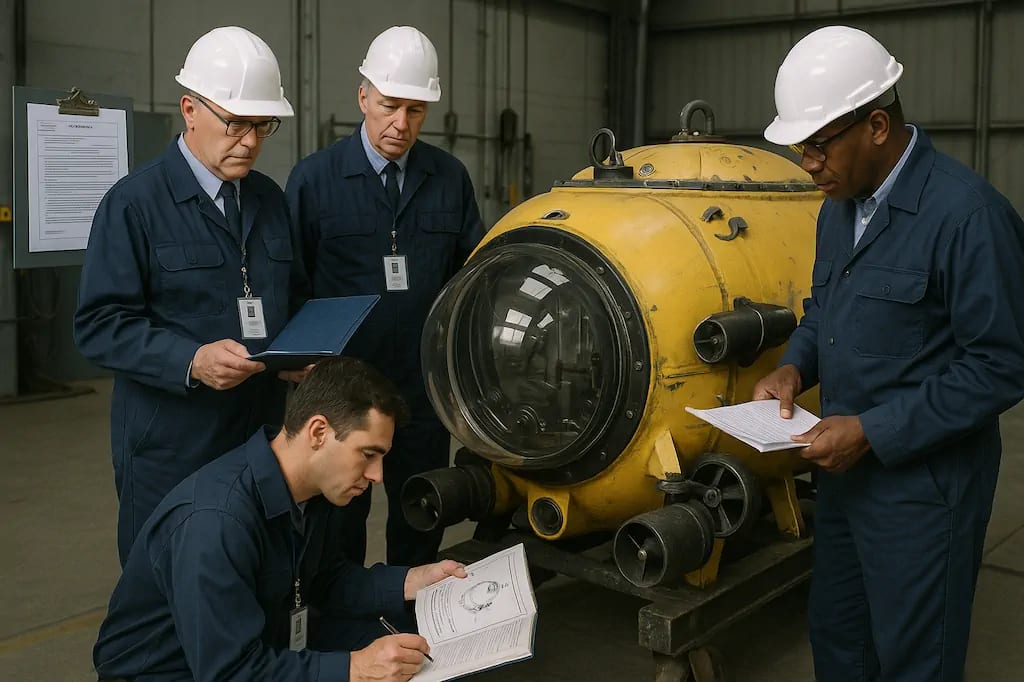
Future submersible designs must prioritize proven materials and geometries over unvalidated innovative approaches. The engineering community emphasizes understanding material behavior under cyclic loading, as fatigue failures pose significant risks in pressure vessel applications.
Regulatory and certification changes
The disaster has prompted extensive discussions about reforming maritime safety regulations to address the loopholes exploited by OceanGate. Proposed changes include mandatory third-party certification for all passenger-carrying submersibles, irrespective of their operational waters, to close regulatory gaps that allowed experimental vessels to operate commercially without proper oversight.
International cooperation on submersible safety standards is another critical area for reform. The global nature of deep-sea exploration necessitates harmonized safety standards to prevent operators from exploiting jurisdictional differences.
Industry culture and safety management
The Titan disaster underscored the critical importance of safety culture in high-risk industries. Lessons from the OceanGate tragedy emphasize the need for organizational structures that encourage and protect whistleblowing while maintaining rigorous safety oversight. Companies operating in extreme environments must establish independent safety committees empowered to halt operations when concerns are identified.
The disaster also highlights the dangers of conflating innovation with safety, as OceanGate’s leadership used claims of technological advancement to justify bypassing established safety practices. Future industry guidance must clearly differentiate between experimental development and operational passenger service.
Comparisons to other maritime disasters
Historical parallels and lessons
The Titan disaster shares troubling similarities with previous maritime disasters where human factors and organizational failures led to preventable tragedies. The original Titanic disaster of 1912 involved overconfidence in technological solutions and inadequate safety provisions. Both disasters demonstrated how belief in “unsinkable” designs can lead to fatal complacency regarding safety preparations.
| Disaster | Type | Fatalities | Depth meters | Cause | Safety lesson | Regulatory change |
|---|---|---|---|---|---|---|
| Titan Submersible (2023) | Tourism Submersible | 5 | 3300 | Structural Implosion | Experimental design requires proven safety standards | Pending – Investigation ongoing |
| Titanic Sinking (1912) | Passenger Ship | 1514 | 3800 | Ice Collision | Adequate lifeboats and safety equipment essential | SOLAS Convention established |
| Costa Concordia (2012) | Cruise Ship | 32 | 50 | Navigation Error | Navigation safety and crew training critical | Enhanced bridge team management |
| MS Estonia (1994) | Ferry | 852 | 80 | Bow Door Failure | Regular inspection and maintenance of safety systems | Improved vehicle inspection regimes |
| Kursk Submarine (2000) | Military Submarine | 118 | 108 | Torpedo Explosion | Emergency response and rescue capability essential | Submarine safety protocol review |
| Challenger Deep (Record Holder) | Research Submersible | 0 | 10994 | N/A – Successful | Proven engineering and extensive testing enable safe operation | Established deep-sea exploration standards |
The Costa Concordia disaster of 2012 provides another relevant comparison, involving deliberate deviation from established safety protocols for commercial reasons. Like OceanGate, Costa Concordia’s operators prioritized customer experience over safety, with catastrophic results, underscoring the importance of strict adherence to safety protocols despite commercial pressures.
Lessons from aviation and space exploration
The Space Shuttle Challenger disaster offers particularly relevant insights into the organizational failures that contributed to the Titan implosion. Both disasters involved the normalization of deviance, where warning signs were dismissed or rationalized away by leadership focused on maintaining operational schedules. The O-ring failures that destroyed Challenger parallel the structural concerns raised about Titan’s carbon fiber hull.

These historical parallels demonstrate that technological disasters often arise from remarkably similar organizational and psychological factors. The tendency for successful operations to breed overconfidence, combined with pressure to maintain commercial viability, creates conditions where safety margins are gradually eroded until catastrophic failure becomes inevitable.
Conclusion
The OceanGate Titan submersible disaster was a preventable tragedy resulting from the intersection of engineering hubris, regulatory gaps, and corporate negligence. This comprehensive analysis has shown how submersible engineering flaws, ignored safety warnings, and the normalization of deviance combined to create conditions where catastrophic failure was virtually inevitable. The case, thoroughly examined in documentaries like “Titan: The OceanGate disaster” on Netflix, serves as a stark reminder of the fundamental importance of proven safety practices in high-risk industries.
The lessons from this disaster extend far beyond the deep-sea exploration industry to encompass broader questions about extreme tourism dangers, regulatory oversight, and corporate responsibility. As investigations continue and Titanic wreck exploration safety protocols are revised, the memory of the five lives lost aboard Titan must serve as a catalyst for meaningful reform. Only through rigorous application of these lessons can the maritime industry ensure that such a preventable tragedy never occurs again.
The path forward requires unwavering commitment to safety over innovation, transparency over secrecy, and proven practices over experimental shortcuts. The ultimate legacy of the Titan disaster must be a renewed dedication to the principle that no commercial venture, regardless of its promise or profitability, justifies compromising human safety.


