
What was meant to be a joyous New Year’s day lunch in 2025 became one of Brazil’s most horrifying true crime cases. In a modest home in Parnaiba, Piaui state, a traditional rice and bean dish that symbolizes prosperity for the year ahead was laced with a deadly pesticide.
Within hours, nine family members were fighting for their lives in hospital corridors. By month’s end, six souls had perished, including four children aged between one and eighteen. This is the story of the Piaui family poisoning, a case that exposed not just the devastating effects of domestic violence, but the lengths to which hatred and twisted love can drive ordinary people to commit the unthinkable.
The coastal city where the Silva family case unfolded
Parnaiba sits along Brazil’s northeastern coast, a city of approximately 170,000 people where the Parnaiba River meets the Atlantic Ocean. Known for its natural beauty and the third-largest river delta in the world, this peaceful municipality in Piaui state seemed an unlikely setting for one of Brazil’s most shocking poisoning cases.
Yet within the cramped confines of a working-class home, a perfect storm of resentment, manipulation, and deadly intent was brewing. The pesticide crime in Brazil that would unfold here would become a watershed moment in the country’s understanding of domestic violence and family dynamics.
Key takeaway: The remote coastal setting of Parnaiba initially masked the severity of what was unfolding. The city’s peaceful reputation stood in stark contrast to the horror taking place within one household, highlighting how domestic violence can flourish in seemingly safe communities.
The Silva household was overcrowded, with eleven people sharing limited space – a powder keg of tensions that would ultimately explode with fatal consequences. Francisco de Assis Pereira da Costa, 53, lived with his partner Maria dos Aflitos da Silva, along with her children and grandchildren.
Among them was Francisca Maria da Silva, 32, a mother of four who had already endured unimaginable trauma: months earlier, two of her sons had died under mysterious circumstances. The psychological pressure within this household was immense, creating the perfect conditions for the Piaui poisoning tragedy that would follow.
The poisonous foundation: August 2024’s forgotten victims
To understand the full horror of the Silva family poisoning, we must begin not on New Year’s day 2025, but in August 2024. Seven-year-old Joao Miguel and eight-year-old Ulisses Gabriel, Francisca Maria’s sons, fell violently ill after allegedly consuming cashew fruit.
The boys’ grandmother, Maria dos Aflitos, and her partner Francisco quickly pointed fingers at neighbor Lucelia Maria da Conceicao Silva, claiming she had poisoned the children because they’d been picking cashews from her property without permission.
Key takeaway: The August 2024 deaths were not isolated incidents but the opening act of a family massacre. The speed with which the real perpetrators blamed an innocent neighbor reveals their calculated approach to murder and cover-up.
The accusation seemed plausible enough that police arrested Lucelia, who spent five months in prison while the grieving family mourned. What no one suspected at the time was that the real killers were sitting at the boys’ funeral, weeping crocodile tears whilst planning their next move.
The pesticide poisoning that killed Joao Miguel and Ulisses Gabriel was not the vengeful act of an angry neighbor, but the opening chapter in a family massacre orchestrated from within. This earlier crime would later prove to be a practice run for the devastating New Year’s day attack.
New Year’s day: A celebration turned nightmare
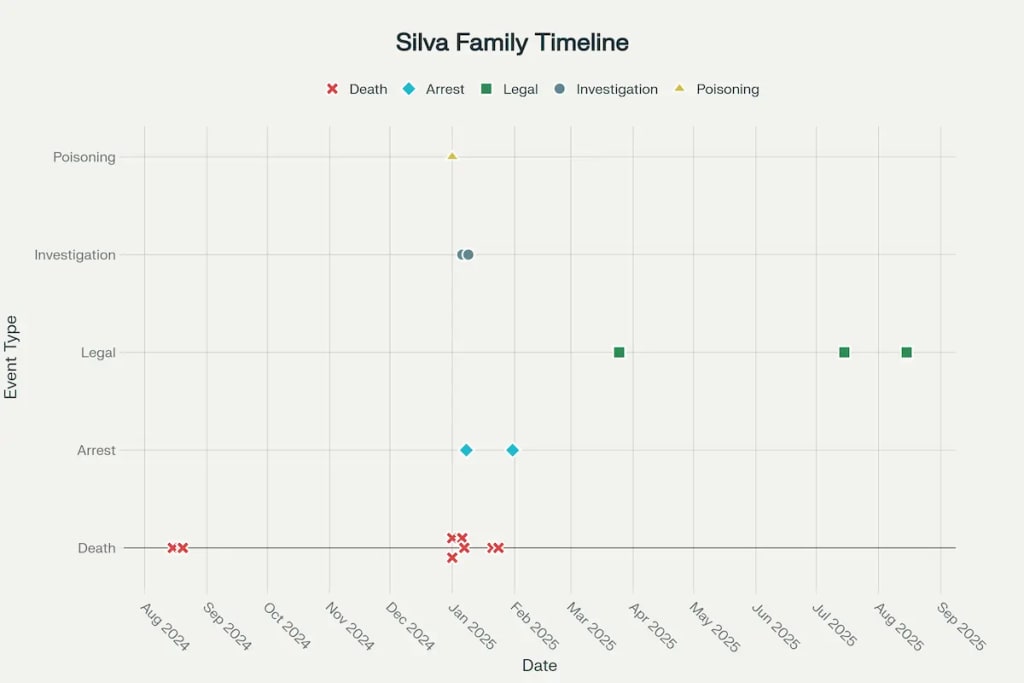
January 1st, 2025, should have been a day of hope and renewal. Instead, it became a date that would forever scar the coastal community of Parnaiba. The family had prepared a traditional Brazilian rice and bean dish, a beloved regional recipe made with rice, black-eyed peas, and various seasonings – comfort food meant to bring good fortune for the coming year.
The rice had been cooked on December 31st for New Year’s Eve dinner, with leftovers set aside for the following day’s lunch. This seemingly innocent preparation would become the delivery mechanism for mass murder.
Key takeaway: The choice of a traditional New Year’s dish as the poison delivery method was particularly cruel. The perpetrators corrupted a symbol of hope and prosperity, turning family tradition into an instrument of death.
Nine family members and neighbors consumed the dish that afternoon. Within hours, the symptoms began: violent tremors, abdominal cramps that doubled victims over in agony, respiratory distress, and seizures that would haunt witnesses for the rest of their lives.
The youngest victims, mere toddlers, couldn’t understand why their bodies were betraying them. Eighteen-year-old Manoel Leandro da Silva, full of dreams and plans for adulthood, died in the ambulance before reaching hospital. Baby Igno Davi, just one year and eight months old, followed shortly after arriving at the state hospital.
The medical team initially suspected food poisoning from donated fish that had been served alongside the rice. This theory seemed logical – spoiled seafood could certainly cause mass illness. However, when forensic analysis of the fish came back clean, investigators turned their attention to the rice dish that every victim had consumed.
The Silva family case was about to take a much darker turn as forensic evidence revealed the true nature of the attack.
The science of murder: Terbufos revealed in Brazilian pesticide crime
On January 6th, the Legal Medicine Institute delivered results that transformed the investigation from suspected food poisoning to confirmed homicide. Terbufos, a highly toxic organophosphate pesticide, had been deliberately added to the rice.
Known colloquially in Brazil as “chumbinho” (little lead shot), terbufos is banned for domestic use precisely because of its lethality. The revelation marked this as a classic pesticide crime in Brazil, joining a growing list of domestic poisoning cases across the country.
Key takeaway: The choice of terbufos was no accident. This pesticide’s delayed-action properties gave the perpetrators time to establish alibis while victims slowly succumbed, demonstrating premeditation and sophisticated planning.
This pesticide attacks the central nervous system by inhibiting a crucial enzyme for proper nerve function. Even tiny quantities can cause the horrific symptoms witnessed in Parnaiba: muscle contractions, excessive salivation, difficulty breathing, seizures, and ultimately death.
The substance is so dangerous that agricultural workers handling it legally require extensive protective equipment. For a family meal, it represented a weapon of mass destruction hidden in plain sight.
What made this Piaui poisoning particularly insidious was the delayed onset of symptoms, which gave the perpetrator time to establish an alibi while victims slowly succumbed. The rice had been contaminated on December 31st but consumed over two separate meals, meaning the killer had multiple opportunities to ensure maximum casualties.
The forensic analysis also revealed the sophisticated nature of the poisoning. The terbufos had been evenly distributed throughout the rice, suggesting careful mixing to ensure every serving contained lethal doses. This wasn’t a crime of passion but a methodically planned massacre.
The victims: Lives cut tragically short in the Piaui poisoning
The Brazil true crime case claimed eight lives across two separate incidents, leaving a community reeling and families destroyed. Francisca Maria da Silva, the 32-year-old mother at the centre of this tragedy, lost four children to terbufos poisoning within five months.
Her surviving testimony, recorded by local journalists, captures the helpless horror of watching her family die: “They finished eating and my boy started feeling ill right away, and then it was one after another. I didn’t know what to do, whether to help one or help the other.”
Key takeaway: The victims ranged from 1 to 32 years old, representing entire generations wiped out in a single act. The psychological trauma inflicted on survivors and witnesses cannot be quantified.
Three-year-old Maria Lauane died on January 6th after five days of agony. Her mother, Francisca Maria, followed on January 7th, becoming the fourth fatality. Four-year-old Maria Gabriela fought for twenty days in the pediatric intensive care unit before succumbing on January 21st.
| Name | Age | Relationship to family | Date of poisoning | Date of death | Cause of death | Location of death | Initially blamed on |
|---|---|---|---|---|---|---|---|
| Ulisses Gabriel | 8 | Son of Francisca Maria | August 2024 | August 2024 | Terbufós poisoning | Hospital | Neighbour Lucélia (cashews) |
| João Miguel | 7 | Son of Francisca Maria | August 2024 | August 2024 | Terbufós poisoning | Hospital | Neighbour Lucélia (cashews) |
| Manoel Leandro da Silva | 18 | Stepson of Francisco/Brother of Francisca | January 1, 2025 | January 1, 2025 | Terbufós poisoning (baião-de-dois) | Ambulance | Unknown perpetrator |
| Igno Davi da Silva | 1 year 8 months | Son of Francisca Maria | January 1, 2025 | January 1, 2025 | Terbufós poisoning (baião-de-dois) | Hospital | Unknown perpetrator |
| Maria Lauane da Silva | 3 | Daughter of Francisca Maria | January 1, 2025 | January 6, 2025 | Terbufós poisoning (baião-de-dois) | Hospital | Unknown perpetrator |
| Francisca Maria da Silva | 32 | Stepdaughter of Francisco/Mother of victims | January 1, 2025 | January 7, 2025 | Terbufós poisoning (baião-de-dois) | Hospital | Unknown perpetrator |
| Maria Gabriela da Silva | 4 | Daughter of Francisca Maria | January 1, 2025 | January 21, 2025 | Terbufós poisoning (baião-de-dois) | HUT (Teresina Emergency Hospital) | Unknown perpetrator |
| Maria Jocilene da Silva | Adult (age not specified) | Neighbour/former daughter-in-law of Maria dos Aflitos | January 2025 (coffee poisoning) | January 24, 2025 | Terbufós poisoning (coffee) | Hospital | Intended to frame neighbour for suicide |
Each death represented not just a statistic, but a future extinguished, dreams unfulfilled, and a family torn apart by unimaginable cruelty. The Silva family case would become synonymous with the vulnerability of children in domestic violence situations.
The case took an even more sinister turn with the death of Maria Jocilene da Silva, a neighbor who had initially survived the New Year’s day incident. After being discharged from hospital, Jocilene was mysteriously rehospitalized on January 22nd and died two days later.
This additional murder would expose the true depths of the conspiracy within the Silva household, elevating the Piaui poisoning from family massacre to calculated elimination of witnesses.
Francisco de Assis: The hostile stepfather

Police attention quickly focused on Francisco de Assis Pereira da Costa, whose behavior in the aftermath of the poisoning raised immediate red flags. The 53-year-old stepfather had been the last person awake on New Year’s Eve, providing him with the perfect opportunity to contaminate the rice.
More damning were the contradictions in his police statements and his shocking lack of emotion when discussing his dead and dying family members.
Key takeaway: Francisco’s emotional detachment and contradictory statements immediately marked him as the prime suspect. His documented hostility toward the victims provided clear motive for the mass poisoning.
Investigators discovered that Francisco harbored deep resentment towards his stepdaughter Francisca Maria and her children. He regularly referred to the children as “primates” and “country bumpkins,” demonstrating a callous disregard for their lives.
This wasn’t typical family tension but pathological hatred that had festered in the cramped confines of their shared home. The pesticide crime in Brazil represented the ultimate expression of his contempt for the family he was supposed to protect.
Francisco’s psychological profile emerged as investigators delved deeper into the case. Neighbors reported his increasingly erratic behavior in the months leading up to the poisoning. He had made veiled threats about “cleaning house” and getting rid of the “burden” of supporting so many people.
His relationship with the children was particularly toxic. He saw them as obstacles to his relationship with Maria dos Aflitos and financial drains on the household. This resentment had been building for years, creating the psychological foundation for the Piaui poisoning massacre.
Francisco’s arrest on January 8th was based on mounting evidence of his hostility, contradictory statements, and opportunity to commit the crime. However, the case would soon reveal an even more shocking dimension when his partner’s involvement came to light.
Maria dos Aflitos: The shocking confession
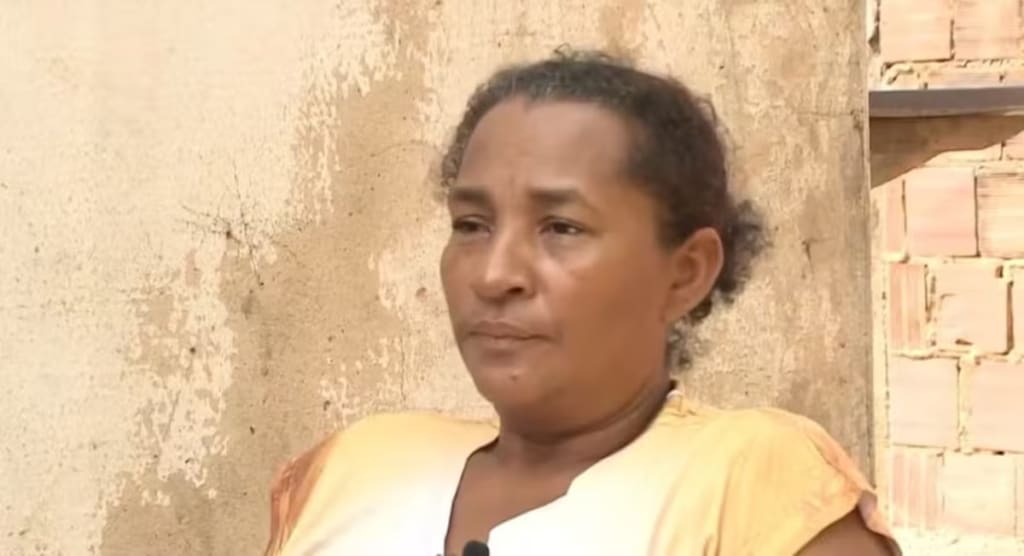
The most devastating revelation came on January 31st when Maria dos Aflitos da Silva, the family matriarch and grandmother of several victims, made a confession that stunned even seasoned investigators. Not only had she participated in the conspiracy, but she had personally murdered neighbor Maria Jocilene by serving her terbufos-laced coffee.
Key takeaway: The grandmother’s involvement transformed the case from stepfather abuse to family conspiracy. Her willingness to kill her own grandchildren revealed the depths of psychological manipulation within the household.
Maria dos Aflitos’ motivation was as twisted as it was tragic: she had poisoned Jocilene in an attempt to frame the woman for the family murders, thereby protecting Francisco from suspicion. The plan was to make Jocilene’s death appear as suicide – the guilt-ridden act of someone unable to live with the knowledge of her crimes.
“I did it out of love,” Maria dos Aflitos told police, her words revealing the toxic dynamics that had infected the household. This confession elevated the Silva family case to unprecedented levels of family betrayal and manipulation.
The confession also exposed a complex web of relationships within the community. Maria dos Aflitos and Maria Jocilene had allegedly been romantically involved, adding layers of jealousy and manipulation to an already volatile situation.
This relationship may have been one of the factors that led Maria dos Aflitos to target Jocilene specifically for the cover-up murder. The personal betrayal made the Piaui poisoning even more shocking to the local community.
Maria dos Aflitos’ psychological state became a crucial element in understanding the case. She had been manipulated by Francisco into believing that eliminating the children and Francisca Maria would improve their lives together. Her misguided sense of loyalty led her to participate in the massacre and then attempt to cover it up through another murder.
The investigation: Unraveling the truth behind the Brazilian pesticide crime
The Piaui police investigation was led by detective Abimael Silva, whose methodical approach gradually exposed the full scope of the conspiracy. The forensic evidence was overwhelming: terbufos found in the rice samples, contradictory testimonies from the suspects, and a clear pattern of hostility towards the victims.
Key takeaway: The investigation’s success depended on sophisticated forensic analysis and careful psychological profiling of the suspects. The case demonstrated the importance of treating family poisonings as potential homicides from the outset.
The investigation also vindicated Lucelia Maria da Conceicao Silva, the neighbor who had spent five months in prison for the August 2024 deaths. When forensic analysis of the allegedly poisoned cashews came back negative on January 9th, 2025, investigators realized they had been chasing the wrong suspect whilst the real killers remained free.
Lucelia’s immediate release highlighted the tragic irony that she had been imprisoned by the very people responsible for the crimes. Her wrongful imprisonment became a rallying point for criminal justice reform advocates across Brazil.
The case required extensive forensic work, including analysis of multiple food samples, toxicology reports on all victims, and careful reconstruction of the timeline. The presence of terbufos in Brazil as an agricultural pesticide meant investigators had to trace potential sources and establish how the suspects obtained this banned substance.
Investigators discovered that Francisco had connections to local agricultural suppliers through his previous work history. This network provided him with access to industrial-grade pesticides that should never have been available for domestic use. The investigation exposed significant gaps in Brazil’s pesticide distribution and monitoring systems.
The psychological analysis of both suspects revealed a shared psychosis situation where one person’s delusions influence another’s reality. Maria dos Aflitos had been gradually convinced by Francisco that the children and Francisca Maria were obstacles to their happiness. This psychological manipulation was crucial to understanding how a grandmother could participate in murdering her own grandchildren.
Legal proceedings: The path to justice
On March 25th, 2025, both Francisco de Assis Pereira da Costa and Maria dos Aflitos da Silva were formally charged as defendants in what prosecutors described as multiple qualified homicides. The charges encompass eight counts of murder and three counts of attempted murder, carrying potential sentences that could reach 240 years combined.
Key takeaway: The legal proceedings must address not only the murders themselves but the conspiracy aspect and the psychological manipulation that made the crimes possible. The case sets important precedents for domestic violence prosecutions in Brazil.
The legal process has been complicated by Francisco’s mental health status. His defense team successfully argued for a psychiatric evaluation to determine his mental competency at the time of the crimes. This has delayed proceedings, with the first hearing postponed in July 2025 whilst psychological assessments continue.
The case represents one of the most complex multiple homicide prosecutions in recent Brazilian legal history, involving sophisticated forensic evidence, multiple crime scenes, and a conspiracy spanning several months. The prosecution must prove not only that both defendants participated in the murders, but that they acted with premeditation and specific intent to kill particular victims.
Legal experts note that the Piaui poisoning case will likely establish new precedents for prosecuting pesticide poisonings in Brazil. The sophistication of the crime and the family conspiracy elements make it a landmark case in domestic violence jurisprudence.
The victims’ family members have formed a support group to navigate the legal proceedings and advocate for stricter pesticide controls. Their advocacy efforts have gained national attention and may influence future legislation regarding agricultural chemical access and monitoring.
The broader context: Pesticide poisoning and domestic violence in Brazil
The Silva family poisoning case highlights broader issues within Brazilian society regarding pesticide access and domestic violence. Brazil is one of the world’s largest consumers of agricultural pesticides, including many substances banned in other countries.
The illegal domestic use of these chemicals has become a significant public health concern, with “chumbinho” (colloquial name for rat poison) regularly appearing in homicide and suicide cases across the nation.
Key takeaway: Brazil’s permissive pesticide regulations create easy access to deadly substances, contributing to domestic violence cases where agricultural chemicals become weapons of mass destruction within families.
Studies indicate that Brazil permits 450 chemicals for agricultural use, with 67% associated with chronic health damage. The country’s pesticide regulations are significantly more permissive than those in Europe or North America, creating easy access to deadly substances like terbufos.
This regulatory environment contributes to cases like the Silva family tragedy, where agricultural pesticides become weapons of domestic violence. The pesticide crime in Brazil phenomenon represents a unique intersection of agricultural policy and criminal justice.
The case also reflects the hidden epidemic of family violence within Brazilian society. Domestic homicides, particularly those targeting women and children, often occur within extended family networks where economic stress, overcrowding, and psychological disorders create toxic environments.
The Silva household, with eleven people sharing cramped quarters and struggling financially, exemplified these risk factors. Social workers and domestic violence experts point to the case as illustrating how seemingly stable extended families can harbor deadly dynamics.
Recent research into family violence in Brazil shows that overcrowded living conditions significantly increase the risk of domestic homicides. The Silva case demonstrates how these risk factors can combine with access to deadly substances to create perfect storms of family violence.
Media coverage and public reaction to the Silva family case
The Piaui family poisoning captivated Brazilian media attention, with major television networks providing extensive coverage. The case’s shocking elements – multiple child victims, pesticide poisoning, and a family conspiracy – made it irresistible to true crime audiences both within Brazil and internationally.
Key takeaway: The intense media coverage helped raise awareness about domestic violence and pesticide dangers but also highlighted the need for more sensitive reporting on family tragedy cases involving children.
Local journalists in Parnaiba expressed frustration at being sidelined in favor of national media, highlighting tensions between regional and national news coverage. The community itself was divided between horror at the crimes and sympathy for the surviving family members who had lost everything to the conspiracy of their closest relatives.
The case has drawn comparisons to other recent Brazilian poisoning cases, including the Christmas cake arsenic murders in Torres and the Easter egg poisoning in Maranhao. This cluster of family poisoning cases has sparked discussions about domestic violence patterns and the need for better mental health interventions in at-risk households.
Social media response to the Piaui poisoning case revealed deep divisions in Brazilian society about family structures, domestic violence, and criminal justice. Many commenters struggled to understand how grandmothers could participate in murdering their own grandchildren, leading to broader discussions about family loyalty and psychological manipulation.
The international attention the case received helped spotlight Brazil’s ongoing challenges with pesticide regulation and domestic violence. True crime podcasts and international news outlets picked up the story, bringing global scrutiny to Brazil’s approach to family violence prevention and pesticide control.
Lessons learned: Prevention and protection
The Silva family tragedy offers crucial lessons for preventing similar domestic violence cases. Early warning signs included Francisco’s documented hostility towards the victims, the family’s history of unexplained deaths, and the toxic dynamics within the household.
Social services and community leaders must be better equipped to recognize these patterns before they escalate to homicide.
Key takeaway: Prevention requires community vigilance and professional intervention when family dynamics become toxic. The Silva case shows how early warning signs can be missed or ignored until it’s too late to save lives.
The case also demonstrates the importance of thorough forensic investigation in poisoning cases. The initial misdiagnosis as food poisoning and the wrongful arrest of Lucelia highlight how complex these crimes can be to solve.
Proper toxicological analysis and consideration of family dynamics are essential for identifying the true perpetrators. The Silva family case has become a training case for police investigators dealing with suspicious family deaths.
Perhaps most importantly, the case underscores the need for stricter controls on pesticide access and better education about their dangers. The ease with which Francisco and Maria dos Aflitos obtained and used terbufos suggests significant gaps in Brazil’s chemical security framework that must be addressed to prevent future tragedies.
Child protection agencies are now using the Piaui poisoning case to train social workers on recognizing signs of family conspiracy against children. The case has led to new protocols for investigating suspicious childhood deaths within extended family settings.
Community leaders in Parnaiba have established new support networks for families in crisis, recognizing that the overcrowded and economically stressed conditions that contributed to the Silva tragedy are common throughout the region. These preventive measures represent hope that future tragedies might be averted through early intervention.
Expert analysis: Understanding the psychology of family poisoning
Mental health experts studying the Silva family case have identified several key psychological factors that contributed to the tragedy. Dr. Maria Santos, a forensic psychologist at the University of Sao Paulo, notes that the case represents a classic example of shared psychosis, where one person’s delusions gradually influence another’s reality.
Key takeaway: The psychological manipulation between Francisco and Maria dos Aflitos created a shared delusion that justified murdering family members. Understanding these dynamics is crucial for preventing similar tragedies.
“Francisco’s pathological hatred of the children gradually infected Maria dos Aflitos’ thinking,” explains Dr. Santos. “She began to see her own grandchildren as obstacles rather than family members to protect. This psychological manipulation is more common in domestic violence cases than many people realize.”
The expert analysis has revealed that economic stress and overcrowding significantly amplify existing psychological problems. The Silva household’s financial struggles and cramped living conditions created a pressure cooker effect that accelerated the development of homicidal thoughts.
Domestic violence specialists emphasize that the Piaui poisoning case challenges common assumptions about who commits family violence. The involvement of the grandmother shocked many observers who couldn’t imagine a maternal figure participating in such crimes.
“We must abandon romantic notions about family bonds,” warns Dr. Carlos Ribeiro, a criminologist specializing in family violence. “Blood relationships don’t automatically create protection. Sometimes they create vulnerability, especially when psychological manipulation is involved.”
The survivors: Dealing with unimaginable loss
The three survivors of the New Year’s day poisoning continue to struggle with physical and psychological recovery. Their identities have been protected due to their young ages, but their testimonies have been crucial to the ongoing legal proceedings.
Key takeaway: The survivors face lifelong challenges from both the physical effects of poisoning and the psychological trauma of family betrayal. Their recovery process illustrates the long-term impact of family violence.
Medical experts report that terbufos poisoning can have lasting neurological effects, particularly in young victims. The survivors may face cognitive and motor function challenges for years to come. The psychological trauma of being poisoned by their own family members compounds these physical challenges.
Support groups for family violence survivors have rallied around the Silva case, providing resources and advocacy for the surviving children. These organizations emphasize that recovery from family betrayal requires specialized therapeutic approaches that address both trauma and trust issues.
The extended community has established a fund to support the survivors’ ongoing medical and educational needs. Local schools have implemented new protocols for supporting children who have experienced family trauma, using lessons learned from the Silva case.
Conclusion: A family destroyed by poison and hate
As this case moves through Brazil’s judicial system, the magnitude of the Silva family tragedy continues to resonate. Eight innocent people, including six children, lost their lives to the calculated cruelty of their own family members.
The use of food – the most basic symbol of care and sustenance – as a delivery mechanism for death represents a particularly heinous betrayal of familial trust.
Author reflection: Having covered numerous true crime cases throughout my career, the Silva family poisoning stands out for its combination of premeditation, family betrayal, and the vulnerability of child victims. The case forces us to confront uncomfortable truths about the nature of family bonds and the potential for evil to flourish in seemingly protective environments.
The Piaui family poisoning stands as a stark reminder that the greatest dangers sometimes lurk not in dark alleys or criminal enterprises, but around our own dinner tables. For Francisca Maria da Silva, who lost four children to terbufos poisoning, the New Year’s day that should have brought hope instead brought unimaginable grief.
For the community of Parnaiba, the case has forever changed how they view family meals and neighborhood relationships.
As Francisco de Assis and Maria dos Aflitos await their trials, the surviving family members and community continue to grapple with questions that may never be fully answered: How could love turn so completely to hatred? What transforms protectors into predators?
And most haunting of all – could this tragedy have been prevented if someone had recognized the warning signs and intervened before hatred was allowed to fester into murder?
The Silva family case will likely be studied for years to come, not just as a criminal matter, but as a window into the complex psychology of domestic violence and the devastating impact of unchecked hatred within families. It serves as both a memorial to the innocent victims and a cautionary tale about the poison that can spread when love is replaced by resentment, and when the bonds that should protect become the very instruments of destruction.
The Piaui poisoning has become more than just a true crime case – it’s a call to action for better family violence prevention, stricter pesticide controls, and deeper understanding of the psychological dynamics that can transform homes into crime scenes. Only by learning from this tragedy can we hope to prevent future families from suffering similar fates.