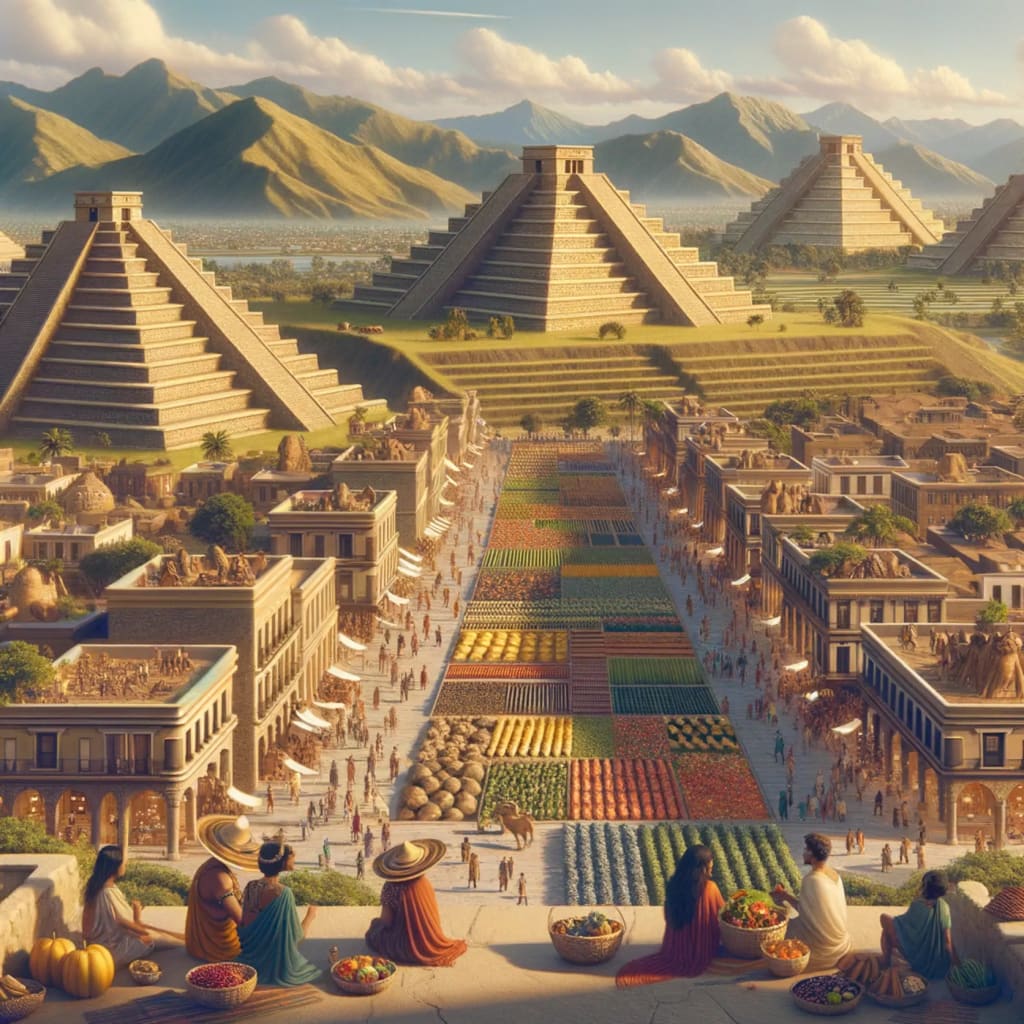
The story you learnt at school about Christopher Columbus “discovering” America in 1492 is not just incomplete, it’s fundamentally wrong. As the Columbus Day debate intensifies in 2025, with growing calls to replace it with Indigenous Peoples Day, we must confront the reality that far from encountering a sparsely populated wilderness inhabited by simple hunter-gatherers, European colonisers arrived at a continent bustling with sophisticated civilisations, complex urban centres, and ingenious agricultural systems that would put many contemporary European cities to shame.
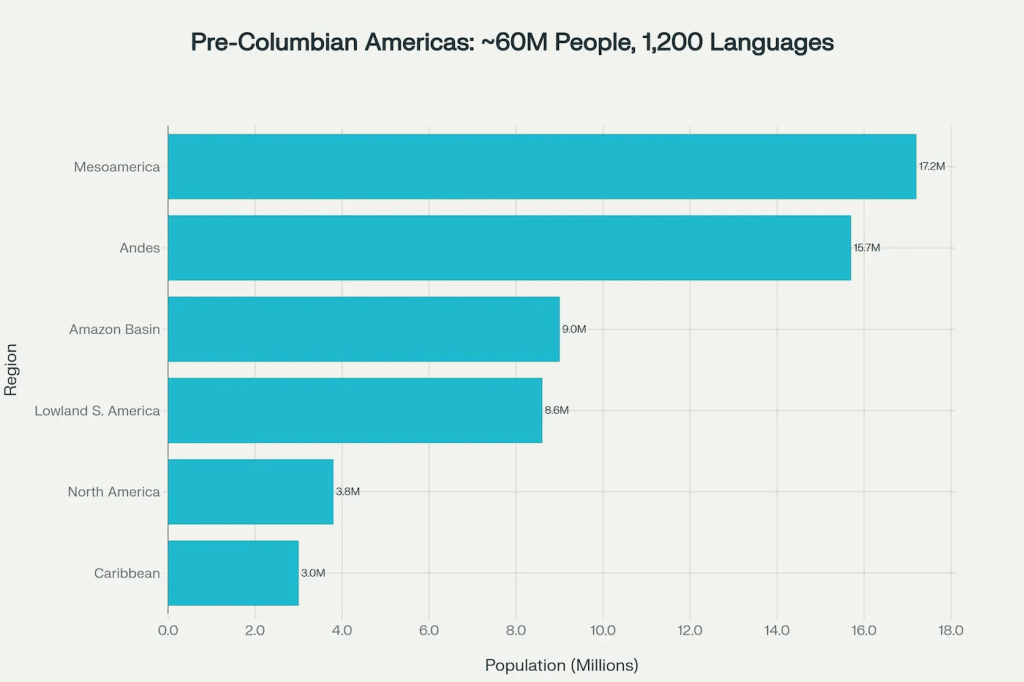
Recent archaeological discoveries, including the groundbreaking 21,000-23,000 year old footprints discovered in New Mexico’s White Sands National Park, have revolutionized our understanding of how long indigenous peoples have called the Americas home. The pre-Columbian Americas were home to an estimated 60 million people speaking around 1,200 different languages, nearly matching Europe’s population at the time, spread across a much larger landmass. This wasn’t a “New World” waiting to be discovered; it was an ancient world with millennia of human achievement that colonisers systematically erased from history.
The great urban centres: Complexity that rivalled Europe
Tenochtitlan: The Venice of the New World
When Spanish conquistador Hernán Cortés first laid eyes on Tenochtitlan in 1519, he was witnessing what was likely the fifth-largest city in the world. Built on an island in Lake Texcoco, the Aztec empire’s capital housed over 200,000 inhabitants, significantly larger than Paris, which had roughly 100,000 residents at the time. This remarkable fact that Tenochtitlan was larger than Paris continues to astound historians and challenges colonial narratives about “primitive” societies.
But size wasn’t Tenochtitlan’s only impressive feature. The city boasted an urban planning sophistication that wouldn’t be seen in European cities for centuries. Streets were swept daily by over 1,000 public workers, whilst an advanced sanitation system included public latrines whose contents were collected by canoe and used as fertiliser. The city enjoyed fresh drinking water delivered through a sophisticated aqueduct system, public baths, and even a sewage collection system that prevented contamination.
The engineering was remarkable: built entirely on a lake, Tenochtitlan featured an intricate network of canals and causeways that allowed for efficient transportation whilst controlling flooding through ingenious dam systems. The Spanish, in their ignorance, destroyed these waterways and replaced them with their own inferior systems, resulting in persistent flooding and disease outbreaks that plague Mexico City to this day.
Recent archaeological evidence from ongoing excavations in Mexico City continues to reveal the sophisticated Aztec engineering that underpinned this magnificent urban center, with discoveries of elaborate water management systems that rival modern infrastructure.

The Maya: Mathematical geniuses before Europe caught up
Whilst Europeans were still grappling with basic arithmetic, Maya civilisation was making mathematical breakthroughs that wouldn’t be matched elsewhere for centuries. The current Maya mathematics revolution in education has brought renewed attention to these remarkable achievements, with schools worldwide now incorporating Maya mathematical concepts into their curricula as part of decolonizing history efforts.
Most remarkably, the Maya developed the mathematical concept of zero not just as a placeholder, but as a philosophical concept representing both completion and infinite potential. This zero concept was developed independently and centuries before it appeared in Old World mathematics.

This wasn’t merely academic. The Maya zero symbol, represented as a shell or flower, enabled their sophisticated vigesimal (base-20) number system that allowed for complex astronomical calculations with stunning precision. Their calendars could predict eclipses, track planetary movements, and maintain accurate long-term chronologies spanning thousands of years. Modern educators are increasingly recognizing how Maya mathematics offers alternative approaches to mathematical thinking that can benefit contemporary students.
Read more: Mathematics invention or discovery: The greatest philosophical debate in human knowledge
The Maya were also one of only four civilisations in human history to independently develop a complete writing system. Their hieroglyphic script recorded everything from royal genealogies to mathematical treatises, creating a literary tradition that rivalled anything in the Old World. Recent archaeological discoveries have uncovered thousands of new Maya texts, revolutionizing our understanding of their scientific achievements.
The Inca empire: Administrative marvels without written language
At its peak, Tawantinsuyu (the Inca empire) was the largest empire in the world by land area, stretching 5,000 kilometres along the Andes. This wasn’t just empty territory: it was a meticulously organised administrative state that managed millions of diverse people speaking dozens of languages, demonstrating Inca administration capabilities that surpassed many contemporary European kingdoms.

The secret to Inca success lay in their revolutionary quipu system, knotted cords that served as a three-dimensional database capable of storing any conceivable information. These weren’t simple tallying devices: quipucamayocs (quipu specialists) could encode census data, tax records, historical narratives, and complex mathematical calculations using nothing but coloured strings and knots. Recent research into the quipu system has revealed it was far more sophisticated than previously understood, with some scholars arguing it represents a form of three-dimensional writing.
The empire maintained over 25,000 miles of roads connecting every corner of their territory, featuring Inca engineering marvels that included suspension bridges, mountain tunnels, and perfectly fitted stone construction that has survived major earthquakes for centuries. A sophisticated relay system of chasqui runners could carry messages across the empire faster than any European communication system of the time. Supply stations called tambos were strategically placed every few kilometres, ensuring efficient administration across impossible terrain.

Forgotten civilisations: The Amazonian garden cities
Perhaps the most revolutionary recent discoveries concern the Amazon Basin, long dismissed as unsuitable for large-scale civilisation. Archaeological evidence now reveals that the Amazon was home to 8-10 million people organised in what researchers call “garden cities,” a unique form of urbanism that integrated seamlessly with forest ecosystems. These Amazonian civilizations represent some of the most sophisticated examples of sustainable urban development in human history.
These weren’t primitive settlements. Ancient cities in the Amazon constructed massive earthworks, including raised cultivation platforms up to 30 metres wide and hundreds of metres long, surrounded by defensive ditches up to 4 metres deep. In Bolivia’s Llanos de Mojos, indigenous peoples created agricultural systems so sophisticated they could support settlements of up to 240 hectares. Recent LiDAR surveys have revealed hundreds of previously unknown archaeological discoveries throughout the Amazon, fundamentally changing our understanding of pre-Columbian population density and urban sophistication.
The real genius lay in Terra Preta, anthropogenic “black earth” that indigenous peoples created by adding charcoal, bones, pottery shards, and organic matter to naturally poor soils. This ecological engineering created soils three times richer in organic matter and 70 times higher in charcoal content than surrounding areas. Remarkably, Terra Preta regenerates itself and remains fertile thousands of years later, offering crucial insights for modern sustainable agricultural practices and climate change mitigation.
Revolutionary governance: Democracy before democracy
The Haudenosaunee confederacy: Women-led democracy
Centuries before the Magna Carta, the Haudenosaunee confederacy (also known as the Iroquois Confederacy) had established the world’s oldest continuous democracy. Founded over 1,000 years ago, this sophisticated political system united six nations under a constitution called the Great Law of Peace. As modern discussions about indigenous rights and governance intensify, the Haudenosaunee model offers valuable insights into sustainable democratic practices.
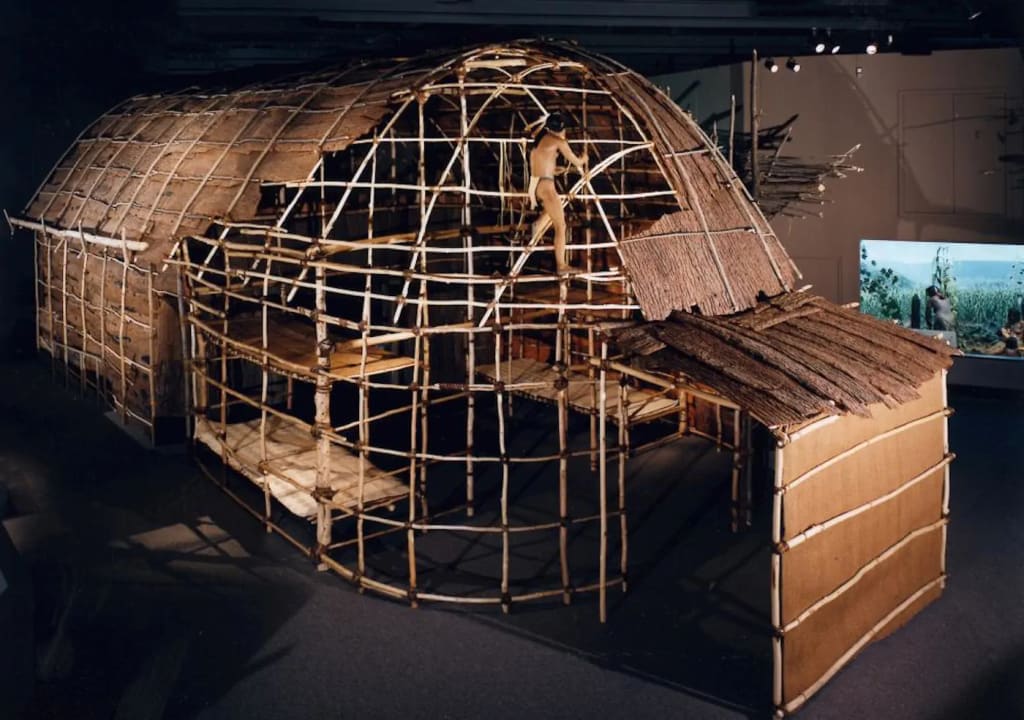
What made Haudenosaunee governance truly revolutionary was the central role of women. Clan mothers held ultimate political authority: they nominated chiefs, instructed them on policy matters, and retained the power to remove leaders who acted against the people’s interests. This wasn’t tokenism, it was a matrilineal society where women controlled property, children remained with mothers’ clans, and political decisions required female consensus. This system of governance challenges colonial narratives about “primitive” political structures and offers models for contemporary democratic reform.
The confederacy’s democratic principles were so advanced that Benjamin Franklin and other colonial leaders studied Haudenosaunee governance whilst developing American democratic institutions. Tragically, they adopted the democratic framework whilst systematically excluding women, the very people who had made the system work for millennia. This historical irony continues to fuel modern debates about women’s political participation and indigenous knowledge contributions to Western political thought.
Global food revolution: The Americas’ gift to the world
The global diet transformation triggered by American crops represents one of history’s greatest agricultural revolutions. Indigenous peoples didn’t just gather food, they were master plant geneticists who transformed wild species into the crops that now feed billions. Their ancient American innovations in agriculture continue to be studied by modern food security experts seeking solutions to global hunger and climate change.
Maize: Humanity’s greatest genetic engineering achievement
Maize domestication represents perhaps the most impressive feat of prehistoric genetic modification. Starting with tiny teosinte grass producing seeds barely larger than wheat kernels, indigenous peoples (likely the Olmec and Maya) spent millennia selectively breeding plants to create modern corn. This transformation demonstrates sophisticated understanding of plant genetics that rivals modern agricultural science.

The transformation was so complete that modern maize cannot survive without human intervention. By 1492, hundreds of maize varieties had spread throughout the Americas, each adapted to specific climatic conditions. This wasn’t casual agriculture: it was systematic crop development that rivalled anything achieved by modern plant breeding programmes. Recent genetic analysis has revealed the extraordinary complexity of this ancient plant breeding program.
The potato revolution
Potato domestication in the Andean highlands created a crop that would eventually become the third most important food crop globally. Inca agricultural scientists developed over 1,000 potato varieties, each adapted to specific altitude, climate, and soil conditions. This incredible biodiversity represents one of humanity’s greatest agricultural achievements and provides crucial genetic resources for modern food security.

The potato’s impact on world history cannot be overstated. European adoption of American potatoes contributed to an estimated 12-25% of population growth in Africa and Eurasia between 1700 and 1900. The introduction of potatoes alone accounts for 47% of increased urbanisation during this period, fundamentally reshaping global demographics and economic development.
A cornucopia of contributions
Beyond maize and potatoes, pre-Columbian agricultural innovations gave the world tomatoes, avocados, squash, beans, peppers, quinoa, cassava, peanuts, and chocolate. Each represents thousands of years of careful selection and breeding by indigenous scientists who understood plant genetics long before Mendel was born. These crops now form the foundation of global cuisine and nutrition, representing one of the most significant transfers of indigenous knowledge in human history.
Remarkably, historical evidence suggests that pre-Columbian societies rarely experienced famine. Their diverse agricultural systems and sophisticated food storage techniques created food security that eluded European societies plagued by regular crop failures and starvation. Modern studies of indigenous knowledge systems reveal sophisticated understanding of crop rotation, companion planting, and sustainable farming practices that offer solutions to contemporary agricultural challenges.
The demographic catastrophe: Why early accounts were wrong
Understanding why European chroniclers described a “sparsely populated” continent requires confronting one of history’s greatest demographic disasters. Disease epidemics introduced by European contact killed an estimated 90% of indigenous populations within a century. Smallpox, measles, and typhus spread along trade routes, devastating communities even before direct European contact. This massive pre-Columbian population collapse fundamentally altered the landscape that later European settlers encountered.
This catastrophic population collapse meant that later European settlers encountered landscapes already emptied by disease. What they interpreted as “pristine wilderness” was actually secondary forest growth reclaiming abandoned agricultural lands. Recent climate research suggests that reforestation following indigenous population collapse contributed to the Little Ice Age by removing so much atmospheric carbon dioxide, demonstrating the massive scale of pre-Columbian agriculture and its global environmental impact.
The demographic catastrophe also explains why European accounts consistently underestimated indigenous sophistication. By the time most chroniclers arrived, the complex societies they described were shadows of their former selves, devastated by disease and social collapse. This creates a fundamental problem in historical reconstruction and highlights the importance of archaeological discoveries in revealing the true scale of pre-Columbian achievements.
Recent archaeological breakthroughs: Rewriting history
The 21st century has witnessed remarkable archaeological discoveries that continue to revolutionize our understanding of ancient civilizations in the Americas. The discovery of 21,000-23,000 year old footprints at New Mexico’s White Sands National Park has pushed back the timeline of human presence in the Americas by thousands of years, challenging the Clovis-first theory and demonstrating much longer indigenous occupation than previously thought.
LiDAR technology has revealed massive urban complexes throughout the Amazon previously hidden beneath forest canopy. In 2019, archaeologists discovered a vast Maya megalopolis in Guatemala, containing over 60,000 structures and supporting an estimated 10 million people, far larger than previously imagined. These archaeological discoveries continue to challenge colonial narratives about sparsely populated wildernesses.
Recent excavations at Cahokia, near present-day St. Louis, have revealed a sophisticated urban center with a population that may have reached 20,000 at its peak around 1050 CE. The site features massive earthen mounds, evidence of complex social stratification, and long-distance trade networks that connected communities across North America.
Challenging the colonial narrative: A modern imperative
The evidence is overwhelming: pre-Columbian Americas hosted sophisticated civilisations that developed remarkable technologies, governance systems, and agricultural innovations independently of Old World influences. These weren’t “primitive” societies waiting for “civilisation,” they were complex, diverse cultures that had solved challenges European societies couldn’t imagine. As contemporary debates about the Columbus myth intensify, recognizing these achievements becomes crucial for decolonizing history.
The persistent myth of “discovery” serves a pernicious purpose: it justifies colonisation by suggesting Europeans brought civilisation to an empty, backward continent. The reality is that Europeans encountered societies that were often more advanced, more democratic, and more sustainable than their own. This colonial narrative continues to influence modern attitudes toward indigenous peoples and their contributions to human civilization.
From Amazonian soil scientists creating terra preta to Maya mathematicians developing zero, from Haudenosaunee women governing through consensus to Inca engineers managing continental empires, indigenous Americans achieved remarkable innovations that continue benefiting humanity today. Recognition of these achievements is essential for understanding both historical truth and contemporary cultural heritage.
Modern relevance: Lessons for the 21st century
As we face climate change, democratic backsliding, and food insecurity, indigenous knowledge systems offer crucial insights that are increasingly recognized by scientists, policymakers, and educators worldwide. The growing emphasis on indigenous rights in international forums reflects recognition that indigenous peoples possess valuable knowledge for addressing contemporary challenges.
Terra preta techniques could revolutionize sustainable agriculture whilst sequestering carbon, offering solutions to both climate change and food security challenges. Research into these sustainable agricultural practices has intensified as scientists seek alternatives to industrial farming methods that degrade soil and contribute to greenhouse gas emissions.
Haudenosaunee governance principles provide models for inclusive democracy, particularly valuable as societies grapple with political polarization and the need for more participatory decision-making processes. The emphasis on considering the impact of decisions on seven generations offers crucial perspective for long-term planning in an era of short-term thinking.
Indigenous food systems demonstrate how biological diversity creates resilience against environmental challenges. As climate change threatens global food security, the genetic diversity preserved in indigenous crop varieties becomes increasingly valuable. The pre-Columbian population of 60 million was sustained through sophisticated agricultural systems that offer models for sustainable food production.
The Columbus Day debate: Toward Indigenous Peoples Day
The ongoing Columbus Day debate reflects broader reconsideration of historical narratives and colonial legacies. As more jurisdictions replace Columbus Day with Indigenous Peoples Day, this shift represents not merely symbolic change but recognition of historical truth and indigenous contributions to human civilization. The debate highlights the need to move beyond colonial narratives that diminish indigenous achievements and recognize the sophisticated societies that existed long before European contact.

This transformation in how we commemorate history reflects growing awareness of the need for decolonizing history, moving beyond Euro-centric perspectives to recognize the full complexity and achievement of indigenous civilizations. The Columbus myth of discovery becomes untenable when confronted with evidence of sophisticated urban centers, advanced mathematics, sustainable agriculture, and democratic governance that preceded European contact by centuries or millennia.
Conclusion: Recognizing ancient wisdom for modern challenges
The pre-Columbian Americas weren’t a lost paradise, but they were home to millions of people who had developed sustainable relationships with their environments whilst creating complex, sophisticated societies. Recognizing this history isn’t about nostalgia, it’s about acknowledging indigenous contributions to human civilisation and learning from indigenous knowledge systems that sustained diverse societies for millennia.
Recent archaeological discoveries continue to reveal the true scope of pre-Columbian achievements, from the ancient footprints in New Mexico to the vast urban complexes hidden in Amazon forests. The Maya mathematics revolution in education reflects growing recognition that indigenous intellectual traditions offer valuable alternatives to Western approaches to knowledge and problem-solving.
The time has come to retire the colonial narrative of “discovery” and recognize the Americas for what they truly were: ancient homelands of innovative peoples whose achievements continue shaping our world today. The ancient civilizations of the Americas developed solutions to challenges we still face: sustainable agriculture, inclusive governance, urban planning, and environmental management.
As debates about indigenous rights and cultural heritage intensify globally, understanding the true history of the Americas becomes crucial for building more just and sustainable societies. The sophisticated ancient American innovations in agriculture, governance, mathematics, and urban planning offer valuable lessons for addressing contemporary challenges from climate change to democratic governance.
Only by understanding this genuine history can we appreciate both the magnitude of what was lost and the wisdom that survives to guide us forward. The indigenous peoples of the Americas were not passive recipients of European “civilization” but active contributors to human knowledge and achievement whose innovations continue benefiting humanity today. Recognition of these contributions is essential for creating a more accurate, inclusive, and useful understanding of human history and potential.
Understanding the true complexity and sophistication of pre-Columbian Americas challenges everything we thought we knew about human civilisation in the Western Hemisphere. These weren’t societies waiting for European “development,” they were ancient civilizations with technologies, governance systems, and agricultural innovations that often surpassed their Old World contemporaries. As we continue to make new archaeological discoveries and recognize indigenous knowledge contributions, the story of the Americas before Columbus emerges not as a prelude to “real” history, but as a crucial chapter in humanity’s greatest achievements.