Pride flags serve as powerful symbols of identity, community, and advocacy within the LGBTQIA+ movement, representing diverse sexual orientations, gender identities, and the ongoing fight for equality and visibility. This comprehensive guide to Pride flags and their meanings explores the rich history, symbolism, and significance of these vibrant banners that have become synonymous with LGBTQ+ pride worldwide. From Gilbert Baker’s original rainbow design to the modern Progress Pride flag, each symbol tells a unique story of resilience, identity, and the continuing journey towards acceptance and inclusion.
Table of contents
Introduction to Pride flags: Symbols of identity and unity
What are Pride flags?
Pride flags are visual symbols that represent different communities within the LGBTQIA+ spectrum, serving as powerful tools for identity expression, community building, and advocacy. These colourful banners function far beyond mere decoration—they communicate belonging, signal safe spaces, and celebrate the diverse experiences of sexual and gender minorities. Each flag’s unique colour scheme and design elements carry specific meanings that reflect the values, struggles, and aspirations of the community it represents.
The concept of using flags as symbols of LGBTQ+ pride emerged from the need for visible representation and unity within a historically marginalised community. Unlike other symbols that may have been imposed upon or appropriated by LGBTQ+ individuals, Pride flags were created by and for the community, representing self-determination and authentic expression.
Why are Pride flags important?
Pride flags play a crucial role in visibility, representation, solidarity, and historical preservation within the LGBTQIA+ movement. They provide immediate visual recognition for community members seeking connection and allies looking to show support. These symbols help combat isolation by creating a sense of belonging and shared identity amongst individuals who may otherwise feel alone in their experiences.
The historical significance of Pride flags cannot be overstated, as they represent decades of activism, courage, and progress in the fight for equal rights. From the Stonewall uprising in 1969 to contemporary battles for transgender rights and racial inclusion, these flags bear witness to both struggles and triumphs. They serve as educational tools that help raise awareness about different identities and experiences within the LGBTQ+ community.
Evolution of Pride flags over time
The landscape of Pride flags has dramatically expanded since Gilbert Baker’s original design in 1978, reflecting growing awareness and acceptance of diverse LGBTQIA+ identities. What began as a single rainbow flag representing the gay community has evolved into dozens of distinct flags, each representing specific sexual orientations, gender identities, and intersectional experiences. This proliferation demonstrates the community’s commitment to inclusivity and recognition of previously invisible or marginalised groups.
Read more: Why is June Pride Month? The story, significance, and celebration of LGBTQ+ pride
The evolution of Pride flags also reflects broader social changes and increased understanding of gender and sexuality as spectrums rather than binary categories. Modern flag designs often incorporate elements from multiple existing flags, creating new symbols that represent intersectional identities and emphasise ongoing progress towards true equality.
The original and core Pride flags: Foundation of LGBTQ+ symbolism
The 6-colour rainbow Pride flag
Gilbert Baker, an openly gay activist and artist, created the iconic rainbow Pride flag in 1978 at the request of Harvey Milk, one of the first openly gay elected officials in the United States. Baker designed the flag to serve as a symbol of pride and unity for the gay community, choosing the rainbow motif because he saw it as a natural flag from the sky that represented diversity and hope.

The six-colour version that we recognise today features red for life, orange for healing, yellow for sunlight, green for nature, blue for serenity, and purple for spirit. Each colour carries deep symbolic meaning that extends beyond mere aesthetics, representing fundamental aspects of human experience and LGBTQ+ values. The flag’s widespread adoption has made it the most recognisable symbol of LGBTQ+ pride globally, appearing at Pride parades, community centres, and supportive businesses worldwide.
This six-stripe version emerged after practical considerations led to the removal of hot pink and turquoise from Baker’s original design. The flag’s enduring popularity stems from its inclusive nature—while representing the entire LGBTQ+ community, it doesn’t exclude any particular group or identity.
The Gilbert Pride flag: Historical foundation
Baker’s original 1978 design featured eight colours, each with specific symbolic meaning that formed the foundation for all subsequent Pride flag designs. The original flag included hot pink for sex, red for life, orange for healing, yellow for sunlight, green for nature, turquoise for magic and art, indigo for serenity, and violet for spirit.
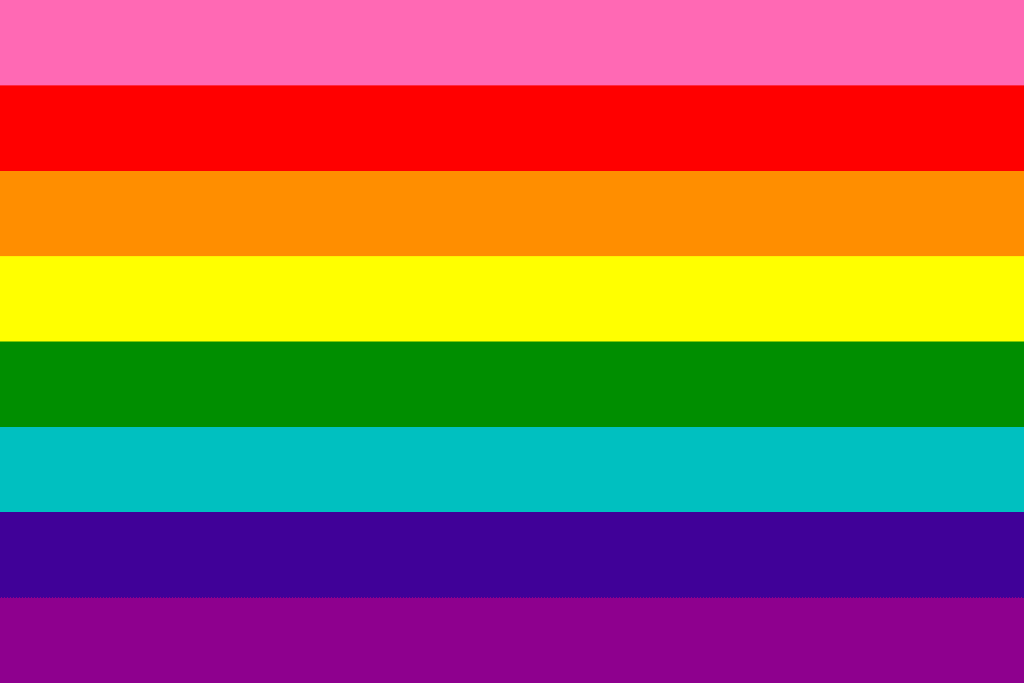

The historical significance of this eight-colour flag cannot be overstated—it marked the beginning of a visual language that would grow to encompass dozens of distinct identities and communities. Baker’s choice to assign meaning to each colour established a precedent for intentional symbolism in Pride flag design that continues today. The original flag debuted at the San Francisco Gay Freedom Day Parade on 25 June 1978, just months before Harvey Milk’s assassination, which subsequently increased demand for the symbol.
Unfortunately, hot pink fabric proved difficult to source commercially, leading to its removal in 1979. The turquoise stripe was later eliminated to create an even number of stripes for symmetrical display on street lamps during Pride parades. These practical modifications resulted in the six-stripe version that became the standard, though the original eight-colour design remains an important piece of LGBTQ+ history.

Philadelphia Pride flag: Embracing racial inclusion
In 2017, Philadelphia’s Office of LGBT Affairs introduced a modified Pride flag that added black and brown stripes to the traditional rainbow design, explicitly acknowledging LGBTQIA+ people of colour. This addition responded to longstanding criticism that mainstream LGBTQ+ organisations and symbols had failed to adequately represent the experiences and contributions of Black and Brown community members.

The Philadelphia Pride flag, also known as the “More Color, More Pride” flag, represents a significant moment in LGBTQ+ activism, acknowledging that racism and discrimination within LGBTQ+ spaces had marginalised people of colour. The black and brown stripes serve as a visual reminder that true equality requires intersectional awareness and active inclusion of all community members regardless of race or ethnicity. This design gained prominence when actress Lena Waithe wore it as a cape at the 2018 Met Gala, significantly increasing its visibility and adoption.
The flag’s creation sparked important conversations about representation, privilege, and the need for intentional inclusivity within LGBTQ+ movements. It demonstrated that symbols of pride must evolve to reflect the full diversity of the communities they represent.
Progress Pride flag: Embodying forward movement
Daniel Quasar, a non-binary artist and graphic designer, created the Progress Pride flag in 2018 to build upon the Philadelphia Pride flag whilst incorporating additional symbols of inclusion. The design features the traditional six-colour rainbow alongside a chevron pointing rightward, containing stripes representing transgender individuals (pink, light blue, and white) and people of colour (black and brown).

Quasar’s design philosophy centred on the concept of progress—the chevron’s arrow shape symbolises forward movement whilst its placement on the hoist edge reminds viewers that much work remains to be done. The inclusion of transgender flag colours acknowledges the particular vulnerabilities and discrimination faced by trans individuals, especially trans people of colour. The black stripe also represents those living with HIV/AIDS and those lost to the epidemic, addressing a crucial aspect of LGBTQ+ history and ongoing health disparities.
The Progress Pride flag has gained widespread adoption by organisations, municipalities, and individuals seeking to demonstrate their commitment to comprehensive inclusion. Its design represents a new generation of Pride symbols that explicitly address intersectionality and the need for continued activism.
In 2021, the Progress Pride flag was further updated by Valentino Vecchietti to explicitly include the intersex community. Vecchietti’s redesign introduced a yellow triangle with a purple circle—elements taken from the intersex flag—into the chevron, positioned alongside the existing stripes for transgender people and people of colour. The yellow and purple were chosen as colours not traditionally associated with the gender binary, and the unbroken circle symbolises wholeness, individuality, and the right to bodily autonomy for intersex people.

This intersex-inclusive Progress Pride flag has been widely embraced by LGBTQ+ communities and allies seeking to ensure that Pride symbolism reflects the full diversity of gender and sexual identities. It stands as a powerful visual statement of solidarity, progress, and the ongoing commitment to visibility and inclusion for all members of the LGBTQIA+ spectrum, including those who have historically been overlooked or marginalised.
Detailed breakdown of specific identity flags
Sexual orientation flags
Bisexual Pride flag
Michael Page created the bisexual Pride flag in 1998 to provide visibility for the bisexual community, which had often felt overlooked within broader LGBTQ+ spaces. The flag features three horizontal stripes: magenta representing same-sex attraction, royal blue representing opposite-sex attraction, and purple representing the blending of both attractions.

Page designed the flag to challenge bisexual invisibility and provide a unifying symbol for people attracted to more than one gender. The overlapping purple stripe symbolises how bisexual individuals exist within both gay and straight communities whilst maintaining their distinct identity. A common misconception is that bisexuality reinforces a gender binary, when in fact many bisexual individuals are attracted to people across the gender spectrum.
Pansexual Pride flag
Created in 2010 by Jasper V, the pansexual flag features three horizontal stripes in magenta, yellow, and cyan. The magenta represents attraction to women, cyan represents attraction to men, and yellow represents attraction to non-binary individuals. Some interpretations suggest the colours represent attraction regardless of gender, emphasising pansexuality’s focus on emotional and romantic connection over gender identity.

The pansexual flag emerged as growing numbers of people sought language and symbols that explicitly acknowledged attraction beyond the gender binary. A frequent misconception conflates pansexuality with bisexuality, though many pansexual individuals describe their attraction as “gender-blind.” The flag’s creation reflects increasing recognition of diverse ways to experience attraction and romantic connection.
Asexual Pride flag
The Asexual Visibility and Education Network community selected the asexual Pride flag in 2010 following a flag creation contest. The design features four horizontal stripes: black representing asexuality, grey representing grey-asexuality and demisexuality, white representing non-asexual partners and allies, and purple representing community.

The asexual flag addresses widespread misconceptions about asexuality, including the false beliefs that asexual people cannot form romantic relationships or that asexuality is a medical condition requiring treatment. The flag’s symbolism emphasises that asexuality exists on a spectrum and that asexual individuals can have fulfilling relationships and strong community connections. The purple stripe specifically acknowledges the importance of community support for individuals navigating a society that often conflates sexual attraction with romantic love.
Aromantic Pride flag
Cameron Whimsy designed the aromantic flag in 2014, featuring five horizontal stripes in dark green, light green, white, grey, and black. The green colours represent the aromantic spectrum, chosen because green is the opposite of red, which is traditionally associated with romantic love. The white stripe represents platonic and aesthetic relationships, whilst grey and black represent the diverse sexuality spectrum within the aromantic community.

The aromantic flag helps distinguish romantic orientation from sexual orientation, addressing the common misconception that these always align. Many aromantic individuals experience sexual attraction whilst not experiencing romantic attraction, highlighting the complexity of human relationship preferences. The flag’s creation provides visibility for individuals who form meaningful connections through friendship, aesthetic appreciation, and other non-romantic bonds.
Gender identity flags
Transgender Pride flag
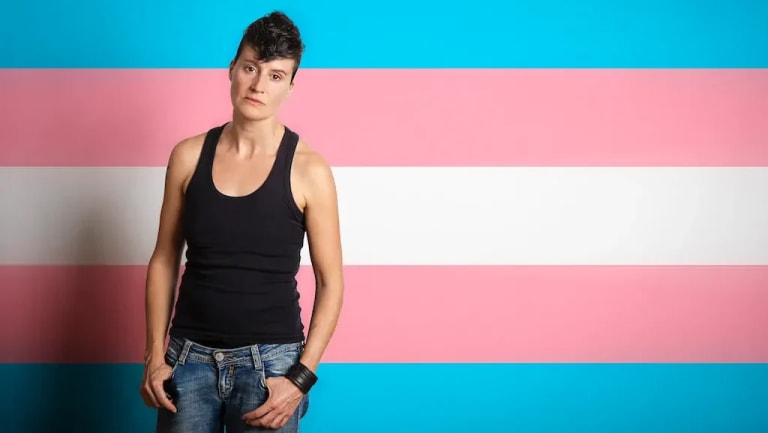
Monica Helms, a transgender woman and U.S. Navy veteran, created the transgender Pride flag in 1999. The flag features five horizontal stripes: light blue representing traditional colours for boys, pink representing traditional colours for girls, and white in the centre representing those who are transitioning, intersex, or identify outside the gender binary.
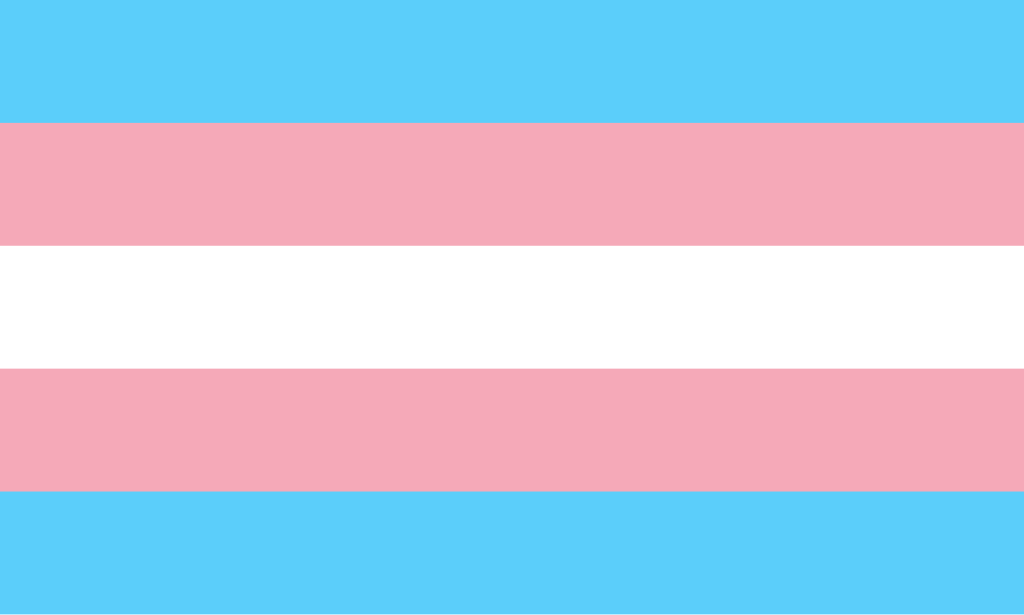
Helms designed the flag to be correct regardless of how it’s flown, symbolising transgender people finding correctness in their lives. The flag’s symmetrical design reflects the balance many transgender individuals seek between societal expectations and authentic self-expression. Common misconceptions about transgender identity include conflating gender identity with sexual orientation and assuming all transgender people undergo medical transition.
Non-binary Pride flag
Kye Rowan, a 17-year-old non-binary person, created the non-binary Pride flag in 2014 to complement the genderqueer flag whilst representing those who felt the existing flag didn’t reflect their experiences. The flag features four horizontal stripes: yellow representing gender outside the binary, white representing multi-gendered people, purple representing those who are a mix of masculine and feminine, and black representing those who identify as having no gender.
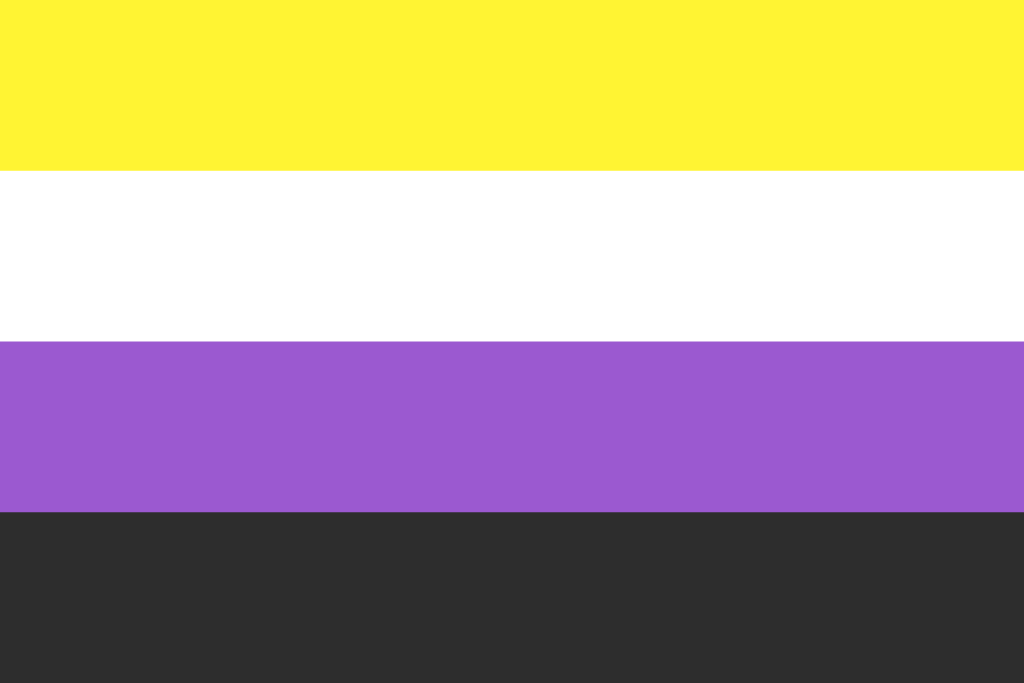
The non-binary flag acknowledges the diversity of experiences within non-binary identity, recognising that people outside the gender binary may relate to gender in numerous ways. A common misconception suggests non-binary identity is a recent phenomenon, when in fact many cultures throughout history have recognised multiple genders. The flag’s creation reflects growing social awareness and acceptance of gender diversity.
Genderqueer Pride flag
Marilyn Roxie designed the genderqueer Pride flag in 2011, featuring three horizontal stripes in lavender, white, and chartreuse green. The lavender represents androgyny and queerness, mixing traditional blue and pink colours whilst also connecting to the historical association between lavender and LGBTQ+ identity. The white stripe represents agender identity and gender neutrality, whilst the chartreuse green represents identities outside the gender binary.

The genderqueer flag predates many other gender identity flags and helped establish visual language for non-binary experiences. Genderqueer individuals may identify as both male and female, neither, or as a third gender entirely. The flag’s colours intentionally avoid the gender binary whilst creating new associations that honour diverse gender experiences.
Community and movement flags
Intersex Pride flag
Morgan Carpenter created the intersex Pride flag in July 2013, featuring a yellow background with a purple circle. Carpenter specifically chose yellow and purple because they are colours historically free from gender associations, whilst the circle represents wholeness, completeness, and the potential of intersex individuals.

The intersex flag addresses the medical pathologisation of intersex variations and advocates for bodily autonomy. The unbroken circle symbolises the wholeness of intersex people and challenges medical practices that attempt to “correct” natural variation. Intersex individuals are born with sex characteristics that don’t fit typical definitions of male or female bodies, occurring in approximately 0.05% to 1.7% of births depending on the definition used.
Lesbian Pride flag
Emily Gwen created the most commonly used lesbian Pride flag in 2018, featuring seven horizontal stripes ranging from dark orange to dark pink. The colours represent gender non-conformity (dark orange), independence (orange), community (light orange), unique relationships to womanhood (white), serenity and peace (pink), love and sex (dusty pink), and femininity (dark pink).

This flag replaced earlier designs that had problematic origins or excluded certain lesbian experiences. The sunset-inspired colour scheme celebrates the diversity within lesbian identity whilst avoiding the exclusionary aspects of previous flag designs. The flag acknowledges that lesbian experiences encompass a wide range of gender expressions and relationships to femininity.
Gay men’s Pride flag
A Tumblr user known as @gayflagblog created the gay men’s Pride flag in 2019, featuring seven horizontal stripes in shades of green, teal, and blue. The colours represent community, healing, and joy, whilst the white stripe represents gender non-conforming, non-binary, and transgender gay men. This flag emerged from recognition that gay men, despite their historical prominence in LGBTQ+ movements, lacked a specific symbol distinct from the general rainbow flag.

The flag’s creation sparked some controversy, with accusations of transphobia and design theft, though these claims were later debunked. The flag provides visibility for gay men whilst explicitly including transgender and gender non-conforming individuals within gay male identity. Its design acknowledges the diversity within gay male experiences and the need for inclusive representation.
Straight Ally Pride flag
The Straight Ally Pride flag emerged in the mid-to-late 2000s from an Australian LGBTQ+ collective called Queer & SAFE. The flag features black and white stripes representing heterosexuality and cisgender identity (the absence of colour from the rainbow spectrum) with a rainbow letter “A” representing allyship and activism.

The ally flag serves multiple purposes: showing support for LGBTQ+ rights, indicating safe spaces, and demonstrating that heterosexual and cisgender individuals actively support equality. However, some controversy surrounds the flag, as critics argue it centres heterosexual experiences in LGBTQ+ spaces. Effective allyship involves ongoing education, advocacy, and amplifying LGBTQ+ voices rather than seeking recognition or praise.
Beyond the flags: Broader context and impact
The importance of visibility
Pride flags create crucial visibility for LGBTQIA+ individuals and communities, providing immediate visual recognition that can be life-saving for people seeking acceptance and connection. Research demonstrates that visible symbols of support significantly impact mental health outcomes for LGBTQ+ individuals, particularly young people who may be struggling with identity acceptance. When Pride flags appear in schools, workplaces, healthcare settings, and public spaces, they communicate safety and inclusion to vulnerable community members.
Visibility through Pride flags also serves an educational function, introducing the broader public to diverse identities and experiences within the LGBTQ+ community. Each flag represents real people with unique stories, challenges, and contributions to society. This visibility helps counter stereotypes, reduce prejudice, and build empathy amongst those who may have limited exposure to LGBTQ+ individuals.
The psychological impact of seeing one’s identity reflected in public spaces cannot be understated. For many LGBTQ+ individuals, encountering their Pride flag in unexpected places provides affirmation and reduces feelings of isolation. This representation becomes particularly important for individuals exploring their identity or living in less accepting environments.
Respect and allyship in practice
Respectful engagement with Pride flags requires understanding their significance beyond mere decoration or trend-following. True allyship involves educating oneself about the communities each flag represents, supporting LGBTQ+ rights through action rather than symbolism alone, and amplifying marginalised voices within the community. Allies should approach Pride flag display with humility, recognising that these symbols represent real struggles for equality and acceptance.
Proper flag etiquette includes treating all Pride flags with equal respect, avoiding alteration of established designs without understanding their significance, and ensuring that flag display accompanies genuine commitment to LGBTQ+ inclusion. When organisations or individuals display Pride flags, they create expectations for supportive behaviour and inclusive policies. Failure to follow through on these implied commitments can cause real harm to LGBTQ+ individuals who trusted these visual signals.
Read more: LGBTQ+ friendly companies: real allies, not just rainbow washing
Allies must also recognise that Pride flags belong to the communities they represent. Whilst supportive display is generally welcomed, allies should defer to community members regarding appropriate use and avoid co-opting these symbols for commercial or political purposes that don’t serve LGBTQ+ interests.
Spaces for Pride flag display
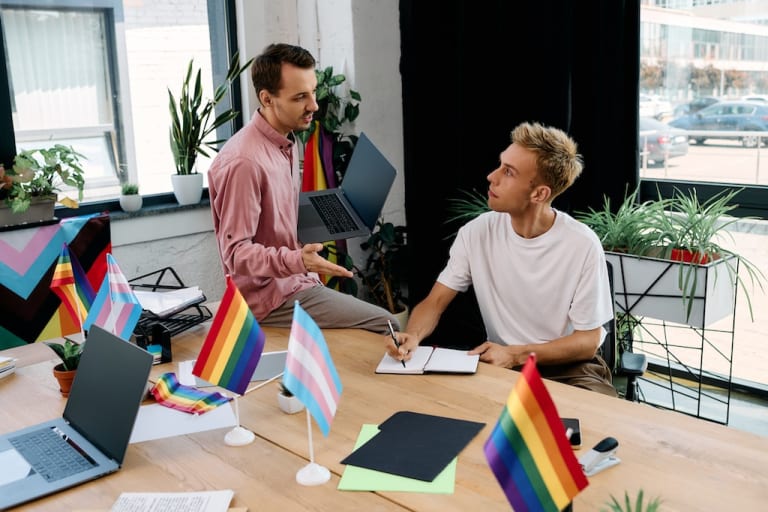
Pride flags appear in diverse settings throughout the year, each serving different purposes within the broader mission of LGBTQ+ visibility and support. Pride parades and festivals provide the most visible displays, creating temporary communities where individuals can openly celebrate their identities without fear. These events demonstrate the size and diversity of LGBTQ+ communities whilst building solidarity amongst participants and observers.
Community centres, healthcare facilities, schools, and libraries increasingly display Pride flags to signal their commitment to serving LGBTQ+ individuals with dignity and respect. These institutional displays carry particular weight, as they indicate policy-level support rather than individual gesture. Research shows that visible symbols of inclusion in healthcare settings improve patient outcomes and increase likelihood that LGBTQ+ individuals will seek necessary care.
Online spaces have become increasingly important venues for Pride flag display, allowing individuals to express their identities safely even when physical display might be dangerous. Social media profiles, virtual backgrounds, and digital artwork enable global community building and support networks. These digital displays help maintain visibility and connection during times when physical gathering may be impossible or unsafe.
Building inclusive communities
Pride flags serve as starting points for deeper conversations about inclusion, equality, and social justice within communities. Their presence should prompt reflection on existing policies, practices, and attitudes that may exclude or marginalise LGBTQ+ individuals. True inclusion requires ongoing work beyond symbol display, including policy reform, education initiatives, and sustained commitment to equality.
Educational institutions play crucial roles in normalising Pride flag display and teaching respect for LGBTQ+ identities. When schools include Pride flags in diversity education and anti-bullying programmes, they create safer environments for LGBTQ+ students and their families. This early exposure to LGBTQ+ symbols and stories helps build more accepting future generations.
Workplaces that display Pride flags often find increased employee satisfaction and retention amongst LGBTQ+ staff members. However, visible support must be backed by comprehensive non-discrimination policies, inclusive benefits, and leadership commitment to equality. Pride flags in professional settings can serve as powerful recruitment tools, attracting diverse talent and signalling progressive values to clients and partners.
Glossary of essential terms
LGBTQIA+: An acronym representing lesbian, gay, bisexual, transgender, queer/questioning, intersex, asexual, and other sexual and gender minorities. The “+” acknowledges additional identities not explicitly listed.
Cisgender: A person whose gender identity aligns with the sex they were assigned at birth. This term helps avoid labelling transgender people as “non-normal” by providing neutral language for both experiences.
Gender identity: One’s internal, personal sense of being male, female, both, neither, or another gender entirely. Gender identity is separate from biological sex and may not align with assigned gender at birth.
Sexual orientation: The pattern of romantic or sexual attraction to others, which may be towards people of the same gender, different genders, multiple genders, or no one. Sexual orientation exists independently of gender identity.
Romantic orientation: The pattern of romantic attraction to others, which may differ from sexual orientation. For example, someone might be asexual but biromantic.
Non-binary: An umbrella term for gender identities that exist outside the traditional male/female binary. Non-binary individuals may identify as both genders, neither gender, or a completely different gender.
Queer: An umbrella term for sexual and gender minorities that has been reclaimed by many LGBTQ+ individuals. Historically used as a slur, “queer” now serves as both an identity label and academic term.
Ally: A person who supports and advocates for LGBTQ+ rights whilst not identifying as LGBTQ+ themselves. Effective allyship requires ongoing education, action, and amplification of marginalised voices.
Coming out: The process of sharing one’s sexual orientation or gender identity with others. This is an ongoing process that LGBTQ+ individuals navigate throughout their lives in different contexts.
Intersex: A term describing individuals born with sex characteristics that don’t fit typical definitions of male or female bodies. Intersex variations occur naturally and are not medical emergencies requiring correction.
FAQ: Frequently Asked Questions about Pride flags
What is the difference between the 6-colour and Progress Pride flag?
The traditional 6-colour rainbow Pride flag represents the entire LGBTQ+ community through Gilbert Baker’s original symbolism of life, healing, sunlight, nature, serenity, and spirit. The Progress Pride flag, created by Daniel Quasar in 2018, incorporates these same rainbow colours whilst adding a chevron containing transgender flag colours (pink, light blue, white) and stripes representing people of colour and those affected by HIV/AIDS (black, brown). The Progress Pride flag explicitly emphasises inclusion of often marginalised groups within the LGBTQ+ community and symbolises ongoing progress towards true equality.
Why are there so many Pride flags?
The proliferation of Pride flags reflects the beautiful diversity within LGBTQIA+ communities and the growing recognition of distinct identities and experiences. Each flag serves specific communities that may have felt invisible or underrepresented by broader symbols. Just as countries have individual flags whilst existing within continental or global communities, specific Pride flags provide focused representation whilst contributing to the larger tapestry of LGBTQ+ identity. The creation of new flags demonstrates increasing social awareness and acceptance of gender and sexuality as complex spectrums rather than simple categories.
Can straight people fly a Pride flag?
Straight cisgender individuals can display Pride flags as expressions of allyship and support for LGBTQ+ rights. However, this display should be accompanied by genuine commitment to LGBTQ+ equality through actions, advocacy, and education rather than mere symbolic gesture. The Straight Ally flag specifically exists for heterosexual cisgender supporters who want to show solidarity whilst acknowledging their different experience from LGBTQ+ individuals. Effective allyship involves listening to LGBTQ+ voices, supporting relevant organisations, and working to dismantle discriminatory systems.
How often do new Pride flags emerge?
New Pride flags emerge regularly as communities seek better representation or as understanding of identity evolves. The pace of flag creation has accelerated since 2010, particularly with the rise of social media enabling rapid community feedback and iteration. Some flags gain widespread adoption quickly, whilst others remain within specific communities or undergo multiple revisions. The democratic nature of flag creation means that community acceptance, rather than official designation, determines which designs become established symbols.
Where can I buy ethically-made Pride flags?
Many retailers now offer Pride flags, but consumers should prioritise businesses that genuinely support LGBTQ+ rights year-round rather than engaging in superficial “rainbow capitalism.” Look for companies that donate portions of proceeds to LGBTQ+ organisations, employ diverse staff, and maintain inclusive policies. Local LGBTQ+ community centres often sell flags as fundraising efforts, providing direct support to community services. Online marketplaces offer wide selections, but research sellers to ensure they understand and respect the significance of these symbols rather than treating them as mere merchandise.
The guide to Pride flags and their meanings reveals a rich tapestry of identity, history, and ongoing struggle for equality that extends far beyond simple colour combinations. These powerful symbols represent real people, real communities, and real progress towards a more inclusive world. Understanding their significance helps build bridges of empathy and support whilst honouring the courage of those who fought for the right to exist authentically. As society continues evolving towards greater acceptance and inclusion, Pride flags will undoubtedly continue adapting to represent new voices and experiences within the ever-expanding understanding of human diversity.
Comprehensive pride flags reference guide
Major pride flags: colors, meanings, and communities
Rainbow pride flag (6-color)
- Year created: 1979 (modified from 1978)
- Creator: Gilbert Baker
- Colors: Red, orange, yellow, green, blue, purple
- Color meanings:
- Red: Life
- Orange: Healing
- Yellow: Sunlight
- Green: Nature
- Blue: Serenity
- Purple: Spirit
- Represents: Entire LGBTQ+ community
Gilbert Baker original flag (8-color)
- Year created: 1978
- Creator: Gilbert Baker
- Colors: Hot pink, red, orange, yellow, green, turquoise, indigo, violet
- Color meanings:
- Hot pink: Sex
- Red: Life
- Orange: Healing
- Yellow: Sunlight
- Green: Nature
- Turquoise: Magic/art
- Indigo: Serenity
- Violet: Spirit
- Represents: Gay community (original design)
Philadelphia pride flag
- Year created: 2017
- Creator: Philadelphia Office of LGBT Affairs
- Colors: Black, brown, red, orange, yellow, green, blue, purple
- Color meanings:
- Black & brown: LGBTQ+ people of colour
- Rainbow colours: Traditional pride symbolism
- Represents: LGBTQ+ community with emphasis on racial inclusion
Progress pride flag
- Year created: 2018
- Creator: Daniel Quasar
- Colors: Rainbow with black, brown, pink, light blue, white chevron
- Color meanings:
- Rainbow: Traditional pride colours
- Black/brown: People of colour & AIDS victims
- Pink/light blue/white: Transgender community
- Represents: Inclusive LGBTQ+ community emphasising progress
Progress pride flag (intersex-inclusive)
- Year created: 2021
- Creator: Valentino Vecchietti
- Colors: Rainbow with black, brown, pink, light blue, white chevron, yellow triangle with purple circle
- Color meanings:
- Rainbow: Traditional pride colours
- Black/brown: People of colour & AIDS victims
- Pink/light blue/white: Transgender community
- Yellow triangle with purple circle: Intersex community, wholeness, and individuality
- Represents: Fully inclusive LGBTQ+ community, highlighting progress and visibility for intersex people
Transgender flag
- Year created: 1999
- Creator: Monica Helms
- Colors: Light blue, pink, white, pink, light blue
- Color meanings:
- Light blue: Traditional colour for boys
- Pink: Traditional colour for girls
- White: Transitioning, intersex, or non-binary individuals
- Represents: Transgender individuals
Bisexual flag
- Year created: 1998
- Creator: Michael Page
- Colors: Pink, purple, blue
- Color meanings:
- Pink: Same-sex attraction
- Purple: Attraction to both/multiple genders
- Blue: Opposite-sex attraction
- Represents: Bisexual individuals
Pansexual flag
- Year created: 2010
- Creator: Jasper V
- Colors: Pink, yellow, blue
- Color meanings:
- Pink: Attraction to women
- Yellow: Attraction to non-binary individuals
- Blue: Attraction to men
- Represents: Pansexual individuals
Lesbian flag
- Year created: 2018
- Creator: Emily Gwen
- Colors: Dark orange, orange, light orange, white, pink, dusty pink, dark pink
- Color meanings:
- Dark orange: Gender non-conformity
- Orange: Independence
- Light orange: Community
- White: Unique relationships to womanhood
- Pink: Serenity and peace
- Dusty pink: Love and sex
- Dark pink: Femininity
- Represents: Lesbian women
Asexual flag
- Year created: 2010
- Creator: AVEN (Asexual Visibility and Education Network) community
- Colors: Black, grey, white, purple
- Color meanings:
- Black: Asexuality
- Grey: Grey-asexuality and demisexuality
- White: Non-asexual partners and allies
- Purple: Community
- Represents: Asexual individuals
Aromantic flag
- Year created: 2014
- Creator: Cameron Whimsy
- Colors: Dark green, light green, white, grey, black
- Color meanings:
- Dark green: Aromanticism
- Light green: Aromantic spectrum
- White: Platonic and aesthetic relationships
- Grey: Demiromantic individuals
- Black: Sexuality spectrum
- Represents: Aromantic individuals
Non-binary flag
- Year created: 2014
- Creator: Kye Rowan
- Colors: Yellow, white, purple, black
- Color meanings:
- Yellow: Gender outside the binary
- White: Multi-gendered people
- Purple: Mix of masculine and feminine
- Black: Absence of gender
- Represents: Non-binary individuals
Genderqueer flag
- Year created: 2011
- Creator: Marilyn Roxie
- Colors: Lavender, white, chartreuse green
- Color meanings:
- Lavender: Androgyny and queerness
- White: Gender neutrality
- Chartreuse green: Third gender identities outside the binary
- Represents: Genderqueer individuals
Intersex flag
- Year created: 2013
- Creator: Morgan Carpenter
- Colors: Yellow background with purple circle
- Color meanings:
- Yellow: Gender-neutral colour historically associated with intersex people
- Purple circle: Wholeness, completeness, and potential
- Represents: Intersex individuals
Gay men’s flag
- Year created: 2019
- Creator: @gayflagblog (Tumblr user)
- Colors: Dark green, green, light green, white, light blue, blue, dark blue
- Color meanings:
- Green to blue gradient: Community, healing, joy
- White: Gender non-conforming and non-binary gay men
- Represents: Gay men
Straight ally flag
- Year created: Mid-2000s
- Creator: Queer & SAFE (Australian collective)
- Colors: Black and white stripes with rainbow letter ‘A’
- Color meanings:
- Black and white: Heterosexuality and cisgender identity
- Rainbow ‘A’: Allyship and activism for LGBTQ+ rights
- Represents: Straight allies of the LGBTQ+ community
Key terminology
- LGBTQIA+: Lesbian, Gay, Bisexual, Transgender, Queer/Questioning, Intersex, Asexual, and other identities
- Cisgender: A person whose gender identity matches the sex they were assigned at birth
- Gender Identity: One’s internal sense of being male, female, both, or neither
- Sexual Orientation: Who someone is romantically or sexually attracted to
- Romantic Orientation: Who someone is romantically attracted to (can differ from sexual orientation)
- Non-binary: Gender identities outside the traditional male/female binary
- Queer: An umbrella term for sexual and gender minorities; historically a slur but reclaimed by many
- Ally: Someone who supports and advocates for LGBTQ+ rights whilst not identifying as LGBTQ+ themselves
Common misconceptions
- “There are too many flags” is a misconception because each flag represents distinct communities with unique experiences and histories.
- “The rainbow flag represents everyone” is not entirely accurate because, while inclusive, specific flags provide visibility for often marginalised groups.
- “New flags are unnecessary” is incorrect because flag creation reflects growing understanding and acceptance of diverse identities.
- “Pride flags are just trendy” is a misconception because these symbols have deep historical significance and represent real struggles for equality.
Flag etiquette
- Treat all pride flags with respect.
- Don’t alter flag designs without understanding their significance.
- When displaying multiple flags, ensure equal representation.
- Educate yourself about the communities each flag represents.
- Support LGBTQ+ rights year-round, not just during pride month.