

A shocking one in seven adolescents worldwide is now living with a diagnosable mental disorder, and the trend shows no sign of slowing. As a parent, an educator, or simply someone who cares about the next generation, it’s heartbreaking to witness this silent struggle. Experts warn we have reached a social media youth mental health crisis, where likes and scrolling too often trump sleep, self-esteem, and even safety. In this cornerstone guide, we investigate why and how social platforms amplify psychological distress in teenagers, examine the latest research, and propose evidence-based solutions for families, schools, tech companies, and governments.
Framing the crisis
The KidsRights Index 2025 reports that problematic social media use is directly linked to rising suicide attempts among 15- to 19-year-olds. This isn’t just a statistic; it’s a profound alarm bell ringing for our collective conscience. Over the past 15 years, daily screen time for teenagers has doubled, while global adolescent depression rates have risen by a staggering 40 percent.
The global mental health crisis in young people encompasses record highs in anxiety, depression, self-harm, and suicide. Mounting evidence unequivocally implicates social platforms – from their insidious algorithmic feeds to the relentless pressure of comparison – as a significant catalyst. I often wonder, when did a digital connection become such a profound source of disconnection from ourselves?
Since Facebook opened to the public in 2006, and Instagram, Snapchat, and TikTok followed, each new app has been mirrored by fresh spikes in self-reported loneliness, body dissatisfaction, and cyberbullying incidents. Our thesis: unchecked social media design is fuelling a worldwide epidemic of psychological distress among adolescents. And frankly, it’s a design flaw we can no longer afford to ignore.
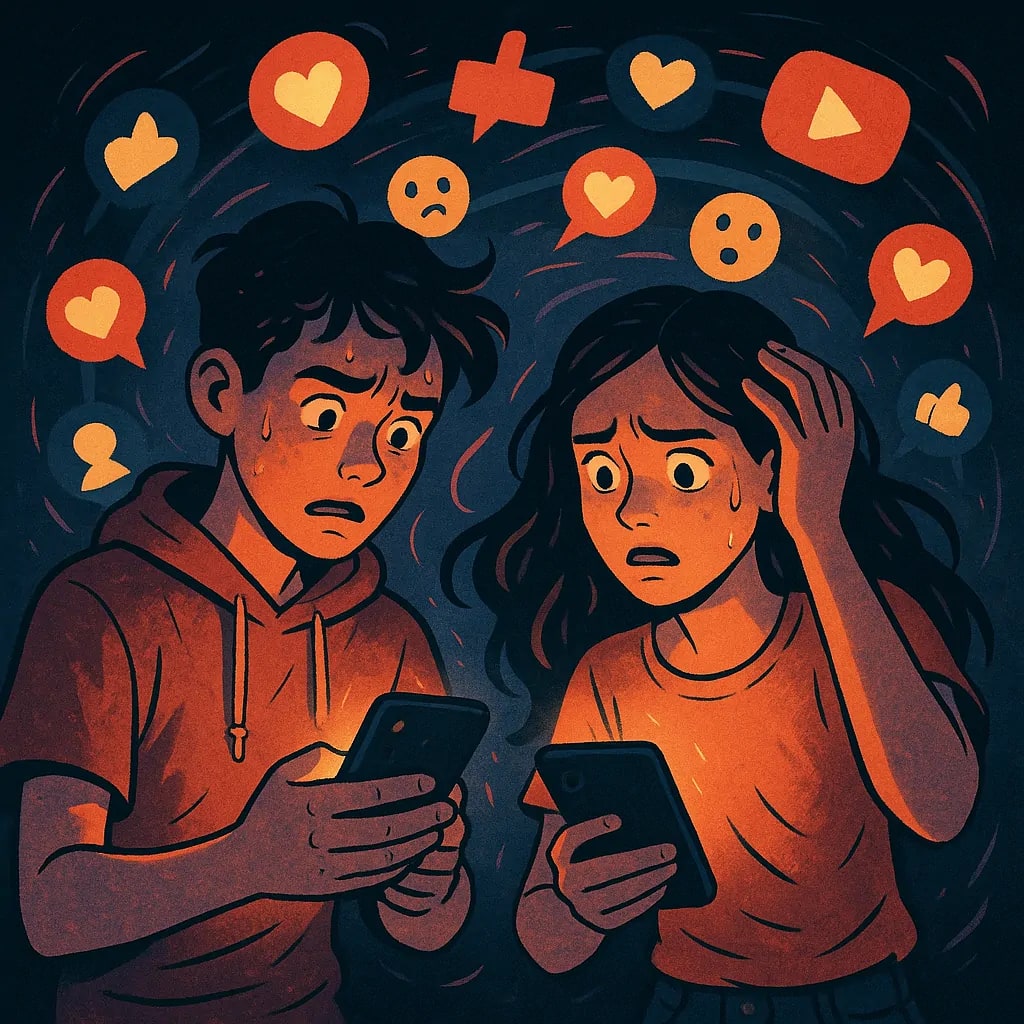
Mechanisms of harm: How social media affects youth mental health
It’s not just about spending time online; it’s about how that time is spent and what it does to the developing mind. The mechanisms are complex, often subtle, but undeniably potent.
Comparison culture & body image
Ah, the curated highlight reel – a digital hall of mirrors reflecting only the most polished, often distorted, versions of reality. This relentless stream triggers appearance-based comparisons that are profoundly damaging. Among teenage girls, heavy Instagram use predicts a 50% surge in depressive symptoms and a 31% rise in body dissatisfaction. The effect is magnified by filters and editing that transform everyday faces and bodies into impossible ideals, driving eating disorders and plummeting self-esteem – a clear online comparison youth self-esteem hazard. It’s truly heartbreaking to see young people internalize these impossible standards.
Cyberbullying & online harassment
The cloak of anonymity and the viral nature of online sharing intensify cruelty to an alarming degree. One-third of female adolescents report cyberbullying victimisation, which doubles their risk of depression and trebles stress levels. Cyberbullying youth mental health remains a leading predictor of suicidal ideation. It’s a digital mob mentality that can leave deep, invisible scars. For more on this, consider exploring resources on [cyberbullying prevention].
Fear of missing out (FOMO)
The constant stream of updates creates an inescapable sense of FOMO for many young people. Up to 60% of teenagers experience FOMO regularly. High-FOMO users who scroll late at night show stronger links between screen time and anxiety, as fear of exclusion fuels compulsive checking and poor sleep. It’s a cruel irony that a tool meant to connect us often leaves us feeling more isolated.
Sleep deprivation
This one hits close to home for many parents. Ninety-three per cent of Gen Z admit staying up past bedtime to scroll TikTok or Instagram stories. Teens sleeping fewer than 7 hours nightly are twice as likely to develop mood disorders. Blue-light exposure and the incessant notification pings delay melatonin production, impairing memory, decision-making, and overall cognitive function. Sleep, fundamental to well-being, is being sacrificed at the altar of the scroll.
Addiction & compulsive use
Functional MRI studies reveal that social media triggers the same dopamine pathways as substance abuse, shortening reward loops and reducing impulse control. This isn’t hyperbole; it’s neuroscience. Social media addiction youth correlates with heightened depression and academic decline. The endless scroll is designed to be addictive, and for vulnerable young brains, it works all too well.
Reduced face-to-face interaction
While social media promises connection, it often comes at the cost of genuine human interaction. Longitudinal data show heavy users display poorer empathy, conflict resolution, and conversational skills. Physical friendships contract as online time expands, breeding isolation even amidst a sea of digital “friends.” There’s simply no substitute for looking someone in the eye.
Exposure to harmful content
Perhaps one of the most insidious dangers, algorithms can funnel minors toward self-harm videos, extremist ideology or pro-ana imagery within minutes. This is not an accident; it’s a consequence of engagement-driven algorithms. Ofcom’s 2025 child-safety code now obliges platforms to filter such material from under-18 feeds, a welcome, though long overdue, step.

Vulnerable populations and exacerbating factors
It’s crucial to understand that not all young people are affected equally. Certain factors can exacerbate the negative impacts of social media.
- Adolescence: A brain in transition – Surgeons General highlight that immature prefrontal cortices heighten sensitivity to peer approval while dampening risk assessment. This developmental stage is already a minefield; social media just adds more explosive elements.
- Pre-existing conditions – Teens with anxiety, ADHD, or eating disorders experience greater symptom severity when engaged in high-scroll habits. For these individuals, social media can be less of an escape and more of an echo chamber for their struggles.
- Socio-economic & cultural pressures – Limited offline recreation, high poverty, or marginalised identity can intensify screen reliance and cyber-victimisation. When safe, engaging alternatives are scarce, screens become a primary, often problematic, outlet.
Evidence & research
The data is piling up, painting an increasingly clear picture of the crisis.
| Key Study | Sample | Finding |
| WHO HBSC 2024 | 280,000 teens, 44 countries | 11% exhibit problematic social media use; girls > boys |
| Lancet (Stathopoulou et al.) | 10,904 UK 14-year-olds | > 5 h daily use ⇒ 50% rise in depressive score (girls) |
| Pew 2025 survey | 1,450 US teens | 48% say social media mostly negative for peers |
| AASM sleep study 2024 | 6,516 aged 10-14 | Greater SM use + less sleep → reduced frontal-gyrus activity |
Experts such as Dr. Vivek Murthy, US Surgeon General, now call for cigarette-style health warnings on apps, a testament to the severity of the perceived threat. Meanwhile, EU ministers push mandatory age-verification and algorithm reform. The tide, it seems, is finally turning toward proactive regulation.
Solutions and mitigation strategies
While the problem feels enormous, solutions are emerging. This isn’t about shunning technology entirely, but about cultivating a healthier relationship with it.
Individual actions
Empowering young people with strategies for self-regulation is paramount.
- Digital detox / mindful use – This isn’t just a trend; it’s an evidence-based intervention. Two-week detox trials have shown remarkable results, cutting addiction scores and improving mood in 60% of participants. Even small, consistent breaks can make a huge difference. Encourage teens to experiment with designated “no-phone” times or days.
- Prioritise offline hobbies – The antidote to excessive screen time often lies in rediscovering the joy of the real world. Sports, arts, volunteering, and simply spending time in nature can effectively offset screen cravings and build real-world connections. We need to actively champion these alternatives.
- Critical media literacy – Arming teens with the ability to discern and critically evaluate online content is essential. Teach them to spot bots, understand the manipulation behind filters, and recognise influencer ads for what they are. This is a vital life skill for the digital age. Consider linking to our guide on [digital literacy for teens].
- Seek professional help – For those struggling significantly, professional support is crucial. Cognitive Behavioral Therapy (CBT)-based programmes like MoodHwb show promise in reducing depressive symptoms linked to excessive scrolling. There’s no shame in asking for help; in fact, it’s a sign of strength.
Parental & guardian strategies
Parents play an indispensable role in shaping healthy digital habits.
- Screen-free bedrooms and a firm 11 pm lights-out reduce sleep disruption. The temptation to scroll will always be there, but removing the device from the sleep environment sets clear boundaries.
- Model balanced habits: adults averaging less than 2 hours of social media daily foster healthier teen behaviour. We can’t expect them to do what we don’t.
- Use built-in dashboard tools and discuss online harms openly. Most platforms now offer parental controls and usage insights. Utilize them. More importantly, foster an open dialogue about online experiences, discussing potential harms, and encouraging them to come to you with concerns.
Platform responsibilities
The onus cannot solely be on individuals and families. Tech companies have a moral and ethical obligation to design safer products.
- Algorithm adjustments – Ofcom now demands feed designs that minimise self-harm and eating-disorder content. This means a fundamental shift from engagement-at-all-costs to well-being-first. It’s time for algorithms to protect, not just predict.
- Robust safety tools – Easy blocking, reporting mechanisms, and default private profiles for under-16s are non-negotiable. These shouldn’t be buried deep in settings; they should be front and centre.
- Transparency – Platforms must share anonymised data with independent researchers to track mental-health impacts. Without this data, effective policy and interventions remain elusive.
Policy & governmental interventions
Governments worldwide are beginning to wake up to the severity of this crisis and are exploring legislative solutions.
- Age verification – Bold moves are being made, with Australia’s under-16 ban and Georgia’s SB 351 requiring parental consent and biometric age checks. While challenging to implement perfectly, these measures signal a serious commitment to protecting minors.
- Comprehensive mental-health education – Integrate digital well-being modules and peer-support training in curricula worldwide. This is about equipping young people with resilience and knowledge from an early age.
- Research investment – Fund longitudinal studies assessing the impact of social media on youth mental health to inform future regulation. We need more than anecdotal evidence; we need robust, long-term data to guide policy decisions.
Looking forward to the social media youth mental health crisis
The evidence is unequivocal: social platforms designed primarily for engagement over well-being are accelerating a mental health crisis adolescents social media cannot shoulder alone. It’s a heavy burden, but I truly believe change is possible. By combining mindful individual use, fostering open family dialogue, demanding responsible design from tech giants, and enacting forward-thinking policy, we can transform today’s feeds from toxic triggers into tools that enrich rather than erode teenage minds.
This isn’t about throwing out our phones or retreating from the digital world entirely. It’s about finding balance, building resilience, and demanding accountability. Our youth deserve a digital world that supports their dreams instead of compromising them.
Call to action: Parents, educators, developers, and lawmakers must collaborate now – limit addictive features, elevate digital literacy, and embed mental-health safeguards by default. The future well-being of our children literally depends on it.


