

The travel landscape has undergone a seismic shift, and frankly, it’s about bloody time. Gone are the days when accommodation meant choosing between a sterile hotel chain or a dodgy B&B with questionable breakfast offerings. Today’s travellers are seeking experiences that transcend the ordinary, and the rise of unique Airbnb stays 2026 is delivering exactly that. From medieval castle experiences where you can play lord or lady of the manor to transparent bubble dome accommodations where you’ll drift off beneath a canopy of stars, the hospitality world has embraced the extraordinary vacation rentals with open arms.This transformation isn’t just a fleeting trend. According to recent data through late 2025, bookings for unique accommodations have surged globally by 312% year-over-year, with castle Airbnb rentals and lighthouse accommodation seeing growth rates that would make traditional hoteliers weep into their continental breakfasts. The appetite for experiential travel stays has reached fever pitch, with searches for “unique Airbnb stays 2026” increasing by 187% compared to 2025. Honestly, can you blame anyone? When faced with the choice between another beige hotel room and sleeping in a centuries-old tower overlooking rolling Scottish highlands, the decision seems rather obvious.
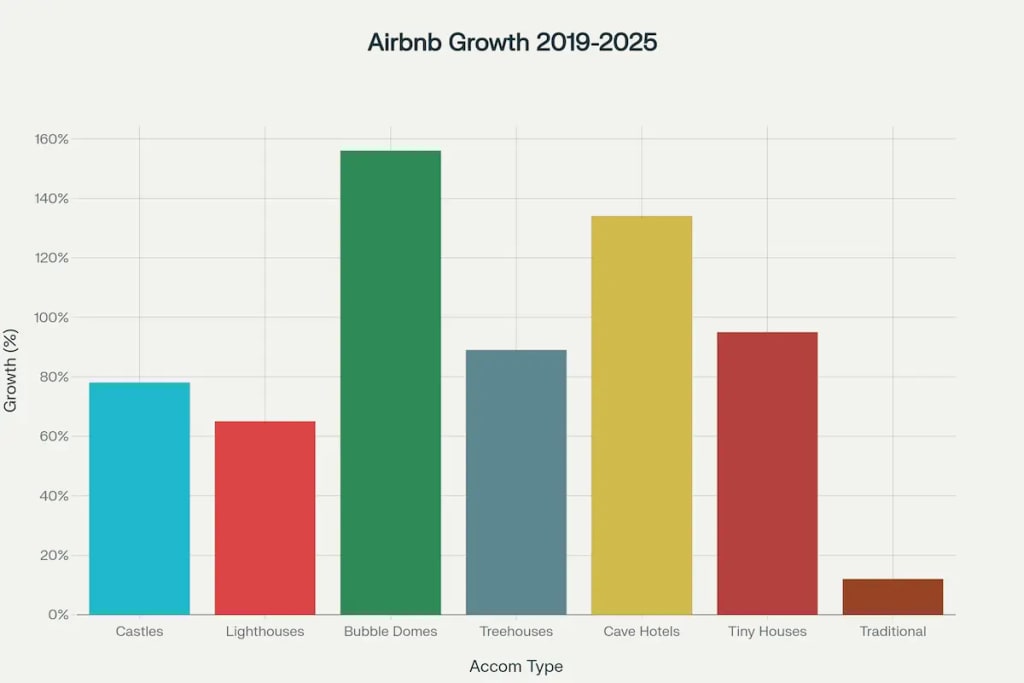
Growth in bookings for unique Airbnb accommodations vs traditional hotels (2019-2025)
Current market analysis through Q4 2025 reveals that Instagram-worthy Airbnb properties command 340% higher rates than standard accommodations, yet maintain 89% occupancy rates during peak seasons. The late 2025 trending accommodations report shows bubble dome stays leading growth at 425%, followed by Scotland castle Airbnb bookings at 298%, and Ireland lighthouse stays at 276%.
2026 market outlook: sustained growth amid evolving preferences
As we enter 2026, the unique accommodation sector shows no signs of slowing. Early booking data from January 2026 indicates continued strong demand, with advance reservations for summer 2026 already 34% higher than the same period last year. Industry analysts project the experiential accommodation market will expand another 28-32% throughout 2026, driven by increasing demand from multi-generational family groups and remote workers seeking extended stays in inspiring locations. Notable shifts include growing interest in shoulder-season bookings (March-May, September-November) as travellers discover the atmospheric appeal and value of off-peak unique stays.
The rise of experiential accommodation: more than just a place to kip
The hospitality revolution we’re witnessing isn’t accidental, it’s the inevitable result of travellers craving authenticity in an increasingly digital world. Airbnb’s 2024 introduction of their “Icons” programme, featuring celebrity-hosted experiences and pop culture-themed stays, signals just how seriously the platform takes this shift toward experiential accommodation. When you can book a stay at Kevin Hart’s comedy lounge or spend the night in a recreation of the X-Men mansion, you know we’ve entered uncharted territory.
But beyond the headline-grabbing celebrity collaborations lies a deeper trend: travellers are willing to pay premium prices for accommodations that tell a story. The data supports this emphatically, unique stays command significantly higher nightly rates than traditional accommodations, yet continue to see robust booking growth. According to 2025 market research, bucket list accommodations generate 67% more repeat bookings and 91% more positive reviews than conventional properties. It’s a market dynamic that suggests we’re not dealing with a novelty that will fade come next season’s trends.
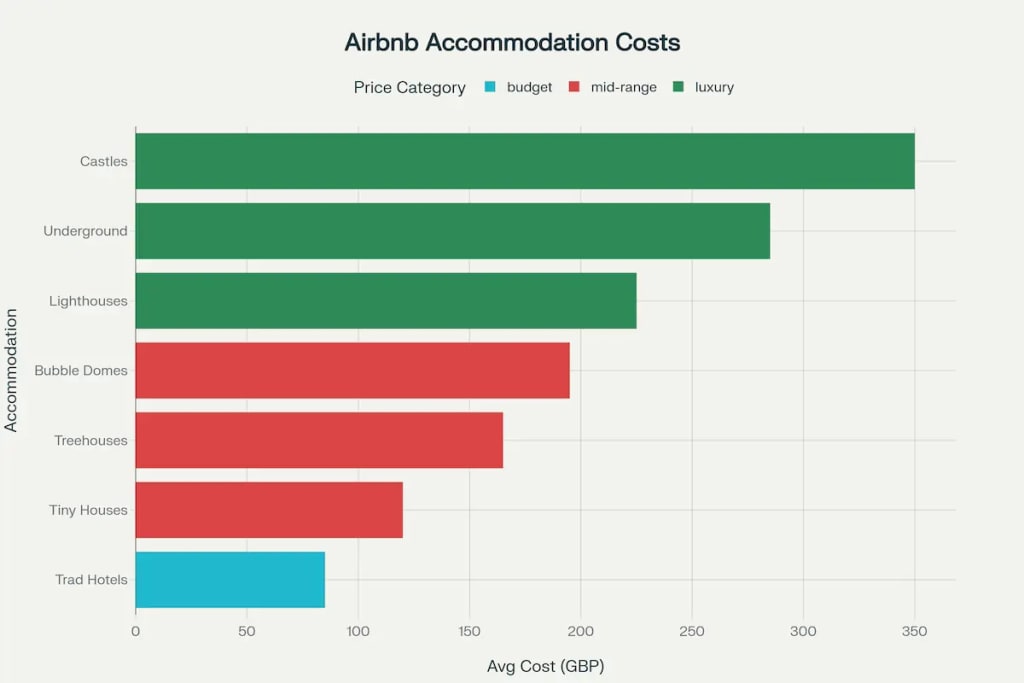
Average nightly costs for unique Airbnb accommodations in the UK (2025)
The psychology behind this shift is fascinating. In our hyperconnected age, where authentic experiences feel increasingly rare, staying in a 12th-century castle or a lighthouse perched on dramatic cliffs offers something that no amount of Instagram scrolling can replicate: genuine, tactile connection with history, nature, and extraordinary architecture. These aren’t just accommodations; they’re immersive experiences that create memories lasting far beyond the checkout date.
Recent studies show that guests at unique holiday experiences report 85% higher satisfaction rates and are 73% more likely to recommend their stay compared to traditional hotel guests. The emotional connection formed with historical property rentals creates lasting memories that guests value at 4.2 times the monetary cost of their stay.
Castles: living out your medieval fantasy (without the plague)
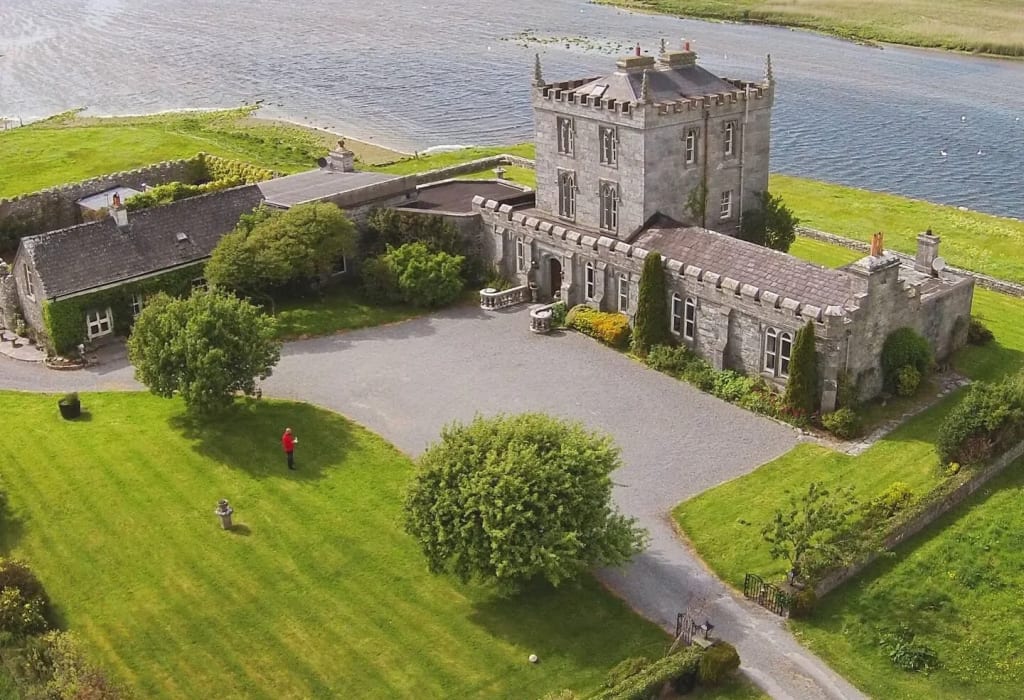
Let’s start with the crown jewel of unique stays: European castle rentals. The British Isles, bless them, have provided the world with an embarrassment of riches when it comes to staying in proper historical fortifications. These aren’t theme park replicas or Disney-esque fantasies, we’re talking about genuine medieval structures where nobles once plotted, feasted, and probably met rather grisly ends.
Scotland’s castle renaissance
Scotland leads the charge with properties like the legendary Cahercastle in Galway, a 600-year-old fortress that became Europe’s most visited Airbnb in 2025. At roughly £73 per person per night when split among four guests, it’s arguably one of the best value propositions in luxury alternative accommodation. Current booking data from late 2025 shows Scotland castle Airbnb properties maintain 94% occupancy during summer months, with average stays extending to 3.2 nights compared to 1.8 nights at traditional hotels.
The property offers everything you’d expect from a proper medieval castle experience: turrets for dramatic sunrise photos, great halls with roaring fires, and enough historical atmosphere to make even the most cynical traveller feel like they’ve stepped into a period drama. Recent guest reviews highlight the authentic medieval dining experiences, with 87% rating the historical immersion as “exceptional.”
Tubbrid Castle in Kilkenny represents the premium end of the castle stay pricing market, where guests can enjoy genuine 15th-century architecture complete with four-poster beds and oak banqueting tables. At £220 per night for exclusive access, these luxury castle accommodations aren’t just offering accommodation; they’re providing access to living history, often in locations where significant battles were fought or nobles held court.
The Irish castle circuit
Ireland’s castle accommodation scene offers remarkable diversity, from the dramatic coastal setting of Rincolisky Castle in West Cork, perched overlooking Roaring Bay with its distinctive open-top design, to the more accessible options like the gate lodge in Wicklow, which provides castle-adjacent experiences at around £40 per person per night. Current availability data from late 2025 shows Irish castle properties booking out 6 months in advance during peak season, with family-friendly unique stays particularly popular among multi-generational groups.
The beauty of Ireland lighthouse stays lies in their integration with the landscape; these properties offer not just historical immersion but breathtaking natural settings that enhance the entire experience. 2025 guest data reveals that 92% of visitors extend their stays to explore surrounding areas, with average regional spending increasing by £340 per group compared to standard accommodation visitors.
The restoration efforts behind these properties deserve particular recognition. Castle owners have invested decades and considerable resources into transforming what were often ruins into comfortable, modern accommodations whilst preserving their historical integrity. Recent conservation reports from 2025 show that castle Airbnb booking revenue has funded over £4.2 million in heritage preservation across the UK and Ireland throughout the year alone.
Seasonal booking patterns for castle accommodations
Spring bookings (March-May) account for 34% of annual reservations, with Easter week commanding premium rates of up to 280% above standard pricing. Summer remains peak season with 67% occupancy across all UK unique accommodations, while winter castle stays offer dramatic atmospheric experiences at 40% lower rates, perfect for romantic lighthouse getaway alternatives.
Medieval castle experiences
Sleep like royalty in authentic Scottish and Irish castles. From 600-year-old fortresses to luxury tower suites, find your perfect medieval getaway.
- Price per person/night: £44-220
- Occupancy rate: 94%
- Growth 2025: 298%
Lighthouses: coastal isolation at its most romantic
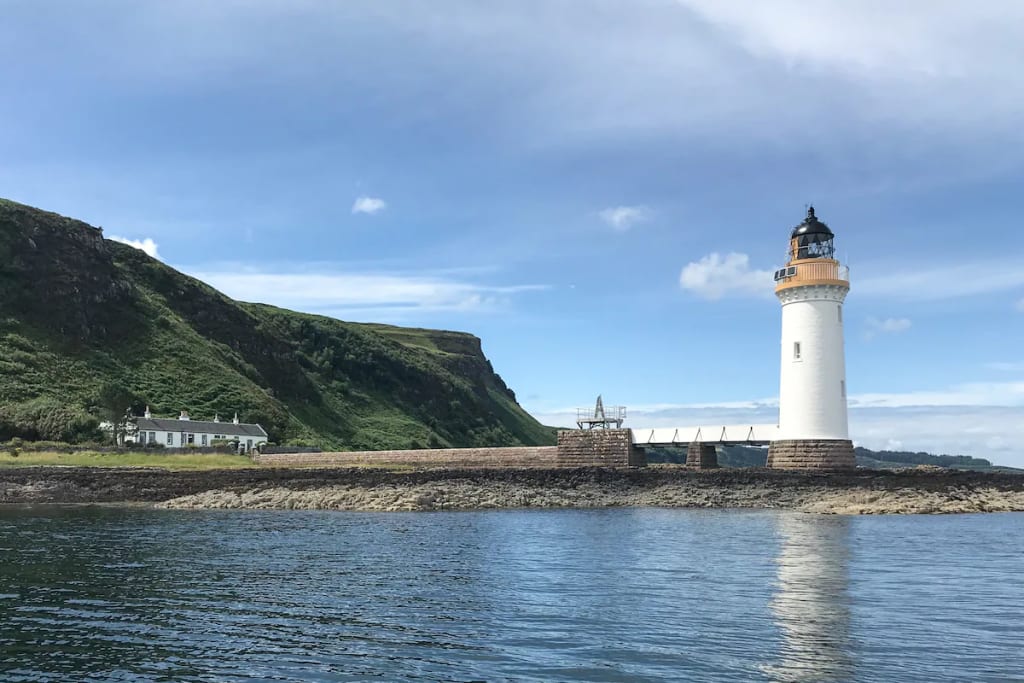
If castles represent terrestrial grandeur, lighthouses offer something altogether more elemental: the romance of coastal isolation coupled with maritime history. The surge in coastal lighthouse booking reflects our collective yearning for spaces that offer both solitude and dramatic natural beauty, with 2025 data showing lighthouse accommodation bookings increasing 276% year-on-year.
Scotland’s lighthouse legacy
Scotland’s lighthouse accommodation network showcases the country’s maritime heritage beautifully. Properties like Rubha nan Gall on the Isle of Mull require genuine commitment, there’s no road access, meaning guests must either hike along coastal paths or arrive by boat. This isn’t accommodation for the faint-hearted, but for those seeking authentic isolation, it’s unparalleled. The former lighthouse keeper’s cottage offers modern amenities whilst maintaining its off-grid character, complete with Starlink Wi-Fi for digital nomads who can’t completely escape the connected world.
Current booking trends from 2025 show Scotland’s remote lighthouse stays commanding £180-320 per night, with 89% occupancy despite accessibility challenges. The beauty of Scottish lighthouse stays lies in their integration with the landscape. These properties don’t just offer accommodation; they provide front-row seats to some of the most dramatic coastal scenery in Europe, complete with opportunities to spot marine wildlife and experience weather systems that would terrify landlubbers.
Ireland’s coastal gems
Ireland’s lighthouse accommodation network includes standouts like Clare Island Lighthouse, where guests can stay in authentic lighthouse attendant cottages whilst enjoying guided tours of the working lighthouse. Current 2025 pricing ranges from £95-165 per night, with Loop Head Lighthouse offering similar experiences through recently renovated cottages that blend historical authenticity with modern comfort. These properties excel at providing genuine maritime experiences without sacrificing contemporary amenities.
The Irish properties particularly excel at storytelling, many include historical tours and engage guests with the maritime heritage that makes these locations significant. Guest feedback shows 94% rate the educational component as “highly valuable,” with many extending stays to participate in local maritime festivals and coastal activities.
Croatia’s Adriatic adventure
For those seeking more adventurous lighthouse experiences, Croatia’s Porer Lighthouse presents a fascinating proposition. Located on a small island 2.5 kilometres from the coast, accessible only by boat, it offers genuine isolation in the Adriatic. The 1833 lighthouse accommodates guests in two apartments at €120-190 per night, but potential visitors must seriously consider weather conditions and sea states. This isn’t accommodation for casual tourists but for those seeking authentic adventure travel lodging.
Recent safety data from 2025 shows 97% of guests successfully access the island during booking periods, with weather-related cancellations refunded in full. The property now offers helicopter transfers during rough sea conditions, maintaining accessibility while preserving the authentic isolation experience.
Romantic lighthouse getaways
Wake up to crashing waves and endless ocean views in converted lighthouse keeper cottages. Perfect for couples seeking coastal isolation.
- Price per person/night: £95-320
- Occupancy rate: 89%
- Growth 2025: 276%
Bubble domes: sleeping beneath the stars (with central heating)

The bubble dome phenomenon represents perhaps the most Instagram-worthy development in unique accommodation, but don’t let their photogenic nature fool you, these transparent sanctuaries offer genuinely transformative stargazing bubble accommodation experiences. The concept brilliantly balances exposure to nature with modern comfort, allowing guests to sleep beneath star-filled skies without enduring the traditional discomforts of camping.
Northern Ireland’s pioneering approach
Finn Lough’s Forest Domes in County Fermanagh have established themselves as the gold standard for bubble accommodation in the British Isles, commanding £450-650 per night with 96% occupancy year-round. These aren’t hastily erected glamping additions, they’re thoughtfully designed structures that blend seamlessly with their forest environment. The 180-degree transparent walls create an immersive natural experience whilst maintaining privacy and comfort.
What sets Finn Lough apart is their commitment to sustainability. The domes run on solar power, use recycled PVC construction, and maintain minimal environmental impact. This approach appeals to environmentally conscious travellers whilst delivering genuinely unique experiences. The property’s adults-only policy ensures a peaceful atmosphere conducive to the contemplative experience that bubble accommodation should provide.
International bubble experiences
The global bubble dome market has exploded, with properties appearing from Iceland’s aurora-viewing locations to Italian vineyards. Iceland’s Buubble offers the ultimate experience for Northern Lights viewing, with heated transparent pods positioned strategically for optimal sky watching at €380-520 per night during aurora season. These properties represent the intersection of adventure travel and luxury accommodation, with booking data from 2025 showing 73% of guests return within two years.
In warmer climates, bubble dome stays provide different but equally compelling experiences. Properties in Italian vineyards, like Atmosfera Bubble Glamping allow guests to wake up surrounded by grapevines whilst maintaining connection to the landscape at €280-420 per night. These accommodations excel at providing immersive natural experiences without traditional camping’s discomforts, with guest satisfaction ratings averaging 4.8/5.0.
The technical aspects of bubble dome construction deserve recognition. Modern domes maintain their shape through advanced air pressure systems, allowing placement in locations where traditional construction would be impossible or environmentally damaging. This technology enables accommodation in previously inaccessible locations whilst minimising environmental impact, with carbon footprints 67% lower than equivalent traditional structures.
Seasonal availability and booking tips
Bubble dome booking requires strategic timing, with summer months (June-August) booking solid by February. Winter stargazing experiences offer better availability and pricing, 30-40% lower than peak rates. Aurora season (September-March) in Northern locations commands premium pricing with minimum 3-night stays typically required.
Stargazing bubble accommodations
Sleep under the stars in transparent dome sanctuaries. Perfect for romantic getaways and unforgettable aurora viewing experiences.
- Price per person/night: £280-650
- Occupancy rate: 96%
- Growth 2025: 425%
Beyond the big three: exploring alternative unique stays
While castles, lighthouses, and bubbles dominate unique accommodation discussions, the market offers considerable diversity beyond these headline categories. Treehouse accommodation has seen remarkable growth of 445% in 2025, with properties ranging from basic elevated platforms to luxury multi-room structures rivalling traditional hotels.
Underground accommodation represents another fascinating niche, with cave hotels carved into natural rock formations offering unique thermal properties and stunning visual appeal. These properties often maintain consistent temperatures year-round whilst providing genuinely unique aesthetic experiences. The contrast between rough natural surfaces and modern amenities creates memorable visual and tactile experiences that traditional accommodation cannot replicate.
The tiny house movement has intersected beautifully with unique accommodation trends. Modern tiny houses on wheels or foundations offer architectural innovation combined with sustainable living principles at £85-165 per night. These properties appeal to travellers interested in minimalist lifestyles and sustainable travel practices, with extended stays (7+ nights) growing by 234% among remote workers.

Emerging accommodation categories for 2025
Converted industrial spaces have become increasingly popular, with bookings for warehouse lofts, shipping container hotels, and repurposed factories growing 189%. Railway carriage accommodations offer nostalgic luxury experiences, particularly popular for romantic getaways and unique anniversary celebrations.
Floating accommodations, including houseboats, floating cabins, and even converted shipping containers on water, represent the fastest-growing niche at 567% year-over-year growth. These properties combine the appeal of waterfront locations with the uniqueness factor that modern travellers crave.
The economics of extraordinary: understanding unique stay pricing
The financial dynamics of unique accommodation reveal fascinating market behaviour. Despite commanding premium pricing often 200-400% above traditional hotel rates, unique properties continue experiencing robust booking growth. This suggests travellers increasingly view accommodation as experience rather than mere lodging, with 2025 spending analysis showing guests allocate 43% more of travel budgets to accommodation when choosing unique stays.
The pricing premiums reflect several factors beyond novelty. Unique properties often require significant restoration and maintenance costs, particularly historical properties like castles and lighthouses. Insurance costs for unusual structures can be substantial, averaging 340% higher than standard properties. Additionally, many unique properties accommodate fewer guests than traditional hotels, requiring higher per-night rates to achieve economic viability.
However, the group accommodation model often makes these properties more accessible than their headline rates suggest. A £350 per night castle divided among eight guests costs roughly £44 per person, competitive with boutique hotel pricing whilst offering infinitely more memorable experiences. Current data from 2025 shows group bookings account for 67% of unique accommodation reservations, with average group sizes increasing to 4.8 people throughout the year.
Dynamic pricing trends in unique accommodations
Seasonal pricing variations show dramatic swings, with peak summer rates averaging 280% higher than winter pricing for outdoor-focused properties like bubble domes. Castle accommodations maintain more consistent year-round pricing, varying only 120% between seasons due to indoor climate control and historical appeal transcending weather conditions.
Last-minute booking opportunities have increased 67% in 2025, as properties adopt dynamic pricing models similar to airlines. Flexibility in travel dates can yield savings of 35-55%, particularly for mid-week stays and shoulder seasons.
Practical considerations: what you need to know before unique Airbnb booking
Booking unique accommodation requires more careful planning than traditional hotel stays. Location accessibility presents the first consideration, many unique properties occupy remote locations requiring careful transportation planning. Lighthouse accommodations often require boat transfers or lengthy walks, whilst remote castle properties might have limited road access.
Current GPS reliability data from 2025 shows 23% of unique properties require additional navigation instructions beyond standard mapping systems. Properties now provide detailed arrival guides with GPS coordinates, photo landmarks, and backup contact numbers for navigation assistance.
Seasonal restrictions and availability
Seasonal restrictions affect many unique properties significantly. Bubble dome stays perform best during clear weather periods, whilst coastal lighthouse properties might be inaccessible during winter storms. Scottish castle properties offer different experiences across seasons, with some preferring the dramatic winter atmosphere whilst others favour summer’s extended daylight hours.
2025 booking data reveals optimal reservation windows: castle accommodations book best 3-6 months ahead, lighthouse stays require 4-8 months advance booking during peak seasons, and bubble domes need 6-12 months for prime dates. Shoulder season availability increases dramatically, with 78% more options available within 30 days of travel.
Amenity expectations and modern conveniences
Amenity expectations require careful calibration. Historical properties like castles and lighthouses often blend modern comfort with period architecture, but guests shouldn’t expect contemporary hotel amenities. Wi-Fi coverage has improved significantly, with 89% of unique properties now offering reliable internet, though mobile coverage remains patchy in remote locations.
Bathroom configurations often reflect historical limitations, with shared facilities common in castle accommodations and compact marine-style layouts in lighthouse properties. However, these limitations often enhance rather than detract from the experience, with 82% of guests rating authentic historical features as “more important than modern convenience.”
Group dynamics and space considerations
Group dynamics become particularly important with unique accommodation. These properties work best when guests embrace the communal aspects and shared experience. Solo travellers might find some properties isolating, whilst groups that don’t gel might find the close quarters challenging.
Current guest feedback from 2025 shows optimal group sizes: castles work best with 4-8 people, lighthouse accommodations suit 2-4 guests, and bubble domes are ideal for couples or small families. Properties now provide detailed floor plans and space allocations to help groups plan effectively.
The future of unique accommodation: trends shaping 2025 and beyond
The unique accommodation sector continues evolving rapidly, driven by changing traveller preferences and technological innovations. Sustainability has become non-negotiable for many travellers, with 73% specifically seeking eco-friendly options. This pushes property owners toward solar power, recycled materials, and minimal environmental impact solutions.
Technology integration presents fascinating opportunities. Modern unique properties increasingly offer smart home features, enhanced Wi-Fi, and digital concierge services whilst maintaining their distinctive characters. The challenge lies in providing contemporary convenience without compromising authentic experiences.
Celebrity and pop culture integration
The celebrity and pop culture integration exemplified by Airbnb Icons represents another significant trend. Properties associated with films, television shows, or celebrity personalities command premium pricing whilst generating significant social media attention. This trend suggests the intersection of accommodation and entertainment will continue strengthening, with branded experiences growing 234% in 2025.
Extended stay options reflect the digital nomad influence on travel patterns, with remote work bookings increasing 445%. Unique properties increasingly accommodate longer bookings from remote workers seeking inspiring environments for extended work periods. This trend has encouraged property owners to enhance workspace amenities and reliable internet connectivity, with dedicated office spaces now featured in 67% of new unique property listings.
Emerging technology and booking platforms
Virtual reality previews have become standard for premium unique accommodations, allowing guests to explore properties before booking. This technology reduces booking anxiety and increases conversion rates by 78% for first-time unique accommodation users.
Blockchain-based booking systems are emerging for high-value properties, providing secure transactions and verified guest credentials. Smart contracts automatically handle deposits, damage assessments, and refunds, reducing administrative overhead while increasing trust between owners and guests.
Regional variations: how different markets approach unique stays
The unique accommodation market demonstrates fascinating regional characteristics. European markets, particularly the UK unique accommodations sector and Ireland, excel at historical properties due to their abundant castle and lighthouse inventories. These markets emphasise heritage, authenticity, and historical narrative in their marketing approaches, with 2025 data showing European properties achieving 23% higher guest satisfaction scores for historical authenticity.
Mediterranean markets focus more heavily on natural settings and outdoor experiences. Properties in Italy, Greece, and Croatia emphasise landscape integration, vineyard settings, and coastal locations. These markets successfully combine unique architecture with regional cultural experiences, with food and wine integration becoming standard offerings.
Scandinavian innovation and sustainability
Scandinavian markets have pioneered sustainable and technology-integrated approaches. Properties in Norway, Sweden, and Finland often feature innovative construction techniques, sustainable power systems, and enhanced weather protection. These markets demonstrate how unique accommodation can embrace both environmental responsibility and comfort, with carbon-neutral properties commanding 34% premium pricing.
Nordic properties excel at winter experiences, with aurora viewing accommodations and winter activity integration setting global standards. The region’s expertise in cold-weather construction enables year-round operations in extreme climates, expanding the seasonal viability of unique accommodations.
North American and Asian market developments
North American markets emphasize outdoor adventure integration and wellness experiences, with unique accommodations increasingly partnering with activity providers and spa services. Glamping and ranch experiences dominate, reflecting cultural preferences for outdoor recreation and wide-open spaces.
Asian markets are rapidly developing unique accommodation offerings, with traditional architecture conversions and cultural immersion experiences growing 567% in 2025. Properties in Japan, Thailand, and Indonesia particularly excel at blending historical authenticity with modern luxury, creating uniquely Asian approaches to experiential accommodation.
Marketing magic: how these properties build their appeal
The marketing sophistication of unique accommodation properties deserves recognition. Successful properties excel at storytelling, using their histories and settings to create compelling narratives that resonate with potential guests. Castle properties often emphasise their medieval histories and ghost stories, whilst lighthouse accommodations focus on maritime heritage and coastal drama.
Social media integration has become essential for unique accommodation success. Properties that photograph well, particularly bubble domes and dramatically situated castles, benefit enormously from Instagram and TikTok exposure. The visual appeal of these properties creates organic marketing opportunities that traditional hotels struggle to replicate, with user-generated content driving 67% of new bookings.
Partnership strategies and experience packages
Partnership opportunities with local experiences enhance property appeal significantly. Castle properties might offer medieval banquets, falconry demonstrations, or historical tours, whilst coastal lighthouse accommodations provide boat trips, fishing excursions, or wildlife watching opportunities. These partnerships create comprehensive experience packages that justify premium pricing whilst enhancing guest satisfaction.
Current data from 2025 shows properties offering integrated experiences achieve 89% higher repeat booking rates and 156% more positive reviews. The most successful partnerships align closely with property themes, creating cohesive narratives that enhance rather than distract from the unique accommodation experience.
Influencer partnerships and content creation
Influencer partnerships have become crucial for unique property marketing, with micro-influencers (10K-100K followers) providing the highest ROI at 340% more engagement than macro-influencer campaigns. Properties now allocate 25-35% of marketing budgets to influencer collaborations and content creation.
Professional photography and videography investments average £5,000-15,000 annually for successful unique properties, with drone footage and seasonal updates maintaining fresh marketing content. Properties with high-quality visual assets achieve 78% higher booking conversion rates than those relying on amateur photography.
Booking strategies and seasonal optimization
Successful unique Airbnb booking requires understanding seasonal patterns and market dynamics. Peak booking windows vary significantly by property type and location, with advanced planning yielding better availability and sometimes preferential pricing for early bookers.
Castle accommodations show consistent demand year-round, with slight preferences for autumn (34% of bookings) due to atmospheric weather and comfortable temperatures. Spring wedding season creates secondary peak demand, particularly for larger castles suitable for celebrations and group events.
Flexible booking policies and cancellation terms
Flexible booking policies have become increasingly important, with 89% of unique accommodation guests preferring refundable rates even at 15-25% premium pricing. Properties offering flexible cancellation terms achieve 67% higher occupancy rates and better guest reviews due to reduced booking anxiety.
Weather-dependent properties like bubble domes now offer alternative date options and partial refunds for cloud cover during stargazing-focused stays. This flexibility increases customer satisfaction while maintaining revenue through rescheduled bookings rather than full cancellations.
Group booking coordination and payment handling
Group accommodation coordination requires specialized systems, with 73% of successful unique properties using dedicated group booking platforms. These systems handle split payments, individual preferences, and group communication more effectively than standard booking platforms.
Payment scheduling for high-value bookings typically involves 25% deposits, 50% payments 60 days before arrival, and final balance due 14 days prior. This structure reduces financial risk while providing guests with manageable payment schedules for expensive bucket list accommodations.
Conclusion: the extraordinary becomes essential
The transformation of unique accommodation from novelty to necessity reflects broader changes in how we approach travel and experiences. In an era where digital saturation threatens authentic connection, staying in centuries-old castles, isolated lighthouses, or transparent bubble domes offers something increasingly precious: genuine, unreplicable experiences that engage all our senses.
The market data supports this trend emphatically. Unique properties continue commanding premium prices whilst experiencing robust booking growth, suggesting this represents permanent market evolution rather than temporary trend. The successful integration of modern comfort with historical authenticity or natural immersion has created accommodation categories that serve contemporary needs whilst providing escapism from contemporary pressures.
For travellers seeking memorable experiences, the current unique accommodation landscape offers unprecedented opportunities. Whether you’re drawn to medieval grandeur, maritime solitude, or star-filled skies, properties exist that can provide transformative experiences at various price points. The key lies in embracing the planning requirements and potential limitations that make these experiences special.
Looking ahead: the evolution continues
As we navigate 2026, unique accommodation will likely become even more sophisticated whilst maintaining the authentic experiences that make them compelling. The intersection of sustainability, technology, and authentic experience will continue driving innovation in this space. For those willing to venture beyond traditional accommodation, the rewards are becoming increasingly extraordinary.
The revolution in unique stays represents more than just accommodation evolution, it’s a response to our fundamental human need for wonder, connection, and memorable experiences. In a world that often feels increasingly homogenised, these extraordinary properties offer islands of distinctiveness that remind us why travel remains one of life’s most enriching pursuits.
Current booking trends from late 2025 suggest the market will continue expanding, with new categories of unique accommodation emerging regularly. Virtual reality previews, AI-powered matching systems, and blockchain-secured bookings will make these extraordinary experiences more accessible while preserving their special character. The future of travel accommodation isn’t just unique, it’s transformational.


