

The deeper meaning of The Bear is established in the very first frame: a lone chef facing down a snarling grizzly on a Chicago bridge, equal parts nightmare and prophecy. From that surreal opening to the blistering single-take episodes that leave viewers gasping for breath, Christopher Storer’s Emmy-sweeping series has become television’s most compulsive watch precisely because it is not content to be merely “a kitchen drama.” Instead, it asks why grief feels like a walk-in cooler with no exit, how perfectionism mutates into self-harm, and whether a dysfunctional family can be healed by the alchemy of butter, beef, and belief. In other words, The Bear resonates because it serves trauma tartare — raw, immediate, and uncannily familiar.
Why The Bear goes beyond food: An FX series analysis
The show’s logline is straightforward: award-winning chef Carmen “Carmy” Berzatto abandons Michelin kitchens to resuscitate his late brother’s debt-choked sandwich shop. Yet every episode insists on a wider canvas. Food becomes a crucible for:
- Grief that throttles Carmy’s waking life and punctures his relationships.
- Inter-generational trauma that ricochets around a claustrophobic Italian-American household (see the Christmas-flashback tour de force “Fishes”).
- A working-class treatise on razor-thin restaurant margins, predatory lenders, and the gig-economy delusion of “hustle pays off”.
By immersing viewers in these collisions, The Bear turns sauté pans into psychological MRIs and makes every ticket-printer squawk feel like a panic attack in Dolby Atmos.
Grief & loss: Michael’s ghost in every marinara
Michael’s off-screen suicide is not a back-story footnote; it is the show’s invisible maître d’, seating every character beside their private sorrow. Critics have praised the series as one of television’s most accurate portraits of prolonged, messy bereavement. Rather than “stages of grief,” we witness Carmy disassociating mid-service, Richie picking fights to avoid mourning, and younger sister Sugar micromanaging renovations because spreadsheets feel safer than tears. Grief, the show suggests, isn’t linear — it lives in the mise en place.
Family dynamics & trauma: Holidays as horror cinema
If grief is the wound, family is often the dull knife that keeps reopening it. Nowhere is this clearer than in “Fishes,” where Jamie Lee Curtis’s incandescent Donna weaponises lasagna and wine until the Berzattos buckle under decades of unspoken resentment. The Bear understands that kitchens and families share a paradox: both require hierarchy, both thrive on communion, and both turn toxic when communication curdles.
Breaking down Carmy’s trauma: Mental health & anxiety
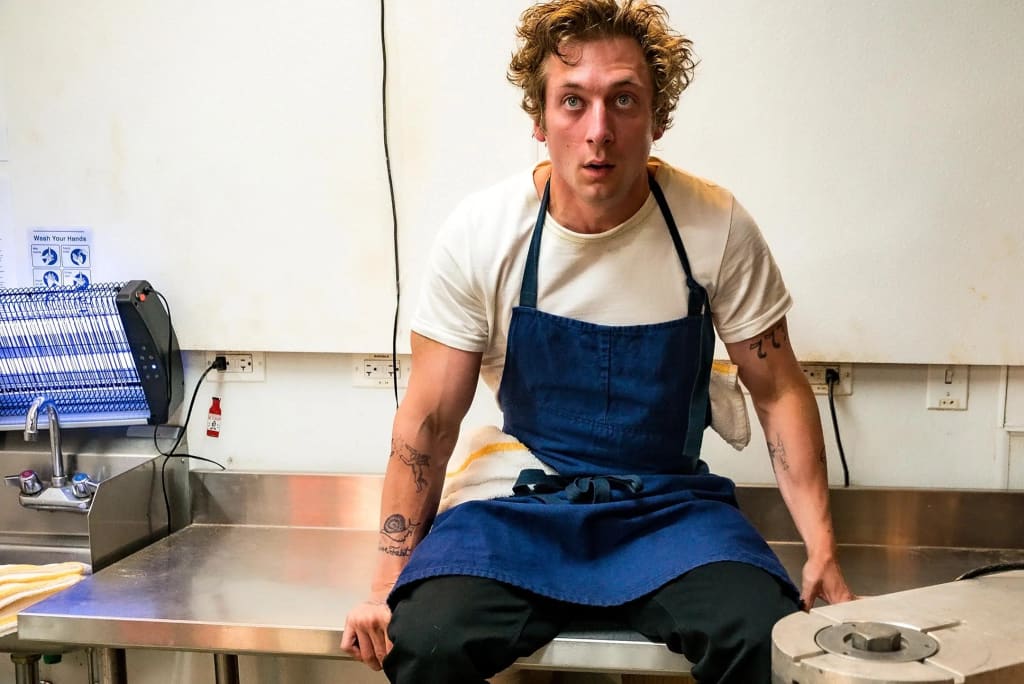
Carmy’s haute-cuisine PTSD is rendered with clinical precision: intrusive flashbacks, hyper-vigilant soundscapes, and catastrophic perfectionism that torpedoes his romance with Claire. Psychiatric commentators have identified the character as a near-textbook study in complex post-traumatic stress and obsessive-compulsive traits. By refusing on-screen therapy clichés, the series mirrors real professional kitchens, where panic attacks are more common than HR briefings and vulnerability is seasoned with shame. This exploration of Carmy Berzatto’s mental health is a key aspect of the show’s appeal.
Professional excellence vs. personal well-being
Sydney’s dream of a Michelin star collides with Carmy’s lived reality: acclaim arrives hand-in-hand with dread. The mantra “Every second counts” migrates from motivational poster to existential threat as the brigade chases impossible consistency. The Bear asks a millennial workforce: when your passion doubles as your payslip, what’s left to live on after burnout burns everything else?
The restaurant as business — and battlefield
Scattering the romantic myth of “follow your your dream,” the show itemises asbestos abatements, liquor-licence purgatory, and exploding construction budgets. It is a masterclass in small-business anxiety: triumph and insolvency are separated by as little as one faulty gas line or one scathing Tribune review. Uncle Jimmy’s doomsday clock of profit or perish in season 4 hammers home the stakes.

Character analysis: People who bleed for the plate
Carmen “Carmy” Berzatto
Tattoos up to his elbows and trauma down to his marrow, Carmy is a study in duality: culinary prodigy, emotional novice. Jeremy Allen White’s twitchy bravado won both Golden Globe and Emmy, layering bravado over panic in the same breath. His leadership oscillates between benevolent mentor and tyrant, mirroring the abuse he once endured in New York’s tyrannical kitchens.
Sydney Adamu
Ayo Edebiri imbues Sydney with jack-hammer ambition and surgical palate, slicing through gender and racial ceilings in an industry still dominated by white male chefs. Her partnership with Carmy is less romance than mirrored obsession — two perfectionists, different trauma languages, unified by the hunger to create something transcendent.
Richie “cousin” Jerimovich
From belligerent gatekeeper to front-of-house evangelist, Richie’s season 2 episode “Forks” became an instant classic of television redemption, celebrating the dignity of hospitality as self-respect. His arc embodies the series’ argument that purpose — not title — rescues the lost.
The ensemble
Tina’s late-career renaissance, Marcus’s pastry pilgrimage, Ebraheim’s quiet dignity: each subplot broadens the kitchen’s emotional temperature. Their collective chemistry turns staff meal into sacrament, proving that chosen family can sometimes season old wounds.
Cinematic & narrative alchemy: Controlled chaos
- Pacing & intensity — Episode “Review,” an 18-minute single take, weaponises claustrophobic Steadicam movement to simulate a dinner rush meltdown, an accomplishment lauded by cinematographers and anxiety therapists alike.
- Dialogue & authenticity — Writers lace every “Yes, chef!” with Chicago argot and kitchen French, capturing service-industry gallows humour with uncanny fidelity.
- Visual storytelling — DP Andrew Wehde’s choice of ARRI Alexa Mini LF and Panavision H-series glass bathes the set in warm tungsten and shallow focus, letting steam and sweat blur at the edges like battle-field haze.
- Sound design & music — Supervising mixer Steve “Major” Giammaria layers clanging sauté pans, printer chimes, and 1990s alt-rock anthems into a sonic panic attack that earned Creative Arts Emmys for both editing and mixing.
The food show element: Mise en scène as metaphor in Chicago’s culinary scene
The Bear is meticulous about brunoise dice and sanitation grades, but its dishes always speak in subtext. Braised beefs stand in for family legacy; meticulously quenelled sorbet for Sydney’s striving; Carmy’s spaghetti marinara hides the inheritance that fuels reinvention. As real Chicago chefs attest, the series nails industry realism while reminding audiences that tasting menus rarely reveal the emotional cost.
Why The Bear resonates far beyond food television: Award wins and critical reception
At its core, The Bear strikes universal nerves:
- Relatability — Modern work culture valorises burnout; the show holds up a grease-splattered mirror.
- Critical acclaim — With 21 Primetime Emmy wins and record-breaking comedy trophies, the series has earned cultural clout to match its artistic daring.
- Social conversation — From Reddit “Team Rational vs. Team Supernatural” debates about workplace trauma to therapist podcasts analysing Carmy’s attachment style, the show fuels discourse well beyond service-industry circles.
Standout stats & defining moments
- 21 Primetime Emmy wins: The Bear has garnered significant critical acclaim, including a record number of Emmy wins for a comedy series.
- 93% Rotten Tomatoes score: The series holds a consistently high rating from critics, reflecting its widespread positive reception.
- 2025 Golden Globe winner: The show has also been a recipient of prestigious Golden Globe awards.
- Best episodes / defining moments:
- “Review” (season 1): An 18-minute single-take episode that masterfully builds tension during a dinner rush meltdown.
- “Fishes” (season 2): A chaotic Christmas flashback that vividly portrays inter-generational trauma within the Berzatto family.
- “Forks” (season 2): Richie’s redemptive arc as he embraces the dignity of hospitality.
Conclusion: Legacy on a flaming hot plate
The deeper meaning of The Bear lies in its refusal to garnish pain with sentimentality. By turning a neighbourhood beef joint into a theatre of grief, ambition, and redemption, the series articulates a millennial condition: hustling for excellence while quietly haemorrhaging well-being. As the The Bear season 4 finale hands the keys to Sydney and pushes Carmy toward uncertain rebirth, viewers are left with a question as searing as any cast-iron skillet: who are we when the service lights go dark and the tickets stop printing?
Whether the forthcoming season 5 will grant these characters peace or plunge them back into culinary purgatory is almost beside the point. The Bear has already secured its place in television history — and in Google’s search results — as the definitive reminder that behind every perfect plate is a heart still learning how to beat.

