
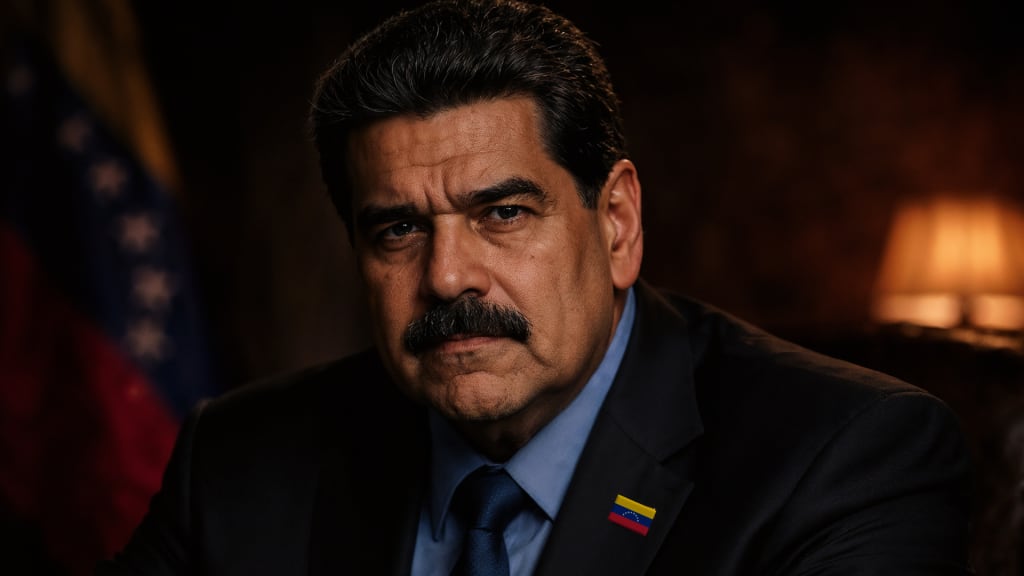
Venezuelan dictator Nicolás Maduro now sits in a Brooklyn jail cell, the first sitting head of state captured by American forces since Manuel Noriega in 1989. On 3 January 2026, Operation Absolute Resolve ended his twelve-year grip on Venezuela through a predawn raid involving 150 aircraft and Delta Force operators who dragged him from his fortified bedroom at Fort Tiuna before he could reach a steel safe room. The fall of Nicolás Maduro marks a dramatic turning point in hemispheric politics and U.S. counter-narcotics efforts. The charges he faces in Manhattan federal court reveal a staggering criminal apparatus: narco-terrorism conspiracy, cocaine importation, weapons trafficking, and money laundering on a scale that prosecutors allege flooded billions of dollars worth of cocaine into American streets.
Maduro’s capture triggered jubilant celebrations among the Venezuelan diaspora, with crowds gathering before dawn outside Miami restaurants waving flags and singing the national anthem. In Madrid’s Puerta del Sol, thousands watched Trump’s press conference live and erupted in applause. Yet behind the festivities lies a darker reality: a systematic plundering of one of the world’s most oil-rich nations that forced eight million citizens to flee, transformed state institutions into criminal enterprises, and left a trail of torture victims, mass graves, and environmental devastation across Venezuelan territory.
Operation Absolute Resolve brought American military might to Caracas

The operation that ended Maduro’s rule began long before the first helicopter lifted off. CIA teams had infiltrated Venezuela by August 2025, tracking Maduro’s movements with the assistance of a source inside the Venezuelan government. American intelligence knew “how he moved, where he lived, where he travelled, what he ate, what he wore, what were his pets,” according to General Dan Caine, chairman of the Joint Chiefs of Staff. The Pentagon constructed a full-scale replica of Maduro’s compound for rehearsals.
Trump gave Maduro one final chance in a phone call a week before the operation. “You got to surrender,” the president recalled telling the Venezuelan leader. Maduro “came close” to accepting but ultimately stayed put. Weather delays pushed the operation back four days until conditions cleared on the night of 2 January. At 22:46 Eastern time, Trump authorised the mission with the words “Good luck, and Godspeed.”
What followed was a coordinated assault from 20 different bases across the Western Hemisphere. F-22 Raptors, F-35 Lightning IIs, and B-1B Lancers provided air superiority while electronic warfare aircraft disabled Venezuelan defences. Cyber operations knocked out Caracas’s power grid. The 160th Special Operations Aviation Regiment flew helicopters at 100 feet above the water to evade radar, ascending through mountain passes under cover of darkness to reach Fort Tiuna.
+ Read more: Donald Trump the untold story behind America’s most controversial figure
Delta Force operators breached Maduro’s residence to find him attempting to reach a steel-reinforced safe room. “He was trying to get into it, but he got bum-rushed right so fast that he didn’t get into that,” Trump later recounted. Both Maduro and his wife Cilia Flores were taken “completely by surprise” and surrendered without personally resisting. Venezuelan forces outside the compound engaged American aircraft, damaging one helicopter, but all U.S. personnel returned safely.
The operation claimed at least 80 Venezuelan lives according to Venezuelan officials, plus 32 Cuban military and intelligence personnel who had been providing security for Maduro. Cuba declared two days of national mourning. By 3:30 AM Eastern time, American forces had extracted Maduro and departed Venezuelan airspace. Hours later, an image appeared on Trump’s Truth Social account: the former dictator blindfolded and wearing a grey Nike sweatsuit aboard the USS Iwo Jima.
A man without a verifiable past rose to absolute power
Questions about Maduro’s origins have dogged him since his 2013 election. His mother, Teresa de Jesús Moros, was born in Cúcuta, Colombia, on 1 June 1929, a fact confirmed by her baptismal certificate. Under Colombian law, this should have granted Maduro Colombian citizenship at birth, potentially disqualifying him from Venezuela’s presidency under Articles 41 and 227 of the constitution, which require the president to be Venezuelan by birth with no other nationality.
The original birth certificate has never been publicly displayed. According to investigative journalists at Armando.info, the document remains under armed guard with “24-hour custody by at least four gatekeepers” and cannot be physically examined. The Venezuelan Supreme Court ruled in 2016 that Maduro is Venezuelan by birth, but the evidence presented to the public consisted only of a briefly displayed handwritten document shown on television. Investigators have noted that Maduro’s identity card number runs consecutively with those of his older sisters, an unusual pattern for siblings born years apart.
Maduro’s claimed history as a rock musician has been definitively debunked. A 2024 biography asserted he played bass in a band called Enigma during the 1980s, but the band’s actual members have denied he ever performed or recorded with them. The person photographed as the band’s guitarist, often mistaken for young Maduro, was actually Carlos Carrillo, the group’s founder. The band recorded only one track for a compilation album and never produced the LP the biography claimed.
What is verified about Maduro’s early life is revealing. He joined the Socialist League, a Marxist-Leninist organisation, in his youth and received political training in Cuba from 1986 to 1987 at a school run by the Union of Young Communists. He later worked as a bus driver for Caracas Metro and founded its first union. His political ascent began when he met Cilia Flores while she was working to secure Hugo Chávez’s release from prison after the failed 1992 coup attempt.
Maduro and Flores share a devotion to Sathya Sai Baba, the Indian spiritual leader. They visited his ashram in India in 2005 and received a private audience. When Sai Baba died in 2011, Venezuela declared a national day of mourning, the only Latin American country to do so. A portrait of the guru reportedly hung in Maduro’s private office alongside images of Simón Bolívar and Chávez.
The Cartel of the Suns turned Venezuela’s military into drug traffickers
The organisation that prosecutors allege Maduro led is not a traditional drug cartel but something more insidious: a network of disconnected cells embedded throughout Venezuela’s military and government. The name derives from the sun insignias worn by generals on their uniforms. According to the United Nations Office on Drugs and Crime, 400 tonnes of cocaine transit Venezuela annually, representing roughly 24 percent of worldwide cocaine circulation.
The 2020 and 2026 federal indictments paint a picture of systematic coordination between Venezuela’s highest officials and Colombian guerrilla groups. Maduro allegedly negotiated multi-ton cocaine shipments directly with FARC leaders, providing machine guns and explosives in return. Hugo Carvajal, the former military intelligence chief who pleaded guilty in June 2025, coordinated a 5.6-ton shipment to Mexico in 2006 that was seized upon arrival.
The military’s role centres on guaranteeing safe passage. Border units decide whether to allow shipments by land. Air Force radar operators create corridors for drug flights. National Guard officers load cocaine onto aircraft and process shipments at airports. The Navy guarantees departure of shipments bound for the United States and Europe. As the indictment states, Venezuela’s armed forces operate under “military protection at regular and irregular airstrips” to facilitate the trade.
The designation of the Cartel de los Soles as a Foreign Terrorist Organisation in November 2025 represented an escalation of American legal pressure. The designation alleged Maduro personally headed the organisation and that it worked alongside other terrorist groups including Tren de Aragua and the Sinaloa Cartel. Independent experts contested this characterisation, noting the “cartel” functions more as a general network of corruption than a traditional organised crime group.
The Narcosobrinos case exposed the first family’s direct involvement
The prosecution of Cilia Flores’s nephews provided the first concrete evidence of drug trafficking within Maduro’s immediate family. Efraín Antonio Campo Flores and Franqui Francisco Flores de Freitas were arrested on 10 November 2015 in Port-au-Prince, Haiti, while meeting with DEA informants posing as Mexican traffickers.

The evidence against them was damning. In recorded conversations, Campo Flores boasted of controlling access to “Terminal 4 of Simón Bolívar International Airport, a terminal reserved for the president.” He claimed to have been trafficking drugs “since I was 18” and explained the scheme’s purpose: “My mom is running for the election and I need… $20 million… we need it by December.” The planned shipment was 800 kilograms of Colombian cocaine to be flown from the presidential hangar to Honduras, then onward to the United States.
The nephews provided a one-kilogram sample to demonstrate the quality of their product. They discussed arrangements with FARC suppliers and agreements involving Diosdado Cabello that allowed the family to “control the oil completely in Venezuela.” A jury found them guilty in November 2016, and they received 18-year sentences.
Two key witnesses were murdered around the time of the arrests. The Venezuelan contact who introduced the nephews to DEA informants was killed 15 days before the arrest. The Honduras-based trafficker who turned informant was murdered weeks afterward. University of Miami organised crime expert Bruce Bagley observed at the time: “The nephews are just the tip of the iceberg… Corruption is rampant in power circles in Venezuela.”

The nephews were released in October 2022 as part of a prisoner swap for the CITGO Six, American oil executives who had been detained in Venezuela. The January 2026 indictment now names Cilia Flores herself as a co-defendant, alleging she accepted “hundreds of thousands of dollars in bribes” to broker meetings between drug traffickers and Venezuela’s anti-narcotics chief, arranging for traffickers to pay $100,000 per cocaine-carrying flight “to ensure safe passage.”
CLAP boxes fed Venezuelans while Alex Saab fed himself
The Local Committees for Supply and Production, known as CLAP, represented perhaps the most cynical exploitation of Venezuela’s humanitarian crisis. Created in 2016 to distribute subsidised food to six million starving families, the programme became a vehicle for $350 million in money laundering through American banks, according to federal prosecutors.
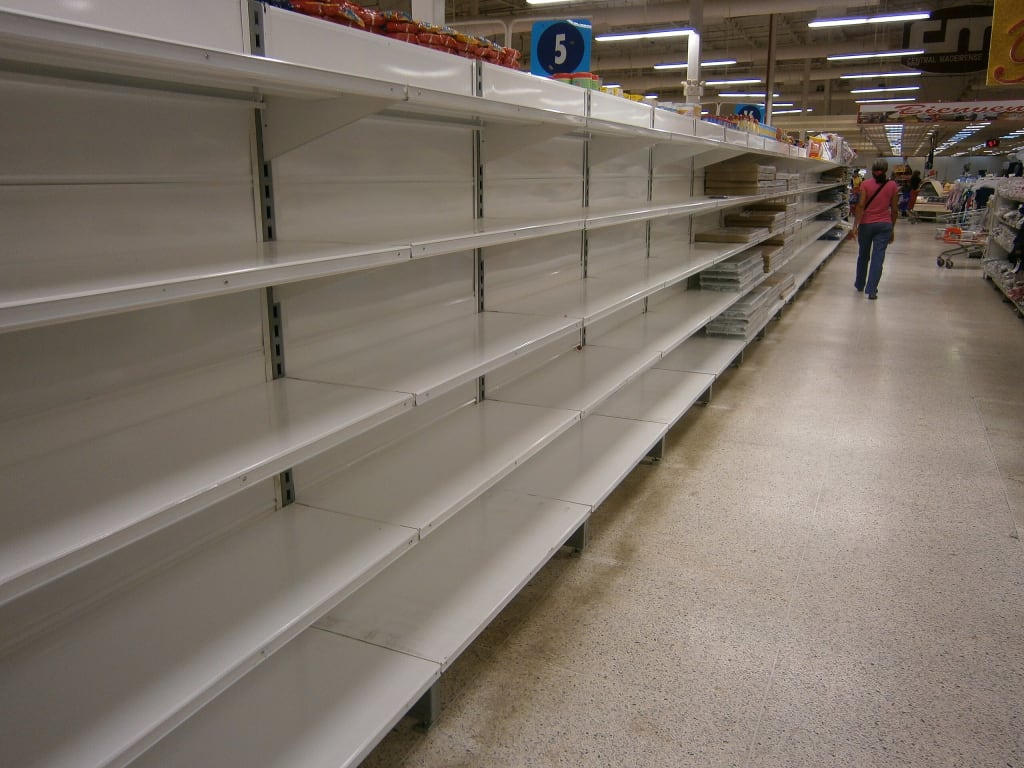
Alex Saab, the Colombian businessman at the centre of the scheme, met Maduro through a former Colombian senator in 2010. Within a year, he had secured $530 million in contracts for housing materials, of which prosecutors allege only $3 million worth were actually delivered. Investigators found that Saab and his associates photographed the same construction materials in different locations to generate multiple false invoices, submitting single importations “10, 15, or 20 times” with bribes to customs officials.
The CLAP scheme refined these techniques. Saab’s network operated through shell companies in Hong Kong, Mexico, Turkey, and the United Arab Emirates. Group Grand Limited, registered in Hong Kong with just $10,000 in capital, became the primary vehicle for overcharging the Venezuelan government. Food worth $12 to $20 per box was billed at $34 to $35, generating nearly 200 percent profit on each sale. In one shipment, Venezuela paid $29 million for food costing $7 million.

Laboratory analysis revealed the food being distributed was dangerously substandard. The Central University of Venezuela found the powdered milk was “so deficient in calcium and high in sodium that a researcher noted it couldn’t be classified as milk at all,” with protein content just one-forty-first of normal milk. In May 2018, Colombian authorities seized 25,200 CLAP boxes containing 400 tonnes of decomposing food.
Beyond the theft, CLAP became a weapon of political control. Vice President Aristóbulo Istúriz publicly described it as “a political instrument to defend the revolution.” The UN High Commissioner for Human Rights found in 2018 that the programme “did not comply with certain norms related to the right to adequate food” and was used as a “tool of political propaganda and social control.” Families were allegedly required to prove they had voted for the government to receive food.
Saab was arrested in Cape Verde in June 2020 during a refuelling stop on a flight from Venezuela to Iran. Maduro appointed him ambassador to the African Union in an attempt to claim diplomatic immunity. In December 2023, the Biden administration released him in a prisoner exchange, and he received a “hero’s welcome” at Miraflores Palace. By October 2024, Maduro had appointed him Minister of Industry and National Production.
The Mining Arc has become a zone of environmental catastrophe and human trafficking
Decree 2,248, signed on 24 February 2016, created the Orinoco Mining Arc: 111,843 square kilometres of territory, larger than Portugal, designated for exploitation of gold, coltan, diamonds, and other minerals. The stated purpose was to diversify Venezuela’s collapsing economy. The result was environmental devastation and human suffering on a massive scale.
Satellite imagery from SOS Orinoco documents the destruction. More than 520,000 hectares of forest have been destroyed since 2000, an area equivalent to 677,000 football pitches. Deforestation rates increased 107 percent after the decree was implemented. Half of the destruction has occurred in protected territories, including Canaima National Park, a UNESCO World Heritage site where mined areas have grown 1,300 percent since 2000 and now lie just 23 kilometres from Angel Falls.
Mercury contamination has poisoned communities throughout the region. Analysis of indigenous women in the Caura River basin found 92 percent had mercury levels exceeding World Health Organisation limits. Populations along the Guainía, Inírida, and Atabapo rivers showed mercury concentrations 60 times the maximum recommended level. Thirty-eight percent of school-aged children in one mining town showed contamination. The poison travels through fish up to 2,000 kilometres from its source, threatening drinking water supplies in Colombia and Brazil.

The human toll extends beyond poisoning. The UN documented that miners are forced to work 12-hour shifts descending deep pits without protective equipment, often barefoot, paying 10 to 20 percent of their earnings to controlling criminal groups. Children as young as nine years old work in the mines, with an estimated 45 percent of the region’s 500,000 workers being underage. Women and girls are sold for five to ten grams of gold, approximately $50 to $60, and subjected to sexual slavery.
Armed groups control vast territories within the Mining Arc. The ELN guerrilla movement, with a 40-year presence in Venezuela, now operates in at least 12 of the country’s 24 states and earns approximately 60 percent of its income from mining. FARC dissident factions, including the Acacio Medina Front, derive more than half their revenues from Venezuelan mining operations. These groups impose arbitrary laws with death as the punishment for violations, prohibiting alcohol and drug consumption and executing offenders.
The Tumeremo massacre of March 2016 exposed the violence endemic to the region. Twenty-eight miners disappeared from the Atenas Mine on the night of 4 March. Seventeen to 21 bodies were later discovered in a mass grave, shot in the back of the head, some reportedly dismembered with chainsaws. Witnesses reported the bodies being transported through town in a vehicle escorted by national police, passing through three military checkpoints with intelligence service presence. The perpetrators belonged to a gang run by an Ecuadorian leader who managed 30 gold mines in Bolívar state and Guyana.
Maduro’s son allegedly coordinated the gold trafficking operation
Nicolás Maduro Guerra, known as Nicolasito, is named as a co-defendant in the January 2026 indictment alongside his parents. According to testimony from Manuel Ricardo Cristopher Figuera, the former intelligence chief who defected in April 2019, Nicolasito headed a scheme to buy gold cheaply from southern mines and sell it overseas through the Central Bank, placing trusted figures at the head of state-owned mining company Minerven.
The Central Bank sold 73.2 tonnes of gold in 2018, eight times higher than official internal production figures. The destinations included companies in the UAE and Turkey, with gold bars shipped on 33 flights via Turkish Airlines and other carriers. Approximately $900 million worth went to Turkey alone, where gold was ostensibly refined but never returned. Instead, Turkish entities purchased the refined gold and transferred funds to Venezuelan offshore accounts.
In April 2020, approximately nine tonnes of gold worth $500 million were flown from Caracas to Tehran on Mahan Air flights, an airline sanctioned by the U.S. Treasury for providing support to Iran’s Revolutionary Guard. The gold-for-gasoline swap helped secure five Iranian tankers delivering 1.5 million barrels of fuel. Intelligence reports suggest the proceeds funded Hezbollah operations in Lebanon.
The U.S. Treasury first sanctioned Nicolasito in July 2017 as part of broader sanctions against the fraudulent Constituent Assembly. He was re-designated in June 2019, with Treasury Secretary Steven Mnuchin stating: “Maduro relies on his son Nicolasito and others close to his authoritarian regime to maintain a stranglehold on the economy.” Following his parents’ capture, Nicolasito demanded their return and denounced his inclusion in the New York indictment.
Torture became state policy in underground dungeons
El Helicoide was meant to be a futuristic shopping centre. Designed during the 1950s as a drive-in mall spiralling up a Caracas hillside, it was exhibited at the Museum of Modern Art in New York in 1961. Construction halted after the developer went bankrupt. The unfinished concrete structure eventually became the headquarters of SEBIN, Venezuela’s intelligence service, and one of Latin America’s most notorious torture facilities.
The UN Independent International Fact-Finding Mission documented 51 cases of torture or ill-treatment by SEBIN at El Helicoide since 2014. Documented methods include electric shocks to the genitals, suffocation with plastic bags, waterboarding, beatings with wooden boards, forced stress positions, hanging by limbs, sexual violence and rape with objects, mock executions, and being forced to breathe with one’s face in a bag of faeces.
Below the SEBIN tower in Plaza Venezuela lies La Tumba, the Tomb. Originally designed as offices for Caracas Metro, the underground facility contains cells five floors below ground, measuring just two by three metres. There are no windows. Security cameras and microphones record everything. Bright lights remain on 24 hours a day to disorient prisoners. The only sounds are the nearby metro trains. Detainees have suffered nervous breakdowns, panic attacks, stomach problems, and multiple suicide attempts.
The case of Captain Rafael Acosta Arévalo shocked even hardened observers of Venezuelan repression. The navy officer was arrested on 21 June 2019 and held incommunicado for seven days. When he appeared in court on 28 June, he arrived in a wheelchair with bloody fingernails, unable to speak, only nodding when asked if he had been tortured. He died the following day. Amnesty International concluded he died “in the room where the arraignment hearing took place, without receiving medical care,” contradicting the official claim that he fainted and was taken to hospital.
Fernando Albán, a city councillor, was arrested in October 2018 upon returning from addressing a UN General Assembly delegation about human rights. The government initially claimed he committed suicide by jumping from a tenth-floor bathroom. His lawyers pointed out the bathroom had no windows and all windows in the building were locked. In May 2021, Attorney General Tarek William Saab admitted Albán “did not commit suicide” but was killed by two SEBIN officers. A U.S. federal court awarded $73 million to his family, calling his death “murder for hire” by the “Maduro criminal enterprise.”
The UN Fact-Finding Mission concluded in September 2020 that Venezuelan authorities had “planned and executed serious human rights violations, some of which, including arbitrary killings and the systematic use of torture, amount to crimes against humanity.” The report found these violations were “highly coordinated pursuant to State policies” and directly attributed responsibility: “President Maduro and the Ministers of the Interior and of Defence were aware of the crimes. They gave orders, coordinated activities and supplied resources in furtherance of the plans and policies.”
FAES operated as a government death squad in poor neighbourhoods
The Special Action Forces of the Bolivarian National Police, created in 2016 and fully operational by 2017, became the regime’s instrument for extrajudicial killings. The unit, approximately 1,300 officers strong, was established ostensibly to combat crime and terrorism. In practice, it conducted systematic executions in Venezuela’s poorest neighbourhoods.

The pattern was consistent. Agents dressed in black with ski masks would arrive in pickup trucks without license plates. They would burst into homes without warrants, separate young men from family members, and take relatives outside before the killings. Victims were shot, usually in the chest at point-blank range. Officers would then plant guns and drugs on bodies and fire weapons into walls to simulate resistance. Deaths were officially recorded as “resistance to authority.”
Government figures reveal the scale. The Interior Ministry reported 5,995 “resistance to authority” deaths in 2016, 4,998 in 2017, and 5,287 in 2018. In the first five months of 2019 alone, there were 1,569 such deaths. The UN found that “information analysed by OHCHR suggests that many of these killings may constitute extrajudicial executions.” Interviewees consistently referred to FAES as a “death squad” or “extermination group.”
The January 2018 operation against former police officer Óscar Pérez demonstrated the unit’s lethality. Pérez had rebelled against the government after attacking the Supreme Court building with a helicopter in 2017. When security forces located him and his group, approximately 500 officers were deployed. Despite video evidence showing the group’s surrender attempts, commanders issued “counterorders from Strategic Operational Command to use lethal force and execute all members.” Autopsies revealed all seven rebels were shot in the head. The home where they were found was destroyed to eliminate evidence.
The UN concluded that “authorities may be using FAES and other security forces as an instrument to instil fear in the population and to maintain social control.” Maduro rejected recommendations to disband the unit and publicly praised FAES following international criticism.

PDVSA became a $17 billion theft machine
Venezuela sits atop 303 billion barrels of proven oil reserves, the world’s largest. Under competent management, this resource could have made Venezuela one of the world’s wealthiest nations. Instead, oil production collapsed from 3.5 million barrels per day in 1997 to under 700,000 at its nadir in 2020, while regime officials siphoned off billions.

Tareck El Aissami, who served as vice president, oil minister, and various other positions, exemplifies the corruption. The U.S. Treasury designated him in February 2017 for “playing a significant role in international narcotics trafficking.” Federal prosecutors indicted him on multiple counts carrying up to 150 years in prison. The State Department offered a $10 million reward for his arrest.
Beyond drug trafficking, El Aissami is accused of facilitating Hezbollah operations through Venezuela. While heading the passport agency, he allegedly provided documents to Hamas and Hezbollah members, with a confidential intelligence report linking him to 173 suspicious passports and IDs given to individuals from the Middle East between 2008 and 2015. He met with Hezbollah representatives in Damascus in 2009 alongside the military intelligence chief. The FBI describes him as a “service provider” for Hezbollah and Hamas in Latin America.

The cryptocurrency scheme that ultimately led to El Aissami’s arrest by Venezuelan authorities in April 2024 allegedly involved $17 to $21 billion in PDVSA funds. As oil sanctions tightened, Venezuela reportedly shifted to settling crude sales in USDT, the cryptocurrency Tether, with approximately 80 percent of oil sales using this method by late 2024. Funds were allegedly “washed” through Bitcoin to prevent account freezes and obscured through mixers and layered structures.
The Petro, Venezuela’s national cryptocurrency launched in 2018, collapsed in January 2024 amid corruption scandals. White papers were plagiarised from Dash, promised oil reserve backing showed “no petroleum-related activities,” and the head of the crypto regulator was arrested. Over 11,000 ASIC miners were confiscated and all authorised crypto exchanges closed.
Transparencia Venezuela estimates that 164 criminal investigations in 29 countries have examined Venezuelan corruption since 2004, with just half of those cases accounting for $68 billion in losses. Former planning minister Jorge Giordani estimated total theft at $300 billion. The precise figure may never be known.
Tren de Aragua evolved from a prison gang into an international criminal organisation
The gang that would become one of the Western Hemisphere’s most dangerous criminal organisations was born in the overcrowded Tocorón prison in Aragua state. Founded between 2013 and 2014 by Héctor Guerrero Flores, known as Niño Guerrero, Tren de Aragua emerged from a government policy that ceded control of prisons to inmate gang leaders called pranes.
Under Iris Varela, the minister responsible for prisons from 2011 to 2020, Venezuela implemented unofficial self-governance within its penal facilities. Tocorón, built for 750 inmates but housing over 7,000, became Tren de Aragua’s fortress. The gang constructed swimming pools, a zoo with monkeys and flamingos, a nightclub, a casino, a baseball stadium, and pig and chicken farms within prison walls. An underground network of approximately five kilometres of tunnels led to nearby Lake Valencia.
The gang’s January 2026 indictment alongside Maduro alleges it operated as a “partner organisation” to the regime. Tren de Aragua controlled strategic coastal areas in Aragua state for drug shipments, providing escort services, storage facilities, and logistics for cocaine trafficking. Interior Minister Diosdado Cabello, named as a co-defendant, allegedly received bribes to protect traffickers.
The assassination of Ronald Ojeda in Chile revealed the organisation’s transnational reach and political connections. Ojeda, a former Venezuelan army lieutenant who had fled after alleged torture by military counterintelligence, was kidnapped from his Santiago apartment on 21 February 2024 by individuals posing as Chilean police. His body was discovered nine days later, dismembered, stuffed in a suitcase, and buried under a concrete slab.

Chilean investigators determined the killing was politically motivated and ordered from Venezuela. A protected witness testified that Cabello instructed Tren de Aragua’s leader to carry out the murder. Chilean authorities found the fingerprint of the head of Venezuelan military counterintelligence in the elevator of Ojeda’s building. Nineteen suspects have been arrested, but two key figures fled to Venezuela, where extradition requests remain unanswered.
The gang now operates in at least 20 American states and across South America, with cells identified in Colombia, Peru, Chile, Brazil, Ecuador, Bolivia, and Argentina. The U.S. designated it a Foreign Terrorist Organisation in February 2025. Since January 2025, more than 260 members have been federally indicted. The organisation’s estimated daily revenue from illegal gold mining alone, 30 to 50 kilograms per day, amounts to approximately $1.7 million.
When Venezuelan forces raided Tocorón in September 2023, they found automatic rifles, machine guns, thousands of rounds of ammunition, and even Bitcoin mining equipment. But Niño Guerrero and other leaders had escaped days earlier through the tunnel network, allegedly tipped off by regime contacts. He remains at large, believed to be hiding in gold mining territory in Bolívar state, with a $5 million U.S. reward for information leading to his arrest.
Cuba, Iran, and Russia provided the shield that kept Maduro in power
The 32 Cubans killed during Operation Absolute Resolve confirmed what analysts had long understood: Venezuela’s security apparatus operated as a subsidiary of Cuban intelligence. The G2, Cuba’s spy service, has been running Venezuelan intelligence “as a wholly-owned subsidiary” since Chávez’s death in 2013, according to former Supreme Court Justice Rafael Ortega. Cuban advisers are embedded across SEBIN, military counterintelligence, the defence ministry, ports and airports, and the national identification system.
The relationship began with the 2000 oil-for-services agreement under which Venezuela shipped up to 100,000 barrels per day to Cuba, worth roughly $3 billion annually at peak. In exchange, Cuba provided 30,000 to 50,000 personnel: physicians, teachers, sports coaches, and crucially, intelligence and security operatives. A permanent Cuban military unit operates from Fort Tiuna with national deployment across Venezuelan command posts. Former prosecutor Zair Mundaray claims testimony from military counterintelligence officials “coincides in pointing to Cuban advisors in the institutionalisation of physical and psychological torture.”
Iran’s presence centres on Margarita Island, which former Treasury official Marshall Billingslea identified as “Hezbollah’s most important base of operations in the Western Hemisphere.” The Nassereddine brothers, designated by the Treasury for financing Hezbollah, operate from the island as intermediaries between the Venezuelan government and the Lebanese militant organisation. Training camps, business operations exploiting the island’s duty-free status, and drug trafficking networks all emanate from this base.
Mahan Air, an Iranian airline sanctioned for supporting the Revolutionary Guard, launched direct Tehran-Caracas flights in 2019. The seizure of a former Mahan Air Boeing 747 in Argentina in 2022 revealed flight logs showing routes between Caracas, Tehran, and Moscow, with five Iranian crew members including a former Revolutionary Guard commander. Gold shipments on these flights reportedly funded Hezbollah operations.
Russia provided military hardware and diplomatic cover. Moscow has supplied over $4 billion in weapons including Su-30 fighter jets, S-300 air defence systems, Buk missiles, tanks, and 100,000 assault rifles. In December 2018, Russia deployed nuclear-capable Tu-160 bombers to Venezuela. As recently as November 2025, Pantsir-S1 and Buk-M2E systems were delivered by military transport aircraft.
Wagner Group mercenaries deployed to Venezuela in January 2019 during the contested election period and reportedly reappeared during 2024 post-election protests, training elite combat units and pro-Maduro militias. A strategic partnership treaty signed in May 2025 formalised the relationship, covering energy, mining, trade, and investment.
China provided the financial lifeline, extending approximately $105.6 billion in loans and financial assistance between 2007 and 2016, the largest Chinese lending to any single country. The loans-for-oil scheme required Venezuela to ship hundreds of thousands of barrels daily to service the debt. China remains Venezuela’s largest oil buyer, receiving approximately 70 percent of exports. Following Maduro’s capture, Beijing “strongly condemned” the U.S. action as a “serious violation of international law.”
Timeline of Nicolás Maduro regime crimes
The Maduro regime in Venezuela has been implicated in numerous criminal activities and human rights violations spanning over a decade. Here is a comprehensive breakdown of the major incidents:
Human rights violations
The UN concluded that Venezuela under Maduro committed crimes against humanity, with over 43,000 people having their “right to personal integrity” violated since 2013, including 1,652 torture cases. A 2018 Organization of American States report found Maduro potentially responsible for dozens of murders, thousands of extrajudicial executions, and more than 12,000 arbitrary detentions.
The regime’s collapse leaves a nation in ruins and a family facing justice
Nicolás Maduro, Cilia Flores, and their son Nicolasito now face prosecution in Manhattan federal court on charges carrying potential life sentences. Judge Alvin Hellerstein ordered them held without bail after their 5 January arraignment. Their attorney Barry Pollack, who previously represented Julian Assange, signalled they would challenge the legality of the “military abduction” and assert head-of-state immunity. The fall of Nicolás Maduro has raised significant legal questions about sovereign immunity and the precedent for capturing sitting heads of state through military operations.
Delcy Rodríguez, the vice president whose father died under police torture in the 1970s, was sworn in as acting president on 5 January after Venezuela’s Supreme Court ordered her to assume the role. Her initial statements denounced the operation as illegitimate, but within days she expressed hope of building “respectful relations” with Trump and invited the U.S. government to “collaborate with us on an agenda of cooperation.” Secretary of State Marco Rubio said she was someone the administration “could work with” but noted she lacked democratic legitimacy.
Diosdado Cabello, the interior minister named in the indictment alongside the Maduros, appeared on state television urging people not to cooperate with the “terrorist enemy” and vowing revenge. He remains in Venezuela, as does Nicolasito, who denounced his inclusion in the indictment as “a direct threat to global political stability.”
The Venezuelan diaspora, eight million strong, now contemplates return to a nation that must rebuild from devastation. Oil production stands at one-quarter of its peak level. Corruption investigations span 29 countries. The Orinoco Mining Arc lies poisoned with mercury. Political prisoners number in the thousands. The infrastructure that enabled democracy has been systematically dismantled.
International reactions split along predictable lines. Brazil, Mexico, Colombia, and Chile condemned the military action as a violation of sovereignty. Argentina, Israel, and Ecuador welcomed Maduro’s removal. Hungary’s Viktor Orbán saw opportunity: Venezuelan oil reserves becoming available on global markets would be “good news.” The UN Security Council meeting produced no consensus, with Russia and China demanding Maduro’s release while Western nations expressed concern about international law without fully condemning American actions.
The trial in Manhattan will determine whether the charges survive legal scrutiny, whether head-of-state immunity applies, and whether the unprecedented capture of a sitting president can result in conviction. But regardless of the verdict, the documentation assembled by prosecutors, the UN, human rights organisations, and investigative journalists has created an indelible record. The fall of Nicolás Maduro has ensured that the regime’s actions will face historical judgment. The regime that claimed to serve the poor while stealing billions, that distributed poisoned food while children starved, that tortured dissidents in underground dungeons while proclaiming revolution, has been exposed in comprehensive and damning detail.
Venezuela’s nightmare is not over. But the man who presided over it now sits in a Brooklyn cell, awaiting judgment.


