Following the implementation of sweeping new restrictions in Kazakhstan late last year, the global landscape for LGBTQIA+ rights has entered a chilling new phase. What began as a proposal in November 2025 has now solidified into a restrictive reality, joining a disturbing global trend of nations either maintaining or expanding laws that criminalize sexual and gender minorities. This propaganda ban, which prohibits public discussion of non-heterosexual relationships, represents just the latest chapter in a worldwide crisis of LGBTQIA+ criminalization affecting millions. Across our supposedly modern and enlightened world, over 64 nations still criminalize LGBTQIA+ individuals, representing a staggering 32.8% of all countries globally. In at least 12 of these countries, the death penalty looms as a legally prescribed punishment for consensual same-sex activity. This represents not merely a statistical anomaly, but a profound human rights crisis affecting millions of people who face persecution, violence, and systematic discrimination simply for being who they are. While recent years have witnessed some progress with the number declining from approximately 70 countries in 2019, the reality remains that in 2026, vast swathes of humanity continue to live under the shadow of state-sponsored persecution based on sexual orientation and gender identity.
The geographic concentration of these discriminatory laws reveals troubling patterns. Africa bears the heaviest burden, with approximately 31 nations maintaining criminalizing legislation that traces its roots to colonial-era impositions. Asia follows with roughly 22 countries where LGBTQIA+ individuals face legal persecution, ranging from Central Asian nations like Uzbekistan and Turkmenistan to Middle Eastern states enforcing interpretations of Sharia law. What makes this particularly poignant is that Europe stands as the only continent entirely free from such criminalizing laws, a stark reminder that progress is possible, yet unevenly distributed. Beyond direct criminalization, countries like Russia and Hungary have implemented insidious propaganda laws that create hostile environments without explicitly criminalizing acts themselves. These regulations prohibit the “promotion” or “propaganda” of non-heterosexual relationships, effectively silencing LGBTQIA+ voices and erasing visibility from public life.
Breaking developments in November 2025
The enacted Kazakhstan LGBTQ propaganda ban that dominated headlines late last year marks a significant escalation in Central Asia’s approach to sexual and gender minorities. Now that the legislation is fully operational, it mirrors Russia’s repressive framework, criminalizing any public expression or discussion of non-heterosexual relationships. This development comes amid broader international tensions, as the European Union continues its confrontation with Hungary over that nation’s Pride event bans and surveillance measures targeting LGBTQ communities. The Hungarian government’s early 2025 legislation permitting facial recognition technology at Pride gatherings and imposing criminal penalties on organizers represents an unprecedented fusion of surveillance state tactics with anti-LGBTQ persecution.
Meanwhile, discussions surrounding the aftermath of the 2024 U.S. election and the subsequent implementation of restrictive policies have reverberated globally, with activists warning that these federal shifts could embolden other nations to adopt similar measures. The interconnected nature of these developments demonstrates how LGBTQ criminalization worldwide operates not as isolated national policies but as part of coordinated transnational movements. In Burkina Faso, reports of increased criminalization of LGBTQ individuals have emerged following the military government’s consolidation of power, though comprehensive legal analysis remains difficult given restrictions on press freedom and civil society organizations.
The death penalty: When states sanction murder
Perhaps the most chilling aspect of global LGBTQIA+ persecution is the application of capital punishment for consensual same-sex activity. Between seven and twelve countries maintain laws that either prescribe the death penalty as punishment or allow its application under certain circumstances. The countries where death penalty is imposed or remains a possibility include Afghanistan, Brunei, Iran, Mauritania, Nigeria (in 12 northern states under Sharia law), Pakistan, Qatar, Saudi Arabia, Somalia, United Arab Emirates, Uganda, and Yemen. This represents one of the most severe manifestations of state violence against sexual minorities, with governments claiming religious or moral justification for executing citizens whose only “crime” is loving someone of the same gender.
In Saudi Arabia, the government’s interpretation of Sharia law means that married men engaging in same-sex relationships or any non-Muslim who commits homosexual acts with a Muslim can be stoned to death. The brutality of this punishment extends beyond the act itself. In 2019, the Saudi government orchestrated a mass execution of 37 men accused of espionage or terrorism, five of whom were also convicted of same-sex intercourse after one was tortured into confessing. This conflation of homosexuality with terrorism and national security threats demonstrates how Middle East LGBTQ death penalty laws serve broader purposes of political control and social intimidation. In Iran, homosexual intercourse between men can be punished by death, with men also facing flogging for lesser acts such as kissing. Women may be flogged for same-sex relations. The Islamic penal code treats consensual same-sex sexual activity as a crime warranting the most severe punishment available to the state.
Yemen presents particularly harsh penalties, where the 1994 penal code stipulates that married men can be sentenced to death by stoning for homosexual intercourse, while unmarried men face whipping or one year in prison. In February 2024, a court in Ibn, southern Yemen, sentenced 13 students to death for “spreading homosexuality,” with three additional students sentenced to flogging on the same charges. The case shocked international human rights observers, as the students were convicted based on social media posts and private communications rather than any physical acts. This expansion of capital punishment to include expression and association represents a dangerous trend in countries death penalty homosexuality laws, moving beyond criminalizing conduct to criminalizing identity itself.
In Uganda, President Yoweri Museveni signed the Anti-Homosexuality Act 2023 into law in May 2023, prescribing life imprisonment for consensual same-sex sexual acts and the death penalty for “aggravated homosexuality,” which includes repeated same-sex acts, same-sex intercourse with a person younger than 18 or older than 75, or transmission of HIV through homosexual acts. The Uganda anti-homosexuality act represents one of the harshest pieces of anti-LGBTQ legislation passed anywhere in the world in recent decades. By August 2023, a 20-year-old man became the first person charged under the new law with “aggravated homosexuality,” facing the death penalty. International condemnation and funding cuts followed, but the Ugandan government has steadfastly defended the legislation as reflecting the country’s cultural and religious values.

Samantha Marx.
Nigeria operates under a dual legal system where federal penal code imposes 14 years imprisonment for homosexuality, but 12 northern states have adopted Sharia law prescribing death or flogging for homosexual acts. While the death penalty is not commonly used in these states, LGBTQIA+ people are regularly detained, tortured, and extorted by authorities, and harassed by community members. The gap between formal law and actual practice creates an environment of constant fear and uncertainty for LGBTQ individuals, who can never be certain whether authorities will enforce capital punishment or “merely” impose imprisonment, flogging, and extortion.
In Brunei, the Syariah Penal Code permits the death penalty for acts of sodomy by stoning, although the country has maintained a moratorium on executions since 1996, instead punishing homosexuality with whipping and up to 30 years of prison for men and 10 years for women. When Brunei announced in 2019 its intention to begin enforcing death penalty provisions of the Syariah Penal Code, international outcry led to a partial retreat, with the government stating it would maintain its existing moratorium. However, the laws remain on the books, creating a perpetual threat that could be activated at any time.
Mauritania, which follows a Sharia-based criminal code, criminalizes sexual acts between people of the same sex with potential death penalty punishment. However, Mauritanian officials have noted a de facto moratorium on the death penalty, which has not been administered since 1987. Nevertheless, LGBTQIA+ people in the country face ongoing persecution, imprisonment, and harassment. In Pakistan, Sharia law applies specifically to Muslims, who can face the death penalty for extramarital sex regardless of sexual orientation. This creates particular vulnerability for LGBTQ Muslims, who face potential capital punishment under both religious and civil legal frameworks. Qatar and the United Arab Emirates similarly maintain death penalty provisions under their interpretations of Sharia law, though actual prosecutions remain relatively rare compared to other forms of persecution such as imprisonment, deportation, and social ostracism.
The existence of these death penalty provisions, even when rarely enforced, creates a climate of terror that extends far beyond individual prosecutions. The mere knowledge that one’s government considers same-sex love worthy of execution fundamentally shapes every aspect of LGBTQ life in these nations, forcing people deep into the closet, preventing formation of community organizations, and ensuring that victims of violence and discrimination have no recourse to legal protection.
Regional concentration: Africa’s colonial legacy
Africa represents the continent with the highest concentration of countries criminalizing LGBTQIA+ individuals, with 31 out of 54 African nations maintaining such laws. This represents a bitter colonial legacy, as the overwhelming majority of these criminalizing statutes were imposed during British, French, and Portuguese colonial rule. The Africa LGBTQ laws colonial legacy cannot be overstated. The irony is profound: countries that fought for liberation from colonial oppression continue to enforce laws imposed by their former colonizers, laws that often contradicted indigenous African attitudes toward sexuality and gender diversity.

The British Empire bears particular responsibility for the global spread of anti-LGBTQIA+ legislation. From 1860 onwards, the Empire spread specific legal codes and common law throughout its colonies, including laws proscribing male-to-male sexual relations. The British drafted these penal codes with a moral, religious mission in mind. The intention was to protect local Christians from “corruption” and correct and Christianize “native” custom. Two particularly influential examples are the colonial criminal codes of India and Queensland, both of which specifically criminalized male-to-male sexual relations, though they set penalties of varying severity.
As we navigate the opening month of 2026, international eyes are fixed on the Inter-American Court of Human Rights, which is expected to issue a landmark advisory opinion that could effectively mandate decriminalization across all signatory states in the Americas. This potential “legal earthquake” stands in stark contrast to the tightening restrictions we’re seeing in parts of Central Asia, proving that 2026 will be a year of extreme polarization rather than a steady march toward progress. It seems the world is splitting into two distinct legal realities: one of radical inclusion and one of high-tech exclusion.
The Indian Penal Code, introduced by British historian Lord Thomas Babington Macaulay in 1862, contained Section 377 India colonial law, which had been modeled on Britain’s 16th Century Buggery Act. It stated that “whoever voluntarily has carnal intercourse against the order of nature with any man, woman or animal” would be punishable with imprisonment and fines. This code became a template for anti-sodomy laws across Asia, the Pacific islands, and Africa, almost everywhere the British imperial flag flew. According to research by the Human Dignity Trust, 13 former British colonies in Africa have laws that prohibit same-sex relations based on these colonial codes. The spread of Section 377 represents one of the most enduring legacies of British imperialism, with variations of this law still operative in dozens of countries more than 60 years after the end of formal colonial rule.
The spread of criminalization during the British colonial period was not centrally coordinated. Instead, variables including the fact that a colonial administrator happened to have dealt with the introduction of a criminal code in their previous posting seem to have been relevant to why a particular criminal code was introduced into a territory. This explains why colonial Ghana (then called the Gold Coast) received a completely different colonial-era criminal code from British administrators than other colonies. It also explains the vast differences in penalties: in Ghana, the criminal code classes “unnatural carnal knowledge” as a misdemeanor with a potential prison sentence of up to three years, while in Kenya, Nigeria, and Gambia, gay sex is treated as a felony with penalties of up to 14 years imprisonment, and in Uganda and Zambia, the maximum penalty is life imprisonment.
Specific examples across Africa demonstrate the enduring impact of these colonial laws. Kenya retained British colonial legislation criminalizing same-sex relations after independence, with the penal code prohibiting “carnal knowledge against the order of nature”. In May 2019, Kenya’s High Court upheld these colonial-era provisions, rejecting a petition by LGBTQ rights activists who argued the laws violated constitutional guarantees of dignity, privacy, and equality. The Court’s decision to maintain laws imposed by Kenya’s former colonizers sparked protests and international criticism. Malawi gained independence from Britain in 1964 and has retained and enforced colonial anti-homosexuality laws ever since, criminalizing same-sex sexual activity with penalties of 14 years imprisonment. In 2010, a gay couple became the first in Malawi to be convicted of “unnatural acts” and “gross indecency,” sentenced to 14 years of hard labor, though they were later pardoned following international pressure.
Tanzania, Zambia, and Uganda all maintain life imprisonment as the maximum penalty for same-sex relations under laws inherited from British colonial rule. In Tanzania, authorities have used these laws to justify crackdowns on LGBTQ organizations, with government officials in 2018 establishing a surveillance committee to identify and prosecute gay people, leading to mass arrests and forcing many LGBTQ Tanzanians into hiding or exile. Zambia has actively prosecuted same-sex couples under its colonial-era laws, with several high-profile cases resulting in lengthy prison sentences.
However, not all colonial powers left the same legacy. Portuguese former colonies present a striking contrast. Portugal was one of the main colonial powers in Africa, and today all five of its former colonies have decriminalized gay sex. Guinea-Bissau was the first to do so in 1993, becoming the first African country to legalize LGBTQIA+ activity. Angola and Mozambique dropped the colonial-era “vices against nature” from their criminal codes in 2019 and 2015, respectively. According to sociologist Gustavo Gomes da Costa Santos, one possible reason Portuguese legislation did not have the lasting effect of British law was that it was only applied to colonies in 1954, during the very late phase of Portuguese colonial reign in Africa. The brevity of enforcement and Portugal’s own earlier decriminalization likely contributed to these nations’ willingness to abandon such laws after independence.
French colonies fell under the jurisdiction of the French Penal Code of 1791, which was centuries ahead of other European laws in decriminalizing consensual same-sex activity. However, several former French colonies passed anti-homosexuality laws after gaining independence, including Algeria, Cameroon, Mauritania, and Chad. In Cameroon, which criminalized same-sex activity only after independence from France, authorities have aggressively prosecuted LGBTQ individuals, with convictions sometimes based solely on appearance or suspicion rather than evidence of actual sexual conduct. In Mali, which had not previously criminalized same-sex sexual conduct, the military junta passed a new law in October 2024 (which took full effect as we moved into 2025) that criminalizes consensual same-sex sexual activity between both men and women, with penalties of 2 to 7 years imprisonment and fines. The Mali homosexuality criminalization represents a troubling reversal in a country where Mali’s justice minister previously condemned homosexuality as “unnatural” and vowed to criminalize it despite the country’s historical lack of such laws.
Recent positive developments in Africa include Botswana, where the High Court ruled in June 2019 that laws criminalizing consensual same-sex relations were unconstitutional, finding that they violate privacy, liberty, and dignity, are discriminatory, and serve no public interest. The Court of Appeal affirmed this decision in December 2021, explicitly recognizing the stigma, prejudice, vulnerability, and exclusion faced by individuals in same-sex relationships. Mauritius represents another significant victory, as the Supreme Court ruled in October 2023 that Section 250 of the Mauritian Criminal Code, a British colonial-era law dating back to 1838, was unconstitutional and discriminatory. Most recently, in June 2024, the Namibian High Court declared the common law crimes of sodomy and unnatural sexual offences unconstitutional and invalid, with the Namibia LGBTQ decriminalization 2024 ruling representing a watershed moment for Southern Africa and inspiring activists across the continent.
Asia’s diverse legal landscape
Asia presents a complex picture of LGBTQIA+ rights, with approximately 22 countries maintaining criminalizing legislation. The Asia LGBTQ criminalization landscape ranges from death penalty provisions in several Middle Eastern nations to colonial-era laws carrying lengthy prison sentences in South and Southeast Asian countries. Same-sex sexual activity is illegal in Afghanistan, Bangladesh, Brunei, Iran, Iraq, Kuwait, Lebanon, Malaysia, Maldives, Myanmar, Oman, Pakistan, Qatar, Saudi Arabia, Sri Lanka, Syria, Turkmenistan, United Arab Emirates, Uzbekistan, and Yemen. Additionally, in certain jurisdictions within Indonesia, same-sex relations are criminalized at the subnational level, particularly in Aceh province where Sharia law permits caning for homosexual acts.
In Afghanistan, the Taliban takeover has resulted in LGBTQIA+ people facing greater persecution, with the possibility of death sentences. A Taliban judge stated that gay men should be executed by being stoned to death or having a wall toppled onto them. In October 2022, a gay student was tortured for three days before being murdered, with Taliban authorities showing no interest in investigating the killing. The return of Taliban rule has pushed Afghanistan’s LGBTQ community entirely underground, with many fleeing the country as refugees while others remain in hiding, unable to access healthcare, employment, or social services.
Malaysia criminalizes same-sex sexual activity for both men and women under a colonial-era law, with a maximum penalty of 20 years imprisonment and whipping. Trans people also face criminalization under various provisions. In several Malaysian states, Sharia courts have jurisdiction over Muslims and regularly prosecute same-sex cases, with punishments including caning and imprisonment. High-profile cases of transgender individuals being arrested and prosecuted under Sharia provisions have drawn international attention to Malaysia’s multi-layered system of anti-LGBTQ persecution.
Myanmar inherited laws from Britain that criminalize sex between men, with a maximum penalty of 10 years in prison. Following the 2021 military coup, LGBTQ individuals have faced increased vulnerability, with the military government showing no interest in legal reform and civil society organizations that previously supported LGBTQ communities unable to operate safely. Sri Lanka criminalizes same-sex sexual activity for both men and women, with trans people also facing criminalization, under laws put in place under colonial rule with a maximum punishment of 10 years imprisonment and a fine. Despite periodic discussions of reform, Sri Lankan authorities have resisted pressure to decriminalize, with government officials often citing cultural and religious reasons for maintaining the laws.
Bangladesh maintains life imprisonment as the maximum penalty for same-sex sexual acts under colonial-era legislation. The country’s LGBTQ community operates entirely in the shadows, with any public expression or organizing met with severe repression. In 2016, two LGBTQ activists and magazine editors were murdered by Islamic extremists in their apartment, highlighting the extreme dangers faced by anyone working for LGBTQ rights in the country.
In Turkmenistan and Uzbekistan, Soviet-era laws criminalizing male homosexuality remained on the books after independence, though Uzbekistan’s situation has become particularly complex. While same-sex acts between men remain technically illegal with up to three years imprisonment, enforcement has been inconsistent, and in recent years some signs of modest social change have emerged. However, LGBTQ individuals in Central Asian countries continue facing severe discrimination, family rejection, and social ostracism even when criminal prosecution is rare.
However, Asia has also witnessed significant victories for LGBTQIA+ rights. India decriminalized same-sex relations through a landmark Supreme Court ruling in 2018, striking down the colonial-era Section 377 of the Indian Penal Code. The ruling was celebrated as a major step forward for human rights across the region. Chief Justice Dipak Misra wrote in the judgment: “Criminalising carnal intercourse is irrational, arbitrary and manifestly unconstitutional.” The Court recognized that Section 377 had inflicted systemic discrimination and violence on LGBTQ Indians for over 150 years and that its continuation could not be justified under any constitutional framework.
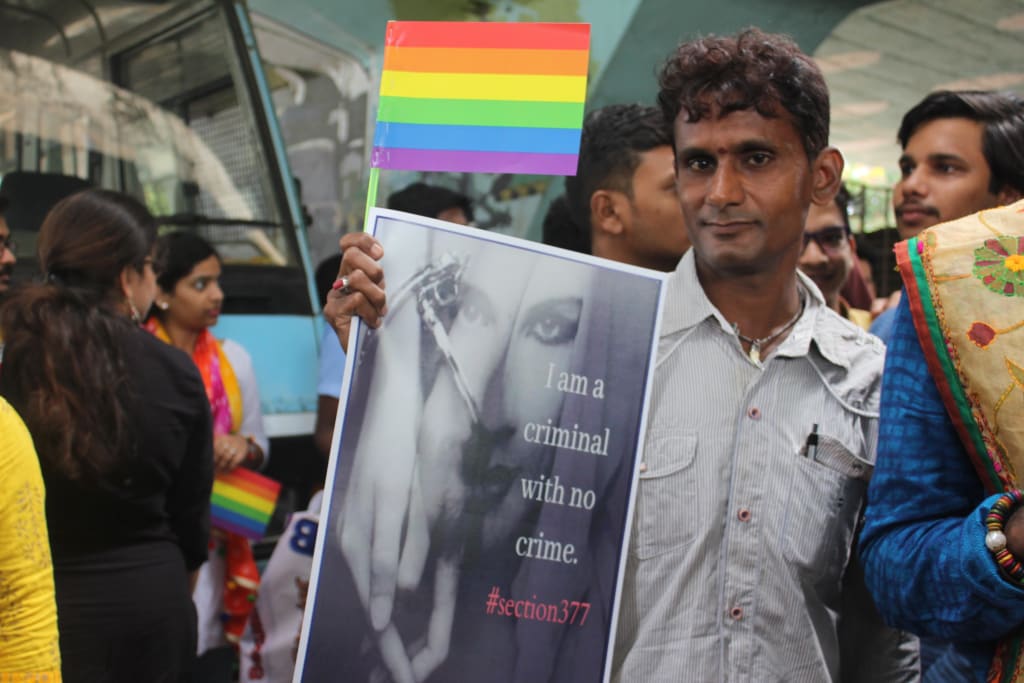
Singapore abolished article 377A of the penal code in 2022, the colonial-era provision criminalizing same-sex relations between men. The government recognized there was no basis for making private sexual behavior between consenting adults a crime. However, Singapore simultaneously amended its Constitution to define marriage as between a man and a woman, preventing future legal challenges for marriage equality. This mixed approach decriminalizing same-sex activity while foreclosing marriage rights reflects the complex political balancing acts occurring across Asia.
Thailand achieved marriage equality, with legislation that became a living reality as we entered 2025, becoming one of the few Asian countries to recognize same-sex marriages. Now, in early 2026, we are seeing the first full year of these unions being woven into the social fabric of the nation. The Thai parliament’s overwhelming passage of marriage equality legislation represented a watershed moment for Asia, demonstrating that Buddhist-majority nations can embrace LGBTQ rights without abandoning cultural or religious values. Taiwan, though not a UN member state, achieved marriage equality in 2019 through a combination of court rulings and legislative action, becoming the first place in Asia to recognize same-sex marriages.
Nepal has emerged as another unexpected beacon of LGBTQ rights in Asia, with its Supreme Court ruling in 2007 that discrimination based on sexual orientation violates constitutional rights and ordering the government to implement protections for LGBTQ citizens. Nepal’s legal framework now includes recognition of third gender identities and protections against discrimination, though implementation remains inconsistent.
The diversity of Asia’s legal landscape reflects the continent’s complex interplay of colonial legacies, religious traditions, authoritarian governance, and emerging democratic movements. While some nations have embraced reform, others have doubled down on repression, creating a patchwork of rights and risks that shapes the lives of millions of LGBTQ Asians.
Oceania and the Caribbean: Small populations, significant impact
Oceania presents a continent of sharp contrasts regarding anti-LGBTQIA+ laws. Six of the 14 countries of the continent have passed anti-gay legislation. Kiribati and the Solomon Islands are the harshest enforcers, with sentences of up to 14 years for homosexual acts. Other countries maintaining criminalizing laws include Papua New Guinea, Samoa, Tonga, and Tuvalu. The small populations of these Pacific nations, many with fewer than 100,000 citizens, means that the absolute numbers of people affected might seem small, but the proportion of citizens living under state persecution is substantial, and the isolation of these island communities makes escape or resistance particularly difficult.
Tonga has outlawed all same-sex relations and criminalizes various forms of gender expression, with the Criminal Offences Act allowing for corporal punishment, specifically whipping, for individuals convicted of “sodomy”. The law’s explicit sanctioning of physical violence as punishment represents one of the few remaining examples worldwide of officially prescribed corporal punishment for same-sex activity. Tuvalu, a country of just 11,000, has outlawed same-sex marriage and sex between men, though there is little evidence to suggest that the laws and prison sentences are enforced nationwide. The small size of Tuvaluan society means that any LGBTQ individuals likely face intense social pressure and ostracism even without formal legal prosecution.
Papua New Guinea inherited British colonial laws criminalizing same-sex activity, with maximum penalties of 14 years imprisonment. The country’s LGBTQ community remains largely invisible due to severe social stigma and the ever-present threat of violence. Samoa and Kiribati maintain similar colonial-era provisions, though enforcement varies and traditional Pacific concepts of fa’afafine (in Samoa) and other third-gender identities create complex intersections between indigenous culture and imposed colonial legal frameworks.
In the Caribbean, all former British colonies inherited identical criminal laws against homosexuality that targeted LGBTQIA+ people in general or gay men in particular. However, since 2010, the trend has been towards decriminalization, with six Caribbean countries scrapping their criminalizing provisions. Dominica struck down its sodomy laws in 2024, following a legal challenge that argued the laws violated constitutional protections. The Caribbean Court of Justice has emerged as a powerful force for LGBTQ rights in the region, with several of its rulings establishing precedents that colonial-era anti-sodomy laws violate modern constitutional protections.
Barbados, Antigua and Barbuda, and Saint Kitts and Nevis have also decriminalized same-sex sexual activity in recent years. In each case, court rulings determined that the laws were unconstitutional, with judges explicitly recognizing that privacy rights extend to consensual sexual activity between adults. These victories represent the fruits of sustained advocacy by Caribbean LGBTQ organizations, often working with international human rights groups to build legal cases and challenge deeply entrenched laws.
However, Trinidad and Tobago represents a devastating setback. In 2018, the High Court ruled that sections of the Sexual Offences Act criminalizing “buggery” and “serious indecency” were unconstitutional. But on 25 March 2025, the Court of Appeal overturned this landmark ruling, reinstating colonial-era criminal penalties for consensual same-sex acts between males, with maximum penalties of five years for “buggery” and two years for “gross indecency”. The Trinidad Tobago LGBTQ law reversal sent shockwaves through the Caribbean LGBTQ community and human rights advocates worldwide. The court argued it was up to parliament, not judges, to change the law, placing the burden on a political process that has consistently failed to address LGBTQ rights. This brings the global number of criminalizing countries back to 65. LGBTQIA+ activist Jason Jones, who brought the original challenge, immediately announced his intention to appeal to the Judicial Committee of the Privy Council in London.
The Trinidad and Tobago reversal demonstrates the fragility of court-won victories when not accompanied by legislative reform and cultural change. It also highlights how judicial interpretations of the proper role of courts in protecting minority rights can vary dramatically, with some courts viewing themselves as guardians of constitutional protections while others defer to majoritarian legislative processes even when those processes systematically exclude minority voices.
Jamaica remains another Caribbean nation where decriminalization efforts have stalled despite ongoing advocacy. The country’s “buggery law” carries a maximum sentence of 10 years imprisonment with hard labor, and while prosecutions are relatively rare, the law creates a climate of fear and enables violence and discrimination. Civil society organizations have documented how the existence of the law, even when unenforced, enables vigilante violence, workplace discrimination, and denial of healthcare services.
Indirect criminalisation: Propaganda laws and hostile environments
Beyond direct criminalization of same-sex acts, many countries have implemented laws that restrict freedom of expression and create hostile environments for LGBTQIA+ individuals. These so-called propaganda laws prohibit the “promotion” or “propaganda” of non-heterosexual relationships, effectively silencing LGBTQIA+ voices without explicitly criminalizing sexual acts themselves. The LGBTQ propaganda laws Russia Hungary model has spread to multiple countries, representing a sophisticated evolution of state repression that avoids international criticism focused on direct criminalization while achieving many of the same silencing effects.
Russia pioneered this approach with its 2013 anti-LGBTQ law that discouraged public speaking about sexual diversity, which is considered “propaganda”. In December 2022, Russia broadened its prohibition on “propaganda of non-traditional sexual relations” to include adults, thereby criminalizing any public endorsement of LGBTQIA+ activities. The law has been used to censor media, ban pride events, and restrict educational content about LGBTQIA+ issues. Russian authorities have applied the law to shut down LGBTQ organizations, fine activists, and justify raids on community spaces. The law’s vague language allows for arbitrary enforcement, with anything from rainbow imagery to discussions of LGBTQ history potentially constituting illegal “propaganda.”

Hungary became the first European Union country to import Russia’s anti-LGBTQ propaganda law. Passed in June 2021, Hungary’s “Act on stricter actions against paedophile offenders” prohibits sharing information seen as promoting homosexuality and trans identities with minors in advertising, media, schools, bookshops, and in family interactions. The law conflates LGBTQIA+ people with paedophiles and has drawn widespread criticism from the European Union and human rights organisations. In March 2025, Hungary escalated its crackdown by passing a law that bans Pride events and permits authorities to use facial recognition technology to identify participants, with organisers facing up to one year imprisonment and participants facing fines of up to €500. This surveillance-based approach to LGBTQ repression represents a troubling merger of digital technology and state persecution.
According to ILGA-Europe’s Annual Review from last year, seven countries in Europe and Central Asia have enacted or proposed so-called ‘LGBT propaganda’ laws, criminalizing visibility and restricting discussion of LGBTQIA+ issues. Beyond Russia and Hungary, countries including Georgia, Poland (in certain municipalities before legal challenges), and several Central Asian nations have considered or implemented similar measures. These laws have been increasingly leveraged in education sectors, restricting or entirely preventing the inclusion of LGBTQIA+ issues in curricula and awareness-raising initiatives. Teachers have been fired, textbooks censored, and school libraries forced to remove any materials mentioning LGBTQ people or issues.
In parallel, ‘foreign agent’ laws targeting NGOs have been either proposed or introduced in Bulgaria, Georgia, Hungary, and Montenegro, forcing LGBTQIA+ organisations to register as foreign-funded entities. These laws, modeled on Russian legislation, stigmatize civil society organizations receiving international funding and subject them to onerous reporting requirements, surveillance, and potential prosecution. The effect has been to severely limit the ability of LGBTQ organizations to operate, access funding, and advocate for community needs.


At least 61 UN member States have laws, rules, and regulations that limit freedom of expression related to sexual and gender diversity issues. An additional 61 UN member States present legal barriers to freedom of association when registering and operating organisations openly advocating the rights of LGBTQIA+ people. This represents a worrying development where laws regulating speech or restricting organisations’ spaces to advocate have become increasingly prominent mechanisms for persecution.
Georgia’s 2024 passage of sweeping anti-LGBTQ legislation banning Pride events, public displays of LGBTQ identity, and any media representation of LGBTQ people represents one of the most comprehensive propaganda law regimes implemented outside Russia. The legislation passed despite massive protests and international condemnation, reflecting the Georgian government’s willingness to sacrifice EU integration prospects to pursue conservative social policies.
Poland presents a complex case, with national-level protections existing alongside dozens of “LGBT-free zone” declarations by local governments between 2019 and 2020. These declarations, while largely symbolic without formal legal force, created hostile environments and enabled discrimination. Following EU pressure and funding cuts, along with domestic political changes, most of these zones have been formally rescinded, with the last being overturned in 2024. However, the episode demonstrates how sub-national authorities can create patchworks of persecution even in countries with national-level protections.
The human cost: Violations of fundamental rights
The criminalization and persecution of LGBTQIA+ individuals constitute profound violations of fundamental human rights, affecting every aspect of daily life including healthcare, employment, education, housing, and personal safety. The LGBTQ human rights violations documented by international organizations reveal systematic patterns of state-enabled discrimination that extend far beyond the criminal codes themselves.
Healthcare discrimination and barriers
LGBTQIA+ individuals face systematic discrimination in accessing healthcare services. In one study, 8% of lesbian, gay, bisexual, and queer individuals reported that a healthcare provider refused to see them due to their actual or perceived sexual orientation, while 29% of transgender individuals reported refusal of care due to their gender identity. The transgender persecution healthcare discrimination nexus represents one of the most severe manifestations of how criminalization translates into denied access to life-saving medical services. Even when not barred from care altogether, many LGBTQIA+ individuals experience discrimination and mistreatment when seeking healthcare. One recent study found that LGBT adults were twice as likely as non-LGBT adults to report having had a negative experience while receiving healthcare in the past three years, including having a provider ignore a question or request or blame them for a health problem.
This discrimination leads to negative health outcomes. LGBT adults are more likely than non-LGBT adults to report adverse health consequences due to discrimination or mistreatment by a healthcare provider. According to a 2022 survey, 26% of LGBTQIA+ individuals avoid medical offices, mental health providers, or hospitals to avoid discrimination. The lack of adequate healthcare and discrimination contribute to higher rates among LGBTQIA+ individuals of mental health disorders such as depression and anxiety, delayed diagnoses, substance abuse, and premature mortality due to suicide, homicide, cardiovascular disease, cancer, and HIV/AIDS-related causes.
In countries that criminalize same-sex activity, LGBTQIA+ people are hesitant to report crimes committed against them and avoid seeking healthcare services due to fear of arrest or prosecution. Transgender women and men who have sex with men particularly avoid accessing healthcare facilities because of the stigma and discrimination they face. Research shows that criminalizing countries have significantly lower rates of both knowledge of HIV status and HIV viral suppression among all people living with HIV. The intersection of criminalization and HIV stigma creates a deadly barrier to accessing antiretroviral treatment, resulting in preventable deaths and ongoing transmission.
Healthcare providers in criminalizing countries often lack training on LGBTQ-specific health needs and may harbor discriminatory attitudes that further deter patients from seeking care. In some contexts, healthcare workers have reported LGBTQ patients to police, leading to arrest and prosecution. This betrayal of medical ethics and patient confidentiality forces LGBTQ individuals to choose between accessing needed care and maintaining their safety from state persecution.
Employment and economic marginalisation
Discrimination in employment remains pervasive for LGBTQIA+ individuals worldwide. In 29 US states, LGBT people can be terminated from employment due to their sexual orientation or gender identity, despite federal-level protections established by Supreme Court rulings. Discrimination on the basis of sexual orientation or gender identity leaves many LGBTQIA+ people without stable livelihoods and further subject to exploitation or extortion. Transgender women, often unable to obtain other employment due to pervasive discrimination, face particular economic vulnerability and are overrepresented in survival sex work.
LGBTQIA+ employees regularly have to decide whether disclosing their sexual orientation or gender identity in a particular work context will adversely impact their employment prospects. This constant need for concealment creates additional stress and mental health challenges. Workplace discrimination affects not only hiring and firing decisions but also promotions, benefits, and daily work environment. Studies document that LGBTQ workers experience higher rates of harassment, hostile work environments, and denial of advancement opportunities compared to their heterosexual and cisgender counterparts.
+ Read more: LGBTQ+ friendly companies: real allies, not just rainbow washing
In criminalizing countries, LGBTQ individuals often cannot access formal employment at all, as background checks, identity documents, and workplace relationships create multiple points where sexual orientation or gender identity might be exposed. This forces many into informal economic sectors with no labor protections, where exploitation and abuse are rampant. The economic marginalization of LGBTQ people in criminalizing countries contributes to cycles of poverty, homelessness, and increased vulnerability to violence.
Education and youth vulnerability
LGBTQIA+ youth face particular challenges in educational settings. According to ILGA World criminalization database research, only six countries have specific laws protecting LGBTQIA+ youth from bullying in schools. Most jurisdictions use education or equal treatment laws to protect young people from bullying, but these often fail to adequately address the specific needs of LGBTQIA+ students.
Prejudice toward LGBTQIA+ people has been found to result in discrimination, including anti-LGBTQIA+ violence, bullying, and harassment in schools. A majority of LGBTQIA+ people have at some point been the target of homophobic slurs and negative comments about their sexuality and gender identity, and most have been threatened or harassed or have experienced violence at some point because of their sexual orientation or gender identity. School-based violence and harassment contribute to higher dropout rates, lower academic achievement, and increased mental health challenges for LGBTQ youth.
Since 2021, states and school districts across the US have enacted bans on educational materials and books addressing gender, sexuality, and race, both in school curricula and in public libraries, as well as prevented classroom discussion on sexual orientation and gender identity. The lasting effects of the 2024 legislative session have only intensified these discriminatory bans and censorship, violating the right to freedom of expression and the right to education, erasing the visibility of LGBTQIA+ communities. State and federal restrictions on inclusive education have also limited LGBTQIA+ youth’s access to adequate sexuality education. The lack of inclusive, comprehensive sexuality education curricula exacerbates the negative sexual health outcomes experienced by LGBTQIA+ youth as compared with their non-LGBTQIA+ peers, including higher rates of STIs, unplanned pregnancies, and sexual violence.
In criminalizing countries, schools often become sites of intense persecution for LGBTQ youth, with teachers and administrators sometimes actively participating in bullying or reporting suspected LGBTQ students to authorities or families. The absence of supportive adults and affirmative information about sexual orientation and gender identity leaves LGBTQ youth isolated, vulnerable, and without resources to understand or accept themselves.
Housing insecurity and homelessness
Housing discrimination represents another critical human rights violation faced by LGBTQIA+ individuals. In 29 US states, LGBT people can be denied housing opportunities due to their sexual orientation or gender identity. According to research, LGBTQIA+ refugees suffer abuse, sexual harassment, and even rape in the accommodation provided by governments. Most of these episodes go unreported as refugees fear it might negatively impact their application cases. As a result, many experiencing abuse leave their accommodation, ending up homeless and with no social support, entering a cycle of poverty and often sexual exploitation.
In Uganda, following the passage of the Anti-Homosexuality Act 2023, the state-sponsored anti-LGBT rhetoric and impunity for attacks created a permissive environment for evictions and harassment. Within five months of the passing of the law, Amnesty International and Human Rights Watch documented how LGBT people faced a notable increase in evictions and homelessness, with scores fleeing the country to escape the increasingly hostile environment. Landlords, emboldened by the new law, evicted tenants suspected of being LGBTQ without any legal recourse available to those evicted.
LGBTQ youth experiencing family rejection often face homelessness, with studies showing that LGBTQ youth are disproportionately represented among homeless young people. In the US, LGBTQ youth represent up to 40% of homeless youth despite being only about 7% of the total youth population. Family rejection, often intensified by religious beliefs and social stigma, leaves young LGBTQ people without safe housing and vulnerable to exploitation.
Violence, persecution, and the forced underground
LGBTQIA+ individuals face disproportionate levels of violence, including rape, torture, sexual orientation and gender identity change practices (so-called “conversion therapy”), physical and sexual assault, and imprisonment. Research shows that all transgender refugees in one study reported experiencing some form of assault. In multiple contexts, participants reported multiple instances of false arrest, being picked up and taken to jail and held under charges that were later dropped or held without charges, with physical and sexual assault by police being common.
The criminalization of LGBTQIA+ identities forces many individuals to live in hiding, unable to express their authentic selves. Internalized shame and forced concealment of one’s sexual orientation or gender identity arise because LGBTQIA+ persons are pressured by families or communities to adopt socially acceptable roles or forcibly enter heterosexual marriages. This denial of the recognition of human rights for LGBTQIA+ individuals is a denial of their humanity, which has a profound impact on health and well-being. Forced heterosexual marriages, common in many criminalizing countries, trap LGBTQ individuals in relationships characterized by deception, unhappiness, and often violence.
Members of the LGBTQIA+ community must often make the difficult choice between living in secrecy or fleeing their homes. On their journeys to safety, LGBTQ asylum refugees face increased risks of sexual and physical assault, discrimination, and limited access to essential resources, including safe spaces and aid that is appropriate for their gender identity. The LGBTQ asylum refugees crisis has intensified in recent years as more countries have either enacted new criminalizing laws or intensified enforcement of existing ones. Even in countries known for progressive LGBTQIA+ rights, the asylum process remains complex, with many applications rejected on arbitrary grounds. Asylum seekers must often provide extensive proof of their sexual orientation or gender identity, subjecting them to invasive questioning and requiring them to conform to Western stereotypes of LGBTQ identity.
Transgender individuals face particularly severe violence and persecution. Murders of transgender people, especially transgender women of color, occur at alarming rates worldwide. In Brazil, despite same-sex activity being legal, transgender individuals face epidemic levels of violence, with the country consistently ranking as one of the deadliest places for transgender people. This demonstrates that formal decriminalization, while essential, does not automatically translate into safety or social acceptance.
+ Read more: Internalised homophobia: How LGBTQ+ communities judge gender non-conformity
Conversion therapy: The pseudoscientific practice of harm
Conversion therapy, the pseudoscientific practice of attempting to change a person’s sexual orientation or gender identity, represents another form of violence inflicted upon LGBTQIA+ individuals. Despite being widely condemned by major medical and mental health organisations, conversion therapy remains legal in much of the world. As we enter 2026, the number of countries that have enacted conversion therapy bans worldwide continues to sit near 30, with activists pushing for more legislative movement this year.
Thirteen countries ban the practice by any person: Belgium, Canada, Cyprus, Ecuador, France, Germany, Iceland, Malta, Mexico, New Zealand, Norway, Portugal, and Spain. Eight countries ban its practice by medical professionals only: Albania, Brazil, Chile, Greece, India, Israel, Taiwan, and Vietnam. Another seven countries, Argentina, Fiji, Nauru, Paraguay, Samoa, Switzerland, and Uruguay, have indirect bans in that diagnoses based solely on sexual orientation or gender identity are banned, though this effectively amounts to a ban on health professionals practicing conversion therapy.
Ireland successfully moved forward with its 2023 plans, and Belgium officially banned all practices in July 2023 after lawmakers voted in favour of the new legislation. Iceland and Cyprus both welcomed conversion therapy bans in May and June 2023, with all representatives in Iceland voting in favour of the bill.
At least 17 UN member States have nationwide bans on ‘conversion therapies’, with seven having indirect regulations and six having subnational bans only. However, LGBTQIA+ refugees and asylum seekers report experiencing physical assault, harassment, blackmail, mob and gang violence, forced exposure to so-called “conversion therapy” and other efforts to change their sexual orientation. The practice has been documented as causing severe psychological harm, including increased rates of depression, anxiety, and suicidality.
The decriminalisation movement: Progress amid adversity
Despite the grim global picture, a powerful LGBTQ decriminalization movement has achieved significant victories in recent years. In the last 10 years alone, Angola, Antigua and Barbuda, Barbados, Belize, Bhutan, Botswana, Cook Islands, Dominica, Gabon, India, Mauritius, Mozambique, Namibia, Nauru, Palau, Saint Kitts and Nevis, Seychelles, Singapore, and Trinidad and Tobago (though later reversed) have all repealed laws that had criminalized LGBTQIA+ people.

Botswana’s 2019 High Court ruling, affirmed by the Court of Appeal in 2021, represents a watershed moment for Southern Africa. The Court explicitly recognized the equal moral membership under the Botswana Constitution of individuals who identify with same-sex relations, finding that the impugned provisions violated rights to privacy, liberty, dignity, and equality. The judgment carefully navigated the arguments raised and called attention to the fear of arrest and exclusion from access to public health facilities that persist even after decriminalization. The ruling inspired activists across the region and provided legal precedents that have been cited in subsequent cases challenging anti-LGBTQ laws.
India’s 2018 Supreme Court ruling striking down Section 377 was celebrated across the region and globally. The ruling recognized that the law was a colonial imposition that did not reflect indigenous Indian values and that criminalization violated fundamental rights guaranteed by the Indian Constitution. The Court’s eloquent judgment included powerful language about dignity, autonomy, and the fundamental humanity of LGBTQ people. Justice Indu Malhotra wrote: “History owes an apology to members of the LGBTQ community and their families for the delay in ensuring their rights.” The ruling has had ripple effects across South Asia, emboldening activists in neighboring countries to mount their own legal challenges.
Singapore’s 2022 decision to abolish article 377A demonstrated clear recognition by the government that there was no basis for making private sexual behavior between consenting adults a crime. The repeal came after decades of advocacy by Singaporean LGBTQ activists and followed several legal challenges that, while unsuccessful, kept the issue in public discourse. However, the simultaneous constitutional amendment protecting the definition of marriage as between a man and a woman demonstrates the incomplete nature of the progress.
Mauritius joined this growing list in October 2023 when the Supreme Court declared that Section 250 of the Criminal Code was unconstitutional. The Court highlighted that “Section 250 was not introduced in Mauritius to reflect any indigenous Mauritian values but was inherited as part of our colonial history from Britain. Its enactment was not the expression of domestic democratic will, but was a course imposed on Mauritius and other colonies by British rule”. The United Nations welcomed the decision, noting it would speed up progress to end the AIDS pandemic and save lives by enabling LGBTQ people to access HIV prevention and treatment services without fear of prosecution.
Namibia’s June 2024 High Court ruling represents the most recent victory. The Court found that the common law crimes of sodomy and unnatural sexual offences were unconstitutional and violated both equality and dignity provisions of the Namibian Constitution. The Court firmly held that “the enforcement of the private moral views of a section or majority of the community, which are based on prejudice, cannot qualify as a legitimate governmental purpose”. According to the Court, in a “constitutional democratic society that protects inherent dignity, equality, and inalienable rights of all humans and the pursuit of individual happiness, it is unreasonably justifiable to make an activity criminal just because a segment or majority consider it to be unacceptable”. The ruling came after years of litigation and represented a personal victory for activist Friedel Dausab, whose perseverance through multiple legal challenges finally achieved success.
Marriage equality has also advanced globally, becoming a reality in 37 UN member States and Taiwan. Thailand’s achievement of marriage equality, which became fully operational in early 2025, represents a significant milestone for Asia, with the Thai parliament passing the legislation with overwhelming support and King Maha Vajiralongkorn signing it into law. The Thai marriage equality law allows same-sex couples to adopt children, inherit property, and access all benefits available to opposite-sex married couples. Additionally, 18 UN member States now allow legal gender recognition based on self-determination at the national level, enabling transgender individuals to update identity documents without medical requirements or judicial oversight. Nine UN member States ban non-vital medical interventions on intersex children, with two having enacted restrictions at the sub-national level, recognizing that such surgeries often cause lasting harm when performed on infants unable to consent.
International bodies and civil society: Champions of change
International organisations and civil society groups have played crucial roles in advocating for decriminalisation and supporting LGBTQIA+ communities worldwide. ILGA World (International Lesbian, Gay, Bisexual, Trans and Intersex Association), established in 1978, is a federation of more than 2,000 member organisations from 170 countries campaigning for LGBTI human rights. ILGA World supports LGBTI civil society worldwide through advocacy and research projects, giving grassroots movements a voice within international organisations. The organisation’s Laws on Us report and ILGA World Database document legal developments affecting LGBTI communities across the world, providing essential evidence for advocacy efforts.
Human Rights Watch documents and exposes abuses based on sexual orientation and gender identity worldwide, including torture, killing and executions, arrests under unjust laws, unequal treatment, censorship, medical abuses, discrimination in health and jobs and housing, domestic violence, abuses against children, and denial of family rights and recognition. The organisation advocates for laws and policies that will protect everyone’s dignity and works for a world where all people can enjoy their rights fully. Their detailed country reports provide crucial documentation of abuses and serve as evidence for international advocacy, UN proceedings, and national-level legal challenges.
The United Nations has established the Independent Expert on protection against violence and discrimination based on sexual orientation and gender identity (SOGI). Created in 2016 and renewed in 2019, 2022, and most recently in July 2025, this mandate conducts official visits to countries, produces reports documenting discrimination, and sends communications documenting allegations of human rights violations to States. Following a campaign by 1,259 non-governmental organisations from 157 States and territories, the UN Human Rights Council adopted a resolution renewing the mandate by a vote of 29 in favour, with 15 voting against and 3 abstaining. The Independent Expert’s reports have documented the profound harms of criminalization and provided authoritative analyses of states’ obligations under international human rights law.
The European Union has demonstrated leadership with its LGBTIQ+ Equality Strategy 2020 to 2025 and the newly launched LGBTIQ+ Equality Strategy 2026 to 2030. This new strategy, starting this year, aims to protect LGBTIQ+ people from hate-motivated harassment and violence, empower LGBTIQ+ people through equality bodies, and engage society to advance LGBTIQ+ equality. The EU has consistently called on all countries to respect everyone’s sexual freedom and denounces sexual discrimination. However, the EU’s inability or unwillingness to take strong action against member states like Hungary that violate LGBTQ rights has drawn criticism from activists who argue the Union must do more to enforce its own values.
Regional organisations like ILGA-Europe work in collaboration with and on behalf of over 700 LGBTI member organisations across Europe and Central Asia, serving as a driving force for political, legal, and social change. Their annual Rainbow Map tracks progress on LGBTQIA+ rights across Europe, documenting both advances and setbacks. The map provides a comprehensive overview of laws and policies affecting LGBTQ people, serving as both a tool for advocacy and a resource for LGBTQ individuals seeking to understand their rights.
Grassroots LGBTQ organizations in criminalizing countries operate under extreme constraints, often unable to register formally, access funding from abroad, or conduct public advocacy. These organizations provide essential services including peer support, healthcare referrals, legal assistance, and emergency support for LGBTQ people facing violence or persecution. Many operate underground or semi-secretly, with organizers taking enormous personal risks to maintain community spaces and services. The courage and resilience of LGBTQ activists in criminalizing countries cannot be overstated, as they continue their work despite facing arrest, violence, and death threats.
The future outlook: Challenges and hope
As we stand in January 2026, the global landscape for LGBTQIA+ rights presents both reasons for hope and causes for grave concern. While 64 UN member States still criminalize consensual same-sex sexual acts, the trajectory over recent decades has been toward greater recognition of rights and decriminalization. However, this progress faces significant headwinds.
Escalating threats and backlash
The final months of 2025 saw escalating threats to the lives and dignity of LGBTQIA+ people, although progress has continued to happen even amid severe crisis. Following the major global election cycles of 2024 and 2025, states are trying to restrict civic space for non-governmental organisations, particularly those addressing sexual and gender diversity. Even talking about LGBTQIA+ lives in public is becoming increasingly difficult in a growing number of states. History has shown multiple times that the advances LGBTQIA+ movements have made worldwide are often just an election or a downturn away from being reversed.
Mali’s criminalization of homosexuality in December 2024 and Trinidad and Tobago’s reversal of its decriminalization ruling in March 2025 demonstrate how quickly progress can be undone. In the United Kingdom, the Supreme Court has restricted the definition of “woman” for the Equality Act, with implications for transgender rights and access to single-sex spaces. Georgia introduced a sweeping ban on all forms of LGBTI representation and assembly, mirroring Russian legislation. Hungary has amended its Constitution to ban LGBTQI gatherings, claim that “a human is either male or female,” and remove protections on gender identity.
Across the United States, bills and executive orders contribute to making life impossible for trans and intersex people under the false pretence of “defending women”. The legislative trends from 2024 and 2025 have targeting transgender youth’s access to healthcare, bathroom usage, sports participation, and educational materials. In Vanuatu, the Constitution could soon be amended to only recognise two sexes at birth. In Peru, the National Congress passed a law that establishes a prison sentence for ‘anyone who exposes youth to content on sexual diversity’. In Argentina, the government has amended the National Gender Identity Law by executive order whose legality is now being challenged, prohibiting access to gender-affirming care for persons under the age of 18.
Funding cuts and resource constraints
Significant reductions in funding for LGBTI movements and their data represent another major challenge. As global funding for LGBTI rights shifts, with major foundations cutting support and government funding reductions documented since early 2025, vital LGBTI data and community-led research are at serious risk. ILGA World’s global LGBTI Database, a key resource documenting laws, rights, and lived realities worldwide, urgently needs increased individual and philanthropic support. Without new funding, essential LGBTI data sources may disappear, erasing decades of progress and silencing marginalised communities.
The withdrawal of major international funders from LGBTQ rights work has left many organizations in criminalizing countries without resources to continue their operations. This funding crisis comes at precisely the moment when such organizations are most needed, as LGBTQ people face increasing persecution. Some organizations have closed entirely, while others have dramatically reduced their activities or shifted to volunteer-based models that cannot sustain comprehensive services.
Reasons for hope
Despite these challenges, there are compelling reasons for optimism. The courts both in the EU and across the world are increasingly upholding LGBTI human rights, with key judgements on procedures for LGBTI asylum seekers, anti-LGBTI hate speech, freedom of association and expression, legal gender recognition, and sexual and reproductive rights. These judicial victories demonstrate that even when governments scapegoat LGBTI people to push restrictive laws, independent judiciaries can serve as bulwarks protecting fundamental rights.
Social acceptance of LGBTQIA+ people has increased across the EU in the last five years, with 75% of people saying they are comfortable to have gay, lesbian, or bisexual colleagues. According to a Special Eurobarometer from September 2019, support in the EU for LGBTIQ equality increased from on average 71% of EU citizens in 2015 to 76% in 2019. This cultural shift towards greater acceptance has been driven by legislative developments, case law, and policy initiatives at both EU and Member State level.
The decriminalization trend continues in various regions. Since June 2024, Dominica and Namibia have decriminalized consensual same-sex sexual acts. Marriage equality became a reality in Thailand and Liechtenstein. The last-standing “LGBT-free zone” in Poland finally fell. Over a million people joined a citizens’ initiative to ban ‘conversion practices’ across the European Union.
Global public opinion polling shows increasing support for LGBTQ rights among younger generations across diverse cultural contexts. Even in countries with criminalizing laws, younger people express more accepting attitudes and greater willingness to support decriminalization. This generational shift suggests that change, while not inevitable, has momentum behind it.
Conclusion: The imperative of universal human rights
The criminalization of LGBTQIA+ individuals in 64 countries, representing 32.8% of all nations globally, stands as one of the most pervasive and egregious human rights violations of our time. This systematic persecution affects millions of people who face discrimination, violence, imprisonment, and even death simply for being who they are. The application of the death penalty in at least 12 countries for consensual same-sex activity represents the ultimate denial of human dignity and the right to life.
The colonial legacy of these criminalizing laws cannot be overstated. The overwhelming majority of countries that criminalize LGBTQIA+ people do so under legislation imposed by British, French, and Portuguese colonial powers, laws that often contradicted indigenous attitudes toward sexuality and gender diversity. The irony is profound: countries that fought for liberation from colonial oppression continue to enforce laws imposed by their former colonizers, even as those former colonial powers have long since repealed such legislation in their own territories.
The human cost of criminalization extends far beyond the direct penalties prescribed by law. LGBTQIA+ individuals in criminalizing countries face systematic discrimination in healthcare, employment, education, and housing. They are driven underground, forced to conceal their identities, and denied access to essential services. They experience higher rates of mental health disorders, substance abuse, and premature mortality. They are subjected to violence, torture, forced conversion therapy, and sexual assault with little recourse to justice.
The decriminalization movement has achieved remarkable victories in recent years, with 19 countries repealing criminalizing laws since 2014. Landmark court rulings in Botswana, India, Mauritius, Namibia, and Singapore demonstrate that change is possible and that judiciaries can play crucial roles in protecting minority rights against majoritarianism. International organisations like ILGA World, Human Rights Watch, and UN mechanisms continue to document abuses and advocate for change.
However, the recent reversals in Mali and Trinidad and Tobago, alongside the proliferation of propaganda laws in countries like Russia and Hungary, demonstrate that progress is fragile and can be quickly undone. The escalating rhetoric against LGBTQIA+ people in political discourse worldwide, funding cuts to LGBTQIA+ organisations, and restrictions on civic space all threaten to reverse decades of hard-won gains.
The path forward requires sustained commitment from governments, civil society, international organisations, and individuals worldwide. Countries must recognize that the criminalization of LGBTQIA+ people violates their obligations under international human rights law, including the Universal Declaration of Human Rights, the International Covenant on Civil and Political Rights, and regional human rights instruments. Courts must continue to assert their role in protecting minority rights even when doing so conflicts with majority opinion or political expediency.
Civil society organisations need sustained funding and support to continue their vital work documenting abuses, providing support to affected communities, and advocating for legal and policy change. International bodies like the UN Independent Expert on SOGI must be strengthened and their mandates renewed. Countries that have achieved decriminalization must use their influence to support LGBTQIA+ communities in countries that continue to criminalize.
Every individual has a role to play in challenging stigma, confronting discrimination, and standing in solidarity with LGBTQIA+ people worldwide. The fight for universal human rights is not complete until all people, regardless of their sexual orientation, gender identity, gender expression, or sex characteristics, can live freely, safely, and with dignity. The 64 countries that continue to criminalize LGBTQIA+ individuals represent not merely statistics on a map, but millions of human beings denied their fundamental rights. Their liberation must remain a priority for anyone committed to justice, equality, and human rights for all.
The evidence is clear: decriminalization saves lives. It improves access to healthcare, reduces HIV transmission, and enables LGBTQIA+ people to participate fully in society. It aligns national laws with constitutional guarantees of equality and dignity and with international human rights obligations. The question is not whether these discriminatory laws should be repealed, but how quickly the global community can mobilise to achieve universal decriminalization and full equality for LGBTQIA+ people everywhere.
Human rights are not subject to negotiation or cultural relativism. They are universal, inalienable, and indivisible. As the Ugandan LGBTQIA+ activist who contributed to the Botswana case remarked: “For now, we are celebrating. We are no longer considered criminals by the law”. Every LGBTQIA+ person in the 64 countries that continue to criminalize their existence deserves to experience that same celebration, the fundamental recognition of their humanity and their right to exist without fear. Until that day comes, the work continues.