
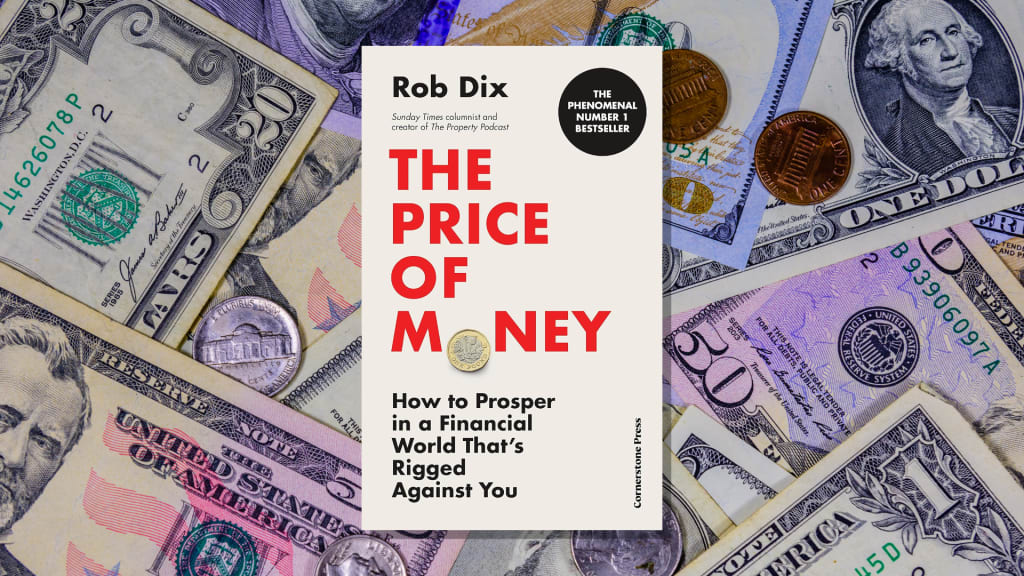
Are you working harder than ever, only to feel like your savings are slipping away? With inflation protection strategies becoming essential in 2025 and concerns about financial stability mounting globally, the traditional rules of money are broken. The current financial system actively works against savers and wage earners, making financial literacy 2025 more critical than ever before. In The Price of Money: how to prosper in a financial world that’s rigged against you, property investment expert and Sunday Times columnist Rob Dix offers a crash course in understanding how money really works, and more importantly, how you can position yourself to prosper rather than suffer in our rigged financial landscape. This comprehensive book review explores why this title has become essential reading for anyone seeking financial literacy in today’s turbulent economy, particularly as the European Commission releases its Financial Literacy Strategy and England makes financial education compulsory in schools.

Who is Rob Dix and why should you listen to him?
Before diving into The Price of Money book review, it’s worth understanding the credentials of the author. Rob Dix is far from your typical financial commentator. Co-founder of Property Hub, one of the UK’s leading property investment education platforms, Dix has spent over a decade simplifying complex economic concepts for ordinary people. His journey into finance began not as an economist or banker, but as someone who became obsessed with understanding the system after purchasing his first investment property.
Today, Rob is one of Britain’s most respected finance experts. He co-hosts The Property Podcast, which attracts over 300,000 downloads monthly and ranks as one of the top five business podcasts in the UK. He writes a weekly property column for The Sunday Times, where he translates economic jargon into accessible insights that everyday readers can understand and apply. His earlier books on property investment have sold hundreds of thousands of copies, but The Price of Money represents his most ambitious work yet: a complete dismantling of how our monetary system operates and what that means for your personal finances.
What sets this UK finance expert apart is his ability to explain the “nuts and bolts that hold the economy together” in a way that’s genuinely fascinating rather than dry and academic. As Ed Conway, author of Material World, notes: “A tour of the nuts and bolts that hold the economy together is not supposed to be interesting, but Rob Dix makes it fascinating. This is a bracing ride through the unexpectedly wild world of money.”
The Property Hub founder brings credibility not just through his media presence but through his practical experience. Unlike purely academic economists or financial journalists reporting from the sidelines, Dix has built wealth through property investment and helped thousands of others do the same. This combination of theoretical knowledge and practical application makes him uniquely qualified to write a financial education book that bridges understanding with action.
Understanding the core premise: a financial world rigged against you
The Price of Money book begins with a provocative but well-supported assertion: the financial world is rigged against ordinary people, particularly those who follow traditional advice about working hard and saving diligently. For centuries, this formula would have set you up for financial security and a comfortable retirement. Not anymore. As Rob Dix explains, over the last 50 years, and particularly since 1971 when President Richard Nixon abandoned the gold standard, we’ve entered a new financial paradigm where your savings lose value faster than you can build them, a global mountain of debt piles ever higher, and most people slip backwards however hard they try.
The book’s central argument revolves around understanding inflation, not just price inflation (why your shopping costs more), but monetary inflation (why governments can create billions out of thin air whilst your savings shrink). Rob Dix masterfully explains that these are two sides of the same coin, and grasping this relationship is fundamental to protecting your wealth in the modern economy.
This rigged financial system becomes particularly evident when examining recent economic data from 2025. With UK inflation reaching 3.5% in the second quarter while savings account interest rates struggle to keep pace, the real value erosion Dix warns about continues accelerating. The Bank of England’s rate cuts in early 2025, intended to stimulate economic growth, further demonstrate the monetary policy mechanisms this financial literacy author explains so thoroughly.
Understanding these mechanics is the first step to protecting your wealth. To get the full, in-depth explanation of quantitative easing, inflation, and how the monetary system has fundamentally changed, order The Price of Money from Amazon and gain instant access to Rob Dix’s invaluable insights that could transform your financial future.
The traditional metrics we’ve been taught to trust, including steady employment, consistent saving, and compound interest on deposits, no longer provide the financial security they once did. Understanding these mechanics is the first step to protecting your wealth. To get the full, in-depth explanation of quantitative easing, inflation, and how the monetary system has fundamentally changed, order The Price of Money from Amazon and gain instant access to Rob Dix’s invaluable insights that could transform your financial future.
What you’ll learn: chapter-by-chapter breakdown
Part one: understanding money itself
What is money?
The book begins at the beginning: what exactly is money? This seemingly simple question reveals profound complexity. Dix explains that money serves three primary functions: a medium of exchange, a unit of account, and a store of value. However, modern fiat currencies are increasingly failing at the last function. Through accessible historical examples, readers learn how money evolved from commodity-based systems (gold, silver) to the abstract digital entries in bank accounts that dominate today.
The author traces this evolution with clarity, showing how money transformed from tangible assets with intrinsic value to purely representational tokens whose worth depends entirely on collective trust and government backing. This foundational understanding proves essential for grasping later chapters about monetary policy and quantitative easing explained in practical terms.
How the pound lets you down
Perhaps the most eye-opening revelation in The Price of Money is learning that currencies worldwide have lost approximately 99% of their value over the past century. This chapter demonstrates mathematically how inflation, even at the Bank of England’s target rate of 2% annually, systematically erodes purchasing power. What cost £1 in 1971 now costs over £15, and this isn’t an accident of economic forces but a deliberate policy choice by central banks.
For readers concerned about savings losing value, this section provides concrete examples of how seemingly modest inflation rates compound over time into devastating wealth destruction. A retirement nest egg of £100,000 today will purchase goods worth only £82,000 in real terms after just ten years of 2% inflation. After thirty years, that same £100,000 has the purchasing power of approximately £55,000. These aren’t hypothetical scenarios but mathematical certainties under current monetary policy approaches.
The chapter also addresses the common misconception that inflation benefits everyone equally by raising wages alongside prices. In reality, wage growth consistently lags behind asset price appreciation, creating the wealth inequality Dix identifies as a core feature of our rigged financial system. Between 2009 and 2025, UK house prices increased by over 80% while median wages grew by less than 30% after adjusting for inflation, demonstrating this divergence clearly.
Why prices always go up
This section dismantles the common misconception that rising prices are simply about supply and demand for goods and services. Instead, Dix explains the relationship between money supply and price levels. When central banks and commercial banks create more money (which they do constantly), and the supply of goods remains relatively stable, prices inevitably rise. The chapter explores how this process accelerated after 2008 when central banks embraced quantitative easing as a “temporary” emergency measure that became permanent.
Understanding this mechanism proves crucial for anyone developing wealth building strategies in 2025 and beyond. The money management guide principles Dix establishes here form the foundation for all subsequent investment advice. Rather than viewing inflation as an unfortunate side effect of economic growth, readers learn to recognize it as a direct and predictable consequence of monetary policy choices.
The section also examines how different types of inflation affect various economic participants differently. Asset price inflation benefits those who already own property, stocks, and other investments, while consumer price inflation most severely impacts those living paycheck to paycheck with no asset buffer. This creates a self-reinforcing cycle where wealth concentrates among asset owners while wage earners fall further behind despite working harder.
Part two: money and power
Where money comes from
One of the most shocking revelations for most readers is learning that approximately 97% of money in the economy is not created by the Bank of England, but by commercial high street banks when they make loans. This process, known as credit creation, means that banks don’t need deposits to make loans. They create money “out of thin air” simply by typing numbers into a computer.
Rob Dix explains this counterintuitive concept brilliantly: “Adam walks into the bank wanting a £200,000 loan to start a business. The bank makes some checks to assess his ability to pay the loan back as promised. It does not check to make sure that it has £200,000 deposited by savers to pass on to Adam. It doesn’t matter if they do or don’t. If the bank decides Adam is a good risk for the loan, a bank employee will open an account for him and type the number ‘2’ followed by five zeroes. That. Is. It.”
This revelation fundamentally changes how readers understand banking, lending, and the entire monetary system. The implications extend far beyond academic interest. Understanding that banks create money through lending explains why easy credit conditions inflate asset prices, why banks can seem to lend unlimited amounts during booms yet suddenly restrict credit during busts, and why the relationship between saving and lending isn’t what most people imagine.
For first time investor book recommendations, this section alone justifies purchasing The Price of Money. The knowledge that money isn’t a scarce resource banks carefully husband but rather something they generate through loan creation reshapes how you evaluate borrowing decisions, mortgage applications, and the broader economic environment.
An explosion of borrowing
With the understanding of how money is created through lending, The Price of Money explores the consequences: an unprecedented explosion of debt at every level of society. Household debt, corporate debt, and especially government debt have reached levels unimaginable a generation ago. The book explains why this isn’t necessarily catastrophic (debt can be productive), but also why the current trajectory is unsustainable under traditional economic theory.
Dix provides compelling statistics that illustrate the scale of this debt accumulation. UK household debt as a percentage of GDP reached historic highs in the years preceding 2008, declined slightly during the financial crisis, then resumed climbing. Government debt has similarly ballooned, particularly following the 2020 pandemic response when governments worldwide borrowed trillions to fund economic support programs.
However, the author carefully distinguishes between productive debt that finances appreciating assets or income-generating investments and destructive debt that finances consumption. This distinction becomes crucial in later chapters when he provides investment guidance about using leverage strategically. Understanding when debt serves as a wealth-building tool versus a wealth-destroying burden separates successful investors from those trapped in cycles of negative real interest rates and declining purchasing power.
A country run on debt
The UK, like most developed nations, operates on a debt-based monetary system. Rob Dix breaks down government borrowing, explaining the relationship between budget deficits, bond markets, and central bank interventions. Readers learn why governments actually want moderate inflation (it erodes the real value of debt) and why austerity measures that made sense at a household level make less sense at the national level.
This chapter proves particularly relevant for understanding 2025 economic policy debates. As governments worldwide grapple with debt accumulated during the pandemic response, the dynamics Dix describes play out in real-time fiscal and monetary policy decisions. The Bank of England’s recent rate adjustments reflect precisely the tensions between controlling inflation, managing government debt burdens, and stimulating economic growth that this section illuminates.
The author also explores the political incentives that perpetuate debt accumulation. Politicians face electoral pressure to increase spending and cut taxes simultaneously, creating structural deficits that require constant borrowing. Meanwhile, central banks accommodate this borrowing through various mechanisms, including quantitative easing, that keep interest rates low and make continued debt accumulation possible. Understanding these dynamics helps readers anticipate future policy directions and position their investments accordingly.
Part three: the battle to create more money
Quantitative easing: the hidden mechanism
The sections on quantitative easing (QE) represent some of the most valuable content in The Price of Money. Dix explains this “unconventional” monetary policy tool in plain English: central banks purchase government bonds and other securities using newly created money, flooding financial markets with liquidity.
The stated purpose of QE was to stimulate economic activity and maintain the Bank of England’s 2% inflation target when traditional interest rate cuts reached their limits. However, as Dix reveals through his research, the mechanism operated differently than intended. Rather than creating consumer price inflation, QE primarily inflated asset prices: stocks, property, bonds, and other investments held predominantly by wealthy households.
According to Rob Dix’s analysis, the Bank of England was fully aware that asset price inflation would be a core consequence of QE. A Bank of England Quarterly Bulletin from 2009 explicitly stated: “Purchases of assets financed by central bank money should push up the prices of assets” and went on to predict that households and companies would “be encouraged to switch into other types of asset in search of a higher return. That would push up on other asset prices as well.”
The results were dramatic. Since QE began in 2009, the FTSE All-Share nearly doubled in value, house prices increased by 63%, gilts rose by 80%, and gold surged by 180%. Meanwhile, wages remained largely stagnant after accounting for inflation. This divergence between asset prices and wages represents the “rigged” nature of the current system: those who owned assets when QE began saw their wealth multiply, whilst those without assets found themselves priced out of property ownership and wealth-building opportunities.
For anyone researching how to protect wealth from inflation, this section provides essential context. The understanding monetary policy guide that Dix offers here explains not just what happened historically but what continues happening in 2025. Even as central banks periodically discuss “quantitative tightening” and reducing their balance sheets, the structural changes to monetary policy since 2008 remain largely intact. Asset prices continue reflecting this expanded money supply, making asset ownership guide principles more important than ever.
Addicted to money
Perhaps the most sobering section of The Price of Money examines how governments, banks, and the entire economy have become dependent on ever-increasing amounts of cheap money. Attempts to reduce quantitative easing or raise interest rates too quickly risk triggering recessions, market crashes, or debt crises. Yet continuing current policies indefinitely risks runaway inflation or asset bubbles that eventually burst. Rob Dix presents this as a policy trap with no easy exit.
This dependency manifests in multiple ways. Government finances now require low interest rates to service accumulated debt burdens. Property markets depend on mortgage availability at affordable rates. Stock markets anticipate continued liquidity injections. Pension funds rely on asset price appreciation to meet obligations. The entire economic structure has adapted to an environment of easy money, making any reversal potentially traumatic.
The 2025 economic environment demonstrates this addiction clearly. Despite inflation concerns prompting rate increases in 2022 and 2023, central banks including the Bank of England began cutting rates again in 2024 and 2025 when economic growth faltered. The inability to maintain restrictive monetary policy for extended periods illustrates the dependency Dix describes. Economies struggle to function without constant monetary stimulus, validating his thesis about systemic addiction to cheap money.
For readers developing investment trends 2025 strategies, this chapter suggests that despite periodic rate adjustments, the long-term trajectory favors continued monetary expansion and asset price support. Understanding this dynamic helps investors maintain conviction during market volatility and avoid timing mistakes like selling appreciating assets during temporary pullbacks.
Part four: making money work for you
The practical solution
After thoroughly diagnosing the problem, The Price of Money dedicates substantial space to actionable solutions. Rob Dix’s practical advice centres on several key principles that directly address the systemic issues he’s identified.
Own assets, not cash
The single most important takeaway from the book is understanding the distinction between holding cash (which inflation erodes) and owning assets (which tend to appreciate as money supply increases). Dix explains: “It’s not so much like the 1% and the 99%, it’s maybe like the 20% and the 80%. You know what I mean. Home ownership is a way for you to be invested in the economy. You can own a piece of our nation’s wealth.”
The book provides detailed guidance on various asset classes suitable for different risk profiles and investment timelines. For most readers, the primary recommendations include property (residential and commercial), equity investments (stocks and shares, particularly through low-cost index funds), and inflation-protected securities.
Property investment 2025 remains particularly relevant given the UK housing shortage and continued population growth. Despite periodic market corrections, long-term property trends favor appreciation as land scarcity, planning restrictions, and monetary expansion combine to push prices higher. Dix explains how property ownership provides multiple benefits: inflation protection through price appreciation, income generation through rent, leverage opportunities through mortgages, and tangible utility in providing housing.
Equity investments offer similar inflation protection with greater liquidity and lower capital requirements. By owning shares in productive businesses, investors participate in economic growth and benefit from companies’ ability to raise prices during inflationary periods. The best investment books 2025 consistently emphasize this shift from cash to appreciating assets, but Dix’s explanation of the underlying monetary dynamics provides deeper understanding than most personal finance guides.
Understanding productive debt
One of the more counterintuitive lessons in The Price of Money is that debt isn’t always bad. It depends entirely on what the debt finances. Rob Dix explains how wealthy individuals and successful investors use debt strategically to purchase appreciating assets, effectively using the bank’s money to build wealth whilst inflation erodes the real value of what they owe.
This doesn’t mean racking up consumer debt on credit cards for holidays and electronics. Rather, it means understanding how mortgages and other secured lending against assets can be powerful tools when interest rates are low and asset prices are rising. The book provides clear frameworks for assessing when debt is productive (financing assets that generate income or appreciate) versus destructive (financing consumption).
The mathematics prove compelling. If you borrow £200,000 at 4% interest to purchase property that appreciates at 5% annually, you gain exposure to £200,000 of asset appreciation while only investing your deposit. Meanwhile, inflation at 2-3% annually reduces the real burden of your £200,000 debt. This combination of leverage, appreciation, and inflation creates wealth accumulation impossible through saving alone.
For readers exploring UK property investment strategies or other leveraged investments, this section provides invaluable perspective. Rather than fearing all debt as dangerous, Dix teaches readers to evaluate debt strategically based on what it finances, the interest rate versus expected returns, and the investor’s capacity to service payments through income or asset liquidation if needed.
Financial education as a survival skill
Throughout The Price of Money, Rob Dix emphasizes that financial literacy is no longer optional but rather a fundamental survival skill in the modern economy. The traditional path of working hard, saving in a deposit account, and trusting your pension will provide for retirement worked when real interest rates (interest rate minus inflation) were positive. In an era of negative real interest rates, where inflation exceeds the interest you earn, that formula guarantees wealth erosion.
Dix argues passionately that the education system’s failure to teach basic financial literacy leaves people vulnerable to a system designed to benefit those who understand it. His book serves as the education most people never received, explaining not just what to do, but why these strategies work given the realities of modern monetary policy.
The timing proves particularly apt given the 2025 policy changes making financial education compulsory in English schools. While this represents progress, an entire generation of adults missed this education and must seek it independently. Resources like The Price of Money fill this gap, providing the understanding necessary to navigate an increasingly complex financial landscape.
The passive income investments and wealth accumulation strategies Dix advocates require foundational knowledge that schools historically didn’t provide. Understanding how compound interest works, how inflation affects purchasing power, how asset prices respond to monetary policy, and how tax structures incentivize different investment types separates financially successful individuals from those perpetually struggling despite hard work.
Start now, don’t wait
A recurring theme in the practical sections is the importance of taking action now rather than waiting for the “perfect” moment. Given that asset prices generally trend upward over time (due to monetary expansion), delaying entry into asset ownership means paying more later and missing years of potential appreciation. The book addresses common objections like “property prices are too high,” “the stock market is overvalued,” and “I don’t have enough saved yet” with clear explanations of why these concerns, whilst understandable, often cost people far more in missed opportunities than they save in avoided risk.
The psychological barrier to investing often stems from fear of buying at the peak before a crash. However, Dix demonstrates through historical data that timing the market proves nearly impossible even for professional investors. A more reliable approach involves starting now with whatever capital you’ve accumulated, then continuing to invest regularly regardless of market conditions. This “time in the market” strategy historically outperforms “timing the market” approaches over periods of ten years or longer.
For 2025 specifically, concerns about high asset valuations and economic uncertainty might tempt readers to delay investing. However, the monetary dynamics Dix describes suggest that waiting for prices to become “affordable” may prove futile if central banks continue expanding money supply. Better to own some appreciating assets at current prices than accumulate cash that loses purchasing power while waiting for a correction that may or may not materialize.

Book blurb
The Sunday Times Bestseller
‘Excellent . . . Filled with knowledge that will help you make better money decisions.’ Laura Whateley, author of Money: A User’s Guide
We all depend on money every day. But almost none of us understand it.
Have you ever wondered why your shopping bill keeps getting more expensive? Or how the government can produce billions out of thin air while your savings are shrinking? Or where you should put your money in an age of economic turmoil? Here, a leading investor offers a crash-course in how money works, and how to make yours go further. You will never look at your bank balance the same way again.
‘How the global monetary system shapes our everyday personal finances . . . Really, really interesting.’ Claer Barrett, author of What They Don’t Teach You About Money
‘Fascinating . . . A bracing ride through the unexpectedly wild world of money.’ Ed Conway, author of Material World
What makes this book different: a critical analysis
The strengths
Accessibility without sacrificing depth
Perhaps the greatest achievement of The Price of Money is making genuinely complex economic concepts comprehensible to readers without formal finance education. Rob Dix avoids academic jargon and mathematical formulas, instead using clear analogies, real-world examples, and step-by-step explanations. Laura Whateley, author of Money: A User’s Guide, praises the book as “Excellent . . . Filled with knowledge that will help you make better money decisions.”
The accessibility doesn’t come at the expense of substance. Dix tackles sophisticated topics including fractional reserve banking, monetary transmission mechanisms, yield curve dynamics, and fiscal-monetary policy coordination. However, he presents these concepts through everyday language and relatable scenarios that make them understandable to readers encountering them for the first time.
This balance distinguishes The Price of Money from purely academic economics texts that overwhelm lay readers with technical terminology, and from overly simplified personal finance books that provide tactics without explaining underlying principles. Dix achieves the difficult middle ground of genuine education that’s also genuinely accessible.
Historical context
Unlike many personal finance books that focus solely on tactics, The Price of Money provides crucial historical context. Understanding why the gold standard was abandoned in 1971, how the 2008 financial crisis changed central banking forever, and why COVID-19 pandemic stimulus measures represent an inflection point helps readers grasp not just current conditions but likely future developments. This historical grounding transforms the book from a simple how-to guide into genuine education about the monetary system.
The historical perspective also prevents the recency bias that plagues much financial commentary. By examining how monetary systems evolved over centuries and how previous policy regimes functioned, Dix helps readers understand that current arrangements aren’t inevitable or permanent. The fiat currency system that dominates 2025 represents just one possible approach to organizing money and credit, with distinct advantages and disadvantages compared to previous systems.
This historical depth proves particularly valuable for understanding investment trends 2025 and beyond. Many investor mistakes stem from assuming current conditions will persist indefinitely or that recent patterns will continue unchanged. By providing historical context showing how dramatically monetary systems have shifted during previous paradigm changes, Dix prepares readers to adapt when the next major shift occurs.
Balanced perspective
Whilst the book’s title suggests a conspiracy (“rigged against you”), the content is more nuanced. Dix doesn’t claim malicious intent by policymakers. Rather, he explains how systemic incentives, political pressures, and well-intentioned policies created unintended consequences that disproportionately benefit asset owners over wage earners. This balanced approach lends credibility and avoids the conspiratorial tone that mars some financial commentary.
The author acknowledges that policymakers faced genuine dilemmas during crises like 2008 and 2020, with no obvious perfect solutions available. Quantitative easing and other unconventional policies represented attempts to prevent complete economic collapse rather than deliberate schemes to enrich the wealthy. That these policies produced wealth inequality as a side effect doesn’t necessarily mean they were wrong choices given the alternatives.
This nuanced view allows readers to understand the system without descending into cynicism or conspiracy thinking. The financial system isn’t rigged in the sense of a coordinated plot, but rather in the sense that structural features systematically favor those who understand and position themselves accordingly. This distinction matters because it suggests solutions involve education and strategic positioning rather than waiting for unlikely systemic overhaul.
Practical actionability
Many books about economics are long on diagnosis and short on prescription. The Price of Money excels at translating its economic analysis into concrete actions readers can take. Whether you’re a complete beginner or someone with existing investments, the book provides clear frameworks for decision-making appropriate to your circumstances.
The actionable advice covers multiple dimensions including asset allocation strategies, property versus equities considerations, debt management principles, tax-efficient investment vehicles, and retirement planning approaches. Dix provides specific enough guidance to enable action while avoiding overly prescriptive recommendations that might not suit every reader’s situation.
This practical focus distinguishes The Price of Money from theoretical economics texts and makes it among the best financial books 2025 for readers seeking actual wealth-building strategies rather than purely intellectual understanding. The book delivers both comprehension and application, explaining why the system works as it does while also providing roadmaps for navigating it successfully.
The limitations
UK-centric focus
Some readers, particularly those outside the United Kingdom, may find certain examples and policy discussions specific to UK institutions like the Bank of England, UK property markets, and British tax structures. However, the core principles about inflation, quantitative easing, and asset ownership apply broadly across developed economies, so international readers can still extract substantial value.
Most developed nations pursued similar monetary policies post-2008, implementing quantitative easing programs and maintaining low interest rates for extended periods. The Federal Reserve, European Central Bank, Bank of Japan, and other major central banks followed paths largely parallel to the Bank of England. Asset price inflation, wealth inequality, and the divergence between wage growth and asset appreciation occurred globally, not just in Britain.
International readers can therefore apply the book’s lessons by translating institutional details to their local context. The principles about owning appreciating assets, using leverage strategically, and understanding monetary policy effects remain valid regardless of whether you’re investing in London property or New York real estate, UK gilts or US Treasury bonds.
Limited coverage of alternative assets
Whilst The Price of Money thoroughly covers traditional assets like property and equities, it gives relatively brief treatment to alternative investments such as cryptocurrencies, precious metals beyond gold, or commodities. Given the book’s focus on mainstream, accessible strategies for ordinary investors, this limitation is understandable, though readers interested in these areas may need to supplement with additional resources.
The emphasis on traditional assets reflects Rob Dix’s expertise and investment approach. As a property investment expert and Sunday Times columnist, his credibility stems primarily from success in conventional wealth-building strategies. Venturing into cryptocurrency speculation or commodity trading would take the book beyond his core competency and the target audience’s needs.
However, some readers pursuing inflation protection strategies in 2025 may wonder about alternative assets like Bitcoin, which proponents argue provide superior inflation hedging compared to traditional investments. The book’s limited treatment of these options means readers interested in crypto or precious metals will need to research those topics separately.
Assumes economic continuity
The book’s recommendations largely assume continuation of current monetary policies: continued money creation, negative real interest rates, and asset price inflation. Whilst Dix acknowledges these conditions may not persist indefinitely, the practical advice is calibrated for this environment. A dramatic policy shift, such as a return to tighter monetary policy or a severe economic crisis that forces systemic change, could require strategy adjustments.
This limitation reflects an inherent challenge in any financial advice. Economic conditions change, policy regimes shift, and market dynamics evolve in ways difficult to predict. The money management guide principles Dix advocates work well in the monetary environment that has prevailed since 2008 and continues through 2025, but different conditions would require different strategies.
However, Dix mitigates this limitation by focusing on underlying principles rather than specific tactics. Understanding how inflation affects different asset classes, how monetary policy influences prices, and how leverage amplifies returns remains valuable regardless of specific policy details. Readers who grasp these fundamentals can adapt their strategies when conditions change rather than blindly following fixed recommendations that may become outdated.
How readers respond: testimonials and reviews
The Price of Money has garnered overwhelmingly positive responses from readers and critics alike, becoming a Sunday Times Bestseller shortly after publication. The book maintains strong ratings on Goodreads and Amazon, with readers praising its clarity, insight, and practical value.
Gillian Tett, Editor-at-Large of the Financial Times, commends Dix for producing “as lucid and comprehensive account of money and its pitfalls as you are likely to find. In an age of elevated prices it is highly relevant to all our lives.” Alex Brummer, City Editor of the Daily Mail, notes the book’s exceptional educational value, whilst Iain Dale describes it as “a pithy and punchy guide that explains in a very engaging and readable manner the essentials of modern finance and economics.”
On Goodreads, readers consistently highlight several aspects that make this among the best investment books 2025:
“Incredible introduction to economics”: Many reviewers note that the book served as their first real education in how the monetary system works, filling gaps left by formal education. This financial literacy book provides foundational knowledge that readers often wish they’d learned decades earlier.
“Enlightening and humorous”: Rob Dix’s writing style makes potentially dry material engaging, with readers appreciating his use of humor and accessible explanations. The ability to maintain reader interest while explaining complex topics like quantitative easing explained and monetary transmission mechanisms represents a significant achievement.
“Changes how you think about money”: Numerous reviews mention that the book fundamentally altered their understanding of personal finance and investing strategy. Readers report making significant portfolio adjustments, purchasing property investments, or shifting savings from cash into appreciating assets based on insights gained from this Rob Dix book.
One common theme in critical reviews is that the practical investment advice, whilst valuable, doesn’t fully live up to the bold subtitle “How to prosper in a financial world that’s rigged against you.” Some readers expected more detailed investment strategies, specific stock recommendations, or complete financial planning guidance. However, most acknowledge that the book’s true value lies in the understanding it provides, which enables readers to make better informed decisions rather than following prescriptive formulas.
The audience for this financial literacy author extends beyond finance enthusiasts to include general readers seeking to understand economic news, first-time investors building foundational knowledge, and experienced investors wanting deeper insight into monetary policy mechanics. This broad appeal explains its commercial success and sustained relevance through 2025.
Who should read this book?
The Price of Money book proves valuable for a remarkably broad audience, though certain groups will benefit most:
Essential reading for:
Young adults and first-time investors: Those beginning their financial journey will gain foundational knowledge that can guide decades of sound decision-making. Understanding how inflation and monetary policy affect your wealth before you’ve made major financial commitments (buying property, choosing pension investments) provides an enormous advantage. The first time investor book recommendations consistently include this title because it explains the “why” behind investment strategies rather than just prescribing tactics.
Savers frustrated by low returns: If you’ve diligently saved in traditional deposit accounts only to see the purchasing power of your savings erode, this book explains why and what to do instead. The sections on negative real interest rates and inflation impact provide validation that your frustration stems from systemic conditions rather than personal failure, while the practical chapters offer alternative approaches for actually preserving and growing wealth.
Property investors and aspiring landlords: Given Rob Dix’s expertise in property investment, readers interested in buy-to-let, property development, or real estate as an inflation hedge will find particularly valuable insights about how property fits into wealth-building strategies. The UK property investment strategies discussed go beyond simple “how to buy rental property” tactics to explain why property performs well in inflationary environments and how leverage amplifies returns.
Anyone confused by economic news: If headlines about quantitative easing, inflation rates, or central bank policy seem like an incomprehensible foreign language, The Price of Money serves as your translation guide. The book decodes economic jargon and explains what policy announcements actually mean for your personal finances, transforming abstract macroeconomic concepts into concrete implications you can act upon.
People concerned about wealth protection: With 2025 bringing continued inflation concerns and economic uncertainty, readers seeking how to protect wealth from inflation will find this understanding monetary policy guide invaluable. The book doesn’t promise magic solutions or get-rich-quick schemes, but rather provides reliable strategies grounded in understanding how the monetary system actually works.
Useful but less essential for:
Experienced investors: Those with established portfolios and solid financial literacy may find the core concepts familiar, though even experienced investors report gaining new perspectives from Dix’s explanations of monetary policy mechanics. The sections on quantitative easing and its effects on asset prices provide insights valuable even for sophisticated investors.
Economics students or professionals: Academic economists may find the simplified explanations too basic, though the book’s focus on real-world implications over theoretical models offers practical value even for those with formal training. Professional economists might skip early chapters on basic monetary concepts but still benefit from chapters examining policy effects and investment implications.
Comparing The Price of Money to similar books
To understand where Rob Dix’s book fits in the financial literacy landscape, it’s helpful to compare it to similar titles:
The Price of Money vs. The Psychology of Money by Morgan Housel
Morgan Housel’s bestselling The Psychology of Money focuses on behavioral aspects of financial decision-making, exploring how emotions, biases, and psychology influence our money choices. It emphasizes that financial success depends less on intelligence than on behavior, offering principles like understanding “enough,” embracing long-term thinking, and recognizing the role of luck and risk.
Whilst both books are accessible to general audiences, they approach financial education from different angles. Housel examines the internal factors that drive financial decisions, whilst Dix explores the external systemic forces that shape financial outcomes. The Psychology of Money is stronger on personal discipline, savings habits, and avoiding behavioral mistakes; The Price of Money is superior in explaining how monetary policy, banking systems, and economic structures impact your wealth.
These books complement each other beautifully. Housel explains why you make financial decisions, Dix explains what those decisions should be given how the system works. Readers seeking comprehensive financial literacy in 2025 benefit from reading both, gaining insights into both the psychological and systemic dimensions of money management.
The Price of Money vs. The Ascent of Money by Niall Ferguson
Niall Ferguson’s The Ascent of Money provides a sweeping historical narrative of financial development from ancient civilizations to modern capital markets. It’s more academic and comprehensive in scope, examining the evolution of banking, bond markets, stock markets, insurance, and real estate over centuries.
Rob Dix’s book covers similar historical ground but with tighter focus on the modern era (particularly post-1971) and clearer practical applications. The Ascent of Money is better suited for readers wanting deep historical understanding of financial institutions; The Price of Money serves readers wanting to understand the current system and how to navigate it.
For readers researching best financial books 2025, Ferguson’s book provides superior historical depth and academic rigor, whilst Dix’s book delivers more immediately actionable investment guidance. Those with time to read both will gain historical perspective from Ferguson and practical strategy from Dix, a powerful combination for comprehensive financial understanding.
The Price of Money vs. Can’t We Just Print More Money? by Rupal Patel and Jack Meaning
This accessible economics primer tackles similar questions about monetary policy, inflation, and money creation. It’s structured as a Q&A addressing common economic misconceptions, making it highly readable for general audiences confused by economic news and policy debates.
Rob Dix’s book provides more depth on specific topics like quantitative easing and more explicit investment guidance, whilst Can’t We Just Print More Money? covers a broader range of economic topics with less detail on each. For readers specifically concerned with understanding money, banking, and investment implications, The Price of Money offers superior focus and actionability.
The Patel and Meaning book works well as a general economics introduction, whilst Dix’s book functions better as a specialized wealth building strategies guide grounded in monetary understanding. Readers might start with Can’t We Just Print More Money? for broad economic literacy then move to The Price of Money for deeper investment-focused education.
How to apply what you learn: a practical framework
Reading The Price of Money is valuable; applying its lessons is transformative. Here’s a practical framework for implementing the book’s key insights:
Step 1: assess your current position
Before making changes, understand where you stand:
Cash holdings: How much do you have in savings accounts, current accounts, and other cash equivalents? These are being eroded by inflation every year. Calculate your actual exposure to inflation risk by totaling all cash and cash-like holdings.
Asset ownership: What appreciating assets do you own? Property equity? Stocks and shares? Pension investments? These generally benefit from monetary expansion. Assess whether your wealth is positioned to benefit from the monetary dynamics Dix describes or remains vulnerable to inflation erosion.
Debt profile: What debts do you carry? Are they financing assets (like a mortgage on property that’s appreciating) or consumption (like credit card debt for holidays and purchases)? Understanding your debt composition helps determine whether leverage is working for you or against you.
Income security: How stable is your employment income? This affects how much risk you can take with investments. Higher income stability allows more aggressive positioning in appreciating assets, whilst income uncertainty suggests maintaining larger cash buffers despite inflation costs.
Step 2: build your foundation
Before aggressive investing, establish financial security:
Emergency fund: Maintain three to six months of living expenses in accessible savings despite low interest rates. This prevents you from being forced to sell investments at inopportune times. While inflation erodes this cash, the insurance value of ready liquidity outweighs the cost for foundational emergency reserves.
Clear high-cost debt: Credit cards and personal loans with interest rates of 10% or higher should be paid off before investing, as the guaranteed “return” from eliminating this debt exceeds most investment returns. Productive debt like mortgages can remain, but destructive consumption debt should be eliminated first.
Maximize tax-advantaged accounts: In the UK, this means ISAs (Individual Savings Accounts) and pension contributions that offer tax relief. These vehicles provide legally protected ways to shelter investment returns from taxation, amplifying long-term wealth accumulation.
Step 3: shift from cash to assets
Following The Price of Money’s core advice means deliberately moving wealth from cash into appreciating assets appropriate to your circumstances:
Property: Whether your home (ending rent payments that provide no equity), buy-to-let investment, or property funds, real estate ownership protects against monetary inflation. Property investment 2025 remains compelling given UK housing shortages, planning restrictions, and continued population growth putting upward pressure on prices.
Equities: Low-cost index funds tracking the FTSE All-Share or global markets like the MSCI World provide diversified exposure to productive businesses that can raise prices as inflation increases. Equity ownership allows participation in corporate profit growth and dividend income while avoiding company-specific risks through diversification.
Inflation-protected securities: UK Index-Linked Gilts provide explicit protection against CPI inflation, though their yields are currently low. These securities adjust both principal and interest payments for inflation, guaranteeing real purchasing power preservation if held to maturity.
The specific allocation between these asset classes depends on individual circumstances including age, risk tolerance, income stability, and existing holdings. Younger investors can favor equities for higher growth potential, whilst older investors might prefer property and inflation-linked bonds for stability and income.
Step 4: develop financial literacy
The Price of Money is a starting point, not an ending point. Continuous financial education through podcasts (like Rob Dix’s Property Podcast), financial news, and further reading ensures you adapt to changing conditions. The financial literacy 2025 landscape includes numerous free resources beyond books, from YouTube channels explaining investment concepts to financial blogs covering current market conditions.
Building financial literacy involves both breadth (understanding various asset classes, economic concepts, and investment strategies) and depth (specializing in areas most relevant to your situation). Property investors benefit from deep knowledge of real estate markets, whilst equity investors should understand company analysis and market dynamics.
This ongoing education also helps avoid common investment mistakes. Understanding behavioral finance principles prevents panic selling during market downturns. Recognizing market cycles helps maintain perspective during periods of volatility. Following economic indicators allows anticipation of policy changes that might affect different assets.
Step 5: monitor and adjust
The monetary environment changes. Interest rates fluctuate. Property markets cycle. Regular portfolio reviews (quarterly or semi-annually) ensure your strategy remains appropriate for current conditions and your evolving circumstances.
Monitoring involves tracking both portfolio performance and life changes that might warrant strategy adjustments. Getting married, having children, changing careers, or approaching retirement all represent inflection points where reassessing asset allocation makes sense. Similarly, major economic or policy shifts might suggest rebalancing between property, equities, and other holdings.
The adjustment process should be deliberate rather than reactive. Avoid constantly trading based on short-term market movements, which often leads to buying high after good performance and selling low after poor performance. Instead, make measured adjustments based on fundamental changes in your situation or the economic environment.
If you read one financial book this year that will genuinely change your perspective on money, make it this one. Don’t wait until it’s too late. Purchase The Price of Money on Amazon now and take control of your financial future before inflation erodes more of your hard-earned wealth.
If you read one financial book this year that will genuinely change your perspective on money, make it this one. Don’t wait until it’s too late. Purchase The Price of Money from Amazon now and take control of your financial future before inflation erodes more of your hard-earned wealth.
Final verdict: is The Price of Money worth your time and money?
In a word: absolutely.
The Price of Money: how to prosper in a financial world that’s rigged against you succeeds brilliantly at its stated mission of explaining how the monetary system really works and providing practical guidance for navigating it successfully. Rob Dix has created that rare finance book that’s simultaneously educational, engaging, and actionable.
The book’s greatest strength is making genuinely complex economic concepts (quantitative easing, fractional reserve banking, monetary inflation versus price inflation) comprehensible to readers without formal economic training. Dix writes with clarity and occasional humor, using real-world analogies and examples that stick in your memory long after you close the book.
Beyond education, The Price of Money book provides practical value that can materially improve readers’ financial outcomes. Understanding why cash savings lose real value, how asset prices respond to monetary policy, and why traditional financial advice (work hard and save in the bank) no longer guarantees security allows readers to make dramatically better financial decisions. For someone who adjusts their investment strategy based on these insights, the returns could easily exceed tens or hundreds of thousands of pounds over a lifetime, making the book’s modest price one of the best investments you’ll ever make.
The book isn’t perfect. It’s somewhat UK-centric, doesn’t cover every possible investment vehicle, and assumes broadly continued current monetary policies. However, these limitations barely diminish its value for the vast majority of readers seeking financial understanding and practical guidance.
Whether you’re a young adult just beginning your financial journey, a frustrated saver watching inflation eat your returns, a property investor wanting to understand market dynamics, or simply someone confused by economic headlines, The Price of Money delivers exceptional value. It explains not just what to do with your money, but why, equipping you with understanding that remains valuable regardless of how specific market conditions change.
In an age where financial literacy is essential for economic survival yet rarely taught, Rob Dix has provided an invaluable service: a comprehensive, accessible, and genuinely useful guide to understanding and navigating the modern monetary system. If you’re serious about protecting and growing your wealth, The Price of Money deserves a prominent place on your bookshelf and, more importantly, its lessons deserve implementation in your financial strategy.
FAQ: Frequently Asked Questions about The Price of Money
Is The Price of Money suitable for beginners?
Absolutely. Rob Dix deliberately wrote the book for readers without formal financial or economic education. He assumes no prior knowledge and builds understanding step by step, starting with fundamental concepts before advancing to more complex topics like quantitative easing and monetary policy. The book functions excellently as a first time investor book recommendation because it establishes foundational knowledge that makes more advanced resources comprehensible.
Do I need to be interested in property investing to benefit from this book?
No. Whilst Rob Dix is known for property expertise, The Price of Money covers the entire monetary system and various asset classes including stocks, bonds, and savings strategies. Property is discussed as one wealth-building tool among several, not as the exclusive focus. Readers primarily interested in equity investing or other asset classes will still find substantial value in the monetary policy explanations and inflation protection strategies.
Is the book’s advice still relevant given recent interest rate rises?
Yes. Whilst specific interest rate levels change, the fundamental principles about inflation, monetary policy, and asset ownership remain valid across different interest rate environments. Rob Dix explains the underlying mechanisms, which allows readers to apply the lessons regardless of whether rates are 0.5% or 5%. The 2025 environment with its rate fluctuations actually demonstrates the durability of Dix’s framework, as the principles he outlines continue proving relevant despite changing conditions.
Does The Price of Money provide specific investment recommendations?
The book focuses on principles and frameworks rather than specific stock picks or property postcodes. This approach is actually more valuable, as it equips readers to make informed decisions appropriate to their personal circumstances rather than blindly following prescriptive recommendations that may not suit everyone. The wealth building strategies Dix advocates are broad enough to remain relevant across market cycles while specific enough to enable concrete action.
How long does it take to read The Price of Money?
The physical book is approximately 310 pages, which most readers complete in five to eight hours depending on reading speed and whether they pause to reflect on concepts. The audiobook version narrated by Rob Dix himself runs approximately 6 hours and 44 minutes. Many readers report taking longer because they stop to process information or research related topics, treating the book as a learning experience rather than casual reading.
Conclusion: your financial education starts here
We live in an unprecedented economic era, one where traditional financial wisdom has been inverted, where central banks routinely do things unthinkable a generation ago, and where understanding the system isn’t optional but essential for financial survival and prosperity. Rob Dix’s The Price of Money: how to prosper in a financial world that’s rigged against you serves as your guide through this confusing landscape.
The book’s core message is both sobering and empowering: yes, the current system disproportionately benefits those who already own assets, but no, you’re not powerless. By understanding how money is created, how inflation works, how quantitative easing inflates asset prices, and how to position yourself accordingly, you can transform from a victim of the system into someone who benefits from it.
This isn’t about gaming the system through tricks or loopholes. It’s about understanding reality clearly rather than operating on outdated assumptions about how money works. With this understanding comes the ability to make rational, informed financial decisions that protect and grow your wealth even as inflation erodes cash savings and wages struggle to keep pace with asset prices.
For the price of a few coffees, The Price of Money offers a financial education worth thousands, potentially tens of thousands, of pounds over your lifetime. The question isn’t whether you can afford to buy this book; it’s whether you can afford not to. Every day you delay understanding these principles is another day your cash holdings lose real value and appreciating assets become more expensive to acquire.
Your financial future isn’t predetermined. The choices you make today (whether to remain in cash or own assets, whether to fear debt or use it strategically, whether to stay confused about economics or gain clarity) will compound over years and decades to produce dramatically different outcomes. The Price of Money provides the knowledge to make those choices wisely. The rest is up to you.Retry


