The Economist’s 2026 predictions reveals a world entering an era of profound uncertainty, where traditional geopolitical structures are fragmenting, technological investments are being tested against reality, and the impact of Donald Trump’s transactional approach to governance continues reshaping international relations. As we navigate the coming year, understanding these ten critical predictions, from America’s 250th anniversary celebrations to revolutionary weight-loss drugs, will be essential for businesses, policymakers, and citizens anticipating the challenges and opportunities ahead.
Introduction: The Trumpnado effect and global uncertainty

The year 2026 arrives as a pivotal moment in contemporary global affairs. According to The Economist’s annual World Ahead publication, released in November 2025, the coming year will be defined by unprecedented volatility, geopolitical fragmentation, and the continued dominance of Donald Trump‘s unpredictable leadership style on the world stage. Editor Tom Standage emphasised that whilst Trump’s reshaping of international norms continues to dominate headlines, 2026 will ultimately reveal crucial answers to profound questions that keep economists, policymakers, and business leaders awake at night.
Will tariffs trigger global economic collapse or merely a manageable slowdown that economies can absorb and adapt to? Will artificial intelligence produce the transformative breakthroughs that justify hundreds of billions in investment, or will we witness catastrophic bubbles reminiscent of previous technology manias? Will the fragile Middle East peace hold through another year of tensions, or will conflicts metastasise into wider regional confrontations? And perhaps most pressing, will bond markets force developed nations to finally confront decades of fiscal irresponsibility that have been postponed through monetary accommodation and low interest rates?
The coming year represents what The Economist describes as an era of “geopolitical drift,” a world no longer neatly divided into rigid blocs but rather fragmenting into shifting coalitions of interest that form and dissolve based on immediate pragmatic concerns rather than enduring ideological commitments. This landscape presents both extraordinary opportunities and profound risks, particularly for emerging economies seeking to chart independent courses, technological innovators racing to commercialize breakthrough research, and those nations attempting to maintain strategic independence amid mounting pressures from both the United States and China.
The predictions outlined in The Economist’s comprehensive forecast serve as an invaluable strategic guide for understanding where global affairs are headed and why certain trends have become inevitable while others remain contingent on policy choices made in capitals from Washington to Beijing, from Brussels to New Delhi. These aren’t merely academic exercises in futurism but rather grounded analyses of forces already in motion, trajectories already established, and contradictions already evident that will shape the year ahead in fundamental ways.
America’s 250th anniversary: A nation divided over its past and future
The year 2026 marks a watershed moment for the United States. On 4 July, Americans will commemorate the 250th anniversary of the Declaration of Independence, a semiquincentennial that carries profound symbolic weight but represents a starkly different national moment than the previous milestone fifty years earlier. Whereas the 1976 bicentennial was characterised by attempts at healing following Watergate, Vietnam, and social divisions, the 2026 celebrations will likely become a flashpoint for the very culture wars dividing contemporary American society into seemingly irreconcilable camps.
The Trump administration has already signalled its intentions regarding historical narratives with unmistakable clarity. Executive orders have been issued to audit how American history is presented at federal historical sites and Smithsonian institutions, with explicit goals of exalting American grandeur and eliminating what the administration characterises as “divisive narratives” that emphasise historical injustices over national achievements. Plaques referencing slavery have been ordered removed from national parks, sparking immediate controversy among historians, civil rights organisations, and preservation societies who view such removals as historical whitewashing.
These moves presage bitter disputes throughout 2026 over the fundamental question that lies at the heart of American identity: whose America will be celebrated? Will the anniversary focus primarily on founding ideals, revolutionary courage, and national achievements spanning territorial expansion, industrial innovation, military victories, and technological supremacy? Or will it reckon honestly with systemic injustices, the experiences of people of colour, women, Indigenous peoples, and marginalized communities throughout American history whose struggles for inclusion and equality have been just as fundamental to the American story as battlefield victories and diplomatic triumphs?
According to The Economist, expect to hear “wildly diverging accounts of America’s past, present and future” as Republicans and Democrats describe the same country in entirely different terms, using different facts, emphasising different heroes, and drawing radically different lessons about what America was, is, and should become. This battle over historical interpretation carries profound implications that extend far beyond commemorative ceremonies or museum displays. As the dystopian prescience of George Orwell warned in his masterwork 1984: “Who controls the past controls the future. Who controls the present controls the past.” The 2026 anniversary will not merely be ceremonial; it will be genuinely contentious, with lasting implications for how younger generations understand their nation’s history and their own place within it.
Complicating matters further is the timing of midterm elections in November 2026, which occur just four months after the anniversary celebrations reach their climax. Should Democrats capture the House of Representatives while Republicans retain the Senate, Trump’s continued governance through executive orders and tariff authority will remain largely unchecked by legislative opposition. Should Republicans maintain control of both chambers, the administration’s agenda will accelerate with few institutional constraints. The anniversary celebrations will therefore unfold within an intensely politicised environment, with both parties attempting to harness patriotic sentiment for electoral advantage while painting their opponents as fundamentally un-American or hostile to the nation’s true character.
The White House has announced preparations for what it describes as “the largest and most inspiring commemoration in American history,” with over fifty national, regional, and local events planned across all fifty states and territories. From parades featuring Revolutionary War reenactors marching through Philadelphia’s historic district to elaborate ceremonies at Gettysburg National Military Park, from massive National Mall festivities in Washington featuring multiple stages of entertainment to the Sail250 fleet of tall ships visiting ports nationwide in a maritime commemoration reminiscent of 1976’s Operation Sail, the 2026 celebrations will be extraordinary in scale and ambition.
Yet The Economist warns that this national moment of reflection will be shadowed by internal conflict rather than characterized by the unifying sentiment that marked 1976, when Americans emerged from national trauma seeking collective healing. Today’s deeper polarization, amplified by social media echo chambers and partisan news ecosystems, makes unified celebration far more difficult to achieve. The question isn’t whether America will commemorate its founding but rather which version of that founding, which interpretation of its legacy, and which vision for its future will prevail in the national consciousness.
Geopolitical drift: The end of the old rules-based order
The defining geopolitical reality of 2026, according to The Economist, will be the accelerating fragmentation of the global order into what might be termed “transactional multipolarity,” a world where permanent alliances give way to temporary arrangements and where ideological commitments matter less than immediate pragmatic interests. For seven decades following World War II, the international system rested on a foundation of American hegemonic stability, rules-based institutions including the United Nations, International Monetary Fund, World Bank, and multilateral alliances like NATO, alongside a broad consensus on fundamental norms governing state behaviour including respect for territorial sovereignty, diplomatic immunity, and peaceful resolution of disputes through established channels.
This architecture, though never perfect and frequently violated, provided a basic framework that most nations accepted most of the time. Even when countries disagreed about specific applications or implementations, they generally agreed on the underlying principles. That consensus is now visibly crumbling under the weight of American unilateralism, Chinese assertiveness, Russian revisionism, and the failure of international institutions to adapt to shifting power balances and emerging challenges from climate change to cyber warfare to pandemic response.
Foreign policy analysts have long debated whether the world is entering a new cold war between the United States and China, divided into competing blocs reminiscent of the US-Soviet confrontation that dominated the second half of the twentieth century. Others speculate whether Trump’s preference for transactional dealings will produce something entirely different: a world divided into American, Russian, and Chinese “spheres of influence,” where each great power dominates its immediate region while respecting the others’ territorial prerogatives, much like nineteenth-century European imperialism. The Economist dismisses both frameworks as inadequate to capture the emerging reality.
Instead, what’s developing is far messier and more unpredictable: a world of “coalitions of the willing” striking temporary deals on specific issues like defence cooperation, trade arrangements, or climate initiatives, without overarching strategic paradigms or enduring institutional structures. The old global rules-based order is not being replaced by a coherent alternative system; it is simply decaying, fragmenting, and losing authority, leaving a vacuum filled by ad hoc arrangements, unpredictable power plays, and bilateral negotiations that privilege the strong over the weak.
Trump’s America First approach explicitly rejects the internationalist consensus that defined American foreign policy for eight decades under both Democratic and Republican administrations. Rather than viewing alliances as ends in themselves, embodying shared values and mutual commitments that transcend immediate calculations of advantage, the Trump administration approaches them purely transactionally with a simple calculus: What does America get from this relationship? What does it pay in terms of military deployments, foreign aid, or market access? Can better terms be negotiated by threatening withdrawal or imposing conditions?
This fundamentally destabilises traditional partnerships that were premised on the assumption of American reliability and commitment regardless of who occupied the White House. Allies can no longer assume American support is automatic or that treaty obligations will be honoured if circumstances change. The result is that nations must hedge their bets, cultivate multiple relationships simultaneously even when those relationships involve potential adversaries, and prepare for scenarios where American support might evaporate overnight if political winds shift in Washington or if a president decides that alliance commitments no longer serve narrowly defined national interests.
Countries are actively diversifying away from dependence on American security guarantees by building up indigenous military capabilities, forming regional security arrangements, or even quietly cultivating relationships with Russia or China as potential alternative partners. They’re reducing reliance on American markets by expanding trade relationships within their own regions or with rising powers. They’re even beginning to move away from dollar dependence by conducting trade in alternative currencies, strengthening regional payment systems, and exploring digital currencies that bypass Western financial infrastructure.
This transition, driven partly by Trump’s unpredictability and partly by deeper structural shifts in global power as emerging economies grow and Western economic dominance wanes, will define the strategic landscape of 2026 and beyond. The world is entering uncharted territory where the old order has lost legitimacy and effectiveness but no new order has yet emerged to replace it. This interregnum creates both dangers, as great powers test boundaries without clear rules, and opportunities, as middle powers gain room to manoeuvre between competing giants.
War or peace? The emergence of permanent grey-zone conflicts

The Russia-Ukraine conflict perfectly encapsulates what The Economist predicts will become the dominant security paradigm of 2026: neither war nor peace, but a permanent state of “grey-zone” conflict that defies traditional categories and resists neat resolution. Russia, having suffered approximately 250,000 military casualties according to Western intelligence estimates, conquered only 1 percent of Ukrainian territory since late 2022 despite enormous expenditures of blood and treasure, and faced devastating losses of drone capacity and systematic destruction of energy infrastructure through Ukrainian strikes deep inside Russian territory, has come to recognise that a decisive military victory remains elusive given current force levels and Western support for Kyiv.
Yet President Putin shows no inclination to accept genuine peace on terms that would be acceptable to Ukraine and the international community. Ceasefire negotiations remain stalled in diplomatic channels as Moscow insists on conditions that Ukraine considers tantamount to surrender: recognition of Russian sovereignty over occupied territories including Crimea and portions of four additional oblasts, Ukrainian neutrality enforced through constitutional amendments that would prohibit NATO membership, and demilitarisation that would leave Ukraine permanently vulnerable to future Russian aggression.
The most likely scenario for 2026, according to The Economist’s assessment, is that Russia will maintain the conflict at a lower, more sustainable intensity that can be supported indefinitely without triggering domestic political instability or economic collapse. Rather than full-scale military operations involving massive armoured offensives and conventional warfare, expect sporadic fighting concentrated along existing front lines, irregular drone and missile strikes against Ukrainian cities and critical infrastructure designed to terrorise civilians and degrade the economy, cyber warfare targeting government systems and utilities, and periodic violent eruptions when one side or the other attempts limited territorial gains or conducts retaliatory operations.
Putin’s strategic calculus has evolved from seeking total victory to embracing what military strategists call a “frozen conflict” strategy. If he cannot fully “win” by destroying Ukraine’s military, toppling its government, and installing a puppet regime subservient to Moscow, his next-best option is to ensure Ukraine never fully “wins” either. By preventing Kyiv from joining NATO or achieving full European Union integration, ensuring permanent instability through ongoing low-intensity conflict, draining Western resources through indefinite support requirements, and demonstrating that defiance of Russia carries unbearable costs, Putin can achieve many of his strategic objectives even without decisive military victory.
This represents the triumph of what strategists increasingly call the “forever war” or “frozen conflict” model that has characterised several post-Soviet conflicts including those in Transnistria, Abkhazia, South Ossetia, and Nagorno-Karabakh. In these conflicts, Russia maintains sufficient military pressure to prevent resolution while avoiding escalation that might trigger direct Western intervention. The conflict becomes normalised as a permanent feature of the regional landscape, with periodic flare-ups reminding everyone that peace remains elusive and that Russia retains leverage through its capacity for violence.
For Ukraine, this scenario is extraordinarily challenging. The country cannot move forward with reconstruction, European integration, or normal development while under constant threat. International support, though substantial, cannot be assumed to continue indefinitely as Western publics grow weary of sustained military aid expenditures during their own economic difficulties. Yet Ukraine cannot accept a settlement that legitimises Russian conquests or leaves the country permanently vulnerable to future aggression. The result is strategic stalemate that could persist for years or even decades.
Similar grey-zone dynamics will characterise other theatres beyond Eastern Europe throughout 2026 and beyond. In the South China Sea, China will continue testing freedom of navigation and building military installations on disputed islands while stopping just short of actions that might trigger American military response. In the Arctic, Russian and American military assets will shadow each other as melting ice opens new maritime routes and resource extraction opportunities. In cyberspace, state and non-state actors will conduct continuous operations including espionage, intellectual property theft, critical infrastructure probing, and information warfare, all occurring below the threshold that might be considered acts of war requiring kinetic response.
Even outer space is becoming a grey-zone theatre where satellite warfare, whether through kinetic attacks, electronic jamming, or cyber intrusions, becomes an emerging concern as nations recognise that modern military operations depend entirely on space-based communications, navigation, and surveillance. The world in 2026 will be characterised not by declarations of war or achievement of peace, but by constant tension maintained deliberately just below the threshold of open conflict, creating perpetual instability that serves the interests of revisionist powers while exhausting the resolve and resources of status quo defenders.
Problems for Europe: The impossibility trilemma
Europe faces perhaps the most impossible policy challenge of any advanced region in 2026, a genuine trilemma where achieving any two of three essential objectives makes the third impossible to accomplish. The continent must simultaneously accomplish three objectives that appear mutually incompatible: substantially increase defence spending to deter Russian aggression and reduce dependence on American security guarantees, maintain economic growth despite sluggish productivity and an ageing population that requires ever-increasing social expenditures, and advance green energy transition whilst managing the fiscal burden of both defence and environmental transformation.
Add to this already impossible equation the requirement to support Ukraine indefinitely with military aid and economic assistance now that the United States has discontinued contributions under the Trump administration, and Europe’s predicament becomes truly dire. The numbers paint a stark and sobering picture of the scale of the challenge. At the June 2025 NATO summit held in The Hague, European allies committed to ramping up defence spending to 3.5 percent of GDP by 2035, a dramatic increase from the current 2 percent baseline that most European nations struggled for years to achieve.
Germany alone is planning €377 billion, equivalent to $439 billion, in military procurement under its 2026 budget, representing the largest peacetime military expenditure in the nation’s post-World War II history. Poland, facing immediate proximity to Russian and Belarusian borders, has earmarked nearly $55 billion for defence, its largest-ever allocation representing roughly 4 percent of GDP. France is doubling its defence budget by 2027, with increased funding for nuclear modernisation, naval construction, and cyber warfare capabilities. Italy, Spain, and the Netherlands are all announcing substantial increases despite their own fiscal constraints and public resistance to military spending.
These commitments are necessary and arguably overdue given Russian belligerence under Putin, the demonstrated unreliability of American security commitments under Trump, and the harsh reality that European militaries have atrophied to the point where they couldn’t sustain major operations for more than a few weeks without American logistical support and ammunition supplies. Yet these extraordinary defence expenditures come precisely when European economies are stagnating with GDP growth barely reaching 1 percent annually in most countries, productivity has plateaued after decades of steady improvement, and an ageing population places mounting pressure on pensions and healthcare expenditures that already consume enormous portions of national budgets.
Meanwhile, the European Commission’s ambitious ReArm Europe initiative aims to mobilise €800 billion, equivalent to $929 billion, in defence spending over five years through a combination of national budgets, EU common funding, and private sector participation. The European Union has also established a €150 billion SAFE fund, standing for Security Action for Europe, offering low-interest loans specifically for defence expenditures to help member states finance the transition to higher military readiness without triggering immediate fiscal crises.
Yet even these extraordinary efforts, unprecedented in scale and representing a fundamental shift in European strategic thinking, may prove insufficient to close the capability gaps that have emerged over decades of underinvestment and free-riding on American military power. European militaries lack sufficient ammunition stockpiles to sustain high-intensity combat, possess inadequate air defence systems to protect critical infrastructure from missile and drone attacks, operate with aging equipment that requires urgent replacement, and suffer from fragmented procurement that prevents economies of scale and interoperability between national forces.
The harsh reality, according to The Economist’s sobering assessment, is that Europe cannot achieve all three objectives simultaneously without fundamental economic reforms that boost productivity growth, pension reforms that address demographic challenges, or fiscal integration that allows wealthier northern European countries to support investments in southern and eastern Europe. Without such reforms, which face enormous political resistance from publics unwilling to accept austerity or sovereignty transfers, the continent faces prolonged stagnation that becomes self-reinforcing as slow growth generates insufficient revenues to fund either defence or social commitments.
This economic malaise then fuels rising support for hard-right populist parties that exploit austerity-induced discontent by blaming immigrants, the European Union, or cosmopolitan elites for economic difficulties while offering simplistic solutions that would likely make problems worse. These parties, in turn, oppose the very military expenditures and European integration necessary to address security challenges, creating a vicious cycle where economic weakness prevents adequate defence spending, which increases vulnerability to Russian pressure, which generates political instability that further undermines economic performance.
The 2026 forecast warns explicitly that Europe may well enter exactly this scenario: a cycle of prolonged stagnation characterised by anaemic growth insufficient to fund both defence and social commitments, rising political pressure from anti-establishment movements, persistent vulnerability to Russian energy blackmail and military intimidation, and gradual erosion of the social cohesion that has been Europe’s greatest achievement since World War II. The economic prosperity that allowed Europe to be simultaneously secure, generous with social protections, and environmentally progressive is evaporating, forcing painful choices between guns and butter, between present consumption and future security, between national sovereignty and collective action.
China’s opportunity: Capitalising on American isolationism
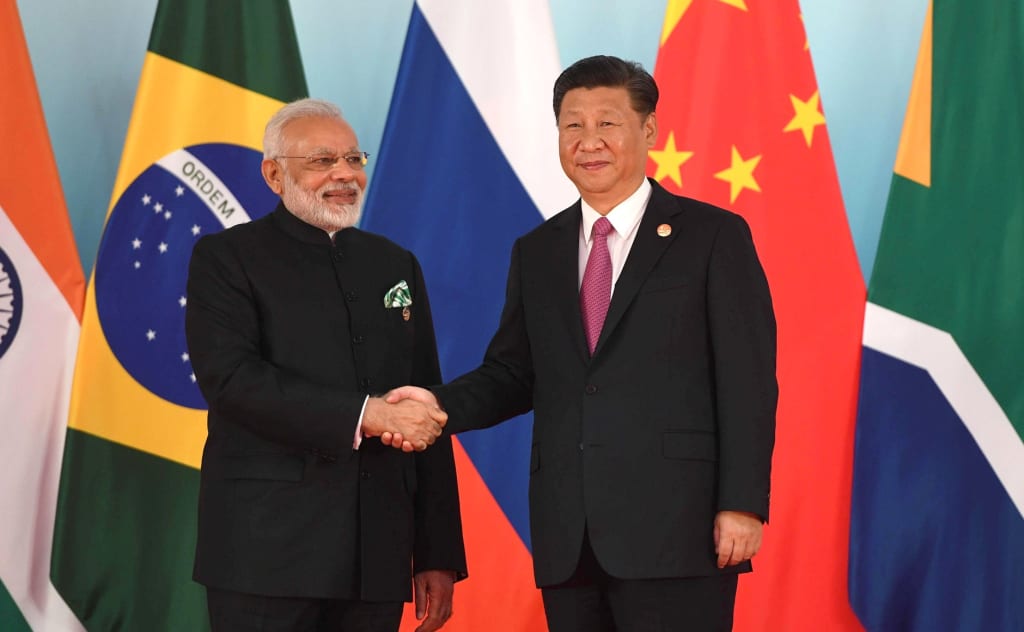
Paradoxically, Trump’s America First policies have created unprecedented opportunities for China to expand its global influence and reshape great-power competition to Beijing’s strategic advantage in ways that undermine American interests far more effectively than direct confrontation ever could. Where the previous American administration sought painstakingly to build a “coalition of democracies” arrayed against Chinese authoritarianism and technological competition, mobilising allies in Europe and Asia around shared values and strategic concerns about Beijing’s behaviour, Trump has largely abandoned this framework in favour of transactional bilateral relationships where values matter little and immediate commercial advantages matter greatly.
The United States is withdrawing from multilateral institutions, reducing commitments to allies who fail to meet arbitrary defence spending targets or trade balance goals, and pursuing narrowly transactional relationships that privilege American interests while showing little concern for broader alliance cohesion or shared strategic objectives. Into this vacuum created by American abdication of global leadership, China is deliberately and methodically moving, positioning itself as a more reliable partner than an unpredictable United States while avoiding direct confrontation that might unite opposition against it.
The Economist identifies three specific areas where China will capitalise strategically in 2026, potentially making the year a turning point in the long-term competition between Washington and Beijing. First, clean technology and environmental leadership represent an area where Chinese advantages are growing. Trump’s deep scepticism of climate action and renewable energy, rooted in his political base’s attachment to fossil fuel industries and cultural resistance to environmental regulation, has led to cuts in American green energy subsidies, rollback of fuel efficiency standards, withdrawal from international climate agreements, and active promotion of fossil fuels as part of “energy dominance” strategy.
Yet clean technology is booming globally, particularly in the Global South where developing nations are leapfrogging directly to renewable energy without building out fossil fuel infrastructure. The economics are now compelling regardless of environmental motivations: renewable energy and storage technologies are cheaper than fossil alternatives in most markets, with solar and wind power undercutting coal and natural gas on pure cost basis. China, already dominating solar panel and wind turbine manufacturing while controlling critical supply chains for batteries and electric vehicles, is perfectly positioned to supply this growing demand from developing nations eager for affordable clean energy solutions.
By positioning itself as genuinely committed to sustainable development, investing tens of billions in renewable capacity both domestically and through Belt and Road Initiative projects, whilst the Trump administration dismisses climate concerns as hoaxes and actively promotes coal and oil, Beijing appeals directly to developing nations seeking affordable clean energy solutions and wanting to be seen as environmentally responsible. This creates a powerful narrative where China represents the future whilst America clings stubbornly to the past, a reversal of traditional roles that benefits Chinese soft power considerably.
Second, economic courting of the Global South through trade agreements and market access represents another major opportunity. Whereas Trump has imposed punitive tariffs on nations including India facing 50 percent levies, Brazil, South Africa, and others in the BRICS group in attempts to extract trade concessions or punish perceived slights, China has taken precisely the opposite approach. Beijing has offered increasing access to its vast domestic market, provided development financing through the Asian Infrastructure Investment Bank and New Development Bank, granted 53 African nations completely tariff-free access to Chinese imports, and positioned itself as a champion of developing nation interests against Western domination of international institutions.
The message China sends could not be clearer or more compelling: Beijing is a more reliable economic partner than the unpredictable United States, which might impose crippling tariffs without warning if a president decides a country has offended American dignity or violated some arbitrary trade metric. BRICS nations collectively now represent 56 percent of the world’s population and 40 percent of global GDP measured in purchasing power parity terms, making them too large and important to ignore. China’s strategy is to deepen economic integration within this bloc through trade agreements, currency arrangements, and institutional development, systematically reducing dependence on Western markets and currencies while building alternative structures that challenge American economic dominance.
Third, and perhaps most surprisingly, India represents a potential strategic partner despite decades of rivalry and border tensions. The Trump administration’s aggressive tariffs against India, ostensibly punishment for New Delhi’s continued purchase of Russian oil but also reflecting Trump’s transactional frustration that America runs a trade deficit with India, have paradoxically driven the world’s two most populous nations closer together. In August 2025, Indian Prime Minister Narendra Modi made his first visit to China in seven years to meet President Xi Jinping in a diplomatically significant rapprochement.
Both leaders emphasised that their nations are “partners, not rivals,” a marked departure from previous characterisations, and substantive discussions included expanding direct flights suspended since 2020 border clashes, reopening border trade that has been frozen, easing visa restrictions that have limited people-to-people exchanges, and resolving outstanding territorial disputes through negotiation rather than military standoffs. China even lifted restrictions on rare earth element exports to India, a strategically crucial concession given that these materials are essential for electronics, renewable energy technologies, and advanced manufacturing.
Experts suggest Modi’s surprising pivot toward Beijing was accelerated directly by Trump’s tariff threats, which demonstrated to Indian policymakers that they cannot rely on the United States as a counterweight to China if that relationship depends entirely on American presidential whims and could evaporate based on trade statistics. India has signalled it will assume the BRICS presidency in 2026, and China’s vocal support for this Indian leadership role signals Beijing’s serious commitment to elevating the bloc’s institutional role in global governance as a genuine alternative to Western-dominated forums.
The irony could not be more exquisite: Trump’s explicit attempt to isolate China and prevent its alignment with developing nations has arguably accelerated both China’s integration with the Global South and great-power rivalry shifting into precisely the framework Trump ostensibly sought to prevent. Beijing now faces a genuine historical opportunity to position itself simultaneously as the champion of developing nations against Western domination, the architect of financial alternatives to Western-dominated institutions through BRICS mechanisms, and the undisputed leader in clean technology that represents the future of energy and transportation.
The Economist predicts with considerable confidence that if China executes this multi-faceted strategy effectively throughout 2026, avoiding major policy errors or provocations that might unite opposition against it, Beijing may emerge from the year having substantially improved its global position whilst the United States fractured historic alliances, retreated from multilateral engagement, and ceded moral high ground on issues from trade to environment to development assistance. The long-term implications of such a shift would be profound and potentially irreversible, marking 2026 as a genuine inflection point in the trajectory of twenty-first century geopolitics.
Economic worries: Tariffs, bond markets, and the Federal Reserve reckoning
The economic outlook for 2026, according to The Economist and other major forecasters including the International Monetary Fund, World Bank, and private sector analysts, is deeply concerning despite America’s current resilience and relatively strong labour markets. Global growth is projected to decelerate to 2.9 percent from 3.2 percent in 2025, driven primarily by the delayed but inevitable impact of Trump’s comprehensive tariffs on international commerce and investment decisions.
Whilst the immediate economic shock of tariff implementation during 2025 was partially absorbed through front-running where companies rushed to import goods before tariffs took effect and supply chain rerouting where manufacturers shifted production to avoid tariff exposure, 2026 will see the full economic weight of protectionist policies pressing down systematically on global economic activity. Tariffs function as taxes on trade, raising costs for businesses and consumers, reducing efficiency through distorted allocation of resources, and creating uncertainty that depresses business investment in capacity expansion and innovation.
The Economist emphasises with particular urgency that rich countries, particularly the United States but also major European economies and Japan, are living dramatically beyond their means in ways that cannot continue indefinitely without triggering crisis. These nations are accumulating massive public debt at accelerating rates whilst their ageing populations require increasing fiscal support through pensions, healthcare, and long-term care that will only grow more expensive as demographic pyramids invert.
For decades, financial markets tolerated this fiscal excess because interest rates were suppressed to near-zero or even negative levels through central bank monetary stimulus and quantitative easing that saw central banks purchase trillions in government bonds. Low rates made government borrowing essentially free, allowing politicians to avoid difficult choices about spending priorities or tax increases. But this era of monetary accommodation is decisively ending as central banks normalise policy following the inflation surge of 2021-2023.
Higher interest rates and normalising monetary policy are making government borrowing increasingly expensive, with interest payments consuming larger shares of national budgets and crowding out productive investments in infrastructure, education, or research. The risk of a bond market crisis, where investors lose confidence in government creditworthiness and demand punitive interest rates as compensation for perceived default risk, is now acute and represents perhaps the single greatest threat to global financial stability.
The crucial pivot point that could determine whether this risk materialises will be the replacement of Federal Reserve Chair Jerome Powell in May 2026. Powell, who has served as Fed chair since February 2018 and guided the institution through the COVID pandemic, subsequent inflation crisis, and normalisation of monetary policy, reaches the statutory end of his term. Trump has indicated clearly his preference for Kevin Hassett, a more dovish economist who previously served as chairman of the Council of Economic Advisers during Trump’s first term and who shares Trump’s strong preference for lower interest rates and easier monetary policy regardless of inflation concerns.
If Trump succeeds in installing a Fed chair personally loyal to him and committed to rate cuts and monetary accommodation even when inflation remains above target, the institution’s hard-won independence could be severely compromised in ways that would alarm financial markets. Even more ominously for the Fed’s institutional integrity, Trump could use this chair appointment opportunity strategically to replace other Fed governors as their terms expire, potentially creating a board dominated by political loyalists rather than independent policy experts with deep understanding of monetary economics and commitment to the dual mandate of price stability and maximum employment.
The Economist warns explicitly that a politicised Federal Reserve represents a major systemic threat to financial stability with potentially catastrophic consequences. If markets lose confidence that the Fed prioritises price stability and data-driven policymaking over political considerations and presidential preferences, bond yields could spike dramatically as investors demand higher compensation for inflation risk and policy uncertainty. Credit conditions could tighten abruptly as banks become more cautious, financial instability could metastasise rapidly across the global economy through interconnected markets, and the dollar’s reserve currency status could be questioned for the first time since World War II.
Some analysts believe Powell might choose to remain on the Fed board as a governor after his term as chair ends in May, serving as a buffer against Trump’s attempts to exert improper control over monetary policy and providing continuity and institutional memory during a potentially turbulent transition. But this scenario remains uncertain and depends entirely on Powell’s personal decision about whether he can more effectively defend Fed independence from inside the institution or outside it where he could speak freely about threats to central bank autonomy.
The question of who leads the Federal Reserve beginning in May 2026 will significantly determine whether the global economy enters a period of renewed growth and stability built on credible monetary policy, or faces the first serious financial crisis of the Trump administration triggered by loss of confidence in institutional independence. The stakes could not be higher, and financial markets will be watching the nomination and confirmation process with intense attention for signals about the future direction of American monetary policy.
Artificial intelligence: Bubble dynamics and the reckoning of 2026
![Bubble graphics depicting circular investments by AI companies became popular in October 2025.[24][25] Some speculators have questioned the investment structure of the AI industry due to profitability and cash flow issues for major AI companies.](https://res.cloudinary.com/theurbanherald/images/w_1024,h_1024,c_scale/c_fill,g_auto/f_auto,q_auto/v1764926161/wordpress_assets/2025_AI_Bubble_Speculation_2_6208f3646/2025_AI_Bubble_Speculation_2_6208f3646.png?_i=AA "Bubble graphics depicting circular investments by AI companies became popular in October 2025.[24][25] Some speculators have questioned the investment structure of the AI industry due to profitability and cash flow issues for major AI companies.")
The artificial intelligence investment boom presents one of the most dangerous and potentially destabilising economic dynamics outlined in The Economist’s 2026 forecast, combining characteristics of previous technology manias with unique features that make this bubble potentially more severe than historical precedents. American technology companies alone have invested over $400 billion in artificial intelligence infrastructure, data centres, and computational capacity during 2025, with global projections suggesting $7 trillion in cumulative AI spending by 2030 according to Goldman Sachs estimates.
Yet the revenue actually generated by commercial AI applications remains shockingly small relative to these enormous investments, approximately $50 billion annually according to industry analysts, creating an eight-to-one ratio of investment to revenue. This is the precise dynamic that characterises financial bubbles in their euphoric late stages: massive capital flowing into speculative investments based on future promises rather than current returns, with valuations that make sense only if extraordinarily optimistic assumptions about adoption, monetisation, and market growth all prove correct simultaneously.
Historical precedent from previous technology cycles is deeply troubling for anyone hoping this time will be different. Every genuinely transformative technology of the past century and a half, from railways in the 1840s through electricity in the 1920s to the internet in the 1990s, was accompanied by periods of intense financial euphoria where investors poured capital into companies with little or no profits but grand visions of revolutionising commerce and society. These investment manias were inevitably followed by devastating crashes that destroyed enormous quantities of wealth, bankrupted companies, and ruined individual investors, even though the underlying technologies themselves ultimately proved genuinely valuable and transformative exactly as promoters had promised.
The internet bubble of 2000 to 2002 provides the most relevant and ominous comparison. Companies with minimal revenues were trading at valuations with price-to-sales ratios routinely exceeding 30, implying that investors believed these companies would achieve such dominant market positions and such extraordinary profit margins that current losses didn’t matter. This is precisely the valuation range where Nvidia, the dominant AI chip supplier whose processors power most AI training and inference, currently trades following a meteoric stock price appreciation that has made it one of the world’s most valuable companies.
When the internet bubble burst beginning in March 2000, technology stocks fell 75 to 90 percent over the subsequent two years, wiping out trillions in market capitalisation and triggering recession. Yet the internet itself ultimately did transform global commerce, communications, and nearly every aspect of modern life exactly as advocates predicted, though it took much longer and followed different paths than bubble-era investors anticipated. The lesson is not that transformative technologies are fraudulent but rather that even genuinely revolutionary innovations can be catastrophically overvalued during euphoric periods when rational analysis gives way to momentum-driven speculation.
Multiple veteran investors and economists have explicitly identified 2026 as the year when the AI bubble is most likely to burst based on fundamental valuations and market dynamics. Ruchir Sharma, a renowned economist and investment strategist at Norges Bank Investment Management overseeing Norway’s massive sovereign wealth fund, has analysed the AI boom systematically using his “four O’s” framework for identifying bubbles: overinvestment where capital flows exceed rational economic justification, overvaluation where asset prices reflect impossibly optimistic assumptions, over-ownership where too many investors hold positions in the same assets creating crowded trades vulnerable to sudden unwinding, and over-leverage where investors borrow excessively to finance speculative positions.
The AI sector is flashing bright red warning signals on all four metrics simultaneously. Major technology companies like Meta, Amazon, and Microsoft, traditionally conservative in their capital allocation and focused on return on invested capital, have become in Sharma’s words “the biggest issuers of debt” to fund their AI arms race, borrowing tens of billions to build data centres and acquire computing capacity in what increasingly resembles a prisoner’s dilemma where no company can afford to fall behind competitors regardless of whether investments generate adequate returns. This represents a classic late-cycle bubble indicator where even sophisticated institutional investors abandon discipline in fear of missing out on perceived transformative opportunities.
The trigger mechanism for a potential crash is straightforward and increasingly probable. If inflation remains persistently above the Federal Reserve’s 2 percent target, currently hovering around 3 percent despite multiple rate increases, and the Fed resists cutting rates further or even raises them to contain inflation expectations, the cost of capital for expensive growth companies will increase sharply. Higher interest rates make borrowing costlier for companies financing investments and operations through debt, reducing profitability and making speculative ventures less attractive.
Even more significantly, higher rates dramatically slash the valuations of speculative high-growth companies through present value calculations. Growth stocks are valued based on expectations of future cash flows that must be discounted back to present value using interest rates as the discount factor. When rates rise, those distant future cash flows become worth much less in present value terms, mechanically reducing what rational investors should be willing to pay today. The result would be devastating for overvalued AI companies whose stock prices reflect expectations of extraordinary future profits, and potentially catastrophic for the broader economy given that AI investment may be responsible for as much as 60 percent of US economic growth in 2025 according to some estimates.
If AI investment suddenly contracts as companies reassess returns and financial conditions tighten, the economic impact could be severe and rapid. Technology companies would curtail capital expenditures, data centre construction would halt, semiconductor orders would be cancelled, and the multiplier effects through supply chains would amplify the initial shock. The knock-on effects could trigger broader financial instability if leveraged investors are forced to liquidate positions to meet margin calls, creating downward spirals in asset prices that become self-reinforcing.
The Economist carefully notes that it does not predict with certainty that the AI bubble will burst in 2026, acknowledging that no one can predict with precision the timing of market corrections and that bubbles can persist longer than rational analysis suggests possible. But the conditions are clearly present and intensifying: excessive valuations disconnected from current revenues, massive debt-financed investment in speculative capacity, institutional crowding into similar positions, and macroeconomic conditions that could trigger reassessment.
Whether the underlying AI technology ultimately transforms productivity and economic growth as profoundly as the internet did depends entirely on the degree to which commercial applications can justify the extraordinary capital being invested. The next twelve months will be crucial in determining whether AI delivers transformative breakthroughs in areas from drug discovery to materials science to business process automation, or whether 2026 becomes known historically as the year when investor euphoria collided painfully with disappointing returns and reality reasserted itself against hype.
The weight-loss drug revolution: From Ozempic to retatrutide
Perhaps no prediction from The Economist for 2026 strikes closer to daily human experience and immediate practical relevance than the forecast for dramatic acceleration in obesity treatment through new pharmaceutical interventions that promise to fundamentally transform how societies address what has become one of the most pressing public health challenges globally. The remarkable success of semaglutide marketed as Ozempic for diabetes and Wegovy for obesity, along with tirzepatide sold as Zepbound and Mounjaro, over the past three years has already transformed obesity treatment from a frustrating combination of ineffective diets and risky surgery to a medical intervention that actually works reliably for most patients.
These GLP-1 receptor agonists, mimicking natural hormones that regulate appetite and blood sugar, have delivered unprecedented weight loss results in clinical trials, with patients losing 15 to 23 percent of body weight on average. To put this in perspective, for someone weighing 100 kilograms or 220 pounds, this represents losing 15 to 23 kilograms or 33 to 50 pounds, weight loss previously achievable only through bariatric surgery that carries significant risks and requires permanent lifestyle modifications.
But 2026 will witness the arrival of even more potent medications, delivered in more convenient formats that eliminate needles and refrigeration, at vastly expanded access that could make these treatments available to hundreds of millions rather than the current millions of users constrained by high costs and limited insurance coverage. The superstar prediction generating the most excitement in pharmaceutical circles and among obesity specialists is retatrutide, an Eli Lilly drug currently in late-stage Phase III clinical trials and potentially available by late 2026 or early 2027 if regulatory review proceeds smoothly.
Retatrutide represents a significant pharmacological advance, described as a “triple agonist” or “triple-G” medication in medical literature. Whereas semaglutide targets only GLP-1 receptors that regulate appetite and insulin secretion, and tirzepatide targets both GLP-1 and GIP receptors adding glucose-dependent insulinotropic polypeptide for enhanced effect, retatrutide targets three critical metabolic pathways simultaneously: GLP-1, GIP, and glucagon receptors. By activating glucagon receptors in addition to the other two, retatrutide influences not just appetite and insulin but also energy expenditure and fat metabolism directly, potentially offering superior weight loss through multiple complementary mechanisms.
The clinical results from Phase II trials have been nothing short of extraordinary and have generated tremendous excitement in the medical community. Patients taking the highest doses of retatrutide achieved 24.2 percent average weight loss after 48 weeks of treatment, equivalent to approximately 58 pounds for a 240-pound person, with some individual patients losing even more. Several medical sources and obesity specialists have described this as approaching “bariatric surgery-level” weight loss without requiring invasive surgical procedures that carry risks of complications, require permanent dietary modifications, and involve lengthy recovery periods.
Some preliminary analyses even suggest retatrutide at maximum doses could eventually achieve weight loss comparable to Roux-en-Y gastric bypass, long considered the gold standard for severe obesity treatment and capable of achieving 60 to 70 percent excess weight loss but available only to patients meeting strict criteria and willing to accept significant surgical risks. If pharmaceutical interventions can match surgical outcomes without incisions, the implications for public health and medical practice would be transformative.
What makes 2026 particularly transformative beyond just improved efficacy is the anticipated shift toward oral formulations that eliminate the injection requirement that currently limits adoption. Currently, all approved GLP-1 medications require subcutaneous injections, either weekly for semaglutide and tirzepatide or potentially monthly for longer-acting formulations. This delivery method, while clinically effective and generally well-tolerated, creates substantial practical and psychological barriers to widespread adoption.
Patients must inject themselves, which many people find uncomfortable, intimidating, or unacceptable regardless of medical necessity. They must manage sharps containers for safe needle disposal, store medications requiring refrigeration which creates challenges for travel or unstable living situations, remember injection schedules and maintain consistency, and deal with occasional injection site reactions or technique difficulties. These barriers are not insurmountable for motivated patients with resources and support, but they significantly limit mass adoption particularly in developing countries with limited healthcare infrastructure.
Conversely, small-molecule GLP-1 agonists like orforglipron that Eli Lilly is developing, or danuglipron being developed by Pfizer, represent a completely different approach. These medications can be formulated as conventional oral tablets taken daily like other routine medications, similar to blood pressure pills or cholesterol medications. If approved by regulatory authorities in 2026 following successful completion of clinical trials demonstrating adequate efficacy and safety, these oral medications could dramatically expand access from millions of current users to hundreds of millions globally within a few years.
The pharmaceutical and public health implications are genuinely staggering. GLP-1 drugs have already become one of the most sought-after and profitable medication classes in pharmaceutical history, with Novo Nordisk and Eli Lilly capturing enormous market share and commanding premium prices that have made these drugs inaccessible to most people globally. Novo Nordisk has become Europe’s most valuable company based largely on Ozempic and Wegovy sales, while Eli Lilly’s market capitalisation has soared past traditional pharmaceutical giants.
Yet access remains severely limited in most of the world due to costs that can exceed $1,000 monthly for patients without insurance coverage or in countries where these medications aren’t subsidised through national health systems. Oral formulations, if approved and produced at scale leveraging economies of mass manufacturing, could potentially reduce production costs significantly compared to injectable biologics that require sophisticated manufacturing facilities and cold chain distribution. This cost reduction could expand access to developing nations where obesity is rising rapidly but where injectable medications requiring refrigeration are impractical for mass deployment.
Lower costs would fundamentally transform obesity treatment from a luxury intervention available primarily to wealthy populations in developed countries who can afford expensive medications or have generous insurance coverage, to a mass-market pharmaceutical solution accessible to middle-class populations globally. The long-term public health implications of making effective obesity treatment accessible at scale could be comparable to the introduction of antibiotics or vaccines as interventions that fundamentally altered disease trajectories for entire populations.
But The Economist also points to a profound philosophical and ethical question that will intensify dramatically in 2026 as weight-loss drugs transition from niche treatment to mainstream intervention: Are weight-loss drugs “cheating,” or do they represent scientific progress that should be embraced? This debate, traditionally confined to elite athletics where performance-enhancing drugs are banned and athletes who use them are condemned as cheaters, will expand enormously as weight-loss drugs become normalised for general population use.
The fundamental tension centres on competing conceptions of achievement and authenticity. Should weight loss, like athletic performance, be achieved only through willpower, discipline, diet, and exercise, with pharmaceutical assistance viewed as an illegitimate shortcut that somehow diminishes the accomplishment? Or should we view these medications as tools that help people overcome biological obstacles beyond their control, no different morally from eyeglasses that correct vision or insulin that manages diabetes?
The 2026 Enhanced Games scheduled for Las Vegas, where athletes will be explicitly permitted to use performance-enhancing drugs without facing anti-doping sanctions, will crystallise this philosophical debate in ways that force society to confront uncomfortable contradictions in how we think about human enhancement. If athletes using testosterone, growth hormone, and other performance enhancers are celebrated at the Enhanced Games as pushing human potential and representing honest acknowledgment of what elite performance actually requires in modern sport, how is a person using retatrutide to lose weight fundamentally different from an ethical or philosophical standpoint?
Both involve using pharmaceutical interventions to overcome biological limitations that prevent desired outcomes. Both represent enhancement of natural capabilities through chemistry and medical technology. Both could be described as either “cheating” that diminishes authentic achievement or as “progress” that helps people achieve their goals through available tools. If society increasingly permits and even celebrates GLP-1 use for obesity treatment, viewing it as a legitimate medical intervention rather than moral failure or cheating, on what principled basis can we continue prohibiting anabolic steroids in athletics or condemning athletes who use them?
The Economist predicts with considerable confidence that these thorny questions will come into sharp focus throughout 2026 and will reshape public thinking about enhancement, bodily autonomy, the ethics of using chemistry to transcend biological constraints, and where society should draw lines between acceptable and unacceptable modifications of human performance and appearance. The answers are not obvious and will require society to grapple with fundamental questions about what counts as authentic achievement, whether chemical enhancement is categorically different from other forms of assistance, and who has authority to make these decisions for others.
The Enhanced Games: Performance enhancement as sport

The Enhanced Games, scheduled for May 2026 in Las Vegas, represent the first major international sporting event explicitly designed around permitting, and indeed actively celebrating, the use of performance-enhancing drugs that are banned under current anti-doping regulations governing Olympic sports and most professional athletics. Founded by Australian entrepreneur Aron D’Souza with backing from technology investors including Peter Thiel, the Enhanced Games represent a radical challenge to the existing anti-doping paradigm that has governed elite sport for decades.
The event will allow athletes to use any substance approved by the US Food and Drug Administration for human use, excluding only cocaine and heroin which are prohibited for safety rather than performance reasons. This means athletes can freely use anabolic steroids, human growth hormone, erythropoietin to boost red blood cell production, and various other substances that would trigger immediate bans under World Anti-Doping Agency regulations. The event has already attracted elite swimmers and track athletes with impressive credentials, including Olympic gold medalists and world record holders, who are willing to risk their Olympic eligibility and sporting reputation for the chance to compete under this different regulatory framework and compete for substantial prize money with announced payouts of up to $1 million for athletes who break world records.
The ethical implications are extraordinary and the controversy already intense months before competition begins. The World Anti-Doping Agency, which oversees anti-doping regulations for the Olympic Games, enforces the World Anti-Doping Code covering most major sports globally, and coordinates testing programmes across national boundaries, has condemned the Enhanced Games in the strongest possible terms. WADA President Witold Bańka has called the event a “ridiculous idea” that is “very dangerous,” warning that permitting performance-enhancing steroids without medical supervision could have serious long-term health consequences for athletes including cardiovascular disease, liver damage, hormonal disruptions, psychological effects, and potentially even loss of life in extreme cases.
Multiple national anti-doping organisations, including the US Anti-Doping Agency headed by Travis Tygart, have issued formal statements warning that athletes competing in the Enhanced Games risk committing anti-doping rule violations under their national sporting federation agreements. These violations could result in suspensions ranging from four years to lifetime bans from Olympic competition and other sanctioned events, effectively ending careers in traditional elite sport for athletes who choose to participate in the Enhanced Games even once.
Yet the organisers of the Enhanced Games counter forcefully that the event represents freedom, bodily autonomy, and a more honest representation of human potential unfettered by arbitrary restrictions that are hypocritically enforced and frequently violated by elite athletes who use sophisticated doping programmes while maintaining public facades of cleanliness. They note that substances will be administered under comprehensive medical supervision with qualified physicians overseeing athlete health, that athletes will undergo rigorous health screenings before competition including cardiovascular assessments and hormonal panels, and that medical monitoring will continue throughout competition to identify dangerous conditions before they become life-threatening.
If athletes choose to participate with full knowledge of potential health risks, complete informed consent about possible consequences, full medical oversight to minimise dangers, and clear understanding that they sacrifice Olympic eligibility, the organisers argue passionately, who should have authority to prevent them? This represents a fundamentally different philosophical approach to sport that challenges basic assumptions underlying anti-doping programmes: not “the fastest human who tests clean” but rather “the fastest human, period, using all available science and medical technology without artificial restrictions.”
The Enhanced Games organisers point to internal contradictions and hypocrisies in traditional sport that undermine anti-doping programmes’ moral authority. They note that technological advantages like specialised equipment, altitude training chambers, cryotherapy, hyperbaric chambers, and advanced nutrition are universally accepted despite providing performance advantages unavailable to athletes without resources. They observe that therapeutic use exemptions allow athletes to use otherwise-banned substances for supposedly legitimate medical conditions, creating loopholes that can be exploited. They highlight persistent doping scandals suggesting that anti-doping regulations fail to level the playing field but rather advantage athletes with access to sophisticated doping programmes that evade detection while punishing less sophisticated dopers who get caught.
Supporters of the Enhanced Games argue that acknowledging performance enhancement openly, testing different regulatory approaches, and allowing athletes to make informed choices about their own bodies represents genuine progress beyond the failed prohibition model. They suggest that medically supervised enhancement might actually be safer than clandestine doping where athletes use substances without medical oversight, take excessive doses chasing marginal advantages, or use dangerous combinations without understanding interactions. If enhancement is happening anyway, they contend, bringing it into the open where it can be properly supervised represents harm reduction rather than promotion.
The Economist predicts with reasonable confidence that the Enhanced Games will become genuinely and intensely controversial throughout 2026, forcing the global sporting community to confront uncomfortable questions about the nature of sport itself that advocates would prefer to avoid. What is sport meant to test? Is it pure genetic potential combined with training, or human achievement by any means available? Are current anti-doping rules protecting athlete health or merely enforcing Victorian notions of fair play and moral virtue that have little relevance to modern sport? Should athletes have bodily autonomy to make their own choices about enhancement, or does society have legitimate interests in restricting these choices?
Do performance-enhancing drugs fundamentally change the nature of competition in ways that make enhanced sport categorically different from traditional sport, or are they merely additional tools in the endless quest for marginal advantages that has always characterised elite athletics? If enhancement becomes normalised through events like the Enhanced Games, could this eventually contaminate traditional sport by making anti-doping rules unenforceable or irrelevant, or would it create useful separation between enhanced and natural sport similar to distinctions between amateur and professional?
The event is scheduled for May 2026, giving The Economist’s forecast only a few months to prove prescient about the controversy level. Early indications suggest the forecast is accurate, with intense debates already underway in sporting circles, ethics committees, medical journals, and sports media about whether the Enhanced Games represents dangerous undermining of sporting values or inevitable acknowledgment of where sport is heading regardless of official resistance. The betting money suggests the event will prove far more divisive than even organisers anticipated, potentially becoming a genuine inflection point in how society thinks about athletic enhancement and where to draw lines between acceptable and unacceptable modifications of human performance.
Energy transition: The geothermal renaissance
Amidst aggressive climate scepticism from the Trump administration that has withdrawn the United States from the Paris Agreement, cut funding for renewable energy research, eliminated tax credits for solar and wind installations, and actively promoted fossil fuels through expedited drilling permits and pipeline approvals, The Economist predicts 2026 will nevertheless see a remarkable development that could prove crucial to the long-term energy transition: the emergence of geothermal energy from niche curiosity limited to volcanically active regions into a necessary and economically competitive global energy source with applications across diverse geological settings.
Geothermal energy, capturing heat from the Earth’s interior to generate electricity through steam turbines or provide direct heating for buildings and industrial processes, has long been viewed as a minor player in the renewable energy transition. Traditional geothermal development was constrained geographically to volcanically active regions along tectonic plate boundaries like Iceland, New Zealand, parts of western United States, and the Philippines where hot water or steam naturally rises close to the surface and can be tapped through relatively shallow wells.
This geographical limitation meant geothermal contributed less than 1 percent of global electricity generation despite its significant advantages over other renewable sources, principally the ability to generate baseload power continuously regardless of weather conditions. Yet technological innovation adapted from the oil and gas industry is fundamentally changing this calculus and expanding potential deployment dramatically.
Companies are now adapting advanced drilling techniques developed for deep oil and gas extraction, including directional drilling that can reach multiple kilometres underground and stimulation techniques that can create artificial reservoirs in hot dry rock, to access progressively hotter rock formations at greater depths. These advanced geothermal systems, sometimes called enhanced geothermal systems or closed-loop systems, can potentially be deployed almost anywhere if drilling goes deep enough, though economics vary based on local geology and how deep wells must go to reach suitable temperatures.
The crucial advantage of geothermal energy over solar and wind, which have deservedly captured most attention and investment in renewable energy over the past decade, is reliability and dispatchability. Solar panels only generate electricity during daylight hours when the sun is shining, with output varying based on cloud cover, seasonal changes in sun angle, and local weather patterns. Wind turbines only generate when wind speeds are within acceptable ranges, neither too calm nor too strong, with output highly variable and difficult to predict accurately. Both sources require either massive battery storage systems to provide power when sun isn’t shining or wind isn’t blowing, or backup generation from natural gas plants that can ramp up quickly when renewables underproduce, or both.
In contrast, geothermal plants can generate electricity 24 hours per day, 365 days per year with extremely high capacity factors typically exceeding 90 percent, meaning they produce near their maximum rated output consistently. This provides baseload power that solar and wind cannot reliably provide without enormous storage investments, making geothermal extraordinarily valuable for grid stability as electricity systems struggle to integrate massive quantities of variable renewable sources that produce power when nature dictates rather than when demand requires.
As electricity grids worldwide confront the challenge of integrating 40, 50, or even 60 percent renewable generation mostly from solar and wind within the next decade, they desperately need complementary sources that can provide steady baseload power or rapidly adjustable load-following power without carbon emissions. Geothermal fits this requirement perfectly while also offering other advantages including very small physical footprint compared to solar or wind farms, minimal environmental disruption after initial construction, and no fuel costs so operating expenses consist primarily of maintenance.
The International Energy Agency projects in its latest World Energy Outlook that renewable energy will overtake coal to become the world’s top electricity source by 2026 at the latest, with renewables expected to comprise 36 percent of global electricity generation by 2026 compared to roughly 30 percent in 2024. Wind and solar are driving this historic transition, with combined output projected to exceed 6,000 terawatt-hours annually by 2026, up from approximately 4,000 terawatt-hours in 2024, an increase of 50 percent in just two years reflecting extraordinary buildout rates particularly in China, India, and other emerging economies.
Yet this rapid expansion of variable renewables creates grid stability challenges that have already manifested in several markets through periods where renewable generation exceeds demand causing prices to go negative, insufficient backup capacity to meet demand when renewables underproduce creating reliability concerns, and volatility in electricity markets that complicates planning and investment. These challenges could be substantially addressed by geothermal baseload capacity that smooths out variability and provides stable generation regardless of weather.
The Economist identifies geothermal as definitively “one to watch” in 2026, a technology that will likely receive substantial investment attention and supportive policy measures in nations attempting to balance emissions reduction commitments with grid reliability requirements and energy security concerns. Several countries including Indonesia with enormous geothermal potential given its volcanic geography, Kenya which has aggressively developed geothermal as a baseload source, and parts of the United States particularly in Nevada and California, are already demonstrating that geothermal can provide meaningful percentages of electricity supply when properly developed.
Trump’s vocal hostility toward renewable energy subsidies and his administration’s active promotion of fossil fuels will likely slow the pace of geothermal development in the United States relative to what might occur under more supportive policy. Federal tax credits for geothermal development have been reduced or eliminated, research funding has been cut, and regulatory approval processes may become less streamlined. However, the global economics of geothermal are becoming increasingly favourable independent of American policy as drilling costs decline with technological improvements and as carbon pricing in other markets improves comparative economics versus fossil generation.
The profound irony that The Economist highlights is that geothermal energy, despite being supported enthusiastically by neither Trump’s fossil fuel focused administration nor by environmental activists whose attention focuses primarily on solar and wind, may prove to be the crucial technology that enables the energy transition to reach the scale and reliability necessary to actually displace fossil fuels rather than merely supplementing them. By 2026, geothermal energy may complete its transition from overlooked niche to indispensable component of decarbonised electricity systems, finally receiving the investment, policy support, and technological development necessary to realise its substantial potential.
Conclusion: Navigating 2026’s polycrisis
The Economist’s comprehensive forecast for 2026 describes a world navigating what scholars and policymakers have begun calling a “polycrisis,” a concept referring to multiple, interconnected crises occurring simultaneously where each crisis amplifies and exacerbates the others through feedback loops that make the aggregate challenge far more severe than the sum of individual components. This polycrisis framework captures something essential about the contemporary global predicament that traditional single-crisis analysis misses.
The fragmenting global order creates immediate security vulnerabilities that compel Europe to militarise rapidly, pushing defence spending to levels that crowd out growth-generating investments in infrastructure, education, research, and innovation that would boost productivity and living standards. Yet without adequate defence capabilities, Europe remains vulnerable to Russian intimidation or opportunistic aggression that could be even more economically devastating. Trump’s comprehensive tariffs risk triggering recession through reduced trade volumes and distorted resource allocation, creating deflationary pressure as economic activity slows. Yet simultaneously, AI investment may prove unsustainably euphoric, meaning the economy faces inflationary pressure from speculative capital misallocation if that bubble expands further or deflationary shock if it bursts suddenly.
China’s rising influence in the Global South creates valuable counterweights to American hegemony and offers developing nations alternatives to Western-dominated institutions, potentially producing a more multipolar and equitable global order. Yet this same Chinese influence also risks deepening precisely the great-power competition Trump sought to prevent, potentially dividing the world into rival camps competing for influence and creating conditions for miscalculation or escalation. Each crisis feeds into others, creating complex dynamics where solutions to one problem worsen another and where policymakers face genuine dilemmas without clear optimal responses.
For businesses operating in this environment, extraordinary strategic agility becomes not merely advantageous but essential for survival. Companies must prepare simultaneously for multiple divergent scenarios that require contradictory strategies. A severe AI bubble bursting with consequent financial market turmoil would require defensive positioning with strong balance sheets, reduced leverage, and focus on profitable core businesses rather than speculative growth investments. A gradually decelerating economy as tariffs compound over the year requires operational flexibility to adjust capacity and careful management of supply chains that may face disruption.
A bond market crisis if fiscal pressures force yield spikes would create credit constraints requiring companies to secure financing proactively before markets freeze. Geopolitical shocks should Russia escalate dramatically in Ukraine or should China-US tensions spike over Taiwan or South China Sea incidents could disrupt supply chains, commodity markets, or financial flows unpredictably. Preparing for all scenarios simultaneously is impossible, so successful companies will focus on building resilience, maintaining optionality, and developing rapid response capabilities rather than optimising for any single future.
Simultaneously, transformative opportunities exist for companies positioned to capitalise on structural changes underway. The obesity treatment market will explode as new medications reach scale and oral formulations expand access, creating enormous opportunities for pharmaceutical companies, healthcare providers, and adjacent industries from medical devices to fitness services that must adapt to a world where weight loss becomes medically routine. Renewable energy will continue accelerating despite Trump’s scepticism as economics increasingly favour clean energy independent of policy support, creating opportunities in solar, wind, battery storage, and particularly geothermal as grid stability concerns mount.
Clean technology companies positioned to serve booming markets in the Global South where developing nations leapfrog directly to renewable energy will find enormous demand largely insulated from American policy changes. Companies structured to serve a fragmenting world with multiple geographic bases of operation, diversified supply chains that don’t depend on any single country, and flexibility to meet different regional standards without enormous adaptation costs will dramatically outperform those remaining dependent on globalised frameworks that assume open markets and stable rules.
For policymakers, 2026 demands uncomfortable recognition that the post-World War II institutional framework is genuinely fragmenting in ways that cannot be reversed through willpower or nostalgia alone. The days of easy American unilateral leadership, clear and stable alliance structures, and effective rules-based international order enforced through multilateral institutions are ending whether we like it or not. What replaces this familiar architecture remains genuinely uncertain and highly contingent on choices made by key actors, particularly American leadership but also Chinese strategy, European cohesion, and whether middle powers can coordinate effectively.
Perhaps the world evolves toward a looser system of regional powers with acknowledged spheres of influence where great powers dominate their neighbourhoods while respecting others’ core interests, creating stability through mutual deterrence and pragmatic accommodation similar to nineteenth century concert of Europe. Perhaps increasing Chinese and BRICS institutional prominence creates genuine multipolarity with alternative structures for trade, finance, and governance that compete with Western institutions, forcing both systems to improve to attract members. Perhaps we face genuine multipolarity with no single hegemonic force or dominant institutional framework, creating tremendous uncertainty but also opportunities for creative diplomacy and novel arrangements that wouldn’t be possible under rigid bloc structures.
Successful governance in this environment will require accepting these new realities honestly rather than pretending we can recreate the past, adapting institutions flexibly to address emerging challenges rather than defending outdated structures because they’re familiar, and maintaining enough pragmatism to work with countries whose values we don’t share on issues where cooperation serves mutual interests. The alternative to this difficult adaptation is likely continued drift toward more dangerous forms of competition where lack of agreed rules and weak institutions increase risks of miscalculation and escalation.
For citizens trying to make sense of these complex dynamics and understand how they might affect daily life, understanding The Economist’s forecast for 2026 provides essential context for the economic pressures, geopolitical tensions, and technological transformations that will shape the coming year in concrete ways. Inflation rates, interest rate policies, employment security, and geopolitical risks are not merely abstract economic indicators that matter only to financial professionals or policymakers but fundamental forces that determine whether mortgages become affordable or unaffordable as rates change, whether pension funds and retirement savings retain purchasing power or erode through inflation, whether young people can afford homes and families or face permanent economic insecurity, and whether wars remain frozen at tolerable costs or escalate into conflagrations requiring military mobilisation and economic sacrifice.
The ten predictions outlined comprehensively in The Economist’s World Ahead 2026 are emphatically not certainties that will unfold exactly as described. Economic forecasting remains a profoundly uncertain art plagued by unforeseen events, nonlinear dynamics, and the reality that predictions themselves influence behaviour in ways that can make them self-fulfilling or self-negating. Unexpected technological breakthroughs could accelerate progress beyond forecasts, political surprises could shift trajectories dramatically, natural disasters or pandemics could introduce entirely unanticipated challenges, and human ingenuity in responding to crises could produce outcomes that seem impossible from today’s vantage point.
But the underlying trends identified in this forecast are clear and grounded in observable realities already unfolding: a fragmenting global order driven fundamentally by American retrenchment and Chinese assertiveness, accelerating AI-driven economic disruption that will transform employment and productivity in ways we’re only beginning to understand, persistent geopolitical tension between great powers that will shape trade flows and investment decisions, fiscal crises approaching in developed economies that have postponed difficult choices for too long, and transformative technological and demographic changes reshaping health, energy, and security in fundamental ways.
Those individuals, companies, and governments who understand these trends and position themselves thoughtfully will navigate 2026 more successfully than those who remain surprised by inevitable shocks or who cling to assumptions about how the world works that no longer reflect reality. The year ahead will test our adaptability, our resilience, and our capacity to maintain perspective and purpose amidst uncertainty. Understanding what’s coming, even imperfectly, provides the foundation for meeting those tests successfully.