

The Urban Herald has been granted exclusive early access to Debby Show’s extraordinary debut novel, Paper Roses: a spoiler-free review and analysis, and we’re thrilled to share our thoughts on this compelling literary achievement. As a licensed Marriage and Family Therapist turned author, Show brings unparalleled psychological insight to this sweeping multigenerational family saga that spans from 1940s Morocco to contemporary California. We’ve had the privilege of reading this masterwork before its release, and we can confidently tell you: this is one of the most impactful novels you’ll encounter this year. If you’re searching for a Paper Roses Debby Show review that captures what makes this book extraordinary without spoiling its many revelations, you’ve found it.
This is a novel that demands to be experienced, a journey we wholeheartedly recommend you begin immediately. Get your copy of Debby Show’s Paper Roses today because by the time you finish these pages, this book will have permanently altered how you understand family, trauma, and the relentless human capacity for healing.
For readers drawn to sweeping historical narratives that dominated 2025’s bestseller lists like Kristin Hannah’s The Women or Eric Puchner’s Dream State, Paper Roses offers the same ambitious scope and emotional depth. Show’s debut stands confidently alongside these acclaimed works, delivering a character-driven exploration of how historical upheaval shapes contemporary lives across generations.
The heart of Paper Roses: a story forged in truth
Before diving into what makes Paper Roses so exceptional, it’s essential to understand its foundation. This isn’t simply a work of fiction but a novel rooted in lived experience. Show has crafted a Paper Roses book true story, drawing on real family events to create something that transcends typical literary fiction. The author’s dedication reveals the novel’s profound personal significance: “All I can say, Dan, is that; we did it. The cycle ends with us.” These words frame the entire narrative as an act of defiance, a testament to breaking generational cycles of trauma.
What distinguishes Paper Roses as a truly exceptional multigenerational family saga is its intricate dual timeline structure. The narrative weaves seamlessly between two worlds: the sun-scorched landscapes of 1940s Morocco, where we meet Yasmina, a young Berber woman navigating impossible circumstances, and 1970s California suburbia, where we follow her granddaughter Abigail’s coming-of-age amidst family chaos. This isn’t merely a chronological arrangement of events but a profound exploration of how the wounds of one generation become the inheritance of the next.

The historical backdrop adds remarkable depth to the narrative. The early chapters introduce us to Morocco during World War II, with Nazi soldiers patrolling train stations and the Jewish mellah under constant threat. This setting places Paper Roses in conversation with the year’s most compelling WWII historical fiction, offering a rarely explored perspective on North African Jewish communities during the war. Where many WWII narratives focus on European theaters, Show illuminates the Moroccan experience, the Vichy regime’s impact on North African populations, and the complex dynamics of Muslim-Jewish relationships during wartime. For readers searching for books about inherited trauma, Paper Roses delivers an unflinching examination of how historical upheaval, personal betrayal, and systemic oppression become embedded in family DNA.
Show’s attention to period detail creates an immersive world that feels both historically grounded and intimately personal. From the specific sensory experiences of the Moroccan souks to the exact brand names of 1970s American life (Tab cola, Hot Sam’s pretzels, The Electric Company), each era comes alive with vivid specificity. The sirocco winds that threaten to sweep Yasmina away feel as real as the smell of hairspray and pot smoke that defines Abigail’s suburban home.
Why Paper Roses captivates: the mastery of characterization
The true power of Paper Roses lies not in its plot mechanics but in the extraordinary depth of its characterization. Show has created female protagonists who defy simple categorization, each one complex enough to carry an entire novel in their own right.
Yasmina: the resilience that defies bitterness
Yasmina stands as the novel’s spiritual backbone. Her journey from a discarded child bride to a wise, formidable matriarch forms the emotional core of Paper Roses. What’s particularly brilliant about Show’s portrayal is that Yasmina’s strength isn’t portrayed through dramatic acts of rebellion but through quiet, unwavering faith and an innate capacity for love that survives betrayal.
The novel opens with Yasmina being cast out by the family she served with devotion, a pivotal betrayal that would crush most people. At just fifteen years old, she faces circumstances that challenge everything she believes about loyalty and family. Yet Show demonstrates how her spiritual faith, particularly her syncretic blend of Islamic, Jewish, and folk traditions, becomes her salvation rather than her limitation. Her devotion to her Hand of Fatima amulet isn’t escapism; it’s the tether that keeps her grounded when everything else crumbles.
During her harrowing journey across Morocco, Yasmina’s faith sustains her through what could have been a fatal ordeal. When caught in the ferocity of the sirocco winds, she murmurs prayers to Shu, god of the winds, and her belief transforms a moment of pure terror into a test of survival she can endure. Her resilience in the face of betrayal becomes the foundation for her transformation into a loving caregiver, channeling her pain into renewed purpose.

Abigail: the survival of the scapegoat
If Yasmina is resilience embodied, Abigail represents the particular pain of being designated as the family’s “first pancake,” the imperfect trial run who bears the brunt of her parents’ chaotic experiments. Show’s portrayal of Abigail is nothing short of extraordinary. The novel captures the psychological reality of a child raised in domestic chaos: the hypervigilance, the premature adulthood, the desperate fantasy world that becomes more real than her actual surroundings.
Abigail’s mother Nanette explicitly calls her “Pancake One,” the first pancake that sticks to the bottom of the pan and has to be thrown out, while her younger sister Nikki is “Pancake Two,” the perfect one. This casual cruelty shapes Abigail’s entire self-concept, yet what’s particularly moving is how Show demonstrates that Abigail’s survival mechanisms become the tools for her transformation. Her keen observation, her literary imagination fueled by poetry and books, her emotional intelligence born from constantly reading the room to anticipate danger, these ultimately become her path to healing.
The scene where Abigail jumps from her second-story bedroom window to escape to cheerleading practice crystallizes her desperation. Her uniform catches on a nail as she leaps over a barely covered-over irrigation trench full of poison, a known site of misshapen animals. This literal leap over toxicity to reach something normal, something safe, captures the essence of her entire childhood struggle.
What makes Abigail’s journey so compelling is how it reflects the reality of breaking generational cycles. Her eventual career as a psychologist feels not like narrative convenience but like the inevitable result of a life spent studying the labyrinth of human trauma. She embodies the conscious choice to understand rather than repeat, to heal rather than perpetuate.
The supporting cast: Nanette, Hugh, and Nikki
Show’s characterization extends beautifully to secondary characters, creating a full portrait of a family system in dysfunction.
Nanette, Abigail’s mother, is portrayed not as a simple villain but as a deeply wounded woman caught between cultural identities and personal desperation. The beautiful “Orange Fanta girl” from Moroccan advertising campaigns becomes a woman obsessed with maintaining appearances, her Jackie O hair and Halston pantsuit masking profound maternal inadequacy. Her reliance on diet pills, her emotional distance, and her chilling admission that having a “kid” doesn’t suit her reveal someone alienated even from her own maternal role. Yet the novel traces this dysfunction back to her own childhood, when her older brother Henri’s cruel taunts about her darker skin planted seeds of insecurity that never healed.
Hugh, the charismatic father figure, emerges as a tragic figure, a man whose charm masks profound emotional damage. The young American airman stationed at Nouasseur Air Base who captivated Nanette at that New Year’s Eve dance becomes a father presiding over drug-fueled parties with “creepy friends,” creating a dangerous environment for his children. His genuine affection for Abigail, his treasure of her singing “Paper Roses,” coexists with his inability to protect her from the chaos his addiction creates. His story reminds us that loving someone doesn’t mean they’re capable of parenting them.
And Nikki, the younger sister, represents another possible outcome of the same traumatic environment. From her early escape on a Big Wheel at four years old, naked and fearless, Nikki’s path diverges dramatically from Abigail’s. Her character illuminates how the same family system can produce radically different responses to trauma. Show’s unflinching honesty examines how some people emerge from toxic environments determined to heal while others develop different coping mechanisms entirely. The exploration of Nikki’s character raises profound questions about nature, nurture, and the choices that define us.
The psychology of family trauma in Paper Roses
What sets Paper Roses apart from other family dramas is Show’s professional background as a licensed Marriage and Family Therapist. This expertise infuses the narrative with psychological accuracy that makes the characters’ struggles feel authentic rather than melodramatic. The novel doesn’t just depict dysfunction; it illuminates the mechanisms of intergenerational trauma with clinical precision.
Show’s therapeutic lens is evident in how she portrays attachment disorders, narcissistic personality traits, and the psychological defense mechanisms children develop in chaotic environments. Abigail’s hypervigilance, her tendency to “maneuver around landmines,” isn’t presented as a character quirk but as a survival adaptation. Her observation that she had to dodge landmines while Nikki had to “duck to avoid hand grenades” captures the escalation of danger from one child to the next with devastating accuracy.
The novel’s treatment of narcissism and personality disorders demonstrates sophisticated understanding of psychological development. The portrayal of certain characters’ complete lack of genuine empathy and their ability to charm and manipulate are shown not as evil but as the logical outcome of profound developmental trauma combined with particular temperamental vulnerabilities.
For readers interested in trauma-informed literature or those familiar with works like Mark Wolynn’s It Didn’t Start With You, Paper Roses offers a narrative embodiment of therapeutic concepts. The novel dramatizes how unprocessed trauma cascades through generations, how children unconsciously recreate their parents’ patterns, and most importantly, how conscious intervention can interrupt these cycles. Abigail’s journey into psychology, her commitment to raising her son Uly differently, and her eventual return to Morocco to understand her roots all reflect the therapeutic process of integration and healing.
The thematic richness: trauma, identity, and resilience
What separates Paper Roses from typical family dramas is its sophisticated engagement with interconnected themes that give the narrative its intellectual and emotional weight.
Generational trauma as living inheritance
Paper Roses masterfully illustrates that trauma isn’t something the past inflicts and then releases; it’s a living, breathing force that cascades through generations. Show demonstrates this not through abstract psychological discussion but through visceral, embodied storytelling. The novel shows how Yasmina’s early betrayals shape her relationship to trust, how that damaged capacity for discernment affects her choices regarding her daughter, and how those consequences ripple into Abigail’s and Nikki’s lives.

This exploration of inherited family trauma positions Paper Roses alongside contemporary works examining intergenerational patterns. The novel argues that we inherit not just genetic material but psychological templates, emotional responses, and relational patterns. Yasmina’s banishment creates a legacy of abandonment anxiety. Nanette’s insecurity about her appearance and worth shapes how she mothers. Hugh’s untreated trauma from his own chaotic Michigan childhood manifests in his addiction and inability to provide stability.
Yet this isn’t deterministic. Show’s genius lies in showing how the cycle can be interrupted, but only through conscious choice and tremendous emotional labor. Abigail’s decision to pursue psychology, her commitment to understanding rather than repeating, all represent the hard work of breaking generational cycles. The novel suggests that healing isn’t about forgetting the past but about understanding it so deeply that you can make different choices.
The author’s dedication frames this as personal testimony: “The cycle ends with us.” This declaration transforms the novel from fiction into a manifesto about the possibility of change. For readers searching for books exploring how to break free from inherited family patterns, Paper Roses offers both a map and a companion for the journey.
Cultural identity in diaspora
For readers interested in how literature explores cultural displacement and the complexities of maintaining heritage across diasporic journeys, Paper Roses offers remarkable insights. Yasmina’s journey from Berber mountain communities to Moroccan cities to American suburbs becomes a meditation on what it means to maintain cultural identity when everything around you is hostile or foreign.
Show doesn’t present this as a sentimental journey of “finding one’s roots.” Instead, she explores the painful reality of living between cultures, belonging fully to none. Yasmina carries her Amazigh heritage, her syncretic faith blending Islamic, Jewish, and indigenous beliefs, into a Rabat household where she serves a middle-class Jewish family. Later, she navigates American suburban life while maintaining practices that mark her as perpetually other.
The novel’s exploration of North African Jewish communities during WWII and beyond represents a rarely told story in contemporary fiction. The complex relationships between Muslim and Jewish Moroccans offer a counter-narrative to simplistic stories of religious conflict. This cultural nuance enriches the novel’s exploration of identity and heritage.
Abigail’s relationship to this heritage is even more fraught. Born in America to a mother desperate to assimilate and a father from Michigan, she grows up disconnected from her grandmother’s world. Her eventual journey back to Morocco with her son Uly represents a reclamation, a decision to understand the roots her mother rejected. The moments of connection to heritage throughout the narrative suggest that cultural identity in diaspora isn’t about purity but about integration, about creating something new from multiple heritages.
The novel’s epilogue, revealing that Uly’s daughter will be named Jasmina Altagracia (blending his Moroccan heritage with his partner Mariah’s Dominican roots), suggests that cultural identity in diaspora isn’t about purity but about integration, about creating something beautifully new from multiple heritages.
The particular experience of being a woman without economic power
One of Paper Roses’ most important contributions is its unflinching examination of how economic vulnerability shapes women’s choices and possibilities. Yasmina’s entire trajectory is determined by her employability. Cast out at fifteen, her survival depends on finding domestic work with the Moab family. Her indispensability to the household, solidified when young Nanette refuses to eat after Yasmina is fired, becomes her security. Economic dependency shapes every choice she makes.
Nanette’s desperation to maintain her appearance, her “Orange Fanta girl” beauty, reflects her understanding that her value in Hugh’s eyes and in American society is inextricably linked to her physical attractiveness. Without education or professional skills, her economic security depends entirely on maintaining her marriage and her appeal.
Abigail’s education becomes her lifeline, her escape route from the dysfunction she was born into. Her pursuit of psychology isn’t just about understanding trauma; it’s about achieving economic independence that makes different choices possible.
Show never allows readers to forget that trauma and resilience exist within material conditions, that moral purity isn’t available to those living on the margins. This materialist lens distinguishes Paper Roses from more sentimental family sagas, grounding its psychological insights in the economic realities that constrain and shape women’s lives across generations.
Betrayal as formative experience
Throughout the novel, pivotal acts of betrayal serve as crucibles that forge character and force individuals onto new paths. These aren’t merely plot points but transformative experiences that fundamentally alter the characters’ understanding of trust, love, and safety.
Yasmina’s banishment by her husband’s family represents the foundational betrayal. Cast out by people she served faithfully, this experience could have destroyed her. Instead, it becomes the test that reveals her resilience. The novel suggests that her ability to survive this betrayal, to find faith and purpose despite it, establishes the template for her descendants’ survival.
Abigail experiences betrayal not as a single dramatic event but as the chronic condition of her childhood. Her parents’ emotional neglect, their prioritization of drugs and vanity over their children’s basic needs, represents an ongoing betrayal of their parental duty. Being blamed for Nikki’s escape, being called “Pancake One,” living in a home where she must constantly “maneuver around landmines,” this cumulative betrayal by the people meant to protect her shapes her entire developmental trajectory.
The novel’s exploration of family betrayal forces difficult reckonings about loyalty, enabling, and the limits of forgiveness. These themes resonate throughout the narrative, asking readers to consider when family bonds must be honored and when they must be severed for survival.

Book blurb
Some families leave you money. Others leave you scars.
Based on a true story, Paper Roses is a sweeping, emotionally resonant novel from the sister of Traciii Show Hutsona-the New York Times-featured serial con artist-about family secrets, inherited trauma, and the long shadow of betrayal.
When Abigail Jones learns of her sister Nikki’s third arrest, she’s pulled into a spiral of questions: Was it fate, family, or something buried even deeper? As Abigail begins to piece together the past, she uncovers a trail of silence and survival that stretches across continents and generations.
From a 1940s Moroccan household where a young maid quietly bears witness to the origins of a generational wound, to the sun-washed suburbs of 1970s California, and finally to 2023-told through podcast transcripts, court documents, and splintered memory-Paper Roses follows Abigail’s search for answers, her confrontation with the sister she thought she knew, and her reckoning with a legacy neither of them could escape.
A haunting story of loyalty, silence, and the cost of breaking free, Paper Roses is perfect for readers of The Vanishing Half, Little Fires Everywhere, and The Paper Palace.
The literary craft: why Paper Roses reads like a masterpiece
Show’s prose is both emotionally resonant and gripping in a way that propels you through nearly 400 pages without pause. What’s particularly impressive is her narrative structure. The way the novel shifts between Yasmina’s first-person perspective and the third-person narration of Abigail’s timeline creates an intimate yet expansive reading experience. This structural choice isn’t merely a storytelling device; it’s thematically essential, demonstrating how the past and present exist simultaneously, how Yasmina’s lived experiences remain active forces in shaping Abigail’s reality even before they meet.
The parallel structure trusts readers to make connections, to see how Yasmina’s betrayal echoes in Abigail’s scapegoating, how patterns repeat and transform across generations. This sophisticated narrative architecture elevates Paper Roses beyond straightforward family drama into something more complex and literary.
Show’s sensory writing deserves particular praise. Whether describing the ferocity of sirocco winds, the specific smell of a particular era, or the interior landscape of a character’s emotional devastation, her prose creates worlds readers can inhabit completely. The “putrid stench of rotting animals” in the Moroccan market, the taste of Tab cola and Hot Sam’s pretzels in suburban California, these details don’t just establish setting but create full sensory immersion.
The novel’s pacing, moving between time periods and escalating stakes, maintains momentum even as it covers decades. Each chapter reveals new information that recontextualizes what came before, creating the satisfying complexity of a puzzle assembling itself. The frequent temporal shifts could have been disorienting, but Show provides enough anchoring detail that readers always know where and when they are in the story.
For those who loved the intricate family dynamics of books like The Vanishing Half by Brit Bennett or the penetrating psychological insight of Little Fires Everywhere by Celeste Ng, Paper Roses delivers that same combination of sweeping narrative scope with intimate character study. Like Hala Alyan’s Salt Houses, it explores diaspora and displacement through multiple generations. Like these acclaimed contemporary works, Paper Roses understands that the most compelling stories aren’t about events but about how events shape the interior lives of complex human beings.
Who will love Paper Roses?
This novel speaks to readers who crave emotional depth and aren’t afraid of difficult truths. If you’re drawn to stories that explore how family legacy shapes individual destiny, if you appreciate nuanced portrayals of women navigating impossible circumstances, if you want to understand how trauma and healing are intertwined, Paper Roses is for you.
Fans of books about inherited trauma will find themselves moved and challenged by Show’s refusal to offer easy answers. The novel doesn’t promise that understanding your past automatically heals it, only that such understanding is necessary for making different choices. Readers who loved Brit Bennett’s exploration of identity and choice in The Vanishing Half will recognize kindred themes here, though Show’s lens is distinctly her own, informed by her professional understanding of family systems and her personal journey toward healing.
This novel also appeals to readers seeking historical fiction that grounds sweeping events (WWII, the Moroccan diaspora, American suburbia’s dark underbelly) in intimate human stories. Unlike historical fiction that uses personal stories merely as vehicles for historical education, Paper Roses uses historical context to deepen our understanding of individual psychology and family dynamics.
For readers drawn to psychological fiction and character-driven novels with complex female protagonists, Paper Roses offers richly developed women who defy stereotype. Yasmina, Nanette, and Abigail are all complicated, sometimes contradictory, always human. Their struggles feel authentic because they are rendered with both empathy and honesty.
This is a book for book clubs, for readers interested in psychology and family dynamics, and for anyone who has ever wondered how people survive seemingly unsurvivable circumstances. It’s for those who understand that sometimes the bravest act is refusing to repeat the patterns you inherited.
Book clubs will find endless discussion material: the ethics of estrangement, the nature versus nurture question raised by Abigail and Nikki’s divergent paths, the role of faith in survival, the complexity of cultural identity in diaspora, the possibility of breaking cycles. The novel’s 61 chapters and multiple timelines provide natural stopping points for discussion, and its themes invite both personal reflection and intellectual analysis.
Who should approach with caution
In the interest of authenticity, it’s important to note that Paper Roses isn’t for everyone. Readers sensitive to depictions of narcissistic abuse, childhood neglect, or family dysfunction should approach carefully. The novel doesn’t sensationalize these elements, but it doesn’t shy away from them either. The concentration of trauma, particularly in Abigail’s childhood sections, can be emotionally heavy.
Those who prefer linear, single-timeline narratives might initially struggle with the frequent shifts between eras. While Show provides clear temporal anchoring, readers who find multiple perspectives disorienting may need to read more slowly and deliberately.
If you’re looking for light, escapist reading, Paper Roses isn’t that book. Its emotional weight and thematic complexity demand engagement. This is a novel that asks you to sit with discomfort, to understand rather than simply consume.
The verdict: Paper Roses as essential contemporary fiction
In Paper Roses, Debby Show has created something remarkable. It functions simultaneously as a gripping family drama, a historical saga, a psychological exploration, and a testament to the human capacity for resilience. The story doesn’t offer false redemption or easy healing. Instead, it demonstrates that breaking generational cycles requires conscious choice, extraordinary courage, and often the willingness to confront deeply uncomfortable truths about ourselves and those we love.
This is a book that will stay with you long after you’ve finished reading. You’ll find yourself thinking about Yasmina’s faith, about Abigail’s determination to build a different life, about the particular vulnerability of women without economic safety nets. You’ll recognize yourself or people you love in these characters. You’ll understand your own family patterns with new clarity. And most importantly, you’ll be changed by their journeys.
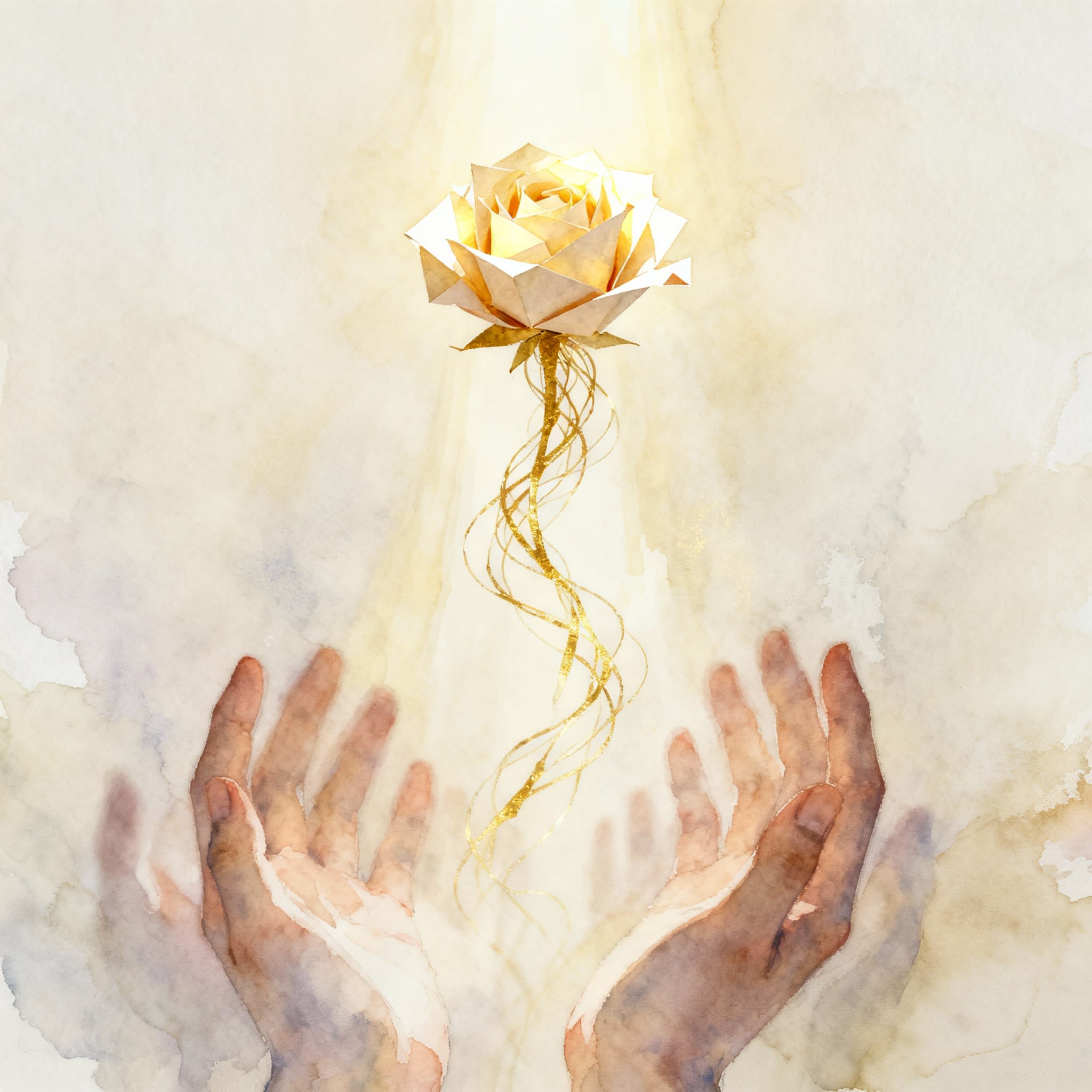
The novel’s greatest achievement is showing that while we cannot escape our inheritance, we can refuse to pass it on unchanged. The imperative isn’t to forget the past but to remember it consciously, to honor those who survived while refusing to be imprisoned by their wounds.
For readers searching for multigenerational family sagas that offer both sweeping historical scope and intimate psychological depth, for those interested in trauma-informed literature that understands healing as process rather than destination, for anyone who has ever fought to become different from their parents, Paper Roses is essential reading.
The Urban Herald gives Paper Roses our highest recommendation. This is a must-read saga, and we urge you to experience its power for yourself. Purchase Paper Roses by Debby Show now because this novel deserves to be read, discussed, and celebrated. It’s exactly the kind of ambitious, psychologically sophisticated, beautifully written fiction that reminds us why we read: to understand ourselves, to feel less alone in our struggles, and to believe in the possibility of transformation.
In a literary landscape crowded with family sagas, Paper Roses distinguishes itself through its unflinching honesty, its therapeutic wisdom, and its ultimate message of hope. Show has written a novel that honors the past without romanticizing it, that acknowledges trauma’s power without granting it victory, that celebrates resilience without minimizing the cost of survival. This is fiction that matters, literature that heals even as it wounds, storytelling that transforms both writer and reader.


