On 2 July 1937, pioneering aviator Amelia Earhart and her navigator Fred Noonan disappeared over the Pacific Ocean during their audacious attempt to become the first female pilot to circumnavigate the globe. Their final radio transmission, “We are on the line 157–337,” has echoed through nearly nine decades of aviation history, anchoring one of the twentieth century’s most captivating unsolved mysteries. What began as a heroic quest to push the boundaries of human flight and gender expectations transformed, in an instant, into an enduring puzzle that continues to captivate researchers, historians, and amateur enthusiasts worldwide. Despite technological advances that would seem impossible to Earhart’s contemporaries, despite numerous expeditions spanning from the ocean depths to remote Pacific islands, and despite the release of previously classified government documents, the fundamental question remains unanswered: what truly happened to Amelia Earhart’s Lockheed Electra 10E as it searched for Howland Island in the vastness of the central Pacific?
The Amelia Earhart disappearance has spawned countless theories, investigations, and expeditions, each attempting to provide closure to what happened to Amelia Earhart on that fateful July morning. From the official crash and sink theory to the intriguing Nikumaroro hypothesis, from claims of Japanese capture to modern technological searches of the Pacific floor, the mystery endures. Recent developments in 2025, including the declassification of government records and new expedition plans, have reignited global interest in solving aviation history’s most perplexing enigma.
The definitive core: Facts that anchor the mystery
The pioneer and her vision
Amelia Earhart was far more than merely a daring aviator. She represented something far more profound for millions of people, particularly women, who saw in her accomplishments a defiant challenge to the limitations society imposed upon them. Born on 24 July 1897 in Atchison, Kansas, she emerged from a privileged background yet possessed an insatiable hunger for adventure that transcended the confines of her era’s expectations for women.

Her aviation career truly ignited after her first airplane ride in 1920. By 1932, she had made history by becoming the first woman to fly solo, nonstop, across the Atlantic Ocean, a feat accomplished in a red Lockheed Vega that captured the public’s imagination. Between 1928 and 1937, she accumulated a remarkable collection of aviation records, becoming the first woman to fly solo across the Pacific from Hawaii to California, establishing speed records across multiple continents, and earning the Distinguished Flying Cross.
Yet these achievements, impressive though they were, merely represented stepping stones toward her ultimate ambition: to circumnavigate the globe at its widest point, following the equator around Earth’s “waist.” This goal positioned Earhart to become the first female pilot around world, cementing her status as both an aviation pioneer and feminist icon. Her determination to complete this journey reflected not only personal ambition but also a broader commitment to demonstrating women’s capabilities in fields traditionally dominated by men.

The aircraft: Lockheed Electra 10E special
The aircraft selected for this monumental undertaking was no ordinary plane. The Lockheed Electra 10E Special, tail number NR16020, was essentially a flying laboratory, custom-built and financed by Purdue University specifically for Earhart’s world flight attempt. This twin-engine, all-metal monoplane represented the cutting edge of 1930s aviation technology.
With a cruising speed of approximately 160 miles per hour and theoretical range capacity sufficient for the 2,556-mile leg from Lae, New Guinea to Howland Island, the Lockheed Electra Amelia Earhart selected appeared theoretically adequate for the journey. The Electra was equipped with the latest navigation and communication equipment available at the time: a Western Electric Model 13C radio transmitter and Model 20B receiver, as well as a Sperry GyroPilot automatic pilot.
However, the Amelia Earhart aircraft carried significant technical liabilities that would become increasingly apparent as the final flight approached. The plane had been fitted with various antenna configurations, including a high-frequency Vee-type antenna measuring some 46 feet in length, which research later suggested was less than optimal for the frequencies it would operate on during the critical final leg. These technical limitations would prove crucial in the tragedy that unfolded, contributing to what many aviation historians consider the most significant communication failure in early aviation history.
Fred Noonan: Master navigator of the Pacific
Joining Earhart on this perilous journey was Frederick Joseph Noonan, a supremely skilled navigator and pioneering aviation professional whose credentials were beyond reproach. Born on 4 April 1893, the Fred Noonan navigator had charted many of Pan American Airways’ commercial routes across the Pacific Ocean during the 1930s, becoming instrumental in mapping the “Great Circle” routes that would define transpacific aviation for decades.
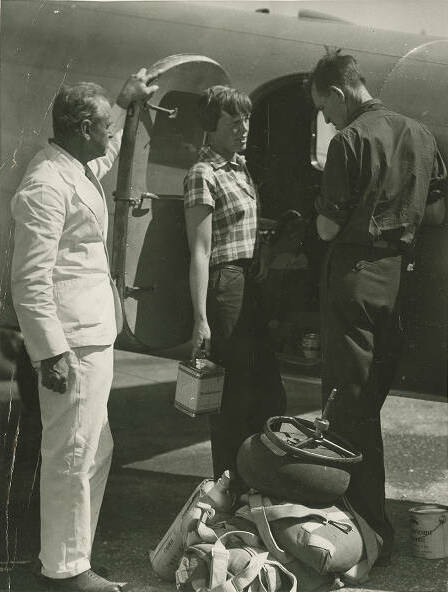
His expertise in both celestial and dead-reckoning navigation was legendary among aviators. He had successfully guided aircraft across some of the world’s most unforgiving ocean expanses, earning a reputation as one of the most reliable navigators in the Pacific region. Noonan’s experience included navigating survey flights that established the commercial air routes still used today, making him the ideal choice for Earhart’s ambitious circumnavigation attempt.
For this world flight, Noonan possessed the precise skills that such an ambitious venture demanded, though even his considerable expertise would prove insufficient against the combination of mechanical challenges, atmospheric conditions, and navigational complexity that awaited on 2 July 1937. His meticulous preparation and proven track record made the ultimate failure all the more puzzling, adding another layer to the enduring Amelia Earhart mystery.
The final leg: Navigation challenges from Lae to Howland Island
The journey from Lae, New Guinea to Howland Island represents one of aviation’s most audacious undertakings. On 1 June 1937, Earhart and Noonan departed from Miami, Florida, heading eastbound in a leisurely pace that would take them across the Caribbean, through Africa, across India, and eventually to Lae on 29 June 1937. They had completed approximately 22,000 miles of their 29,000-mile circumnavigation without serious incident.
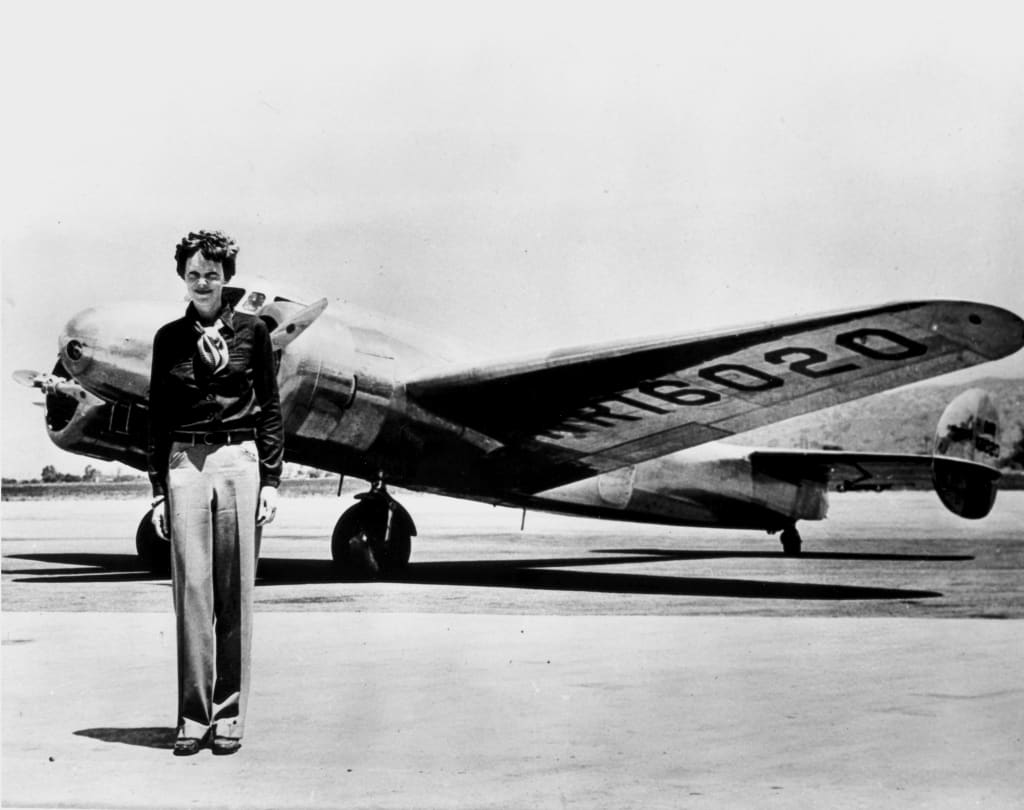
The final leg, however, presented challenges of an entirely different magnitude. Howland Island Amelia Earhart needed to locate was a coral atoll barely 1.5 miles long and 0.5 miles wide, rising just 20 feet above sea level, situated in the midst of 1,600 miles of open Pacific Ocean. Locating such a minuscule target without modern navigation aids represented a navigational challenge so extreme that most contemporary aviators considered it bordering on reckless.
The distance alone was formidable, requiring nearly 20 hours of continuous flight over featureless ocean. Without GPS, satellite navigation, or modern communication systems, the crew depended entirely on celestial navigation, dead reckoning, and radio direction finding. Any miscalculation in wind speed, compass deviation, or timing could result in missing the island entirely. The margin for error was virtually nonexistent.
Adding to the complexity, weather patterns in the region were notoriously unpredictable, and the Electra’s radio equipment would need to function flawlessly to maintain contact with the USCGC Itasca, the U.S. Coast Guard cutter positioned near Howland to provide radio navigation support. The crew faced not just the technical challenge of navigation but also the psychological strain of flying for nearly a full day over open water with no visual references and limited communication capability.

The last contact: Radio communication failure and final transmission
On the morning of 2 July 1937, Earhart transmitted her first radio message to the Itasca at 6:14 a.m., reporting her position as approximately 200 miles from Howland Island. As the hours progressed, subsequent transmissions painted a picture of increasing urgency and concern. At 7:42 a.m., Earhart reported: “We must be on you, but we cannot see you. Fuel is running low. Been unable to reach you by radio. We are flying at 1,000 feet.”
Thirteen minutes later, at 7:58 a.m., she transmitted: “Circling but cannot hear you.” The Itasca, meanwhile, was transmitting continuously, but critical communication failures prevented Earhart from receiving any of the Itasca’s transmissions, a catastrophic technical breakdown that would prove absolutely central to understanding the final tragedy.
The most poignant moment arrived at 8:43 a.m. local time (20:13 GMT), a full twenty hours and thirteen minutes into the flight. The Amelia Earhart last transmission read: “We are on the line 157-337… circling but cannot hear you… Go ahead on 7500.” This brief statement contains remarkable navigational information. The “line 157-337” refers to a specific navigational line of position calculated by Noonan using celestial navigation, particularly the Sun’s position. Pointing southeast towards 157 degrees and northwest towards 337 degrees, this line theoretically passed through Howland Island, providing navigational guidance for locating their destination.
Her request to “Go ahead on 7500” represented a desperate attempt to establish two-way radio communication by switching to a frequency the Itasca could transmit upon. Following this transmission, silence fell. The greatest mystery in aviation was instantaneously born. The crew aboard the Itasca continued transmitting for hours, hoping to reestablish contact, but no further messages were ever confirmed to have come from the lost aircraft.
Quick answer: What happened to Amelia Earhart?
After 88 years, Amelia Earhart’s fate remains officially unsolved. The U.S. government’s Amelia Earhart crash and sink theory suggests she ran out of fuel near Howland Island and ditched in the Pacific Ocean. However, the 2025 Taraia Object Amelia Earhart expedition led by Purdue University is investigating whether wreckage on Nikumaroro Island represents her Lockheed Electra, potentially supporting the Amelia Earhart castaway theory that gained credibility through TIGHAR’s archaeological research.

Alternative explanations include the Japanese capture Amelia Earhart theory, which proposes she was taken prisoner in Japanese-controlled territory, though this lacks substantive documentary evidence. The mystery persists despite numerous expeditions, advanced sonar technology, and the recent declassification of government records. Each theory presents compelling arguments, yet none has produced definitive proof of Earhart and Noonan’s ultimate fate.
Comparative analysis of four major theories regarding Amelia Earhart’s 1937 disappearance
The official narrative: The crash and sink theory
The U.S. Government’s conclusion
In the immediate aftermath of the disappearance, the United States government undertook investigation of extraordinary proportions. The U.S. Navy and Coast Guard initiated what would become the most expensive air-sea search operation in American history up to that time, a massive coordinated effort involving ten ships, over 4,000 personnel, the aircraft carrier USS Lexington with sixty planes aboard, four destroyers, and numerous search aircraft operating from Hawaii and the Pacific islands.
Despite these unprecedented efforts, which continued until 19 July 1937, not a single piece of wreckage, not a single body, not a single confirming trace of the aircraft was ever discovered in the immediate search area near Howland Island. The search covered approximately 250,000 square miles of ocean, with aircraft flying grid patterns and ships conducting systematic sweeps of the area where Earhart was believed to have gone down.
By January 1939, the U.S. Navy concluded officially that Earhart and Noonan had run out of fuel, ditched their aircraft into the Pacific Ocean approximately 100 miles from Howland Island, and perished in the crash. This conclusion became the official government position and remains so to this day, despite subsequent theories and evidence suggesting alternative scenarios.
The crash and sink theory: Technical analysis
This crash and sink theory, meticulously developed and refined by retired aviator and aircraft accident investigator Elgen Long, remains the most widely accepted explanation among aviation professionals and governmental authorities. Long’s analysis is deceptively straightforward yet grounded in rigorous technical examination. He argues that Earhart and Noonan, flying with approximately three to four hours of fuel remaining at 8:43 a.m., faced an impossible situation: they had failed to locate Howland Island despite sophisticated celestial navigation and radio support, and the aircraft simply did not possess sufficient fuel to reach any alternative destination.
The Lockheed Electra, whilst a capable aircraft, consumed fuel at a rate dependent upon multiple factors: altitude, engine configuration, atmospheric conditions, and weight distribution. Contemporary calculations may have underestimated these variables. The crucial variable was a 26 mile-per-hour headwind that blew across their entire flight path, effectively increasing their distance requirement from approximately 2,556 miles to nearly 3,100 miles.
Combined with the aircraft carrying excessive fuel load and cargo weight, which increased fuel consumption by approximately twenty percent beyond planned calculations, the mathematics of survival became impossibly constrained. Long’s detailed analysis examined fuel consumption rates, engine performance characteristics, weather conditions documented by ships in the area, and the known technical limitations of the Electra’s design. His reconstruction of the flight suggests that by the time of the final transmission, Earhart and Noonan had perhaps 30 to 60 minutes of fuel remaining at most.
Given these circumstances, Long concludes, the only logical outcome was that the aircraft descended toward the ocean surface and ditched in the deep Pacific, rapidly filling with water (being a land plane rather than a flying boat) and sinking to the abyss. The Electra’s design, optimized for land operations rather than water landings, would have filled with water within minutes, carrying the aircraft and its occupants to the ocean floor.
The evidence problem: Absence as presence
The crash and sink theory, however, confronts a significant empirical challenge: the complete absence of any confirmable wreckage despite the most extensive naval search operation ever mounted. The Lockheed Electra’s fuselage would not decompose in any meaningful timeframe. Even after eighty-seven years, substantial portions of the airframe should theoretically remain identifiable on the ocean floor, particularly given the well-charted nature of modern sonar and underwater imaging technology.
Deep Sea Vision’s 2024 expedition, employing advanced Kongsberg Discovery HUGIN 6000 unmanned underwater drones with synthetic aperture sonar systems, scanned more than 5,200 square miles of ocean floor west of Howland Island, an area theoretically encompassing the crash zone according to crash-and-sink advocates. The expedition initially identified what appeared to be aircraft wreckage, creating headlines proclaiming the mystery solved.
However, upon closer examination using high-resolution photography and additional sonar imaging, the object proved to be merely a rock formation. “I’m super disappointed out here, but you know, I guess that’s life,” Deep Sea Vision CEO Tony Romeo remarked philosophically to The Wall Street Journal. The expedition cost millions of dollars and represented one of the most technologically sophisticated searches ever conducted, yet ultimately yielded no definitive evidence.
The absence of wreckage raises troubling questions for the crash and sink theory. Modern oceanographic surveys have located numerous aircraft wrecks from World War II and later periods in far deeper waters and less precisely known locations. The fact that no trace of the Electra has been found in the area where it theoretically crashed suggests either that the crash location is significantly different from calculated positions, or that an alternative explanation may be required.
The Nikumaroro hypothesis: Evidence from an uninhabited island
The geographic anomaly: The 157-337 line
One of the most intriguing aspects of Earhart’s final transmission lies in its geographical specificity. The line 157-337, upon which she reported flying, extends not only through Howland Island but also continues southeastward toward Gardner Island, subsequently renamed Nikumaroro, an uninhabited coral atoll in the Phoenix Islands located approximately 350 nautical miles southwest of Howland.
This geographic relationship catalysed an alternative theory that would captivate researchers for decades. If, this hypothesis proposes, Earhart and Noonan had failed to locate the minuscule Howland Island whilst flying along this navigational line, they might logically have continued along the 157-337 heading in either direction: northwest toward open ocean (almost certainly fatal) or southeast toward Nikumaroro (theoretically survivable).
The Nikumaroro hypothesis Amelia Earhart supporters have championed gains additional credibility from tide conditions. At the time of Earhart’s disappearance, tide conditions at Nikumaroro were particularly low, revealing an exceptionally flat reef surface along the northern shore, a coral platform potentially adequate for executing an emergency landing, particularly with an experienced pilot at the controls. The island’s reef system, while treacherous, could have provided a relatively smooth surface during low tide, allowing a skilled pilot to attempt a controlled landing.
The distance from Howland to Nikumaroro, while substantial, falls within the possible range of the Electra given its remaining fuel at the time of the last transmission. If Earhart and Noonan had continued southeast along the 157-337 line after failing to locate Howland, they might have spotted Nikumaroro’s distinctive profile and attempted a landing on its reef system. This scenario, while requiring fortunate timing and exceptional piloting skill, remains within the realm of possibility.
TIGHAR’s investigation: The International Group for Historic Aircraft Recovery
Beginning in 1989, The International Group for Historic Aircraft Recovery (TIGHAR), a nonprofit organization founded by aviation historian and researcher Ric Gillespie, launched a systematic investigation into the Nikumaroro hypothesis. Over the subsequent decades, TIGHAR has mounted more than a dozen expeditions to the remote atoll, recovering tantalizing albeit circumstantial evidence supporting the castaway theory.
Their investigation meticulously documented the archaeological and historical record of Nikumaroro, carefully analysing satellite imagery, pre-war British colonial photographs, and contemporary reports from settlers who visited the island. TIGHAR’s approach combined traditional archaeological techniques with modern forensic analysis, radiocarbon dating, and historical document research. The organization has invested millions of dollars and countless hours examining every aspect of the island’s history and physical characteristics.
The group’s research has uncovered intriguing patterns suggesting human presence on the island during the period immediately following Earhart’s disappearance. These findings, while not conclusive, provide a framework for understanding how Earhart and Noonan might have survived for days or weeks after landing on the remote atoll. TIGHAR’s work has brought scientific rigor to what was previously a field dominated by speculation and anecdotal evidence.
Archaeological evidence: Bones, relics, and artifacts
Perhaps the most emotionally compelling evidence emerged in 1940 when British colonial administrator Eric Bevington discovered what appeared to be human skeletal remains on Nikumaroro, along with partial footwear suggesting female dimensions and several artifacts including glass bottles consistent with 1930s manufacture. These bones were subsequently sent to Fiji for medical analysis.
Whilst initial assessments suggested they might belong to a female individual of the appropriate dimensions, subsequent re-examination and analysis proved inconclusive, and the original remains disappeared into colonial archives. Modern forensic anthropology techniques, applied to measurements and photographs of the bones, have produced conflicting interpretations. Some researchers argue the bones match Earhart’s known physical characteristics, while others contend they belong to a Pacific Islander or cannot be definitively identified.
TIGHAR’s archaeological investigations identified a location on Nikumaroro designated the “Seven Site,” named for its distinctive clearing shape, where evidence of multiple campfires was discovered, along with remains of birds and fish prepared using techniques inconsistent with traditional Kiribati customs, suggesting preparation by individuals unfamiliar with Pacific island subsistence methods. The campfire evidence indicates prolonged habitation rather than a brief visit, supporting the theory that castaways survived for an extended period.
Additionally, researchers uncovered several glass bottles from the 1930s at this site, including one that TIGHAR speculates may have contained freckle cream, a cosmetic product likely used by Earhart. Other artifacts recovered include a woman’s compact mirror, a zipper pull from the era, pieces of plexiglass consistent with aircraft windows, and aluminum fragments that might have originated from the Electra’s structure. While each artifact individually proves little, collectively they create a pattern suggesting American presence on the island during the late 1930s.
The post-loss radio signals: A chorus of desperate voices
Particularly compelling to TIGHAR’s hypothesis is the analysis of radio signals allegedly transmitted from the Earhart aircraft after the official final transmission at 8:43 a.m. on 2 July 1937. Contemporary authorities largely dismissed these post-loss signals as hoaxes and misidentifications, viewing them sceptically once the initial search failed.
However, TIGHAR’s systematic re-examination of these signals, conducted using modern antenna modeling software and radio wave propagation analysis, suggests that approximately 57 of the 120 reported post-loss radio signals may have credible origins. Most poignant among these is the transcript recorded by a fifteen-year-old radio enthusiast named Betty Klenck in St. Petersburg, Florida, who documented what she believed to be Earhart’s voice crying: “Waters high… water’s knee deep, let me out… help us quick.”
Additionally, numerous Pacific-based radio operators reported receiving transmissions over subsequent days, with patterns and technical characteristics suggesting genuine aircraft transmissions rather than hoaxes or misidentifications. The signals reportedly ceased after approximately one week, corresponding with the highest spring tides that would have inundated the reef where the aircraft might have landed. This timing correlation suggests the aircraft’s radio equipment functioned until seawater finally destroyed it.
Radio propagation experts have confirmed that the Electra’s transmitter, if the aircraft landed on Nikumaroro’s reef, could have continued broadcasting whenever the engine was running to charge the batteries. The specific frequencies and signal characteristics reported by various listeners align with the Electra’s known radio capabilities. If any of these post-loss signals originated from Earhart’s aircraft, the crash-and-sink theory becomes logically untenable, a wrecked aircraft in the deep Pacific cannot transmit radio signals, regardless of the ingenuity of its occupants.
The Taraia Object: Mysterious satellite anomaly
In 2020, satellite imagery of Nikumaroro’s lagoon revealed an unusual elongated object submerged in the shallow water, subsequently named the “Taraia Object.” Visible in satellite photographs dating back to 1938, just one year after Earhart’s disappearance, this anomaly has sparked renewed expedition efforts. The object measures approximately 36 feet in length, roughly consistent with the fuselage section of a Lockheed Electra, and appears to have remained in the same location for over 80 years.
In October 2025, Purdue University Amelia Earhart investigation announced a significant undertaking: leading an expedition with the Archaeological Legacy Institute to investigate whether the Taraia Object represents remnants of Earhart’s Lockheed Electra. The initiative, announced on the eighty-eighth anniversary of Earhart’s disappearance, represents one of the most comprehensive attempts to definitively solve the mystery. The Amelia Earhart 2025 expedition garnered international media attention and renewed public interest in the decades-old mystery.
However, delays caused by permit requirements and cyclone season scheduling have postponed the expedition from November 2025 until 2026, with researchers promising additional security and resources for a larger excavation if initial findings prove promising. “We’ve overcome other challenges to this project over the past four years, and we will get past this one, too,” Richard Pettigrew, executive director of the Archaeological Legacy Institute, stated. The expedition plans to use remotely operated vehicles, advanced sonar equipment, and archaeological diving teams to thoroughly examine the object and surrounding area.
The investigation will also incorporate forensic analysis of any recovered materials, attempting to match them against known specifications of Earhart’s aircraft. If the Taraia Object proves to be aircraft wreckage, and if that wreckage can be positively identified as belonging to the Electra, it would represent the most significant breakthrough in the case since Earhart’s disappearance nearly 90 years ago.
The Japanese capture theory: Espionage, capture, and execution
The strategic context: Forbidden islands
An entirely distinct category of theorists proposes that Earhart and Noonan did not crash at sea or land on Nikumaroro, but rather that their aircraft was forced down on Japanese-controlled territory, potentially on the island of Saipan in the Northern Mariana Islands or somewhere in the Marshall Islands, where the aviators were subsequently captured by the Japanese military, interrogated, and executed.
To understand this theory’s appeal, one must comprehend the geopolitical complexities of the Pacific in 1937. Japan had occupied the Mandated Islands, including the Gilbert and Marshall chains, following World War I, and had expressly forbidden American and other foreign nationals from visiting these territories throughout the 1920s and 1930s. The islands were strategically valuable, fortified, and heavily guarded.
United States Navy strategists recognized their crucial importance for any future conflict with Japan, yet were perpetually frustrated by their inability to gather intelligence on Japanese military preparations. Tensions between Japan and the United States were escalating throughout the 1930s, with Japan’s invasion of Manchuria in 1931 and subsequent military expansion creating diplomatic friction. Some theorists suggest Earhart’s flight might have been a cover for reconnaissance, though no credible evidence supports this claim.
The Japanese military had invested heavily in fortifying these islands, constructing airfields, harbor facilities, and military installations that would later prove crucial in World War II. American intelligence agencies desperately wanted information about these installations but had no legitimate means of obtaining it. This context has led some researchers to speculate that Earhart’s flight, whether intentionally or accidentally, brought her into contact with these sensitive military zones.
The capture hypothesis: Circumstantial claims and missing evidence
Proponents of the Japanese capture theory argue that Earhart, as a famous American aviator with extensive aviation industry connections, represented precisely the sort of individual Japanese military intelligence might wish to interrogate regarding American aeronautical developments. They note that the Lockheed Electra itself was a heavily modified “flying laboratory” incorporating the latest aviation innovations, and that Japanese spies had been actively attempting to acquire detailed technical information on Lockheed aircraft, particularly regarding developments being adapted for military use.
Furthermore, various islanders who lived under Japanese administration have come forward over the decades claiming to have witnessed or possessing knowledge of Earhart and Noonan’s capture and subsequent execution. A 1960 newspaper article featuring San Mateo Times journalist coverage quoted former Army Sergeant Thomas Devine, who claimed that whilst serving on Saipan, a native islander showed him an unmarked grave of “two white people who came from the sky,” which Devine believed to be Earhart and Noonan.
Additional testimonies emerged from residents of the Marshall Islands who claimed to have seen a silver airplane matching the Electra’s description land or crash in the area during July 1937. Some witnesses reported seeing a white woman and man taken into custody by Japanese soldiers. These accounts, collected decades after the events, have been compiled by researchers attempting to reconstruct a narrative of capture and imprisonment.
The theory gained popular attention through books and documentaries presenting these eyewitness accounts as credible evidence. Proponents argue that the lack of wreckage in the Howland Island area supports the theory that the aircraft never crashed there, instead diverting to Japanese-controlled territory either through navigation error or deliberate intent.
The critical problem: Evidentiary absence and logical inconsistencies
The Japanese capture Amelia Earhart theory confronts substantial challenges when subjected to rigorous examination. First, no declassified Japanese military records or documents have ever confirmed any capture, imprisonment, or execution of American aviators in 1937, a remarkable absence given the extensive documentation that Japanese military records survive from the era. Japanese military bureaucracy was notoriously meticulous in record-keeping, making the complete absence of documentation highly suspicious.
Second, the islands allegedly involved lie extraordinarily far from Earhart’s planned flight path. Even extraordinary navigational errors of the magnitude theorists propose seem implausible for an aviator and navigator of the calibre possessed by Earhart and Noonan. Reaching the Marshall Islands from the last known position would have required flying hundreds of miles in the wrong direction, an error that seems impossible given Noonan’s proven expertise.
Third, the capture theory raises logical questions about military strategy: why would the Japanese military execute famous American aviators, thereby creating international incidents, years before hostilities commenced, rather than detaining them as intelligence assets? Such an action would have risked provoking American retaliation and provided no strategic benefit. The Japanese government denied any knowledge of Earhart’s fate both before and after World War II, maintaining this position even after defeat when revealing such information could have served propaganda purposes.
Fourth, if Japanese forces had captured the aircraft, surely some element of its distinctive fuselage, engines, or structural components would have been retained for technical intelligence purposes, yet no Japanese museum, archive, or privately held collection has ever surfaced containing authenticated Electra components. The eyewitness testimonies, whilst emotionally compelling, remain fundamentally uncorroborated and difficult to subject to rigorous historical verification. Many witnesses came forward decades after the alleged events, raising questions about memory reliability and potential contamination by media coverage.
Recent Amelia Earhart declassified records 2025 released following presidential order have provided no evidence supporting the Japanese capture theory. The declassified documents, which included previously secret military intelligence reports, diplomatic cables, and post-war interrogation records of Japanese officials, contain no references to Earhart or Noonan being captured or detained by Japanese forces. This absence of evidence in newly released classified materials further undermines the credibility of the capture hypothesis.
The technical dimensions: Why navigation failed
The radio catastrophe: Communicating across the void
One cannot adequately understand the Amelia Earhart mystery without comprehending the profound technical failures that contributed to the tragedy. Central among these was the aircraft’s radio communication system, which failed catastrophically precisely when functioning was most critical. The Electra’s radio receiver was equipped to receive transmissions on 3,105 kilohertz and 6,210 kilohertz, the frequencies upon which Earhart intended to receive homing signals from the Itasca.
However, the aircraft’s antenna configuration, a high-frequency Vee-type design measuring forty-six feet in length, whilst theoretically capable of radiating signals, was fundamentally non-optimised for receiving weak signals at long range. Furthermore, the aircraft had been fitted with what researchers now understand to be an inadequate trailing antenna system for low-frequency reception, specifically for the 500 kilohertz frequency that the Itasca was continuously transmitting upon as a homing beacon.
Perhaps most critically, research suggests that during the aircraft’s emergency landing at Luke Field in Hawaii on 20 March 1937, the belly antenna that normally provided adequate receiving capability may have been damaged or snapped, severely compromising the receiver’s sensitivity. The Luke Field incident, which resulted in the Electra ground-looping and sustaining significant damage, required extensive repairs before the flight could continue. While the visible structural damage was repaired, subtle antenna damage may have gone undetected.
The consequences of this technical failure were devastating. Whilst the Itasca clearly received Earhart’s transmissions with signal strength rating of QSA5 (the maximum possible rating on a scale of 1 to 5), she could not hear any transmissions whatsoever from the Itasca. This one-way communication breakdown meant that whilst the Itasca crew could hear her frantic reports that she was lost and circling, unable to locate either Howland Island or the ship itself, they could provide no radio direction finding guidance, no frequency confirmations, and no reassurance, only silent listening to a woman’s growing panic.
Modern analysis of the radio equipment and communication logs reveals that the Itasca’s radio operators followed proper procedures and transmitted continuously on multiple frequencies, but the Electra’s compromised receiving capability meant these transmissions never reached Earhart. Had two-way communication been established, the Itasca could have provided bearing information that would have guided the aircraft directly to Howland Island, almost certainly preventing the tragedy.
The navigational challenge: Precision in vastness
Celestial navigation, the technique Fred Noonan employed to guide the Electra toward Howland Island, demands extraordinary precision. Noonan’s calculations, based upon the Sun’s precise position and its relationship to geographical coordinates, should theoretically have brought the aircraft to within approximately 62 nautical miles of Howland Island, an acceptable margin for locating the island visually or using radio direction finding.
However, multiple complicating factors conspired against success. Modern analysis has revealed that the position of Howland Island on the navigational charts used aboard the Electra was actually misplaced by approximately five nautical miles. This cartographic error, while seemingly minor, could have been enough to prevent visual acquisition of the island given the limited visibility conditions reported in the area.
Additionally, the International Date Line Theory, proposed by retired NASA employee Liz Smith in 2010, suggests that Noonan, exhausted after seventeen hours of flying across the date line, might have forgotten to adjust his celestial calculations for the calendar date change, resulting in a westward navigational error of approximately sixty to one hundred miles. Crossing the International Date Line requires careful attention to date changes in celestial navigation calculations. Any confusion about the current date would systematically shift all subsequent position calculations, potentially explaining why the aircraft never made visual contact with Howland Island despite being in the general vicinity.
The challenge of celestial navigation at sea level, as opposed to from a stable platform on land, introduces additional complexity. Aircraft motion, limited visibility horizons, and the need to take readings while managing aircraft controls all contribute to potential errors. Even a master navigator like Noonan, operating under ideal conditions, could reasonably expect positioning accuracy no better than 10 to 20 nautical miles. Under the stressful conditions of the final flight, with fatigue, limited visibility, and radio communication failures compounding the challenge, even larger errors become understandable.
The fuel calculation: Mathematics of failure
The Lockheed Electra, with its twin 600-horsepower radial engines, theoretically achieved approximately three miles per gallon under optimal flying conditions. The flight plan calculated that the aircraft would require approximately twenty to twenty-one hours of flying time to traverse the 2,556-mile distance from Lae to Howland at anticipated cruising speeds and fuel consumption rates.
However, the aircraft carried excessive fuel and cargo weight, which contemporary analysis suggests increased fuel consumption by approximately twenty percent above planned figures. The Electra’s fuel tanks were filled to maximum capacity, and additional equipment, spare parts, and supplies increased the aircraft’s gross weight beyond optimal performance parameters. Heavier aircraft require more power to maintain altitude and speed, directly increasing fuel consumption rates.
More devastatingly, the twenty-six mile-per-hour headwind that prevailed throughout the flight extended the effective distance to nearly 3,100 miles, creating a situation where the aircraft’s available endurance approached its required flight time with virtually no safety margin. This headwind was significantly stronger than weather forecasts had predicted, representing an unfortunate but not unprecedented meteorological misjudgment. In an era before satellite weather monitoring and sophisticated atmospheric modeling, such forecast errors were common.
When combined with the aircraft’s inability to locate Howland Island and the necessity to circle and search whilst fuel rapidly depleted, the mathematics became inexorable: Earhart and Noonan faced certain tragedy, and the only question was whether they would crash at sea or, by the most extraordinary good fortune, locate an alternative destination. Each minute spent circling and searching consumed precious fuel that could have extended their range or provided additional time for navigation corrections.
By the time of Earhart’s final transmission at 8:43 a.m., the aircraft had been airborne for approximately 20 hours and 13 minutes. Fuel endurance calculations suggest perhaps 30 to 90 minutes of flying time remained, depending on power settings and fuel consumption rates. This narrow window left almost no margin for continued searching or diversion to alternative destinations. The cruel mathematics of fuel exhaustion made disaster nearly inevitable once the initial navigation attempt failed to locate Howland Island.
Why the mystery endures: Culture, memory, and feminist icon status
The feminist symbol: Breaking barriers in a patriarchal sky
The Amelia Earhart legacy extends far beyond her achievements as a pilot, transcending the merely technical or historical to encompass profound cultural significance, particularly for women and feminism. During an era when women were explicitly barred from numerous professions, Earhart achieved preeminence in one of aviation’s most elite domains. She was not merely a pilot but a professional pilot, an innovator, an entrepreneur, and a businesswoman whose accomplishments demanded recognition based on merit rather than novelty or media spectacle.
She co-founded The Ninety-Nines, an organization of female pilots that continues to the present day, providing support and advocacy for women’s advancement in aviation. Her public writing and lectures consistently championed women’s capabilities and challenged gender-based limitations, making her a vocal advocate for equality at a time when such advocacy was genuinely countercultural. Earhart wrote extensively about women’s rights, arguing that women possessed the same intellectual capabilities and physical courage as men, and that societal restrictions rather than inherent limitations prevented women from achieving in traditionally masculine fields.
Her influence extended beyond aviation into broader cultural conversations about women’s roles. She wore trousers when convention demanded dresses, pursued dangerous activities when women were expected to remain safe, and spoke publicly about controversial topics when women were expected to remain silent. These actions, combined with her aviation achievements, made her a powerful symbol for women seeking to transcend traditional limitations.
The feminist icon Amelia Earhart represents continues to inspire new generations. Her image appears in educational materials, her story is taught in schools, and her example is cited by women entering male-dominated professions. She demonstrated that courage, skill, and determination could overcome societal prejudices, providing a model that remains relevant in contemporary discussions of gender equality.
The unanswered question: Why we cannot let her go
The unresolved nature of Earhart’s disappearance fundamentally contributes to her legendary status. Had her death been conclusively documented, with wreckage recovered and remains identified, her story, however dramatic, would occupy a defined place in historical narrative. Instead, her disappearance exists in perpetual ambiguity, a blank slate upon which each generation projects its own interpretations, theories, and hopes.
For some, she embodies the cost of pushing boundaries. For others, she represents the injustice of historical erasure. For still others, she represents an unsolved puzzle demanding solution. This perpetual reconsideration ensures her story’s continued relevance across generations, transforming personal tragedy into cultural touchstone.
The mystery allows people to imagine alternative endings, to speculate about what might have happened, and to participate in an ongoing investigation that spans decades. Each new technology, from deep-sea sonar to satellite imagery, offers the possibility of finally solving the mystery, keeping the story fresh and relevant. The absence of closure means that Earhart’s story remains unfinished, inviting continued engagement rather than passive historical contemplation.
Psychological factors also contribute to the mystery’s endurance. Humans possess a fundamental need for narrative closure, for stories to have definite endings. The absence of such closure creates cognitive dissonance that motivates continued investigation and speculation. The Amelia Earhart disappearance represents an open loop in collective historical consciousness, generating persistent interest precisely because it remains unresolved.
Modern expeditions and ongoing fascination
The continued mounting of expensive, technologically sophisticated expeditions to solve the mystery, from Robert Ballard’s 2019 Nikumaroro expedition to Deep Sea Vision’s 2024 Pacific floor survey to the forthcoming Purdue University investigation, testifies to the mystery’s enduring grip on the contemporary imagination. These expeditions represent not merely historical curiosity but genuine attempts to resolve a question that remains fundamentally unanswered despite nearly nine decades of investigation.
Each expedition employs the latest technology available at the time. Ballard, famous for discovering the Titanic wreck, brought his deep-sea exploration expertise to searching Nikumaroro’s surrounding waters. Deep Sea Vision’s autonomous underwater vehicles represented cutting-edge sonar technology capable of detecting objects at unprecedented depths and resolutions. The planned 2026 expedition promises to employ even more advanced equipment, including robotic submersibles and sophisticated archaeological analysis techniques.
The aviation history Amelia Earhart represents continues to fascinate researchers and the general public alike. Her story intersects with multiple compelling themes: the golden age of aviation, women’s struggle for equality, the romance of exploration, and the human drive to solve mysteries. These intersecting narratives ensure that interest spans demographic groups and geographic boundaries.
The announcement of the Taraia Object expedition, in particular, suggests that new evidence and technological capabilities may yet provide definitive answers. Unlike previous expeditions that searched vast areas of open ocean or examined circumstantial archaeological evidence, the Taraia Object represents a specific, identifiable target that can be thoroughly investigated. If the object proves to be aircraft wreckage, and if that wreckage can be positively identified, the mystery that has persisted for 88 years might finally reach resolution.
2025: The year of new evidence
November 2025 witnessed unprecedented developments in the Earhart investigation, marking what many researchers consider the most significant progress since the disappearance itself. These developments have energized the research community and sparked renewed public interest in solving aviation’s greatest mystery.
September 2025 brought unexpected movement from the highest levels of government. President Trump ordered declassification of all government records related to Earhart’s disappearance, releasing NSA files, radio logs, and previously undisclosed search locations. The declassified materials included communications intercepts, military search documentation, and diplomatic correspondence related to the 1937 search operations and subsequent investigations. While the documents provided no smoking gun evidence identifying Earhart’s fate, they did reveal the extent of government interest in the case and confirmed several details previously known only through unofficial sources.
October 2025 saw Purdue University announce the Taraia Object expedition, originally scheduled for November but postponed to 2026 due to permit delays and cyclone season concerns. The expedition represents the most comprehensive investigation of the Nikumaroro hypothesis ever attempted, combining archaeological expertise, advanced technology, and significant financial resources. Purdue’s involvement lends institutional credibility to the investigation, moving it from the realm of amateur enthusiasm to serious academic research.
November 2025 analysis of the declassified Itasca radio log confirmed “Earhart Unheard” was logged repeatedly, validating research showing one-way communication failure was central to the tragedy. The logs revealed that Itasca radio operators transmitted continuously on multiple frequencies, following proper protocols, but received no indication that Earhart could hear their transmissions. This documentation supports the technical analysis suggesting antenna damage prevented the Electra from receiving critical homing signals.
These developments suggest definitive answers may finally be within reach. The combination of newly released historical documents, advanced search technology, and focused investigation of specific evidence represents the best opportunity in decades to solve the mystery. Whether the 2026 expedition will provide conclusive answers remains uncertain, but the current moment represents a convergence of factors that makes resolution more likely than at any previous time.
Conclusion: The persistence of the enigma
The mystery of Amelia Earhart’s 1937 disappearance represents one of aviation history’s most enduring paradoxes: the most thoroughly investigated aviation accident in history, yet one that resists definitive resolution despite unprecedented resources devoted to its investigation. The evidence simultaneously supports and contradicts competing theories. The testimonies both illuminate and obfuscate. The artifacts tantalize without concluding.
The official crash-and-sink theory, endorsed by the U.S. government and supported by majority aviation expert consensus, provides the most parsimonious explanation grounded in technical analysis and flight performance data. The mathematics of fuel exhaustion, the documented headwinds, the known navigation challenges, and the one-way radio communication failure all support the conclusion that Earhart and Noonan ditched in the Pacific Ocean after exhausting their fuel supply.
Yet the Nikumaroro hypothesis, supported by TIGHAR’s meticulous archaeological investigations and credible analysis of post-loss radio signals, presents a compelling counter-narrative suggesting survival and subsequent suffering on a remote atoll. The geographic alignment of the 157-337 line with Nikumaroro, the recovered artifacts consistent with 1930s American presence, the skeletal remains of appropriate dimensions, and the pattern of post-loss radio signals all suggest the possibility that Earhart and Noonan survived the initial flight, landing on the island’s reef before ultimately succumbing to exposure, dehydration, or other causes.
The Japanese capture theory, whilst emotionally dramatic and supported by numerous eyewitness testimonies, lacks the evidentiary support that rigorous historical analysis demands. The absence of documentation in Japanese military records, the implausibility of the required navigation errors, the lack of any recovered aircraft components, and the release of classified government documents containing no supporting evidence all combine to make this theory the least credible of the major hypotheses.
As technology advances and expeditions continue, with the Purdue University investigation of the Taraia Object scheduled for 2026 promising potentially decisive evidence, the possibility emerges that after nearly nine decades, humanity might finally achieve the definitive answer that has eluded previous generations. Modern technology offers capabilities that would have seemed miraculous to investigators in 1937: satellite imagery revealing submerged objects, sonar systems mapping the ocean floor in unprecedented detail, DNA analysis capable of identifying skeletal remains from minimal samples, and computer modeling reconstructing flight paths and fuel consumption with precision impossible to earlier researchers.
What remains certain is that Amelia Earhart’s legacy transcends the circumstances of her death. Her pioneering achievements, her advocacy for gender equality, her demonstration that women possessed the capability to excel in traditionally masculine domains, and her inspiring courage in the face of extraordinary challenges ensure her continuing relevance and admiration across generations.
Whether she perished in the Pacific crash, survived briefly on a remote atoll, or experienced some entirely unforeseen fate, her influence on aviation, feminism, and the cultural consciousness remains immeasurable and permanent. The enduring fascination with what happened to Amelia Earhart reflects not merely curiosity about historical events but recognition of her significance as a cultural icon whose story continues to inspire, challenge, and captivate people worldwide. As we approach the ninetieth anniversary of her disappearance, the question persists: will we finally learn the truth about aviation’s greatest mystery, or will Amelia Earhart’s fate remain forever unknown, an eternal symbol of human courage, ambition, and the unknowable risks of pushing beyond established boundaries?