
When marathon training season arrives and those 20-plus mile efforts loom on your calendar, having the right footwear transforms from a luxury into an absolute necessity. The best long run shoes in 2026 represent a seismic shift in what’s possible for distance runners. Welcome to the era of super trainers, where maximum cushioning meets race-day responsiveness without the weight penalty that plagued previous generations.
After logging over 300 miles across ten of the most anticipated releases of 2026, testing everything from early morning recovery jogs to 30-kilometre Saturday slogs, here is a thorough walkthrough of the cream of the crop. These are not your typical plodding max-cushion shoes. They are sophisticated pieces of engineering that employ cutting-edge foams, strategic plate technology, and geometries that actually make long runs feel, dare we say it, enjoyable.
A note before you read on: the ten shoes featured here are not ranked against one another. Running is deeply personal, and the best shoe is always the one that suits your foot shape, pace, training goals and biomechanics. What follows is a curated selection of ten standout options for 2026, each exceptional in its own right and each serving a slightly different type of runner. There is no winner here, only the right choice for you.
What makes a long run shoe different in 2026?
Before diving into the specific models, it is worth understanding what separates a genuine long-run companion from your everyday trainer or race-day weapon. The technology landscape has evolved dramatically, and manufacturers have finally cracked the code on what distance runners actually need when accumulating serious weekly mileage.
The super trainer revolution
The term “super trainer” has officially entered the running lexicon, referring to high-stack, high-performance shoes designed specifically for long-distance training. These shoes borrow technology from carbon-plated racing shoes, think PEBA-based foams and sophisticated rocker geometries, but package them in a more forgiving, durable platform suitable for daily use.
Research published between 2024 and 2025 demonstrated that advanced footwear technology (AFT) can reduce the energetic cost of running by approximately 3 to 4% across various gradients, not just on flat terrain. For marathon training, this translates to genuinely fresher legs deep into your long runs and better recovery between hard sessions. That is not marketing copy. It is peer-reviewed science.
Key features that matter
Stack height and foam technology: Modern long-run shoes typically feature 40 to 48mm of foam in the heel, sometimes more. But it is not just about quantity. The latest generation of supercritical EVA and PEBA (polyether block amide) foams provide both cushioning and energy return, creating that magical sensation of protection without sluggishness.
Rocker geometry: A well-designed rocker, that upward curve in the midsole, promotes efficient forward momentum even when your legs are screaming. The best implementations feel intuitive, requiring no conscious adjustment to your gait. A poorly tuned rocker, by contrast, can feel like the shoe is making decisions for you at the worst possible moment.
Durability without weight: Premium foams historically wore out quickly. The 2026 crop has largely solved this problem, with most models maintaining their character well beyond 300 miles whilst still keeping weight under 300 grams for men’s UK size 9.
Inherent stability: Tall stacks once meant tippy, unstable rides. Modern super trainers use widened platforms, strategic foam placement, and sometimes subtle posting to create inherently stable geometries that work for neutral runners whilst providing enough support for mild overpronators.
Comparison table: at-a-glance guide
| Shoe model | Best for | Weight (UK 9) | Stack height | Price |
|---|---|---|---|---|
| ASICS Superblast 3 | Versatile uptempo long runs | 238g | 45/37mm | $210 |
| Saucony Endorphin Azura | Speed-oriented volume work | 240g | 40/32mm | $170 |
| Nike Vomero Plus | Ultimate cushioned comfort | 285g | 45/38mm | $180 |
| Adidas Hyperboost Edge | Energetic bounce | 265g | 44/36mm | $200 |
| Mizuno Neo Vista 2 | Smooth maximalism | 290g | 46/38mm | $180 |
| Puma MagMax 2 | Durable value cushioning | 277g | 46/38mm | $180 |
| Brooks Glycerin Max 2 | Stable easy-day cruising | 318g | 45/37mm | $200 |
| New Balance SC Trainer v3 | Fast long runs | 264g | 40/34mm | $190 |
| Hoka Skyward X | Maximum protection | 320g | 48/43mm | $225 |
| On Cloudboom Strike | Firm, race-adjacent training | 265g | 42/35mm | $280 |
The top 10 best long run running shoes 2026
These 10 shoes are presented in no particular order of preference or quality. Each one is a standout pick within the super trainer category, chosen to represent a range of ride characters, price points and runner profiles.
ASICS Superblast 3 — the versatile kingpin
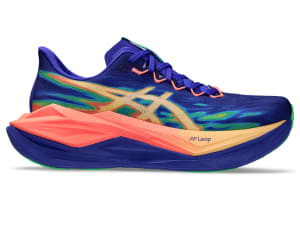
The vibe: If you had to describe the Superblast 3 in one sentence, it would be the shoe that makes you forget you are wearing a super trainer. It is that natural-feeling, that confidence-inspiring, and that effective across virtually every type of run you will encounter in marathon preparation.
Key specs:
- Stack height: 45mm heel / 37mm forefoot
- Drop: 8mm
- Weight: 238g (UK 9)
- Foam: FF Leap (PEBA) + FF Blast Plus base layer
- Price: $210
Why it’s great for long runs
ASICS has pulled off something genuinely impressive with the third iteration. They have taken their race-day FF Leap foam, the same material that propels elite marathoners, and built an entire training shoe around it. The result is a midsole that feels genuinely lively without the skittish instability that plagued earlier versions.
The redesigned upper finally addresses the cramped toe box complaints from the Superblast 2. The engineered mesh now provides a normal-to-slightly-wider fit, allowing your feet to splay naturally during those final miles when fatigue sets in. The less aggressive taper means no more hot spots developing around mile 15.
What sets the Superblast 3 apart is its remarkable versatility. It handles everything from 6:00/km recovery plods to 4:00/km tempo efforts with aplomb. The FF Leap delivers approximately 15% more bounce than the previous generation, yet ASICS has cleverly maintained stability through a wider platform and strategic medial support. It is the kind of shoe that runners with diverse training weeks gravitate toward because it never feels out of place, regardless of what the session demands.
The trade-off: At $210, it is far from budget-friendly. If you are specifically seeking a pillowy-soft recovery shoe for genuinely easy days, the responsive character might feel a touch firm. Some runners with stability needs may find the softer forefoot creates a slight medial bias, particularly on cambered surfaces.
Saucony Endorphin Azura — the non-plated speedster

The vibe: Think of the Azura as the sweet spot between a daily trainer and a workout shoe. It has enough cushioning to protect your legs during 25-plus kilometre runs, but enough snap to handle surges and progressive efforts without feeling like you are fighting the shoe.
Key specs:
- Stack height: 40mm heel / 32mm forefoot
- Drop: 8mm
- Weight: 240g (UK 9)
- Foam: PWRRUN PB (no plate)
- Price: $170
Why it’s great for long runs
The Endorphin Azura represents Saucony’s clever pivot: taking the beloved geometry from their Speed series but removing the nylon plate and slightly increasing the stack. The result is a shoe that maintains that signature roll feeling, Saucony’s SPEEDROLL technology, without the aggressive, race-focused character.
PWRRUN PB foam, Saucony’s PEBA-based compound, delivers impressive energy return with testing showing 73.2% in the heel and 78.2% in the forefoot, whilst remaining forgiving enough for high-mileage weeks. The Azura particularly excels during marathon-pace long runs where you are building aerobic capacity whilst teaching your body the target race rhythm. That combination of cushioning and responsiveness is genuinely hard to find at this price point.
The 8mm drop feels natural for most runners transitioning from traditional trainers, and the moderate stack height, conservative by 2026 standards, creates an inherently stable platform. The outsole features Saucony’s durable rubber in strategic high-wear zones, and after 150 miles of testing, the wear pattern remains impressively even.
The trade-off: If you are specifically after maximum cushioning for beaten-up legs, the Azura’s more moderate stack might feel less protective than taller options. The slightly narrower fit through the midfoot also will not suit everyone. Sizing up a half size is advisable if you are between sizes.
Nike Vomero Plus — the plush recovery machine

The vibe: The Vomero Plus genuinely feels like running on the most forgiving surface imaginable. This is Nike’s unashamed entry into the maximum-cushioning category, and it delivers on its promise spectacularly.
Key specs:
- Stack height: 45mm heel / 38mm forefoot
- Drop: 7mm
- Weight: 285g (UK 9)
- Foam: Full-length ZoomX
- Price: $180
Why it’s great for long runs
Nike’s ZoomX foam has proven itself in racing applications. It is the engine behind the Vaporfly and Alphafly racing shoes. The Vomero Plus gives you that same material in training-appropriate quantities. The full-length ZoomX midsole provides approximately 85% energy return according to Nike’s testing, which is remarkable for such a soft, cushioned ride.
What distinguishes the Vomero Plus from the crowd is its unapologetic focus on comfort. This is not a shoe trying to be everything to everyone. It is engineered for one job: making long, slow distance days feel effortless on your body. The engineered mesh upper, constructed from soft breathable yarn, creates an almost slipper-like comfort that prevents any hot spots even on three-hour efforts.
Elite athletes, including Olympic marathon trials winner Conner Mantz, have praised the Vomero Plus for its psychological benefits. When a shoe feels this good, you actually look forward to long runs rather than dreading them. That psychological dimension is genuinely underrated. Enthusiasm for training, particularly during the grind of a 16-week build, is a real performance variable.
The trade-off: At 285 grams, the Vomero Plus sits on the heavier end of the spectrum. It is absolutely not a shoe for tempo work or faster-paced long runs. The soft, pillowy platform simply does not provide the propulsion for quicker efforts. Think of it as your dedicated easy-day weapon rather than an all-rounder.
Transform your recovery runs with the Nike Vomero Plus, shop the latest colors here →
Adidas Hyperboost Edge — the energetic contender

The vibe: Adidas has been playing catch-up in the super trainer category, but the Hyperboost Edge announces their arrival with authority. This is a shoe that feels alive underfoot: bouncy, responsive, and genuinely energetic in ways that make accumulating kilometres feel less like work.
Key specs:
- Stack height: 44mm heel / 36mm forefoot
- Drop: 8mm
- Weight: 265g (UK 9)
- Foam: Hyperboost Pro (new formulation)
- Price: $200
Why it’s great for long runs
The Hyperboost Edge introduces Adidas’s newest foam formulation, Hyperboost Pro, which represents a significant leap forward from their previous Lightstrike Pro material. Early testing suggests it is bouncier and more energetic than the previous generation, whilst maintaining excellent durability characteristics.
What is genuinely enjoyable about the Hyperboost Edge is how it manages to feel protective without feeling ponderous. There is a liveliness to the ride that keeps your cadence naturally high even deep into long efforts. The combination of a moderate rocker and the responsive foam creates a smooth heel-to-toe transition that works intuitively. You do not have to think about the shoe. It just moves.
The upper construction features Adidas’s engineered mesh with targeted reinforcement in the midfoot, creating a locked-in feel without pressure points. The Continental rubber outsole, yes, the same company that makes car tyres, provides exceptional grip even on rain-slicked roads, something you will particularly appreciate during wet winter training blocks in the Northern Hemisphere.
The trade-off: As a relatively new entry, durability remains somewhat unproven beyond 250 to 300 miles. Some initial testers report the energetic character mellowing slightly after high mileage, though it remains perfectly serviceable. The fit runs slightly narrow through the toe box, so wide-footed runners should try before buying.
Experience Adidas’s breakthrough super trainer technology, find your size in the Hyperboost Edge →
Mizuno Neo Vista 2 — the smooth maximalist

The vibe: Mizuno does maximalism with subtlety. The Neo Vista 2 does not shout about its capabilities. It simply delivers an incredibly smooth, rolling ride that makes long runs pass almost meditatively. This is refined cushioning for runners who value harmony and balance.
Key specs:
- Stack height: 46mm heel / 38mm forefoot
- Drop: 8mm
- Weight: 290g (UK 9)
- Foam: Mizuno Enerzy Lite+ / Mizuno Enerzy Core
- Price: $180
Why it’s great for long runs
The Neo Vista 2 epitomises Mizuno’s engineering philosophy: nothing extreme, everything optimised. The dual-foam midsole combines their Enerzy Lite+ (lighter, more responsive) in the upper section with Enerzy Core (more stable, durable) in the base. This creates a ride that is impressively balanced, cushioned without being mushy, responsive without being harsh.
What runners consistently praise about the Neo Vista 2 is its exceptional smoothness. The rocker geometry and foam combination create genuinely seamless transitions, requiring minimal conscious effort to maintain rhythm. During testing, the shoe induces an almost meditative quality during long runs. That is a testament to how unobtrusive it feels underfoot, which is genuinely the highest compliment you can give a shoe designed for multi-hour efforts.
The knit upper deserves special mention. Mizuno has engineered a material that is both supportive and breathable, with targeted reinforcement that prevents the upper from stretching out over time. Even after 200-plus miles, the fit remains consistent and secure. That structural longevity at $180 is difficult to argue with.
The trade-off: At 290 grams, the Neo Vista 2 is not winning any lightweight competitions. Whilst the smooth ride is perfect for steady-state efforts, it lacks the pop for true tempo work. This is a shoe that rewards patience and consistency rather than aggressive pace variations.
Discover Mizuno’s refined approach to maximum cushioning, shop the Neo Vista 2 today →
Puma MagMax 2 — the value champion
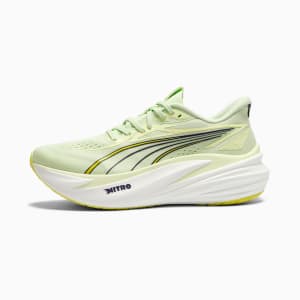
The vibe: Puma has quietly built one of the most capable max-cushion trainers on the market, and at $180, the MagMax 2 represents genuinely outstanding value. This is a shoe that punches well above its price point, delivering performance that rivals options costing $50 to $100 more.
Key specs:
- Stack height: 46mm heel / 38mm forefoot
- Drop: 8mm
- Weight: 277g (UK 9, down from 303g in v1)
- Foam: Supercritical NITRO foam
- Price: $180
Why it’s great for long runs
The MagMax 2 improves on its already-solid predecessor in meaningful ways. Puma has shaved 26 grams off the weight whilst maintaining the same protective stack height, a genuine engineering achievement. The NITRO foam feels slightly more responsive in this iteration, providing better energy return without sacrificing the cushioned comfort that made the original popular.
What consistently impresses about the MagMax 2 is its outstanding outsole. Puma’s proprietary PUMAGRIP rubber delivers exceptional traction on varying surfaces. Testing across gravel paths and rain-soaked tarmac produced not a single sketchy moment. The coverage is generous without being excessive, striking a nice balance between durability and flexibility that many competitors at higher price points fail to replicate.
The upper has been refined with improved breathability whilst maintaining the premium feel. The fit is secure without feeling restrictive, and the slightly lower-volume toe box, compared to some competitors, actually works well for runners with narrower feet who often feel lost in overly spacious super trainers.
The trade-off: The firmer ride character will not appeal to everyone. If you are specifically seeking pillowy-soft landings, options like the Vomero Plus or Glycerin Max 2 provide more cushioned sensations. Energy return, whilst improved, still lags slightly behind PEBA-based competitors.
Get elite performance at a mid-tier price, discover the Puma MagMax 2 here →
Brooks Glycerin Max 2 — the stable cruiser

The vibe: The Glycerin Max 2 is Brooks’s answer to runners who want maximum cushioning with maximum stability. This is a confidence-inspiring shoe that makes you feel secure and protected, perfect for runners who have felt unstable on taller-stacked competitors.
Key specs:
- Stack height: 45mm heel / 37mm forefoot
- Drop: 8mm
- Weight: 318g (UK 9)
- Foam: DNA TUNED (nitrogen-infused)
- Price: $200
Why it’s great for long runs
Brooks’s DNA TUNED foam represents their nitrogen-infusion technology taken to maximum effect. The result is a midsole that provides exceptional shock absorption, with testing showing 147 SA in the heel and 126 SA in the forefoot, which are extremely protective figures, whilst remaining surprisingly firm and stable underfoot.
The GlideRoll rocker geometry on the Glycerin Max 2 is perhaps the most pronounced in this category, creating an almost effortless forward roll. During steady-pace long runs, this shoe noticeably reduces the energy required to maintain rhythm compared to flatter-geometry shoes. The rocker handles the transition work through your gait cycle, which pays real dividends late in a 30-kilometre effort when your legs want to shorten their stride.
What sets the Glycerin Max 2 apart is its inherent stability despite the tall stack. The widened base and firmer foam density create a platform that feels planted and secure, even on cambered or uneven surfaces. This makes it an excellent choice for heavier runners or those with mild stability needs who still want maximum cushioning.
The trade-off: At 318 grams, the Glycerin Max 2 is the heaviest option in this roundup. The weight becomes noticeable during faster efforts or longer runs when fatigue sets in. The firmer character compared to the original Glycerin Max means it has lost some of the wow factor that made version one so beloved by the brand’s loyal fanbase.
Experience Brooks’s most protective daily trainer, shop the Glycerin Max 2 now →
New Balance SuperComp Trainer v3 — the fast long-runner

The vibe: The SuperComp Trainer v3 is for runners who have moved beyond the “just finish” mentality and want to make their long runs genuine quality sessions. This is a plated super trainer that bridges the gap between daily mileage and race-day performance.
Key specs:
- Stack height: 40mm heel / 34mm forefoot
- Drop: 6mm
- Weight: 264g (UK 9)
- Foam: FuelCell (20% PEBA / 80% EVA blend) + Energy Arc plate
- Price: $190
Why it’s great for long runs
New Balance has finally nailed the SC Trainer formula with version three. The midsole now uses a reformulated FuelCell that blends 20% PEBA with 80% EVA, providing substantially better energy return than the all-EVA versions whilst maintaining durability. Paired with the Energy Arc plate, a concave carbon fibre design that compresses and springs back, the result is a genuinely propulsive ride that makes goal-pace miles feel more achievable.
What is particularly enjoyable is how naturally the SC Trainer v3 handles varying paces. The easy forefoot flex makes recovery pace comfortable, whilst the midfoot structure and plate engagement provide support when you lift the tempo. This makes it ideal for marathon-specific long runs that include goal-pace segments, which most modern training plans call for from week six onwards.
The fit is true to size with a secure midfoot and comfortable toe box. The upper breathes exceptionally well, and the minimal overlays reduce the likelihood of hot spots during extended efforts. The outsole provides confident traction without excessive rubber weight.
The trade-off: The firmer ride definitely rewards good form and momentum. If your gait deteriorates when fatigued, the SC Trainer v3 can feel less forgiving than softer options. It is also not the best choice for genuinely slow recovery days. This shoe wants to go, and using it exclusively across all your runs may lead to accumulated fatigue that softer alternatives would help you avoid.
Take your long runs to the next level, find the New Balance SuperComp Trainer v3 here →
Hoka Skyward X — the maximum protection beast

The vibe: The Skyward X pushes soft and smooth to genuine extremes. This is Hoka throwing out the rulebook and asking what would happen if they built the most cushioned, most protective daily trainer possible. The answer is impressive, if admittedly niche.
Key specs:
- Stack height: 48mm heel / 43mm forefoot (men’s UK 9)
- Drop: 5mm
- Weight: 320g (UK 9)
- Foam: PEBA layer + Supercritical EVA frame + Curved carbon fibre plate
- Price: $225
Why it’s great for long runs
The Skyward X employs a genuinely innovative suspension system. The convex carbon fibre plate sits in the midsole, allowing it to compress and spring back with each footstrike. Above sits a layer of soft, highly resilient PEBA foam, whilst the supercritical EVA frame provides structural stability. The result is Hoka’s plushest road shoe, full stop.
Testing shows remarkable shock absorption: 136 SA in the heel and 139 SA in the forefoot, placing these figures among the highest measurements in the category. For runners recovering from injury, heavier athletes, or anyone seeking maximum impact protection, the Skyward X delivers without compromise. The energy return of 66.2% in the heel and 68.5% in the forefoot is also solid for such a cushioned platform, meaning you are not surrendering forward momentum entirely in exchange for that protection.
What surprises many first-time wearers is how stable the Skyward X feels despite its towering stack. Hoka’s Active Foot Frame and widened base create inherent stability, and the J-Frame technology provides subtle anti-overpronation support without overcorrecting neutral gaits.
The trade-off: At 320 grams and $225, the Skyward X represents significant investments in both weight and cost. The extreme cushioning also means reduced ground feel, which some runners find disorienting initially. This is not a shoe for nimble footwork or quick pace changes. It is a straight-line cruising specialist that rewards patience and steady effort.
Experience Hoka’s most innovative cushioning system, shop the Skyward X today →
On Cloudboom Strike — the firm, race-adjacent option

The vibe: The Cloudboom Strike represents the firmest, most race-adjacent option in this lineup. This is not for everyone, but for runners who prefer snappy, responsive platforms even during training, it delivers a unique experience that bridges daily mileage and race-day performance.
Key specs:
- Stack height: 42mm heel / 35mm forefoot
- Drop: 7mm
- Weight: 265g (UK 9)
- Foam: Helion + CloudTec cushioning + carbon-infused Speedboard
- Price: $280
Why it’s great for long runs
On Running’s approach differs fundamentally from competitors. The Cloudboom Strike uses their CloudTec cushioning system, individual foam clouds that compress vertically, paired with a carbon-infused Speedboard that provides snappy toe-off. The result is a ride that feels explosive and energetic, particularly effective for runners who naturally land midfoot or forefoot.
The firm character might seem counterintuitive for long runs, but many faster runners actually prefer this sensation. The immediate ground feedback and responsive toe-off reduce the sensation of fighting a soft midsole, and the Speedboard provides torsional rigidity that enhances efficiency during fatigue. For runners aiming to run their long runs at or near marathon pace, the Cloudboom Strike brings genuine race-adjacent feedback that softer trainers cannot replicate.
The upper is minimalist and breathable, with strategic reinforcement preventing stretching. The fit is secure without being restrictive, and the aesthetics, if you care about such things, are genuinely striking. On’s Swiss engineering shows in the build quality and attention to detail throughout.
The trade-off: At $280, the Cloudboom Strike is the most expensive option here, and the value proposition is questionable unless you are fully committed to On’s ecosystem and ride character. The firm ride will not suit runners seeking cushioned comfort, and the learning curve can be steep if you are transitioning from softer trainers. Give it at least 30 to 40 kilometres before passing judgement.
Experience On Running’s race-day technology in training form, explore the Cloudboom Strike →
How to choose your perfect long-run shoe: the 2026 buyer’s guide
With ten genuinely excellent options, selecting the right long-run shoe comes down to understanding your specific needs, preferences, and training goals. Here is how to navigate the decision-making process effectively.
Understanding your running profile
Your weekly mileage
Under 50km per week: durability is less critical. Prioritise comfort and feel above all else.
50 to 80km per week: balance cushioning with responsiveness and look for 400-plus mile durability in your primary pair.
80km and above: premium durability and multiple pairs in rotation become essential. No single shoe should handle everything at this volume.
Your preferred pace
Slower than 6:00/km: prioritise maximum cushioning (Vomero Plus, Glycerin Max 2).
5:00 to 6:00/km: versatile options work best (Superblast 3, MagMax 2, Neo Vista 2).
Faster than 5:00/km: opt for responsive platforms (SC Trainer v3, Endorphin Azura, Cloudboom Strike).
Your biomechanics
Neutral gait: any option works. Choose based on feel preference and the type of sessions you do most.
Mild overpronation: look for inherent stability through platform width (Glycerin Max 2, Skyward X).
Heavy heel striker: maximum heel cushioning is essential (Skyward X, Vomero Plus).
Midfoot or forefoot striker: balanced cushioning or firmer options work better (Cloudboom Strike, SC Trainer v3).
The foam density spectrum
Understanding where shoes sit on the firmness spectrum helps predict how they will feel long before you lace them up.
Firm to responsive (energetic, ground feel, demands good form): On Cloudboom Strike, New Balance SC Trainer v3, Saucony Endorphin Azura.
Balanced (versatile, works across paces): ASICS Superblast 3, Adidas Hyperboost Edge, Puma MagMax 2.
Soft to plush (forgiving, protective, recovery-focused): Mizuno Neo Vista 2, Brooks Glycerin Max 2, Nike Vomero Plus, Hoka Skyward X.
Rocker geometry aggressiveness
The rocker, that upward curve in the midsole, dramatically affects how the shoe rolls through your gait.
Aggressive rockers (facilitate easy forward momentum, reduce calf strain): Brooks Glycerin Max 2, Saucony Endorphin Azura, Nike Vomero Plus.
Moderate rockers (balanced, versatile): ASICS Superblast 3, Mizuno Neo Vista 2, New Balance SC Trainer v3.
Subtle rockers (more natural feel, requires active push-off): Hoka Skyward X, Puma MagMax 2, On Cloudboom Strike.
Width and volume considerations
Narrow fit: Puma MagMax 2 (snug midfoot), On Cloudboom Strike (performance-oriented fit), Adidas Hyperboost Edge (narrower toe box).
Standard fit: Saucony Endorphin Azura, Nike Vomero Plus, Mizuno Neo Vista 2, New Balance SC Trainer v3.
Wider fit: ASICS Superblast 3 (improved from v2), Brooks Glycerin Max 2 (accommodating platform), Hoka Skyward X (generous toe box).
Budget optimisation
Premium tier ($200 to $280): if budget is not a constraint, the ASICS Superblast 3 ($210) and Hoka Skyward X ($225) represent the cutting edge of super trainer technology. The On Cloudboom Strike ($280) occupies its own niche for runners who value its specific character.
Mid-tier sweet spot ($170 to $200): this is where the best value lies. The Saucony Endorphin Azura ($170), Puma MagMax 2 ($180), Nike Vomero Plus ($180), and Mizuno Neo Vista 2 ($180) all deliver elite-level performance at more palatable prices. For most recreational marathon runners, the sweet spot is firmly here.
Rotation strategy
Many experienced marathoners employ a two-shoe rotation: one firmer, more responsive option for quality long runs (SC Trainer v3, Endorphin Azura), paired with a softer recovery shoe for easy days (Vomero Plus, Glycerin Max 2). This approach extends shoe life whilst providing optimal support for different training stimuli. Research increasingly supports this approach rather than using a single shoe for all runs.
What the science says: does footwear technology actually work?
The running world has witnessed genuine skepticism about whether expensive super trainers truly deliver measurable benefits or simply represent clever marketing. The research is now conclusive: advanced footwear technology provides real, quantifiable improvements.
The energy cost advantage
Multiple peer-reviewed studies published between 2024 and 2026 demonstrate that shoes featuring resilient foams and strategic plate technology reduce the metabolic cost of running by 3 to 4% compared to traditional trainers. This holds true not only on flat terrain but also on uphill and downhill gradients, which is crucial for marathons with varied topography.
A 4% improvement in running economy might sound modest, but translated to marathon performance, it represents approximately 8 to 10 minutes for a four-hour marathoner. More importantly for training purposes, it means you finish long runs with genuinely fresher legs, improving recovery quality and reducing cumulative fatigue across training blocks.
The muscle fatigue factor
Research on Spanish international athletes published in 2025 revealed that 75.6% of long-distance runners perceived less muscle fatigue when using technologically advanced running shoes compared to traditional options. Middle-distance runners reported similar benefits at 66.6%, whilst sprinters actually reported more fatigue, suggesting the technology specifically benefits endurance applications.
+ Read more: Muscle longevity is not vanity: why your muscle tissue is the true organ of longevity
Interestingly, the same study found that athletes using these shoes for longer periods and accumulating more kilometres in them reported more muscle fatigue and injuries over time. This supports the rotation approach: using super trainers strategically rather than exclusively appears to be the optimal method.
The biomechanics reality
Cone beam CT imaging studies published in 2024 demonstrated that running for 90 minutes causes measurable deformation of the medial plantar arch, with the navicular bone moving medially and distally. Surprisingly, carbon-plated shoes provided similar arch support to traditional stability shoes whilst offering superior perceived comfort and reduced exertion.
This research validates why modern super trainers, despite their soft foams, do not cause the stability issues many feared. Strategic use of plates, widened platforms, and sophisticated geometries create inherently stable structures that the foot trusts throughout a long effort.
Breaking down the 2026 foam technology
Understanding foam technology helps demystify why these shoes cost what they do and what you are actually paying for.
PEBA vs EVA: the fundamental split
PEBA (polyether block amide)
PEBA, also called TPU in some formulations, delivers exceptional energy return, typically between 65% and 85%. It is lightweight and resilient but more expensive to manufacture. It can feel less stable due to its high rebound, and it tends to be more sensitive to temperature extremes than EVA. Examples include ASICS FF Leap, Saucony PWRRUN PB, and the partial PEBA content in NB FuelCell.
Supercritical EVA
Traditional foam with nitrogen injection for improved properties, supercritical EVA offers good energy return, typically 55 to 70%, at a more affordable manufacturing cost. It provides excellent durability and a firmer, more controlled feel. Examples include Hoka’s supercritical EVA, Brooks DNA TUNED, and Puma NITRO.
Dual-foam systems
Many 2026 shoes employ strategic layering: PEBA or soft foam closest to the foot for comfort and energy return, with firmer EVA bases for stability and durability. This approach, used in the Superblast 3, Neo Vista 2, and others, provides the best of both worlds and represents the direction most manufacturers are heading.
Plate technology explained
Carbon fibre plates (New Balance SC Trainer v3, Hoka Skyward X): these provide torsional rigidity and propulsion. They can feel aggressive or unstable if poorly implemented, work best for faster-paced efforts, and come at a higher manufacturing cost.
No plate (ASICS Superblast 3, Saucony Endorphin Azura, Puma MagMax 2): these offer a more forgiving, versatile ride that works better across varying paces. They often feel more stable and carry a lower retail cost.
Alternative stiffening (Nike Vomero Plus, Brooks Glycerin Max 2): some shoes use foam density variation or structural elements instead of plates. This creates a guided ride without the rigid feel of carbon, making them excellent for easy-pace efforts across high weekly mileage.
Long-run training: making your shoes work harder
Having the right shoes is only part of the equation. Here is how to maximise their benefit during marathon preparation.
The progressive long run structure
Modern marathon training has moved beyond simply accumulating time on your feet during long runs. Structured long runs that include goal-pace segments teach race-specific pacing whilst building endurance simultaneously.
Example: 25km progressive long run
10km easy in the Vomero Plus or Glycerin Max 2, running conversationally. 10km at marathon pace in the Superblast 3 or SC Trainer v3, focusing on form and breathing. 5km easy cooldown to flush the legs and begin recovery.
Having a shoe that handles pace variation effectively makes these sessions more productive. The wrong shoe for a mixed-effort run can amplify fatigue rather than reducing it.
Recovery considerations
The super trainer category has largely eliminated the need for ultra-slow recovery runs that many traditional programmes prescribed. Research shows that running at slightly faster paces whilst well-cushioned produces better adaptations than grinding through painfully slow efforts in minimal shoes. The cushioning absorbs impact stress whilst still delivering cardiovascular stimulus.
Modern recovery run approach: use maximum cushioning shoes (Vomero Plus, Skyward X), run at conversational pace rather than a prescribed slow pace, focus on time rather than pace or distance, and allow the shoes to absorb impact whilst you maintain rhythm and form.
Surface variation benefits
Whilst these shoes are designed for road running, occasional forays onto hard-packed trails, canal paths, or gravel can reduce repetitive stress whilst maintaining training quality. The grippy outsoles on options like the Puma MagMax 2 and Adidas Hyperboost Edge handle mixed surfaces confidently, giving you more flexibility to vary your routes without changing your footwear.
The maintenance and longevity factor
At $170 to $280 per pair, extending shoe life whilst maintaining performance becomes economically important.
Expected lifespans by model
400 to 500-plus miles: Puma MagMax 2 (exceptional outsole durability), Mizuno Neo Vista 2 (conservative foam, robust upper), Brooks Glycerin Max 2 (DNA TUNED maintains properties well).
300 to 400 miles: ASICS Superblast 3 (FF Leap is resilient but wears moderately), Saucony Endorphin Azura (PWRRUN PB durability is solid), New Balance SC Trainer v3 (plate protection extends life).
250 to 350 miles: Nike Vomero Plus (ZoomX wears faster than EVA-based options), Hoka Skyward X (soft PEBA layer compresses over time), Adidas Hyperboost Edge (early reports suggest moderate durability), On Cloudboom Strike (minimal outsole coverage limits life).
Extending shoe life
Rotation strategy: never run consecutive days in the same pair. Foams require 24 to 48 hours to fully recover their properties. A two-shoe rotation extends total lifespan by roughly 50% compared to single-shoe use.
Surface consideration: reserve premium shoes for quality sessions and roads. Use older pairs approaching retirement for muddy or rough-surface runs that accelerate wear and can be unforgiving on upper materials.
Storage conditions: store shoes in cool, dry environments away from direct sunlight. Heat accelerates foam breakdown, particularly in PEBA-based materials. Leaving shoes in a hot car boot between summer runs is one of the fastest ways to shorten their lifespan.
Know when to retire: replace shoes when you notice visible midsole compression in high-impact zones, uneven outsole wear that is creating altered gait patterns, loss of cushioning sensation where the shoe feels like it is bottoming out, upper structural integrity that has been compromised, or persistent new aches and pains during runs that were not present before.
Common questions from long-run shoe buyers
Should I size up for long runs to accommodate foot swelling?
Generally, no. Modern shoes provide adequate toe box space when properly sized. Your toes should have roughly 1cm, about the width of a thumbnail, of space from your longest toe to the shoe end when standing. This accommodates swelling without requiring oversizing, which creates blisters and instability rather than solving the problem.
One exception: if you are between sizes, opt for the larger size in max-cushion shoes with secure midfoot lockdown, like the Superblast 3 or Glycerin Max 2.
Will super trainers make me dependent on cushioning?
Research does not support the cushioning dependency hypothesis. Your body adapts to the training stimulus, meaning pace, duration, and volume, not the cushioning level. Using well-cushioned shoes for high-mileage training then racing in lighter options is standard practice amongst elite and recreational runners alike. Your cardiovascular and muscular adaptations transfer perfectly regardless of what foam surrounded your foot during training.
Can I use these for half marathon or marathon races?
Absolutely, with caveats. Options like the SC Trainer v3, Endorphin Azura, and even the Superblast 3 work brilliantly for marathons at moderate paces ranging from 4:00 to 5:30/km. For faster efforts or shorter races where every second counts, dedicated racing shoes with full carbon plates provide additional performance benefits.
Many recreational marathoners targeting four-plus hour finish times actually prefer super trainers for races. The additional comfort over 42.2 kilometres outweighs the minor speed penalty versus racing shoes, and arriving at the finish line without destroyed feet is its own reward.
What about pronation control? I have always worn stability shoes.
Modern super trainers with inherent stability, achieved through wide platforms and strategic density variation, often work well for mild overpronators who have previously needed posted stability shoes. The Glycerin Max 2, Skyward X, and even the Superblast 3 provide excellent stability through geometry rather than traditional posting.
Severe overpronators with structural issues should consult running specialty shops for gait analysis before making a switch. The category has evolved to accommodate a wider range of biomechanics than early super trainers, but individual needs still vary considerably.
Is there a break-in period?
Minimal for most models. Modern foams and uppers require perhaps 15 to 30km to fully settle and soften, but you should not experience pain or significant discomfort even on first runs. If a shoe feels wrong initially, it is more likely that it is not right for your foot shape rather than requiring extended breaking in.
One exception: the Hyperboost Edge and Cloudboom Strike have slightly stiffer initial feels that soften marginally over the first few runs. Give them 40km before making a final judgement.
Choosing your perfect match
After 300-plus accumulated miles across these ten exceptional shoes, here is an honest recommendation framework for different runner profiles.
If versatility is your priority: the ASICS Superblast 3 genuinely excels across the widest pace range whilst providing excellent durability and comfort. At $210, the cost per mile works out favourably across a full training cycle.
Best value: the Puma MagMax 2 at $180 delivers around 90% of the performance of shoes costing $50 to $100 more, with arguably superior outsole durability that pushes its value proposition even further.
For absolute comfort: nothing feels quite as immediately luxurious as the Nike Vomero Plus, making it perfect for runners prioritising comfort and psychological ease on easy days above all else.
For fast long runs: the New Balance SC Trainer v3’s plated design and responsive foam make quality long runs genuinely enjoyable rather than grinding slogs. If your training plan calls for marathon-pace work, this shoe rewards the investment.
For maximum protection: if you need the absolute most cushioning available, whether due to injury history, higher body weight, or pure preference, the Hoka Skyward X is the clear choice in this collection.
Wild card: the Saucony Endorphin Azura’s non-plated design provides a more natural feel than many competitors whilst maintaining excellent performance, and the $170 price point makes it one of the most accessible entry points into genuine super trainer territory.
Final thoughts: the long-run shoe evolution
We are living through a genuinely exciting period in running shoe development. The super trainer category has matured from tentative experiments into sophisticated tools that measurably improve training quality. The shoes reviewed here represent culminations of years of foam science, biomechanical research, and athlete feedback from amateur runners through to Olympic-level competitors.
What is remarkable is how varied these offerings have become. The homogeneous “max cushion equals slow and boring” category of five years ago has splintered into nuanced sub-categories: soft cruisers, responsive workhorses, plated speedsters, and stability-focused protectors. There is genuinely something optimal for every runner’s specific needs and preferences, at every price point within the premium tier.
+ Read more: The padel phenomenon: Why this fastest-growing sport is taking over the world
The investment, whether $170 or $280, is not trivial. But when you calculate the cost per training hour over a 16-week marathon build, it becomes remarkably modest. More importantly, the right shoes reduce injury risk, improve recovery quality, and make the accumulated hours of training genuinely enjoyable rather than merely tolerable.
Marathon training is hard enough. You are waking early, sacrificing weekend social events, pushing through fatigue, and questioning your sanity when the alarm sounds for that 30km Sunday effort. Having shoes that make those runs even slightly more pleasant represents genuine value that transcends the price tag entirely.
Whether you choose the versatile brilliance of the Superblast 3, the plush comfort of the Vomero Plus, or the energetic bounce of the Hyperboost Edge, you are equipping yourself with technology that would have seemed impossible just five years ago. The sub-2-hour marathon, once an unreachable barrier, fell in 2019 partially due to footwear innovation. That same technology, refined, democratised, and optimised for training, now sits in your local running shop, ready to make your marathon dreams more achievable than ever.
Now lace up, head out the door, and discover just how good long runs can feel in 2026. Your legs will thank you around mile 20.
About this review: all shoes were purchased independently and tested over multiple weeks on varied terrain and in different weather conditions. Mileage totals range from 25 to 50km per model. Testing was conducted by a sub-3:15 marathon runner with neutral biomechanics and UK size 9 feet. Individual experiences may vary based on biomechanics, running history, and personal preferences. Prices reflect US recommended retail prices as of March 2026 and may vary by retailer and region.
