

Picture this: you’re ensconced in a sumptuous king-sized bed with Egyptian cotton sheets, a complimentary bottle of wine chilling on your nightstand, and room service just a phone call away. The only difference between this and your typical five-star hotel experience? The previous occupant of your room may never have checked out. Welcome to the fascinating world of comfort dark tourism, where luxurious haunted hotels embrace their spectral reputations whilst maintaining the sort of standards that would make even the most discerning ghost feel perfectly at home.
Dark tourism (the practice of visiting sites associated with death, tragedy, and the macabre) has evolved considerably beyond its grim reputation. What was once seen as purely morbid curiosity has matured into a sophisticated travel niche that combines historical education, architectural appreciation, and responsible heritage preservation. The most intriguing evolution within this sector is the emergence of “comfort dark tourism”: staying in beautiful, meticulously maintained historic properties that happen to have gained reputations for paranormal activity, rather than seeking out deliberately frightening experiences in derelict buildings or sensationalised ghost hunts.
This approach has gained unexpected momentum in 2025, particularly among Gen Z travellers who’ve discovered these destinations through TikTok and Instagram. Unlike traditional ghost hunting content, younger visitors are drawn to the aesthetic appeal of historic architecture, the stories behind the spaces, and the opportunity to create compelling content that balances beauty with eeriness. The hashtag #comfortdarktourism has accumulated millions of views, with creators showcasing elegant four-poster beds in medieval castles and afternoon tea in supposedly haunted Victorian hotels. This demographic shift has transformed how these properties market themselves, emphasising Instagram-worthy interiors and shareable experiences alongside their paranormal credentials.
This article presents a carefully curated selection of five extraordinary establishments where you can experience the thrill of sleeping in a reputedly haunted location without sacrificing creature comforts. These aren’t your typical ghost-hunting destinations with creaking floorboards and questionable hygiene. Rather, they’re architectural gems, design showcases, and culinary destinations that happen to come with centuries of history (and the spirits that may or may not accompany it). All five properties are currently operational and accepting bookings, having been verified through official websites and recent travel advisories as of October 2025. This approach to dark tourism emphasises going for the history, the craftsmanship, and the gastronomy first, with the ghosts serving as an added narrative layer rather than the sole attraction.
The concept of comfort dark tourism: where elegance meets the eerie
Traditional dark tourism typically involves day visits to concentration camps, battlefields, disaster sites, or former prisons (locations where tragedy is the central focus). Comfort dark tourism represents a distinctly different approach. It’s about selecting accommodation in historic buildings with fascinating pasts that include spectral folklore, but where the primary motivation is appreciation for architecture, design, history, and exceptional hospitality.
The distinction matters. At a comfort dark tourism property, you’re not exploiting tragedy for entertainment value (an ethical concern that rightly troubles many scholars of dark tourism). Instead, you’re supporting the preservation of historic buildings, many of which require substantial ongoing investment to maintain their structural integrity and period features. The revenue from guests helps fund conservation efforts, ensuring these architectural treasures remain standing for future generations to appreciate.
+ Read more: Destinations your mother wouldn’t approve of: A guide to the world’s most controversial travel spots
This ethical dimension has become increasingly important in 2025’s travel discourse. Social media has amplified conversations about responsible tourism, with influencers and travel bloggers facing scrutiny for how they present sensitive locations. The comfort dark tourism model offers a middle ground: you can engage with historical sites that have supernatural folklore without treating tragedy as entertainment. Properties like the Stanley Hotel and Dragsholm Castle have embraced this positioning, highlighting their architectural significance and historical value whilst acknowledging their ghost stories as part of their cultural narrative rather than their primary selling point.
Moreover, these establishments typically predate their “haunted” reputations by decades or even centuries. The Stanley Hotel, for instance, opened in 1909 as a luxurious mountain retreat for wealthy East Coast visitors. Its association with the paranormal only gained widespread attention after Stephen King’s stay in 1974. Similarly, Ballygally Castle was built in 1625 as a fortified residence, only later becoming known for its resident ghost. The properties weren’t constructed to capitalise on ghost tourism; rather, their long histories naturally accumulated layers of folklore as generations of occupants came and went.
This approach aligns with responsible dark tourism practices emphasised by heritage professionals and ethical travel advocates. Primary dark tourists (those who specifically seek out historically significant sites with a genuine interest in learning about them) tend to behave more respectfully than secondary tourists who merely tick off a location because it appears on a “must-see” list. By emphasising the historical, architectural, and cultural value of these properties first, comfort dark tourism attracts visitors with a deeper appreciation for preservation and context.
The rise of “ethical hauntings” as a search term in 2025 reflects growing awareness among travellers. People want supernatural experiences, but they’re increasingly conscious about how those experiences are packaged and presented. The five properties featured here have mastered this balance, offering ghost stories as enrichment to their historical narratives rather than sensationalising tragedy for profit.
The Stanley Hotel: Estes Park, Colorado, USA
Why stay here: iconic architecture and mountain majesty
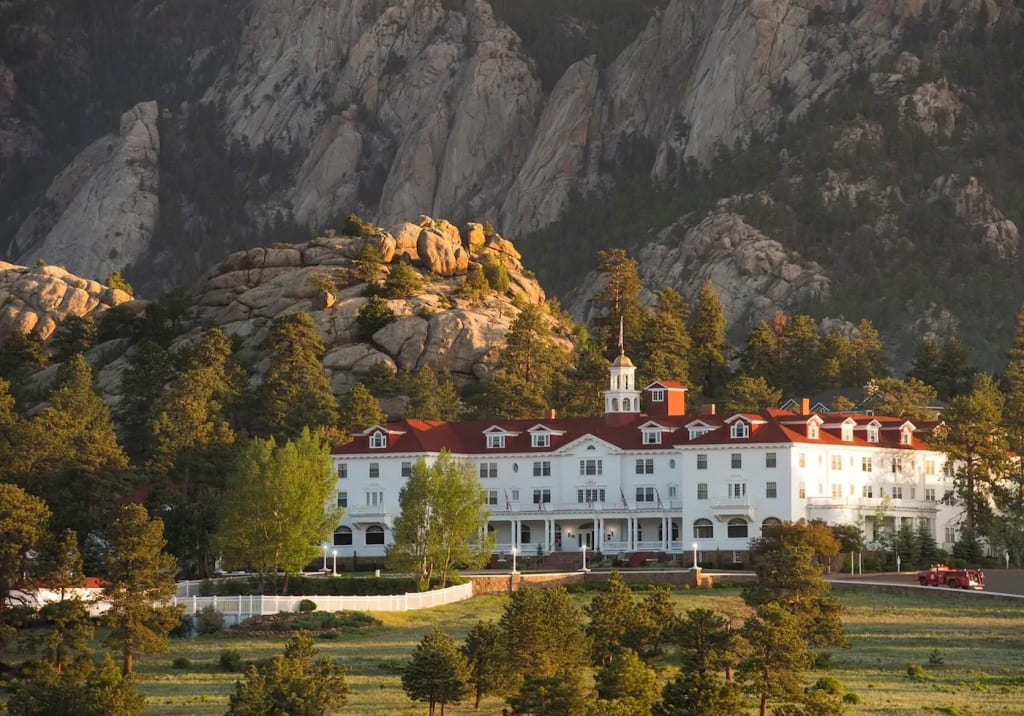
The Stanley Hotel represents the pinnacle of Edwardian elegance transplanted to the American West. Freelan Oscar Stanley, co-inventor of the Stanley Steamer automobile, arrived in Estes Valley in 1903 desperately seeking recovery from tuberculosis. The mountain air proved so restorative that he decided to construct a grand hotel that would bring East Coast luxury to this pristine wilderness setting. When it opened in 1909, guests marvelled at a building that featured electricity, telephones, and modern plumbing (innovations that the White House itself had yet to fully adopt).
The architecture is Colonial Revival at its finest: a gleaming white facade topped with a distinctive red roof, wide verandas with Corinthian columns, and dormer windows that capture panoramic views of the surrounding Rocky Mountains and Continental Divide. The main building houses 140 guest rooms across multiple floors, whilst the property has expanded to include The Lodge, Aspire Hotel & Spa, and residential condominiums, offering four distinct accommodation experiences.
Inside, original features include the spectacular MacGregor Ballroom with its hand-painted walls, the Concert Hall where F.O. Stanley’s wife Flora once performed piano recitals, and the billiard room with its original furnishings. The property sits on 32 acres of meticulously maintained grounds, complete with a hedge maze inspired by King’s novel, though notably absent from Kubrick’s film adaptation. The location itself is breathtaking: perched on a hillside overlooking the town of Estes Park, with Rocky Mountain National Park’s wilderness beginning practically at the hotel’s doorstep.
For social media enthusiasts, the Stanley’s white colonial exterior against the mountain backdrop creates stunning photo opportunities, particularly during golden hour. The hotel has become a TikTok hotspot, with creators filming everything from room tours to ghost hunting experiments. The property has adapted to this attention, offering designated photo spots and even providing guidance on the best natural lighting for content creation.
The spooky factor: literary inspiration and paranormal activity
Stephen King’s visit in September 1974 changed the Stanley’s trajectory forever. He and his wife Tabitha were the only guests staying in the hotel on the final night before it closed for winter. That evening, King had a nightmare about his young son being chased through the hotel’s corridors by a fire hose that had come to life. He awoke, walked the empty halls, and by the time he left the next morning, the entire plot of The Shining had crystallised in his mind.
Crucially, King stayed in Room 217, now the most requested accommodation at the Stanley. According to hotel lore, this room is haunted by Elizabeth Wilson, the hotel’s head housekeeper who was injured in a 1911 explosion when she was lighting a lantern during a storm. The blast blew her through the floor, though she survived and continued working at the hotel for many years thereafter. Guests in Room 217 report items being unpacked and neatly arranged, belongings moved overnight, and an overall sense of being “tidied up” by an unseen presence.

The fourth floor represents the hotel’s most active paranormal zone. Originally used as an attic for storage during the off-season and later converted to staff quarters for female employees and their children, this floor now accommodates guests who report hearing children’s laughter echoing through corridors late at night. Room 428 is particularly notorious, with accounts of heavy footsteps, furniture being rearranged during the night, and the apparition of a cowboy appearing at the foot of beds. Locals believe this spirit to be James Nugent, known as “Rocky Mountain Jim,” a mountain man and early Estes Park settler.
Room 401 gained fame after the paranormal investigation television series Ghost Hunters filmed there, whilst Room 407 is associated with Lord Dunraven, a 19th-century Irish nobleman who once owned much of the land surrounding Estes Park. Even the hotel’s main staircase is considered a paranormal hotspot, with some believing a portal hovers above it, explaining the concentration of unusual activity.
The Stanley’s ghost stories have found new life on social media platforms, where paranormal investigation videos regularly go viral. However, the hotel has maintained strict rules about filming and investigation equipment to preserve the experience for all guests. Professional paranormal teams can book special investigation nights, but casual ghost hunters are asked to respect the property’s historical significance and other guests’ privacy.
Insider booking tips
The Stanley’s “Spirited” rooms (217, 401, 407, and 428) are among the most sought-after accommodation in Colorado and should be reserved at least three to six months in advance, particularly for October stays when paranormal enthusiasts descend upon the property. For Halloween 2025, availability became extremely limited by mid-summer, with Room 217 booking out by June. These rooms command premium pricing, typically 30% to 50% higher than standard accommodation. If you’re visiting primarily for the haunted reputation, specifically request a fourth-floor room when booking.
The hotel offers three distinct tours: the Historic Stanley Tour (daytime, approximately $25, focusing on the Stanley family history and architecture), the Night Spirit Tour (after sunset, approximately $30, emphasising ghost stories and paranormal activity), and The Shining Tour (evening, approximately $30, exploring King’s inspiration and the 1997 miniseries filmed on location). All tours book out rapidly, especially during peak season from June through October, so reserve online well in advance of your stay. Tours last approximately 90 minutes and cover over a mile of walking, though they’re wheelchair accessible.
As of October 2025, the hotel has implemented a new booking system that allows guests to bundle room reservations with tour tickets, ensuring you don’t miss out on the complete experience. This package approach has proven particularly popular with international visitors who want guaranteed access to all activities during their stay.
Parking costs $10 and tours don’t enter occupied guest rooms, so even on The Shining Tour you’ll only see the exterior of Room 217’s famous door. The minimum age for tours is eight years, and tour groups range from 12 to 20 participants. For the most atmospheric experience, book accommodation and tours for mid-October, when autumn colours peak in the surrounding mountains and the paranormal activity reportedly intensifies.
The hotel has also introduced “quiet hours” policies in response to increased social media filming, protecting guests who prefer a traditional hotel experience. Content creators are asked to film only in designated areas and to use considerate volume levels throughout the property.
Ballygally Castle Hotel: County Antrim, Northern Ireland
Why stay here: coastal views and 17th-century authenticity
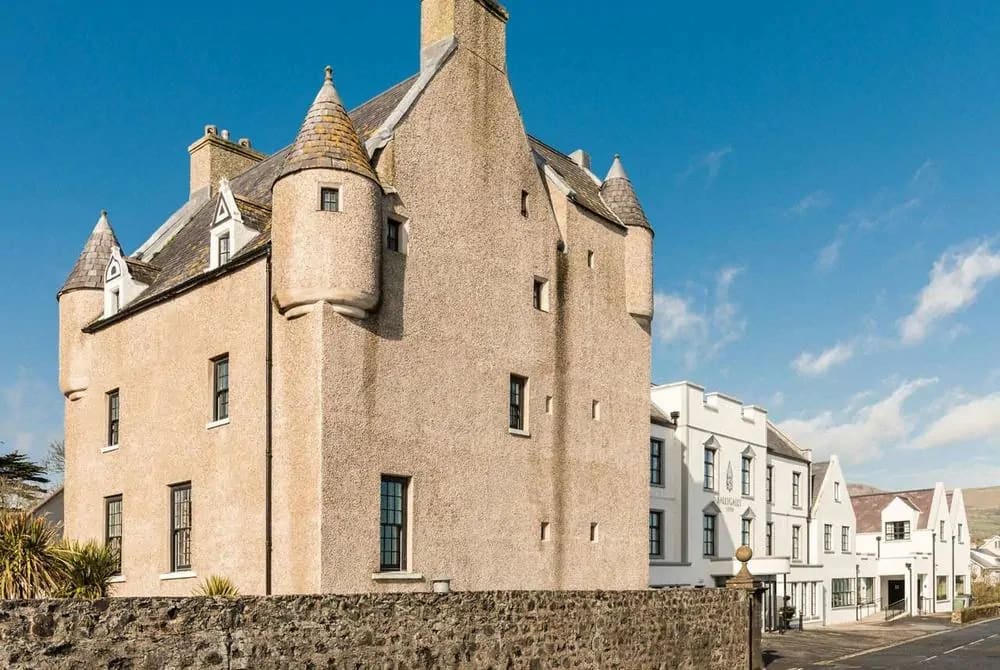
Ballygally Castle occupies a commanding position on the Antrim Coast Road, one of the world’s most scenic coastal routes, with unobstructed views across Ballygally Bay towards Scotland. Built in 1625 by James Shaw, a Scottish settler who leased the land from the Earl of Antrim for £24 annually, the castle represents one of Northern Ireland’s finest examples of early plantation-era fortification.
The structure is quintessentially Scottish Baronial: a rectangular keep with a steeply pitched roof punctuated by tall chimneys, and circular turrets at each corner topped with conical roofs. The original walls measure five feet thick and feature musket “loups” (openings for defensive fire), evidence of the castle’s construction during the turbulent 1641 Rebellion when it withstood multiple attacks. An open stream once ran through the outer hall, providing water during sieges (a clever defensive feature typical of the period).
Over the centuries, Ballygally passed through various uses: family residence, headquarters during conflicts, and by 1814, it housed Reverend Thomas Alexander before being rented to coastguards in the 1830s to combat local smuggling operations. The castle underwent restoration in 1760, though the coastal road wasn’t constructed until the 1840s, meaning early residents accessed the property via a tree-lined avenue through a stone gateway.
Today, Ballygally Castle forms part of the Hastings Hotels collection and offers 54 en-suite rooms blending 17th-century character with contemporary luxury. The Tower Rooms, located in the original 1625 structure, feature three-foot-thick walls, sash windows, exposed wooden rafters, and are accessed via the original stone spiral staircase. These represent the oldest continuously used hotel bedrooms in Northern Ireland. Modern additions include Garden Wing rooms overlooking landscaped grounds, Coastal Deluxe Rooms with panoramic sea views, and the Antrim Suite with its period features.
The castle’s positioning makes it a perfect base for exploring Northern Ireland’s dramatic coastline, with the Giant’s Causeway and Game of Thrones filming locations within easy reach. The property has cleverly marketed itself to fans of the HBO series, offering themed afternoon teas and location tours that appeal to younger travellers seeking that perfect blend of history, natural beauty, and pop culture connection.
The spooky factor: the tragic tale of Lady Isabella Shaw
The castle’s most famous resident never left. Lady Isabella Shaw, wife of Lord James Shaw, was imprisoned in the tower after failing to deliver the male heir her husband desperately wanted. When Isabella gave birth to a daughter, James’s fury knew no bounds. According to legend, he seized the baby and locked his wife in a top-floor tower room without the child.
Accounts differ on what happened next. Some versions claim Isabella, tormented by her baby’s distant cries and driven mad by isolation and starvation, attempted to escape through the narrow tower window and fell to her death on the rocks below. Alternative tellings suggest James or his henchmen pushed her from the window to be rid of her entirely. Regardless of the method, Isabella’s tragic end at Ballygally has resonated through four centuries.
Her spirit is described as a “friendly” presence rather than malevolent, possibly because she continues searching for her lost child. Guests across multiple room types report mysterious knocking on doors at night, though when they answer, no one is present. Some attribute this to Isabella’s knocking, eternally seeking entry or attempting to communicate. Others have reported the scent of musty vanilla preceding apparitions of a woman in period dress, whilst room temperatures fluctuate dramatically (spiking or dropping by as much as 10 degrees without explanation).
The dedicated “Ghost Room” at the tower’s summit can be visited by guests but isn’t available for overnight stays. This space preserves the room where Isabella was allegedly imprisoned, decorated to reflect the period and atmosphere of her confinement. For those seeking an immersive experience, the Tower Rooms directly below offer the most atmospheric accommodation, with their spiral staircase access and period architectural details.
An eerie green mist has been photographed hovering over the castle at various times, adding to the supernatural mystique. Sceptics point out that the “mysterious knocking” could be the hotel’s cantankerous heating system, though this practical explanation doesn’t account for the apparitions, unexplained temperature changes, or the sensation many guests report of being watched in their rooms.
Social media has brought renewed attention to Isabella’s story, with feminist historians using the tale to explore the brutal reality of women’s lives in 17th-century Ireland. TikTok videos discussing the historical context of her imprisonment have garnered millions of views, transforming Isabella from a ghost story character into a symbol of historical injustice. The castle has responded by offering more historically accurate context during tours, acknowledging the genuine tragedy behind the folklore.
Insider booking tips
The Tower Rooms represent the most authentic castle experience but should be specifically requested when booking, as they’re limited in number. Availability is best mid-week and outside summer peak season (avoiding July and August). Rates average £150 to £280 per night depending on room category and season, with the best flexible rates available when booking directly through the hotel website.
For October 2025, the castle experienced unprecedented demand due to increased social media attention, with Tower Rooms booking out by early September. The hotel has since implemented a waitlist system for cancellations, which has proven effective for determined ghost seekers. If your preferred dates aren’t available, joining the waitlist is strongly recommended as cancellations do occur, particularly for mid-week stays.
The Ghost Room tour is complimentary for hotel guests and can be arranged through reception. Staff members familiar with the castle’s history conduct informal tours, though these aren’t on a fixed schedule. Evening is the optimal time to explore the tower staircase and Ghost Room, when natural light fades and the stone walls seem to close in.
The castle is ideally positioned for exploring Northern Ireland’s Causeway Coast, with the Giant’s Causeway 40 minutes north and Game of Thrones filming locations scattered throughout the region. Carrickfunnock Country Park offers beautiful coastal walks, whilst the historic town of Carrickfergus with its imposing Norman castle is 20 minutes south. The hotel also offers electric bicycle hire for exploring the Antrim Coast Road.
For dining, the Garden Restaurant serves lunch and offers a choice of bistro or table d’hôte menus for dinner, whilst the Sunday Grand Buffet in the River Room showcases local produce with views across the bay towards Scotland. The hotel’s Game of Thrones themed afternoon tea delights fans of the series and provides excellent content for social media, with themed pastries and decor that celebrate Northern Ireland’s starring role in the show.
As of 2025, the hotel has partnered with local tour operators to offer combined packages that include accommodation, Ghost Room access, and guided tours to nearby Game of Thrones filming locations. This bundled approach has proven particularly popular with international visitors maximising their Northern Ireland experience.
Dragsholm Slot: Hørve, Denmark
Why stay here: Michelin-starred gastronomy in Denmark’s oldest secular building
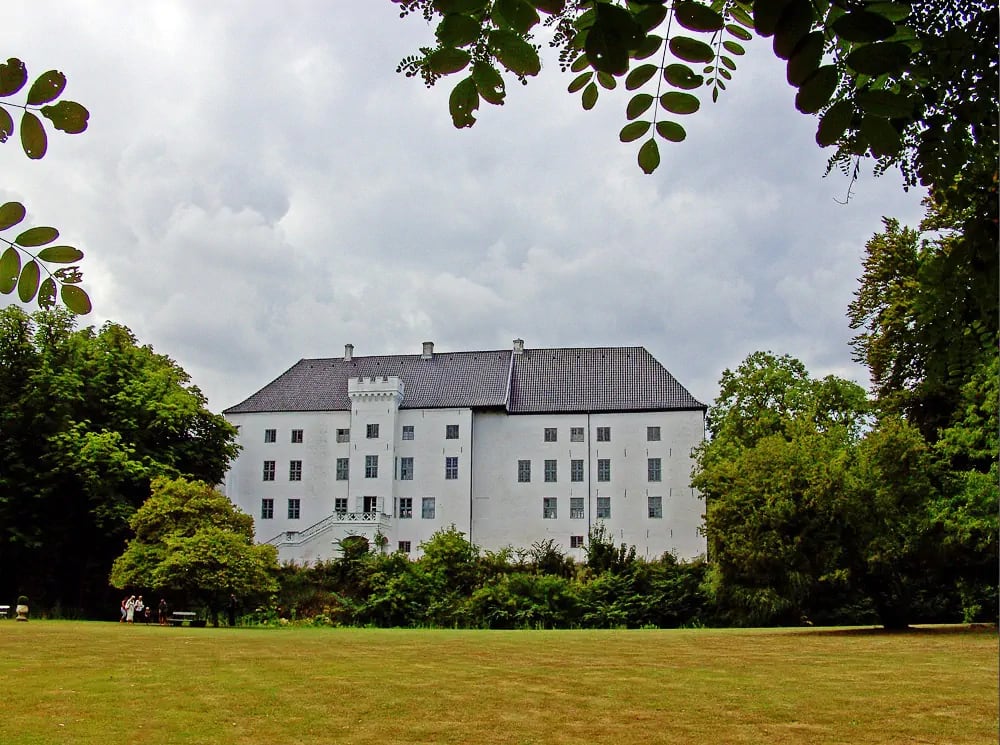
Dragsholm Slot (Castle) isn’t merely Denmark’s most haunted location, it’s also one of the country’s most distinguished culinary destinations. Dating to approximately 1215, Dragsholm ranks as Denmark’s oldest secular building, predating most of the nation’s famous castles. Its history encompasses royal ownership, use as a state prison during the Reformation, agricultural estate, and finally its 1937 transformation into a luxury hotel and restaurant.
The castle’s architecture reflects this layered history. Situated within a UNESCO Geopark where Ice Age glaciers carved the undulating landscape, Dragsholm features thick whitewashed walls, metre-thick foundations, a surrounding moat with graceful bridges, and baroque elements added during various renovation periods. The property remains in private hands, owned and meticulously managed by the Bøttger family who’ve balanced preservation with modernisation.
Guest accommodations occupy both the main castle and the converted porter’s house across the moat. Rooms maintain old-world charm through exposed beams, period furnishings, and windows offering views across the moat and gardens, whilst incorporating contemporary comforts including modern en-suite facilities. The grounds encompass formal gardens, a picturesque terrace overlooking the surrounding nature, and facilities for weddings and special events.
However, Dragsholm’s true distinction lies in its Michelin-starred restaurant, Dragsholm Slot Gourmet, located in the atmospheric cellar beneath those metre-thick whitewashed walls. Chef Claus Henriksen earned the restaurant’s first Michelin star in 2017, which it has retained every year since. The cuisine celebrates Nordic gastronomy with intense focus on the Lammefjord terroir (the distinctive agricultural region surrounding the castle).
The seasonal “Time & Place” menu consists of approximately 14 courses showcasing ingredients from nearby fields, forests, and seas. Produce is harvested at peak ripeness from local suppliers, with the kitchen maintaining an honest, natural approach that allows each ingredient’s inherent flavour to dominate. The presentation is innovative yet unpretentious, served in the candlelit cellar dining room where huge glass-fronted wine rooms break up the whitewashed walls.
This isn’t casual dining. The experience occupies an entire evening, with the tasting menu priced at DKK 2,200 (approximately £240) per person, with wine pairings available for an additional DKK 1,800 (approximately £195). The restaurant operates Thursday through Saturday for most of the year, with expanded service during holiday periods. For parties exceeding six guests, private dining is available in one of the castle’s grand salons.
The combination of Michelin-starred dining and genuine ghost stories has made Dragsholm a favourite among culinary travellers seeking unique experiences. Food bloggers and Instagram influencers have embraced the castle, creating content that showcases both the exquisite plating of each course and the atmospheric medieval setting. The castle’s social media presence has grown substantially in 2025, though management has been careful to maintain the property’s sophisticated positioning rather than leaning too heavily into ghost tourism marketing.
The spooky factor: over 100 spirits and Europe’s most haunted castle
Dragsholm’s reputation as Europe’s most haunted castle isn’t hyperbole. Paranormal researchers claim the property harbours over 100 distinct spirits. Three ghosts dominate the castle’s supernatural folklore, each with a tragic backstory rooted in documented history.
The White Lady (Celeste) represents Dragsholm’s most heartbreaking tale. A young noblewoman named Celeste fell in love with a commoner who worked at the castle, becoming pregnant before her arranged marriage to a wealthy suitor. When her father discovered the pregnancy, he feigned understanding, instructing Celeste to dress in her finest white gown for a farewell party before being sent away to deliver the baby in secret. No party awaited her. Instead, her father led her to a hidden chamber in the castle walls and had her bricked up alive, where she died slowly from starvation and suffocation, still wearing that white dress.
During 1930s renovations when workers modernised the plumbing system, construction crews discovered a hole in a basement wall. Inside they found a complete skeleton clothed in the remnants of a white gown. The remains were left in place, and today guests can view this macabre memorial through a protective glass panel outside a ground-floor guest room. Celeste’s ghost reportedly roams the castle halls, appearing as a luminous white figure, still searching for the baby and lover she was denied.
The Earl of Bothwell adds genuine historical gravitas to Dragsholm’s haunted reputation. James Hepburn, 4th Earl of Bothwell and third husband of Mary, Queen of Scots, was imprisoned at Dragsholm from 1573 until his death in 1576. After Mary’s forced abdication, Bothwell fled to Norway, where he was eventually captured and transferred to Danish custody. His imprisonment at Dragsholm was particularly cruel: reportedly chained to a pillar in the castle’s basement with barely enough slack to move, he descended into madness before dying in captivity.
The pillar where Bothwell was allegedly chained still stands in the cellar, and visitors report hearing the rattle of chains echoing through the basement corridors. His apparition is said to manifest in the courtyard, riding in a ghostly carriage drawn by horses, eternally attempting to escape his imprisonment.
The Grey Lady completes Dragsholm’s spectral trilogy. A former servant who worked at the castle developed an agonising toothache, and the castle’s lord provided medicine to ease her suffering. After initially improving, the Grey Lady suddenly worsened and died, possibly from an adverse reaction to the medication. Her grateful spirit continues to wander the castle, attempting to find her former master to thank him for his kindness during her final days. She’s less frequently sighted than the White Lady or Bothwell, but staff and guests report glimpses of a grey-clad figure gliding through hallways, particularly in the older sections of the castle.
The castle also features a small museum on the top floor displaying historical artefacts and, intriguingly, skeletal remains for those who doubt the ghost stories. Paranormal investigators have conducted numerous investigations at Dragsholm, with electromagnetic field (EMF) readings, temperature anomalies, and unexplained audio phenomena recorded throughout the property.
What makes Dragsholm unique among haunted hotels is how seamlessly it integrates its supernatural reputation with its culinary excellence. Guests arrive for world-class Nordic cuisine and happen to sleep in Europe’s most haunted castle, rather than the reverse. This positioning has attracted a more sophisticated audience than typical ghost tourism, with many visitors viewing the paranormal element as an intriguing bonus rather than the primary draw.
Insider booking tips
A Gourmet Stay package provides the optimal Dragsholm experience, combining overnight accommodation with the Michelin-starred tasting menu at Dragsholm Slot Gourmet. This package includes the “Time & Place” menu (approximately 14 courses), a night in a double room, and castle breakfast served in Dragsholm Slot Madhus, the castle’s bistro restaurant. Booking well in advance is essential, as the restaurant’s limited seating and Michelin reputation mean tables are reserved months ahead, particularly for Friday and Saturday service.
For October 2025 bookings, the castle was fully committed by early summer, with the Gourmet Stay packages selling out first. The property has introduced a quarterly booking window, releasing dates three months in advance, which has helped manage demand whilst ensuring guests can still plan visits without booking a year ahead. Joining their mailing list provides advance notice of new availability.
For those seeking the most haunted accommodation, request a room in the main castle building rather than the porter’s house. The top-floor tower room mentioned in travel reports offers the most atmospheric experience, with sloping floors, tilting walls, and proximity to the small museum. However, be prepared for stairs and corridors where “nothing is completely horizontal or vertical,” as one guest aptly described the castle’s charmingly irregular medieval construction.
The castle is located approximately one hour from Copenhagen, making it an ideal countryside escape from the capital. The surrounding Lammefjord region offers beautiful walking trails through farmland and along the coastline. Beyond ghost tourism, Dragsholm serves as a genuine destination for food enthusiasts, with the bistro restaurant Spisehuset offering more casual dining for lunch and lighter dinners.
Private ghost tours can be arranged through the hotel reception, highlighting the castle’s famous spirits and historical prison cells. These tours are most atmospheric during evening hours when shadows lengthen through the corridors and the weight of eight centuries of history seems to press down upon the ancient stones.
The castle has maintained strict policies regarding paranormal investigation equipment and filming, particularly in the restaurant areas, to preserve the dining experience for guests who’ve come primarily for the cuisine. Ghost enthusiasts are welcome but asked to conduct themselves respectfully and to avoid disrupting other guests’ experiences.
The Langham Hotel: London, England
Why stay here: Victorian grandeur and the birthplace of afternoon tea
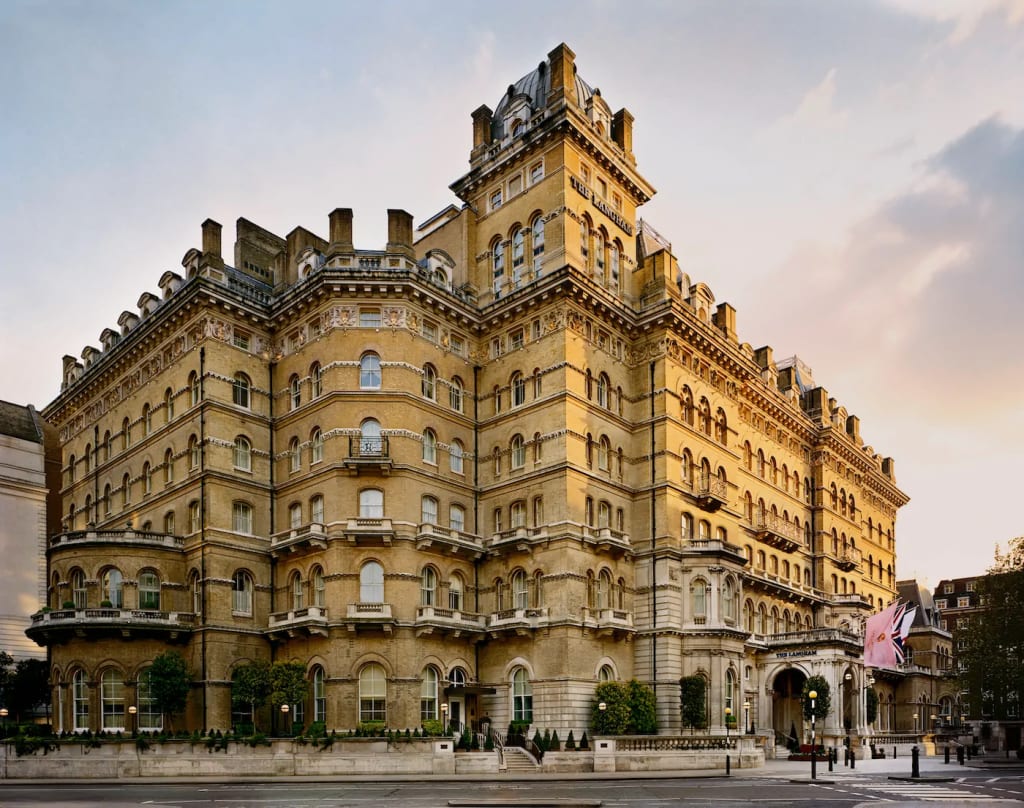
The Langham Hotel represents Victorian London at its most ambitious. When it opened on 10 June 1865, with the Prince of Wales (later King Edward VII) presiding over the ceremony, The Langham was heralded as Europe’s first “Grand Hotel” and certainly the most modern building of its kind. Architect John Giles designed an imposing structure at 1 Portland Place, opposite what would later become BBC Broadcasting House, just north of Oxford Circus.
The innovations were staggering for the era: electric lighting, hydraulic lifts (elevators), air conditioning, modern bathrooms with running water, and fireproof flooring. These weren’t merely luxury additions, they were genuine technological marvels that redefined expectations for hospitality. The Prince of Wales reportedly insisted on being shown every room and feature during the opening ceremony, spending over three hours touring the property.
The Langham established another enduring tradition: afternoon tea. In 1865, the hotel became the first establishment in the world to serve afternoon tea commercially, an innovation that would become synonymous with British culture. Today, Palm Court (the hotel’s elegant ground-floor space with its dazzling décor) serves afternoon tea daily from 12:30pm to 5:30pm, maintaining the tradition that began 160 years ago.
The menu, created by Executive Pastry Chef Andrew Gravett in collaboration with culinary legend Michel Roux Jr., offers a Victorian-inspired experience with contemporary refinements. Guests enjoy finger sandwiches (roast chicken, classic cucumber, Gentleman’s Relish, devilled quail’s egg), delicate pastries (rose-infused baba with lychee and mascarpone, orange blossom cream with almond madeleine), signature warm scones with Cornish clotted cream and seasonal preserves, and a sharing seasonal trifle as the finale. The service employs bespoke chinaware by British designer William Edwards, featuring floral motifs reflective of 19th-century design. Prices begin at £85 per person, with options for Champagne pairings.
The hotel’s 380 rooms and suites maintain the balance between historical grandeur and modern luxury. The building has undergone multiple restorations, most notably after sustaining damage during World War II when it served as a post and first aid station. The BBC purchased the property in the 1950s, using portions for broadcasting whilst leasing out accommodation space and housing staff and guests. It was during this BBC ownership period that the hotel’s paranormal reputation intensified, with staff members reporting numerous encounters.
The Langham’s central London location has made it a favourite among international travellers and British guests alike. Its proximity to Oxford Street shopping, West End theatres, and major museums means visitors can combine paranormal intrigue with convenient access to London’s attractions. The hotel has successfully positioned itself as both a haunted destination and a luxury base for exploring the capital, attracting diverse clientele from ghost enthusiasts to business travellers who may not even be aware of Room 333’s reputation.
The spooky factor: five ghosts and Room 333’s dark history
The Langham’s haunted reputation centres overwhelmingly on Room 333, widely considered the most paranormally active hotel room in London. At least five distinct spirits have been documented at the hotel, though Room 333 accounts for the most dramatic and disturbing encounters.
The Victorian doctor represents Room 333’s most frequently sighted apparition. Legend recounts that a Victorian-era doctor checked into the room for his wedding night with his new bride. Before morning, he murdered his wife in the room and then took his own life. Witnesses describe him as having blank, vacant eyes, grey hair, and wearing elegant Victorian evening dress. The apparition often appears missing the lower half of his legs, causing him to hover approximately two feet above the floor.
The most famous encounter occurred in October 1973, when BBC sports announcer James Alexander Gordon (known for reading football scores on Saturday afternoons) spent the night in Room 333. Gordon awoke to see a fluorescent ball of light manifesting across the room. As he watched, transfixed, the light coalesced into human form (specifically, the Victorian doctor apparition described above). Gordon attempted communication, asking what the spirit wanted, but when the apparition began moving towards him with arms outstretched and those terrifying vacant eyes, Gordon fled in distress.
A colleague accompanied Gordon back to the room, where the ghost remained visible though less distinct, slowly fading as they watched. Other BBC staff subsequently reported identical encounters in Room 333, always during October. The seasonal nature of these apparitions adds a peculiar dimension to the haunting. Why October specifically remains unexplained.
The German prince or nobleman is described as the hotel’s most active spirit. Wearing a military jacket and having a stocky build, this ghost allegedly committed suicide by throwing himself from a fourth-floor window before World War I. His apparition is seen walking through walls and closed doors throughout the hotel, particularly in early morning hours, and is accompanied by sudden, dramatic temperature drops.
Napoleon III haunts the basement areas. The former French Emperor lived at The Langham during his exile from France and apparently developed sufficient affection for the property to remain after death. Staff working in basement service areas report his presence, though he seems less intrusive than some of the other spirits.
A World War II soldier is another frequently observed ghost, perpetually reenacting his final moments. This spirit walks through walls following the building’s original floor plan (which differs from the current layout after renovations), heading towards a window from which he jumped during the war. Witnesses report watching helplessly as he follows this path repeatedly, forever trapped in his final tragic decision.
Additional entities round out The Langham’s spectral population. A ghostly butler roams the third floor, still attending to duties. A man with a gaping facial wound appears in corridors, his injury never explained. Most disturbingly, a presence in Room 333 reportedly tosses sleeping guests from their beds (a violation that goes beyond visual apparitions into physical interaction).
The England cricket team made international headlines during the 2014 test series when several players, including Stuart Broad, reported paranormal experiences. Broad described taps turning on and off repeatedly when lights were switched on and off, eventually requesting a room change. His girlfriend and other players’ partners refused to stay at the hotel due to fear of the reported hauntings. Team member Moeen Ali’s partner was “so frightened of the ghosts” she wouldn’t set foot in the building.
Insider booking tips
Room 333 can be specifically requested when booking, though The Langham understandably doesn’t advertise this on their website. Contact the hotel directly by phone (+44 20 7636 1000) and explain your interest in the room’s history; reception staff are well aware of its reputation and can confirm availability. October represents peak demand for Room 333 due to the seasonal nature of the Victorian doctor’s appearances, so book several months ahead if targeting that month.
For Halloween 2025, Room 333 was completely booked by early August, with some guests reportedly making reservations a full year in advance. The hotel has noted increased interest in the room following viral TikTok videos and paranormal investigation content on YouTube. However, management maintains discretion about the room’s reputation, never proactively marketing it as “the haunted room” to preserve the experience for those genuinely interested whilst not alarming guests who may be assigned it without prior knowledge.
+ Read more: The true history of Halloween: From Celtic Samhain to global celebration
Third and fourth floors reportedly experience the most paranormal activity, so if Room 333 is unavailable, request accommodation on these floors. Be aware that some guests find the experiences genuinely distressing rather than merely entertaining. Stuart Broad and his teammates are professional athletes, not easily frightened individuals, yet they required room changes.
The hotel has implemented subtle protocols for guests who report disturbing experiences. Staff are trained to respond professionally without dismissing concerns, and alternative accommodation can be arranged discreetly. This approach balances respect for both sceptics and believers whilst maintaining the property’s luxury standards.
Afternoon tea at Palm Court should be reserved in advance through the hotel website or by calling the restaurant directly. Service times are Thursday through Sunday from 12:30pm to 5pm, with a minimum spend of £49 per person applying Friday through Sunday from 12pm to 7pm. The Langham Afternoon Tea costs £85 per person, with the Children’s Afternoon Tea available at £50. For special occasions, prices may increase, so confirm when booking.
As of October 2025, Palm Court has introduced themed afternoon teas for Halloween weekend, incorporating seasonal flavours and Gothic-inspired presentations whilst maintaining the elegant standards that have defined the experience for 160 years. These special teas book out months in advance and represent a perfect compromise for visitors who want to engage with the hotel’s spooky reputation without committing to an overnight stay in Room 333.
The Langham’s location is supremely convenient: a five-minute walk from Oxford Circus Underground Station, placing you in the heart of London’s West End with immediate access to shopping, theatres, and museums. The hotel itself sits opposite BBC Broadcasting House, appropriate given the BBC’s historical connection to the property and many of the documented paranormal encounters.
The property has embraced its dual identity as both a luxury hotel and a location of paranormal interest. Ghost tour companies now include The Langham on their London haunted walks, and the hotel occasionally appears in paranormal television programmes. However, management carefully controls access, ensuring that external interest doesn’t compromise the experience for paying guests. Day visitors cannot simply wander the corridors hoping to glimpse ghosts; the paranormal experience remains exclusive to hotel guests.
Lizzie Borden House: Fall River, Massachusetts, USA
Why stay here: true crime history and Victorian preservation
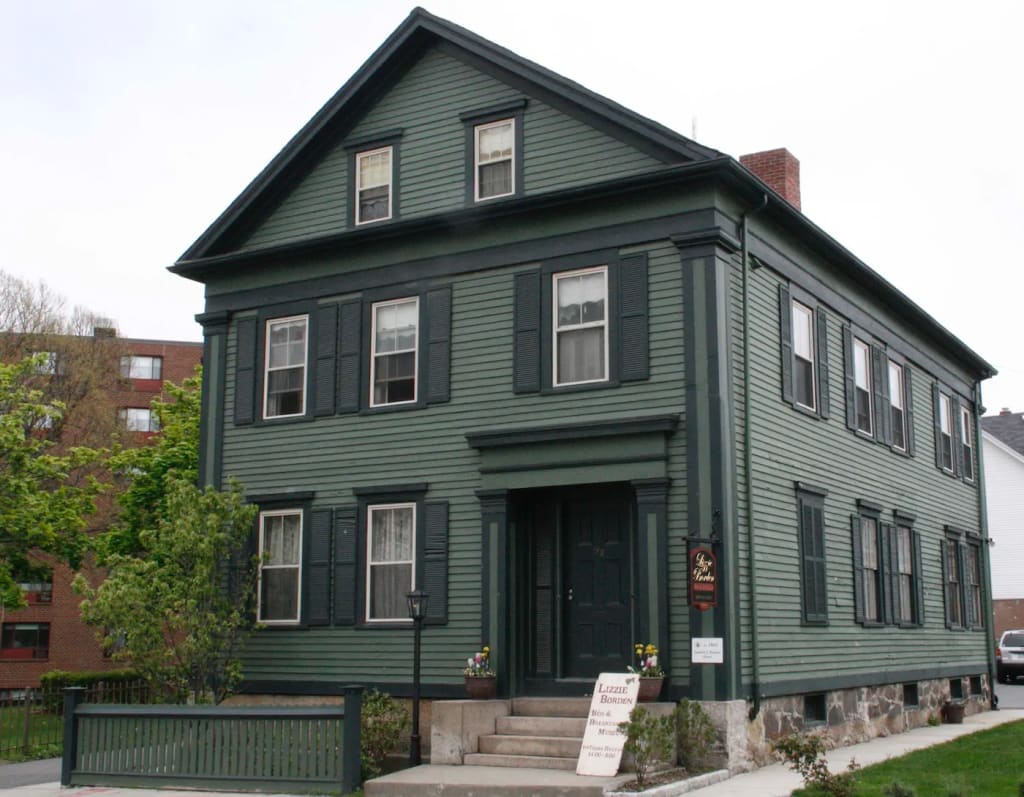
The Lizzie Borden House at 230 Second Street in Fall River, Massachusetts, represents American true crime’s most enduring mystery. On 4 August 1892, Andrew Jackson Borden and his second wife Abby Durfee Gray Borden were brutally murdered in their home, each struck multiple times with a hatchet-like weapon in separate rooms. Andrew’s daughter Lizzie was arrested, tried, and ultimately acquitted of the murders in one of the most sensational trials of the 19th century.
The case achieved immortality through a gruesome schoolyard rhyme that children still chant: “Lizzie Borden took an axe / And gave her mother forty whacks / When she saw what she had done / She gave her father forty-one”. The verse’s counting is inaccurate (Andrew received approximately eleven blows, Abby approximately nineteen) but the rhyme’s persistence demonstrates the case’s grip on American popular imagination.
The house itself is a modest two-and-a-half storey wood-frame structure typical of middle-class New England homes of the 1840s. Unlike the grand hotels and castles featured elsewhere in this article, the Borden house’s appeal lies in its ordinariness. This was a family home where tragedy struck during a mundane August morning. The property has been meticulously restored to reflect its appearance in 1892, with each room recreated using period-appropriate furnishings, wallpaper, and decorative items.
Today the Lizzie Borden House operates as a bed and breakfast museum, offering both day tours and overnight accommodation. Tour guides lead visitors through the timeline of that August morning, explaining the family dynamics, possible motives, evidence presented at trial, and alternative theories about the killer’s identity. Crucially, guides present information without declaring Lizzie’s guilt or innocence, allowing visitors to draw their own conclusions based on the evidence.
The property offers two suites and four individual rooms for overnight guests. Each room is named for a person connected to the case. The Lizzie & Emma Suite comprises two rooms on the second floor (the actual bedrooms occupied by Lizzie and her elder sister Emma when the family lived there). These rooms share a bathroom with the John V. Morse Room. The Andrew & Abby Suite, also on the second floor, recreates the murdered couple’s bedroom and Abby’s sewing room (converted to a second bedroom for guests), and is the only accommodation with a private bathroom.

The John V. Morse Room occupies the space where Abby Borden’s body was discovered, lying face-down in a pool of blood between the bed and dresser. This is the murder room, and unsurprisingly, it’s the most requested overnight accommodation for those seeking the full immersive experience. The Bridget Sullivan Room on the third floor was occupied by the family’s maid, known as “Maggie,” who along with Lizzie was the only person in the house when the murders occurred. The Andrew Jennings Room, also on the third floor, is named for Lizzie’s defence attorney.
Overnight guests receive an extended private tour before the house opens to day visitors, have the building to themselves overnight, and are served breakfast the following morning that closely approximates what the Bordens ate on the morning of the murders (though mutton broth and johnnycakes have been replaced with more palatable modern alternatives like pancakes, eggs, salad, bacon, oatmeal, and fruit).
The Lizzie Borden House has experienced a significant resurgence in popularity during 2025, driven largely by true crime podcasts and documentary series that have re-examined the case with modern forensic perspectives. Younger audiences discovering the case through these media have flocked to Fall River, transforming the modest bed and breakfast into a must-visit destination for true crime enthusiasts. The property’s Instagram account has grown substantially, featuring historical photographs, case details, and guest experiences that blend education with atmospheric storytelling.
The spooky factor: residual energy and paranormal investigation
The Lizzie Borden House’s supernatural reputation stems from the violent nature of the murders and the intense emotions that must have permeated the home on that August morning. Paranormal investigators describe the property as having strong “residual energy” (the theory that traumatic events can imprint themselves on a location, replaying like a recording).
Tour guides share their personal experiences with unexplained phenomena: disembodied voices, taps on the shoulder, whispers in their ears, and the sensation of being watched. Significantly, guides who work daily in the house don’t stay overnight, with at least one guide stating flatly, “Oh, I don’t stay here!” when asked. This adds credibility to the paranormal claims. The very people most familiar with the house choose not to remain after dark.
Multiple paranormal investigation teams, mediums, and psychics have conducted overnight investigations at the house. Common reported phenomena include cold spots and temperature anomalies (particularly in the John V. Morse Room where Abby was murdered), electromagnetic field (EMF) spikes detected on ghost-hunting equipment suggesting presence of energy or entities, unexplained sounds including footsteps when the building is otherwise empty, doors opening and closing, and voices when no one is present.
Shadow figures glimpsed in peripheral vision, particularly on the staircase and in the second-floor hallway, have been reported by numerous guests. Objects moving or appearing in different locations than where they were left is another frequently documented occurrence. The feeling of being touched or having hair played with has been reported by multiple overnight guests, creating experiences that range from mildly unsettling to genuinely frightening.
One group’s experience involved the heating system mysteriously malfunctioning on a cold February night when they were the only guests in the house. While HVAC problems certainly occur in 19th-century buildings, the timing seemed curiously pointed to the uncomfortable visitors.
The house doesn’t present itself as definitively haunted. The management and guides acknowledge the reports and share experiences but leave interpretation to individual visitors. This measured approach feels more honest than properties that aggressively market paranormal claims. The Lizzie Borden House’s haunted reputation evolved organically from the accumulated experiences of guests, staff, and investigators over decades.
What distinguishes the Borden House from other haunted accommodations is its intersection with true crime rather than folklore or legend. The murders actually happened. The forensic photographs, trial transcripts, and newspaper accounts provide documented evidence of the tragedy that unfolded within these walls. Whether the paranormal experiences represent genuine supernatural activity or psychological responses to knowing you’re sleeping in a murder house becomes almost irrelevant. The weight of history presses down regardless of your beliefs about ghosts.
The property has maintained strict ethical standards regarding how it presents the case. While some true crime destinations veer into exploitation or sensationalism, the Borden House approaches the murders with historical seriousness. Educational materials provided to overnight guests include trial transcripts, forensic evidence, and multiple theories about what actually happened. This commitment to education over entertainment has earned the property respect within both the true crime community and among academics studying how we memorialise and interpret historical violence.
Insider booking tips
Overnight rates range from $200 to $250 depending on the room, with the John V. Morse Room (the murder room) commanding premium pricing and booking out months in advance. The property only accommodates a handful of overnight guests at a time, creating an intimate experience but also limiting availability. Book through the official website (lizzie-borden.com) at least 2 to 3 months ahead for weekend stays, and 4 to 6 months ahead for October.
For October 2025, the Borden House experienced record demand, with all rooms booking completely by mid-July. The property has implemented a reservation notification system where potential guests can register to receive alerts when cancellations occur. Given the intensely personal nature of staying in a murder house, cancellations do happen with some regularity as people reconsider their comfort levels as the date approaches.
Important operational note: Guests must vacate their rooms between 10am and 5pm to accommodate daily public tours. The house functions as an active museum during daytime hours, so overnight visitors need to understand they’re sharing the space with tour groups during the day. Housekeeping will secure your belongings and refresh the room whilst tours are conducted, but this arrangement isn’t suitable for those seeking uninterrupted privacy.
This unusual arrangement has actually become part of the property’s appeal for some guests. You can participate in a public tour during the day to gather historical context, then experience the house’s dramatically different atmosphere once tour groups depart and darkness falls. The contrast between the bustling daytime museum and the quiet, shadowy overnight experience amplifies the sense of stepping back into 1892.
Breakfast is available for an additional $20 per person and must be added when booking. Day tours cost approximately $20 for students, $25 to $30 for adults, and last 90 minutes. These tours are essential background if you’re staying overnight, as they provide the historical context and case details that make the overnight experience meaningful. Book the day tour for the afternoon before your overnight stay, if possible.
Ghost tours are offered nightly and focus on Fall River’s broader haunted history via an outdoor walking tour. Ghost hunts take place on the first floor and basement, allowing participants to use investigation equipment and conduct their own paranormal research. The Oak Grove Cemetery tour visits the graves of the Borden family and is described as “a must-do experience” for those wanting the complete Lizzie Borden immersion.
The property has its own gift shop stocked with (yes) axe merchandise, along with books about the case, Victorian-era souvenirs, and other memorabilia. The shop has expanded significantly in 2025 to meet increased demand, now offering everything from serious academic texts about the trial to playful items like “Lizzie Borden took an axe” tea towels. This balance between scholarship and kitsch reflects the property’s dual nature as both educational site and tourist attraction.
Fall River is located approximately one hour from Boston and Providence, making the Borden House an easy day trip if you’re not brave enough for an overnight stay. However, the overnight experience provides access to dimensions of the property that day visitors never experience. The house transforms after dark, when creaking floorboards, settling timbers, and the knowledge of what happened here create an atmosphere that daytime tours cannot replicate.
As of 2025, the property has partnered with several true crime podcasts and YouTube channels, offering special investigation nights where content creators can film overnight with professional equipment. These events have introduced the Borden House to new audiences whilst generating content that drives further interest. However, the property carefully vets participants to ensure respectful treatment of the site and maintains strict guidelines about content that can be filmed in the actual murder locations.
How to enjoy responsibly: a code of conduct for comfort dark tourism
Comfort dark tourism, when approached thoughtfully, supports historic preservation, contributes to local economies, and provides genuine educational value. However, it requires a different mindset than traditional leisure travel. These properties aren’t theme parks or entertainment venues. They’re historic sites with layered pasts that include real human tragedy, whether or not you believe the paranormal elements.
The growing popularity of these destinations in 2025, particularly among younger travellers discovering them through social media, has made responsible tourism practices more critical than ever. Properties that once quietly catered to niche audiences now face challenges managing increased visitor volume whilst preserving the authentic experiences that made them special. Your behaviour as a guest directly impacts whether these sites can continue operating sustainably.
Go for the history and architecture first
Your primary motivation should be appreciation for the building’s historical significance, architectural merit, and the stories of the real people who lived and worked there. The Stanley Hotel represents Edwardian engineering and F.O. Stanley’s vision for bringing luxury to the Rocky Mountains. Ballygally Castle demonstrates Scottish Baronial fortification adapted to the Irish Plantation era. Dragsholm Slot traces Danish history from medieval times through the Reformation to today. The Langham showcases Victorian innovation and the birth of modern hospitality. The Lizzie Borden House preserves an unsolved true crime case that raises questions about gender, class, and justice in Victorian America.
The ghost stories are compelling additions to these narratives, not substitutes for them. By prioritising the tangible history, you become a “primary” dark tourist with genuine interest rather than a “secondary” tourist merely ticking off a bucket list location. This distinction matters because primary tourists tend to behave more respectfully, engage more deeply with the historical context, and contribute more meaningfully to preservation efforts.
Before your visit, research the property’s history beyond just the ghost stories. Understand the architectural style, the historical period it represents, and the broader social context. When you arrive informed, you’ll notice details that casual visitors miss: the defensive features in Ballygally’s tower rooms, the engineering innovations that made the Stanley possible in such a remote location, the culinary techniques showcased at Dragsholm. This deeper engagement enriches your experience immeasurably.
Be a guest, not an invader
Remember that you’re staying in properties that function as real hotels serving diverse clientele. Many guests at the Stanley Hotel are families visiting Rocky Mountain National Park who aren’t remotely interested in paranormal activity. Ballygally Castle hosts weddings and business conferences. Dragsholm Slot attracts foodies pursuing Michelin stars, not ghost hunters. The Langham serves corporate travellers and tourists exploring London.
Conduct yourself accordingly. Don’t conduct amateur paranormal investigations in public spaces, respect quiet hours, and avoid interrogating staff about ghost sightings if they seem uncomfortable discussing it. Tour guides are trained to share the haunted histories professionally, but housekeeping staff and restaurant servers shouldn’t be pestered for ghost stories.
The rise of social media has complicated this balance. Content creators understandably want to document their experiences, but filming must not intrude on other guests’ experiences. Many properties have implemented filming guidelines in response to problems with inconsiderate content creation. Follow these rules without complaint. Your TikTok video isn’t more important than another guest’s peaceful stay.
If you do experience something unexplained, share it appropriately. Mention it to staff if you feel comfortable doing so, or write about it in reviews. But avoid dramatic, attention-seeking behaviour that disrupts the property. Screaming in hallways at 2am because you think you saw a shadow isn’t brave paranormal investigation, it’s inconsiderate to everyone trying to sleep.
Respect the rules and local communities
Follow all property rules regarding restricted areas, photography policies, and behaviour expectations. The Ghost Room at Ballygally Castle can be visited but isn’t available for overnight stays (respect that boundary). Tours at the Stanley don’t enter occupied guest rooms, even Room 217, because actual guests are sleeping or staying there. The Lizzie Borden House requires guests to vacate during day tours because the property needs that revenue to maintain operations.
These policies exist for good reasons: privacy, safety, preservation, and respect for the property’s multiple functions. Violating them transforms you from a responsible guest into an invasive nuisance, damaging the reputation of dark tourism broadly.
Local communities deserve consideration as well. These properties exist within neighbourhoods and towns. Residents of Fall River have complicated relationships with the Lizzie Borden House’s fame. Some appreciate the tourism revenue whilst others resent their town being defined by a 19th-century murder. Be mindful of this tension. Don’t treat the surrounding area as an extension of the “haunted house theme park.” Real people live and work there.
Parking responsibly, controlling noise levels when coming and going, and patronising local businesses all demonstrate respect for the community hosting you. These small courtesies help ensure that local residents continue supporting these tourism destinations rather than pushing for restrictions that could limit access.
Support preservation and local economies
Choose properties that demonstrate commitment to historic preservation and contribute positively to their communities. The Stanley Hotel is listed on the National Register of Historic Places and is a member of Historic Hotels of America. Ballygally Castle has undergone careful restoration whilst maintaining original 17th-century features. Dragsholm Slot’s Michelin-starred restaurant sources ingredients from local Lammefjord producers, supporting regional agriculture and putting the area on the international culinary map.
When staying at these properties, use their restaurants rather than always eating elsewhere, book their tours, and consider purchasing from their gift shops. These revenue streams fund ongoing maintenance, pay local employees, and ensure these historic buildings remain viable for future generations.
Historic building preservation is extraordinarily expensive. The Stanley Hotel requires constant maintenance to preserve its 1909 features whilst meeting modern safety and accessibility standards. Ballygally’s five-foot-thick walls need specialised conservation work. Dragsholm’s metre-thick foundations require monitoring for structural integrity. Your room rate directly funds this work.
Consider this when evaluating prices. Yes, Room 217 at the Stanley costs more than a generic chain hotel room. But you’re not just paying for a bed. You’re funding the preservation of a National Register property, supporting local employment, and ensuring that future generations can experience this piece of architectural history. That premium pricing represents genuine value when viewed through a preservation lens.
Maintain perspective and scepticism
Approach paranormal claims with both open-mindedness and healthy scepticism. The experiences people report at these properties are subjective and open to multiple interpretations. The “mysterious knocking” at Ballygally Castle might be the heating system. Temperature fluctuations could indicate poor insulation in historic buildings. Shadows and sounds may result from unfamiliar surroundings and heightened expectations.
Simultaneously, don’t dismiss others’ experiences or mock people who report paranormal encounters. BBC announcer James Alexander Gordon was a respected professional, not an attention-seeking fantasist, yet he described his Room 333 encounter in detail. The England cricket team’s experiences garnered international media coverage precisely because professional athletes aren’t expected to flee hotels over ghost stories.
The truth likely sits somewhere between “everything is paranormal” and “nothing is paranormal.” Enjoy the atmospheric historic settings, appreciate the stories, but remember you’re fundamentally sleeping in an old building, not necessarily communing with the dead.
This balanced perspective protects you from both excessive credulity and dismissive cynicism. You can acknowledge that many reports have prosaic explanations whilst remaining open to the possibility that some experiences defy easy explanation. This middle ground allows genuine appreciation for both the historical facts and the folkloric traditions without requiring commitment to either extreme position.
Avoid exploitation and sensationalism
Don’t treat these locations as opportunities for social media clout through staged “ghost encounter” videos or disrespectful photography. Taking photos in most areas is permitted, but avoid posing inappropriately or creating content that trivialises the properties’ histories. The Lizzie Borden House, in particular, is a murder site where real people died violently. Selfies with props or jokey recreations of crime scene photos cross ethical boundaries.
Similarly, avoid demanding paranormal activity or expressing disappointment if you don’t experience anything supernatural. You’re staying at these properties for their historic and architectural value, with any paranormal experiences serving as unexpected bonuses, not guaranteed entertainment.
The explosion of paranormal content on TikTok and YouTube has created pressure to capture “proof” of supernatural activity. Resist this pressure. Authentic engagement with these historic sites matters more than viral content. If you do experience something genuinely unexplained, by all means share it. But don’t fabricate experiences, exaggerate mundane occurrences, or use editing tricks to manufacture “evidence” for views and likes.
Content creators have particular responsibility here. Your platform gives you influence over how audiences perceive these places. Use that influence to educate about the history, encourage preservation support, and model respectful behaviour. The ghost stories will take care of themselves without embellishment.
Your quick reference guide: matching property to purpose
Want cinema history and mountain views? The Stanley Hotel, Estes Park
Ideal for: The Shining fans, families visiting Rocky Mountain National Park, those seeking upscale historic accommodation with paranormal reputation, social media content creators looking for iconic American architecture
Want coastal scenery and medieval architecture? Ballygally Castle, County Antrim
Ideal for: Road-trippers exploring Northern Ireland’s Causeway Coast, history enthusiasts, couples seeking romantic castle accommodation, Game of Thrones fans visiting filming locations
Want Michelin-starred dining and European countryside? Dragsholm Slot, Denmark
Ideal for: Foodies, couples celebrating special occasions, those seeking luxury countryside retreat with ghost stories as entertainment, culinary travellers exploring Nordic gastronomy
Want Victorian London and royal history? The Langham Hotel, London
Ideal for: City breakers, afternoon tea enthusiasts, those wanting haunted hotel experience without leaving central London, luxury travellers combining paranormal interest with West End access
Want true crime immersion and intimate experience? Lizzie Borden House, Fall River
Ideal for: True crime aficionados, those seeking authentic historical experience, visitors comfortable with basic B&B accommodation, podcast fans wanting to visit locations they’ve heard about
Conclusion: where history, design, and mystery converge
Comfort dark tourism represents a sophisticated evolution in how we engage with history, architecture, and the stories (both documented and speculated) that accumulate around places over time. The five luxurious haunted hotels featured here demonstrate that seeking out “haunted” accommodation needn’t mean sacrificing luxury, design appreciation, or culinary excellence. Rather, the spectral reputations of these establishments add narrative richness to experiences already valuable for their historic preservation, architectural significance, and exceptional hospitality.
The Stanley Hotel captures American entrepreneurial spirit and mountain grandeur whilst honouring its role in inspiring one of horror literature’s masterpieces. Ballygally Castle preserves four centuries of Irish and Scottish history whilst overlooking one of the world’s most scenic coastal roads. Dragsholm Slot transforms Denmark’s oldest secular building into a gastronomic destination where centuries-old ghosts share space with Michelin-starred innovation. The Langham represents Victorian ambition and the birth of modern luxury hospitality, with its paranormal reputation emerging organically from 160 years of continuous operation. The Lizzie Borden House preserves American true crime history, inviting visitors to investigate an enduring mystery whilst supporting meticulous historic preservation.
Whether you believe in ghosts, remain sceptical, or occupy the intriguing middle ground of “open-minded uncertainty,” these properties offer genuine value beyond their supernatural folklore. They’re architectural time capsules, each telling stories about the eras that created them and the subsequent centuries that shaped them. The thick stone walls, spiral staircases, period furnishings, and carefully preserved features connect us tangibly to the past in ways that history books and documentaries cannot replicate.
Moreover, by choosing these establishments, you participate in the ongoing preservation of historic buildings. Your room rate, dining expenditure, and tour fees fund conservation efforts, pay staff salaries, and demonstrate to property owners and local governments that historic preservation remains economically viable. This is responsible travel that contributes positively to heritage conservation and local communities.
The demographic shifts of 2025 have brought new energy to these destinations. Younger travellers discovering them through social media platforms bring fresh perspectives and genuine enthusiasm. While some heritage professionals initially worried that TikTok fame might trivialise these properties, the reality has been more nuanced. Many Gen Z visitors demonstrate deep engagement with historical context, ask thoughtful questions during tours, and share content that educates their followers about preservation importance. This generational handoff bodes well for these properties’ long-term sustainability.
The ghost stories? They’re undeniably compelling. Whether generated by residual energy, actual spirits, overactive imaginations, or simply the power of suggestion in atmospheric environments, they add a frisson of excitement to your stay. You might experience something inexplicable, or you might enjoy a peaceful night’s sleep in a beautiful historic room. Either outcome constitutes a successful stay when your primary motivation is appreciation for history, architecture, and design rather than guaranteed paranormal encounters.
As dark tourism continues evolving in 2025 and beyond, the comfort approach offers a template for how we can engage with difficult histories, architectural treasures, and cultural folklore in ways that are simultaneously entertaining, educational, and ethical. These five properties have mastered the balance, creating experiences that honour the past whilst serving present guests’ needs and funding future preservation.
So pack your bags (and perhaps a bit of courage). These five luxurious haunted hotels await, offering the perfect blend of comfort and chills, luxury and lore, history and mystery. Will you hear phantom footsteps echoing through 17th-century stone corridors? Glimpse a Victorian apparition hovering above your Langham floor? Wake to find your belongings mysteriously tidied by Elizabeth Wilson in Room 217? Or simply enjoy exceptional accommodation in buildings that have witnessed centuries of human stories?
There’s only one way to discover the answer. Sweet dreams… if you can manage them.


