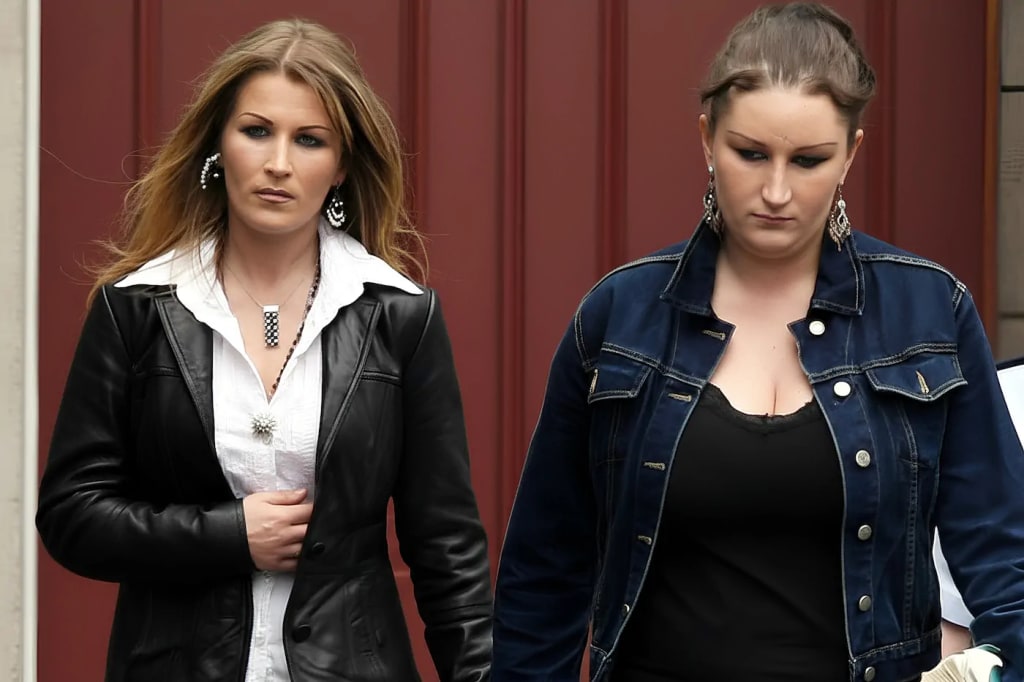
On a crisp spring morning in Dublin, three friends strolling along the Royal Canal near Croke Park made a discovery that would shock Ireland to its core. What they initially mistook for a discarded mannequin floating in a plastic bag turned out to be a human leg, still wearing a sock. This gruesome find on 30 March 2005 marked the beginning of one of Ireland’s most notorious murder investigations: the Royal Canal dismemberment case involving Linda and Charlotte Mulhall, who would become known as the “Scissor Sisters.” The Dublin murder case stands out even among Irish true crime cases for its shocking brutality. Justice Paul Carney, presiding at the Dublin Central Criminal Court, would later describe it as “the most grotesque killing” he had encountered in his entire professional career at the bench.
The dismembered body belonged to Farah Swaleh Noor, a 38-year-old Kenyan immigrant who had lived in Dublin for nearly a decade. His killers were Linda and Charlotte Mulhall, two sisters from Dublin who would become infamously known as the “Scissor Sisters,” a moniker that still resonates in Irish criminal history two decades later. The Ballybough murder investigation revealed a dark underbelly of substance abuse, domestic violence, and ultimately, unspeakable brutality that culminated in a blood-soaked frenzy in a small flat in Richmond Cottages. What makes this Dublin murder case particularly chilling is not just the violence of the murder itself, but the methodical dismemberment that followed and the casual manner in which the sisters disposed of their victim’s remains across multiple locations in the Irish capital.
2025 update: As Ireland marks 20 years since the Royal Canal body discovery, the case has returned to public consciousness with renewed intensity. Charlotte Mulhall’s potential release from prison in 2025 has sparked fresh debate about the Mulhall sisters sentencing and whether justice was adequately served. True crime Ireland podcasts and documentaries have revisited the case throughout early 2025, examining what happened to the Scissor Sisters Ireland and exploring the broader context of Dublin crime history. The anniversary has prompted discussions about how the Irish criminal justice system handles cases involving both perpetrators and victims of abuse, making the Scissor Sisters 20 years later a topic of national conversation once again.
The discovery: A body in the Royal Canal
Initial investigation and the shocking find
When gardaí arrived at the Royal Canal near Ballybough Bridge on that Wednesday evening in March 2005, the fading daylight prevented immediate underwater searches. The area was cordoned off, and investigators waited until first light to deploy specialist divers. What they discovered over the following week painted a horrifying picture that would become central to understanding the Farah Swaleh Noor murder: five separate bags containing a torso, two legs, and two arms, but notably missing the victim’s head and penis.
The Royal Canal, a waterway dating back to 1817 that stretches from Dublin to the River Shannon, had never witnessed anything quite like this dismemberment case Dublin would come to remember so vividly. The location was particularly striking, just minutes from Dublin’s city centre and adjacent to Croke Park, one of Ireland’s most iconic sporting venues, where thousands of spectators gather regularly for Gaelic games. The juxtaposition of such extreme violence occurring so close to everyday life sent shockwaves through the community. Residents of Ballybough and surrounding areas struggled to comprehend how such brutality could unfold in their neighbourhood.
For seven days, divers methodically searched approximately 2.5 kilometres of the canal, filming and documenting each discovery before retrieving evidence. The conditions were challenging; the murky water, accumulated debris, and the decomposed state of the remains complicated the investigation from the outset. But what forensic experts uncovered was even more disturbing than the dismemberment itself. The deliberate nature of the body’s disposal suggested a level of calculation that would later become a key factor in the Scissor Sisters trial Ireland.
Forensic evidence and the search for identity
Deputy State Pathologist Dr Michael Curtis conducted the post-mortem examination at Dublin City Morgue, revealing details that would become central to the prosecution’s case. The torso, limbs, and other remains bore evidence of 22 separate stab wounds inflicted with a knife or Stanley blade. What struck investigators immediately was the absence of defensive wounds on the hands. The victim’s hands were completely intact, suggesting he had been attacked while sleeping or caught completely off guard, with no opportunity to defend himself. This detail would prove crucial in reconstructing what happened during the fatal night in the Ballybough flat.
+ Read more: The sharp edge of change: How knife crime in Ireland is testing the limits of unarmed policing
Determining the cause of death proved impossible due to the missing head and the decomposition of the body, which had been submerged in water for an estimated 7 to 14 days. The chemical reactions between the canal water, sunlight penetrating the black plastic bags, and the decomposition process had altered the victim’s skin tone, making initial racial identification challenging. Even the fingerprints were compromised, rendering traditional identification methods useless. The investigation team faced unprecedented challenges in identifying the victim, making the Dublin murder cases 2005 particularly complex from a forensic standpoint.
Enter Professor Wolfram Meier-Augenstein, a forensic scientist with expertise in isotope analysis. By examining the bone structure and chemical composition, he determined that the victim was of East African origin, most likely from Ethiopia, Somalia, or Kenya, and had been living in Ireland for approximately 7 to 10 years based on changes in bone density related to consuming Irish tap water. The victim was estimated to be between 20 and 40 years old, approximately 1.8 metres tall, with a muscular build. This groundbreaking forensic work represented one of the first times such advanced isotope analysis had been used in an Irish criminal investigation.
The breakthrough in identification came from an unlikely source: clothing. The torso had been found wearing a long-sleeved Republic of Ireland away football jersey. Gardaí created flyers featuring this distinctive detail alongside the physical description and circulated them throughout Dublin’s immigrant communities. The jersey proved to be the vital clue that would crack the case wide open. The innovative approach of focusing on this everyday detail demonstrated the resourcefulness of the gardaí working on what would become one of Ireland’s most notorious murders.
The victim: Farah Swaleh Noor’s hidden past

A false refugee and a pattern of violence
On 16 May 2005, six weeks after the body’s discovery, gardaí received an anonymous tip that would finally identify their victim. The caller described a man matching the description who had been missing since 20 March and was last seen on O’Connell Street, Dublin’s main thoroughfare, with three women. The missing man’s name was Farah Swaleh Noor, and he had a daughter in Dublin whose DNA could confirm the identification. The match was positive.
But Farah Swaleh Noor was not who he claimed to be. Born Sheilila Said Salim in Kenya around 1965, he had arrived at Dublin Airport on 30 December 1996, presenting himself as a Somali refugee fleeing the civil war that had devastated that nation. His asylum application painted a tragic picture: he claimed to be a widowed fisherman whose wife and children had been killed by combatants, forcing him to flee through Kenya to eventually board a ship bound for Ireland. The story was compelling, and because Kenya and Ireland lacked the reciprocal agreements that would have allowed for repatriation, Noor was granted refugee status on 30 July 1999.
The truth was far less sympathetic. Noor was indeed Kenyan, not Somali, and he had left behind a very much alive wife and two children in Kenya. He had essentially abandoned his family to seek what he hoped would be a better life in Europe. After fathering a child with an Irish woman, he gained Irish citizenship in March 1999. But Noor’s time in Ireland would be marked not by the fresh start he ostensibly sought, but by a pattern of violence, substance abuse, and confrontation that would eventually seal his fate. Understanding Noor’s background became essential to comprehending the complex dynamics that led to the Scissor Sisters case details unfolding as they did.
A history of abuse and criminality
Between 1996 and his death in 2005, Farah Swaleh Noor compiled an extensive record with Irish authorities. While sober, acquaintances described him as sociable and pleasant. Under the influence of alcohol and drugs, which was frequently the case, he transformed into someone violent and threatening, particularly toward women. His criminal record included convictions for public intoxication, threatening behaviour, assault, and sexual assault. Despite facing eight charges of disorder and assault, including one sexual assault case where gardaí found a knife at the scene, Noor never served time in prison.
Medical records and Garda reports documented a disturbing pattern: Noor had subjected multiple women to physical and sexual violence. Several had obtained barring orders against him, including the mother of his Irish-born child. Friends and social workers described him as “particularly violent towards women”. Yet the criminal justice system seemed unable or unwilling to adequately address his escalating behaviour. This failure to intervene effectively would later become a point of discussion in evaluating how the tragedy might have been prevented.
It was this volatile, violent man who would enter into a relationship with Kathleen Mulhall in 2002, a union that would prove catastrophic for everyone involved. The relationship dynamics between Noor and the Mulhall family created a powder keg situation that would eventually explode in the small Richmond Cottages flat on that fateful night in March 2005.
The Mulhall family: A life of hardship and trauma
The Irish Traveller community context

The Mulhall family came from Ireland’s Traveller community, an indigenous nomadic ethnic group that has faced centuries of discrimination and marginalisation. Travellers in Ireland have historically experienced extreme poverty, poor access to education and healthcare, and social exclusion that persists to this day. The Mulhalls’ story cannot be fully understood without acknowledging this broader context of systemic disadvantage.
John and Kathleen Mulhall raised their six children (Linda, Charlotte, Marie, John Jr, James, and Andrew) in circumstances that oscillated between difficult and desperate. The family moved frequently, often living in overcrowded conditions with inadequate facilities. Money was perpetually scarce. The parents’ relationship was marked by John’s alcoholism and episodes of violence. This was the environment in which Linda and Charlotte Mulhall grew up, an environment that would shape their responses to stress, conflict, and threat in profound ways.
Kathleen Mulhall: A mother’s descent
Kathleen Mulhall’s life trajectory illustrates how generational trauma and limited opportunities can compound over time. Born into the Traveller community, she married young and spent her adult life managing poverty, her husband’s drinking, and the challenges of raising six children with insufficient resources. By middle age, she had developed her own serious problems with alcohol and prescription medications.
Her relationship with Farah Swaleh Noor began in 2002, when she was in her forties and he was in his late thirties. Friends and family members later described the relationship as toxic from the outset. Noor was physically and emotionally abusive toward Kathleen, yet she remained with him, a pattern common among domestic violence victims. The relationship isolated her further from her family and support networks. She moved with Noor to a small flat at 17 Richmond Cottages in Ballybough, Dublin, where the couple’s volatile dynamic would create the conditions for tragedy.
Kathleen’s daughters, particularly Linda and Charlotte, were aware of the abuse their mother endured. They had witnessed their father’s violence growing up, and now they were watching history repeat itself as their mother suffered at Noor’s hands. This pattern of witnessing and experiencing violence would later become central to the legal arguments about provocation and diminished responsibility during the Scissor Sisters trial Ireland.
Linda Mulhall: The eldest daughter’s troubled path
Born in 1979, Linda Mulhall was the oldest of the Mulhall children. She left school early, as was common for girls in the Traveller community, and had limited formal education. By her teens, she was already showing signs of the substance abuse problems that would plague her adult life. Linda began using alcohol, prescription medications, and later harder drugs as a way to cope with the dysfunction around her.
Linda married and had four children relatively young, but her marriage was unstable. She struggled with addiction and mental health issues that made consistent parenting difficult. Her children often stayed with other family members while Linda cycled through periods of relative stability and serious crisis. Despite these challenges, those who knew her described Linda as fiercely protective of her family, particularly her mother and younger siblings.
By 2005, Linda was living a chaotic life characterized by homelessness, substance abuse, and occasional sex work to support her addictions. She had ongoing involvement with social services and had been in and out of treatment programs. Despite this, she maintained contact with her family and was particularly close to her sister Charlotte and her mother Kathleen. This closeness would draw her into the flat on Richmond Cottages on the night everything went wrong.
Charlotte Mulhall: The younger sister’s path
Charlotte Mulhall, born in 1983, was four years younger than Linda but followed a remarkably similar trajectory. She also left school young with minimal education and began experimenting with drugs and alcohol in her teens. Like Linda, Charlotte struggled with addiction and engaged in sex work at times to support herself.
Charlotte had a young son whom she loved deeply but was often unable to care for consistently due to her substance abuse problems. The boy frequently stayed with relatives, a situation that caused Charlotte guilt and pain but which she seemed unable to change. Friends described Charlotte as fun-loving when sober but prone to erratic behaviour when using drugs or alcohol.
The sisters were extremely close, bonded by their shared experiences and the trauma of their upbringing. They looked out for each other on Dublin’s streets, shared resources when either had money, and protected each other from danger when possible. This fierce loyalty to each other and to their mother would become the catalyst for the horrific events of 20 March 2005. Understanding the Irish Traveller crime cases context helps illuminate the social conditions that shaped the Mulhall sisters’ lives, though it in no way excuses their actions.
The fatal night: 20 March 2005
The gathering at Richmond Cottages
On the evening of 20 March 2005, what began as a typical night of drinking at the flat on Richmond Cottages, Ballybough, would end in carnage. The participants were Kathleen Mulhall, her boyfriend Farah Swaleh Noor, and Kathleen’s daughters Linda and Charlotte. The four had been drinking heavily throughout the day and into the evening. Cocaine was also involved, further destabilising an already volatile situation.
According to testimony that would later emerge at trial, Noor became increasingly aggressive as the night wore on. He directed verbal abuse at Kathleen, belittling and threatening her in front of her daughters. At some point, Noor went into the bedroom to sleep off his intoxication, and the three women continued drinking in the living room. What happened next remains partially obscured by the participants’ intoxication and their sometimes contradictory accounts, but the essential facts are not in dispute.
The attack
Linda later testified that she went to check on Noor and found him awake. According to her account, he pulled her onto the bed and attempted to rape her, holding a Stanley blade to her throat and threatening to kill her if she resisted. In her panic and terror, Linda screamed for help. Charlotte heard the scream and rushed into the room armed with a hammer she had grabbed from the kitchen.
What followed was a frenzy of violence. Charlotte began hitting Noor with the hammer while Linda stabbed him repeatedly with the Stanley blade he had been holding. The attack was savage and sustained. Noor received 22 stab wounds and severe blunt force trauma to his head. Whether he was conscious or already dying when the worst injuries were inflicted remains unclear, but forensic evidence confirmed that the assault continued well past the point of any possible survival.
The absence of defensive wounds on Noor’s hands, a detail noted by the pathologist, supported the sisters’ claim that the attack occurred while he was either asleep or too drunk to defend himself effectively. However, the sheer number and severity of the wounds went far beyond what would be necessary for self-defence, complicating the legal questions about intent and culpability that would later dominate the Dublin Central Criminal Court proceedings.
The aftermath and the mother’s role
After the killing, Kathleen Mulhall arrived in the bedroom to find her daughters covered in blood and Farah Swaleh Noor’s body on the bed. Rather than calling gardaí or an ambulance, Kathleen made a decision that would haunt her for the rest of her life: she chose to help her daughters cover up the crime.
The three women faced a gruesome dilemma. They had a body in a small flat in a densely populated area of Dublin. Panic set in. They initially attempted to clean the crime scene but quickly realised that properly disposing of the body would require more drastic action. This is when the decision was made to dismember the corpse, a choice that would elevate the case from a violent killing to one of Ireland’s most notorious murders.
The dismemberment: A scene of unimaginable horror
The butchery
In the hours following the murder, the Mulhall sisters undertook the grim task of dismembering Farah Swaleh Noor’s body. Using kitchen knives, they cut the corpse into pieces in the flat’s cramped bathroom. Blood sprayed across the walls, floor, and ceiling. The work was physically exhausting and psychologically devastating. Both sisters later described being haunted by nightmares of that night.
The level of intoxication may have dulled their awareness of what they were doing, but it also made the task more difficult. The sisters were not skilled at this horrific work, and the dismemberment was crude and incomplete. They severed the limbs and separated the torso but struggled with the head, eventually managing to remove it as well. They wrapped the body parts in black plastic bags, using towels and sheets to soak up blood.
Charlotte took primary responsibility for the actual cutting, while Linda assisted and Kathleen worked to clean the flat. The psychological toll on all three was immediate and severe. Yet they continued, driven by fear of the consequences if they were discovered and by a desperate hope that they could somehow make the evidence disappear.
Disposal of the remains
Over the next several days, the Mulhall sisters worked to dispose of the body parts. They carried bags containing the torso and limbs to various locations along the Royal Canal, throwing them into the water under cover of darkness. The disposal locations stretched along several kilometres of the canal, from Ballybough to areas further from the city centre.
The head and penis proved more problematic. These parts were smaller and more easily concealed but also more immediately identifiable. According to testimony, Charlotte kept Noor’s head in her own flat for several days, unsure what to do with it. The surreal image of her carrying the severed head across Dublin on public buses, in a bag among other possessions, became one of the most disturbing details to emerge during the trial.
To this day, Noor’s head and penis have never been recovered. Speculation about their final disposal has ranged from theories that they were burned to suggestions that they were thrown into a different body of water or even taken far from Dublin. The sisters never provided consistent answers about what they did with these remains, and it’s possible they genuinely don’t remember clearly due to their intoxicated state and the traumatic nature of their actions.
The cover-up and investigation
Attempts to conceal the crime
For several days after the murder, the Mulhall family attempted to carry on as though nothing had happened. They cleaned the flat at Richmond Cottages extensively, though forensic investigators would later find bloodstains that had seeped into floorboards and walls despite these efforts. Kathleen continued living in the flat for a short time before moving out, claiming she could no longer afford the rent.
The sisters tried to return to their routines, though both were clearly affected by what had occurred. Friends later reported that Linda and Charlotte seemed more disturbed than usual in the days following 20 March, drinking even more heavily and exhibiting signs of psychological distress. Neither sister could have imagined that the body parts they had thrown into the Royal Canal would be discovered so quickly.
The investigation closes in
The discovery of the first body part on 30 March, just ten days after the murder, set off the investigation that would eventually lead to the Mulhall family. As gardaí worked to identify the victim through the innovative use of isotope analysis and the distinctive football jersey, they simultaneously pursued leads about men matching the description who had recently gone missing.
Once Farah Swaleh Noor was identified, investigators began building a picture of his life and relationships. His connection to Kathleen Mulhall quickly became apparent. Gardaí interviewed Kathleen, who initially denied any knowledge of Noor’s whereabouts. She claimed he had simply left one day and she hadn’t seen him since.
Detectives weren’t convinced. They obtained a warrant to search the Richmond Cottages flat, where forensic technicians discovered extensive blood evidence despite the cleaning efforts. When confronted with this evidence, Kathleen’s story changed. She claimed that Noor had been attacked by unknown assailants who had forced their way into the flat, and that she had been too frightened to report it. This version was also quickly disproven.
The arrests and confessions
Under mounting pressure and faced with overwhelming forensic evidence, the truth began to emerge. Linda Mulhall was arrested first and, after hours of questioning, provided a detailed confession describing the events of 20 March. She claimed that she had acted in self-defence when Noor attempted to rape her and that Charlotte had come to her aid.
Charlotte was arrested subsequently and also confessed, though her account differed in some details from Linda’s version. The inconsistencies in their stories would become a point of contention during the trial, with prosecutors arguing that the variations suggested premeditation or at least conscious fabrication, while defence attorneys maintained that the discrepancies were the natural result of trauma, intoxication, and the chaotic nature of the events.
Kathleen Mulhall was also arrested and charged with helping to dispose of the body, though prosecutors ultimately concluded that her role had been primarily as a facilitator after the fact rather than as a participant in the killing itself. Her decision to protect her daughters rather than contact authorities spoke to the fierce family loyalty that characterised the Mulhall clan, but it also meant she would face serious criminal charges.
The trial: Legal arguments and public fascination
The Dublin Central Criminal Court proceedings
The Scissor Sisters trial Ireland began in October 2006 at the Dublin Central Criminal Court, with Justice Paul Carney presiding. The case attracted enormous media attention, with journalists and members of the public queuing for seats in the courtroom gallery. The tabloid nickname “Scissor Sisters,” borrowed from the American pop band, had already taken hold in public discourse, though the band itself had no connection to the case.
Prosecutors painted a picture of a brutal, calculated murder followed by an elaborate cover-up. They emphasised the 22 stab wounds, the dismemberment, the disposal of body parts across multiple locations, and the sisters’ attempts to lie to investigators. The prosecution argued that regardless of what may have precipitated the initial violence, the sustained nature of the attack and the methodical disposal of evidence demonstrated consciousness of wrongdoing and intent to avoid justice.
The defence team faced a challenging task. They needed to explain why their clients had committed such a horrific crime while also eliciting sympathy for women who, they argued, were themselves victims. The strategy focused on establishing a history of abuse, both in the sisters’ upbringing and in their mother’s relationship with Noor, and on portraying the killing as a response to sexual assault rather than premeditated murder.
Linda Mulhall’s defence: Provocation and sexual assault
Linda’s lawyers argued that she had acted in self-defence when Noor attempted to rape her. They presented evidence of Noor’s history of violence against women, including previous sexual assault convictions and multiple barring orders. The defence contended that Linda had reasonable fear for her life when Noor held a blade to her throat, and that her response, while extreme, was a genuine reaction to a genuine threat.
The prosecution challenged this narrative, pointing out that Linda and Charlotte had continued to attack Noor long after any immediate threat had passed. The sheer number of stab wounds and the severity of the hammer blows suggested, prosecutors argued, that this had gone beyond self-defence into the realm of murder fueled by rage or other emotions.
The jury ultimately found Linda guilty not of murder but of manslaughter, accepting that there had been significant provocation but that her response had nonetheless been unlawful. This verdict reflected a nuanced understanding of the circumstances: Linda had been defending herself from sexual assault, but she had also gone too far in her response and had then participated in covering up the crime.
Charlotte Mulhall’s defence and conviction
Charlotte’s case was more straightforward legally but more complicated emotionally. She had come to her sister’s aid when she heard Linda scream, grabbing a weapon and attacking Noor. The defence argued that Charlotte had acted to protect her sister from what she genuinely believed was a life-threatening assault.
However, Charlotte had also participated in the prolonged attack and had taken primary responsibility for dismembering the body. Perhaps most damning, she had kept Noor’s severed head in her flat for days after the murder, a fact that prosecutors used to demonstrate consciousness of guilt and a level of callousness that undermined claims of pure defensive action.
Charlotte was convicted of murder and received the mandatory life sentence under Irish law. The jury rejected arguments that she had acted purely in defence of her sister, finding instead that her actions constituted intentional killing that went beyond justifiable force.
Kathleen Mulhall’s role and sentencing
Kathleen Mulhall was charged with helping to dispose of the body, which carried a maximum sentence of five years. Prosecutors acknowledged that she had not participated in the killing itself but had made a conscious choice to help her daughters avoid detection rather than reporting the crime to authorities.
The question of why Kathleen made this choice is complex. Defence attorneys argued that she was a traumatised woman who had witnessed years of abuse, first from her husband and then from Noor, and that her judgment was impaired by alcohol dependence and psychological damage. They portrayed her as a mother whose protective instincts, however misguided, had driven her to help her children rather than turn them over to the authorities.
Kathleen’s testimony during the trial was painful to witness, by all accounts. She expressed remorse for her actions while also defending her daughters and insisting that Noor had been a violent, dangerous man. She received a five-year sentence, which she served in the Dochas Centre, Ireland’s main women’s prison.
Justice Paul Carney’s verdict and remarks
Justice Paul Carney, presiding over the case, made headlines when he described the Farah Swaleh Noor murder as “the most grotesque killing” he had encountered in his lengthy career on the bench. His comment reflected not just the brutality of the stabbing and beating but the calculated dismemberment and disposal that followed.
In his sentencing remarks, Justice Carney noted the troubled backgrounds of the Mulhall sisters while emphasising that such circumstances could not excuse or fully mitigate their actions. He acknowledged Noor’s history of violence while insisting that no one deserved to die in such a manner or to have their body treated with such profound disrespect.
Linda Mulhall received a 15-year sentence for manslaughter, a sentence that some observers felt was too lenient given the circumstances, while others believed appropriately reflected the provocation she had faced. Charlotte’s life sentence meant she would serve a minimum of several years before being eligible for parole consideration, with the actual length of her incarceration to be determined by the parole board based on her behaviour and rehabilitation progress.
The Mulhall sisters sentencing became a topic of public debate, with many questioning whether the Irish criminal justice system had adequately balanced the sisters’ status as abuse victims with their clear culpability for a horrific crime.
Life in prison: The sisters’ divergent paths
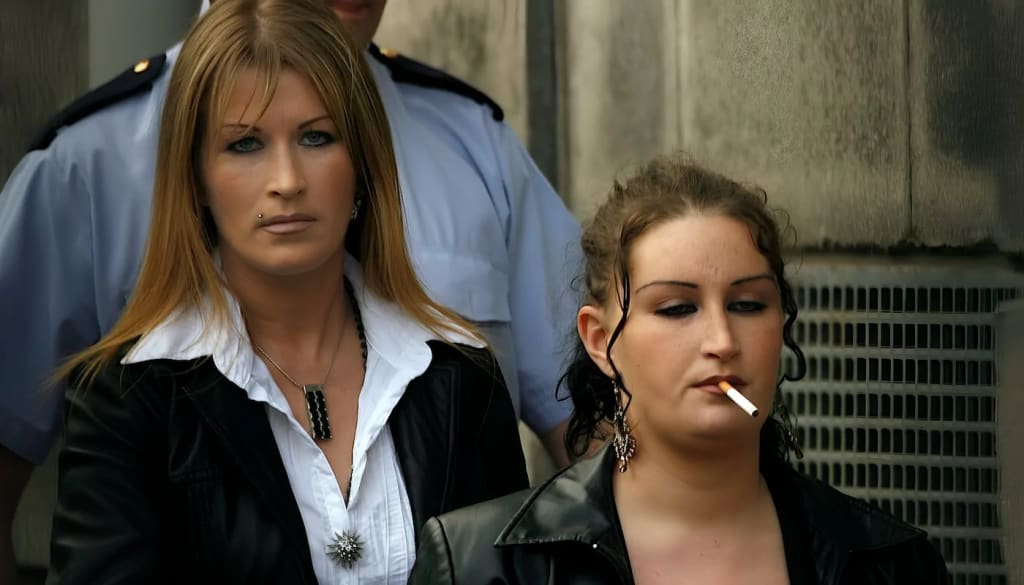
Linda Mulhall’s incarceration and release
Linda Mulhall served her sentence in the Dochas Centre, where she participated in various rehabilitation programs including addiction treatment, educational courses, and counselling. Prison records indicate that she was a generally compliant prisoner, though she struggled with the separation from her children and the reality of what she had done.
During her incarceration, Linda’s four children were cared for by family members. She maintained contact with them through letters and visits, though the relationship was inevitably strained by her absence and by the notoriety of her crime. As her children grew older and learned more about what their mother had done, some chose to limit or cease contact with her, a source of profound pain for Linda.
Linda was released from prison in 2018 after serving approximately 12 years of her 15-year sentence, the reduction reflecting good behaviour and participation in rehabilitation programs. Her release received relatively little media attention compared to the original trial, though some victims’ rights advocates expressed concern that she had not served her full sentence.
Since her release, Linda has maintained a low profile, living quietly in Dublin under her own name. She has reportedly continued with counselling and addiction recovery programs and has attempted to rebuild relationships with her children. She has not given media interviews or publicly discussed her crime, presumably on legal advice and out of respect for Noor’s family.
Charlotte Mulhall’s longer sentence and behaviour in prison
Charlotte Mulhall’s experience in prison has been markedly different from her sister’s. As a convicted murderer serving a life sentence, she has faced a longer and more uncertain incarceration. Her behaviour in prison has reportedly been less consistent than Linda’s, with periods of good conduct interspersed with incidents that have delayed her parole eligibility.
Charlotte has struggled more visibly with the psychological impact of her actions and of imprisonment. She has received treatment for depression and PTSD, conditions that prison psychologists have linked both to the trauma of her upbringing and to the events of 20 March 2005. Like Linda, she has been separated from her child throughout most of his formative years, a source of ongoing distress.
In recent years, Charlotte has participated in various prison programs and has worked toward educational qualifications that she lacked before her incarceration. Prison officials have noted improvement in her behaviour and attitude, though she still faces significant challenges. The question of when Charlotte Mulhall might be released has become a matter of public speculation as the 20th anniversary of the murder approaches in 2025.
Charlotte Mulhall release 2025: Parole considerations and public reaction
As 2025 progresses, speculation has intensified about Charlotte Mulhall’s potential release. Under Irish law, life sentence prisoners become eligible for parole consideration after serving a certain minimum period, typically around 12 to 15 years for murder convictions, though the actual decision rests with the parole board based on numerous factors.
Charlotte’s case presents the parole board with difficult questions. On one hand, she has now served nearly 20 years, has participated in rehabilitation programs, and has shown signs of genuine remorse. On the other hand, the nature of her crime, particularly the dismemberment and her keeping of Noor’s severed head, suggests a level of callousness that raises questions about risk to public safety.
Public opinion remains divided. Some argue that Charlotte has served sufficient time and deserves a chance to rebuild her life, particularly given the context of abuse that precipitated the crime. Others, including some victims’ rights advocates, contend that the brutality of the killing warrants a longer sentence and that releasing Charlotte after 20 years sends the wrong message about Ireland’s commitment to justice.
The parole board will consider numerous factors including Charlotte’s behaviour in prison, psychological assessments, her level of insight into her crime, evidence of rehabilitation, and the risk she might pose to public safety upon release. The decision, when it comes, will likely reignite the passionate debates that surrounded the original trial.
Public reaction and media coverage
The tabloid sensationalism
From the moment the story broke, media coverage of the case was intense and often sensationalistic. The tabloid nickname “Scissor Sisters” guaranteed headlines, despite having nothing to do with the actual crime. Newspapers competed for the most lurid details, with some coverage veering into exploitation of the case’s more disturbing elements.
The fact that the perpetrators were women from the Traveller community added additional layers to the media narrative. Some coverage leaned into stereotypes about Travellers and poverty, while other outlets focused on the more universal themes of domestic violence and family dysfunction. The involvement of sex work in the sisters’ lives also attracted prurient attention that often overshadowed more substantive analysis.
International media picked up the story as well, with coverage appearing in British tabloids and even in some American outlets. The case was frequently included in lists of “Ireland’s most shocking crimes” or “Britain and Ireland’s most gruesome murders.” This international attention further cemented the Scissor Sisters case details in the public consciousness as emblematic of a particularly Irish type of tragedy.
True crime Ireland: Documentaries and podcasts
In the years since the trial, the case has been the subject of multiple documentaries, books, and podcast episodes. True crime Ireland content has exploded in popularity in recent years, and the Scissor Sisters case features prominently in this genre. Documentaries have explored various aspects of the case from the investigative process to the psychological profiles of those involved.
Podcast coverage has been particularly extensive. Irish true crime cases have become a popular subgenre, and several long-form podcast series have dedicated episodes to examining what happened Scissor Sisters Ireland. Some of this coverage has been thoughtful and well-researched, featuring interviews with investigators, legal experts, and journalists who covered the original trial. Other treatments have been less careful, sometimes repeating inaccuracies or speculation as fact.
The 20-year anniversary in 2025 has prompted a new wave of retrospective coverage. Multiple podcasts released special anniversary episodes in March 2025, examining how the case looks two decades later and what it reveals about changes in Irish society. These programs often include discussions of Charlotte Mulhall’s potential release and updates on where the various participants are now.
The American band’s uncomfortable association
The American band Scissor Sisters, which formed in 2001 and achieved significant success in the mid-2000s, has been forever linked to the Irish murder case through unfortunate timing. The band’s name predated the crime and had no connection to it; the musicians chose “Scissor Sisters” as a reference to a sexual position, not knowing it would later become associated with one of Ireland’s most notorious murders.
Band members have occasionally addressed the Irish case in interviews, typically expressing sympathy for all involved while emphasising that they had no connection to the events. The association has been particularly awkward during the band’s performances in Ireland, where the name inevitably evokes the murder case for audiences.
When the band announced reunion tour dates including stops in Ireland for 2025, media coverage inevitably mentioned the murder case. Some commentators suggested the band should consider using a different name when performing in Ireland out of respect for Noor’s family, though this idea has not been seriously pursued. The band has generally handled the situation with sensitivity, acknowledging the tragedy while making clear they bear no responsibility for it.
The social issues illuminated by the case
Domestic violence and the failure of intervention
One of the most troubling aspects of the case is how many opportunities existed for intervention before the tragedy occurred. Farah Swaleh Noor had multiple convictions for violent and sexual offenses, yet he never served meaningful prison time. He had barring orders taken out against him by multiple women, yet continued to have access to vulnerable partners. The failure of the Irish criminal justice system to adequately address his pattern of escalating violence arguably created the conditions for the eventual murder.
This pattern of inadequate response to domestic violence was not unique to Noor’s case. In 2005, Ireland was still grappling with how to effectively address domestic violence and protect victims. While laws existed, enforcement was often lax, and cultural attitudes sometimes minimised or excused male violence against female partners. The Mulhall case, while extreme, highlighted these broader systemic failures.
In the years since, Ireland has made progress in addressing domestic violence. Legislation has been strengthened, resources for victims have increased, and cultural attitudes have shifted toward taking such violence more seriously. Yet advocates argue that much work remains to be done, and cases continue to occur where warning signs are missed or intervention fails to prevent tragedy.
Substance abuse and its cascading effects
Every person directly involved in the events of 20 March 2005 was significantly impaired by alcohol and drugs. Kathleen Mulhall, her daughters, and Farah Swaleh Noor were all struggling with serious substance abuse problems that distorted their judgment, lowered their inhibitions, and contributed to the volatility of their interactions.
The Mulhall family’s addiction issues were multi-generational, with both parents having serious alcohol problems and all the children showing signs of substance abuse from relatively young ages. This pattern is common in families experiencing poverty, trauma, and marginalisation. Substances offer temporary escape from difficult circumstances, but they ultimately exacerbate problems and create new ones.
Ireland has historically struggled with alcohol abuse in particular, with drinking culture deeply embedded in social life across class lines. The Mulhall case illustrated the extreme end of what untreated addiction can contribute to, though most people suffering from substance abuse disorders never engage in violence of this nature. Nonetheless, the case helped fuel conversations about the need for better addiction treatment services, particularly for marginalized populations with limited access to care.
The Irish Traveller community and systemic marginalisation
The fact that the Mulhall family came from the Traveller community was not incidental to their circumstances. Travellers in Ireland have faced centuries of discrimination, with ongoing disparities in education, employment, housing, and health outcomes. While many Travellers live stable, fulfilling lives and are contributing members of their communities, the Mulhalls’ experience of poverty, limited education, social exclusion, and multi-generational dysfunction reflects patterns that affect the community disproportionately.
Some media coverage of the case relied on harmful stereotypes about Travellers, suggesting that their ethnic background somehow predisposed them to criminality or dysfunction. This coverage ignored the systemic factors that contribute to worse outcomes for Travellers as a group, including active discrimination, inadequate social services, and limited economic opportunities.
More thoughtful analysis of the case acknowledged that while the Mulhalls’ actions were their own responsibility, the conditions in which they lived were shaped by larger social forces. Addressing the extreme marginalisation of the Traveller community remains an ongoing challenge for Irish society, and cases like the Mulhalls illustrate the human cost of failing to provide adequate support and opportunity to vulnerable populations.
Legal and ethical questions raised by the case
The limits of provocation as a defence
The Scissor Sisters trial Ireland raised important questions about how Irish law handles provocation as a partial defence to murder. Linda Mulhall’s manslaughter conviction rested on the jury’s acceptance that she had been provoked by Noor’s attempted sexual assault. But where is the line between justified defensive force and excessive violence that crosses into criminality?
Legal experts debated whether the number and severity of Linda’s stab wounds could reasonably be considered proportional to the threat she faced, even accepting that she was defending herself from rape. Some argued that once Noor was incapacitated, continuing to stab him transformed self-defence into vengeance or at minimum recklessness. Others contended that in the chaos of a violent assault, particularly when the victim is intoxicated and terrified, demanding perfect calibration of force is unrealistic.
The case also raised questions about the role of cumulative trauma in assessing provocation. Should a jury consider not just the immediate triggering event but years of witnessing domestic violence and experiencing abuse? Linda and Charlotte had seen their father abuse their mother and had watched Noor abuse Kathleen. They had both experienced sexual violence in their own lives. To what extent should this background inform understanding of their response to Noor’s assault?
The death penalty debate in Ireland
Though Ireland had abolished the death penalty for murder in 1990, well before the Scissor Sisters case, the brutality of the crime reignited discussions about capital punishment among some segments of the public. Opinion polls conducted around the time of the trial showed that a significant minority of Irish people supported reinstating the death penalty for the most serious crimes.
Advocates for the death penalty pointed to cases like the Scissor Sisters as exemplifying crimes so heinous that life imprisonment seemed inadequate. They argued that the calculated dismemberment and disposal of Noor’s body demonstrated a level of depravity that merited the ultimate punishment.
Opponents of capital punishment countered that even in such extreme cases, the death penalty would be unjust and ineffective. They pointed to Charlotte’s history of abuse, Linda’s claim of sexual assault provocation, and the context of substance abuse and generational trauma. They argued that the case actually demonstrated why the death penalty is problematic: it fails to account for the complex circumstances that lead people to commit even terrible crimes.
Ireland has not seriously moved toward reinstating capital punishment, and the country’s integration into the European Union, which prohibits the death penalty, makes such a change highly unlikely. But the Mulhall case illustrated how particularly shocking crimes can challenge even settled societal consensus on such fundamental questions.
Questions about justice and sentencing
The case has sparked ongoing debate about whether the sentences handed down were appropriate. Some victims’ rights advocates and members of the public felt that Linda’s 15-year sentence for manslaughter was too lenient given the brutality of the killing and the elaborate cover-up. They argued that the dismemberment and disposal of the body demonstrated a level of calculation that should have negated claims of provocation or diminished responsibility.
Others have pointed out that Charlotte’s life sentence was mandatory under Irish law and that Linda’s reduced charge reflected the jury’s acceptance of genuine provocation in the context of sexual assault and fear for her life. These supporters note that Farah Swaleh Noor had an extensive history of violence against women and that Linda and Charlotte had witnessed years of abuse against their mother.
The debate reflects broader tensions in how society handles cases involving both victims, the Mulhall sisters who suffered abuse, and perpetrators, the same women who committed murder. It raises difficult questions: To what extent should a history of trauma and abuse mitigate criminal responsibility? At what point does self-defense or provocation end and murder begin? How should the law account for the psychological effects of long-term exposure to violence?
The wider context: Ireland’s social issues
Beyond the individuals directly involved, the Scissor Sisters case shone an uncomfortable spotlight on several interconnected social problems in Ireland. The prevalence of substance abuse across the entire Mulhall family, the normalisation of violence in their home, and the multi-generational patterns of dysfunction illustrated failures in social services and support systems.
The case also highlighted issues facing the Irish Traveller community. The Mulhalls’ dire economic circumstances, overcrowded housing, limited educational opportunities, and social marginalisation were not unique to them but reflected broader patterns affecting Travellers across Ireland. While the family’s actions were their own responsibility, the conditions in which they lived were shaped by decades of discrimination and systemic neglect.
Similarly, the case raised questions about how Ireland handles domestic violence and sexual assault. Farah Swaleh Noor had multiple convictions for violent and sexual offenses, yet he never served meaningful prison time and continued to have access to vulnerable women. The failure of the criminal justice system to adequately address his pattern of violence arguably created the conditions for the eventual tragedy.
Remembering the victim
Amidst all the sensationalism, legal analysis, and social commentary, Farah Swaleh Noor himself has sometimes been overshadowed. While his history of violence is relevant context, it’s important to remember that no one deserves to die in the manner he did. Whatever his faults, and they were substantial, Noor was a human being who suffered an agonising death and whose body was treated with profound disrespect.
His family in Kenya, who learned of his death and the circumstances surrounding it through international news coverage, were traumatised by the revelations. The mother of his Irish-born child had to explain to their daughter what had happened to her father. These secondary victims of the crime have received far less attention than the Mulhall family, yet their suffering is real and lasting.
The fact that Noor’s head and penis were never recovered has denied his family the ability to fully lay him to rest. In many cultures, including Kenyan Muslim traditions, proper burial rites are essential for spiritual peace. The Mulhalls’ actions deprived Noor’s family even of this final dignity.
It’s also worth noting that Noor’s history of violence, while relevant to understanding the circumstances of his death, should not overshadow the fact that he was murdered and dismembered. The tendency in some discussions to suggest that he somehow deserved his fate because of his abusive behaviour minimises the severity of what was done to him and implicitly condones vigilante violence.
Cultural impact and lasting notoriety
The Scissor Sisters case has become embedded in Irish popular culture in ways both obvious and subtle. It’s referenced in discussions of Ireland’s most notorious crimes, studied in criminology courses, and serves as a grim touchstone in conversations about domestic violence and substance abuse. The case has been the subject of multiple books, documentaries, and podcast episodes exploring Irish true crime cases.
In 2025, as Ireland marked the 20th anniversary of the murder, numerous media outlets revisited the case with anniversary coverage featuring interviews with investigators, legal experts, and journalists who covered the original Scissor Sisters trial Ireland. These retrospectives often include discussions of how Ireland has changed, or not changed, in the intervening years regarding the social issues the case highlighted. The coverage examined the Scissor Sisters 20 years later from multiple angles: legal, social, psychological, and cultural.
The American band Scissor Sisters, whose name became forever associated with the case, has generally avoided discussing it in detail. Band members have occasionally acknowledged the Irish case in interviews but typically emphasise that they hope the victims, both Noor and the Mulhall family, can eventually find peace. The band’s 2025 reunion tour included dates in Ireland, bringing the name back into public consciousness once more and prompting renewed discussion of the murder case anniversary.
The lasting notoriety of the case speaks to several factors. The extreme brutality of the killing and dismemberment creates a visceral response that more “ordinary” murders do not. The involvement of women as perpetrators challenges societal expectations about female violence. The complex web of victimisation and perpetration resists simple moral judgments. And the case’s revelation of dark undercurrents in Irish society, poverty, addiction, domestic violence, and marginalisation, forces uncomfortable reflections on collective responsibility.
FAQ: Frequently Asked Questions about the Scissor Sisters case
Q: Where are the Scissor Sisters now?
A: Linda Mulhall was released from prison in 2018 after serving approximately 12 years of her 15-year manslaughter sentence. She has maintained a low profile since her release, living quietly in Dublin and reportedly continuing with addiction recovery and counselling programs. Charlotte Mulhall remains in prison serving her life sentence for murder, though she became eligible for parole consideration after serving approximately 12 years. As of 2025, speculation continues about her potential release, with the parole board weighing factors including her behaviour in prison, psychological assessments, and public safety considerations.
Q: What happened to Charlotte Mulhall?
A: Charlotte Mulhall was convicted of murder in 2006 and received a mandatory life sentence. She has spent nearly 20 years in the Dochas Centre, Ireland’s main women’s prison, where she has participated in various rehabilitation programs and educational courses. Charlotte has struggled more visibly than her sister Linda with the psychological impact of imprisonment and of her actions. In recent years, prison officials have noted improvement in her behaviour and attitude. The question of Charlotte Mulhall release 2025 has become a topic of public discussion as she approaches the 20-year mark of her incarceration.
Q: Why were they called Scissor Sisters?
A: The nickname “Scissor Sisters” was given to Linda and Charlotte Mulhall by Irish media, borrowing the name from the American pop band that was popular at the time. The band name itself had no connection to the murder case; the musicians had chosen it as a reference to a sexual position several years before the crime occurred. The tabloid media adopted the moniker because it was catchy and immediately recognizable, though many commentators have criticised this choice as sensationalistic and disrespectful to the victim. The name has stuck despite having no actual relationship to the methods used in the crime.
Q: What happened to Farah Swaleh Noor’s head?
A: Farah Swaleh Noor’s head and penis were never recovered despite extensive searches. Charlotte Mulhall reportedly kept the severed head in her flat for several days after the murder, at times carrying it through Dublin in a bag while using public transportation. The ultimate disposal of these remains has never been definitively established. Speculation has ranged from theories that they were burned to suggestions that they were thrown into a different body of water or taken far from Dublin. The sisters never provided consistent answers about what they did with these body parts, possibly due to their intoxicated state and the traumatic nature of their actions.
Q: Where is Kathleen Mulhall now?
A: Kathleen Mulhall, the mother of Linda and Charlotte, served approximately five years in prison for her role in helping to dispose of Farah Swaleh Noor’s body. She was released in the early 2010s and has since lived quietly, reportedly struggling with the knowledge of what her daughters did and her own role in the aftermath. Kathleen’s health has been poor in recent years, with ongoing issues related to long-term substance abuse. She has given no media interviews since her release and maintains an extremely low profile.
Conclusion: A crime that defined an era
The murder of Farah Swaleh Noor and the subsequent trial of Linda and Charlotte Mulhall represents one of the darkest chapters in modern Irish criminal history. The Dublin murder case 2005 defies simple narratives: the perpetrators were also victims; the victim was also a perpetrator; and the violence that occurred on 20 March 2005 was the culmination of years of abuse, neglect, and social dysfunction affecting everyone involved.
What makes the Scissor Sisters case particularly haunting is not just the brutality of the murder itself, though that is shocking enough, but the cold, methodical dismemberment that followed, the casual disposal of body parts in the Royal Canal, and the surreal image of two sisters carrying a severed head through Dublin on a public bus. These elements combine to create a crime that feels almost beyond comprehension, yet it emerged from very human problems: addiction, violence, poverty, and desperation.
Justice Paul Carney’s description of it as “the most grotesque killing” in his professional lifetime was not hyperbole. Even two decades later, few crimes in Ireland have matched the combination of violence, calculated cover-up, and sheer barbarity displayed in this case. The Royal Canal murder stands as a stark reminder of what human beings are capable of when trauma, substance abuse, and violence intersect in the worst possible ways.
As Charlotte Mulhall potentially approaches release after nearly 20 years in prison, and as Linda Mulhall continues her life beyond prison walls, the questions raised by this case remain relevant: How does a society prevent such tragedies? How should justice systems balance punishment with rehabilitation? What responsibility do we all bear for the conditions that allow violence to flourish in marginalised communities?
The Scissor Sisters Dublin crime may have occurred in 2005, but its echoes continue to resonate through Irish society today. It serves as both a cautionary tale about the destructive power of violence and abuse, and a call to action for better support systems, more effective intervention in domestic violence cases, and greater attention to the social conditions that contribute to such tragedies. The Ballybough murder investigation and subsequent trial exposed uncomfortable truths about Irish society that remain relevant 20 years later.
This case involving the Farah Swaleh Noor murder details, the Mulhall sisters conviction, and the broader context of Ireland murder case history offers important lessons. Only by honestly confronting the difficult realities this case exposed, including failures in addressing domestic violence, inadequate support for marginalised communities like Irish Travellers, and gaps in substance abuse treatment, can Ireland hope to prevent similar horrors in the future. The dismemberment case Dublin will remember forever must serve as more than just a sensational story; it must be a catalyst for meaningful social change.