

In the annals of human catastrophe, few events rival the sheer destructive magnitude of the 1931 China floods. This disaster transformed vast swathes of central China into an inland sea and claimed more lives than any other natural calamity of the modern era. This wasn’t simply a story of rising waters; it was a perfect storm where meteorological fury, political dysfunction, and public health collapse converged to create what researchers now recognize as the deadliest natural disaster of the 20th century.
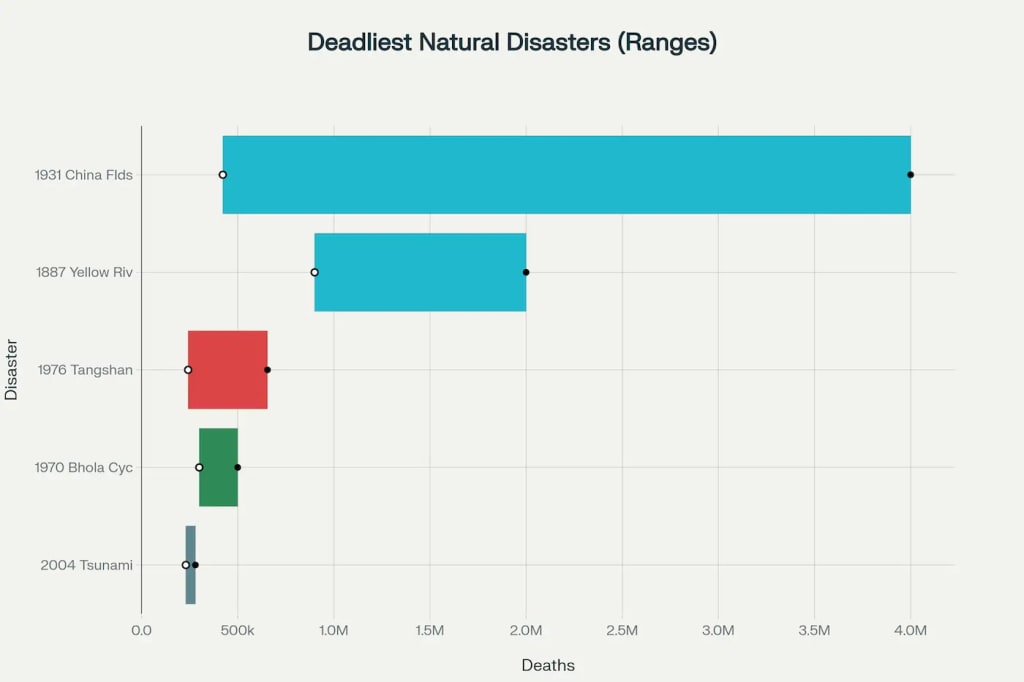
The summer of 1931 in the Yangtze River basin witnessed nature’s most violent performance combined with humanity’s most tragic vulnerabilities. When the floodwaters finally receded months later, they left behind a death toll that still sparks academic debate, with estimates ranging from 422,000 to a staggering 4 million lives lost. Yet these numbers, as overwhelming as they appear, barely capture the true horror of what unfolded: a cascading crisis where drowning was merely the opening act, and disease became the main event.
Connecting past to present: China’s 2025 flooding context
The lessons of 1931 resonate powerfully in 2025, as China continues to grapple with extreme flooding events. In the first half of 2025 alone, flooding disasters across China caused $7.6 billion in economic losses, affecting millions of residents and testing the modern flood management infrastructure built partially in response to historical catastrophes like 1931. Recent rainfall intensity measurements across Asia show a 22% increase over the past 50 years, with climate scientists warning that compound extreme weather events, similar to those that triggered the 1931 disaster, are becoming more frequent and severe.
The Three Gorges Dam, completed in 2012 as a direct response to China’s flooding history, has intercepted floodwaters approximately 70 times since its completion, diverting a cumulative total of 221 billion cubic meters of water to protect downstream communities. During severe 2020 floods, the dam reduced peak discharge from 70,000 cubic meters per second to 40,000, preventing what could have been catastrophic flooding in vulnerable areas. This modern infrastructure represents a dramatic evolution from the failing dyke systems of 1931, yet the fundamental challenge remains: balancing human development with the raw power of China’s great rivers.
The perfect storm: meteorological chaos meets geographic vulnerability
When nature unleashed its fury
The 1931 China floods didn’t emerge from a single meteorological event but from an extraordinary convergence of climatic extremes that modern researchers are only now beginning to fully understand. The disaster’s roots stretched back to the harsh winter of 1930-1931, which deposited unprecedented amounts of snow and ice in the mountainous headwaters of China’s great rivers. Satellite imagery and modern climate modeling weren’t available at the time, but contemporary reports describe snowpack levels that exceeded anything in living memory across the upper Yangtze basin.
As 1931’s spring arrived, this frozen reservoir began its inevitable journey downstream. But nature wasn’t finished with its assault. The Yangtze River basin experienced what meteorologists describe as “one continuous deluge” rather than the typical seasonal pattern of three distinct flood periods. Heavy spring rains merged with snowmelt, creating dangerously high water levels by June, a full month before the traditional flood season even began. Hydrological stations recorded water levels climbing steadily through April and May, triggering early warnings that went largely unheeded due to limited communication infrastructure and political instability.
Then came July 1931, a month that redefined extreme weather in China. The region was pummeled by nine cyclonic storms, a staggering increase from the usual two per year. These weren’t ordinary summer storms but intense tropical cyclones that moved unusually far inland, driven by atmospheric conditions that climate scientists now understand were influenced by both El Niño patterns and unusual high-pressure systems over the western Pacific. Four weather stations along the Yangtze River recorded over 600mm of rainfall in July alone, representing one and a half times the area’s entire annual precipitation falling within a single month.
The persistence of this rainfall, driven by an unusually stable western Pacific subtropical high, created conditions that recent climate research suggests resulted from the combined effects of tropical El Niño forcing and extratropical wave activities over Eurasia. Modern climate attribution studies have identified similar compound climate drivers in recent extreme rainfall events across Asia, suggesting that the 1931 pattern, while exceptionally severe, was not entirely unique in atmospheric dynamics. What made 1931 catastrophic was the duration: the rains continued relentlessly through August and into September, giving waterlogged soils and overwhelmed river systems no chance to recover.
Precipitation records from Hankou showed that between June and August 1931, the city received approximately 1,800mm of rain, compared to a typical annual total of about 1,100mm. This represented not just a single extreme event but a sustained assault that challenged every aspect of the region’s water management capacity. Rural residents reported that the rain fell so continuously that crops rotted in the fields before harvest, while urban dwellers watched streets transform into canals and then into lakes as drainage systems, designed for typical seasonal flooding, proved utterly inadequate.
The geography of catastrophe
The flood’s devastating reach reflected both China’s geographic realities and centuries of human intervention in natural systems. The inundation covered approximately 180,000 square kilometers, an area roughly equivalent to England and half of Scotland combined, or the American states of New York, New Jersey, and Connecticut. This wasn’t merely riverside flooding; it was continental-scale inundation that transformed the landscape into what eyewitnesses described as an inland sea stretching beyond the horizon.
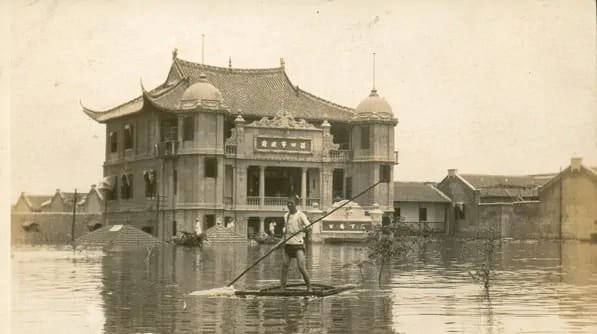
Eight provinces bore the brunt of the disaster: Anhui, Hubei, Hunan, Jiangsu, Zhejiang, Jiangxi, Henan, and Shandong. The Yangtze River flood 1931 reached its terrifying crescendo on August 19 at Hankou in Wuhan, where water levels soared 16 meters above normal, nearly 10 feet above even the average high-water mark. Contemporary photographs show only the upper stories of buildings visible above the floodwaters, with boats navigating streets where rickshaws had traveled just weeks before. The sight was apocalyptic: entire cities submerged, with only the tops of buildings and trees breaking the surface of the vast, muddy lake that central China had become.
The Yangtze River basin’s topography created natural flood vulnerability that had been recognized for millennia. The river’s middle reaches pass through relatively flat plains with poor natural drainage, creating vast areas where water could spread horizontally rather than flowing quickly to the sea. Historical records show that the region experienced major floods every few decades, but the scale of 1931 exceeded anything in the written record. The flood’s extent revealed just how extensively human settlement had expanded into floodplains that nature intended as overflow zones during extreme events.

Geographic analysis of the 1931 floods shows that the disaster affected approximately 51 million people directly, with another 30 million experiencing secondary impacts through disrupted food supplies, displacement, and economic collapse. Population density maps from the era reveal that many of the hardest-hit areas were among the most densely populated agricultural regions in the world, with communities that had thrived for centuries on the fertile soils deposited by regular seasonal flooding. The same geographic advantages that supported dense populations, rich agriculture, and prosperous cities made these areas exceptionally vulnerable when flooding exceeded historical norms.
The Huai River, a major tributary of the Yangtze system, contributed significantly to the disaster’s severity. Poor drainage in the Huai basin had been a chronic problem since the Yellow River changed course in 1855, blocking the Huai’s natural outlet to the sea. By 1931, the Huai essentially drained into a series of large lakes that then had to overflow into the Yangtze system. When both the Yangtze and Huai basins experienced simultaneous extreme flooding, the result was hydraulic chaos across millions of square kilometers.
The human factor: how politics and infrastructure failures amplified natural disaster
Decades of neglect and mismanagement
What transformed a severe flood into history’s deadliest natural disaster wasn’t simply the extreme weather, but the catastrophic failure of human systems that should have provided protection. The 1931 China floods represented the culmination of what environmental historian Chris Courtney calls a “hydraulic crisis” that had been building in the Yangtze basin since the early 19th century.
For centuries, Chinese civilization had developed sophisticated flood management systems, including extensive networks of dykes, canals, and water diversion structures that represented some of the most advanced hydraulic engineering in the pre-modern world. Imperial records document massive public works projects employing tens of thousands of laborers to maintain and expand these systems. However, by 1931, these defenses were crumbling under the weight of political instability and economic turmoil.
From 1800 to 1928, during the final decades of the Qing Dynasty and the early Republican period, funds intended for dyke construction and maintenance were systematically diverted for military spending or simply embezzled by corrupt officials. The collapse of imperial authority after 1911 left no centralized system for coordinating flood control across the vast Yangtze basin. Local authorities, overwhelmed by political chaos and lacking resources, maintained dykes only sporadically if at all. Inspection records from the 1920s document extensive erosion, undermining, and structural deterioration in dyke systems that hadn’t seen proper maintenance in decades.
The result was a network of aging, poorly maintained flood defenses that stood little chance against the meteorological onslaught of 1931. Engineering assessments conducted after the flood revealed that many dyke sections had been built to inadequate specifications, using materials that deteriorated rapidly without constant maintenance. Some dykes had been weakened by unauthorized excavation of material for other construction projects, while others had been compromised by trees and vegetation whose root systems undermined structural integrity.
The irony was bitter: the very infrastructure meant to protect communities had become a source of catastrophic vulnerability. When the dykes finally failed, and they failed spectacularly, they created what engineers term “cascading failures.” The breach of one section would send torrents of water racing toward the next weakened point, creating a domino effect of destruction that swept across the landscape with terrifying speed. Communities that might have survived gradual flooding were instead overwhelmed by sudden walls of water when upstream dykes collapsed.
Political dysfunction extended beyond infrastructure neglect to every aspect of disaster preparedness. China in 1931 was fractured between Nationalist government control, communist insurgencies, and various regional warlords. This political chaos meant there was no effective national disaster response system, no coordinated evacuation planning, and no systematic way to marshal resources for relief efforts. When the floods hit, individual provinces and cities were essentially on their own, with limited capacity to respond to a disaster of such magnitude.
The Gaoyou catastrophe: when engineering failed
Perhaps no single event better illustrates the intersection of natural forces and human failure than the catastrophic dyke breach near Gaoyou Lake on August 25, 1931. This wasn’t gradual overtopping; it was a sudden, violent rupture that created what survivors described as “a sudden great wall of water.” The breach occurred at approximately 2:00 AM, when most residents were sleeping, giving them no time to escape or even reach higher ground.
In Gaoyou County alone, 18,000 people drowned in their sleep as the wall of water swept through villages and towns. The force of the water was so great that it swept away entire buildings, leaving only bare foundations. Survivors reported hearing a tremendous roar, like thunder, followed by the rush of water that rose several meters in minutes. Those who survived did so by climbing onto rooftops or clinging to trees, watching helplessly as neighbors, family members, and livestock were swept away in the darkness.
The immediate drowning toll of 18,000 was only the beginning of Gaoyou’s catastrophe. In the following year, 58,000 more residents would die from famine and disease as the floodwaters persisted, crops were destroyed, and sanitation systems collapsed completely. This 3:1 ratio of indirect to direct deaths in Gaoyou mirrored the pattern across the entire flood zone and revealed the true nature of the disaster: water was the mechanism, but systemic collapse was the real killer.
Engineering analysis of the Gaoyou breach revealed the fundamental problems with China’s flood management philosophy of the era. The dyke system had been designed with a rigid, absolute containment philosophy: build walls high enough and strong enough to hold back any conceivable flood. This approach ignored the reality that no barrier is absolute and that rivers need overflow space during extreme events. Rather than incorporating controlled overflow areas that could release pressure during extreme floods, the system attempted complete containment until catastrophic failure occurred.
The Gaoyou disaster embodied the fundamental problem with China’s flood management approach. Rather than working with the river’s natural flood cycles, engineers had attempted to completely constrain these massive water systems within rigid channels. When those constraints inevitably failed, the results were catastrophic beyond imagination. Modern flood management philosophy, learned partially from disasters like Gaoyou, emphasizes working with natural systems, providing overflow space, and accepting that complete control is neither achievable nor desirable.
Wuhan and Nanjing flood 1931: urban centers under siege
The floods didn’t spare China’s major urban centers, transforming bustling metropolitan areas into waterlogged refugee camps virtually overnight. These cities, which had grown prosperous through their locations on major rivers, found themselves trapped by the same geographic advantages that had fueled their development.
In Wuhan, the breach of protective dykes at dawn on July 27 left 782,189 urban residents and rural refugees homeless. The city remained underwater for nearly three months, with flood islands scattered throughout where survivors gathered in desperate conditions. Contemporary accounts describe a surreal urban landscape where the upper floors of buildings served as temporary islands, connected by boats and rafts navigating streets submerged under several meters of water.
Wuhan’s experience revealed the particular vulnerability of urban areas during prolonged flooding. Unlike rural areas where populations could potentially flee to higher ground, urban residents found themselves trapped within the city’s built environment. Thousands sought refuge in multi-story buildings, railway stations, and any structure that rose above the water line. These improvised shelters quickly became overcrowded and unsanitary, creating ideal conditions for disease outbreaks.
The economic impact on Wuhan was staggering. The city served as a major commercial hub, with warehouses, factories, and shops concentrated along the riverfront, precisely the areas hit hardest by flooding. Business records document the destruction of millions of dollars worth of goods and equipment. The city’s industrial capacity was effectively shut down for months, with ripple effects through regional and national commerce. Railway connections were severed, port facilities destroyed, and the city’s role as a transportation hub completely disrupted.
Nanjing, then the capital of Republican China, faced similar devastation despite its location further downstream. The floods created what one observer called “a noxious cocktail of water running through the streets, contaminated with animal carcasses, industrial chemicals, and human waste.” These weren’t clean flood waters; they were carriers of death that would prove far more lethal than the initial drowning.
In Nanjing, the political dimension of the disaster took on particular significance. As the seat of the Nationalist government, the city’s flooding embarrassed authorities who had promoted modernization and competent governance. Government buildings were flooded, archives damaged, and the apparatus of state temporarily crippled. The Nationalist government’s response to the disaster would become a political liability, with critics pointing to bureaucratic inefficiency, corruption in relief distribution, and the failure to adequately prepare for or respond to the catastrophe.
The flooding of major urban centers also disrupted communication and coordination of relief efforts. Telegraph lines were down, roads impassable, and railways severed. This isolation meant that for crucial days and weeks, the outside world had limited information about conditions in affected cities. International relief organizations struggled to assess needs and deliver assistance without reliable communication networks. Modern disaster management emphasizes redundant communication systems precisely because of lessons learned from events like the 1931 floods.
The hidden catastrophe: disease, sanitation, and the real killing fields
Beyond the drowning: understanding indirect mortality
Here lies perhaps the most crucial yet overlooked aspect of the 1931 China floods: the majority of deaths occurred not from drowning but from the public health catastrophe that followed. This insight transforms our understanding of the disaster from a simple flood into a complex humanitarian crisis where the water itself was merely the opening act.
John Lossing Buck’s groundbreaking field survey, conducted immediately after the flood by the University of Nanking, revealed the stark reality behind the death toll statistics. Buck’s team found that approximately 150,000 people had drowned in the first 100 days, a staggering number that nonetheless represented “less than a quarter of all fatalities during the first 100 days of the flood.” If drowning accounted for less than 25% of early deaths, what was killing the other three-quarters of victims?

Buck’s methodology provides crucial insights into disaster mortality that remain relevant for modern emergency management. His team conducted systematic surveys across affected areas, interviewing survivors, local officials, and relief workers to construct as accurate a picture as possible of mortality patterns. The surveys revealed that deaths from disease, starvation, and exposure far exceeded drowning deaths even in the immediate aftermath of the flooding. This finding challenged prevailing assumptions about flood disasters and forced a fundamental rethinking of relief priorities.
The indirect mortality pattern identified by Buck has been observed in subsequent disasters worldwide. Modern disaster research confirms that indirect deaths, particularly from disease outbreaks in displacement camps, often exceed direct disaster deaths in large-scale humanitarian emergencies. The 1931 floods provided some of the first systematic documentation of this pattern, though the lessons took decades to fully integrate into disaster response protocols.
Cholera and typhus 1931 floods: the real killers
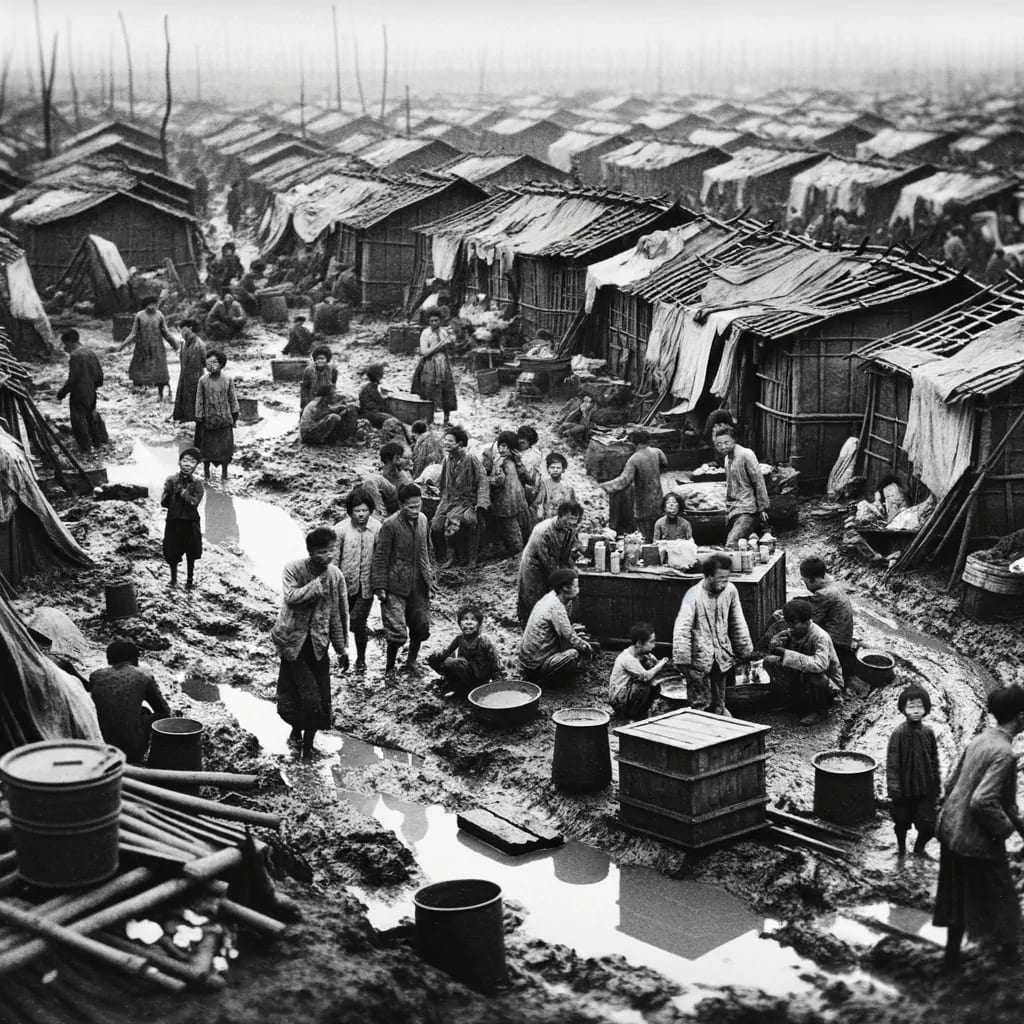
The answer lay in the refugee camps and temporary shelters where millions of displaced people were crammed together in conditions that can only be described as perfect breeding grounds for epidemic disease. As floodwaters contaminated drinking water supplies and overwhelmed sanitation systems, cholera, typhus, dysentery, malaria, and schistosomiasis swept through the displaced populations with devastating efficiency.
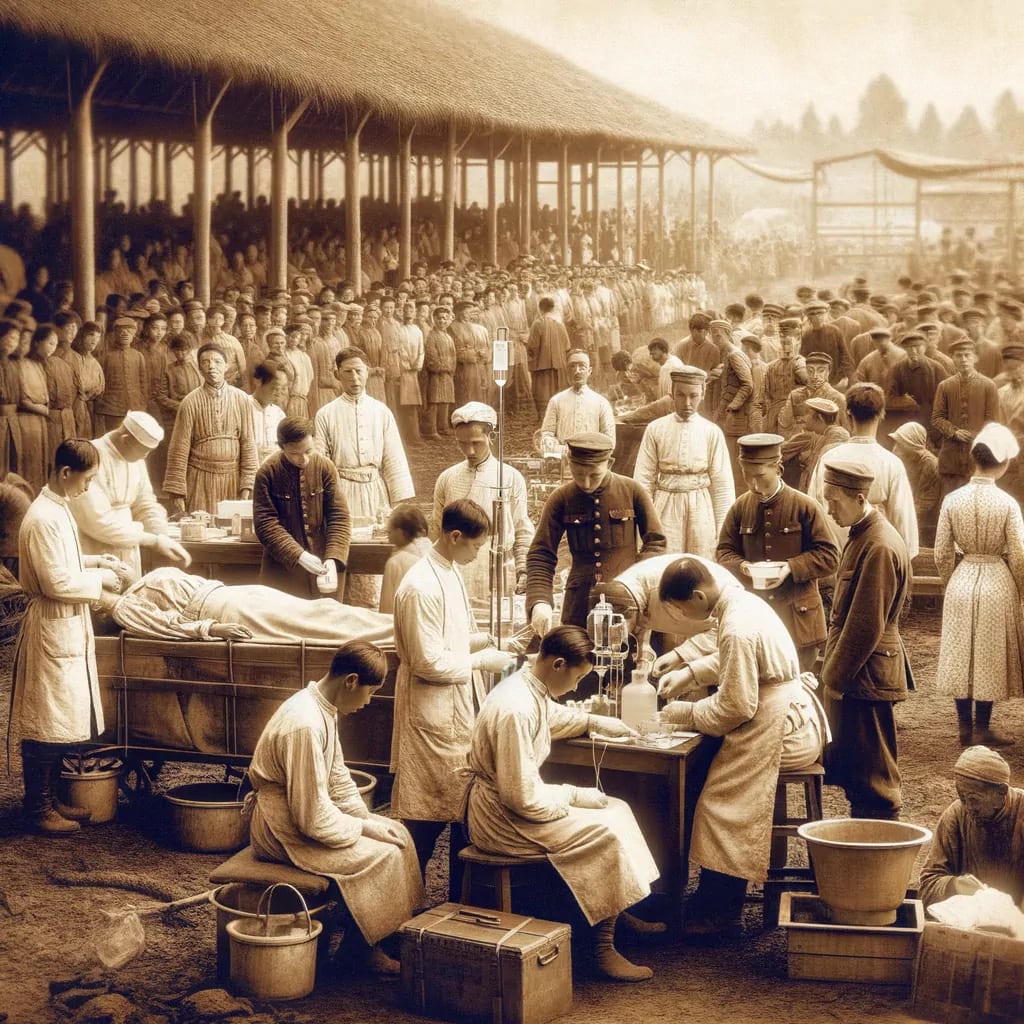
Cholera proved particularly lethal in the 1931 flood aftermath. The disease, caused by the bacterium Vibrio cholerae, spreads through contaminated water and thrives in conditions where human waste mixes with drinking water supplies. The extensive flooding created exactly these conditions across millions of square kilometers. Wells were contaminated, rivers carried sewage and disease, and desperate survivors drank from any available water source. Cholera’s rapid progression, from initial symptoms to death within hours in severe cases, meant that victims often died before any medical intervention could be attempted.
The scale of the cholera outbreak was unprecedented. Official reports documented a cholera epidemic in 1932 that killed 31,974 people and infected over 100,000 others. But these official numbers likely represented a fraction of the true toll, as record-keeping had completely collapsed in many areas, and countless deaths in remote refugee camps went unrecorded. Medical historians estimate that the actual cholera death toll may have been several times higher than official figures suggest.
Typhus, spread by body lice thriving in crowded, unsanitary conditions, added to the death toll. The disease causes high fever, headache, and a distinctive rash, with mortality rates as high as 40% in untreated cases. Refugee camps, where people wore the same clothes for weeks or months without adequate washing facilities, provided ideal conditions for lice infestations and typhus transmission. Once established in a camp, typhus could spread rapidly through the crowded population, with particular virulence among the elderly and malnourished.
Dysentery, both bacterial and amoebic forms, killed through severe diarrhea and dehydration. In conditions where clean water was unavailable and medical care minimal or absent, dysentery mortality rates soared. Children were particularly vulnerable, with their smaller bodies less able to tolerate the fluid loss that dysentery caused. Survivors reported that in some camps, children were dying so rapidly that proper burial became impossible, with bodies temporarily stored in mass graves until more permanent arrangements could be made.
Malaria and schistosomiasis, endemic in the Yangtze basin, flourished in the expanded water surface area created by flooding. Mosquito populations exploded, spreading malaria to populations that had little previous exposure and therefore limited immunity. Schistosomiasis, caused by parasitic worms that use freshwater snails as intermediate hosts, infected thousands of people who came into contact with contaminated floodwaters. While schistosomiasis typically doesn’t kill rapidly, chronic infections weakened already vulnerable populations and contributed to overall mortality.
In some refugee shelters, the mortality rate reached an almost unimaginable 50% on an annualized basis. This wasn’t gradual attrition; it was systematic decimation of populations already weakened by malnutrition, exposure, and trauma. Children were particularly vulnerable, dying in such numbers that some camps simply ran out of space and resources to properly bury the dead. Medical personnel, already scarce and overwhelmed, could do little more than triage the most severe cases and watch helplessly as disease cut through camp populations.
The sanitation catastrophe
What made the disease outbreaks so deadly was the complete breakdown of basic sanitation infrastructure. In overcrowded refugee camps, human waste mixed with contaminated floodwater created conditions that would have been familiar to medieval plague victims. With no clean water for drinking or washing, and no functioning sewage systems, waterborne diseases spread with the speed and lethality of wildfire.
Traditional Chinese cities had developed sophisticated waste management systems over centuries, with night soil collection, composting, and disposal protocols that, while basic by modern standards, prevented the worst sanitation disasters. The 1931 floods destroyed these systems completely. Urban sewage systems, designed for normal conditions, were overwhelmed and contaminated by floodwaters. Rural sanitation, typically based on individual household facilities and local disposal, broke down when entire communities were displaced to refugee camps without adequate planning for waste management.
Refugee camps, typically established on any available high ground, often lacked basic latrine facilities in their initial days or weeks. Relief workers reported that human waste accumulated in camp areas, creating unbearable stench and health hazards. Even when latrines were eventually constructed, the high water table in many areas meant that waste leached directly into groundwater, contaminating wells and water sources. Modern refugee camp protocols emphasize sanitation infrastructure as the first priority, but in 1931, this crucial lesson hadn’t yet been fully learned.
The floods had transformed China’s water supply from life-giving resource to deadly poison. Rivers that had sustained civilization for millennia now carried cholera, typhoid, and dysentery throughout the river system. Wells were contaminated, and with no means to purify water, drinking became a potentially fatal act. Boiling water was recommended, but fuel scarcity in refugee camps often made this impossible. Survivors faced an impossible choice: drink contaminated water and risk disease, or abstain and face dehydration.
The collapse of sanitation systems affected not just refugee camps but also cities and towns that remained partially above water. In Wuhan, with streets submerged and sewage systems destroyed, residents lived for months in conditions of extreme unsanitary exposure. Medical reports describe widespread skin infections, respiratory illnesses from damp conditions, and gastrointestinal diseases from contaminated food and water. The psychological toll of living in such conditions, combined with grief for lost family members and uncertainty about the future, contributed to a broader health crisis that extended beyond specific disease outbreaks.
Food safety became another critical concern as the floods destroyed storage facilities and contaminated supplies. Grain stores were flooded, and what food remained often became moldy or contaminated. Starvation and malnutrition weakened immune systems, making populations more vulnerable to disease. Relief food distribution was sporadic and often inadequate, with corruption and logistical challenges preventing supplies from reaching those most in need. Modern disaster response protocols emphasize integrated approaches addressing shelter, water, sanitation, and food security simultaneously, but in 1931, relief efforts were fragmented and poorly coordinated.
The long road to recovery: lessons learned and modernization delayed
China water management history: the inflection point
The 1931 China floods marked what environmental historians recognize as a critical inflection point in China water management history. The disaster’s staggering human cost forced a fundamental rethinking of flood control philosophy that would eventually reshape the country’s approach to hydraulic engineering.
However, the path to modernization would prove long and tortuous. China’s immediate response was hampered by limited resources and political instability. The National Flood Relief Commission, established in the disaster’s aftermath, faced the impossible task of providing relief to tens of millions of affected people while simultaneously rebuilding flood defenses across a continental-scale disaster zone.
The Commission’s Chairman captured the desperate reality in stark terms: “There are suggestions of dredging the Yangtze River, there are suggestions for improving the Huai River, but to handle these two problems or to handle either separately would call for the expenditure of hundreds of millions of dollars, which the Commission does not have.” Faced with this financial reality, officials opted for the dangerous expedient of simply repairing dykes “to the status quo ante,” essentially restoring the same failed system that had proven so catastrophically inadequate.
This decision to rebuild rather than fundamentally redesign reflected not just resource constraints but also institutional inertia and limited understanding of modern hydraulic engineering principles. Chinese engineering tradition emphasized dyke construction and river channelization, approaches that had worked reasonably well for centuries under normal conditions. The 1931 floods represented an extreme event beyond the design parameters of traditional systems, but rather than acknowledging the need for a fundamentally different approach, authorities opted to rebuild traditional structures stronger and higher.
International experts, including engineers from the United States and Europe, offered consultation and technical assistance in the aftermath of the floods. Some advocated for modern approaches including controlled overflow areas, upstream reservoir systems, and integrated watershed management. However, implementation of these recommendations was limited by cost, political instability, and the sheer scale of necessary changes. China’s hydraulic engineering would not be fundamentally modernized until decades later, after further disasters demonstrated the inadequacy of traditional approaches.
Repeat disasters and gradual learning
The consequences of this short-sighted approach became apparent all too quickly. In 1935, just four years after the great flood, the Yangtze again burst its banks, killing another 145,000 people. The 1935 floods demonstrated that the repairs made after 1931 were insufficient and that China remained vulnerable to major flooding disasters. The pattern would repeat throughout the mid-20th century, with major floods occurring in 1949, 1954, and 1998.
The 1954 floods killed an estimated 33,000 to 149,000 people, though this represented a significant improvement in mortality rates compared to 1931. The lower death toll reflected several factors: better evacuation procedures, improved communication systems that enabled earlier warnings, and more effective relief coordination. However, the physical scale of the 1954 flooding was comparable to 1931, affecting similar geographic areas and causing extensive economic damage. The reduced mortality showed that progress was possible even without fundamental transformation of flood control infrastructure.
The real transformation in China water management history began after the devastating 1998 Yangtze floods, which killed approximately 3,650 people. While still tragic, this death toll represented a dramatic reduction compared to historical norms, despite the 1998 flood actually having greater physical magnitude than 1931 in many metrics. The 1998 floods affected 240 million people and caused economic losses estimated at $26 billion, but the mortality rate was more than two orders of magnitude lower than 1931.
What had changed by 1998? Several factors contributed to the dramatically reduced mortality: extensive dam and reservoir construction upstream that could hold back peak flows, improved dyke systems built to modern engineering standards, satellite weather monitoring and flood forecasting systems that provided days of advance warning, well-rehearsed evacuation procedures that moved millions of people from threatened areas, and modern disaster response coordination at national and provincial levels. The 1998 floods demonstrated that China had finally implemented the kind of integrated, modernized flood management system that experts had recommended after 1931.
Modern flood management: the Three Gorges solution
The completion of the Three Gorges Dam in 2012 represented the culmination of a flood control vision that dated back to the 1920s but gained urgent impetus from the 1931 disaster. This massive engineering project, the world’s largest hydroelectric plant by installed capacity, was designed specifically to prevent another 1931-style catastrophe.
The Three Gorges Dam represents an engineering achievement of staggering scale. The dam stands 185 meters tall and 2,335 meters long, creating a reservoir that extends more than 600 kilometers upstream. The reservoir has a total storage capacity of 39.3 billion cubic meters, with 22.1 billion cubic meters dedicated to flood control. During flood season, operators can release water to maintain reservoir levels that allow absorption of peak flows, then gradually release stored water once downstream conditions improve.
During the severe floods of 2010, the Three Gorges Dam demonstrated its flood control capabilities, reducing peak outflows from 70,000 cubic meters per second to 40,000 cubic meters per second and preventing significant downstream flooding. Computer models suggested that without the dam, the 2010 floods would have caused catastrophic damage to Wuhan and other major cities. The dam has intercepted floods nearly 70 times since completion, diverting over 220 billion cubic meters of water to protect downstream communities. These operational statistics demonstrate that the dam functions as designed, providing real protection against the kind of disaster that occurred in 1931.
Yet the Three Gorges project also embodies the ongoing tensions in Chinese flood management philosophy. Critics argue that the dam’s massive reservoir has created new risks, including increased landslide activity and the potential for catastrophic dam failure that could affect tens of millions of people downstream. The project displaced between 1.13 to 1.4 million people, raising questions about the human costs of large-scale engineering solutions. Environmental concerns include altered sediment flow, impacts on aquatic ecosystems, and changes to the river’s natural flood pulse that many species depend upon.
The Three Gorges Dam operates within a complex system of competing demands. Flood control requires maintaining low reservoir levels during flood season to have capacity to absorb peak flows, but hydroelectric power generation is maximized with high reservoir levels. Navigation interests prefer stable water levels year-round, while environmental considerations favor seasonal variation that mimics natural patterns. Balancing these competing demands requires sophisticated modeling and real-time decision-making, with flood control typically taking priority during high-risk periods.
Modern China’s approach to flood management extends beyond the Three Gorges Dam to include an integrated system of hundreds of smaller dams and reservoirs throughout the Yangtze basin, modernized dyke systems incorporating the latest materials and engineering techniques, satellite monitoring and weather forecasting providing days of advance warning, coordinated flood response protocols at national, provincial, and local levels, and land use policies that restrict development in high-risk flood zones. This multi-layered approach reflects lessons learned not just from 1931 but from decades of subsequent flooding disasters.
Climate change adaptation has become a central consideration in China’s water management planning. With projections suggesting more frequent and intense rainfall events in the coming decades, Chinese authorities are investing in expanding reservoir capacity, upgrading flood defenses, and improving early warning systems. The memory of 1931 continues to shape these decisions, with policymakers determined to prevent any repetition of that disaster’s catastrophic mortality.
Global context: comparing the world’s deadliest disasters
The deadliest natural disaster of the 20th century
To fully appreciate the significance of the 1931 China floods, it’s essential to place them within the broader context of natural disasters. Among the deadliest natural disasters of the 20th century, the 1931 floods stand alone in their destructive magnitude. The 2004 Indian Ocean tsunami, despite its global media coverage and international response, killed approximately 230,000 people, a fraction of even the most conservative estimates for the Chinese floods.
The comparison with other major 20th century disasters highlights the exceptional nature of the 1931 floods. The 1976 Tangshan earthquake, China’s second-deadliest natural disaster of the modern era, killed between 242,000 and 655,000 people, still substantially fewer than most estimates for the 1931 floods. Even the 1970 Bhola cyclone in Bangladesh, one of history’s deadliest tropical cyclones, killed an estimated 300,000 to 500,000 people. The 1931 floods surpass all these disasters in most mortality estimates.
+ Read more: When the World Broke – Ep. 1: Lisbon earthquake, 1755: The day modernity began under rubble
What distinguished the 1931 China floods wasn’t just their immediate death toll but their sustained impact over months and even years. Unlike earthquakes or tsunamis, which cause most of their damage within minutes or hours, the Chinese floods created a prolonged humanitarian crisis that continued killing people long after the waters receded. This temporal dimension means that comparing death tolls across disaster types requires careful consideration of how mortality is counted and over what time period.
The 1931 floods also occurred in an era before modern international disaster response mechanisms existed. There was no United Nations humanitarian system, no international Red Cross network with rapid deployment capabilities, and no global media coverage that could mobilize international assistance quickly. Affected populations were largely dependent on domestic resources and whatever limited international charity could be organized through missionary networks and diplomatic channels. Modern disasters benefit from vastly more robust international response systems, though these remain far from perfect.
Ranking historical disasters by death toll presents methodological challenges. Different sources use different counting methodologies, time frames, and criteria for attributing deaths to disasters. The 1931 floods exemplify these challenges, with death toll estimates varying by nearly an order of magnitude. Do we count only direct drowning deaths? Deaths in the immediate aftermath? Deaths from disease and starvation over the following year? The choice dramatically affects the final number and the disaster’s ranking.
Lessons for modern disaster management
The 1931 China floods offer sobering lessons for contemporary disaster management that remain relevant nearly a century later. The disaster demonstrated that natural hazards become truly catastrophic disasters only when they intersect with human vulnerabilities including aging infrastructure, political instability, poverty, and inadequate public health systems.
Perhaps most importantly, the floods revealed that planning for disaster response means planning for everything that follows the initial impact. The insight that “planning shelter is planning sanitation” remains as relevant today as it was in 1931. Modern refugee camp management protocols emphasize sanitation infrastructure as the first priority precisely because of lessons learned from disasters like the Chinese floods. International humanitarian standards now specify minimum requirements for water supply, sanitation facilities, and hygiene promotion in displacement settings, recognizing that disease prevention in camps saves more lives than medical treatment after outbreaks occur.
The 1931 floods also demonstrated the critical importance of maintaining infrastructure during periods between disasters. The decades of dyke neglect that preceded 1931 created vulnerabilities that extreme weather exploited catastrophically. Modern infrastructure management increasingly emphasizes regular inspection, maintenance, and upgrading to ensure that protective systems remain functional when needed. This requires sustained political commitment and funding during normal times when competing priorities make infrastructure maintenance seem less urgent.
Disaster early warning systems represent another crucial lesson from 1931. The flood’s victims had little or no advance warning of the catastrophe that was about to overwhelm them. Modern weather forecasting, satellite monitoring, and communication systems can provide days of advance warning for most flood events, enabling evacuation of threatened populations. However, early warning is effective only if coupled with evacuation planning, transportation capacity, and designated shelter locations. The technological capability to predict disasters must be matched with social systems to act on those predictions.
The public health dimension of disasters, so tragically demonstrated in 1931, has become a central focus of modern humanitarian response. International health organizations
have developed detailed protocols for disease surveillance, water quality monitoring, vaccination campaigns, and sanitation infrastructure in disaster settings. The World Health Organization and Centers for Disease Control maintain rapid response teams that can deploy to disaster zones within hours, bringing expertise and resources that simply didn’t exist in 1931. These systems recognize that preventing disease outbreaks in displacement camps requires proactive intervention, not reactive treatment.
Coordination between different levels of government and various responding organizations proved problematic in 1931, with relief efforts fragmented and often duplicated or contradictory. Modern disaster management emphasizes incident command systems that establish clear lines of authority, communication protocols, and coordination mechanisms. International humanitarian response has developed cluster systems that assign specific sectors (shelter, health, water/sanitation, food security) to lead organizations, improving coordination and reducing gaps in assistance.
The economic dimension of disasters has also gained greater recognition since 1931. The floods destroyed not just homes but entire local economies, eliminating livelihoods and creating long-term poverty that persisted for years after the waters receded. Modern disaster recovery increasingly emphasizes economic reconstruction alongside physical rebuilding, recognizing that affected populations need not just shelter and food but the ability to earn livelihoods and rebuild their economic independence.
Contemporary relevance: climate change and future flood risks
Learning from history in an era of climate change
As climate change intensifies extreme weather patterns globally, the lessons of the 1931 China floods become increasingly relevant for disaster preparedness worldwide. The flood resulted from precisely the kind of compound climate events, combining heavy snowfall, extreme rainfall, and persistent weather patterns, that scientists predict will become more common as global temperatures rise.
Climate research published in recent years identifies specific mechanisms by which warming temperatures increase flood risks. Higher atmospheric temperatures increase the amount of water vapor the air can hold, potentially intensifying precipitation events. Changes to atmospheric circulation patterns, including the jet stream and monsoon systems, can create persistent weather patterns that concentrate rainfall over particular regions for extended periods. These are exactly the conditions that created the 1931 disaster, suggesting that similar compound extreme events may become more frequent in the future.
The Yangtze River basin remains vulnerable to extreme flooding despite massive investments in flood control infrastructure. The basin’s population has grown substantially since 1931, with major cities along the river expanding dramatically. Economic assets concentrated in flood-prone areas have increased by orders of magnitude, meaning that even floods causing lower mortality than 1931 could generate catastrophic economic losses. Shanghai, located near the Yangtze’s mouth, has become one of the world’s largest and most economically important cities, with assets worth trillions of dollars potentially vulnerable to extreme flooding.
Modern China has invested heavily in flood forecasting systems, early warning networks, and evacuation procedures that simply didn’t exist in 1931. The country’s flood-related death tolls have decreased dramatically despite continued severe flooding events, demonstrating the life-saving potential of proper preparation and response systems. Satellite monitoring provides real-time data on rainfall, soil moisture, and river levels across the entire basin. Computer modeling can predict flood peaks days in advance, enabling authorities to prepare evacuations and position emergency resources where they’ll be needed most.
Climate adaptation planning in China explicitly addresses increased flood risks. The national climate adaptation strategy includes provisions for upgrading flood defenses, expanding reservoir capacity, improving drainage in urban areas, and restricting development in high-risk zones. These measures reflect an understanding that past flood patterns may not accurately predict future risks and that infrastructure must be designed for a changing climate rather than historical conditions.
International climate negotiations increasingly focus on adaptation financing for vulnerable countries. The 1931 floods occurred in a context where China had to rely almost entirely on domestic resources to respond and recover. Modern international frameworks, including the Green Climate Fund and various multilateral development banks, can provide financial and technical assistance for climate adaptation measures. However, the scale of investment needed to protect vulnerable populations globally far exceeds current funding levels, leaving many regions inadequately prepared for increased disaster risks.
The enduring challenge of flood management
Yet the fundamental challenges that contributed to the 1931 disaster, balancing development with flood risk, maintaining aging infrastructure, and protecting vulnerable populations, remain pressing concerns for modern China and other flood-prone nations. Urban expansion into flood-prone areas continues despite awareness of risks, driven by population growth, economic development pressures, and land scarcity in safer locations.
The Three Gorges Dam, while successful in reducing flood deaths, illustrates the ongoing complexities of large-scale engineering solutions. Critics question whether such massive interventions create new risks even as they mitigate existing ones. The dam’s ability to simultaneously provide flood control and power generation requires careful balance, as flood control demands low reservoir levels while power generation requires high levels. During the 2020 flooding season, debate intensified about whether the dam was being operated primarily for power generation or flood control, with some critics arguing that economic considerations were compromising flood safety.
Sediment management presents another challenge for dam-based flood control. The Yangtze River naturally carries enormous quantities of sediment that once replenished downstream agricultural lands and maintained the river’s delta. The Three Gorges Dam traps much of this sediment, causing reservoir siltation that gradually reduces storage capacity and alters downstream river dynamics. Long-term sustainability of the dam’s flood control function requires addressing sediment accumulation through dredging or controlled releases, both of which present technical and environmental challenges.
Ecosystem impacts of large-scale flood control infrastructure raise questions about the environmental costs of preventing human disasters. The Yangtze River basin hosts extraordinary biodiversity, including species found nowhere else on Earth. Altered flow patterns, blocked migration routes, and changed water temperatures affect aquatic ecosystems in ways that scientists are still working to understand fully. The extinction of the Yangtze river dolphin and the critically endangered status of other species highlight the ecological costs of transforming one of the world’s great rivers into an engineered water management system.
Flood management in the Yangtze basin also involves complex inter-provincial coordination challenges. The basin spans multiple provinces with different economic interests, political priorities, and flood vulnerabilities. Upstream flood control measures that protect downstream cities may increase flooding risks for upstream agricultural areas. Water releases from reservoirs must be coordinated across multiple authorities to avoid overwhelming downstream capacity. These coordination challenges mirror in some ways the political fragmentation that hampered flood response in 1931, though modern China’s more centralized political system provides greater capacity for coordination.
Climate change introduces fundamental uncertainty into flood management planning. Historical flood patterns and frequencies, which form the basis for most infrastructure design standards, may not accurately predict future conditions. A dam designed to handle a “hundred-year flood” based on historical data might face more frequent extreme events in a changed climate. This uncertainty complicates investment decisions and risk assessments, forcing planners to make assumptions about future conditions based on imperfect climate models.
Land use planning represents another persistent challenge in flood management. Restricting development in flood-prone areas can reduce disaster risks but conflicts with property rights, economic development goals, and housing needs. China has implemented policies restricting development in certain high-risk zones, but enforcement remains inconsistent, and economic pressures often override safety considerations. This tension between safety and development is not unique to China; it appears in flood-prone regions worldwide, from the United States Gulf Coast to the Netherlands to Bangladesh.
Conclusion: remembering the unremembered
The 1931 China floods stand as history’s deadliest natural disaster not merely because of their immediate physical impact, but because they revealed the catastrophic consequences when natural extremes collide with human vulnerabilities. This was a disaster where politics killed as surely as water, where aging infrastructure proved as deadly as typhoons, and where the failure to plan for sanitation and disease control transformed temporary displacement into permanent loss.
Nearly a century later, the floods’ most important lesson remains deceptively simple yet profoundly challenging to implement: effective disaster preparation requires addressing not just the primary hazard but all the secondary and tertiary effects that follow. The majority of deaths in 1931 came not from drowning but from the collapse of public health systems, the breakdown of sanitation, and the spread of disease in overcrowded refugee camps. This pattern has repeated in subsequent disasters worldwide, from the 2010 Haiti earthquake where disease outbreaks in displacement camps killed thousands to the 2013 Typhoon Haiyan in the Philippines where inadequate sanitation in evacuation centers created public health crises.
+ Read more: When the World Broke – Ep. 2: The Mount Tambora 1815 eruption: The Year Without a Summer
Modern China’s dramatically reduced flood mortality rates, despite continued severe flooding, demonstrate that these lessons have been partially learned. Investment in early warning systems, evacuation procedures, emergency medical care, and sanitation infrastructure has saved countless lives. The comparison between 1931’s millions of deaths and 1998’s thousands, despite similar flood magnitudes, illustrates what proper preparation can achieve. Yet the fundamental tensions between development and disaster risk, between engineering solutions and environmental consequences, remain as relevant today as they were in 1931.
The 1931 floods remind us that behind every mortality statistic lies individual human tragedy: families separated, communities destroyed, and survivors left to rebuild from nothing. Oral histories collected from survivors decades later describe the trauma of watching loved ones drown, the desperation of refugee camps, the grief of losing entire communities. These personal narratives, often overlooked in statistical analyses of disaster impacts, reveal the profound human costs that numbers alone cannot capture. The psychological trauma of the 1931 floods affected survivors for the rest of their lives and influenced subsequent generations’ attitudes toward water, flooding, and disaster preparedness.
But the floods also demonstrate humanity’s remarkable capacity to learn from catastrophe and build more resilient systems that protect future generations. The transformation of Chinese water management from the catastrophic failures of 1931 to the sophisticated systems of today required decades of sustained effort, investment, and institutional learning. This progress wasn’t linear or inevitable; it required political commitment, technical expertise, and willingness to learn from repeated disasters. The journey from 1931 to the present offers both sobering reminders of how slowly change can come and inspiring evidence that fundamental transformation is possible.
In our contemporary world of climate change and increasing extreme weather, the floods of 1931 serve not as a historical curiosity but as a stark warning and, ultimately, a guide. They show us both the devastating consequences of inadequate preparation and the life-saving potential of learning from past disasters. The question isn’t whether we’ll face similar challenges in the future; it’s whether we’ll remember the lessons that millions of Chinese flood victims paid for with their lives. Climate projections suggest that extreme rainfall events will become more frequent and intense across many regions, potentially creating conditions similar to 1931 in areas that haven’t historically experienced such disasters.
As extreme weather events become more frequent and intense globally, the story of when the world broke in 1931 offers both sobering perspective on human vulnerability and inspiring evidence of our capacity to build back better. The transformation of Chinese flood management from the catastrophic failures of 1931 to the sophisticated systems of today proves that even the deadliest disasters can become the foundation for safer, more resilient futures, if we have the wisdom to learn from them and the courage to act on those lessons.
The memory of 1931 should inform not just technical approaches to flood management but also broader disaster preparedness philosophy. Disasters are fundamentally social events that reflect and expose underlying vulnerabilities in how societies are organized. Poverty, inequality, political instability, and environmental degradation all contribute to disaster risk by creating populations and systems that cannot withstand extreme events. Addressing these root causes requires long-term commitment to social development, good governance, and sustainable environmental management, not just engineering solutions.
International cooperation on disaster risk reduction has grown substantially since 1931, with frameworks like the Sendai Framework for Disaster Risk Reduction providing guidelines for national and international action. These frameworks emphasize prevention and preparedness rather than just response, recognizing that investments in risk reduction before disasters occur are far more cost-effective than post-disaster reconstruction. The 1931 floods provide a powerful historical example of why such prevention-focused approaches are essential.
The 1931 China floods ultimately challenge us to ask: what vulnerabilities exist in our own societies that could turn a natural hazard into a catastrophic disaster? Are our flood defenses adequately maintained? Do we have effective early warning systems and evacuation plans? Can our public health systems respond to disease outbreaks in displacement settings? Are we investing in long-term risk reduction or simply rebuilding vulnerable systems after each disaster? These questions remain as urgent in 2025 as they were in the aftermath of 1931, and the answers will determine whether future generations face disasters of similar magnitude or benefit from the hard-won lessons of the past.


