

When Snow White landed in theatres in March 2025, it was supposed to be a triumphant milestone. Disney’s first animated film from 1937 was finally receiving the live-action treatment that had worked so brilliantly for The Lion King, Beauty and the Beast, and Aladdin. Instead, what emerged was a cautionary tale about creative bankruptcy, mismanagement, and an industry that has run out of ideas. With a devastating 2.2/10 rating on IMDb (the lowest ever for a major blockbuster), a “Rotten” 39% on Rotten Tomatoes’ Tomatometer, and an estimated loss of over $200 million, Snow White 2025 didn’t just fail. It became a cultural flashpoint that exposed everything wrong with Disney’s live-action remake era.
This isn’t simply a story about a bad movie. It’s a masterclass in how corporate hubris, production chaos, toxic controversy, unchecked spending, and audience fatigue can converge to create one of Hollywood’s most spectacular implosions. Understanding Snow White 2025’s collapse matters because it signals a fundamental reckoning with Disney’s strategy and raises serious questions about the future of the studio system itself.

The catastrophic numbers: When a $270 million gamble implodes spectacularly
Let’s start with the numbers, because they tell a devastatingly clear story. Snow White arrived with a reported production budget of $270 million, before marketing costs of approximately $100+ million were factored in. To break even theatrically, the film needed to gross roughly $600-650 million worldwide, accounting for the studio’s standard 50% theatre cut and ancillary spending.
Instead, the Disney Snow White remake earned just $205 million globally, with a domestic haul of merely $83-86 million. This opened at $42.2 million domestically, a disappointing figure given Disney’s stature and the IP’s cachet. Worse still, it plummeted by 66% in its second weekend, losing the top spot to Jason Stateman’s A Working Man, and the decline only accelerated from there. The Snow White box office failure 2025 became undeniable as weekend after weekend saw diminishing returns that shocked industry analysts.
The financial consequences are genuinely staggering. Conservative industry estimates peg the Snow White $200 million loss at between $115-200+ million, though some outlets claim the true figure could reach even higher when factoring in all ancillary costs, residuals, and streaming write-downs. This doesn’t just make it 2025’s biggest box office bomb. It positions Snow White 2025 among the costliest failures in cinema history, alongside Mission: Impossible: Final Reckoning (which lost $150M+ on a $400M budget) and Tron: Ares ($132M+ loss).

What makes this loss truly remarkable is the context. The Little Mermaid (2023) was similarly expensive but still grossed $569 million worldwide. Beauty and the Beast (2017) earned $1.26 billion against a $160 million budget. The Lion King (2019) became a cultural phenomenon with $1.66 billion globally. The Snow White 2025 flop didn’t just underperform. It inverted the entire template Disney had perfected over the previous decade, representing a complete collapse of the Disney live-action remake strategy that had previously seemed foolproof.
Industry insiders pointed to multiple factors contributing to the financial disaster. The Snow White $270 million budget represented one of the highest production costs for any Disney live-action remake, yet the return on investment proved catastrophically poor. Theatre owners reported that audience interest dropped precipitously after opening weekend, with many locations reducing showtimes by the third week. International markets, typically a reliable source of revenue for Disney tentpoles, proved equally disappointing. The film struggled particularly in Asian markets, where Disney remakes had historically performed strongly, earning only modest returns in China, Japan, and South Korea.
The Disney biggest box office bomb distinction became official when Variety published its comprehensive analysis of 2025’s theatrical failures in late April. Snow White topped the list, surpassing even the disappointing performances of other major studio releases. Financial analysts noted that the loss exceeded Disney’s entire profit margin from several smaller successful releases combined, effectively wiping out gains the studio had carefully accumulated throughout the year.
The critical collapse: Review bombing and the verified audience paradox
The critical reception revealed something equally fascinating: a profound disconnect between verified and unverified audience scores that exposed review bombing on an extraordinary scale.
On IMDb, Snow White sank to a Snow White 2.2 IMDb rating, making it the lowest-rated film ever for any major blockbuster. With over 284,000-368,000 reviews, approximately 91% were single-star ratings. IMDb flagged the film for “intense review-bombing” due to this statistically impossible distribution. The platform’s algorithms detected coordinated voting patterns that suggested organized campaigns rather than organic audience reactions.

The Rotten Tomatoes data proved even more illuminating. Critics rated the film a measly 48% (5.5/10 average), a “Rotten” designation that placed it below recent Disney disappointments like Moana 2 (61%) and Mufasa: The Lion King (57%). The film was criticised for being “timid,” lacking originality, and fundamentally misunderstanding what made the source material enduring. Major critics from outlets like The Hollywood Reporter, Variety, and The Guardian published reviews expressing disappointment with the film’s creative choices, noting that it felt simultaneously overstuffed and emotionally hollow.
But here’s where the narrative gets complicated: verified audience members (those who actually purchased tickets) rated Snow White 74% on the Popcornmeter (3.9/5 average), suggesting a substantially more forgiving response. However, when all votes were counted (including unverified submissions), the score plummeted to 23% (1.7/5 average), indicating massive coordinated downvoting by individuals who may never have seen the film. This disparity represented one of the largest gaps between verified and unverified scores in Rotten Tomatoes history, exceeding even the controversial splits seen during the releases of Captain Marvel and The Last Jedi.
Metacritic offered a middle ground at 50/100 (mixed reviews) based on 47 critical assessments, whilst CinemaScore (which surveys opening-night audiences) awarded Snow White a B+, the lowest ever for a Disney live-action remake. Previous adaptations earned A’s across the board: The Little Mermaid received an A, Aladdin an A, Beauty and the Beast an A. The B+ grade suggested that even audiences who chose to see the film on opening night, typically the most enthusiastic and forgiving viewers, felt measurably less satisfied than with previous Disney remakes.
The Snow White review bombing phenomenon extended beyond just numerical ratings. Comment sections across multiple platforms became battlegrounds for culture war debates that had little to do with the film’s actual content. YouTube videos analyzing the film received thousands of comments within hours, many from accounts created specifically to participate in the controversy. Reddit threads dedicated to the film spiraled into heated arguments about representation, political activism, and Disney’s corporate policies, with moderators struggling to contain the vitriol.
The verdict? The film genuinely disappointed people who saw it, but the catastrophically low IMDb and unverified Rotten Tomatoes scores reflected coordinated harassment campaigns driven by factors entirely unrelated to the film’s actual quality. Media analysts studying the review patterns noted striking similarities to previous review bombing campaigns, including suspicious spikes in one-star reviews occurring at specific times and originating from similar geographic regions, suggesting organized efforts rather than spontaneous audience reactions.
The production nightmare: How a $270 million gamble became a disaster before release
Understanding the Snow White box office disaster 2025 requires examining its troubled production, a three-year ordeal marked by delays, reshoots, budget escalation, and fundamental creative uncertainty. The Snow White production problems began long before the film reached theatres, creating a cascade of issues that would ultimately doom its commercial prospects.
The dwarf controversy and creative chaos
The film’s first major crisis emerged in January 2022 when Game of Thrones star Peter Dinklage, who has achondroplasia, publicly criticised Disney’s plans to include “seven dwarfs living in a cave together,” calling the concept “regressive” and “backwards”. Dinklage’s comments, made to podcaster Marc Maron, reverberated through Hollywood and prompted Disney to scramble.
The studio’s initial response was measured: they stated they were “approaching these seven characters differently” after consulting with the dwarfism community. However, the reality became far messier. Early production had apparently begun with plans to cast actual little people actors in the roles. Following the backlash, Disney pivoted to creating Snow White CGI dwarfs instead.

Yet here’s the kicker: contradictory accounts suggest Disney may have planned CGI dwarfs all along, and Dinklage’s comments arrived after principal motion-capture work had already commenced with actor Martin Klebba. Rather than clarifying this, Disney remained silent, letting ambiguity fester. The studio also included “seven diverse bandits” of average height (with only one little person among them) as separate characters in the final film, creating narrative confusion that satisfied nobody.
This controversy alone generated months of negative headlines. As production continued through 2022-2023, the dwarf question morphed into a cultural battleground, with disability activists, conservative commentators, and the general public all claiming vindication from whichever version of events they preferred. Little people actors expressed frustration on social media, noting that Disney’s decision to use CGI eliminated potential employment opportunities. Meanwhile, disability rights advocates remained divided on whether the CGI approach represented progress or simply a different form of erasure.
Budget spirals and production delays
Snow White was originally budgeted at $180-210 million, a substantial figure but reasonable for a prestige Disney remake. Yet by release, the Snow White $270 million budget had materialized, representing a nearly 40% increase. Industry insiders attributed this escalation to several factors:
SAG-AFTRA and WGA strikes in 2023 that halted production and inflated labour costs, with actors and writers unable to work for months while fixed production costs continued accumulating.
A fire on set that destroyed thatched-roof cottages, necessitating reconstruction and causing weeks of delays. The fire, which occurred at Pinewood Studios outside London, forced production to relocate certain sequences and rebuild elaborate practical sets that had taken months to construct originally.
Multiple rounds of Disney remake reshoots and rewrites prompted by test screening dissatisfaction. Sources close to the production revealed that at least three separate rounds of reshoots occurred, each addressing different concerns raised by preview audiences. Some sequences were reportedly reshot as many as four or five times as director Marc Webb struggled to find the right tone.
COVID-19 protocols during early production that inflated expenses, including mandatory quarantine periods, testing requirements, and reduced crew sizes that extended shooting schedules.
VFX-heavy modifications to address the dwarf controversy and other creative concerns. The decision to switch from practical actors to CGI characters mid-production required extensive reworking of scenes that had already been shot, with visual effects teams scrambling to integrate digital characters into existing footage.
The film’s original March 2024 release date was pushed to March 2025, a full year delay. Industry whispers suggested Disney was buying time for reshoots and retooling after early test audiences reacted poorly. The delay itself cost millions in marketing adjustments, rescheduled promotional campaigns, and extended post-production work that kept expensive VFX teams employed far longer than initially budgeted.
The creative direction problem
Director Marc Webb (The Amazing Spider-Man, 500 Days of Summer) faced an impossible mandate: modernise a 1937 animated classic without alienating traditionalists, whilst simultaneously navigating production chaos and casting controversies. The result was a film that felt creatively uncertain, neither reverential to the source material nor confidently reimagined.
Critics noted that Snow White strayed dramatically from the original tale, removing the romantic subplot and emphasising Snow White’s leadership journey instead. Yet rather than feeling like a thoughtful update, these changes read as ideological retrofitting, updating elements to satisfy contemporary sensibilities without earning the emotional weight that justifies such departures. The screenplay went through at least seven different drafts, with various writers brought in to address specific concerns, resulting in a narrative that felt stitched together rather than cohesively conceived.
Webb reportedly clashed with Disney executives over the film’s tone. The director wanted a darker, more grounded interpretation that explored the psychological dimensions of Snow White’s trauma and the Evil Queen’s obsession. Studio executives pushed for a lighter, more family-friendly approach that would appeal to young children. The final product awkwardly split the difference, featuring moments of surprising darkness that jarred against whimsical musical numbers and comedic relief that felt forced.
Rachel Zegler: When pre-release controversy becomes a liability
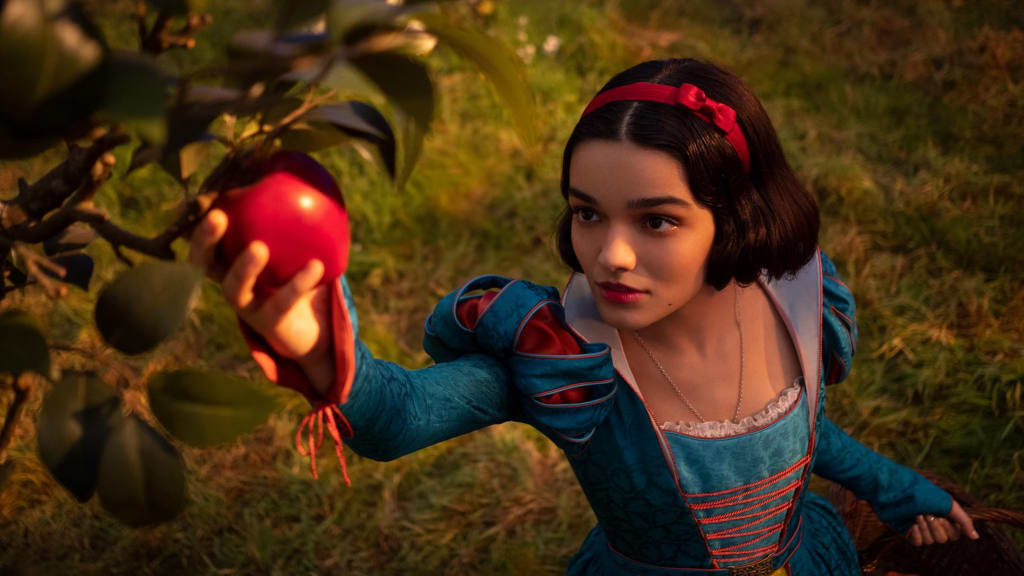
No discussion of the Disney live-action remake failure is complete without examining Rachel Zegler’s role, not necessarily as an actress (she was generally praised for her performance), but as a flashpoint for broader cultural tensions that became inextricably linked with the film’s marketing. The Rachel Zegler controversy would ultimately become inseparable from the film’s public perception.
The initial casting backlash
The Snow White casting controversy sparked immediate reactions. Zegler’s casting as Snow White generated controversy from the moment it was announced in June 2021. The actress is half-Colombian and half-Polish, not the archetypal “pale-skinned” princess of imagination. Online detractors, many from right-wing social media spheres, argued that historical accuracy (never mind that Snow White is a fairy tale, not historical documentation) demanded a white actress.
Zegler’s solution, explaining that the film would recontextualise the name “Snow White” as arising from surviving a snowstorm rather than complexion, was reasonable, yet it also inadvertently validated the controversy by suggesting the original framing was problematic. The discourse never truly recovered. Conservative media outlets ran dozens of articles questioning the casting choice, while progressive commentators defended Zegler and accused critics of racism. Disney found itself caught in a cultural crossfire before a single frame had been shot.
The casting debate extended beyond just ethnicity. Zegler’s relatively unknown status (despite her acclaimed performance in West Side Story) led some to question whether she had the star power to carry a $270 million tentpole. Industry veterans noted that previous Disney remakes had typically cast established stars in lead roles: Emma Watson in Beauty and the Beast, Will Smith in Aladdin, Beyoncé in The Lion King. Zegler’s casting represented a gamble on a newcomer, one that would prove increasingly risky as controversies mounted.
The “dated” and “stalker” comments
In 2022 interviews, Zegler made remarks about the original 1937 film that would become weaponised against her. She called the film “dated,” criticised Snow White’s passivity, and notably referred to Prince Charming as “a guy who literally stalks her”, a comment intended as feminist critique but interpreted by many as dismissive disrespect toward beloved source material.
Zegler later clarified that the new film would still feature a love story, expressing sadness that her comments were misunderstood. Yet this nuance was largely lost in the firestorm. What should have been a behind-the-scenes talking point became a permanent liability. Conservative podcasters and YouTube commentators seized on the quotes, creating compilation videos that framed Zegler as contemptuous of the original film and, by extension, of the audiences who loved it.
The actress attempted damage control in subsequent interviews, explaining that she deeply respected the 1937 original and that her comments were meant to highlight how storytelling had evolved over nearly 90 years. She emphasized that the new film honoured the original while updating certain elements for modern sensibilities. However, these clarifications received far less attention than the initial controversial quotes, which continued circulating on social media and conservative news sites throughout the production and release.
The political posts that changed everything
The final straw came from Rachel Zegler social media activity. In August 2024, whilst promoting the first official trailer at Disney’s D23 event, Zegler added a post stating “and always remember, free Palestine”. The post garnered 8.8 million views, nearly quadruple her initial promotional message.
Disney executives were reportedly apoplectic. Producer Marc Platt flew to New York to confront Zegler about intertwining a $270 million Disney tentpole with a geopolitical statement. More importantly, Zegler’s co-star Gal Gadot (who is Israeli and has expressed support for Israel) suddenly faced an onslaught of death threats. Disney was forced to arrange increased security for Gadot and her family, with the actress reportedly hiring private security for her children’s school and her home in Los Angeles.
Then, three months later after the 2024 US presidential election, Zegler posted: “Fuck Donald Trump” and “May Trump supporters never know peace.” This second political explosion prompted another intervention from Platt, who reportedly explained that Zegler was “signaling to half the potential audience of an already troubled film plagued by costly reshoots to stay home”.
A Disney insider told Variety: “She didn’t understand the repercussions of her actions as far as what that meant for the film, for Gal, for anyone”. One leading agent noted that Disney should have addressed Zegler’s first controversial statement immediately rather than allowing the narrative to spiral. The studio’s hesitance to impose social media restrictions on its lead actress (understandable from a free speech perspective) created a situation where each new post generated fresh controversies that overshadowed the actual film.
The collateral damage
What made this toxic was that neither woman was responsible for the geopolitical tensions driving the controversy. Zegler faced harassment for her ethnicity, her political views, and her gender. Gadot received death threats for her nationality and her country’s policies. The Gal Gadot Snow White involvement became a lightning rod for Middle East tensions that had nothing to do with a fairy tale remake. The film became collateral damage in culture wars entirely beyond its control.
Yet from a marketing perspective, this was ruinous. A film already struggling with production chaos now carried the baggage of having alienated (or seemingly alienated) substantial portions of the political spectrum. Conservative critics claimed the film was “woke propaganda.” Left-leaning critics perceived Gadot’s involvement as problematic given her Israeli citizenship. Disney found itself caught between impossible factions, unable to satisfy anyone without further alienating someone else.
The controversy affected international distribution as well. Several Middle Eastern countries either delayed the film’s release or banned it outright, citing both the casting of Gadot and Zegler’s social media statements. This eliminated potentially lucrative markets that had previously embraced Disney remakes. Meanwhile, the ongoing negative publicity made corporate sponsors reluctant to associate with the film, limiting merchandising and cross-promotional opportunities that typically offset production costs.
The uncanny valley problem: Why live-action CGI dwarfs terrified audiences
Perhaps the most visually memorable aspect of Snow White 2025’s failure was the Snow White CGI dwarfs, seven entirely computer-generated characters that critics and audiences alike found deeply unsettling. The Disney uncanny valley problem that plagued previous films reached new heights with these digital creations.
The uncanny valley phenomenon
The term “uncanny valley” describes the discomfort humans feel when digital characters or creatures appear almost realistic but not quite. They look off, wrong, creepy in ways we can’t quite articulate. It’s the same phenomenon that plagued Robert Zemeckis’ The Polar Express (2004) and A Christmas Carol (2009), both of which featured photorealistic but soulless digital humans that critics described as nightmarish.
Snow White 2025’s CGI dwarfs fell squarely into this trap. Rather than embracing either full realism or stylised animation, the film attempted a middle ground that satisfied neither. Audiences described them as “creepy,” “awkward,” and “weird when positioned next to Rachel Zegler”. Visual effects artists who worked on the film (speaking anonymously after the release) admitted that the production timeline and budget constraints forced compromises that affected the quality of the character rendering.
The technical challenges proved immense. Creating believable digital humans requires capturing thousands of subtle facial movements, skin textures, and eye movements that viewers subconsciously expect. The dwarfs needed to interact convincingly with live actors, match lighting conditions across diverse environments, and maintain consistent appearance throughout the film’s two-hour runtime. According to VFX professionals, the production allocated insufficient time and resources for the level of polish required, resulting in characters that looked acceptable in some shots but noticeably artificial in others.
The irony is particularly bitter: Disney chose CGI specifically to avoid the controversy around casting little people actors, yet the resulting visuals proved more controversial and creatively unsuccessful than either alternative would have been. Little people actors took to social media to express frustration, noting that the CGI dwarfs not only looked unsettling but also eliminated potential employment opportunities. Meanwhile, general audiences simply found the characters off-putting, with many online commentators noting that they couldn’t focus on the story because the dwarfs looked so strange.
A broader pattern of VFX failure
Snow White wasn’t an isolated failure on this front. Disney’s live-action remakes have consistently struggled with the uncanny valley, contributing to the broader perception of Disney creative bankruptcy:
The Lion King (2019) featured photorealistic animals with minimal facial expressions, draining the original’s emotional resonance. Critics noted that the realistic rendering actually worked against the storytelling, as audiences struggled to connect emotionally with characters whose faces couldn’t convey the exaggerated emotions that made the animated original so powerful.
The Little Mermaid (2023) was criticised for unconvincing CGI sea creatures juxtaposed with live actors. The underwater sequences, which should have been the film’s visual highlight, instead prompted complaints about murky color palettes and characters that looked oddly weightless despite the sophisticated technology employed.
Pinocchio (2022), despite costing $155 million, featured a digitally created title character that critics called “creepy” and “rushed,” lacking the warmth of the 1940 original. The wooden puppet’s movements felt simultaneously too fluid and too mechanical, never quite achieving the magical quality that would have made audiences believe in his transformation.
The pattern suggests a fundamental problem: animation works because it’s freed from the constraints of photorealism. Attempting to recreate animated classics through live-action with CGI additions doesn’t enhance the original. It diminishes the source material by stripping away the visual language that made it magical in the first place. Animation allows for exaggeration, stylization, and visual metaphor that photorealistic CGI cannot replicate without looking bizarre.
Disney’s live-action remake fatigue: A cultural reckoning
Snow White 2025 didn’t fail in isolation. Rather, it became the inflection point where Disney’s live-action remake strategy, once a reliable profit engine, finally collapsed under its own weight. The Disney remake fatigue that industry observers had warned about for years finally manifested in devastating box office results.
The historical success and its erosion
The strategy began in 2015 with Cinderella (85%, $540 million worldwide), followed by triumphant successes: Beauty and the Beast (2017, $1.26 billion), The Jungle Book (2016, $967 million), Aladdin (2019, $1.05 billion), and the cultural phenomenon The Lion King (2019, $1.66 billion). Disney shareholders were ecstatic. The studio had discovered the ultimate formula: nostalgia + spectacle + established IP = box office gold. Wall Street analysts praised Disney’s strategy, noting that remakes offered lower risk profiles than original content while maintaining blockbuster profit potential.
Yet cracks emerged. Dumbo (2019, $353 million) on a $170 million budget disappointed, barely breaking even after marketing costs. Pinocchio (2022) flopped spectacularly at 27% on Rotten Tomatoes, though its direct-to-Disney+ release obscured the full financial picture. The Little Mermaid (2023), whilst profitable with $569 million globally, received mixed reviews and sparked casting controversies that foreshadowed Snow White’s problems.
By 2024, the trend was undeniable: audiences were experiencing Hollywood remake fatigue. Industry analysts noted declining opening weekends, steeper second-week drops, and increasingly negative sentiment on social media. Preview tracking for upcoming remakes showed troubling signs of audience indifference, with many potential viewers expressing exhaustion at the prospect of yet another reimagined classic.
The exhaustion is real
Industry analysis reveals that even Disney superfans, “Disney adults” with the strongest brand loyalty, were growing weary. Business Insider interviewed 11 dedicated Disney enthusiasts in 2025, and the consensus was clear: they were tired of remakes, tired of nostalgia mining, and hungry for original stories.
One Disney adult, Ellie Banks, told BI: “It just seems like a cash grab. I don’t think I’ve seen one live-action remake that I loved”. Another, Shae Noble, expressed frustration with Disney “plucking the low-hanging fruit” of established hits, stating she’d rather see new stories. A third interviewee, Marcus Thompson, noted that he used to attend opening weekends for every Disney release but now waited for streaming, specifically because remakes felt like “homework” rather than entertainment.
This matters because Disney’s strategy depends on brand loyalty and repeat viewers. When even the most devoted fans abandon the format, the business model fractures. The live-action remake crisis became apparent when Disney+ data revealed that even on the streaming platform, remakes were underperforming compared to original content and classic animated films. Subscribers were choosing to rewatch the original animations rather than the new remakes, suggesting that the remakes weren’t displacing the originals in audience affections but rather existing as inferior alternatives.
The broader industry context
Snow White 2025 also arrived at a moment when audiences across Hollywood were expressing fatigue with sequels, prequels, spin-offs, and remakes generally. The year 2025 saw some of the worst box office performance on record, with fourteen wide releases flopping in November alone. Tron: Ares ($220 million budget, $142 million gross, approximately $132M+ loss), The Running Man ($110 million budget, massive loss), and numerous other tentpoles cratered.
The appetite for expensive nostalgia-driven content was simply evaporating. Film critics and cultural commentators noted that younger audiences, particularly Gen Z viewers, showed less attachment to the classic Disney animated films than previous generations. For these viewers, the remakes offered no nostalgic value and struggled to compete with original franchises and innovative storytelling available on streaming platforms and in international cinema.
Industry veteran and producer Laura Hastings told The Hollywood Reporter: “We’ve reached saturation. Every studio rushed to copy Disney’s remake strategy, and now audiences are drowning in reimagined IP. There’s no oxygen left for these films to breathe.” She noted that Universal, Warner Bros, and Sony had all greenlit their own slate of remakes and reboots, creating a market flooded with nostalgia-driven content that audiences increasingly rejected.
+ Read more: Netflix signs agreement to acquire Warner Bros Discovery
Why this film failed so comprehensively: A synthesis
The Snow White 2025 flop wasn’t a single catastrophic mistake. Rather, it resulted from a perfect storm of interrelated failures, each compounding the others to create one of the most comprehensive Disney 2025 failures in recent studio history.
1. Creative uncertainty and narrative incoherence
The film attempted to modernise the original tale without committing to the implications of that modernisation. Removing the romantic subplot but still including a love interest created narrative confusion. Adding seven diverse bandits as separate characters alongside the CGI dwarfs bloated the story without justification. The result felt like a film made by committee, where every stakeholder won some battles and lost others, leaving no coherent artistic vision.
Test screening reports (leaked to industry trade publications) revealed that audiences consistently struggled to understand the film’s central themes. Was it about female empowerment? Overcoming trauma? The importance of found family? The dangers of vanity? Different sequences seemed to prioritize different messages, creating tonal whiplash that prevented emotional investment. One test screening participant described the film as “trying to be five different movies at once and succeeding at being none of them.”
2. The casting controversy became inescapable
Rather than confidently defending the casting and moving forward, Disney allowed the Snow White casting controversy to fester. Zegler’s ill-timed comments about the original film, combined with her subsequent social media politics, transformed her from a rising star into a lightning rod for culture war debates. Good casting would have been invisible; controversial casting requires deft management, which was entirely absent.
Disney’s corporate communications team reportedly debated various strategies for addressing the controversies but ultimately opted for silence, hoping the issues would fade. This proved catastrophically wrong. In the absence of official responses, conservative media outlets and social media commentators filled the void with their own narratives, many of which painted Disney as contemptuous of traditional values and dismissive of fan concerns. By the time Disney attempted damage control in early 2025, the negative narratives had already solidified.
3. The uncanny valley problem was unsolvable
Disney’s attempt to sidestep the dwarf controversy through CGI backfired spectacularly. The resulting characters were neither convincingly realistic nor appealingly stylised. They were just unsettling. This wasn’t a minor visual problem; it was the centrepiece of the marketing campaign, and it failed to persuade anyone. Every trailer, every promotional image featuring the dwarfs generated negative reactions online, with the visual effects becoming a punchline rather than a selling point.
VFX artists later revealed that the production timeline didn’t allow for proper iteration and refinement. Typically, creating convincing digital humans requires years of research, development, and testing. Snow White’s compressed post-production schedule, dictated by the release date delay and budget constraints, forced artists to deliver work they knew wasn’t ready. One anonymous VFX supervisor told IndieWire: “We were showing them problems, asking for more time, warning them it wasn’t there yet. They kept saying ‘make it work.’ You can’t conjure quality from nothing.”
4. Production chaos and budget spiralling
The film’s budget ballooned from approximately $180 million to $270 million due to strikes, delays, reshoots, and creative retooling. This inflated cost meant the film required extraordinary box office performance to justify itself, a target it never came close to achieving. Every production problem added to the financial burden while simultaneously eroding the final product’s quality, creating a vicious cycle where spending more money somehow resulted in a worse film.
The strikes proved particularly costly. When SAG-AFTRA and WGA walked out in mid-2023, Snow White was mid-production with expensive sets built, crew on payroll, and scheduled releases looming. Disney couldn’t simply pause everything without financial penalties. The studio paid millions to maintain set access, keep key crew members under contract, and preserve location agreements. When production resumed, costs had escalated, schedules had compressed, and momentum had evaporated.
5. Toxic audience conditions and review bombing
Whilst review bombing distorted the film’s IMDb score, it reflected genuine toxicity in online discourse. The combination of casting controversy, Zegler’s social media activity, Gadot’s pro-Israel stance, and broader culture wars created conditions where substantial audiences either boycotted the film or felt compelled to rate it dishonestly. The Snow White review bombing campaign represented one of the most extensive coordinated efforts to tank a film’s audience scores in recent memory.
Media researchers studying the phenomenon identified bot networks, coordinated Discord servers, and organized campaigns on platforms like 4chan and Reddit that specifically targeted Snow White. These groups created templates for negative reviews, coordinated mass voting at specific times to maximize impact on algorithms, and harassed users who posted positive reactions. The scale of the operation suggested that for certain online communities, damaging Snow White’s reception had become a cause in itself, divorced from any legitimate criticism of the film’s content.
+ Read more: Spotify’s Top 10 hit rock bottom: Why charts are broken
6. Disney remake fatigue was already metastasizing
Snow White arrived not as a triumphant milestone but as another product in an oversaturated lineup of nostalgia mining. Audiences wanted new stories, not yet another remake. The film couldn’t overcome this exhaustion through sheer quality. It needed to be genuinely exceptional, and it was merely adequate. The timing proved catastrophic, arriving just as audience patience with remakes reached its breaking point.
Cultural critics noted that Snow White suffered from being late to a trend that had already peaked. If the film had released in 2020 or 2021, before remake fatigue fully set in, it might have performed respectably despite its flaws. By March 2025, however, audiences had consumed a decade of remakes and were actively seeking alternatives. Original franchises like Dune, Everything Everywhere All at Once, and international hits like RRR had demonstrated that audiences would embrace bold, original storytelling when given the opportunity.
The broader implications: What Snow White reveals about Disney and Hollywood
Snow White 2025’s failure carries implications far beyond one film’s box office performance, touching on fundamental questions about the sustainability of current studio strategies and the future direction of Hollywood’s creative landscape.
The copyright timeline problem
Film scholars have noted that Disney’s remake strategy may be partially motivated by copyright concerns. Characters like Bambi, Peter Pan, and Winnie-the-Pooh are entering the public domain, threatening Disney’s monopolistic control of beloved IP. Live-action remakes reset the copyright timer, keeping characters under Disney’s exclusive control. Yet if audiences reject the remakes, this strategy fails. Disney spends billions to prevent public-domain adaptations that nobody wants anyway.
Legal experts specializing in intellectual property law note that Disney’s defensive positioning around copyright reveals deeper anxieties about the company’s creative future. Attorney Jennifer Morrison told Entertainment Law Journal: “Disney built an empire on fairy tales and public domain stories. Now that their own creations are approaching public domain status, they’re frantically trying to refresh copyrights through remakes. But if the remakes fail commercially, they’re just burning money to defend IP that may not retain commercial value anyway.”
The irony runs deeper: Disney’s original animated Snow White (1937) itself drew from a centuries-old fairy tale. The Brothers Grimm published their version in 1812, itself based on even older oral traditions. Disney’s empire was built on taking public domain stories and creating definitive versions. Now the studio fights to prevent others from doing the same with Disney’s versions, even as audiences signal they’d prefer new interpretations to Disney’s remakes.
The VFX industry crisis
Production on Snow White was handled by MPC, a subsidiary of VFX giant Technicolor. In 2024-2025, Technicolor collapsed, laying off thousands of VFX artists and effectively shutting down one of the industry’s major players. This financial crisis in the VFX sector may partially stem from unsustainable economics: studios demand increasingly expensive visual effects on bloated budgets, yet box office returns don’t justify the investment.
Snow White exemplifies this problem: a film requiring sophisticated CGI dwarfs, elaborate fantasy visuals, and cutting-edge cinematography still lost $200+ million because the underlying creative product was hollow. VFX artists bore the brunt of this failure, facing layoffs and blacklisting despite having worked under impossible conditions. Many took to social media after the film’s release to describe brutal crunch periods, endless revision requests, and management decisions that undermined their work.
The VFX industry’s labor issues came into sharp focus through Snow White’s failure. Unlike other film crafts, visual effects work remains largely un-unionized, leaving artists vulnerable to exploitation. Studios can demand unlimited revisions, compress schedules, and shift blame to VFX houses when films underperform. Snow White’s troubled production exemplified these dynamics, with reports suggesting Disney demanded multiple rounds of expensive revisions while simultaneously pressuring MPC to contain costs.
The end of the remake era?
Disney’s management is reportedly reconsidering the Disney live-action remake strategy entirely. Following Snow White’s flop, production on the live-action Tangled remake was suspended indefinitely in April 2025. The upcoming live-action Moana remake has faced significant online backlash, with social media reactions showing overwhelming scepticism. Dwayne “The Rock” Johnson, attached to reprise his voice role, notably avoided discussing the project in recent interviews, suggesting even A-list talent recognizes the toxicity surrounding Disney remakes.
Yet Disney likely lacks the strategic flexibility to abandon remakes entirely. Original storytelling is riskier and more expensive in the short term. Remakes offer established IP, built-in audiences, and reduced marketing uncertainty. Disney will probably continue remaking classics, but perhaps with smaller budgets, less creative ambition, and lower expectations. Industry insiders suggest the studio may pivot toward direct-to-streaming remakes with more modest production values, avoiding theatrical releases where failures become public spectacles.
Financial analysts note that Disney’s Parks division and streaming service still benefit from the remakes despite theatrical failures. Merchandise sales, theme park attractions, and streaming library value all increase when classic properties receive contemporary updates. This means Disney retains incentives to produce remakes even if theatrical performance proves disappointing. However, the $270 million budgets are likely finished. Future remakes may look more like modest reinterpretations than event tentpoles.
+ Read more: Streaming fragmentation drives piracy: why content fragmentation, not price, is the core problem
The broader creative crisis
Snow White 2025 is symptomatic of a deeper Hollywood malaise: the industry has become so risk-averse that it prioritises recognised IP over original creativity. Every billion-dollar film is a franchise entry, a remake, a spin-off, or a reboot. The talented screenwriters, directors, and producers who might create the next Jaws or Forrest Gump are instead assembling legacy content.
Screenwriter and industry veteran Paul Keating published an essay in The Atlantic arguing that Snow White represents “the logical endpoint of risk-averse studio filmmaking. When every decision is made by committee, when every creative choice must satisfy corporate stakeholders across divisions, when brand protection supersedes storytelling, you get films like Snow White 2025, products designed not to offend anyone and consequently exciting no one.”
Until studios are willing to invest substantial resources in original storytelling, audiences will continue experiencing remake fatigue, and films like Snow White 2025 will serve as expensive cautionary tales. The tragic irony is that original films, when given proper support, often outperform expected returns. Parasite, Get Out, A Quiet Place, and countless other recent successes demonstrated that audiences hunger for fresh stories. Yet studios continue gravitating toward the perceived safety of established IP, even as that strategy produces increasingly diminishing returns.
The curious case of verified vs. unverified audiences
One final aspect deserves examination: the stark divergence between verified audience scores (74%) and unverified scores (23%) on Rotten Tomatoes. This split reveals something important about the film’s actual reception versus its perceived reception, cutting through the noise of coordinated campaigns to understand what viewers who actually watched the film genuinely thought.
Verified audience members, people who purchased tickets and likely watched the film, rated it substantially better than the aggregate audience. This suggests that the film isn’t quite the unmitigated disaster that headline metrics suggest. Verified audiences found it acceptable, if uninspired. Their reviews, when examined individually, tend to acknowledge flaws while praising certain elements like Zegler’s performance, the musical numbers, and production design.
Unverified votes, by contrast, likely reflect orchestrated downvoting campaigns driven by the casting controversy, Zegler’s social media activity, and broader culture war dynamics. These individuals may never have seen the film; they were voting based on external factors. Analysis of the unverified review text reveals telling patterns: many reviews reference controversies but contain no specific details about the actual film’s content, suggesting reviewers hadn’t watched it.
This distinction matters for understanding the film’s legacy. Snow White 2025 is genuinely mediocre, deserving of scores in the 5-6/10 range that verified audiences assigned. It’s a competent but uninspired remake that fails to justify its existence. Yet it’s not the absolute disaster that IMDb’s 2.2/10 suggests; that rating reflects cultural toxicity rather than pure creative failure.
The tragedy is that this nuance is entirely lost in public discourse. The film will be remembered for its 2.2/10 IMDb score, not for the reasonable-if-disappointing assessment that verified audiences provided. Future discussions of Snow White 2025 will cite the catastrophic ratings without acknowledging the review bombing context, cementing the film’s reputation as one of history’s worst rather than simply one of 2025’s more disappointing releases.
This raises uncomfortable questions about the reliability of audience metrics in an era of coordinated online campaigns. If motivated groups can effectively destroy a film’s public reputation through review bombing, regardless of the film’s actual quality, how should studios, critics, and audiences interpret these scores? The answer remains unclear, but Snow White 2025 has forced the industry to confront this question.
Conclusion: A billion-dollar lesson in how not to make films
Snow White 2025 cost Disney approximately $270 million to produce and another $100+ million to market. It earned $205 million globally and lost over $200 million when all expenses are tallied. More importantly, it damaged brand trust, alienated core audiences, and provided ammunition to critics who’ve argued for years that Disney has lost its creative soul.
The film’s failures were multiple and compounding: a hollow creative vision, casting controversy that was inadequately managed, unsettling CGI that became the film’s signature, production chaos that inflated costs, Zegler’s poorly-timed social media activity, her co-star’s geopolitical complications, and the broader context of remake fatigue that had already begun eroding audience enthusiasm.
Yet perhaps the deepest failure was strategic. Disney greenlit a $270 million reimagining of a 1937 animated classic at a moment when audiences were explicitly expressing fatigue with such projects. The studio believed that enough nostalgic brand equity existed to overcome creative mediocrity, that audiences would show up simply because the IP was recognisable.
They were wrong.
Snow White 2025 will likely mark the beginning of the end for Disney’s live-action remake era. Not because the concept is inherently flawed (occasional successes may still emerge) but because audiences have finally articulated a clear preference: they’d rather see new stories than expensive recreations of films they already love. The film’s failure represents a rejection not just of one mediocre movie but of an entire corporate philosophy that prioritized safe, derivative content over creative risk-taking.
For Disney executives, for the VFX industry struggling under unsustainable economics, and for Hollywood broadly, Snow White 2025 should serve as a cautionary tale: there are limits to nostalgia, there are consequences to creative bankruptcy, and sometimes a $270 million investment in the wrong idea is simply a $270 million loss, no matter how many celebrities you attach or how cutting-edge your visual effects become.
The moral is simpler than most industry analysis suggests: audiences want magic, and you cannot manufacture magic through committee-designed remakes, regardless of budget. Snow White 2025 learned that lesson the hardest, most expensive way possible. The film stands as a monument to corporate miscalculation, a warning that even the most powerful entertainment company in the world cannot simply conjure success from recognized IP and massive spending when the fundamental creative vision is absent.
As Hollywood moves forward, the question becomes whether other studios will learn from Disney’s mistake or whether Snow White 2025 will simply become one more cautionary tale that executives acknowledge before greenlighting the next ill-conceived remake. Early signs suggest the lesson may not have fully landed. Multiple studios have remake slates extending years into the future, each betting that their version will somehow avoid Snow White’s fate. History suggests otherwise, but then again, Hollywood has never been an industry particularly skilled at learning from its own mistakes.


