Remember the days when you’d walk into a shop, buy a CD for £15, and own those songs forever? Or when purchasing Microsoft Office meant a single payment that lasted years? Those times feel like a distant memory in our current subscription economy impact landscape, where everything from your morning coffee to professional software demands a monthly tribute from your bank account.
The subscription economy represents a fundamental shift in how businesses generate revenue and how consumers access products and services. Rather than the traditional model of one-time purchases, companies now offer ongoing access to their offerings in exchange for recurring payments, creating what industry experts describe as predictable revenue streams that have grown at an unprecedented rate. This transformation spans virtually every sector imaginable—from entertainment and productivity software to fitness apps, meal kits, and even car features that were once standard but now require monthly payments to unlock.
The shift: From ownership to access
Software revolution: When buying became renting
The most dramatic transformation has occurred in the software industry, where companies have systematically dismantled the traditional one-time purchase model. Adobe Creative Cloud serves as the poster child for this transition—what was once a £1,000+ upfront investment for Photoshop, Illustrator, and other creative tools has morphed into a £50.98 monthly (£611.76 annually) subscription that never truly ends. In US dollars, this is approximately $64.75 monthly ($777 annually). Adobe discontinued perpetual licences entirely in 2013, forcing millions of creative professionals into an endless payment cycle.
Similarly, Microsoft Office transformed from a one-time purchase into Microsoft 365, a subscription service that costs £8.49 monthly for personal use. This translates to approximately $10.77 monthly. Whilst Microsoft still offers a one-time Office 2024 purchase for £149 (approx. $189), the company’s focus has clearly shifted towards subscription revenue, with enhanced AI features being automatically added to subscriptions—often without explicit user consent.
Autodesk followed suit, transitioning professional design software like AutoCAD from perpetual licences to subscription-only models. What previously required a substantial upfront investment now demands £220 monthly or £1,980 annually. In US dollars, this is approximately $279 monthly or $2,509 annually, creating a significant ongoing expense for businesses and professionals.
Entertainment: The end of physical media
The entertainment sector witnessed perhaps the most consumer-friendly version of this transition initially. Netflix pioneered the streaming revolution, offering vast content libraries for what seemed like modest monthly fees. At £13.99 for their standard plan (approx. $17.75), it appeared to offer exceptional value compared to purchasing individual films or series.

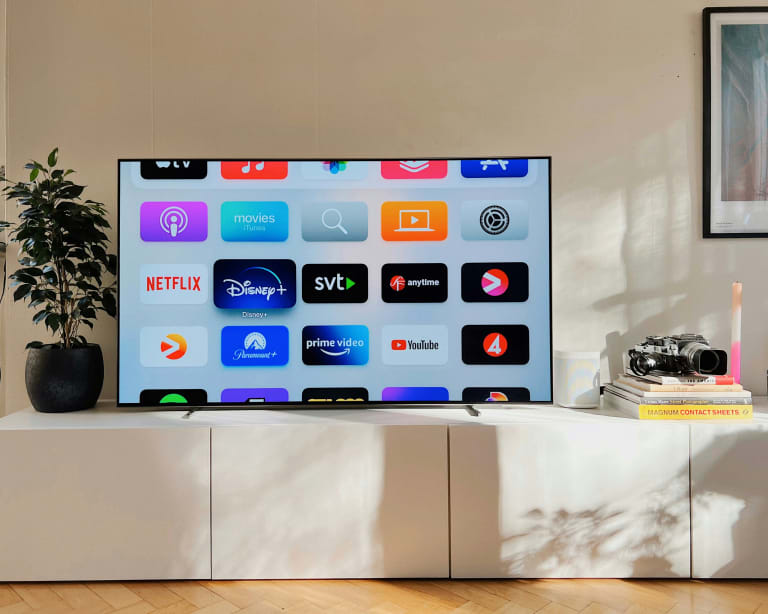
However, the landscape has fragmented dramatically. Where once Netflix provided comprehensive entertainment access, consumers now face a fractured market requiring multiple subscriptions: Disney+ for family content, Apple TV+ for original programming, Max for HBO productions, and Paramount+ for CBS content. A comprehensive streaming setup can easily exceed £70 ($89) monthly, surpassing traditional cable costs.
Music streaming followed a similar pattern. Spotify premium, Apple Music, and YouTube Music replaced the need to purchase individual albums, offering millions of songs for around £10.99 (approx. $13.90) monthly. Yet this convenience comes with a hidden cost—you’re forever renting access to music you once owned permanently.
Gaming: Access over ownership
Gaming subscriptions like Xbox game pass and PlayStation plus exemplify the shift towards access-based models. Whilst these services provide remarkable value—hundreds of games for £10-15 (approx. $12.70 – $19.00) monthly—they fundamentally change the relationship between players and their game libraries. Stop paying, and your entire collection disappears.
The financial strain: Unmasking the hidden costs
The staggering reality of subscription spending
Recent research reveals the true scale of subscription economy impact on household budgets, and the figures are genuinely alarming. UK consumers now spend an average of £72 (approx. $91) monthly on subscriptions, representing a 53% increase since 2020. However, this figure masks dramatic generational differences that tell a more concerning story about subscription spending habits.

Gen Z consumers in the UK spend an extraordinary £305 (approx. $387) monthly on subscriptions—more than three times the amount spent by Gen X consumers at £91 (approx. $115) monthly. This generational divide reflects not just different consumption preferences, but potentially unsustainable financial behaviour among younger demographics.
The average household now maintains 14 active subscriptions, up from just 8 in 2020. This proliferation occurs despite rising subscription fatigue, with 54% of consumers reporting feeling overwhelmed by the number of recurring payments they manage.
The perception gap: What we think we spend vs reality
Perhaps most troubling is the significant disconnect between perceived and actual subscription spending. Research consistently shows consumers underestimate their monthly subscription costs by at least £100. Americans believe they spend approximately £48 (approx. $61) monthly on subscriptions, whilst actual spending averages £186 (approx. $236)—a staggering 288% underestimation.
This hidden subscription costs phenomenon occurs because automatic payments bypass conscious spending decisions. Unlike traditional purchases that require active engagement, subscriptions operate silently in the background, making it easy to forget about dormant services.
Subscription fatigue: The breaking point
Subscription fatigue has emerged as a significant consumer concern, with 50% of respondents in 2023 surveys indicating they had cancelled or intended to cancel subscriptions due to overwhelming choice and cost. The streaming sector reports particularly high fatigue levels, with 60% of users experiencing subscription overwhelm.
This fatigue manifests in several ways:
- Decision fatigue from constantly evaluating multiple services.
- Financial stress from cumulative monthly costs.
- Management burden of tracking numerous recurring payments.
- Value questioning about whether services justify their costs.
The true cost of subscription vs ownership
Software: A financial analysis
The financial implications of the subscription transition become starkest when comparing long-term costs. Consider Microsoft Office: the one-time purchase costs £149 (approx. $189), whilst the subscription version costs £101.88 (approx. $129) annually. Over five years, the subscription totals £509 (approx. $646)—more than three times the perpetual licence cost.
Adobe Creative Cloud presents an even more dramatic example. At £611.76 (approx. $777) annually, a five-year subscription costs £3,059 (approx. $3,883)—significantly more than the historical perpetual licence pricing that Adobe discontinued. Professional users effectively pay this premium indefinitely, with no option to own their tools.
AutoCAD exemplifies the extreme end of subscription pricing. At £1,980 (approx. $2,509) annually, professionals face costs of £9,900 (approx. $12,546) over five years for software they previously could purchase outright. This represents a fundamental shift in business economics for design professionals and firms.
Streaming services: The illusion of value
Streaming services costs initially appeared modest, but the fragmented landscape now demands multiple subscriptions for comprehensive access. A basic entertainment package including Netflix, Disney+, and Spotify costs £36.97 (approx. $46.90) monthly or £443.64 (approx. $563) annually. Families wanting broader access across Netflix, Disney+, Prime Video, Apple TV+, and Spotify face £54.95 (approx. $69.70) monthly costs—£659.40 (approx. $836) annually.
The premium streaming experience, encompassing most major services, reaches £84.93 (approx. $107.70) monthly or £1,019.16 (approx. $1,293) annually. This exceeds many traditional cable packages whilst providing less certainty—content frequently disappears from platforms, and price increases occur regularly.
| Service | Monthly cost USD | Monthly cost GBP | Annual cost USD | Content type |
|---|---|---|---|---|
| Netflix (Standard) | 17.99 | 13.99 | 215.88 | General entertainment |
| Disney+ | 7.99 | 8.99 | 95.88 | Family/Disney content |
| Amazon Prime Video | 8.99 | 8.99 | 107.88 | General + Prime benefits |
| Apple TV+ | 9.99 | 8.99 | 119.88 | Original content |
| Max (HBO) | 15.99 | 12.99 | 191.88 | Premium HBO content |
| Paramount+ | 11.99 | 6.99 | 143.88 | CBS/Paramount content |
| Spotify Premium | 10.99 | 10.99 | 131.88 | Music streaming |
| YouTube Premium | 13.99 | 11.99 | 167.88 | Video + music |
| Hulu | 17.99 | N/A UK | 215.88 | General entertainment |
| Peacock Premium | 13.99 | N/A UK | 167.88 | NBC/Universal content |
The subscription creep phenomenon
Subscription creep describes how consumers gradually accumulate multiple services without conscious decision-making. It typically follows this pattern:
- Initial subscription: Netflix for £17.99/month (approx. $22.83/month).
- Family addition: Disney+ for children (+£7.99 = £25.98/month; approx. +$10.14 = $32.97/month).
- Music integration: Spotify premium (+£10.99 = £36.97/month; approx. +$13.93 = $46.90/month).
- Shopping convenience: Amazon Prime video (+£8.99 = £45.96/month; approx. +$11.40 = $58.30/month).
- Premium content: Apple TV+ (+£8.99 = £54.95/month; approx. +$11.40 = $69.70/month).
- Exclusive series: Max for HBO content (+£15.99 = £70.94/month; approx. +$20.29 = $89.99/month).
This incremental addition creates annual costs exceeding £851 (approx. $1,079), often without conscious recognition of the cumulative impact.
Managing your subscriptions and mitigating the impact
Audit your digital life
Managing subscriptions budget requires systematic evaluation of all recurring payments. Financial experts recommend monthly subscription audits, examining bank statements for recurring charges that may have been forgotten. Research indicates 42% of consumers pay for at least one subscription they’ve forgotten about.
Create a comprehensive subscription inventory including:
- Service name and cost.
- Billing frequency and next payment date.
- Last usage date.
- Cancellation procedure and requirements.
- Value assessment relative to usage.
The new cancellation landscape
Recent regulatory changes are making subscription cancellation easier, particularly in the United States where the Federal Trade Commission (FTC) introduced the “click-to-cancel” rule. This regulation, finalized in October 2024, requires companies to make subscription cancellation as straightforward as the initial sign-up process. This includes providing clear disclosure of terms, explicit consent for negative option features, and prohibiting misrepresentations.
The European Union has implemented similar protections. Under the Digital Services Act (DSA), platforms targeting European consumers must ensure unsubscribing is as simple as registration. Non-compliance can result in fines up to 6% of annual revenue.
However, many companies still employ “dark patterns” to complicate cancellation. These manipulative design practices include:
- Forcing phone calls for online subscriptions.
- Requiring users to type specific phrases.
- Hiding cancellation options in complex menu structures.
- Using confusing language about cancellation consequences.
Strategic subscription management
Saving money on subscriptions requires strategic thinking about actual usage versus perceived value. Consider these approaches:
- Seasonal subscriptions: Activate streaming services only when specific content is available, then cancel until needed again.
- Sharing economies: Family plans often provide better value when shared among multiple users legitimately.
- Alternative seeking: Many subscription services have free or lower-cost alternatives that may meet basic needs.
- Bundle evaluation: Some companies offer package deals, but carefully evaluate whether bundled services represent genuine value or unnecessary additions.
Technology solutions for subscription tracking
Several apps and services help manage subscription spending habits:
- Bank alerts for recurring payments.
- Subscription management apps that track and categorise recurring charges.
- Credit card tools that identify subscription patterns.
- Budgeting software that highlights subscription spending categories.
The regulatory response: Protecting consumers
International efforts to combat subscription abuse
Governments worldwide are recognising the need to regulate subscription practices that exploit consumers. The FTC’s click-to-cancel rule represents the most comprehensive approach, requiring:
- Equal ease of cancellation compared to sign-up processes.
- Clear disclosure of subscription terms before billing.
- Explicit consent for negative option features.
- Prohibition of misrepresenting material facts.
European consumer protections
European regulations provide additional consumer safeguards. Under EU consumer protection directives, companies must:
- Provide clear cancellation procedures.
- Offer 14-day cooling-off periods for many digital services.
- Extend cancellation periods to 12 months if proper disclosure wasn’t provided.
- Refund unused service periods upon cancellation.
These regulations specifically address hidden subscription fees and manipulative practices that have proliferated in the digital economy.
Future trends: What’s next for the subscription economy
Emerging models and consumer adaptation
The subscription economy impact continues evolving, with new models emerging to address consumer fatigue. These include:
- Pause options allowing temporary subscription suspension.
- Usage-based pricing that charges only for actual consumption.
- Hybrid models combining subscription and one-time purchase elements.
- Flexible billing cycles that adapt to consumer preferences.
The role of artificial intelligence
AI is increasingly influencing subscription services through:
- Personalisation engines that justify subscription costs through customised experiences.
- Churn prediction helping companies retain subscribers more effectively.
- Dynamic pricing that adjusts costs based on usage patterns and market conditions.
- Content recommendations designed to increase engagement and reduce cancellations.
Top 5 ways to manage subscription spending
- Conduct a monthly audit: Regularly check bank statements and credit card bills for all recurring charges. Identify services you no longer use or have forgotten about.
- Utilize technology: Employ subscription management apps or budgeting software that can automatically track and categorize your recurring payments.
- Be strategic with streaming: Activate streaming services only when specific content you want to watch is available, then cancel until needed again. Rotate services to save money.
- Evaluate value vs. usage: For each subscription, assess how frequently you use it and whether the benefits truly justify the monthly or annual cost. Don’t be afraid to cancel if the value isn’t there.
- Understand cancellation policies: Before signing up, know how to cancel a service. Be aware of any “dark patterns” companies might use to make cancellation difficult and utilize new regulatory protections like the FTC’s “click-to-cancel” rule where applicable.
Conclusion: Navigating the new economic landscape
The subscription economy impact represents one of the most significant shifts in consumer economics since the advent of credit cards. What began as a convenience-focused innovation has evolved into a complex ecosystem that fundamentally alters how we budget, consume, and relate to the products and services we use daily.
The data reveals a troubling trajectory: average subscription spending has increased 53% since 2020, whilst the number of subscriptions per household has grown 75%. Simultaneously, subscription fatigue affects over half of consumers, indicating the model’s limitations and potential for backlash.
For consumers, the path forward requires conscious consumption and active subscription management. This means regularly auditing services, understanding true costs versus perceived value, and making deliberate choices about which subscriptions genuinely enhance your life. The convenience of automatic payments shouldn’t obscure the financial impact of death by a thousand small cuts.
The regulatory landscape is evolving to protect consumers from the most egregious subscription abuses. However, personal responsibility remains paramount in managing the financial impact of streaming services and software subscriptions that now dominate our digital lives.
As we navigate this subscription-saturated economy, remember that every monthly payment represents a conscious choice about your financial priorities. The question isn’t whether subscriptions are inherently good or bad, but whether each one provides sufficient value to justify its ongoing cost. In an era where everything demands a monthly fee, the power to say “no” becomes one of your most valuable financial tools.
Take action today: audit your subscriptions, calculate your actual monthly spending, and make conscious decisions about which services truly deserve a permanent place in your budget. Your future financial self will thank you for breaking free from the subscription trap that quietly drains your wallet each month.
FAQ: Frequently Asked Questions
Q: How do I cancel a subscription easily in 2025?
A: In 2025, thanks to regulations like the FTC’s “click-to-cancel” rule in the US and the Digital Services Act in the EU, companies are increasingly required to make cancellation as easy as signing up. Look for clear cancellation options within your account settings, or contact customer service if an online option isn’t readily available.
Q: What is subscription creep?
A: Subscription creep is the phenomenon where consumers gradually accumulate multiple subscription services over time without consciously realizing the cumulative financial impact. It often starts with a few core subscriptions and grows as more services are added incrementally.
Q: Why do I underestimate my subscription spending?
A: Consumers often underestimate their subscription spending because automatic payments operate silently in the background, bypassing conscious spending decisions. This makes it easy to forget about services you’re paying for but rarely use.
Q: Is it always cheaper to subscribe than to own software?
A: No. While subscriptions offer immediate access and updates, over the long term (e.g., 5 years or more), the cumulative cost of a subscription often significantly exceeds the one-time purchase price of software, as demonstrated with Microsoft Office and AutoCAD.
Q: What is subscription fatigue?
A: Subscription fatigue refers to the feeling of being overwhelmed by the sheer number of recurring payments and choices associated with multiple subscription services. This can lead to financial stress, decision fatigue, and a questioning of the value received from these services.