Venice, the “floating city” of dreams and romance, faces an existential crisis that threatens to transform it from a living, breathing metropolis into a mere memory beneath the waves. The Venice sinking has accelerated from a gradual geological process into an urgent environmental emergency, combining the relentless forces of climate change, human intervention, and natural subsidence into a perfect storm of destruction. This isn’t merely about occasional flooding anymore—it’s about the systematic drowning of a civilization. As the world looks on, the plight of Venice serves as a stark warning, a canary in the coal mine for coastal cities globally facing the inexorable rise of the seas.
Built over 1,600 years ago on a collection of marshy islands in the Venetian Lagoon, this extraordinary city has defied nature’s odds through ingenious engineering and sheer human determination. Yet today, the very waters that once provided protection and prosperity now pose the greatest threat to Venice’s survival. As sea levels rise and the city continues to sink, we’re witnessing what may be the final chapter of one of humanity’s most remarkable urban achievements.
The statistics are sobering: Venice’s population has plummeted from 175,000 residents in 1951 to fewer than 48,000 today, whilst water levels have risen by over a meter relative to the city’s foundations since 1900. Recent scientific projections from Italian researchers suggest that parts of Venice could be permanently underwater by 2150 if current trends continue, with areas like Piazza San Marco submerged under 70 centimeters of water. The urgency of the situation was a focal point of the 2025 Venice Climate Week, where international experts convened to discuss the escalating crisis and potential solutions.
“It’s a constant worry, a shadow over our daily lives,” says Maria Rossi, a lifelong Venetian resident whose ground-floor apartment has been flooded multiple times. “We adapt, we build barriers, but how long can we truly fight the sea? Our history is here, our lives are here, but the water is always a reminder that we might lose it all.” Her sentiment echoes the growing despair among many Venetians who witness their city slowly succumbing to the rising tides.
Venice sinking: understanding the phenomenon
Venice sinking represents a complex interplay of natural and human-induced factors that have accelerated dramatically over the past century. The city experiences both subsidence—the gradual downward settling of the ground—and sea level rise caused by global climate change, creating a devastating double impact on this vulnerable lagoon city.
Current scientific measurements reveal that Venice continues to sink at approximately 1-2 millimeters per year due to natural geological processes, whilst sea levels in the Adriatic are rising at approximately 2.76 millimeters annually. When combined, these forces mean that relative water levels around Venice are increasing by nearly 5 millimeters each year—a rate that, whilst seemingly modest, compounds into catastrophic consequences over decades.
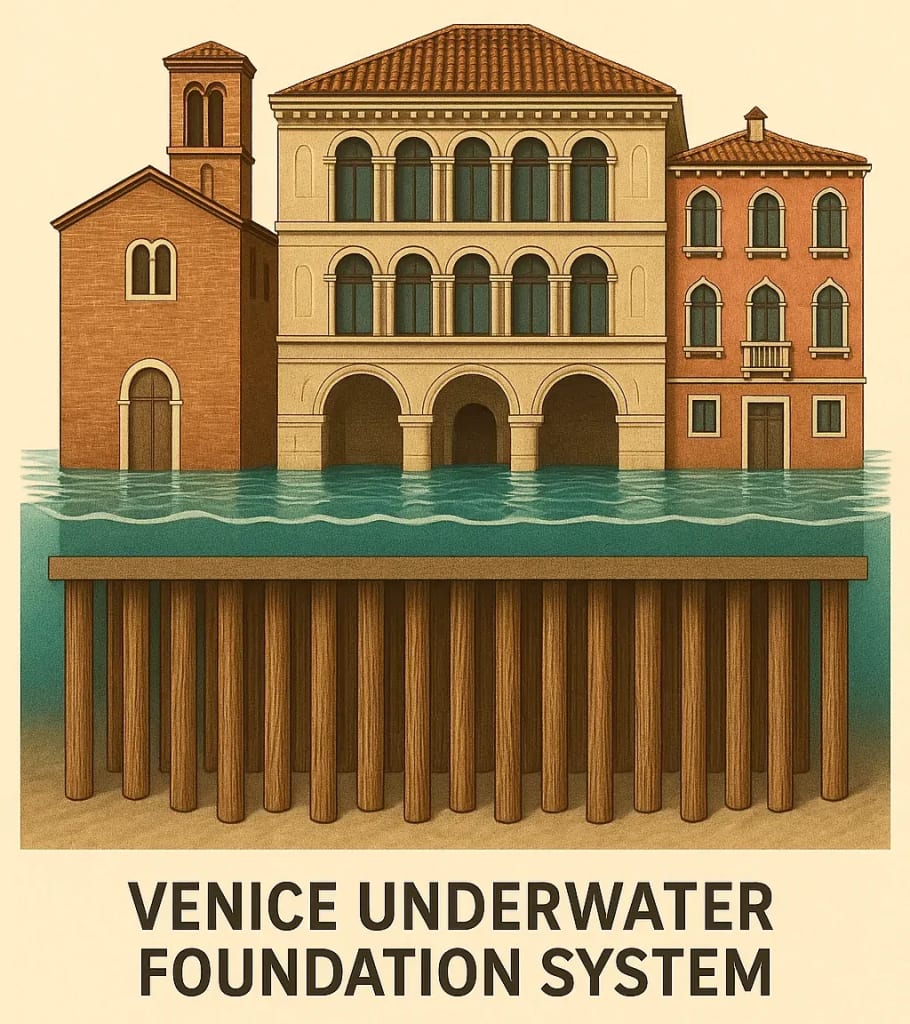
The historical context is crucial for understanding today’s crisis. Venice was constructed using an extraordinary foundation system of millions of wooden piles driven deep into the lagoon’s muddy seabed. These timber supports, primarily sourced from Istrian oak, alder, and larch forests, were driven approximately 4 meters into the clay until they reached more stable sediment layers. The anaerobic conditions beneath the waterline prevented the wood from rotting, creating a foundation system that has endured for over a millennium.
However, this ingenious solution came with inherent vulnerabilities. The city was always destined to experience some degree of settling as the massive weight of stone buildings compressed the underlying sediments. What transformed this manageable geological reality into an existential threat was the acceleration of both natural and human-induced factors during the 20th century.
Between 1950 and 2000, Venice experienced its most dramatic period of relative submersion, with water levels rising by approximately 67 centimeters due to the combined effects of subsidence and sea level rise. This period coincided with intensive industrial development, groundwater extraction, and the early manifestations of anthropogenic climate change.
The root causes of Venice’s perilous decline
Geological factors: nature’s inexorable forces
Venice subsidence stems from several natural geological processes that operate on different timescales. The most significant is the natural consolidation of Holocene sediments beneath the lagoon. These relatively young geological deposits, laid down over the past 10,000 years, continue to compact under the weight of the city above, causing gradual settling at rates of approximately 0.5-1.0 millimeter per year.
Plate tectonics add another layer of complexity to Venice’s geological predicament. The city sits on the Adriatic microplate, which is slowly being subducted beneath the Apennine Mountains as the African and Eurasian tectonic plates converge. This process contributes an additional 0.7-1.0 millimeter per year of subsidence, representing a geological reality that no human intervention can alter.
The regional geological structure compounds these challenges. Venice lies within a sedimentary basin where the bedrock plunges to depths of several thousand meters, overlain by thick sequences of relatively soft alluvial and marine deposits. This geological setting makes the entire region inherently prone to subsidence, even without human interference.
Human-induced catastrophe: the acceleration of disaster
While natural factors established the baseline vulnerability, human activities dramatically accelerated Venice sinking throughout the 20th century. The most catastrophic intervention was groundwater extraction for industrial purposes, particularly between 1930 and 1970. Industries in nearby Marghera pumped vast quantities of water from deep aquifers beneath the lagoon, causing rapid compaction of the overlying sediments.
During the peak period of groundwater extraction in the 1960s, Venice was sinking at an alarming rate of 5-10 millimeters per year—nearly ten times the natural rate. The industrial pumping lowered water tables by up to 50 meters in some areas, causing irreversible compaction of clay layers and leading to a total subsidence of approximately 12 centimeters before the practice was finally banned in 1973.
The weight of construction over centuries has also contributed significantly to subsidence. Each palazzo, church, and bridge adds to the load bearing down on Venice’s foundations. The city’s magnificent architecture, built from heavy Istrian stone and brick, represents millions of tonnes of additional weight that has compressed the underlying sediments over time.
Maritime traffic and channel dredging have altered the lagoon’s delicate hydrodynamic balance. The construction of deep shipping channels to accommodate modern vessels has changed tidal flows, whilst the constant wave action from motorboats erodes foundations and accelerates the deterioration of building structures at water level.
Climate change: the ultimate threat multiplier
Venice climate change impacts represent perhaps the most intractable challenge facing the city. Global sea level rise, driven by thermal expansion of warming oceans and melting ice sheets, affects the entire Mediterranean basin. Current projections suggest that Venice sea level rise could reach 28-76 centimeters by 2100 under moderate warming scenarios, with potentially catastrophic increases of over one meter if greenhouse gas emissions continue unabated.
Climate change has also intensified the frequency and severity of acqua alta Venice events. Rising global temperatures have altered atmospheric circulation patterns over the Mediterranean, leading to more frequent and intense storm systems that drive exceptional high tides into the Venetian Lagoon. The warming climate has increased evaporation rates, concentrating salt levels in the lagoon and exacerbating the chemical weathering of building materials.
The devastating impact of sinking and flooding
Acqua alta: when Venice disappears beneath the waves
Acqua alta Venice—literally “high water”—has transformed from an occasional seasonal nuisance into a regular threat to the city’s survival. These flooding events occur when astronomical high tides combine with storm surges, low atmospheric pressure, and strong southeasterly winds to drive Adriatic waters deep into the lagoon.
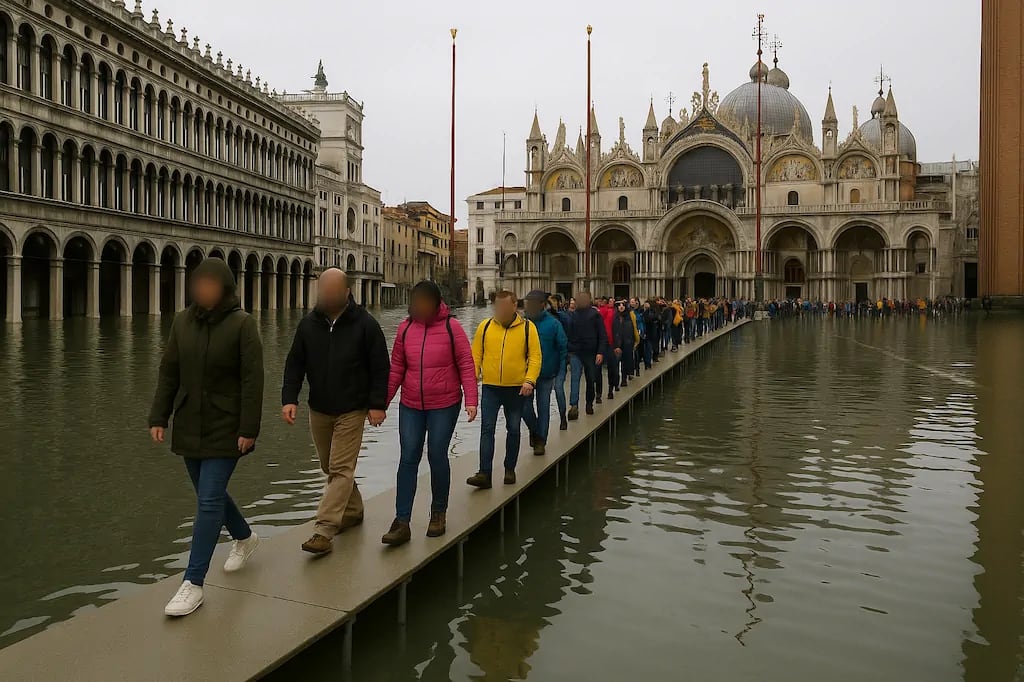
Historically, acqua alta events exceeding 110 centimeters above sea level occurred perhaps 5-10 times per year. Today, Venice experiences significant flooding 60-80 times annually, with the frequency continuing to increase as relative water levels rise. The 2019 flooding, which reached 187 centimeters—the second-highest level ever recorded—inundated 80% of the city and caused over €1 billion in damage.
The social and economic disruption caused by frequent flooding is profound. During acqua alta events, Venice effectively becomes uninhabitable. Transport networks shut down, businesses close, and residents are trapped in upper floors of their homes. The psychological impact on the remaining population cannot be understated—living under constant threat of inundation takes an enormous toll on community morale and mental health.
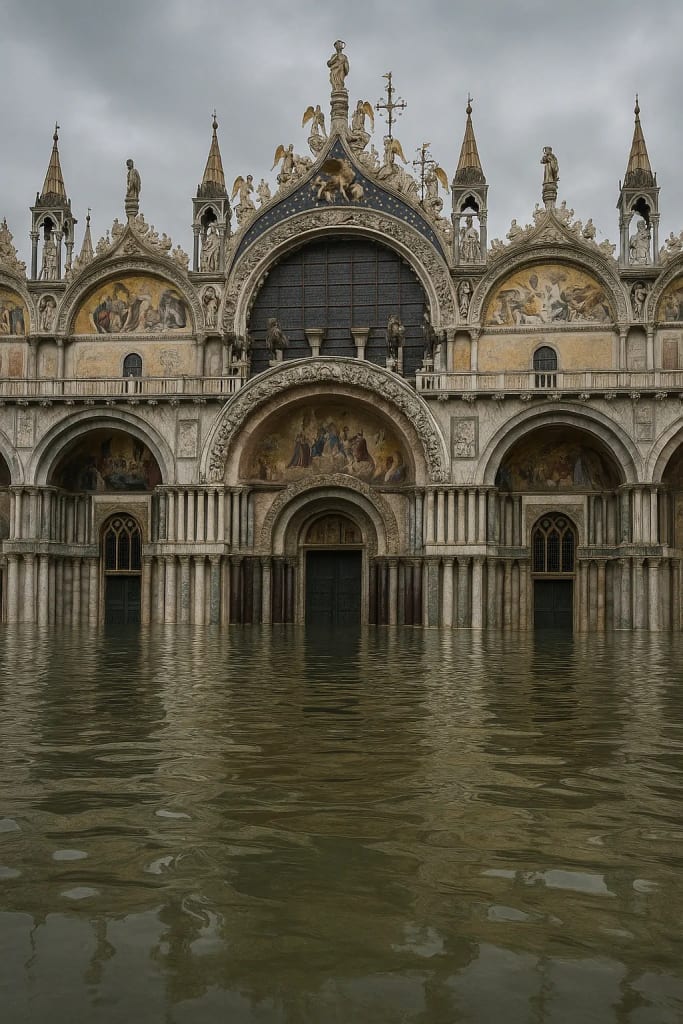
Tourism, Venice’s primary economic lifeline, suffers tremendously during flooding events. Hotels report cancellation rates of 30-40% during acqua alta periods, whilst the damage to the city’s reputation as a luxury destination has longer-term consequences for visitor numbers.
Heritage under siege: the salt water assault
The impact of Venice sinking on the city’s extraordinary architectural heritage represents one of the most tragic aspects of this crisis. Salt water intrusion causes systematic damage through multiple mechanisms that threaten the structural integrity of buildings that have stood for centuries.
Salt crystallization represents the most insidious form of damage. As salt water penetrates porous building materials—brick, stone, and mortar—evaporation leaves behind salt deposits within the material’s structure. When humidity levels change, these salts repeatedly dissolve and recrystallize, creating internal pressure that literally tears masonry apart from within. Buildings near canal level now contain 70-80 kilograms of salt per cubic meter of masonry—concentrations that would be toxic to human health.
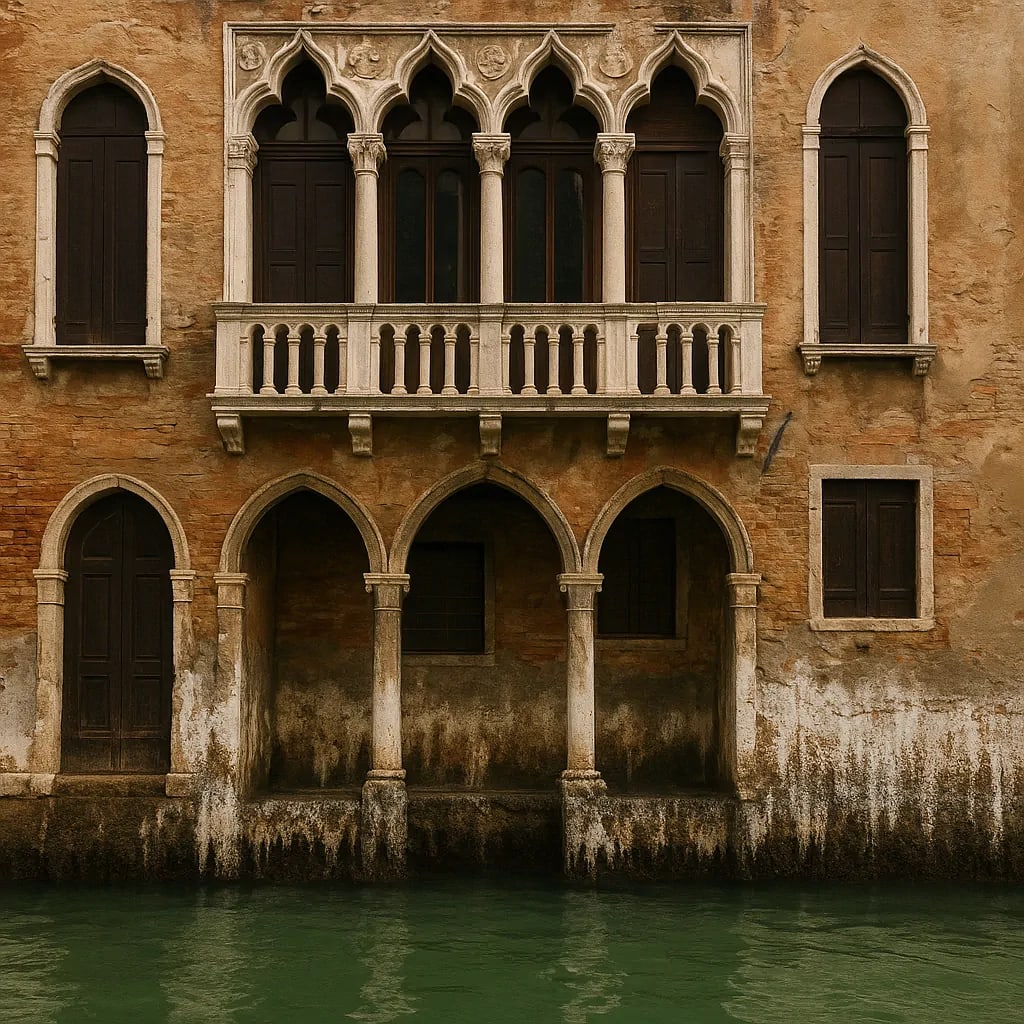
Rising damp has become a critical problem as groundwater levels rise with the increasing frequency of flooding. Salt-laden water now penetrates several meters up building walls through capillary action, affecting areas that were never designed to withstand such exposure. The traditional Istrian stone foundations, whilst water-resistant, were never intended to cope with permanent submersion and constant salt exposure.
The damage extends far beyond individual buildings to threaten irreplaceable artistic treasures. St. Mark’s Basilica, one of the world’s most important Byzantine monuments, has suffered repeated flooding that threatens its precious mosaics and marble floors. Conservation experts estimate that each major acqua alta event ages the basilica by 20 years due to salt water penetration into its foundations and lower walls.
Socio-economic collapse: the death of a living city
Perhaps the most alarming consequence of Venice sinking is the systematic depopulation of the historic city center. Venice’s population has declined catastrophically, falling from 175,000 residents in 1951 to fewer than 48,000 today—a 70% reduction that represents one of the most dramatic urban depopulation events in modern European history.
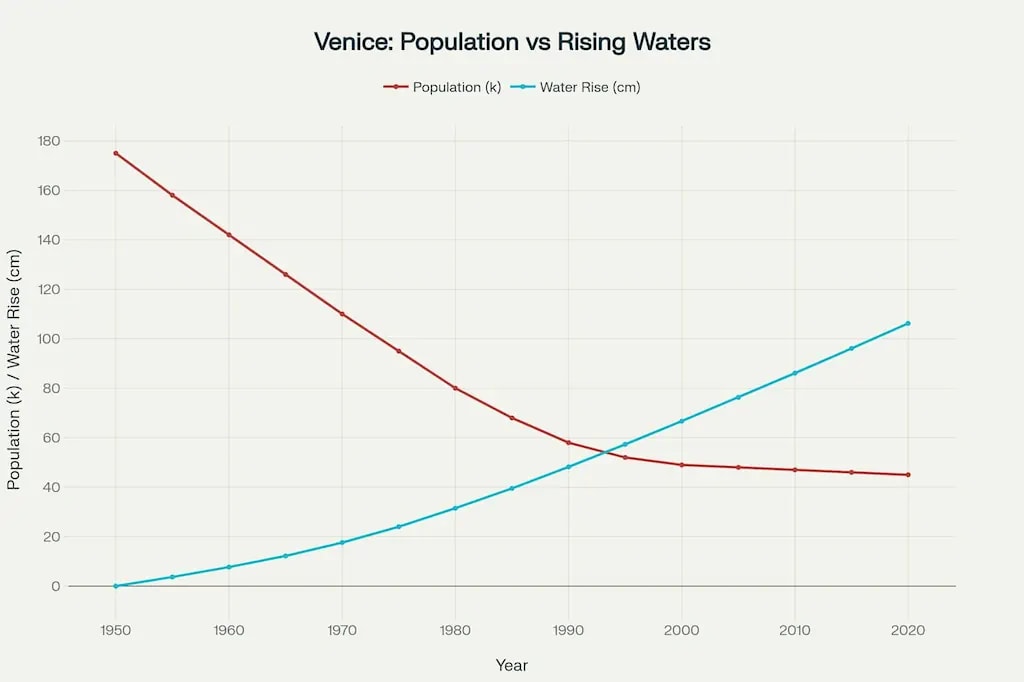
This demographic collapse reflects multiple interconnected factors. Housing costs have soared as properties are converted from residential to tourist accommodation, pricing out local families. The constant threat of flooding makes daily life increasingly difficult, particularly for elderly residents who struggle to cope with acqua alta events. Essential services—schools, healthcare facilities, shops—have closed as the population dwindles, creating a vicious cycle of decline.
The transformation of Venice from a living city into a theme park for tourists has accelerated as residential properties are converted to short-term rentals. Tourist beds now outnumber permanent residents by approximately 50,000 to 49,000, representing a fundamental shift in the city’s character and function.
Young Venetians face an impossible choice: remain in a city where housing is unaffordable, employment opportunities are limited to tourism, and daily life is disrupted by flooding, or relocate to the mainland where modern amenities and career prospects await. The result has been a brain drain that threatens the transmission of traditional Venetian culture and skills to future generations.
Efforts to save Venice: engineering solutions and their limitations
The MOSE project: an engineering marvel or expensive folly?
The MOSE project Venice—Modulo Sperimentale Elettromeccanico or Experimental Electromechanical Module—represents the most ambitious engineering intervention in Venice’s history. This €7 billion system of 78 mobile flood barriers installed at the lagoon’s three inlets can theoretically protect the city from storm surges by temporarily isolating the lagoon from the Adriatic Sea.
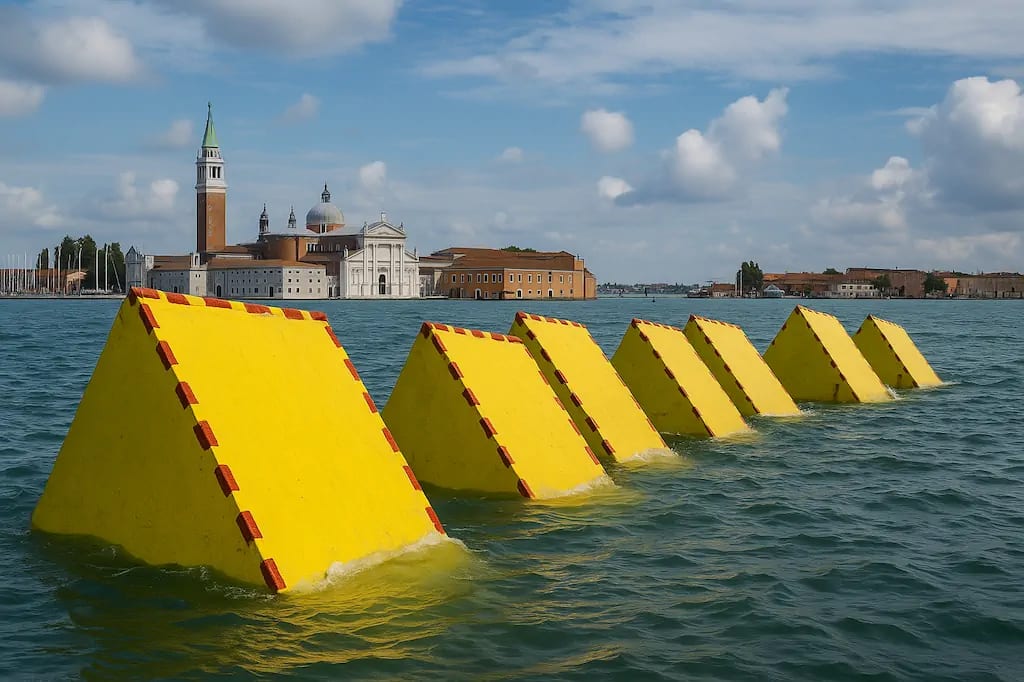
MOSE’s massive yellow gates, each measuring 20 meters wide and 3-5 meters thick, lie flat on the seabed during normal conditions. When activated, compressed air forces water out of the hollow gates, causing them to rotate upward and form a continuous barrier across the lagoon entrances. The system can theoretically protect Venice from tides up to 3 meters above normal sea level.
Since becoming operational in 2020, MOSE has successfully prevented numerous flooding events, including potentially catastrophic tides that would have inundated much of the city. However, the system’s activation frequency has already exceeded original projections. Designed to operate 5-10 times per year, MOSE has been deployed 49 times in just its first two years of operation—a frequency that raises serious questions about its long-term sustainability.
The environmental consequences of frequent MOSE closures are becoming increasingly apparent. Each closure reduces water exchange between the lagoon and the sea, leading to reduced oxygen levels, increased water temperatures, and accumulation of pollutants. Marine ecologists warn that frequent barriers closures could transform the lagoon from a healthy marine environment into a stagnant lake, with devastating consequences for its ecosystem.
Economic concerns also plague the MOSE project. Each activation costs approximately €300,000, whilst maintenance requirements are proving more extensive than originally anticipated. Critics argue that MOSE represents a short-term technological fix that doesn’t address the underlying causes of Venice’s vulnerability and may create new environmental problems. This debate intensified at the 2025 Venice Climate Week, with some experts calling for a re-evaluation of MOSE’s role in a long-term adaptation strategy.
Alternative solutions: innovation and adaptation
Beyond MOSE, researchers and engineers have proposed various innovative solutions to address Venice sinking. Professor Pietro Teatini from the University of Padua has developed a controversial proposal to inject water into underground aquifers beneath the lagoon, potentially raising the city by 30 centimeters over several years. This approach would essentially reverse the subsidence caused by historical groundwater extraction, buying Venice precious time to implement longer-term solutions. Teatini’s bold vision sparked considerable discussion at the recent Climate Week, offering a glimmer of hope amidst the dire projections.
Building-level adaptations have become increasingly common as residents and property owners respond to rising water levels. These include raising floor levels, installing impermeable barriers in walls, and implementing pumping systems to remove flood water. Traditional Venetian architecture already incorporated many flood-resistant features, but these are being overwhelmed by the increased frequency and intensity of modern flooding.
Sustainable tourism initiatives aim to reduce the pressure on Venice’s infrastructure whilst preserving its economic viability. The city has implemented a €5 daily tourist tax for day visitors and is exploring ways to distribute tourism more evenly across the lagoon. However, these measures address symptoms rather than causes of Venice’s fundamental environmental challenges.
Conservation efforts focus on preserving the city’s architectural heritage through improved materials and techniques. UNESCO has coordinated international restoration projects worth over €50 million since 1966, but the scale of the challenge continues to outpace conservation resources.
Disclosure: This post contains affiliate links that help support and maintain this website. If you click through and make a purchase, I may earn a small commission at no extra cost to you.
The future of Venice: scientific projections and scenarios
The ticking clock of climate change
Scientific projections for the future of Venice paint an increasingly dire picture as climate change accelerates. Under current greenhouse gas emission trajectories, Venice faces multiple catastrophic scenarios that could render the city uninhabitable within decades.
Conservative projections suggest that relative sea levels around Venice could rise by 44-76 centimeters by 2100, effectively doubling the current flooding frequency. In this scenario, acqua alta events exceeding 110 centimeters could occur 200-300 times per year, making normal urban life impossible.
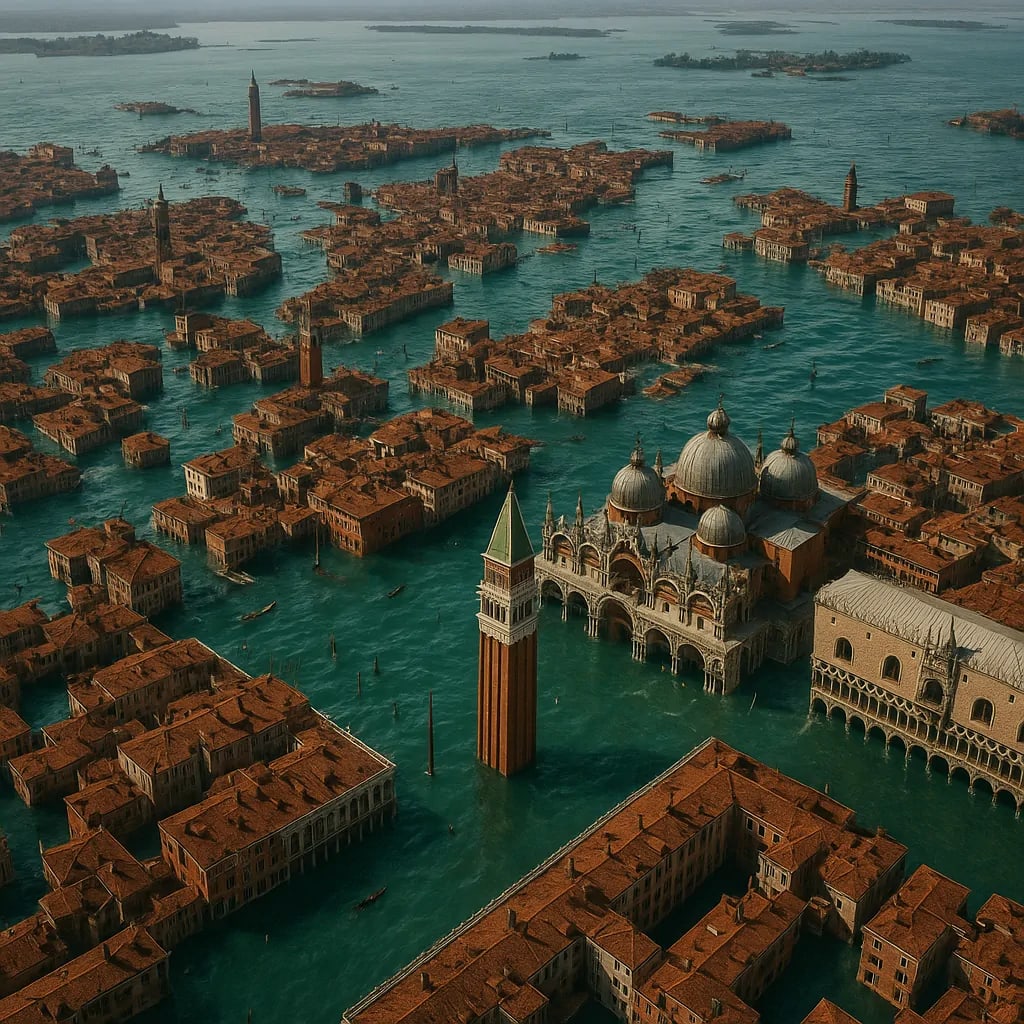
Pessimistic but plausible scenarios envision sea level rises of 63-101 centimeters by 2100, with even higher increases possible if ice sheet collapse accelerates. As noted, recent Italian research suggests that parts of Venice could be permanently underwater by 2150 if current trends continue, with areas like Piazza San Marco submerged under 70 centimeters of water.

The implications extend far beyond Venice itself. The city serves as a canary in the coal mine for coastal cities worldwide, demonstrating how the combination of subsidence, sea level rise, and extreme weather events can overwhelm even the most sophisticated engineering defenses.
Adaptation strategies: learning to live with water
Venice’s response to these challenges increasingly focuses on adaptation rather than resistance. This philosophical shift acknowledges that attempting to hold back the sea indefinitely may be neither economically feasible nor environmentally sustainable.
Amphibious architecture concepts envision buildings designed to rise and fall with water levels, incorporating traditional Venetian flood-resistance features with modern materials and technology. Some proposals suggest floating neighborhoods that could maintain the city’s urban fabric whilst adapting to changing water levels.
Selective protection strategies might focus resources on preserving the most historically and culturally significant areas of Venice whilst allowing less critical zones to adapt to permanent flooding. This approach would require difficult decisions about which parts of the city to save and which to sacrifice.
Population stabilization efforts aim to reverse the demographic collapse by providing incentives for young families to remain in Venice. These include subsidized housing, improved digital infrastructure to support remote working, and educational initiatives to preserve traditional Venetian skills and culture.
The wider implications: Venice as a global warning
Venice sinking serves as a powerful symbol of humanity’s vulnerability to climate change and environmental degradation. The city’s plight demonstrates how even the most remarkable human achievements can be undermined by the cumulative effects of industrial development, resource extraction, and greenhouse gas emissions.
The lessons from Venice extend far beyond Italy. Coastal megacities from Miami to Mumbai face similar combinations of subsidence, sea level rise, and extreme weather events. Venice’s experience with engineering solutions, adaptive strategies, and social responses provides valuable insights for urban planners and policymakers worldwide.
The economic implications are staggering. Venice contributes €2.6 billion annually to Italy’s GDP through tourism alone, whilst its cultural value as a UNESCO World Heritage site is literally priceless. The potential loss of Venice would represent not only a human tragedy but an irreplaceable diminishment of global cultural heritage.

Conclusion: a race against time
Venice stands at a crossroads between preservation and transformation, between resistance and adaptation. The city that once conquered maritime empires and revolutionized global trade now faces its greatest challenge: surviving the consequences of humanity’s impact on the global climate system.
The next two decades will likely determine Venice’s fate. If greenhouse gas emissions continue unabated and sea levels rise as projected, even the most sophisticated engineering solutions may prove inadequate. However, if global climate action accelerates and Venice successfully implements adaptive strategies, this extraordinary city might yet find a way to thrive in harmony with rising waters.
The story of Venice sinking ultimately transcends the fate of a single city. It represents a test of human ingenuity, international cooperation, and our collective commitment to preserving the irreplaceable treasures of our shared cultural heritage. Venice has survived barbarian invasions, plague, war, and economic collapse. Whether it can survive climate change remains the defining question of our time.
For now, Venice continues to endure—still beautiful, still magical, still defiant in the face of seemingly impossible odds. But time is running out, and the waters are rising. The floating city that once commanded the Mediterranean must now fight for its very existence against forces far more powerful than any enemy it has ever faced. The outcome will resonate far beyond the lagoon, offering either hope or warning to coastal communities across our rapidly changing planet.